Article

Spatiotemporal Assessment of Tropospheric Nitrogen Dioxide Changes During COVID-19 Lockdowns Using Cloud-Based Remote Sensing: Evidence from Central America


by
Nestor Erick Anibal Caal Suc
1,2,*,
Henry Antonio Pacheco Gil
3,
Martha Ruthilia Godoy Morales
1,
Víctor Manuel Lobos Morales
1,
Amado Adalberto López Bautista
4,
Carlos A. Rivas
5 and
Rafael María Navarro-Cerrillo
2
1
Departamento de Ingeniería Geomática-CUNOR, Universidad San Carlos de Guatemala, Cobán 16001, Guatemala
2
Laboratory of Dendrochronology, Silviculture and Global Change—DendrodatLab—ERSAF, Department of Forest Engineering, University of Cordoba, Campus de Rabanales, Crta. IV, Km. 396, 14071 Cordoba, Spain
3
Departamento de Ciencias Agrícolas, Facultad de Ingeniería Agrícola, Universidad Técnica de Manabí, Lodana 13132, Ecuador
4
Facultad de Ingeniería, Universidad de San Carlos de Guatemala, Guatemala City 01012, Guatemala
5
Mediterranean Forest Global Change Observatory, Digitalization and Development in Forestry Ecosystems Laboratory, DigiFoR+-ERSAF, Department of Forestry Engineering, University of Cordoba, Campus de Rabanales, Crta. IV, Km. 396, 14071 Cordoba, Spain
*
Author to whom correspondence should be addressed.
Remote Sens. 2026, 18(11), 1850; https://doi.org/10.3390/rs18111850
Submission received: 17 April 2026 / Revised: 27 May 2026 / Accepted: 31 May 2026 / Published: 4 June 2026

Highlights

What are the main findings?
  • Satellite-based observations revealed noticeable spatiotemporal variability in tropospheric NO2 concentrations across Central America during the COVID-19 period, with stronger negative variations observed in highly urbanized departments of Guatemala, El Salvador, and Honduras.
  • The integration of Sentinel-5P TROPOMI data within Google Earth Engine enabled a consistent regional-scale assessment of atmospheric variability, highlighting heterogeneous responses among countries with different mobility restriction measures.
What are the implications of the main findings?
  • The results demonstrate the potential of cloud-based Earth observation platforms for atmospheric monitoring and air quality assessment in tropical regions characterized by limited ground-based monitoring networks.
  • The observed regional and subnational variability in NO2 concentrations suggests that mobility restriction measures, urbanization intensity, and anthropogenic activity patterns may influence atmospheric pollution dynamics across Central America.

Abstract

The large-scale mobility restrictions implemented worldwide in response to the COVID-19 (SARS-CoV-2) pandemic led to short-term reductions in anthropogenic emissions, providing an opportunity to explore atmospheric pollutant responses to large-scale changes in human activity and mobility patterns. Although numerous studies have reported air quality improvements during lockdowns, most rely on ground-based monitoring networks and focus on developed regions, leaving gaps in less-studied areas such as Central America. This study evaluates spatiotemporal changes in tropospheric nitrogen dioxide (NO2) across Central America before, during, and after COVID-19 lockdowns using satellite-based remote sensing. High-resolution NO2 vertical column density (VCD) data from the TROPOMI instrument onboard Sentinel-5P were processed using Google Earth Engine. Percentage variations were calculated using the March–May 2020 lockdown period as a reference within the 2019–2021 analysis period. Results indicate reductions in NO2 across several high-density departments, particularly in Guatemala, El Salvador, and Honduras, with decreases of 20–30% and localized negative variations below −40%. In contrast, Nicaragua exhibited comparatively limited changes, while a gradual recovery in NO2 concentrations was observed during 2021. The observed patterns suggest a potential association between NO2 variability and changes in anthropogenic activity during the COVID-19 period, while also highlighting the importance of considering meteorological influences in regional atmospheric assessments. The results further demonstrate the potential of cloud-based Earth observation platforms for atmospheric monitoring in data-scarce tropical regions.

1. Introduction

Air pollution is one of the most significant environmental risks to human health, particularly in urban areas where anthropogenic activities such as transportation, industrial processes, and energy production generate high concentrations of atmospheric pollutants. Among these, nitrogen dioxide (NO2) plays a critical role due to its contribution to tropospheric ozone formation and its well-documented adverse effects on respiratory health [1,2]. Elevated NO2 concentrations are commonly associated with urbanization patterns and population density, making NO2 a widely used indicator of anthropogenic emissions and atmospheric environmental quality [3]. Globally, exposure to air pollution has been linked to increased mortality and morbidity, representing a major public health concern [4,5].
The global response to the COVID-19 pandemic led to the implementation of large-scale mobility restrictions, which reduced anthropogenic activities considerably, particularly in urban and industrialized areas. This large-scale reduction in anthropogenic activity provided an opportunity to evaluate atmospheric responses to large-scale changes in human mobility and emission patterns. Several studies have reported noticeable reductions in NO2 concentrations and other pollutants during lockdown periods at regional and global scales [6,7,8,9].
Despite these advances, important limitations remain. Most studies rely on ground-based monitoring networks, which are spatially concentrated in major urban centers and often lack coverage in developing regions, limiting their ability to capture regional-scale variability [10]. In addition, existing analyses have focused on developed regions, leaving less-studied areas such as Central America largely underexplored. Furthermore, the limited integration of cloud-based geospatial platforms has constrained the capacity to process large volumes of satellite data required for consistent, high-resolution, and reproducible spatiotemporal analysis [11,12].
Satellite observations provide an effective alternative for monitoring atmospheric pollutants at regional and global scales. The Tropospheric Monitoring Instrument (TROPOMI), onboard the Sentinel-5 Precursor satellite, enables high-resolution measurements of tropospheric NO2 vertical column density (VCD), supporting the analysis of spatial and temporal patterns beyond the limitations of ground-based networks [8,13,14]. The integration of these datasets within cloud-based platforms such as Google Earth Engine allows efficient processing, analysis, and visualization of large-scale geospatial data, supporting consistent and reproducible large-scale air quality assessments [15]. In this context, this study aims to evaluate spatiotemporal variations in tropospheric NO2 across Central America before, during, and after COVID-19 lockdowns using satellite-based remote sensing and cloud computing approaches. By addressing data scarcity and spatial limitations in the region, this work contributes to a better understanding of air quality dynamics in tropical environments and supports the development of evidence-based environmental management strategies.

2. Materials and Methods

2.1. Study Area

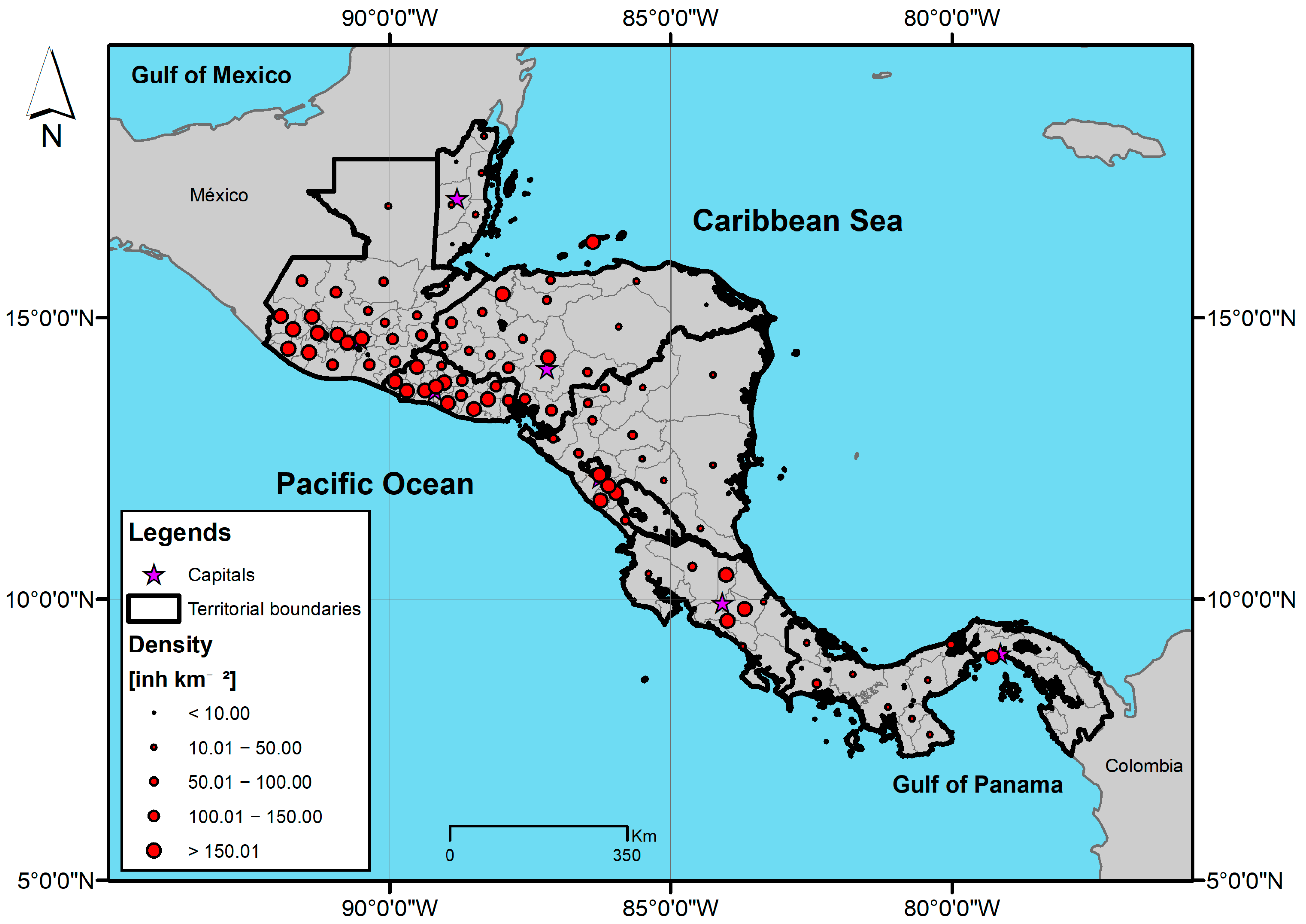
The study area comprises the Central American region, including Belize, Guatemala, El Salvador, Honduras, Nicaragua, Costa Rica, and Panama (Figure 1), with a combined population exceeding 50 million inhabitants and a total area of approximately 523,000 km2 (Table S1). This region is characterized by heterogeneous levels of urbanization, population density, and socioeconomic development, which influence spatial patterns of anthropogenic emissions and atmospheric pollution.
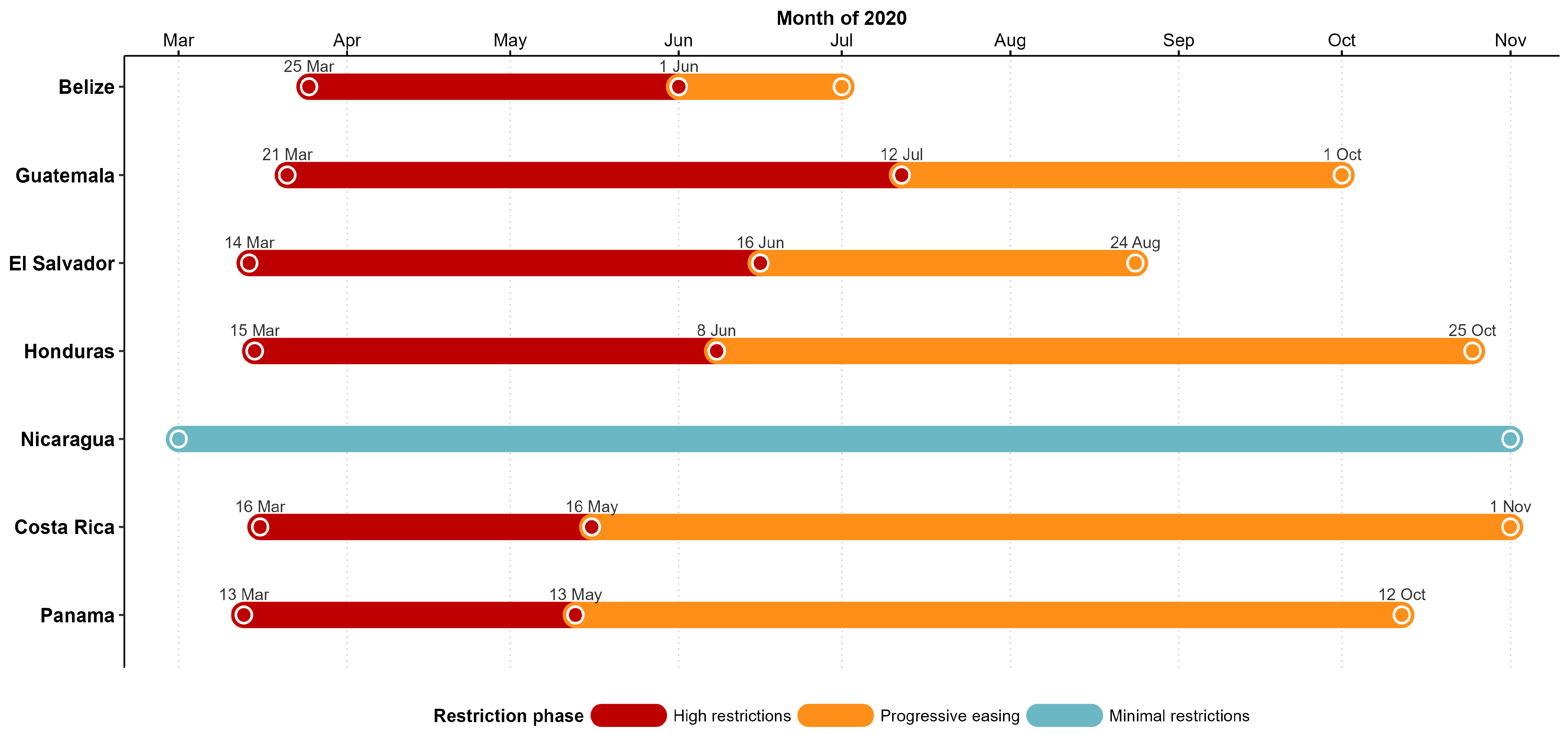
Lockdown start dates were compiled from official governmental decrees and legislative documents issued in each country. These measures were implemented between 13 March and 25 March 2020, depending on the country. In the case of Nicaragua, no nationwide lockdown was enforced during the study period, which provides a relevant contrasting scenario for regional comparison (Table S1).
To provide contextual support for the interpretation of NO2 variability during the COVID-19 period, the timeline of mobility restriction phases implemented across Central American countries during 2020 is presented in Figure 2.
Population, surface area, and population density data were obtained from the World Bank [16] and national statistical agencies. The analysis considers data up to 31 May 2020, corresponding to the main lockdown period across the region.

2.2. Selection of High-Density Departments

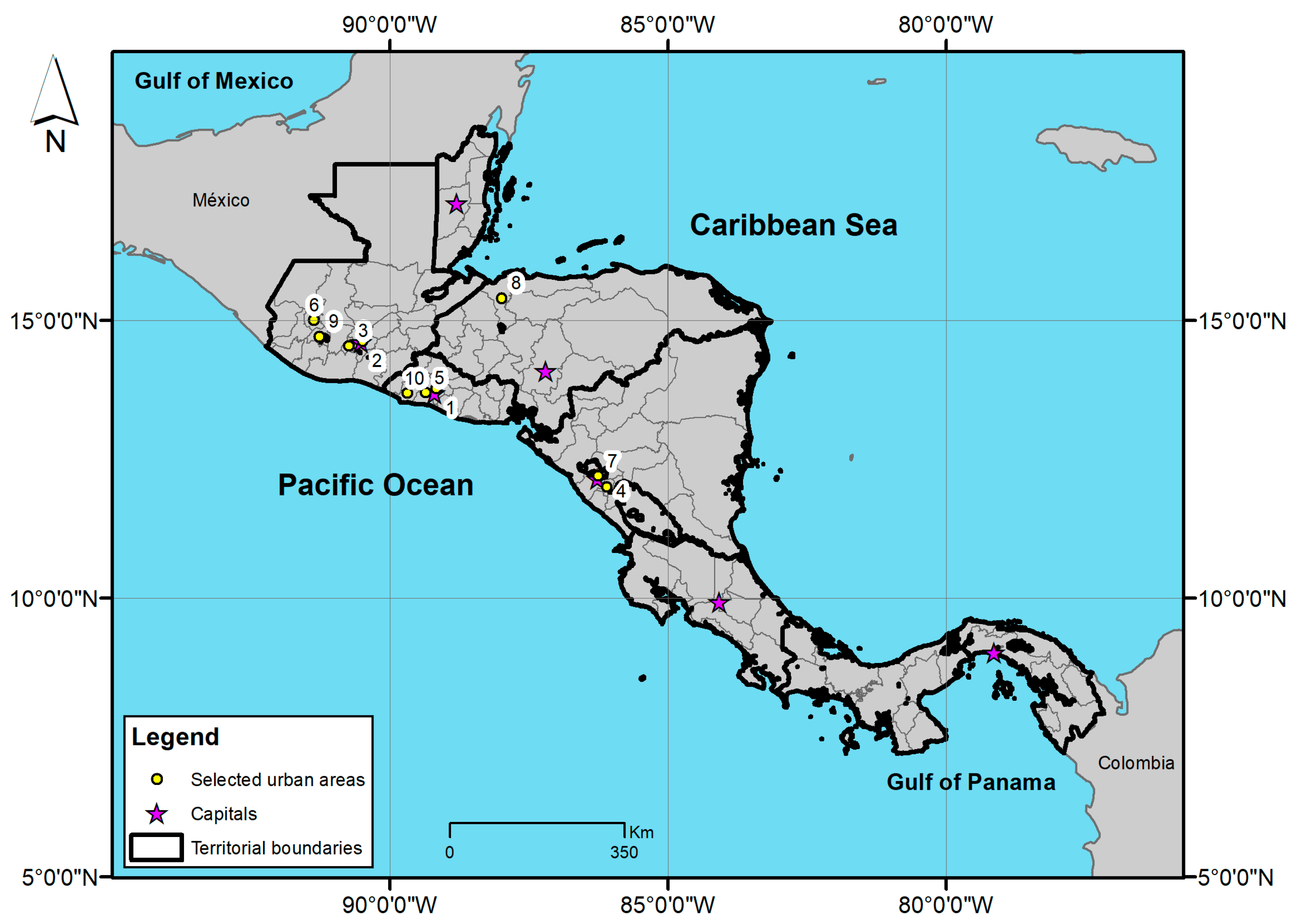
Ten high-density departments within the Central American region were selected using a multi-criteria approach. First, densely populated departments associated with major metropolitan and urbanized areas were identified based on criteria commonly used in previous studies related to air quality and anthropogenic emissions. Subsequently, departments containing capital cities and principal metropolitan centers were included due to their demographic, economic, and administrative importance. In addition, departments with population densities exceeding 350 inhabitants km−2 were selected to ensure that the analysis focused on highly anthropized environments characterized by elevated levels of human activity and potential atmospheric emissions [17] (Table 1; Figure 3). Although these administrative departments include non-urban land-cover types such as rural, agricultural, and forested areas, they provide a consistent subnational framework for regional-scale comparison across Central America.

2.3. Geospatial Data—Image Collection

2.3.1. Tropospheric Monitoring Instrument (TROPOMI) Data

This study used Google Earth Engine (GEE), a cloud-based geospatial platform for processing, analyzing, and visualizing large-scale satellite datasets [12,18]. Satellite data products were obtained from the Sentinel-5P mission, specifically the Tropospheric Monitoring Instrument (TROPOMI), developed by the European Space Agency [8,19]. TROPOMI provides high-resolution measurements across ultraviolet, visible, near-infrared, and shortwave infrared spectral bands, enabling the monitoring of atmospheric composition, including nitrogen dioxide (NO2), ozone (O3), sulfur dioxide (SO2), methane (CH4), carbon monoxide (CO), and formaldehyde (HCHO). Tropospheric NO2 vertical column density (VCD) products were used in this study, based on well-established retrieval algorithms [20]. These datasets are widely applied in air quality monitoring at both regional and global scales [21,22]. TROPOMI data available in Google Earth Engine cover the period from July 2018 to the present, enabling consistent spatiotemporal analysis of atmospheric pollutants. GEE was employed as a centralized environment for the quantitative environmental assessment of COVID-19-related mobility restrictions, supporting cloud-based access and processing of satellite datasets without requiring local data storage.

2.3.2. Google Earth Engine (GEE)

Google Earth Engine (GEE) [23] was used as a cloud-based geospatial analysis platform for processing and analyzing satellite imagery from multiple missions using large-scale datasets [24,25]. A total of 1410 Sentinel-5P TROPOMI Level-3 NO2 scenes were used in this study.
Monthly composite images were generated using the median value to reduce the influence of outliers, cloud contamination, and extreme values commonly present in atmospheric datasets. Thus, each pixel in the composite image represents the median value of all observations at that location for a given time period.
The NO2 datasets were spatially masked to the Central American region. Subsequently, descriptive statistics, including maximum, minimum, median, and interquartile ranges (second and third quartiles), were calculated. This approach enabled a consistent spatiotemporal comparison of NO2 concentrations across months and years (Tables S1 and S2).

2.4. Calculation of Air Quality Changes

Changes in air quality parameters were quantified by calculating the percentage variation in tropospheric nitrogen dioxide (NO2) relative to a defined reference period. The main COVID-19 lockdown period (1 March to 31 May 2020) was used as the reference period for comparative analysis.
Monthly median NO2 values for the periods between January 2019 and December 2021 were compared relative to the March–May 2020 reference period in order to assess temporal variability associated with the lockdown period. The percentage variation in NO2 was calculated as follows:
ΔNO2 (%) = ((NO2,t1 − NO2,t0)/NO2,t0) × 100
where ΔNO2 (%) represents the percentage variation of tropospheric NO2, NO2,t1 corresponds to the monthly median value for a given analysis period, and NO2,t0 represents the median value during the reference lockdown period (March–May 2020).

2.5. Interactive Visualization

Interactive maps of tropospheric NO2 were developed using Google Earth Engine applications to support the visualization and exploration of spatiotemporal patterns. The maps display NO2 vertical column density values for the analysis period (2019–2021), including the COVID-19 lockdown reference period (March–May 2020), allowing for the comparison of pre-lockdown, lockdown, and post-lockdown conditions across Central America.

3. Results

3.1. Spatiotemporal Distribution of Tropospheric NO2

Satellite-based observations revealed considerable spatial and temporal variability in tropospheric NO2 concentrations across Central America during the study period (2019–2021). In general, higher NO2 values were consistently observed in highly urbanized and industrialized departments, particularly in several departments of Guatemala, El Salvador, and Honduras, where population density and anthropogenic activity are comparatively higher.
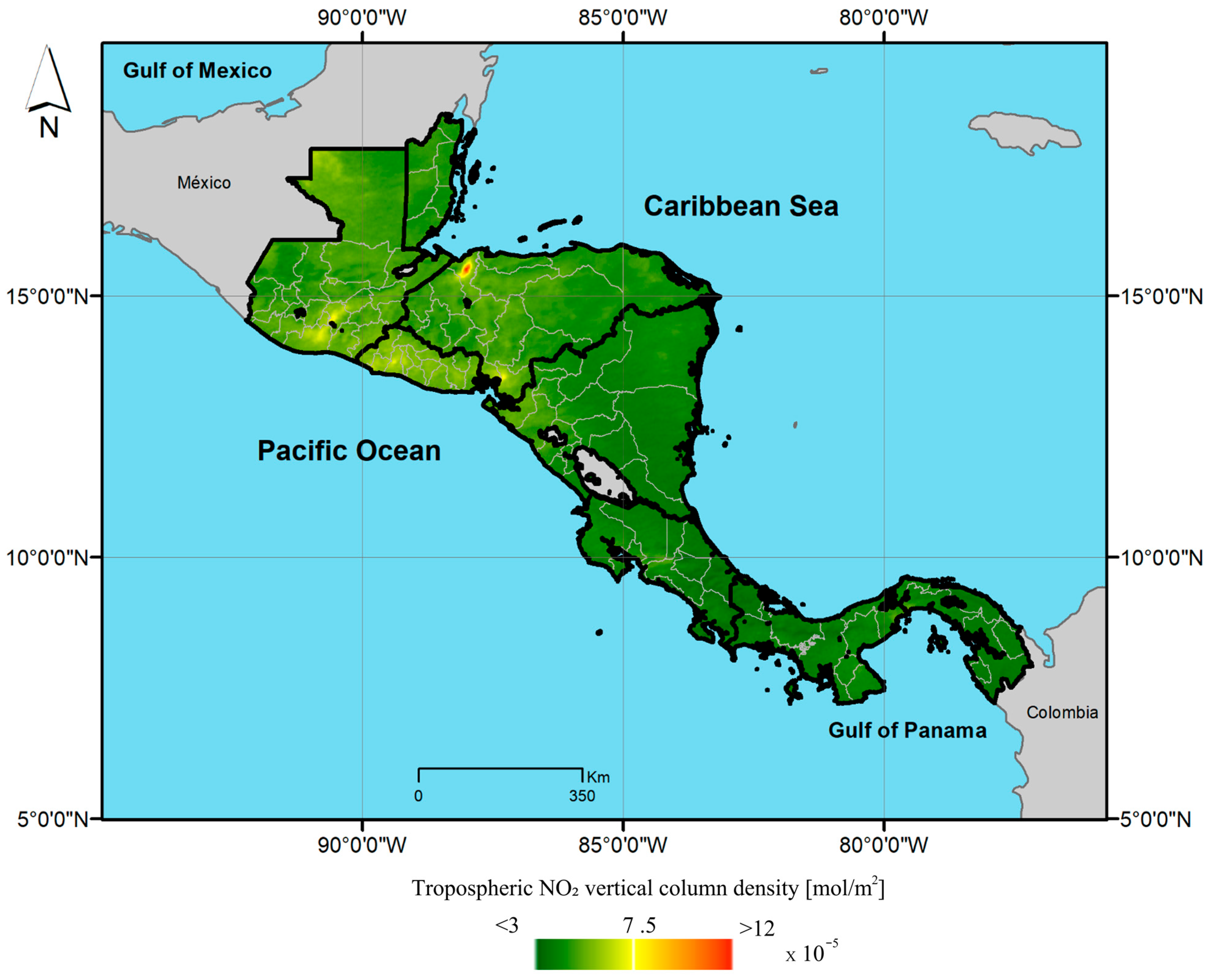
During the COVID-19 lockdown period (March–May 2020), a regionally consistent reduction in NO2 concentrations was observed across most of Central America (Figure 4). These reductions were particularly noticeable in metropolitan and high-density departments, where negative percentage variations below −30% were identified in several locations. In contrast, Nicaragua exhibited limited and spatially heterogeneous changes, consistent with the absence of strict nationwide mobility restrictions.
These findings suggest a spatial correspondence between NO2 concentrations and highly urbanized departments, as well as a noticeable temporal response potentially associated with reductions in anthropogenic activity during the lockdown period.

3.2. Temporal Variability of Tropospheric NO2 Concentrations (2019–2021)

The temporal analysis of tropospheric NO2 concentrations revealed noticeable seasonal and interannual variability across the Central American region. In general, NO2 levels generally exhibited higher values during the dry season, followed by a noticeable decline during the wet season, suggesting the influence of meteorological conditions on pollutant dispersion and atmospheric chemistry.
A clear decrease in NO2 concentrations was observed during the COVID-19 lockdown period (March–May 2020), altering the seasonal variability pattern previously observed in 2019. Following the lockdown, NO2 concentrations showed a gradual recovery throughout late 2020 and into 2021, although with notable spatial and temporal variability among countries. In several highly urbanized departments, NO2 levels approached or even exceeded pre-pandemic values, suggesting a progressive reactivation of anthropogenic activities and mobility patterns. Overall, the temporal dynamics indicate that NO2 concentrations may be influenced by both seasonal meteorological conditions and temporal changes in human activity, particularly during the COVID-19 lockdown period.

3.3. Changes in NO2 Concentrations During the COVID-19 Lockdown Period

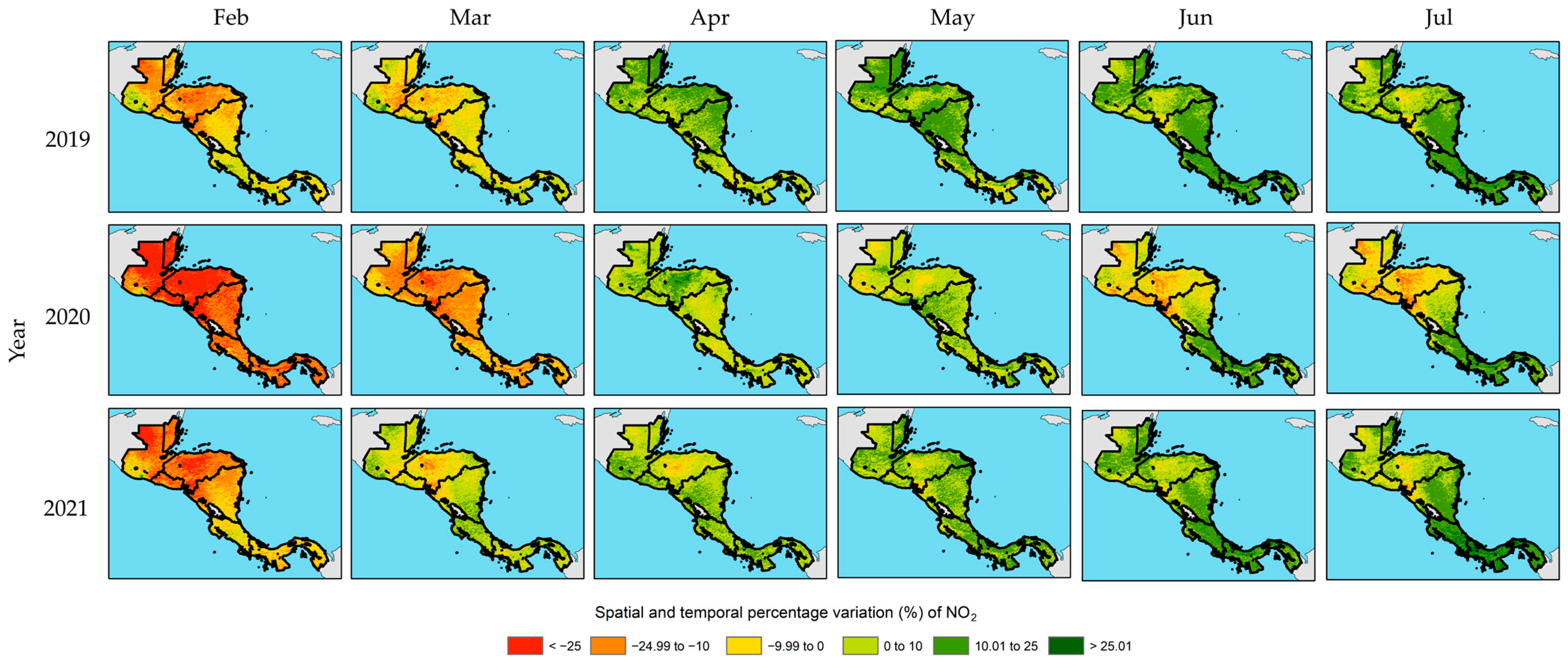
The analysis of percentage variations revealed noticeable reductions in tropospheric NO2 concentrations across Central America during the COVID-19 lockdown period (March–May 2020) relative to the COVID-19 lockdown reference period (Figure 5). On average, NO2 levels showed reductions ranging between approximately 20% and 30% across several high-density departments in the region, with strong localized negative percentage variations identified in several Central American departments during March 2020 relative to the study reference framework (MS, Table S2). The strongest negative percentage variations were observed in Choluteca (−57.56%), Valle (−51.07%), and Cortés (−50.88%) in Honduras.
The February–July period was selected for visualization because it encompasses the pre-lockdown, lockdown, and immediate post-lockdown phases across Central America, allowing a focused comparison of the months most directly associated with the implementation and gradual relaxation of mobility restriction measures.
The largest reductions were observed in Guatemala, El Salvador, and Honduras, where stricter mobility restrictions coincided with noticeable reductions in NO2 concentrations. In contrast, Nicaragua exhibited minimal and spatially heterogeneous changes, with some areas showing negligible variation or even slight increases, consistent with the absence of stringent lockdown measures.
At the subnational scale, high-density departments showed more pronounced reductions than predominantly rural areas, indicating an association between population density, urban mobility intensity, and NO2 variability. These patterns should nevertheless be interpreted as observational associations rather than direct causal attribution, since meteorological influences were not explicitly normalized and may also contribute to the observed spatial and temporal variability. The findings therefore suggest a potential association between reduced human activity during the lockdown period and NO2 variability across the region, while also highlighting the possible influence of seasonal and atmospheric conditions on the detected changes. Overall, the results suggest an association between COVID-19 mobility restrictions and changes in NO2 concentrations, with spatial patterns generally corresponding to levels of urbanization and policy implementation across the region.

3.4. Subnational Variability in High-Density Departments

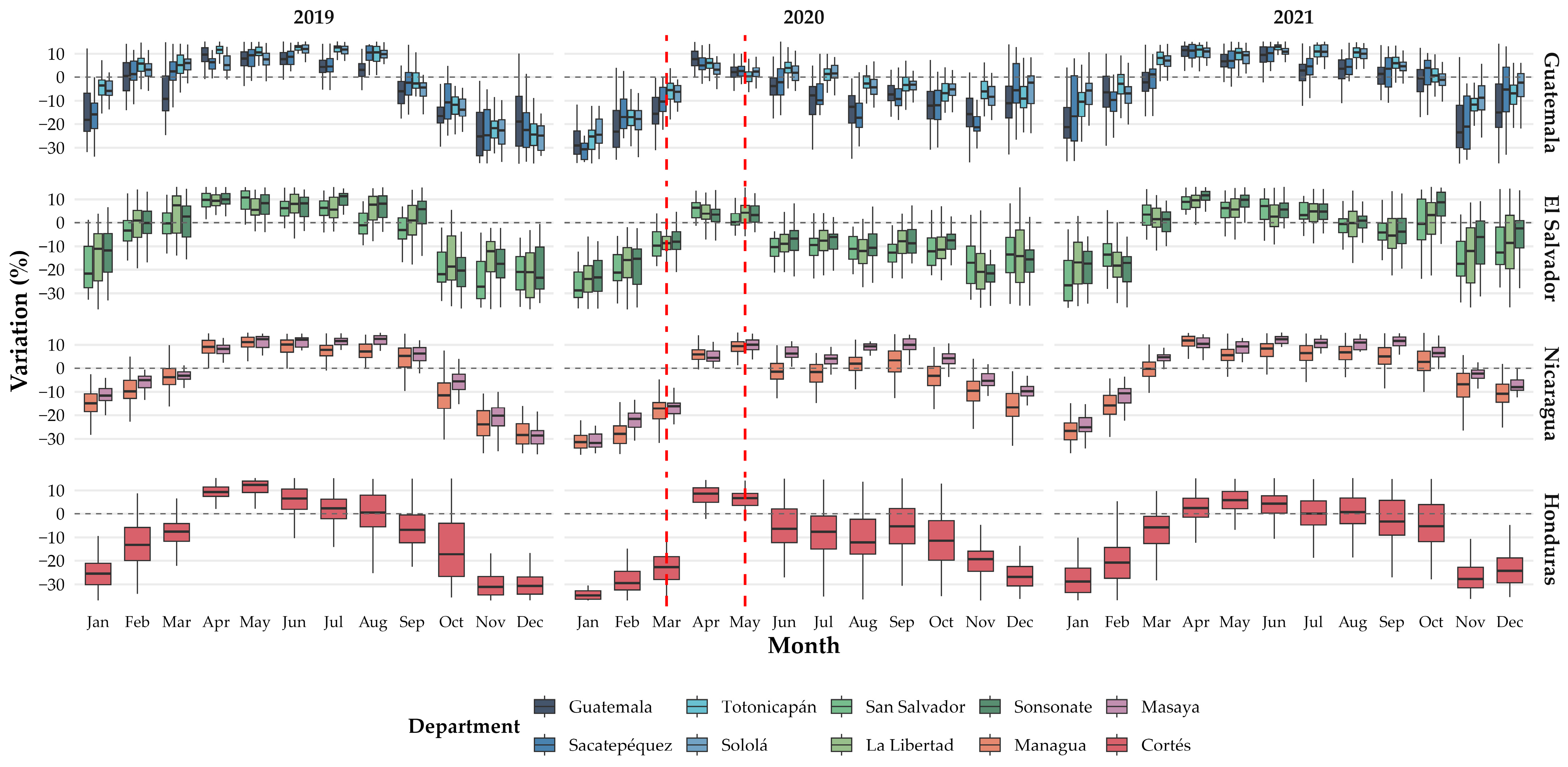
At the subnational level, the analysis of high-density departments revealed noticeable spatial variability in NO2 concentrations and their response to COVID-19 lockdown measures (Figure 6). Departments with the highest population densities, such as Guatemala (Guatemala), San Salvador (El Salvador), and Cortés (Honduras), generally exhibited the highest NO2 levels during the pre-lockdown period.
During the lockdown period, these highly urbanized departments experienced the most pronounced reductions in NO2 concentrations, with relative negative percentage variations below −30% observed in departments such as Guatemala, San Salvador, and Cortés. This pattern may be associated with urban mobility, vehicular traffic, and industrial activity influencing atmospheric NO2 concentrations. In contrast, departments with lower population densities, such as Sololá and Totonicapán (Guatemala), showed smaller reductions and greater variability, suggesting a weaker association with anthropogenic emissions.
Boxplot analysis further supported these patterns by showing a noticeable shift in the distribution of NO2 values during the lockdown period, characterized by lower median concentrations and narrower interquartile ranges in several high-density departments. These distributional changes suggest reduced temporal variability and a temporary homogenization of anthropogenic emission patterns during periods of mobility restrictions. Nevertheless, considerable heterogeneity among departments remained evident, reflecting differences in urbanization intensity, transportation activity, and regional atmospheric dynamics. Collectively, these results highlight the heterogeneous spatial response of atmospheric NO2 across Central America and its association with urbanization intensity and anthropogenic activity patterns.

4. Discussion

4.1. Synthesis of Key Findings

This study provides satellite-based evidence suggesting that tropospheric NO2 concentrations across Central America were temporally associated with changes in anthropogenic activity during the COVID-19 period. Elevated NO2 levels were primarily observed in highly urbanized departments of Guatemala, El Salvador, and Honduras, consistent with the concentration of transportation, industrial activity, and urban development in these areas [3,6,26].
A noticeable reduction in NO2 concentrations was observed during the March–May 2020 lockdown period, followed by a gradual recovery during late 2020 and 2021. Similar temporal patterns have been reported in previous TROPOMI-based studies conducted in other regions [6,8,27]. However, the magnitude and spatial consistency of these variations differed among Central American countries.
The stronger reductions observed in Guatemala, El Salvador, and Honduras contrasted with the weaker and more heterogeneous response in Nicaragua, where nationwide lockdown measures were limited. These regional differences suggest that NO2 variability during the COVID-19 period may have been influenced by both anthropogenic activity patterns and country-specific mobility restriction measures [28,29,30].

4.2. Spatiotemporal Controls on NO2 Variability

The spatial patterns identified in this study suggest that NO2 concentrations across Central America are associated with anthropogenic emission sources, particularly in highly urbanized departments. Elevated NO2 values observed in departments such as Guatemala, Escuintla, San Salvador, and Cortés likely reflect the influence of transportation networks, industrial activities, and urban expansion processes [31,32,33].
Seasonal variability was also evident, with generally higher NO2 concentrations during the dry season and lower values during the wet season. These temporal patterns may be influenced by meteorological conditions affecting pollutant accumulation, dispersion, and atmospheric chemistry [34,35,36,37].
In addition, the temporal coincidence between mobility restriction periods and negative NO2 variations suggests a potential association between reduced anthropogenic activity and short-term atmospheric changes during the COVID-19 period. However, meteorological influences were not explicitly normalized and may also contribute to the observed variability [6,8,28,29,30].

4.3. Impact of COVID-19 Lockdowns on NO2 Concentrations

The magnitude and spatial distribution of NO2 reductions observed in this study are consistent with previous satellite-based analyses conducted during the COVID-19 pandemic [19]. However, the results highlight considerable regional heterogeneity across Central America.
The strongest reductions were observed in Guatemala, El Salvador, and Honduras, where stricter mobility restrictions coincided with noticeable negative NO2 variations during the lockdown period. These countries contain highly concentrated urban systems where transportation and industrial activities likely represent important sources of atmospheric NO2 [38].
In contrast, Nicaragua exhibited weaker and more spatially heterogeneous variations, consistent with the absence of nationwide lockdown measures. This regional contrast suggests that the intensity of mobility restrictions may have influenced the magnitude of NO2 variability during the COVID-19 period [39,40].
The gradual recovery of NO2 concentrations during 2021 further suggests that the reductions observed during the lockdown period were likely temporary and associated with the progressive reactivation of anthropogenic activities [41,42].

4.4. Subnational Variability and Anthropogenic Activity Patterns

The analysis at the subnational level provides one of the most valuable contributions of this study. While many global studies focus on national or metropolitan averages, the results demonstrate that NO2 dynamics exhibit considerable intra-regional variability, even within relatively small geographic areas.
High-density departments such as Guatemala, San Salvador, and Cortés not only exhibited higher pre-lockdown NO2 concentrations but also stronger reductions during the lockdown period. This dual behavior is associated with higher pre-lockdown NO2 concentrations and a stronger association with urban mobility patterns, suggesting that more polluted urban systems may exhibit stronger atmospheric responses to reductions in anthropogenic activity. Similar patterns have been reported in recent satellite-based studies, where reductions in traffic volume were associated with marked decreases in NO2 concentrations due to the nonlinear relationship between emissions and atmospheric chemistry [43,44].
Furthermore, the reduction in variability, reflected in narrower interquartile ranges in boxplots, suggests a temporary homogenization of emission patterns during the lockdown period. This pattern suggests a temporary reduction and homogenization of anthropogenic activity during the lockdown period. In contrast, under normal conditions, the coexistence of multiple emission sources leads to greater spatial and temporal variability. Similar behavior has been reported in recent urban-scale analyses, where emission reductions during COVID-19 resulted in a more uniform spatial distribution of pollutants due to the suppression of localized sources [45]. This aspect has received limited attention in regional studies and may provide additional insights into the spatial dynamics of atmospheric pollutants during large-scale mobility disruptions.

4.5. Limitations and Future Research Directions

While the satellite-based approach provides broad spatial coverage, several methodological limitations must be considered. First, tropospheric NO2 vertical column density (VCD) represents an integrated atmospheric column rather than near-surface concentrations. Although TROPOMI data are widely used as proxies for anthropogenic emission patterns, the relationship between columnar and surface concentrations can vary depending on atmospheric conditions [14,26].
Second, the use of administrative boundaries introduces spatial aggregation effects that may obscure fine-scale variability, particularly in heterogeneous urban environments [17,31,32]. Future research should integrate higher-resolution datasets and urban morphology classifications to better capture emission gradients within cities [12,33].
Third, meteorological influences were not explicitly normalized. Therefore, the results should be interpreted primarily as a regional-scale observational assessment of NO2 spatiotemporal variability during the COVID-19 period rather than as a fully normalized attribution analysis. Although the multi-temporal comparison framework partially reduces this limitation, the incorporation of meteorological reanalysis datasets or chemical transport models could further improve the interpretation of emission-related atmospheric variability [11].
In addition, the fragmentation of available atmospheric monitoring networks across Central America limits the possibility of extensive ground-based validation of satellite-derived NO2 observations. Although TROPOMI products have been widely validated in previous international studies [8,14,15], the limited availability of long-term in situ observations in several Central American countries represents an additional source of uncertainty that should be considered when interpreting regional-scale atmospheric patterns.
Finally, the focus on NO2 alone limits the scope of interpretation. Air quality is influenced by complex interactions among multiple pollutants, including PM2.5, O3, and secondary aerosols [1,9,11]. Integrating multi-pollutant datasets would provide a more comprehensive understanding of atmospheric responses to large-scale disruptions in anthropogenic activity.

5. Conclusions

Satellite-based analysis using Sentinel-5P TROPOMI data and Google Earth Engine revealed pronounced spatiotemporal NO2 variability across Central America during the COVID-19 period. Highly urbanized departments generally exhibited higher NO2 concentrations, while the lockdown period coincided with regionally coherent negative NO2 variations, particularly in countries where stricter mobility restrictions were implemented.
The temporal alteration of seasonal NO2 patterns during March–May 2020, followed by a gradual recovery during 2021, suggests an association between atmospheric NO2 variability and changes in anthropogenic activity. At the subnational level, high-density departments showed stronger negative variations, highlighting the spatial influence of urbanization and mobility intensity on atmospheric pollution dynamics.
These findings highlight the usefulness of cloud-based remote sensing approaches for analyzing regional atmospheric dynamics in tropical regions with limited ground-based air quality monitoring networks. The integration of Sentinel-5P TROPOMI data within Google Earth Engine enabled efficient multi-temporal analysis of NO2 variability across Central America and may support future regional atmospheric monitoring and environmental assessment efforts in data-limited contexts.

Supplementary Materials

The following supporting information can be downloaded at: https://www.mdpi.com/article/10.3390/rs18111850/s1, Table S1: COVID-19 restriction periods, de-confinement phases, and qualitative restriction intensity across Central American countries included in the study; Table S2. Examples of localized negative percentage variations in tropospheric NO2 concentrations across selected Central American departments during March 2020 relative to the study reference framework.

Author Contributions

Conceptualization, N.E.A.C.S. and R.M.N.-C.; methodology, N.E.A.C.S., H.A.P.G., A.A.L.B., M.R.G.M. and V.M.L.M.; software, N.E.A.C.S.; validation, N.E.A.C.S., R.M.N.-C. and C.A.R.; formal analysis, N.E.A.C.S., R.M.N.-C., C.A.R. and V.M.L.M.; investigation, N.E.A.C.S.; resources, N.E.A.C.S.; data curation, N.E.A.C.S.; writing—original draft preparation, N.E.A.C.S., A.A.L.B., C.A.R. and R.M.N.-C.; writing—review and editing, N.E.A.C.S.; visualization, N.E.A.C.S., R.M.N.-C. and C.A.R.; supervision, R.M.N.-C. and C.A.R.; project administration, N.E.A.C.S.; funding acquisition, N.E.A.C.S. All authors have read and agreed to the published version of the manuscript.

Funding

This research was supported by the Organization of Ibero-American States (OEI) through the Paulo Freire+ Program for Doctoral Training, the Foundation for Cultural and Natural Maya Heritage (PACUNAM), and the National Fund for Science and Technology (FONACYT) under the EducaCTI funding scheme of the National Secretariat of Science and Technology (SENACYT), Guatemala. The article processing charges (APC) were funded by SENACYT through the EducaCTI program.

Data Availability Statement

The original contributions presented in the study are included in the article and Supplementary Materials. Further inquiries can be directed to the corresponding author.

Acknowledgments

Nestor Erick Anibal Caal Suc would like to express his sincere gratitude to the Organization of Ibero-American States for Education, Science and Culture (OEI), the Foundation for Cultural and Natural Maya Heritage (PACUNAM), and the National Secretariat of Science and Technology (SENACYT), Guatemala, for their valuable support during his doctoral training and the successful completion of this research.

Conflicts of Interest

The authors declare no conflicts of interest.

References

  1. Chen, Y.; Qin, R.; Zhang, G.; Albanwan, H. Spatial Temporal Analysis of Traffic Patterns during the COVID-19 Epidemic by Vehicle Detection Using Planet Remote-Sensing Satellite Images. Remote Sens. 2021, 13, 208. [Google Scholar] [CrossRef]
  2. Wagh, P.; Sojan, J.M.; Babu, S.J.; Valsala, R.; Bhatia, S.; Srivastav, R. Indicative Lake Water Quality Assessment Using Remote Sensing Images-Effect of COVID-19 Lockdown. Water 2021, 13, 73. [Google Scholar] [CrossRef]
  3. Gurjar, B.R.; Butler, T.M.; Lawrence, M.G.; Lelieveld, J. Evaluation of Emissions and Air Quality in Megacities. Atmos. Environ. 2008, 42, 1593–1606. [Google Scholar] [CrossRef]
  4. Burnett, R.; Chen, H.; Szyszkowicz, M.; Fann, N.; Hubbell, B.; Pope, C.A.; Apte, J.S.; Brauer, M.; Cohen, A.; Weichenthal, S.; et al. Global Estimates of Mortality Associated with Long-Term Exposure to Outdoor Fine Particulate Matter. Proc. Natl. Acad. Sci. USA 2018, 115, 9592–9597. [Google Scholar] [CrossRef] [PubMed]
  5. Lelieveld, J.; Pozzer, A.; Pöschl, U.; Fnais, M.; Haines, A.; Münzel, T. Loss of Life Expectancy from Air Pollution Compared to Other Risk Factors: A Worldwide Perspective. Cardiovasc. Res. 2020, 116, 1910–1917. [Google Scholar] [CrossRef] [PubMed]
  6. Venter, Z.S.; Aunan, K.; Chowdhury, S.; Lelieveld, J. COVID-19 Lockdowns Cause Global Air Pollution Declines. Proc. Natl. Acad. Sci. USA 2020, 117, 18984–18990. [Google Scholar] [CrossRef]
  7. Berman, J.D.; Ebisu, K. Changes in U.S. Air Pollution during the COVID-19 Pandemic. Sci. Total Environ. 2020, 739, 139864. [Google Scholar] [CrossRef]
  8. Bauwens, M.; Compernolle, S.; Stavrakou, T.; Müller, J.F.; van Gent, J.; Eskes, H.; Levelt, P.F.; van der, A.R.; Veefkind, J.P.; Vlietinck, J.; et al. Impact of Coronavirus Outbreak on NO2 Pollution Assessed Using TROPOMI and OMI Observations. Geophys. Res. Lett. 2020, 47, e2020GL087978. [Google Scholar] [CrossRef]
  9. Le, T.; Wang, Y.; Liu, L.; Yang, J.; Yung, Y.L.; Li, G.; Seinfeld, J.H. Unexpected Air Pollution with Marked Emission Reductions during the COVID-19 Outbreak in China. Science 2020, 369, 702–706. [Google Scholar] [CrossRef]
  10. Rodríguez-Urrego, D.; Rodríguez-Urrego, L. Air Quality during the COVID-19: PM2.5 Analysis in the 50 Most Polluted Capital Cities in the World. Environ. Pollut. 2020, 266, 115042. [Google Scholar] [CrossRef]
  11. Menut, L.; Bessagnet, B.; Siour, G.; Mailler, S.; Pennel, R.; Cholakian, A. Impact of Lockdown Measures to Combat COVID-19 on Air Quality over Western Europe. Sci. Total Environ. 2020, 741, 140426. [Google Scholar] [CrossRef]
  12. Gorelick, N.; Hancher, M.; Dixon, M.; Ilyushchenko, S.; Thau, D.; Moore, R. Google Earth Engine: Planetary-Scale Geospatial Analysis for Everyone. Remote Sens. Environ. 2017, 202, 18–27. [Google Scholar] [CrossRef]
  13. Goldberg, D.L.; Harkey, M.; de Foy, B.; Judd, L.; Johnson, J.; Yarwood, G.; Holloway, T. Evaluating NOx Emissions and Their Effect on O3 Production in Texas Using TROPOMI NO2 and HCHO. Atmos. Chem. Phys. 2022, 22, 10875–10894. [Google Scholar] [CrossRef]
  14. Ialongo, I.; Virta, H.; Eskes, H.; Hovila, J.; Douros, J. Comparison of TROPOMI/Sentinel-5 Precursor NO2 Observations with Ground-Based Measurements in Helsinki. Atmos. Meas. Tech. 2020, 13, 205–220. [Google Scholar] [CrossRef]
  15. Cersosimo, A.; Serio, C.; Masiello, G. TROPOMI NO2 Tropospheric Column Data: Regridding to 1 Km Grid-Resolution and Assessment of Their Consistency with in Situ Surface Observations. Remote Sens. 2020, 12, 2212. [Google Scholar] [CrossRef]
  16. World Bank. World Development Indicators; World Bank: Washington, DC, USA, 2025. [Google Scholar]
  17. European Commission. Applying the Degree of Urbanisation: A Methodological Manual to Define Cities, Towns and Rural Areas for International Comparisons; Publications Office of the European Union: Luxembourg, 2021. [Google Scholar]
  18. Tamiminia, H.; Salehi, B.; Mahdianpari, M.; Quackenbush, L.; Adeli, S.; Brisco, B. Google Earth Engine for geo-big data applications: A meta-analysis and systematic review. ISPRS J. Photogramm. Remote Sens. 2020, 164, 152–170. [Google Scholar] [CrossRef]
  19. Veefkind, J.P.; Aben, I.; McMullan, K.; Förster, H.; de Vries, J.; Otter, G.; Claas, J.; Eskes, H.J.; de Haan, J.F.; Kleipool, Q.; et al. TROPOMI on the ESA Sentinel-5 Precursor: A GMES Mission for Global Observations of the Atmospheric Composition for Climate, Air Quality and Ozone Layer Applications. Remote Sens. Environ. 2012, 120, 70–83. [Google Scholar] [CrossRef]
  20. van Geffen, J.; Boersma, K.F.; Eskes, H.; Sneep, M.; ter Linden, M.; Zara, M.; Veefkind, J.P. S5P TROPOMI NO2 Slant Column Retrieval: Method, Stability, Uncertainties and Comparisons with OMI. Atmos. Meas. Tech. 2020, 13, 1315–1335. [Google Scholar] [CrossRef]
  21. Pseftogkas, A.; Koukouli, M.E.; Segers, A.; Manders, A.; van Geffen, J.; Balis, D.; Meleti, C.; Stavrakou, T.; Eskes, H. Comparison of S5P/TROPOMI Inferred NO2 Surface Concentrations with In Situ Measurements over Central Europe. Remote Sens. 2022, 14, 4886. [Google Scholar] [CrossRef]
  22. Sannigrahi, S.; Kumar, P.; Molter, A.; Zhang, Q.; Basu, B.; Basu, A.S.; Pilla, F. Examining the Status of Improved Air Quality in World Cities Due to COVID-19-Led Temporary Reduction in Anthropogenic Emissions. Environ. Res. 2021, 196, 110927. [Google Scholar] [CrossRef]
  23. Halder, B.; Ahmadianfar, I.; Heddam, S.; Mussa, Z.H.; Goliatt, L.; Tan, M.L.; Sa’adi, Z.; Al-Khafaji, Z.; Al-Ansari, N.; Jawad, A.H.; et al. Machine Learning-Based Country-Level Annual Air Pollutants Exploration Using Sentinel-5P and Google Earth Engine. Sci. Rep. 2023, 13, 34774. [Google Scholar] [CrossRef]
  24. Faisal, M.; Jaelani, L.M. Spatio-Temporal Analysis of Nitrogen Dioxide (NO2) from Sentinel-5P Imageries Using Google Earth Engine Changes during the COVID-19 Social Restriction Policy in Jakarta. Nat. Hazards Res. 2023, 3, 95–104. [Google Scholar] [CrossRef]
  25. Perilla, G.A.; Mas, J.F. Google Earth Engine—GEE: A Powerful Tool Linking the Potential of Massive Data and the Efficiency of Cloud Processing. Investig. Geogr. 2020, 102, 1–15. [Google Scholar] [CrossRef]
  26. Goldberg, D.L.; Anenberg, S.C.; Kerr, G.H.; Mohegh, A.; Lu, Z.; Streets, D.G. TROPOMI NO2 in the United States: A Detailed Look at the Annual Averages, Weekly Cycles, Effects of Temperature, and Correlation with Surface NO2 Concentrations. Earth’s Future 2021, 9, e2020EF001665. [Google Scholar] [CrossRef]
  27. Pacheco, H.; Díaz-López, S.; Jarre, E.; Méndez, W.; Zamora-Ledezma, E. NO2 Levels after the COVID-19 Lockdown in Ecuador: A Trade-off between Environment and Human Health. Urban. Clim. 2020, 34, 100674. [Google Scholar] [CrossRef] [PubMed]
  28. Baldasano, J.M. COVID-19 Lockdown Effects on Air Quality by NO2 in the Cities of Barcelona and Madrid (Spain). Sci. Total Environ. 2020, 741, 140353. [Google Scholar] [CrossRef] [PubMed]
  29. Petetin, H.; Bowdalo, D.; Soret, A.; Guevara, M.; Jorba, O.; Serradell, K.; Pérez García-Pando, C. Meteorology-Normalized Impact of the COVID-19 Lockdown upon NO2 Pollution in Spain. Atmos. Chem. Phys. 2020, 20, 11119–11141. [Google Scholar] [CrossRef]
  30. Gkatzelis, G.I.; Gilman, J.B.; Brown, S.S.; Eskes, H.; Gomes, A.R.; Lange, A.C.; McDonald, B.C.; Peischl, J.; Petzold, A.; Thompson, C.R.; et al. The Global Impacts of COVID-19 Lockdowns on Urban Air Pollution: A Critical Review and Recommendations. Elem. Sci. Anthr. 2021, 9, 00176. [Google Scholar] [CrossRef]
  31. Zhang, Z.; Arshad, A.; Zhang, C.; Hussain, S.; Li, W. Unprecedented Temporary Reduction in Global Air Pollution Associated with COVID-19 Forced Confinement: A Continental and City Scale Analysis. Remote Sens. 2020, 12, 2420. [Google Scholar] [CrossRef]
  32. Duncan, B.N.; Yoshida, Y.; de Foy, B.; Lamsal, L.N.; Streets, D.G.; Lu, Z.; Pickering, K.E.; Krotkov, N.A. The Observed Response of Ozone Monitoring Instrument (OMI) NO2 Columns to NOx Emission Controls on Power Plants in the United States: 2005–2011. Atmos. Environ. 2013, 81, 102–111. [Google Scholar] [CrossRef]
  33. Chen, K.; Wang, M.; Huang, C.; Kinney, P.L.; Anastas, P.T. Air Pollution Reduction and Mortality Benefit during the COVID-19 Outbreak in China. Lancet Planet Health 2020, 4, e210–e212. [Google Scholar] [CrossRef]
  34. Yan, C.; Zhang, X.; Yu, Y.; Liu, Y.; Wu, X.; Zheng, X.; Shi, G.; Yang, F. Exploring the Key Meteorological Drivers of Air Pollution by Intrinsically Interpretable Deep Learning. Environ. Model. Softw. 2025, 192, 106571. [Google Scholar] [CrossRef]
  35. Mehmood, K.; Bao, Y.; Mushtaq, S.; Saifullah, S.; Khan, M.A.; Siddique, N.; Bilal, M.; Heng, Z.; Huan, L.; Tariq, M.; et al. Perspectives from Remote Sensing to Investigate the COVID-19 Pandemic: A Future-Oriented Approach. Front. Public Health 2022, 10, 938811. [Google Scholar] [CrossRef] [PubMed]
  36. Wang, C.; Wang, T.; Wang, P.; Wang, W. Assessment of the Performance of TROPOMI NO2/SO2 Data Products in the North China Plain: Comparison, Correction and Application. Remote Sens. 2022, 14, 214. [Google Scholar] [CrossRef]
  37. Chuvieco, E.; Pettinari, M.L.; Koutsias, N.; Forkel, M.; Hantson, S.; Turco, M. Human and Climate Drivers of Global Biomass Burning Variability. Sci. Total Environ. 2021, 779, 146361. [Google Scholar] [CrossRef]
  38. Guevara, M.; Jorba, O.; Soret, A.; Petetin, H.; Bowdalo, D.; Serradell, K.; Tena, C.; Van Der Gon, H.D.; Kuenen, J.; Peuch, V.H.; et al. Time-Resolved Emission Reductions for Atmospheric Chemistry Modelling in Europe during the COVID-19 Lockdowns. Atmos. Chem. Phys. 2021, 21, 773–797. [Google Scholar] [CrossRef]
  39. Hale, T.; Angrist, N.; Goldszmidt, R.; Kira, B.; Petherick, A.; Phillips, T.; Webster, S.; Cameron-Blake, E.; Hallas, L.; Majumdar, S.; et al. A Global Panel Database of Pandemic Policies (Oxford COVID-19 Government Response Tracker). Nat. Hum. Behav. 2021, 5, 529–538. [Google Scholar] [CrossRef]
  40. Forster, P.M.; Forster, H.I.; Evans, M.J.; Gidden, M.J.; Jones, C.D.; Keller, C.A.; Lamboll, R.D.; Le Quéré, C.; Rogelj, J.; Rosen, D.; et al. Current and Future Global Climate Impacts Resulting from COVID-19. Nat. Clim. Chang. 2020, 10, 913–919. [Google Scholar] [CrossRef]
  41. Liu, F.; Wang, M.; Zheng, M. Effects of COVID-19 Lockdown on Global Air Quality and Health. Sci. Total Environ. 2021, 755, 142533. [Google Scholar] [CrossRef] [PubMed]
  42. Sicard, P.; Agathokleous, E.; De Marco, A.; Paoletti, E.; Calatayud, V. Urban Population Exposure to Air Pollution in Europe over the Last Decades. Environ. Sci. Eur. 2021, 33, 33. [Google Scholar] [CrossRef]
  43. Liu, S.; Valks, P.; Beirle, S.; Loyola, D.G. Nitrogen Dioxide Decline and Rebound Observed by GOME-2 and TROPOMI during COVID-19 Pandemic. Air Qual. Atmos. Health 2021, 14, 1251–1266. [Google Scholar] [CrossRef]
  44. Zhu, Q.; Laughner, J.L.; Cohen, R.C. Combining Machine Learning and Satellite Observations to Predict Spatial and Temporal Variation of near Surface OH in North American Cities. Environ. Sci. Technol. 2022, 56, 2926–2934. [Google Scholar] [CrossRef]
  45. Lonsdale, C.R.; Sun, K. Nitrogen Oxides Emissions from Selected Cities in North America, Europe, and East Asia Observed by the TROPOspheric Monitoring Instrument (TROPOMI) before and after the COVID-19 pandemic. Atmos. Chem. Phys. 2023, 23, 8727–8750. [Google Scholar] [CrossRef]
Figure 1. Spatial distribution of population density across Central America at the departmental level. Circle size represents population density classes (in h km−2), while stars indicate national capitals. Administrative boundaries are shown in black.
Remotesensing 18 01850 g001
Figure 2. Timeline of COVID-19 restriction phases across Central America during 2020. Restriction periods and mobility restriction measures were compiled from official governmental decrees, executive orders, and national emergency regulations issued by each country during the COVID-19 period. Restriction intensity categories were used only for general comparative interpretation of mobility limitation measures across countries.
Remotesensing 18 01850 g002
Figure 3. Spatial distribution of selected high-density departments and capital cities in Central America. Yellow circles represent selected high-density departments, and purple stars indicate national capital cities. The numbered labels (1–10) correspond to the departments listed in Table 1, enabling direct cross-referencing between spatial location and associated demographic attributes. Territorial boundaries are included for contextual reference.
Remotesensing 18 01850 g003
Figure 4. Spatial distribution of tropospheric NO2 vertical column density (mol m−2) across Central America, expressed as median values during the COVID-19 lockdown reference period (1 March–31 May 2020).
Remotesensing 18 01850 g004
Figure 5. Spatial and temporal relative percentage variation (%) of tropospheric NO2 concentrations across Central America during the February–July period of 2019–2021 relative to the COVID-19 lockdown reference period (March–May 2020).
Remotesensing 18 01850 g005
Figure 6. Monthly relative percentage variation of tropospheric NO2 concentrations in selected high-density departments across Central America (2019–2021). Red dashed lines indicate the COVID-19 lockdown reference period (March–May 2020).
Remotesensing 18 01850 g006
Table 1. Selected high-density departments in Central America, including total population, area, and population density (in h km−2).
NoCountryDepartmentTotal PopulationArea (km2)Population Density (inh km−2)
1El SalvadorSan Salvador1,738,667954.941820.72
2GuatemalaGuatemala3,103,6852353.341318.84
3GuatemalaSacatepéquez310,037575.71538.53
4NicaraguaMasaya348,254649.3536.35
5El SalvadorLa Libertad738,8441764.49418.73
6GuatemalaTotonicapán461,8381160.59397.93
7NicaraguaManagua1,448,2713659.37395.77
8HondurasCortés1,650,3704231.19390.05
9GuatemalaSololá424,0681118.14379.26
10El SalvadorSonsonate461,4751300.63354.81
Note: Population, area, and population density data were obtained from the World Bank [16] and national statistical agencies.
Disclaimer/Publisher’s Note: The statements, opinions and data contained in all publications are solely those of the individual author(s) and contributor(s) and not of MDPI and/or the editor(s). MDPI and/or the editor(s) disclaim responsibility for any injury to people or property resulting from any ideas, methods, instructions or products referred to in the content.