


Highlights
What are the main findings?
- Among four remote sensing salinity index models (SDI1–SDI4), the SDI1 (SI-NDVI) model achieved the highest overall accuracy of 86.21% and was identified as the most suitable for soil salinization inversion in the Yellow River Delta region.
- Over the past 30 years, soil salinization in Zhanhua District exhibited a spatial pattern of “lighter in the south and heavier in the north,” with a phased evolution from “severe in the north and mild in the south” to “overall expansion” and finally to “improvement in the north and optimization in the south.” Evaporation was identified as the dominant driving factor (SHAP value = 0.3357), followed by precipitation and population density.
What are the implications of the main findings?
- The optimal SDI1 model provides a reliable and cost-effective remote sensing tool for regional-scale soil salinization monitoring, supporting the formulation of zoning-based and differentiated engineering and ecological management strategies for saline–alkali land in coastal areas.
- The XGBoost-SHAP quantification of driving factors reveals the coupled effects of climate change and human activities on salinization. CMIP6 scenario projections indicate that the SSP1-2.6 low-emission pathway offers the greatest potential for mitigating soil salinization by 2100, providing scientific support for sustainable land management and climate adaptation policies.
Abstract
Understanding the spatiotemporal evolution and driving mechanisms of soil salinization in the Yellow River Delta is a key research focus in the comprehensive utilization of saline–alkali land. Taking Zhanhua District as the study area, this study extracted soil salinization information using four remote sensing salinity index models (SDI1, SDI2, SDI3, SDI4). Model accuracy was evaluated, and the optimal model (SDI1, with an overall accuracy of 86.21%) was selected to analyze the spatiotemporal dynamics of soil salinization from 1993 to 2023. The XGBoost-SHAP framework was then applied to identify and interpret the driving factors of salinization. Furthermore, future soil salinization trends under climate change were projected based on four scenarios from the Sixth Coupled Model Intercomparison Project (CMIP6), including SSP1-2.6 (low forcing), SSP2-4.5 (medium forcing), SSP3-7.0 (medium-to-high-forcing), and SSP5-8.5 (high forcing). The results show the following: (1) Spatially, soil salinization in Zhanhua District exhibits a pattern of being “lighter in the south and heavier in the north.” Over the past 30 years, salinization has undergone a phased evolution characterized by a transition from “severe in the north and mild in the south” to “overall expansion” and finally to “improvement in the north and optimization in the south,” while the proportional structure of salinization severity levels has remained relatively stable. (2) Among the driving factors, evaporation is the dominant contributor (SHAP value = 0.3357), followed by precipitation (0.1732) and population density (0.1518). Soil moisture, land use, and temperature exert moderate influences, while nighttime light intensity, slope, and elevation contribute relatively less. Overall, soil salinization is jointly controlled by climatic factors and human–nature interactions. (3) Among the future climate scenarios, the SSP1-2.6 low-emission scenario exhibits the most pronounced mitigation trend, with a further reduction in salinization intensity projected by 2100. This study provides a scientific basis and data support for formulating soil salinization control and saline–alkali land management strategies in Zhanhua District and the Yellow River Delta.
1. Introduction
Soil salinization is a major type of global land degradation, posing long-term threats to agricultural production, ecosystem stability, and regional food security [1,2,3,4,5]. Approximately 20% of irrigated farmland worldwide is affected by salinization, while coastal areas face even greater risks due to the combined effects of sea-level rise, seawater intrusion, and human activities [6]. The total area of salinized soil in China is approximately 3.67 × 10⁷ hectares, primarily distributed in the arid and semi-arid regions of central and western China, Northeast China, and the eastern coastal areas. Among these, the coastal saline–alkali land in the Yellow River Delta is the most typical example [6,7,8].
Zhanhua District, Binzhou City, Shandong Province, located in the core area of the Yellow River Delta, is a typical region where coastal soil salinization is highly concentrated. In this area, evaporation far exceeds precipitation, the groundwater table is shallow, and groundwater mineralization is high. Under the dual influence of the Yellow River sediment parent material and historical marine transgressions, soil salinization has reached high levels with a wide spatial distribution. In recent years, human activities such as the expansion of aquaculture, the intensification of agricultural development, and the advancement of urban construction have continuously intensified, constantly disturbing the regional water–salt balance and accelerating the evolution of soil salinization. This has imposed direct constraints on local farmland quality, sustainable agricultural development, and ecosystem stability, making the need for salinization control and management increasingly urgent [9]. Therefore, conducting systematic research on the long-term spatiotemporal evolution and driving mechanisms of salinization in this region can provide a practical basis for regional salinization management and efficient land resource utilization, as well as offer practical references for salinization control in similar coastal areas.
To effectively address the issues of high cost, low efficiency, and limited spatial representativeness associated with traditional ground survey methods, scholars at home and abroad have conducted relevant research on soil salinization monitoring using remote sensing technology [10,11]. Common salinity inversion methods mainly include the calculation of remote sensing spectral indices such as the Salinity Index (SI), the Normalized Difference Vegetation Index (NDVI), the Modified Soil-Adjusted Vegetation Index (MSAVI), albedo, and the Brightness Index (BI) [12,13,14,15,16,17]. Numerous studies have explored the effectiveness of these indices. Yang Jinsong and McKinney R et al. employed electromagnetic induction instruments (EM38) and demonstrated a strong correspondence between NDVI and soil electrical conductivity, as well as depth-dependent responses of conductivity to soil salinity [18,19]. Ding Jianli et al. successfully inverted the spatial distribution of soil salinity in arid regions by establishing quantitative relationships between surface feature vectors and salinization processes [20,21]. Feng Juan et al. developed an albedo-MSAVI feature space-based monitoring model, confirming its high correlation with soil salinity and its effectiveness for quantitative salinization assessment in the Weiku Oasis [22]. However, although existing remote sensing indices and inversion models have become increasingly mature, current research still has certain limitations. Most scholars use a single index to extract salinization information, while the construction and systematic comparative application of multi-index combination models remain relatively limited. Moreover, among the few studies that have adopted combined models, most have conducted model selection based on data from a single region, a limited number of temporal phases, and single accuracy metrics, lacking systematic comparison and stability testing over long time series. Consequently, the reliability of these models for long-term time series analysis is difficult to ensure. Clarifying historical evolution patterns based on long-term inversion results is a prerequisite for accurately predicting future salinization trends. CMIP6 multi-scenario climate data provide crucial support for this purpose, as they can reflect salinization dynamics under recent climate adaptation backgrounds and be used to assess regional ecological risks under long-term climate trends.
Regarding the driving mechanisms of soil salinization, the combined effects of climate, topography, soil properties, hydrology, and human activities have been widely confirmed [23,24]. In terms of research methods for driving mechanisms, current studies predominantly employ traditional analytical and spatial statistical methods such as correlation analysis, regression analysis, structural equation modeling, and geographically weighted regression. However, these methods are still somewhat inadequate for disentangling the complex nonlinear relationships among multiple factors [25,26,27]. With the continuous advancement of research, machine learning methods, owing to their excellent nonlinear fitting capabilities, are gradually being applied to the analysis of driving factors in soil salinization.
On this basis, the objectives of the present study are threefold: (1) to construct four remote sensing salinity monitoring index models—SDI1 (SI-NDVI), SDI2 (SI-MSAVI), SDI3 (SI-albedo), and SDI4 (albedo-MSAVI)—using Landsat imagery and field-measured data from Zhanhua District, and to identify the optimal model for analyzing the spatiotemporal of soil salinization; (2) to employ the XGBoost machine learning model in combination with the SHAP interpretability framework to quantify the contributions and interaction pathways of factors topographic, climatic, soil, and human activity factors, including elevation, slope, precipitation, temperature, soil moisture, evapotranspiration, land use, population density, and nighttime light intensity; and (3) to predict future soil salinization trends in Zhanhua District under four scenarios from the Sixth Coupled Model Intercomparison Project (CMIP6), namely SSP1-2.6 (low forcing), SSP2-4.5 (medium forcing), SSP3-7.0 (medium-to-high forcing), and SSP5-8.5 (high forcing). By integrating remote sensing analysis with machine learning approaches, this study aims to elucidate the coupled effects of natural conditions and human activities on soil salinization and to provide scientific support for the sustainable management and utilization of saline–alkali land in coastal regions.
2. Data and Methods
2.1. Overview of the Study Area
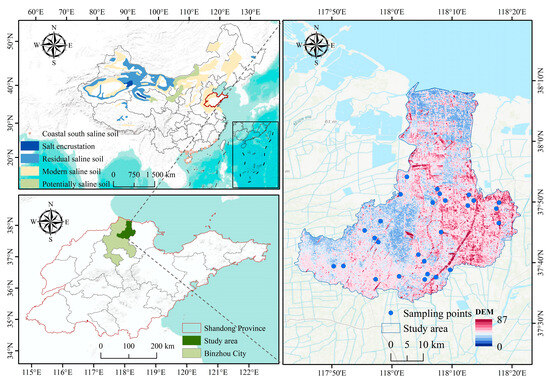
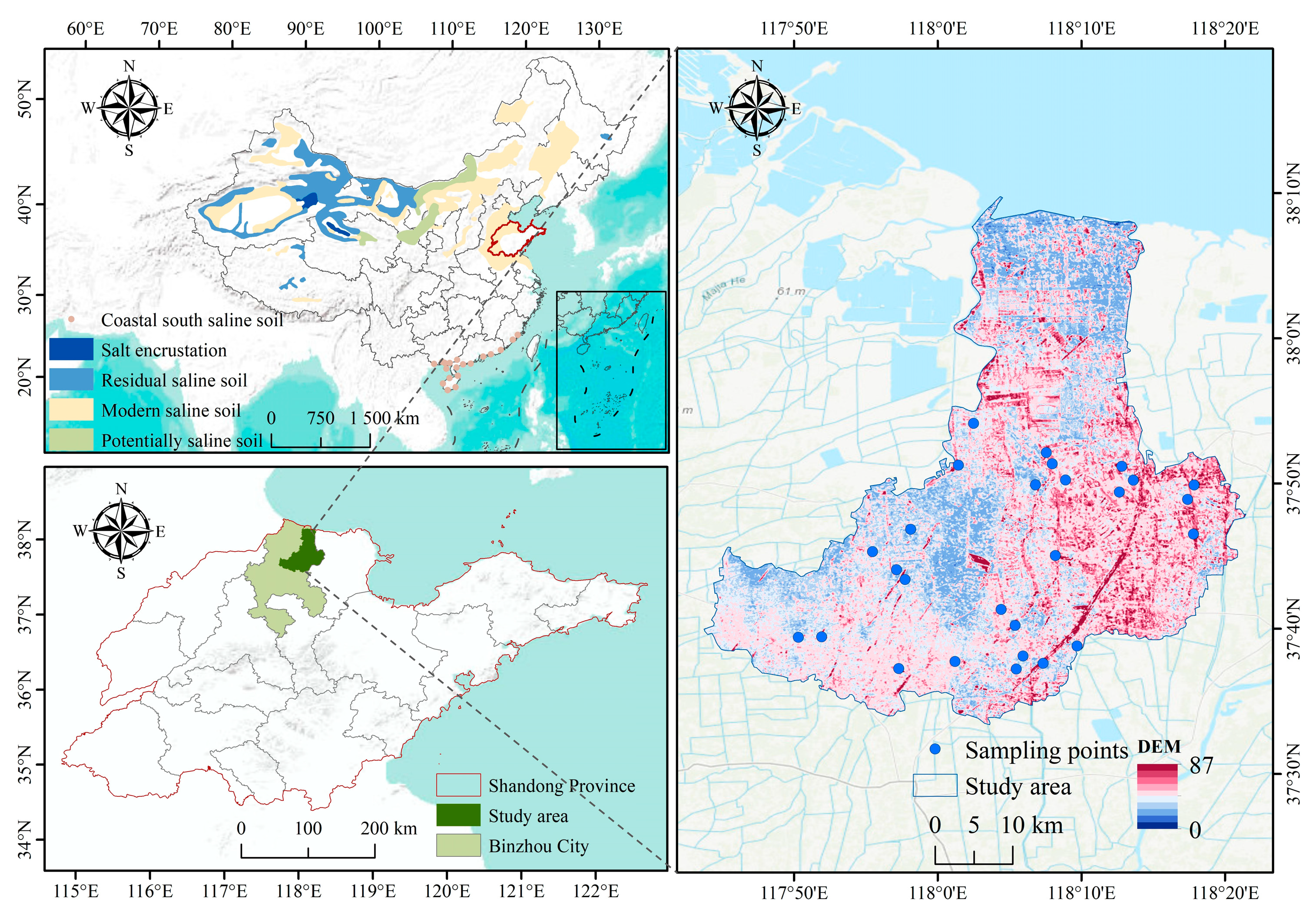
Zhanhua District is located in northern Shandong Province, at the terminus of the Yellow River and the lower reaches of the Tuhai River, along the southern coast of the Bohai Sea (37°34′–38°24′N, 117°43′–118°37′E). It borders Hekou District and Lijin County of Dongying City to the east and southeast, Yangxin and Wudi counties to the west, Bincheng District to the south, and the Bohai Sea to the north, covering a total area of approximately 2217 km2. The district is an important agricultural production area and a representative saline–alkali land distribution region in the lower Yellow River basin.
The study area is situated in the transitional zone between the lower Yellow River alluvial plain and the mountainous area of central-southern Shandong. The topography generally exhibits a stepwise descending pattern from southeast to north, with gentle land surface slopes (Figure 1). Stratigraphically, the area is dominated by Quaternary unconsolidated sediments, forming a typical alluvial–proluvial plain landscape associated with the Yellow River.
Figure 1.
Overview map of the study area.
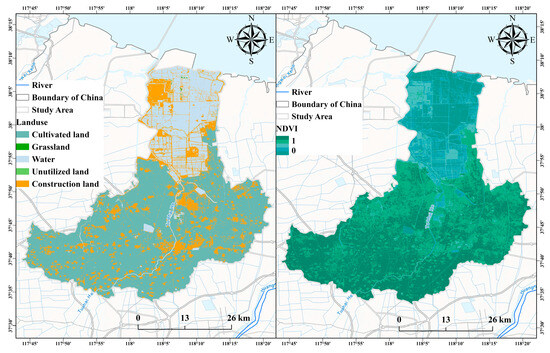
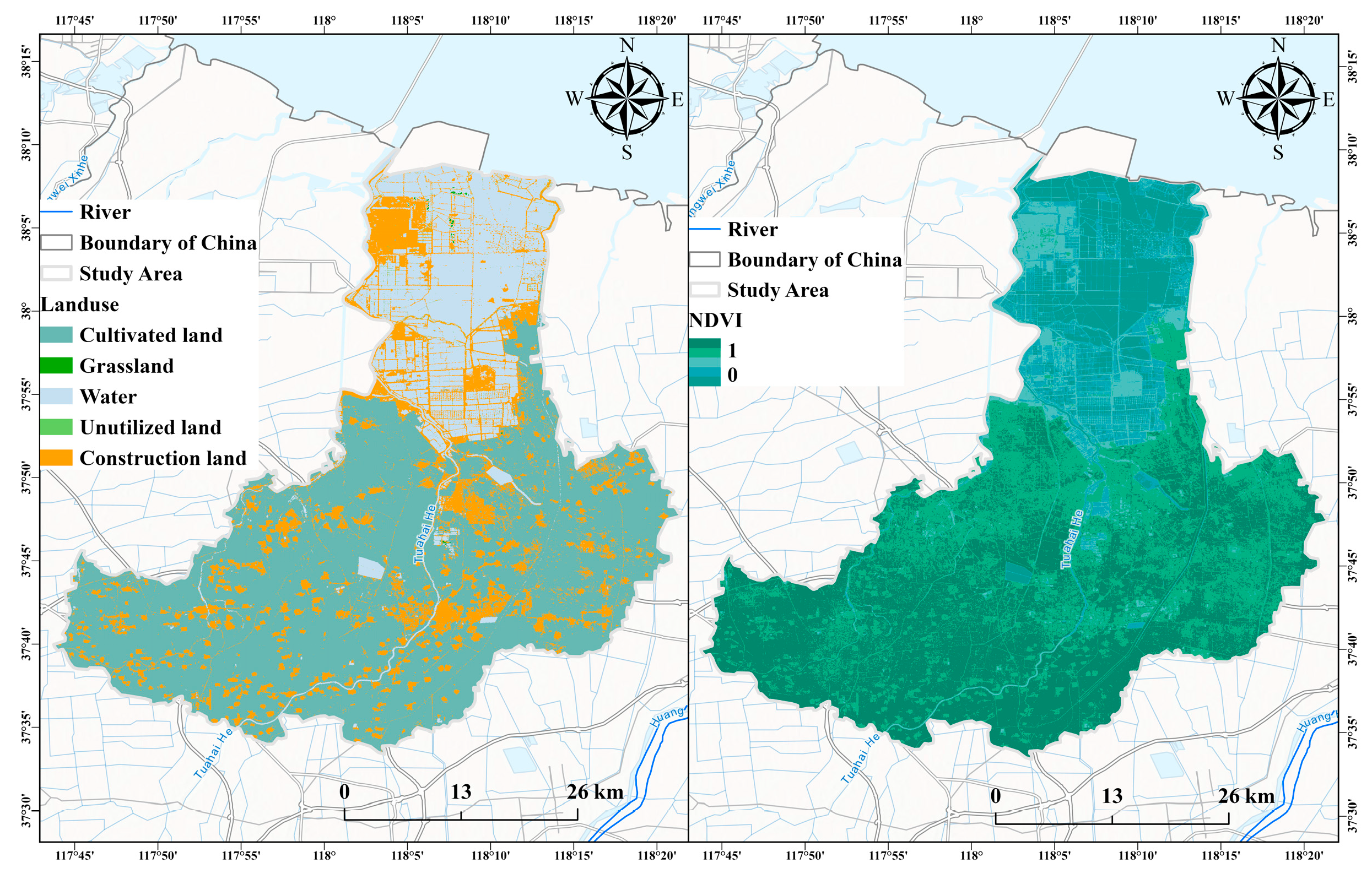
Zhanhua District experiences a temperate continental monsoon climate, with a mean annual temperature of approximately 13.3 °C and an average annual precipitation of about 580 mm, most of which occurs between June and September. In contrast, mean annual evaporation reaches approximately 1850 mm, far exceeding the precipitation. The main river systems include the Tuhai, Qinkou, and Chao rivers, all of which originate within the district and flow from west to east into the Bohai sea. These rivers exhibit strong seasonal hydrological variability, characterized by high water levels during summer and low or even intermittent flow in winter. The soil and rock strata mainly consist of Quaternary unconsolidated deposits such as silt, silty clay, and sandy soil. These fine-textured materials exhibit low permeability, restricting vertical water and salt movement, while their mineralogical and chemical properties further promote soil salinization. The land use type is mainly cultivated land, with dense vegetation coverage (Figure 2).
Figure 2.
Land use type and vegetation cover map.
2.2. Data Sources and Processing
2.2.1. Remote Sensing Image Data
The satellite imagery employed in this research comes from the Landsat Collection 2 Level 2 products, which are distributed by the U.S. Geological Survey (USGS) and accessible via the Google Earth Engine (GEE) platform. This dataset comprises surface reflectance data from three Landsat sensors: the Thematic Mapper (TM) onboard Landsat 5, the Enhanced Thematic Mapper Plus (ETM+) on Landsat 7, and the Operational Land Imager/Thermal Infrared Sensor (OLI/TIRS) on Landsat 8, each providing a ground resolution of 30 m.
Considering the availability of data and the quality of images across the study region, we selected Landsat scenes spanning from 1993 to 2024. All selected images underwent standard pre-processing routines—including geometric rectification, radiometric calibration, and atmospheric correction—to guarantee consistency in the resulting data layers. After these corrections, the images were cropped to the study area’s boundary for subsequent analytical steps.
2.2.2. Field-Measured Data
Field soil sampling was conducted in November 2024 at 27 core verification sites across the study area. The selection of these sampling points strictly followed the principle of land use stratified sampling. Specifically, high-resolution land use data (CLCD) were used to extract typical land cover types, including cropland, forestland, grassland, and saline–alkali wasteland. After excluding invalid land cover types such as water bodies, urban built-up areas, and industrial and mining lands, sampling points were randomly placed within each land use stratum based on its spatial proportion and distribution.
To ensure spatial consistency with Landsat 8 imagery, each sampling point was located at the center of a 30 × 30 homogeneous plot. At each site, a triangular sampling scheme was adopted to collect representative surface soil samples (0–20 cm depth). Geographic coordinates of all sampling locations were recorded using a handheld GPS device. The water-soluble salt content of the soil samples was subsequently analyzed at the Rock and Mineral Testing Center of the Shandong Institute of Geophysical and Geochemical Exploration. At the same time, in order to further improve the reliability of the results, this study collaborated with the Agricultural Bureau of Zhanhua District to obtain data from 60 additional independent monitoring points collected in the same year in the district, which will be used for the subsequent model validation process.
2.2.3. Influencing Factor Data
The dataset of influencing factors comprises nine variables: elevation, slope, precipitation, temperature, soil moisture, evaporation, land use category, population density, and night-time light brightness. To maintain spatial consistency across all layers, each dataset was transformed to the GCS_WGS_1984 coordinate reference system. A summary of the corresponding data sources, spatial resolutions, and accuracies is presented in Table 1.
Table 1.
Data sources and accuracy of influencing factors.
2.2.4. Future Climate Scenario Data
The future climate projection data utilized in this study were obtained from the Coupled Model Intercomparison Project Phase 6 (CMIP 6). Following an assessment of data suitability and simulation performance across several global climate models, outputs from the EC-Earth3 model were selected for further analysis. Four representative Shared Socioeconomic Pathway (SSP) scenarios were employed, each with a spatial resolution of 30 arc-seconds: SSP1-2.6, SSP2-4.5, SSP3-7.0, and SSP5-8.5.
The SSP1-2.6 scenario portrays a sustainable development trajectory characterized by low social vulnerability, low mitigation challenges, and low radiative forcing levels. The SSP2-4.5 scenario describes a medium development pathway with moderate levels of both social vulnerability and radiative forcing. The SSP3-7.0 scenario, newly introduced in CMIP6, reflects a future context featuring high social vulnerability and relatively high anthropogenic radiative forcing. The SSP5-8.5 scenario represents an extreme development pathway dominated by intensive fossil fuel consumption and the absence of effective climate policies, leading to an anthropogenic radiative forcing of 8.5 W·m−2 by 2100.
2.3. Research Methods
2.3.1. Spectral Indices and Salinity Monitoring Models
Soil salinization intensity exhibits a significant negative correlation with vegetation growth and development. High salt stress inhibits plant physiological processes and biomass accumulation, making vegetation indices effective remote sensing indicators for characterizing the spatial variability of soil salinity. At the same time, surface spectral reflectance is jointly influenced by vegetation canopy structure and topsoil moisture conditions. As salinization intensifies and vegetation degrades, the optical properties of the land surface undergo systematic changes [28]. Spectral analyses have shown that the blue, red, and shortwave infrared bands are particularly sensitive to soil salinity information [29]. The spectral indices and remote sensing-based salinity inversion models employed in this study are summarized in Table 2.
Table 2.
Spectral indices and remote sensing salinity inversion models.
To eliminate the effects of scale differences among datasets, each individual spectral index (e.g., SI, NDVI, Albedo) was normalized to the range of [0, 1] prior to the construction of the remote sensing salinity detection index (SDI) models, using min-max normalization as expressed in Equation (1). It is important to note that since the SDI models are established based on the Euclidean distance in a 2-D feature space, the theoretical output range of the model results is [0, ].
where Xi represents the normalized value of a spectral index, and Xmin and Xmax denote the minimum and maximum values of that index, respectively.
2.3.2. XGBoost-SHAP Algorithm
In this study, the XGBoost algorithm, combined with the SHAP framework (XGBoost-SHAP), was employed for historical attribution analysis (1993–2023). XGBoost is an ensemble learning method built upon the boosting framework and has been extensively adopted. Its fundamental principle involves training a sequence of weak learners in an iterative manner and then merging them into a single strong learner that achieves high predictive accuracy. This algorithm excels at capturing intricate nonlinear relationships among variables and has demonstrated strong performance across a range of prediction tasks. Nevertheless, like many machine learning models, XGBoost offers limited interpretability concerning the contributions of individual driving factors [30,31]. The specific formulation is as follows:
Here, T denotes the number of leaf nodes within the tree, w represents the weight scores assigned to each leaf, and γ and λ are constants that control the regularization intensity. This regularization mechanism enables XGBoost to achieve superior generalization performance in comparison to conventional gradient boosting approaches.
To improve the interpretability of the model, the SHapley Additive exPlanations (SHAP) approach was adopted. SHAP is an explainability framework rooted in cooperative game theory, which provides a unified, consistent, and quantitative assessment of each feature’s contribution to the model’s predictions [32,33]. The specific calculation formula is presented as follows:
In this formula, N denotes the complete set consisting of all m features; S represents any subset of N that excludes feature j; and fi(S) refers to the model’s predicted value for sample i when using only the features contained in S. The difference between fi(S∪{j}) and fi(S), namely fi(S∪{j}) − fi(S), captures the marginal contribution of feature j within the context of subset S.
where yi is the actual value; is the actual mean; is the predicted value; n is the sample size.
By combining XGBoost with SHAP, this study not only attained a high level of predictive accuracy but also clarified the relative significance and causal pathways through which various driving factors influence soil salinization intensity. The overall performance of the model was assessed using the coefficient of determination (R2), mean squared error (MSE), root mean square error (RMSE), and mean absolute error (MAE), thereby securing the robustness and trustworthiness of the analytical outcomes.
2.3.3. Standard Deviational Ellipse Analysis
The Standard Deviational Ellipse (SDE) is a GIS-integrated spatial statistical technique used to quantitatively characterize the spatial distribution patterns and predominant orientations of geographic phenomena. This method constructs an ellipse centered on the mean spatial location of the features, with standard deviations defining the dispersion along the major and minor axes, thereby effectively capturing the central tendency, spatial coverage, and dominant orientation of feature distributions within a two-dimensional space.
The longer axis and shorter axis of the ellipse represent the primary and secondary directions of spatial dispersion, respectively, while the difference in their lengths reflects the degree of anisotropy. The orientation of the major axis indicates the prevailing directional trend of the spatial pattern. By comparing SDE parameters for soil salinization across different time intervals, this study identifies the evolutionary characteristics and potential driving mechanisms underlying changes in spatial distribution, thereby offering a scientific basis for regional assessment and land management planning.
The core parameters of this approach can be mathematically represented by the following formula:
In the above formula, θ represents the azimuth of the ellipse, defined as the clockwise angle from true north to the major axis of the ellipse; xi and yi denote the coordinate deviations of each study subject from the mean center.
where n represents the total number of study subjects; and denote the coordinates of the ellipse center; (, ) indicates the location coordinates of the study subjects; (X, Y) represents the average center of the study subjects.
In the formula, and represent the lengths of the X-axis and Y-axis, respectively.
2.3.4. Random Forest Prediction Method
The Random Forest (RF) algorithm was specifically selected for future scenario projections (2050–2100) under different CMIP6 pathways. The Random Forest (RF) algorithm was used to forecast variations in the soil salinization index under various CMIP6 climate scenarios. As an ensemble learning approach, RF builds multiple decision trees via bootstrap sampling and aggregates their outputs to produce stable predictions. This method demonstrates strong capacity for nonlinear modeling and exhibits effective resistance to overfitting, thereby enabling it to capture the intricate interactions among climatic, environmental, and anthropogenic factors that influence soil salinization.
Furthermore, the RF algorithm is relatively insensitivity to missing data and maintains stable predictive performance, making it well suited for regional-scale simulations of soil salinization dynamics. Model prediction accuracy was quantitatively evaluated using the coefficient of determination (R2) and Root Mean Square Error (RMSE), ensuring the reliability of the future salinization projections.
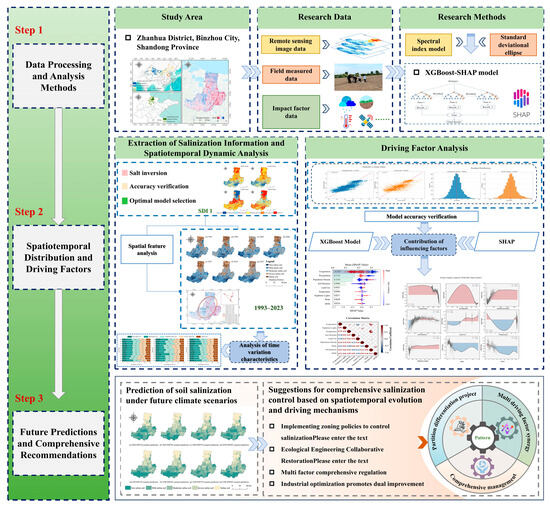
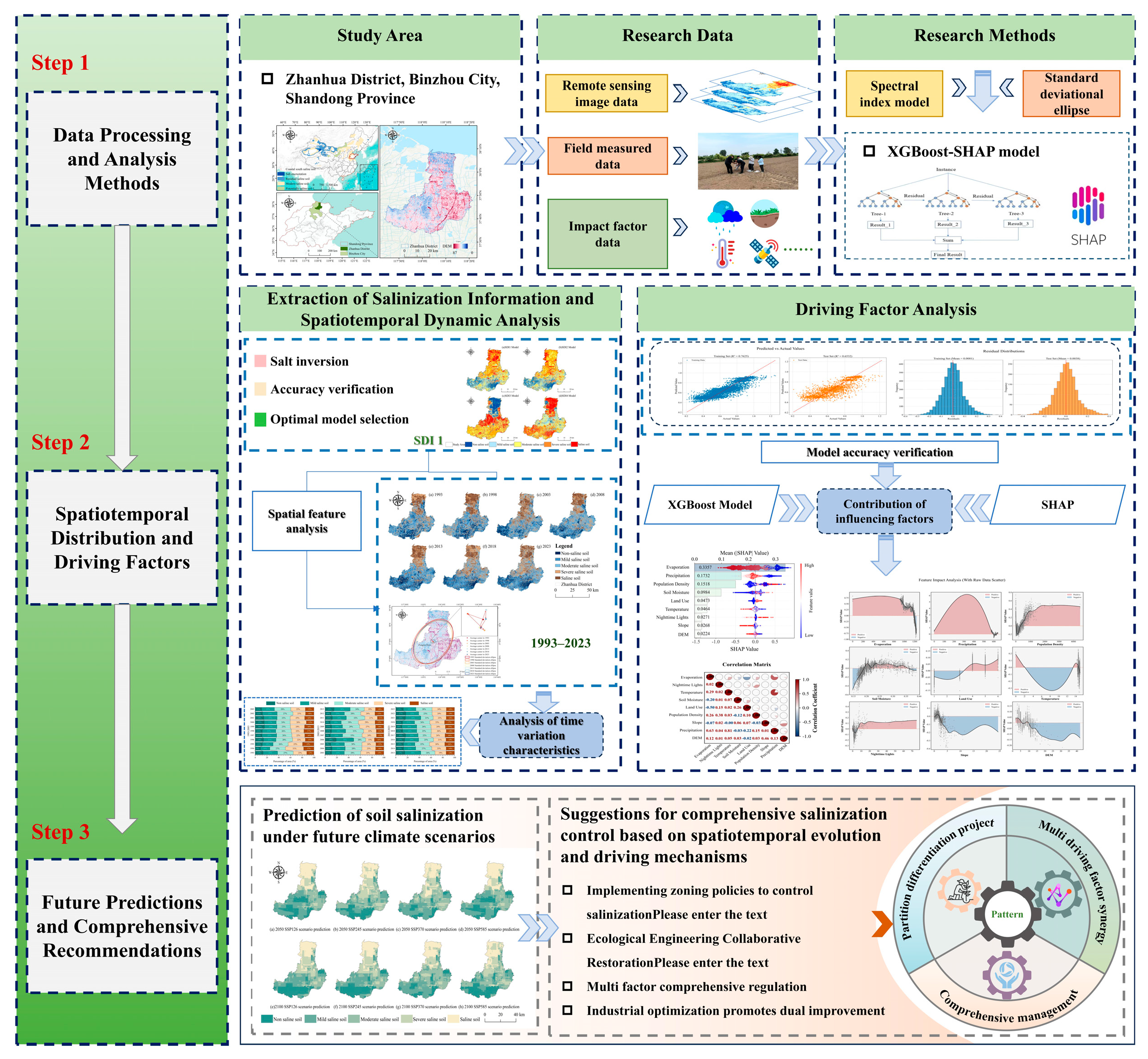
The overall technical workflow of this study is illustrated in Figure 3.
Figure 3.
Technical workflow of the study.
3. Results
3.1. Extraction of Salinization Information and Spatiotemporal Dynamics
3.1.1. Salinity Inversion and Accuracy Assessment
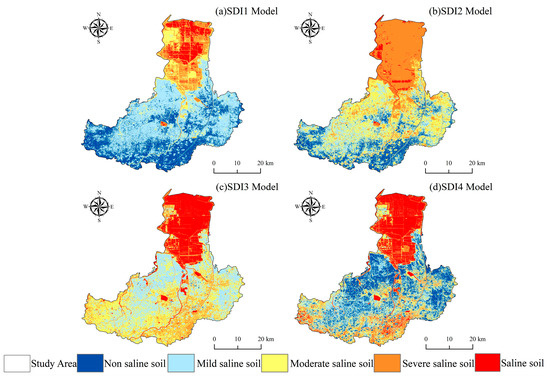
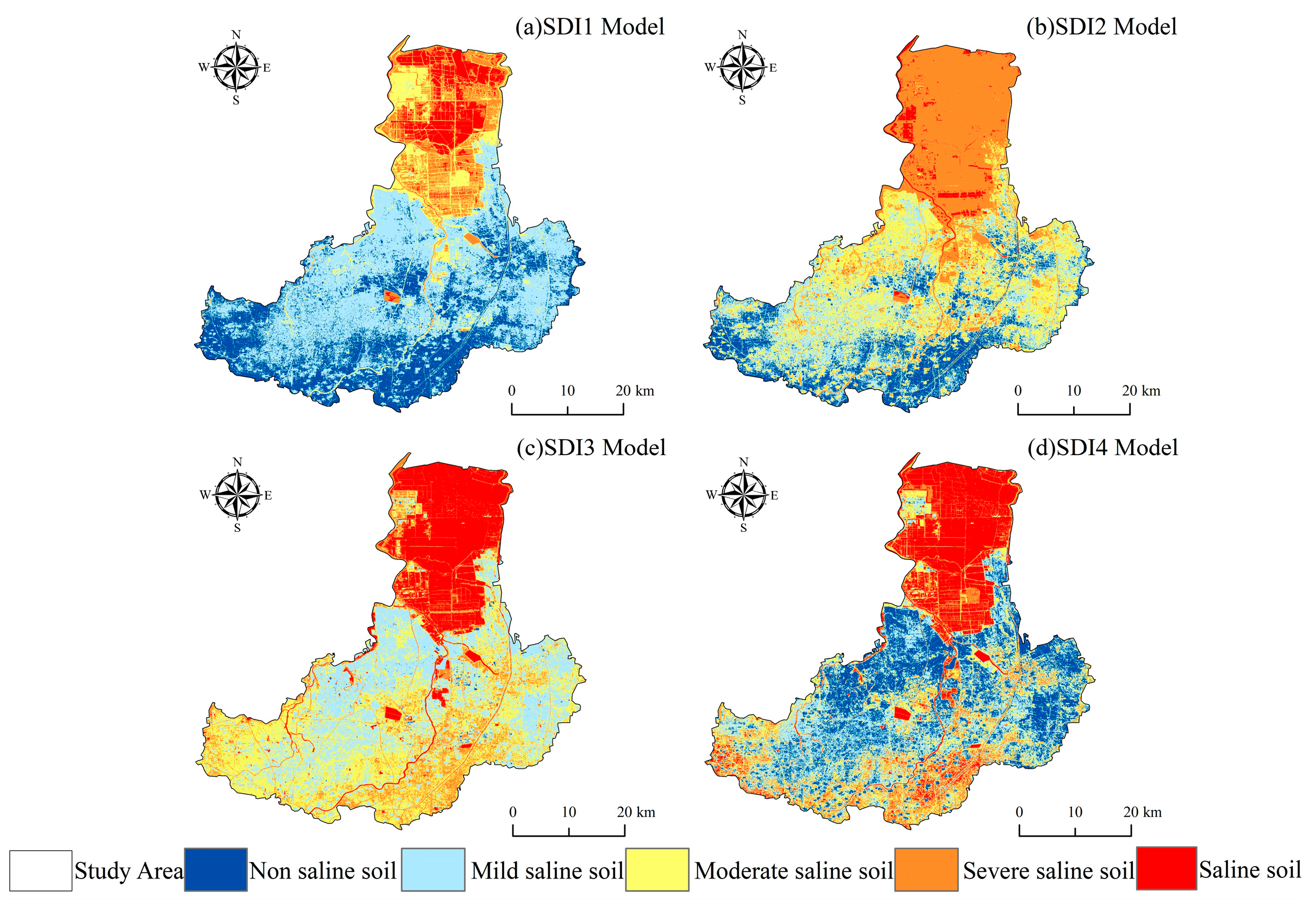
Following the equations presented in Table 2, we computed four remote sensing-based salinity monitoring index models (SDI1, SDI2, SDI3, and SDI4). The resulting inversion values were subsequently categorized into five classes of soil salinization—non-saline, mildly saline, moderately saline, severely saline, and saline soils—using the Jenks natural breaks classification method (Table 3). Based on this classification scheme, spatial distribution maps of soil salinization derived from each of the four models were then generated (Figure 4).
Table 3.
Classification criteria for soil salinization in Zhanhua District.
Figure 4.
Spatial distribution of soil salinization levels derived from the four models.
The inversion results reveal notable spatial differences among the four models. Under the SDI1 model, saline soil and severely saline soil are predominantly concentrated in the northern part of the study area, while the southern region is mainly characterized by non-saline soil, mildly saline soil, and moderately saline soil. The SDI2 model exhibits a broadly similar spatial pattern to SDI1; however, differences are observed in the spatial extent and density of saline and severely saline soils. In contrast, the SDI3 model shows a markedly different pattern, with non-saline soil dominating the northern region and extensive distributions of moderately saline soil, severely saline soil, and saline soil occurring in the south. Under the SDI4 model, saline soil is mainly concentrated in the north-central area, while moderately and severely saline soils dominate the central and southern regions. These differences reflect the varying sensitivities and extraction characteristics of different spectral models and provide a spatial basis for identifying the most suitable model for soil salinization monitoring in this study area.
Given the differences among the models, field-measured soil data were used to evaluate their inversion accuracy. According to China’s soil salinization classification standards, and with reference to Soil and Agricultural Chemistry Analysis and Methods, soil salinization in coastal, semi-humid–semi-arid, and arid regions can be classified into five categories: non-saline soil (salt content < 1.0 g·kg−1), mildly saline soil (1.0–2.0 g·kg−1), moderately saline soil (2.0–4.0 g·kg−1), severely saline soil (4.0–6.0 g·kg−1), and saline soil (>6.0 g·kg−1). Based on these criteria, the salinization grades were assigned to the field sampling sites and compared with the corresponding model predictions to assess inversion accuracy.
The evaluation and comparison of the four monitoring models using 87 field validation samples yielded significant findings (Table 4). Among the tested models, SDI1 demonstrated the highest inversion precision, achieving an overall accuracy (OA) of 86.21% and correctly classifying 75 samples. In contrast, the classification performance of the remaining models followed a decreasing trend: SDI2 (74.71%), SDI3 (62.07%), and SDI4 (54.02%). These results identify SDI1 as the optimal model for soil salinization monitoring in the study area.
Table 4.
4 Model validation results.
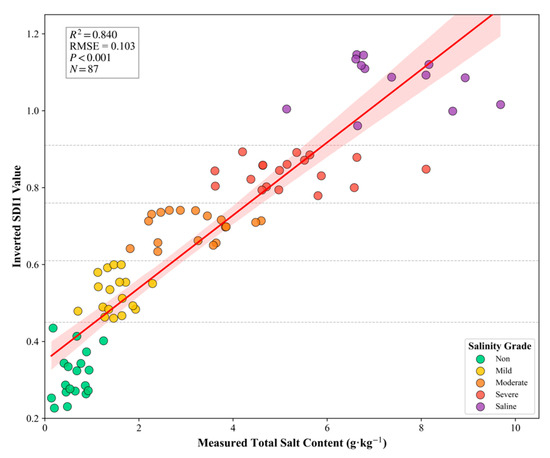
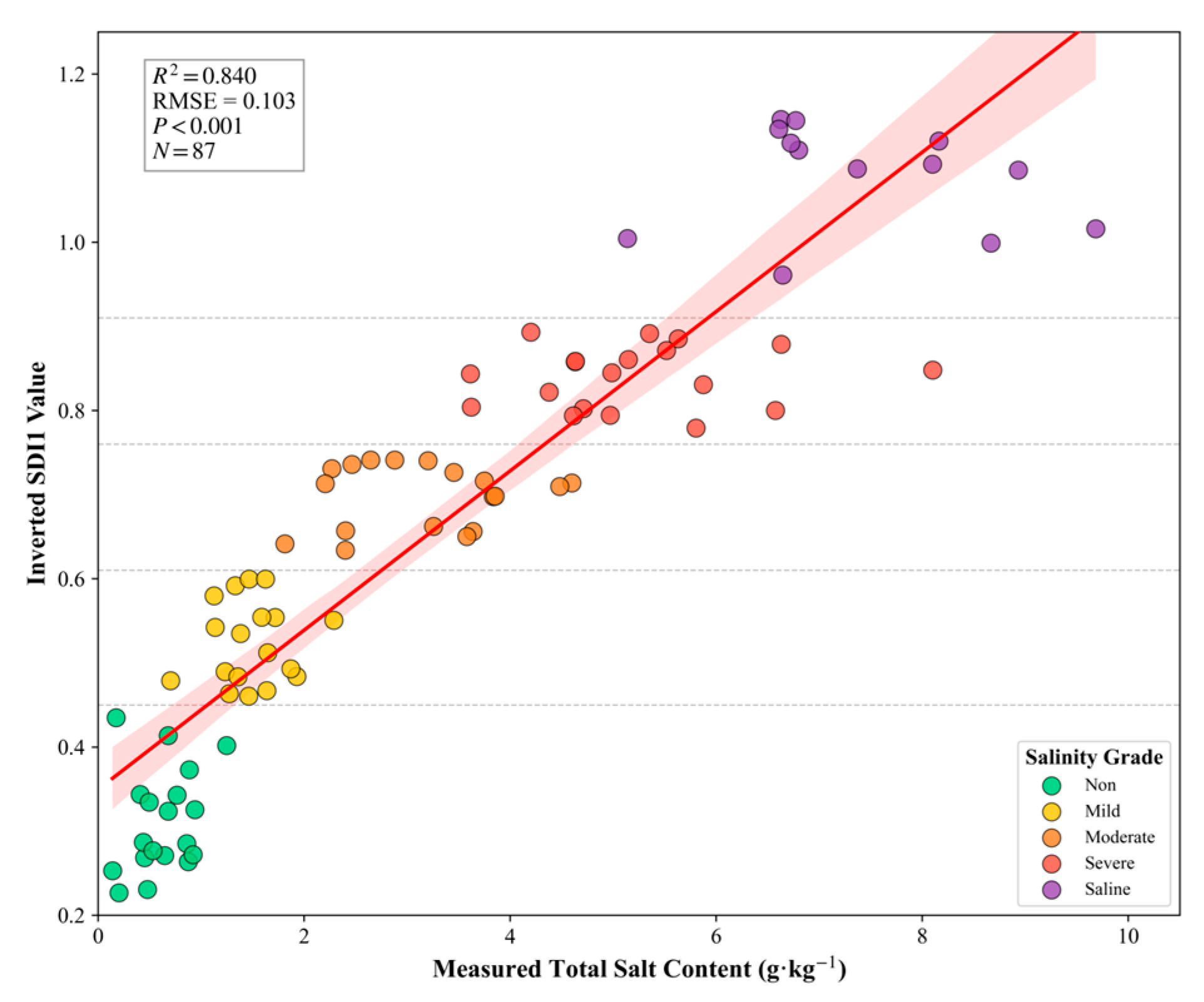
A detailed error analysis was further conducted on the SDI1 model using a full confusion matrix (Table 5) and linear regression (Figure 5). The confusion matrix reveals high consistency between the inverted results and field observations, with User’s Accuracy (UA) and Producer’s Accuracy (PA) for all salinity grades exceeding 73%. Notably, the UA for non-saline soil reached 94.74%, and the UA for the “saline soil” category remained robust at 80.00%. Furthermore, the linear regression analysis confirms the model’s reliability, yielding a coefficient of determination (R2) of 0.840 and a root mean square error (RMSE) of 0.103 (p < 0.001). This indicates that SDI1 model can accurately and stably reflect the actual spatiotemporal dynamics of soil salinity.
Table 5.
A full confusion matrix.
Figure 5.
Scatter plot of inversion values and measured values.
3.1.2. Spatiotemporal Variation in Soil Salinization in Zhanhua District
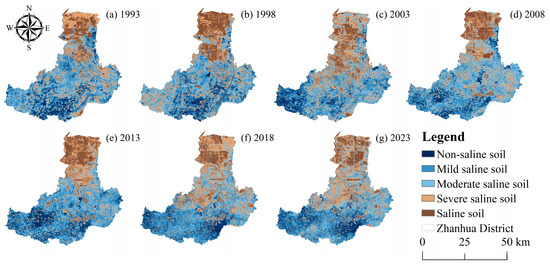
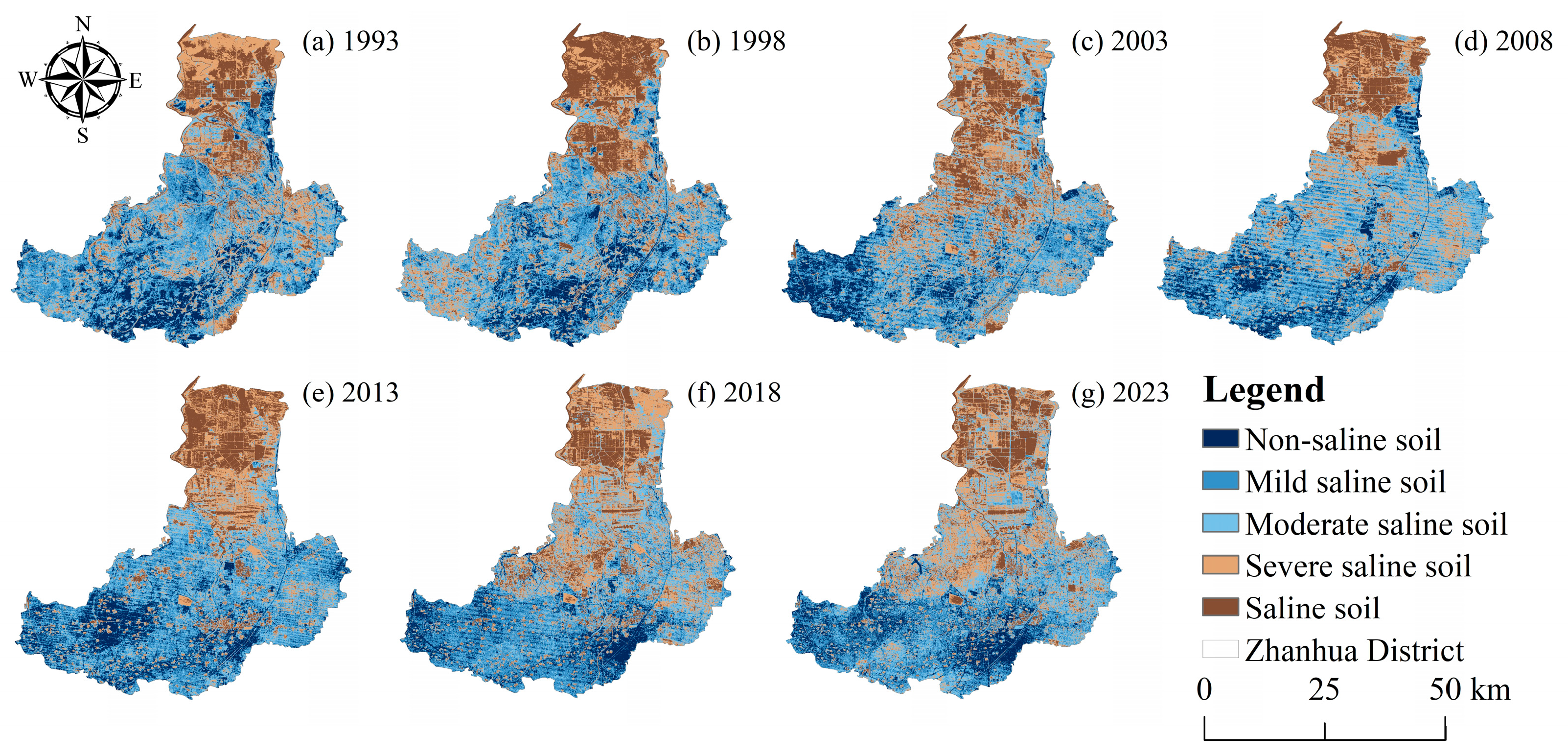
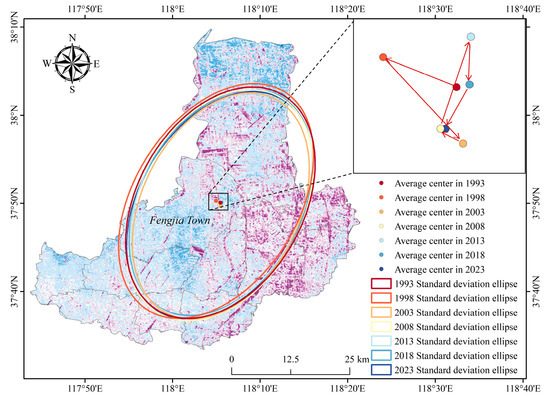
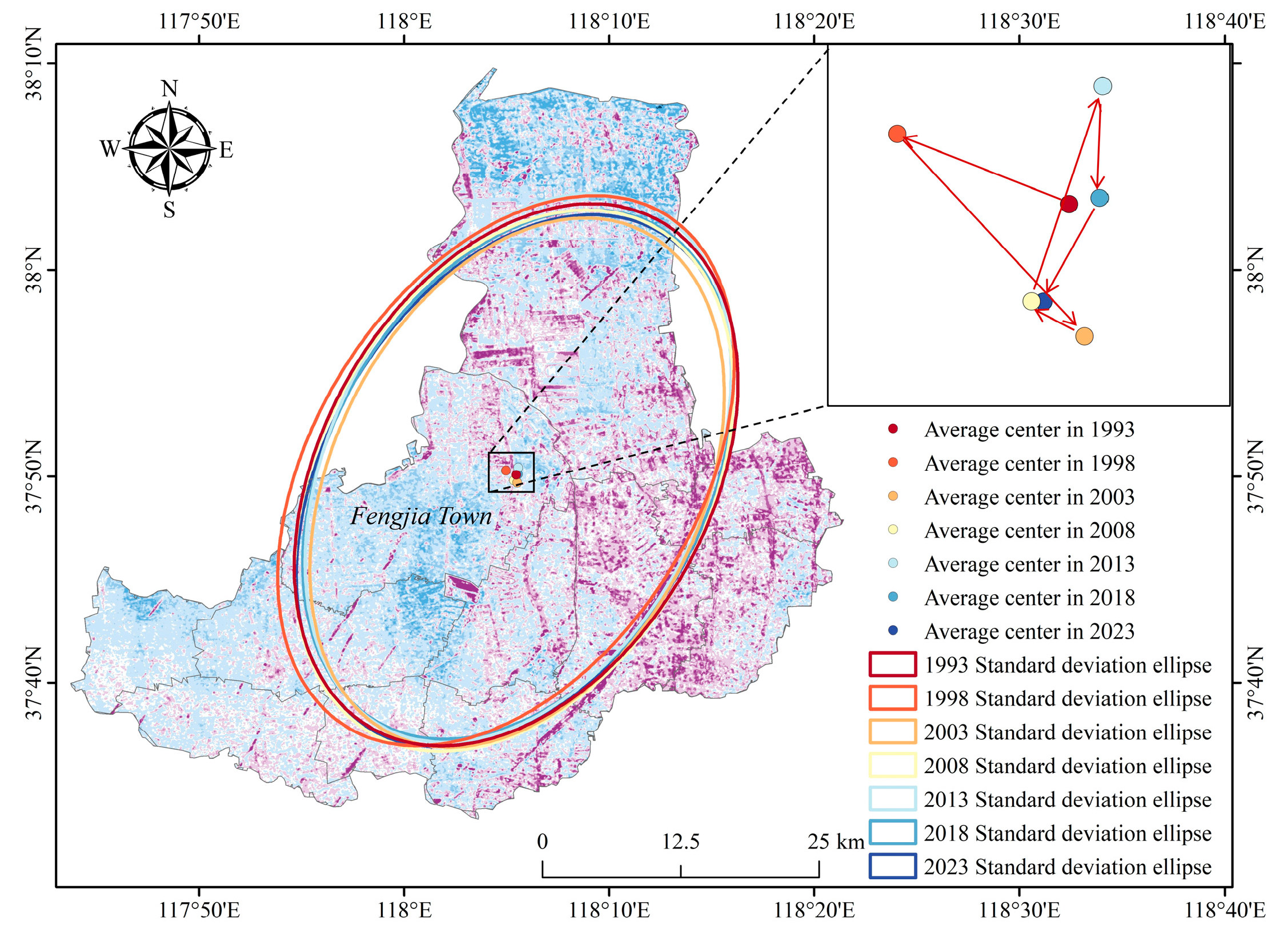
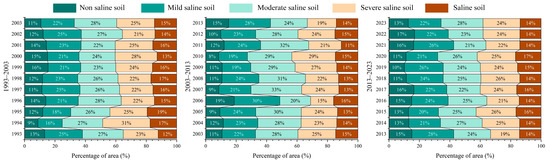
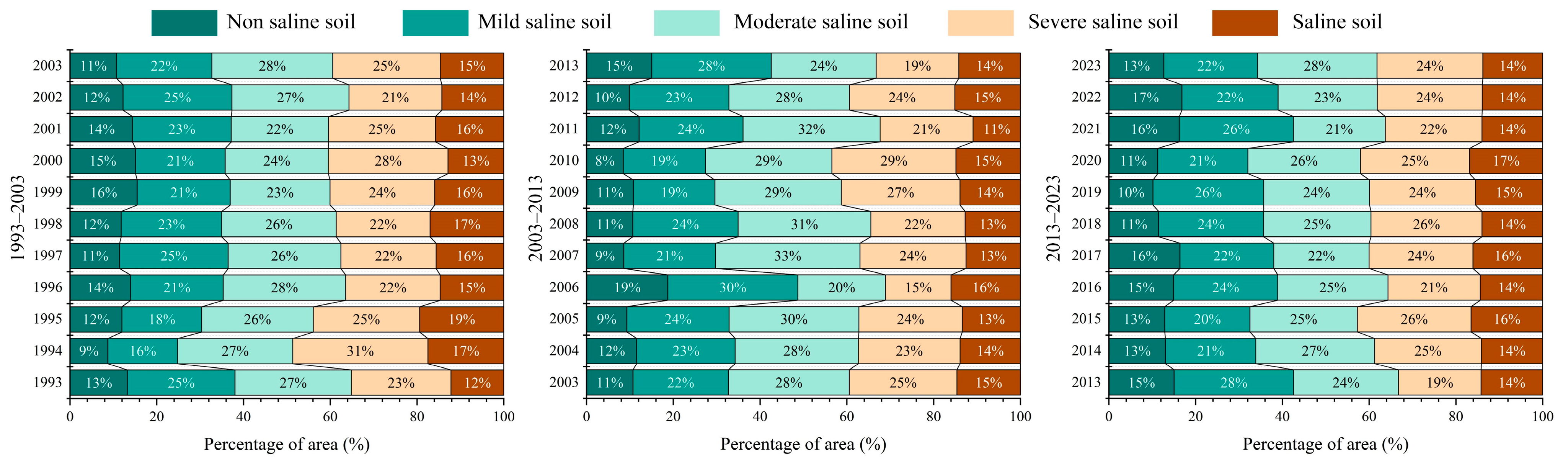
To systematically analyze the spatiotemporal evolution of soil salinization in Zhanhua District over the past 30 years, the optimal SDI1 model was used to invert soil salinization patterns from 1993 to 2023 (Figure 6). Standard deviational ellipse and mean center trajectory analyses were applied to investigate changes in the spatial orientation and distribution of salinization (Figure 7), while the proportional area changes in each salinization grade were statistically quantified (Figure 8).
Figure 6.
Spatial evolution of soil salinization in Zhanhua District from 1993 to 2023.
Figure 7.
Standard deviational ellipse and mean center trajectory of soil salinization from 1993 to 2023.
Figure 8.
Temporal changes in the area proportions of soil salinization grades from 1993 to 2023.
The spatial analysis indicates that soil salinization in the study area exhibits pronounced spatial heterogeneity, characterized by a general pattern of “lighter in the south and heavier in the north.” The southern region is dominated by non-saline soil and mildly saline soil, whereas the northern coastal areas, influenced by seawater intrusion and highly mineralized shallow groundwater, show concentrated distributions of severely saline soil and saline soil. These patterns are closely associated with strong salt accumulation and salt-return processes.
Over the 30-year study period, severely saline soil and saline soil expanded during the early stages and subsequently declined in the later stages. In contrast, the distribution of non-saline soil and mildly saline soil gradually expanded from south to north. Overall, soil salinization in Zhanhua District followed a phased evolution pattern, transitioning from a condition of “severe in the north and mild in the south” to “overall expansion,” and ultimately to “improvement in the north and optimization in the south.” Notably, in the northern coastal zone, intensive aquaculture activities and surface water accumulation have aggravated local salt accumulation, resulting in persistently high salinization levels (Figure 6).
The standard deviational ellipse analysis show that the spatial distribution of soil salinization exhibits a clear northeast–southwest elongation trend. However, the mean center of salinization remained relatively stable throughout the study period, consistently located near Fengjia Town in Zhanhua District, indicating limited overall spatial migration of salinization intensity (Figure 7).
From a temporal perspective, the area proportions of different salinization grades remained relatively stable over the 30-year period. The proportion of non-saline soil remained at approximately 13%, with only minor fluctuations. Mildly saline soil accounted for roughly 16–30% of the total area and exhibited relatively stable changes. Moderately saline soil showed more pronounced interannual variability, ranging from 20% to 32%, with an overall trend of initial expansion followed by contraction. Severely saline soil experienced the most substantial changes between 2003 and 2013, while the proportion of saline soil remained largely unchanged (Figure 8). Although the overall area proportions of the salinization grades did not vary dramatically, their spatial redistribution reflects the dynamic and complex nature of soil salinization processes in the study area.
3.2. Analysis of Driving Factors
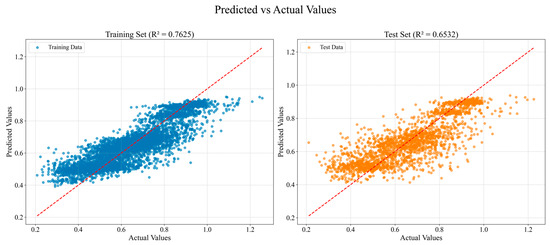
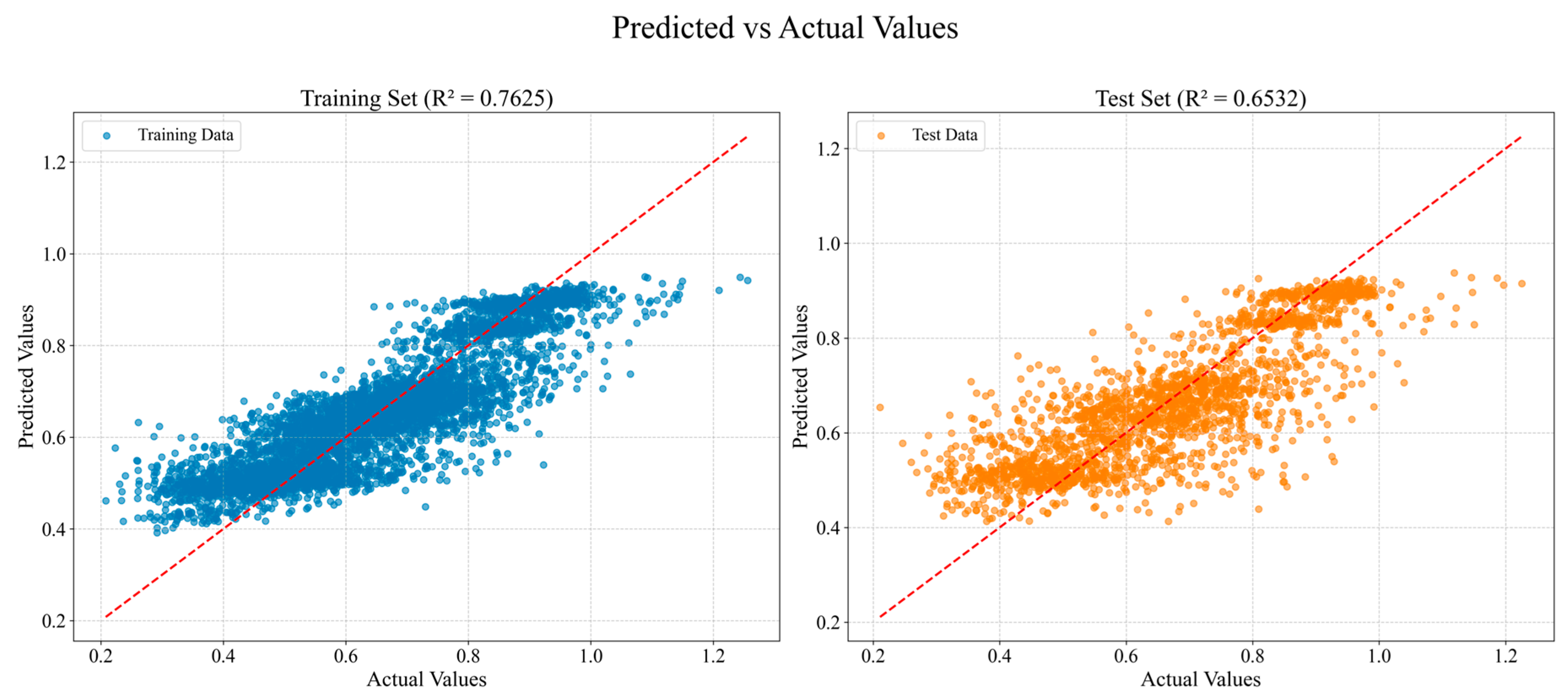
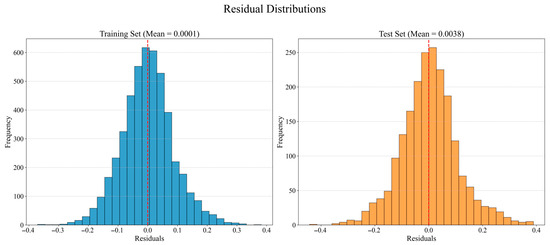
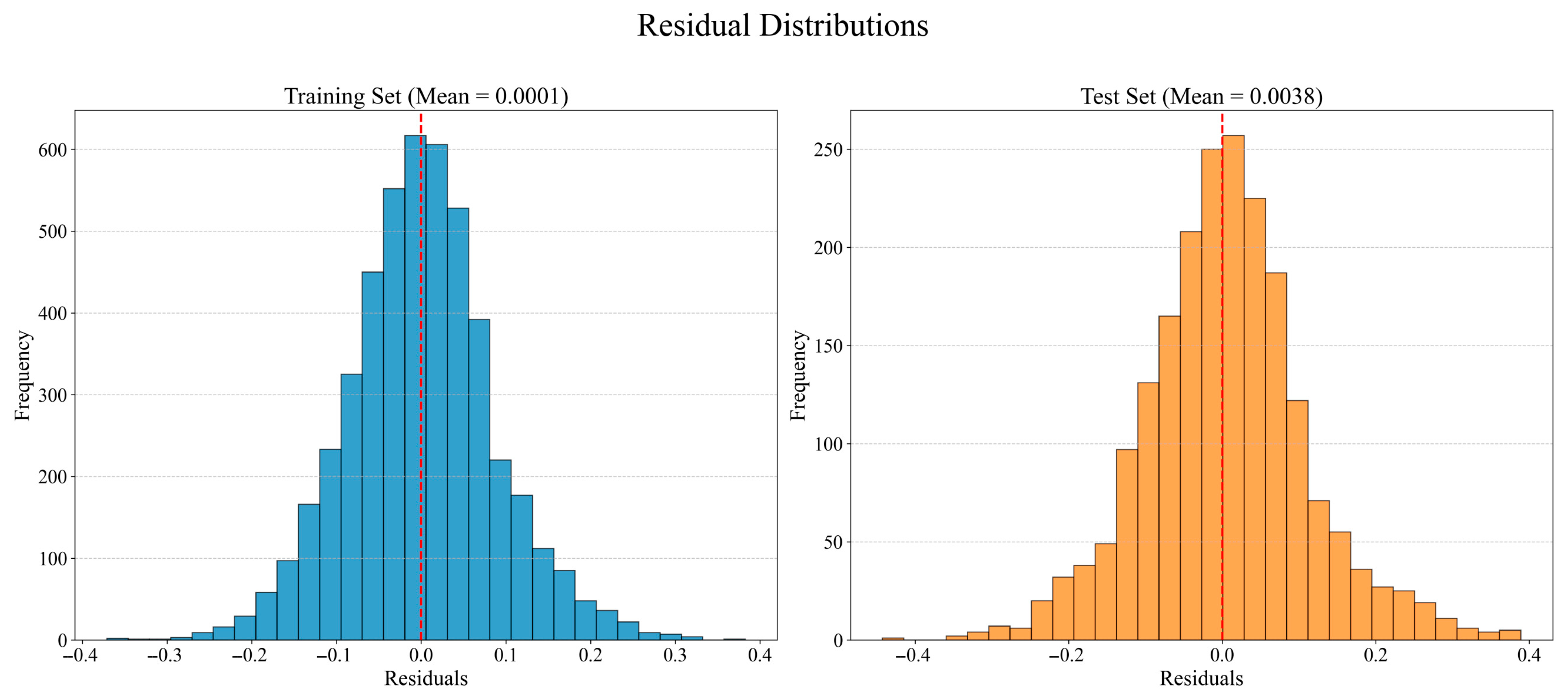
In this study, the accuracy assessment of the XGBoost model was conducted by randomly sampling geospatial grid points to form training and testing datasets. Results from the training dataset indicate that the model achieved a high level of goodness fit, with an MSE of 0.0062 and an R2 reaching 0.8063, indicating that approximately 80.63% of the variation in soil salinization can be explained by the model. Although model performance on the test dataset showed a slight decrease relative to the training dataset, the predictive accuracy remained satisfactory, indicating acceptable generalization capability (Table 6, Figure 9 and Figure 10). Overall, these results demonstrate that the XGBoost model provides a reliable fit to the data and is suitable for analyzing the driving factors of soil salinization in the study area.
Table 6.
Accuracy assessment of the XGBoost model for training and test datasets.
Figure 9.
Accuracy evaluation of the XGBoost model for training and test datasets.
Figure 10.
Residual distribution and error characteristics of the XGBoost model.
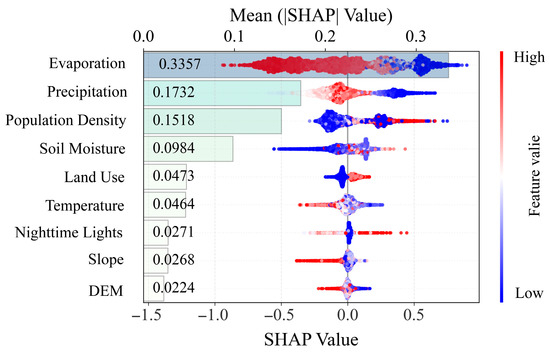
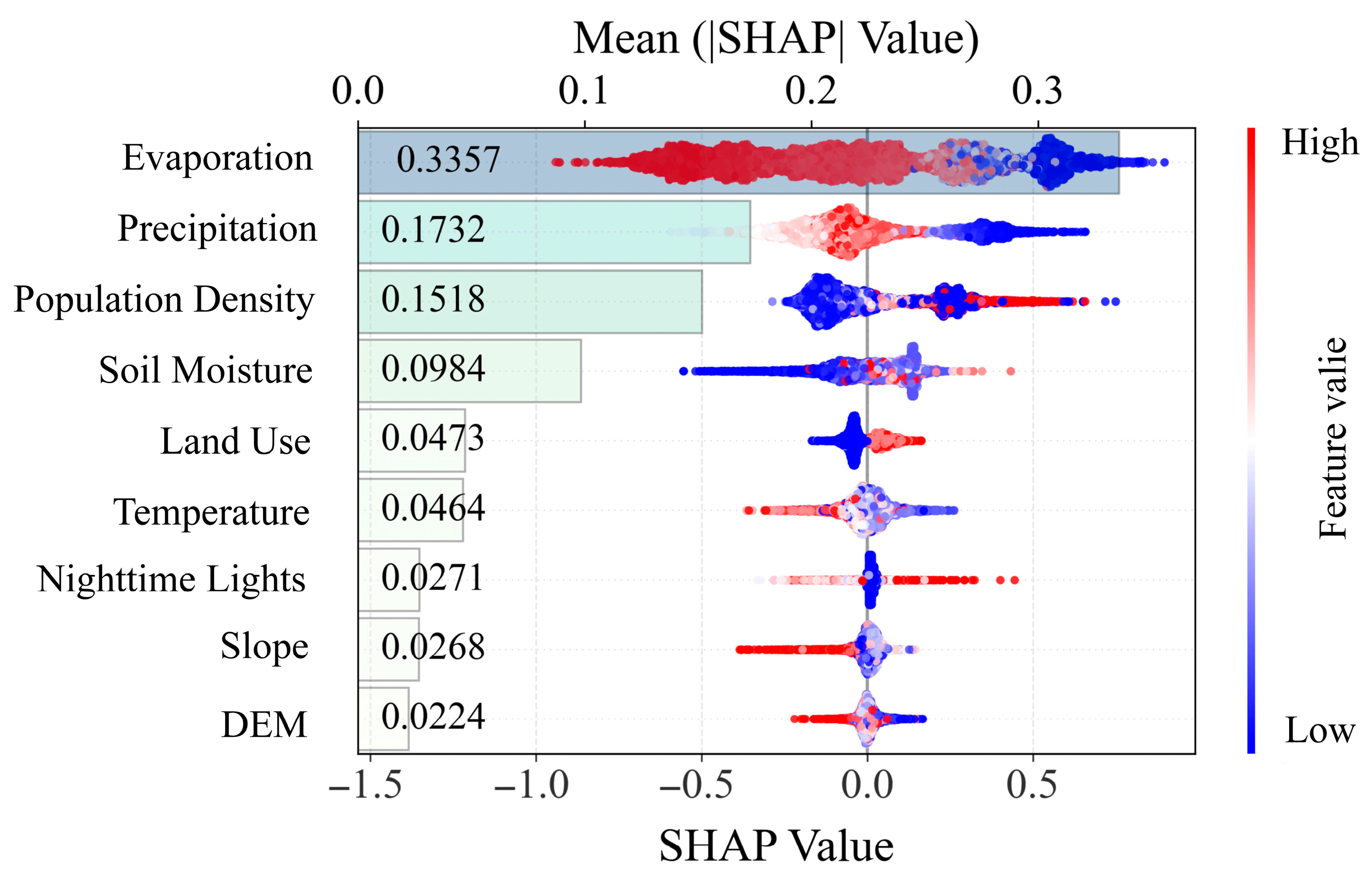
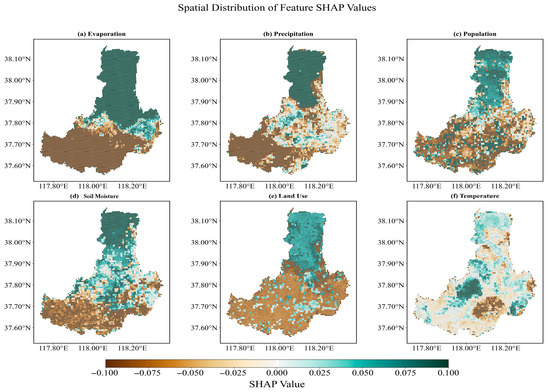
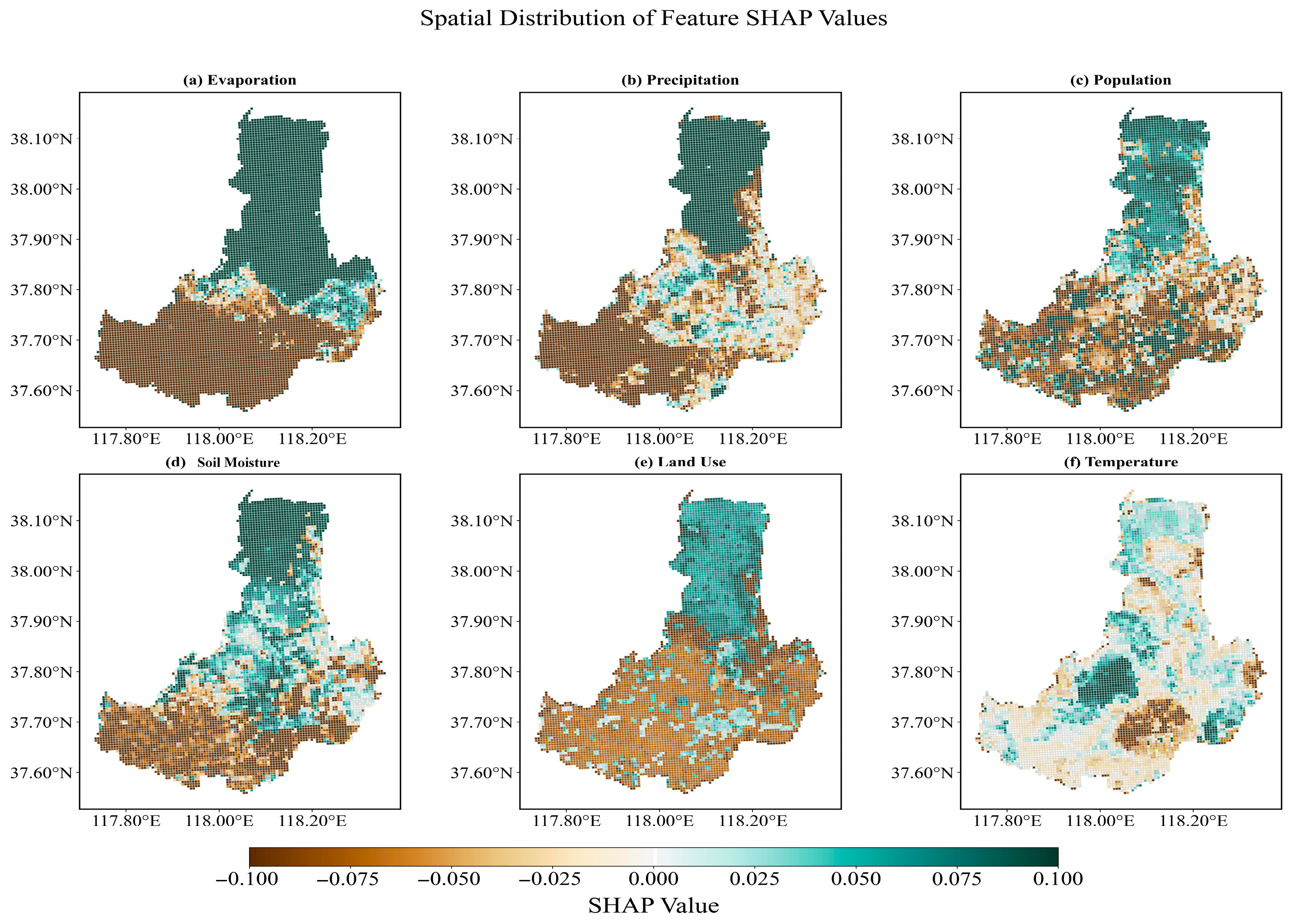
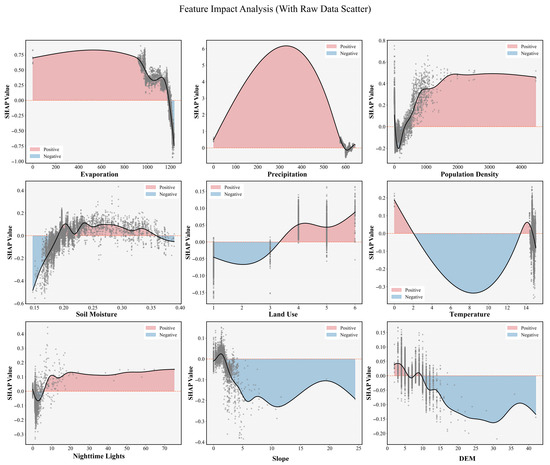
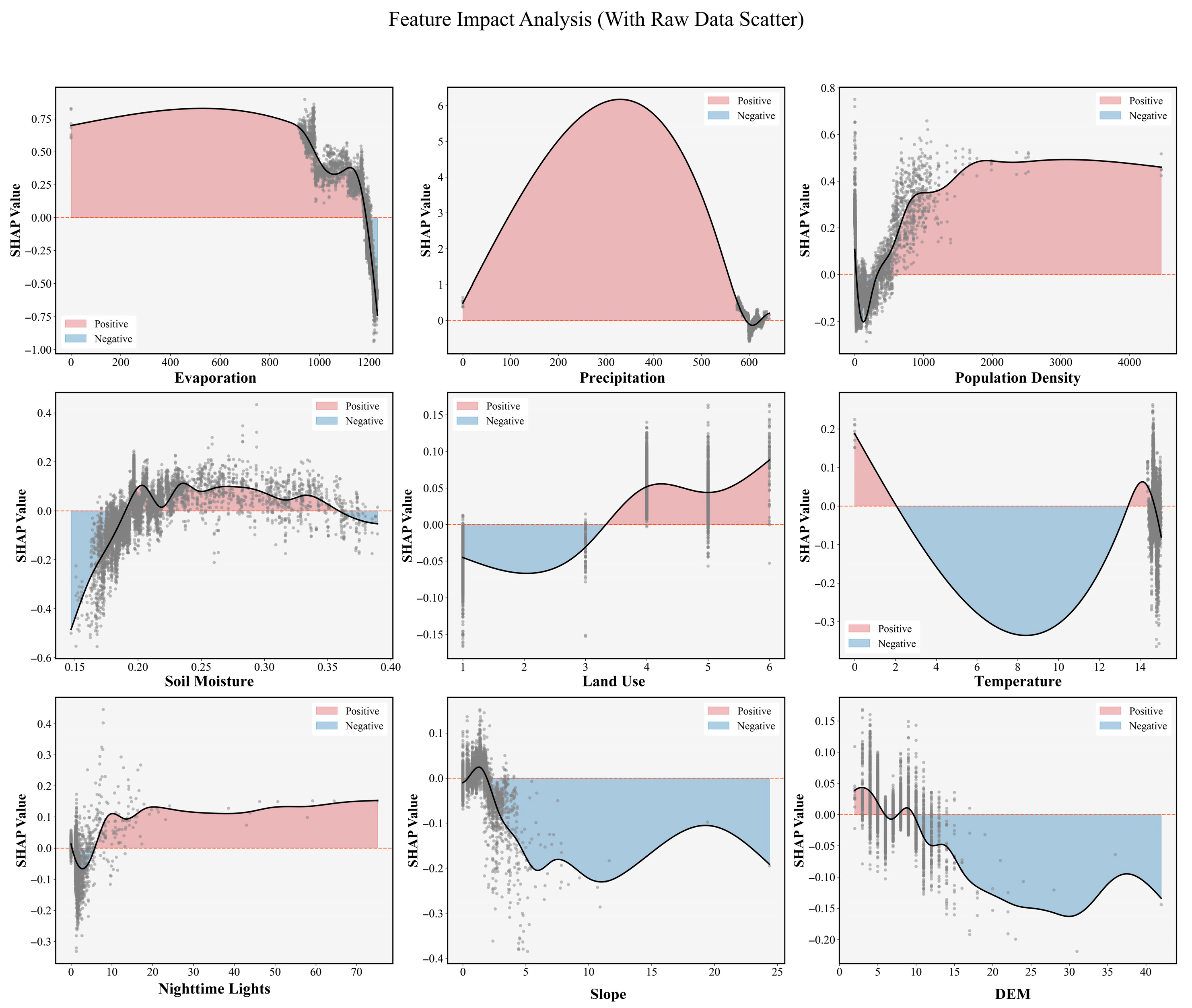
Based on the XGBoost-SHAP analysis, the relative contributions of environmental and anthropogenic factors to soil salinization in Zhanhua District exhibit clear hierarchical differences and spatial heterogeneity (Figure 11, Figure 12 and Figure 13). According to the global SHAP feature importance results, evaporation is the dominant driving factor, with a SHAP value of 0.3357. This indicates that evaporation plays a primary role in controlling soil salinization in the region. The SHAP dependence plot for evaporation shows a strong positive contribution within the range of 0–1000, suggesting that increased evaporation intensifies soil moisture loss and promotes salt accumulation at the surface. However, at extremely high values (>1000), the SHAP contribution becomes negative, possibly reflecting altered salt migration processes and vegetation responses under extreme arid conditions.
Figure 11.
SHAP-based feature importance of soil salinization driving factors.
Figure 12.
SHAP dependence plots of major driving factors.
Figure 13.
SHAP dependence plots of secondary driving factors.
Precipitation and population density represent secondary driving factors, with SHAP values of 0.1732 and 0.1518, respectively. Their SHAP dependence plots reveal pronounced nonlinear effects. Precipitation exhibits positive SHAP values within the range of 100–400 mm, indicating that moderate rainfall in this semi-humid region enhances soil salinization, with relatively low and concentrated rainfall during the flood season. Under these conditions, precipitation is insufficient to effectively leach salts from the soil profile but increases soil moisture, thereby intensifying evaporation and accelerating surface salt accumulation. In contrast, excessive precipitation (>500 mm) induces a net desalination effect. This threshold aligns with regional pedological studies in the Yellow River Delta, which indicate that when cumulative rainfall during the summer monsoon exceeds 500 mm, the downward leaching of salts via soil infiltration and surface runoff outweighs the evaporative concentration, leading to a measurable reduction in surface soil salinity [34]. Population density shows a positive contribution within the range of 1000–4000, reflecting the intensification of soil salinization associated with high-intensity human activities, such as irrigated agriculture. In contrast, lower population density (<1000) exhibits a negative contribution, likely due to the salt interception and buffering effects of natural vegetation cover.
Soil moisture, land use type, and temperature constitute a medium-influence group, with SHAP values of 0.0984, 0.0473, and 0.0464, respectively. Soil moisture displays a positive contribution within the range of 0.2–0.35 range, indicating that moderate soil moisture facilitates salt dissolution and upward transport. However, SHAP values become negative under very low (<0.15) or very high (>0.35) moisture conditions, as insufficient moisture limits salt mobilization, while excessive moisture promotes salt leaching. Land use types such as cropland, forestland, and grassland exhibit negative SHAP values, suggesting that rational agricultural management and vegetation cover effectively suppress soil salinization through evapotranspiration regulation and biological salt amelioration. In contrast, water bodies, construction land, and unused land show positive SHAP values, as water convergence, impervious surface coverage and direct bare soil exposure promote salt accumulation. While temperature and precipitation exhibit a strong climatic coupling (r = 0.81), they represent competing physical mechanisms in the soil–water–salt balance. Temperature primarily drives upward salt capillary migration via evaporation, whereas precipitation promotes downward leaching. The SHAP analysis captures the relative trade-off between these forces. Temperature demonstrates a U-shaped response, at high values (>14 °C), it exacerbates salinization by accelerating surface evaporation, while at low values (<2 °C), its positive contribution is likely linked to salt accumulation during freeze–thaw cycles, a characteristic phenomenon of the Yellow River Delta’s seasonal climate.
The night-time light index, slope, and elevation exhibit relatively low contributions, with SHAP values of 0.0271, 0.0268, and 0.0224, respectively. The nighttime light index shows a positive SHAP value within the range of 10–70, indicating a positive relationship between human activity intensity and salinization. Slope contributes positively at low gradients (0–5°), reflecting the tendency of gentle terrain to facilitate water and salt accumulation. Elevation shows an overall negative contribution, suggesting that higher-altitude areas experience lower salinization risk due to improved drainage conditions. Overall, the results indicate that climatic and anthropogenic forces exert stronger controls on soil salinization patterns in Zhanhua District than topographic factors.
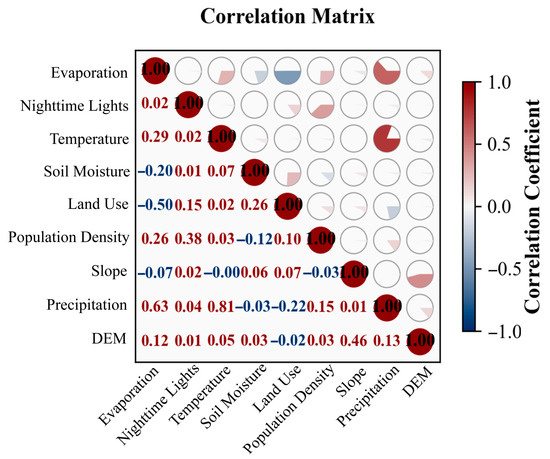
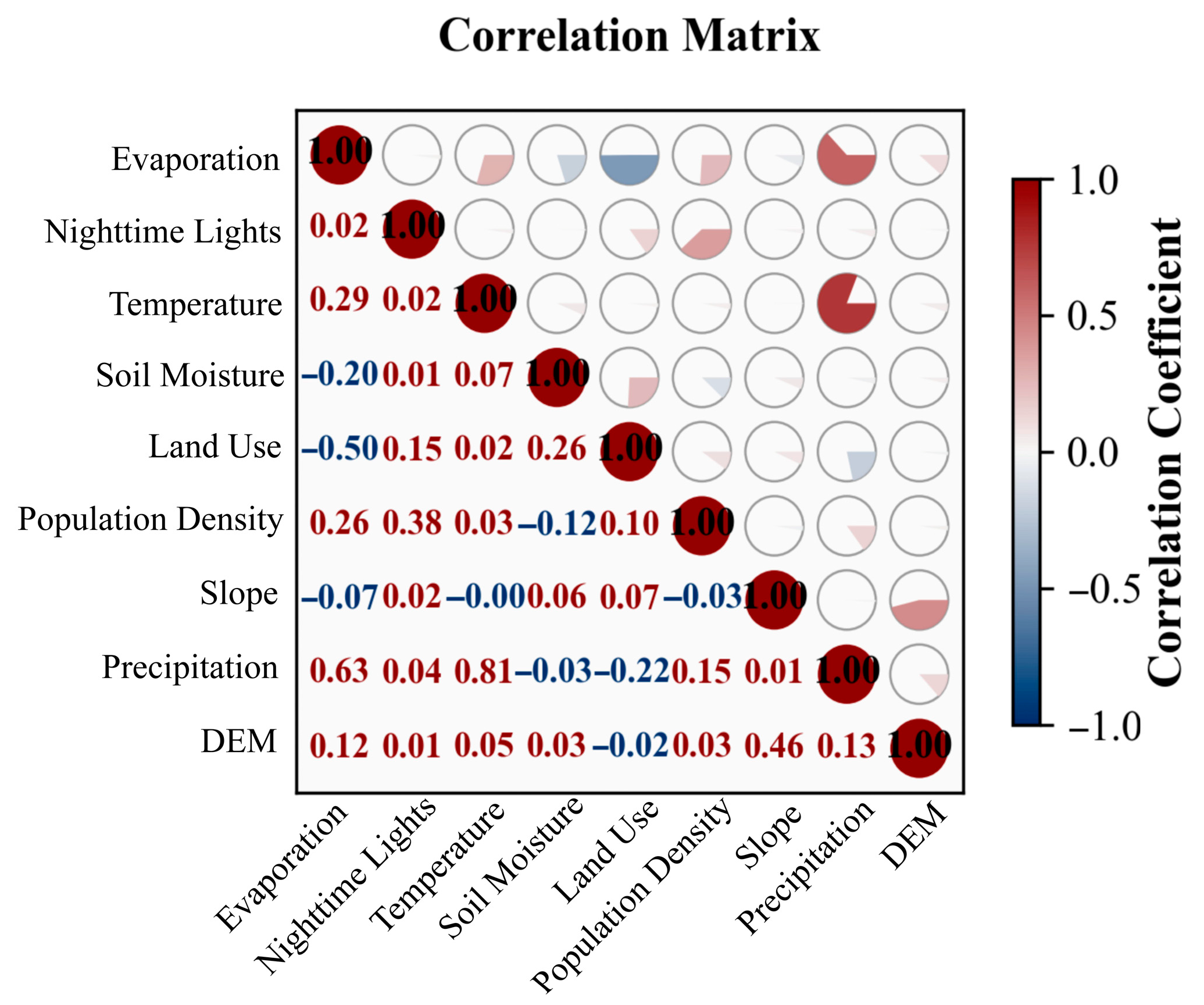
Correlation analysis further reveals interrelationships among the driving factors of soil salinization in Zhanhua District, characterized by climatic dominance and interactions between human and natural factors (Figure 14). A significant positive correlation exists between evaporation and precipitation (r = 0.63), while temperature and precipitation exhibit an even stronger positive correlation (r = 0.81). These relationships reflect the inherent coupling of high temperature, strong evaporation, and concentrated precipitation under the warm-temperate monsoon climate of the study area. This climatic synergy fundamentally explains the combined driving effects of these factors on soil salinization, whereby elevated temperatures enhance evaporation and surface salt accumulation, while concentrated rainfall during the flood season induces complex water–salt transport processes.
Figure 14.
Correlation heatmap of soil salinization driving factors.
In terms of human–nature interactions, population density and nighttime light intensity show a moderate positive correlation (r = 0.38), indicating spatial consistency in human activity intensity. Land use type is negatively correlated with evaporation (r = −0.50), suggesting that different land use patterns regulate soil salinization by modifying surface evaporation processes. This finding is consistent with the salt-suppressing effects of vegetation cover identified in the SHAP analysis.
Several factors exhibit relatively independent behavior. Soil moisture shows weak correlations with major climatic variables, with correlation coefficients of −0.20 with evaporation and 0.07 with temperature. Elevation displays a moderate positive correlation with slope (r = 0.46) but weak correlations with other variables, indicating that these factors influence soil salinization primarily through their intrinsic properties rather than through strong interactions with other drivers.
3.3. Prediction of Soil Salinization Under Future Climate Scenarios
Based on the XGBoost-SHAP analysis of driving factors, evaporation and precipitation were identified as the dominant climatic controls on soil salinization and were therefore selected as the core predictors for future simulations. Evaporation and precipitation data under four shared socioeconomic pathway scenarios—SSP1-2.6, SSP2-4.5, SSP3-7.0, and SSP5-8.5—were used to predict the spatial evolution of soil salinization in Zhanhua District for the mid-century (2050) end-of-century (2100) periods.
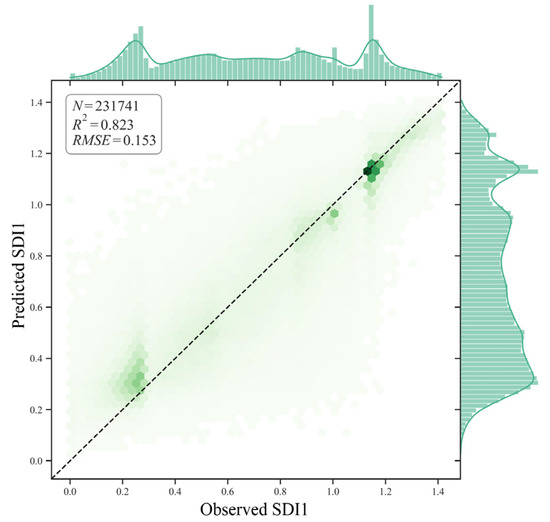
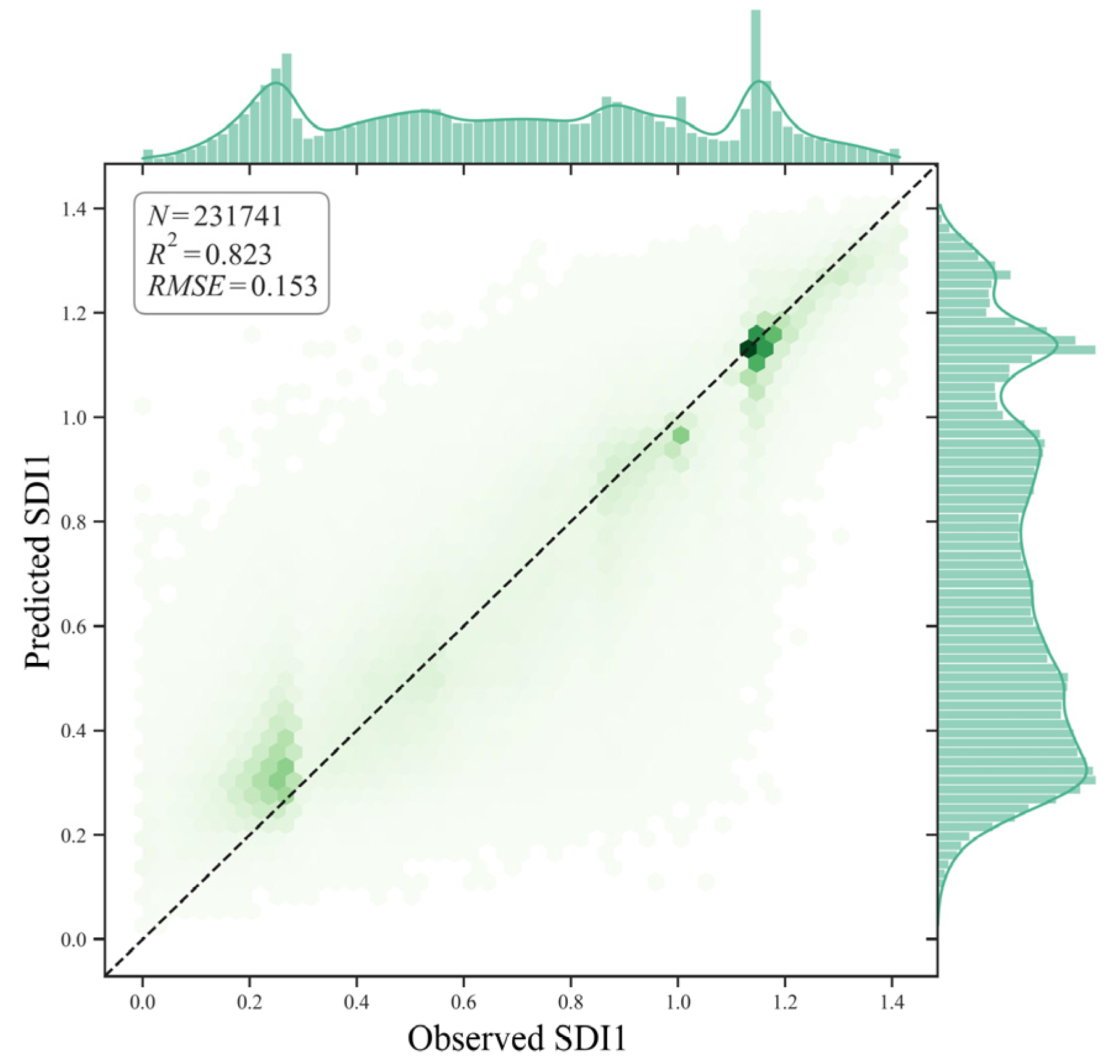
To ensure the reliability of the Random Forest (RF) model for future projections, a hindcast validation was performed (Figure 15). Given the lack of district-wide historical field data, SDI1—previously calibrated against field-measured total salt content—was used as the reference baseline. The scatter plot shows that most data points are distributed close to the 1:1 reference line. With a sample size of 231,741, the model achieved a coefficient of determination (R2) of 0.823 and a Root Mean Square Error (RMSE) of 0.153 (Figure 15), indicating that 82.3% of the variance in soil salinization can be explained by the model and that prediction errors are relatively small. These results confirm the reliability of the Random-Forest-based prediction framework for regional-scale soil salinization simulations and provide a robust basis for future scenario analysis.
Figure 15.
Accuracy assessment of Random Forest prediction model.
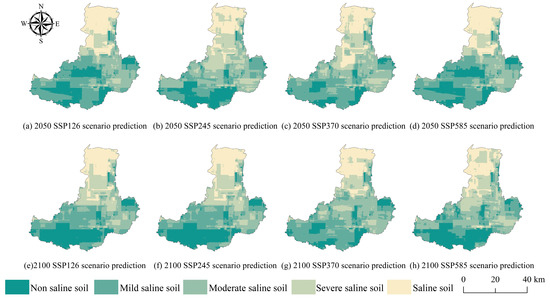
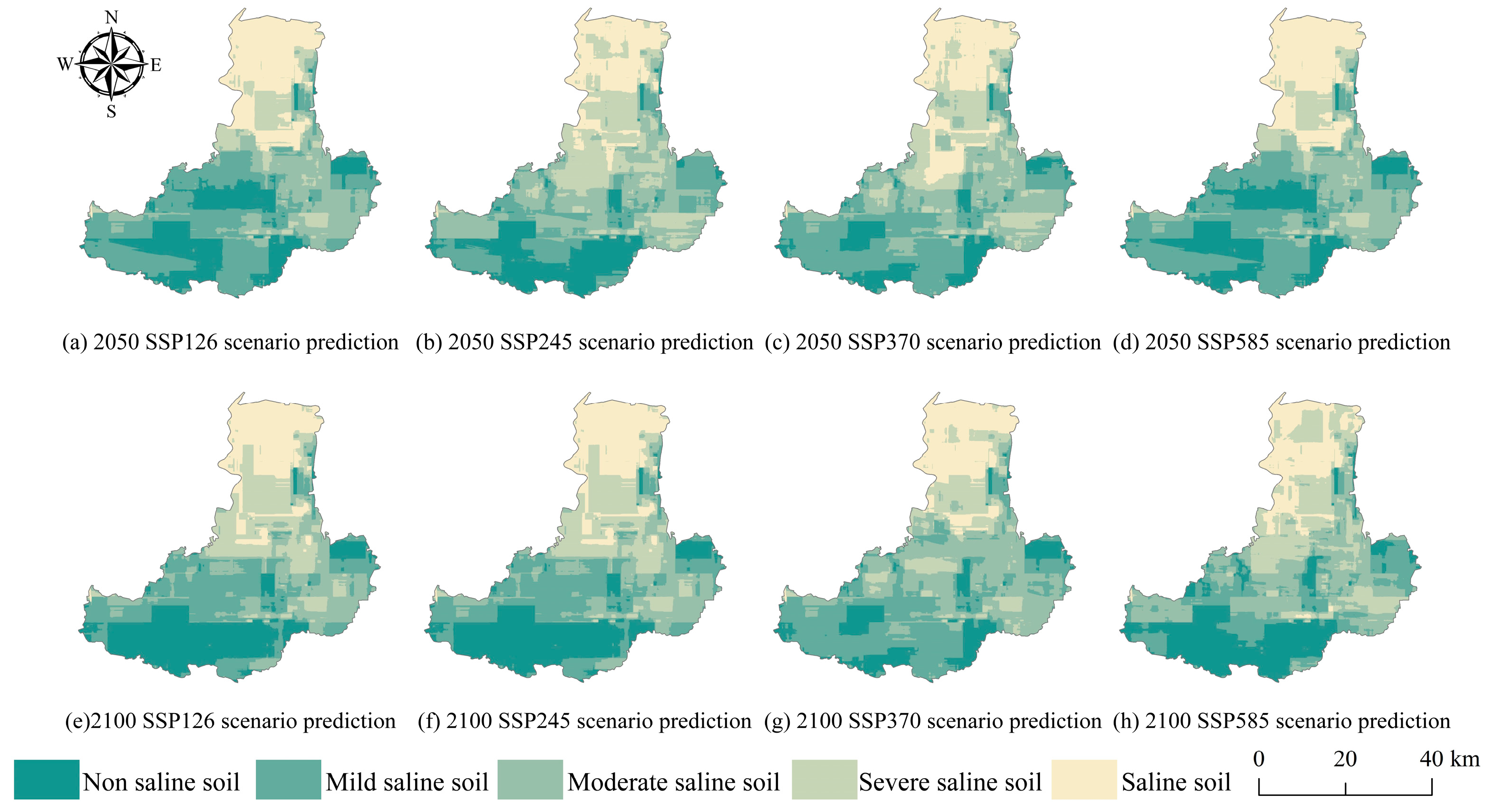
The prediction results indicate that by 2050, soil salinization patterns under different emission scenarios have already diverged substantially (Table 7; Figure 16). Under the SSP1-2.6 low-emission scenario, non-saline soil accounts for 19.84% of the total area, mainly distributed in the southwestern part of the study area. The proportions of severely saline soil and saline soil are 9.31% and 17.91%, respectively, and are largely confined to narrow zones along the northern coastline, representing the lowest overall salinization intensity among the four scenarios. In contrast, under the SSP5-8.5 high-emission scenario, the proportion of non-saline soil is slightly lower at 19.45%, while saline soil and severely saline soil account for 17.88% and 9.51%, respectively, showing modest expansion in the northern region. At the same time, moderately saline soil increases to 19.69% and extends toward the central part of the study area.
Table 7.
Proportions of soil salinization classes under future climate scenarios.
Figure 16.
Predicted of spatial distribution of soil salinization under future climate scenarios.
The SSP2-4.5 scenario exhibits the most pronounced salinization by 2050, with the proportion of severely saline soil reaching 22.48%, substantially higher than that under the SSP5-8.5 scenario. This suggests a stronger expansion of highly salinized areas in the northern coastal zone under the intermediate-emission pathway. In contrast, the SSP3-7.0 scenario is characterized by a relatively high proportion of moderately saline soil, accounting for 25.67% of the total area.
By 2100, soil salinization patterns under all scenarios exhibit further evolution. Under the SSP1-2.6 scenario, the proportion of non-saline soil increases to 22.95%, representing a significant expansion relative to 2050, while the proportion of saline soil decreases to 15.28%. This indicates a sustained long-term mitigation of salinization risk under low-emission conditions. Under the SSP5-8.5 scenario, the proportion of non-saline soil rises to 22.33%, but the proportion of severely saline soil increases to 20.77%, and saline soil decreases to 13.23%, resulting in an overall salinization intensity that remains higher than that under SSP1-2.6 scenario.
The SSP2-4.5 scenario shows salinization characteristics increasingly similar to those of SSP1-2.6 by 2100, with severely saline soil and saline soil accounting for 18.24% and 15.28%, respectively. In contrast, the SSP3-7.0 scenario continues to be dominated by moderately saline soil, which reaches the highest proportion among all scenarios at 28.68%.
4. Discussion
4.1. Applicability of Salinization Information Extraction Models
The results of this study indicate that the SDI1 model achieved the highest extraction accuracy among the four indices in Zhanhua District, reaching 86.21%. This is primarily attributable to the strong match between the shortwave infrared bands selected by this index and the absorption characteristics of chloride salts in the region. Compared to commonly used indices such as SI-MSAVI or Albedo-MSAVI, which focus on reducing the influence of the vegetation background, SDI1 overcomes, to some extent, the interference of soil moisture on salinity inversion in coastal areas through an optimized combination of spectral bands.
Previous studies have noted the limitations of single indices under different land cover conditions. For example, Zhang Junyan et al. proposed that indices should be constructed separately for bare soil periods and vegetation-covered periods to enhance model stability [35]. Although the present study adopted a static inversion approach, the accuracy of SDI1 under the corresponding phases was largely comparable to such differentiated models. Furthermore, in contrast to the study by Huang Jing et al. in the adjacent Kenli District, where texture features (GLCM) were introduced to improve classification performance, the present study demonstrates that reliable monitoring results can also be achieved in areas with pronounced salinity gradients by optimizing spectral characteristics [36]. This difference in model applicability reflects local variations in micro-topography and salt composition within the delta, indicating that inversion models still require targeted adjustments based on the specific geographical and environmental characteristics in practical applications [37].
4.2. Spatiotemporal Variation Mechanisms of Soil Salinization from 1993 to 2100
The long-term spatial pattern of soil salinization in Zhanhua District, characterized by lighter salinity in the south and heavier salinity in the north, is primarily controlled by natural conditions. In the low-lying northern coastal zone, the groundwater table is shallow with high mineralization, and seawater intrusion is significant. Driven by strong evaporation, capillary rise is enhanced, accelerating surface soil salt accumulation. In contrast, the southern area features higher elevation and a deeper groundwater table, which facilitates salt leaching. This pattern is consistent with the distribution characteristics of salinization in the Bohai Rim region [38]. However, due to the lack of in situ groundwater measurements in this study, quantitative analysis of capillary processes and salt supply intensity remains difficult, which constitutes a limitation.
The fluctuation in the area of severely saline soil from 2003 to 2013 resulted from the combined effects of climatic variability and human activities. Overall, natural conditions dominate the macro-scale pattern of salinization, while human activities regulate local changes [39,40]. Unlike arid inland regions, where salinization primarily relies on the continuous upward accumulation of native salts from soil and strata under strong evaporation, the coastal area of Zhanhua District is closely associated with exogenous salt from seawater intrusion, shallow saline groundwater distribution, and strong evaporation. These two settings exhibit notable differences in salt sources and hydrogeological conditions, leading to distinct formation mechanisms. Therefore, salinization management in this region requires targeted measures that account for local environmental characteristics [41,42,43].
Among the future climate scenarios, the SSP1-2.6 low-emission pathway demonstrates the greatest potential for mitigating soil salinization and represents the most favorable option for maintaining regional water–salt balance and ecological security. Under this scenario, greenhouse gas emissions remain low and global temperature increases are constrained to approximately 1.5 °C, resulting in relatively limited increases in evaporation and stable precipitation patterns. These conditions suppress salt accumulation in northern coastal areas while promoting soil desalination in the southern region. Consequently, the proportion of non-saline soil increases from 19.84% in 2050 to 22.95% in 2100, while the proportion of saline soil decreases from 17.91% to 15.28%, indicating the most pronounced improvement among all scenarios.
In contrast, the SSP2-4.5 scenario exhibits the highest proportion of severely saline soil in 2050 (22.48%), which can be attributed to the combined effects of moderate emission levels and intensified regional development pressures. These factors disrupt the water–salt balance in northern areas and exacerbate local salt accumulation through agricultural and aquaculture activities. Although the SSP5-8.5 scenario represents the highest emission pathway, the increased frequency of heavy rainfall events under this scenario enhances leaching processes and partially offsets salt accumulation. The SSP3-7.0 scenario is distinguished by a persistently high proportion of moderately saline soil, reflecting hydrothermal conditions under medium-to-high emissions that are insufficient to cause extreme salinization but also inadequate to support effective long-term desalination.
4.3. Comprehensive Management Suggestions for Saline–Alkali Land Based on Spatiotemporal Evolution and Driving Mechanisms
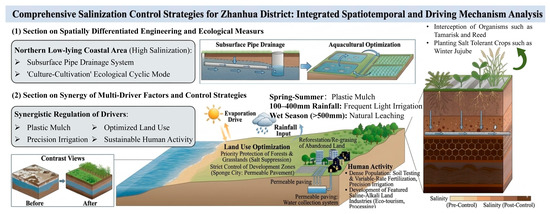
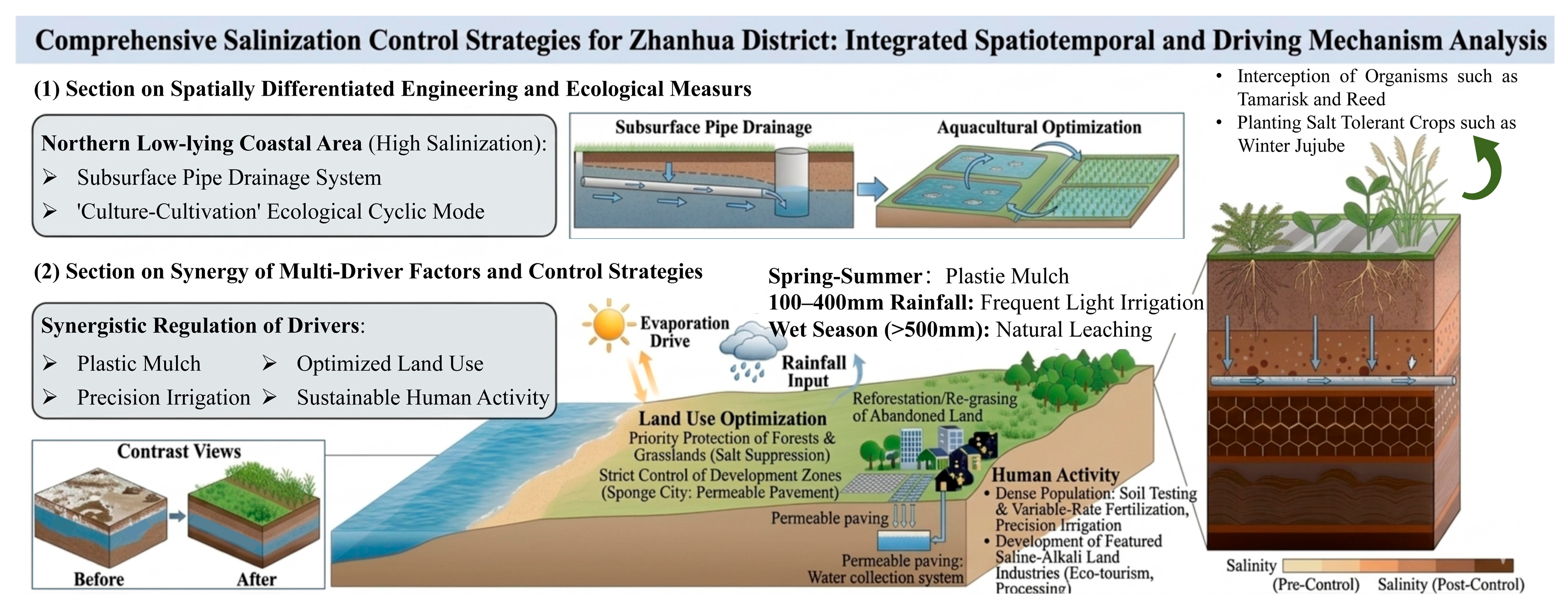
(1) Zoning-based and differentiated engineering and ecological measures: The northern coastal low-lying areas are subject to severe salinization due to seawater intrusion, highly mineralized groundwater, and intensive human activities, resulting in slow recovery rates. Engineering measures should therefore be prioritized, including the installation of subsurface drainage systems to lower groundwater levels and block upward salt migration pathways. In parallel, aquaculture layouts should be optimized by expanding the cultivation of salt-tolerant vegetation such as Suaeda salsa and promoting integrated “aquaculture-plantation” eco-circulation models to reduce salt input from aquaculture effluents.
In contrast, the southern gently sloping areas exhibit lower salinization intensity and greater restoration potential. Here, ecological vegetation restoration should be emphasized. Expanding the planting of salt-tolerant species such as tamarisk and reeds can enhance biological salt interception and amelioration [44,45,46]. In agricultural systems, promoting salt-tolerant cropping patterns—such as saline-resistant wheat–maize rotations and large-scale cultivation of high-quality winter jujube—combined with soil improvement measures and water-saving irrigation technologies (e.g., drip and sprinkler irrigation), can effectively prevent secondary salinization caused by flood irrigation and promote coordinated development of agricultural productivity and salinity control [47].
(2) Synergistic regulation strategies based on multiple driving factors: Given the dominant role of evaporation in driving soil salinization, mulching techniques should be widely adopted during periods of intense evaporation in spring and summer to reduce soil moisture loss and surface salt accumulation [48,49]. In response to the nonlinear effects of rainfall, irrigation management should be optimized within the 100–400 mm precipitation range, by adopting “frequent light irrigation” strategies to maintain soil moisture while minimizing evaporation-induced salt accumulation. During the flood season (precipitation > 500 mm), rational allocation of water resources or the construction of water storage facilities can enhance the utilization of natural leaching processes to reduce soil salinity.
From the perspective of land use optimization, priority should be given to protecting and expanding forestland and grassland due to their strong salt-suppressing functions. Measures such as returning farmland to grassland and restoring ponds to forestland should be actively implemented. At the same time, the salinity-promoting effects of water bodies, construction land, and unused land should be strictly controlled. Ecological restoration should be carried out on unused land, while sponge city concepts—such as increasing permeable pavement coverage—should be applied in construction areas to restore natural water–salt circulation processes [50].
Considering the spatial distribution of population density and nighttime light intensity, smart agricultural technologies, including soil testing and formulated fertilization and precision irrigation, should be promoted in areas with intensive human activities to reduce the impacts of agricultural non-point source pollution on soil salinity. In addition, developing characteristic industries based on saline–alkali land resources—such as ecological tourism and deep processing of salt-tolerant agricultural products—can support regional economic development while reducing unsustainable land exploitation, ultimately achieving a synergistic balance between salinization control and socio-economic development (Figure 17).
Figure 17.
Comprehensive proposal model for saline–alkali land management in Zhanhua District.
5. Conclusions
This study systematically developed and validated four remote sensing-based soil salinization monitoring index models (SDI1–SDI4) using multi-temporal remote sensing imagery and field-measured data. The optimal model was selected to characterize the spatiotemporal evolution of soil salinization in Zhanhua District, Binzhou City, Shandong Province, from 1993 to 2023. The driving factors and underlying mechanisms were quantitatively assessed using the XGBoost-SHAP framework. Furthermore, future soil salinization patterns in Zhanhua District were projected under four climate scenarios from the Sixth Coupled Model Intercomparison Project (CMIP6). The main conclusions are summarized as follows:
- The SDI1 model was identified as the most effective for monitoring salinization in the study area. Over the past 30 years, the region maintained a stable “heavy in the north and light in the south” spatial pattern, while undergoing a phased transition from initial expansion to gradual northward improvement of mildly saline soils.
- Quantitative analysis using the XGBoost-SHAP framework revealed that evaporation (SHAP value = 0.3357) is the dominant driver, followed by rainfall and population density. Climate factors play a decisive role, while human activities interact closely with natural processes to reshape salinization patterns.
- CMIP6-based projections show that future salinization risks vary significantly by emission pathway, with the SSP1-2.6 scenario demonstrating the strongest mitigation potential and SSP2-4.5 posing the highest expansion risk. Overall, salinization is projected to improve by 2100 compared to 2050 levels across all scenarios.
- Although the models achieved high accuracy, the lack of high-resolution groundwater dynamic data limits the depth of spatiotemporal mechanism analysis, particularly regarding groundwater depth regulation. Future research should integrate multi-source data, such as real-time groundwater monitoring and phenological observations, to enhance salt–water coupling simulations and support targeted ecological restoration.
Author Contributions
Conceptualization, T.W. and J.C.; methodology, Q.W.; validation, S.M.; formal analysis, T.W., Q.L. and Q.W.; investigation, T.W., J.C., S.M., W.Y., N.Z. and Q.L.; data curation, W.Y. and N.Z.; writing—original draft preparation, T.W.; writing—review and editing, T.W., J.C. and N.Z.; visualization, T.W. and W.Y.; supervision, J.C.; project administration, J.C.; funding acquisition, J.C. All authors have read and agreed to the published version of the manuscript.
Funding
This research was funded by the National Key Research and Development Program of China, grant No. 2023YFC3007101 and the Open Fund Project of Shandong Provincial Engineering Research Center for Geological Prospecting, grant No. Z083622025009.
Data Availability Statement
The data presented in this study are available on request from the corresponding author.
Conflicts of Interest
The authors declare no conflicts of interest.
References
- FAO. Country Report on Agricultural Practices; Food and Agriculture Organization of the United Nations: Rome, Italy, 2024; Available online: https://www.fao.org/home/en (accessed on 25 April 2025).
- Amir Latif, R.; Arshad, A.; He, J.; Habib Ur-Rahman, M.; Mansour, F.; Sabagh, A.; Al-Ashkar, I. Integrating machine learning with multitemporal remote sensing to quantify spatial soil salinity. Egypt. J. Remote Sens. Space Sci. 2025, 28, 573–586. [Google Scholar] [CrossRef] [Scilit]
- Zhang, B.; Wu, J.; Bai, X.; Li, L.; Lin, M.; Xu, X.; Zhang, F.; Wang, B. Changes in soil quality and crop productivity along rice cultivation chronosequences in saline-alkali soils. J. Environ. Manag. 2025, 395, 127872. [Google Scholar] [CrossRef] [Scilit]
- Wei, W.; Cheng, Z.; Hu, J.; Yang, J.; Jiang, X.; Ge, Y.; Sun, L.; Miu, Y.; Tao, Z. A review on formation and ion attached form of coastal saline-alkali soil. Chin. J. Soil. Sci. 2017, 48, 1003–1007. [Google Scholar]
- Liu, F.; Wu, H.; Zhao, Y.; Li, D.; Yang, J.; Song, X.; Shi, Z.; Zhu, A.; Zhang, G. Mapping high resolution National Soil Information Grids of China. Sci. Bull. 2022, 67, 328–340. [Google Scholar] [CrossRef] [Scilit] [PubMed]
- Lei, S.; Jia, X.; Zhao, C.; Shao, M. A review of saline-alkali soil improvements in China: Efforts and their impacts on soil properties. Agric. Water Manag. 2025, 317, 109617. [Google Scholar] [CrossRef] [Scilit]
- Yi, S.; Zuo, W.; Xu, L.; Wang, Y.; Gu, C.; Shan, Y.; Bai, Y. Accumulation and migration of microplastics and its influencing factors in coastal saline-alkali soils amended with sewage sludge. Ecotoxicol. Environ. Saf. 2023, 266, 115597. [Google Scholar] [CrossRef] [Scilit] [PubMed]
- Liu, H.; Li, Z.; Li, L.; Xu, Q.; Bai, Z.; Wang, T. Effects of deep vertical rotary tillage depth on the improvement of soil physicochemical properties and cotton yield in the current year and the following year in severe saline land in Southern Xinjiang of China. Trans. Chin. Soc. Agric. Eng. 2024, 40, 45–57. [Google Scholar]
- Wang, X. Causes, problems and improvement measures of cultivated land salinization in Zhanhua District, Binzhou City, Shandong Province. Agric. Eng. Technol. 2019, 39, 39–41. [Google Scholar]
- Wu, Y.; Liu, G.; Su, L.; Yang, J. Accurate Evaluation of Regional Soil Salinization Using Multi-Source Data. Spectrosc. Spectr. Anal. 2018, 38, 3528–3533. [Google Scholar]
- Alqasemi, A.; Ibrahim, M.; Al-Quraishi, A.; Saibi, H.; Al-Fugara, A.; Kaplan, G. Detection and modeling of soil salinity variations in arid lands using remote sensing data. Open Geosci. 2021, 13, 443–453. [Google Scholar] [CrossRef] [Scilit]
- Wang, F.; Chen, X.; Luo, G.; Ding, J.; Chen, X. Detecting soil salinity with arid fraction integrated index and salinity index in feature space using Landsat TM imagery. J. Arid Land 2013, 5, 340–353. [Google Scholar] [CrossRef] [Scilit]
- Sidike, A.; Zhao, S.; Wen, Y. Estimating soil salinity in Pingluo County of China using QuickBird data and soil reflectance spectra. Int. J. Appl. Earth Obs. Geoinf. 2014, 26, 156–175. [Google Scholar] [CrossRef] [Scilit]
- Chen, S.; Gao, G.; Xu, B.; Jin, Y.; Li, J.; Ma, H.; Zhao, F.; Guo, J.; Yang, X. Quantitative inversion of soil salinity and analysis of its spatial pattern in agricultural area in Shihezi of Xinjiang. Geogr. Res. 2014, 33, 2135–2144. [Google Scholar]
- Dai, Y.; Guan, Y.; Feng, C.; Jiang, X.; He, X. Extraction and analysis of soil salinization information of Alar reclamation area based on spectral index modeling. Remote Sens. Nat. Resour. 2023, 35, 205–212. [Google Scholar]
- Bian, L.; Wang, J.; Guo, B.; Cheng, K.; Wei, H. Remote Sensing Extraction of Soil Salinity in Yellow River Delta Kenli County based on Feature Space. Remote Sens. Technol. Appl. 2020, 35, 211–218. [Google Scholar]
- Guo, B.; Yang, F.; Fan, Y.; Han, B.; Chen, S.; Yang, W. Dynamic Monitoring of Soil Salinization in Yellow River Delta Utilizing MSAVI–SI Feature Space Models with Landsat Images. Environ. Earth Sci. 2019, 78, 308. [Google Scholar] [CrossRef] [Scilit]
- Yang, J.; Yao, R.; Zou, P.; Liu, G. Characteristics of Soil Salinity Profiles and Their Electro Magnetic Response under Various Vegetation Types in Coastal Saline Area. Chin. J. Appl. Ecol. 2008, 19, 2117–2124. [Google Scholar]
- McKinney, R.; Hanson, A.; Johnson, R.; Charpentier, M. Seasonal Variation in Apparent Conductivity and Soil Salinity at Two Narragansett Bay, RI Salt Marshes. PeerJ 2019, 7, e8074. [Google Scholar] [CrossRef] [Scilit]
- Wang, F.; Ding, J.; Wu, M. Remote sensing monitoring models of soil salinization based on NDVI-SI feature space. Trans. Chin. Soc. Agric. Eng. 2010, 26, 168–173. [Google Scholar]
- Ding, J.; Qu, J.; Sun, Y.; Zhang, Y. The retrieval model of soil salinization information in arid region based on MSAVI-WI feature space: A case study of the delta oasis in Weigan-Kuqa watershed. Geogr. Res. 2013, 32, 223–232. [Google Scholar]
- Feng, J.; Ding, J.; Wei, W. A Study of Soil Salinization in Weigan and Kuqa Rivers Oasis based on Albedo-MSAVI Feature Space. China Rural Water Hydropower 2018, 2, 147–152. [Google Scholar]
- Butcher, K.; Wick, A.F.; DeSutter, T.; Chatterjee, A.; Harmon, J. Soil Salinity: A Threat to Global Food Security. Agron. J. 2016, 108, 2189–2200. [Google Scholar] [CrossRef] [Scilit]
- Han, L.; Ding, J.; Zhang, J.; Chen, P.; Wang, J.; Wang, Y.; Wang, J.; Ge, X.; Zhang, Z. Precipitation events determine the spatiotemporal distribution of playa surface salinity in arid regions: Evidence from satellite data fused via the enhanced spatial and temporal adaptive reflectance fusion model. Catena 2021, 206, 105546. [Google Scholar] [CrossRef] [Scilit]
- Zhao, J.; Fan, Y.; Xuan, J.; Shi, M.; Wang, D.; Wu, H.; Bi, Y.; Li, Y. Monitoring of soil salinization and analysis of driving factors in the oasis zone of south Xinjiang. Land 2025, 14, 803. [Google Scholar] [CrossRef] [Scilit]
- Xing, X.; Feng, H.; Jiao, S.; Xia, T.; Li, D.; Zhao, F.; Wang, W. Soil water, salt, and microplastics interact during migration: Performance and mechanism. Geoderma 2025, 455, 117229. [Google Scholar] [CrossRef] [Scilit]
- Li, S.; Nurmemet, I.; Seydehmet, J.; Lv, X.; Aili, Y.; Yu, X. Spatiotemporal dynamics and driving factors of soil salinization: A case study of the Yutian oasis, Xinjiang, China. Land 2024, 13, 1941. [Google Scholar] [CrossRef] [Scilit]
- Wu, X.; Wang, C.; Fan, L.; Li, L. An applicability analysis of salinization evaluation index based on multispectral remote sensing to soil salinity prediction in Yinbei irrigation area of Ningxia. Remote Sens. Land Resour. 2021, 33, 124–133. [Google Scholar]
- Wivedi, R.; Rao, B. The selection of the best possible Landsat TM band combination for delineating salt-affected soils. Int. J. Remote Sens. 1992, 13, 2051–2058. [Google Scholar] [CrossRef] [Scilit]
- Chen, T.Q. XGBoost: A Scalable Tree Boosting System; Cornell University: Ithaca, NY, USA, 2016. [Google Scholar]
- Li, Z. Extracting spatial effects from machine learning model using local interpretation method: An example of SHAP and XGBoost. Comput. Environ. Urban Syst. 2022, 96, 101845. [Google Scholar] [CrossRef] [Scilit]
- Du, P.; Huai, H.; Wu, X.; Wang, H.; Liu, W.; Tang, X. Using XGBoost-SHAP for understanding the ecosystem services trade-off effects and driving mechanisms in ecologically fragile areas. Front. Plant Sci. 2025, 16, 1552818. [Google Scholar] [CrossRef] [Scilit]
- Zhou, B.; Chen, G.; Yu, H.; Zhao, J.; Yin, Y. Revealing the Nonlinear Impact of Human Activities and Climate Change on Ecosystem Services in the Karst Region of Southeastern Yunnan Using the XGBoost-SHAP Model. Forests 2024, 15, 1420. [Google Scholar] [CrossRef] [Scilit]
- Chen, J.; Guo, L.; Ren, C.; Chen, W. Study on the Main Obstacle Factors of Avena and Trichoderma Regulating Saline Soil in the Yellow River Delta. J. Anhui Agric. Sci. 2023, 51, 73–77. [Google Scholar]
- Zhang, J.; Li, H.; Huang, C.; Liu, Q.; Liu, S. Estimating soil salinity in cultivated land with different crop coverages in the Yellow River Delta using multi-temporal Sentinel-1/2 data. Trans. Chin. Soc. Agric. Eng. 2025, 41, 191–201. [Google Scholar]
- Huang, J.; Zhao, G.; Xi, X.; Cui, K.; Gao, P. Extraction of soil salinization information by combining spectral and texture data in the Yellow River Delta: A case study in Kenli District, Shandong Province. J. Agric. Resour. Environ. 2022, 39, 594–601. [Google Scholar]
- Wang, J.; Ding, J.; Wang, Y.; Ge, X.; Lizaga, I.; Chen, X. Soil salinization in drylands: Measure, monitor, and manage. Ecol. Indic. 2025, 175, 113608. [Google Scholar] [CrossRef] [Scilit]
- Chang, Y.; Zhang, J.; Meng, H.; Li, H. Geospatial assessment of soil salinity–nutrient stratification and soil health responses to groundwater table dynamics in the Bohai Rim region, China. Geomat. Nat. Hazards Risk 2026, 17, 2616998. [Google Scholar] [CrossRef] [Scilit]
- Xie, E.; Yao, D.; Zhao, Z.; Zhao, J.; Zhang, W.; Zhang, R.; Chen, W.; Pu, N.; Li, L.; Kong, X.; et al. Climate warming and intensive agricultural activity coupling alleviates surface accumulation of soil salinity in the whole-profile of cultivated land in North China. J. Environ. Manag. 2025, 395, 127811. [Google Scholar] [CrossRef] [Scilit]
- Jiang, Y.; Zhang, W.; Feng, X.; Dai, S.; He, Y.; Zou, Y.; Zuo, J.; Yao, Y. Analysis of the dynamic changes and driving factors of soil salinization in China based on multi-source data fusion. J. Soils Sediments 2026, 26, 15. [Google Scholar] [CrossRef] [Scilit]
- Liu, Y.; Liu, X.; Wang, S.; Cui, G.; Yan, L.; Tong, S. Hydro-salinity dynamics in a semi-arid agricultural plain: Implications for sustainable land management. Ecol. Indic. 2025, 178, 114100. [Google Scholar] [CrossRef] [Scilit]
- Cui, G.; Liu, Y.; Li, X.; Wang, S.; Qu, X.; Wang, L.; Tong, S.; Zhang, M.; Li, X.; Zhang, W. Impacts of groundwater storage variability on soil salinization in a semi-arid agricultural plain. Geoderma 2025, 454, 117162. [Google Scholar] [CrossRef] [Scilit]
- Zhang, L.; Jia, X.; Zhao, Y.; Luo, M.; Mu, Q.; Zhang, P.; Bai, Y. Differential driving mechanisms on saline-alkali land in desert and oasis of arid and semi-arid regions. Catena 2026, 270, 110142. [Google Scholar] [CrossRef] [Scilit]
- Liu, M.Y.; Li, X.H.; Li, M.M.; Wang, Y.L.; Shi, T.; Xi, M. Characteristics of carbon sequestration in coastal saline-alkali soils of the Yellow River Delta and their response to crop planting patterns. J. Environ. Manag. 2025, 395, 127806. [Google Scholar] [CrossRef] [Scilit]
- Qin, Y.; Ma, H.; Wang, C.; Peng, M.; Zhang, F.; Yang, Z.; Zhao, Y.; Chen, Z.; Ma, L.; Shao, Y.; et al. Divergent key driving factors of soil salinity in Tarim River Basin, Northwest China. J. Environ. Manag. 2026, 400, 128762. [Google Scholar] [CrossRef] [Scilit] [PubMed]
- Xu, C.; Tian, Z.; Lu, Y.; Yin, Z.; Du, Z. Analysis of the Spatiotemporal Variation Characteristics and Driving Forces of Crops in the Yellow River Basin from 2000 to 2023. Remote Sens. 2025, 17, 2934. [Google Scholar] [CrossRef] [Scilit]
- Wang, G.; Ni, G.; Feng, G.; Burrill, H.; Li, J.; Zhang, J.; Zhang, F. Saline-alkali soil reclamation and utilization in China: Progress and prospects. Front. Agric. Sci. Eng. 2024, 11, 216–228. [Google Scholar] [CrossRef] [Scilit]
- Song, Y.; Sun, J.; Cai, M.; Li, J.; Bi, M.; Gao, M. Effects of management of plastic and straw mulching management on crop yield and soil salinity in saline-alkaline soils of China: A meta-analysis. Agric. Water Manag. 2025, 308, 109309. [Google Scholar] [CrossRef] [Scilit]
- Zhang, J.; Ge, X.; Hou, X.; Han, L.; Zhang, Z.; Feng, W.; Zhou, Z.; Luo, X. Strategies for Soil Salinity Mapping Using Remote Sensing and Machine Learning in the Yellow River Delta. Remote Sens. 2025, 17, 2619. [Google Scholar] [CrossRef] [Scilit]
- Chen, L.; Li, W.; Pan, S.; Han, Y.; Zhou, D.; Zhang, Y.; Liu, J.; Wu, Y.; Han, J.; Ali, I.; et al. Periphytic biofilm at saline soil-water interface captured more cadmium than at non-saline ones: Process, mechanism, and implication. Environ. Chem. Ecotoxicol. 2026, 8, 1069–1078. [Google Scholar] [CrossRef] [Scilit]

Disclaimer/Publisher’s Note: The statements, opinions and data contained in all publications are solely those of the individual author(s) and contributor(s) and not of MDPI and/or the editor(s). MDPI and/or the editor(s) disclaim responsibility for any injury to people or property resulting from any ideas, methods, instructions or products referred to in the content. |
© 2026 by the authors. Licensee MDPI, Basel, Switzerland. This article is an open access article distributed under the terms and conditions of the Creative Commons Attribution (CC BY) license.