1. Introduction
Submesoscale eddies are particularly important due to their influence on vertical mixing, heat transport, air–sea interactions, ocean energy cascade and biogeochemical processes; thus, they are of great significance to ocean circulation and mesoscale circulation systems as demonstrated [
1]. Although the SWOT satellite can provide high-resolution and high-quality sea surface height data, accurately measuring and retrieving submesoscale eddy surface currents from traditional remote sensing datasets of the past decades remains a challenging and meaningful task.
Synthetic Aperture Radar (SAR) is a powerful remote sensing tool capable of providing high-resolution images of the ocean surface under various weather conditions. SAR-derived Doppler radial velocity has been increasingly recognized as a valuable source of information for retrieving ocean surface currents [
2]. The underlying principle of this technique relies on the Doppler frequency shift caused by the relative motion between the radar and the ocean surface [
3]. Recent advances in the field include the development of the CDOP model, which aims to improve the accuracy and reliability of surface current retrievals from SAR Doppler measurements. The CDOP model takes several factors into account, such as the radar incidence angle, ocean wave spectra, and wind direction, to invert one-dimensional surface current on the line-of-sight direction of radars. These advancements can help derive ocean surface currents with increased precision and much higher spatial resolution [
4,
5,
6].
In recent years, several classical models have been employed to describe and examine the behavior and dynamics of submesoscale eddies. Both the Burgers–Rott model and the Sullivan model are classical vortex models used to describe vortex motion in the ocean [
7,
8,
9]. They provide a theoretical foundation for understanding the basic dynamics of eddies. Additionally, in the area with strong background flow, the submesoscale vortex formed under the influence of shear is more suitable for the cat’s eye structure proposed by Stuart [
10]. This model describes the interaction and stability of eddies in the form of analytical solutions, especially focusing on the cat’s eye morphology formed between interacting eddies.
Because the CDOP model can only obtain the one-dimensional current, by incorporating the latest advances in CDOP modeling [
6,
11,
12] with the classical Vortex Model of Fluid Mechanics, this approach seeks to provide accurate two-dimensional surface currents of an eddy with fine structures, ultimately contributing to a better understanding of their role in ocean dynamics and ecosystem processes.
The challenge in observing these phenomena stems from their ephemeral nature and small spatial scales (typically 1–10 km), which fall below the effective resolution of conventional satellite altimetry. While in-situ measurements from moorings or ship-based surveys provide high-fidelity data, they are spatially sparse and cannot capture the synoptic structure of an eddy field. The advent of wide-swath SAR missions has opened a new observational window, offering the potential to map ocean surface features with kilometer-scale resolution, day or night, regardless of cloud cover. This capability is particularly crucial for building a robust climatology of submesoscale dynamics from the extensive SAR data archives of the past decades, complementing next-generation missions like SWOT.
2. Materials and Methods
The foundation of this study is a comprehensive SAR dataset assembled from multiple satellite missions to construct a statistically significant collection of submesoscale eddy observations. Integrating data from the modern Sentinel-1A/B constellation, the historical Envisat ASAR archive, and the Gaofen-3 (GF-3) satellite provides the distinct advantage of a large and diverse sample size, spanning a significant temporal window (2018–2021) and broad geographical coverage. This multi-sensor approach, however, also introduces the inherent challenge of ensuring consistency across datasets with different instrument characteristics, acquisition modes, and noise levels—a challenge addressed directly by our standardized preprocessing pipeline discussed later in this section.
All selected missions operate in the C-band, a frequency range well-suited for ocean surface remote sensing. The C-band wavelength is sensitive to the Bragg scattering from surface capillary-gravity waves, which are modulated by the underlying currents and wind. This sensitivity allows for the detection of the subtle surface roughness patterns associated with submesoscale eddies, while offering relative immunity to severe weather conditions compared to higher-frequency bands (e.g., X-band), thus ensuring robust data availability.
Our data acquisition strategy focused on regions known for high submesoscale variability, including western boundary currents and marginal seas. A total of 391 individual SAR scenes were visually inspected for coherent vortical structures characteristic of submesoscale eddies. From this initial collection, 81 frames containing clear sea surface expressions of 92 distinct eddies were selected for detailed analysis, forming the basis of the statistical results presented in this paper. The technical specifications of the primary imaging modes used from each of these sensor platforms are detailed in
Table 1.
The SAR data were pre-processed following standard procedures using the Sentinel Application Platform (SNAP) provided by the ESA to ensure maximum consistency. The key steps included: (1) applying precise orbit files (POD) for accurate satellite position and velocity information; (2) thermal noise removal; (3) radiometric calibration to convert digital numbers to normalized radar cross-section (σ0); (4) terrain correction using the SRTM 3 s DEM to geocode the images; and (5) co-registration for time-series analysis where applicable.
Each of these preprocessing steps is critical for ensuring the quality of the final RVL product. Applying precise orbit files is fundamental, as even minor errors in the satellite’s position and velocity can translate into significant artifacts in the Doppler shift calculation. Thermal noise removal enhances the signal-to-noise ratio, particularly in low-return areas of the ocean surface. Radiometric calibration is essential for converting the raw digital numbers into a physically meaningful quantity (σ0), ensuring that backscatter intensity is comparable across different scenes and sensors. Finally, while terrain correction might seem less critical over the open ocean, it applies a standard geodetic reference (such as the WGS84 ellipsoid) and corrects for geometric distortions, which is a necessary step for accurate geocoding and subsequent collocation with external datasets like wind and wave model outputs.
The SAR imagery underwent a series of preprocessing steps utilizing SNAP. This workflow encompassed radiometric calibration, range-Doppler terrain correction and speckle filtering. The pre-processed images were then geocoded to ensure proper geographic referencing, facilitating grid-matching to the wind field for CDOP modeling. We employ ERA-5 wind field data from the European Centre for Medium-Range Weather Forecasts (ECMWF). The ECMWF is a global numerical weather prediction system that provides high-quality atmospheric and oceanographic data products. We use the ERA-5 10 m wind fields at a spatial resolution of 0.125° × 0.125° and a temporal resolution of 6 h to remove wind-induced effects on the Doppler shifts and improve RVL retrieval accuracy.
Also, to remove wave-induced effects, we use the WAVEWATCH III model output provided by NOAA/NCEP [
13] in the spirit of the WAM model. The variables we use include significant wave height, mean wave number and wave direction. Then we collocated SAR Doppler information with the wind and wave information in time and space to ensure proper alignment between these datasets. This process involved selecting SAR images with the closest temporal proximity to the wind and wave information and interpolating the wind and wave data to match the spatial resolution of the SAR Doppler grids. The collocated datasets were then used as the input for the RVL retrieval algorithm given by Kudryavtsev et al. [
4] and Fan et al. [
5], an improved CDOP model to estimate RVL, which can minimize the impact of wind and waves. The accuracy and robustness of the CDOP model have been extensively documented in the literature. For instance, Mouche et al. [
12] demonstrated its effectiveness through comparisons with buoy data. More recently, comprehensive validation against High-Frequency (HF) radar networks has further quantified its performance, showing a root-mean-square error (RMSE) on the order of 0.30 m/s for the retrieved currents [
14]. The reliance on this well-vetted model ensures that the 1D velocity data serving as the input for our 2D reconstruction are of the highest possible quality and reliability. After all these steps of inversion and correction,
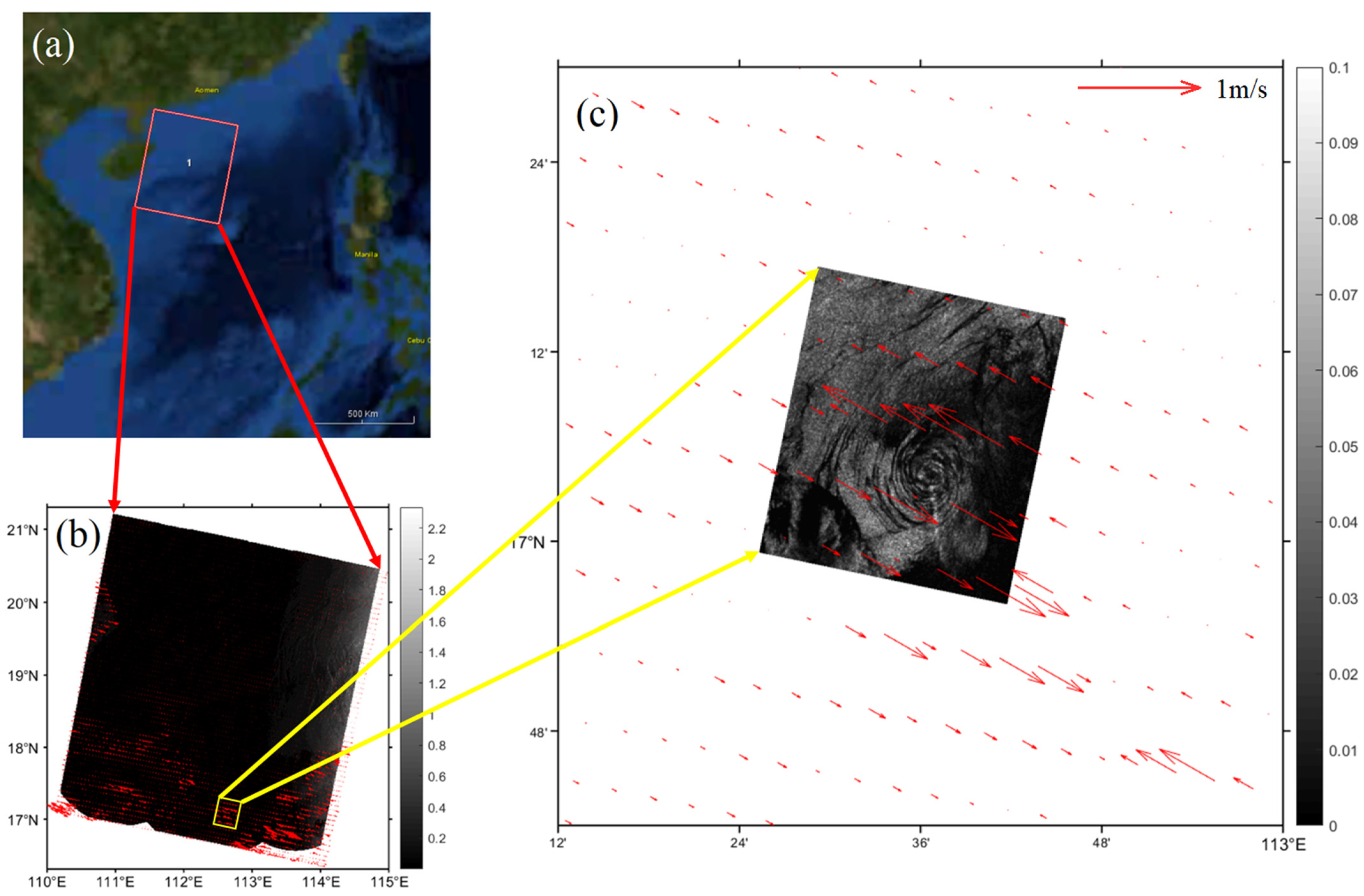
Figure 1 is an example we give of the inverted RVL field of an eddy shot on 7 October 2008, 02:25:19 UTC, South China Sea, shot by Envisat ASAR.
3. Results
Since submesoscale eddies rarely appear to be regular or nearly circular in the real ocean, a way to classify the changeful eddies according to their shapes is needed. One useful metric for characterizing eddy shape is eddy aspect ratio, which is defined as the ratio between the minor and major radius of the fitted ellipse. According to regional statistical analysis by Ni et al. [
15], the eddy aspect ratio is found to be a function of the eddy radius, irrespective of the eddy polarity; the larger the submesoscale eddies, the more circular they are. Thus, we divided all eddies detected from SAR images by aspect ratio into two groups with a criterion of 0.7. In 92 submesoscale eddies detected in total, 27 eddies occur with their aspect ratio greater than 0.7, while the other 65 eddies are no more than that threshold.
3.1. Improved Burgers–Rott Vortex Model
For eddies occurring more circular (r
min/r
maj > 0.7), we developed an improved Burgers–Rott vortex model [
7,
8], as it has the most consistent assumption with the case of submesoscale eddies. The classical Burgers–Rott vortex represents an exact, steady-state solution to the Navier–Stokes equations. Its physical foundation lies in the delicate balance it strikes between two competing processes: the radial advection of fluid towards the vortex core (suction), which acts to concentrate vorticity, and the outward diffusion of vorticity due to viscosity. This balance results in a stable vortex structure with a finite core size and a well-defined tangential velocity profile, making it an idealized yet powerful model for relatively isolated, axisymmetric vortices. Due to that, the geostrophic features are still non-negligible for submesoscale eddies, an important improvement to keep the geostrophic term when simplifying the Navier–Stokes equation. Assuming that the vortex is state-steady and axially symmetric, the Navier–Stokes equation then became
The velocity field of the vortex is solved and expressed in the cylindrical coordinate system as
where
,
, and
represent the velocity components in the
,
, and
directions respectively,
is the suction intensity,
is the viscosity coefficient,
is the Coriolis parameter, and
is the velocity circulation when
,
.
With the vortex solution converted to a rectangular coordinate system, we have
where
and
means the velocity component of the vortex velocity field in the x and y directions, respectively.
The velocity field solution above can be regarded as a system of linear equations with two variables and . After solving the values of and by substituting the RVL field, the full two-dimensional flow field can be obtained according to the above equations. Through simulation, we found that the value of will affect the velocity of the vortex flow field. The larger the value of , the larger the velocity field of the vortex, and vice versa. The positive and negative values of affect the rotation direction of the velocity field. When is positive, the flow field rotates clockwise, while the flow field rotates counterclockwise with a negative . The value of affects the curvature of the arm of an eddy. The larger the value of , the greater the curvature of the eddy arm, and vice versa.
We build a rectangular coordinate system on the eddy shown in
Figure 1 with the vortex center as the original point and the major axis direction (the direction where the longest radius is) as the X-axis. Then we select RVL vectors involved inside the eddy zone and plug them into
and
to calculate
and
. It is worth noting that most eddies involve more than one RVL vector (usually 5~30 RVL vectors), which means calculating the coefficient
and
turns out to be a statically indeterminate problem. In this case, all RVL vectors were selected for calculating
and
, and the obtained coefficients were weighted and averaged to get the final coefficient. Because these coefficients have little difference before being averaged, the effect on the calculation results is small enough to be neglected.
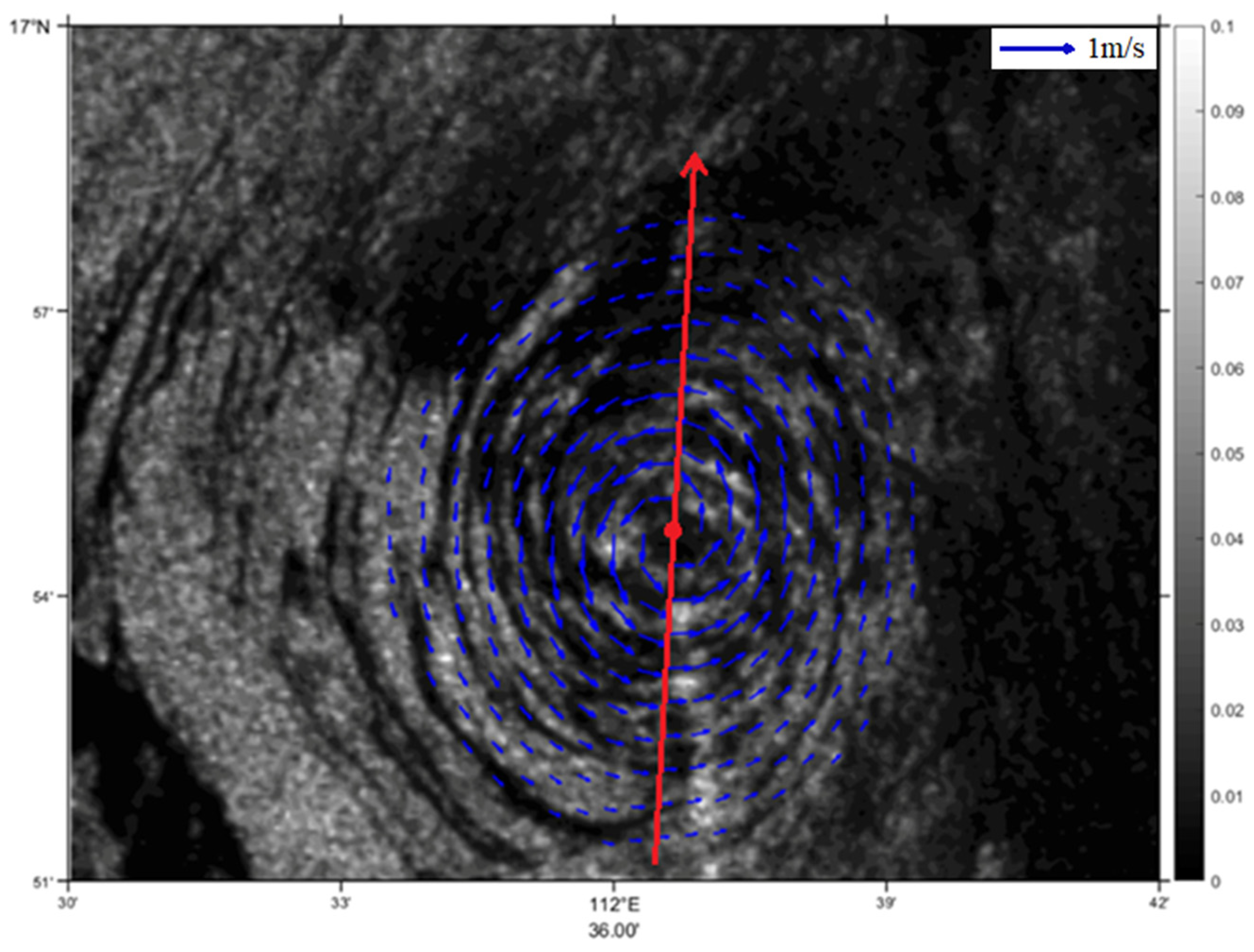
Figure 2 shows the velocity field simulation result of the same eddy shown in
Figure 1c. Through this theoretical model, we can easily reckon the velocity vector of any position within the eddy zone, and with no limitation of spatial grid specification. In the real ocean, eddies that are circular enough to fit in this theoretical model are usually of a larger size and account for only a small fraction of the total observed eddies from SAR images.
3.2. Cat’s Eye Structure of Submesoscale Eddy
Similar to studies by other researchers [
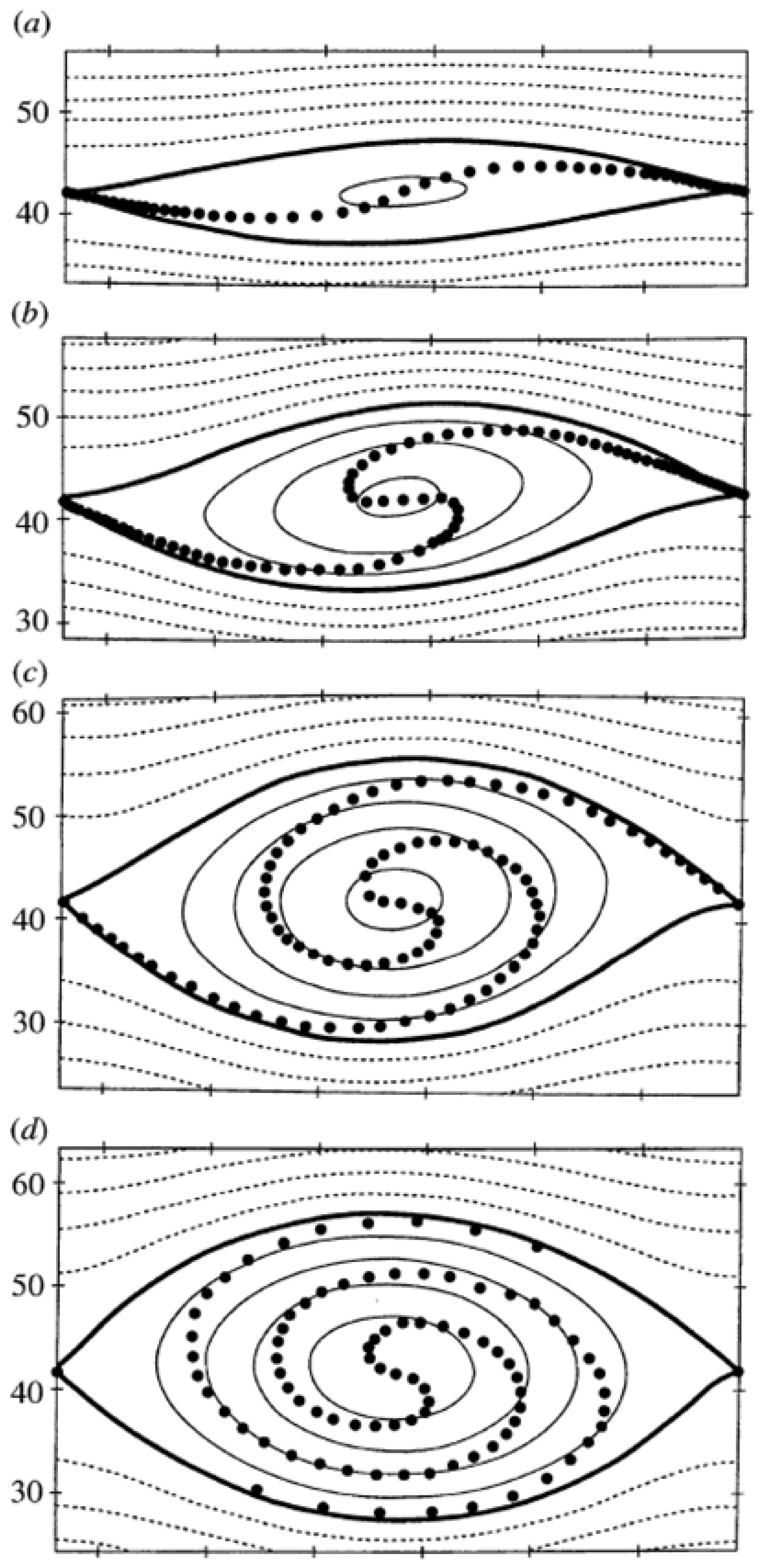
15], the average shapes of both cyclonic eddies (CEs) and anticyclonic eddies (AEs) are found to be nearly identical, revealing an almost perfect “cat’s eye” structure as displayed in
Figure 3 from previous theoretical and numerical studies [
16]. This “cat’s eye” flow pattern is a classic solution in fluid dynamics, representing a chain of steady-state vortices embedded within a background shear flow. It typically arises from shear instability, such as the Kelvin–Helmholtz instability, where the velocity difference across a fluid interface rolls up into coherent vortical structures. The separatrices, or the “braids” of the cat’s eye, delineate the boundary between the recirculating fluid trapped within the vortices and the surrounding free-stream flow, making this model particularly suitable for describing eddies formed in regions of strong background currents or frontal zones.
The Stuart solution
where
is the background shear flow, which can be captured from the RVL vector field near the eddy profile,
k ≈ 0.0003 m
−1 is the ratio between 2π and eddy length scale, and
is an unknown parameter between 0 and 1 that needs to be determined. The streamlines passing through the two stagnation points block the exchange of water inside and outside, forming a closed circulation inside.
To obtain the complete current field in the vortex, the parameters
and
needs to be figured out. According to the N-S equation and the vorticity conservation equation, we have
where
is the angle between the line connecting two stagnation points and the streamline passing through them, which should be calculated in advance.
can be obtained by the best fitting match between the recognized vortex contour and the theoretical model, then the parameter can be determined. As long as is obtained, can be solved by substituting into the streamline where the point of radial velocity is located. Finally, the complete velocity field within the vortex can be calculated.
During the actual simulation, the Burgers–Rott vortex model is defined by three key parameters: the geographic coordinates of the vortex center, , and the circulation, Γ. Estimating these three parameters from the one-dimensional line-of-sight radial velocity field constitutes a classic inverse problem. To solve this, we employed a nonlinear least-squares fitting procedure, which is detailed as follows:
Step 1: Initial Guess and Discretization. The SAR image area corresponding to the eddy is discretized into a grid. An initial guess for the vortex center is determined from the geometric center of the eddy signature in the SAR image. An initial estimate for the circulation Γ is set based on typical values for submesoscale eddies.
Step 2: Forward Model Calculation. For each grid point
where an observed RVL value,
, is available, we use the guessed parameters
to calculate a forward-modeled tangential velocity,
, using the Burgers–Rott formula
where
is the radial distance from
to
. Subsequently, this tangential velocity is projected onto the satellite’s line-of-sight direction at that specific point to obtain a modeled radial velocity,
. This projection considers the satellite’s look angle and the geometric relationship between the tangential flow and the radar look vector.
Step 3: Cost Function Minimization. We define a cost function,
, as the sum of the squared differences between the observed and modeled RVL, weighted by the certainty of each observation. This can be expressed as
The weighting factor,
, is introduced to prioritize observations with higher confidence. In this study, RVL vectors located near the core of the eddy (where the signal is strongest and clearest) are assigned higher weights, while those near the periphery or in areas of high noise are down-weighted.
Step 4: Iterative Optimization. An iterative optimization algorithm, such as the Levenberg–Marquardt algorithm, is then used to find the set of parameters that minimizes the cost function . The algorithm iteratively adjusts the parameters from their initial guess until the change in the cost function between iterations falls below a predefined convergence threshold. The final set of parameters yielding the minimum is then taken as the solution for the eddy’s structure.
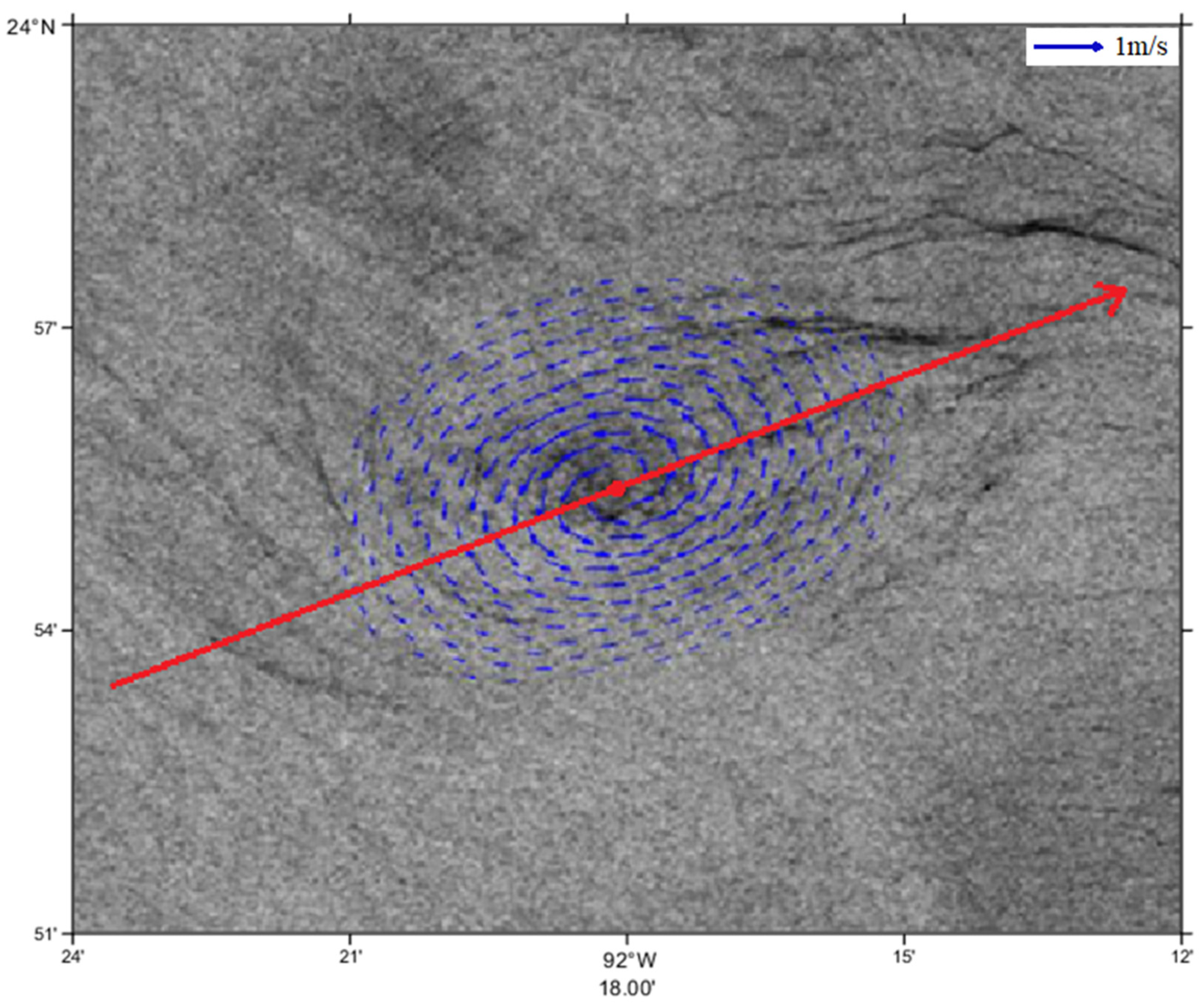
An example is shown in
Figure 4 with a radius aspect ratio of 0.67, shot using the Gaofen-3 satellite C-band SAR.
4. Discussion
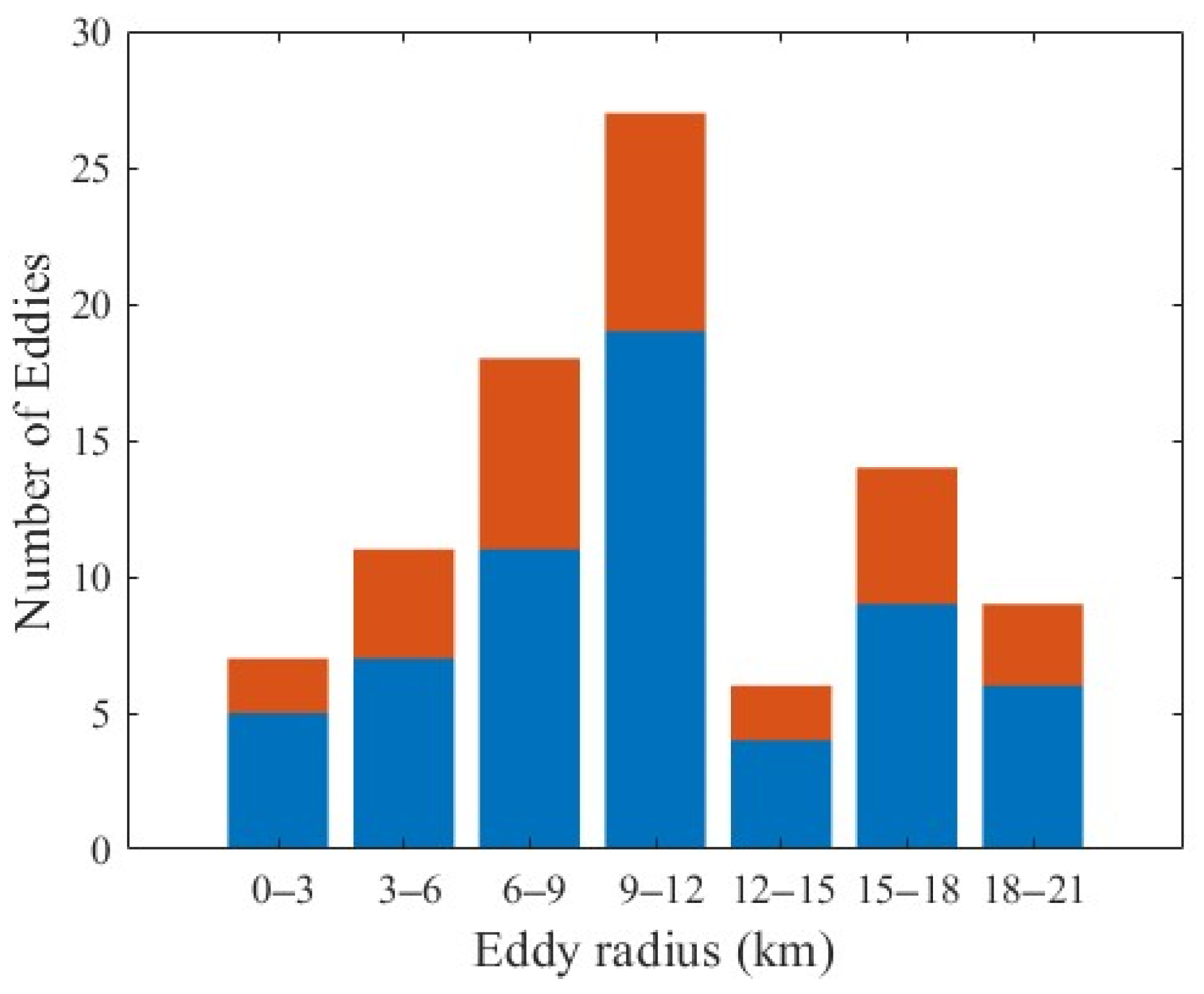
With the 92 submesoscale eddies included in this study, the recorded eddy sizes ranged from 6 to 18 km, with most eddies having a radius of approximately 10 km (
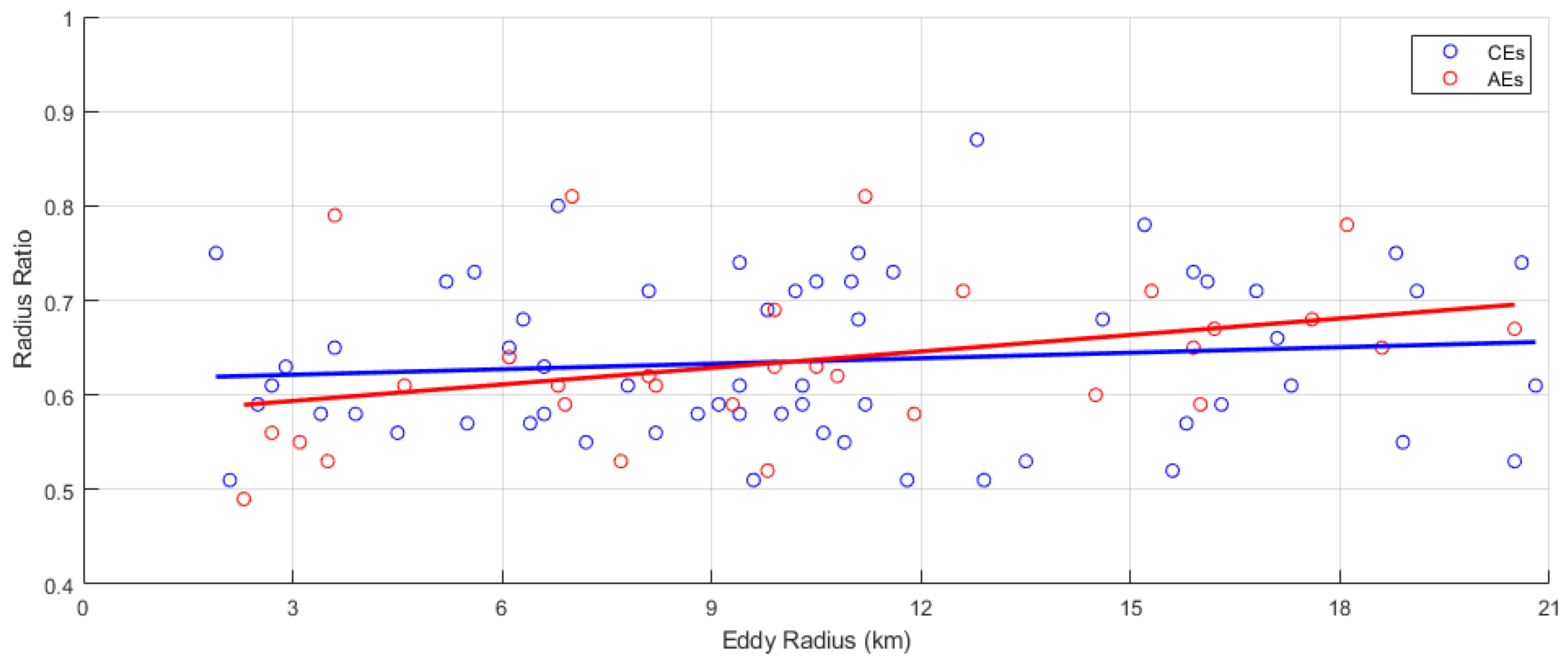
Figure 5). To understand the aspect ratio, the relationship between the aspect ratio and the radius is shown in
Figure 6. As the radius of the eddies increases, the aspect ratio gradually increases for both types of eddies. This is because larger eddies, which can carry more energy, are better able to resist various external forces and instabilities, making it easier for them to form a near-circular horizontal structure. Considering the absolute vorticity
where the planetary vorticity
is positive in the northern hemisphere, while the relative vorticity
is positive (negative) for CEs (AEs). Due to the fact that the relative vorticity and planetary vorticity of CEs are both positive, CEs typically have greater vorticity compared to AEs, allowing them to maintain their stability better than AEs with negative vorticity and prevent dissipation; therefore, CEs also appear more frequently than AEs when the aspect ratio is larger than 0.7 for the same reason. Additionally, the percentage of eddies with aspect ratio larger than 0.7 are 19.4% and 31.1% for AE and CE, respectively.
The observed trend of larger eddies being more circular can be interpreted from a dynamical perspective. Smaller, newly formed submesoscale eddies are often the direct result of highly anisotropic processes, such as baroclinic instability along sharp density fronts or shear instability in strong currents [
17]. These formation mechanisms naturally impart a more elongated, filamentary shape upon the nascent vortices. As these eddies evolve and grow, internal fluid dynamics, including self-advection and nonlinear interactions, tend to promote axisymmetrization, a process wherein the vortex sheds filaments and organizes itself into a more coherent, circular structure [
18]. Larger, more energetic vortices possess greater inertia, allowing them to better resist deformation by the ambient shear and evolve towards this more stable, circular state, which represents a minimum energy state for a given angular momentum [
19].
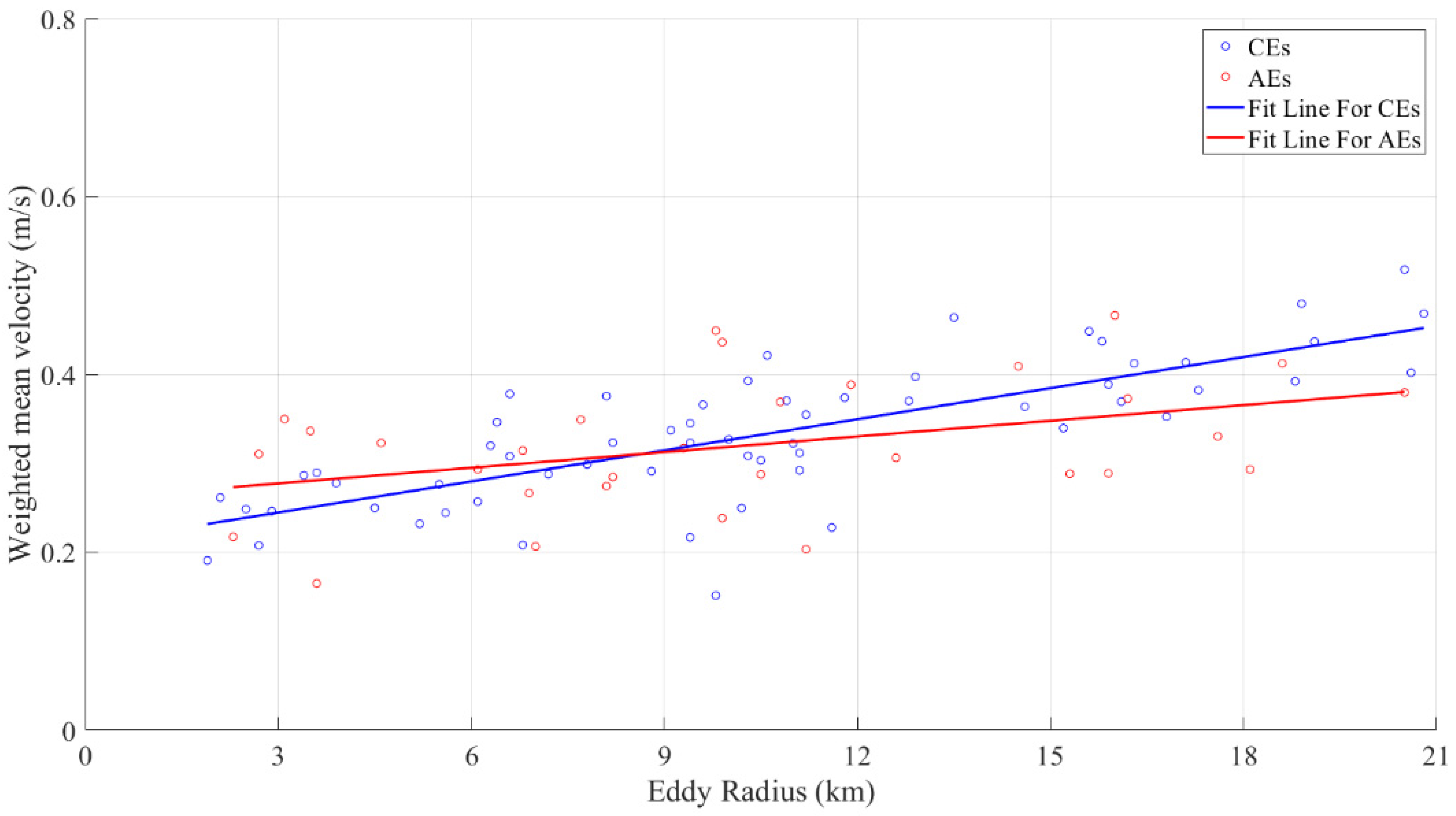
To further reveal the dynamical characteristics of these vortexes, the mean eddy kinetic energy, represented as the eddy’s weighted mean velocity, varies with the radius (
Figure 7). It shows that the weighted mean velocity of both types of eddies increases with the radius, indicating that larger eddies can carry more energy per unit area. Notably, as the radius increases, the kinetic energy of CEs grows more rapidly. The CEs can carry more (less) energy than AEs for larger (smaller) eddies. This is likely due to the fact that, under the non-negligible influence of Coriolis forces, CEs are relatively more stable with greater vorticity, allowing them to carry more energy compared to AEs.
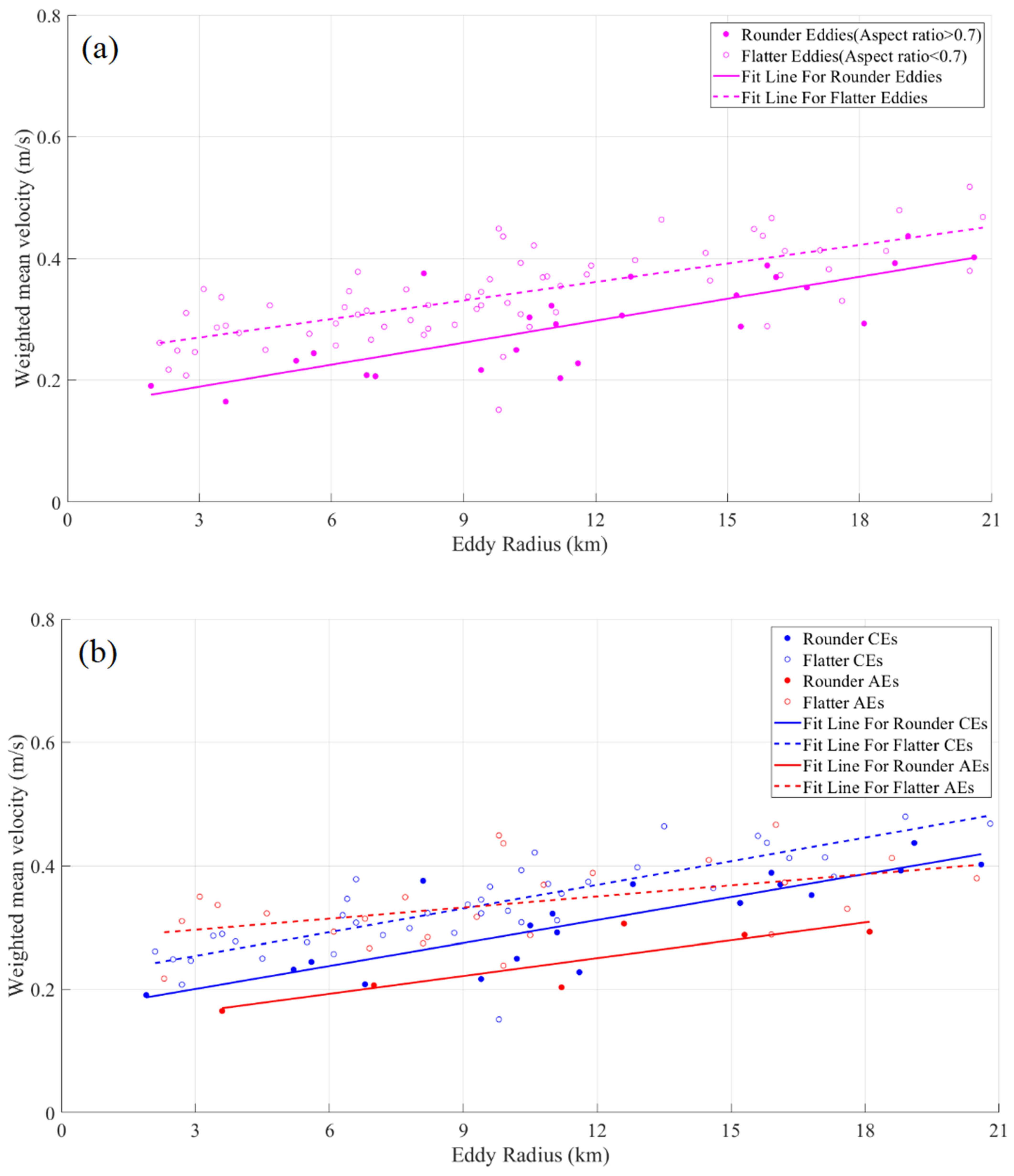
We further look at the differences in the energy carried by eddies with aspect ratios larger or less than 0.7 (
Figure 8a). A remarkable phenomenon is that at any radius, the flatter eddies with an aspect ratio smaller than 0.7 carried more energy than the rounder eddies with an aspect ratio larger than 0.7. Regardless of their size, flatter eddies exhibit a flow speed that is 0.06 to 0.08 m/s lower than that of rounder eddies. This further supports the notion that flatter eddies, primarily formed through mechanisms such as flow shear and cross-jet interactions [
20], carry more energy. Moreover, in
Figure 8b, the blue (red) lines remain almost parallel, indicating that CEs (AEs) maintain the same spatial pattern, which suggests that this characteristic is unrelated to the eddy polarity.
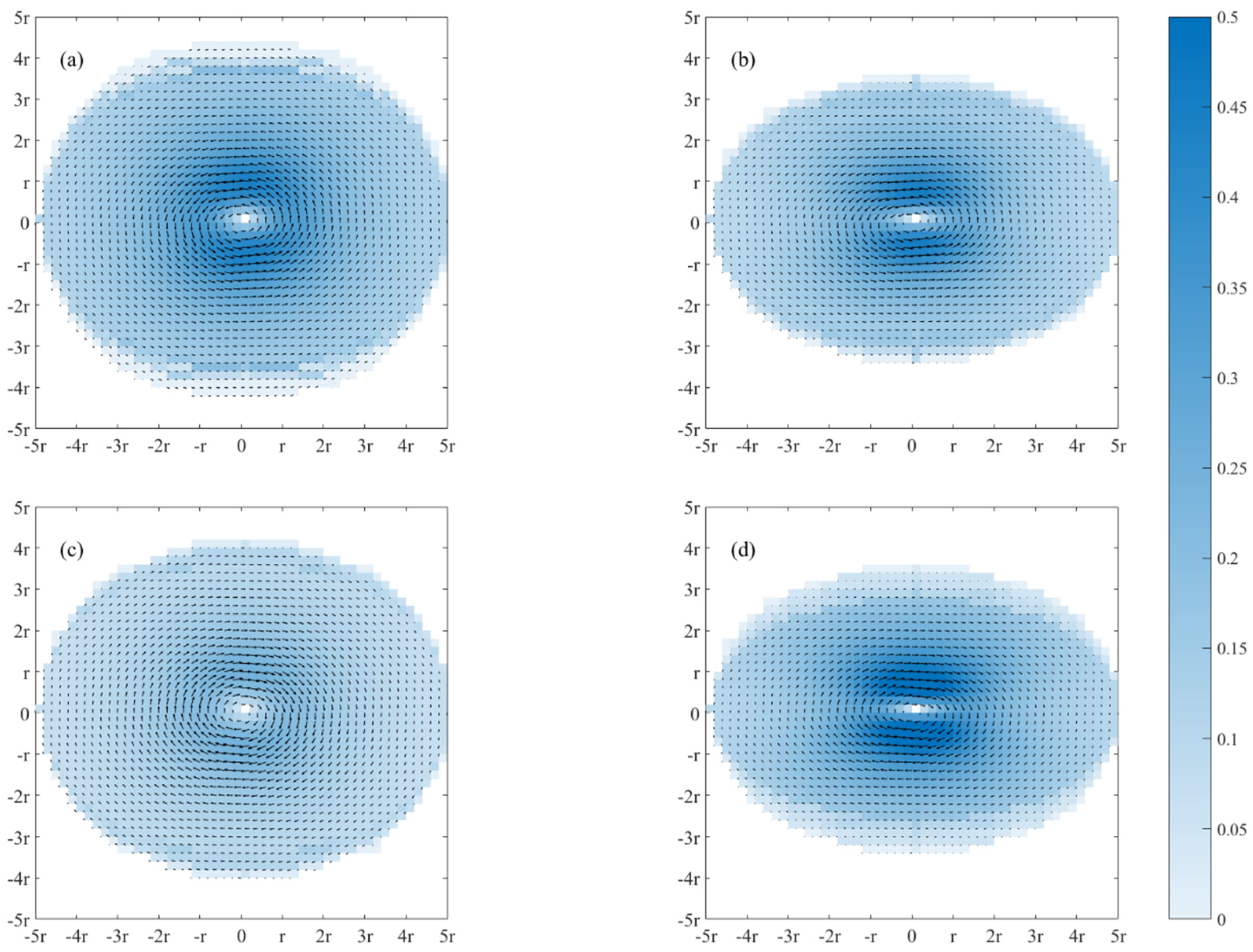
To further look at the current variabilities of anticyclonic and cyclonic eddies with different aspect ratios, we conducted a normalized composite analysis on vortex current, as shown in
Figure 9. Where r represents the normalized maximum radius. Regardless of the eddy shape or polarity, the maximum of the standard deviation of the flow velocity locates around 0.6~0.8 r of the minor axis direction with rotational symmetry about the eddy center, while the flow velocity is greatest and most variable within the same region. This active kinetic energy region is close to the area covered by the eddy coherent core, as mentioned by Deogharia [
21]. The flow velocity of the flatter eddies with an aspect ratio of less than 0.7 (
Figure 9b,d) has a larger peak and more drastic changes compared to more rounded eddies with an aspect ratio greater than 0.7 (
Figure 9a,c). This is because flatter eddies are typically associated with frontogenesis-driven processes, characterized by strong buoyancy gradients and frontal features, significant vertical motions, and vertical transport of both matter and energy [
21], which is consistent with Deogharia et al. It is also interesting to see that CEs exhibit both larger velocity and more variability than AEs when the aspect ratio is larger than 0.7, while the opposite occurs when the aspect ratio is less than 0.7. This is likely due to the fact that for rounder eddies, CEs tend to have higher flow velocities, relying on better stability, the magnitude of their velocity variation is also greater compared to AEs, which is reflected in the larger standard deviation. As for the case of flatter eddies, the velocity difference between CEs and AEs is not as significant for flatter eddies. On the fact that CEs with rotational direction aligned with planetary vorticity can maintain better stability than AEs, the stability advantage of CEs becomes more apparent.
The ability to generate high-resolution, two-dimensional surface current fields from archived SAR data has significant implications beyond fundamental oceanographic research. This methodology could be instrumental in historical case-study reconstructions of events where submesoscale features played a critical role, such as oil spill dispersion, search and rescue operations, or harmful algal bloom transport. Furthermore, the statistical characterization of eddy-induced currents provides valuable parameters for improving the sub-grid-scale parameterization schemes in regional and global ocean circulation models, which currently struggle to resolve these features explicitly. Looking forward, a near-real-time implementation of this framework could offer a valuable tactical product for maritime navigation and offshore industrial operations, providing unprecedented detail on local current hazards and opportunities that are invisible to other remote sensing platforms.
A rigorous validation of the reconstructed two-dimensional surface current fields represents a critical, albeit challenging, aspect of this study. The most significant limitation of our current analysis is the absence of synchronous, high-resolution in situ velocity data, such as from moored Acoustic Doppler Current Profilers (ADCPs) or dense High-Frequency (HF) radar arrays, which would serve as the ideal ground truth for a point-to-point error assessment.
In light of this, our current validation strategy relies on two main pillars. First, the foundational input to our models, the line-of-sight radial velocity (RVL), is derived using the state-of-the-art CDOP model. This model has undergone extensive validation in prior research, demonstrating its capability to retrieve sea surface Doppler information with high fidelity by carefully removing contributions from sea state and wind [
4,
5,
11]. Recent studies have further reinforced the robustness of this approach. For example, Guan et al. [
14], in a comparison against HF radar measurements, demonstrated that a CDOP-based current retrieval achieved a root-mean-square error (RMSE) of approximately 0.30 m/s, confirming the model’s reliability for generating quantitative current data. The reliability of our 1D input data, benchmarked by such studies, thus forms the bedrock of our confidence. Second, the emergent statistical properties of the 92 submesoscale eddies analyzed in this paper—including their size distribution (
Figure 5), morphology–radius relationship (
Figure 6), and energy-scaling laws (
Figure 7 and
Figure 8)—exhibit strong agreement with both theoretical expectations and a growing body of observational literature, e.g., [
15,
20]. This consistency suggests that our two-dimensional reconstruction methods are capturing the essential physical characteristics of the eddy field.
Building upon this, future work should prioritize dedicated validation experiments. An ideal campaign would involve the coordinated deployment of a dense array of Lagrangian drifters or vessel-mounted ADCPs during a planned SAR satellite overpass to enable a direct, multi-point comparison. Beyond direct validation, several avenues for methodological improvement exist. The current framework could be enhanced by exploring machine learning approaches, such as physics-informed neural networks (PINNs), to solve the 2D reconstruction problem, potentially offering more flexibility than the analytical vortex models. Another important research direction is to extend this methodology to other SAR frequency bands, such as X-band (e.g., TerraSAR-X) and L-band (e.g., ALOS-PALSAR), and to systematically investigate the frequency-dependent effects on both the CDOP model performance and the final current retrieval. Finally, applying this method in regions with extremely strong background flows, such as the Kuroshio or Gulf Stream, would test the limits of the underlying model assumptions and could necessitate the development of more advanced models that explicitly account for background shear and strain.
To provide a preliminary quantitative assessment for this specific study, we are currently processing available Lagrangian drifter data that passed through the vicinity of our observed eddies (as indicated in
Figure 1). By comparing the drifter’s trajectory and velocity with our model-derived flow fields, we can offer a first-order validation of the method’s performance. The results of this comparison will be included in a subsequent version of this manuscript.
Ultimately, we posit that the framework proposed herein serves as a powerful tool for generating physically plausible, high-resolution snapshots of eddy dynamics, but its quantitative accuracy must be further constrained by future, dedicated validation experiments.
5. Conclusions
This study, focusing on the highly ubiquitous oceanic physical phenomenon of submesoscale eddies, proposes a computational method for analyzing two-dimensional surface velocity fields of ocean eddies. The method first employs the CDOP model, combined with sea surface wind field data, to invert preprocessed SAR images for one-dimensional radial velocity (RVL). Then eddies are categorized based on shape into two types: more circular and less circular eddies. For these two types of eddies, the Improved Burgers–Rott vortex Model and the Stuart vortex solution are respectively combined to calculate the two-dimensional flow field, and examples are provided in
Section 3. Although the two-dimensional flow fields derived in this study have not been validated against synchronous, high-resolution in situ measurements, the statistical characteristics of the eddy population show a strong consistency with established literature, providing indirect support for the physical realism of our results. The credibility of our approach is primarily rooted in the robustness of the underlying CDOP model, which itself has been rigorously validated against buoy observations in previous studies [
4,
5,
11]. This provides initial confidence in the two-dimensional velocity field inversion results, which are derived from these RVLs under well-defined theoretical vortex dynamics. Building upon this foundation, we conducted necessary statistical analyses on the eddy samples. The results indicate a strong alignment between the statistical findings of this study and existing research conclusions, effectively extracting the typical characteristics of submesoscale eddies.
A pertinent question arises regarding the influence of the larger-scale background flow on our reconstruction of the submesoscale eddy field. The theoretical models employed in this study, namely the Burgers–Rott and Stuart vortex models, are inherently designed to represent isolated, self-contained vortex structures. An implicit assumption of our methodology is, therefore, that the velocity signature captured by the SAR RVL within the localized eddy area is predominantly induced by the eddy itself.
This assumption is partially justified by the nature of SAR Doppler measurements and our processing approach. The one-dimensional RVL field represents anomalies relative to the large-scale mean. When we focus our analysis on a small region (~10–20 km) centered on a coherent submesoscale vortex, the variation in the large-scale background flow across this limited domain is typically small and can be considered a quasi-uniform background advection. The high-pass nature of vortex dynamics at this scale means that our model fitting procedure, which seeks to capture the strong rotational gradients, is most sensitive to the eddy’s own circulation and naturally tends to filter out the low-gradient, large-scale background component. In essence, the procedure isolates the “vortex part” of the flow.
However, we acknowledge that strong background shear or deformation fields could potentially distort the submesoscale eddy structure and affect the accuracy of the reconstruction. For instance, a strong background shear could elongate an otherwise circular eddy, potentially leading to an incorrect model selection (e.g., choosing the Stuart model over the Burgers–Rott). While our aspect ratio-based criterion is a first-order attempt to account for such morphological variations, a more advanced approach could involve simultaneously solving for the parameters of a vortex model and a simple background flow (e.g., a uniform flow or a constant shear). Such an approach would be more computationally intensive and require very high-quality data, but it represents a promising direction for future refinement of this methodology.
Another source of uncertainty arises from the fusion of multi-sensor SAR data. As detailed in
Table 1, this study utilizes images from Sentinel-1, Envisat ASAR, and GF-3. While all are C-band sensors, they operate with different imaging modes, spatial resolutions, and noise characteristics (e.g., NESZ—Noise Equivalent Sigma Zero). These instrumental differences can inherently lead to inconsistencies in the quality of the derived Doppler velocity anomalies. For instance, the higher resolution of GF-3′s FSI mode may resolve finer-scale current features but could also be more susceptible to localized noise. We have sought to mitigate these inconsistencies by applying a standardized preprocessing workflow and utilizing the robust, empirically derived CDOP model, which is designed to perform consistently across a range of C-band data. However, residual sensor-specific biases may persist and contribute to the overall variance in our results. Future work could involve a more detailed inter-sensor calibration study or focusing on a single, consistent data source to build a more homogeneous eddy dataset.
The two-dimensional flow field inversion method proposed in this study is entirely based on the exact solutions of the Navier–Stokes equations under different assumptions. The proposed framework can provide a spatially detailed and dynamically consistent representation of the surface velocity field of ocean surface eddies, facilitating researchers in improving their understanding of the dynamical structure of eddy surfaces and the quantitative estimation of material transport and energy transfer by ocean eddies. Over the past several decades, numerous remote sensing satellites have collected vast amounts of SAR data worldwide, distinguished by unparalleled volume and precision compared to other satellite observation data. Given the unique advantages of SAR data, including ultra-high resolution, good spatial coverage, and immunity to cloud interference, the method proposed in this study has high potential in the study of eddy surface structure. In recent years, new methods for observing surface ocean currents, such as the SWOT satellite, have been advancing rapidly. However, due to limited data accumulation and low spatiotemporal coverage, the vast amount of SAR data collected over the past decades still holds immense potential for application. Nevertheless, in addition to satellite observations, we still need in situ observing technologies with high-enough spatiotemporal resolution to reveal the three-dimensional structure of ocean eddies.
It is important to acknowledge the limitations of this study. While SAR provides an unparalleled synoptic view of the ocean surface dynamics at the submesoscale, it is inherently a two-dimensional measurement. The vertical structure and associated vertical velocities of the eddy, which are crucial for understanding its full three-dimensional dynamics and impact on biogeochemical transport, remain unobserved. Future work should therefore focus on a more integrated observational and modeling approach. Combining high-resolution SAR imagery with in situ measurements from platforms like autonomous underwater gliders and high-resolution numerical simulations (e.g., ROMS) would be invaluable for reconstructing the eddy’s complete 3D structure and elucidating the mechanisms of energy transfer across scales.