Evaluation of FY-4B Surface Shortwave Radiation Products over China: Performance Improvement Induced by the Orbital Drift from 133°E to 105°E

Highlights
- FY-4B’s orbital drift to 105°E reduced DSSR RMSE by 11.8% and mitigated East–West accuracy disparity.
- Post-drift product accuracy (R = 0.95) matches international benchmarks like Himawari-8.
- FY-4B is now a validated, high-fidelity data source for solar energy assessment and NWP.
- The proven geometric optimization offers strategic guidance for the deployment of future geostationary constellations.
Abstract
1. Introduction
2. Materials and Methods
2.1. Datasets
2.1.1. Satellite and Ground-Based Radiation Data
2.1.2. Auxiliary Datasets
2.2. Validation Strategy
2.2.1. Satellite Retrieval Algorithm
2.2.2. Data Collocation and Quality Control Scheme
2.2.3. Statistical Metrics
3. Results
3.1. Overall Accuracy Assessment
3.2. Spatial Distribution of Errors
3.3. Dependence on Environmental Factors
3.3.1. Land Cover Types
3.3.2. Elevation Dependence
3.3.3. Cloud Conditions
3.3.4. Diurnal Variations and Solar Zenith Angle (SZA) Effects
4. Discussion
4.1. Quantitative Attribution to Observation Geometry Optimization
4.2. Physical Sources of Residual Errors
- (1)
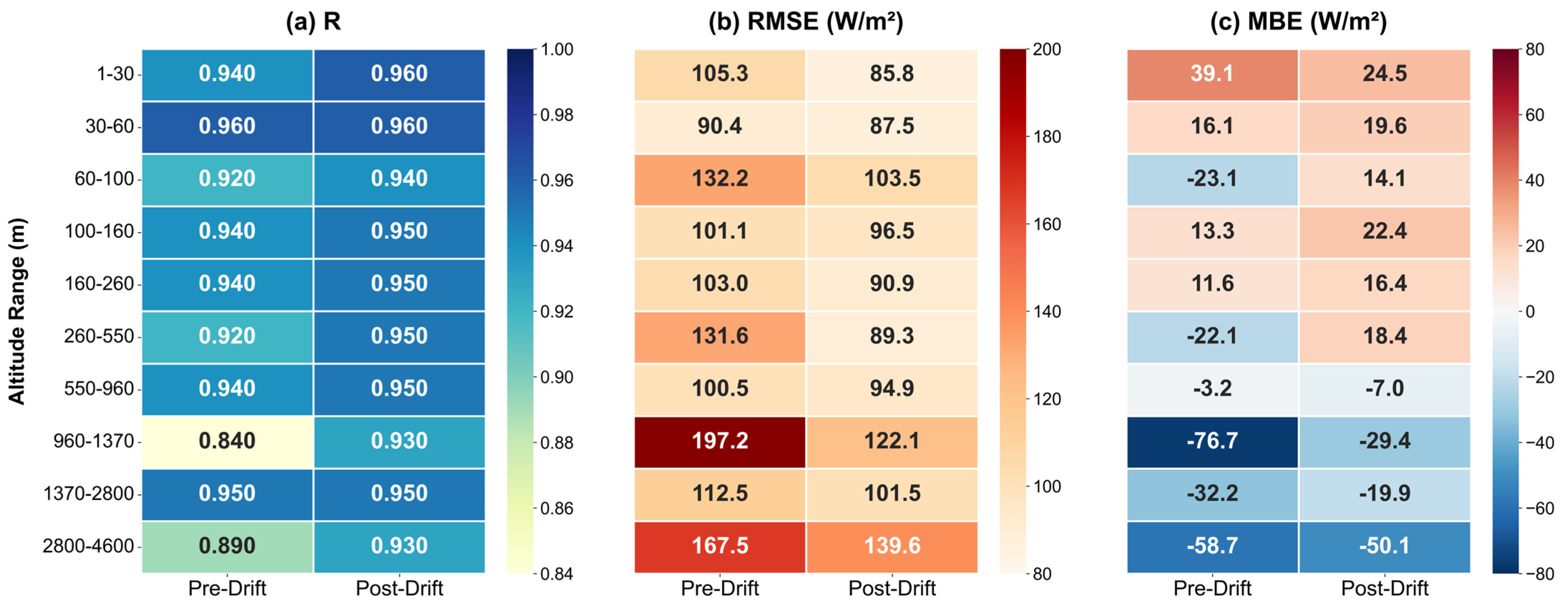
- Surface Anisotropy and Topographic Effects: The notable errors in forest areas (e.g., Deciduous Broadleaf Forests) and high-altitude terrains suggest limitations in the current algorithm’s handling of surface heterogeneity. Forests exhibit complex canopy structures that generate strong bidirectional reflectance distribution function (BRDF) effects, causing non-Lambertian reflection that satellites may misinterpret [29,30]. Similarly, in rugged terrains like the Tibetan Plateau, neglecting 3D topographic effects (e.g., slope, aspect, and mountain shadowing) leads to the systematic underestimation observed in our high-altitude results (Figure 8), consistent with previous studies on topographic radiative effects [31,32,33,34].
- (2)
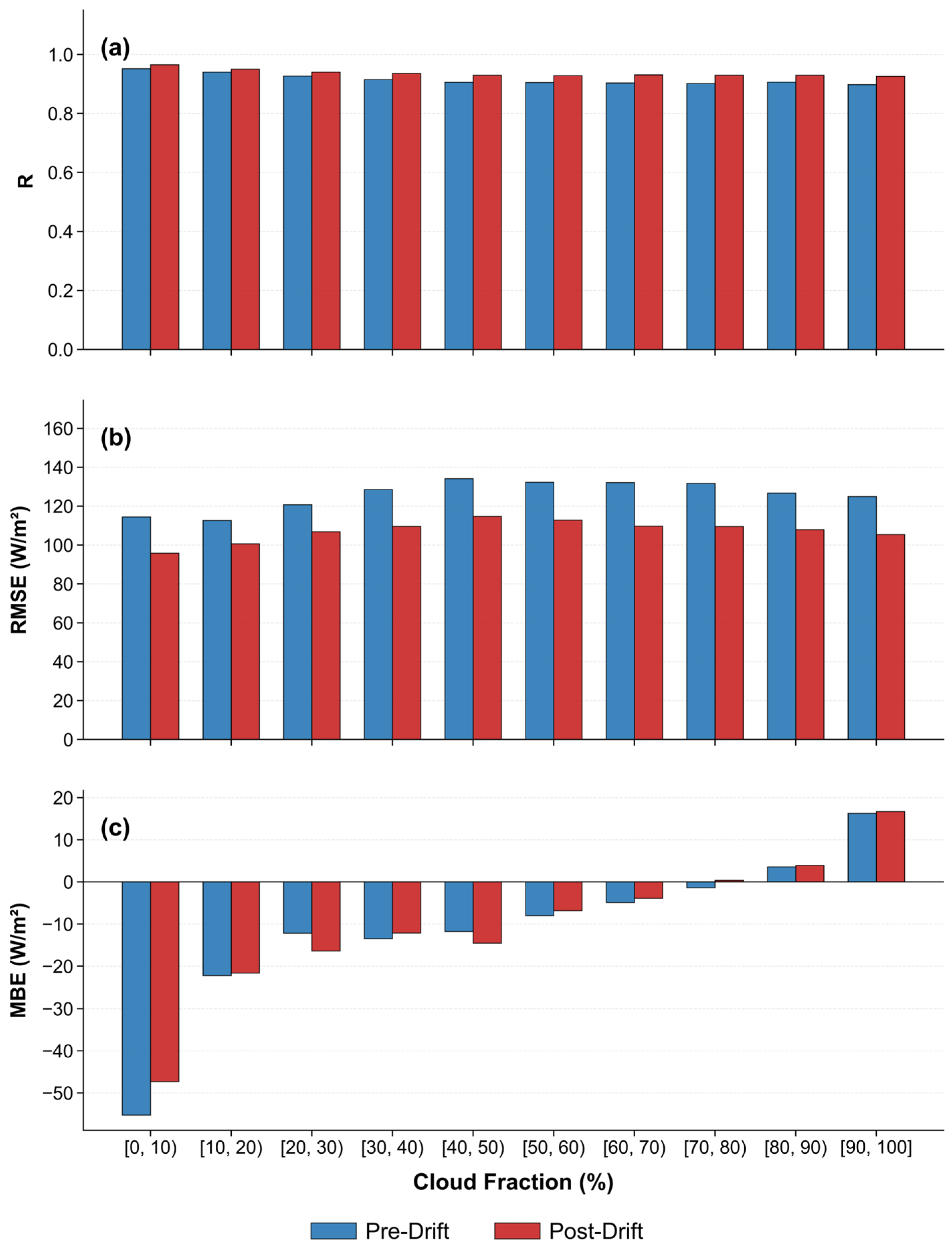
- Cloud 3D Effects and Parallax: The performance disparity under varying cloud conditions (Figure 9) highlights the impact of cloud heterogeneity. While the orbital drift reduced general geometric mismatches, the cloud parallax effect where the satellite-observed cloud position shifts relative to the ground station remains a source of error under thick cloud conditions. Additionally, spatiotemporal mismatches are exacerbated by fast-moving or broken clouds, leading to the observed instability in transition zones [18]. Future algorithms must incorporate rigorous topographic corrections and 3D cloud radiative transfer models to address these physical limitations.
- (3)
- Spatial Representativeness: We acknowledge that collocating 4 km satellite pixels with point-based pyranometers introduces inherent spatial mismatch uncertainties [18]. However, by utilizing identical common stations for both years, applying rigorous 15 min temporal averaging, and employing per-station 3σ filtering, we effectively minimized random spatial noise. The resulting aggregated metrics reliably reflect the performance shifts of the satellite algorithm rather than localized sub-pixel heterogeneity.
4.3. Benchmarking Against International Standards
4.4. Temporal Scope, Limitations, and Future Directions
5. Conclusions
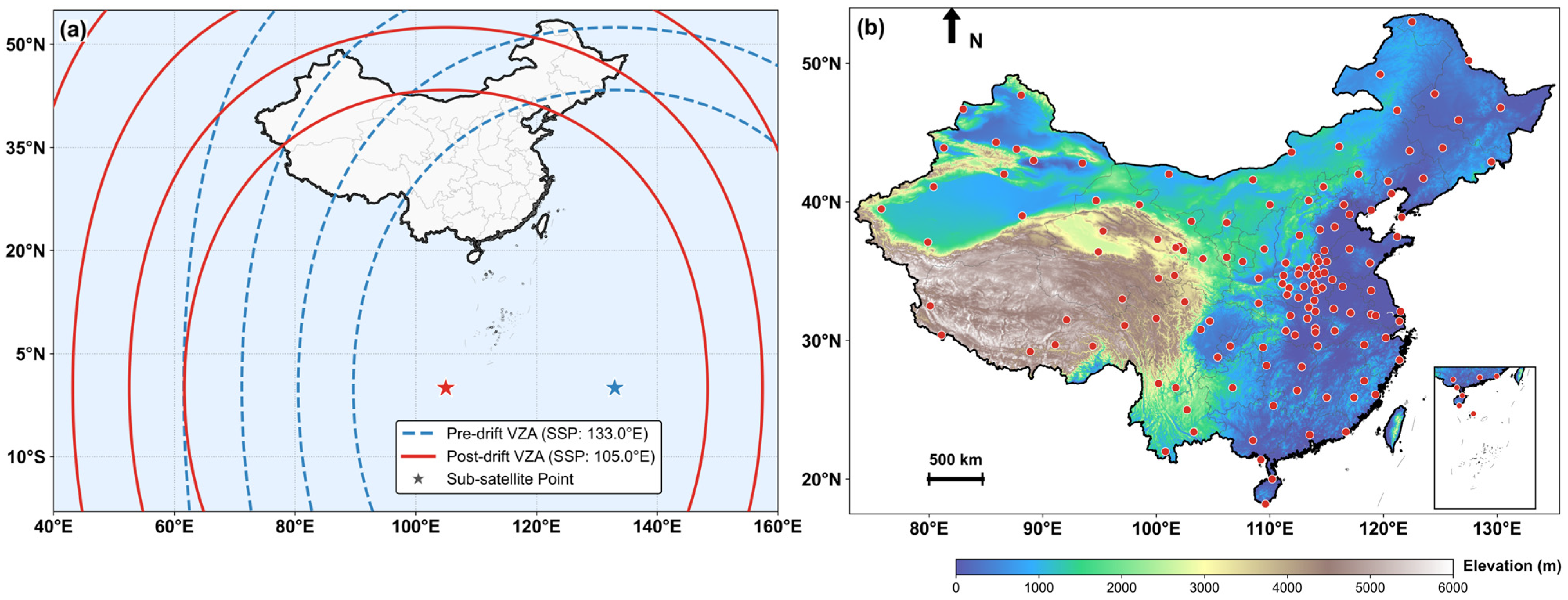
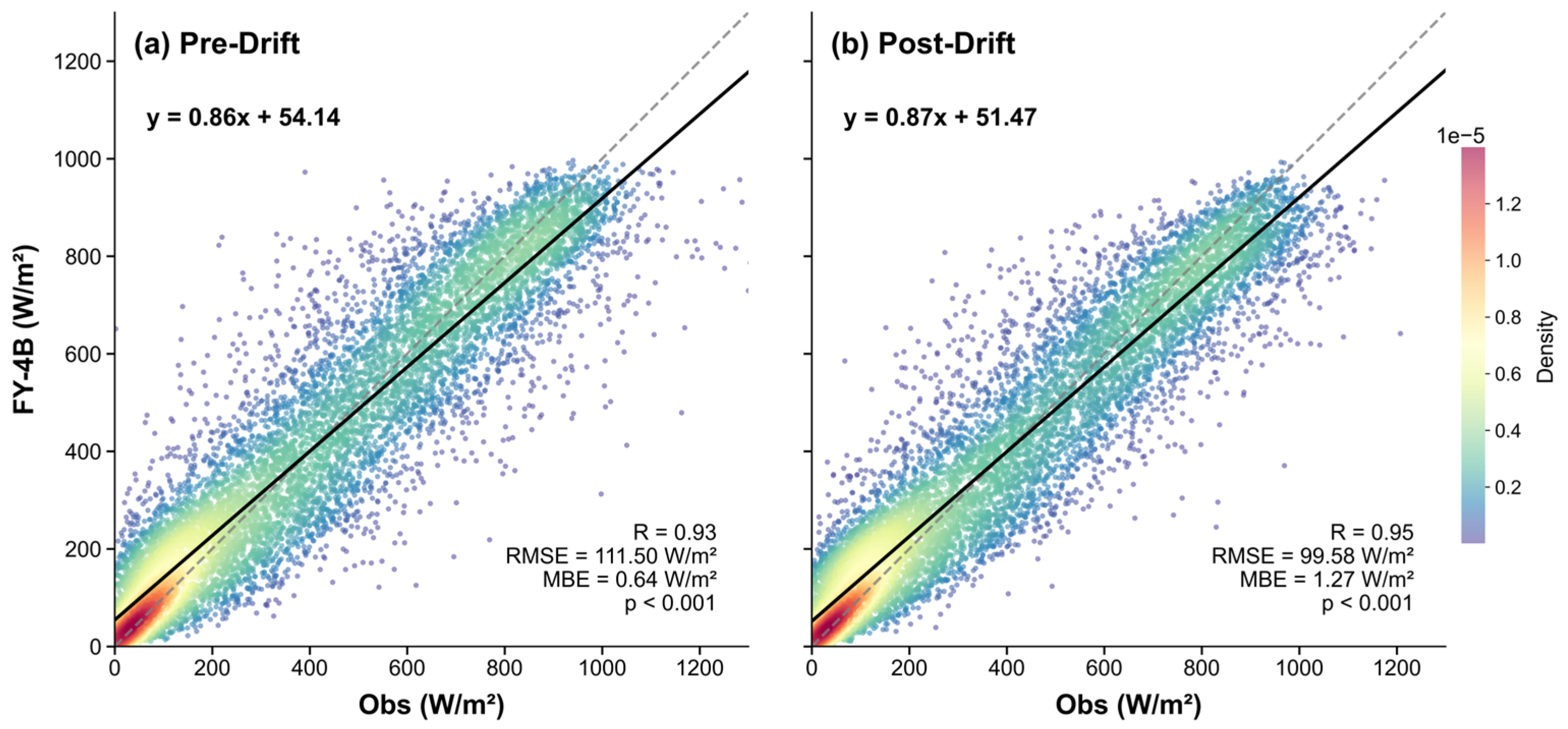
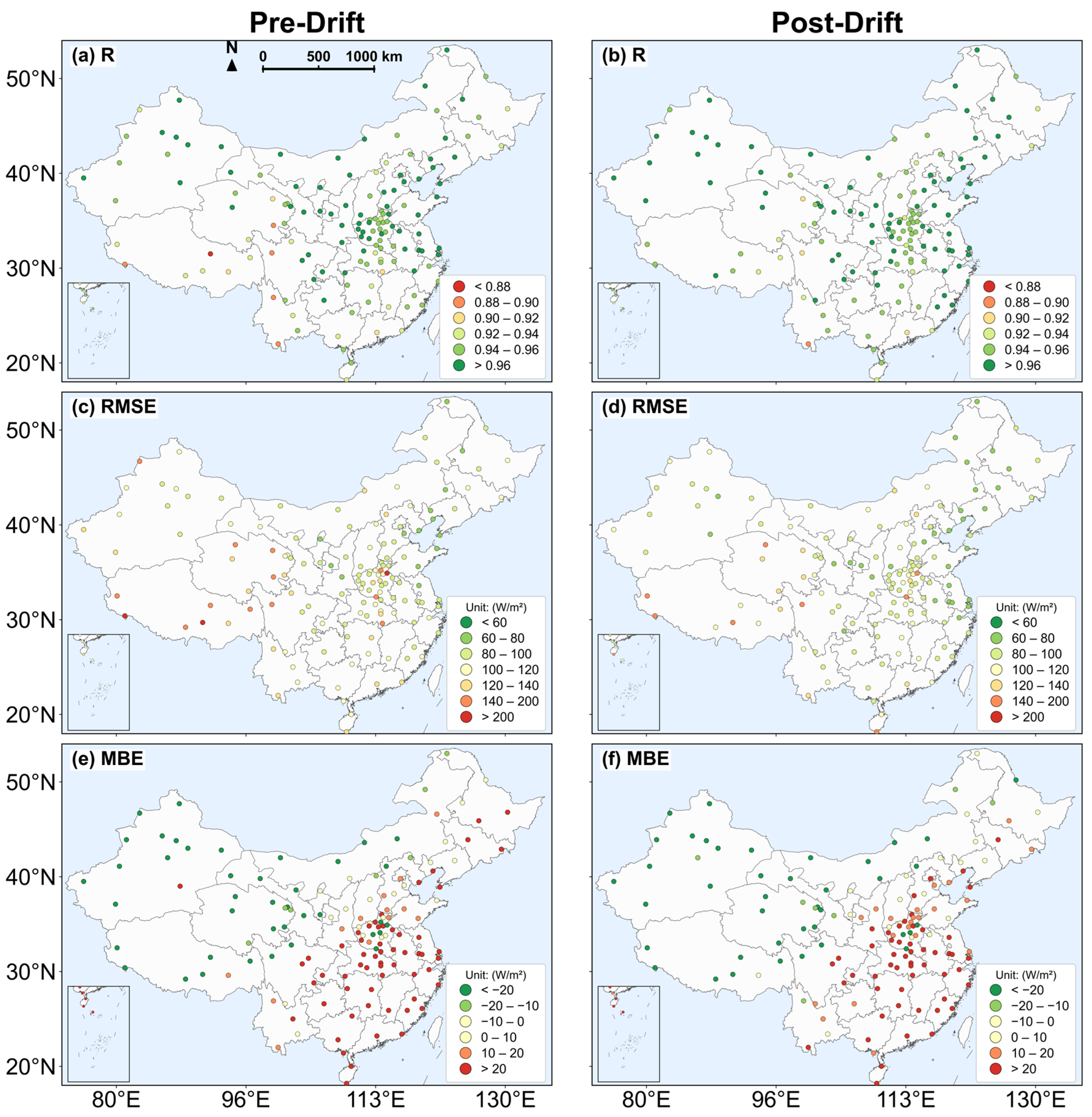
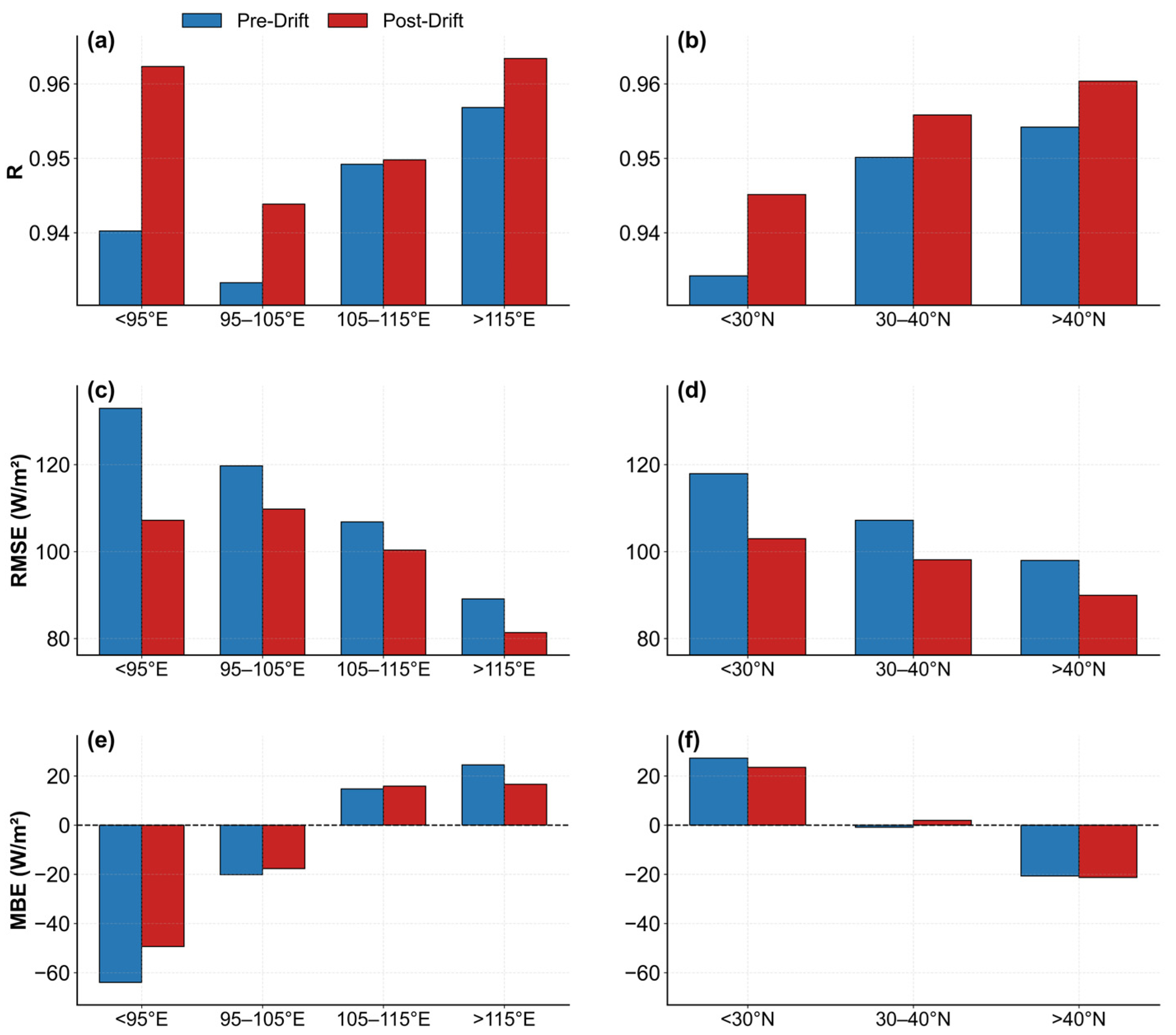
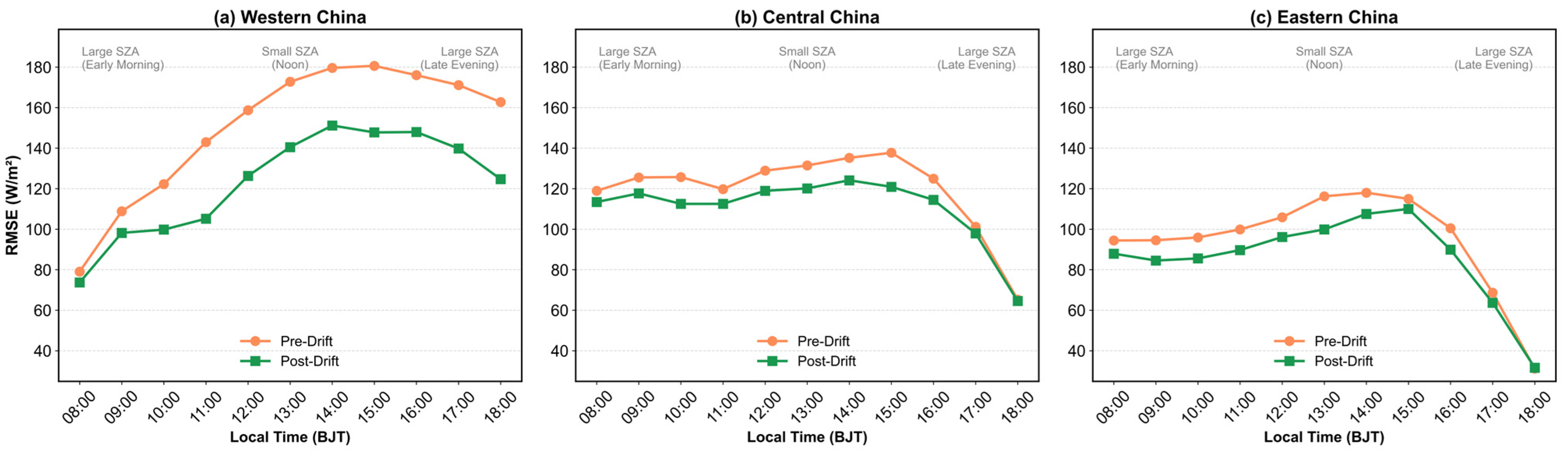
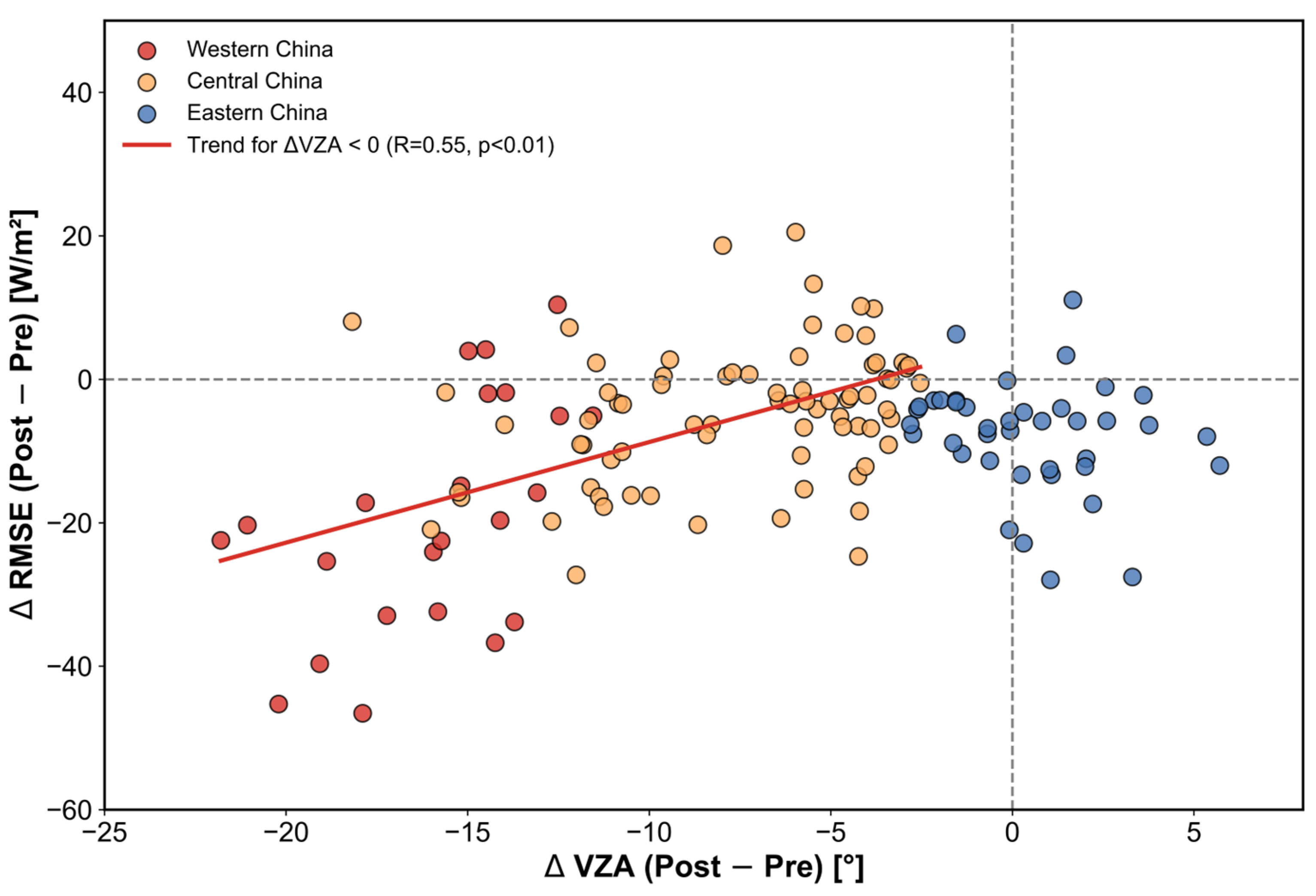
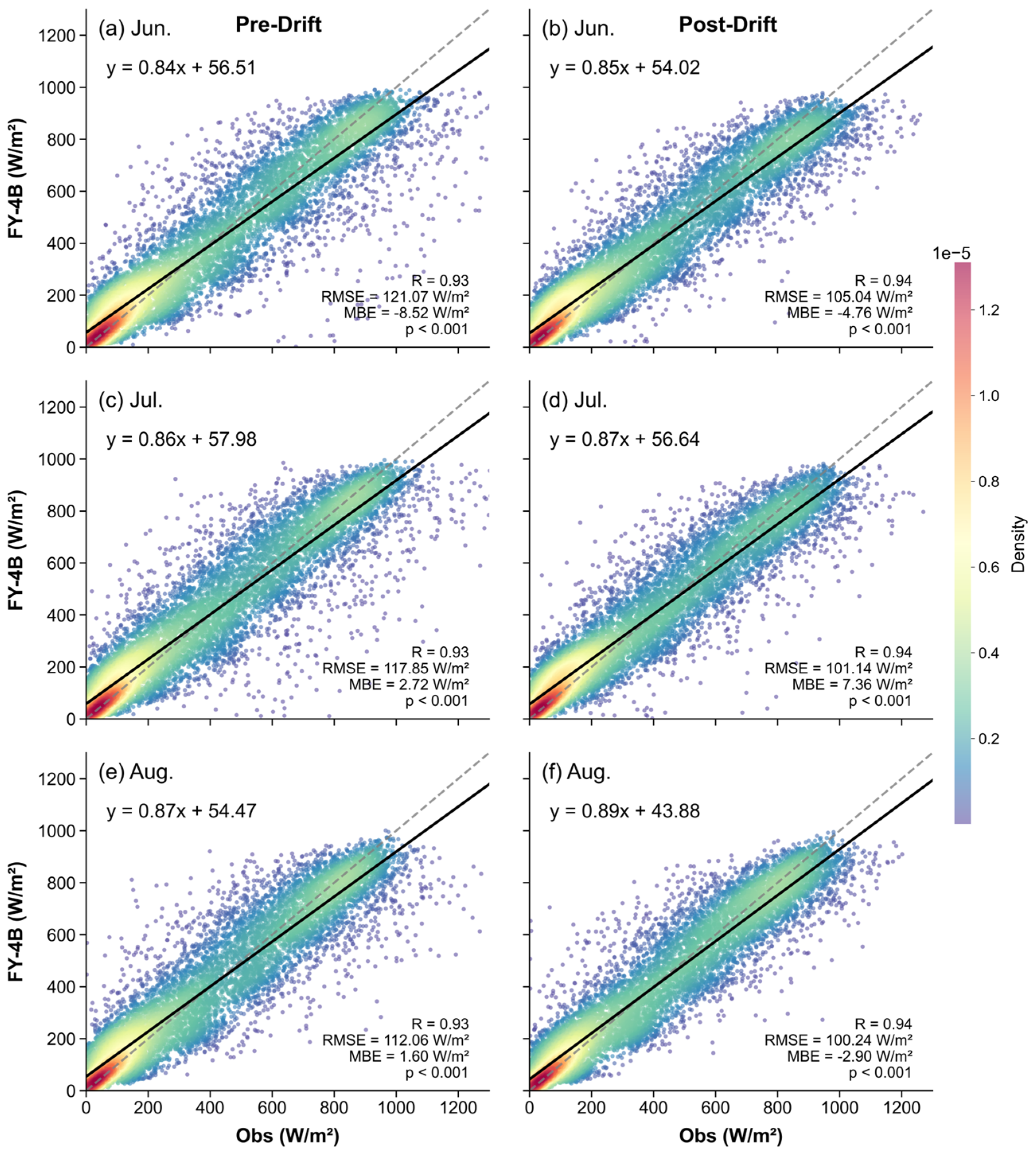
- Significant improvement driven by Viewing Zenith Angle (VZA) optimization. Following the orbital drift, the overall accuracy of the FY-4B DSSR product improved significantly. R increased from 0.93 to 0.95, and RMSE decreased by 11.8% (from 111.5 to 99.58 W/m2). Crucially, the orbital maneuver optimized the VZA for the entire Chinese landmass, successfully mitigating the historical “East–West accuracy disparity” by reducing extreme slant-viewing atmospheric optical paths in Western China.
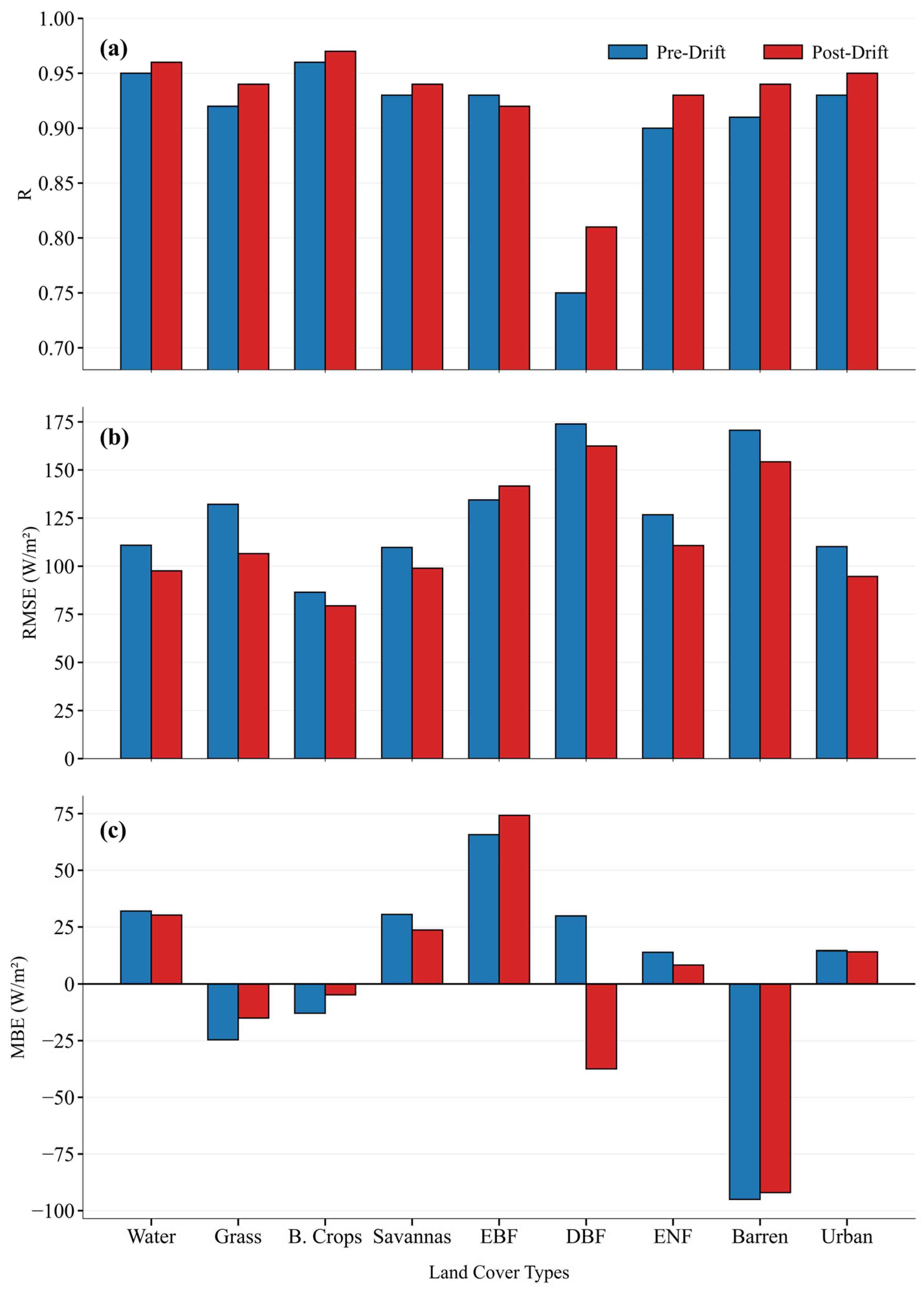
- Performance variations across land covers. The product demonstrated high robustness over homogeneous surfaces such as water bodies, croplands, and urban areas (R > 0.94, RMSE: 80–100 W/m2). However, challenges persist over complex canopies. Specifically, forest regions exhibited a polarity shift in bias (from overestimation to underestimation), and non-vegetated lands remained systematically underestimated. These residual errors suggest limitations in the current algorithm’s handling of surface anisotropy (BRDF) and albedo variability.
- Elevation dependence and topographic limitations. A clear altitudinal gradient in performance was observed. While the orbital drift significantly improved accuracy in medium-to-high altitude regions (960–2800 m) by optimizing the Viewing Zenith Angle, extremely high-altitude regions (>2800 m) continue to suffer from significant underestimation. This underscores the necessity of incorporating 3D topographic effects (e.g., mountain shadowing) into future retrieval algorithms.
- Sensitivity to cloud regimes. The consistency between satellite and ground observations improved under all sky conditions post-drift. Notably, the systematic negative bias under overcast conditions was effectively mitigated, and clear-sky accuracy reached high levels (R = 0.97). However, instability remains in transition zones (cloud edges) and under low solar elevation angles, indicating room for improvement in cloud 3D radiative transfer modeling.
Author Contributions
Funding
Data Availability Statement
Acknowledgments
Conflicts of Interest
Abbreviations
| FY-4B | Fengyun-4B Satellite |
| AGRI | Advanced Geostationary Radiation Imager |
| DSSR | Downward Surface Shortwave Radiation |
| CMA | China Meteorological Administration |
| NSMC | National Satellite Meteorological Center |
| VZA | Viewing Zenith Angle |
| SZA | Solar Zenith Angle |
| RMSE | Root Mean Square Error |
| MBE | Mean Bias Error |
| UTC | Coordinated Universal Time |
| BJT | Beijing Time |
| ERA5 | ECMWF Reanalysis v5 |
| MODIS | Moderate Resolution Imaging Spectroradiometer |
| BRDF | Bidirectional Reflectance Distribution Function |
| NWP | Numerical Weather Prediction |
References
- Sharifi, E.; Steinacker, R.; Saghafian, B. Multi time-scale evaluation of high-resolution satellite-based precipitation products over northeast of Austria. Atmos. Res. 2018, 206, 46–63. [Google Scholar] [CrossRef]
- Tang, W.; Yang, K.; He, J.; Qin, J. Quality control and estimation of global solar radiation in China. Sol. Energy 2010, 84, 466–475. [Google Scholar] [CrossRef]
- Tang, W.J.; Yang, K.; Qin, J.; Cheng, J.; He, J. First effort for constructing a direct solar radiation data set in China for solar energy applications. J. Geophys. Res. Atmos. 2018, 123, 1724–1734. [Google Scholar] [CrossRef]
- Yang, J.; Zhang, Z.; Wei, C.; Lu, F.; Guo, Q. Introducing the new generation of Chinese geostationary weather satellites, Fengyun-4. Bull. Am. Meteorol. Soc. 2017, 98, 1637–1658. [Google Scholar] [CrossRef]
- Chen, L.; Xu, N.; Wang, J.S.; Shang, J.; Shou, Y.X.; Li, B.; Xu, R.H.; Wu, S.L.; Wang, X.; Zheng, W.; et al. FengYun satellites: From observations to quantitative applications. Natl. Remote Sens. Bull. 2025, 29, 1462–1479. [Google Scholar] [CrossRef]
- Yang, X.; Wei, L.; Ma, B.; Sun, R.; Li, Y.; Feng, S. Assessment of the Applicability and Calibration Methods of FY-4A Satellite Surface Solar Radiation Products in Henan Province. Plateau Meteorol. 2024, 43, 1600–1613. [Google Scholar] [CrossRef]
- Ding, L.G. Applicability of FY-4A surface solar radiation products in the Guizhou Plateau mountainous area. Plateau Meteorol. 2022, 41, 1550–1561. (In Chinese) [Google Scholar] [CrossRef]
- Liang, J.Q.; Shen, Y.B.; Hu, L.Q.; Wu, L.D.; Shi, Z.J. Applicability of FY-4A surface downward shortwave radiation products in the Shanxi Plateau. Meteorol. Mon. 2020, 46, 1575–1585. (In Chinese) [Google Scholar] [CrossRef]
- Wang, C.H. Validation and correction of FY-4A surface solar radiation products: A case study in Anhui Province. Meteorol. Mon. 2021, 47, 1123–1135. (In Chinese) [Google Scholar] [CrossRef]
- Liu, J.J.; Shi, C.X.; Jia, B.H.; Zhang, T. Retrieval and dataset evaluation of FY-2E surface solar radiation. J. Remote Sens. 2018, 33, 104–110. (In Chinese) [Google Scholar] [CrossRef]
- Liu, C.; Ren, L.Q.; Li, X.J.; Jia, B.; Yu, T.F.; Zhang, C.Q.; Xiao, J.H.; Zhao, C.Y.; Zhu, M. Solar energy resource assessment over the northern sandy regions of China during 1990–2019. Plateau Meteorol. 2021, 40, 1213–1223. (In Chinese) [Google Scholar] [CrossRef]
- Wang, X.; Min, M.; Wang, F.; Guo, J.; Li, B.; Tang, S. Intercomparisons of Cloud Mask Products Among Fengyun-4A, Himawari-8, and MODIS. IEEE Trans. Geosci. Remote Sens. 2019, 57, 8827–8839. [Google Scholar] [CrossRef]
- Habte, A.; Sengupta, M.; Lopez, A. Evaluation of the National Solar Radiation Database (NSRDB): 1998–2015; NREL/TP-5D00-67461; National Renewable Energy Laboratory (NREL): Golden, CO, USA, 2017.
- Letu, H.; Ma, R.; Xu, J.; Wang, T.; Shang, H.; Chen, L.; Nakajima, T.Y.; Shi, C.; Hashimoto, M.; Shi, J.; et al. Surface solar radiation compositions observed from Himawari-8/9 and Fengyun-4 series. Bull. Am. Meteorol. Soc. 2023, 104, E1772–E1789. [Google Scholar] [CrossRef]
- Tian, L.; Chen, L.; Zhang, P.; Hu, B.; Gao, Y.; Si, Y. The Ground-Level Particulate Matter Concentration Estimation Based on the New Generation of FengYun Geostationary Meteorological Satellite. Remote Sens. 2023, 15, 1459. [Google Scholar] [CrossRef]
- Huang, S.Y.; Xu, G.Q. Impacts of FY-4A LMIE lightning data on cloud initialization and NWP experiments. Plateau Meteorol. 2020, 39, 378–392. (In Chinese) [Google Scholar] [CrossRef]
- Yu, Y.; Shi, J.; Wang, T.; Letu, H.; Yuan, P.; Zhou, W.; Hu, L. Evaluation of the Himawari-8 Shortwave Downward Radiation (SWDR) Product and Its Comparison with the CERES-SYN, MERRA-2, and ERA-Interim Datasets. IEEE J. Sel. Top. Appl. Earth Obs. Remote Sens. 2019, 12, 519–532. [Google Scholar] [CrossRef]
- Urraca, R.; Lanconelli, C.; Gobron, N. Impact of the spatio-temporal mismatch between satellite and in situ measurements on validations of surface solar radiation. J. Geophys. Res. Atmos. 2024, 129, e2024JD041007. [Google Scholar] [CrossRef]
- Hersbach, H.; Bell, B.; Berrisford, P.; Hirahara, S.; Horányi, A.; Muñoz-Sabater, J.; Thépaut, J.N. The ERA5 global reanalysis. Q. J. R. Meteorol. Soc. 2020, 146, 1999–2049. [Google Scholar] [CrossRef]
- Xu, Y.; Liu, Y.; Wei, M.; Liu, J.J. Land-cover classification of the Yangtze River Delta region based on MODIS data. Acta Geogr. Sin. 2007, 62, 649–658. (In Chinese) [Google Scholar] [CrossRef]
- Hu, L.; Li, B.; Si, Y.; Zhang, Y.; Zhang, X.; Lu, F. Instruction Manual for FY-4B Surface Shortwave Radiation Product; National Satellite Meteorological Center: Beijing, China, 2023. (In Chinese) [Google Scholar]
- Ma, R.; Hu, L.; An, R.; He, J.; Han, X.; Wang, Z.M. Estimation of Downward Surface Shortwave Radiation from Himawari-8 Atmospheric Products. Natl. Remote Sens. Bull. 2019, 23, 924–934. (In Chinese) [Google Scholar] [CrossRef]
- Qin, W.; Wang, L.; Lin, A.; Zhang, M.; Xia, X.; Hu, B.; Niu, Z. Comparison of deterministic and data-driven models for solar radiation estimation in China. Renew. Sustain. Energy Rev. 2018, 81, 579–594. [Google Scholar] [CrossRef]
- Si, Y.; Gao, L.; Chen, L.; Tan, Q.; Zhang, X.; Li, B.; Zhang, X. An adaptive dark-target algorithm for retrieving land AOD applied to FY-4B/AGRI data. IEEE J. Sel. Top. Appl. Earth Obs. Remote Sens. 2024, 17, 3408251. [Google Scholar] [CrossRef]
- Wu, S.; Wen, J.; You, D.; Hao, D.; Lin, X.; Xiao, Q.; Liu, Q.; Gastellu-Etchegorry, J.P. Characterization of Remote Sensing Albedo Over Sloped Surfaces Based on DART Simulations and In Situ Observations. J. Geophys. Res. Atmos. 2018, 123, 8599–8622. [Google Scholar] [CrossRef]
- He, T.; Liang, S.; Song, D.X. Analysis of global land surface albedo climatology and spatial-temporal variation during 1981–2010 from multiple satellite products. J. Geophys. Res. Atmos. 2014, 119, 281–10298. [Google Scholar] [CrossRef]
- Xu, J.; Guo, J.; Zhao, C.; Min, M.; Li, J. Impact of aerosol optical depth on surface solar radiation in the Shanghai megacity, China. Atmos. Chem. Phys. 2011, 11, 3281–3295. [Google Scholar] [CrossRef]
- Song, Y.; Chen, G.; Wang, W.C. Aerosol Direct Radiative and Cloud Adjustment Effects on Surface Climate over Eastern China: Analyses of WRF Model Simulations. J. Clim. 2019, 32, 1293–1306. [Google Scholar] [CrossRef]
- Schaaf, C.B.; Gao, F.; Strahler, A.H.; Lucht, W.; Li, X.; Tsang, T.; Strugnell, N.C.; Zhang, X.Y.; Roy, D. First operational BRDF, albedo nadir reflectance products from MODIS. Remote Sens. Environ. 2002, 83, 135–148. [Google Scholar] [CrossRef]
- Yang, J.; Shuai, Y.; Duan, J.; Xie, D.; Zhang, Q.; Zhao, R. Impact of BRDF Spatiotemporal Smoothing on Land Surface Albedo Estimation. Remote Sens. 2022, 14, 2001. [Google Scholar] [CrossRef]
- Xian, Y.; Wang, T.; Leng, W.; Letu, H.; Shi, J.; Wang, G.; Yan, X.; Yuan, H.; Zheng, Y. Can topographic effects on solar radiation be ignored: Evidence from the Tibetan Plateau. Geophys. Res. Lett. 2024, 51, e2024GL108653. [Google Scholar] [CrossRef]
- Dubayah, R.; Rich, P.M. Topographic solar radiation models for GIS. Int. J. Geogr. Inf. Syst. 1995, 9, 405–419. [Google Scholar] [CrossRef]
- Ruiz-Arias, J.A.; Tovar-Pescador, J.; Pozo-Vázquez, D.; Alsamamra, H. A comparative analysis of DEM-based models to estimate the solar radiation in mountainous terrain. Int. J. Geogr. Inf. Sci. 2009, 23, 1049–1076. [Google Scholar] [CrossRef]
- Hao, D.; Bisht, G.; Gu, Y.; Lee, W.L.; Liou, K.N.; Leung, L.R. A Parameterization of Sub-Grid Topographical Effects on Solar Radiation in the E3SM Land Model Version 1.0: Implementation and Evaluation over the Tibetan Plateau. Geosci. Model Dev. 2021, 14, 6273–6293. [Google Scholar] [CrossRef]
- Damiani, A.; Irie, H.; Horio, T.; Takamura, T.; Khatri, P.; Takenaka, H.; Cordero, R.R. Evaluation of Himawari-8 surface downwelling solar radiation by ground-based measurements. Atmos. Meas. Tech. 2018, 11, 2501–2521. [Google Scholar] [CrossRef]
- Huang, G.; Li, Z.; Li, X.; Liang, S.; Yang, K.; Wang, D.; Zhang, Y. Estimating surface solar irradiance from satellites: Past, present, and future perspectives. Remote Sens. Environ. 2019, 233, 111371. [Google Scholar] [CrossRef]
- Chen, L.-H.; Zhang, Y.-L.; Song, Y.-Y. Accuracy analysis of FY-4A shortwave radiation products in the Heihe River Basin. Chin. J. Ecol. 2021, 40, 292–300. (In Chinese) [Google Scholar] [CrossRef]






Disclaimer/Publisher’s Note: The statements, opinions and data contained in all publications are solely those of the individual author(s) and contributor(s) and not of MDPI and/or the editor(s). MDPI and/or the editor(s) disclaim responsibility for any injury to people or property resulting from any ideas, methods, instructions or products referred to in the content. |
© 2026 by the authors. Licensee MDPI, Basel, Switzerland. This article is an open access article distributed under the terms and conditions of the Creative Commons Attribution (CC BY) license.
Share and Cite
Wang, M.; Zhang, W.; Cui, Y.; Li, B. Evaluation of FY-4B Surface Shortwave Radiation Products over China: Performance Improvement Induced by the Orbital Drift from 133°E to 105°E. Remote Sens. 2026, 18, 1454. https://doi.org/10.3390/rs18101454
Wang M, Zhang W, Cui Y, Li B. Evaluation of FY-4B Surface Shortwave Radiation Products over China: Performance Improvement Induced by the Orbital Drift from 133°E to 105°E. Remote Sensing. 2026; 18(10):1454. https://doi.org/10.3390/rs18101454
Chicago/Turabian StyleWang, Ming, Wanchun Zhang, Yang Cui, and Bo Li. 2026. "Evaluation of FY-4B Surface Shortwave Radiation Products over China: Performance Improvement Induced by the Orbital Drift from 133°E to 105°E" Remote Sensing 18, no. 10: 1454. https://doi.org/10.3390/rs18101454
APA StyleWang, M., Zhang, W., Cui, Y., & Li, B. (2026). Evaluation of FY-4B Surface Shortwave Radiation Products over China: Performance Improvement Induced by the Orbital Drift from 133°E to 105°E. Remote Sensing, 18(10), 1454. https://doi.org/10.3390/rs18101454