Article

Research on Camouflage Target Classification and Recognition Based on Mid Wave Infrared Hyperspectral Imaging


School of Physics, Xidian University, Xi’an 710071, China
*
Author to whom correspondence should be addressed.
Remote Sens. 2025, 17(8), 1475; https://doi.org/10.3390/rs17081475
Submission received: 23 January 2025 / Revised: 18 April 2025 / Accepted: 19 April 2025 / Published: 21 April 2025

Abstract

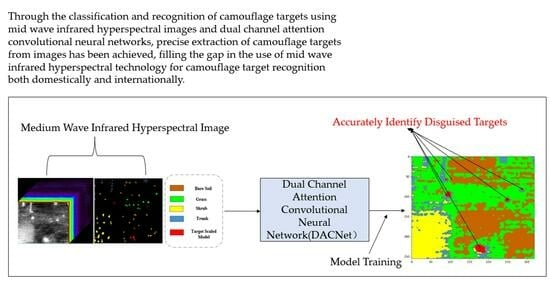
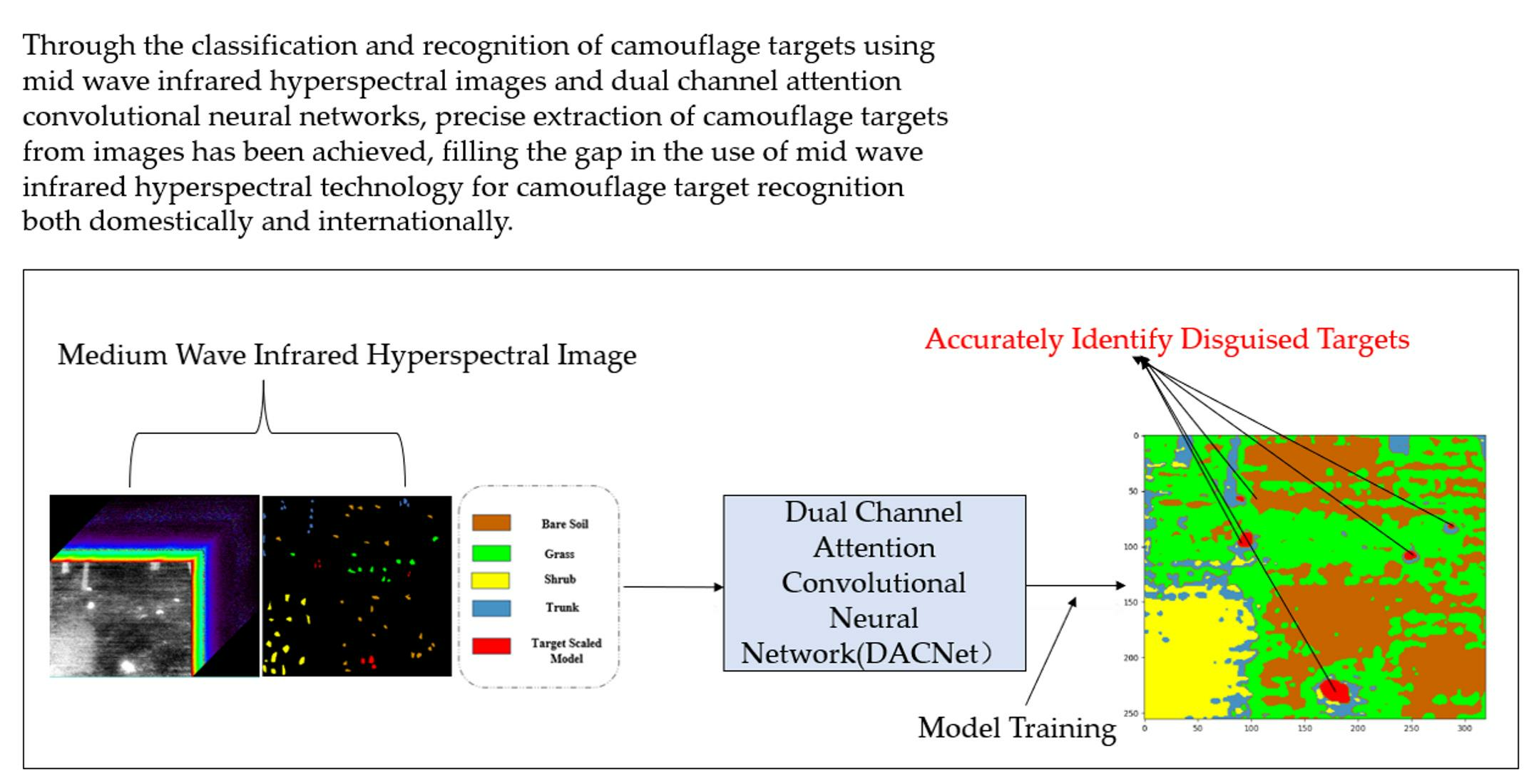
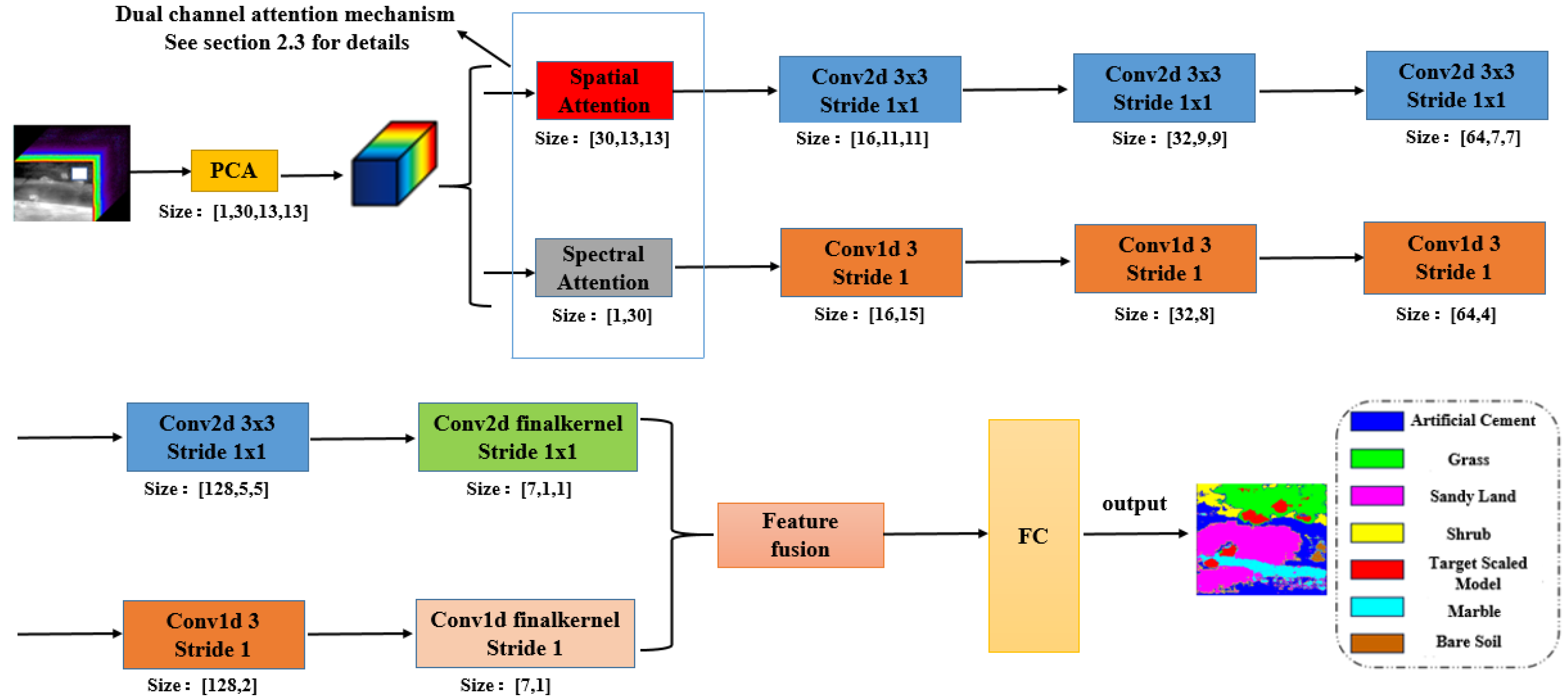
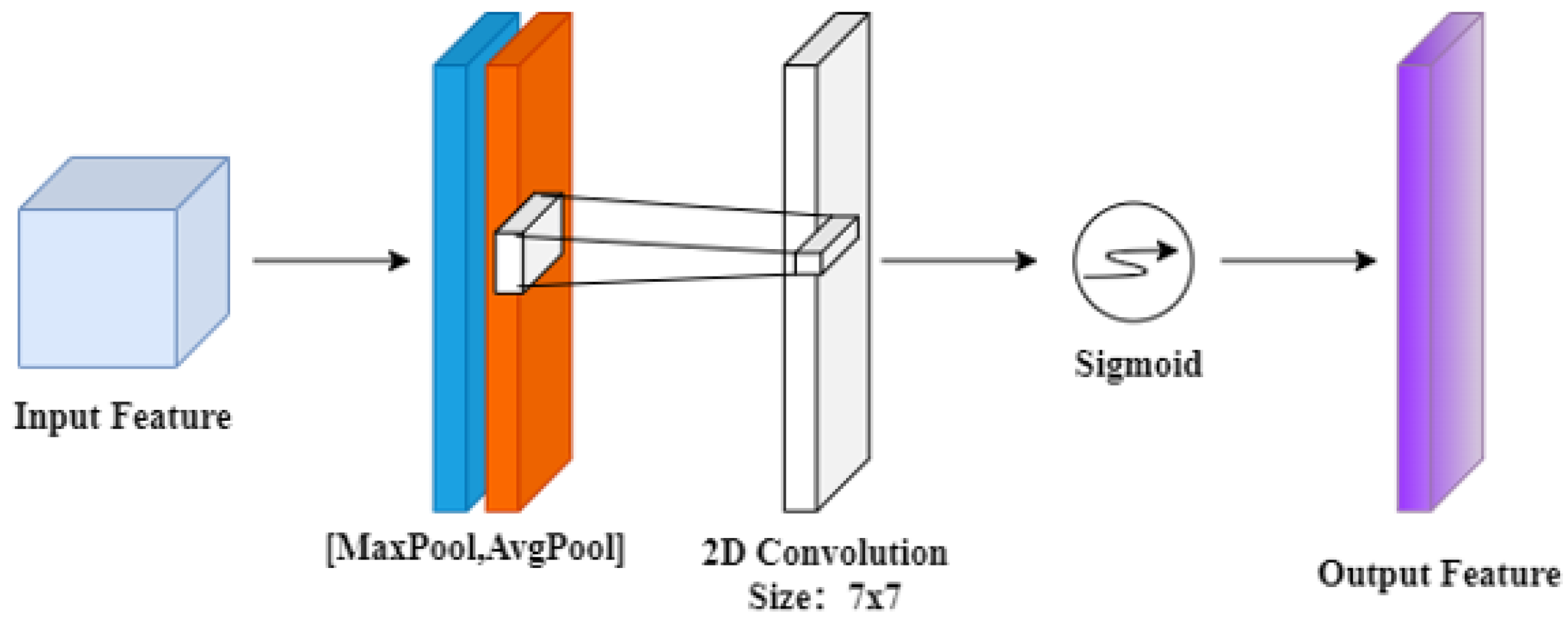
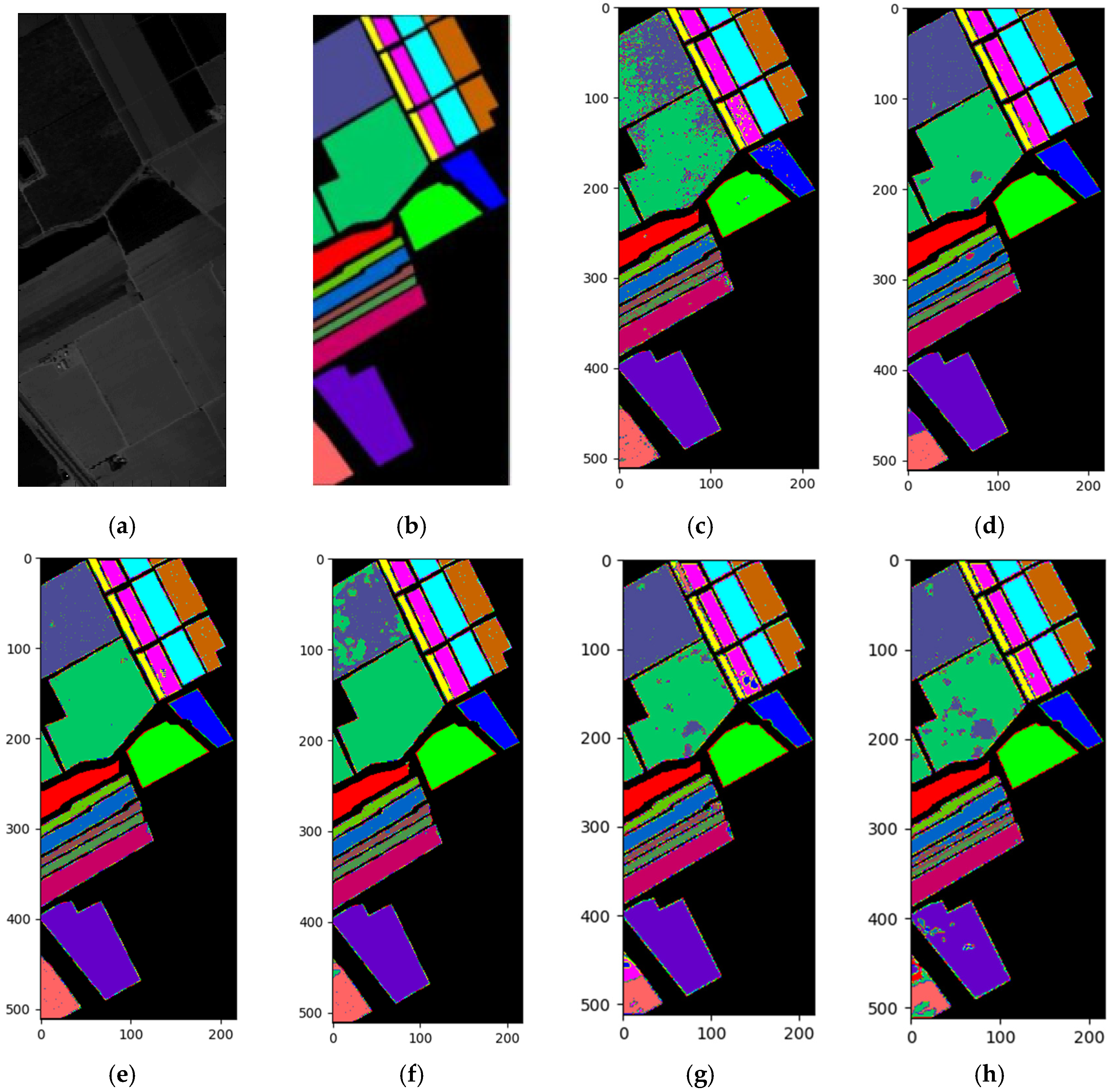
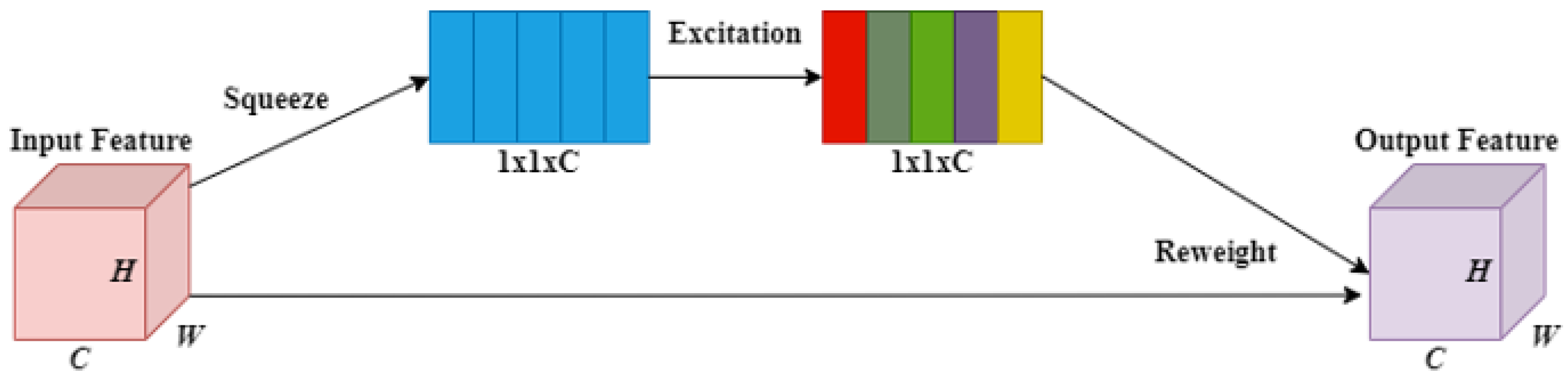
Mid-wave infrared (MWIR) hyperspectral imaging integrates MWIR technology with hyperspectral remote sensing, enabling the capture of radiative information that is difficult to obtain in the visible spectrum, thus demonstrating significant value in camouflage recognition and stealth design. However, there is a notable lack of open-source datasets and effective classification methods in this field. To address these challenges, this study proposes a dual-channel attention convolutional neural network (DACNet). First, we constructed four MWIR camouflage datasets (GCL, SSCL, CW, and LC) to fill a critical data gap. Second, to address the issues of spectral confusion between camouflaged targets and backgrounds and blurred spatial boundaries, DACNet employs independent spectral and spatial branches to extract deep spectral–spatial features while dynamically weighting these features through channel and spatial attention mechanisms, significantly enhancing target–background differentiation. Our experimental results demonstrate that DACNet achieves an average accuracy (AA) of 99.96%, 99.45%, 100%, and 95.88%; an overall accuracy (OA) of 99.94%, 99.52%, 100%, and 96.39%; and Kappa coefficients of 99.91%, 99.41%, 100%, and 95.21% across the four datasets. The classification results exhibit sharp edges and minimal noise, outperforming five deep learning methods and three machine learning approaches. Additional generalization experiments on public datasets further validate DACNet’s superiority in providing an efficient and novel approach for hyperspectral camouflage data classification.
Keywords: hyperspectral remote sensing; convolutional neural network; deep learning; disguising targets; medium-wave infrared hyperspectral remote sensing; convolutional neural network; deep learning; disguising targets; medium-wave infrared
Graphical Abstract