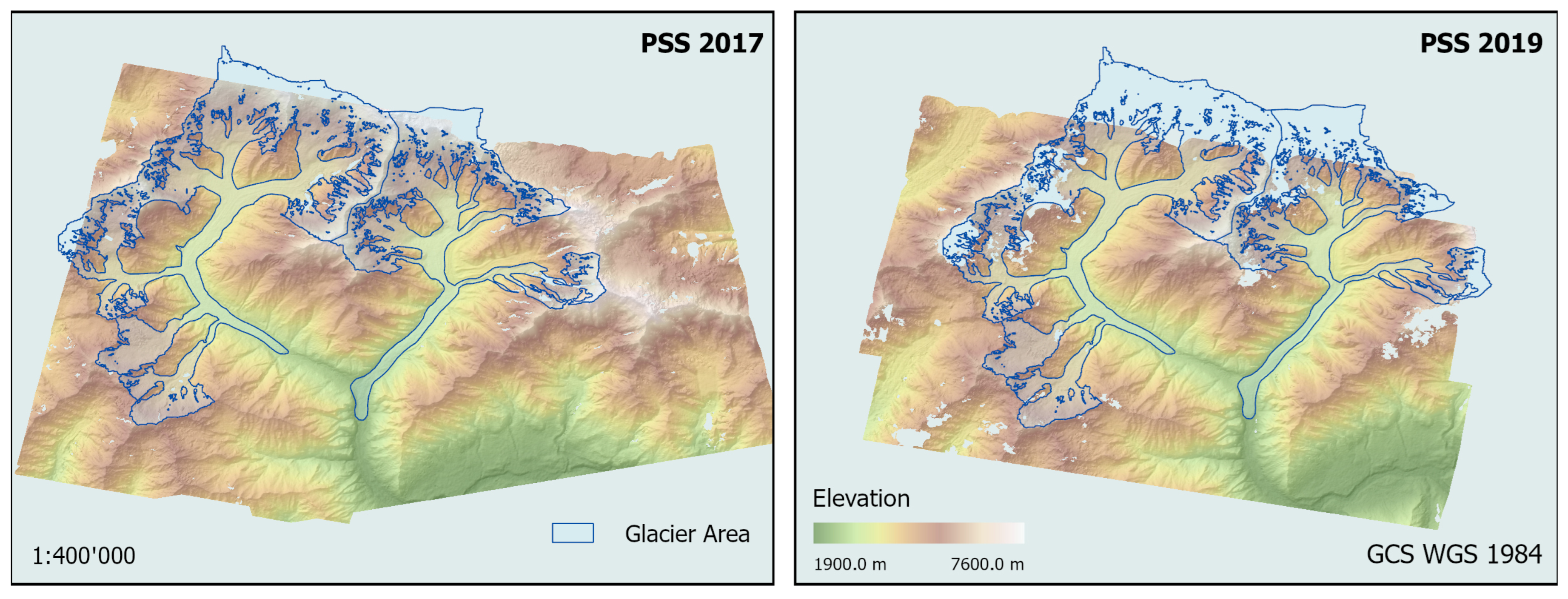
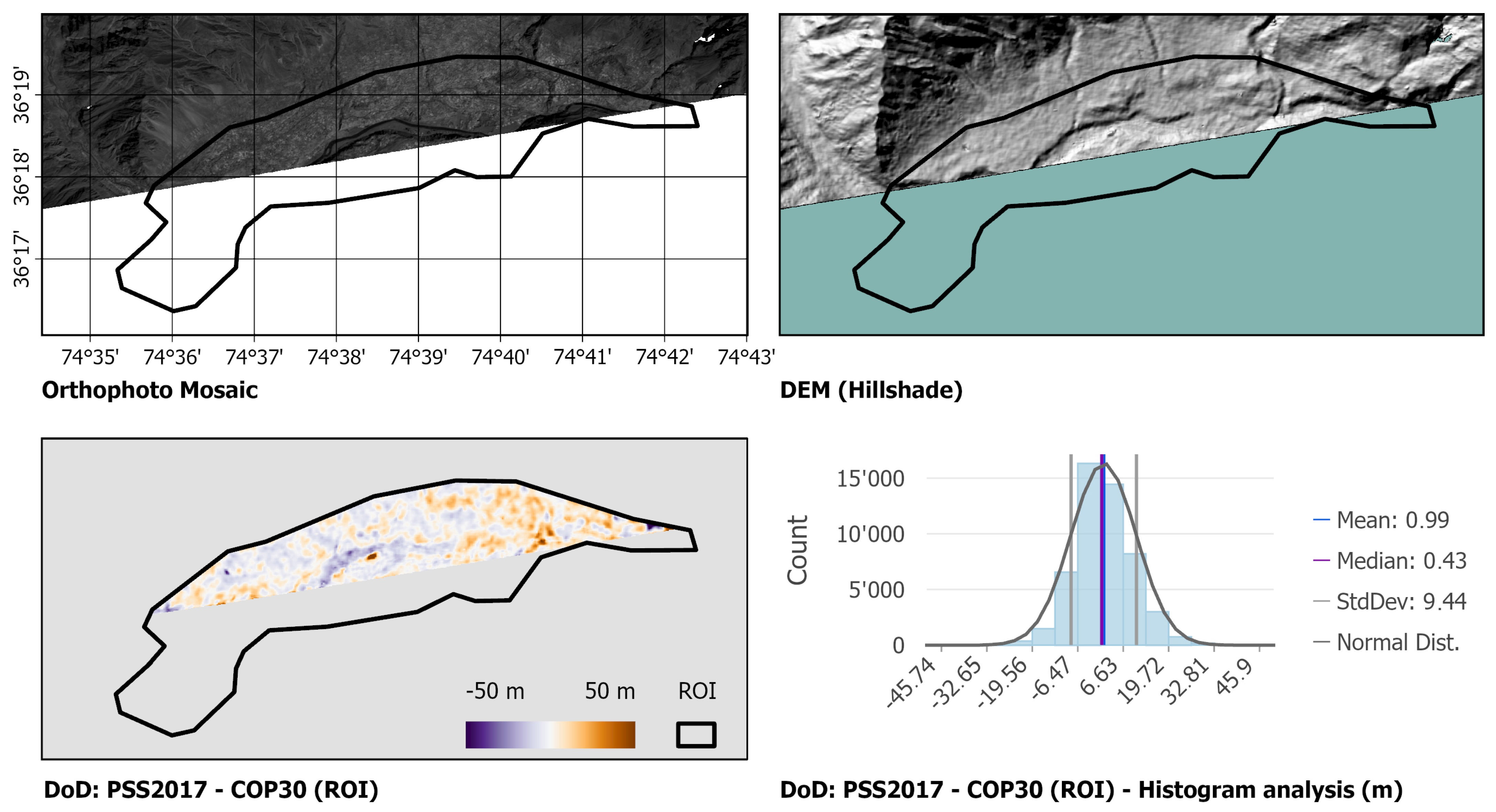
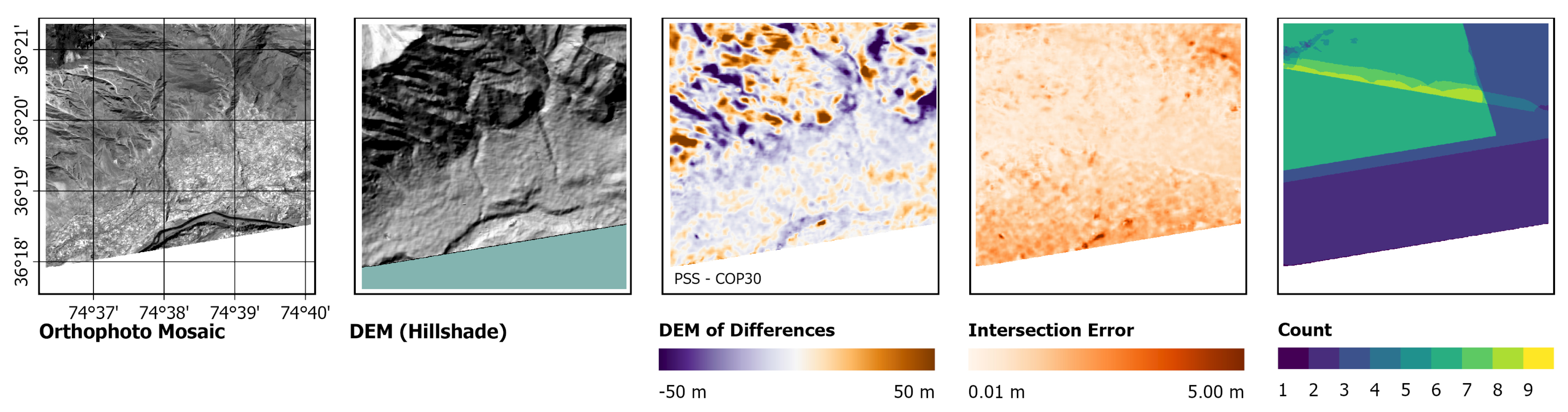
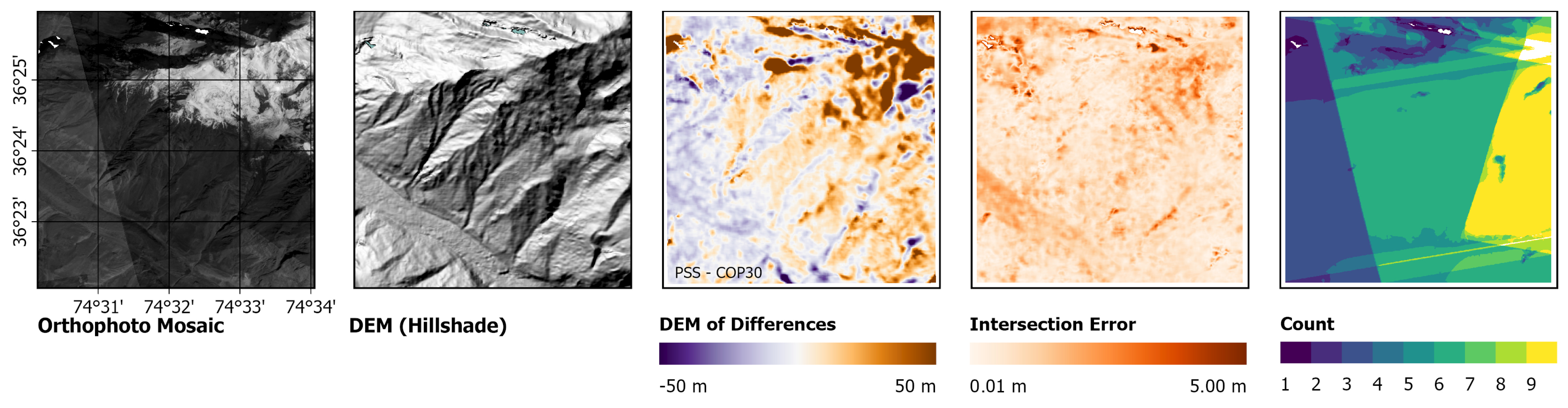
Planet4Stereo: A Photogrammetric Open-Source Pipeline for Generating Digital Elevation Models for Glacier Change Monitoring Using Low-Cost PlanetScope Satellite Data



Abstract
Share and Cite
Elias, M.; Isfort, S.; Maas, H.-G. Planet4Stereo: A Photogrammetric Open-Source Pipeline for Generating Digital Elevation Models for Glacier Change Monitoring Using Low-Cost PlanetScope Satellite Data. Remote Sens. 2025, 17, 1435. https://doi.org/10.3390/rs17081435
Elias M, Isfort S, Maas H-G. Planet4Stereo: A Photogrammetric Open-Source Pipeline for Generating Digital Elevation Models for Glacier Change Monitoring Using Low-Cost PlanetScope Satellite Data. Remote Sensing. 2025; 17(8):1435. https://doi.org/10.3390/rs17081435
Chicago/Turabian StyleElias, Melanie, Steffen Isfort, and Hans-Gerd Maas. 2025. "Planet4Stereo: A Photogrammetric Open-Source Pipeline for Generating Digital Elevation Models for Glacier Change Monitoring Using Low-Cost PlanetScope Satellite Data" Remote Sensing 17, no. 8: 1435. https://doi.org/10.3390/rs17081435
APA StyleElias, M., Isfort, S., & Maas, H.-G. (2025). Planet4Stereo: A Photogrammetric Open-Source Pipeline for Generating Digital Elevation Models for Glacier Change Monitoring Using Low-Cost PlanetScope Satellite Data. Remote Sensing, 17(8), 1435. https://doi.org/10.3390/rs17081435