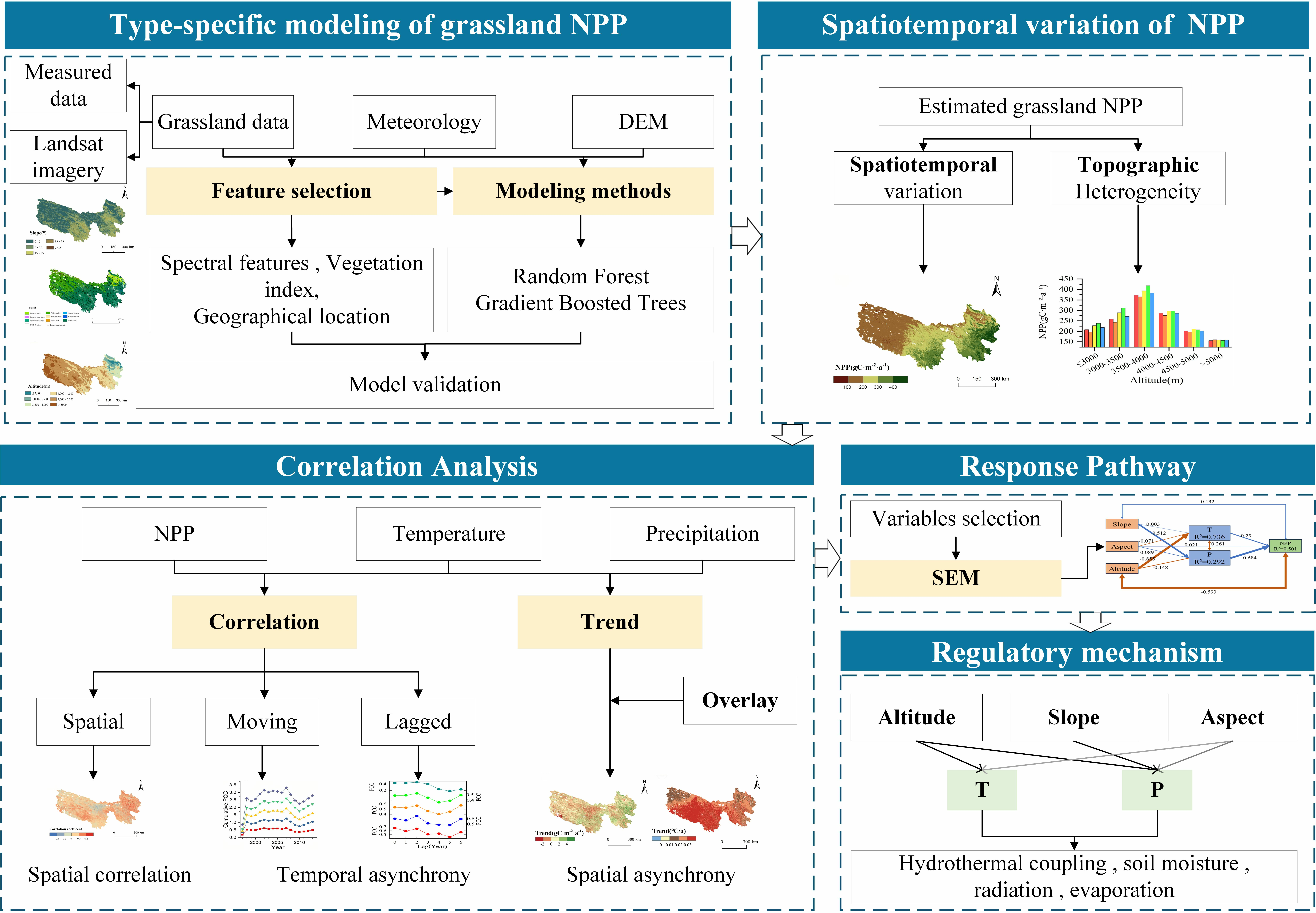
Topography Amplified Spatiotemporal Asynchrony in Grassland NPP Responses to Climate Change in the Three-River Headwaters Region

Abstract
1. Introduction
2. Data and Methods
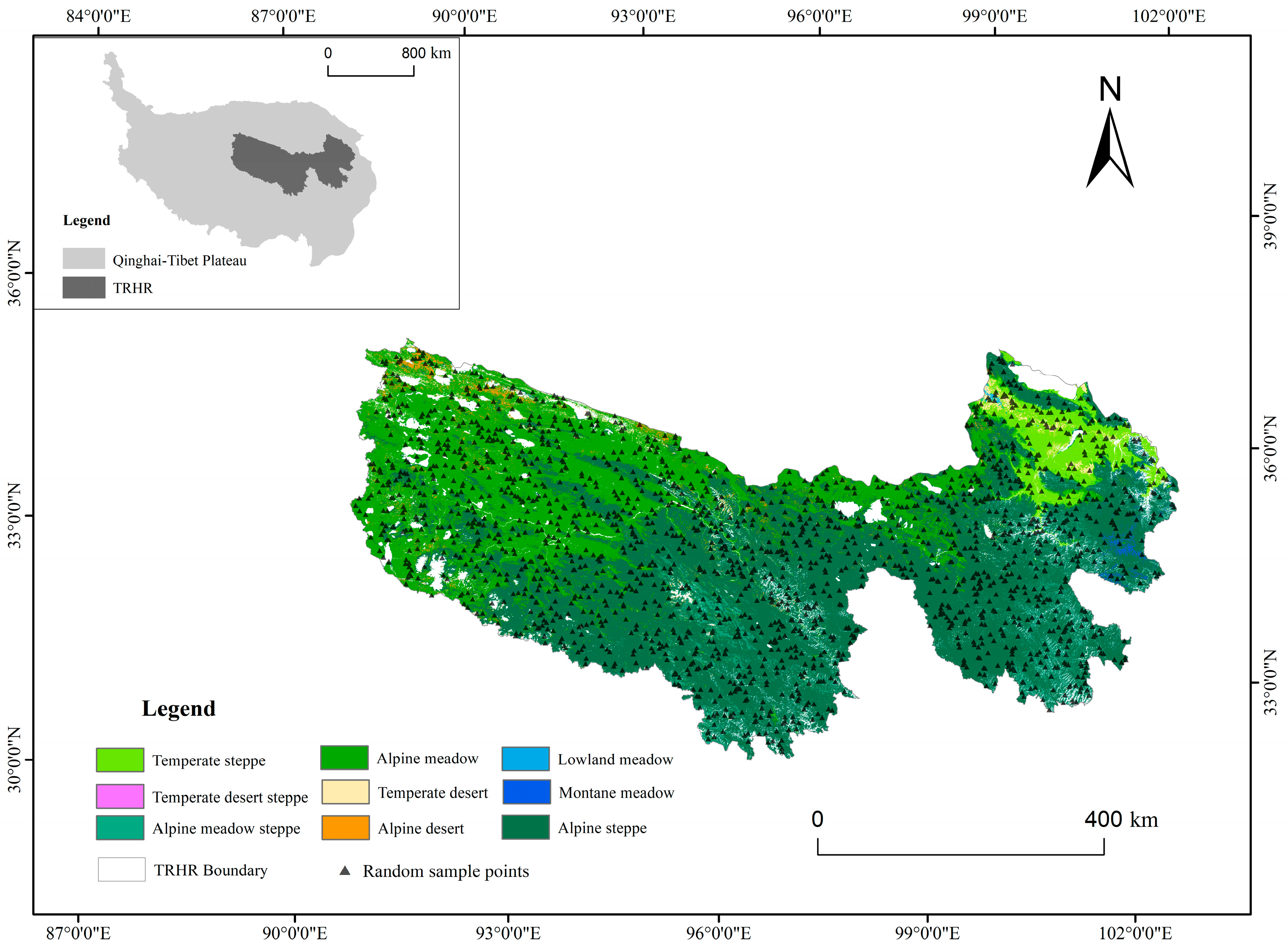
2.1. Study Area
2.2. Data Sources and Preprocessing
2.2.1. Grassland NPP
2.2.2. Meteorological Data
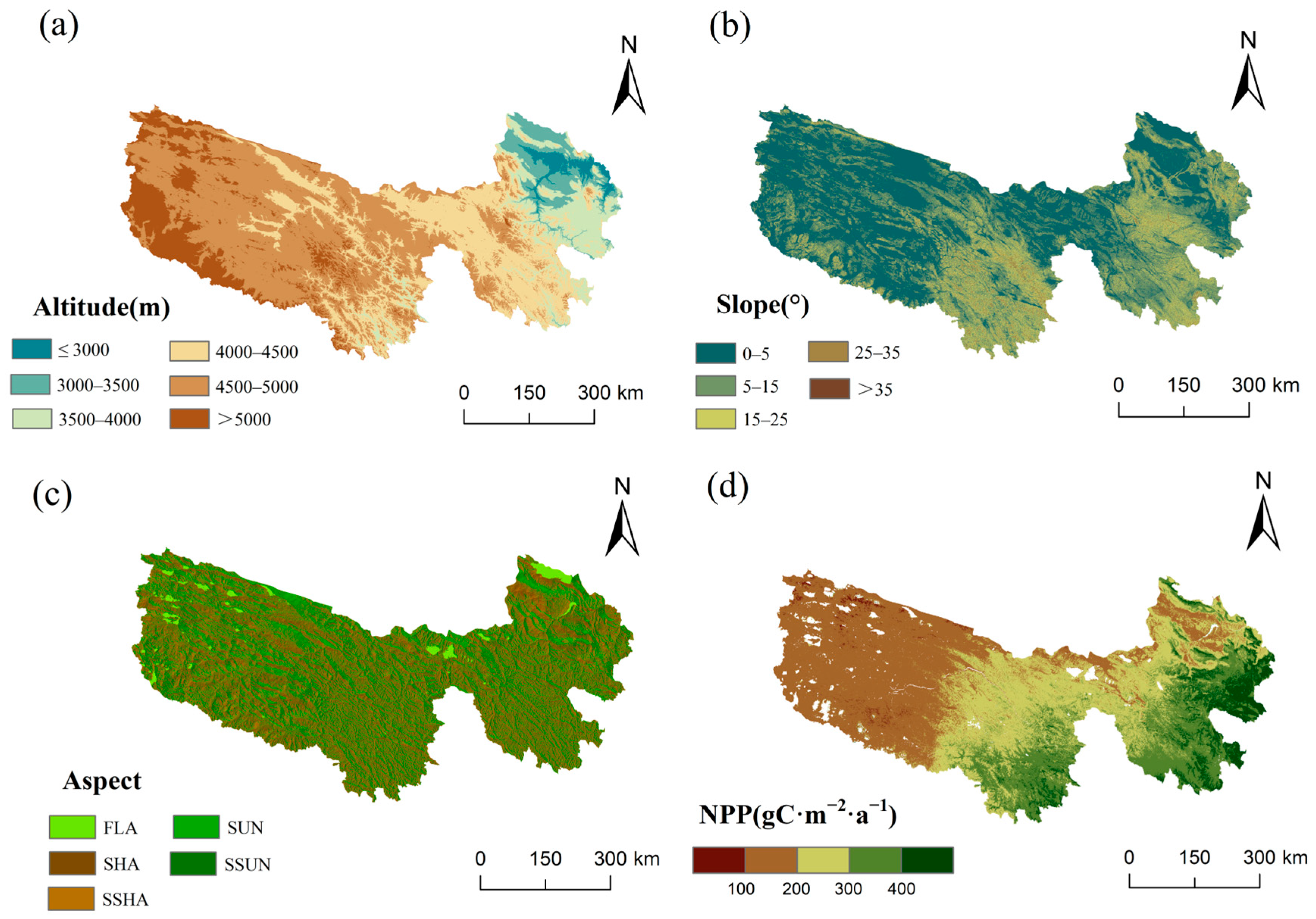
2.2.3. Topographic Data
2.2.4. Other Data
2.3. Methodology
2.3.1. Structural Equation Modeling
2.3.2. Trend Analysis
2.3.3. Correlation Analysis
3. Results and Analysis
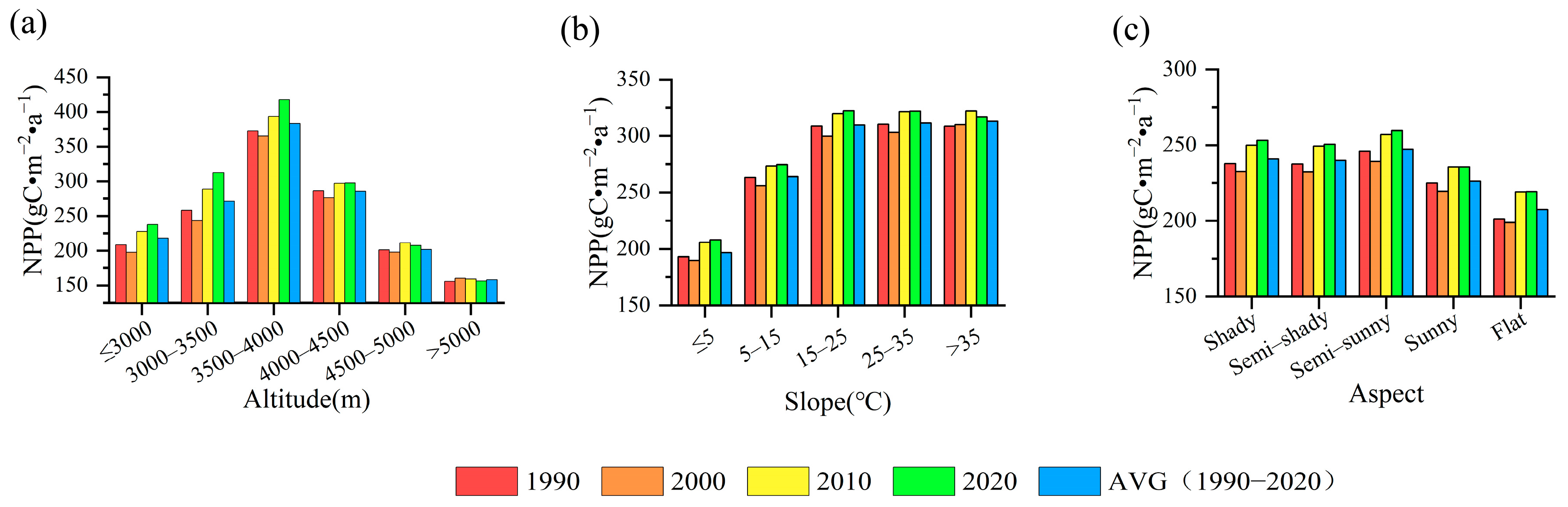
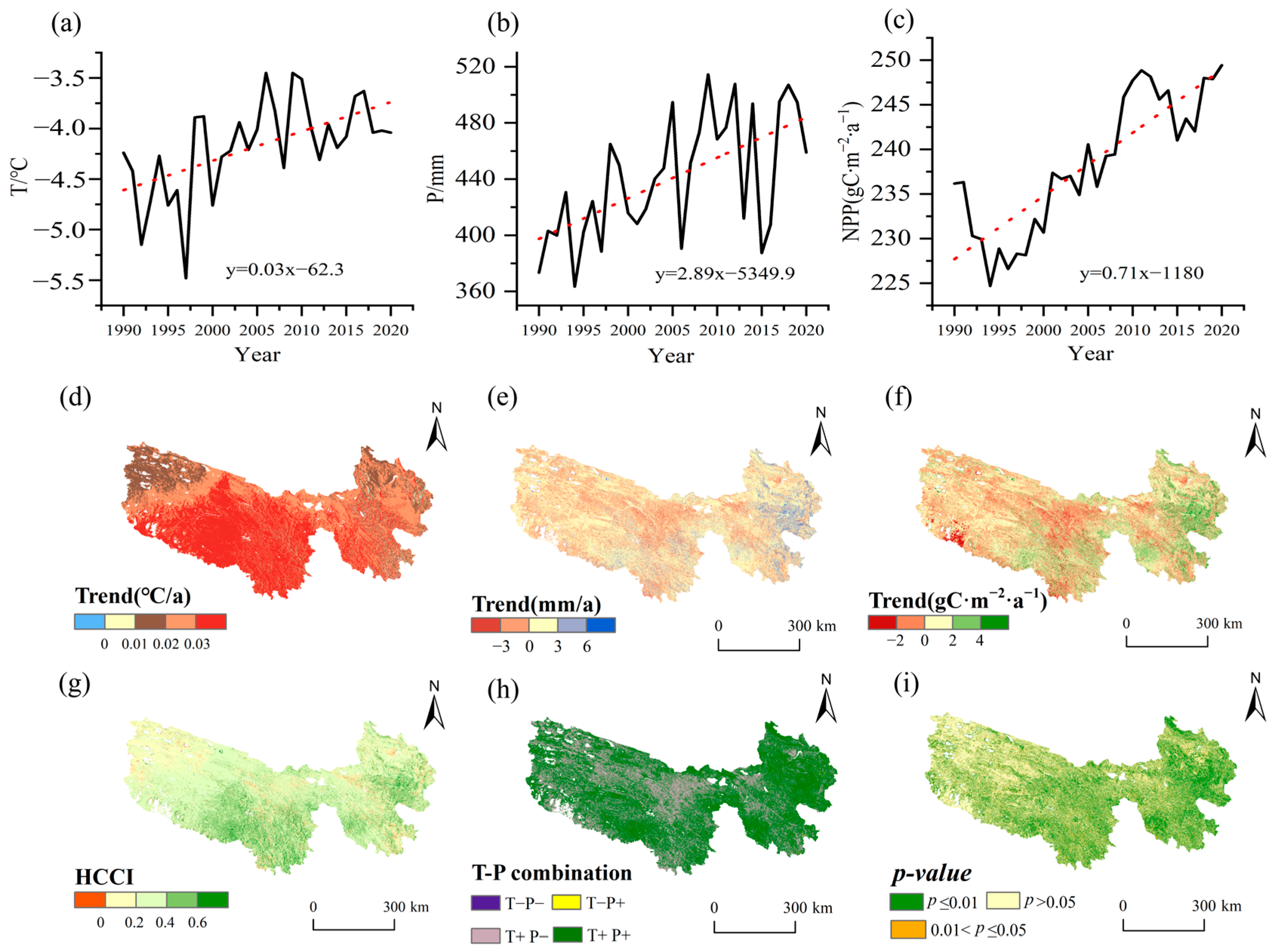
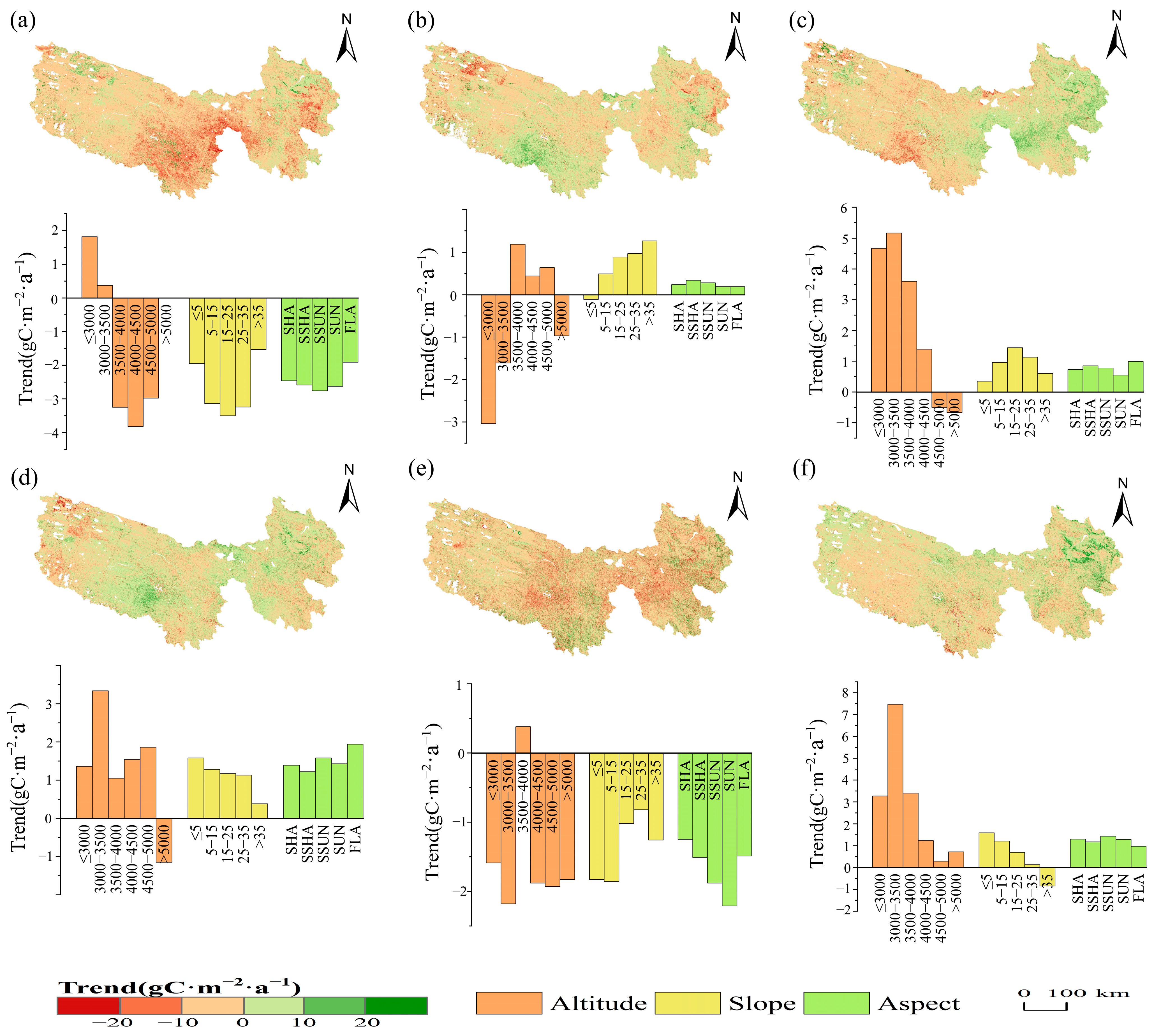
3.1. Spatiotemporal Trends of Grassland NPP and Topographic Differentiation
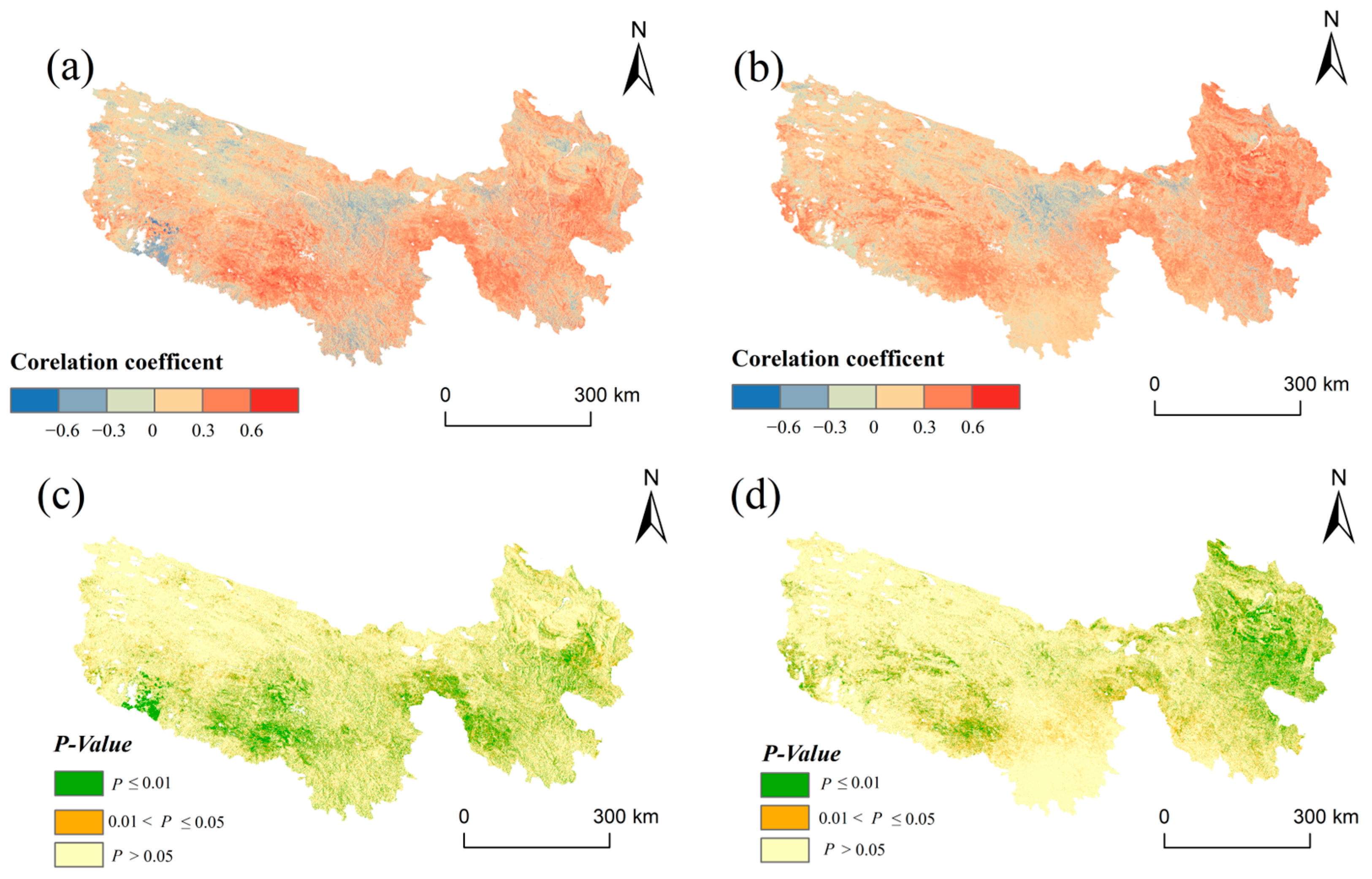
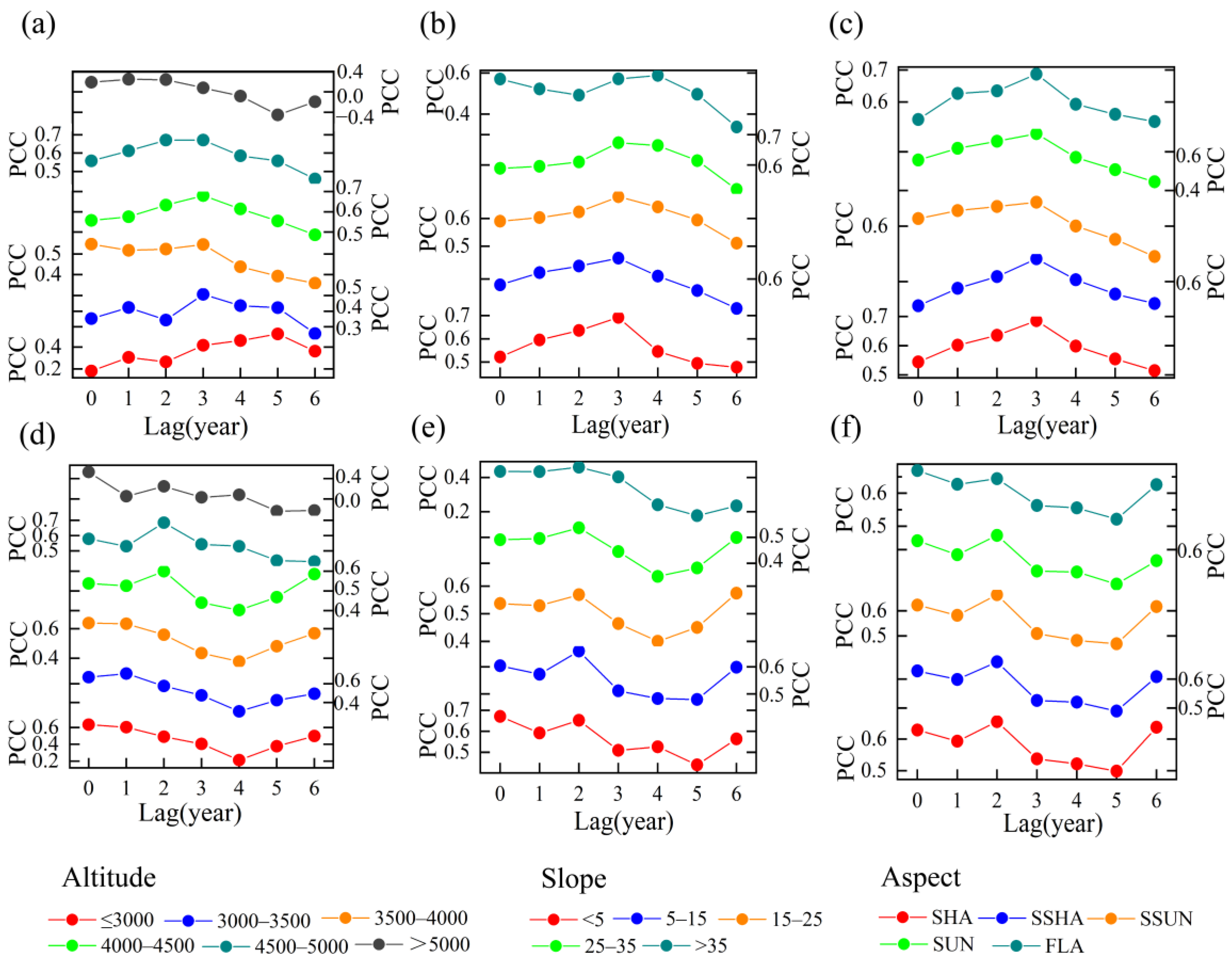
3.2. Direct Effects of Climate Change on Grassland NPP
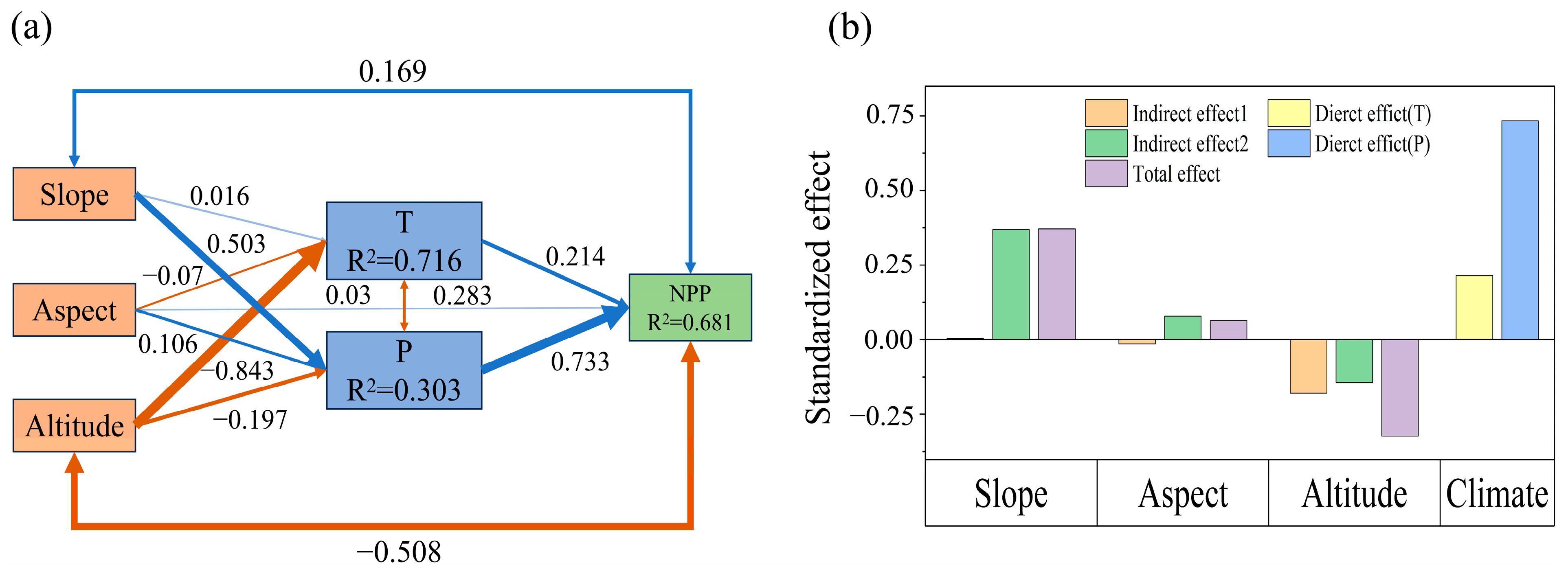
3.3. Linkage Pathways Between Topography, Climate Change, and NPP
4. Discussion
4.1. Dynamic Characteristics
4.2. Topographic Regulation Mechanisms
4.3. Limitations and Future Prospects
5. Conclusions
Supplementary Materials
Author Contributions
Funding
Data Availability Statement
Acknowledgments
Conflicts of Interest
References
- Gibbs, H.K.; Salmon, J.M. Mapping the world’s degraded lands. Appl. Geogr. 2015, 57, 12–21. [Google Scholar] [CrossRef] [Scilit]
- Chang, J.; Tian, J.; Zhang, Z.; Chen, X.; Chen, Y.; Chen, S.; Duan, Z. Changes of grassland rain use efficiency and NDVI in Northwestern China from 1982 to 2013 and its response to climate change. Water 2018, 10, 1689. [Google Scholar] [CrossRef] [Scilit]
- IPCC. Summary for Policymakers. In Climate Change 2021: The Physical Science Basis. Contribution of Working Group I to the Sixth Assessment Report of the Intergovernmental Panel on Climate Change; Cambridge University Press: Cambridge, UK, 2021. [Google Scholar]
- Bardgett, R.D.; Bullock, J.M.; Lavorel, S.; Manning, P.; Schaffner, U.; Ostle, N.; Chomel, M.; Durigan, G.; Fry, E.L.; Johnson, D.; et al. Combatting global grassland degradation. Nat. Rev. Earth Environ. 2021, 2, 720–735. [Google Scholar] [CrossRef] [Scilit]
- Yan, J.; Zhang, G.; Deng, X.; Ling, H.; Xu, H.; Guo, B. Does climate change or human activity lead to the degradation in the grassland ecosystem in a mountain-basin system in an arid region of China? Sustainability 2019, 11, 2618. [Google Scholar] [CrossRef] [Scilit]
- Su, J.; Zhao, Y.; Xu, F.; Bai, Y. Multiple global changes drive grassland productivity and stability: A meta-analysis. J. Ecol. 2022, 110, 2850–2869. [Google Scholar] [CrossRef] [Scilit]
- Gao, Q.; Zhu, W.; Schwartz, M.W.; Ganjurjav, H.; Wan, Y.; Qin, X.; Ma, X.; Williamson, M.A.; Li, Y. Climatic change controls productivity variation in global grasslands. Sci. Rep. 2016, 6, 26958. [Google Scholar] [CrossRef] [Scilit] [PubMed]
- Li, C.; Sun, H.; Liu, L.; Dou, T.; Zhou, M.; Li, W.; Wu, X. The importance of permafrost in the steady and fast increase in net primary production of the grassland on the Qinghai–Tibet Plateau. Catena 2022, 211, 105964. [Google Scholar] [CrossRef] [Scilit]
- Craine, J.M.; Nippert, J.B.; Elmore, A.J.; Skibbe, A.M.; Hutchinson, S.L.; Brunsell, N.A. Timing of climate variability and grassland productivity. Proc. Natl. Acad. Sci. USA 2012, 109, 3401–3405. [Google Scholar] [CrossRef] [Scilit]
- Eze, S.; Palmer, S.M.; Chapman, P.J. Negative effects of climate change on upland grassland productivity and carbon fluxes are not attenuated by nitrogen status. Sci. Total Environ. 2018, 637, 398–407. [Google Scholar] [CrossRef] [Scilit]
- Gang, C.; Zhou, W.; Chen, Y.; Wang, Z.; Sun, Z.; Li, J.; Qi, J.; Odeh, I. Quantitative assessment of the contributions of climate change and human activities on global grassland degradation. Environ. Earth Sci. 2014, 72, 4273–4282. [Google Scholar] [CrossRef] [Scilit]
- Zhang, G.; Biradar, C.M.; Xiao, X.; Dong, J.; Zhou, Y.; Qin, Y.; Zhang, Y.; Liu, F.; Ding, M.; Thomas, R.J. Exacerbated grassland degradation and desertification in Central Asia during 2000–2014. Ecol. Appl. 2018, 28, 442–456. [Google Scholar] [CrossRef] [Scilit] [PubMed]
- Chen, T.; Bao, A.; Jiapaer, G.; Guo, H.; Zheng, G.; Jiang, L.; Chang, C.; Tuerhanjiang, L. Disentangling the relative impacts of climate change and human activities on arid and semiarid grasslands in Central Asia during 1982–2015. Sci. Total Environ. 2019, 653, 1311–1325. [Google Scholar] [CrossRef] [Scilit]
- Batllori, E.; Lloret, F.; Aakala, T.; Anderegg, W.R.L.; Aynekulu, E.; Bendixsen, D.P.; Bentouati, A.; Bigler, C.; Burk, C.J.; Camarero, J.J.; et al. Forest and woodland replacement patterns following drought-related mortality. Proc. Natl. Acad. Sci. USA 2020, 117, 29720–29729. [Google Scholar] [CrossRef] [Scilit] [PubMed]
- Zhang, Y.; Hu, Q.; Zou, F. Spatio-temporal changes of vegetation net primary productivity and its driving factors on the Qinghai-Tibetan Plateau from 2001 to 2017. Remote Sens. 2021, 13, 1566. [Google Scholar] [CrossRef] [Scilit]
- Naeem, S.; Zhang, Y.; Zhang, X.; Tian, J.; Abbas, S.; Luo, L.; Meresa, H.K. Both climate and socioeconomic drivers contribute to vegetation greening of the Loess Plateau. Sci. Bull. 2021, 66, 1160–1163. [Google Scholar] [CrossRef] [Scilit] [PubMed]
- Song, W.; Feng, Y.; Wang, Z. Ecological restoration programs dominate vegetation greening in China. Sci. Total Environ. 2022, 848, 157729. [Google Scholar] [CrossRef] [Scilit]
- Wei, Z.; Du, N.; Yu, W. Land use change and its driving factors in the ecological function area: A case study in the Hedong Region of the Gansu Province, China. J. Arid Land 2024, 16, 71–90. [Google Scholar] [CrossRef] [Scilit]
- Sun, Z.; Wang, J. The 30m-NDVI-based alpine grassland changes and climate impacts in the Three-River Headwaters region on the Qinghai-Tibet Plateau from 1990 to 2018. J. Resour. Ecol. 2022, 13, 186–195. (In Chinese) [Google Scholar] [CrossRef] [Scilit]
- Sun, Q.; Li, B.; Zhou, C.; Li, F.; Zhang, Z.; Ding, L.; Zhang, T.; Xu, L. A systematic review of research studies on the estimation of net primary productivity in the Three-River Headwater Region, China. J. Geogr. Sci. 2017, 27, 161–182. [Google Scholar] [CrossRef] [Scilit]
- Liu, X.; Zhang, J.; Zhu, X.; Pan, Y.; Liu, Y.; Zhang, D.; Lin, Z. Spatiotemporal changes in vegetation coverage and its driving factors in the Three-River Headwaters Region during 2000–2011. J. Geogr. Sci. 2014, 24, 288–302. [Google Scholar] [CrossRef] [Scilit]
- Liu, J.; Ji, Y.-H.; Zhou, G.-S.; Zhou, L.; Lyu, X.-M.; Zhou, M.-Z. Temporal and spatial variations of net primary productivity (NPP) and its climate driving effect in the Qinghai-Tibet Plateau, China from 2000 to 2020. J. Appl. Ecol. 2022, 33, 1533–1538. [Google Scholar] [CrossRef] [Scilit]
- Zhou, W.; Wang, T.; Xiao, J.; Wang, K.; Yu, W.; Du, Z.; Huang, L.; Yue, T. Grassland productivity increase was dominated by climate in Qinghai-Tibet Plateau from 1982 to 2020. J. Clean. Prod. 2024, 434, 140144. [Google Scholar] [CrossRef] [Scilit]
- Gao, X.; Lin, K.; Liu, M.; Dong, C.; Yao, Z.; Liu, Z.; Xiao, M.; Xie, X.; Huang, L. Dynamic changes in permafrost distribution over China and their potential influencing factors under climate warming. Sci. Total Environ. 2023, 874, 162624. [Google Scholar] [CrossRef] [Scilit]
- Hu, J.; Nan, Z.; Ji, H.; Zhao, S.; Ou, M. Effect of permafrost degradation on grassland net primary productivity in Qinghai–Tibet Plateau. Environ. Res. Lett. 2024, 19, 104051. [Google Scholar] [CrossRef] [Scilit]
- Zhang, J.; Ren, Z. Spatiotemporal pattern of net primary productivity in the Hanjiang River Basin. Acta Ecol. Sin. 2016, 36, 7667–7677. [Google Scholar] [CrossRef] [Scilit]
- Yu, W.; Zhou, Y.; Wei, Z.; Yao, X.; Zhang, Y. Dynamic mechanisms of temperate grassland responses to climate change and human activities in the Qinghai Plateau. Geogr. Res. 2024, 43, 1941–1957. (In Chinese) [Google Scholar]
- Li, H.; Yan, L.; Wen, T.; Feng, X. Characteristics of climate change and its impact assessment in the Three-River regions. Plateau Meteorol. 2022, 41, 306–316. (In Chinese) [Google Scholar]
- Xiong, X.; Li, C.; Chen, J. Topographic regulatory role of vegetation response to climate change. Acta Geogr. Sin. 2023, 78, 2256–2270. (In Chinese) [Google Scholar]
- Zhang, W.; Jin, H.; Shao, H.; Li, A.; Li, S.; Fan, W. Temporal and spatial variations in the leaf area index and its response to topography in the Three-River Source Region, China from 2000 to 2017. ISPRS Int. J. Geo-Inf. 2021, 10, 33. [Google Scholar] [CrossRef] [Scilit]
- Gao, Q.; Wan, Y.; Li, Y.; Guo, Y.; Ganjurjav; Qin, X.; Jiangcun, W.; Wang, B. Effects of topography and human activity on the net primary productivity (NPP) of alpine grassland in northern Tibet from 1981 to 2004. Int. J. Remote Sens. 2013, 34, 2057–2069. [Google Scholar] [CrossRef] [Scilit]
- Liu, Y.; Yang, Y.; Wang, Q.; Khalifa, M.; Zhang, Z.; Tong, L.; Li, J.; Shi, A. Assessing the dynamics of grassland net primary productivity in response to climate change at the global scale. Chin. Geogr. Sci. 2019, 29, 725–740. [Google Scholar] [CrossRef] [Scilit]
- Peng, S.; Ding, Y.; Liu, W.; Li, Z. 1 km monthly temperature and precipitation dataset for China from 1901 to 2017. Earth Syst. Sci. Data 2019, 11, 1931–1946. (In Chinese) [Google Scholar] [CrossRef] [Scilit]
- Wang, C.; Wang, J.; Naudiyal, N.; Wu, N.; Cui, X.; Wei, Y.; Chen, Q. Multiple effects of topographic factors on spatio-temporal variations of vegetation patterns in the three parallel rivers region, Southeast Qinghai-Tibet Plateau. Remote Sens. 2021, 14, 151. [Google Scholar] [CrossRef] [Scilit]
- Lefcheck, J.S.; Freckleton, R. piecewiseSEM: Piecewise structural equation modelling in R for ecology, evolution, and systematics. Methods Ecol. Evol. 2016, 7, 573–579. [Google Scholar] [CrossRef] [Scilit]
- Yang, C.-Y.; Ding, Y.; Ma, F.-L.; Zhou, H.-K.; Wang, X.-L.; Zhang, Q.; Liu, X.-W.; Mutalifu, W.; Guo, L. Climate change affects plant aboveground biomass by regulating the growth periods in alpine grasslands of the Tibetan Plateau, China. J. Appl. Ecol. 2024, 35, 1260–1268. [Google Scholar] [CrossRef] [Scilit]
- Piao, S.L.; Fang, J.Y. Terrestrial net primary production and its spatio-temporal patterns in Qinghai-Xizang Plateau, China during 1982–1999. J. Nat. Resour. 2002, 17, 373–380. [Google Scholar] [CrossRef]
- Liu, F.; Zeng, Y.N. Spatial-temporal change in vegetation net primary productivity and its response to climate and human activities in Qinghai Plateau in the past 16 years. Acta Ecol. Sin. 2019, 39, 1528–1540. (In Chinese) [Google Scholar]
- Zhang, Y.; Qi, W.; Zhou, C.; Ding, M.; Liu, L.; Gao, J.; Bai, W.; Wang, Z.; Zheng, D. Spatial and temporal variability in the net primary production (NPP) of alpine grassland on Tibetan Plateau from 1982 to 2009. Acta Geogr. Sin. 2013, 68, 1197–1211. [Google Scholar] [CrossRef]
- CMA Climate Change Centre. Blue Book on Climate Change in China (2022); Science Press: Beijing, China, 2022. [Google Scholar]
- Renwick, K.M.; Rocca, M.E. Temporal context affects the observed rate of climate-driven range shifts in tree species. Glob. Ecol. Biogeogr. 2015, 24, 44–51. [Google Scholar] [CrossRef] [Scilit]
- Harsch, M.A.; Hulme, P.E.; McGlone, M.S.; Duncan, R.P. Are treelines advancing? A global meta-analysis of treeline response to climate warming. Ecol. Lett. 2009, 12, 1040–1049. [Google Scholar] [CrossRef] [Scilit]
- Han, Z.; Song, W.; Deng, X.; Xu, X. Grassland ecosystem responses to climate change and human activities within the Three-River Headwaters region of China. Sci. Rep. 2018, 8, 9079. [Google Scholar] [CrossRef] [Scilit] [PubMed]
- Rumpf, S.B.; Hülber, K.; Zimmermann, N.E.; Dullinger, S.; Lenoir, J. Elevational rear edges shifted at least as much as leading edges over the last century. Glob. Ecol. Biogeogr. 2019, 28, 533–543. [Google Scholar] [CrossRef] [Scilit]
- Liu, M.; Zhai, H.; Zhang, X.; Dong, X.; Hu, J.; Ma, J.; Sun, W. Time-lag and accumulation responses of vegetation growth to average and extreme precipitation and temperature events in China between 2001 and 2020. Sci. Total Environ. 2024, 945, 174084. [Google Scholar] [CrossRef] [Scilit]
- White, A.B.; Kumar, P.; Tcheng, D. A data mining approach for understanding topographic control on climate-induced inter-annual vegetation variability over the United States. Remote Sens. Environ. 2005, 98, 1–20. [Google Scholar] [CrossRef] [Scilit]
- Pepin, N.; Bradley, R.S.; Diaz, H.F.; Baraer, M.; Caceres, E.B.; Forsythe, N.; Fowler, H.; Greenwood, G.; Hashmi, M.Z.; Liu, X.D.; et al. Elevation-dependent warming in mountain regions of the world. Nat. Clim. Change 2015, 5, 424–430. [Google Scholar] [CrossRef] [Scilit]
- Xu, M.; Li, X.; Liu, M.; Shi, Y.; Zhou, H.; Zhang, B.; Yan, J. Spatial variation patterns of plant herbaceous community response to warming along latitudinal and altitudinal gradients in mountainous forests of the Loess Plateau, China. Environ. Exp. Bot. 2020, 172, 103983. [Google Scholar] [CrossRef] [Scilit]
- Bai, T.; Liu, J.; Liu, H.; Ni, F.; Han, X.; Qiao, X.; Sun, X. Elevation-dependent patterns of temporally asymmetrical vegetation response to climate in an alpine basin on the Qinghai-Tibet Plateau. Ecol. Indic. 2024, 159, 111736. [Google Scholar] [CrossRef] [Scilit]
- An, H.; Zhao, Y.; Ma, M. Precipitation controls seed bank size and its role in alpine meadow community regeneration with increasing altitude. Glob. Change Biol. 2020, 26, 5767–5777. [Google Scholar] [CrossRef] [Scilit]
- Abdalla, K.; Schierling, L.; Sun, Y.; Schuchardt, M.A.; Jentsch, A.; Deola, T.; Wolff, P.; Kiese, R.; Lehndorff, E.; Pausch, J.; et al. Temperature sensitivity of soil respiration declines with climate warming in subalpine and alpine grassland soils. Biogeochemistry 2024, 167, 1453–1467. [Google Scholar] [CrossRef] [Scilit]
- Guan, Y.; Liu, J.; Cui, W.; Chen, D.; Zhang, J.; Lu, H.; Maeda, E.E.; Zeng, Z.; Beck, H.E. Elevation regulates the response of climate heterogeneity to climate change. Geophys. Res. Lett. 2024, 51, e2024GL109483. [Google Scholar] [CrossRef] [Scilit]
- Tao, J.; Zhang, Y.; Dong, J.; Fu, Y.; Zhu, J.; Zhang, G.; Jiang, Y.; Tian, L.; Zhang, X.; Zhang, T.; et al. Elevation-dependent relationships between climate change and grassland vegetation variation across the Qinghai-Xizang Plateau. Int. J. Climatol. 2015, 35, 1638–1647. [Google Scholar] [CrossRef] [Scilit]
- Zhang, L.; Kuczera, G.; Kiem, A.S.; Willgoose, G. Using paleoclimate reconstructions to analyse hydrological epochs associated with Pacific decadal variability. Hydrol. Earth Syst. Sci. 2018, 22, 6399–6414. [Google Scholar] [CrossRef] [Scilit]
- Bochet, E.; García-Fayos, P. Factors controlling vegetation establishment and water erosion on motorway slopes in Valencia, Spain. Restor. Ecol. 2004, 12, 166–174. [Google Scholar] [CrossRef] [Scilit]



| Grassland Type | Random Forest Model | Gradient-Boosting Model | ||||
|---|---|---|---|---|---|---|
| Accuracy (%) | RMSE (kg/ha) | R2 | Accuracy (%) | RMSE (kg/ha) | R2 | |
| Lowland meadow | 84.12 | 499.85 | 0.91 | 80.49 | 667.72 | 0.85 |
| Alpine meadow steppe | 84.85 | 770.88 | 0.84 | 83.20 | 991.57 | 0.73 |
| Alpine meadow | 83.32 | 717.37 | 0.77 | 82.63 | 814.59 | 0.70 |
| Alpine steppe | 85.08 | 414.33 | 0.91 | 82.36 | 511.83 | 0.86 |
| Montane meadow | 86.18 | 1062.14 | 0.82 | 84.63 | 1268.89 | 0.75 |
| Temperate steppe and temperate desert-steppe | 85.61 | 441.13 | 0.81 | 86.38 | 453.58 | 0.80 |
| Temperate desert | 83.31 | 414.73 | 0.86 | 80.45 | 522.32 | 0.78 |
| Alpine desert | 85.13 | 137.59 | 0.85 | 82.69 | 150.46 | 0.82 |
Disclaimer/Publisher’s Note: The statements, opinions and data contained in all publications are solely those of the individual author(s) and contributor(s) and not of MDPI and/or the editor(s). MDPI and/or the editor(s) disclaim responsibility for any injury to people or property resulting from any ideas, methods, instructions or products referred to in the content. |
© 2025 by the authors. Licensee MDPI, Basel, Switzerland. This article is an open access article distributed under the terms and conditions of the Creative Commons Attribution (CC BY) license (https://creativecommons.org/licenses/by/4.0/).
Share and Cite
Wei, Z.; Qu, M.; Wang, M.; Yu, W. Topography Amplified Spatiotemporal Asynchrony in Grassland NPP Responses to Climate Change in the Three-River Headwaters Region. Remote Sens. 2025, 17, 2122. https://doi.org/10.3390/rs17132122
Wei Z, Qu M, Wang M, Yu W. Topography Amplified Spatiotemporal Asynchrony in Grassland NPP Responses to Climate Change in the Three-River Headwaters Region. Remote Sensing. 2025; 17(13):2122. https://doi.org/10.3390/rs17132122
Chicago/Turabian StyleWei, Zhudeng, Meiyan Qu, Minyan Wang, and Wenzheng Yu. 2025. "Topography Amplified Spatiotemporal Asynchrony in Grassland NPP Responses to Climate Change in the Three-River Headwaters Region" Remote Sensing 17, no. 13: 2122. https://doi.org/10.3390/rs17132122
APA StyleWei, Z., Qu, M., Wang, M., & Yu, W. (2025). Topography Amplified Spatiotemporal Asynchrony in Grassland NPP Responses to Climate Change in the Three-River Headwaters Region. Remote Sensing, 17(13), 2122. https://doi.org/10.3390/rs17132122