Article

Multi-Year Cropland Mapping Based on Remote Sensing Data: A Case Study for the Khabarovsk Territory, Russia

by
Konstantin Dubrovin
1,*,
Andrey Verkhoturov
1,
Alexey Stepanov
2 and
Tatiana Aseeva
2
1
Computing Center Far Eastern Branch of the Russian Academy of Sciences, 680000 Khabarovsk, Russia
2
Far-Eastern Agriculture Research Institute, 680521 Vostochnoe, Russia
*
Author to whom correspondence should be addressed.
Remote Sens. 2024, 16(9), 1633; https://doi.org/10.3390/rs16091633
Submission received: 4 March 2024 / Revised: 15 April 2024 / Accepted: 24 April 2024 / Published: 3 May 2024
(This article belongs to the Special Issue Advancements in Remote Sensing for Sustainable Agriculture)

Abstract

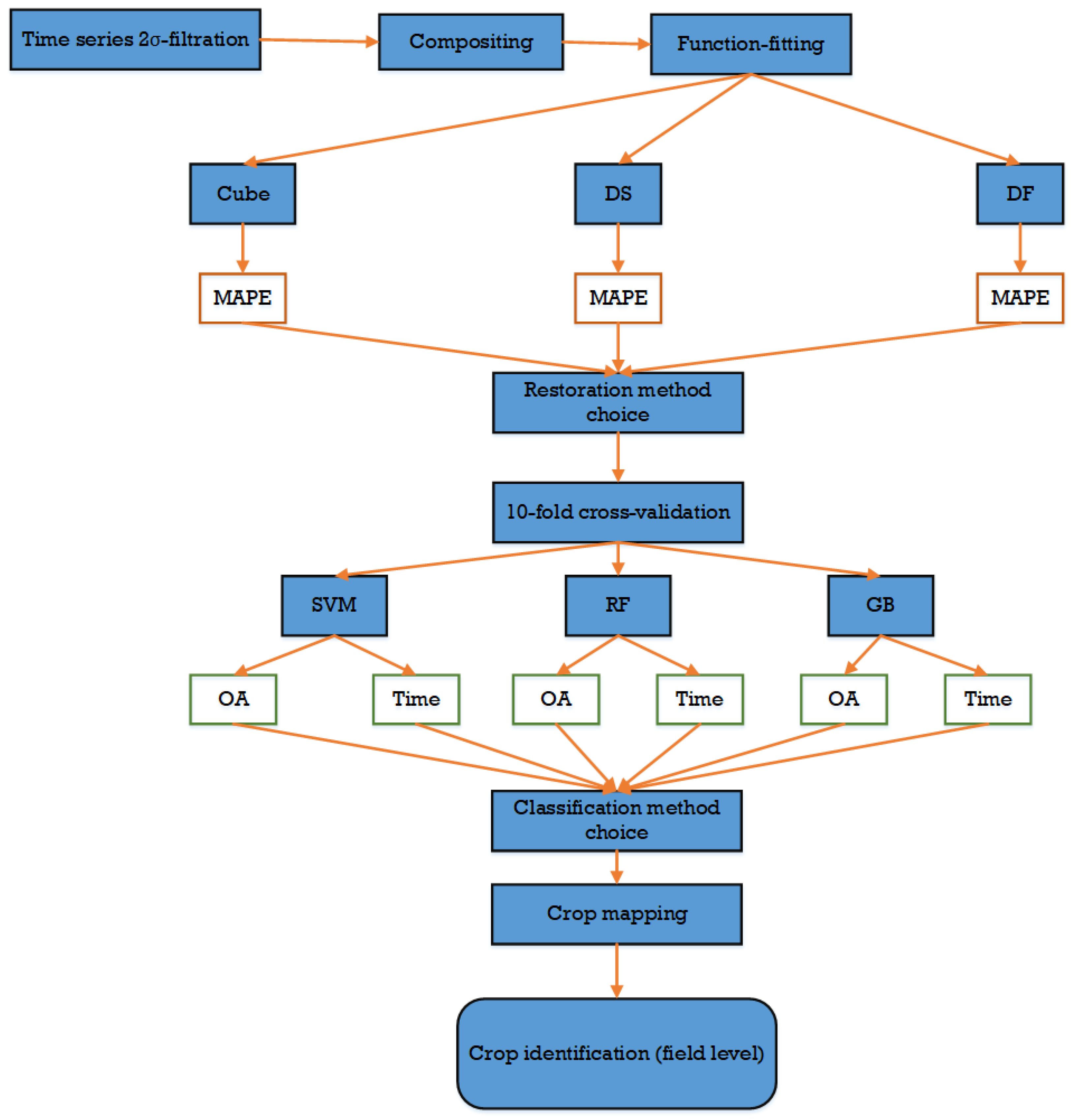
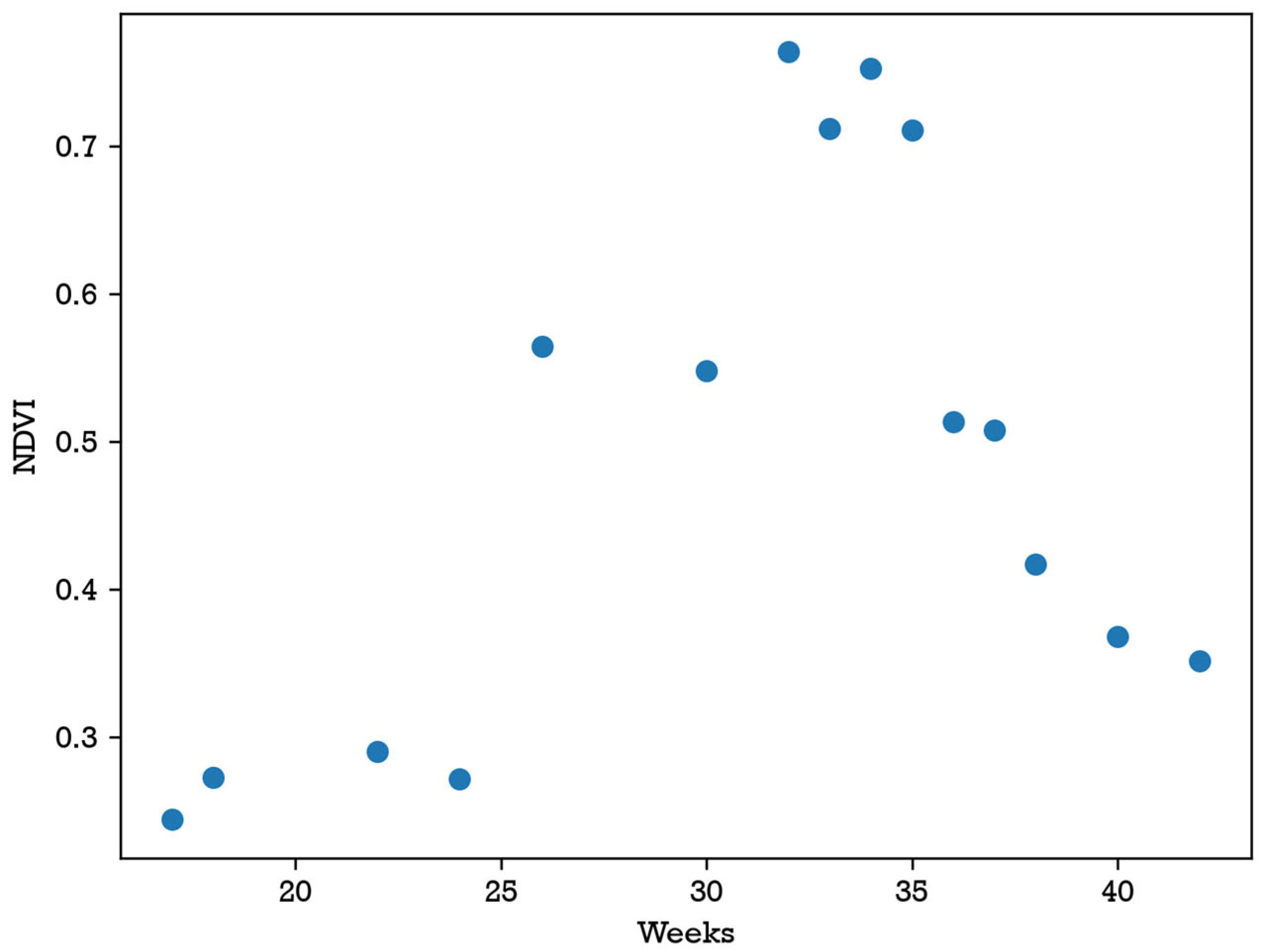
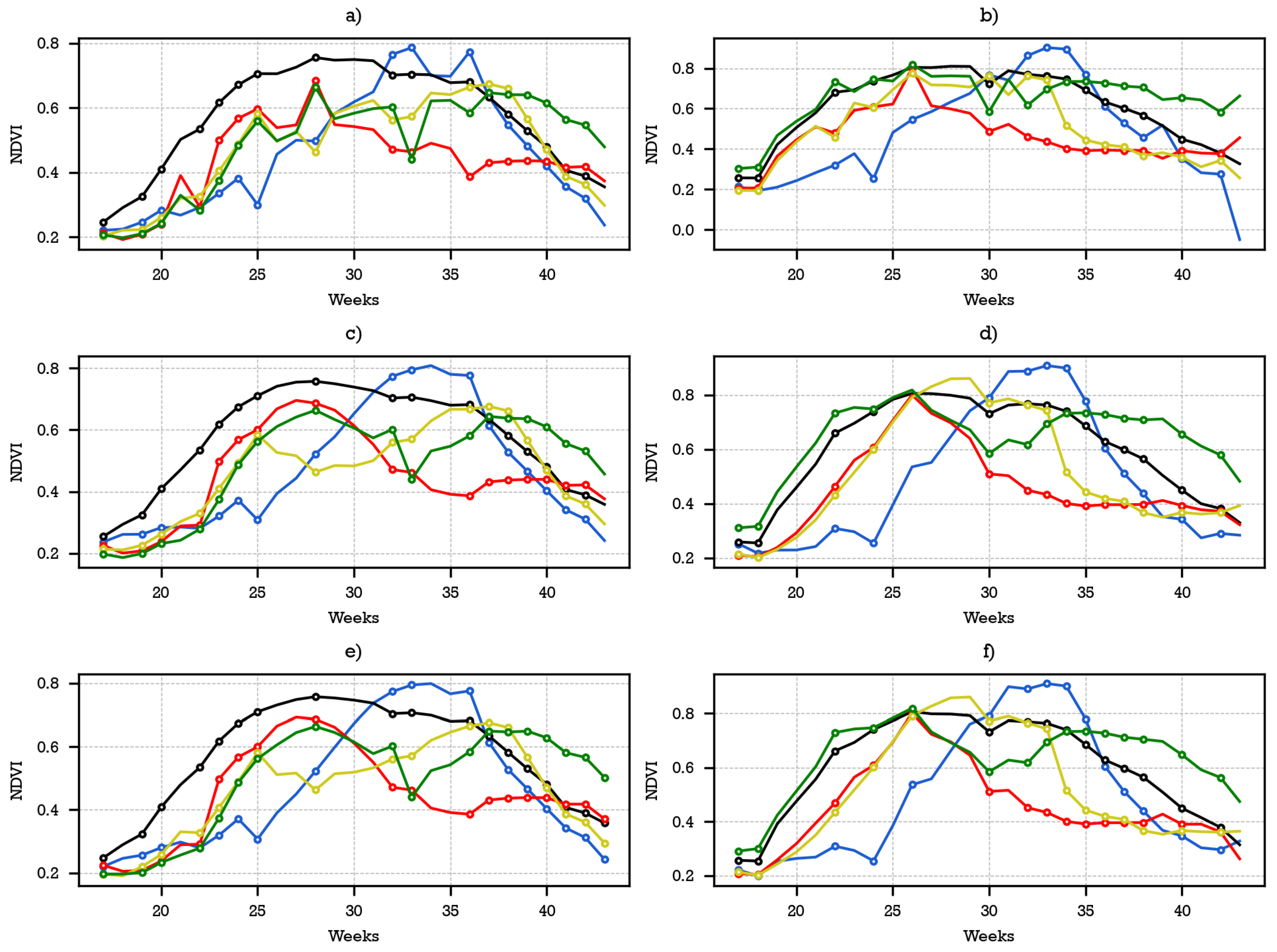
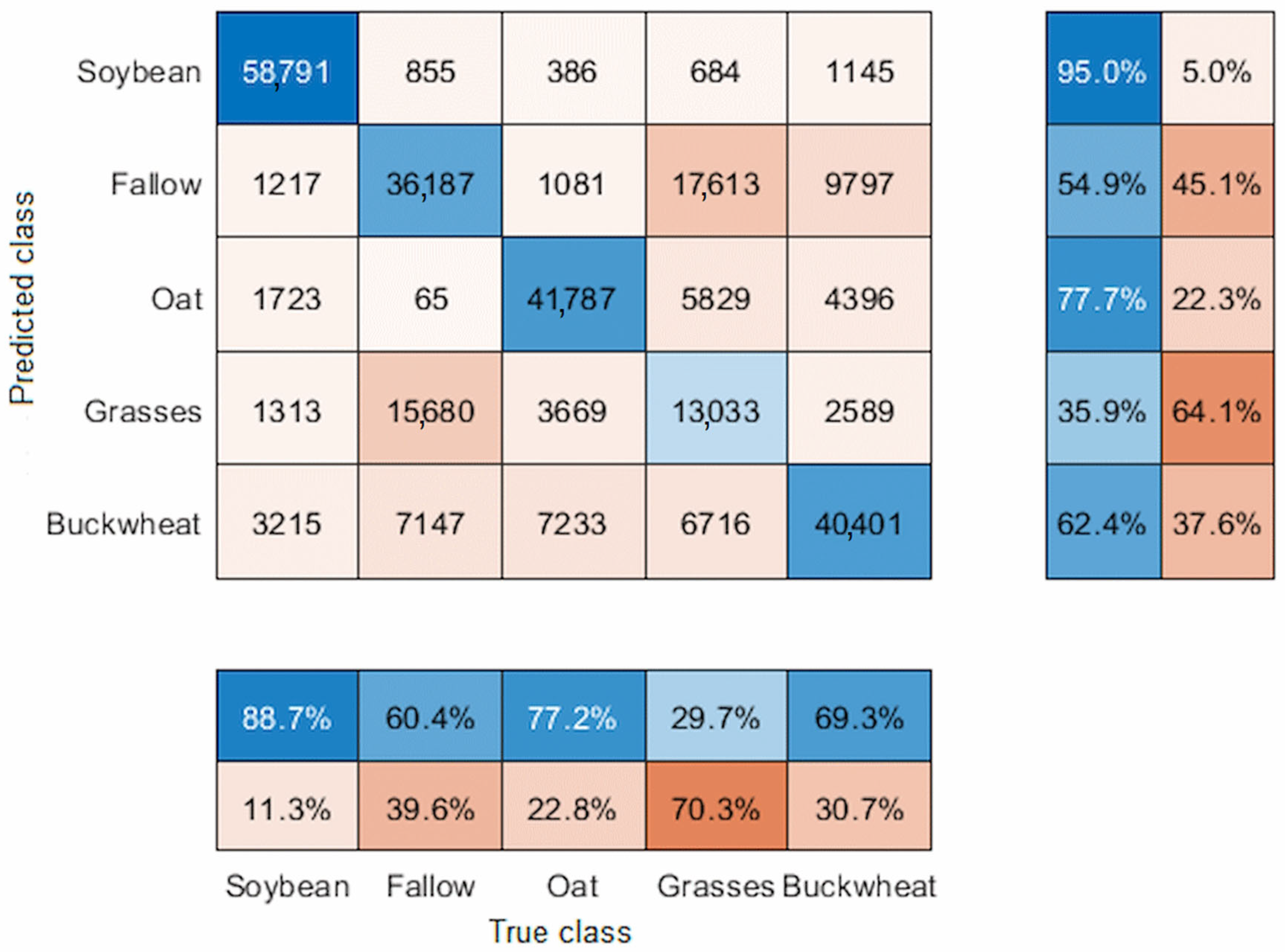
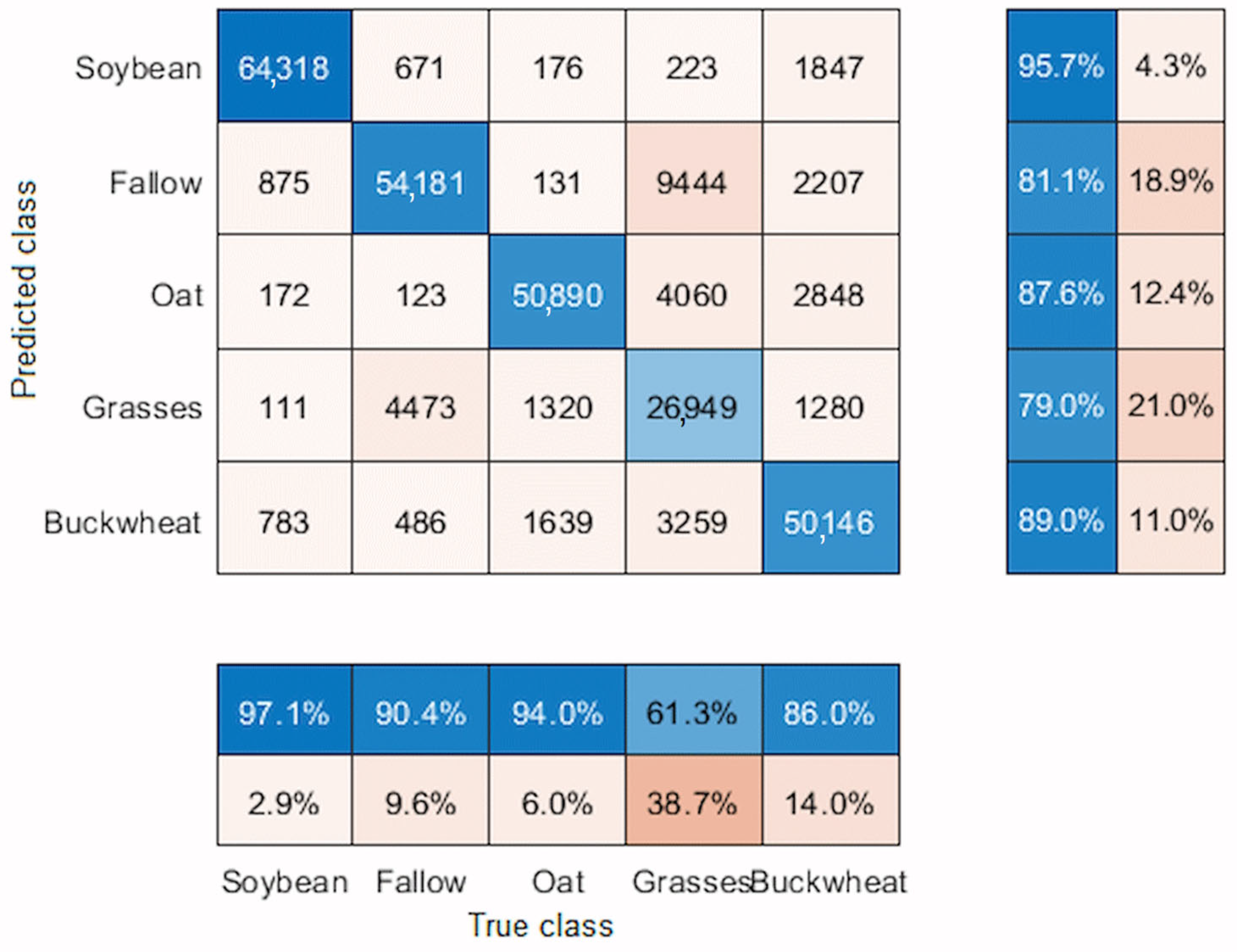
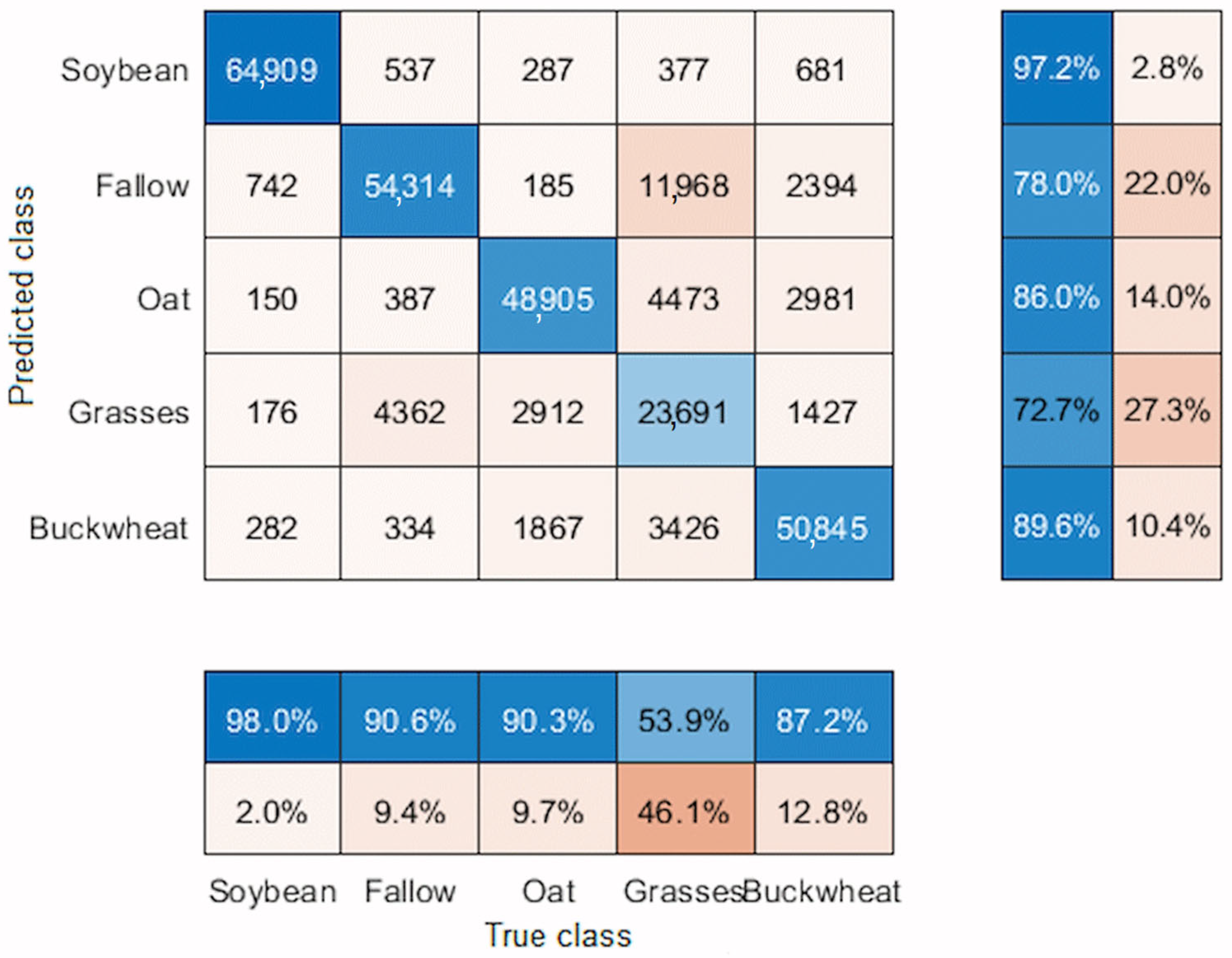
Cropland mapping using remote sensing data is the basis for effective crop monitoring, crop rotation control, and the detection of irrational land use. Classification using Normalized Difference Vegetation Index (NDVI) time series from multi-year data requires additional time costs, especially when sentinel data are sparse. Approximation by nonlinear functions was proposed to solve this problem. Time series of weekly NDVI composites were plotted using multispectral Sentinel-2 (Level-2A) images at a resolution of 10 m for sites in Khabarovsk District from April to October in the years 2021 and 2022. Missing values due to the lack of suitable images for analysis were recovered using cubic polynomial, Fourier series, and double sinusoidal function approximation. The classes that were considered included crops, namely, soybean, buckwheat, oat, and perennial grasses, and fallow. The mean absolute percentage error (MAPE) of each class fitting was calculated. It was found that Fourier series fitting showed the highest accuracy, with a mean error of 8.2%. Different classifiers, such as the support vector machine (SVM), random forest (RF), and gradient boosting (GB), were comparatively evaluated. The overall accuracy (OA) for the site pixels during the cross-validation (Fourier series restored) was 67.3%, 87.2%, and 85.9% for the SVM, RF, and GB classifiers, respectively. Thus, it was established that the best result in terms of combined accuracy, performance, and limitations in cropland mapping was achieved by composite construction using Fourier series and machine learning using GB. Similar results should be expected in regions with similar cropland structures and crop phenological cycles, including other regions of the Far East.
Keywords: remote sensing; crop mapping; Sentinel-2; NDVI remote sensing; crop mapping; Sentinel-2; NDVI