Article

Evaluation of Ten Deep-Learning-Based Out-of-Distribution Detection Methods for Remote Sensing Image Scene Classification


1
School of Geography and Ocean Science, Nanjing University, Nanjing 210023, China
2
Key Laboratory of Land and Ocean Safety Decision Technology, Ministry of Education, Nanjing University, Nanjing 210023, China
3
Situation Autonomous Awareness Integrated Research Platform for Key Technologies, Ministry of Education, Nanjing University, Nanjing 210023, China
4
Jiangsu Provincial Key Laboratory of Geographic Information Science and Technology, Nanjing 210023, China
5
Collaborative Innovation Center of South China Sea Studies, Nanjing 210023, China
*
Author to whom correspondence should be addressed.
Remote Sens. 2024, 16(9), 1501; https://doi.org/10.3390/rs16091501
Submission received: 10 March 2024 / Revised: 19 April 2024 / Accepted: 21 April 2024 / Published: 24 April 2024

Abstract

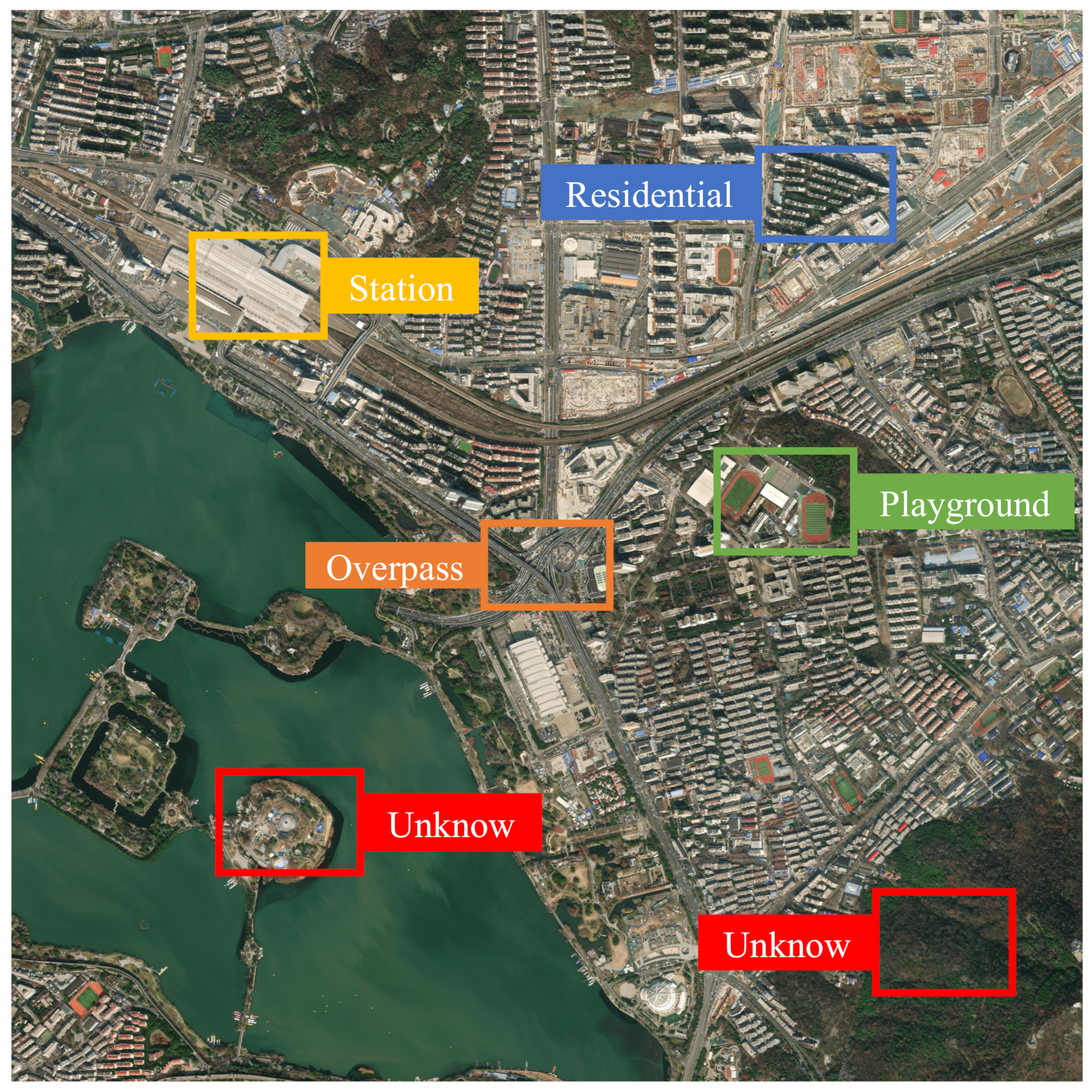
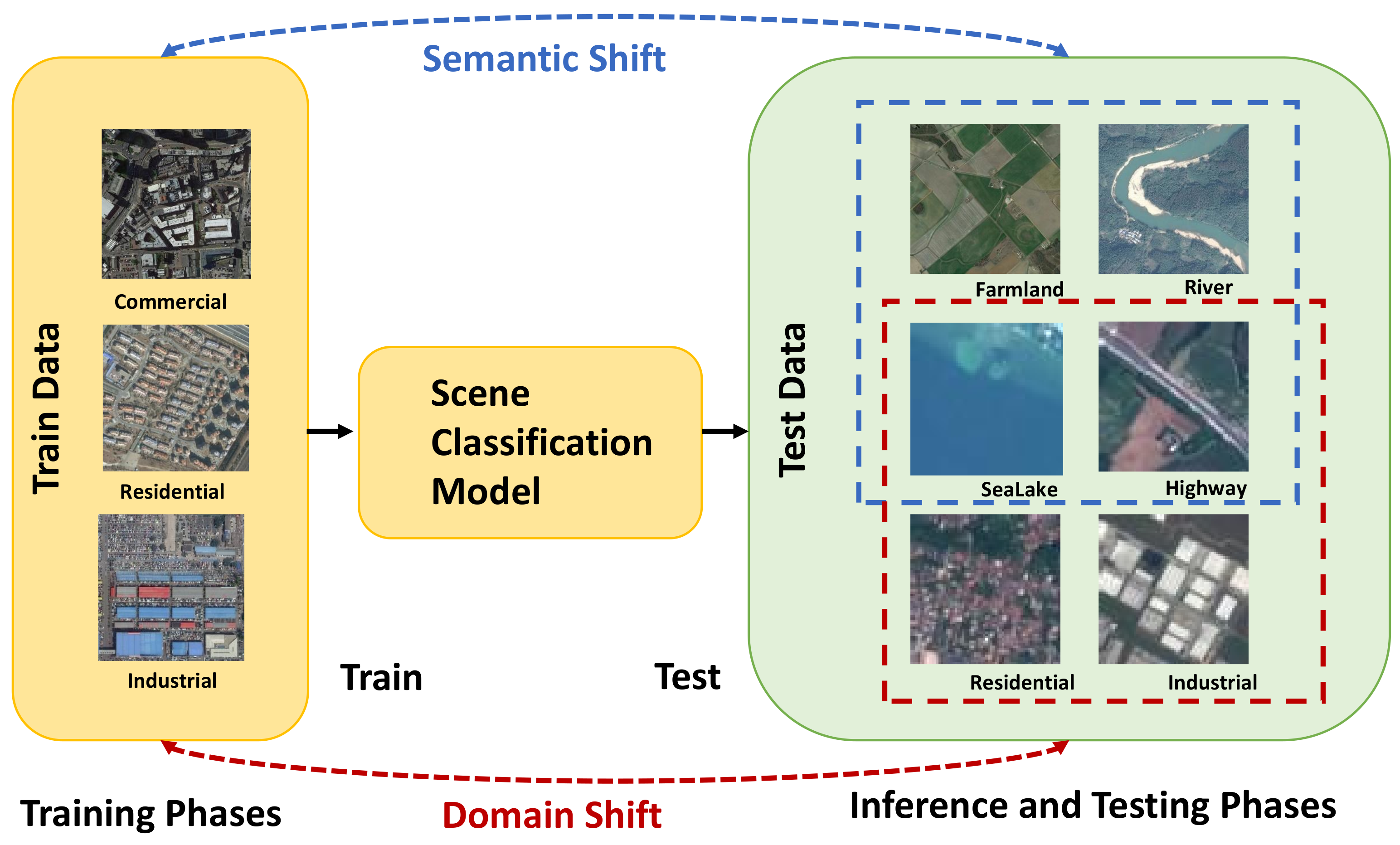
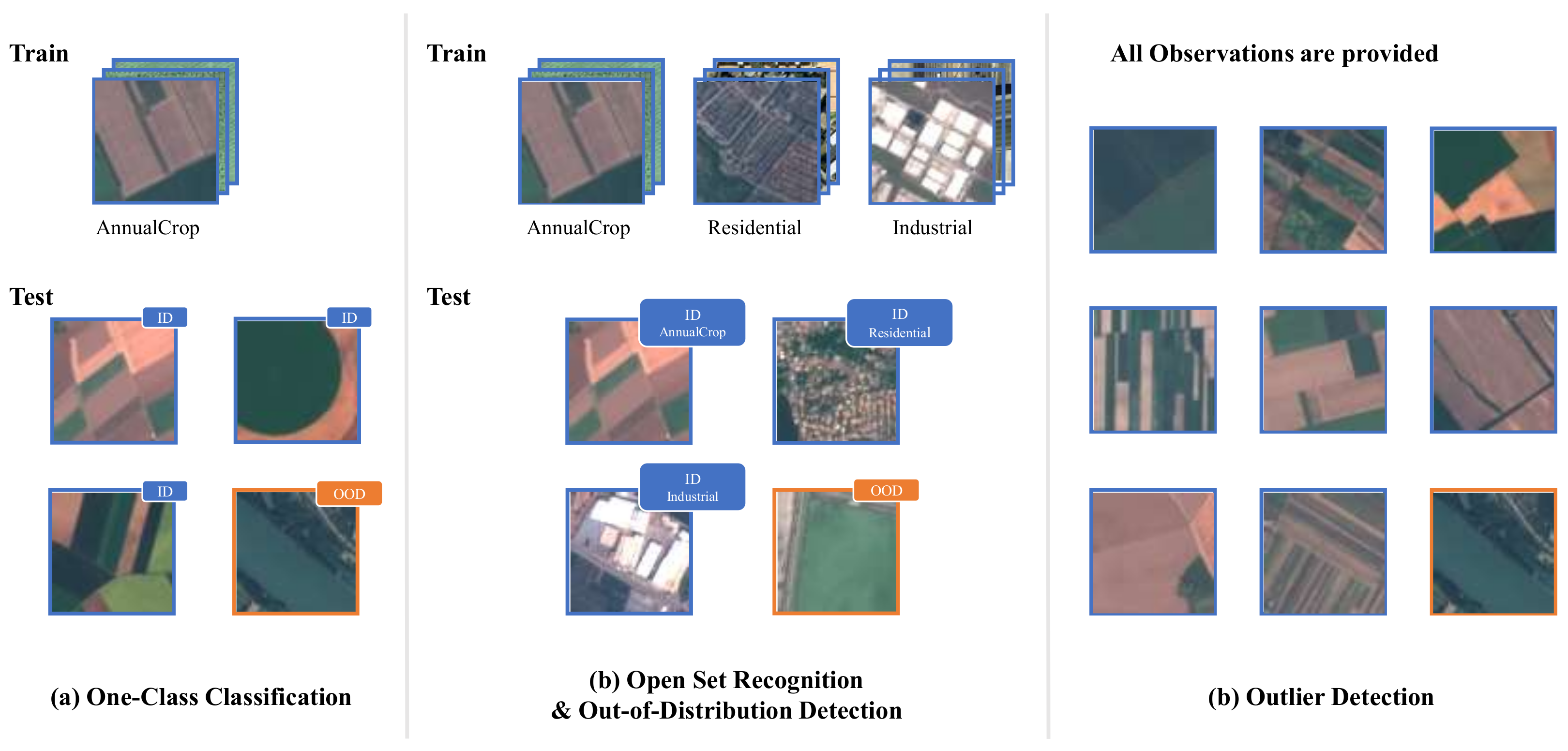
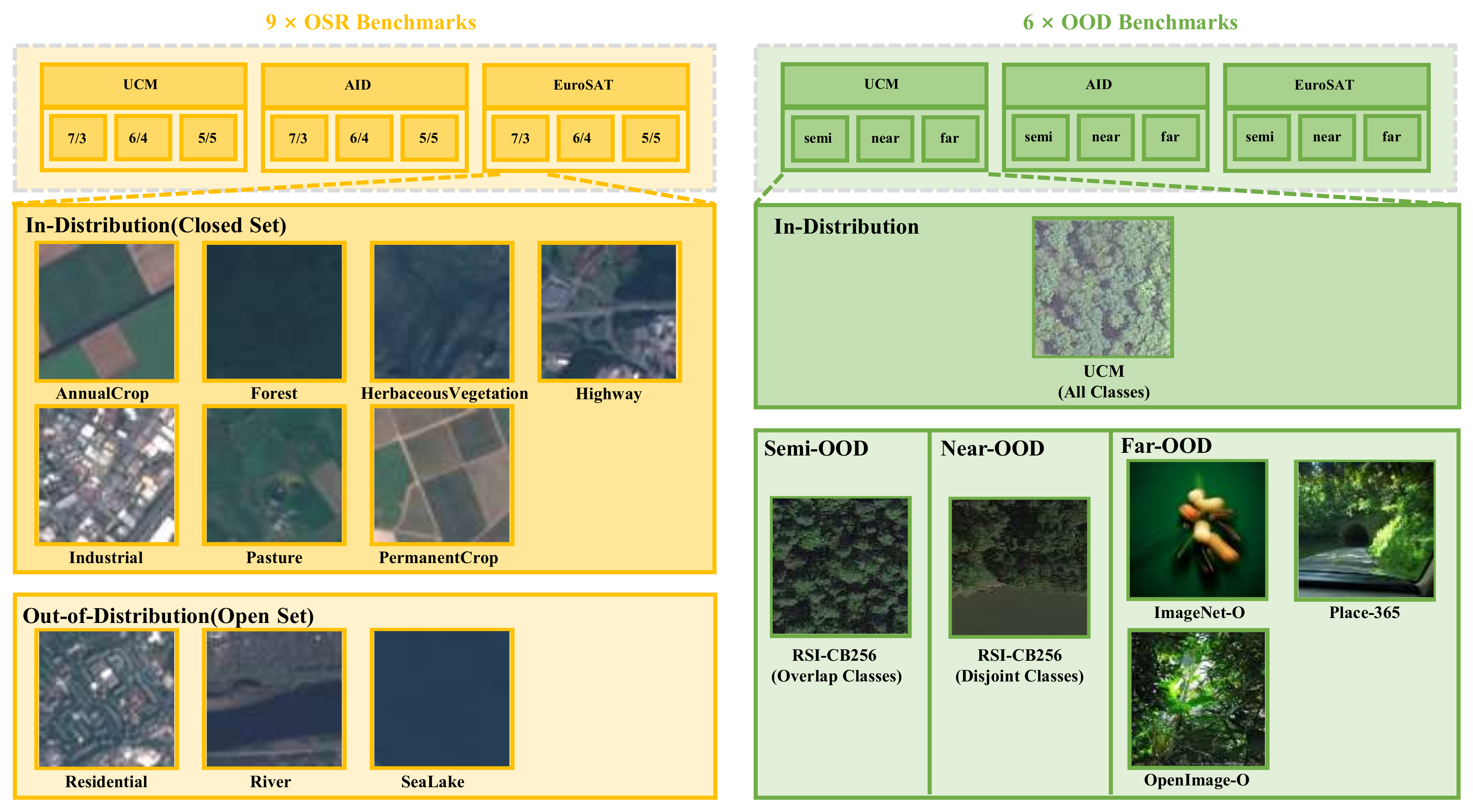
Although deep neural networks have made significant progress in tasks related to remote sensing image scene classification, most of these tasks assume that the training and test data are independently and identically distributed. However, when remote sensing scene classification models are deployed in the real world, the model will inevitably encounter situations where the distribution of the test set differs from that of the training set, leading to unpredictable errors during the inference and testing phase. For instance, in the context of large-scale remote sensing scene classification applications, it is difficult to obtain all the feature classes in the training phase. Consequently, during the inference and testing phases, the model will categorize images of unidentified unknown classes into known classes. Therefore, the deployment of out-of-distribution (OOD) detection within the realm of remote sensing scene classification is crucial for ensuring the reliability and safety of model application in real-world scenarios. Despite significant advancements in OOD detection methods in recent years, there remains a lack of a unified benchmark for evaluating various OOD methods specifically in remote sensing scene classification tasks. We designed different benchmarks on three classical remote sensing datasets to simulate scenes with different distributional shift. Ten different types of OOD detection methods were employed, and their performance was evaluated and compared using quantitative metrics. Numerous experiments were conducted to evaluate the overall performance of these state-of-the-art OOD detection methods under different test benchmarks. The comparative results show that the virtual-logit matching methods without additional training outperform the other types of methods on our benchmarks, suggesting that additional training methods are unnecessary for remote sensing image scene classification applications. Furthermore, we provide insights into OOD detection models and performance enhancement in real world. To the best of our knowledge, this study is the first evaluation and analysis of methods for detecting out-of-distribution data in remote sensing. We hope that this research will serve as a fundamental resource for future studies on out-of-distribution detection in remote sensing.
Keywords: image scene classification; out-of-distribution (OOD); open set recognition (OSR); safety; reliability; uncertainty image scene classification; out-of-distribution (OOD); open set recognition (OSR); safety; reliability; uncertainty