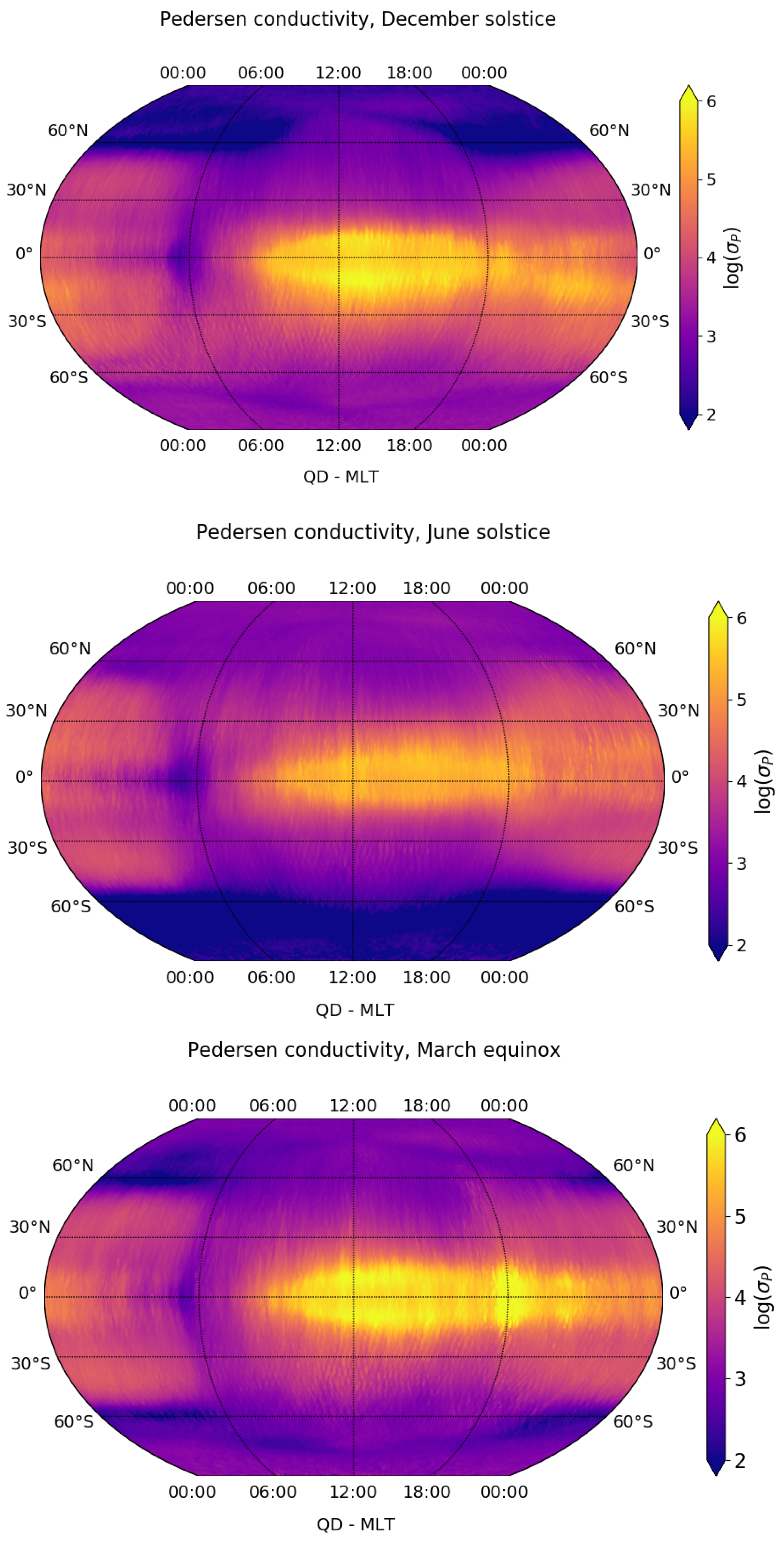
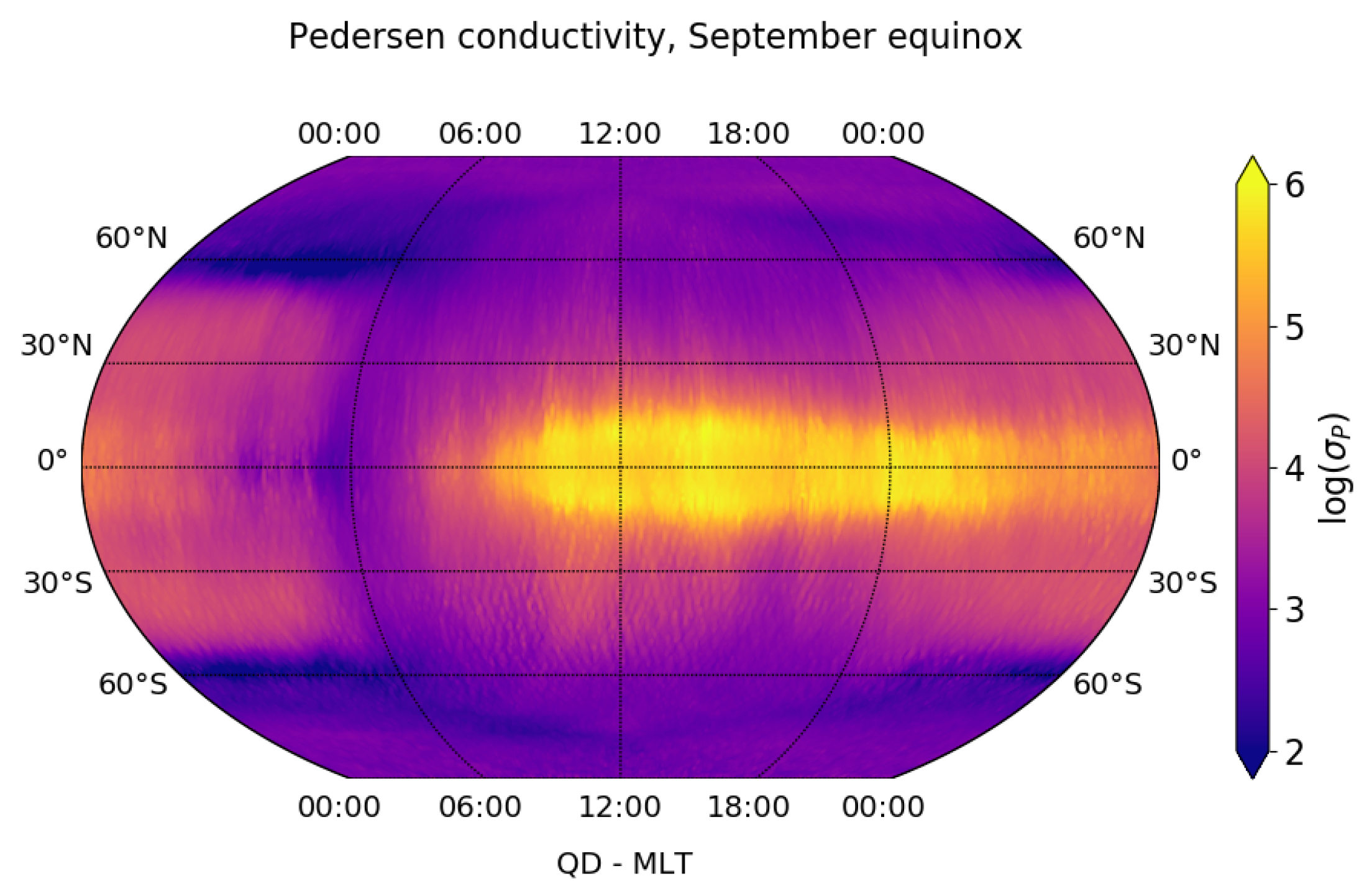
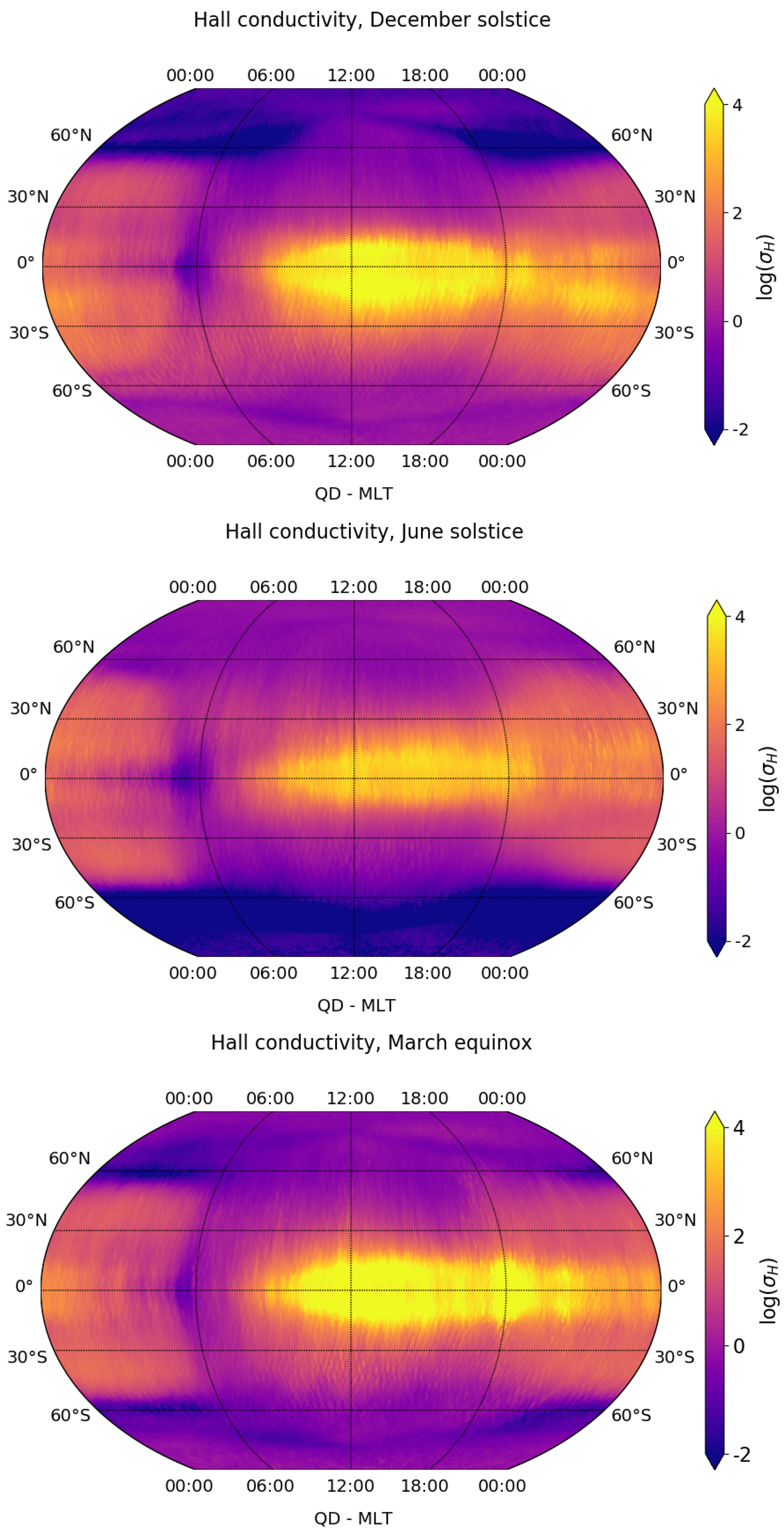
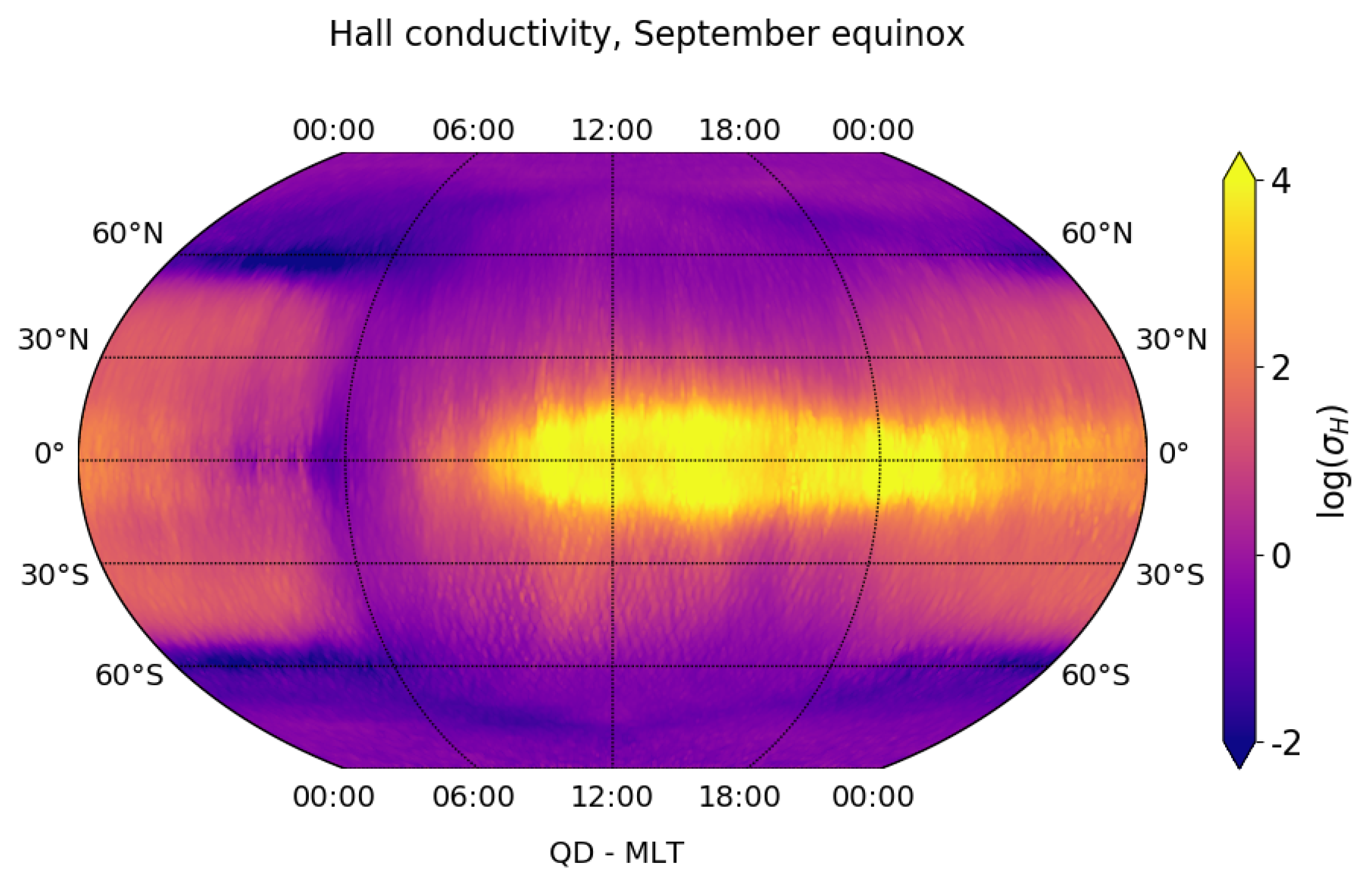
Perpendicular Electrical Conductivity in the Topside Ionosphere Derived from Swarm Measurements

 ,
,  , , , ,
  , and
, and Abstract
Share and Cite
Giannattasio, F.; Pignalberi, A.; Tozzi, R.; De Michelis, P.; Mestici, S.; Consolini, G.; Coco, I.; Pezzopane, M. Perpendicular Electrical Conductivity in the Topside Ionosphere Derived from Swarm Measurements. Remote Sens. 2024, 16, 3129. https://doi.org/10.3390/rs16173129
Giannattasio F, Pignalberi A, Tozzi R, De Michelis P, Mestici S, Consolini G, Coco I, Pezzopane M. Perpendicular Electrical Conductivity in the Topside Ionosphere Derived from Swarm Measurements. Remote Sensing. 2024; 16(17):3129. https://doi.org/10.3390/rs16173129
Chicago/Turabian StyleGiannattasio, Fabio, Alessio Pignalberi, Roberta Tozzi, Paola De Michelis, Simone Mestici, Giuseppe Consolini, Igino Coco, and Michael Pezzopane. 2024. "Perpendicular Electrical Conductivity in the Topside Ionosphere Derived from Swarm Measurements" Remote Sensing 16, no. 17: 3129. https://doi.org/10.3390/rs16173129
APA StyleGiannattasio, F., Pignalberi, A., Tozzi, R., De Michelis, P., Mestici, S., Consolini, G., Coco, I., & Pezzopane, M. (2024). Perpendicular Electrical Conductivity in the Topside Ionosphere Derived from Swarm Measurements. Remote Sensing, 16(17), 3129. https://doi.org/10.3390/rs16173129