Article

Forest 3D Radar Reflectivity Reconstruction at X-Band Using a Lidar Derived Polarimetric Coherence Tomography Basis


by
Roman Guliaev
*,
Matteo Pardini
and
Konstantinos P. Papathanassiou
Microwave and Radar Institute, German Aerospace Center DLR, Oberpfaffenhofen, 82234 Wessling, Germany
*
Author to whom correspondence should be addressed.
Remote Sens. 2024, 16(12), 2146; https://doi.org/10.3390/rs16122146
Submission received: 25 March 2024 / Revised: 23 May 2024 / Accepted: 30 May 2024 / Published: 13 June 2024

Abstract

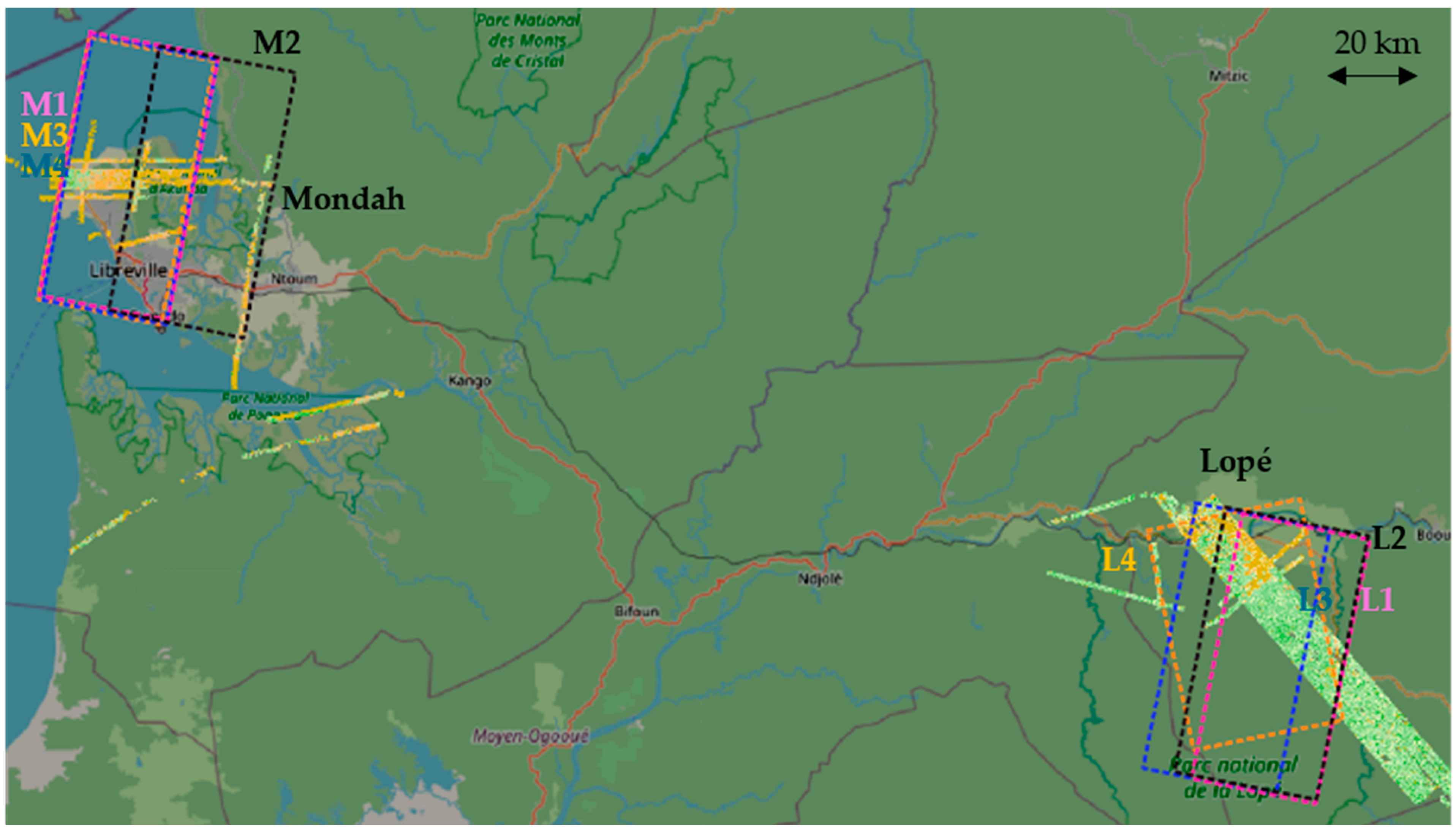
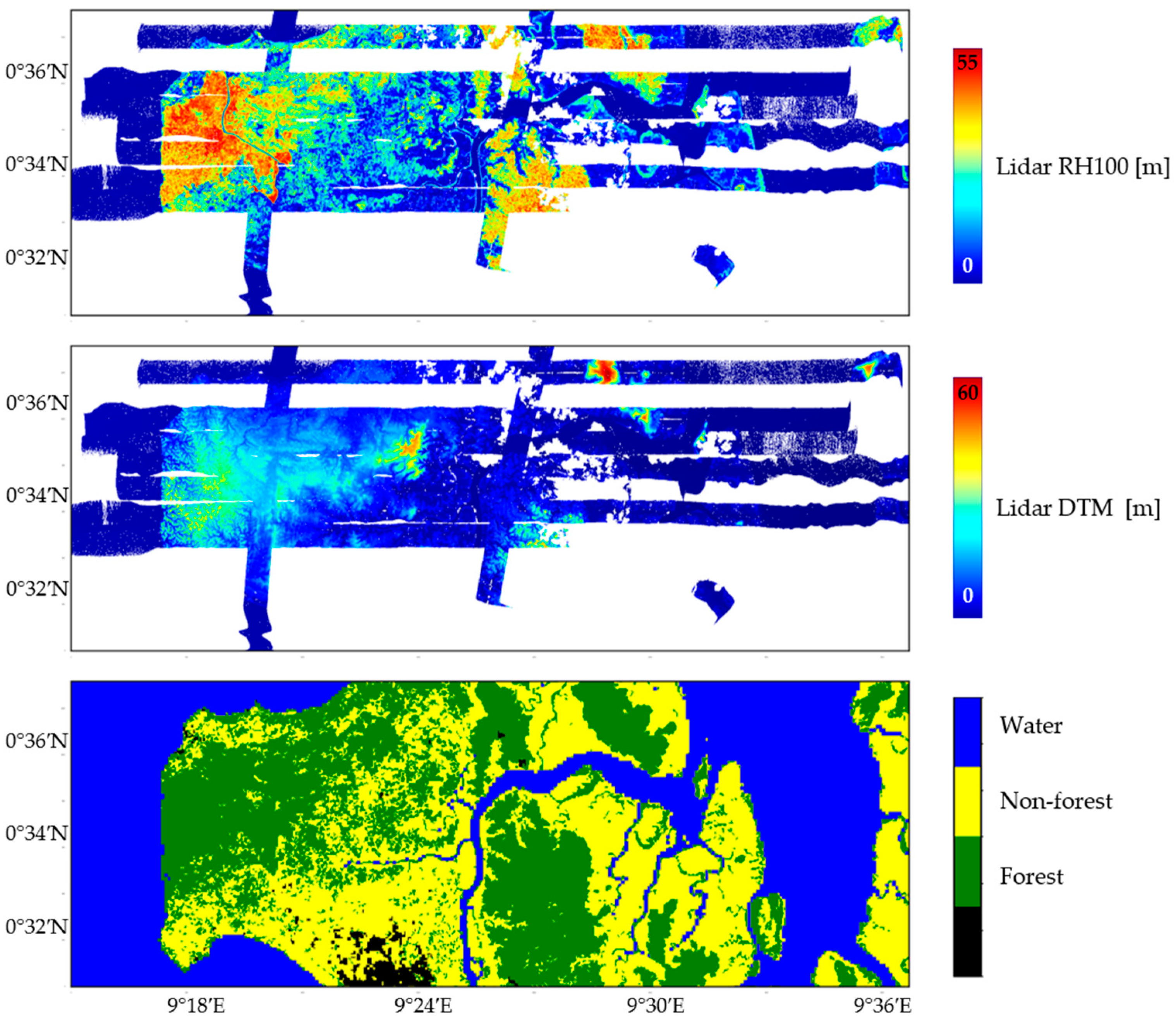
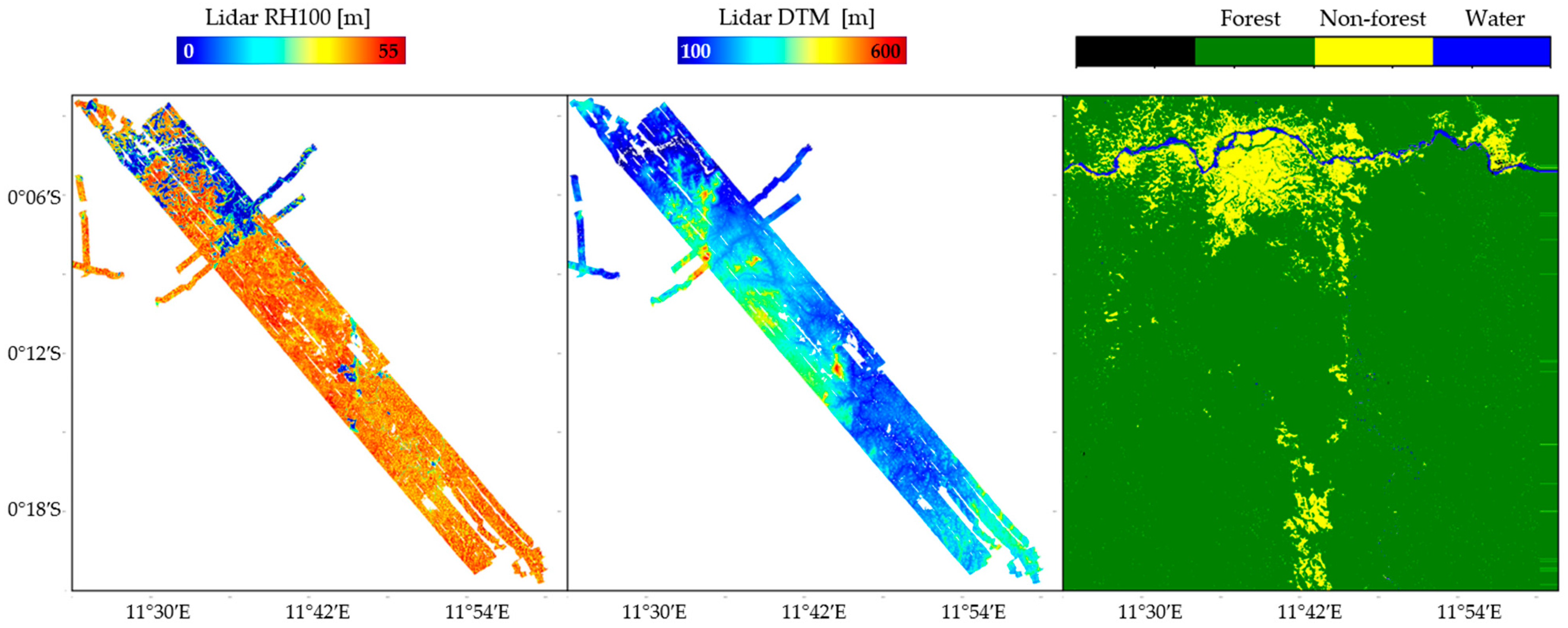
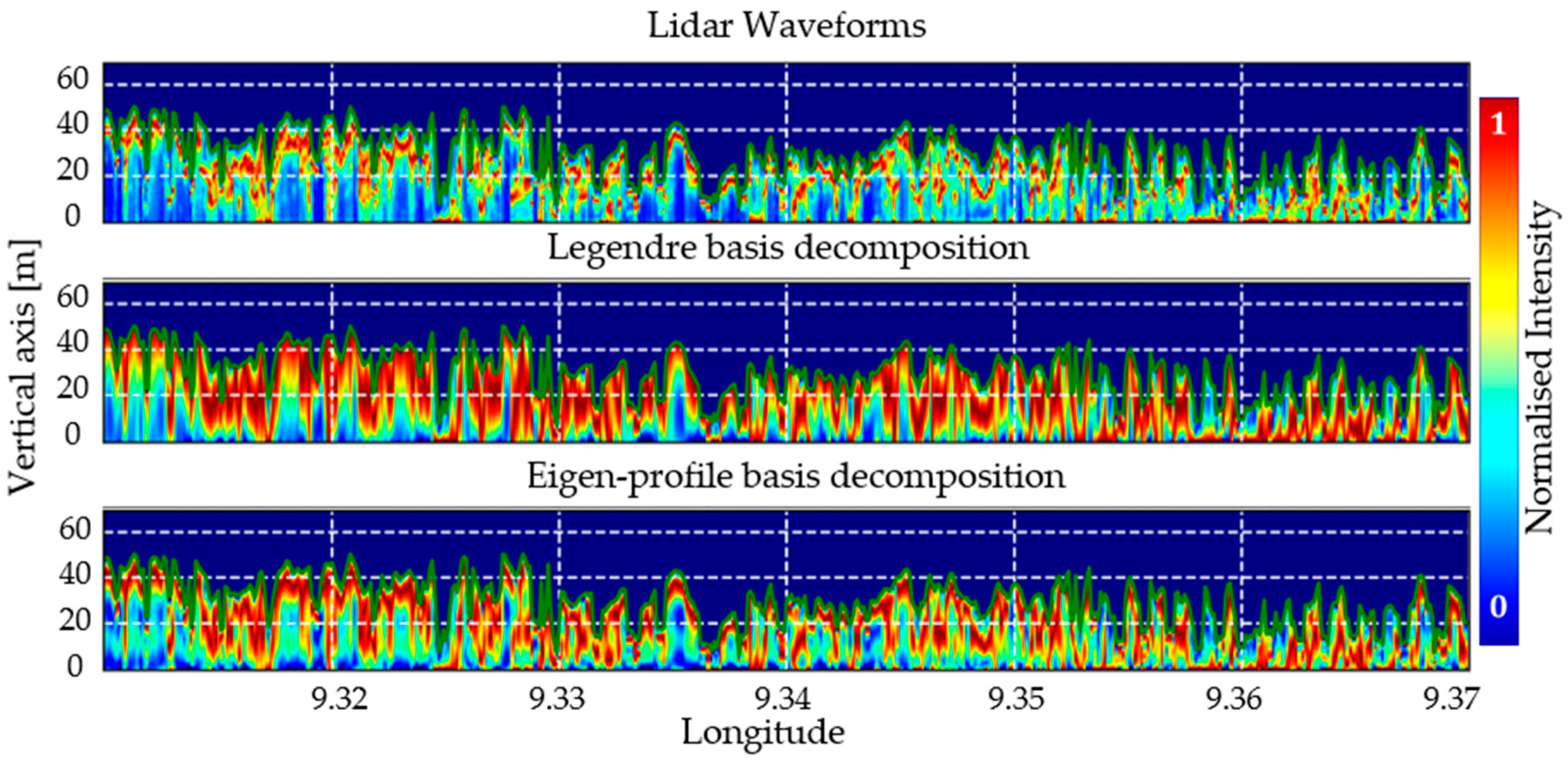
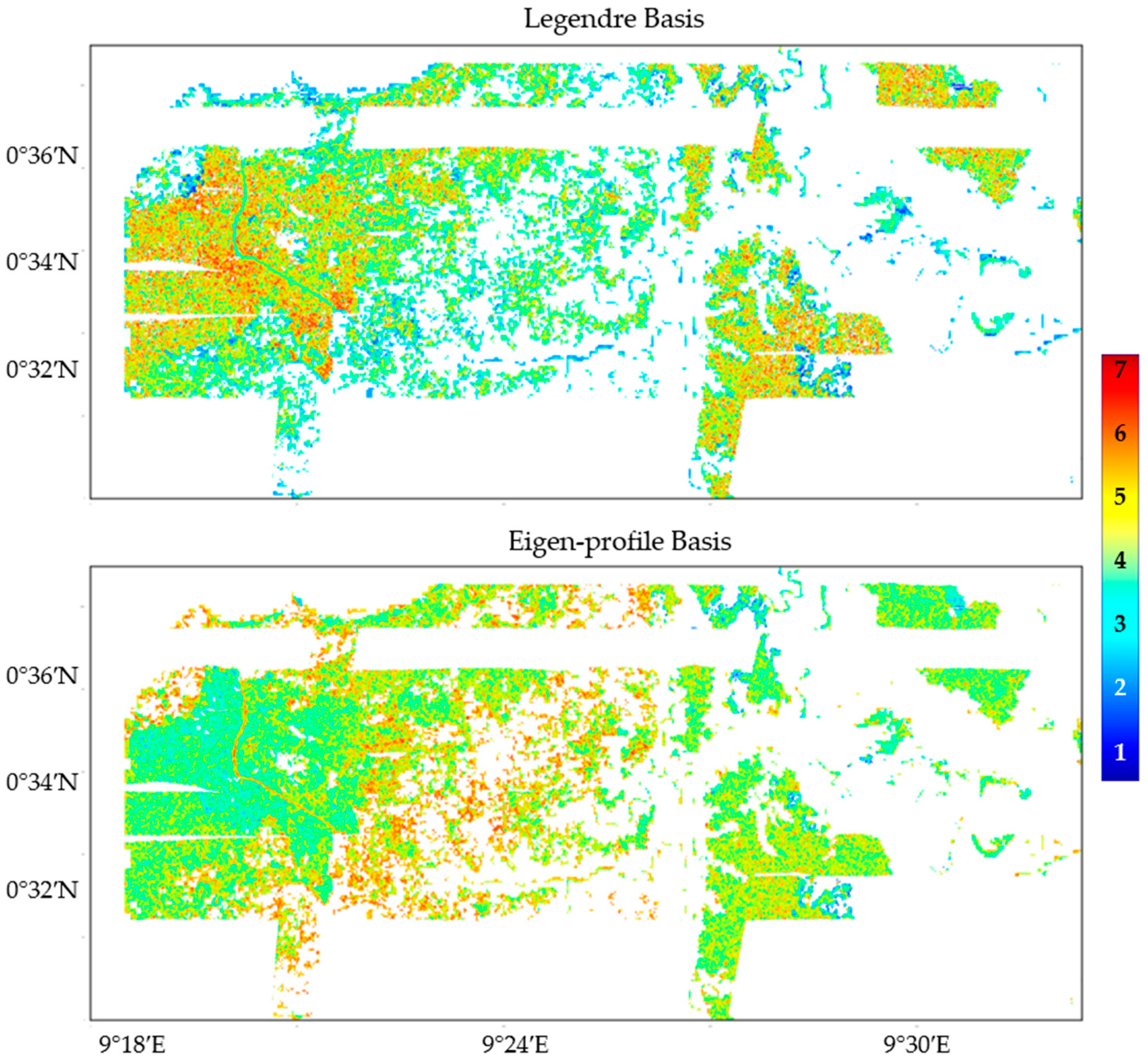
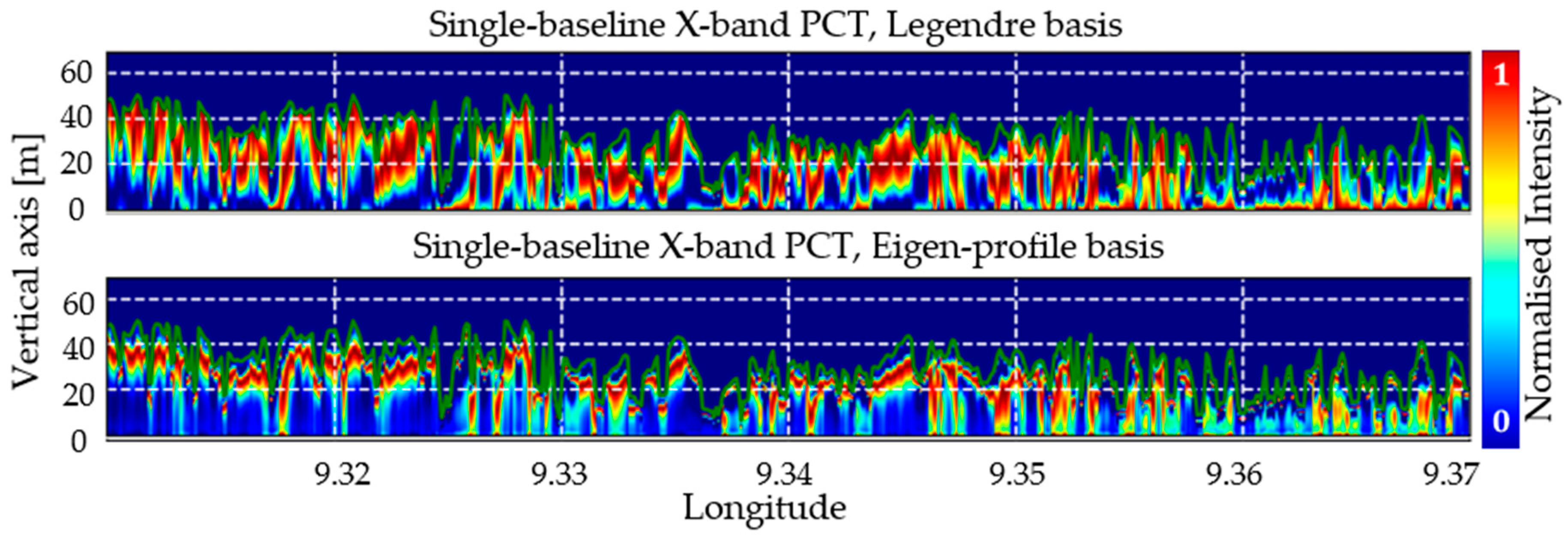
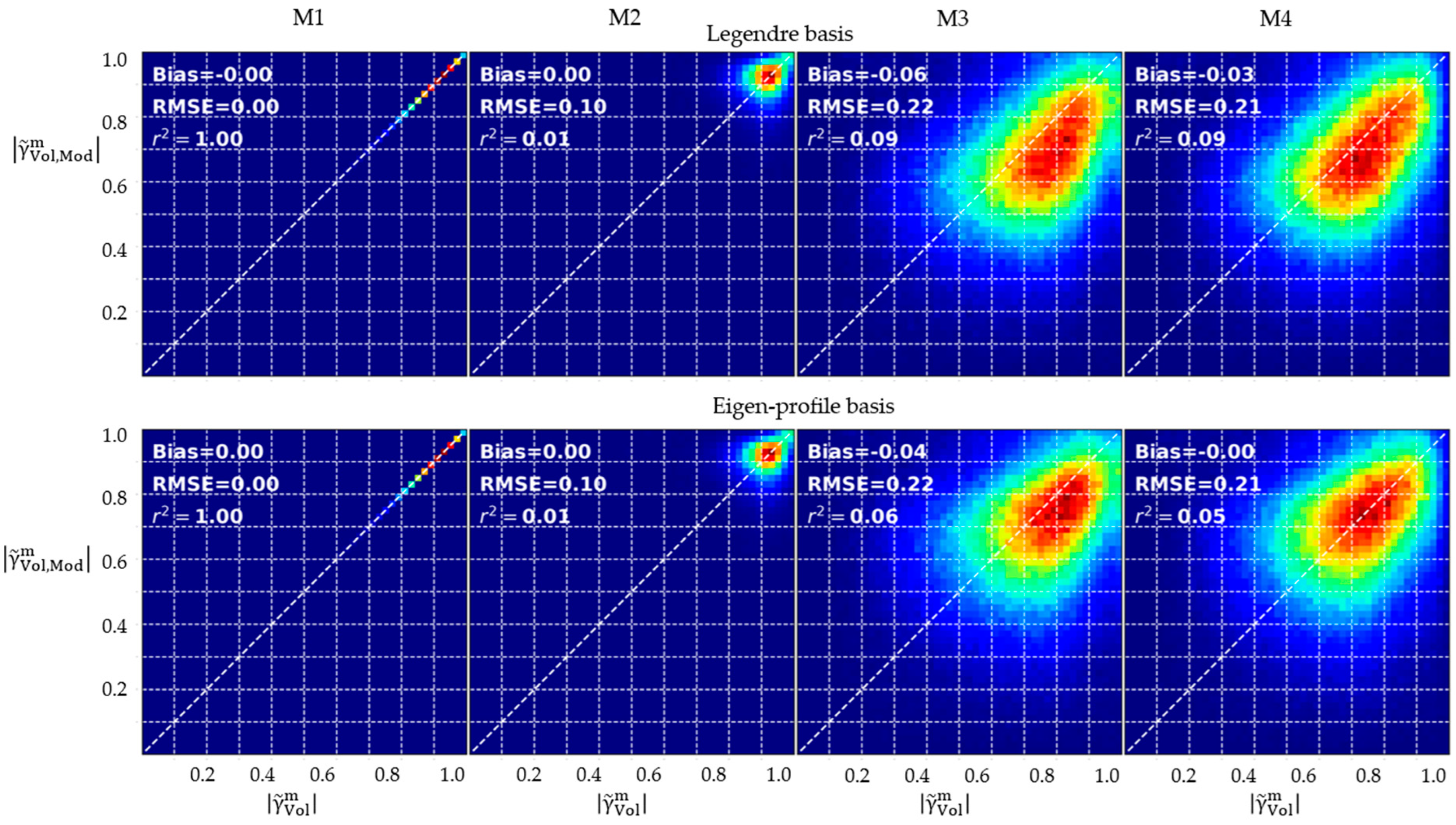
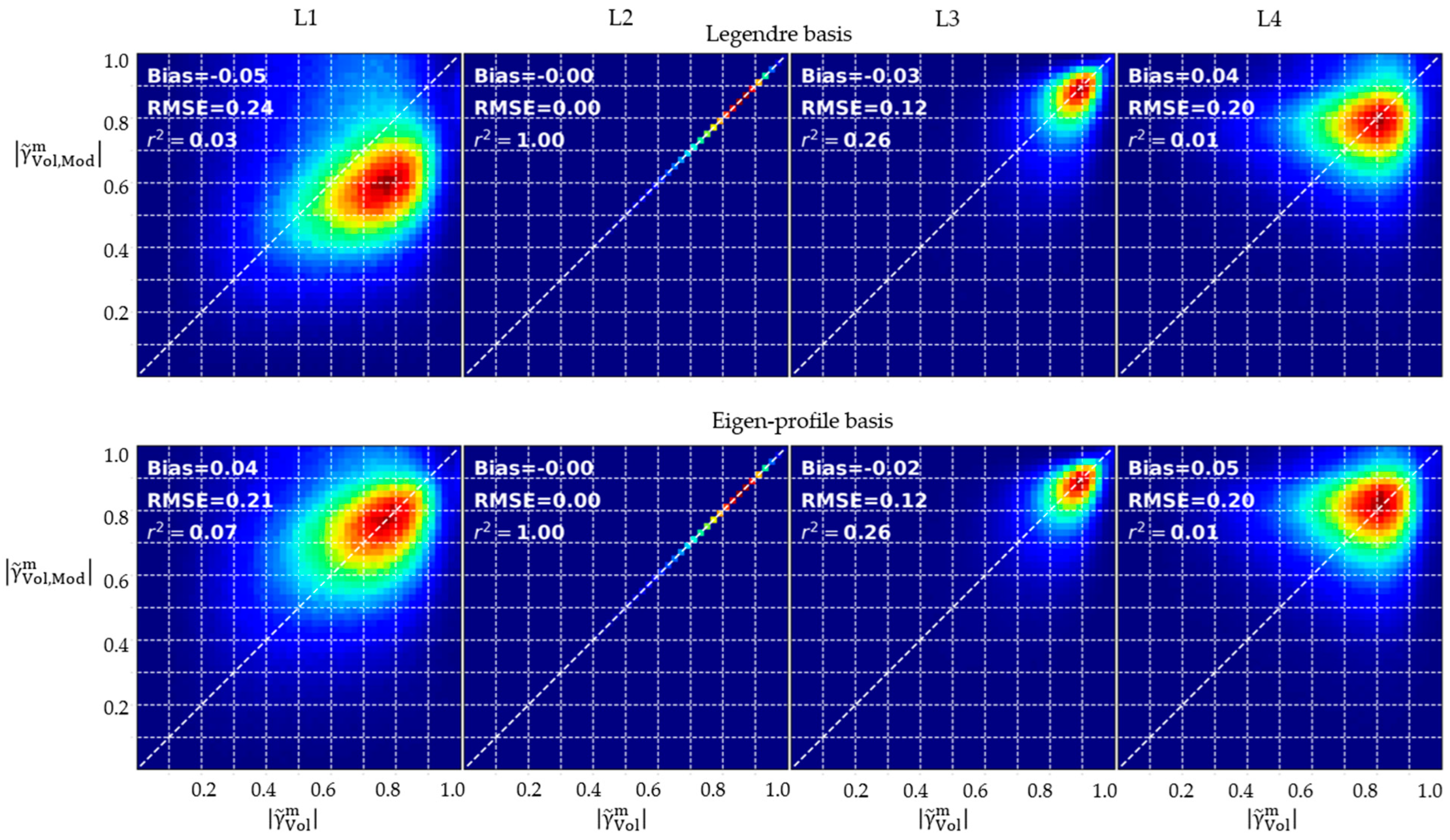
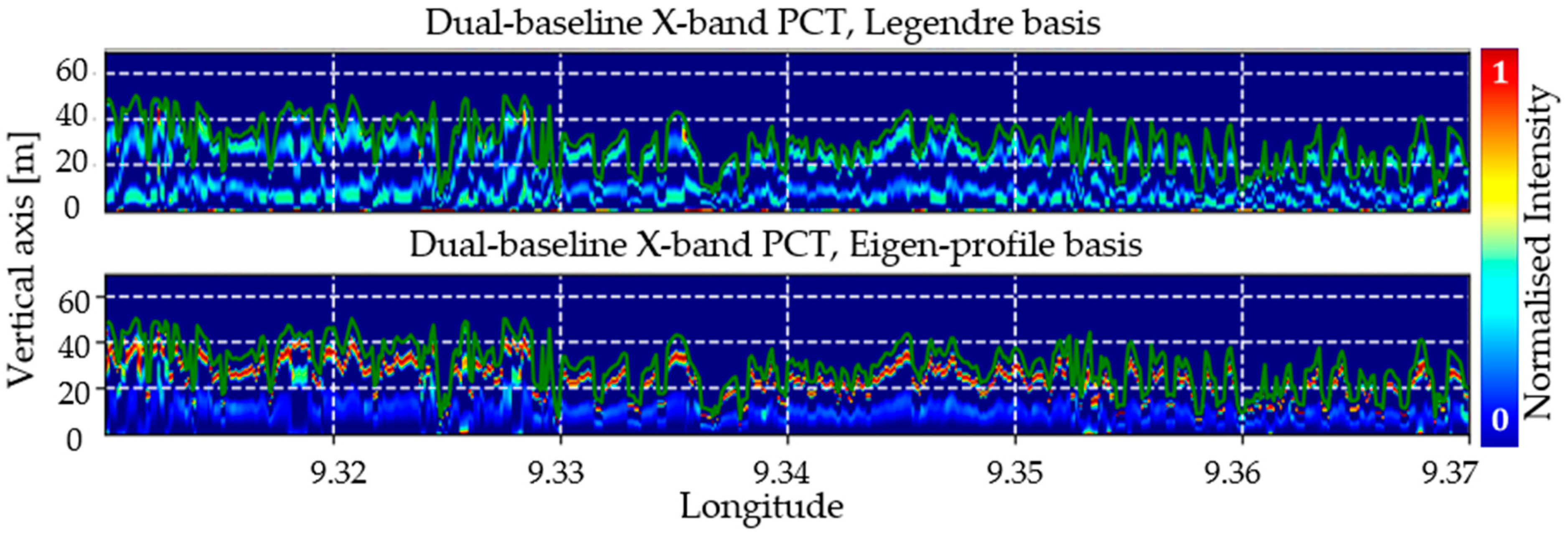
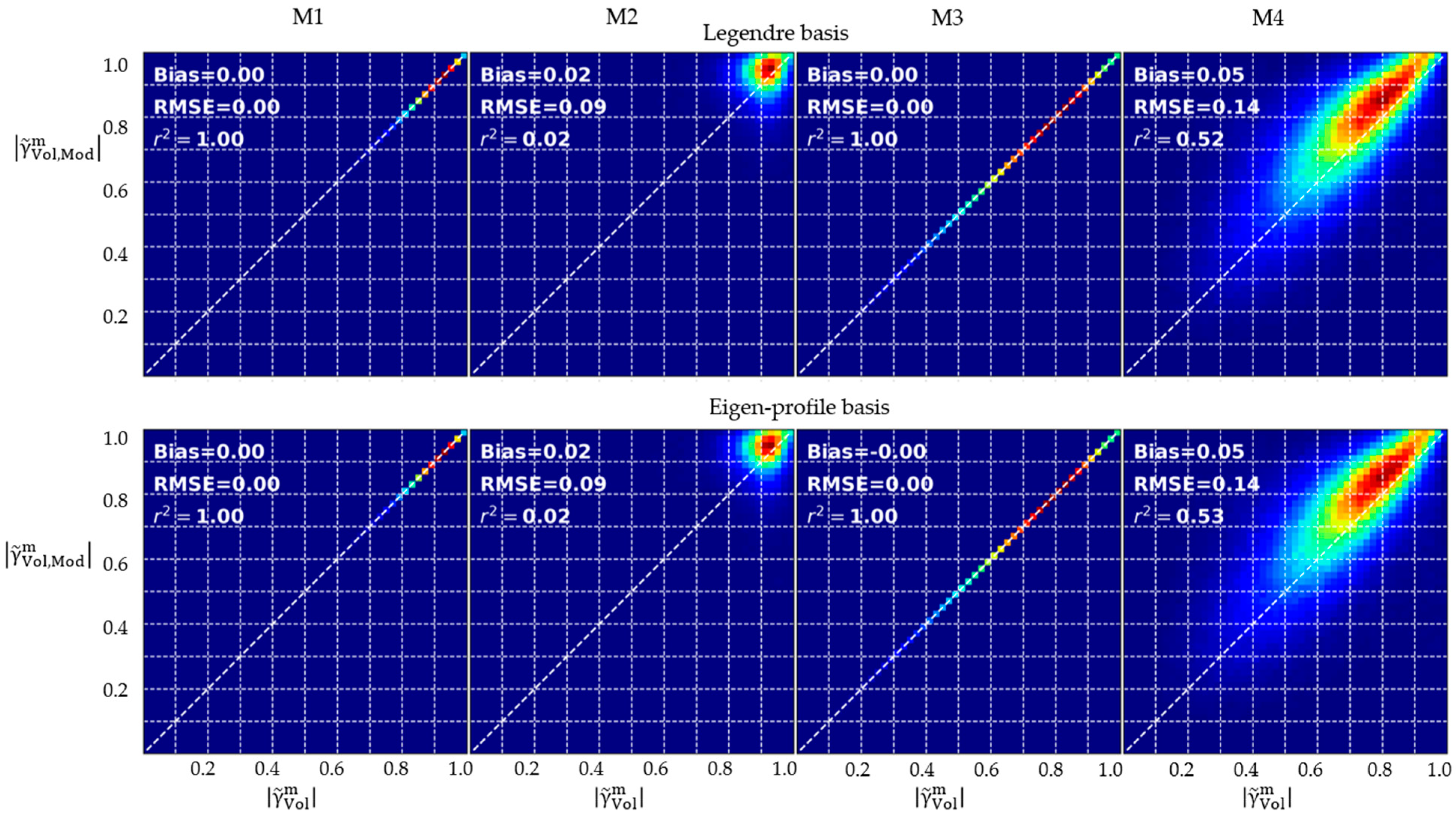
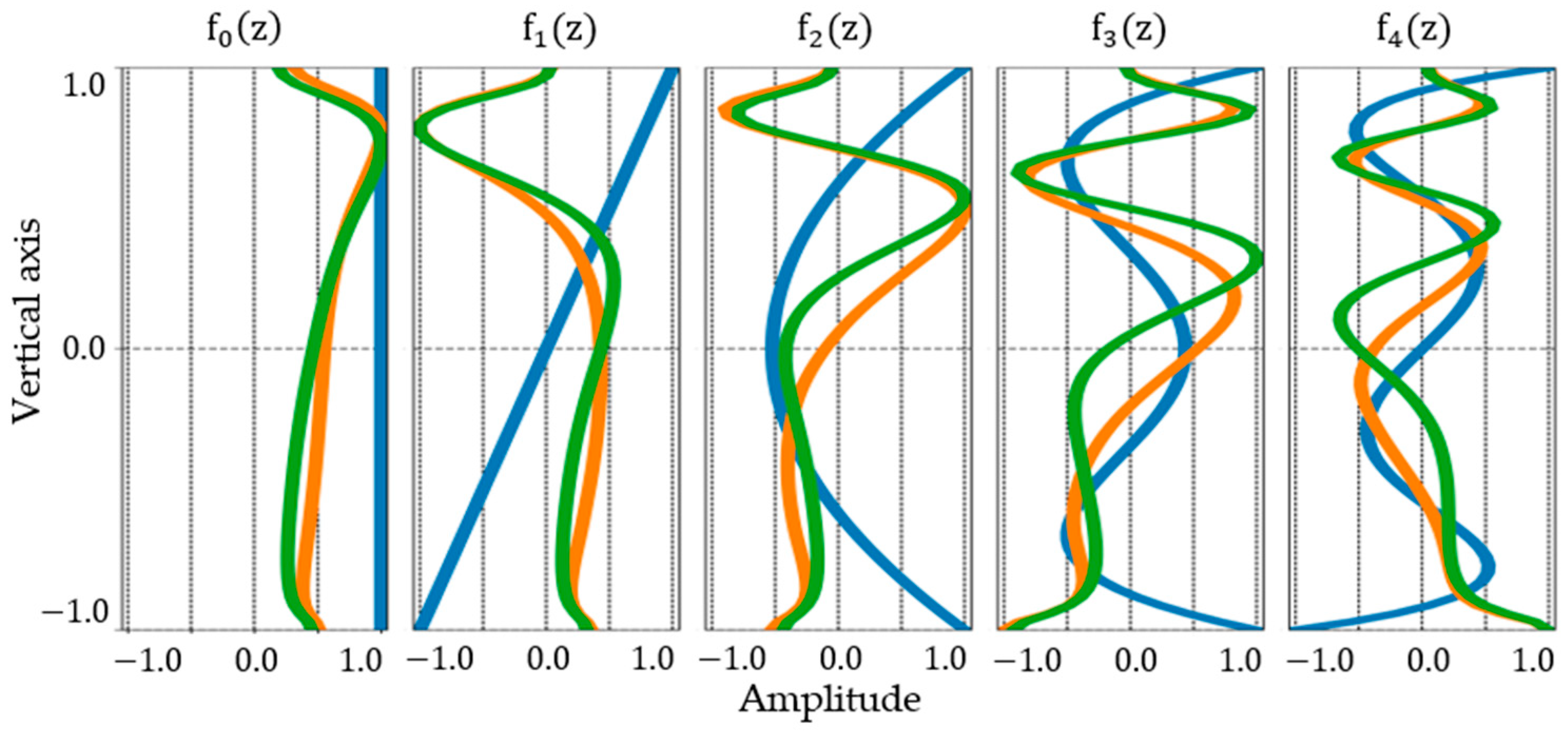
Tomographic Synthetic Aperture Radar (SAR) allows the reconstruction of the 3D radar reflectivity of forests from a large(r) number of multi-angular acquisitions. However, in most practical implementations it suffers from limited vertical resolution and/or reconstruction artefacts as the result of non-ideal acquisition setups. Polarisation Coherence Tomography (PCT) offers an alternative to traditional tomographic techniques that allow the reconstruction of the low-frequency 3D radar reflectivity components from a small(er) number of multi-angular SAR acquisitions. PCT formulates the tomographic reconstruction problem as a series expansion on a given function basis. The expansion coefficients are estimated from interferometric coherence measurements between acquisitions. In its original form, PCT uses the Legendre polynomial basis for the reconstruction of the 3D radar reflectivity. This paper investigates the use of new basis functions for the reconstruction of X-band 3D radar reflectivity of forests derived from available lidar waveforms. This approach enables an improved 3D radar reflectivity reconstruction with enhanced vertical resolution, tailored to individual forest conditions. It also allows the translation from sparse lidar waveform vertical reflectivity information into continuous vertical reflectivity estimates when combined with interferometric SAR measurements. This is especially relevant for exploring the synergy of actual missions such as GEDI and TanDEM-X. The quality of the reconstructed 3D radar reflectivity is assessed by comparing simulated InSAR coherences derived from the reconstructed 3D radar reflectivity against measured coherences at different spatial baselines. The assessment is performed and discussed for interferometric TanDEM-X acquisitions performed over two tropical Gabonese rainforest sites: Mondah and Lopé. The results demonstrate that the lidar-derived basis provides more physically realistic vertical reflectivity profiles, which also produce a smaller bias in the simulated coherence validation, compared to the conventional Legendre polynomial basis.
Keywords: Polarisation Coherence Tomography; InSAR; vertical reflectivity profile Polarisation Coherence Tomography; InSAR; vertical reflectivity profile