Article

Synergistic Change and Driving Mechanisms of Hydrological Processes and Ecosystem Quality in a Typical Arid and Semi-Arid Inland River Basin, China


1
College of Geographical Science, Inner Mongolia Normal University, Hohhot 010022, China
2
Key Laboratory of Remote Sensing and Geographic Information System, Inner Mongolia Autonomous Region, Hohhot 010022, China
3
Key Laboratory of Disaster and Ecological Security on the Mongolia Plateau, Inner Mongolia Autonomous Region, Hohhot 010022, China
4
Grassland Research Institute, Chinese Academy of Agricultural Sciences, Hohhot 010010, China
*
Author to whom correspondence should be addressed.
Remote Sens. 2023, 15(7), 1785; https://doi.org/10.3390/rs15071785
Submission received: 7 February 2023 / Revised: 16 March 2023 / Accepted: 23 March 2023 / Published: 27 March 2023
(This article belongs to the Topic Hydrology and Water Resources in Agriculture and Ecology)

Abstract

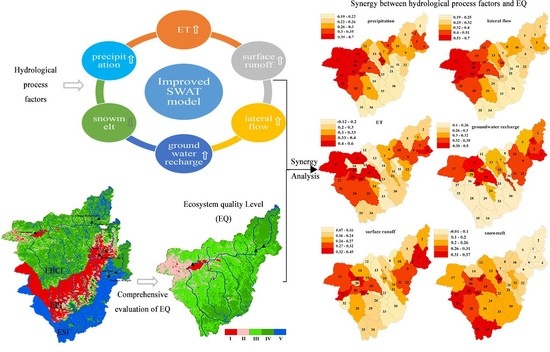
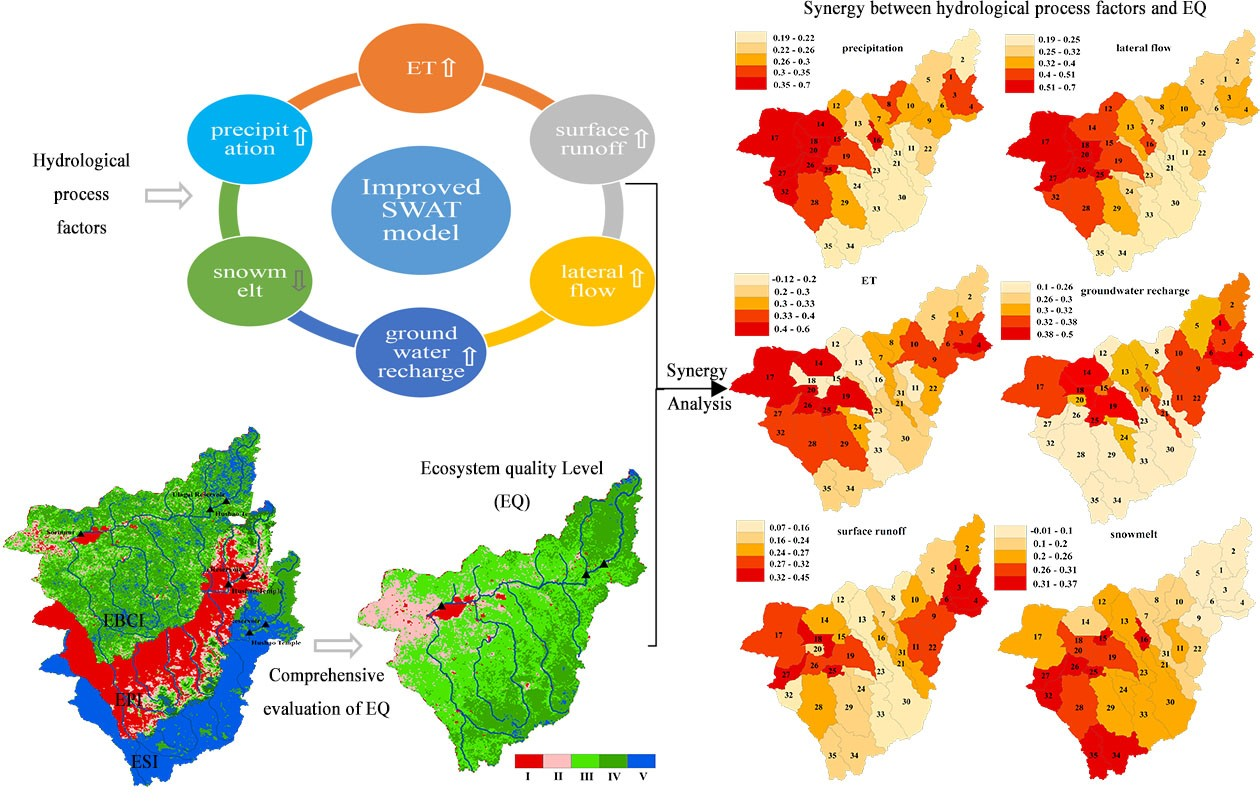
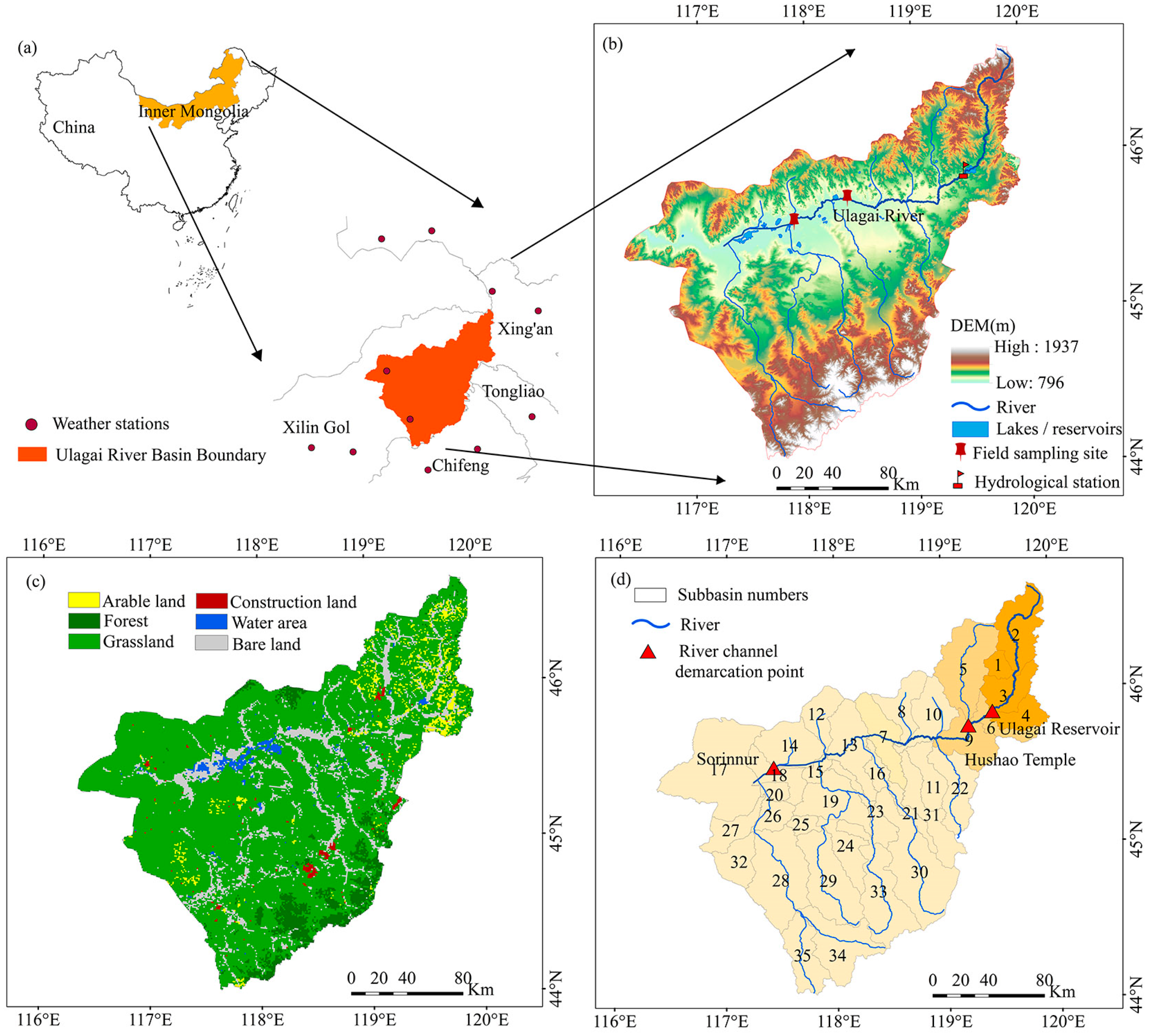
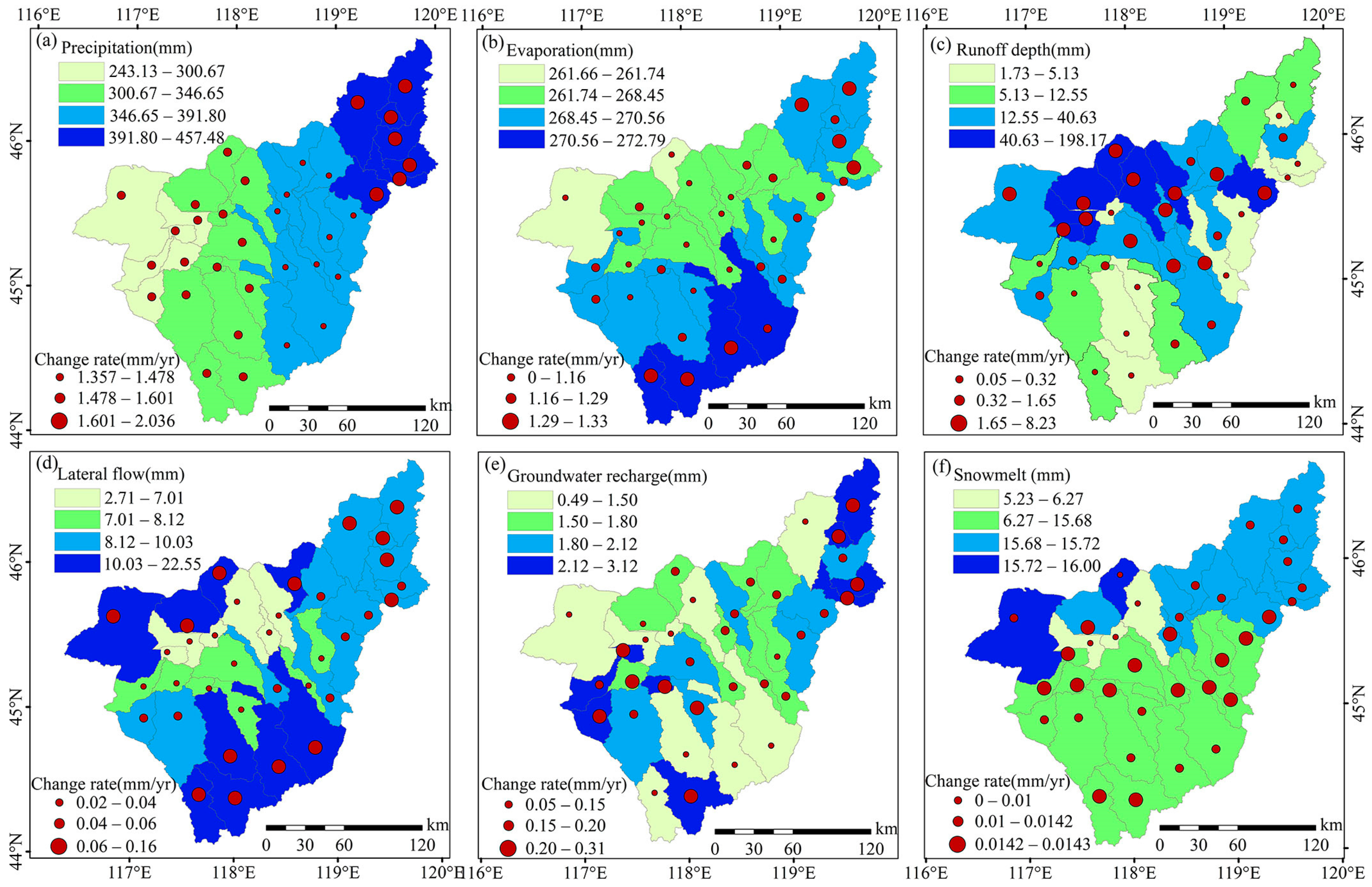
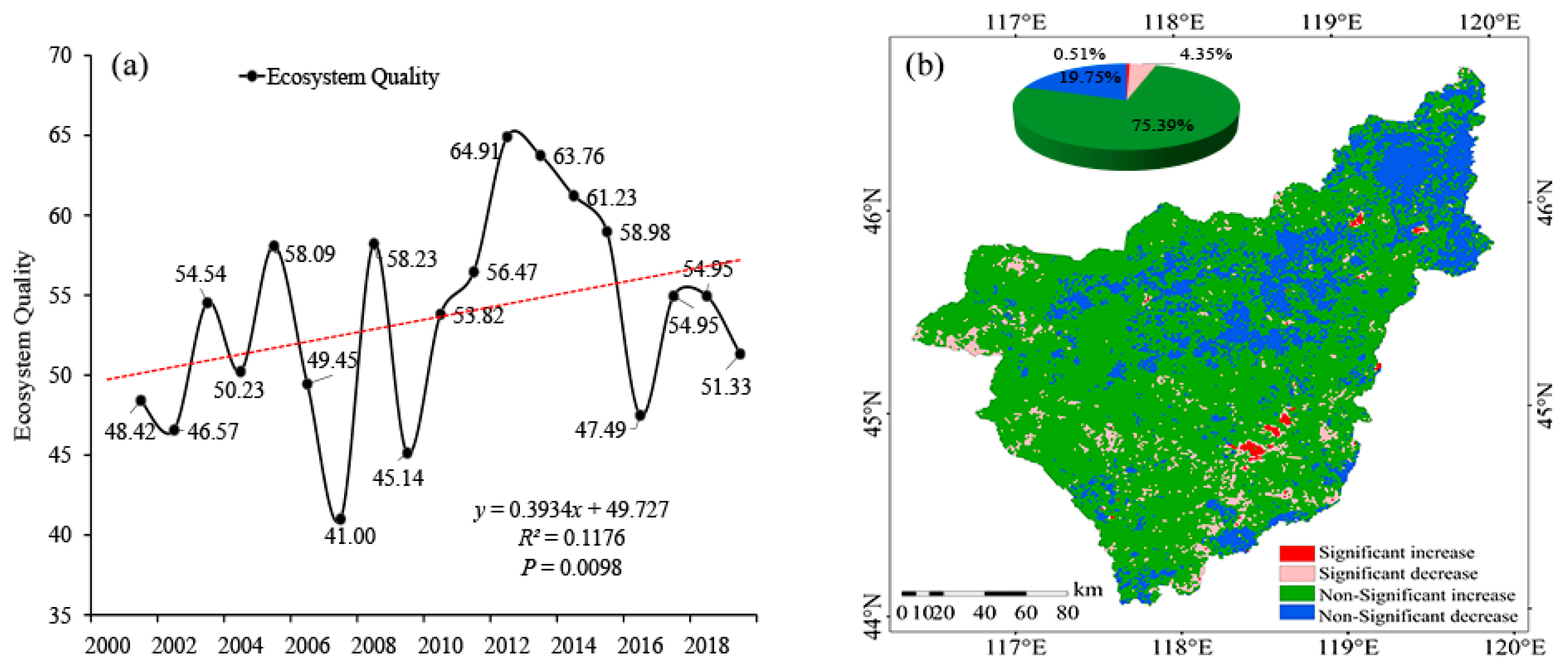
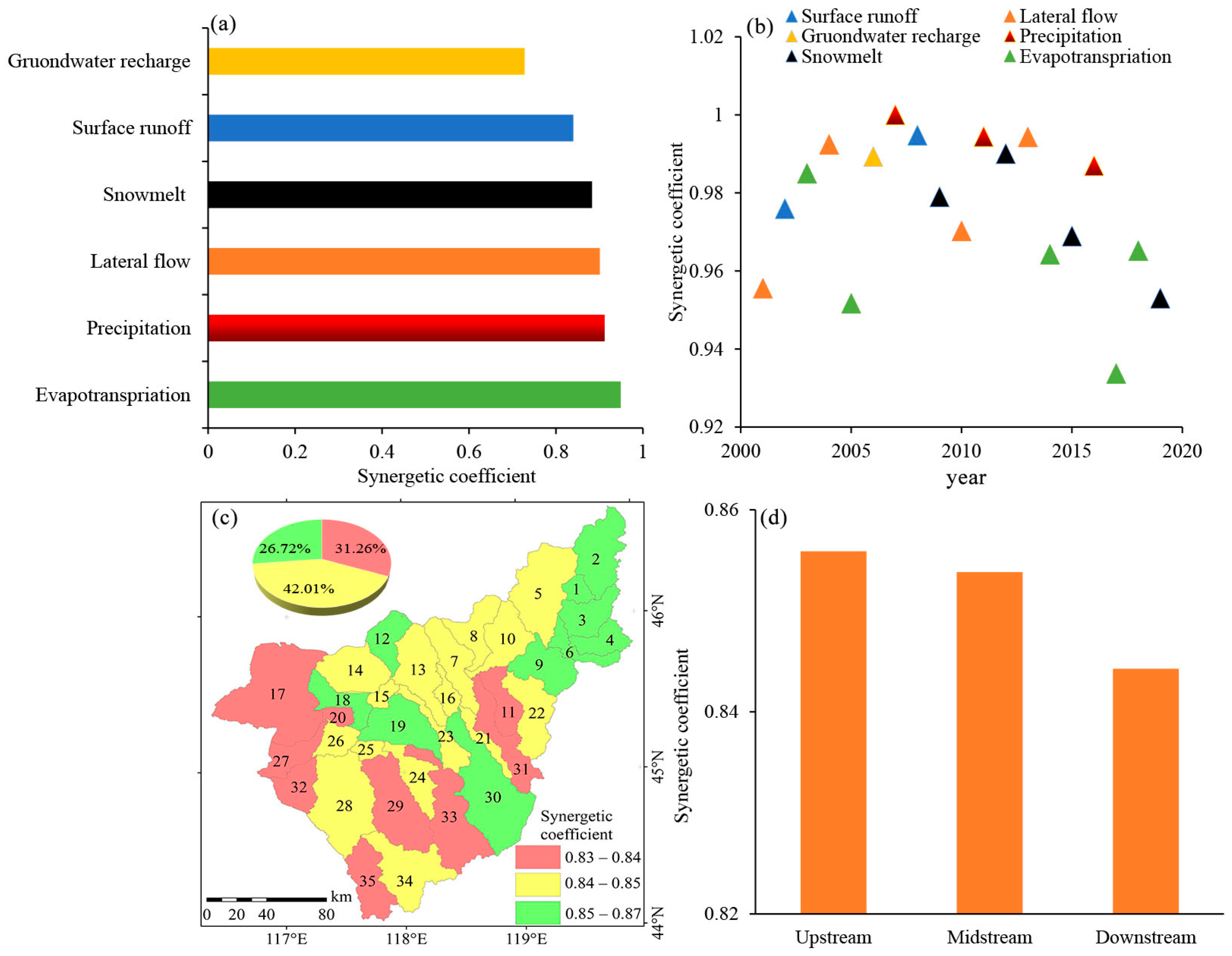
Global warming and human activities are complicating the spatial and temporal relationships between basin hydrologic processes and ecosystem quality (EQ), especially in arid and semi-arid regions. Knowledge of the synergy between hydrological processes and ecosystems in arid and semi-arid zones is an effective measure to achieve ecologically sustainable development. In this study, the inland river basin Ulagai River Basin (URB), a typical arid and semi-arid region in Northern China, was used as the study area; based on an improved hydrological model and remote-sensing and in situ measured data, this URB-focused study analyzed the spatial and temporal characteristics of hydrological process factors, such as precipitation, evapotranspiration (ET), surface runoff, lateral flow, groundwater recharge, and EQ and the synergistic relationships between them. It was found that, barring snowmelt, the hydrological process factors such as precipitation, ET, surface runoff, lateral flow, and groundwater recharge had a rising trend in the URB, since the 20th century. The rate of change was higher in the downstream areas when compared with what it was in the upstream and midstream areas. The multi-year average of EQ in the basin is 53.66, which is at a medium level and has an overall improving trend, accounting for 95.14% of the total area, mainly in the upstream, downstream southern, and downstream northern areas of the basin. The change in relationship between the hydrological process factors and EQ was found to have a highly synergistic effect. Temporally, EQ was consistent with the interannual trends of precipitation, surface runoff, lateral flow, and groundwater recharge. The correlation between the hydrological process factors and EQ was found to be higher than 0.7 during the study period. Spatially, the hydrological process factors had a synergistic relationship with EQ from strong to weak upstream, midstream, and downstream, respectively. In addition, ecosystem improvements were accelerated by government initiatives such as the policy of Returning Grazing Land to Grassland Project, which has played an important role in promoting soil and water conservation and EQ. This study provides theoretical support for understanding the relationship between hydrological processes and ecological evolution in arid and semi-arid regions, and it also provides new ideas for related research.
Keywords: hydrological processes; ecosystem quality; synergistic effect; arid and semi-arid regions; Ulagai River Basin hydrological processes; ecosystem quality; synergistic effect; arid and semi-arid regions; Ulagai River Basin
Graphical Abstract