Article

Dynamic Loss Reweighting Method Based on Cumulative Classification Scores for Long-Tailed Remote Sensing Image Classification

1
College of Astronautics, Nanjing University of Aeronautics and Astronautics, Nanjing 211106, China
2
The Second Institute of Oceanography, Ministry of Natural Resources of China, Hangzhou 210012, China
*
Author to whom correspondence should be addressed.
Remote Sens. 2023, 15(2), 394; https://doi.org/10.3390/rs15020394
Submission received: 30 November 2022 / Revised: 1 January 2023 / Accepted: 5 January 2023 / Published: 9 January 2023
(This article belongs to the Section AI Remote Sensing)

Abstract

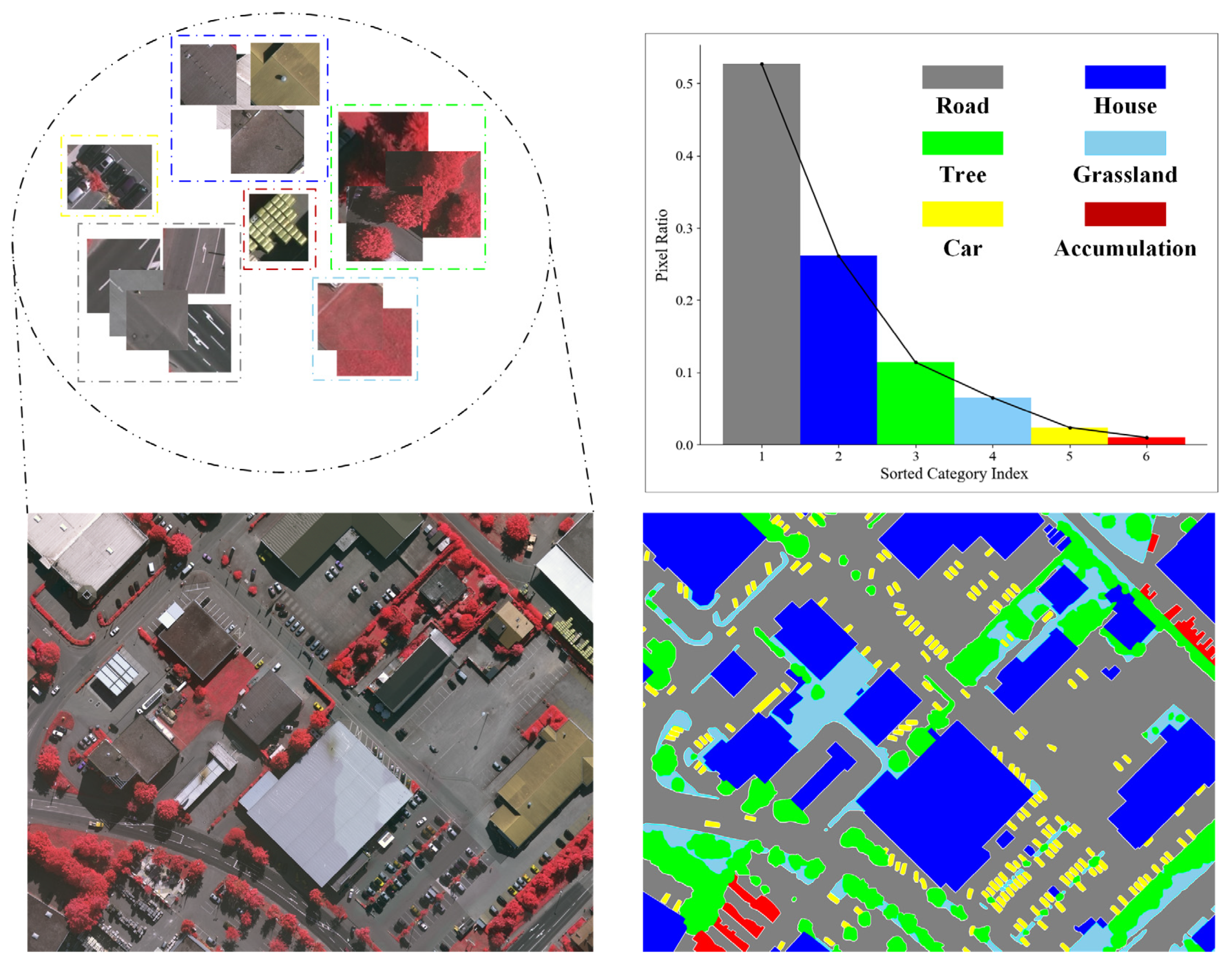
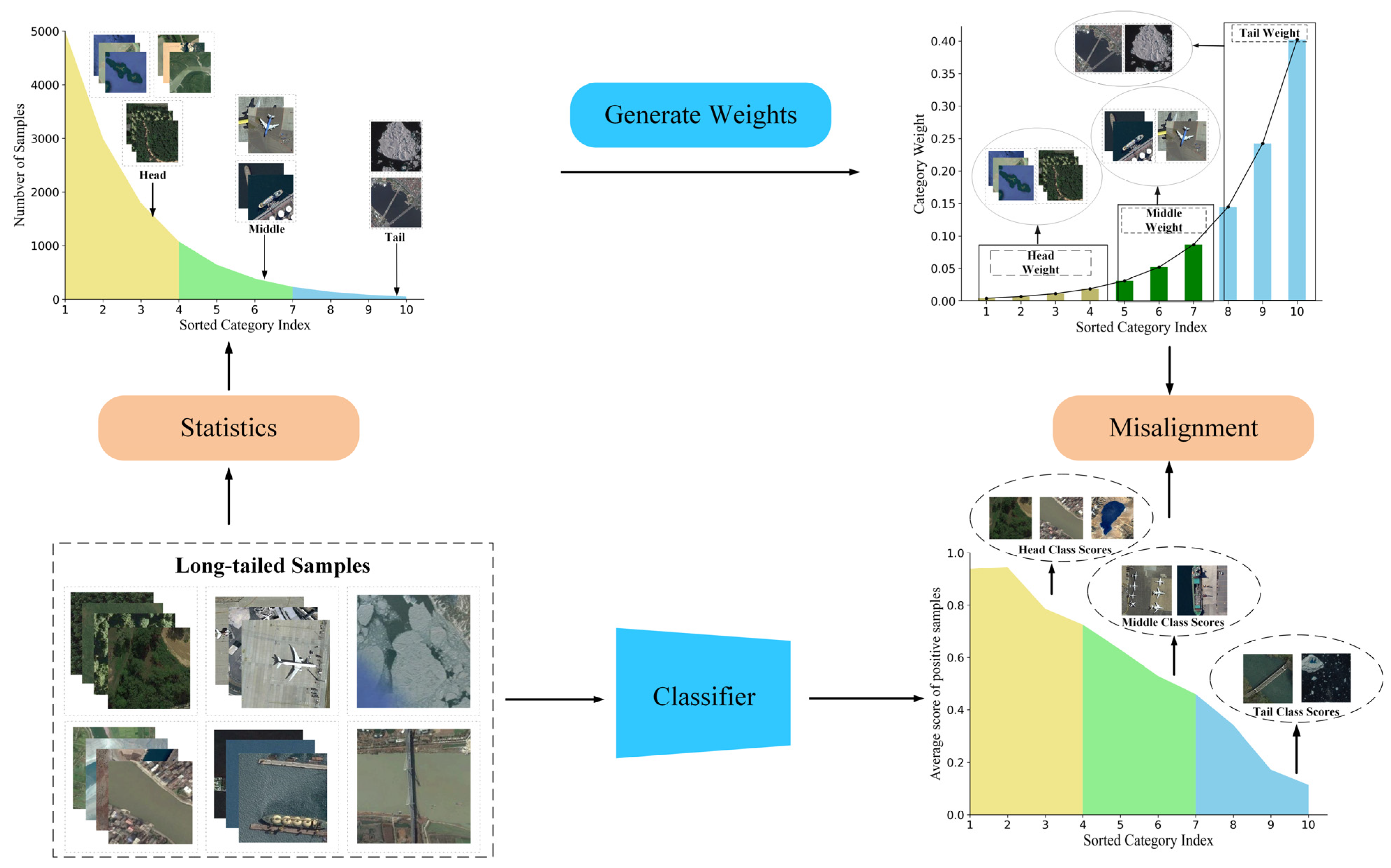
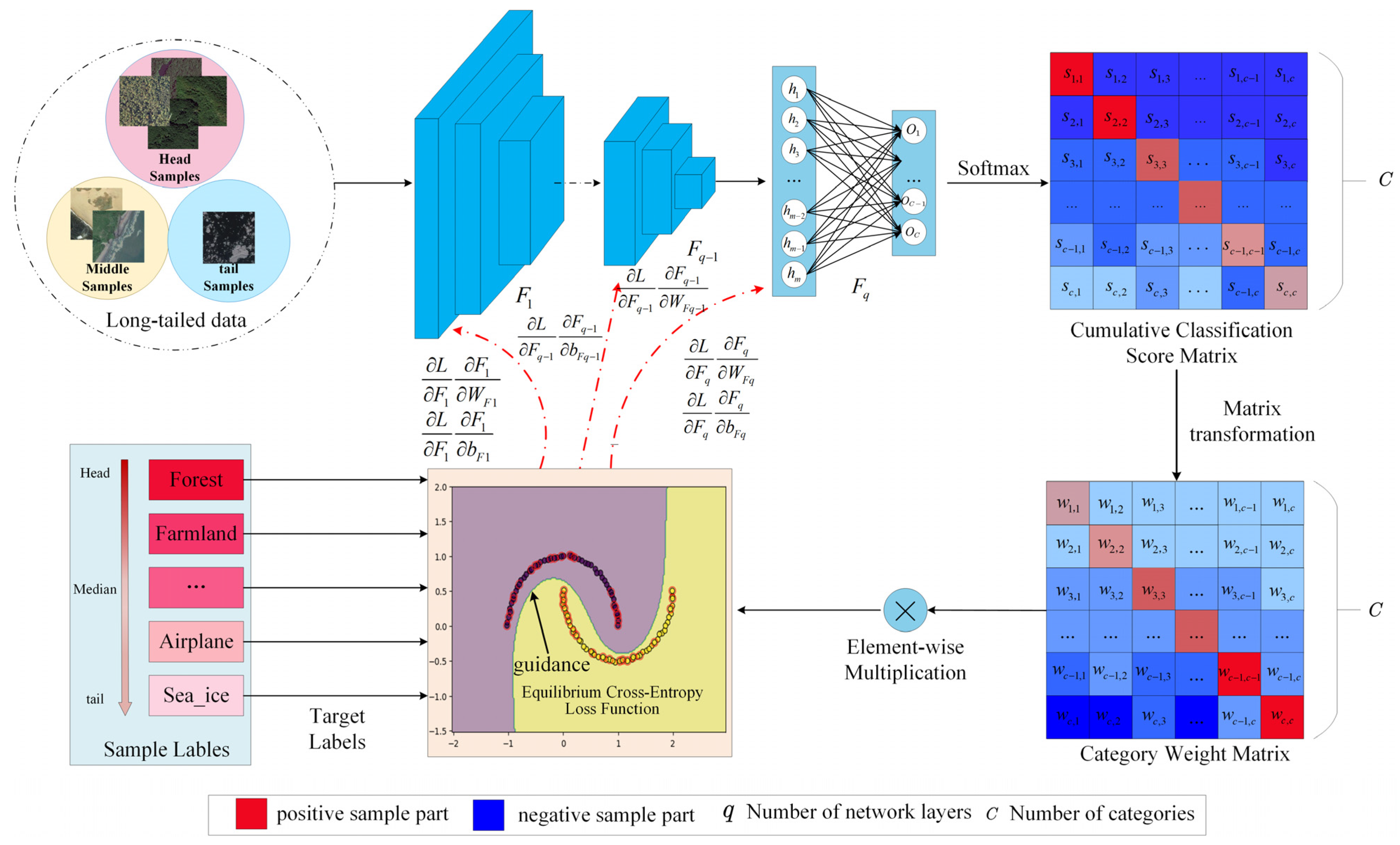
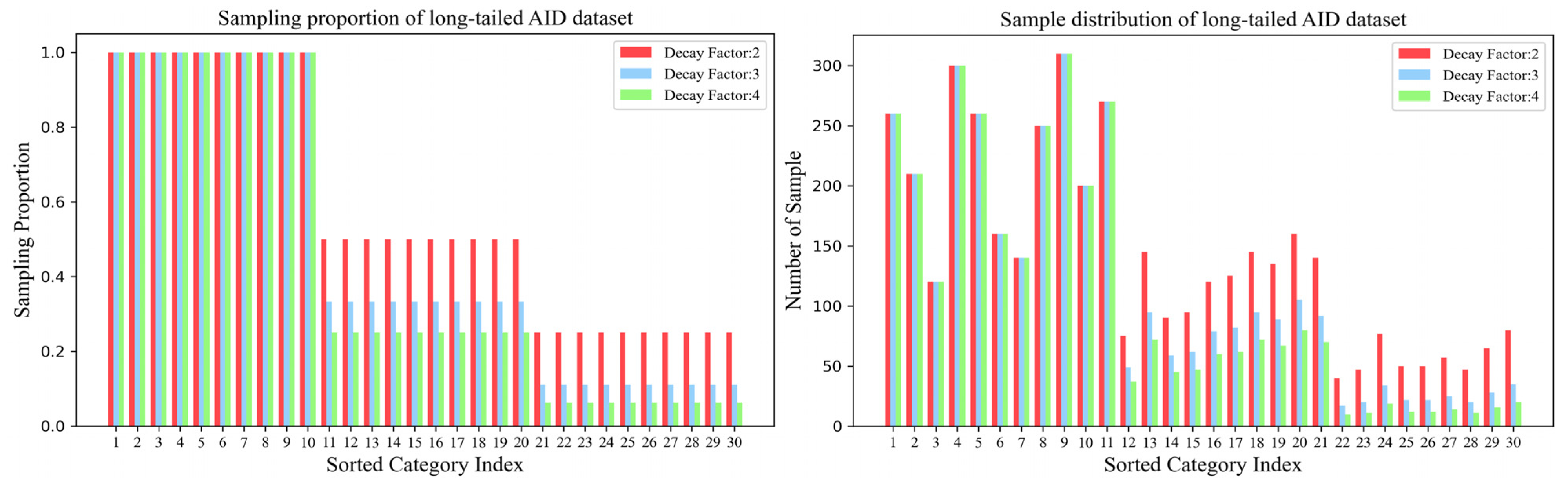
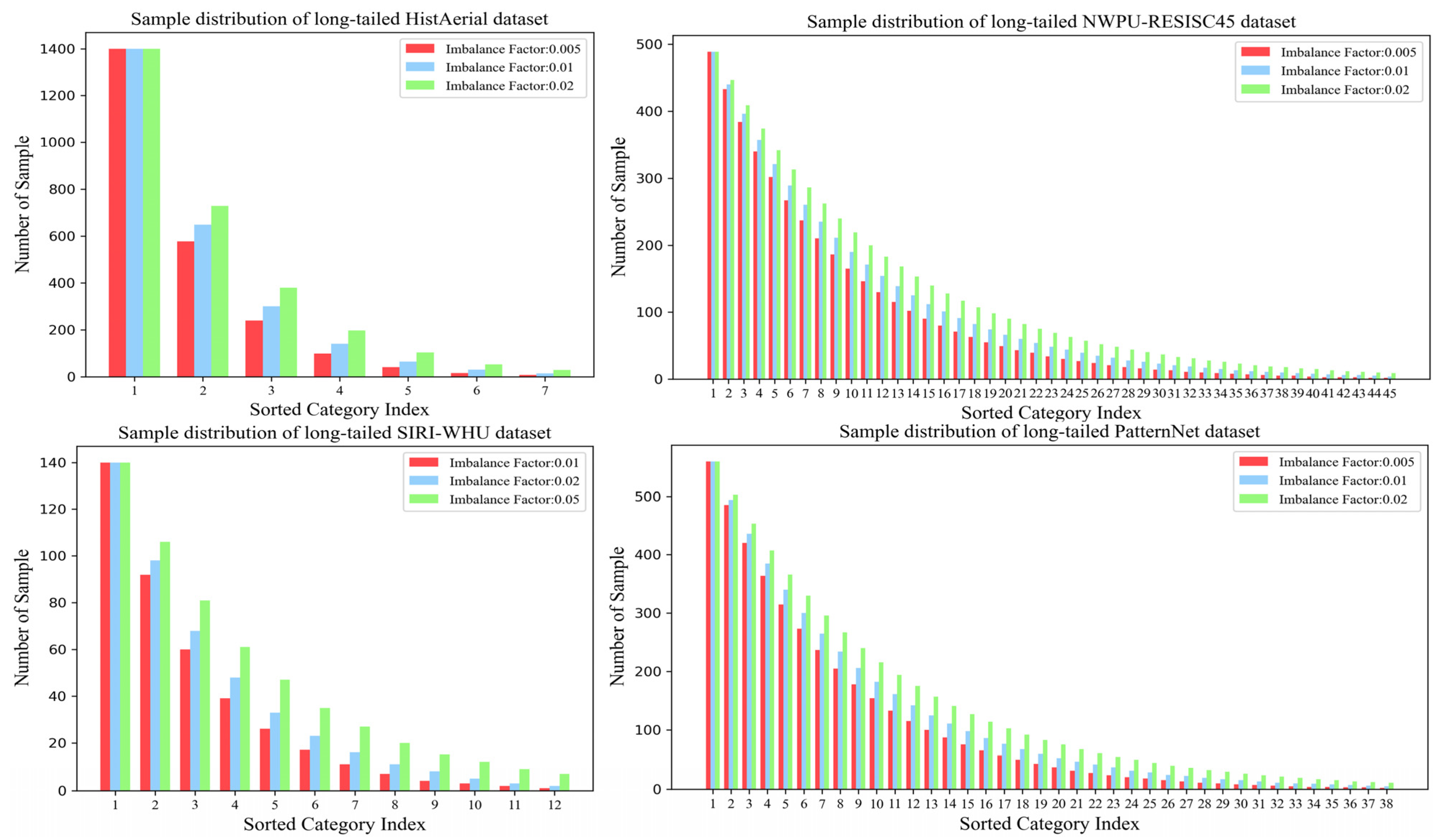
Convolutional neural networks have been widely used in remote sensing classification and achieved quite good results. Most of these methods are based on datasets with relatively balanced samples, but such ideal datasets are rare in applications. Long-tailed datasets are very common in practice, and the number of samples among categories in most datasets is often severely uneven and leads to bad results, especially in the category with a small sample number. To address this problem, a novel remote sensing image classification method based on loss reweighting for long-tailed data is proposed in this paper to improve the classification accuracy of samples from the tail categories. Firstly, abandoning the general weighting approach, the cumulative classification scores are proposed to construct category weights instead of the number of samples from each category. The cumulative classification score can effectively combine the number of samples and the difficulty of classification. Then, the imbalanced information of samples from each category contained in the relationships between the rows and columns of the cumulative classification score matrix is effectively extracted and used to construct the required classification weights for samples from different categories. Finally, the traditional cross-entropy loss function is improved and combined with the category weights generated in the previous step to construct a new loss reweighting mechanism for long-tailed data. Extensive experiments with different balance ratios are conducted on several public datasets, such as HistAerial, SIRI-WHU, NWPU-RESISC45, PatternNet, and AID, to verify the effectiveness of the proposed method. Compared with other similar methods, our method achieved higher classification accuracy and stronger robustness.
Keywords: remote-sensing image; image classification; long-tailed distribution; cumulative classification score matrix remote-sensing image; image classification; long-tailed distribution; cumulative classification score matrix