Article

Image Texture as Quality Indicator for Optical DEM Generation: Geomorphic Applications in the Arid Central Andes


Institute of Geosciences, University of Potsdam, Karl-Liebknecht-Str. 24-25, 14476 Potsdam, Germany
*
Author to whom correspondence should be addressed.
Remote Sens. 2023, 15(1), 85; https://doi.org/10.3390/rs15010085
Submission received: 11 October 2022 / Revised: 16 December 2022 / Accepted: 17 December 2022 / Published: 23 December 2022
(This article belongs to the Section Remote Sensing in Geology, Geomorphology and Hydrology)

Abstract

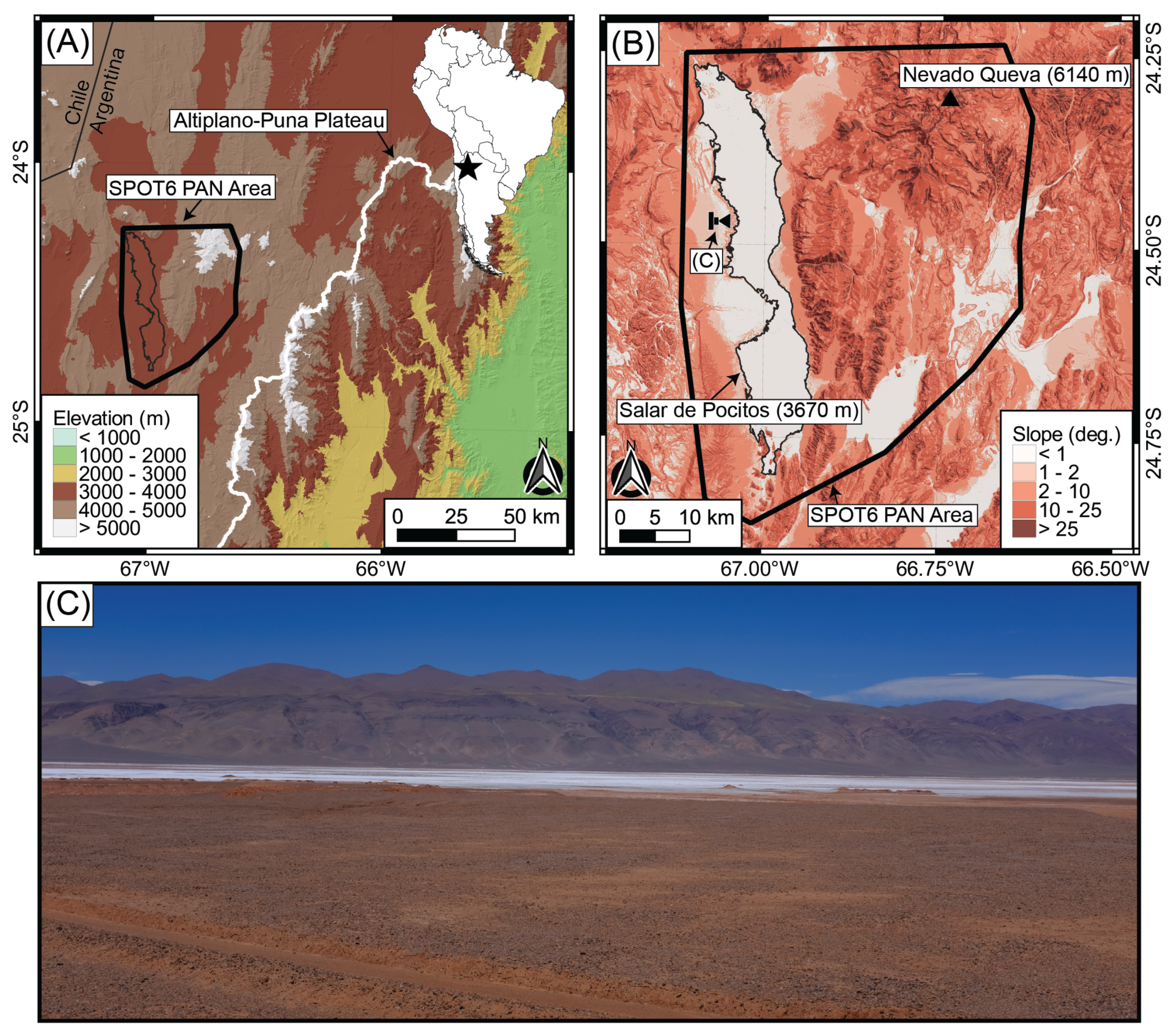
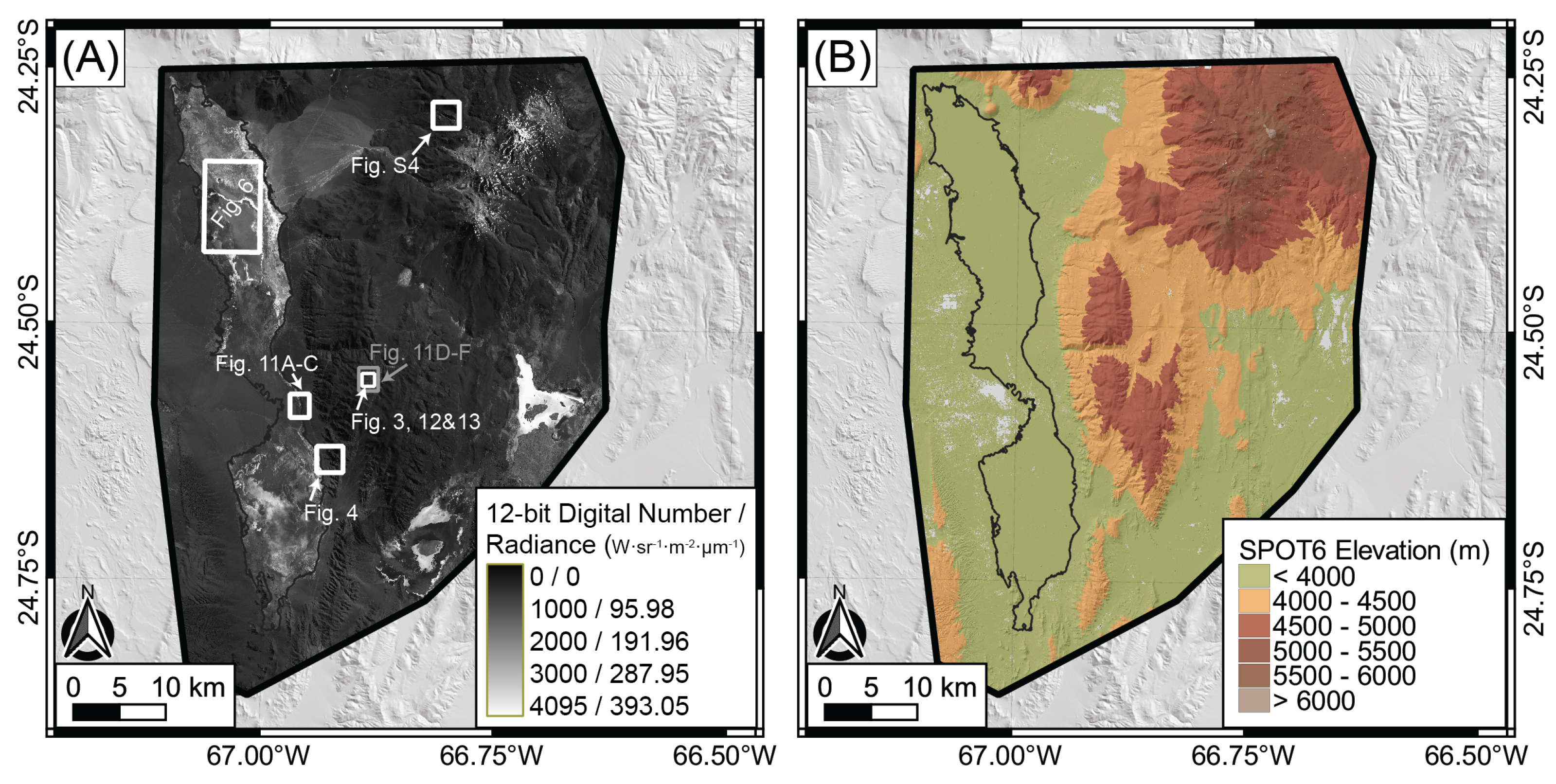
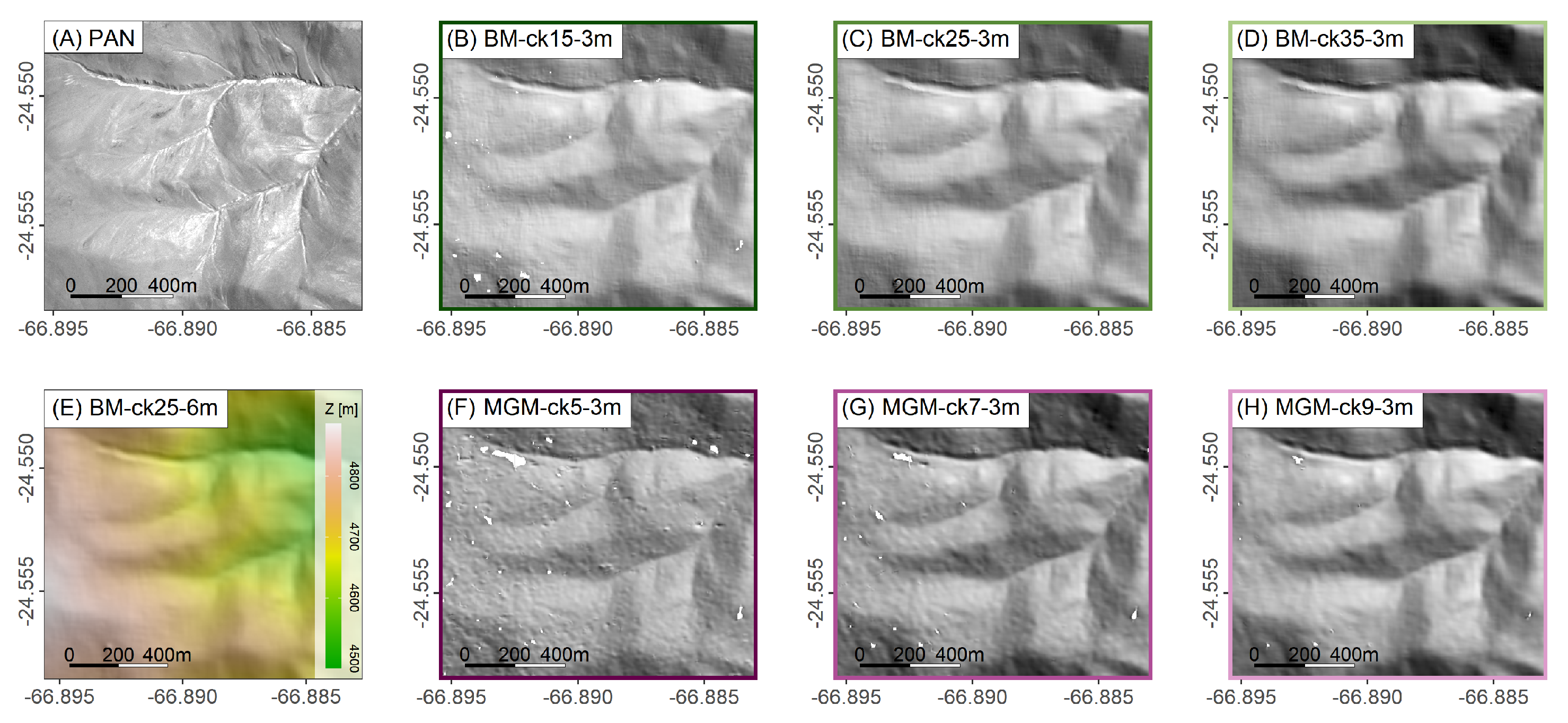
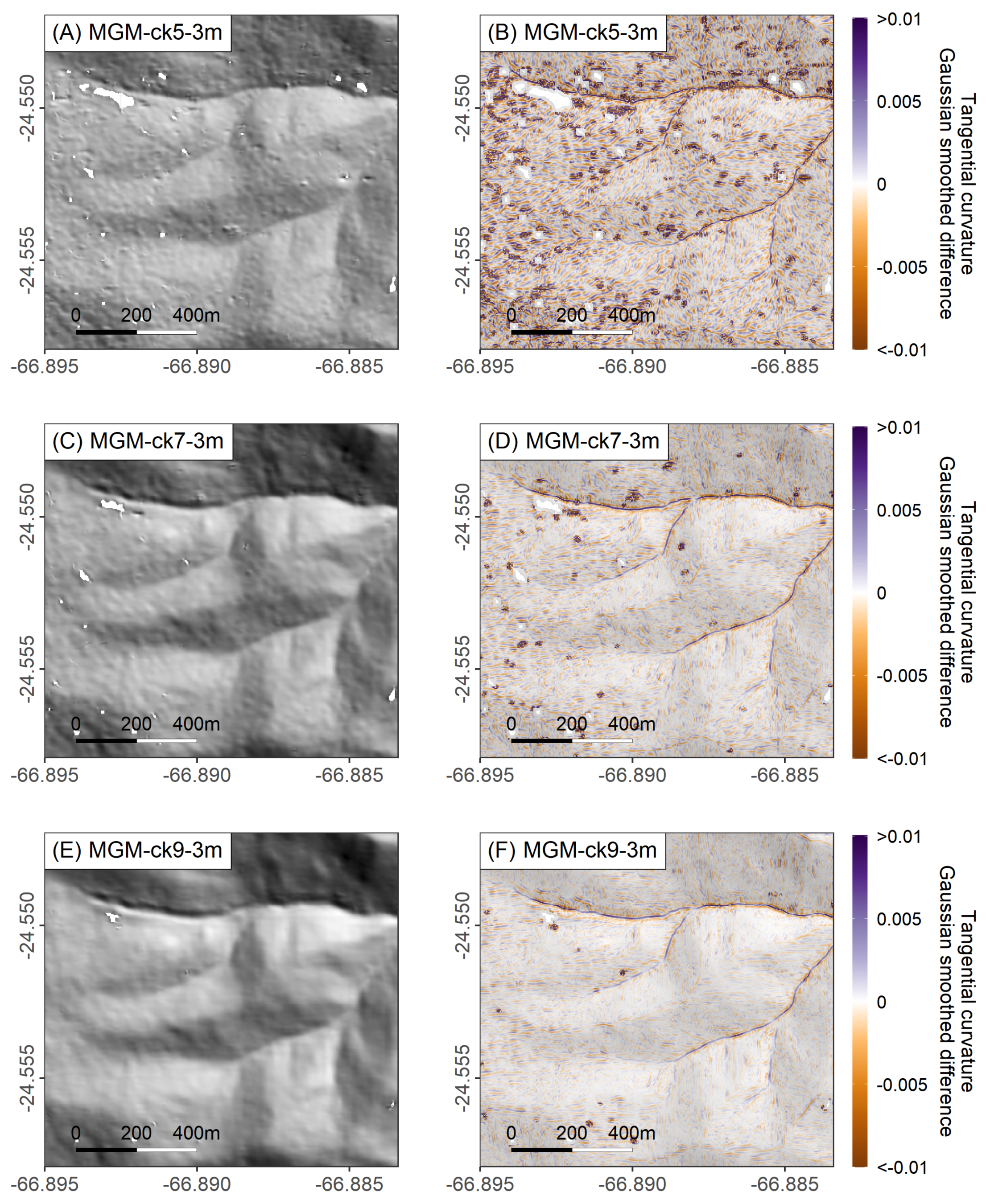
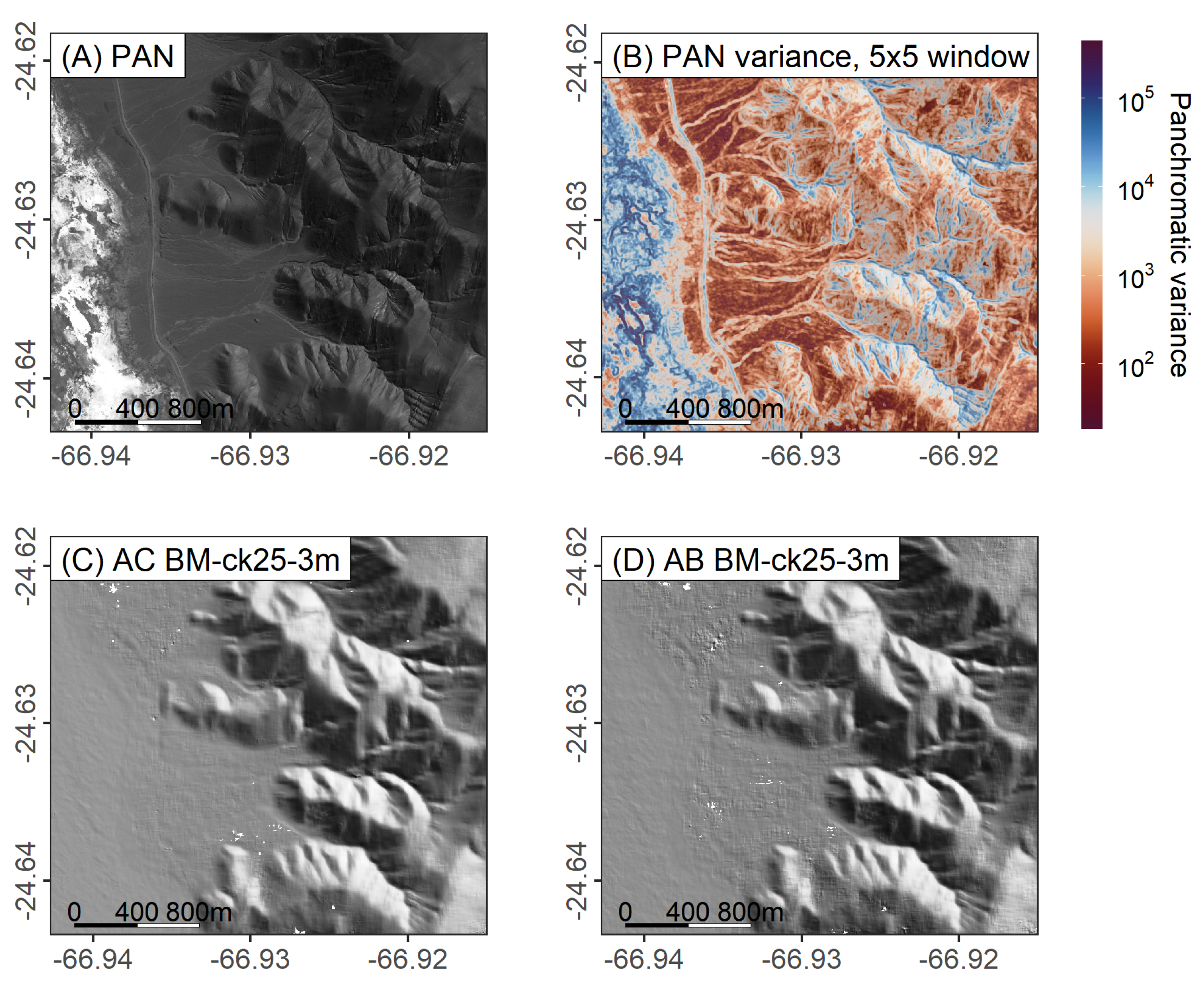
The generation of Digital Elevation Models (DEMs) through stereogrammetry of optical satellite images has gained great popularity across various disciplines. For the analysis of these DEMs, it is important to understand the influence of the input data and different processing steps and parameters employed during stereo correlation. Here, we explore the effects that image texture, as well as the use of different matching algorithms (Block Matching (BM) and More Global Matching (MGM)), can have on optical DEMs derived from the flexible, open-source Ames Stereo Pipeline. Our analysis relies on a ∼2700 km2 clip of a SPOT6 tristereo scene covering the hyperarid, vegetation-free Pocitos Basin and adjacent mountain ranges in the northwestern Argentine Andes. A large, perfectly flat salt pan (paleolake bed) that covers the center of this basin is characterized by strong contrasts in image texture, providing a unique opportunity to quantitatively study the relationship between image texture and DEM quality unaffected by topography. Our findings suggest that higher image texture, measured by panchromatic variance, leads to lower DEM uncertainty. This improvement continues up to ∼103 panchromatic variance, above which further improvements in DEM quality are independent of local image texture but instead may have sensor or geometric origins. Based on this behavior, we propose that image texture may serve as an important proxy of DEM quality prior to stereo correlation and can help to set adequate processing parameters. With respect to matching algorithms, we observe that MGM improves matching in low-texture areas and overall generates a smoother surface that still preserves complex, narrow (i.e., ridge and valley) features. Based on this sharper representation of the landscape, we conclude that MGM should be preferred for geomorphic applications relying on stereo-derived DEMs. However, we note that the correlation kernel selected for stereo-matching must be carefully chosen depending on local image texture, whereby larger kernels generate more accurate matches (less artifacts) at the cost of smoothing results. Overall, our analysis suggests a path forward for the processing and fusion of overlapping satellite images with suitable view-angle differences to improve final DEMs.
Keywords: stereo-matching algorithms; stereogrammetry; photogrammetry; Ames stereo pipeline; geomorphology; earth surface processes; curvature; SPOT; more global matching; block matching stereo-matching algorithms; stereogrammetry; photogrammetry; Ames stereo pipeline; geomorphology; earth surface processes; curvature; SPOT; more global matching; block matching