Article

Mapping Restoration Activities on Dirk Hartog Island Using Remotely Piloted Aircraft Imagery
1
School of Earth and Planetary Sciences, Curtin University, Perth, WA 6845, Australia
2
Department of Biodiversity, Conservation and Attractions, 17 Dick Perry Avenue, Kensington, WA 6151, Australia
3
School of Biological Sciences, University of Western Australia, 35 Stirling Highway, Crawley, WA 6009, Australia
*
Author to whom correspondence should be addressed.
Remote Sens. 2022, 14(6), 1402; https://doi.org/10.3390/rs14061402
Submission received: 2 December 2021 / Revised: 3 February 2022 / Accepted: 11 March 2022 / Published: 14 March 2022
(This article belongs to the Special Issue Drones for Ecology and Conservation)

Abstract

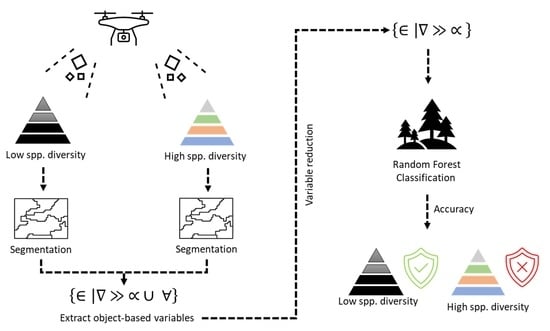
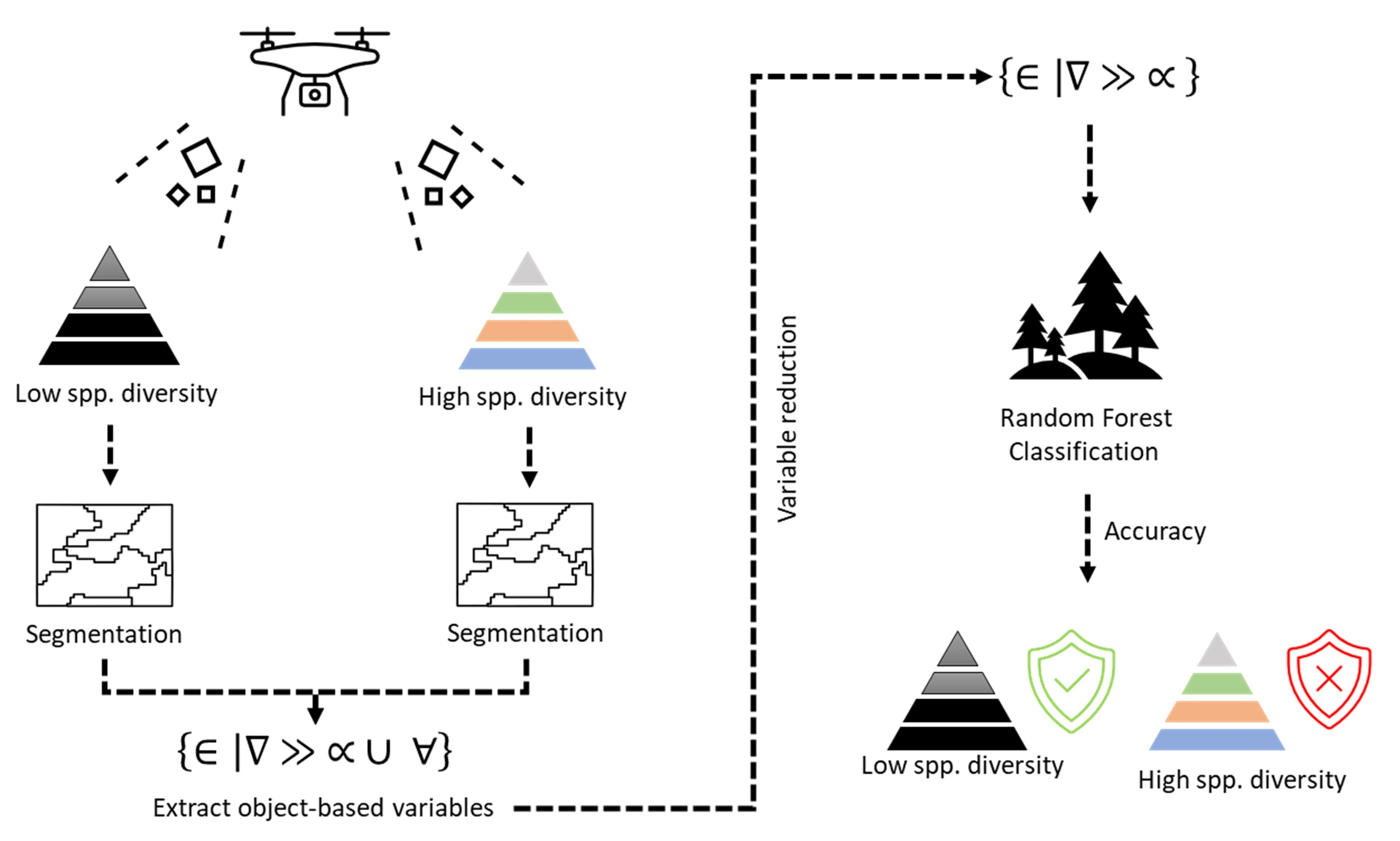
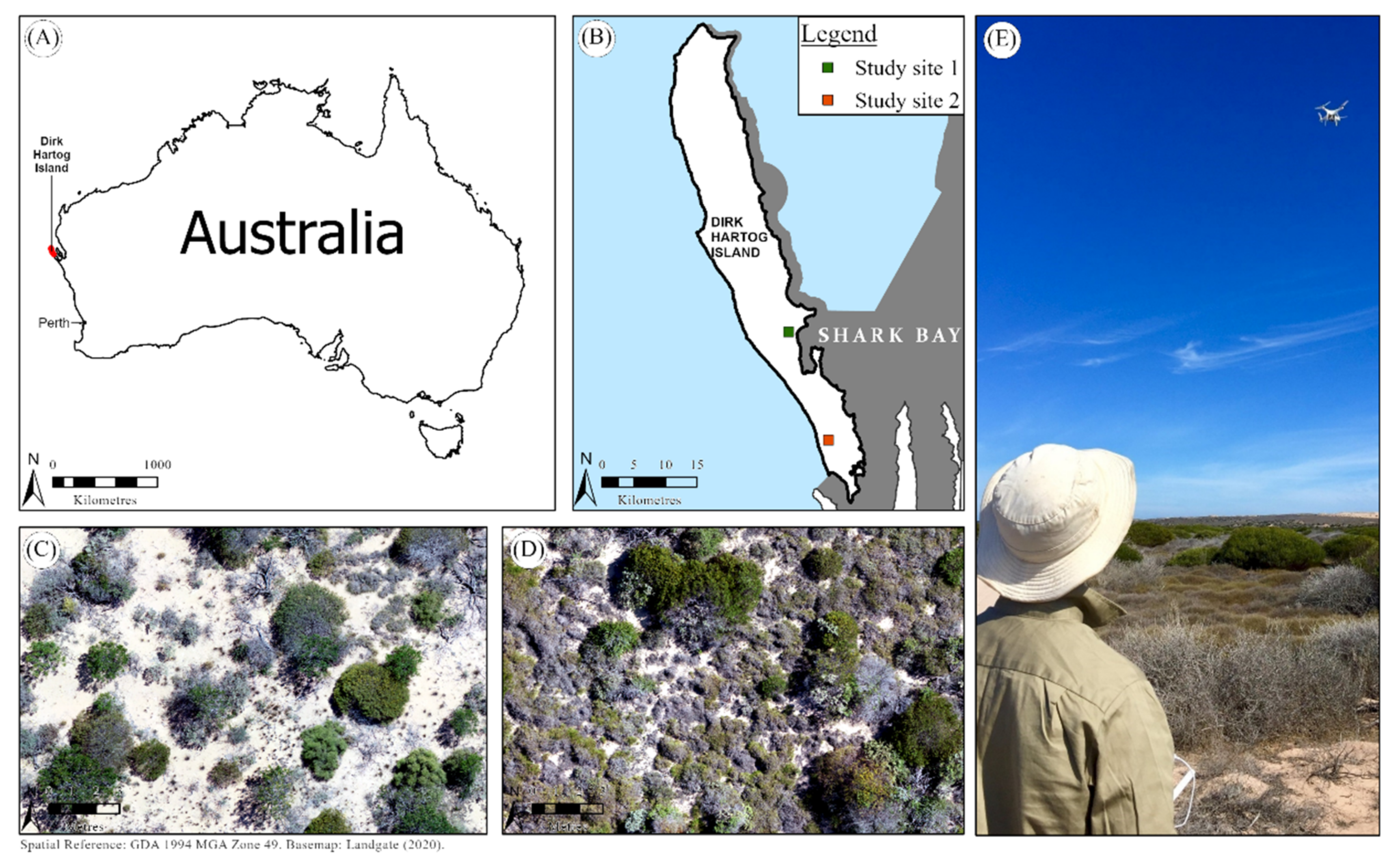
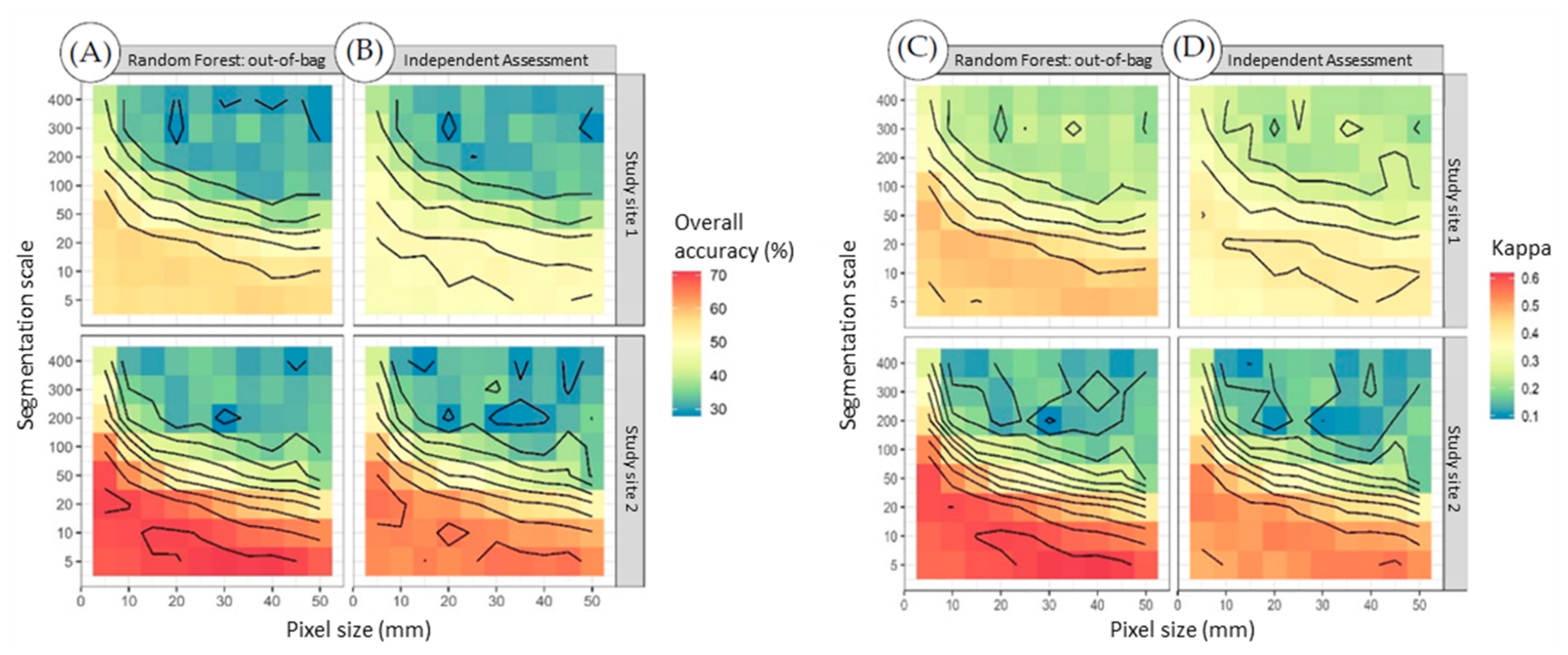
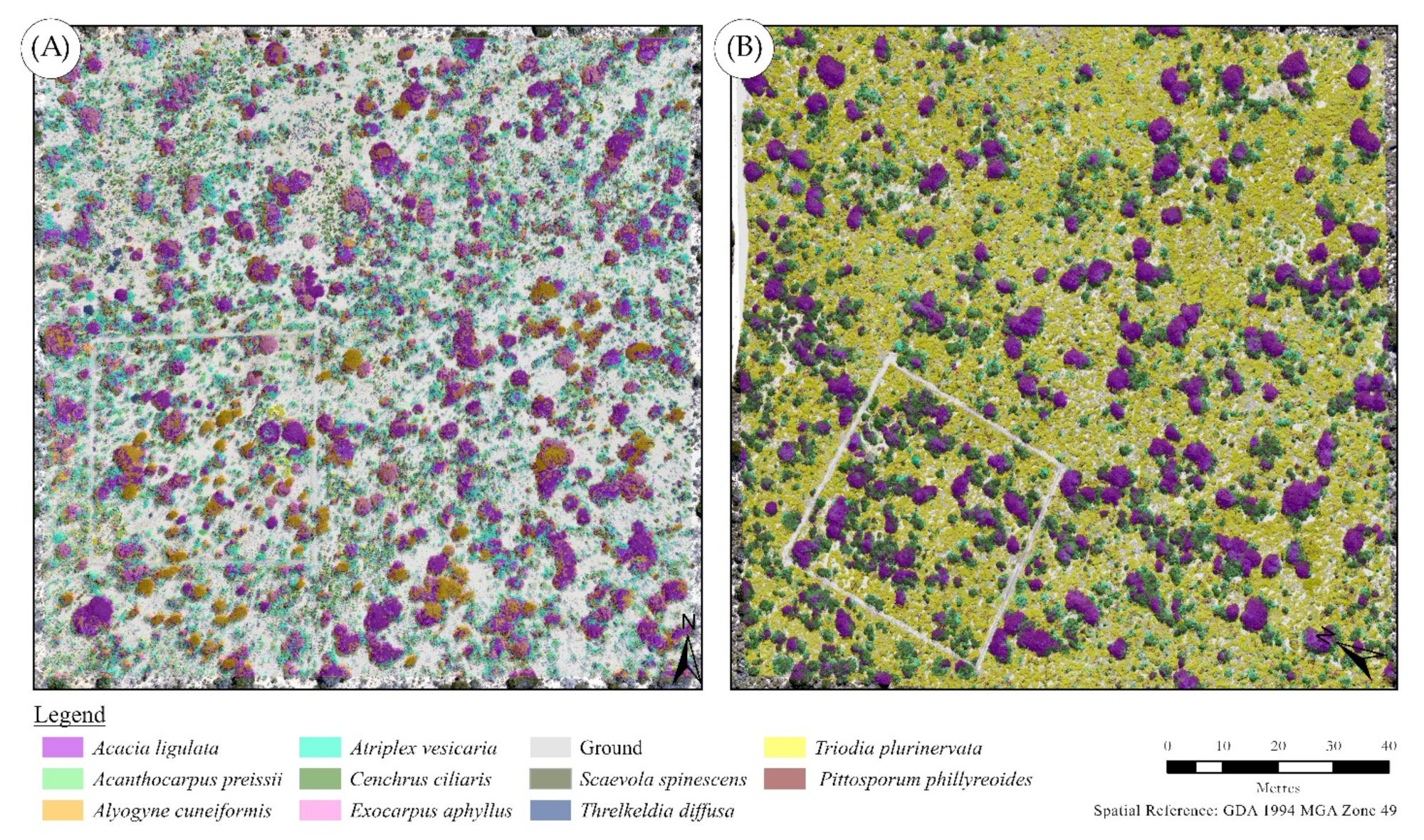
Conservation practitioners require cost-effective and repeatable remotely sensed data for assistive monitoring. This paper tests the ability of standard remotely piloted aircraft (DJI Phantom 4 Pro) imagery to discriminate between plant species in a rangeland environment. Flights were performed over two 0.3–0.4 ha exclusion plot sites, established as controls to protect vegetation from translocated animal disturbance on Dirk Hartog Island, Western Australia. Comparisons of discriminatory variables, classification potential, and optimal flight height were made between plot sites with different plant species diversity. We found reflectance bands and height variables to have high differentiation potential, whilst measures of texture were less useful for multisegmented plant canopies. Discrimination between species varied with omission errors ranging from 13 to 93%. Purposely resampling c. 5 mm imagery as captured at 20–25 m above terrain identified that a flight height of 120 m would improve capture efficiency in future surveys without hindering accuracy. Overall accuracy at a site with low species diversity (n = 4) was 70%, which is an encouraging result given the imagery is limited to visible spectral bands. With higher species diversity (n = 10), the accuracy reduced to 53%, although it is expected to improve with additional bands or grouping like species. Findings suggest that in rangeland environments with low species diversity, monitoring using a standard RPA is viable.
Keywords: species differentiation; remote sensing; UAV; monitoring and evaluation; rangelands species differentiation; remote sensing; UAV; monitoring and evaluation; rangelands
Graphical Abstract