Article

Electromagnetic Signal Classification Based on Class Exemplar Selection and Multi-Objective Linear Programming

1
School of Artificial Intelligence, Xidian University, Xi’an 710071, China
2
Science and Technology on Communication Information Security Control Laboratory, Jiaxing 314033, China
3
College of Computer Science and Electronic Engineering, Hunan University, Changsha 410082, China
*
Author to whom correspondence should be addressed.
Remote Sens. 2022, 14(5), 1177; https://doi.org/10.3390/rs14051177
Submission received: 5 January 2022 / Revised: 24 February 2022 / Accepted: 24 February 2022 / Published: 27 February 2022
(This article belongs to the Topic Big Data and Artificial Intelligence)

Abstract

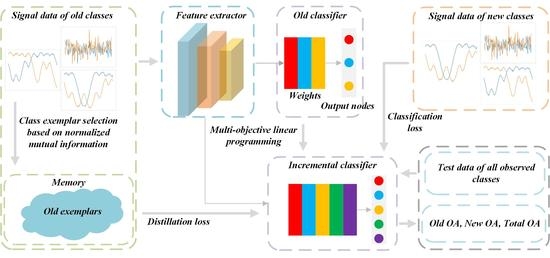
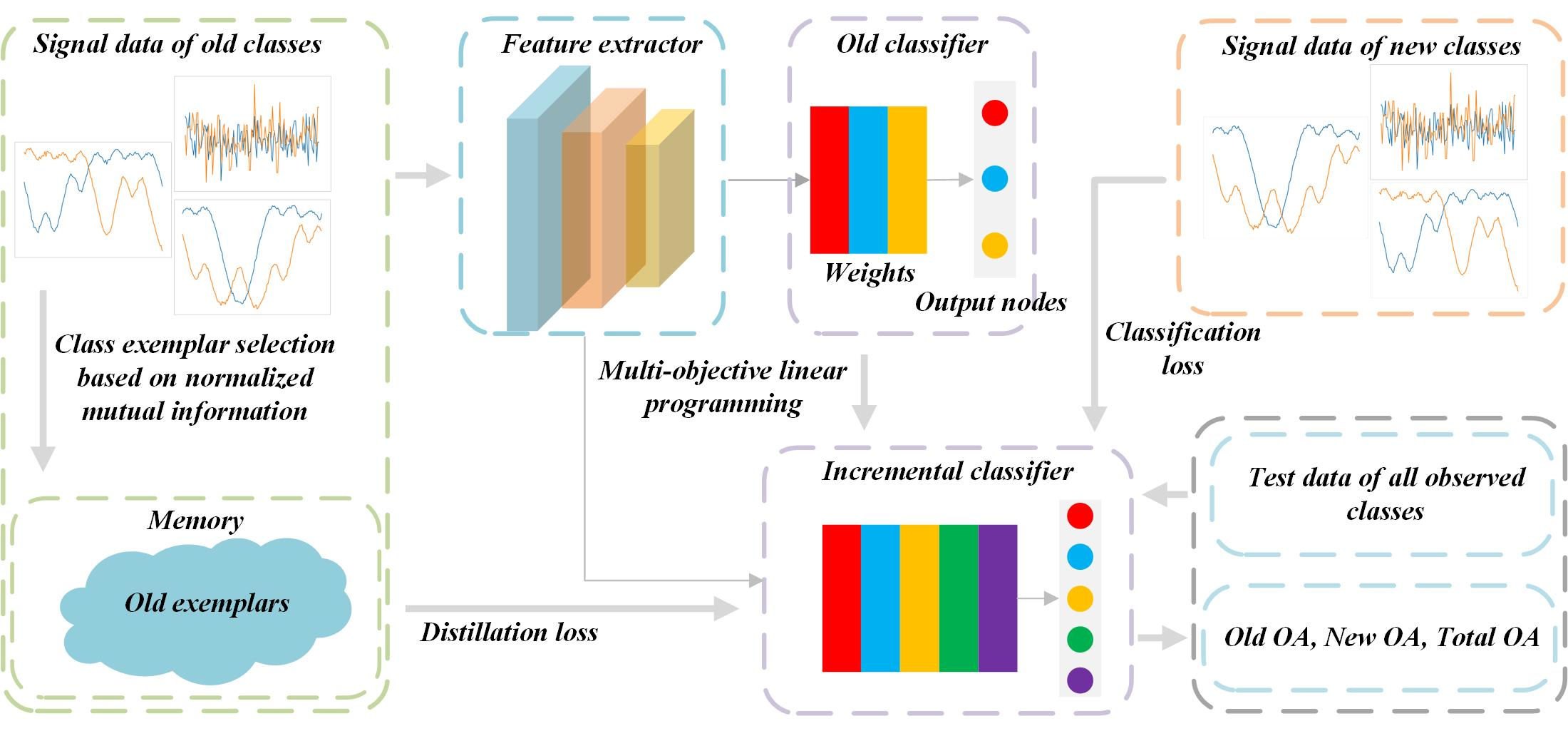
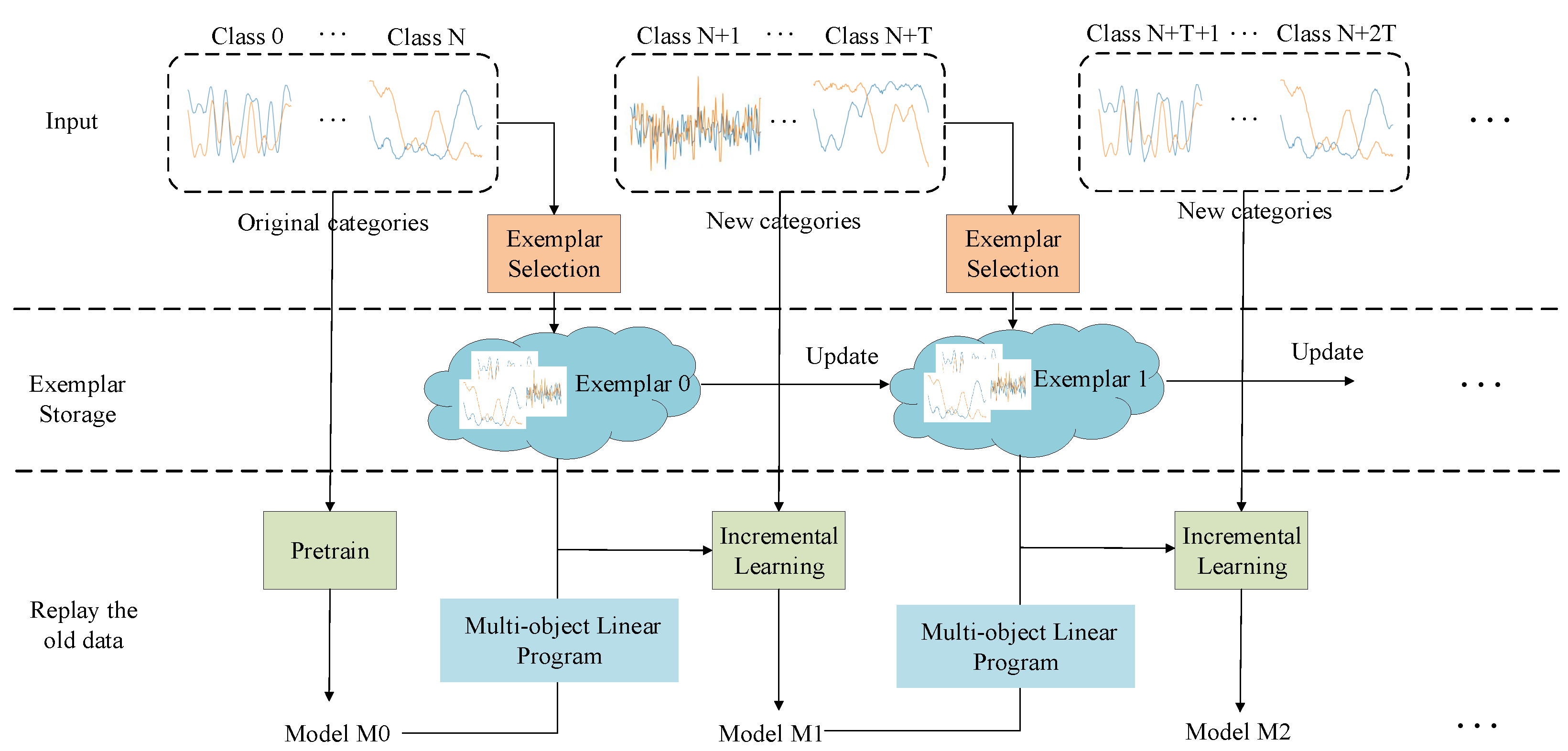
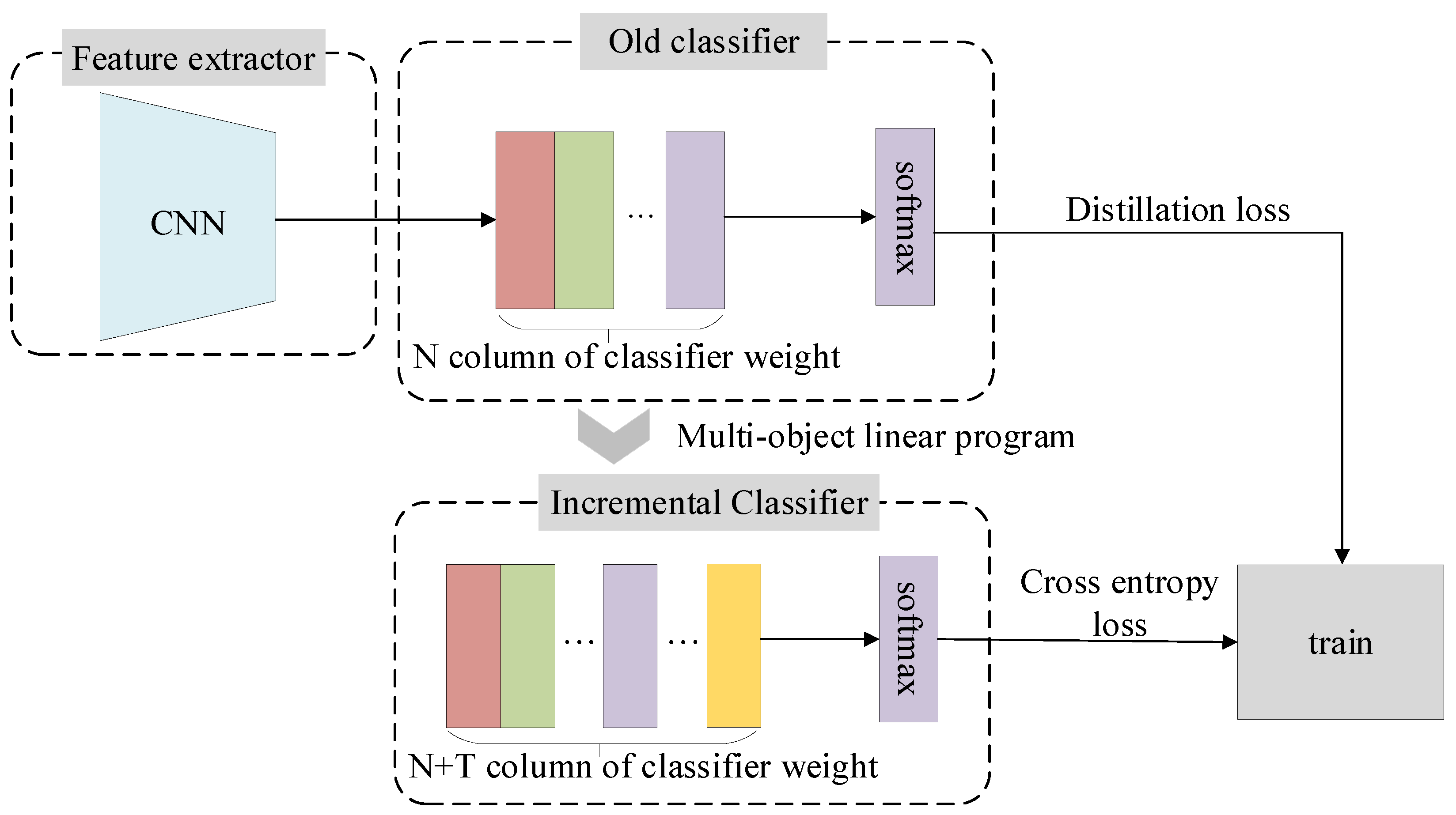
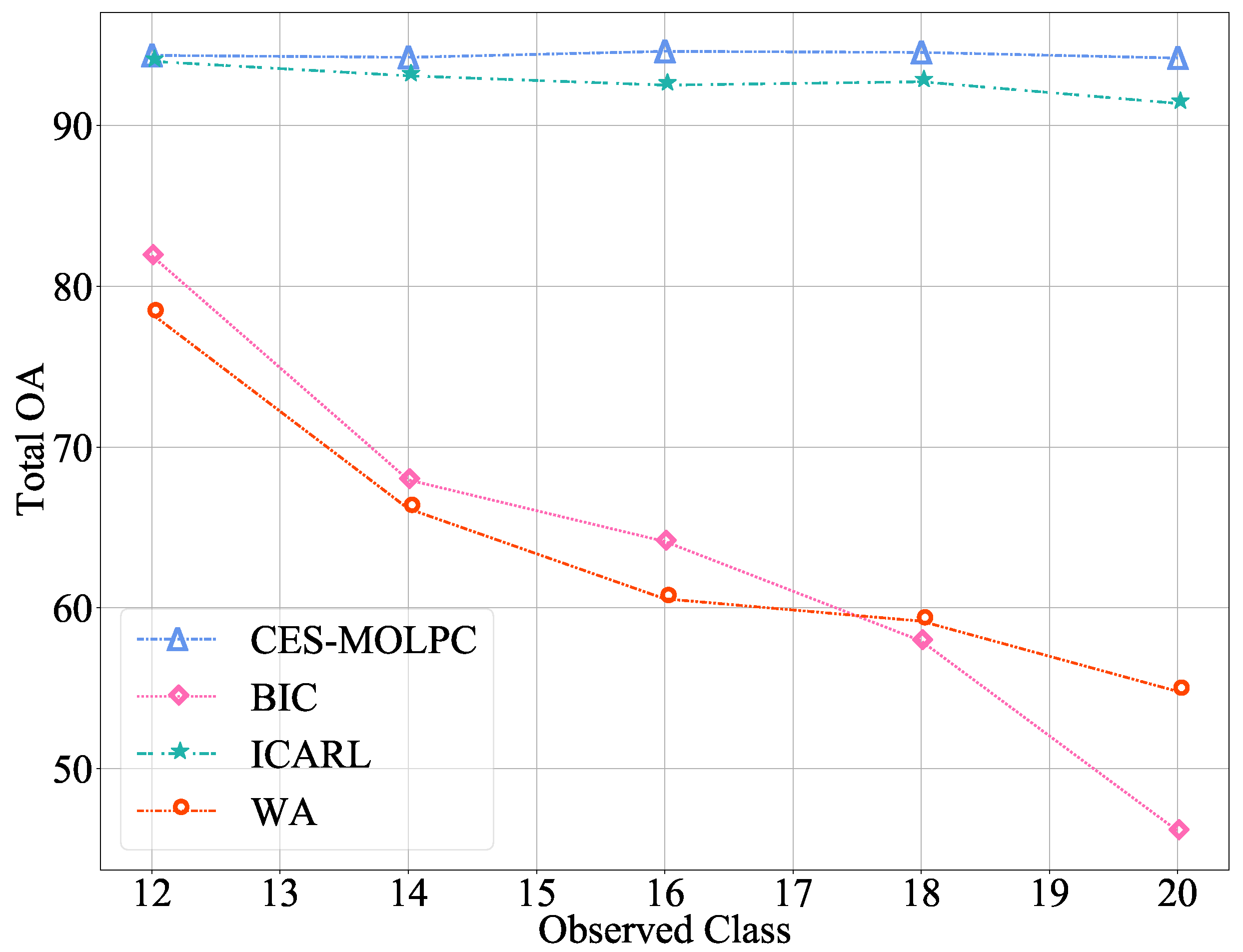
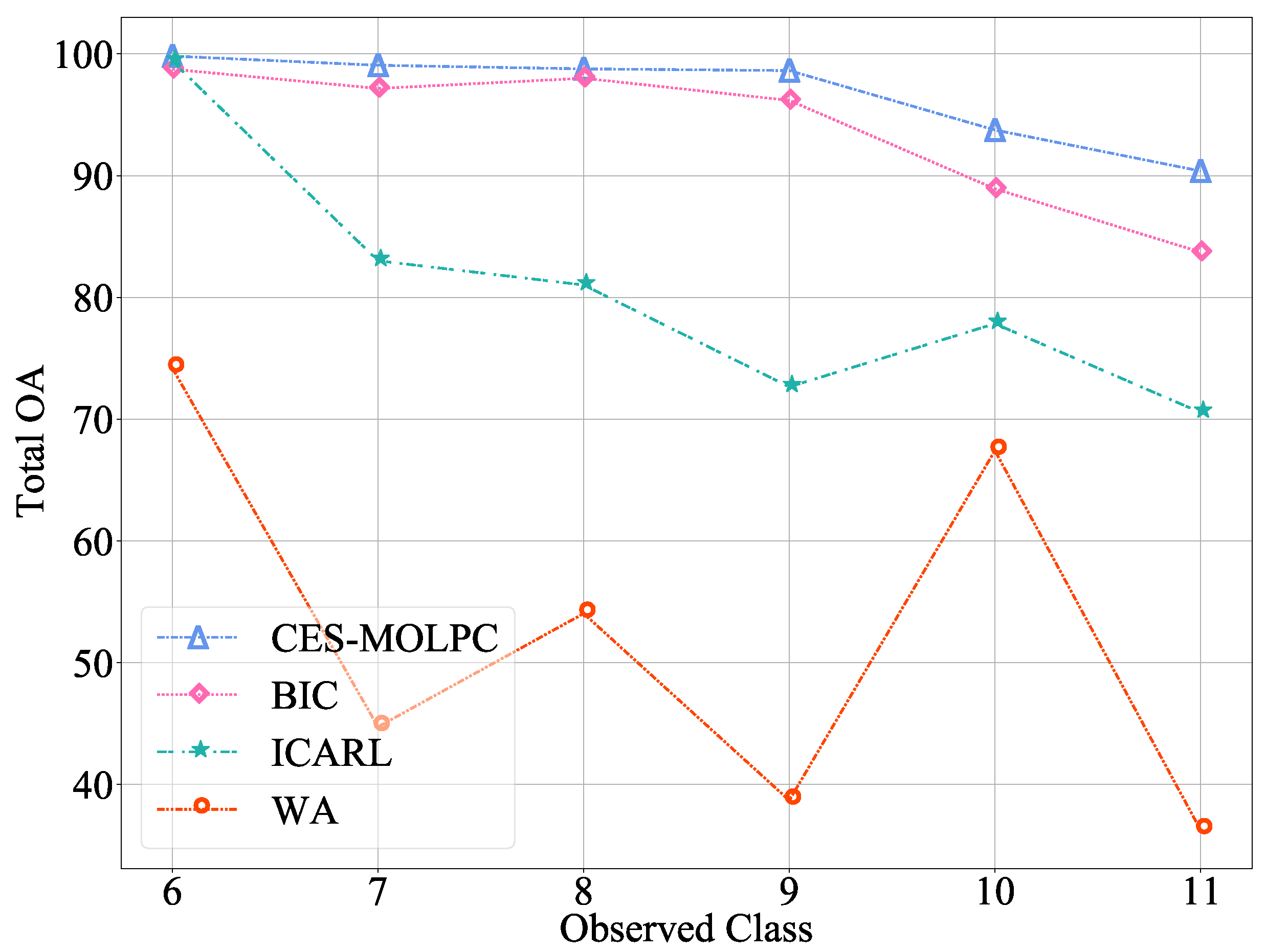
In the increasingly complex electromagnetic environment, a variety of new signal types are appearing; however, existing electromagnetic signal classification (ESC) models cannot handle new signal types. In this context, the emergence of class-incremental learning aims to incrementally update the classification model as new categories emerge. In this paper, an electromagnetic signal classification framework based on class exemplar selection and a multi-objective linear programming classifier (CES-MOLPC) is proposed in order to continuously learn new classes in an incremental manner. Specifically, our approach involves the adaptive selection of class exemplars considering normalized mutual information and a multi-objective linear programming classifier. The former is used to maintain the classification capability of the model for previous categories by selecting key samples, while the latter is used to allow the model to adapt quickly to new categories. Meanwhile, a weighted loss function based on cross-entropy and distillation loss is presented in order to fine-tune the model. We demonstrate the effectiveness of the proposed CES-MOLPC method through extensive experiments on the public RML2016.04c data set and the large-scale real-world ACARS signal data set. The results of the comparative experiments demonstrate that our method can achieve significant improvements over state-of-the-art methods.
Keywords: class incremental learning; electromagnetic signal classification; deep learning; multi-objective linear programming; class exemplar selection; normalized mutual information class incremental learning; electromagnetic signal classification; deep learning; multi-objective linear programming; class exemplar selection; normalized mutual information
Graphical Abstract