Article

The Influence of Image Degradation on Hyperspectral Image Classification

1
College of Electrical and Information Engineering, Hunan University, Changsha 410082, China
2
Key Laboratory of Visual Perception and Artificial Intelligence of Hunan Province, Changsha 410082, China
3
Institute of Remote Sensing Satellite, China Academy of Space Technology (CAST), Beijing 100101, China
*
Author to whom correspondence should be addressed.
Remote Sens. 2022, 14(20), 5199; https://doi.org/10.3390/rs14205199
Submission received: 1 September 2022 / Revised: 3 October 2022 / Accepted: 10 October 2022 / Published: 17 October 2022
(This article belongs to the Special Issue Advances in Hyperspectral Remote Sensing Image Processing)

Abstract

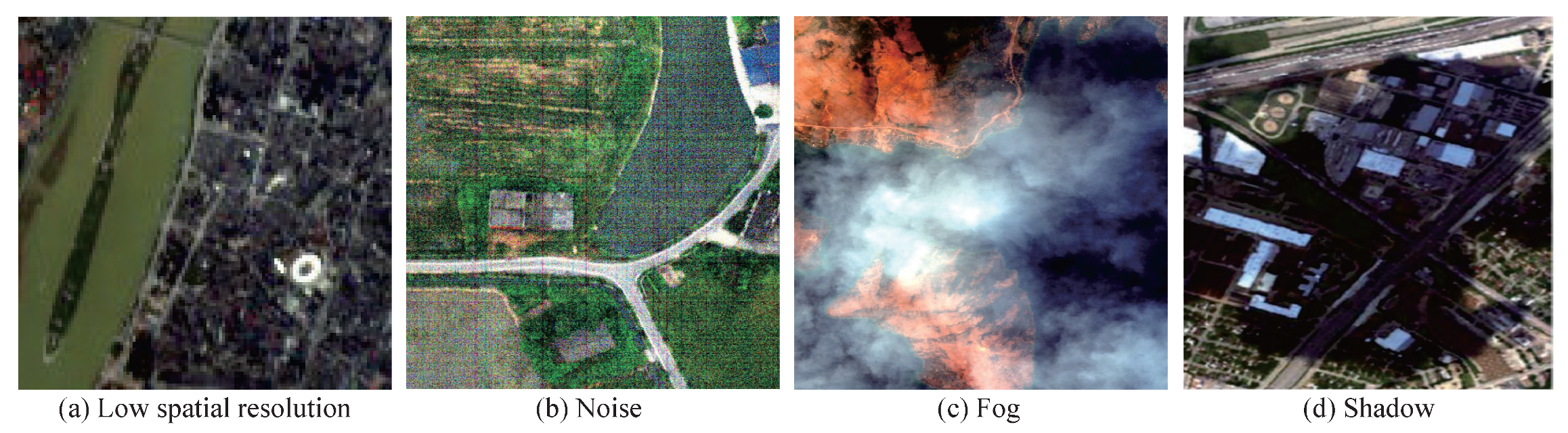
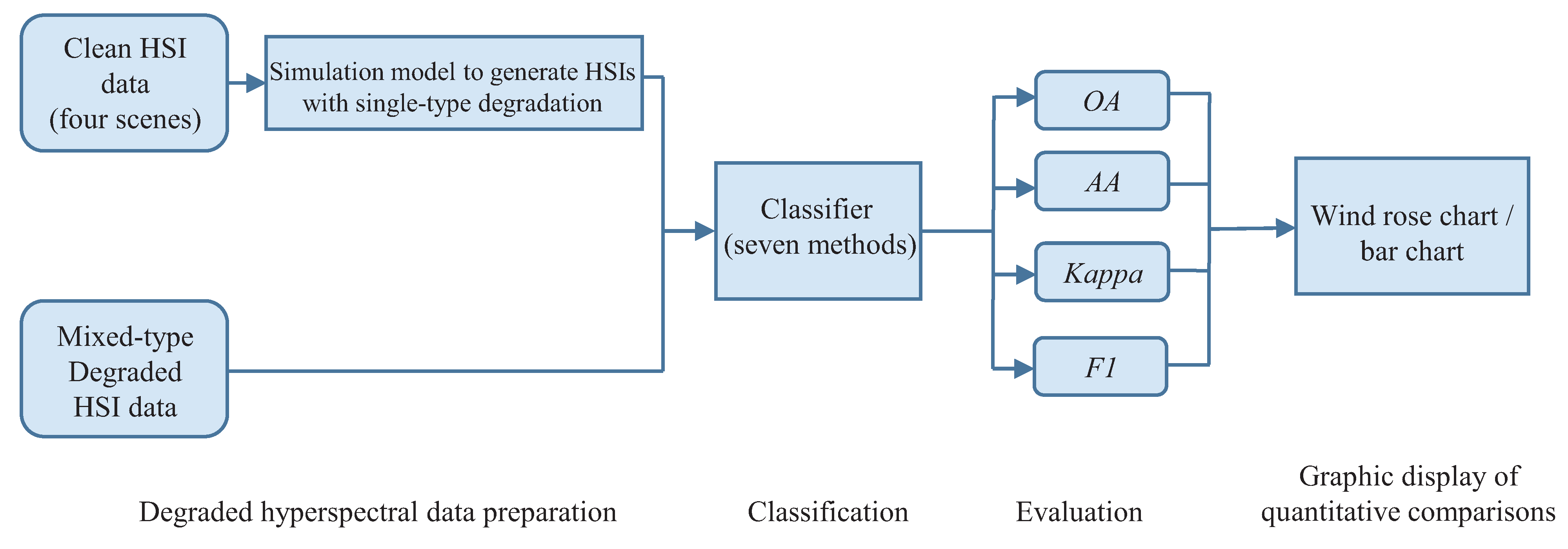
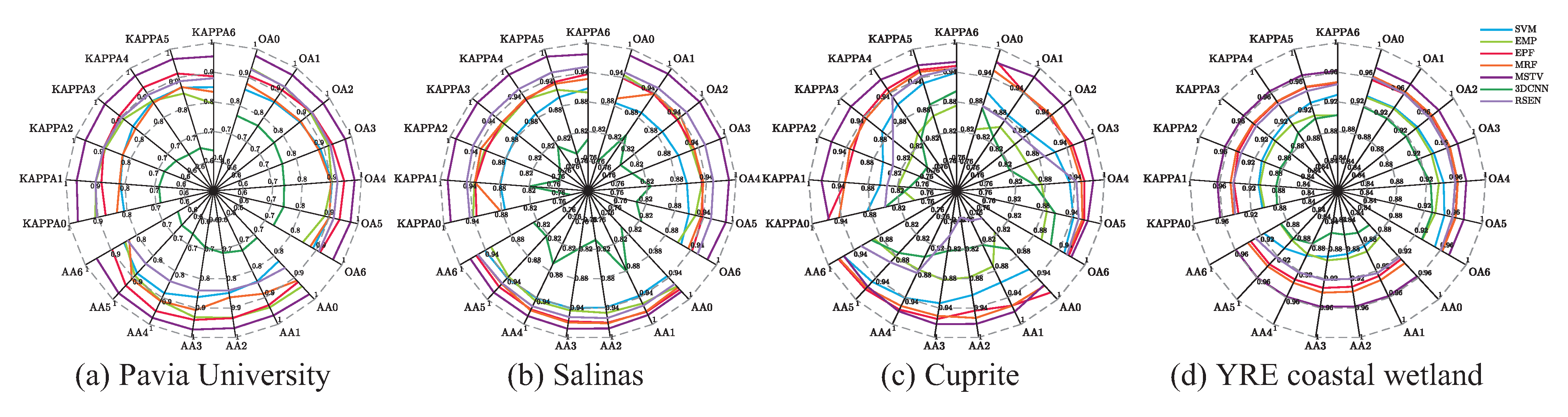
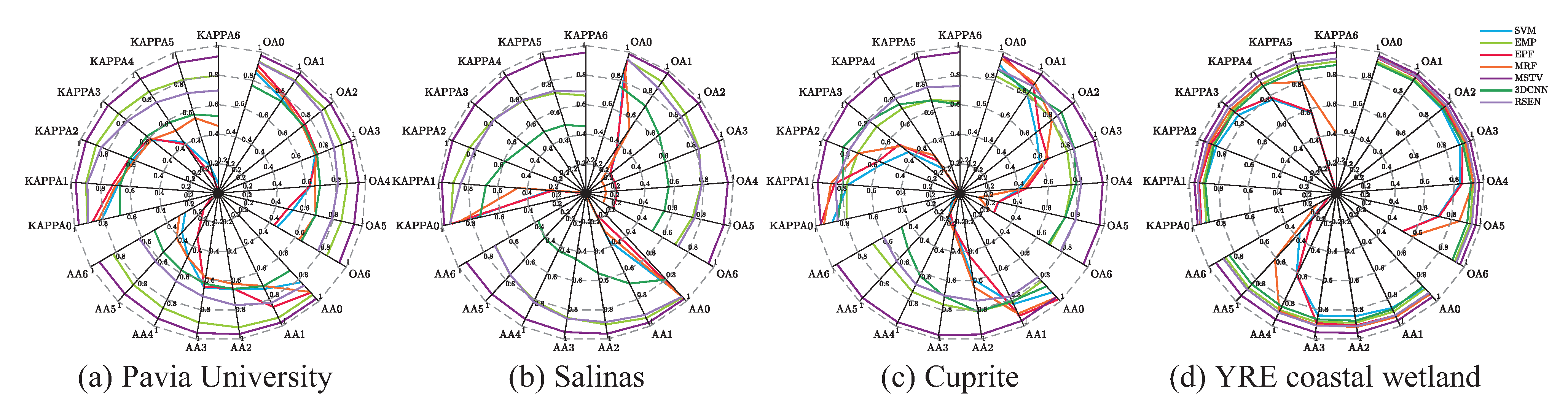
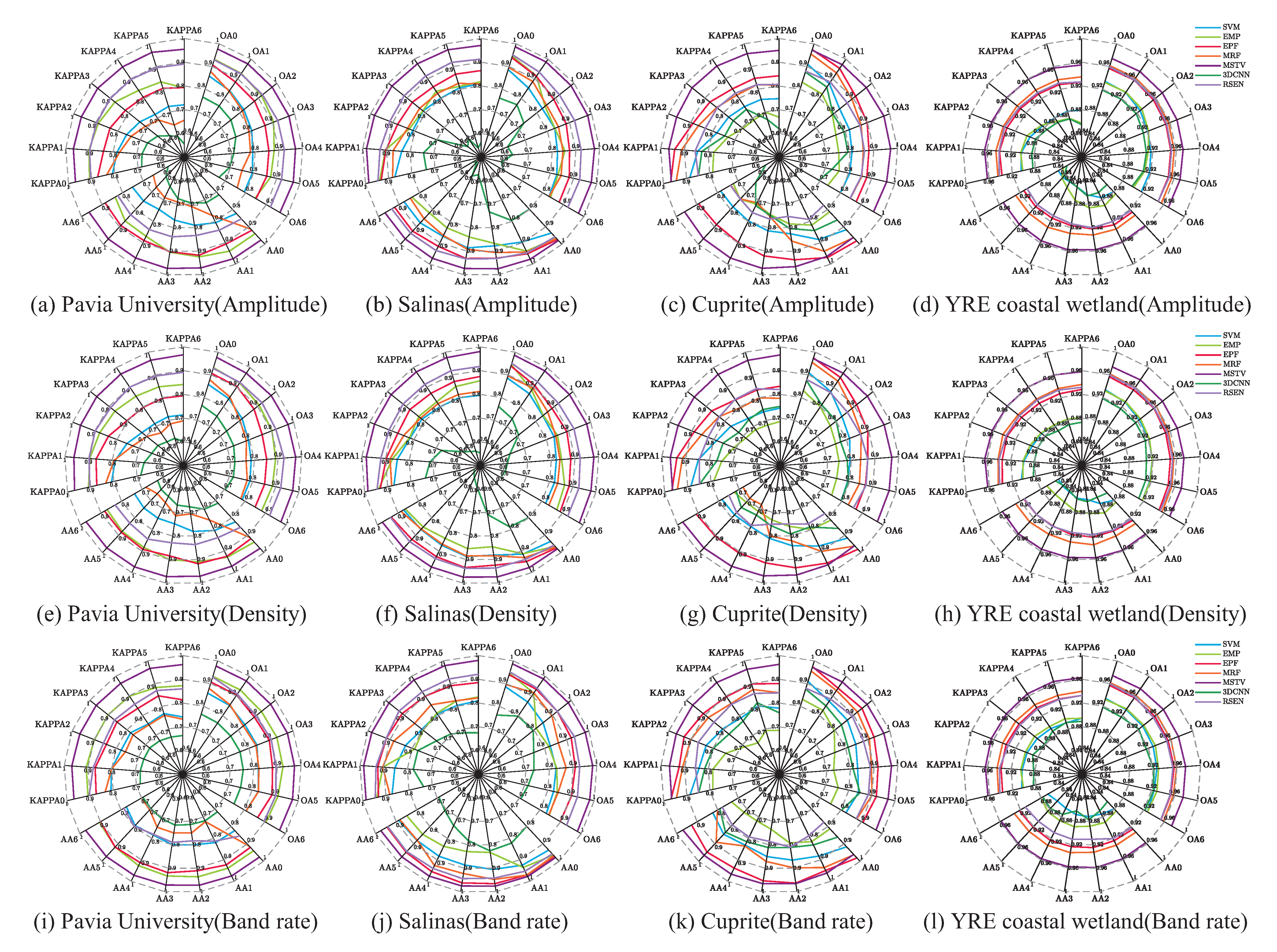
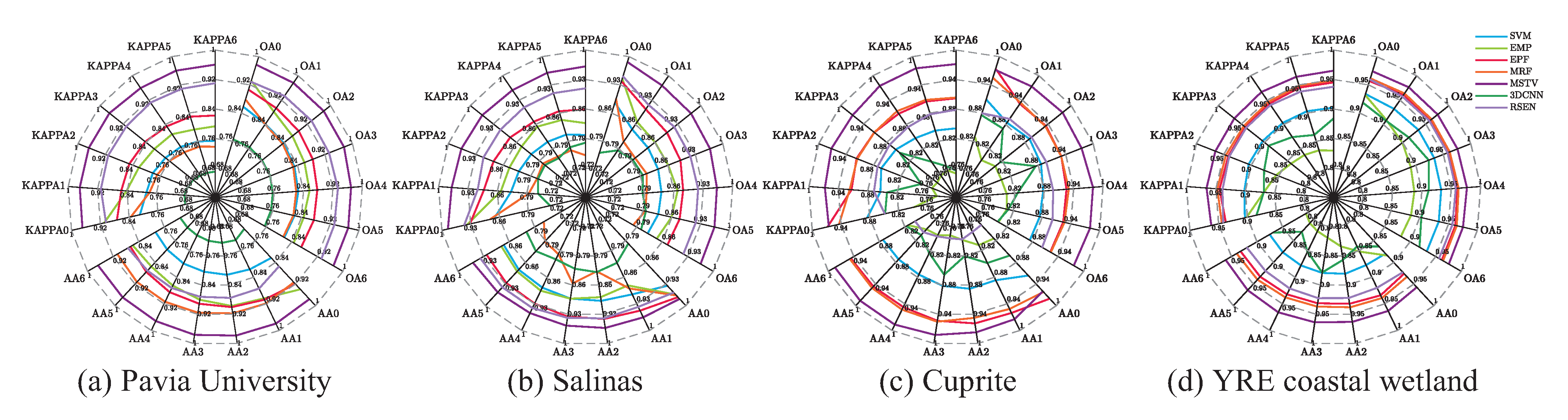
Recent advances in hyperspectral remote sensing techniques, especially in the hyperspectral image classification techniques, have provided efficient support for recognizing and analyzing ground objects. To date, most of the existing classification techniques have been designed for ideal hyperspectral images and have verified their effectiveness on high-quality hyperspectral image datasets. However, in real applications, available hyperspectral images often contain varying degrees of image degradation. Whether or not the classification accuracy will be reduced due to degradation problems in input data, and how it will be reduced become interesting questions. In this paper, we explore the effects of degraded inputs in hyperspectral image classification including the five typical degradation problems of low spatial resolution, Gaussian noise, stripe noise, fog, and shadow. Seven representative classification methods are chosen from different categories of classification methods and applied to analyze the specific influences of image degradation problems. Experiments are carried out from the aspects of single-type synthetic image degradation and mixed-type real image degradation. Consistent results from synthetic and real-data experiments show that the effects of degraded hyperspectral data in classification are related to image features, degradation types, degradation degrees, and the characteristics of classification methods. This provides constructive information for method selection in real applications where high-quality hyperspectral data are difficult to obtain and encourages researchers to develop more stable and effective classification methods for degraded hyperspectral images.
Keywords: hyperspectral image; image classification; image degradation; comparative study hyperspectral image; image classification; image degradation; comparative study