Article

RCE-GAN: A Rebar Clutter Elimination Network to Improve Tunnel Lining Void Detection from GPR Images

1
State Key Laboratory of Coastal and Offshore Engineering, Dalian University of Technology, Dalian 116024, China
2
School of Civil Engineering, Dalian University of Technology, Dalian 116024, China
3
Research Institute of Dalian University of Technology in Shenzhen, Shenzhen 518057, China
4
School of Hydraulic Engineering, Dalian University of Technology, Dalian 116024, China
*
Author to whom correspondence should be addressed.
Remote Sens. 2022, 14(2), 251; https://doi.org/10.3390/rs14020251
Submission received: 23 November 2021 / Revised: 30 December 2021 / Accepted: 4 January 2022 / Published: 6 January 2022
(This article belongs to the Special Issue Radar Techniques for Structures Characterization and Monitoring)

Abstract

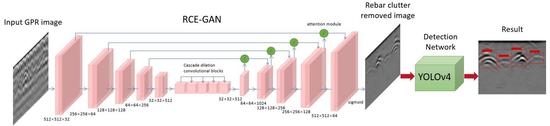
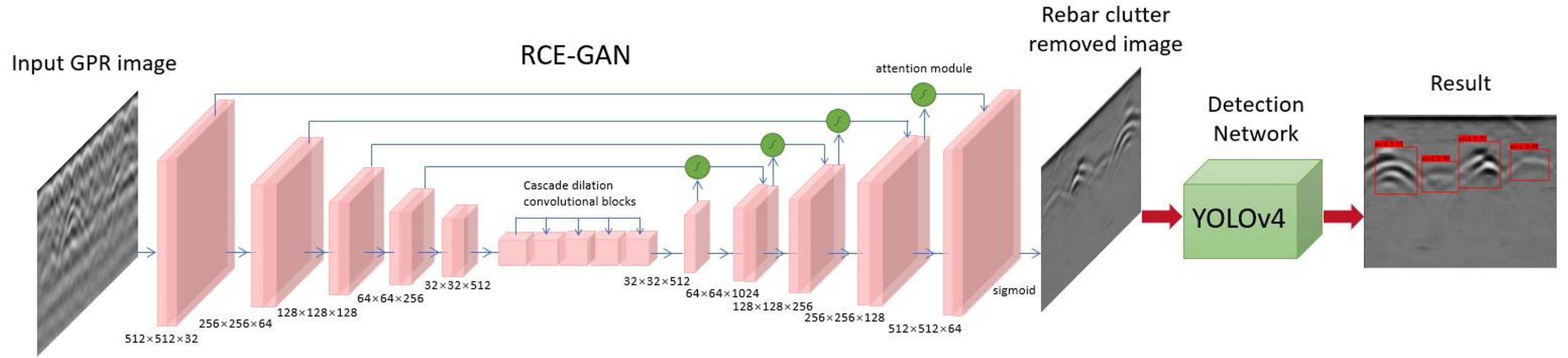
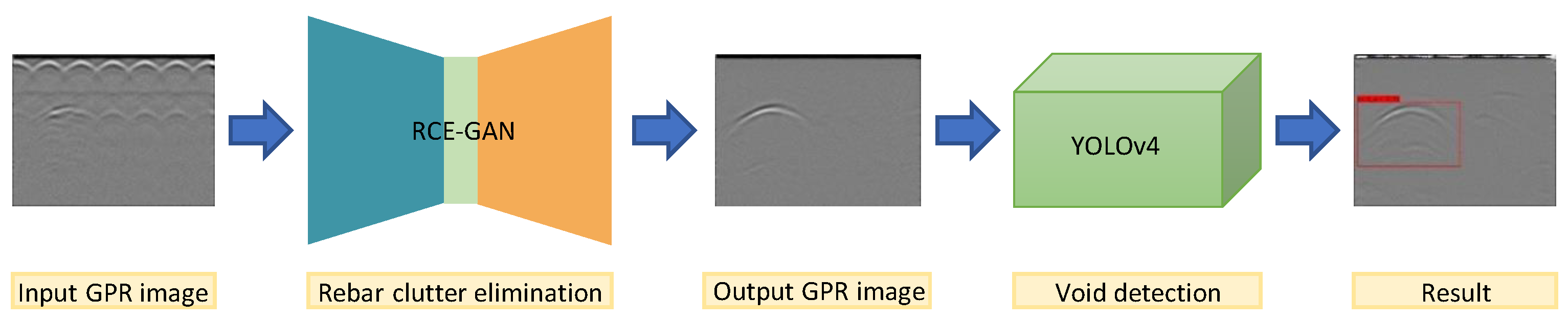
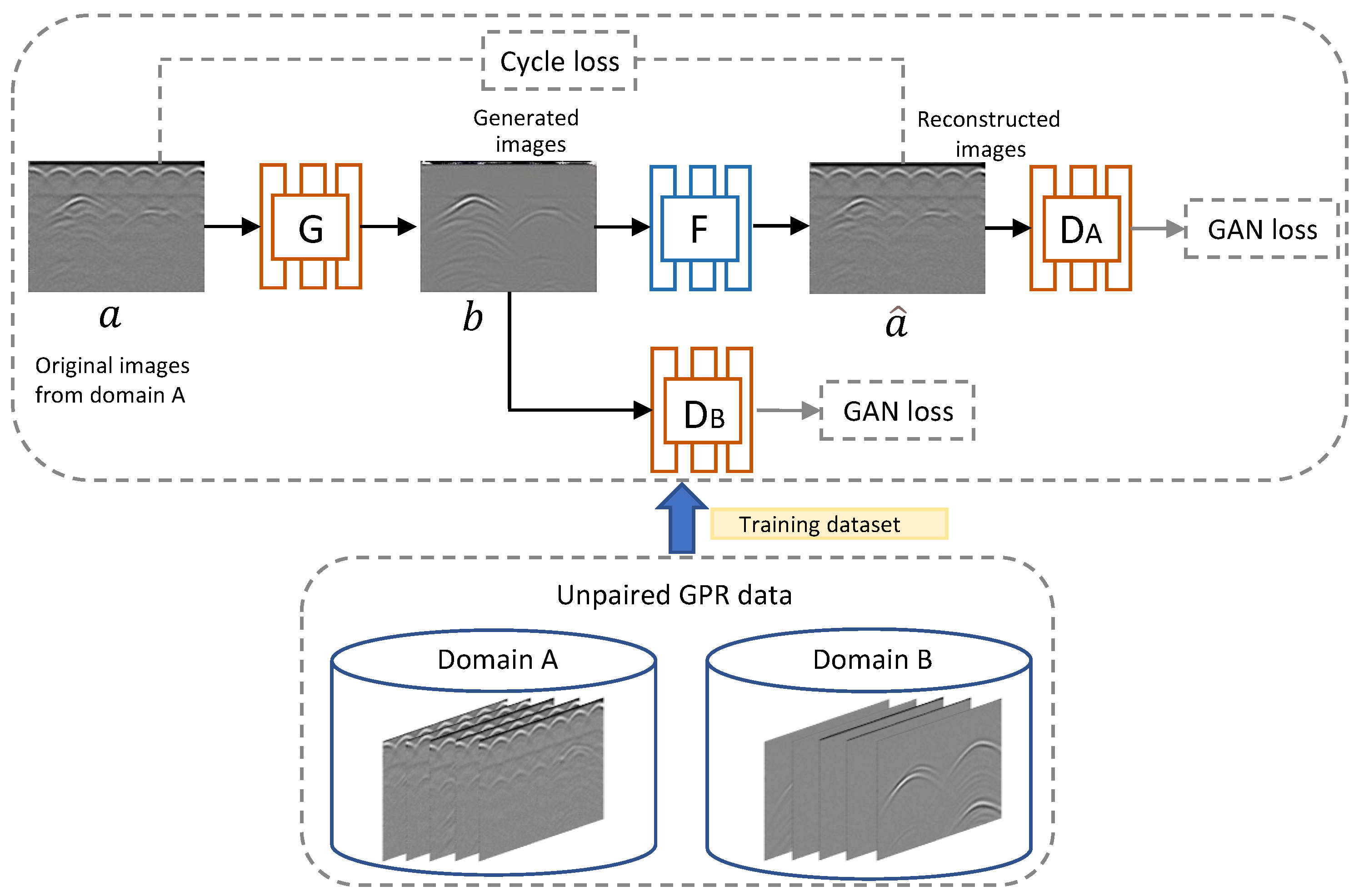
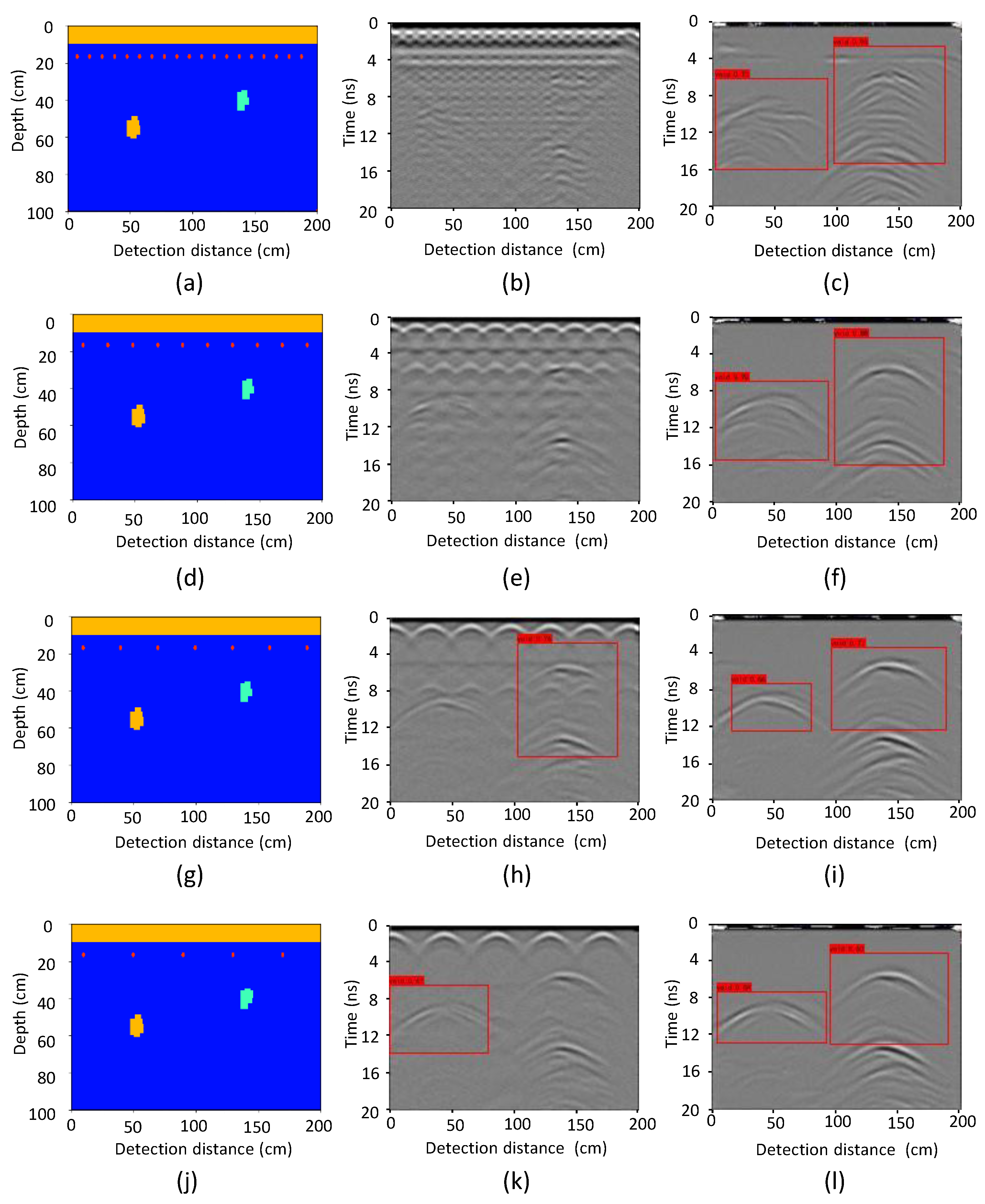
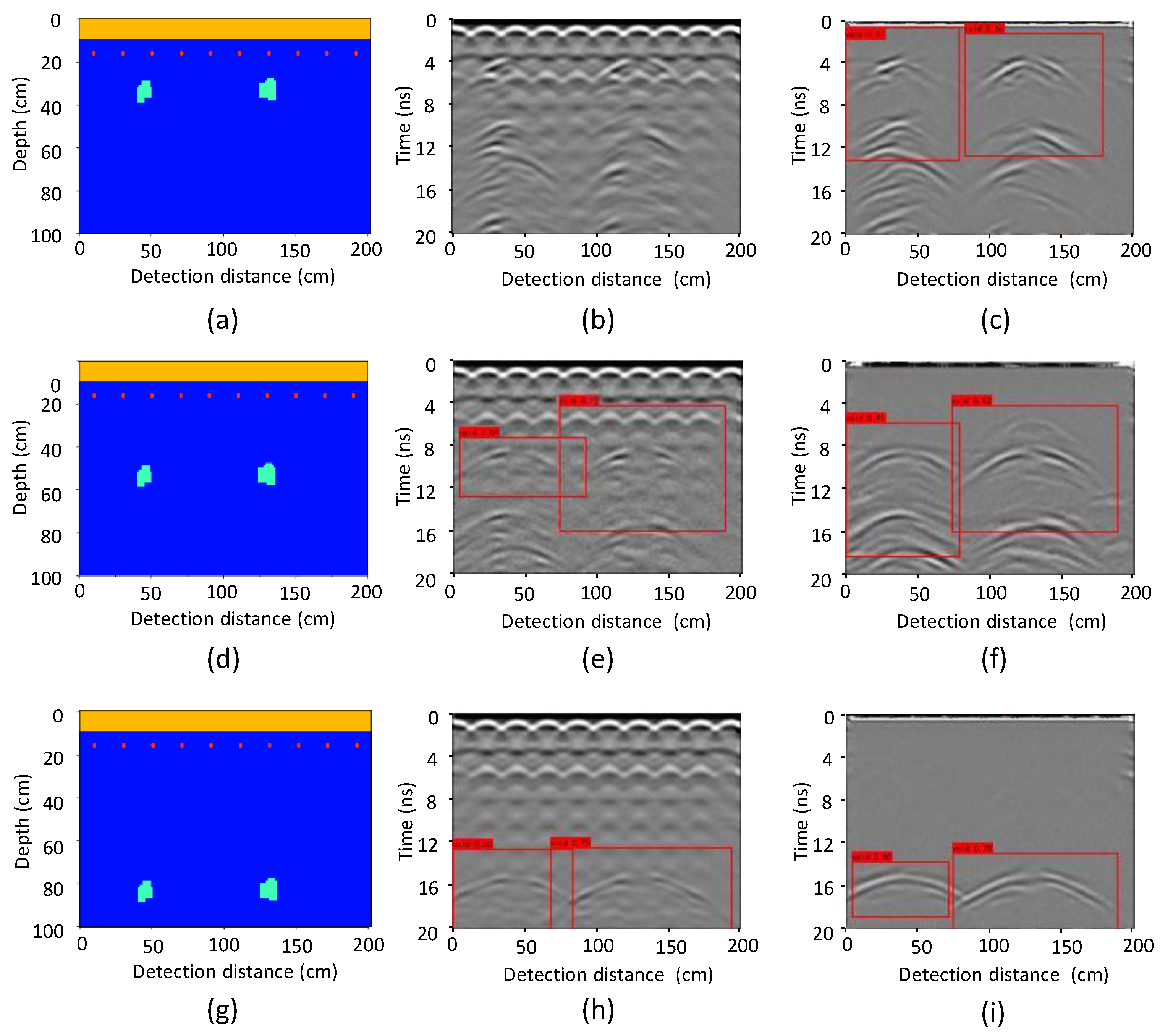
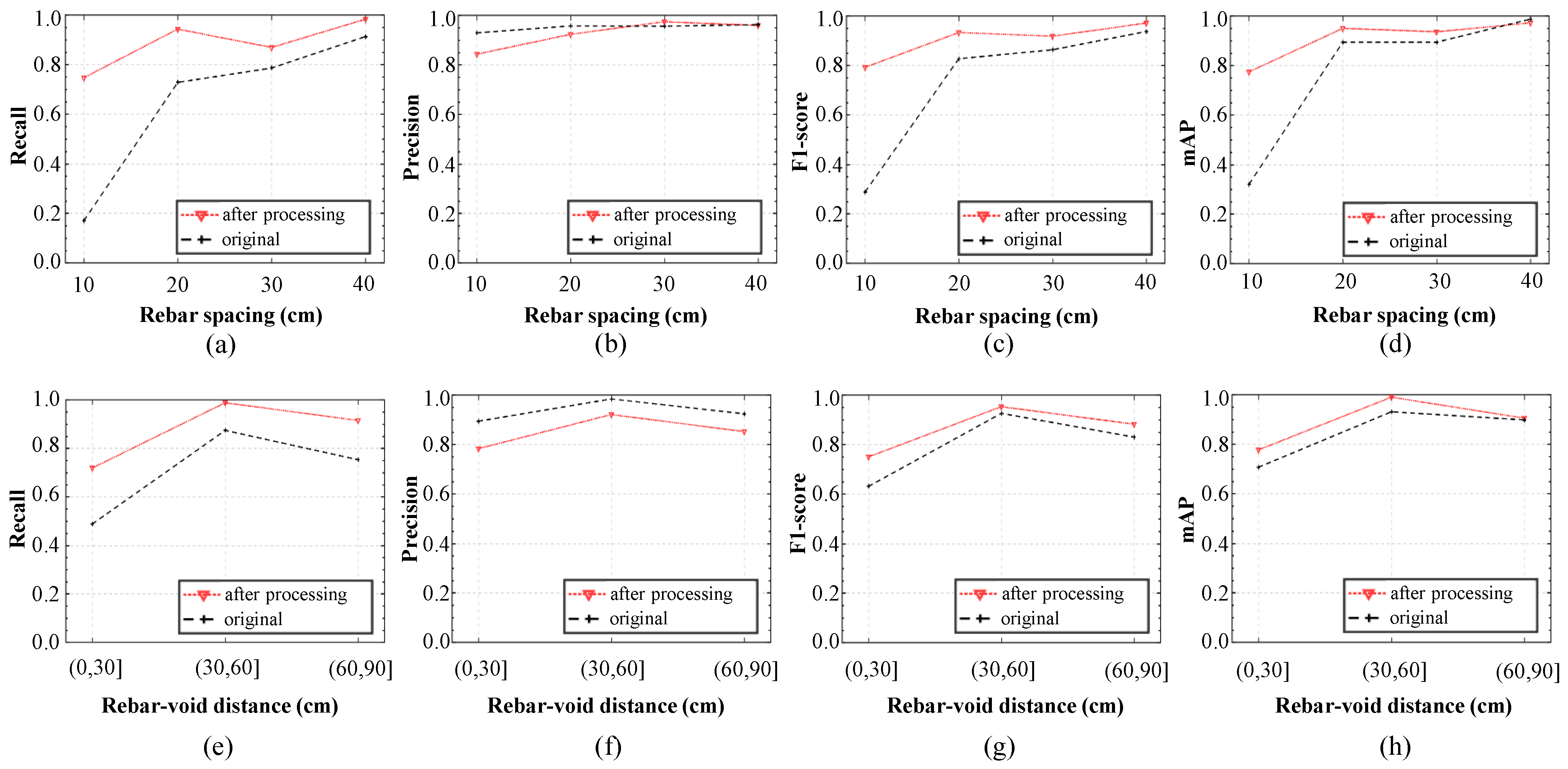
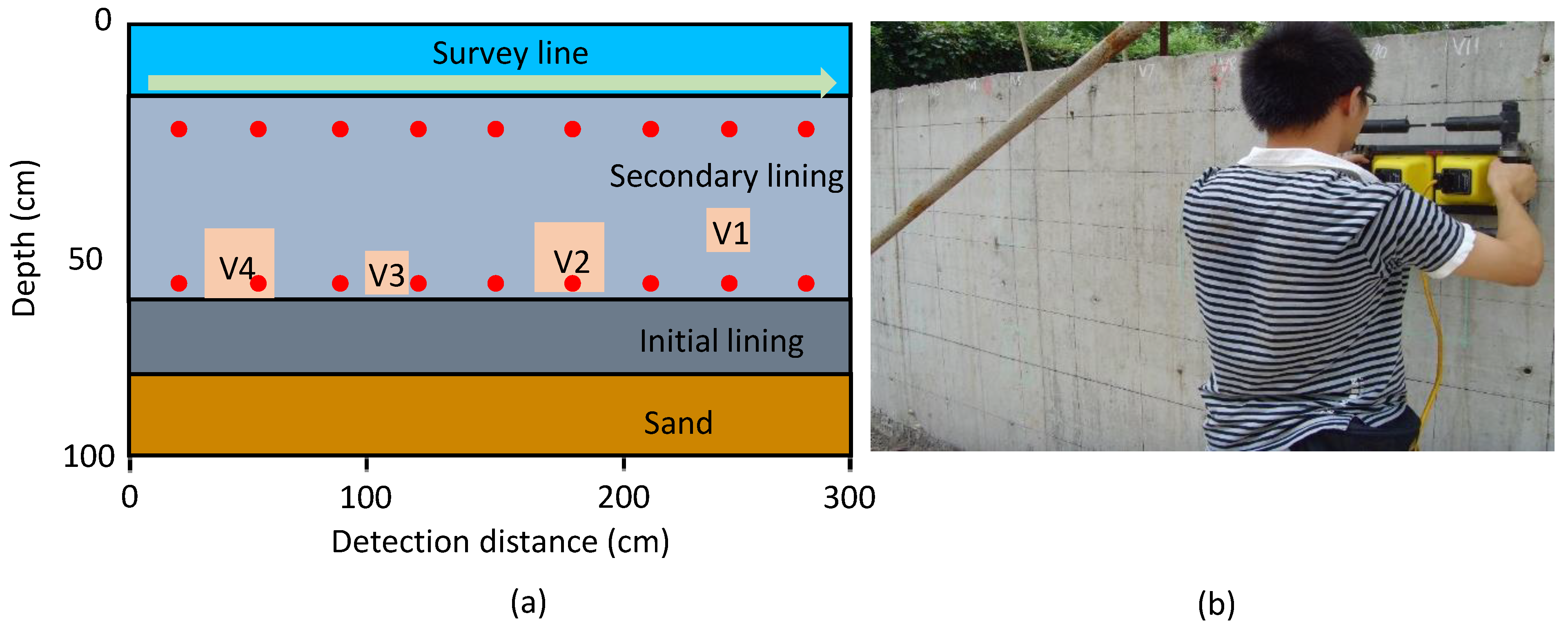
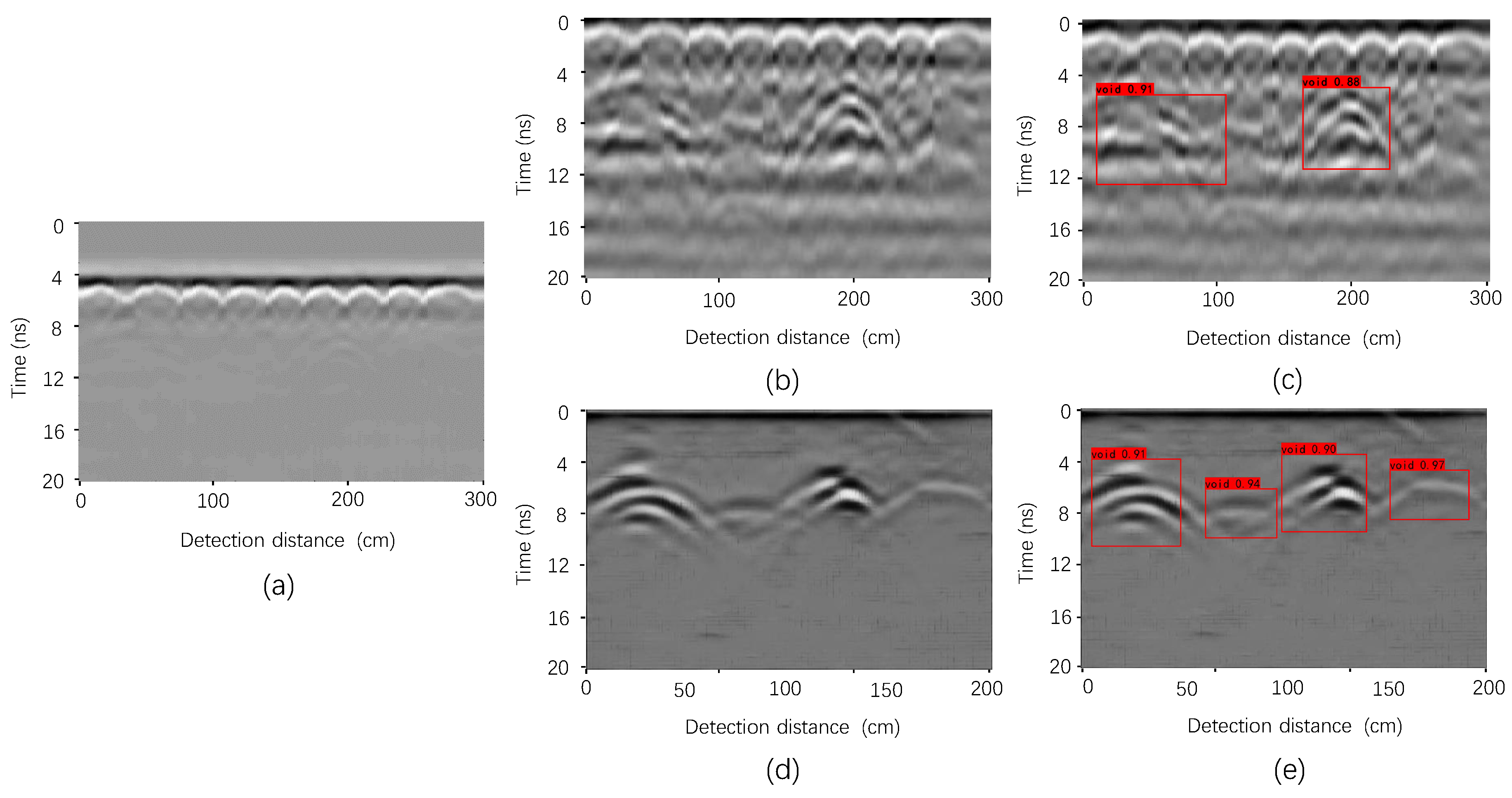
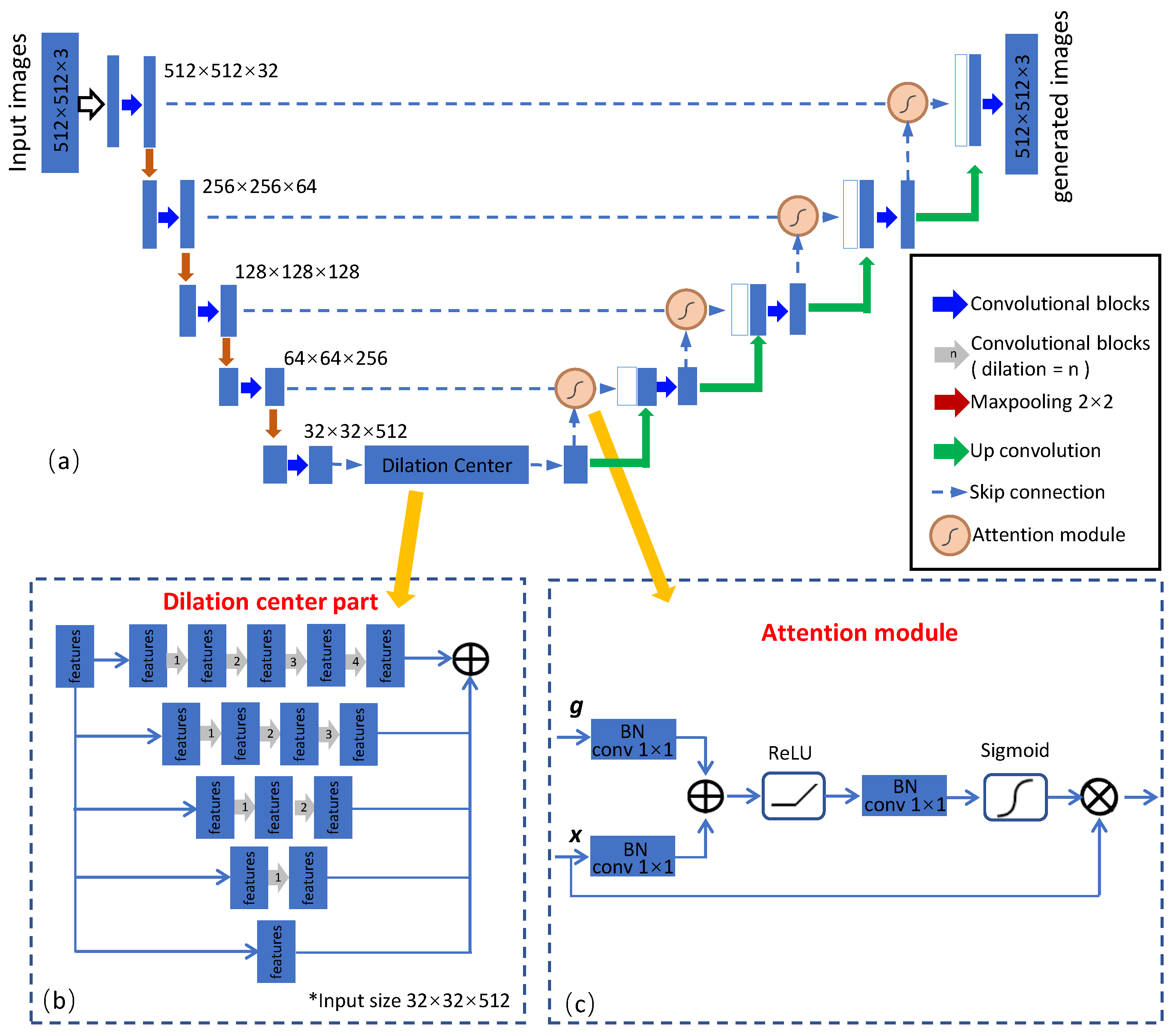
Ground penetrating radar (GPR) is one of the most recommended tools for routine inspection of tunnel linings. However, the rebars in the reinforced concrete produce a strong shielding effect on the electromagnetic waves, which may hinder the interpretation of GPR data. In this work, we proposed a method to improve the identification of tunnel lining voids by designing a generative adversarial network-based rebar clutter elimination network (RCE-GAN). The designed network has two sets of generators and discriminators, and by introducing the cycle-consistency loss, the network is capable of learning high-level features between unpaired GPR images. In addition, an attention module and a dilation center part were designed in the network to improve the network performance. Validation of the proposed method was conducted on both synthetic and real-world GPR images, collected from the implementation of finite-difference time-domain (FDTD) simulations and a controlled physical model experiment, respectively. The results demonstrate that the proposed method is promising for its lower demand on the training dataset and the improvement in the identification of tunnel lining voids.
Keywords: ground penetrating radar (GPR); tunnel void; generative adversarial networks (GAN); rebar clutter elimination; unsupervised learning ground penetrating radar (GPR); tunnel void; generative adversarial networks (GAN); rebar clutter elimination; unsupervised learning
Graphical Abstract