Article

Application of Random Forest Algorithm for Merging Multiple Satellite Precipitation Products across South Korea
1
Department of Advanced Science and Technology Convergence, Kyungpook National University, Sangju 37224, Korea
2
Disaster Prevention Emergency Management Institute, Kyungpook National University, Sangju 37224, Korea
3
Faculty of Water Resources Engineering, Thuyloi University, 175 Tay Son, Hanoi 100000, Vietnam
*
Author to whom correspondence should be addressed.
Remote Sens. 2021, 13(20), 4033; https://doi.org/10.3390/rs13204033
Submission received: 26 August 2021 / Revised: 25 September 2021 / Accepted: 5 October 2021 / Published: 9 October 2021
(This article belongs to the Special Issue Innovative Application of AI in Remote Sensing)

Abstract

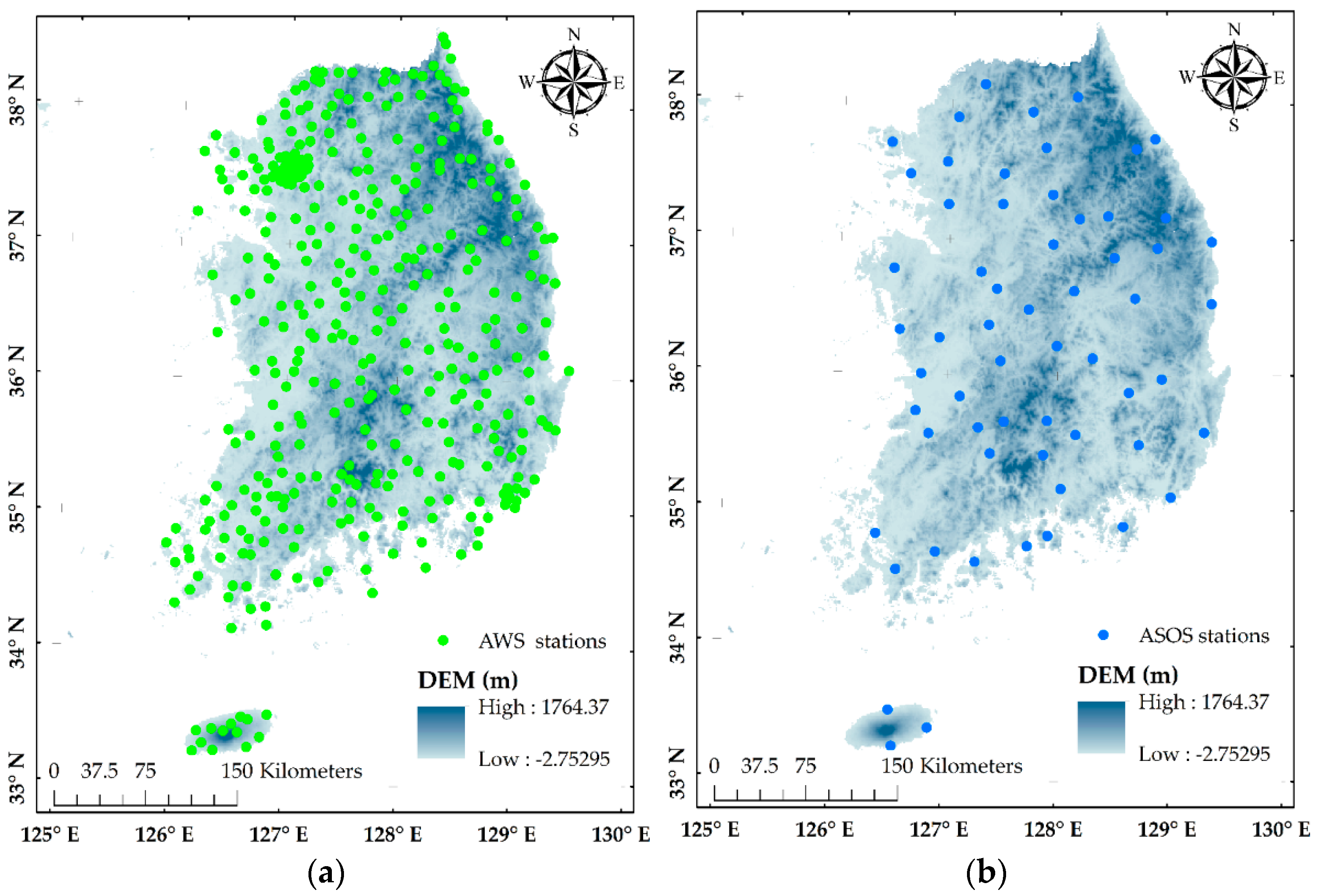
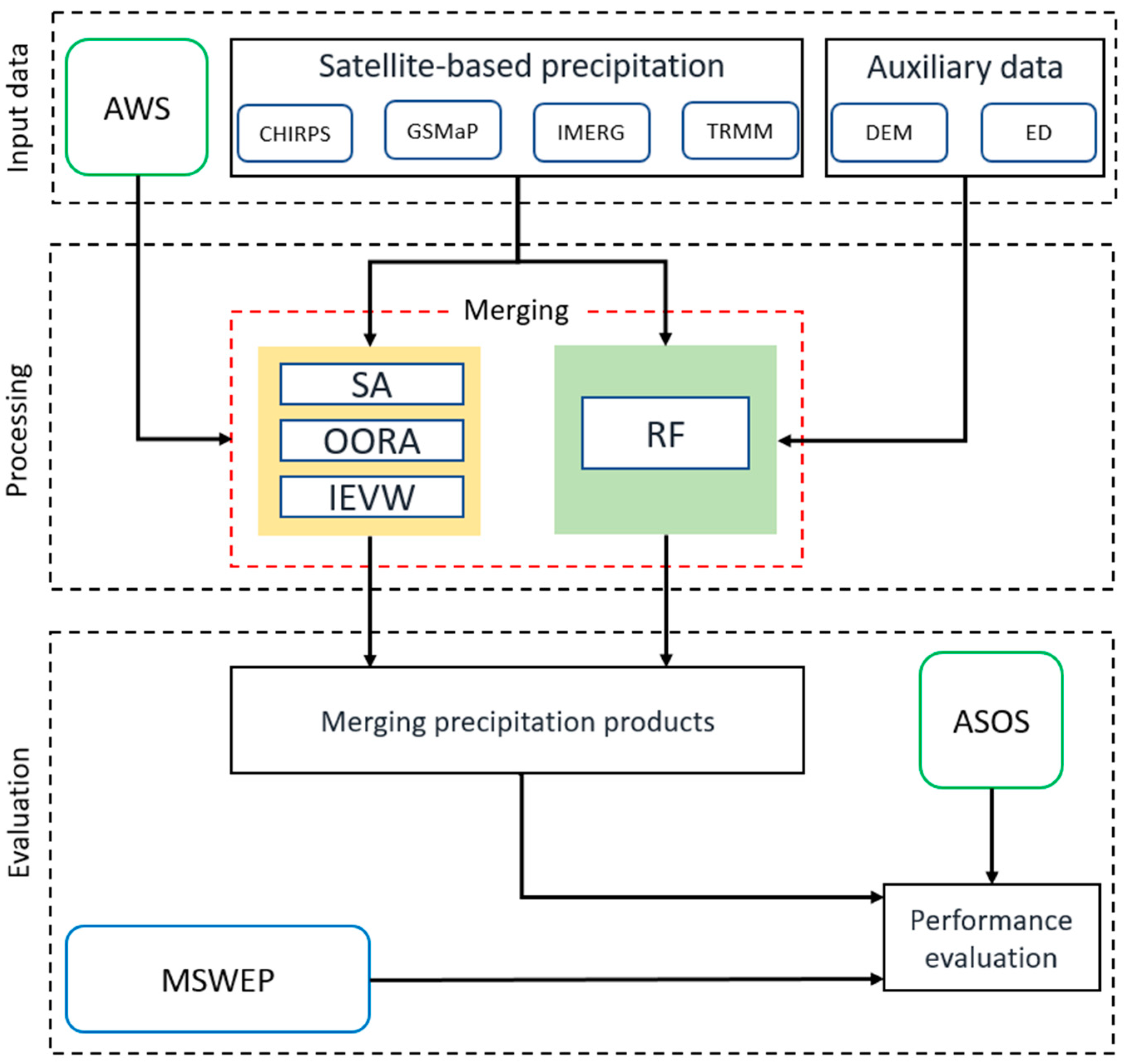
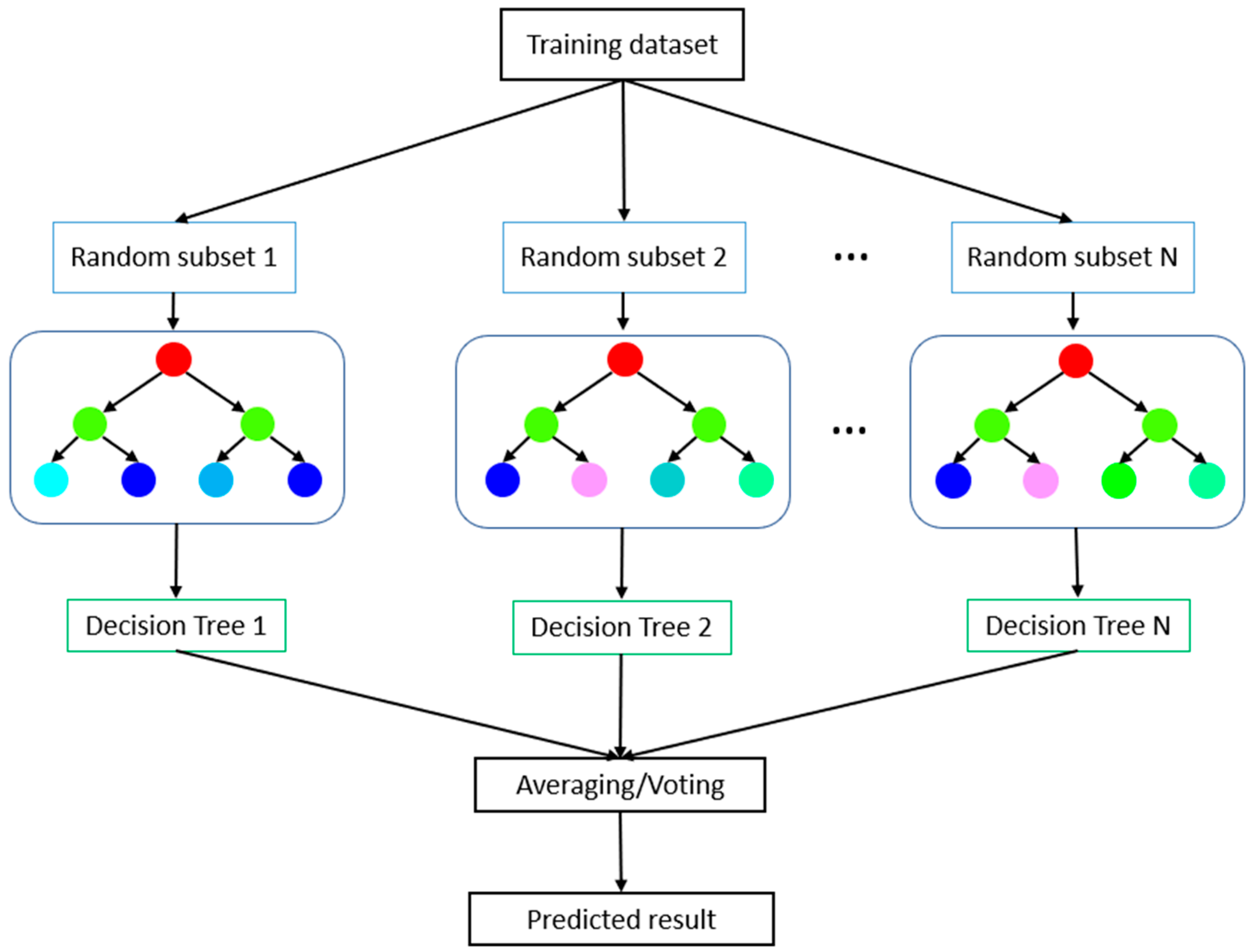
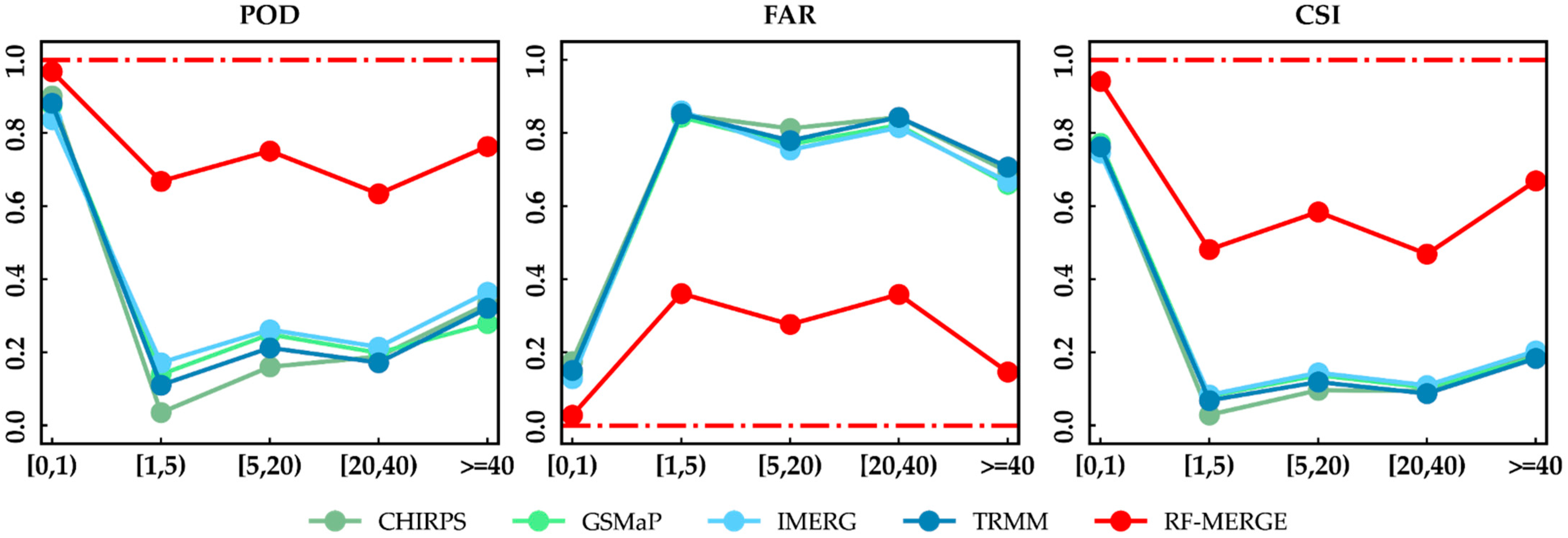
Precipitation is a crucial component of the water cycle and plays a key role in hydrological processes. Recently, satellite-based precipitation products (SPPs) have provided grid-based precipitation with spatiotemporal variability. However, SPPs contain a lot of uncertainty in estimated precipitation, and the spatial resolution of these products is still relatively coarse. To overcome these limitations, this study aims to generate new grid-based daily precipitation based on a combination of rainfall observation data with multiple SPPs for the period of 2003–2017 across South Korea. A Random Forest (RF) machine-learning algorithm model was applied for producing a new merged precipitation product. In addition, several statistical linear merging methods have been adopted to compare with the results achieved from the RF model. To investigate the efficiency of RF, rainfall data from 64 observed Automated Synoptic Observation System (ASOS) installations were collected to analyze the accuracy of products through several continuous as well as categorical indicators. The new precipitation values produced by the merging procedure generally not only report higher accuracy than a single satellite rainfall product but also indicate that RF is more effective than the statistical merging method. Thus, the achievements from this study point out that the RF model might be applied for merging multiple satellite precipitation products, especially in sparse region areas.
Keywords: precipitation; machine learning; random forest; merging; South Korea precipitation; machine learning; random forest; merging; South Korea