Infrared Small Target Detection Based on Non-Convex Optimization with Lp-Norm Constraint

 ,
, Abstract
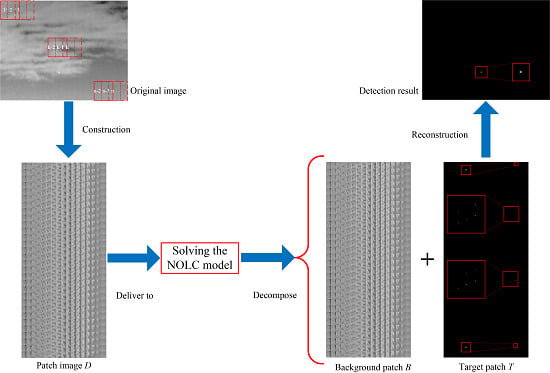
Share and Cite
Zhang, T.; Wu, H.; Liu, Y.; Peng, L.; Yang, C.; Peng, Z. Infrared Small Target Detection Based on Non-Convex Optimization with Lp-Norm Constraint. Remote Sens. 2019, 11, 559. https://doi.org/10.3390/rs11050559
Zhang T, Wu H, Liu Y, Peng L, Yang C, Peng Z. Infrared Small Target Detection Based on Non-Convex Optimization with Lp-Norm Constraint. Remote Sensing. 2019; 11(5):559. https://doi.org/10.3390/rs11050559
Chicago/Turabian StyleZhang, Tianfang, Hao Wu, Yuhan Liu, Lingbing Peng, Chunping Yang, and Zhenming Peng. 2019. "Infrared Small Target Detection Based on Non-Convex Optimization with Lp-Norm Constraint" Remote Sensing 11, no. 5: 559. https://doi.org/10.3390/rs11050559
APA StyleZhang, T., Wu, H., Liu, Y., Peng, L., Yang, C., & Peng, Z. (2019). Infrared Small Target Detection Based on Non-Convex Optimization with Lp-Norm Constraint. Remote Sensing, 11(5), 559. https://doi.org/10.3390/rs11050559