Article

Organizational Boundary Change in Industrial Symbiosis: Revisiting the Guitang Group in China

School of Forestry and Environmental Studies, Yale University, 195 Prospect St, New Haven, CT 06511, USA
*
Author to whom correspondence should be addressed.
Sustainability 2017, 9(7), 1085; https://doi.org/10.3390/su9071085
Submission received: 28 March 2017 / Revised: 13 June 2017 / Accepted: 16 June 2017 / Published: 22 June 2017
(This article belongs to the Special Issue Diverse Dynamics of Industrial Symbiosis: Emergence and Development)

Abstract

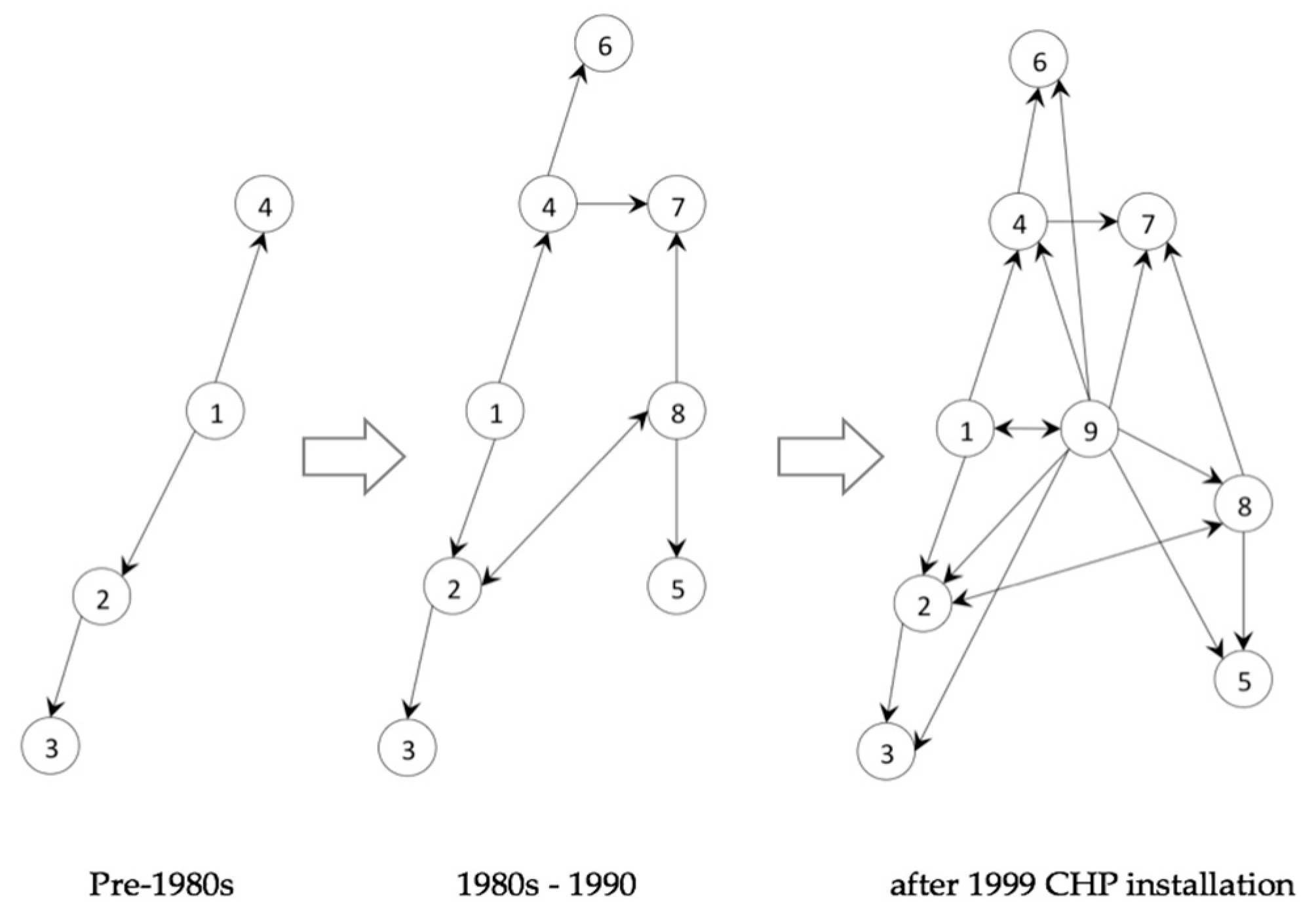
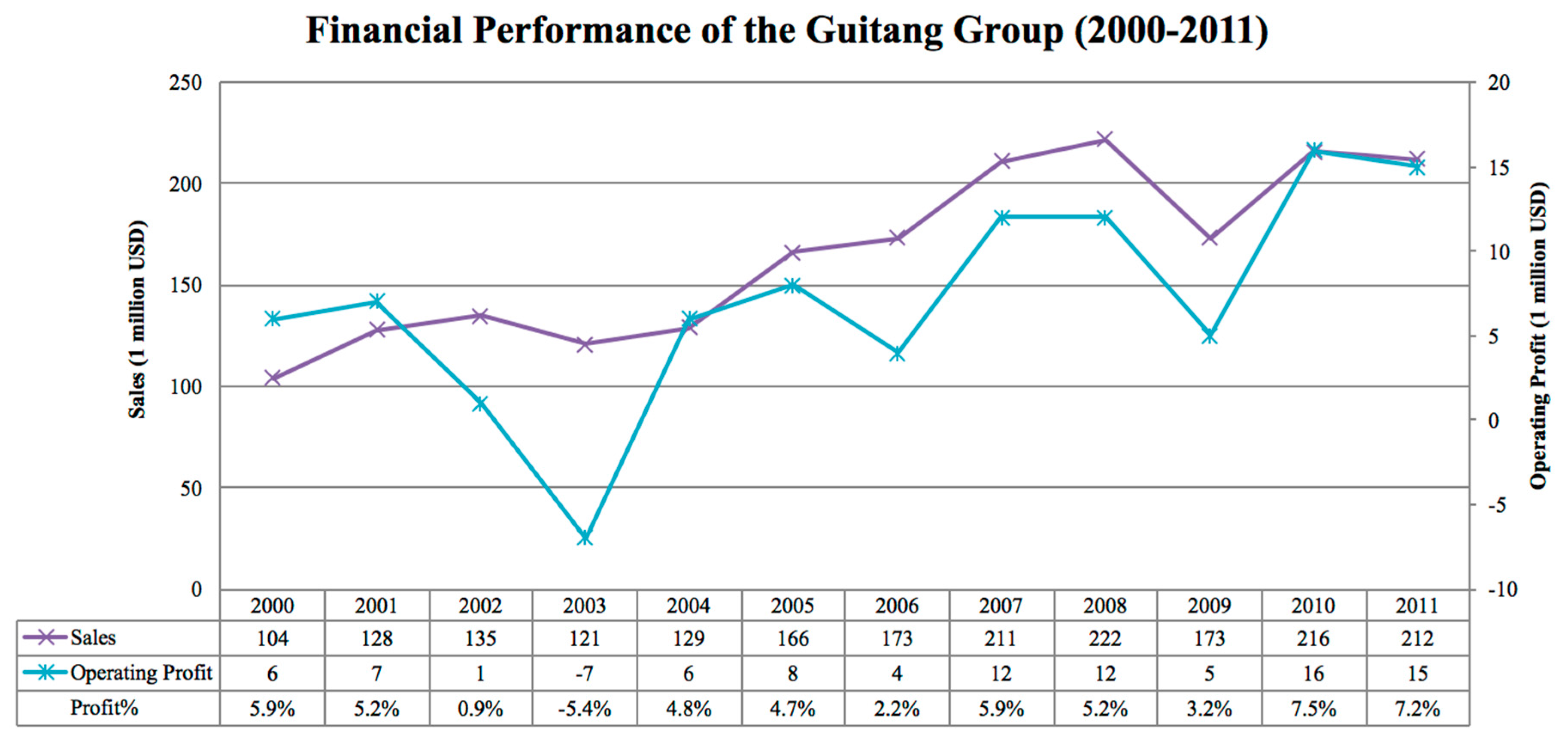
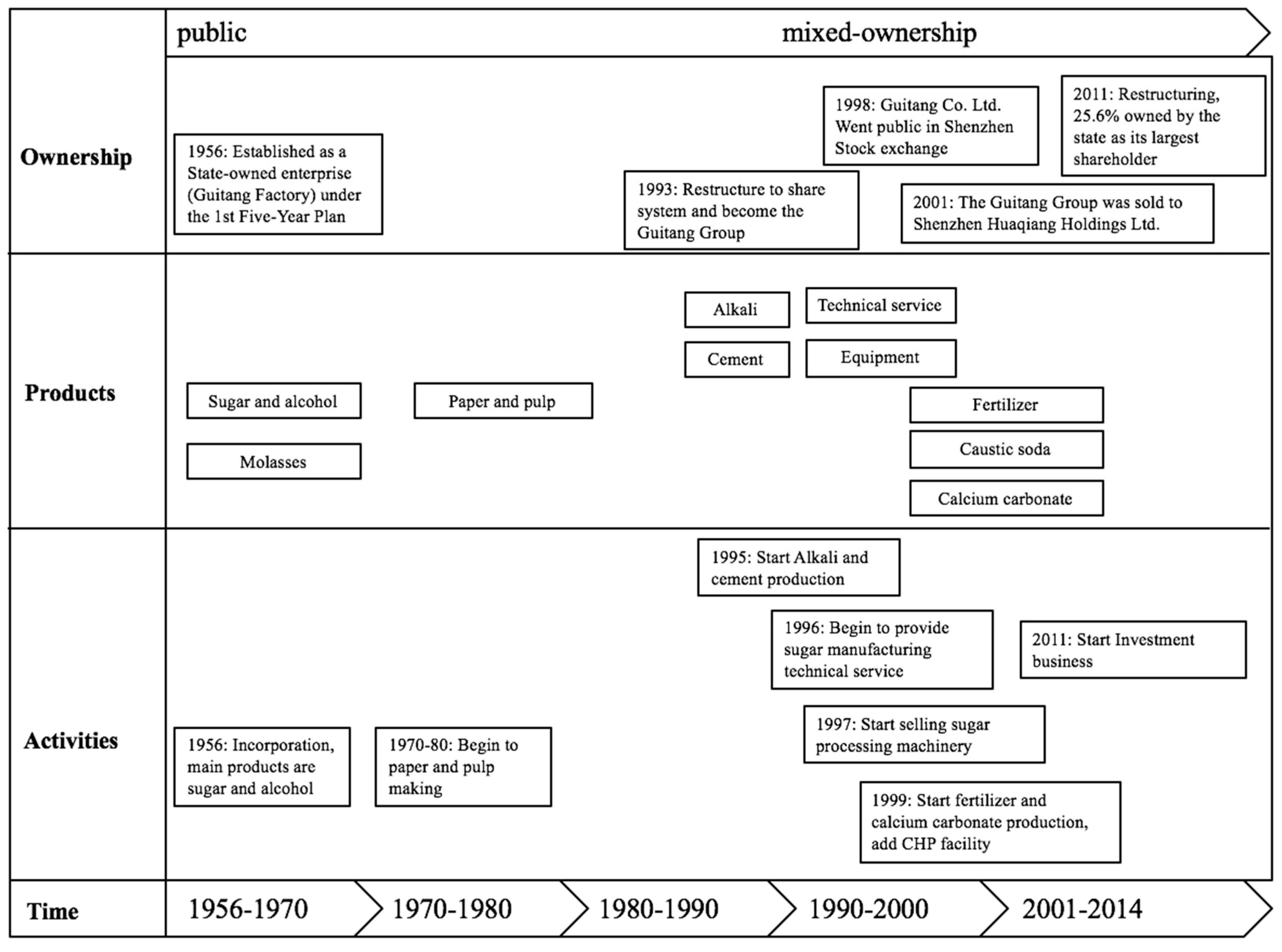
This study revisits the Guitang Group, one of the best known industrial symbiosis cases in the sugar industry. Our goal is to offer an evolutionary understanding of industrial symbiosis at the Guitang Group. This article focuses on the organizational boundary change of the Guitang Group over time, and acknowledges this process as one of the seven industrial symbiosis dynamics proposed by Boons et al. We offer a historical view of the critical forces behind Guitang’s industrial symbiosis evolution since the 1950s; particularly how these changes were influenced by broader economic and institutional contexts of importance in China. These insights include the role of institutionalized research and development (R&D) as well as technology-oriented leadership as driving forces for Guitang’s innovation, particularly since the 1990s, when greater efficiency and productivity were emphasized, leading to the establishment of further symbiotic relationships in the company’s evolutionary process. As a result, the Guitang Group grew from 2 internal to 11 internal and external symbiotic exchanges and is now a conglomeration with more than 3000 employees generating more than 1 billion RMB (150 million USD) in revenue annually. The driving forces of the Guitang Group’s industrial symbiosis evolution helped to create, disseminate and share information by continuously reinforcing the industrial symbiosis message as part of the Guitang Group’s business model and competitive strategy. In addition, state-level policies such as establishing the Guigang (the city where Guitang is located) Eco-Industrial Park enabled industrial symbiosis in Guitang. This study provides prospects for future research on the organizational boundary change dynamic of industrial symbiosis in the sugar manufacturing industry and beyond.
Keywords: industrial ecology; industrial symbiosis; business and environment; innovation and sustainability; environmental management industrial ecology; industrial symbiosis; business and environment; innovation and sustainability; environmental management