Article

Spatial Variability and Ecological Effects of Anthropogenic Activities in a Nature Reserve: A Case Study in the Baijitan National Nature Reserve, China

1
College of Geoscience and Surveying Engineering, China University of Mining & Technology, Beijing 100083, China
2
Institute of Geographical Sciences and Natural Resources Research, Chinese Academy of Sciences, Beijing 100101, China
3
College of Resources and Environment, University of Chinese Academy of Sciences, Beijing 100190, China
4
School of Government, Beijing Normal University, Beijing 100875, China
*
Author to whom correspondence should be addressed.
Sustainability 2017, 9(2), 239; https://doi.org/10.3390/su9020239
Submission received: 31 December 2016 / Accepted: 6 February 2017 / Published: 9 February 2017

Abstract

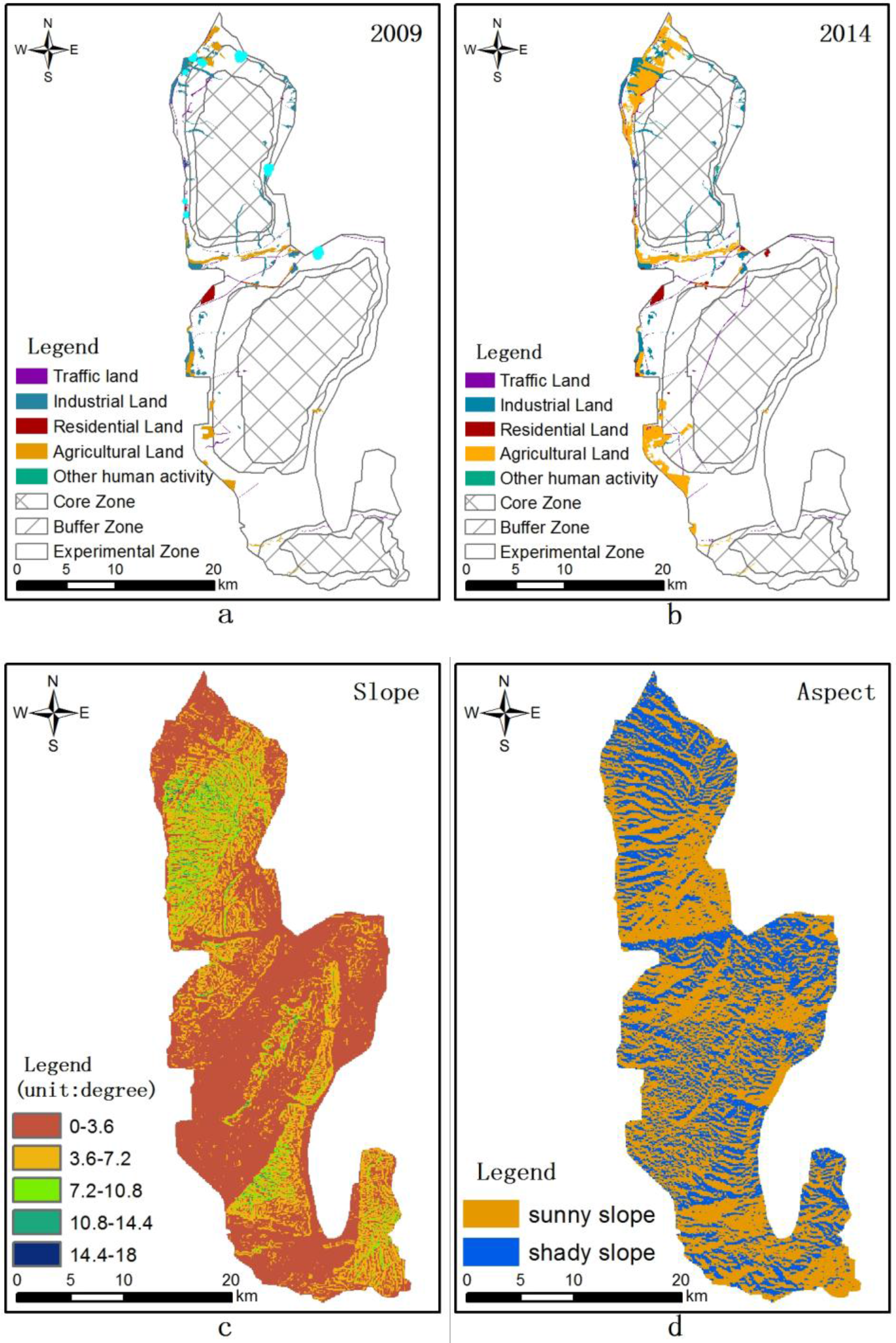
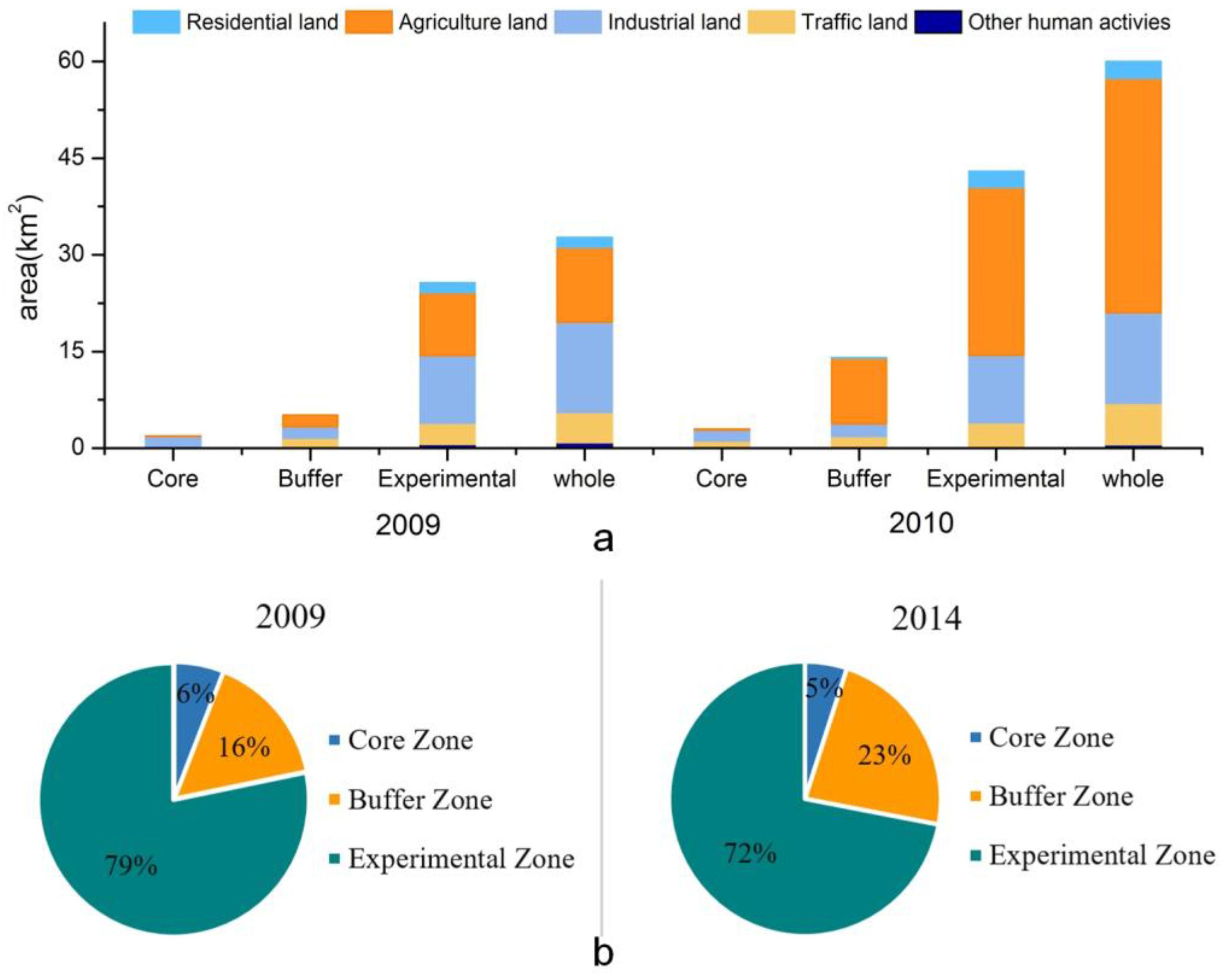
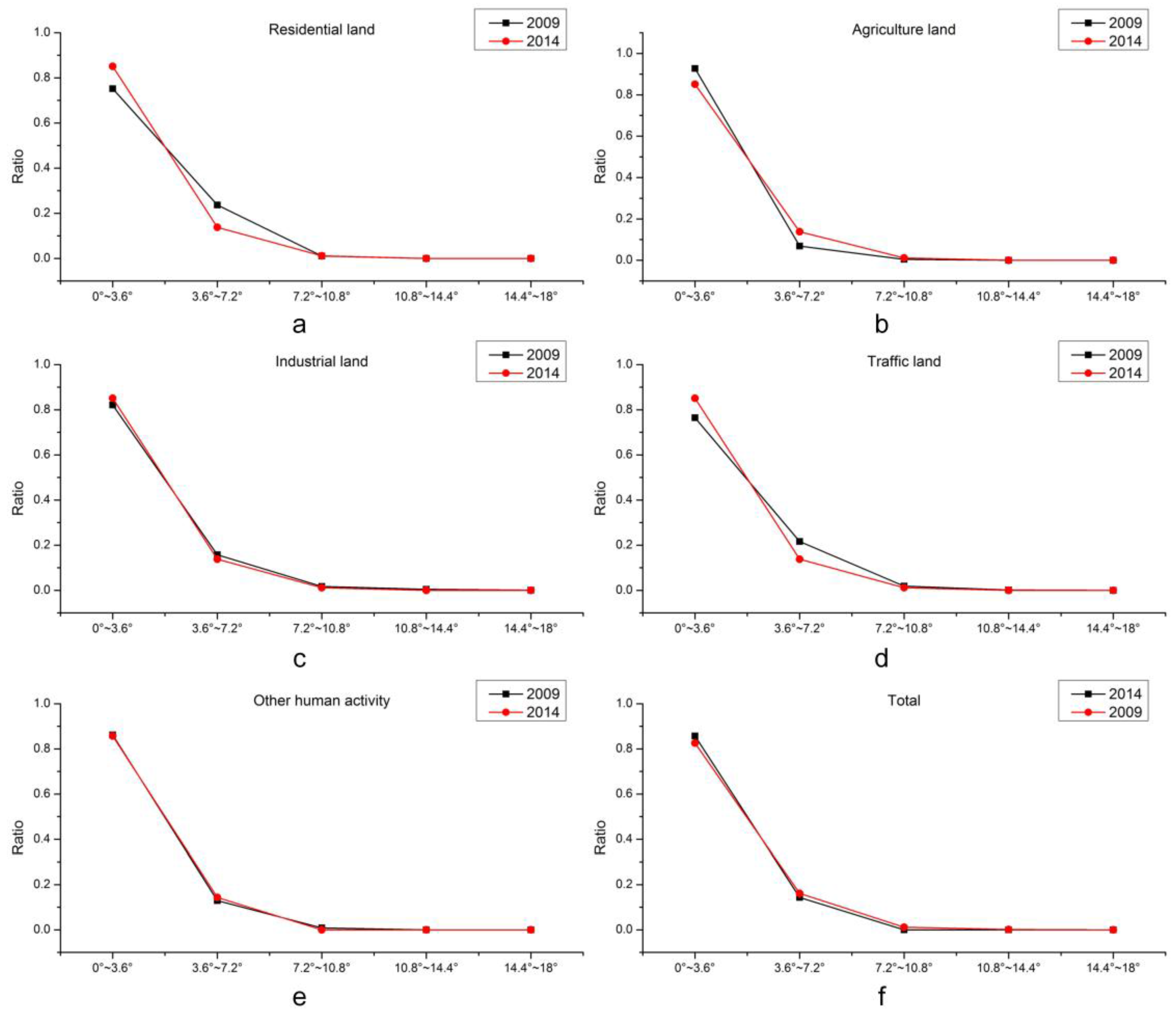
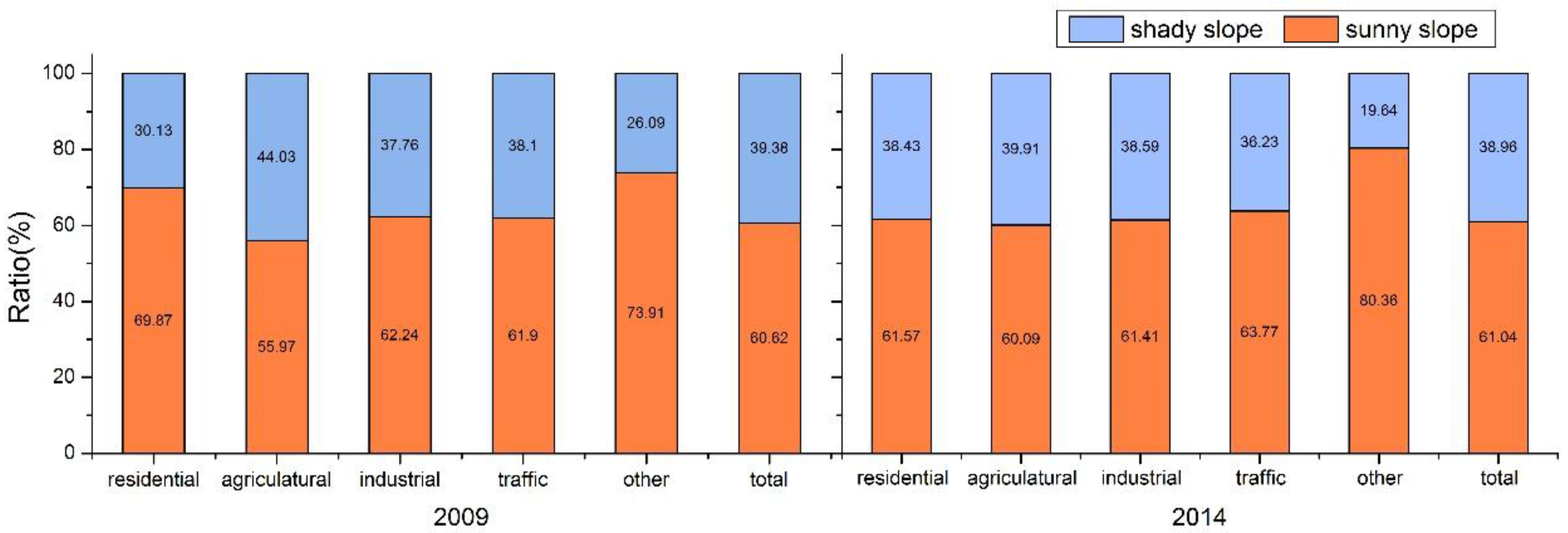
Nature reserves play an essential role in protecting natural resources and maintaining an ecological balance. However, certain nature reserves are increasingly disturbed by human activities in the form of settlements, roads, farmland, etc. How to monitor the status of nature reserves by using remote sensing methods has been a focus of scholars for a long time. In this study, remote sensing satellite images from 2009 and 2014 were used to extract and analyze the distribution of anthropogenic activities, such as agriculture, industry, residency, traffic, and other human activities. On this basis, the Nature Reserve Human Interference (NRHI) and landscape indices (LI) were calculated to describe the intensity of anthropogenic disturbance; in addition, the slope and aspect were analyzed to describe the regularity in the distribution of anthropogenic activities. The results showed that more than 90% of the anthropogenic activity occurred in the experimental and buffer zones. Likewise, the NRHI increased from 0.0901 in 2009 to 0.1127 in 2014. The NRHI was proportional to the patch density (PD), landscape shape index (LSI), landscape division index (DIVISION), Shannon’s diversity index (SHDI), and Shannon′s evenness index (SHEI), and it was inversely proportional to the contagion index (CONTAG). Moreover, 84.54% of the anthropogenic activity occurred in a range from 0 to 3.6 degrees, and 14.44% of the activity occurred in a range from 3.6 to 7.2 degrees. More than 60% of the anthropogenic activity occurred on sunny slopes because of the human adaptability to the environment and the possibility for humans to fulfill their physical needs (warmth and comfort). Thus, the monitoring of this nature reserve needs to be further strengthened and focused on the area with a range of 0–7.2 degrees and on the sunny slopes.
Keywords: anthropogenic activity; landscape indices (LI); Nature Reserve Human Interference (NRHI); slope; aspect anthropogenic activity; landscape indices (LI); Nature Reserve Human Interference (NRHI); slope; aspect