1. Introduction
The global travel paradigm is undergoing a fundamental pivot from traditional relaxation toward authentic, immersive, and experiential engagements [
1,
2]. Within this shift, surf tourism has emerged as a premier sector of the leisure economy [
3], a trend that is particularly evident in China’s Hainan province. In Wanning, Hainan—the core surf tourism hub—surf-related experiences attract approximately 500,000 participants annually, supported by over 160 local surf clubs [
4,
5]. Surf-driven sports tourism accounts for 55% of the city’s total tourism revenue, and more than 70% of visitors engage in sports-related activities [
6]. Unlike passive general tourism, surfing is a high-involvement lifestyle sport that integrates physical challenges with conspicuous identity expression [
1,
7]. However, it inherently involves frequent experiential setbacks, physical exhaustion, and environmental stressors. Paradoxically, despite these high-intensity negative stimuli, surf tourists often demonstrate remarkable resilience and maintain strong behavioral intentions. Understanding the transition from tourist experiences to behavioral intentions requires a robust psychological framework.
Cognitive Appraisal Theory (CAT) has been extensively employed to clarify how subjective evaluations of travel events elicit specific emotions that dictate subsequent determinations [
7,
8,
9]. CAT effectively captures how identical environments elicit disparate emotional responses based on individual appraisals of outcome desirability, agency, and certainty [
10,
11]. This theory focuses on the internal psychological process of individuals, while tourists’ cognitive appraisal does not occur in a vacuum isolated from the social context. Concurrently, with the rise of the experiential economy and social media, tourism has evolved into a primary domain for conspicuous consumption [
2,
12,
13]. Drawing from the Theory of the Leisure Class (TLC), modern tourists signal social status and identity by disseminating unique and highly visible travel experiences [
14,
15]. In this environment, the act of traveling serves the dual purpose of individual fulfillment and the facilitation of social distinction through digital performances [
16]. In surfing tourism, integrating these two theories offers a unique contribution. Thus, TLC and CAT form a natural theoretical complementarity: the former explains the external social drivers of tourist behavior, while the latter depicts the internal cognitive mechanism behind the behavior.
Despite this theoretical complementarity, a critical research gap persists. Existing work has separately validated internal cognitive appraisals (CAT) and external status-signaling via CCM (derived from TLC), but examines these lenses in isolation, almost exclusively in positive travel contexts. This fails to explain a core paradox in surf tourism: why tourists retain positive behavioral intentions despite frequent physical exhaustion and experiential setbacks. No research has unpacked how CCM interacts with cognitive appraisals to reframe negative stimuli. The socio-cognitive mechanism underpinning tourist resilience to these hardships thus remains largely unaddressed.
Accordingly, this study extends an integrated socio-cognitive framework to address these gaps. Aligned with the scope of sustainable tourism research, this study pursues three core objectives: (1) to unpack the link between cognitive appraisals of negative experiences and discrete emotions in surf tourism; (2) to identify the emotional antecedents of tourists’ sustainability-critical behavioral intentions; and (3) to examine the moderating effect of conspicuous consumption motivation (CCM) on the emotion–intention link. By bridging internal psychological processes and external social determinants, this research advances socio-cognitive theory in sustainable tourism contexts, clarifies how status-seeking drives tourist resilience amid negative experiences, and delivers practical insights for the long-term sustainable management of surf tourism destinations.
2. Literature Review
2.1. Surf Tourism
Surf tourism, a distinct sports tourism niche centered on wave-riding [
17,
18], serves as a core driver of economic and ecological sustainability for coastal destinations. As an experiential marine activity, it combines physical challenge, natural immersion, and social signaling, making it a valuable context for tourist behavior research [
1,
19]. Academic research in this field focus on tourist behavior, socio-cultural impacts and sustainable governance [
3]. Sustainable surf tourism (SST), the dominant research theme, aims to mitigate ecological and social externalities of tourism development, yet it retains a Western capital-centric logic and lacks empirical support for Global South communities [
20].
Existing literature has transitioned from early geographical assessments toward socio-spatial sustainability and community conflicts [
21], and highlighted the value of surf culture in promoting destination image and tourist loyalty [
22]. Recent studies emphasize the “lived experience” and its role in identity construction [
23], confirming that negative on-site experiences pose a significant risk to the long-term sustainable operation of these destinations.
Notably, most studies examine either psychological perceptions or social attributes in isolation. Previous studies have not clarified the internal cognitive mechanisms among variables. The correlational and mediating paths linking affective responses (CAT), sociological status-seeking (TLC), and behavioral intentions remain underexplored.
2.2. Cognitive Appraisal Theory
CAT emerged through studies on stress and coping posits that emotions are not triggered by events themselves but by an individual’s cognitive assessment of those events in relation to their well-being [
24,
25]. This framework is useful for explaining why different individuals react uniquely to the same stimulus, as appraisals are filtered through personal goals, motivations, and needs.
In tourism, appraisals assess situational impacts on goals and interests, shaping emotional responses’ form and content. The logical flow of the theory follows a “stimulus–appraisal–emotion–coping/behavior” sequence, which is highly applicable to tourism research [
26,
27,
28]. CAT provides an ideal framework for analyzing surf tourists’ responses, as emotions stem from cognitive appraisals rather than stimuli alone, emphasizing the pivotal role of subjective interpretation [
29].
Table 1 encapsulates the dimensions of consumer cognitive appraisals and the related concepts, definition of the concepts, and their significance in emotional arousal. Three appraisal dimensions (outcome desirability, certainty, and agency) were found to better delineate tourists’ cognitive processes, and shape tourists’ behavioral choices that determine a destination’s sustainable development trajectory, especially in the context of China surf tourism [
30,
31]. Therefore, these three appraisal dimensions were used in this study.
2.3. Theory of Leisure Class and Conspicuous Consumption Motivation
Theory of the Leisure Class (TLC) provides the foundational framework for social stratification via “conspicuous consumption”—the public display of symbolic status over functional utility [
40]. In the context of sports tourism, high-involvement leisure activities have become powerful markers of social distinction [
41]. Experiential purchases, such as surf tourism, have evolved into prime avenues for identity construction and prestige signaling, often surpassing material goods in generating social utility [
42]. In contemporary tourism, this manifests as “flaunting capital” through scarce, non-replicable experiences [
2]. However, the prevalence of social media comparison [
43] necessitates a shift from external behaviors to underlying psychological drivers. Consequently, this study adopts Conspicuous Consumption Motivation (CCM) as a complex mechanism balancing needs for belonging, status, and optimal distinctiveness [
2]. For surf tourists, CCM translates the pursuit of authentic wave-riding experiences into a strategic display of cultural capital and “visible superiority” [
44]. Therefore, Within the cognitive appraisal framework, CCM functions as a critical boundary condition, potentially moderating how affective states transition into behavioral outcomes.
Despite these theoretical advancements, a critical gap persists in explaining the paradox of tourist resilience in high-involvement sports: why individuals maintain destination loyalty despite frequent experiential setbacks. While Cognitive Appraisal Theory (CAT) clarifies the internal genesis of emotions and the Theory of the Leisure Class (TLC) elucidates external social determinants, current tourism scholarship largely compartmentalizes these mechanisms. Consequently, a singular theoretical lens fails to capture the complexity of resilient tourists who adapt to stressors to sustain positive intentions [
18]. Although existing literature characterizes resilience as a dynamic process of achieving improved outcomes through adaptive responses [
21], the extent to which sociological imperatives—specifically status-seeking behaviors under the TLC framework—reshape internal cognitive appraisals remains underexplored. Addressing this fragmentation, the present study introduces an integrated socio-cognitive framework. By bridging CAT and TLC, this research investigates how external social identity drives internal cognitive reappraisals of negative stimuli, ultimately shifting emotional and behavioral outcomes. This research introduces “social-symbolic reappraisal” as an interpretive theoretical construct, derived from the empirical interaction pattern between emotions, CCM, and intentions, rather than a directly measured latent or observed variable. It provides the essential theoretical foundation for the proposed conceptual model and subsequent hypotheses.
3. Research Model and Hypotheses
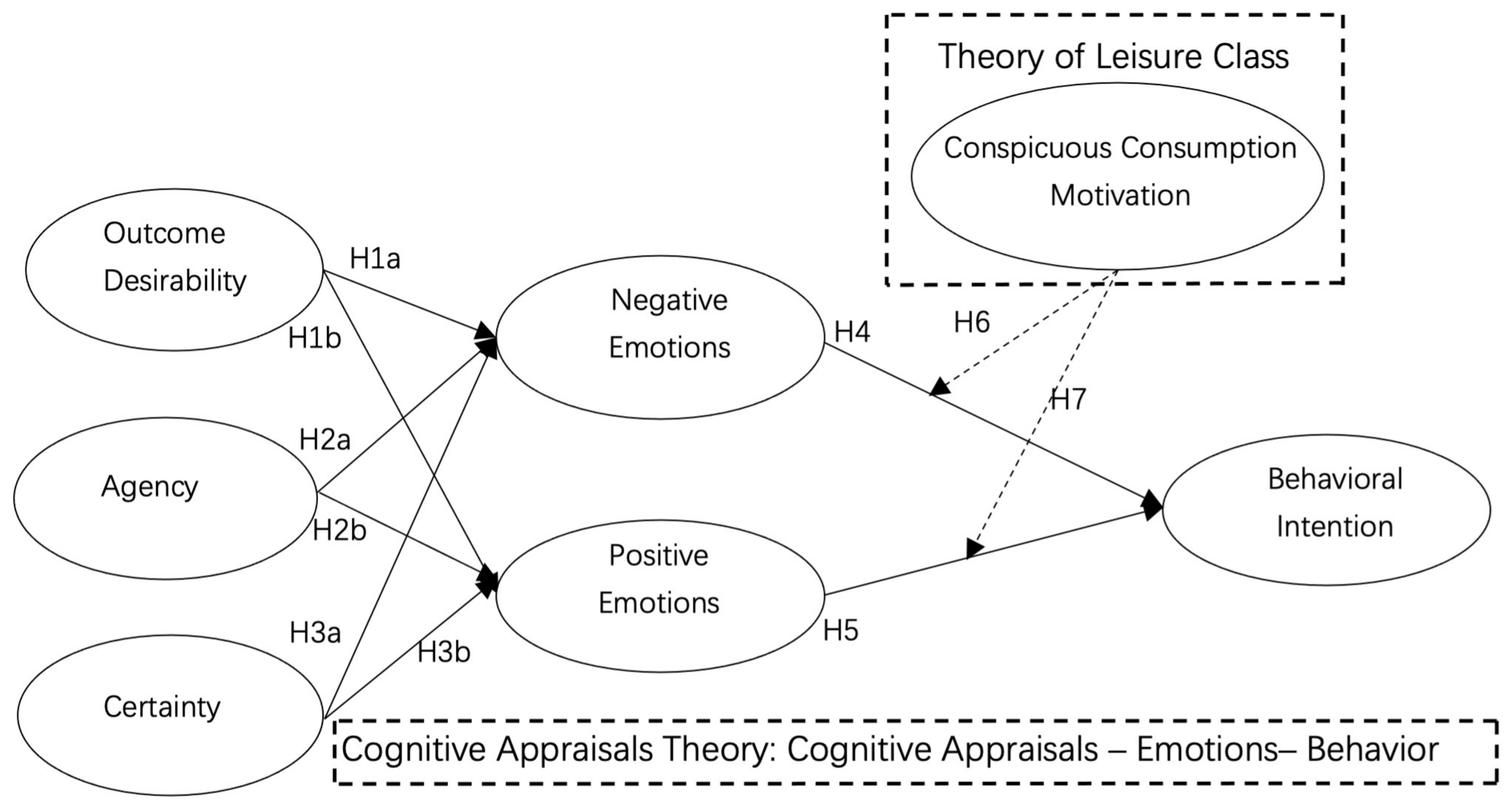
Building on the socio-cognitive integration outlined above, this study develops the Tourists’ Cognitive Appraisal–Conspicuous Consumption model (
Figure 1). Rather than proposing a novel mechanism, this study extends and combines established theories to form a context-specific socio-cognitive framework for surf tourism and destination sustainability. In this framework, tourist resilience is conceptualized not only as an internal psychological resource but also as a socially constructed capacity shaped by status-seeking behavior.
Specifically, the model draws on Cognitive Appraisal Theory to explain how exist cognitive appraisals (outcome desirability, agency, certainty) shape tourists’ positive and negative emotions. It further integrates the Theory of the Leisure Class, treating conspicuous consumption motivation as a core boundary condition. Social-symbolic reappraisal extends existing emotion regulation and self-presentation research, it is a theoretical construct that accounts for the CCM moderation pattern, in which tourists with high CCM reframe negative experiences as resources for identity signaling.
This unique integration of CAT and TLC provides explanation of behavioral intention formation among surf tourists. In brief, resilient tourists use cognitive reframing to manage negative stimuli, which sustains their destination engagement and positive behavioral intentions.
3.1. Outcome Desirability
Outcome desirability represents a situational assessment relative to personal goals and needs [
34], alongside social identity and status-signaling goals defined by the Theory of Leisure Class (TLC), encompassing both goal congruence and inherent pleasantness [
35]. Within the Cognitive Appraisal Theory (CAT) framework, which forms the core of our integrated socio-cognitive model, the alignment between outcomes and objectives fundamentally dictates emotional valence: goal-congruent events foster positive affect such as joy, whereas incongruent appraisals trigger negative states like disappointment [
30]. In tourism contexts, such desirability assessments directly drive visitor pleasure [
45] and serve as primary antecedents to positive emotional experiences [
46]. Therefore, we hypothesize:
H1a. Outcome Desirability of surf tourism positively influences tourists’ positive emotions.
H1b. Outcome Desirability of surf tourism negatively influences tourists’ negative emotions.
3.2. Agency
As a core appraisal dimension within Cognitive Appraisal Theory (CAT), Agency refers to the appraisal of who is responsible for or in control of a situation—whether it is the self, another person, or impersonal circumstance [
29]. This appraisal is also closely tied to status-signaling and identity construction goals under the Theory of Leisure Class (TLC), as surf tourists’ perceived control over the experience directly shapes their ability to construct an elite leisure identity. Such attributions are pivotal in determining emotional valence and intensity, consistent with the core logic of our integrated CAT-TLC socio-cognitive framework. For instance, attributing positive outcomes to oneself (self-agency) fosters pride [
38], while external support, such as from surf instructors (other agency), elicits positive affect [
3]. In contrast, agency appraisals dictate negative emotional paths: internalizing failures leads to guilt or anxiety, whereas externalizing them to others’ negligence triggers anger [
47]. As these appraisals fundamentally shape the tourist’s affective experience through the combined mechanism of CAT’s internal cognitive logic and TLC’s external social identity drivers, we propose:
H2a. Agency of surf tourism positively influences tourists’ positive emotions.
H2b. Agency of surf tourism negatively influences tourists’ negative emotions.
3.3. Certainty
As an important appraisal dimension of Cognitive Appraisal Theory (CAT), Certainty is the appraisal of one’s level of confidence about what is happening or will happen in a situation [
35,
48]. It directly shapes surf tourists’ ability to complete and showcase status-worthy surf experiences, a core demand of identity construction and social differentiation under the Theory of Leisure Class (TLC). It reflects the predictability and clarity of present and future events, operating within our integrated CAT-TLC socio-cognitive framework to link internal cognitive judgment with external social identity goals. High certainty, where an individual feels they can grasp and predict a situation, is typically associated with positive emotions such as happiness [
31,
49]. For example, high certainty during a theme park visit can positively affect a tourist’s pleasant mood [
50]. Conversely, uncertainty is associated with negative emotions like fear, worry, and anxiety [
29,
31]. When consumers face high uncertainty, they tend to attribute the mistakes to others, thereby expressing the resulting anger. Consistent with the core logic of CAT, existing empirical evidence also verifies that certainty is significantly correlated with emotional responses, albeit with a weaker effect size compared to outcome desirability and agency [
51]. Based on these relationships, we hypothesize:
H3a. Certainty of surf tourism positively influences tourists’ positive emotions.
H3b. Certainty of surf tourism negatively influences tourists’ negative emotions.
3.4. Emotions and Behavioral Intentions
Emotions are intense feeling states directed at a specific referent that prompt behaviors [
29]. In tourism research, emotions are often studied using a dimensional approach, which differentiates them based on valence (positive/negative) and arousal [
52]. This approach classifies emotions into two primary dimensions: positive affect and negative affect. Emotions are central to the travel experience and memory, and have significant impacts on behavioral outcomes [
53]. Different emotional states directly influence behavioral intentions such as word-of-mouth and revisit intentions [
9,
54]. These are core behaviors for surf tourists to realize status signaling, social differentiation and elite leisure identity construction under the Theory of Leisure Class (TLC). CAT has been effectively applied to explore these links in various tourism contexts, such as residents’ responses to tourism development and tourist satisfaction at heritage sites [
31,
55]. The revisit intention, word-of-mouth, and sharing intentions measured in this research are interpreted as forms of support for the destination’s socio-economic sustainability (including tourist loyalty, demand stability, support for businesses that internalize environmental regulations), rather than as direct pro-environmental behaviors. Beyond established mechanisms in emotion regulation and self-presentation, our integrated CAT-TLC socio-cognitive framework further explicates the moderating effect of CCM on the positive/negative emotion–behavioral intention link by connecting internal emotional responses to external social identity goals. This causal pathway is foundational to maintaining stable, long-term visitor relationships, a core sector of sustainable surf destination management. Therefore, we propose the following hypotheses to link emotional responses to behavioral outcomes:
H4. Surf tourists’ positive emotions positively influence their behavioral intention.
H5. Surf tourists’ negative emotions negatively influence their behavioral intention.
3.5. CCM as a Moderator
Psychologically, as a relatively stable motivational trait, CCM represents an identity-driven force where individuals utilize leisure activities to signal social standing and prestige [
56]. In tourism research, status-seeking has been identified as a critical determinant of word-of-mouth and sharing intentions [
57], particularly when travelers aim to validate their self-concept through socially visible consumption [
2]. The moderating effect of CCM forms the empirical core of our social-symbolic reappraisal construct, which extends established emotion regulation and self-presentation frameworks via its focus on the status-signaling function of emotion reframing. As the direct outcome of our distinctive CAT-TLC integration in surf tourism, this construct bridges TLC’s external social factors and CAT’s internal cognitive processing, with CCM conceptualized as a stable dispositional motivation that acts as a socio-identity lens shaping the emotion-to-behavioral intention translation, while linking tourist micro-decisions to sustainable surf destination management. While existing studies confirm the direct impact of emotions on behavioral outcomes, the potential of CCM to moderate this relationship remains an emerging frontier. Theoretical insights suggest that social motives can significantly recalibrate how individuals weigh their affective states during decision-making. Specifically, when a destination is perceived as a “conspicuous brand,” the positive effect derived from the experience may carry higher social utility, potentially intensifying the tourist’s inclination to translate internal joy into external advocacy and social sharing [
58].
On the other hand, the drive for social recognition may also alter the traditional avoidance behaviors typically triggered by negative affect. Research into conspicuous outbound tourism suggests that individuals seeking status engage in complex psychological meaning-making processes [
13]. Since basic emotion regulation is often insufficient to overcome significant distress or fear [
9], the intervention of social identity needs provides a plausible mechanism for adjusting the behavioral consequences of emotional states. In high-stakes social contexts, encountering negative stimuli often evokes social identity threats [
59]. However, when social rewards or the preservation of an elite image is paramount, tourists leverage CCM to buffer these threats, remaining less sensitive to immediate emotional discomfort [
41]. Therefore, this study explores whether CCM acts as a boundary condition that shapes the strength of the emotion–intention relationship, to empirically test the integrated mechanism of TLC and CAT and fill the gap of isolated analysis of the two theories in existing studies. Its moderating role in shaping tourist behavior within sustainable surf tourism contexts remains empirically untested. Accordingly, we propose:
H6. Conspicuous consumption motivation moderates the influence of tourists’ positive emotions on behavioral intentions in surf tourism.
H7. Conspicuous consumption motivation moderates the influence of tourists’ negative emotions on behavioral intentions in surf tourism.
4. Method
4.1. Measurement Instrument
A structured questionnaire was developed to measure the key constructs. All constructs were measured using established scales from prior literature, with minor adjustments for the surf tourism context.
The questionnaire followed the standard back-translation procedure [
60]. Original English scales were first translated into Chinese, cross-validated by two tourism academic experts with expertise in tourism management, then back-translated into English by an independent translator to ensure conceptual and linguistic accuracy. The final formal questionnaire was in Chinese.
Cognitive appraisals included Outcome desirability (4 items) [
31,
36], Agency (3 items) [
35,
48], and Certainty (3 items) [
48]. Positive and Negative emotions were assessed with 4 items each [
31,
36]. The potential moderating variable, CCM, was measured with 8 items [
2,
61]. The dependent variable, Behavioral Intention, was captured through 4 items covering revisit intention, word-of-mouth, and recommendation [
62,
63]. All items were rated on a five-point Likert scale (1 = strongly disagree, 5 = strongly agree).
4.2. Data Collection
This study targets tourists aged 18 and above who have surf tourism experience in Hainan within the past year, focusing on mass tourism surfers rather than professional athletes. A three-step screening strategy was implemented to exclude professional athletes: strict seed respondent selection, a dedicated questionnaire eligibility question, and post-survey demographic validation.
Considering the niche nature of surf tourism, the research employs a snowball sampling method, with initial respondents sourced from (1) tourists who have surfed at the destination, (2) tourists who purchased surf tourism services at Hainan surf clubs and joined the clubs’ official WeChat groups, and (3) individuals sharing surf tourism experiences online. The questionnaire was collected on widely used online research platform in China, “Credamo” (
https://www.credamo.com/). The platform’s background automatically captured and verified respondents’ IP addresses. Only questionnaires from Chinese mainland IPs were retained, ensuring all respondents were Chinese tourists with full understanding of the Chinese questionnaire. Respondents can easily use the online system to self-administer the information based on their own experience in surfing Tours.
A pilot survey was conducted from 31 January to 5 February 2025, collecting 76 questionnaires for initial testing, which confirmed the overall reliability of the scales. Subsequently, a formal investigation was conducted from 22 May to 16 June 2025, distributing 500 questionnaires and retrieving 395 valid responses. This sample size exceeds the recommended threshold of 215 based on G power analysis (f
2 = 0.1, α = 0.05, power 1 − β = 0.95) and aligns with previous studies’ sample standards of 250–500 [
26,
34].
4.3. Data Analysis
Data analysis employed partial least squares structural equation modeling (PLS-SEM) using Smart-PLS 4.0. Following established guidelines [
64], the assessment followed a two-step approach: first evaluating the measurement model for reliability and construct validity, and subsequently examining the structural model regarding collinearity, path coefficients, explanatory power (R
2), and predictive relevance. Additionally, moderating effects were tested with bootstrapping procedures.
5. Results
5.1. Demographic Characterization
The sample characteristics provide context for analysis (
Table 2). The sample is predominantly composed of young to middle-aged adults aged 25–34 years, with 98.2% holding a college degree or higher, most employed as corporate employees, and a majority reporting a monthly income of CNY 10,000–30,000 (significantly exceeding that of mass tourists). These demographic characteristics closely align with the profile of the “white-collar” engaged in conspicuous consumption, thus affirming the sample’s representativeness for the research objectives.
Table 2 provides detailed demographic data on the respondents.
5.2. Descriptive Statistics of the Research Measurements
Prior to detailed analysis, Harman’s single-factor test indicated that the most substantial factor accounted for only 29.139% of the variance, well below the critical 50% threshold [
65], confirming that CMV does not pose a significant threat to the study’s integrity. Descriptive statistics for all constructs are presented in
Table 3, with main scores ranging from 2.5 to 5.0, reflecting generally medium to high response levels across all items. Notably, within the CCM construct, items referencing social attractiveness (e.g., “make me more attractive to others”) and status signaling (e.g., “a social status symbol for me”) exhibited higher mean scores, suggesting that social display and identity affirmation serve as pivotal drivers of conspicuous motivation in surf tourism. Overall, the distribution of means and standard deviations across all measurement items was deemed satisfactory for subsequent analysis.
5.3. Assessment of Measurement Model
The reflective measurement model was evaluated for reliability and validity using PLS-SEM. Most outer loadings exceeded the 0.708 threshold, while only ccm2 (0.626) and ccm8 (0.666) had marginally lower values [
66]. These two loadings are acceptable: loadings of 0.60–0.70 are valid for exploratory research [
67], and this study is exploratory as it pioneers integrating CCM as a moderator into the CAT framework. Retaining such items maintains theoretical content validity [
68], and both items are statistically significant (
p < 0.01). Overall, indicator reliability was satisfied, and the constructs explained over 50% of the variance.
Internal consistency was robust, with Cronbach’s and composite reliability (CR) values falling mostly between 0.7 and 0.9; the CCM construct exceeded 0.9 without evidence of item redundancy.
Convergent validity was examined using the Average Variance Extracted (AVE) and composite reliability (CR) [
64]. The AVE values for all constructs ranged from 0.577 to 0.691, surpassing the 0.5 threshold and indicating effective convergence on their latent variables. The CR of each latent variable ranges from 0.849 to 0.915 (all above the threshold value of 0.7), thus supporting satisfactory convergent validity.
Finally, discriminant validity was verified through the Heterotrait–Monotrait (HTMT) ratio, with all values below the 0.85 threshold [
69]. A 10,000-sample bootstrapping procedure further confirmed that the 95% confidence intervals for HTMT remained below 0.90 (
Table 4), satisfying the Fornell–Larcker criteria and supporting the model’s structural independence.
5.4. Assessment of Structural Model
Collinearity was evaluated first, with all Variance Inflation Factor (VIF) values below 3 [
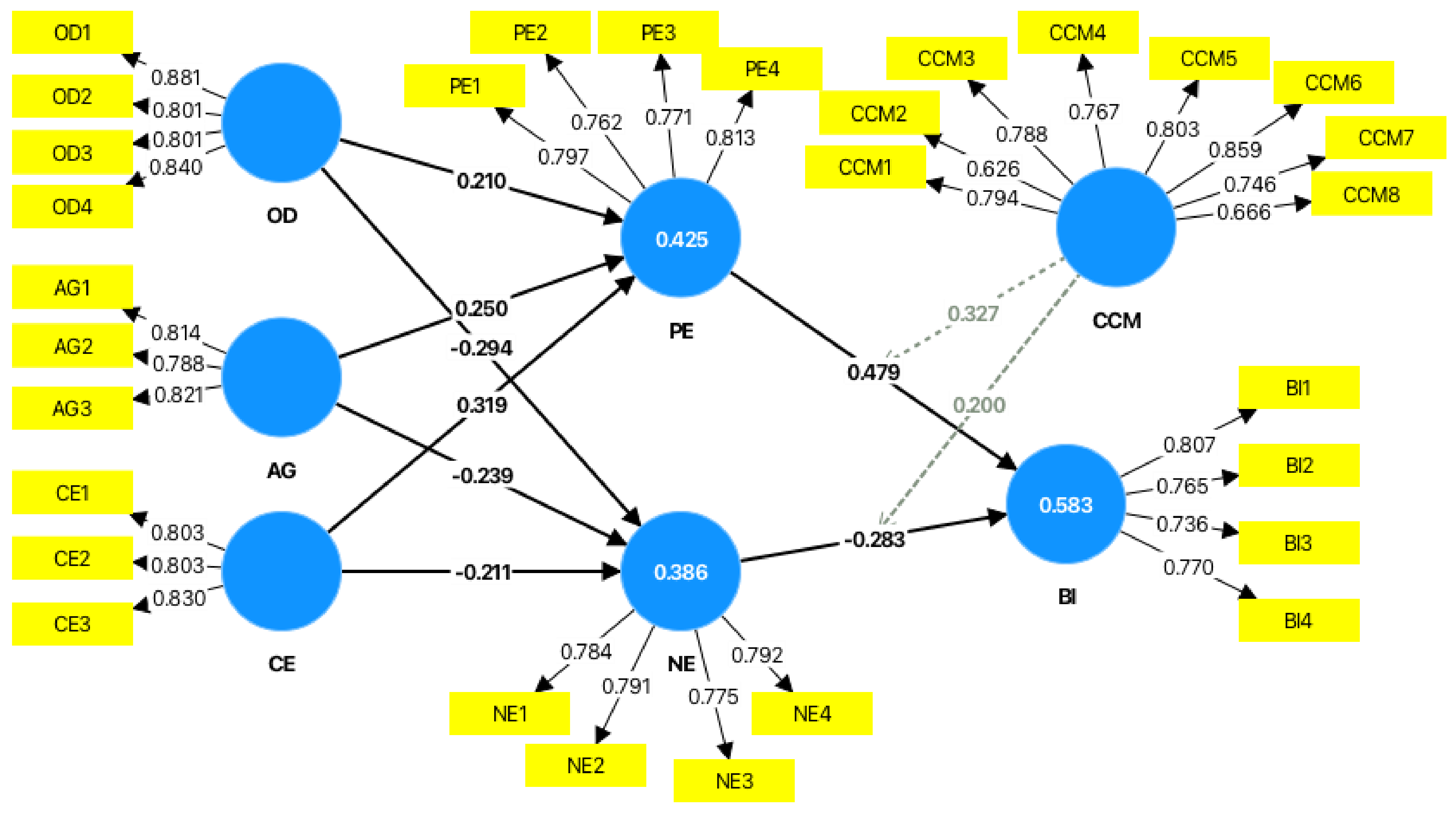
70], ensuring no bias in path estimates. Subsequent bootstrapping (10,000 resamples) confirmed that all hypothesized direct paths were statistically significant (
Figure 2). Specifically, positive emotions (PE) emerged as the strongest predictor of behavioral intentions (BI; β = 0.479,
p < 0.001). The model exhibited moderate to substantial explanatory power [
68], accounting for significant variance in PE (R
2 = 0.425), NE (R
2 = 0.386), and BI (R
2 = 0.583), all surpass the threshold of 0.1. All f
2 effect sizes exceeded the 0.02 threshold, with the PE-BI link showing a substantial effect (f
2 = 0.330).
Finally, PLSpredict confirmed robust out-of-sample predictive power [
71]. All Q
2 predict values surpassed 0, and prediction errors (RMSE/MAE) were predominantly lower than the linear model (LM) benchmarks, indicating the model’s high predictive relevance.
5.5. Hypothesis Testing
All five hypothesized direct effects were supported via bootstrapping analysis (
Table 5). Cognitive appraisals (outcome desirability, agency, certainty) were significant predictors of both positive and negative emotions (
p < 0.01). In turn, positive emotions had a significant positive influence on behavioral intentions (H4: β = 0.479,
p < 0.001), while negative emotions exerted a significant negative influence (H5: β = −0.283,
p < 0.001). Full results are reported in
Table 5.
Moderation Effects (H6–H7): The moderating effect of CCM on the path from emotions to behavioral intentions were tested using SmartPLS 4, consistent with the PLS-SEM approach used in this study. The analysis revealed that CCM significantly and positively moderated the relationship between positive emotions and behavioral intentions (H6: β = 0.327,
p < 0.001), and the relationship between negative emotions and behavioral intentions (H7: β = 0.200,
p < 0.001), supporting H6 and H7 (
Table 6).
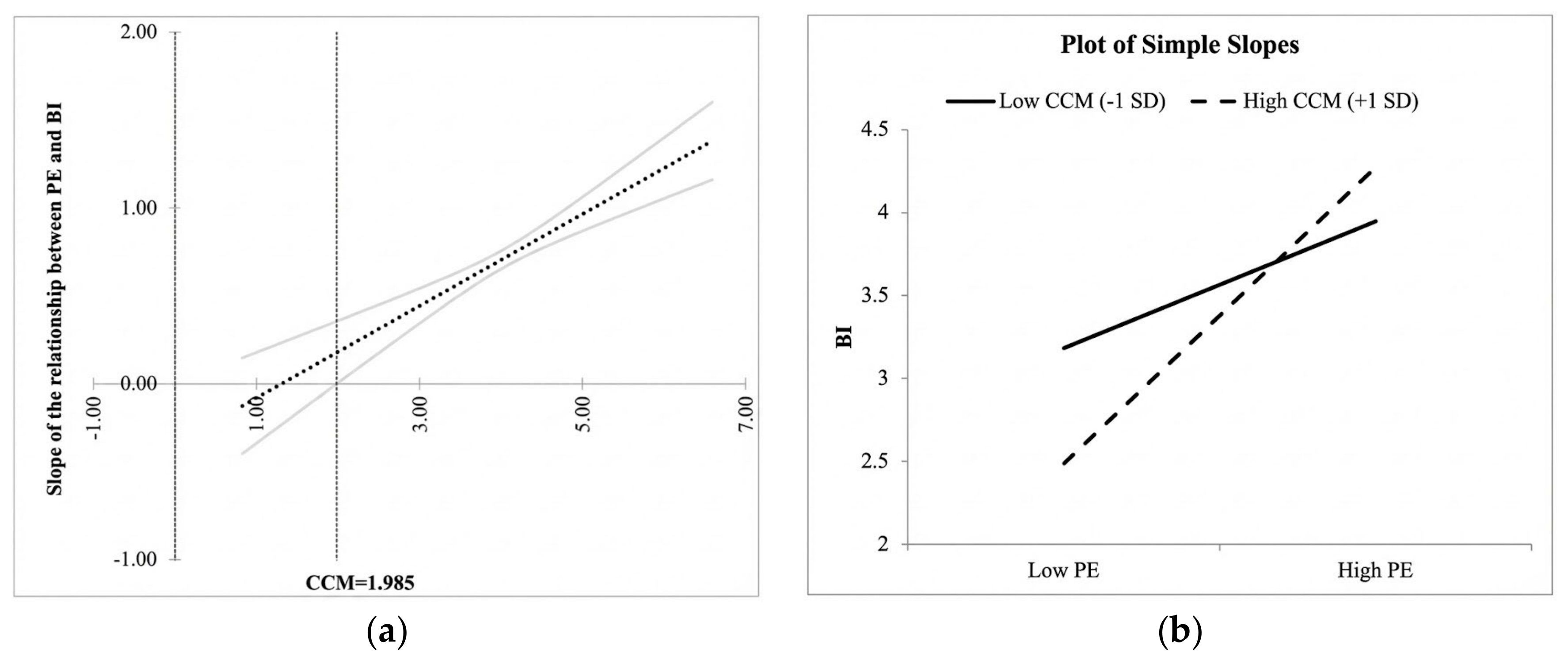
A simple slope analysis was conducted to explain these interactions at ±1 SD of CCM (high vs. low levels): the positive influence of PE on BI was stronger for surf tourists with high levels of CCM (+1 SD) (
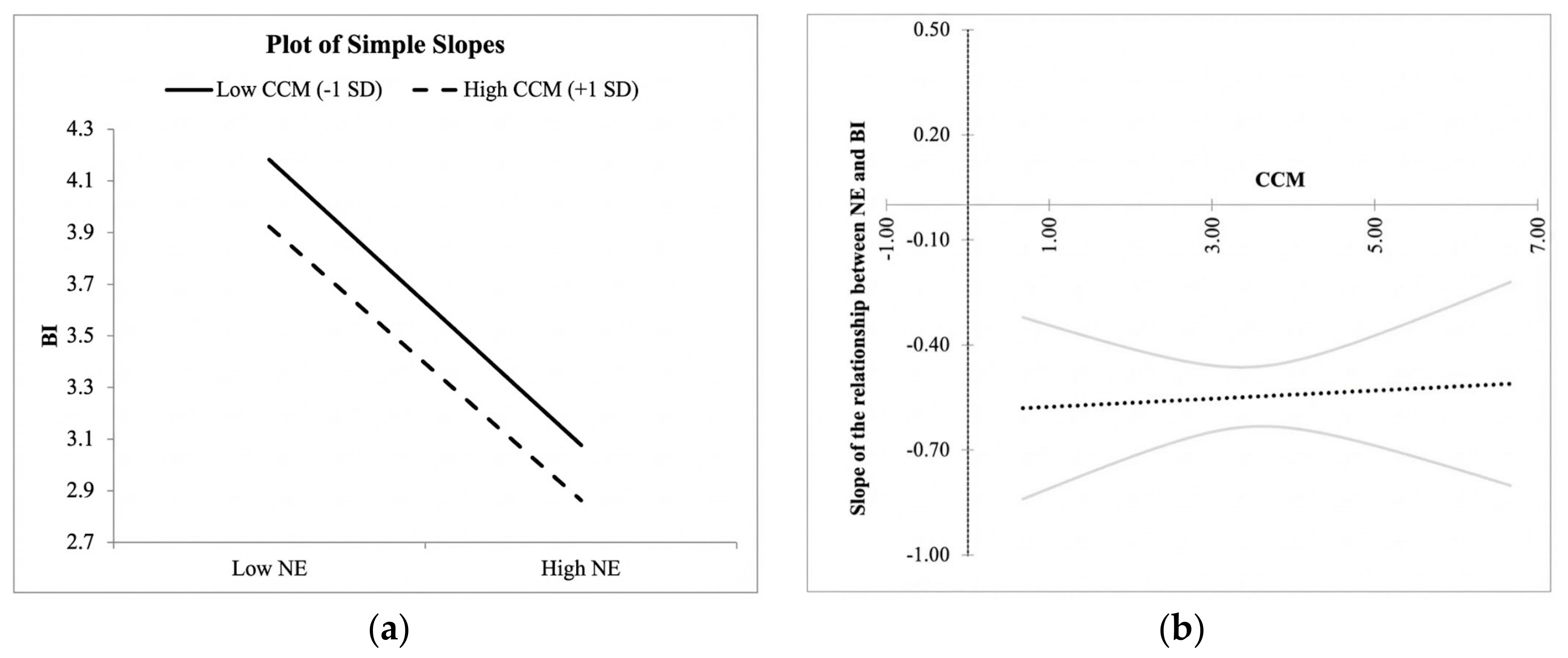
Figure 3). Conversely, for the path from negative emotions, high CCM buffered the detrimental effect of NE on BI (
Figure 4). For low CCM (−1 SD), the PE-BI effect was attenuated, and the NE-BI negative effect was amplified.
The Johnson–Neyman analysis further specified that the enhancing effect of CCM on the PE-BI relationship becomes statistically significant when CCM value exceeds 1.985. These results fully support our hypotheses that CCM moderates the impact of both positive and negative emotions on tourists’ behavioral intentions.
6. Discussion
This research advances the theoretical understanding of tourist experience by uniquely integrating Cognitive Appraisal Theory [
24,
36] with the sociological concept of CCM from Theory of the Leisure Class [
40]. This discussion highlights the complexity of the modern tourist as both experiencer and performer.
6.1. Contextualizing Cognitive Appraisal in Surf Tourism
This study first extends the application of CAT to the context of surf tourism. We confirmed three core appraisal dimensions in generating tourists’ positive and negative emotions—outcome desirability, certainty, and agency, which subsequently drive behavioral intentions.
Outcome desirability, which encompasses the appraisal dimensions of goal relevance and goal congruence [
72], was found to directly influence surf tourists’ emotional intensity, aligning with the core CAT tenet that emotions are fundamentally goal-driven [
24,
35]. Our findings align with existing literature that goal-relevant appraisals (i.e., outcome desirability) are primary drivers of emotion [
29]. However, we provide critical contextual nuances. The primary evaluative criterion for surf tourists is whether the experience fulfills their desired outcomes, which underscores the importance of the utilitarian assessment of personal fulfillment in experiential pursuits.
Certainty manifested not merely as the absence of risk [
73], but as a proxy for self-efficacy. In a skill-based activity like surf tourism, high certainty (e.g., “I am certain I can execute this maneuver”) enhances positive emotions such as pride, while low certainty (i.e., low self-efficacy) directly causes negative emotions like frustration and anxiety. This finding refines our understanding of certainty, shifting it from a passive risk assessment to an active judgment of personal capability that dictates emotional intensity. The finding complements the exploration of mixed emotions and endorses the identification of a positive link between cognitive appraisal and subjective emotions [
52,
74]. The association of certainty with emotions like pride, anger, and disappointment suggests that surf tourists’ emotions are influenced by their evaluative judgments of current and future expectations.
The most critical nuance emerged in the agency dimension. Diverging from traditional tourism research that define agency as “freedom of choice,” our findings operationalize agency as embodied control [
1]. In surfing, self-agency is a visceral, physical perception of mastery over the body-environment interaction, such as wave assessment and surfboard control. This finding corroborates recent studies on embodied-perceptual experiences in surf tourism [
19]. Tourists develop mastery through physical engagement. This factor stimulates advantageous physiological changes, interpreted as feelings and sentiments such as confidence and pleasure. Positive emotions are reinforced via emotional sublimation like self-identity affirmation. In contrast, diminished control may induce negative emotions like boredom or anxiety. These emotional states influence behavioral intentions variably. This result validates that embodied perception, functions as a direct antecedent to emotional experience, confirming that in skill-based activities, the physical sense of control is a core component of cognitive appraisal.
6.2. The Socio-Cognitive Moderation: Integrating Conspicuous Consumption Motivation
The central innovation of this investigation lies in the integration of Conspicuous Consumption Motivation (CCM) as a critical boundary condition that governs the “emotion → behavioral intention” pathway within the CAT framework. While our results corroborate the foundational CAT premise that positive and negative emotions, respectively, promote or inhibit behavioral intentions [
47], we demonstrate that this relationship is contingent upon the tourist’s drive for social display.
First, CCM acts as a synergistic catalyst for the positive pathway (Positive Emotion → Behavioral Intention). In the Veblenian tradition, consumption symbols, ranging from high-end equipment to curated social media narratives, serve as mechanisms for transmitting “identity capital” [
40]. For high-CCM tourists, positive emotions like pride and joy are not merely internal states of satisfaction, they are strategic assets. These emotions are more vigorously converted into sustained tourist loyalty and resilience, as they validate the tourist’s “identity narrative framework” [
56], and effectively satisfying dual needs for social status and group belonging [
2]. This stable loyalty and resilience indirectly drive surf destination sustainability via two core pathways: first, consistent revisit intention delivers stable demand to support investment in sustainable infrastructure and conservation initiatives; second, positive word-of-mouth legitimizes local environmental policies and responsible tourism practices. This process highlights the interpersonal mediation role of CCM, where affective rewards are leveraged for status demonstration [
61].
Second, and most significantly, CCM serves as an affective buffer that destabilizes the negative pathway, functioning as a critical mechanism for fostering individual resilience [
75]. Our findings extend the “reappraisal” phenomenon: CCM mitigates the detrimental impact of negative affect (e.g., anxiety or disappointment) on behavioral intentions. Tourists with high CCM propensity appear to undergo a transformation of meaning, reframing negative experiences not as personal failures but as a “badge of honor” that underscores their courage and “trendsetter status” [
41]. This aligns with the conceptualization of resilience as a tool for improved individual outcomes through adaptive responses to challenges [
75]. By prioritizing the projection of an idealized “leisure class” image, characterized by non-utilitarian pursuits and the quest for unique, albeit challenging, experiences [
40], tourists can internalize failures as necessary costs of social signaling.
This mechanism challenges traditional linear “negative emotion → avoidance” models [
9,
73] and aligns with emergent evidence that “travel display” can modulate travel-related anxiety [
76]. The proposed “social-symbolic reappraisal” process is conceptualized not as a directly measured variable, but as an interpretive theoretical label for the empirical interaction pattern among negative emotions, CCM, and tourist behavioral intentions. The pursuit of status provides the psychological buffer [
77], enabling “resilient tourists” to sustain intentions despite suboptimal physical outcomes. Ultimately, the “performance of the self” (TLC) modulates the “feeling of the self” (CAT). Identity maintenance motives shape default behavioral impulses, externalizing internal distress into social meaning and thereby constructing a performative form of individual resilience.
7. Conclusions
7.1. Theoretical Implications
This study advances the tourism literature by refining CAT within the context of experiential, skill-intensive sports tourism. By identifying outcome desirability, agency (embodied control), and certainty as critical antecedents, we provide a necessary update to CAT, demonstrating its robustness in dynamic contexts where the physical body is central to the appraisal process.
Moreover, we contribute significantly to the emotion in tourism literature by demonstrating that the behavioral consequences of emotion are socially contingent. We show that the impact of an emotion can be repurposed by social goals and influence the established emotion-behavior pathways. A negative emotion (e.g., anxiety) is not inherently dysfunctional; in a high-CCM context, it can be functionally repurposed to serve the social goal of status signaling. This introduces a new layer of complexity to the emotion-behavior link, suggesting that identity motives can act as a powerful regulatory mechanism.
The primary theoretical contribution is the promotionally integration of CAT (an intra-psychic theory of emotion) with TLC (a sociological theory of status) to extend and validate a Socio-Cognitive Model of Tourist Experience specific to surf tourism and sustainability. This model posits that modern tourist behavior is the product of a two-stage process:
Stage 1: Internal Appraisal (CAT): The tourist first appraises the event based on its relevance to personal goals and mastery. This generates a “raw” emotional response (“How does this feel to me?”).
Stage 2: Social-Symbolic Reappraisal (TLC): This raw emotion is then itself subjected to a secondary appraisal, moderated by CCM—which in this study is treated as a relatively stable motivation that acts as a socio-identity lens when translating emotions into intentions. The tourist appraises the social meaning of the feeling (“What does this feeling mean about me to others?”).
It should be clarified that the statistical model in this study provides evidence consistent with this two-stage theoretical narrative but does not directly demonstrate a strict phased temporal process. Our analysis supports the plausibility of the proposed CAT-TLC integration, but does not support strong claims of sequential causality between the two stages.
This integration bridges the “micro” psychological (CAT) and the “macro” sociological (TLC) divide, clarifying the translation of status pursuit into consumer behavior. Crucially, this study contributes to the burgeoning literature on tourism resilience by shifting the focus from organizational and destination scales [
75,
78] to the individual/psychological level. While previous studies focused on firm-level dynamic capabilities, we demonstrate how sociological imperatives (status-seeking) act as a psychological defense mechanism for individual consumers [
75]. It reveals that individual resilience in high-conspicuous consumption is not just a psychological trait but a performative outcome of social distinction. Furthermore, it advances the research framework of tourists’ cognitive appraisal processes by incorporating social identity narratives with CCM.
7.2. Practical Implications
From micro-level, destinations can facilitate tourist resilience through social-symbolic experience reshaping. At the operational level, Hainan surf destinations and clubs should implement concrete service designs, such as professional surf photography, standardized experience records, and themed social sharing scenarios. These practices enable tourists to reframe challenging surf experiences into identity-based symbolic capital, thus reducing negative emotion and sustaining revisit intention. This experience-oriented service upgrades align with SDG 12 by promoting responsible, experience-driven consumption rather than purely material-based tourism consumption.
From meso-level, findings inform the industrial development of Hainan’s surf tourism, regional clusters can strategically target different CCM segments. Policymakers can build a differentiated surf destination system, developing mass-experience zones for beginners and high-quality exclusive zones for enthusiasts to avoid homogeneous competition. Local governments can also support the standardized development of surf clubs, homestays, and coastal catering, provide skill training for residents, and expand employment opportunities in the surf industry chain. In addition, integrating surf culture with rural tourism can drive community income and revitalize coastal villages. This aligns closely with SDG 8 by creating decent local jobs and driving inclusive, sustainable economic growth in coastal communities.
From macro-level, we extend a socio-cognitive resilience framework for experiential sports tourism. Destination managers can establish industry standards for surf tourism, prioritize low-impact coastal development, and protect marine ecological environments while expanding sports tourism formats. For coastal destinations, by facilitating the adaptive capacity of “resilient tourists” to extract status from struggle, they can effectively buffer the negative impacts of environmental volatility and skill-related difficulties, reduce visitor churn and improve long-term destination sustainability. In addition, the emphasis on low-impact, nature-based surf experiences contributes to SDG 14 by supporting the sustainable use of marine and coastal ecosystems.
Overall, the findings of this study deliver actionable, evidence-based strategies for the long-term sustainable operation of surf tourism destinations. By leveraging social-symbolic reappraisal and CCM-oriented product design, destinations can strengthen tourist loyalty, support local sustainable livelihoods, and advance responsible tourism development, consistently contributing to the United Nations Sustainable Development Goals of SDGs 8, 12, and 14.
8. Limitations and Future Research
While this study offers significant insights, the limitations call for future research. First, the sample via snowball sampling on Credamo focuses only on surf tourists in Hainan, China, leading to regional sample bias, self-selection bias and overrepresentation of heavy social media users (the sample mainly consists of young, highly educated, upper-middle-income Chinese tourists familiar with digital environments). Thus, results are more generalizable to urban, highly educated, upper-middle-income surf tourists than the overall surfer population at the destination. Future research should expand samples to multiple coastal regions and validate the model’s robustness in other high-skill (e.g., skiing) or high-display (e.g., luxury eco-wellness) tourism sectors to enhance generalizability across sustainable experiential markets.
Second, the cross-sectional design only captures static relationships and fails to observe dynamic processes. Specifically, resilience here is inferred from emotional states and self-reported intentions at a single point in time, and the evolution of tourists’ responses across different moments after negative experiences is not directly observed. Future research should employ longitudinal tracking or panel designs to better capture the temporal dynamic evolution of cognitive appraisals and long-term behavioral sustainability.
Third, this study does not directly measure pro-environmental and prosocial behaviors, and the link between our measured intentions and sustainability is limited to the economic dimension and tourist–destination relationship stability. Results should thus be interpreted as evidence of tourists’ loyalty and support intentions towards the destination; future research should include specific items to better capture environmental and social sustainability contributions.
Finally, future work should position Conspicuous Consumption Motivation (CCM) as a potential antecedent, investigating how social imperatives actively re-frame uncertainty as a desirable component of elite sustainable consumption. This path is vital for developing a comprehensive theory of motivated appraisal in the experiential tourism market.
Author Contributions
Conceptualization, X.Y.; methodology, X.Y.; software, X.Y.; formal analysis, X.Y.; data curation, X.Y.; writing—original draft preparation, X.Y.; writing—review and editing, C.S., F.F. and S.K.; visualization, X.Y.; supervision, F.F. and S.K. All authors have read and agreed to the published version of the manuscript.
Funding
This research was funded by Hainan Provincial Department of Education (grant number Hnjg2026-160), Hainan Provincial Natural Science Foundation of China (grant number 724QN243), National Social Science Fund of China (grant number 25XGL014) and University of Sanya (grant number USYRC24-13).
Institutional Review Board Statement
The study was conducted in accordance with the Declaration of Helsinki, and approved by the University Malaya Research Ethics Committee (Ref:UM.TNC2/UMREC_4506, approved on 21 May 2025).
Informed Consent Statement
Informed consent was obtained from all subjects involved in the study. An electronic informed consent form was presented at the start of the online questionnaire. All participants were fully informed of the research purpose, procedures, and their right to withdraw at any time. Participation was entirely voluntary, and all responses were collected anonymously to protect participants’ privacy and data confidentiality. All procedures adhered to the university’s ethical guidelines to ensure participant anonymity and data confidentiality.
Data Availability Statement
The original contributions presented in this study are included in the article. Further inquiries can be directed to the corresponding author.
Conflicts of Interest
The authors declare no conflicts of interest.
References
- Zhang, S.; Chen, Y. A Study on Embodied Experience of Surfing Tourism Based on Grounded Theory-Take China’s Hainan Province as an Example. Behav. Sci. 2022, 12, 407. [Google Scholar] [CrossRef]
- Russell, Z.A.; Boley, B.B.; Woosnam, K.M.; Campbell, W.K. Motivations behind posting travel pictures for status: Developing and testing the Conspicuous Consumption Posting Scale (CCPS). J. Travel Tour. Mark. 2023, 39, 555–569. [Google Scholar] [CrossRef]
- Martin, S.A. From shades of grey to Web of Science: A systematic review of surf tourism research in international journals (2011–2020). J. Sport Tour. 2022, 26, 125–146. [Google Scholar] [CrossRef]
- Zhang, X.Y. A Surfboard Drives New Consumption Hotspots in Hainan. 2025. Available online: https://h5.ifeng.com/c/vivoArticle/v002KiA0FOU6Q5bBBNpM-_B9QYD6m2ZqHdyuekfkgbLKzrSE__?vivoBusiness=hiboardnews (accessed on 7 April 2026).
- Yang, Z. Hainan Wanning Forms a New “Sea-Land-Air” Tourism Format. 2025. Available online: https://www.news.cn/local/20250827/a3ae6e964abb41758cd893b7a7905243/c.html (accessed on 7 April 2026).
- 2026 Hainan Marine Tourism Year Launched. 2025. Available online: https://www.mct.gov.cn/whzx/qgwhxxlb/hn_7734/202511/t20251113_963235.htm (accessed on 7 April 2026).
- Qiu, H.; Lei, X.; Chen, Y.; Chen, Y. An Exploratory Qualitative Study of Visitors’ Cognitive Appraisals in a Meteorological Landscape Uncertainty Scenario. J. Hosp. Tour. Res. 2024, 48, 1182–1196. [Google Scholar] [CrossRef]
- Chen, J.; Song, H.; Zeng, W.; Ren, L. Female visitors’ behavioral intention at the shanghai comic exhibition: An application of cognitive appraisal theory. J. Consum. Satisf. Dissatisfaction Complain. Behav. 2023, 36, 46–63. [Google Scholar]
- Tan, K.P.-S.; Li, X. When Tourists are Angry or Fearful: (In)Effectiveness of Emotion Regulation in Changing Behavioral Intention. J. Travel Res. 2024, 63, 796–817. [Google Scholar] [CrossRef]
- Rezaei, N.; Huang, W.-J.; Hung, K. Tourist’s achievement emotions and memorable experience in visiting the Middle East. Tour. Manag. Perspect. 2023, 47, 101129. [Google Scholar] [CrossRef]
- Skavronskaya, L.; Scott, N.; Moyle, B.; Le, D.; Hadinejad, A.; Zhang, R.; Gardiner, S.; Coghlan, A.; Shakeela, A. Cognitive psychology and tourism research: State of the art. Tour. Rev. 2017, 72, 221–237. [Google Scholar] [CrossRef]
- Dai, Y.-D.; Chen, K.-Y.; Chi, C.-S.; Huan, T.-C.T.C. Constructing a Conspicuous Leisure Behavior Scale. J. Leis. Res. 2023, 54, 354–372. [Google Scholar] [CrossRef]
- Li, M.Z.; Stodolska, M. Beyond luxury consumption: The meaning and meaning-making mechanism in conspicuous outbound tourism. J. Leis. Res. 2022, 53, 687–704. [Google Scholar] [CrossRef]
- Siepmann, C.; Holthoff, L.C.; Kowalczuk, P. Conspicuous consumption of luxury experiences: An experimental investigation of status perceptions on social media. J. Prod. Brand Manag. 2021, 31, 454–468. [Google Scholar] [CrossRef]
- Bronner, F.; Hoog, R.D. Conspicuous consumption and the rising importance of experiential purchases. Int. J. Mark. Res. 2018, 60, 88–103. [Google Scholar] [CrossRef]
- Goenka, S.; Thomas, M. The malleable morality of conspicuous consumption. J. Pers. Soc. Psychol. 2020, 118, 562–583. [Google Scholar] [CrossRef] [PubMed]
- Buckley, R.C.; Guitart, D.; Shakeela, A. Contested surf tourism resources in the Maldives. Ann. Tour. Res. 2017, 64, 185–199. [Google Scholar] [CrossRef]
- Wilson, B.; Rita, P.; Barrios, A.; Popp, B. Extending the notion of customer value to surfing camps. Heliyon 2021, 7, e07876. [Google Scholar] [CrossRef]
- Lu, Y.; Chen, Y.; Su, C. Understanding the authenticity of surf tourism: Evidence from Chinese tourists. Sport Soc. 2024, 27, 1462–1486. [Google Scholar] [CrossRef]
- Ruttenberg, T. Alternatives to Development in Surfing Tourism: A Diverse Economies Approach. Tour. Plan. Dev. 2022, 20, 1082–1103. [Google Scholar] [CrossRef]
- Mach, L.; Ponting, J.; Brown, J.; Savage, J. Riding waves of intra-seasonal demand in surf tourism: Analysing the nexus of seasonality and 21stcentury surf forecasting technology. Ann. Leis. Res. 2018, 23, 184–202. [Google Scholar] [CrossRef]
- Reis, P.; Caldeira, A.; Carneiro, M.J. Can surf culture foster loyalty towards surf destinations? J. Sport Tour. 2022, 26, 387–407. [Google Scholar] [CrossRef]
- Porter, B.A.; Usher, L.E. Sole surfers?: Exploring family status and travel behaviour among surf travellers. Ann. Leis. Res. 2018, 22, 424–443. [Google Scholar] [CrossRef]
- Folkman, S.; Lazarus, R.S.; Gruen, R.J.; DeLongis, A. Appraisal, coping, health status, and psychological symptoms. J. Personal. Soc. Psychol. 1986, 50, 571–579. [Google Scholar] [CrossRef]
- Lazarus, R.S.; DeLongis, A.; Folkman, S.; Gruen, R. Stress and adaptational outcomes: The problem of confounded measures. Am. Psychol. 1985, 40, 770–779. [Google Scholar] [CrossRef]
- Cai, R.; Lu, L.; Gursoy, D. Effect of disruptive customer behaviors on others’ overall service experience: An appraisal theory perspective. Tour. Manag. 2018, 69, 330–344. [Google Scholar] [CrossRef]
- Choi, H.; Cho, H.C. Investigating Tourists’ Fun-Eliciting Process toward Tourism Destination Sites: An Application of Cognitive Appraisal Theory. J. Travel Res. 2018, 58, 732–744. [Google Scholar] [CrossRef]
- Hosany, S. Appraisal Determinants of Tourist Emotional Responses. J. Travel Res. 2012, 51, 303–314. [Google Scholar] [CrossRef]
- Yeo, G.C.; Ong, D.C. Associations between cognitive appraisals and emotions: A meta-analytic review. Psychol. Bull. 2024, 150, 1440–1471. [Google Scholar] [CrossRef] [PubMed]
- Tuerlan, T.; Li, S.; Scott, N. Customer emotion research in hospitality and tourism: Conceptualization, measurements, antecedents and consequences. Int. J. Contemp. Hosp. Manag. 2021, 33, 2741–2772. [Google Scholar] [CrossRef]
- Zheng, D.; Ritchie, B.W.; Benckendorff, P.J.; Bao, J. The role of cognitive appraisal, emotion and commitment in affecting resident support toward tourism performing arts development. J. Sustain. Tour. 2019, 27, 1725–1744. [Google Scholar] [CrossRef]
- Scherer, K.R.; Dieckmann, A.; Unfried, M.; Ellgring, H.; Mortillaro, M. Investigating appraisal-driven facial expression and inference in emotion communication. Emotion 2021, 21, 73–95. [Google Scholar] [CrossRef]
- Smith, C.A.; Lazarus, R.S. Emotion and adaptation. In Handbook of Personality: Theory and Research; The Guilford Press: New York, NY, USA, 1990; Volume 21, pp. 609–637. [Google Scholar]
- Zheng, D.; Ritchie, B.W.; Benckendorff, P.J.; Bao, J. Emotional responses toward Tourism Performing Arts Development: A comparison of urban and rural residents in China. Tour. Manag. 2019, 70, 238–249. [Google Scholar] [CrossRef]
- Watson, L.; Spence, M.T. Causes and consequences of emotions on consumer behaviour. Eur. J. Mark. 2007, 41, 487–511. [Google Scholar] [CrossRef]
- Smith, C.A.; Ellsworth, P.C. Patterns of cognitive appraisal in emotion. J. Personal. Soc. Psychol. 1985, 48, 813–838. [Google Scholar] [CrossRef]
- Moors, A.; Ellsworth, P.C.; Scherer, K.R.; Frijda, N.H. Appraisal Theories of Emotion: State of the Art and Future Development. Emot. Rev. 2013, 5, 119–124. [Google Scholar] [CrossRef]
- Roseman, M. Appraisals of Emotion-Eliciting Events: Testing a Theory of Discrete Emotions. J. Personal. Soc. Psychol. 1990, 59, 899–915. [Google Scholar] [CrossRef]
- Ellsworth, P.C.; Scherer, K.R. Appraisal Processes in Emotion; Oxford University Press: Oxford, UK, 2003; pp. 572–595. [Google Scholar]
- Veblen, T. The Theory of the Leisure Class; Routledge: London, UK, 2017. [Google Scholar]
- Song, H.; Zeng, T.-t.; Yim, B.H. A re-examination of conspicuous sport consumption theory on golf and skiing from leisure involvement perspective. Int. J. Sports Mark. Spons. 2022, 23, 727–747. [Google Scholar] [CrossRef]
- Sorour, Y.; Hammad, H. Traveling as a conspicuous experience: The role of self-presentation on social media. J. Hosp. Tour. Insights 2026, 1–21. [Google Scholar] [CrossRef]
- Charoennan, W.; Huang, K.-P. The antecedents and consequences of conspicuous consumption of luxury fashion goods in a social media platform. Int. J. Organ. Innov. 2018, 11, 1–21. [Google Scholar]
- Wang, H.; Lee, T.J.; Sean Hyun, S. Conspicuous vs. inconspicuous travel consumption displays on social media: Emotional arousal through self-evaluation maintenance lens. J. Retail. Consum. Serv. 2026, 91, 104757. [Google Scholar] [CrossRef]
- Ma, J.; Gao, J.; Scott, N.; Ding, P. Customer delight from theme park experiences. Ann. Tour. Res. 2013, 42, 359–381. [Google Scholar] [CrossRef]
- Prayag, G.; Le, T.H.; Pourfakhimi, S.; Nadim, Z. Antecedents and consequences of perceived food authenticity: A cognitive appraisal perspective. J. Hosp. Mark. Manag. 2022, 31, 937–961. [Google Scholar] [CrossRef]
- Zhang, Y.; Prayag, G.; Song, H. Attribution theory and negative emotions in tourism experiences. Tour. Manag. Perspect. 2021, 40, 100904. [Google Scholar] [CrossRef]
- Manthiou, A.; Kang, J.; Hyun, S.S. An integration of cognitive appraisal theory and script theory in the luxury cruise sector: The bridging role of recollection and storytelling. J. Travel Tour. Mark. 2017, 34, 1071–1088. [Google Scholar] [CrossRef]
- Zheng, D.; Ritchie, B.W.; Benckendorff, P.J. Beyond cost–benefit analysis: Resident emotions, appraisals and support toward tourism performing arts developments. Curr. Issues Tour. 2020, 24, 668–684. [Google Scholar] [CrossRef]
- Ma, J.; Scott, N.; Gao, J.; Ding, P. Delighted or Satisfied? Positive Emotional Responses Derived from Theme Park Experiences. J. Travel Tour. Mark. 2016, 34, 1–19. [Google Scholar] [CrossRef]
- Ruth, J.A.; Brunel, F.F.; Otnes, C.C. Linking thoughts to feelings: Investigating cognitive appraisals and consumption emotions in a mixed-emotions context. J. Acad. Mark. Sci. 2002, 30, 44–58. [Google Scholar] [CrossRef]
- Bi, N.; Yin, C.-Y.; Chen, Y. A bittersweet experience! The effect of mixed emotions on business tourists’ revisit intentions. J. Travel Tour. Mark. 2020, 37, 695–710. [Google Scholar] [CrossRef]
- Hosany, S.; Martin, D.; Woodside, A.G. Emotions in Tourism: Theoretical Designs, Measurements, Analytics, and Interpretations. J. Travel Res. 2021, 60, 1391–1407. [Google Scholar] [CrossRef]
- Yang, Y.; Wang, Z.; Shen, H.; Jiang, N. The Impact of Emotional Experience on Tourists’ Cultural Identity and Behavior in the Cultural Heritage Tourism Context: An Empirical Study on Dunhuang Mogao Grottoes. Sustainability 2023, 15, 8823. [Google Scholar] [CrossRef]
- Alrawadieh, Z.; Prayag, G.; Alrawadieh, Z. A cognitive appraisal perspective of emotional accessibility at heritage sites: Empirical evidence from the UNESCO World Heritage Site of Petra. J. Herit. Tour. 2023, 18, 145–163. [Google Scholar] [CrossRef]
- Langtry, C.G.A. Status substitution and conspicuous consumption. arXiv 2023, arXiv:2303.07008. [Google Scholar]
- Yao, Y.; Jia, G.; Hou, Y. Impulsive travel intention induced by sharing conspicuous travel experience on social media: A moderated mediation analysis. J. Hosp. Tour. Manag. 2021, 49, 431–438. [Google Scholar] [CrossRef]
- Šagovnović, I.; Kovačić, S. Traveling, Showing Status and Being Conspicuous: The Power of Destination as a Conspicuous Brand. Int. J. Tour. Res. 2024, 26, e2744. [Google Scholar] [CrossRef]
- Wang, H.; Lee, T.J.; Hyun, S.S. Conspicuous vs. non-conspicuous travel Posts: How expression styles trigger identity threat, authenticity, and dual envy on social media. J. Hosp. Tour. Manag. 2025, 65, 101356. [Google Scholar] [CrossRef]
- Brislin, R.W. Back-Translation for Cross-Cultural Research. J. Cross-Cult. Psychol. 1970, 1, 185–216. [Google Scholar] [CrossRef]
- Phillips, W.J.; Back, K.-J. factors of conspicuous deatination—Conspicuous Consumption Applied to Tourism Destination. J. Travel Tour. Mark. 2011, 28, 583–597. [Google Scholar] [CrossRef]
- Gardiner, S.; Janowski, I.; Kwek, A. Self-identity and adventure tourism: Cross-country comparisons of youth consumers. Tour. Manag. Perspect. 2023, 46, 101061. [Google Scholar] [CrossRef]
- Hosany, S.; Prayag, G.; Van Der Veen, R.; Huang, S.; Deesilatham, S. Mediating Effects of Place Attachment and Satisfaction on the Relationship between Tourists’ Emotions and Intention to Recommend. J. Travel Res. 2016, 56, 1079–1093. [Google Scholar] [CrossRef]
- Hair, J.F.; Risher, J.J.; Sarstedt, M.; Ringle, C.M. When to use and how to report the results of PLS-SEM. Eur. Bus. Rev. 2019, 31, 2–24. [Google Scholar] [CrossRef]
- Fuller, C.M.; Simmering, M.J.; Atinc, G.; Atinc, Y.; Babin, B.J. Common methods variance detection in business research. J. Bus. Res. 2016, 69, 3192–3198. [Google Scholar] [CrossRef]
- Hair, J.; Alamer, A. Partial Least Squares Structural Equation Modeling (PLS-SEM) in second language and education research: Guidelines using an applied example. Res. Methods Appl. Linguist. 2022, 1, 100027. [Google Scholar] [CrossRef]
- Hair, J.F.; Ringle, C.M.; Sarstedt, M. PLS-SEM: Indeed a silver bullet. J. Mark. Theory Pract. 2011, 19, 139–151. [Google Scholar] [CrossRef]
- Chin, W.W. The partial least squares approach to structural equation modeling. In Modern Methods for Business Research; Psychology Press: London, UK, 1998; pp. 295–336. [Google Scholar]
- Henseler, J.; Ringle, C.M.; Sarstedt, M. A new criterion for assessing discriminant validity in variance-based structural equation modeling. J. Acad. Mark. Sci. 2015, 43, 115–135. [Google Scholar] [CrossRef]
- Sarstedt, M.; Ringle, C.M.; Hair, J.F. Partial Least Squares Structural Equation Modeling. In Handbook of Market Research; Springer International Publishing: Cham, Switzerland, 2021; pp. 587–632. [Google Scholar]
- Shmueli, G.; Sarstedt, M.; Hair, J.F.; Cheah, J.-H.; Ting, H.; Vaithilingam, S.; Ringle, C.M. Predictive model assessment in PLS-SEM: Guidelines for using PLSpredict. Eur. J. Mark. 2019, 53, 2322–2347. [Google Scholar] [CrossRef]
- Jordan, E.J.; Prayag, G. Residents’ Cognitive Appraisals, Emotions, and Coping Strategies at Local Dark Tourism Sites. J. Travel Res. 2022, 61, 887–902. [Google Scholar] [CrossRef]
- Liu, J.; Li, T.; Zhou, Z.; Zhou, Y.; Li, X. Investigating the negative impact of influencer marketing on tourist behaviour: A value co-destruction perspective. Curr. Issues Tour. 2025, 1–22. [Google Scholar] [CrossRef]
- Pham, L.L.D.; Eves, A.; Wang, X.L. Understanding tourists’ consumption emotions in street food experiences. J. Hosp. Tour. Manag. 2023, 54, 392–403. [Google Scholar] [CrossRef]
- Prayag, G. Tourism resilience in the ‘new normal’: Beyond jingle and jangle fallacies? J. Hosp. Tour. Manag. 2023, 54, 513–520. [Google Scholar] [CrossRef]
- Huang, Y.; Qian, L.; Tu, H. When social media exposure backfires on travel: The role of social media–induced travel anxiety. Tour. Manag. 2025, 110, 105163. [Google Scholar] [CrossRef]
- Zenker, S.; Kock, F. The coronavirus pandemic—A critical discussion of a tourism research agenda. Tour. Manag. 2020, 81, 104164. [Google Scholar] [CrossRef] [PubMed]
- Sharma, G.D.; Thomas, A.; Paul, J. Reviving tourism industry post-COVID-19: A resilience-based framework. Tour. Manag. Perspect. 2021, 37, 100786. [Google Scholar] [CrossRef] [PubMed]
| Disclaimer/Publisher’s Note: The statements, opinions and data contained in all publications are solely those of the individual author(s) and contributor(s) and not of MDPI and/or the editor(s). MDPI and/or the editor(s) disclaim responsibility for any injury to people or property resulting from any ideas, methods, instructions or products referred to in the content. |