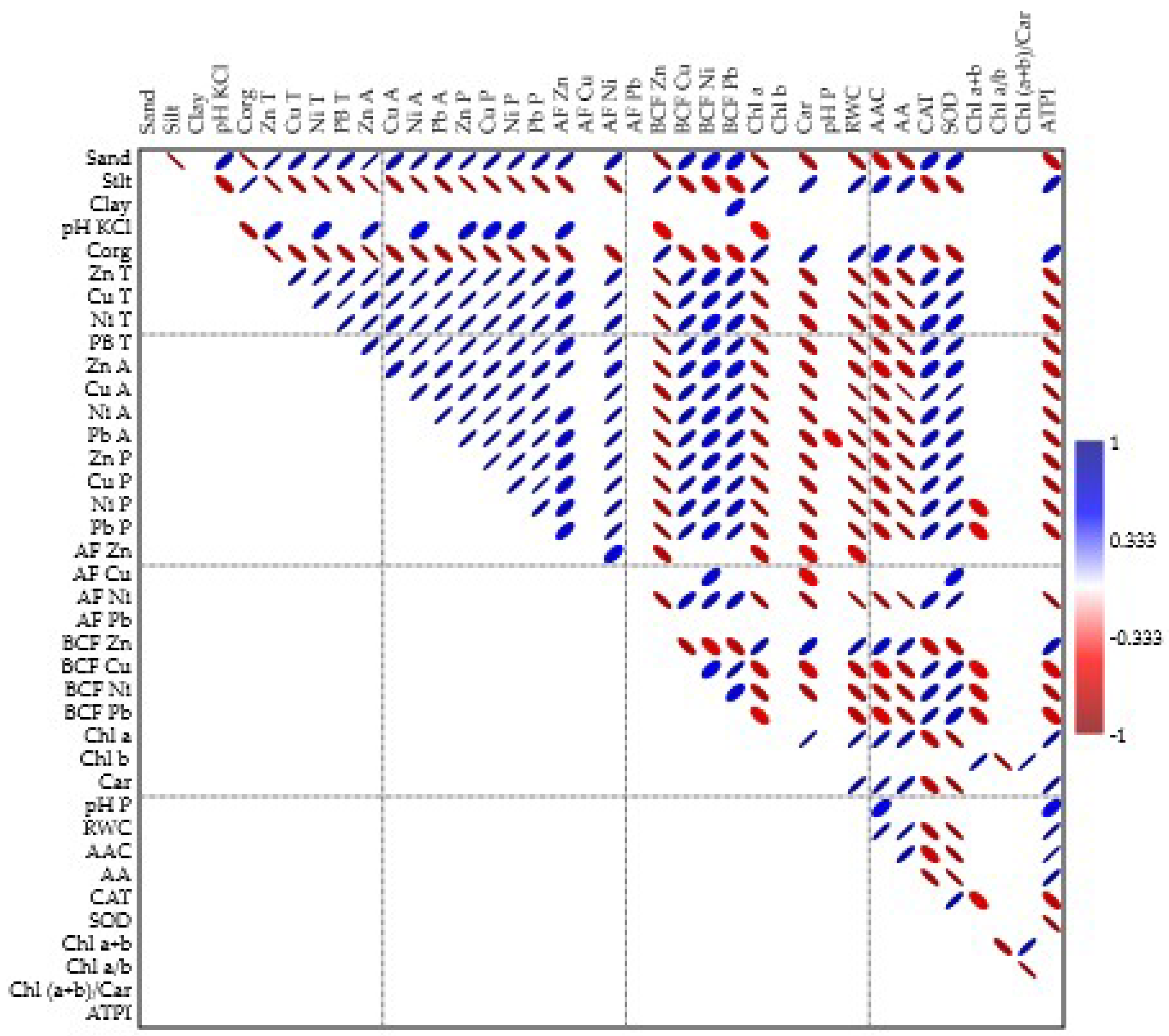
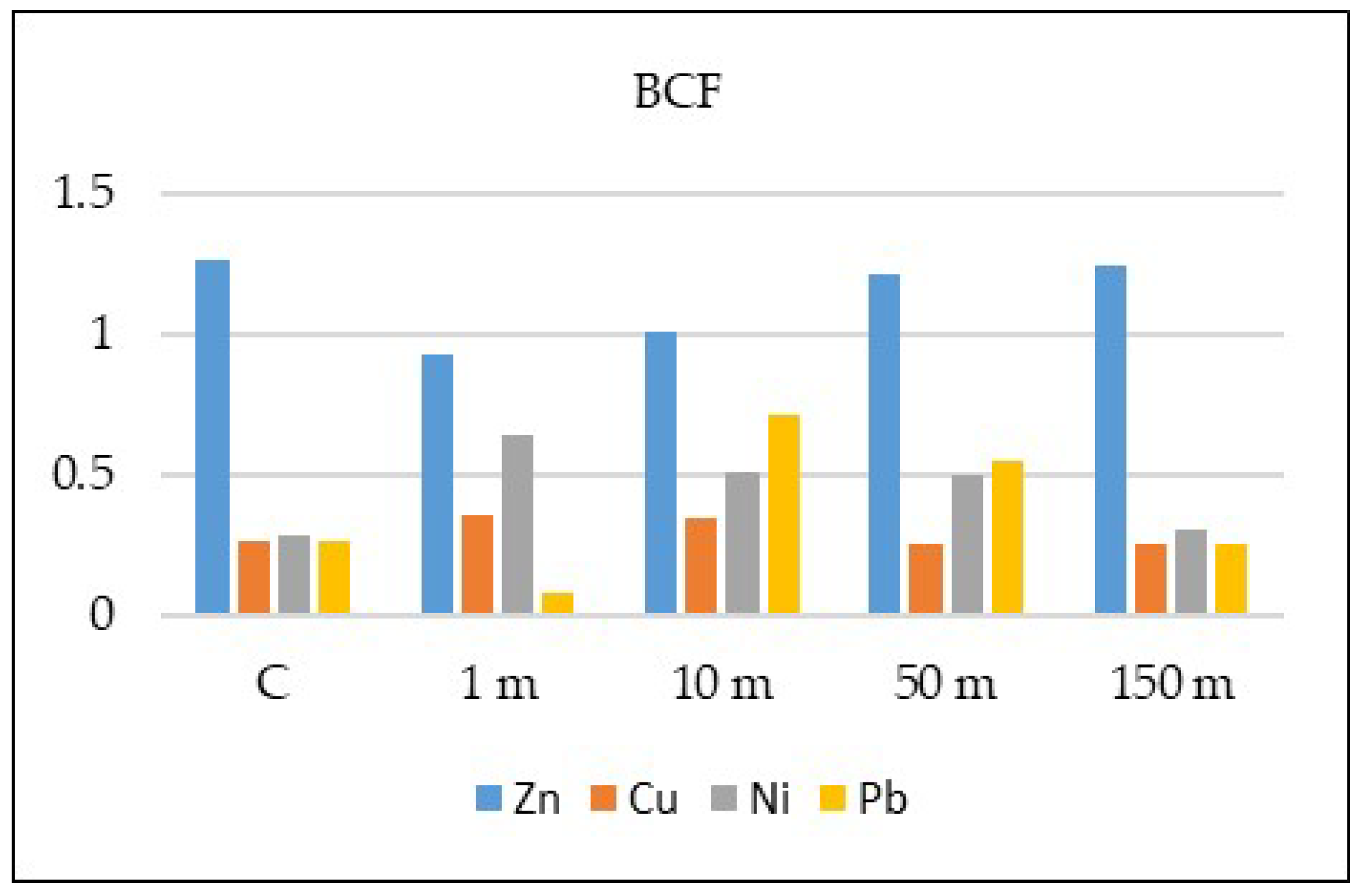
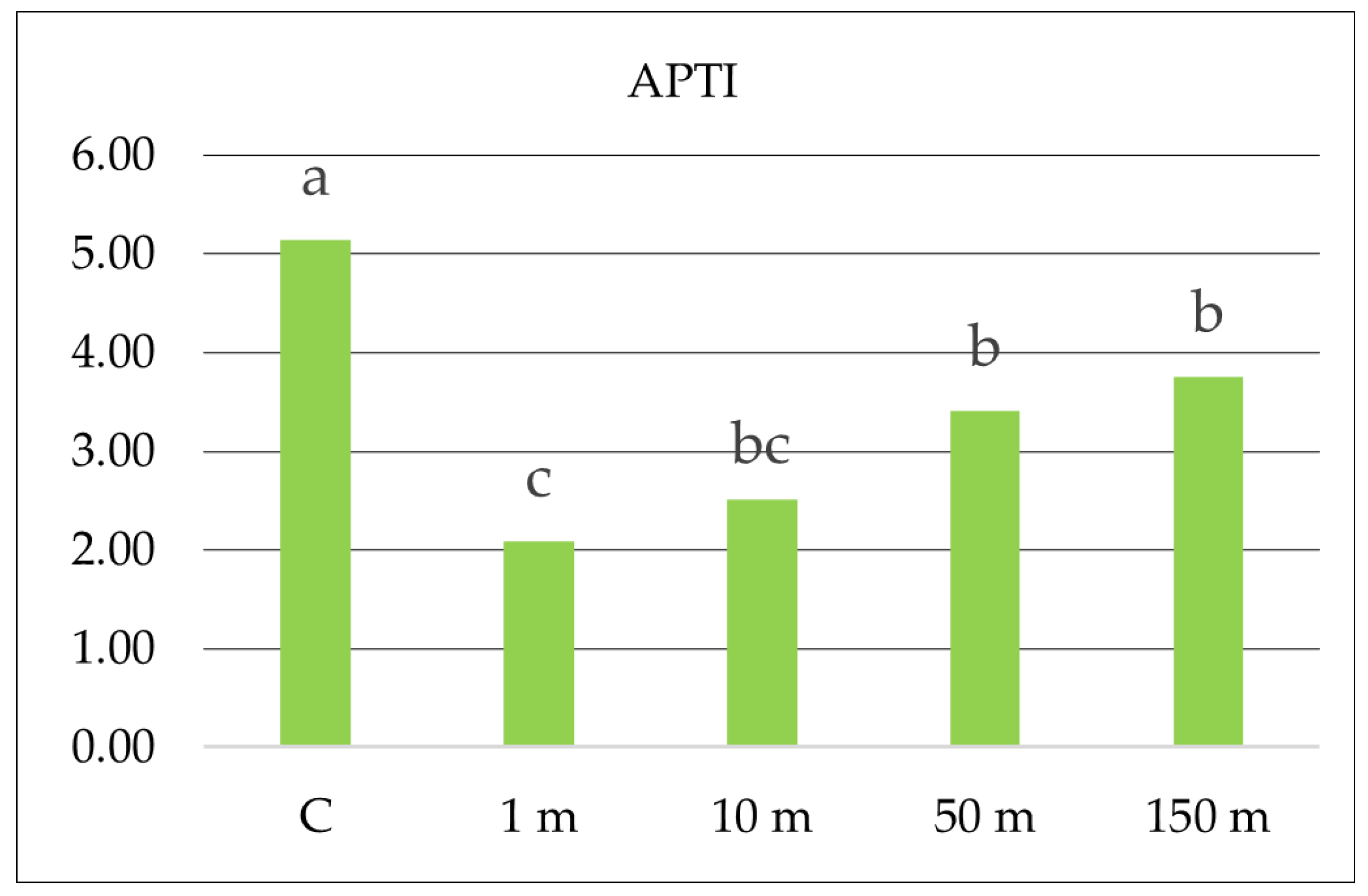
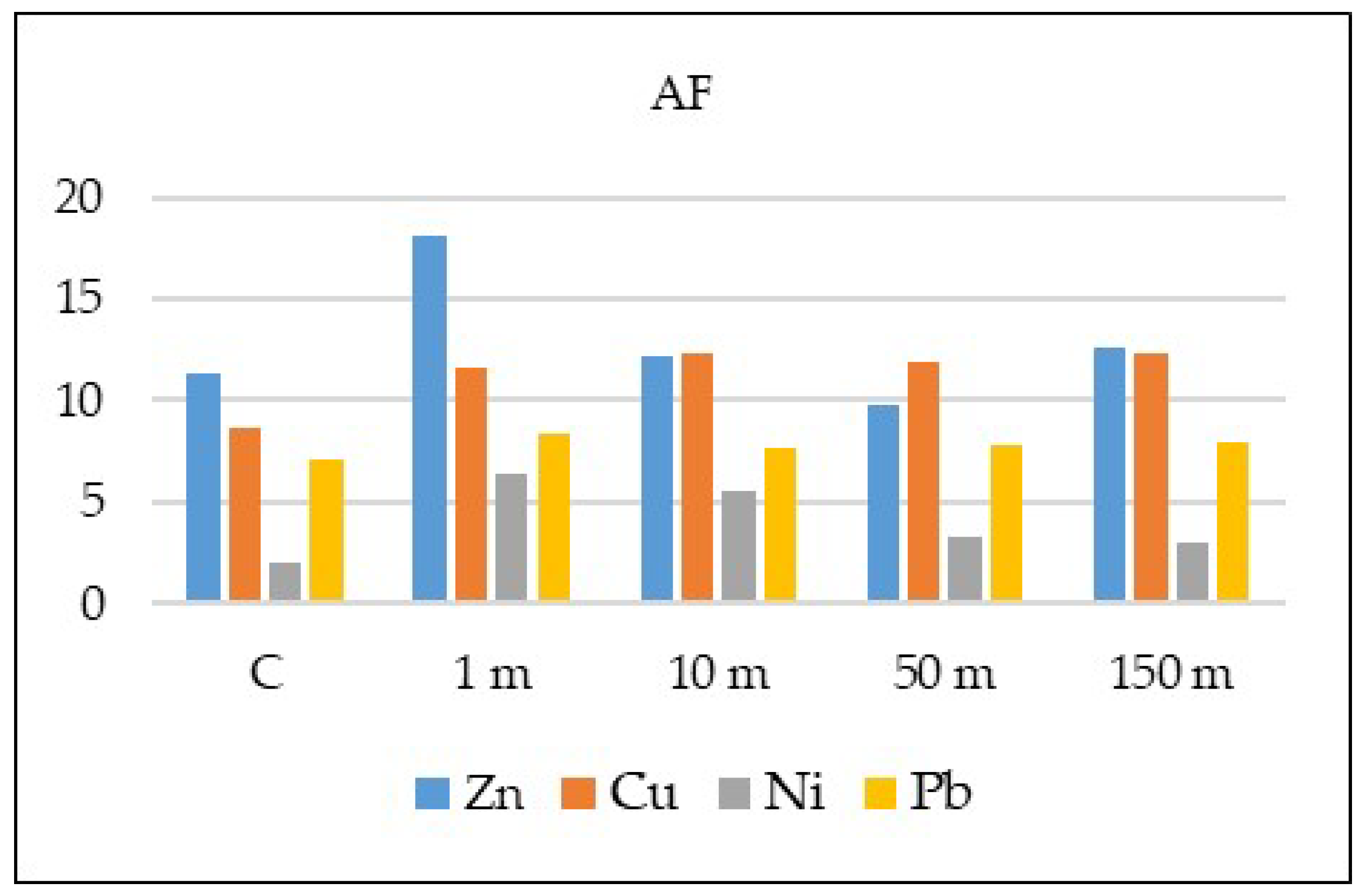
Traffic-Related Heavy Metal Stress in the Medicinal Plant Plantago lanceolata L.



Abstract
1. Introduction
2. Materials and Methods
2.1. Study Area
2.2. Soil Analysis
2.3. Plant Analysis
2.3.1. Heavy Metal Content in Plantago lanceolata L. Leaves
2.3.2. Biochemical Analysis of Plantago lanceolata L. Leaves
- −
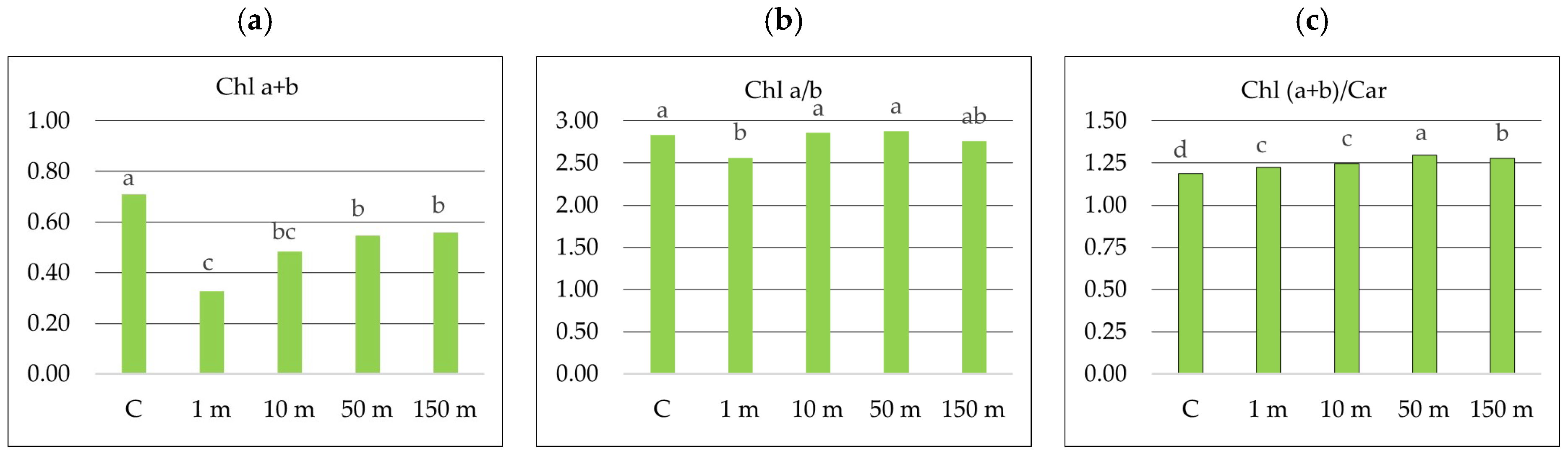
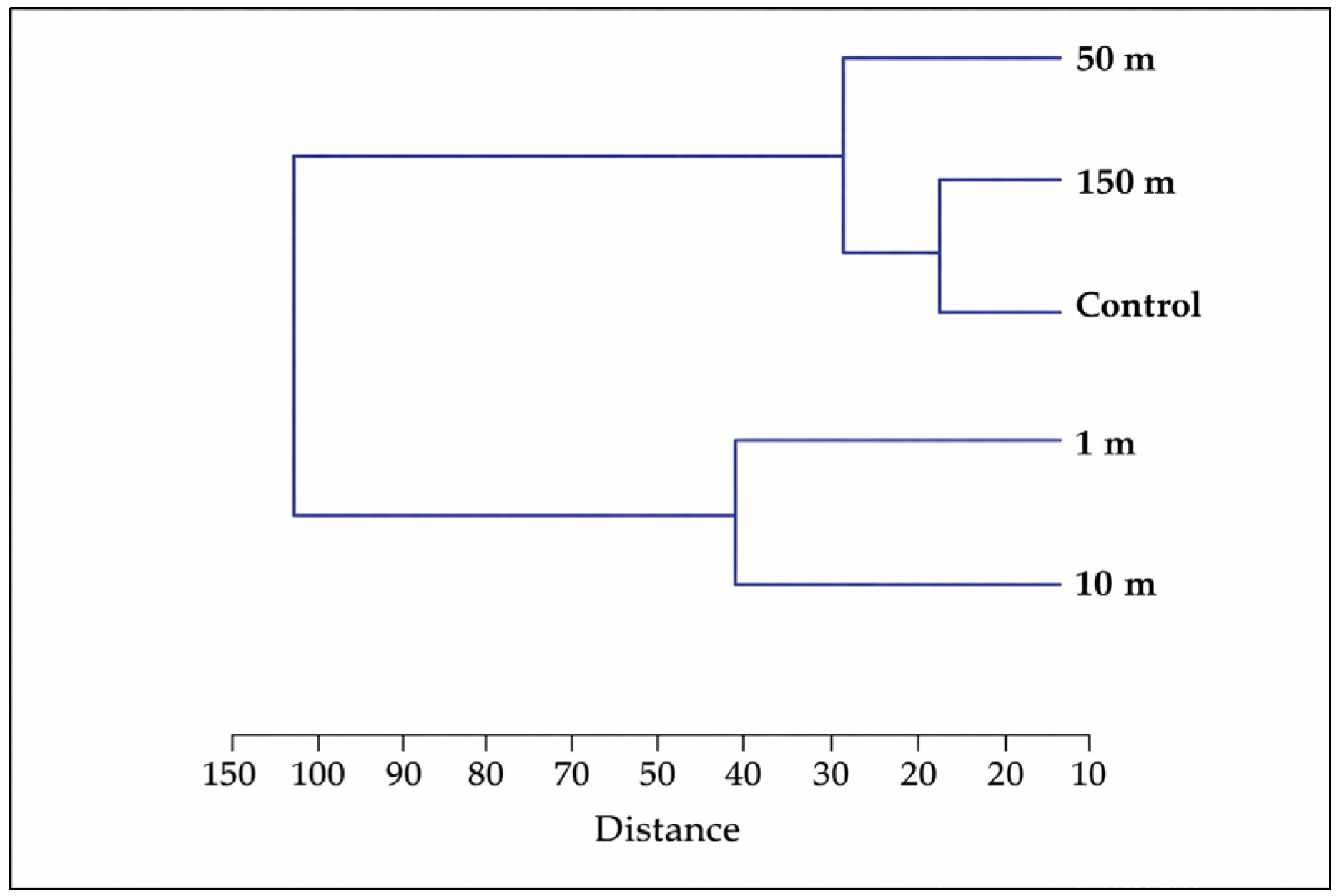
- The content of chlorophylls a and b (Chl a and Chl b), carotenoids (Car) was determined according to Lichtenthaler [38] and Lichtenthaler and Buschmann [39]. Measurements were performed at wavelengths (λ max) of 645 nm for chlorophyll a content, 662 nm for chlorophyll b content, and 470 nm for carotenoid content. Based on the concentrations of chlorophyll a (Chl a) and chlorophyll b (Chl b), the Chl a/b ratio (an indicator of leaf physiological status) was calculated, along with the total chlorophyll content (Chl a + Chl b). Ascorbic acid (AAC) content was determined in accordance with PN A-04019:1998 [40] using a titration method in an acidic medium with a dye indicator, with the endpoint identified by the of a pink coloration. Antioxidant activity (AA) was assessed following the procedure described by Zeipina et al. [41].
- −
- Leaf pH was measured potentiometrically after homogenization of 5 g of fresh plant tissue in 10 mL of deionized water [42].
- −
- Relative water content (RWC in %) determined according to the method of Rai and Panda [42].
- −
- Catalase (CAT) activity was determined following the method of Kar and Mishra [44], based on the quantification of purpurogallin formation measured spectrophotometrically at 420 nm.
- −
- Superoxide dismutase (SOD) activity was assayed according to Beauchamp and Fridovich [45]. This method is based on the enzyme’s ability to inhibit the photochemical reduction in nitro blue tetrazolium, with absorbance measured at 560 nm. One unit of SOD activity (U) is defined as the amount of enzyme required to cause 50% inhibition of the reduction reaction mediated by the superoxide anion (O2•−).
2.4. Statistical Analysis
3. Results and Discussion
3.1. Soil Parameters
3.2. Heavy Metals in Plants
3.3. Biochemical Parameters of Plantago lanceolata L. Leaves
4. Conclusions
Author Contributions
Funding
Institutional Review Board Statement
Informed Consent Statement
Data Availability Statement
Conflicts of Interest
References
- Mesjasz-Lech, A.; Włodarczyk, A. The role of logistics infrastructure in development of sustainable road transport in Poland. Res. Transp. Bus. Manag. 2022, 44, 100841. [Google Scholar] [CrossRef]
- Johansson, C.; Norman, M.; Burman, L. Road traffic emission factors for heavy metals. Atmos. Environ. 2009, 43, 4681–4688. [Google Scholar] [CrossRef]
- Barisa, A.; Rosa, M. A system dynamics model for CO2 emission mitigation policy design in road transport sector. Energy Procedia 2018, 147, 419–427. [Google Scholar] [CrossRef]
- Meersman, H.; Nazemzadeh, M. The contribution of transport infrastructure to economic activity: The case of Belgium. Case Stud. Transp. Policy 2017, 5, 316–324. [Google Scholar] [CrossRef]
- Iarocci, G.; Cocchiara, R.A.; Sestili, C.; Del Cimmuto, A.; La Torre, G. Variation of atmospheric emissions within the road transport sector in Italy between 1990 and 2016. Sci. Total Environ. 2019, 692, 1276–1281. [Google Scholar] [CrossRef] [PubMed]
- Skorbiłowicz, M.; Skorbiłowicz, E.; Rogowska, W. Heavy metal concentration in roadside soils on the Białystok-Budzisko route in northeastern Poland. Minerals 2021, 11, 1290. [Google Scholar] [CrossRef]
- Economou-Eliopoulos, M.; Megremi, I. Contamination of the soil–groundwater–crop system: Environmental risk and opportunities. Minerals 2021, 11, 775. [Google Scholar] [CrossRef]
- Chen, H.; Teng, Y.; Lu, S.; Wang, Y.; Wang, J. Contamination features and health risk of soil heavy metals in China. Sci. Total Environ. 2015, 512–513, 143–153. [Google Scholar] [CrossRef]
- Sarma, H.; Deka, S.; Deka, H.; Saikia, R.R. Accumulation of heavy metals in selected medicinal plants. Rev. Environ. Contam. Toxicol. 2011, 214, 63–86. [Google Scholar] [CrossRef]
- Rochel, R.; Kwapuliński, J.; Kowol, J.; Bogunia, M. Migration of bioavailable chemical forms of chromium from soil to medicinal plants. Fresenius Environ. Bull. 2009, 18, 1963–1966. [Google Scholar]
- Kowol, J.; Kwapuliński, J.; Nogaj, E.; Babuśka-Roczniak, M.; Brodziak-Dopierała, B.; Roczniak, W.; Szady, A.; Cypcer, S. Assessment of phytotherapeutic mixtures as a potential route of absorption of some metal compounds. J. Pre-Clin. Clin. Res. 2016, 10, 115–121. [Google Scholar] [CrossRef]
- Mirosławski, J.; Wiechuła, D.; Kwapuliński, J.; Rochel, R.; Loska, K.; Ciba, J. Occurrence of Pb, Cd, Cu, Mn, Ni, Co and Cr in selected species of medicinal plants in Poland. Bronchologia Chem. Toksykol. 1995, 28, 363–368. (In Polish) [Google Scholar]
- Pathak, A.; Gupta, A.P.; Pandey, P. Herbal medicine and sustainable development challenges and opportunities. In Herbal Medicine Phytochemistry; Izah, S.C., Ogwu, M.C., Akram, M., Eds.; Reference Series in Phytochemistry; Springer: Cham, Switzerland, 2024; pp. 1–26. [Google Scholar] [CrossRef]
- Asiminicesei, D.-M.; Fertu, D.I.; Gavrilescu, M. Impact of heavy metal pollution in the environment on the metabolic profile of medicinal plants and their therapeutic potential. Plants 2024, 13, 913. [Google Scholar] [CrossRef] [PubMed]
- Nagórska-Socha, A.; Ptasiński, B.; Kita, A. Heavy metal bioaccumulation and antioxidative responses in Cardaminopsis arenosa and Plantago lanceolata leaves from metalliferous and non-metalliferous sites: A field study. Ecotoxicology 2013, 22, 1422–1434. [Google Scholar] [CrossRef]
- Grigore, M.N.; Ivan, M.; Verdes, A.; Oprica, L. Enzymatic activity and non-enzymatic antioxidants content in several Plantago species (from Valea Ilenei nature reserve), during different phenophases. Rev. Chim. 2017, 68, 1539–1543. [Google Scholar] [CrossRef]
- Gębczyński, P.; Bernaś, E.; Słupski, J. Usage of wild-growing plants as foodstuff. In Cultural heritage—Possibilities for Land-Centered Societal Development; Hernik, J., Walczycka, M., Sankowski, E., Harris, B.J., Eds.; Environmental History; Springer: Cham, Switzerland, 2022; Volume 13. [Google Scholar] [CrossRef]
- Jaric, S.; Kostic, O.; Mataruga, Z.; Pavlovic, D.; Pavlovic, M.; Mitrovic, M.; Pavlovic, P. Traditional wound-healing plants used in the Balkan region (Southeast Europe). J. Ethnopharmacol. 2018, 211, 311–328. [Google Scholar] [CrossRef]
- Kováč, I.; Ďurkáč, J.; Hollý, M.; Jakubčová, K.; Peržeľová, V.; Mučaji, P.; Švajdlenka, E.; Sabol, F.; Legáth, J.; Belák, J.; et al. Plantago lanceolata L. water extract induces transition of fibroblasts into myofibroblasts and increases tensile strength of healing skin wounds. J. Pharm. Pharmacol. 2015, 67, 117–125. [Google Scholar] [CrossRef]
- Bahadori, M.B.; Sarikurkcu, C.; Kocak, M.S.; Calapoglu, M.; Uren, M.C.; Ceylan, O. Plantago lanceolata as a source of health-beneficial phytochemicals: Phenolics profile and antioxidant capacity. Food Biosci. 2020, 34, 100536. [Google Scholar] [CrossRef]
- Sosnowicz, K.; Czerwińska, M. Plant materials used in eye diseases—From use in traditional medicine to research in antioxidant, anti-inflammatory, and antibacterial activity. Prospect. Pharm. Sci. 2024, 22, 1–20. [Google Scholar] [CrossRef]
- Upadhyay, S.; Bhandari, S.; Sharma, A.; Singh, B.R.; Taj, G. Plantago lanceolata L. In Medicinal and Aromatic Plants of India, Vol. 3; Máthé, Á., Khan, I.A., Eds.; Medicinal and Aromatic Plants of the World; Springer: Cham, Switzerland, 2024; Volume 11. [Google Scholar] [CrossRef]
- García-Caparrós, P.; De Filippis, L.; Gul, A.; Hasanuzzaman, M.; Ozturk, M.; Altay, V.; Lao, M.T. Oxidative stress and antioxidant metabolism under adverse environmental conditions: A review. Bot. Rev. 2021, 87, 421–466. [Google Scholar] [CrossRef]
- Paul, S.; Dutta, R.; Ghosh, A.; Banerjee, A.; Bhattacharya, S.; Talukdar, P.; Mukherjee, S. Differential expression of superoxide dismutase gene in response to magnesium salt in Oryza sativa (L) plants grown in arsenic infested soil of gangetic West Bengal. Biocatal. Agric. Biotechnol. 2024, 60, 103327. [Google Scholar] [CrossRef]
- Biczak, R.; Pawłowska, B.; Pilis, W.; Szczegielniak, J.; Wróbel, J.; Telesiński, A. Phytotoxicity and effect of ionic liquids on antioxidant parameters in spring barley seedlings: The impact of exposure time. Processes 2020, 8, 1175. [Google Scholar] [CrossRef]
- Lemanowicz, J.; Bartkowiak, A. Chemical and biochemical properties of common nettle (Urtica dioica L.) depending on various nitrogen fertilization doses in crop production. Sustainability 2025, 17, 6394. [Google Scholar] [CrossRef]
- Nadgórska-Socha, A.; Kandziora-Ciupa, M.; Trzęsicki, M.; Barczyk, G. Air pollution tolerance index and heavy metal bioaccumulation in selected plant species from urban biotopes. Chemosphere 2017, 183, 471–482. [Google Scholar] [CrossRef] [PubMed]
- Skrynetska, I.; Karcz, J.; Barczyk, G.; Kendziora-Ciupa, M.; Ciepał, R.; Nagórska-Socha, A. Using Plantago major and Plantago lanceolata in environmental pollution research in an urban area of Southern Poland. Environ. Sci. Pollut. Res. 2019, 26, 23359–23371. [Google Scholar] [CrossRef] [PubMed]
- Sharma, I.; Ahmad, P. Catalase: A versatile antioxidant in plants. In Oxidative Damage to Plants; Ahmad, P., Ed.; Academic Press: Cambridge, MA, USA, 2014; pp. 131–148. [Google Scholar] [CrossRef]
- Mehmood, Z.; Yang, H.-H.; Awan, M.U.F.; Ahmed, U.; Hasnain, A.; Luqman, M.; Muhammad, S.; Sardar, A.A.; Chan, T.-Y.; Sharjeel, A. Effects of air pollution on morphological, biochemical, dna, and tolerance ability of roadside plant species. Sustainability 2024, 16, 3427. [Google Scholar] [CrossRef]
- Singh, S.K.; Rao, D.N. Evaluation of the plants for their tolerance to air pollution. In Proceedings of the Symposium on Air Pollution Control, Delhi, India, 23–25 November 1983; pp. 218–224. [Google Scholar]
- Enitan, I.T.; Durowoju, O.S.; Edokpayi, J.N.; Odiyo, J.O.A. review of air pollution mitigation approach using air pollution tolerance index (APTI) and anticipated performance index (API). Atmosphere 2022, 13, 374. [Google Scholar] [CrossRef]
- PN-ISO 10390; Chemical and Agricultural Analysis: Determining Soil pH. Polish Standards Committee: Warszawa, Poland, 1997.
- PN-ISO 14235; Chemical and Agricultural Analysis—Soil Quality—Determining the Content of Organic Carbon by Oxidation of Potassium Dichromate (VI) in the Environment of Sulphuric acid (VI). Polish Standards Committee: Warsaw, Poland, 2003.
- Crock, J.; Severson, R. Four reference soil and rock samples for measuring element availability in the Western Energy Regions. Geochem. Surv. Circ. 1980, 841, 1–16. [Google Scholar]
- Obrador, A.; Alvarez, J.M.; Lopez-Valdivia, L.M.; Gonzalez, D.; Novillo, J.; Rico, M.I. Relationships of soil properties with Mn and Zn distribution in acidic soils and their uptake by a barley crop. Geoderma 2007, 137, 432–443. [Google Scholar] [CrossRef]
- Ali, H.; Khan, E.; Sajad, M.A. Phytoremediation of heavy metals—concepts and applications. Chemosphere 2013, 91, 869–881. [Google Scholar] [CrossRef] [PubMed]
- Lichtenthaler, H.K. Chlorophylls and carotenoids: Pigments of photosynthetic biomembranes. Methods Enzymol. 1987, 148, 350–382. [Google Scholar] [CrossRef]
- Lichtenthaler, H.K.; Buschmann, C. Chlorophylls and carotenoids: Measurement and characterization by UV-VIS spectroscopy. Curr. Protoc. Food Anal. Chem. 2001, 1, F4.3.1–F4.3.8. [Google Scholar] [CrossRef]
- PN A-04019:1998; Food Products—Determination of Vitamin C. Polish Committee for Standardization: Warsaw, Poland, 1998.
- Zeipina, S.; Alsina, I.; Lepse, L.; Dūma, M. Antioxidant activity in nettle (Urtica dioica L.) and garden orache (Atriplex hortensis L.) leaves during vegetation period. Chem. Technol. 2015, 66, 29–33. [Google Scholar] [CrossRef]
- Rai, P.K.; Panda, L.L.S. Dust capturing potential and air pollution tolerance index (APTI) of some road side tree vegetation in Aizawl, Mizoram, India: An Indo-Burma hot spot region. Air Qual. Atmos. Health 2014, 7, 93–101. [Google Scholar] [CrossRef]
- Prajapati, S.; Tripathi, B. Seasonal variation of leaf dust accumulation and pigment content in plant species exposed to urban particulates pollution. J. Environ. Qual. 2008, 37, 865–870. [Google Scholar] [CrossRef]
- Kar, M.; Mishra, D. Catalase, peroxidase, and polyphenoloxidase activities during rice leaf senescence. Plant Physiol. 1976, 57, 315–319. [Google Scholar] [CrossRef]
- Beauchamp, C.; Fridovich, I. Superoxide dismutase: Improved assays and an assay applicable to acrylamide gels. Anal. Biochem. 1971, 44, 276–287. [Google Scholar] [CrossRef]
- Hammer, Ø.; Harper, D.A.; Ryan, P.D. Past: Paleontological statistics software package for education and data analysis. Palaeontol. Electron. 2001, 4, 9. [Google Scholar]
- Ward, J.H., Jr. Hierarchical Grouping to Optimize an Objective Function. J. Am. Stat. Assoc. 1963, 58, 236–244. [Google Scholar] [CrossRef]
- USDA. Keys to Soil Taxonomy, 10th ed.; United States Department of Agriculture, Natural Resources Conservation Service: Washington, DC, USA, 2006; pp. 1–332. [Google Scholar]
- Korzeniowska, J. Heavy metal content in the soil along the road No. 7 near Chyżne. Atmosphere 2023, 14, 2. [Google Scholar] [CrossRef]
- Kovácik, J.; Dudáš, M.; Hedbavny, J.; Mártonfi, P. Dandelion Taraxacum linearisquameum does not reflect soil metal content in urban localities. Environ. Pollut. 2016, 218, 160–167. [Google Scholar] [CrossRef] [PubMed]
- Minister of Climate and Environment of the Republic of Poland. Regulation of the Minister of the Climate and Environment dated 13 November 2024 amending the regulation on assessment procedures for the land surface pollution. Journal of Laws, 13 November 2024; item 1657.
- Nabulo, G.; Oryem-Origa, H.; Diamond, M. Assessment of lead, cadmium, and zinc contamination of roadside soils, surface films, and vegetables in Kampala city, Uganda. Environ. Res. 2006, 101, 42–52. [Google Scholar] [CrossRef]
- Zehetner, F.; Rosenfellner, U.; Mentler, A.; Gerzabek, M.H. Distribution of road salt residues, heavy metals and polycyclic aromatic hydrocarbons across a highway-forest interface. Water Air Soil Pollut. 2009, 198, 125–132. [Google Scholar] [CrossRef]
- Mazur, Z.; Radziemska, M.; Fronczyk, J.; Jeznach, J. Heavy metal accumulation in bioindicators of pollution in urban areas of northeastern Poland. Fresenius Environ. Bull. 2015, 24, 216–223. [Google Scholar]
- Caporale, A.G.; Violante, A. Chemical processes affecting the mobility of heavy metals and metalloids in soil environments. Curr. Pollut. Rep. 2016, 2, 15–27. [Google Scholar] [CrossRef]
- Selim, H.M.; Zhang, H. Modeling approaches of competitive sorption and transport of trace metals and metalloids in soils: A review. J. Environ. Qual. 2013, 42, 640–653. [Google Scholar] [CrossRef] [PubMed]
- Huang, Y.; Fu, C.; Li, Z.; Fang, F.; Ouyang, W.; Guo, J. Effect of dissolved organic matters on adsorption and desorption behavior of heavy metals in a water-level-fluctuation zone of the Three Gorges Reservoir, China. Ecotoxicol. Environ. Saf. 2019, 185, 109695. [Google Scholar] [CrossRef]
- Sipos, P.; Tóth, A.; Kis, V.K.; Balázs, R.; Kovács, I.; Németh, T. Partition of Cd, Cu, Pb and Zn among mineral particles during their sorption in soils. J. Soils Sediments 2019, 19, 1775–1787. [Google Scholar] [CrossRef]
- Campillo-Cora, C.; Conde-Cid, M.; Arias-Estévez, M.; Fernández-Calviño, D.; Alonso-Vega, F. Specific adsorption of heavy metals in soils: Individual and competitive experiments. Agronomy 2020, 10, 1113. [Google Scholar] [CrossRef]
- Korzeniowska, J.; Stanisławska-Glubiak, E.; Lipiński, W. New limit values of micronutrient deficiency in soil determined using 1 M HCl extractant for wheat and rapeseed. Soil Sci. Annu. 2020, 71, 205–214. [Google Scholar] [CrossRef]
- Ashworth, D.J.; Alloway, B.J. Influence of dissolved organic matter on the solubility of heavy metals in sewage-sludge-amended soils. Commun. Soil Sci. Plant Anal. 2008, 39, 538–550. [Google Scholar] [CrossRef]
- Kabata-Pendias, A. Trace Elements in Soils and Plants, 4th ed.; CRC Press: Boca Raton, FL, USA; London, UK; New York, NY, USA, 2011. [Google Scholar] [CrossRef]
- Chen, X.; Ren, Y.; Li, C.; Shang, Y.; Ji, R.; Yao, D.; He, Y. Study on factors influencing the migration of heavy metals from soil to vegetables in a heavy industry city. Sustainability 2024, 16, 11084. [Google Scholar] [CrossRef]
- Cuske, M.; Gersztyn, L.; Gałka, B.; Pora, E. The influence of reaction on solubility of Zn in contaminated soils. Episteme 2013, 18, 271–278. [Google Scholar]
- Drava, G.; Cornara, L.; Giordani, P.; Minganti, V. Trace elements in Plantago Lanceolata L., a plant used for herbal and food preparations: New data and literature review. Environ. Sci. Pollut. Res. 2019, 26, 2305–2313. [Google Scholar] [CrossRef]
- EFSA (European Food Safety Authority). Tolerable Upper Intake Levels for Vitamins and Minerals; (No. EMA/HMPC/437859/2010). European Food Safety Authority: Parma, Italy, 2006. Available online: https://www.efsa.europa.eu/sites/default/files/efsa_rep/blobserver_assets/ndatolerableuil.pdf (accessed on 17 June 2021).
- World Health Organization (WHO). WHO Guidelines for Assessing Quality of Herbal Medicines with Reference to Contaminants and Residues; WHO Press: Geneva, Switzerland, 2007; Available online: https://iris.who.int/handle/10665/43510 (accessed on 16 June 2012).
- Schreck, E.; Foucault, Y.; Sarret, G.; Sobanska, S.; Cécillon, L.; Castrec-Rouelle, M.; Uzu, G.; Dumat, C. Metal and metalloid foliar uptake by various plant species exposed to atmospheric industrial fallout: Mechanisms involved for lead. Sci. Total Environ. 2012, 427–428, 253–262. [Google Scholar] [CrossRef] [PubMed]
- Horel, A. Soil-plant-water systems and interaction. Plants 2024, 13, 358. [Google Scholar] [CrossRef]
- Rigoletto, M.; Calza, P.; Gaggero, E.; Malandrino, M.; Fabbri, D. Bioremediation methods for the recovery of lead-contaminated soils: A review. Appl. Sci. 2020, 10, 3528. [Google Scholar] [CrossRef]
- Agathokleous, E.; Feng, Z.Z.; Peñuelas, J. Chlorophyll hormesis: Are chlorophylls major components of stress biology in higher plants? Sci. Total Environ. 2020, 726, 138637. [Google Scholar] [CrossRef]
- Dorgan, M. Determining the heavy metal concentrations in plants exposed to exhaust gases alongside the Sanliurfa highway. Ekoloji Derg. 2013, 22, 40–48. [Google Scholar] [CrossRef]
- Shrestha, S.; Baral, B.; Dhital, N.B.; Yang, H.H. Assessing air pollution tolerance of plant species in vegetation traffic barriers in Kathmandu Valley Nepal. Sustain. Environ. Res. 2021, 31, 3. [Google Scholar] [CrossRef]
- Elallem, A.K.; Bakrim, B.W.; Yasri, A.; Boularbah, A. Growth, biochemical traits, antioxidant enzymes, and essential oils of four aromatic and medicinal plants cultivated in phosphate-mine residues. Plants 2024, 13, 2656. [Google Scholar] [CrossRef]
- Asif, Z.; Ma, W. Assessing the air pollution tolerance index of urban plantation: A case study conducted along high-traffic roadways. Atmosphere 2024, 15, 659. [Google Scholar] [CrossRef]
- Bala, N.; Pakade, Y.B.; Katnoria, J.K. Assessment of air pollution tolerance index and anticipated performance index of a few local plant species available at the roadside for mitigation of air pollution and green belt development. Air Qual. Atmos. Health 2022, 15, 2269–2281. [Google Scholar] [CrossRef]
- Liang, L.D.; Zhu, T.; Ni, Z.; Lin, L.; Tang, Y.; Wang, Z.; Wang, X.; Wang, J.; Lv, X.; Xia, H. Ascorbic acid metabolism during sweet cherry (Prunus avium) fruit development. PLoS ONE 2017, 12, e0172818. [Google Scholar] [CrossRef] [PubMed]
- Muhammad, I.; Yang, L.; Ahmad, S.; Farooq, S.; Al-Ghamdi, A.A.; Khan, A.; Zeeshan, M.; Elshikh, M.S.; Abbasi, A.M.; Zhou, X.-B. nitrogen fertilizer modulates plant growth, chlorophyll pigments and enzymatic activities under different irrigation regimes. Agronomy 2022, 12, 845. [Google Scholar] [CrossRef]
- Adamczyk-Szabela, D.; Wolf, W.M. The Impact of soil pH on heavy metals uptake and photosynthesis efficiency in Melissa officinalis, Taraxacum officinalis, Ocimum basilicum. Molecules 2022, 27, 4671. [Google Scholar] [CrossRef]
- Houri, T.; Khairallah, Y.; Zahab, A.A.; Osta, B.; Romanos, D.; Haddad, G. Heavy metals accumulation effects on the photo-synthetic performance of geophytes in Mediterranean reserve. J. King Saud Univ. Sci. 2020, 32, 874–880. [Google Scholar] [CrossRef]
- Ahmad, Z.; Khan, S.M.; Page, S.E.; Balzter, H.; Ullah, A.; Ali, S.; Jehangir, S.; Ejaz, U.; Afza, R.; Razzaq, A.; et al. Environmental sustainability and resilience in a polluted ecosystem via phytoremediation of heavy metals and plant physiological adaptations. J. Clean. Prod. 2023, 385, 135733. [Google Scholar] [CrossRef]
- Nigam, N.; Khare, P.; Yadav, V.; Mishra, D.; Jain, S.; Karak, T.; Punja, S.; Tandon, S. Biochar-mediated sequestration of Pb and Cd leads to enhanced productivity in Mentha arvensis. Ecotoxicol. Environ. Saf. 2019, 172, 411–422. [Google Scholar] [CrossRef]
- Yadav, A.; Dixit, A.; Singh, D. Estimation of air pollution tolerance index of plants in selected locations in Kanpur City, India. Mater. Today Proc. 2024, 102, 148–151. [Google Scholar] [CrossRef]
- Lemanowicz, J.; Jaskulska, I. selected biochemical properties of medicinal plant (Urtica dioica L.) leaves in relation to the enzymatic activity of soils exposed to the impact of road traffic. Molecules 2025, 30, 4298. [Google Scholar] [CrossRef]




| Sites | Sand | Silt | Clay | pH 1M KCl | Corg |
|---|---|---|---|---|---|
| % | g kg−1 | ||||
| C * | 55.40 ± 1.44 | 39.87 ± 1.35 | 4.73 ± 0.21 | 6.37 b * ± 0.24 | 13.20 a ± 0.08 |
| 1 m | 64.93 ± 2.35 | 30.16 ± 1.12 | 4.91 ± 0.33 | 7.30 a ± 0.50 | 7.45 c ± 0.23 |
| 10 m | 58.48 ± 1.26 | 36.14 ± 0.79 | 5.39 ± 1.12 | 6.18 b ± 0.12 | 11.35 b ± 0.26 |
| 50 m | 56.42 ±1.33 | 38.51 ± 0.66 | 5.07 ± 1.10 | 6.40 b ± 0.16 | 11.92 ab ± 0.32 |
| 150 m | 56.72 ± 1.02 | 38.68 ± 0.60 | 4.60 ± 0.60 | 6.31 b ± 0.10 | 12.40 a ± 0.31 |
| Site | Zn | Cu | Ni | Pb |
|---|---|---|---|---|
| mg kg−1 | ||||
| C * | 29.66 c ± 1.18 | 11.92 d ± 0.14 | 3.69 c ± 0.44 | 6.25 d ± 1.01 |
| 1 m | 105.83 a ± 5.46 | 40.23 a ± 3.24 | 6.92 a ± 2.10 | 28.12 a ± 3.10 |
| 10 m | 65.56 b ± 3.31 | 31.72 b ± 1.33 | 5.29 b ± 1.95 | 21.40 b ± 1.20 |
| 50 m | 41.72 c ± 2.92 | 19.33 c ± 2.16 | 3.88 c ± 0.21 | 10.66 c ± 1.65 |
| 150 m | 30.99 c ± 5.16 | 12.31 d ± 0.12 | 4.01 c ± 0.35 | 9.11 c ± 0.70 |
| Site | Zn | Cu | Ni | Pb |
|---|---|---|---|---|
| mg kg−1 | ||||
| C * | 3.36 c * ± 1.26 | 1.02 d ± 0.30 | 0.08 d ± 0.05 | 0.66 c ± 0.40 |
| 1 m | 10.20 a ± 3.50 | 4.13 a ± 0.65 | 0.34 a ± 0.21 | 2.37 a ± 0.91 |
| 10 m | 7.98 b ± 1.30 | 3.91 ab ± 0.45 | 0.29 b ± 0.11 | 1.64 a ± 0.50 |
| 50 m | 4.10 c ± 1.05 | 3.02 b ± 0.50 | 0.16 c ± 0.09 | 1.11 b ± 0.33 |
| 150 m | 3.92 c ± 1.20 | 1.52 c ± 0.22 | 0.12 d ± 0.05 | 0.72 c ± 0.31 |
| Site | Zn | Cu | Ni | Pb |
|---|---|---|---|---|
| mg kg−1 d.m. | ||||
| C * | 37.70 d * ± 1.62 | 3.10 d ± 0.61 | 1.13 d ± 0.41 | 2.38 d ± 0.17 |
| 1 m | 86.23 a ± 4.37 | 15.98 a ± 2.85 | 4.41 a ± 1.45 | 21.19 a ± 1.55 |
| 10 m | 66.22 b ± 2.11 | 11.05 b ± 1.66 | 2.73 b ± 1.40 | 15.19 b ± 0.55 |
| 50 m | 50.88 c ± 1.71 | 6.23 c ± 1.31 | 2.16 bc ± 0.95 | 6.99 c ± 0.50 |
| 150 m | 38.69 d ± 1.44 | 3.12 d ± 3.71 | 1.19 d ± 0.65 | 2.33 d ± 0.20 |
| Sites | Chl a | Chl b | Car | pHp | RWC |
|---|---|---|---|---|---|
| mg g˗1 FW | % | ||||
| C * | 0.524 a * ± 0.011 | 0.185 a ± 0.008 | 0.596 a ± 0.012 | 6.50 a ± 0.025 | 75 a ± 0.85 |
| 1 m | 0.236 d ± 0.003 | 0.092 d ± 0.006 | 0.268 c ± 0.008 | 4.25 c ± 0.021 | 45 c ± 0.56 |
| 10 m | 0.357 c ± 0.004 | 0.125 c ± 0.002 | 0.386 bc ± 0.006 | 4.65 bc ± 0.018 | 53 b ± 0.71 |
| 50 m | 0.406 b ± 0.009 | 0.141 b ± 0.003 | 0.422 b ± 0.007 | 4.95 b ± 0.016 | 62 ab ± 0.44 |
| 150 m | 0.411 b ± 0.009 | 0.149 b ± 0.002 | 0.438 b ± 0.007 | 5.50 b ± 0.022 | 67 a ± 0.63 |
| Sites | AAC | AA | CAT | SOD |
|---|---|---|---|---|
| mg g˗1 FW | % | mg H2O2 kg−1 h−1 | U g−1 FW | |
| C * | 0.621 a * ± 0.071 | 69.12 a ± 7.12 | 2.89 c ± 0.125 | 42.68 d ± 3.12 |
| 1 m | 0.418 c ± 0.052 | 36.17 c ± 4.23 | 5.32 a ± 0.523 | 82.65 a ± 4.58 |
| 10 m | 0.429 c ± 0.042 | 43.55 b ± 4.65 | 4.23 b ± 0.489 | 72.66 b ± 5.61 |
| 50 m | 0.502 b ± 0.066 | 52.31 b ± 6.11 | 4.59 b ± 0.501 | 69.23 b ± 5.07 |
| 150 m | 0.511 b ± 0.061 | 64.56 a ± 7.52 | 2.54 c ± 0.138 | 53.62 c ± 4.35 |
Disclaimer/Publisher’s Note: The statements, opinions and data contained in all publications are solely those of the individual author(s) and contributor(s) and not of MDPI and/or the editor(s). MDPI and/or the editor(s) disclaim responsibility for any injury to people or property resulting from any ideas, methods, instructions or products referred to in the content. |
© 2026 by the authors. Licensee MDPI, Basel, Switzerland. This article is an open access article distributed under the terms and conditions of the Creative Commons Attribution (CC BY) license.
Share and Cite
Bartkowiak, A.; Lemanowicz, J. Traffic-Related Heavy Metal Stress in the Medicinal Plant Plantago lanceolata L. Sustainability 2026, 18, 4561. https://doi.org/10.3390/su18094561
Bartkowiak A, Lemanowicz J. Traffic-Related Heavy Metal Stress in the Medicinal Plant Plantago lanceolata L. Sustainability. 2026; 18(9):4561. https://doi.org/10.3390/su18094561
Chicago/Turabian StyleBartkowiak, Agata, and Joanna Lemanowicz. 2026. "Traffic-Related Heavy Metal Stress in the Medicinal Plant Plantago lanceolata L." Sustainability 18, no. 9: 4561. https://doi.org/10.3390/su18094561
APA StyleBartkowiak, A., & Lemanowicz, J. (2026). Traffic-Related Heavy Metal Stress in the Medicinal Plant Plantago lanceolata L. Sustainability, 18(9), 4561. https://doi.org/10.3390/su18094561