1. Introduction
Coastal communities are increasingly positioned at the center of sustainable tourism agendas as destinations seek to balance economic development with the protection of cultural integrity. In many coastal contexts, everyday livelihoods, social relations, and collective identities are deeply rooted in maritime traditions, customary practices, and locally embedded knowledge systems [
1]. Tourism development in such settings extends beyond infrastructure expansion and visitor growth; it reshapes how cultural resources are interpreted, transmitted, and valued within the community. As coastal destinations become more integrated into regional and global tourism networks, communities face growing pressure to transform cultural resources into tourism experiences without undermining the social meanings that sustain local identity and cohesion [
2,
3].
To better explain these dynamics, this study adopts a Dynamic Cultural Activation Framework for Sustainable Coastal Tourism, which views culture not as a passive tourism asset but as an active and evolving social mechanism. Under this perspective, cultural resources generate sustainability outcomes only when they are continuously activated through participation, reinterpretation, collaboration, and community agency. Thus, tourism sustainability depends not merely on the existence of heritage resources, but on the capacity of local communities to mobilize and renew them in changing tourism environments.
The Dynamic Cultural Activation Framework provides a useful lens for understanding how cultural resources are mobilized, learned, and collectively valued in shaping sustainable tourism development. From this perspective, culture is a dynamic system of practices, meanings, and relationships that structures how communities engage with tourism processes. Community-driven practices, cultural learning mechanisms, and shared cultural values play a critical role in determining whether tourism reinforces local identity and social cohesion or is related to cultural dilution and declining community ownership [
4]. When residents actively participate in interpreting and managing their cultural resources, tourism initiatives are more likely to support long-term resilience and inclusive development [
5].
The transformation of cultural resources into sustainable tourism outcomes is inherently complex and non-linear. Coastal communities often operate under conditions of institutional constraints, unequal power relations with external tourism actors, and market pressures favoring short-term commercialization [
6]. Within this context, cultural learning becomes a key mechanism through which community members reinterpret traditions, transfer knowledge across generations, and build the capabilities needed to engage meaningfully in tourism-related activities [
7]. These learning processes continuously reshape cultural values, influencing attitudes toward conservation, participation, and innovation. Accordingly, the Dynamic Cultural Activation Framework emphasizes that sustainable tourism emerges through interconnected mechanisms linking heritage activation, participatory co-creation, shared meanings, learning processes, and empowerment pathways [
8].
However, existing research on community-based tourism and cultural heritage has largely examined participation, learning, and empowerment as isolated or parallel factors. Limited attention has been given to how these elements operate as interconnected and adaptive processes through which cultural heritage is transformed into sustainable tourism outcomes. This gap is particularly evident in small-scale coastal communities, where culturally embedded processes are central to tourism development but remain underexplored in empirical research [
5,
6].
In Thailand, policy frameworks increasingly emphasize participatory and sustainability-oriented tourism, particularly in coastal and community-based contexts [
9]. Nevertheless, empirical studies have predominantly focused on major heritage cities and internationally recognized destinations, leaving smaller coastal communities relatively underexamined, especially in terms of how cultural processes interact to produce sustainable tourism outcomes. Bang Saray, located in Pattaya, Chonburi Province, represents a culturally distinctive coastal community where social life remains closely connected to fishing livelihoods, local food traditions, community rituals, and seasonal festivals [
10]. At the same time, its proximity to a major tourism hub places Bang Saray at the intersection of traditional community life and expanding tourism influences, making it a relevant context for examining dynamic cultural activation processes in relation to tourism sustainability.
This study applies the Dynamic Cultural Activation Framework for Sustainable Coastal Tourism to investigate how community-driven practices in Bang Saray, Pattaya, contribute to sustainable coastal tourism development. Specifically, it conceptualizes sustainability as the outcome of interrelated mechanisms linking cultural heritage activation, tourism co-creation practices, shared cultural meanings, community cultural learning, community empowerment, and sustainable coastal tourism outcomes. By empirically testing a structural model that integrates these constructs, the study seeks to clarify how culturally embedded activation processes transform local heritage resources into socially inclusive and sustainability-oriented tourism outcomes [
11,
12,
13].
Accordingly, this study aims to examine how community-driven cultural processes are associated with sustainable coastal tourism outcomes in Bang Saray, Pattaya, Thailand, using the proposed Dynamic Cultural Activation Framework for Sustainable Coastal Tourism. Specifically, the study investigates the relationships among cultural heritage activation, tourism co-creation practices, shared cultural meanings, community cultural learning, community empowerment, and sustainable coastal tourism outcomes. The study makes three contributions. First, it extends sustainable tourism literature by presenting culture as a dynamic community resource that may be linked to sustainability outcomes through participation, learning, and empowerment, rather than as a static tourism asset. Second, it provides context-sensitive evidence from a small-scale coastal destination that has received limited scholarly attention, offering practical insights for policymakers, local administrators, and community leaders seeking to strengthen community capacity, participatory co-creation, and continuous cultural learning in coastal tourism development [
14,
15,
16]. Third, it highlights the importance of recognizing coastal heritage not merely as a tourism asset, but as a living cultural system that supports community identity, social cohesion, and intergenerational continuity [
17,
18]. Evidence from Bang Saray further related to understanding how coastal communities in Thailand may navigate the interaction between cultural continuity and tourism-led change [
19,
20].
2. Literature Review and Hypotheses Development
2.1. Study Area
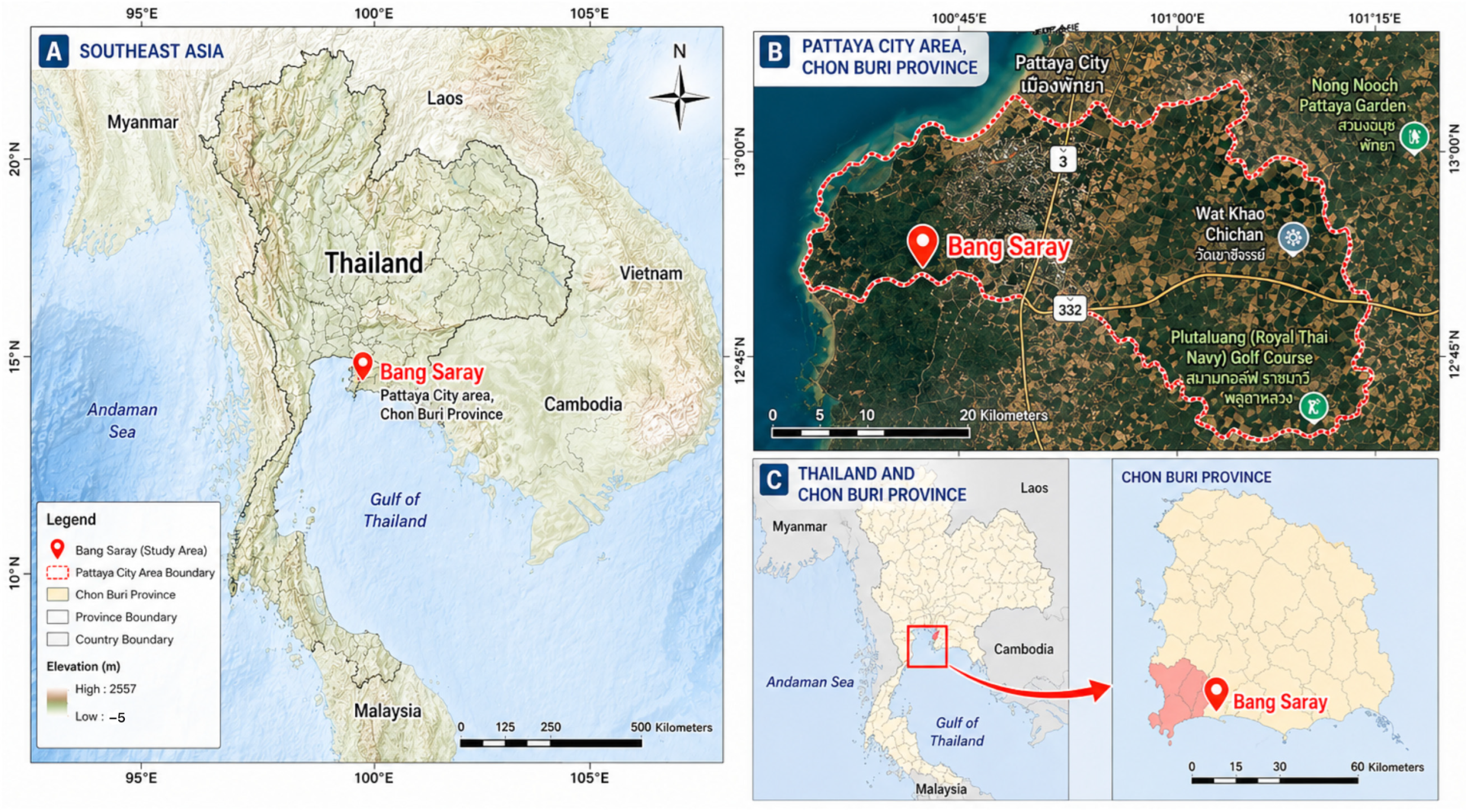
For contextual clarity,
Figure 1 presents a geographic overview of the study area. It illustrates the location of Bang Saray within Thailand, Chonburi Province, and the Pattaya District context, thereby helping readers better understand the spatial setting of the case study.
2.2. Cultural Heritage Activation and Shared Cultural Meanings (H1)
Cultural heritage activation refers to community-driven efforts to reinterpret, mobilize, and operationalize local cultural resources in ways that generate contemporary relevance and community value. Rather than treating heritage as a static asset, activation emphasizes living practices such as storytelling, festivals, rituals, and participatory interpretation that reconnect residents with local identity and traditions. In coastal communities, where livelihoods and collective memory are often linked to maritime culture, activating heritage can strengthen common understandings of place, belonging, and cultural continuity [
21,
22].
Shared cultural meanings emerge when community members collectively recognize the significance of their traditions, symbols, and local narratives. These meanings are socially constructed through interaction, memory, and repeated participation in community life. When heritage is actively celebrated and interpreted, residents are more likely to reaffirm common values and a shared sense of identity. Therefore, cultural heritage activation is expected to reinforce shared cultural meanings within coastal communities [
12,
23].
H1. Cultural heritage activation is positively associated with shared cultural meanings.
2.3. Cultural Heritage Activation and Tourism Co-Creation Practices (H2)
Tourism co-creation practices refer to collaborative processes through which residents, visitors, businesses, and public actors jointly shape tourism experiences. In community-based destinations, co-creation may involve local guiding, participatory events, heritage workshops, cultural performances, or community-designed tourism products [
11].
When cultural heritage is actively mobilized, it creates meaningful content around which co-creative experiences can be developed. Heritage festivals, traditional fishing practices, local cuisine, and storytelling activities provide platforms for interaction between hosts and visitors. In this sense, activated heritage becomes a catalyst for participatory tourism innovation. Thus, communities that actively mobilize their cultural heritage are more likely to develop tourism co-creation practices [
24].
H2. Cultural heritage activation is positively associated with tourism co-creation practices.
2.4. Shared Cultural Meanings and Tourism Co-Creation Practices (H3)
Shared cultural meanings provide a normative and symbolic foundation for collaboration in tourism development. When residents hold common interpretations of what their heritage represents, they are better positioned to collectively design experiences that authentically reflect local identity. Shared meanings reduce internal conflict, strengthen trust, and improve coordination among stakeholders.
In coastal destinations, mutual understanding regarding traditions, rituals, and community values can facilitate the co-production of tourism experiences that are culturally respectful and locally supported. Therefore, communities with stronger shared cultural meanings are more likely to engage in tourism co-creation practices [
12,
25].
H3. Shared cultural meanings are positively related to tourism co-creation practices.
2.5. Shared Cultural Meanings and Community Cultural Learning (H4)
Community cultural learning refers to processes through which residents acquire knowledge, skills, and interpretive capacities related to local heritage through interaction, experience, and intergenerational exchange. Shared meanings can provide a common interpretive framework that enables residents to understand, communicate, and preserve their culture more effectively.
When people collectively value traditions and understand their significance, they are more likely to engage in dialogue, storytelling, reflection, and cultural transmission. In this way, shared meanings can stimulate learning processes that sustain community knowledge systems over time [
18,
26].
H4. Shared cultural meanings are positively related to community cultural learning.
2.6. Cultural Heritage Activation and Community Empowerment (H5)
Community empowerment refers to the capacity of residents to participate in decision-making, influence tourism development, and exercise control over local resources. Heritage activation can strengthen empowerment by increasing community confidence, visibility, and ownership over cultural assets.
When residents actively organize festivals, preserve traditions, or reinterpret local history for tourism purposes, they move from passive beneficiaries to active agents of development. In coastal contexts, such participation can strengthen collective efficacy and negotiating power with external tourism actors [
27,
28].
H5. Cultural heritage activation is positively related to community empowerment.
2.7. Tourism Co-Creation Practices and Community Cultural Learning (H6)
Tourism co-creation creates experiential environments where residents interact with visitors, entrepreneurs, and cultural facilitators. These encounters often require communities to explain traditions, adapt presentations, and reflect on local knowledge. As a result, co-creation can become a mechanism for learning and innovation.
Through participation in heritage tours, workshops, and cultural events, residents may gain new communication skills, reinterpret traditions, and deepen awareness of their own cultural assets. Accordingly, tourism co-creation practices are expected to enhance community cultural learning [
13,
29,
30].
H6. Tourism co-creation practices are positively related to community cultural learning.
2.8. Tourism Co-Creation Practices and Community Empowerment (H7)
Participation in co-creation extends beyond service delivery to include shared planning, collaborative decision-making, and joint problem-solving. Such processes help communities build networks, confidence, and strategic capabilities.
When residents become co-designers rather than passive service providers, they gain stronger voices in shaping tourism narratives and governance arrangements. This can strengthen local agency and empowerment in tourism development [
15].
H7. Tourism co-creation practices are positively related to community empowerment.
2.9. Community Cultural Learning and Sustainable Coastal Tourism Outcomes (H8)
Sustainable coastal tourism outcomes include long-term cultural continuity, economic resilience, social well-being, and responsible destination development. Community cultural learning related to sustainability by helping residents preserve traditions while adapting them to contemporary tourism contexts.
Learning communities are better able to manage tourism impacts, innovate responsibly, and maintain support for tourism development. In coastal areas facing environmental and market pressures, cultural learning can strengthen adaptive capacity and long-term resilience [
20,
31]. In addition to learning-related pathways, prior sustainable tourism studies suggest that community empowerment is another important mechanism influencing long-term tourism outcomes. Empowered communities are generally better positioned to participate in governance, negotiate benefits, and maintain local control over tourism development. Therefore, the framework was extended to include empowerment as an additional explanatory pathway to sustainable coastal tourism outcomes.
H8. Community cultural learning is positively related to sustainable coastal tourism outcomes.
2.10. Community Empowerment and Sustainable Coastal Tourism Outcomes (H9)
Community empowerment has been widely recognized as a critical condition for sustainable tourism development because it is associated with higher levels of residents’ ability to influence planning decisions, secure equitable benefit-sharing, and protect community interests. In coastal destinations, empowered communities are better able to manage tourism pressures, preserve local identity, and sustain collective action over time. Based on this reasoning, community empowerment was incorporated into the revised framework as an additional theoretically grounded pathway to sustainable coastal tourism outcomes [
16,
32].
H9. Community empowerment is positively related to sustainable coastal tourism outcomes.
2.11. Conceptual Framework
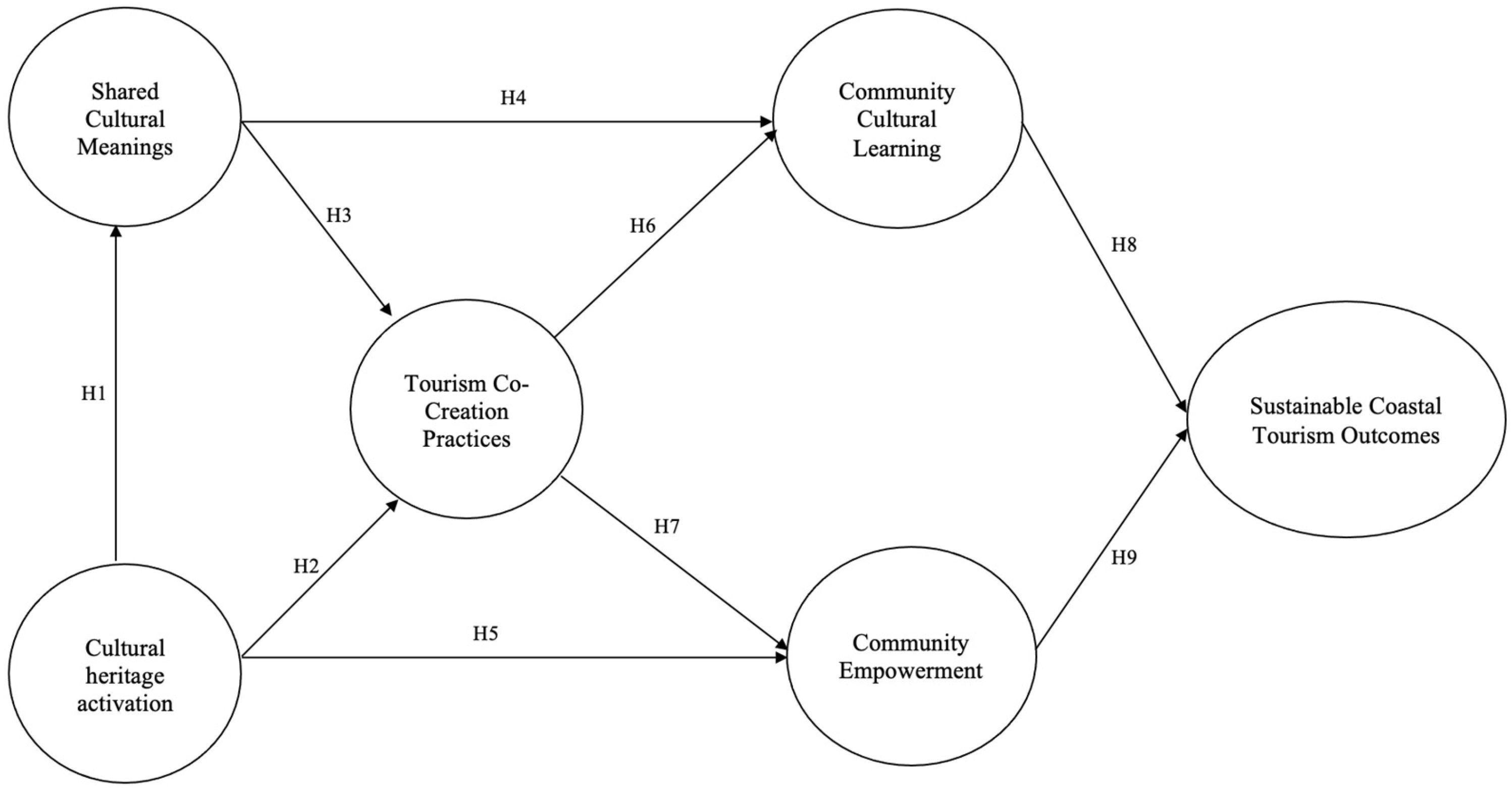
The proposed Dynamic Cultural Activation Framework for Sustainable Coastal Tourism is presented in
Figure 2. The framework conceptualizes sustainable tourism not as a direct outcome of heritage resources, but as the result of dynamic community processes. Cultural heritage activation is associated with shared cultural meanings and tourism co-creation practices, while shared meanings are linked to co-creation and community cultural learning. In turn, co-creation is associated with both learning and empowerment. Ultimately, community cultural learning and community empowerment are positioned as key pathways associated with sustainable coastal tourism outcomes.
This framework extends conventional community-based tourism models by positioning culture as an active social mechanism rather than a passive asset. Sustainable tourism is thus understood as an emergent outcome of interconnected processes involving activation, participation, learning, and community agency.
Unlike prior studies that treat participation, learning, and empowerment as parallel or independent factors, this study conceptualizes them as dynamically interdependent processes. The Dynamic Cultural Activation Framework advances existing models by theorizing culture as a processual mechanism unfolding through sequential and mutually reinforcing pathways linking activation, meaning-making, co-creation, learning, and empowerment. Rather than treating cultural resources as static inputs or background conditions, the framework positions cultural activation as a generative process that continuously reshapes community capabilities and sustainability outcomes.
3. Methodology
3.1. Research Design and Analytical Approach
This study adopted a quantitative, cross-sectional survey design to examine the proposed relationships among cultural heritage activation, tourism co-creation practices, shared cultural meanings, community cultural learning, community empowerment, and sustainable coastal tourism outcomes. The cross-sectional approach enables the assessment of residents’ and local stakeholders’ perceptions at a specific point in time and is appropriate for analyzing associations among multiple constructs within a structural model.
Partial Least Squares Structural Equation Modeling (PLS-SEM) was employed as the primary analytical technique due to its suitability for exploratory model development, models with multiple latent constructs, and community-based tourism contexts characterized by complex interrelationships among cultural and social variables. This approach allows the simultaneous estimation of measurement and structural components of the model and facilitates the assessment of direct and indirect associations within the proposed conceptual framework [
33,
34]. Given the cross-sectional design, the findings should be interpreted as theoretically informed associations rather than definitive causal relationships.
3.2. Population and Sampling
This approach ensured that respondents had direct experience relevant to the constructs under investigation, thereby enhancing the content validity of the data. Although probability sampling was not feasible due to the community-based context, purposive sampling is appropriate for exploratory model testing in community-based contexts using PLS-SEM.
The target population consisted of residents and local stakeholders in Bang Saray, Pattaya, Thailand, who were involved in or had experience with community cultural activities, heritage-related initiatives, and tourism development within the community. Eligible respondents included community leaders, cultural practitioners, tourism entrepreneurs, local administrators, and residents who had participated in cultural or tourism-related activities within the past year.
A purposive sampling technique was employed to select respondents who were actively engaged in cultural and tourism-related practices. Data were collected using a structured questionnaire administered through on-site distribution within the community. Respondents were approached in public community spaces, cultural activity areas, and tourism-related venues to ensure relevance to the study context.
This sampling approach is consistent with established PLS-SEM guidelines, which recommend that sample adequacy be determined based on the most complex regression equation in the structural model [
33,
34,
35].
3.3. Sample Size Determination (Power Analysis)
The minimum sample size was assessed using both the commonly cited ten-times rule and statistical power analysis. Based on the ten-times rule, the minimum required sample size was 50, derived from the largest number of indicators used to measure a single construct in the model [
33].
However, given the complexity of the proposed structural model and the need for robust statistical estimation, a larger sample size was considered appropriate. Therefore, a post hoc power analysis was conducted using G*Power 3.1, based on the maximum number of predictors of the most complex endogenous construct (i.e., three predictors). Assuming a medium effect size (f2 = 0.15) and a significance level of 0.05, the achieved statistical power (1 − β) was 0.99, exceeding the recommended threshold of 0.80.
Accordingly, the sample size of 300 is considered more than sufficient to ensure adequate statistical power and reliable estimation of the model [
36].
3.4. Ethical Considerations
The research protocol received formal approval from the Ethics Committee in Human Research, Sripatum University, Khon Kaen Campus (Approval No. SPUIRB-2025-058) on 6 October 2025. All research procedures were conducted in full compliance with internationally recognized ethical standards for research involving human participants, including the Declaration of Helsinki, the CIOMS Guidelines, and the Belmont Report [
33].
Participation in the study was entirely voluntary. Prior to completing the questionnaire, participants were informed of the purpose of the study, the nature of their involvement, their right to withdraw at any time without consequence, and the measures taken to ensure anonymity and confidentiality. No personally identifiable information was collected, and all data were treated with strict confidentiality and used solely for academic research purposes [
37].
3.5. Measurement and Structural Model Assessment and Estimation Procedure
The measurement and structural models were evaluated using Partial Least Squares Structural Equation Modeling (PLS-SEM). The measurement model was assessed in terms of indicator reliability, internal consistency reliability, convergent validity, and discriminant validity. Indicator loadings ≥ 0.70, composite reliability (CR ≥ 0.70), and average variance extracted (AVE ≥ 0.50) were used as evaluation criteria. Discriminant validity was examined using both the Fornell–Larcker criterion [
38].
The structural model was evaluated using standardized path coefficients, t-values, p-values, and coefficients of determination (R2). The significance of the hypothesized relationships was assessed using a nonparametric bootstrapping procedure with 5000 resamples. All analyses were conducted using SmartPLS (version 4.0), following recommended guidelines for PLS-SEM estimation and reporting.
3.6. Assessment of Common Method Bias
Given the use of self-reported survey data collected from a single source, potential common method bias (CMB) was addressed through both procedural and statistical remedies. Procedurally, respondent anonymity and confidentiality were assured, and the questionnaire was designed to minimize evaluation apprehension and ambiguous wording. Statistically, common method bias was assessed using a full collinearity test, in which variance inflation factor (VIF) values below the conservative threshold of 3.3 indicate that CMB is unlikely to be a serious concern. All VIF values were below 3.3, indicating that common method bias is unlikely to pose a serious concern in this study [
33,
34].
4. Results
4.1. Demographic Information of the Respondents
A total of 300 valid responses were included in the final analysis (
Table 1). The sample comprised 165 males (55.0%) and 135 females (45.0%). In terms of age distribution, the largest group of respondents was those aged 40–49 years (126 individuals, 42.0%), reflecting the study’s focus on residents in mid-adulthood who are actively engaged in community life and tourism-related activities. This was followed by 30–39 years (78; 26.0%), 50–59 years (54; 18.0%), and 20–29 years (42; 14.0%).
Regarding marital status, married respondents accounted for 186 (62.0%), while single respondents represented 108 (36.0%), and divorced/widowed respondents constituted 6 (2.0%). In terms of educational attainment, the majority held an undergraduate degree (174; 58.0%), followed by below undergraduate level (66; 22.0%) and graduate degree holders (60; 20.0%).
With respect to occupation, the largest group comprised self-employed individuals and small business owners involved in tourism-related activities (93; 31.0%), followed by government/public sector employees (75; 25.0%), private company employees (57; 19.0%), community leaders or cultural practitioners (45; 15.0%), and others/unemployed (30; 10.0%). Monthly income was primarily within the 15,001–25,000 baht range (84; 28.0%), followed by 25,001–35,000 baht (69; 23.0%), ≤15,000 baht (63; 21.0%), 35,001–45,000 baht (45; 15.0%), and >45,000 baht (39; 13.0%).
4.2. Measurement Model
The model fit assessment indicated an acceptable overall fit of the proposed model (
Table 2). The estimated model yielded a standardized root mean square residual (SRMR) value of 0.078, which is below the recommended threshold of 0.08, indicating an acceptable model fit. The normed fit index (NFI) value of 0.780 suggests a moderate level of incremental fit, which is considered acceptable in PLS-SEM contexts. In addition, the discrepancy measures (d_ULS = 2.854; d_G = 0.957) were within acceptable ranges when compared with the corresponding values of the saturated model (d_ULS = 1.630; d_G = 0.861), further supporting the adequacy of the model fit.
Overall, these results indicate that the proposed Dynamic Cultural Activation Framework demonstrates an adequate model fit and satisfactory explanatory capability for the proposed structural relationships.
Table 3 presents the measurement model results. Most indicator loadings exceeded the recommended threshold of 0.70, ranging from 0.689 to 0.876, indicating satisfactory indicator reliability [
33]. Although one item (CCL1 = 0.689) was slightly below the threshold, it was retained as it falls within the acceptable range (0.60–0.70) and does not adversely affect construct reliability.
Internal consistency reliability was confirmed, with Cronbach’s alpha values ranging from 0.847 to 0.907 and composite reliability (CR) values ranging from 0.891 to 0.931, all exceeding the recommended threshold of 0.70. Furthermore, convergent validity was established, as all average variance extracted (AVE) values ranged from 0.622 to 0.729, exceeding the recommended threshold of 0.50.
In addition, variance inflation factor (VIF) values ranged from 1.000 to 1.173, well below the conservative threshold of 3.3, indicating that multicollinearity was not a concern. Overall, these results demonstrate satisfactory reliability, convergent validity, and absence of collinearity issues in the measurement model.
Discriminant validity was assessed using both the Fornell–Larcker criterion and the heterotrait–monotrait ratio (HTMT). The results of the Fornell–Larcker criterion show that the square roots of AVE (diagonal values) exceed the inter-construct correlations, indicating adequate discriminant validity (
Table 4). Regarding HTMT, most values were below the conservative threshold of 0.85, while a few values slightly exceeded this threshold but remained below the more liberal criterion of 0.90 (
Table 5). Given the conceptual relatedness among the constructs, these values are considered acceptable, suggesting that discriminant validity is established. Overall, the results from both approaches provide sufficient evidence that the constructs are empirically distinct [
38].
4.3. Structural Model and Hypothesis Testing
The structural model results are presented in
Table 7. Most hypothesized relationships were statistically significant, with the exception of H8 (CCL → SCTO), which was not supported (β = 0.152,
p = 0.054). These findings should be interpreted as associations rather than causal effects, given the cross-sectional nature of the data.
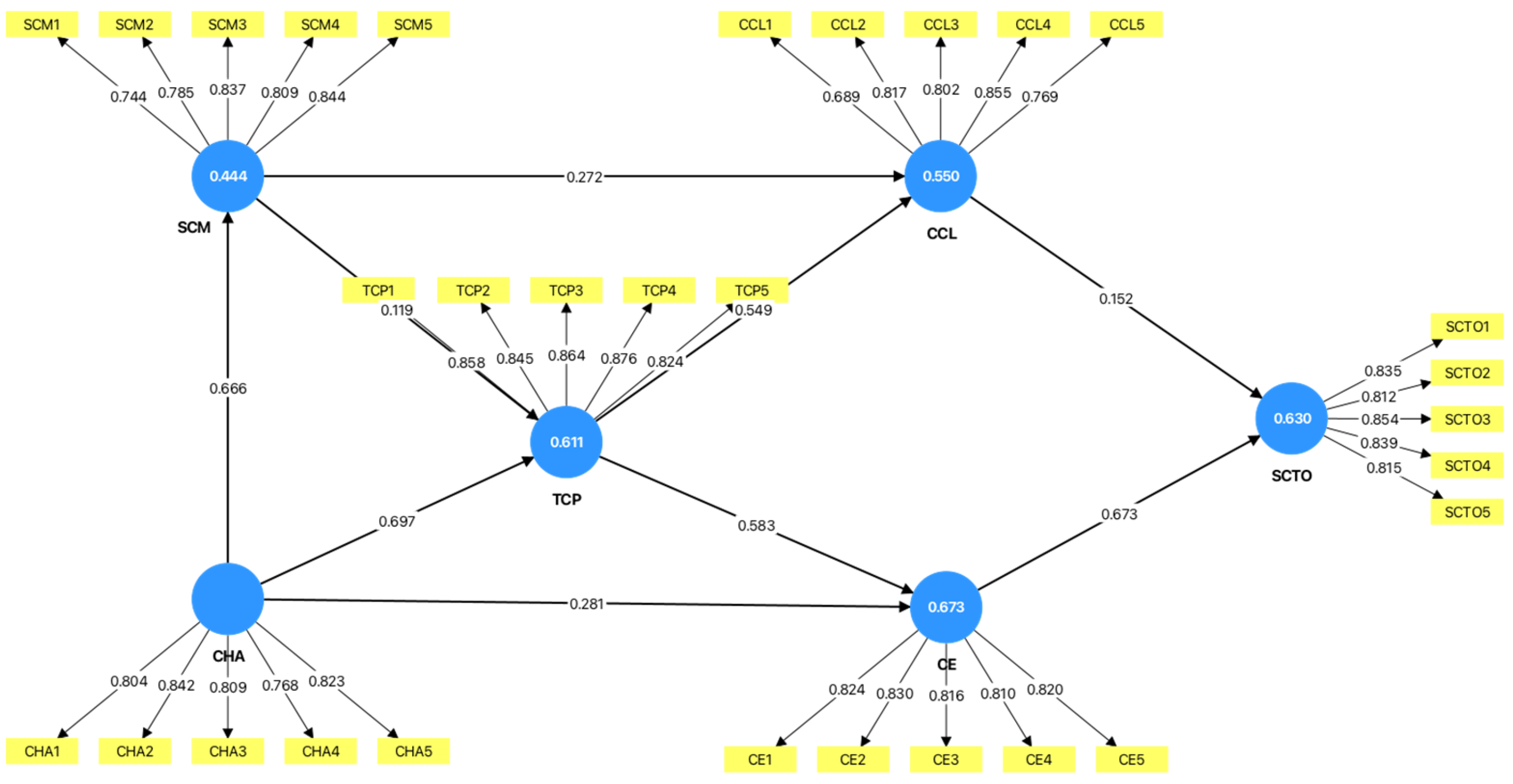
Figure 3 presents the PLS-SEM results, including standardized path coefficients (β) and outer loadings. The values inside the circles represent the coefficients of determination (R
2) for the endogenous constructs.
Cultural heritage activation (CHA) was found to have a significant positive effect on shared cultural meanings (SCM) (β = 0.666, p < 0.001), tourism co-creation practices (TCP) (β = 0.697, p < 0.001), and community empowerment (CE) (β = 0.281, p = 0.001), supporting H1, H2, and H5. In addition, SCM had a significant effect on TCP (β = 0.119, p = 0.013) and community cultural learning (CCL) (β = 0.272, p < 0.001), supporting H3 and H4.
Furthermore, TCP was positively associated with both CCL (β = 0.549, p < 0.001) and CE (β = 0.583, p < 0.001), supporting H6 and H7. Regarding the final outcome, community empowerment (CE) had a strong and significant effect on sustainable coastal tourism outcomes (SCTO) (β = 0.673, p < 0.001), supporting H9. However, the effect of community cultural learning (CCL) on SCTO was not statistically significant (β = 0.152, p = 0.054), leading to the rejection of H8.
The R2 values indicate that the model explains a substantial proportion of variance in key constructs, particularly CE (R2 = 0.673) and SCTO (R2 = 0.630), demonstrating strong explanatory power.
Overall, the findings partially support the proposed Dynamic Cultural Activation Framework, highlighting that while cultural learning plays an important role within the process, community empowerment emerges as the primary mechanism driving sustainable tourism outcomes.
4.4. Indirect Effects Analysis
The results of the indirect effects analysis are presented in
Table 8. The findings indicate that several mediation pathways are statistically significant, while others are not, suggesting a selective rather than universal mediation pattern within the proposed Dynamic Cultural Activation Framework (
Table 9).
First, cultural heritage activation (CHA) demonstrated several significant indirect relationships. Specifically, CHA was indirectly associated with tourism co-creation practices through shared cultural meanings (CHA → SCM → TCP; β = 0.079, p = 0.019). In addition, CHA showed a significant indirect association with sustainable coastal tourism outcomes through community empowerment (CHA → CE → SCTO; β = 0.189, p = 0.006), as well as through a sequential pathway involving co-creation and empowerment (CHA → TCP → CE → SCTO; β = 0.274, p < 0.001). More complex pathways such as CHA → SCM → TCP → CE → SCTO (β = 0.031, p = 0.035) were also statistically significant.
In contrast, several indirect pathways involving community cultural learning (CCL) were not statistically significant, including CHA → TCP → CCL → SCTO (β = 0.058, p = 0.067) and CHA → SCM → CCL → SCTO (β = 0.028, p = 0.097), indicating that learning alone may not serve as a strong mediating mechanism linking upstream constructs to sustainability outcomes.
Second, shared cultural meanings (SCM) showed mixed mediation effects. While SCM was indirectly associated with sustainable coastal tourism outcomes through empowerment (SCM → TCP → CE → SCTO; β = 0.047, p = 0.026), the indirect effect through cultural learning (SCM → CCL → SCTO; β = 0.041, p = 0.086) was not statistically significant, further reinforcing the limited mediating role of learning in this context.
Third, tourism co-creation practices (TCP) exhibited strong indirect effects. TCP was significantly associated with sustainable coastal tourism outcomes through community empowerment (TCP → CE → SCTO; β = 0.393, p < 0.001). However, the pathway through cultural learning (TCP → CCL → SCTO; β = 0.084, p = 0.063) was not significant, suggesting that co-creation contributes to sustainability primarily via empowerment rather than learning.
Overall, the indirect effects analysis indicates that sustainable coastal tourism outcomes are influenced by multi-stage processes, but these processes are not uniformly mediated across all pathways. In particular, community empowerment emerges as the dominant mediating mechanism, while cultural learning plays a more limited or indirect role within the model.
Importantly, these findings should be interpreted with caution, as the cross-sectional nature of the data does not allow for definitive causal inference. Nonetheless, the results provide meaningful insights into how cultural activation processes are associated with sustainability outcomes through differentiated pathways.
5. Discussion and Implications
5.1. Main Findings
This study provides empirical evidence broadly consistent with the proposed Dynamic Cultural Activation Framework for Sustainable Coastal Tourism. Specifically, the results indicate that community-driven cultural processes in Bang Saray, Pattaya, Thailand, are associated with sustainable tourism outcomes. Sustainable tourism may depend not only on the presence of cultural resources but also on interrelated pathways involving heritage activation, shared meanings, co-creation, learning, and empowerment. These findings are consistent with prior studies indicating that tourism sustainability is socially embedded and linked to local participation, collective identity, and community capacity rather than economic growth alone [
14,
29,
39,
40]. All reported relationships should be interpreted as statistical associations rather than causal mechanisms, as the cross-sectional design does not allow for temporal or directional inference.
First, the findings show that cultural heritage activation (CHA) was positively associated with shared cultural meanings (SCM), tourism co-creation practices (TCP), and community empowerment (CE). This suggests that when communities actively mobilize local traditions, rituals, and heritage assets, they may strengthen collective identity, encourage participatory tourism activities, and increase residents’ confidence in influencing tourism development. This interpretation is consistent with previous research indicating that heritage may become more socially valuable when communities actively reinterpret and apply it in contemporary tourism settings [
21,
22,
35,
41]. Heritage activation may therefore be viewed not only as a preservation process, but also as a dynamic community practice linked to social and developmental value. The relatively strong association between cultural heritage activation and shared cultural meanings may further suggest that visible heritage practices such as festivals, rituals, and storytelling reinforce shared identity, common narratives, and collective attachment to place [
18,
21,
26].
Second, shared cultural meanings (SCM) were positively associated with both tourism co-creation practices (TCP) and community cultural learning (CCL). This finding suggests that common understandings of local identity and traditions may provide a social foundation for cooperation and knowledge exchange. When residents hold shared interpretations of community culture, they may be more willing to collaborate in tourism activities and participate in learning processes that preserve and renew local knowledge. This result aligns with studies emphasizing that shared meanings are linked to trust, reduced internal conflict, and more effective collective destination management [
12,
18,
26].
Third, tourism co-creation practices (TCP) were positively associated with community cultural learning (CCL) and community empowerment (CE). This suggests that collaborative tourism experiences may create practical opportunities for residents to acquire new knowledge, improve skills, and strengthen participation in tourism governance. Co-creation may therefore function as a bridge between cultural resources and community capacity building. These findings are consistent with earlier studies showing that co-creation is associated with innovation, stakeholder collaboration, and local ownership in tourism development [
11,
15,
24,
34].
Finally, community empowerment (CE) was positively associated with sustainable coastal tourism outcomes (SCTO), whereas the relationship between community cultural learning (CCL) and SCTO was not statistically significant. This suggests that while learning may support knowledge accumulation and cultural continuity, it may not directly translate into sustainability outcomes without corresponding decision-making power and institutional influence. In this context, empowerment appears to be a more critical mechanism for achieving sustainability outcomes, as it is linked to participation in governance, benefit negotiation, and the ability to shape tourism development according to local priorities [
16,
17,
19,
33].
Importantly, the relatively weak and non-significant relationship between community cultural learning and sustainable outcomes suggests that these processes may not develop in tandem. While communities may acquire knowledge and skills through tourism participation, this does not necessarily translate into increased decision-making power or institutional influence. This highlights a potential disconnect between cognitive capacity and structural agency, particularly in contexts where governance arrangements limit meaningful participation.
Overall, the findings suggest that sustainable coastal tourism may be understood as an adaptive community process in which cultural heritage is linked to sustainability outcomes through interconnected social mechanisms. Rather than functioning only as a passive tourism asset, heritage may become more productive when associated with shared meanings, collaborative practices, learning opportunities, and local agency. However, not all hypothesized relationships were supported, indicating that sustainability is shaped by selective and context-dependent pathways rather than uniformly across all constructs.
These findings suggest that higher levels of cultural heritage activation are associated with stronger collective identity and greater engagement in participatory tourism practices. Taken together, the results point to sustainable coastal tourism as a process linked to the transformation of cultural heritage into participation, empowerment, and local agency. While the structural relationships are theoretically grounded, they should be interpreted with caution, as alternative explanations and unobserved factors may also account for the observed associations.
5.2. Theoretical Implications
This study advances prior research on community-based and heritage tourism in three key ways.
First, while shared cultural meanings were significantly associated with co-creation and learning processes, they did not directly translate into sustainability outcomes. This suggests that cultural identity functions more as a contextual or enabling mechanism rather than a primary driver of sustainable tourism outcomes.
Second, the study highlights the importance of tourism co-creation practices (TCP) as an interactive process that effectively links cultural resources with the development of community capabilities. The findings indicate that participatory practices play a more critical role than symbolic meaning alone in driving sustainable outcomes.
Third, the results demonstrate that sustainable tourism outcomes are better explained through capability-based pathways—particularly community empowerment (CE) and, to a lesser extent, community cultural learning (CCL)—rather than through heritage or symbolic assets alone. This shifts the theoretical perspective from static, asset-based models toward a more dynamic, process-oriented explanation of tourism sustainability [
4,
13,
19,
42,
43].
More broadly, the study suggests that culture should not be viewed solely as a generative mechanism, but rather as a conditional or enabling factor that requires activation through participatory practices and community agency. This finding refines existing theoretical models by emphasizing the alignment between action-based processes and capability development, rather than relying on symbolic meaning in isolation.
5.3. Practical and Policy Implications
The findings offer several practical implications for policymakers, destination managers, and community leaders.
Strengthen cultural heritage activation through festivals, storytelling initiatives, heritage interpretation programs, and support for local traditions. Although cultural meaning alone may not directly drive sustainability outcomes, these activities can serve as enabling conditions that support community engagement and co-creation processes [
21,
22,
41].
Promote tourism co-creation platforms that allow residents, visitors, local businesses, and public agencies to collaboratively design tourism products and experiences. This can improve innovation, authenticity, and stakeholder commitment [
11,
24].
Invest in community cultural learning through heritage education, intergenerational knowledge transfer, local guide development, and skills training programs. These initiatives can help communities preserve cultural continuity while adapting to tourism change [
8,
17].
Enhance community empowerment by increasing resident participation in tourism planning, decision-making, and benefit-sharing mechanisms. Since empowerment showed the strongest relationship with sustainability outcomes, governance reforms should prioritize local voice and control [
16,
19,
33].
Adopt long-term process-oriented tourism strategies that prioritize resilience, cultural continuity, and inclusive development rather than focusing only on short-term visitor growth or revenue generation [
20,
31,
44].
6. Conclusions
This study examined how community-driven cultural processes are associated with sustainable coastal tourism in Bang Saray, Pattaya, Thailand using PLS-SEM. The findings indicate that cultural heritage activation was positively associated with key community-based mechanisms, including shared cultural meanings, tourism co-creation practices, and community empowerment.
The results further demonstrate that shared cultural meanings were positively associated with both tourism co-creation practices and community cultural learning, while tourism co-creation practices were positively associated with both learning and empowerment. These findings highlight the interconnected nature of cultural activation, participation, and community capacity development within the proposed framework.
Importantly, only community empowerment showed a statistically significant positive association with sustainable coastal tourism outcomes, whereas community cultural learning did not demonstrate a significant direct effect. This suggests that while learning contributes to knowledge development and cultural continuity, it may not be sufficient on its own to drive sustainability outcomes without corresponding decision-making power and institutional influence.
Theoretically, this study contributes to the literature by advancing a dynamic, process-oriented perspective in which culture is understood as an active and evolving system of meanings, participation, and agency. The findings further suggest that sustainability outcomes are more strongly associated with empowerment-based pathways than with learning-based pathways alone.
Practically, the results indicate that sustainable coastal tourism may be strengthened when communities are not only engaged in cultural activities and learning processes but are also empowered to participate in decision-making, governance, and benefit-sharing mechanisms.
Overall, evidence from Bang Saray suggests that sustainable coastal tourism is associated with the transformation of cultural heritage into participatory practices and community agency. However, not all hypothesized pathways were supported, indicating that sustainability emerges through selective and context-dependent mechanisms rather than uniformly across all cultural processes.
Given the cross-sectional nature of the data, the findings should be interpreted as theoretically informed associations rather than causal relationships. Future research is encouraged to adopt longitudinal and mixed-method approaches to further examine how these cultural processes evolve over time and interact across different tourism contexts.
7. Research Limitations and Future Research Directions
Despite its contributions, this study has several limitations. First, the data were collected from a single coastal community in Thailand, which may limit the generalizability of the findings to other tourism destinations with different cultural, institutional, or socio-economic contexts. Because Bang Saray has distinctive community and tourism characteristics, caution is warranted when interpreting the applicability of these findings to other settings. Future studies should examine the proposed relationships in other coastal, rural, and urban communities.
Second, the cross-sectional design captures perceptions at one point in time and does not permit strong conclusions regarding temporal ordering or causal direction among variables. Longitudinal and panel studies are recommended to examine how heritage activation, learning, empowerment, and sustainability-related outcomes may develop across different stages of tourism development.
Third, this study relied on self-reported survey responses from a single source. Although procedural and statistical remedies were applied to reduce common method bias, future research could combine quantitative surveys with interviews, ethnography, participatory observation, or multi-source data collection to provide richer insights into community processes and underlying mechanisms.
Fourth, the current model focuses primarily on cultural and social dimensions. Future studies should incorporate environmental governance variables such as marine conservation, coastal stewardship, climate resilience, carrying capacity, and tourist pro-environmental behavior. This would support a more comprehensive socio-ecological understanding of sustainable coastal tourism.
Finally, although statistically significant indirect associations were identified, mediation results derived from cross-sectional data should be interpreted cautiously because temporal sequencing among constructs cannot be definitively established.
In summary, future research should continue refining the Dynamic Cultural Activation Framework by examining it across diverse destinations, employing mixed methods, longitudinal designs, comparative approaches, and broader environmental and institutional dimensions.
Author Contributions
Conceptualization, D.T. and J.L.; methodology, D.T. and J.L.; software, J.L.; validation, D.T. and J.L.; formal analysis, J.L.; investigation, D.T. and J.L.; resources, D.T.; data curation, D.T.; writing—original draft preparation, D.T. and J.L.; writing—review and editing, D.T. and J.L.; visualization, D.T.; supervision, J.L.; project administration, J.L.; funding acquisition, D.T. All authors have read and agreed to the published version of the manuscript.
Funding
This research project was financially supported by Mahasarakham University.
Institutional Review Board Statement
The study was conducted in accordance with the Declaration of Helsinki and approved by the Ethics Committee in Human Research, Sripatum University, Khon Kaen Campus (Approval No. SPUIRB-2025-058, 6 October 2025).
Informed Consent Statement
Informed consent was obtained from all subjects involved in the study.
Data Availability Statement
The data presented in this study are available on request from the corresponding author. The data are not publicly available due to privacy and ethical restrictions.
Conflicts of Interest
The authors declare no conflicts of interest.
References
- Silva, M.F.D.; Macias, J.V.; Taylor, S.; Ferguson, L.; Sousa, L.P.; Lamers, M.; Flannery, W.; Martins, F.; Costa, C.; Pita, C. Tourism and Coastal & Maritime Cultural Heritage: A Dual Relation. J. Tour. Cult. Change 2022, 20, 806–826. [Google Scholar] [CrossRef]
- Apriyanti, M.E.; Sumaryoto; Meirinaldi. The Importance of Tourism Infrastructure in Increasing Domestic and International Tourism. Int. J. Res. Vocat. Stud. 2024, 3, 113–122. [Google Scholar] [CrossRef]
- Corbos, R.A.; Bunea, O.I.; Moncea, M.I. A Literature Review on Tourism Infrastructure Investments and Their Impact on Tourism Development. In Proceedings of the 18th International Management Conference, Bucharest, Romania, 31 October–1 November 2024; pp. 268–279. [Google Scholar] [CrossRef]
- Turčinović, M.; Vujko, A.; Stanišić, N. Community-Led Sustainable Tourism in Rural Areas: Enhancing Wine Tourism Destination Competitiveness and Local Empowerment. Sustainability 2025, 17, 2878. [Google Scholar] [CrossRef]
- Au Yong, H.N.; Kalhoro, M.; Morrison, C.; Khan, A. Community-Driven Sustainability Practices in Cultural Heritage Tourism: A Qualitative Study. Qual. Quant. 2025, 1–21. [Google Scholar] [CrossRef]
- Cai, W.; Shu, Z.; Liu, Y. Exploring the Role of Place Attachment in Shaping Sustainable Behaviors toward Marine Cultural Heritage. Front. Psychol. 2025, 16, 1476308. [Google Scholar] [CrossRef] [PubMed]
- Pratt, S.; Pan, B.; Agyeiwaah, E.; Lei, S.S.I.; Lugosi, P.; Kirillova, K.; Piirman, M.; Sutton, J.L.; Jönsson, H.C.; Haselwanter, S.; et al. Tourism myths and the Dunning Kruger effect. Ann. Tour. Res. 2024, 104, 103620. [Google Scholar] [CrossRef]
- Nopas, D.S.; Phungdee, T.; Supich, A. Bridging Generations for Sustainable Tourism: Intergenerational learning as a catalyst for lifelong learning in rural communities. Stud. Educ. Adults 2025, 1–15. [Google Scholar] [CrossRef]
- Cheshmehzangi, A. Coastal Urbanization under Pressure. In Thailand’s Tropical Thresholds; Springer: Singapore, 2026; pp. 69–90. [Google Scholar] [CrossRef]
- Lee-Anant, C.; Kungwansith, P.; Rocharungsat, P. Exploring Pattaya’s tourism DNA: A mixed-method approach for revisit intention. Cogent Soc. Sci. 2025, 11, 2598725. [Google Scholar] [CrossRef]
- Grcheva, O.; Oktay Vehbi, B. From Public Participation to Co-Creation in Cultural Heritage Management. Sustainability 2021, 13, 9321. [Google Scholar] [CrossRef]
- Scardigno, R.; Mininni, G.; Cicirelli, P.G.; D’Errico, F. The “Glocal” Community of Matera 2019. Sustainability 2022, 14, 12673. [Google Scholar] [CrossRef]
- Li, J.; Krishnamurthy, S.; Roders, A.P.; Van Wesemael, P. Community Participation in Cultural Heritage Management. Cities 2020, 96, 102476. [Google Scholar] [CrossRef]
- Kohsaka, R.; Rogel, M. Traditional and Local Knowledge for Sustainable Development. In Partnerships for the Goals; Springer: Cham, Switzerland, 2021; pp. 1261–1273. [Google Scholar] [CrossRef]
- Ruhanen, L.; Saito, N.; Axelsen, M. Knowledge Co-Creation: The Role of Tourism Consultants. Ann. Tour. Res. 2021, 87, 103148. [Google Scholar] [CrossRef]
- Dabamona, S.A.; Salim, M. Assessing Indigenous Community Sustainability Aspects in the Development of Coastal Tourism Areas. J. Indones. Tour. Hosp. Recreat. 2024, 7, 203–218. [Google Scholar] [CrossRef]
- Luc, M.H.; Nguyen, Q.V.; Pham, T.V.; Le, T.H.H.; Tran, T.G.; Nguyen, T.H.L. How Community-Based Tourism Supports Sustainable Livelihoods: The Mediating Roles of Community Participation and Tourism-Related Employment. Tour. Hosp. 2026, 7, 37. [Google Scholar] [CrossRef]
- Wagner, A.; Matulewska, A.; Le, C. Protection and Identity of Cultural Heritage. Int. J. Semiot. Law. 2021, 34, 601–609. [Google Scholar] [CrossRef]
- Dushkova, D.; Ivlieva, O. Empowering Communities to Act for a Change: A Review of the Community Empowerment Programs towards Sustainability and Resilience. Sustainability 2024, 16, 8700. [Google Scholar] [CrossRef]
- McNaughton, M.; Rao, L.; Verma, S. Building Smart Communities for Sustainable Development. Worldw. Hosp. Tour. Themes 2020, 12, 337–352. [Google Scholar] [CrossRef]
- Hassan, F. Cultural Heritage and Community Empowerment. In Communities and Cultural Heritage; Routledge: London, UK, 2020; pp. 23–35. [Google Scholar]
- Suriyothin, P.; Katawandee, P.; Chotipanich, R. Leveraging Cultural Heritage to Promote Tourism through the Historical Tree Trail on Sichang Island, Chonburi Province, Thailand. Area Based Dev. Res. J. 2025, 17, 72–90. [Google Scholar] [CrossRef]
- Lupo, E. Envisioning Design Strategies for Intangible Cultural Heritage Activation. Connectivity 2023, 604. [Google Scholar] [CrossRef]
- Ćwikła, M.; Garzillo, C.; Bosone, M.; Gravagnuolo, A. Stakeholder Engagement for Co-Creation in Cultural Tourism. In Proceedings of Cultural Tourism Advances, Brussels, Belgium, 27–28 June 2023; Springer: Berlin/Heidelberg, Germany, 2023; pp. 47–67. [Google Scholar] [CrossRef]
- Kruahong, S.; Tankumpuan, T.; Kelly, K.; Davidson, P.M.; Kuntajak, P. Community Empowerment: A Concept Analysis. J. Adv. Nurs. 2023, 79, 2845–2859. [Google Scholar] [CrossRef]
- Sharma, L.R. Culture as a Reflection of Heritage and Identity: A Thematic Analysis. J. Foreign Lang. Cult. Commun. 2025, 13, 124–132. [Google Scholar] [CrossRef]
- Wattanacharoensil, W.; Stettler, J. Residents’ Perceptions of Tourism Impacts. Int. J. Tour. Cities 2026, 12, 99–116. [Google Scholar] [CrossRef]
- Yousafzai, S.; Aljanova, N. Empowerment and Collective Action in Tourism. Int. J. Gend. Entrep. 2025, 17, 135–159. [Google Scholar] [CrossRef]
- Bertella, G.; Rinaldi, M.D. Learning Communities and Co-Creative Tourism Practices. J. Sustain. Tour. 2021, 29, 639–657. [Google Scholar] [CrossRef]
- Suriyankietkaew, S.; Krittayaruangroj, K.; Thinthan, S.; Lumlongrut, S. Creative Tourism as a Driver for Sustainable Development. Environ. Sustain. Indic. 2025, 27, 100828. [Google Scholar] [CrossRef]
- Unhasuta, S.; Sasaki, N.; Kim, S.M. Impacts of Tourism Development on Coastal Communities. Sustainability 2021, 13, 4423. [Google Scholar] [CrossRef]
- Shakarmamadova, F.; van Beynen, P.E.; Akiwumi, F.A. Assessing the Contribution of Ecotourism and Community-Based Ecotourism to Community Resilience in the Pamirs. Sustainability 2026, 18, 207. [Google Scholar] [CrossRef]
- Hair, J.F.; Hult, G.T.M.; Ringle, C.M.; Sarstedt, M. A Primer on Partial Least Squares Structural Equation Modeling (PLS-SEM), 3rd ed.; Sage: Thousand Oaks, CA, USA, 2022. [Google Scholar] [CrossRef]
- Hair, J.; Hollingsworth, C.L.; Randolph, A.B.; Chong, A.Y.L. An Updated Assessment of PLS-SEM in Information Systems Research. Ind. Manag. Data Syst. 2017, 117, 442–458. [Google Scholar] [CrossRef]
- Su, X.; Rahman, S. Tourist behavioral intentions in a UNESCO World Cultural Heritage Site in China: A multi-method analysis integrating PLS-SEM and fsQCA of motivational and perceptual factors. J. Herit. Tour. 2026, 16, 1–21. [Google Scholar] [CrossRef]
- Faul, F.; Erdfelder, E.; Buchner, A.; Lang, A.-G. Statistical power analyses using G*Power 3.1: Tests for correlation and regression analyses. Behav. Res. Methods 2009, 41, 1149–1160. [Google Scholar] [CrossRef]
- Henseler, J.; Ringle, C.M.; Sarstedt, M. A New Criterion for Assessing Discriminant Validity. J. Acad. Mark. Sci. 2015, 43, 115–135. [Google Scholar] [CrossRef]
- Fornell, C.; Larcker, D.F. Evaluating Structural Equation Models with Unobservable Variables and Measurement Error. J. Mark. Res. 1981, 18, 39–50. [Google Scholar] [CrossRef]
- Juicharoen, N.; Tresirichod, T. Antecedent Factors Influencing Tourist Engagement in Creative Cultural Tourism Activities at the Tha Plee Fishing Market Community, Bang Plasoi Subdistrict, Mueang District, Chonburi Province. Tour. Hosp. 2025, 6, 198. [Google Scholar] [CrossRef]
- Kasmin, K. Sustainable Tourism through Community Empowerment. SHS Web Conf. 2025, 226, 01007. [Google Scholar] [CrossRef]
- Hassanpour, M.; Farhadi, P. The role of phased retirement in transferring knowledge to younger generations in Iran’s heritage tourism sector. Int. J. Tour. Cult. Spiritual. 2025, 8, 179–200. [Google Scholar]
- Brooks, C.; Waterton, E.; Saul, H.; Renzaho, A. Exploring the relationships between heritage tourism, sustainable community development and host communities’ health and wellbeing: A systematic review. PLoS ONE 2023, 18, e0282319. [Google Scholar] [CrossRef] [PubMed]
- Juliana, J.; Indra, F.; Sianipar, R.; Djakasaputra, A.; Effendy, L. Reimagining Heritage Tourism through Co-Creation. Sustainability 2025, 17, 11112. [Google Scholar] [CrossRef]
- Timothy, D.J. Making sense of heritage tourism: Research trends in a maturing field of study. Tour. Manag. Perspect. 2018, 25, 177–180. [Google Scholar] [CrossRef]
| Disclaimer/Publisher’s Note: The statements, opinions and data contained in all publications are solely those of the individual author(s) and contributor(s) and not of MDPI and/or the editor(s). MDPI and/or the editor(s) disclaim responsibility for any injury to people or property resulting from any ideas, methods, instructions or products referred to in the content. |