


Abstract
The COVID-19 pandemic brought global tourism to a near standstill, rapidly shifting many destinations from overtourism to a temporary state of non-tourism due to lockdowns and border closures. As travel resumed between 2021 and 2022, ‘revenge tourism’ emerged, characterised by a surge in travel as people sought to compensate for lost experiences. This resurgence has reignited overtourism, a phenomenon marked by excessive tourist numbers and negative impacts on host communities, including environmental degradation, infrastructure strain and socio-cultural disruption. While overtourism has been extensively studied in the global North, its manifestations in the global South, particularly in South Africa, remain underexplored. This study addresses the existing gap by exploring the potential of digital technologies, namely, artificial intelligence (AI), virtual reality (VR) and social media platforms, as instruments for managing visitor flows and alleviating overtourism in selected hotspots throughout South Africa. Using a qualitative, literature-based design, this study evaluates the contextual relevance and multi-dimensional scalability of these technologies. The findings aim to advance discussions on overtourism and propose innovative, technology-driven strategies, as well as research opportunities tailored to the unique challenges of the global South.
1. Introduction
Historically, the tourism industry has proved resilient against diverse crises, ranging from the 9 September 2001 terrorist attacks to the 2004 Indian Ocean tsunami. However, none of these events had an impact on the global tourism industry as significant as the COVID-19 pandemic. In 2020, governments worldwide were forced to implement unprecedented measures, including border closures and lockdowns, to curb the spread of COVID-19. These restrictions precipitated a rapid and dramatic shift, transforming destinations previously characterised by severe overtourism into conditions of near non-tourism within a matter of months [1]. With the easing of restrictions in 2021 and 2022, there was a significant emergence of revenge tourism, as individuals collectively sought to compensate for the experiences and opportunities lost during the prolonged lockdowns [2].
One significant consequence of revenge tourism is the rapid return and, in some cases, escalation of overtourism. While overtourism has gained widespread media and academic attention in recent years, it is by no means a new phenomenon. Researchers contend that numerous destinations have long encountered the challenges associated with excessive tourism. The recognition of overtourism as a critical concern has notably intensified since 2017 [3,4,5,6,7,8,9,10,11,12].
Nonetheless, the concept of overtourism remains complex and contested within the literature. Scholars such as Koens et al. [8], Mihalič [9] and Zemła [13] highlight that, while definitions vary, two core elements are consistently present in the existing literature, namely the excessive number of tourists and the resulting negative impacts on host communities. These effects include disruptions to social and cultural systems, increased pressure on infrastructure and environmental decline [6,9,13,14,15].
Despite the increasing presence of overtourism cases in the global South, this phenomenon remains insufficiently investigated within this context. Most academic discourse continues to concentrate on the global North, frequently overlooking the distinct challenges encountered by nations in the global South [16,17]. This disparity highlights the need for contextually informed research that thoroughly examines the specific manifestations of overtourism in South Africa and investigates innovative, technology-driven strategies to promote more sustainable tourism management.
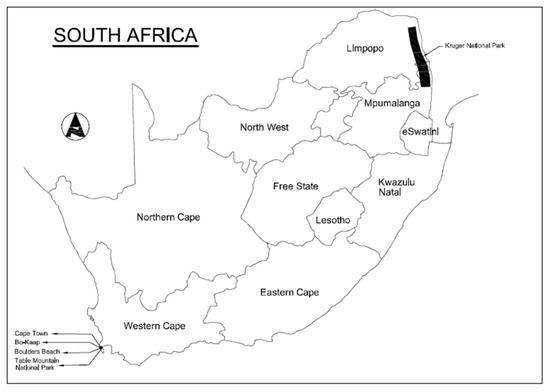
Overtourism is undeniably a global issue, affecting destinations across Australia, New Zealand, Europe, Asia, South America and North America [12]. South Africa is increasingly facing overtourism-related pressures in key tourist hotspots, namely Cape Town, Table Mountain National Park (TMNP), Bo-Kaap, Boulders Beach and parts of Kruger National Park (KNP) (see Figure 1).
Figure 1.
Tourism hotspots in South Africa [18]. Used with permission.
In response to this scholarly gap, the present study investigates the potential of applications such as artificial intelligence (AI), virtual reality (VR) and social media platforms as tools to effectively regulate visitor flows and mitigate the adverse impacts of overtourism in South Africa. By employing a qualitative, literature-based framework, the study evaluates how tailored technological interventions may yield scalable and adaptable solutions within the South African tourism industry.
2. Literature Review
2.1. Conceptualising Overtourism
As previously noted, overtourism is a complex and contested concept with multiple interpretations. However, it is generally defined as the global phenomenon of excessive tourist numbers in specific locations, where visitor density exceeds the physical and/or social carrying capacity of the destination [3]. As a result of its widespread impact, it has become a prominent topic in tourism research [3,10,11,19,20].
One of the earliest contributions to understanding the impacts of excessive tourist numbers is attributed to Doxey [21], whose study on residents’ reactions at Niagara Falls introduced the ‘Irritation Index’. This framework remains foundational in explaining how local attitudes toward tourism evolve as tourist numbers exceed manageable limits [21].
2.2. Technology and Overtourism
Since then, scholarly attention has largely focused on the negative impacts of overtourism on destinations [22]. These include sociological and ecological impacts, the tourism area life cycle, tourist carrying capacity and increasing pressures on urban areas [12].
In response, scholars have proposed various management strategies, such as tourist taxes and regulatory measures. However, Dodds and Butler [3] argue that these traditional methods are ineffective. This failure is often rooted in a systemic lack of willingness to manage visitor numbers effectively at local and international levels.
As a result, a paradigm shift is occurring as scholars move toward technological interventions to overcome the effects of overtourism. Mohanty et al. [23] propose a digital framework for destination management organisations, emphasising the proactive use of information communication technology (ICT) tools to monitor, guide and manage visitor behaviour.
Building on this digital foundation, research has branched into three key technological areas, namely AI, VR and social media. Recent advances in AI have highlighted its potential in managing overtourism. Predictive AI using machine learning can forecast tourist demand peaks, enabling targeted pricing and redistribution of visitors [24,25]. Complementing this, generative AI tools, such as ChatGPT, support destination management by informing and guiding tourists toward more sustainable travel choices, illustrating how AI can address both operational and educational aspects of overtourism [26].
Beyond AI, other digital technologies are being used to reduce pressure on overcrowded destinations through virtual displacement. Advancements in immersive technologies, such as VR and augmented reality, can reduce pressure on overcrowded destinations by offering alternative virtual experiences, thereby limiting the need for physical travel [27]. Kouroupi and Metaxas [28] examine the role of such technologies, including VR and AI, in influencing tourist decision-making and alleviating pressure on ecologically sensitive sites.
While social media is frequently identified as a primary driver of overtourism through the viral promotion of sensitive locations, it also possesses the potential to serve as a strategic management solution. This shift in perspective recognises that social media platforms can be leveraged to actively influence tourist behaviour at the destination level. Instead of merely attracting mass crowds, these platforms can function as digital visitor-guiding systems, directing traffic away from overcrowded hotspots and toward underutilised areas by providing real-time updates and alternative recommendations [29,30].
2.3. Digital Divide and Research Gap
Despite the expanding literature on technological responses to overtourism, most of the research remains concentrated on the global North [17]. Scholars are gradually beginning to address this imbalance by focusing on the global South, particularly in Africa.
Although a small number of studies have begun to address overtourism in Africa, research remains limited. For instance, Maingi [22] investigates the drivers and impacts of overtourism in East Africa, examining how regional governments attempt to manage the issue. Similarly, Kepher-Gona [31] discusses the impacts of overcrowding on key destinations in Africa, such as the Maasai Mara National Reserve in Kenya.
Regarding South Africa, scholarly attention has only recently shifted toward the country’s specific challenges. Jessa and Rogerson [16] provided a foundational study on overtourism in South Africa by focusing on the experiences of residents and stakeholders in the inner-city neighbourhood of Bo-Kaap.
Based on the literature, two critical research gaps remain. First, limited scholarly attention has been given to the impacts of overtourism within the African context, particularly in South Africa. While foundational studies exist, they are geographically limited. Hence, there is a pressing need to move beyond these localised observations to provide a more comprehensive understanding of how the phenomenon manifests across diverse spatial and socio-economic dynamics.
Second, within the African continent, tourism scholarship regarding technology has largely focused on the general adoption and integration of digital tools, digitalisation and sustainable development, rather than explicitly addressing technology as a mitigation strategy for overtourism. This omission is significant, as it overlooks the potential of technologies to serve as realistic, data-driven solutions for managing visitor pressure in the global South.
By addressing these gaps, this study provides a critical examination of overtourism through a global South lens. Specifically, it investigates emerging tourism hotspots in South Africa to highlight the potential of digital technologies, such as AI, VR and social media, to manage visitor flows and promote sustainable tourism. In doing so, the research aims to bridge the divide between technological potential and the distinct infrastructural constraints and socio-economic dynamics of the region.
3. Materials and Methods
3.1. Research Design
Building on the research gaps identified in the literature review, this study adopts an exploratory qualitative research design. The exploratory research method is particularly suited for addressing problems or areas of concern that have been previously under-researched [32]. This approach is particularly appropriate for this study, as it enables the integration of fragmented and interdisciplinary knowledge on overtourism and technology, while accommodating the limited empirical research available in the South African context.
A narrative literature review was implemented to facilitate a semi-systematic evaluation of existing scholarship. This method is particularly effective in providing a broad, written overview of a specific topic and remains a common approach in tourism research [33], especially within the emerging context of overtourism in South Africa. As Snyder [34] suggests, a narrative research study is uniquely valuable when a subject is understood and studied differently by scholars across various disciplines, allowing for a cohesive synthesis of diverse perspectives.
3.2. Data Collection
A comprehensive search strategy was applied across major academic databases, including Scopus, Taylor & Francis, Wiley Online Library, PubMed and Google Scholar, complemented by grey literature sources such as Google, ResearchGate and Academia.edu (https://www.academia.edu/ accessed on 26 June 2025).
The search process was iterative, allowing refinement of themes and sources as the study progressed. This approach ensured that the study captured both emerging discussions on overtourism and the application of technologies, such as AI, VR and social media, relevant to South African destinations.
3.3. Data Analysis
The data were analysed using thematic analysis, a widely applied method for interpreting qualitative data in narrative literature reviews [34]. This approach involves identifying, organising and interpreting recurring themes within the literature. It is particularly effective for under-researched topics, where scholarly perspectives are still developing [35].
For this reason, the analysis focused on two central areas, namely the characteristics and impacts of overtourism across selected destinations, and the application of technological solutions to manage visitor flows and promote sustainability. This approach ensured that the findings were both systematic and closely aligned with the study’s research objectives.
3.4. Source Selection
Purposive sampling was used to select both the literature and case study locations, ensuring alignment with the research objectives [36,37]. The selection of case studies was guided by three rigorous criteria. The first criteria focused on relevance to overtourism, indicated by documented visitor pressure. The second was technological interconnectivity, on destinations where digital tools or technological solutions are either currently implemented or have the immediate potential for integration. The final criteria was geographic specificity, ensuring that the sites represent the unique socio-economic and spatial dynamics of the South African landscape. Based on these parameters, five specific destinations were selected as the primary units of analysis, namely Cape Town, Bo-Kaap, TMNP, Boulders Beach and KNP. These cases provide a diverse range of urban, heritage and ecological contexts, allowing for a comprehensive evaluation of technological solutions across varying tourism environments.
4. Potential Overtourism Hotspots in South Africa
According to the World Travel and Tourism Council’s [38] latest Economic Impact Research report, tourism is a major contributor to South Africa’s economy, generating ZAR 659.8 billion, which accounts for 8.9% of the national gross domestic product. The industry is a major source of employment, providing 1.9 million jobs, which accounts for 11.3% of total employment in the country [38].
Although the COVID-19 pandemic had a substantial impact on international arrivals, South Africa is showing strong signs of recovery due to revenge tourism. Statistics South Africa reported that 8.9 million tourists visited the country in 2024, reflecting a 5.1% increase from the previous year [39].
As is the case with many other popular tourist destinations, South Africa is experiencing the effects of overtourism, driven by a combination of global and local factors. Governments, including South Africa’s, often prioritise economic growth over sustainability, aiming to attract large numbers of tourists [3]. Consequently, policies that promote affordability, such as discounted airfares and accommodation packages, are increasingly used to stimulate tourism growth [12]. In line with this strategy, South African Tourism has begun marketing the country as an appealing alternative to overcrowded European destinations in order to attract international visitors [40].
Another contributing factor to overtourism is the growing popularity of long-haul destinations. Based on Kuoni, a luxury travel brand, long-haul bookings increased in 2025 by 14% compared to 2024 [41]. Moreover, South Africa is widely recognised as a value-for-money destination, particularly for travellers from North America, England and Europe. This is largely due to the favourable exchange rate: as of 2 March 2026, US$ 1 = ZAR 17.08, £ 1 = ZAR 22.78 and € 1 = ZAR 19.71 [42]. These strong conversion rates allow foreign visitors to enjoy high-quality accommodation, meals, experiences and shopping at significantly lower costs compared to what they would pay in their home countries [43].
While other areas in South Africa also experience overtourism, this section focuses on key locations currently facing significant pressure from an influx of tourists, namely Cape Town, Bo-Kaap, TMNP, Boulders Beach and KNP, as indicated in Figure 1. These sites were selected due to their popularity and because they represent diverse forms of overtourism from a South African perspective.
4.1. Cape Town
Cape Town, situated in the Western Cape province, is locally known as the ‘Mother City’ and serves as South Africa’s foremost tourism hub [44]. It is also the country’s second-largest city, after Johannesburg in Gauteng province [45].
Cape Town’s status as a major destination is reflected in air travel statistics. In December 2024, Cape Town International Airport recorded year-on-year growth, with international arrivals at 160,537 (+3.7%), regional arrivals at 10,491 (+22.5%) and domestic arrivals at 362,222 (+2.3%) [46], reflecting the city’s strong tourism appeal.
This sustained global popularity has continued to bring Cape Town significant international recognition. In 2025, the city was named ‘Best City’ by the Telegraph Travel Awards, ‘Africa’s Leading City Destination’ by the World Travel Awards and ‘Best City in the World’ by Time Out Magazine [47,48,49]. These awards underscore Cape Town’s appeal to both domestic and international tourists and reinforce its status as a key urban tourism destination.
There are four main drivers of overtourism in Cape Town. The first is the city’s emergence as a popular destination for a new niche market, namely digital nomads. Digital nomads are people who work remotely while travelling or living in different countries [50]. Reflecting this trend, a recent study by the Nebeus Research Team ranked South Africa as the fourth most popular destination for digital nomads globally in 2024 [51], highlighting Cape Town’s growing appeal to this mobile, high-spending visitor segment.
In response to the growing global popularity of remote work, South Africa introduced the Remote Work Visa or ‘Digital Nomad Visa’ in 2024 [52,53] under the Immigration Act, 13 of 2002 [54,55]. The visa was established as part of the country’s updated Immigration Regulations [52]. Similar to initiatives in countries such as Portugal and Spain, the visa allows foreign nationals to live and work remotely in South Africa for up to one year. To qualify, applicants must be employed by a company based outside of South Africa and earn approximately ZAR 1 million per year [52]. While it is difficult to determine the exact number of digital nomads residing in Cape Town, LinkedIn estimates suggest there are approximately 10,000 remote workers across the country [56].
However, the growing influx of digital nomads has contributed to rising housing prices, driven in part by the high demand for short-term rentals with ‘Airbnb-ability’ [57,58]. The average property price in Cape Town now exceeds ZAR 2.23 million, up from ZAR 1.63 million in 2014, an increase of over 36% [59]. According to Inside Airbnb, a data-driven platform that monitors short-term rentals, there are approximately 25,882 active Airbnb listings in the city, more than in major European cities such as Berlin or Barcelona [59]. This has raised concerns about gentrification, meaning that residents are being priced out of their own neighbourhood. Many Capetonians have voiced their frustration on social media platforms [60].
School holidays are a significant contributor to overtourism, as travel by families and individuals typically peaks during summer and winter breaks [61]. Cape Town exemplifies this phenomenon, experiencing marked increases in visitor numbers during the festive season. In December 2024, the Victoria and Alfred (V&A) Waterfront, a key mixed-use district, welcomed over three million tourists, with approximately 200,000 visiting on New Year’s Eve alone [62]. Such overcrowding places considerable pressure on existing infrastructure and services while also affecting the daily lives of residents.
Cruise tourism has become a notable driver of overtourism [63]. Cape Town is increasingly positioning itself as a hub for major cruise lines, such as MSC Cruises, Norwegian Cruise Line and Princess Cruises. According to preliminary data from the Western Cape Cruise Liner Industry Report, commissioned by Cruise Cape Town and powered by Wesgro, the official tourism, trade, and investment promotion agency for Cape Town and the Western Cape, a total of 79 cruise ship visits were recorded between September 2024 and June 2025, an 18% increase from the previous year, with passenger numbers rising by 16% to approximately 127,000 [63]. Compared to other cruise destinations, this growth may intensify overcrowding and socio-cultural and environmental strain on residents [64].
4.2. Bo-Kaap
Bo-Kaap (meaning “Above Cape Town”) is a historic Muslim neighbourhood located on the slopes of Signal Hill in Cape Town (see Figure 1). It is renowned for its brightly coloured houses and cobblestone streets, making it a popular attraction among both international and domestic tourists [44,65,66,67].
While specific visitor statistics for Bo-Kaap are unavailable, it can be estimated that approximately 80,000 tourists visit Bo-Kaap each year, which poses a significant challenge given the area’s estimated population of around 60,000 residents [68,69]. In response to the pressures of overtourism and following examples from cities such as Barcelona, Bo-Kaap residents have staged protests to voice their concerns. Demonstrators held signs reading ‘No buses in Bo-Kaap’ and ‘Stop exploiting Bo-Kaap’. Local concerns include tour buses obstructing narrow streets, disrespect for religious customs and infringements on residents’ privacy [16,65,66,67].
In addition, the neighbourhood is facing development pressure. A new hotel is currently being developed on a vacant property in the area. The proposed development remains controversial due to its proximity to the Auwal Masjid, one of the oldest mosques in South Africa [70].
4.3. Table Mountain National Park
TMNP, situated south of Cape Town’s city centre and recognised as one of the New 7 Wonders of Nature (see Figure 1), serves as a pre-eminent case study for overtourism within the South African context. According to data from Wesgro [71] and South African National Parks (SANParks) [72], the park attracted 1,702,995 visitors during the 2023–2024 season. Covering an area of approximately 250 km2 [73], this volume translates to a significant density of approximately 6812 visitors per square kilometre annually.
A study by Explore Worldwide identified the TMNP hike as one of South Africa’s busiest and the seventh most crowded in the world, with 1189 Instagram posts per kilometre [74]. This illustrates both its popularity and the pressure exerted by social media-driven tourism. The cable car queues, often requiring tourists to wait up to three hours [75], further reflect the strain on visitor infrastructure.
The environmental consequences have also shown significance. In 2024, volunteers from the Mountain Club of South Africa removed 68.77 kg (151.4 lbs) of waste from the mountain’s upper slopes [76]. This growing footfall threatens the ecological integrity of the mountain and underscores the need for sustainable visitor management strategies to mitigate the impacts of overtourism.
4.4. Boulders Beach
Boulders Beach, situated in Simon’s Town near Cape Town (see Figure 1), is renowned for its resident colony of African penguins (Spheniscus demersus). According to Wesgro [77], the site recorded 319,766 visitors in 2024 alone. This high volume of visitation has raised significant concerns regarding the impacts of overtourism [78].
A notable driver of tourist behaviour at Boulders Beach is the pursuit of visually appealing content for Instagram, especially during high peak times. To capture close-up photographs, many tourists attempt to approach or touch the penguins [79,80]. This behaviour is particularly harmful during the penguins’ moulting period (December and January), when they shed old feathers and grow new feathers that are not yet waterproof. During this time, the penguins cannot enter the ocean and are consequently more vulnerable to stress caused by human proximity [79,80].
The City of Cape Town, in collaboration with SANParks, has implemented signage instructing visitors to maintain a minimum distance of three metres from the penguins. However, enforcement remains challenging due to the free-roaming nature of the penguins, which frequently leads to close encounters with tourists. Overtourism threatens the welfare and long-term conservation of the penguins. African penguins are listed as critically endangered on the International Union for Conservation of Nature Red List, with only 3000 individuals remaining [79,80,81].
4.5. Kruger National Park
As indicated in Figure 1, KNP is situated in the north-eastern provinces of Limpopo and Mpumalanga. KNP is world-renowned for its ecological diversity and is particularly celebrated for hosting the iconic ‘Big Five’ animals, namely lions (Panthera leo), rhinoceroses (i.e., white (Ceratotherium simum) and black (Diceros bicornis)), buffalos (Syncerus caffer), leopards (Panthera pardus) and elephants (Loxodonta) [44].
The steady increase in tourist numbers has raised serious concerns about overtourism and its implications for KNP’s ecosystems and infrastructure. It is estimated that KNP is about 20,000 km2 (7722 sq mi) large. According to Van der Merwe [82], KNP received approximately 1.83 million visitors during the 2019–2020 tourism season. Tourist numbers at KNP rose by 42.49%, from 3,482,514 in 2021/22 to 4,962,074 in 2022/23 [83]. This is especially problematic for the southern part of KNP as it represents 248.1 visitors per km2. In response, SANParks has implemented a variety of strategies aimed at mitigating these impacts. These include limiting the size of rest camps, requiring reservations for overnight accommodation, capping the number of day and overnight visitors, enforcing a vehicle-to-road ratio and introducing a zoning system to guide infrastructure development [84].
Despite these interventions, enforcement on the ground remains a persistent challenge. Several factors contribute to this difficulty. First, the use of real-time wildlife-tracking apps, such as The Latest Sightings and Kruger Explorer, enables tourists to instantly broadcast real-time animal locations both internally to other visitors and to global audiences [85]. This often results in sudden traffic surges at specific locations, leading to congestion and overcrowding.
Second, the overwhelming desire of international tourists to witness the Big Five places immense pressure on safari guides to deliver sightings, often compromising park regulations in the process. There have been troubling reports of guides blocking roads or overcrowding sighting areas, prioritising guest satisfaction over the preservation of these natural habitats [86].
Third, the urgency to reach reported sightings often leads to reckless driving and speeding. According to former Minister of Forestry, Fisheries and Environment, Barbara Creecy, at least 15 animals have been killed by vehicles in the park since 2020 [87].
Fourth, in pursuit of the ‘perfect’ photograph, some tourists exit their vehicles in violation of park rules. For instance, a viral video from 2019 captured a tourist climbing out of a vehicle to photograph a pride of lions [88]. In another case, a group of local tourists was fined ZAR 3000 for leaving their vehicle [89].
The pressures described in these key locations underscore the need for deeper analysis into the country’s infrastructural readiness, which is explored in the following section.
5. Key Structural Issues Facing South Africa
Overtourism poses a significant threat to South Africa due to its already strained infrastructure and public services. Key areas of concern include electricity supply, water availability, road conditions, waste management and public safety.
The country’s electricity system, managed by the Electricity Supply Commission (Eskom), has long been unstable. Since 2007, South Africa has experienced periodic loadshedding, intentional power cuts designed to reduce pressure on the grid. Although Eskom suspended loadshedding temporarily, it remains a constant risk [90] and was still implemented periodically in 2025. In addition to loadshedding, unplanned power outages due to crumbling infrastructure often occur, sometimes lasting from a few hours to several days. This directly affects the tourism industry, as businesses are forced to install costly generators and solar systems, which require constant maintenance [91].
Water scarcity is another serious issue, worsened by the influx of tourists who typically consume more water than residents [92]. This is especially critical during periods of drought. For instance, Cape Town experienced one of the most severe droughts in over a century between 2015 and 2018, nearly reaching ‘Day Zero’, the point at which the city’s water supply would have been shut off [91,92], which had a major impact on the tourism industry [93].
South Africa’s road infrastructure also suffers from chronic underinvestment and poor maintenance. According to the Automobile Association, an organisation that provides roadside assistance and travel services to motorists, there are approximately 2.5 million potholes across the country, posing safety risks and increasing transportation costs [94]. Similarly, the country’s waste management system is under severe strain. According to the 2023 Green Drop report, half of South Africa’s wastewater treatment facilities are failing to treat sewage effectively and 40% are in a critical state [95].
Public safety is another growing concern. An influx of tourists can lead to increased criminal activity [96], which is especially problematic given the limitations of South Africa’s policing capacity. With only around 150,000 trained police officers, each officer is responsible for the safety of more than 400,000 people [97], leading to a system that is overstretched and under-resourced.
These infrastructural and systemic weaknesses affect the provision of essential services for residents and additionally, pressures from tourism make South Africa particularly vulnerable to possible perceptions of overtourism. Therefore, it is essential to explore alternative strategies to mitigate its impacts. The following section discusses how specific technologies can be used to address these challenges in a more sustainable and innovative way.
6. Discussion: Solutions and Mitigation
Overtourism presents a dual crisis for both the environment and the socio-cultural fabric of destinations. Given these social and environmental pressures, overtourism must be urgently addressed [10,98]. Traditionally, various management strategies have been implemented to mitigate its impacts, including limiting visitor numbers, implementing regulations and encouraging responsible tourist behaviour [7,8]. However, contemporary scholars increasingly agree that these conventional measures are proving insufficient to address the escalating complexity and scale of overtourism [3,5,9,99]. In response, technology is increasingly viewed as a valuable tool for mitigating the negative impacts of overtourism [11,28,100]. Scholars argue that a range of digital innovations can be leveraged to manage visitor flows, influence tourist behaviour and improve destination management more effectively [17]. Global precedents already demonstrate this shift; for instance, in India, AI is utilised to monitor travel behaviour and alleviate urban congestion [101]. Such interventions prove that digital tools can move beyond simple observation to active, real-time management.
Despite this growing interest, limited research has explored how technological solutions can be applied to mitigate overtourism, particularly within the context of the global South. This section, therefore, addresses this gap by examining how emerging technologies (i.e., social media, VR and AI) can be used to manage overtourism. These technologies provide scalable, context-sensitive tools to redistribute visitor flows, modify tourist behaviour and safeguard vulnerable destinations. By linking technological interventions to specific destination types, this section highlights how digital innovations can support both environmental conservation and the well-being of local communities in the South African tourism context.
6.1. Artificial Intelligence
AI offers a diverse range of sustainable solutions for Cape Town, the Bo-Kaap, KNP and TMNP. AI may assist residents in urban areas by providing tools to visualise and communicate the socio-political consequences of overtourism. For instance, residents in Sóller, Spain, launched a social media campaign utilising AI-generated imagery to portray overcrowded public spaces, thereby discouraging mass visitation and suggesting alternative destinations [102]. A similar strategy could be applied in Cape Town, where AI-generated visuals might depict the pressures caused by digital nomads, such as rising housing costs, congested neighbourhoods and gentrification.
In addition, AI can monitor tourist movements and predict visitor numbers, enabling authorities to anticipate and respond to pressure points before they become problematic [103]. A notable example is the Public Eye system implemented in Amsterdam. This initiative combines existing city cameras with computer-vision algorithms to estimate crowd size, density and movement in public spaces. During the COVID-19 lockdown, light-emitting diode (LED) indicators turned red when social-distancing rules were violated, prompting dispersal [104]. Similar AI-based monitoring systems could be implemented in Cape Town, allowing authorities to monitor visitor density in real time and manage overcrowding more proactively.
AI may further strengthen conservation efforts by enabling real-time monitoring and rapid response mechanisms in ecologically sensitive areas. For instance, at De Hoop Nature Reserve, BirdLife South Africa, CapeNature and the Southern African Foundation for the Conservation of Coastal Birds partnered with DeepAlert to install AI-powered cameras that automatically notify staff when predators or unauthorised individuals enter protected zones [105]. Although these systems were initially developed for wildlife conservation, they could also be applied to overtourism management in natural areas such as KNP, TMNP and Boulders Beach. AI could detect overcrowding or signs of stress in wildlife, allowing authorities to reroute visitors, disperse crowds or temporarily restrict access to sensitive areas.
Finally, AI-powered technologies can support waste management, thereby contributing to a more sustainable tourism industry [28]. AI enables authorities to optimise waste management by analysing data on waste generation, collection and disposal. For example, AI-enabled robots can identify and sort recyclable materials more efficiently than humans [106]. A robotics company, Glacier, has developed AI recycling robots that scan conveyor belts for recyclable items and automatically sort them into the correct bins [107]. Such technologies could be particularly beneficial in high-density tourist areas. For instance, approximately 68.77 kg of litter were removed in TMNP in 2024, highlighting the need for improved waste management strategies. Similarly, SANParks could introduce smart bins in high-traffic areas such as camps within KNP.
AI-based waste management systems may also benefit urban destinations. The City of Cape Town managed approximately 2.1 million tonnes of waste (excluding the private sector) during the 2023/2024 financial year. With the city’s population projected to reach 5.8 million by 2040, pressure on waste infrastructure is expected to increase [108]. Smart bins and AI-enabled waste monitoring systems could therefore be placed in high-tourism areas, such as beaches and popular attractions, to improve waste collection efficiency and support more sustainable urban tourism management.
6.2. Social Media
Social media serves as a potent tool for mitigating the impacts of overtourism by reshaping visitor narratives and providing managers with real-time operational data. Popular social media influencers can promote lesser-known destinations and encourage travel during off-peak seasons [17,29,109,110]. In the South African context, travel creators such as Simóne and Vernon Botha (@simoneandvernon) use vivid photography and authentic narratives to showcase lesser-known destinations, providing fresh perspectives that redirect tourists from congested hotspots to overlooked gems [111].
At Boulders Beach, social media platforms exert a considerable influence on tourist behaviour. Prominent influencers, such as Bonang Matheba (@bonang_m) [112], can utilise their large following to draw attention to environmental crises. For example, targeted video content that illustrates the ecological impacts of tourism on penguin colonies, along with clear guidelines on appropriate visitor behaviour, can effectively pre-educate individuals before they arrive at the site.
Social media also provides managers with low-cost, real-time data on tourist patterns. Geo-tagged posts and location-based content allow park authorities to identify overcrowded areas and respond promptly, reducing environmental stress [113,114]. This approach is especially vital for sensitive sites, such as KNP and Boulders Beach, where SANParks can monitor tourist activity, including safari guides, and intervene when rules are not followed.
6.3. Virtual Reality
The literature indicates that technology can effectively ‘nudge’ tourists towards making sustainable choices [115]. In this context, VR can help address the influx of tourists in popular destinations by promoting lesser-known attractions and redistributing visitor flows [116]. In Cape Town, one notable example is the immersive game launched by Cape Town Tourism, Find Your Freedom. Find Your Freedom allows users to choose from three themed ‘tourist guides’, namely Fearless Foodie, Nature Warrior and Urban Adventurer. Each guide presents a curated journey through alternative attractions across the city. For instance, the Fearless Foodie guide introduces visitors to Cape Town’s diverse culinary culture [117], encouraging tourists to explore different areas rather than concentrating in traditional tourism hotspots.
Moreover, VR is often praised by tourism scholars as a sustainable tool as it provides a valuable means of protecting sensitive heritage and natural sites by reducing congestion and physical damage. This preservation is particularly relevant at Boulders Beach, where the penguins experience significant physiological stress during their moulting period. Providing a virtual version of the colony allows tourists to engage with the wildlife without physically encroaching on the habitat, thereby reducing biological strain. This approach mirrors the success of the Rock Art Portal in the Cederberg region, which enables remote exploration of fragile Western Cape rock art. By diverting foot traffic away from vulnerable attractions towards digital platforms, VR contributes to long-term conservation by mitigating physical wear on site infrastructure and reducing the risk of accidental destruction [11,27,118].
Furthermore, in living neighbourhoods such as Bo-Kaap, VR addresses the socio-cultural tensions arising from residents feeling like ‘animals in a zoo’ due to a lack of privacy and inappropriate tourist conduct [16]. In this context, VR serves as an educational buffer that emotionally engages users before they visit the physical site. VR-based experiences could therefore be used to educate visitors about the cultural and religious significance of the area before they arrive. By emotionally engaging users and raising awareness, VR can encourage more respectful tourist behaviour during real-life visits [116].
In summary, the findings of this study demonstrate that technology is not a ‘one-size-fits-all’ solution. Instead, AI, VR and social media platforms play complementary roles in addressing different aspects of the problem. First, AI and social media can support crowd control and visitor monitoring by tracking tourist movements, identifying overcrowded areas and redistributing visitor flows. This is particularly important for urban destinations, such as Cape Town, as well as natural attractions including Boulders Beach, KNP and TMNP. Second, social media and VR can be used to influence tourist behaviour by educating visitors about responsible tourism practices and environmental conservation. This is especially relevant in sensitive natural areas, such as KNP, TMNP and Boulders Beach, where wildlife and ecosystems are vulnerable to excessive tourism pressure. VR also plays an important role in the preservation of fragile sites as virtual experiences allow tourists to engage with destinations without physically visiting them. In this way, VR can help reduce environmental stress at Boulders Beach, while still promoting visitor engagement. In addition, AI technologies can support sustainable waste management, particularly in urban and high-density tourist areas, by improving waste monitoring, collection and recycling systems.
Drawing on the contextual analysis in Section 4 and Section 5, and the technological strategies outlined in Section 6, Table 1 summarises key overtourism impacts, primary drivers and potential digital responses across selected South African tourism hotspots.
Table 1.
Summary of overtourism impacts, drivers and digital responses in selected South African destinations.
7. Conclusions
As shown in Figure 1, South Africa is increasingly experiencing the effects of overtourism, though these are not yet as severe as in many parts of Europe. In contrast to European destinations, which are typically located in proximity to one another, the tourism hotspots in South Africa are more broadly distributed across the country. This study found that overtourism is primarily concentrated in the Cape region (i.e., Cape Town, Bo-Kaap, Boulders Beach and TMNP) and in KNP. A variety of conventional methods have been employed to address overtourism in South Africa, but with limited success. For example, KNP introduced restrictions on the size and expansion of rest camps to manage visitor pressure. However, tourism scholars argue that technology offers more scalable and adaptive solutions. Although technology is not a definitive solution to overtourism [100], digital tools such as VR, AI and social media platforms have significant potential to mitigate its impacts more effectively.
VR allows tourists to experience sensitive or overburdened sites remotely, thereby reducing physical footfall. One example is the Find Your Freedom immersive game, which encourages users to explore lesser-known areas in the Western Cape, relieving pressure on overcrowded hotspots, especially TMNP and Boulders Beach.
AI also plays a valuable role in monitoring and managing tourist flows. For example, in Cape Town and Bo-Kaap, AI could be deployed to track the growth of Airbnb rentals by using systems similar to Public Eye. These tools can help regulate and potentially limit the number of rentals, thereby alleviating pressure on local housing markets and communities.
Finally, social media influencers can play a key role in reshaping tourist behaviour by promoting environmentally responsible practices. South African influencers could be engaged by SANParks and conservation authorities to promote ethical wildlife viewing in KNP and TMNP. Additionally, they could encourage respectful behaviour toward the penguins at Boulders Beach.
As is the case with many other destinations in the global South, South Africa faces a lack of resources necessary to develop data-intensive solutions [119]. This poses a challenge because it limits the use of technology for monitoring tourist flows and dispersing crowds, reducing the effectiveness of strategies aimed at managing overtourism.
8. Theoretical Limitations
This section evaluates the theoretical implications of overtourism within the specific context of South Africa. A primary contribution of this study is the assertion that existing overtourism theories must undergo a paradigm shift to incorporate the global South. While current literature predominantly focuses on European ‘honeypot’ destinations, this research highlights that developing nations are experiencing identical and often more acute pressures from excessive visitor numbers.
Furthermore, this study critically examines the notion that high-tech solutions are exclusively applicable to countries in the global North. It demonstrates that integrated technological frameworks are not only relevant but also indispensable for addressing the challenges of overtourism in countries of the global South.
9. Practical Limitations
The findings of this study have clear managerial relevance for tourism authorities, destination managers and policymakers. The study indicates that the areas most affected by overtourism are in the Western Cape province, highlighting the need for targeted interventions in these locations.
For SANParks, it is essential to implement digital measures to mitigate overtourism, particularly at Boulders Beach, where the penguin population is declining. For example, AI systems could alert authorities when tourists approach too closely to penguins, helping to protect the animals and their habitat. Similarly, at TMNP, AI smart bins should be implemented to reduce the amount of litter. Additionally, SANParks could collaborate with prominent social media influencers to promote responsible tourist behaviour, such as creating videos that demonstrate how to interact safely with penguins.
Local authorities, including municipal governments, must also address the impact of Airbnb and other short-term rentals in Cape Town. AI could be used to monitor illegal rentals and ensure compliance with regulations. Furthermore, it is important for local authorities to encourage tourists to explore lesser-known destinations in Cape Town, helping to redistribute visitor traffic and alleviate pressure on popular hotspots.
Lastly, in Bo-Kaap, VR experiences and social media influencers can be used to both educate tourists and promote respectful behaviour, helping to preserve the community’s cultural heritage and protect residents’ privacy.
10. Limitations and Future Recommendations
This study offers an exploratory, qualitative, literature-based exploration of overtourism in South Africa and evaluates the potential of digital technologies to mitigate its impacts. However, several limitations should be acknowledged, providing opportunities for future research.
First, there is a notable lack of academic literature on overtourism within the context of global South countries, especially in South Africa. Much of the existing research remains focused on destinations in the global North, particularly cities such as Barcelona and Venice. To address this imbalance, future scholars should shift their attention toward under-researched regions, especially in Africa and the Caribbean.
Second, this study examined only a select set of digital technologies. Future research should explore additional innovations, such as the internet and blockchain technology. These technologies may offer novel approaches to managing tourist flows and mitigating environmental impacts.
Third, empirical studies are needed to complement these findings by providing context-specific, real-time insights and potentially identifying more effective and locally relevant technological interventions.
Fourth, this study primarily focused on popular and established tourist hotspots. Future research could investigate emerging or lesser-known destinations across other South African provinces, particularly those at risk of overtourism due to changing travel trends.
Fifth, community involvement is another important area for future investigation. For example, research could assess whether residents in Bo-Kaap and Cape Town perceive these technologies as beneficial or invasive, thereby ensuring that technological solutions align with local needs and values.
Lastly, comparative studies could be valuable in determining which technologies are most effective across different contexts. Evaluating various tools and approaches side by side may reveal best practices for sustainable tourism management in both urban and natural settings.
Author Contributions
Conceptualisation, V.-A.V. and U.P.H.; methodology, V.-A.V. and U.P.H.; formal analysis, V.-A.V.; investigation, V.-A.V.; resources, V.-A.V. and U.P.H.; writing (original draft preparation), V.-A.V.; writing (review and editing), V.-A.V. and U.P.H.; supervision, U.P.H. All authors have read and agreed to the published version of the manuscript.
Funding
This research received no external funding.
Data Availability Statement
The datasets analysed during the current study are available from the corresponding author upon reasonable request.
Acknowledgments
I gratefully acknowledge my host, U. P. Hermann, for his guidance and support throughout the development of this study. I also acknowledge the Tshwane University of Technology for providing support for this research. I extend my sincere thanks to A.M.E. van der Walt for preparing the map included in this study.
Conflicts of Interest
The authors declare no conflicts of interest.
Abbreviations
The following abbreviations are used in this manuscript:
| AI | Artificial intelligence |
| Eskom | Electricity Supply Commission |
| ICT | Information communication technology |
| KNP | Kruger National Park |
| LED | Light-emitting diode |
| SANParks | South African National Parks |
| TMNP | Table Mountain National Park |
| VR | Virtual reality |
References
- Gössling, S.; Scott, D.; Hall, C.M. Pandemics, tourism and global change: A rapid assessment of COVID-19. J. Sustain. Tour. 2021, 29, 1–20. [Google Scholar] [CrossRef] [Scilit]
- Marcus, L. Revenge Travel: How Vacation Vengeance Became a Thing. Available online: https://edition.cnn.com/travel/article/revenge-travel-explainer (accessed on 4 July 2025).
- Butler, R.W.; Dodds, R. Overcoming overtourism: A review of failure. Tour. Rev. 2022, 77, 35–53. [Google Scholar] [CrossRef] [Scilit]
- Dodds, R.; Butler, R.W. Introduction. In Overtourism: Issues, Realities and Solutions; Dodds, R., Butler, R.W., Eds.; De Gruyter: Berlin, Germany, 2019; pp. 1–5. [Google Scholar]
- Dodds, R.; Butler, R.W. The phenomena of overtourism: A review. Int. J. Tour. Cities 2019, 5, 519–528. [Google Scholar] [CrossRef] [Scilit]
- Goodwin, H. The Challenge of Overtourism (Responsible Tourism Partnership Working Paper No. 4). Available online: https://haroldgoodwin.info/wp-content/uploads/2020/08/rtpwp4overtourism012017.pdf (accessed on 21 October 2025).
- Innerhofer, E.; Erschbamer, G.; Pechlaner, H. Overtourism: The challenge of managing the limits. In Overtourism: Tourism Management and Solutions; Pechlaner, H., Innerhofer, E., Erschbamer, G., Eds.; Routledge: Oxfordshire, UK, 2020; pp. 3–14. [Google Scholar]
- Koens, K.; Postma, A.; Papp, B. Is overtourism overused? Understanding the impact of tourism in a city context. Sustainability 2018, 10, 4384. [Google Scholar] [CrossRef] [Scilit]
- Mihalič, T. Conceptualising overtourism: A sustainability approach. Ann. Tour. Res. 2020, 84, 103025. [Google Scholar] [CrossRef] [Scilit]
- Milano, C.; Cheer, J.M.; Novelli, M. Overtourism: A Growing Global Problem. Available online: https://theconversation.com/overtourism-a-growing-global-problem-100029 (accessed on 25 June 2025).
- Milano, C.; Novelli, M.; Cheer, J.M. Introduction: Overtourism and tourismphobia: A journey through five decades of tourism development, planning and local concerns. In Travel and Tourism in the Age of Overtourism; Milano, C., Novelli, M., Cheer, J.M., Eds.; Routledge: New York, NY, USA, 2021; pp. 1–5. [Google Scholar]
- Seraphin, H.; Ivanov, S. Overtourism: A revenue management perspective. J. Revenue Pricing Manag. 2020, 19, 146–150. [Google Scholar] [CrossRef] [Scilit]
- Zemła, M. Reasons and consequences of overtourism in contemporary cities-knowledge gaps and future research. Sustainability 2020, 12, 1729. [Google Scholar] [CrossRef] [Scilit]
- Robinson, P.; Lück, M.; Smith, S. Tourism; CABI: Oxfordshire, UK, 2020. [Google Scholar]
- UNWTO. ‘Overtourism’?—Understanding and Managing Urban Tourism Growth Beyond Perceptions; UNWTO: Madrid, Spain, 2018. [Google Scholar]
- Jessa, S.; Rogerson, J.M. Overtourism in Cape Town: Local stakeholder perspectives. Mod. Geogr. 2025, 20, 117–140. [Google Scholar] [CrossRef] [Scilit]
- Mohanty, P.; Nair, N.; Sharma, A.K. Overcoming overtourism through technology: The case of Asian cities. In Technology Application in Tourism in Asia: Innovations, Theories and Practices; Hassan, A., Ed.; Springer: Singapore, 2022; pp. 395–406. [Google Scholar]
- Van der Walt, A.E.M. (SNA Civil & Structural Engineers, Pretoria, South Africa). Unpublished work. 2025.
- Barač-Miftarević, S. Undertourism vs. overtourism: A systematic literature review. Tour. Int. Interdiscip. J. 2023, 71, 316–330. [Google Scholar] [CrossRef] [Scilit]
- Milano, C.; Novelli, M.; Cheer, J.M. Overtourism. In Encyclopedia of Tourism Management and Marketing; Buhalis, D., Ed.; Elgar Publishing: Cheltenham, UK, 2022; pp. 413–416. [Google Scholar]
- Doxey, G.V. A Causation theory of visitor-resident irritants: Methodology and research inferences. In 6th Annual Conference Proceedings of the Travel Research Association, San Diego, CA, USA, 8–11 September 1975; pp. 195–198. [Google Scholar]
- Maingi, S.W. Sustainable tourism certification, local governance and management in dealing with overtourism in East Africa. Worldw. Hosp. Tour. Themes 2019, 11, 532–551. [Google Scholar] [CrossRef] [Scilit]
- Mohanty, P.; Shreya, V.; Choudhury, R. ICT for overtourism management: An exploration. In Overtourism, Technology Solutions and Decimated Destinations; Hassan, A., Sharma, A., Eds.; Springer: Singapore, 2021; pp. 81–100. [Google Scholar]
- Perles-Ribes, J.F.; Ramón-Rodríguez, A.B.; Moreno-Izquierdo, L.; Such-Devesa, M.J. Machine learning techniques as a tool for predicting overtourism: The case of Spain. Int. J. Tourism Res. 2020, 22, 825–838. [Google Scholar] [CrossRef] [Scilit]
- Sansone, M.; Colamatteo, A.; Pagnanelli, M.A.; D’Agostini, M. How can Artificial Intelligence tools help mitigate the phenomenon of overtourism? In Proceedings of the XXI SIM Conference: Brands and Purpose in a Changing Era, Milan, Italy, 17–19 October 2024. [Google Scholar]
- Mellors, J. ChatGPT and the tourist trail: Pathway to overtourism or sustainable travel? Curr. Issues Tour. 2025, 1–4. [Google Scholar] [CrossRef] [Scilit]
- Jiang, X. Exploring the impact of metaverse tourism technology on alleviating overtourism: An integrated approach using TAM and TPB. SAGE Open 2025, 15, 1–19. [Google Scholar] [CrossRef] [Scilit]
- Kouroupi, N.; Metaxas, T. Can the Metaverse and its associated digital tools and technologies provide an opportunity for destinations to address the vulnerability of overtourism? Tour. Hosp. 2023, 4, 355–373. [Google Scholar] [CrossRef] [Scilit]
- Gretzel, U. The role of social media in creating and addressing overtourism. In Overtourism: Issues, Realities and Solutions; Dodds, R., Butler, R.W., Eds.; De Gruyter: Berlin, Germany, 2019; pp. 62–75. [Google Scholar]
- Solanky, M.; Gupta, S. Social media transforming tourist behavior: Leading towards overtourism. In Overtourism, Technology Solutions and Decimated Destinations; Hassan, A., Sharma, A., Eds.; Springer: Singapore, 2021; pp. 47–64. [Google Scholar]
- Kepher-Gona, J. In focus 2: Tourism in Africa: Is overtourism evident? In Overtourism: Excesses, Discontents and Measures in Travel and Tourism; Milano, C., Cheer, J.M., Novelli, M., Eds.; CABI: Oxfordshire, UK, 2019; pp. 148–151. [Google Scholar]
- Mason, P.; Augustyn, M.; Seakhoa-King, A. Exploratory study in tourism: Designing an initial, qualitative phase of sequenced, mixed methods research. Int. J. Tour. Res. 2010, 12, 432–448. [Google Scholar] [CrossRef] [Scilit]
- Onwuegbuzie, A.J.; Frels, R. 7 Steps to a Comprehensive Literature Review: A Multimodal and Cultural Approach; SAGE: Los Angeles, CA, USA, 2016. [Google Scholar]
- Snyder, H. Literature review as a research methodology: An overview and guidelines. J. Bus. Res. 2019, 104, 333–339. [Google Scholar] [CrossRef] [Scilit]
- Christou, P.A. How to use thematic analysis in qualitative research. J. Qual. Res. Tour. 2023, 3, 79–95. [Google Scholar] [CrossRef] [Scilit]
- Brotherton, B. Researching Hospitality and Tourism; SAGE: London, UK, 2015. [Google Scholar]
- Nunkoo, R. Handbook of Research Methods for Tourism and Hospitality Management; Edward Elgar: Cheltenham, UK, 2018. [Google Scholar]
- World Travel and Tourism Council. Travel and Tourism Employment in South Africa Set to Hit Record High, But Key Challenges Remain. Available online: https://wttc.org/news/travel-and-tourism-employment-in-south-africa-set-to-hit-record-high (accessed on 17 July 2025).
- Statistics South Africa. Fewer Travellers, More Tourists: SA Sees Shift in Visitor Trends. Available online: https://www.statssa.gov.za/?p=18282 (accessed on 4 July 2025).
- Gierdien, T. South African Tourism Capitalises on Europe’s ‘Over-Tourism’ Problem. Available online: https://www.ewn.co.za/2024/09/26/south-african-tourism-capitalises-on-europes-over-tourism-problem (accessed on 26 June 2025).
- Lancefield, N. Long-Haul Holiday Bookings Now More Popular than Ever, Travel Firms Report. Available online: https://www.independent.co.uk/travel/news-and-advice/holiday-firms-long-haul-destinations-rise-b2701486.html (accessed on 4 July 2025).
- Google Finance. Currency Exchange Rates: USD/ZAR, GBP/ZAR, EUR/ZAR. Available online: https://www.google.com/finance (accessed on 28 March 2026).
- Wachsberger, M. Weak Rand and Affordable Luxury Beckon Global Travellers. Available online: https://www.bizcommunity.com/Article/196/747/240305.html (accessed on 22 July 2025).
- Brett, M.; Briggs, P.; Johnson-Barker, B.; Renssen, M. Eyewitness Travel: South Africa; Struik New Holland Publishing: Cape Town, South Africa, 2017. [Google Scholar]
- Rich, A.K. Cape Town, South Africa. Available online: https://www.ebsco.com/research-starters/geography-and-cartography/cape-town-south-africa (accessed on 11 March 2026).
- Cape Argus. Cape Town Welcomes over Half a Million Visitors as Tourism Soars. Available online: https://capeargus.co.za/news/2025-01-20-cape-town-welcomes-over-half-a-million-visitors-as-tourism-soars/ (accessed on 17 July 2025).
- The Telegraph. Telegraph Travel Awards 2025: All the Winners. Available online: https://www.telegraph.co.uk/travel/news/telegraph-travel-awards-2025-all-the-winners/ (accessed on 21 October 2025).
- World Travel Awards. Africa’s Leading City Destination 2025. Available online: https://www.worldtravelawards.com/award-africas-leading-city-destination-2025 (accessed on 21 October 2025).
- Time Out. Best Cities in the World. Available online: https://www.timeout.com/things-to-do/best-cities-in-the-world (accessed on 21 October 2025).
- Mitra, A.; Paul, S. The role of digital infrastructure in shaping digital nomad tourism: A comparative analysis of urban and rural nomad hubs. In Transforming Remote Work and Tourism in the Digital Nomad Era; Correia, R., Martins, M., Fontes, R., Eds.; IGI Global: Hershey, PA, USA, 2025; pp. 201–238. [Google Scholar]
- McBain, W. Digital Nomadism on the Rise as Footloose Head to Africa. Available online: https://african.business/2025/03/trade-investment/digital-nomadism-on-the-rise-as-footloose-head-to-africa (accessed on 18 July 2025).
- Dardón, N. South Africa Digital Nomad Visa—2025 Update. Available online: https://citizenremote.com/visas/south-africa-digital-nomad-visa/ (accessed on 18 July 2025).
- Stogdon, E.-J. South Africa Digital Nomad Visa: Complete Guide. Available online: https://wise.com/gb/blog/south-africa-digital-nomad-visa (accessed on 21 October 2025).
- Eisenberg and Associates. Remote Work Visa, Aka “Digital Nomad” Visa. Available online: https://eisenberg.co.za/remote-work-visa/ (accessed on 21 October 2025).
- Republic of South Africa. Immigration Act [No. 13 of 2002]. Available online: https://www.gov.za/sites/default/files/gcis_document/201409/a13-020.pdf (accessed on 21 October 2025).
- Polity. Splendid Cape Town Is Wooing More and More Digital Nomads. Available online: https://www.polity.org.za/article/splendid-cape-town-is-wooing-more-and-more-digital-nomads-2025-01-30 (accessed on 18 July 2025).
- Bakharia, U. Cape Town Locals Want Tax on Digital Nomads to Balance High Housing Costs. Available online: https://mg.co.za/news/2025-03-28-cape-town-locals-want-tax-on-digital-nomads-to-balance-high-housing-costs/ (accessed on 2 July 2025).
- Molloy, K. Concerns About Cape Town Airbnb Explosion. Available online: https://www.tourismupdate.com/article/concerns-about-cape-town-airbnb-explosion (accessed on 21 October 2025).
- Libera, M. Dark Clouds Gather for Cape Town Property and Its Residents. Available online: https://businesstech.co.za/news/property/789624/dark-clouds-gather-for-cape-town-property-and-its-residents/ (accessed on 7 July 2025).
- Cele, Z.N. Why South Africa Is the Ultimate Playground for Digital Nomads. Available online: https://iol.co.za/travel/south-africa/2025-02-21-why-south-africa-is-the-ultimate-playground-for-digital-nomads/ (accessed on 2 July 2025).
- Bisht, A.; Kumar, H.; Nag, A.; Kumar, V. Managing seasonality and overtourism for sustainable tourism development: Challenges and strategies. Int. J. Res. Rev. 2025, 12, 443–453. [Google Scholar] [CrossRef] [Scilit]
- V&A Waterfront. Festive season draws millions to the V&A Waterfront. Available online: https://www.waterfront.co.za/festive-season-draws-millions-to-the-va-waterfront/ (accessed on 23 October 2025).
- Wesgro. 2024/25 Cruise Season Injects R1.79 Billion into Western Cape Economy. Available online: https://www.wesgro.co.za/corporate/news/2025/2024-25-cruise-season-injects-r1-79-billion-into-western-cape-economy (accessed on 24 October 2025).
- Sandven, A.H.; Jørgensen, M.T.; Wassler, P. Residents’ coping with cruise tourism. Ann. Tour. Res. 2024, 105, 103732. [Google Scholar] [CrossRef] [Scilit]
- Atqnews. Bo-Kaap Residents in Cape Town Protest Over-Tourism and Rising Property Developments Amid Fear of Heritage Loss. Available online: https://atqnews.com/africa-bo-kaap-residents-in-cape-town-protest-over-tourism-and-rising-property-developments-amid-fear-of-heritage-loss/ (accessed on 2 July 2025).
- Ntsako, N. Bo-Kaap Being Exploited, Say Residents Frustrated with Over-Tourism. Available online: https://www.dailymaverick.co.za/article/2024-11-25-bo-kaap-being-exploited-say-residents-frustrated-with-over-tourism/ (accessed on 21 July 2025).
- Savage, R. Bo-Kaap: The Candy-Coloured Corner of Cape Town Facing Tourism v Heritage Dilemma. Available online: https://www.theguardian.com/world/2025/feb/10/cape-town-neighbourhood-bo-kaap-tourism (accessed on 18 July 2025).
- Adams, A. How Many Tourists Visit Cape Town Each Year? Cape Town Tourism Statistics. Available online: https://hotelagio.com/cape-town-tourism-statistics/ (accessed on 11 March 2026).
- Bo-Kaap. Discovering the Vibrant Heart of Cape Town City Centre and Bo-Kaap. Available online: https://bokaap.org/discovering-the-vibrant-heart-of-cape-town-city-centre-and-bo-kaap/ (accessed on 11 March 2026).
- Hirsch, M. Mayor Gives Green Light to Controversial Bo-Kaap Hotel. Available online: https://groundup.org.za/article/mayor-gives-green-light-to-controversial-bo-kaap-hotel/ (accessed on 18 July 2025).
- Western Cape Tourism Regional Visitor Trends January-December 2023. Available online: https://www.wesgro.co.za/uploads/files/Wesgro-Research_WC-Tourism-Regional-Visitor-Trends_Jan-Dec_2023_2024.06_Final.pdf (accessed on 22 October 2025).
- SANParks. Table Mountain National Park Unveils Tourism Stats, Outlook and Park’s Operations Success. Available online: https://www.sanparks.org/news/table-mountain-national-park-unveils-tourism-stats-outlook-and-parks-operations-success-2 (accessed on 18 July 2025).
- SANParks. Natural and Cultural History. Available online: https://www.sanparks.org/parks/table-mountain/explore/natural-cultural-history (accessed on 11 March 2026).
- Pawson, N. Table Mountain Hike Listed as One of the World’s Most Congested. Available online: https://www.sapeople.com/fab-south-african-stuff/table-mountain-hike-listed-as-one-of-the-worlds-most-congested/ (accessed on 18 July 2025).
- Table Mountain Tickets. How Long Does the Table Mountain Cable Car Take? Available online: https://tablemountaintickets.com/duration-table-mountain-cable-car/ (accessed on 18 July 2025).
- GoodBeta. Table Mountain Clean-Up. Available online: https://goodbeta.co.za/2024-table-mountain-clean-up/ (accessed on 18 July 2025).
- Wesgro. Tourism Research Overview April 2024. Available online: https://www.wesgro.co.za/uploads/files/Research/Wesgro-Research_Western-Cape-Tourism-Performance_April-2024.pdf (accessed on 21 July 2025).
- Trehaan, A. Overrated Spots in South Africa You Might Want to Skip. Available online: https://www.newsbytesapp.com/news/lifestyle/five-overrated-tourist-spots-in-south-africa/story (accessed on 26 June 2025).
- Ishmail, S. Behaviour of Boulders Beach Visitors Putting Penguins’ Lives Under Threat. Available online: https://iol.co.za/news/south-africa/western-cape/2020-01-10-behaviour-of-boulders-beach-visitors-putting-penguins-lives-under-threat/ (accessed on 26 June 2025).
- O’Regan, V. Unregulated Tourist Interaction with African Penguins in Simon’s Town a Concern for Researchers. Available online: https://www.dailymaverick.co.za/article/2021-11-15-unregulated-tourist-interaction-with-african-penguins-in-simons-town-a-concern-for-researchers/ (accessed on 26 June 2025).
- Simonstown.com. The African Penguin. Available online: https://www.simonstown.com/the-african-penguin/ (accessed on 11 March 2026).
- Van der Merwe, P. Tourists’ feelings and behaviours in crowded areas of the Kruger National Park’s southern section. Koedoe 2023, 65, 1762. [Google Scholar] [CrossRef] [Scilit]
- SANParks. Annual Report 2022/2023; SANParks: Pretoria, South Africa, 2023. [Google Scholar]
- Ferreira, S.L.A.; Harmse, A.C. The social carrying capacity of Kruger National Park, South Africa: Policy and practice. Tour. Geogr. 1999, 1, 325–342. [Google Scholar] [CrossRef] [Scilit]
- Guy, J. Kruger National Park Considers New Technology Rules to Protect Visitors and Animals. Available online: https://edition.cnn.com/travel/article/kruger-national-park-photos-scli-intl (accessed on 18 July 2025).
- Ballantyne, R.; Slabbert, L.; Packer, J.; Sneddon, J. Negotiating stakeholder solutions to complex visitor management problems: The case of traffic management in the Kruger National Park. Trans. R. Soc. S. Afr. 2023, 78, 197–206. [Google Scholar] [CrossRef] [Scilit]
- Bega, S. At Least 15 Wild Animals Killed in Collisions with Vehicles in Kruger, Says Creecy. Available online: https://mg.co.za/the-green-guardian/2024-01-16-creecy-at-least-15-wild-animals-killed-in-collisions-with-vehicles-in-the-kruger/ (accessed on 2 July 2025).
- Nkanjeni, U. ‘You’ve Got to be Joking!’—Kruger Park Tourist Gets Out of Car to Film Lions. Available online: https://www.timeslive.co.za/sunday-times/lifestyle/travel/2019-10-11-watch-youve-got-to-be-joking-kruger-park-tourist-gets-out-of-car-to-film-lions/ (accessed on 21 July 2025).
- Brophy, S. Tourists Fined R3k for Getting Out of Vehicle During Lion Sighting. Available online: https://www.news24.com/tourists-fined-r3k-for-getting-out-of-vehicle-during-lion-sighting-20200111 (accessed on 21 July 2025).
- Mthombeni, B. Infrastructure Challenges Are Affecting Our Tourism industry—The Repercussions Are Huge. Available online: https://www.bizcommunity.com/article/infrastructure-challenges-are-affecting-our-tourism-industry-the-repercussions-are-huge-255637a (accessed on 5 July 2025).
- Nassimov, S. Navigating the Financial Impact of Load Shedding on SA Hotels. Available online: https://www.tourismupdate.com/article/navigating-the-financial-impact-of-load-shedding-on-sa-hotels (accessed on 5 July 2025).
- McCarroll, M.J.; Thomas LaVanchy, G.T.; Kerwin, M.W. Tourism resilience to drought and climate shocks: The role of tourist water literacy in hotel management. Ann. Tour. Res. Empir. Insights 2024, 5, 100147. [Google Scholar] [CrossRef] [Scilit]
- Coetzee, W.J.L.; Hermann, U.P. Response from the hotel industry in a water-stressed destination. In Proceedings of the International Business Conference, Hermanus, South Africa, 22–25 September 2019; pp. 1517–1527. [Google Scholar]
- Nozulela, M. Over 25 Million Potholes Threaten South African Motorists, Warns AA. Available online: https://iol.co.za/motoring/2025-04-23-over-25-million-potholes-threaten-south-african-motorists-warns-aa/ (accessed on 5 July 2025).
- Venter, Z. Power Outages and Water Shortages Plague City of Tshwane. Available online: https://iol.co.za/news/south-africa/2025-02-18-power-outages-and-water-shortages-plague-city-of-tshwane/ (accessed on 5 July 2025).
- Gil-Cordero, E.; Maldonado-López, B.; Ledesma-Chaves, P. Metaverse and overtourism: Positive and negative impacts of tourism development on local residents. J. Manag. Dev. 2025. Epub ahead of print. [Google Scholar] [CrossRef] [Scilit]
- Khanyile, G. Urgent Reforms Needed as SAPS Faces Overwhelming Workload and Mental Health Crisis. Available online: https://capeargus.co.za/news/2025-05-05-urgent-reforms-needed-as-saps-faces-overwhelming-workload-and-mental-health-crisis/ (accessed on 9 July 2025).
- Volo, S. Overtourism: Definitions, enablers, impacts and managerial challenges. In Overtourism: Co-Management and Transition; Séraphin, H., Gladkikh, T., Vo Thanh, T., Eds.; Palgrave Macmillan: Cham, Switzerland, 2020; pp. 11–27. [Google Scholar]
- Hugo, M.D. Digital tools for the management of overtourism. In Overtourism: Issues, Realities and Solutions; Dodds, R., Butler, R., Eds.; De Gruyter: Berlin, Germany, 2020; pp. 185–205. [Google Scholar]
- Gretzel, U. Technological solutions to overtourism: Potential and limits. In Mediterranean Protected Areas in the Era of Overtourism Challenges and Solutions; Mandić, A., Petrić, L., Eds.; Springer: Cham, Switzerland, 2021; pp. 337–349. [Google Scholar]
- Das, D.K. Digital technology and AI for smart sustainable cities in the global South: A critical review of literature and case studies. Urban Sci. 2025, 9, 72. [Google Scholar] [CrossRef] [Scilit]
- Clarke, L. Spanish Holiday Hotspot Launches AI Tourism Robot to Replace Tour Guides. Available online: https://www.manchestereveningnews.co.uk/news/world-news/spanish-holiday-hotspot-launches-ai-31525116 (accessed on 28 April 2025).
- Sustainability Directory. How Effective Is AI in Addressing Over-Tourism? Available online: https://sustainability-directory.com/question/how-effective-is-ai-in-addressing-over-tourism/ (accessed on 14 July 2025).
- Wray, S. Why the City of Amsterdam Developed Its Own Crowd Monitoring Technology. Available online: https://cities-today.com/why-the-city-of-amsterdam-developed-its-own-crowd-monitoring-technology/ (accessed on 16 July 2025).
- SMART Security Solutions Magazine. AI and the African Penguin Colony at De Hoop. Available online: https://www.securitysa.com/23195r (accessed on 16 July 2025).
- Olawade, D.B.; Fapohunda, O.; Wada, O.Z.; Usman, S.O.; Ige, A.O.; Ajisafe, O.; Oladapo, B.I. Smart waste management: A paradigm shift enabled by artificial intelligence. Waste Manag. Bull. 2024, 2, 244–263. [Google Scholar] [CrossRef] [Scilit]
- Stiffler, L. Recycling Gets Smarter: AI Robots Sorting Waste in Seattle. Available online: https://www.geekwire.com/2025/recycling-gets-smarter-ai-robots-from-amazon-backed-startup-are-sorting-waste-in-seattle/ (accessed on 11 March 2026).
- City of Cape Town. Waste Strategy 2025; City of Cape Town: Cape Town, South Africa, 2025. [Google Scholar]
- Bourliataux-Lajoinie, S.; Del Olmo Arriaga, J.L.; Dosquet, F. How digital strategy increases overtourism—The case of Barcelona. In Sustainable and Collaborative Tourism in a Digital World; Decrop, A., Correia, A., Fyall, A., Kozak, M., Eds.; Goodfellow Publishers: Oxford, UK, 2021; pp. 163–179. [Google Scholar]
- Song, Q.; Abukhalife, A.N. Social media and overcrowding. In Encyclopedia of Tourism Management and Marketing; Buhalis, D., Ed.; Elgar Publishing: Cheltenham, UK, 2022; pp. 164–167. [Google Scholar]
- Marasha, O. Discover South Africa Through the Eyes of Its Top Travel Creators—Tourism Month. Available online: https://iol.co.za/travel/travel-news/2024-10-01-discover-south-africa-through-the-eyes-of-its-top-travel-creators--tourism-month/ (accessed on 15 July 2025).
- Freeman, E. Top 20 Instagram Influencers in South Africa in 2026. Available online: https://www.favikon.com/blog/top-instagram-influencers-south-africa (accessed on 11 March 2026).
- Hausmann, A.; Toivonen, T.; Slotow, R.; Tenkanen, H.; Moilanen, A.; Heikinheimo, V.; Di Minin, E. Social media data can be used to understand tourists’ preferences for nature-based experiences in protected areas. Conserv. Lett. 2018, 11, e12343. [Google Scholar] [CrossRef] [Scilit]
- Tenkanen, H.; Di Minin, E.; Heikinheimo, V.; Hausmann, A.; Herbst, M.; Kajala, L.; Toivonen, T. Instagram, Flickr, or Twitter: Assessing the usability of social media data for visitor monitoring in protected areas. Sci. Rep. 2017, 7, 17615. [Google Scholar] [CrossRef] [Scilit]
- Ni, X.; Wang, D.; Chang, J.; Li, H. Digital nudging for sustainable tourist behavior in new media. Tour. Manag. 2025, 107, 105087. [Google Scholar] [CrossRef] [Scilit]
- Stecuła, K.; Naramski, M. Virtual reality as a green tourism alternative: Social acceptance and perception. Sustainability 2025, 17, 7722. [Google Scholar] [CrossRef] [Scilit]
- Getaway. Cape Town Tourism Launches Interactive Travel Experience. Available online: https://www.getaway.co.za/travel/travel-ideas/cape-town-tourism-launches-interactive-travel-experience/ (accessed on 15 July 2025).
- Rock Art Portal. The Rock Art Portal. Available online: https://www.rockartportal.org (accessed on 15 July 2025).
- Weissmann, A. A growing problem. In Overtourism: Lessons for a Better Future; Honey, M., Frenkiel, K., Eds.; Island Press: Washington, DC, USA, 2021; pp. 1–15. [Google Scholar]

Disclaimer/Publisher’s Note: The statements, opinions and data contained in all publications are solely those of the individual author(s) and contributor(s) and not of MDPI and/or the editor(s). MDPI and/or the editor(s) disclaim responsibility for any injury to people or property resulting from any ideas, methods, instructions or products referred to in the content. |
© 2026 by the authors. Licensee MDPI, Basel, Switzerland. This article is an open access article distributed under the terms and conditions of the Creative Commons Attribution (CC BY) license.