Article

Water Quality Assessment and Pollution Control of Urban Road Stormwater Runoff in Arid Regions: A Case Study of Yinchuan, China


1
Key Laboratory of Urban Stormwater System and Water Environment, Ministry of Education, Beijing University of Civil Engineering and Architecture, Beijing 100044, China
2
School of Architecture and Urban Planning, Beijing University of Civil Engineering and Architecture, Beijing 100044, China
3
Ministry of Education Key Laboratory for Biodiversity Science and Ecological Engineering, Institute of Biodiversity Science, Fudan University, Shanghai 200438, China
4
China Academy of Planning and Design (Beijing) Co., Ltd., Beijing 100044, China
*
Author to whom correspondence should be addressed.
Sustainability 2026, 18(9), 4544; https://doi.org/10.3390/su18094544
Submission received: 5 March 2026 / Revised: 20 April 2026 / Accepted: 23 April 2026 / Published: 5 May 2026
(This article belongs to the Section Sustainable Water Management)

Abstract

To further investigate stormwater runoff patterns, pathogenic risks of pollutants on urban roads, and mitigation of urban non-point source pollution, road runoff monitoring and sampling were conducted in selected sections of central Yinchuan, a city in the arid region of northwestern China. Processed data—including rainfall, flow rate, and water quality parameters (conventional five indicators and heavy metals)—were obtained from ten rainfall events in 2024. Through analyses of water quality characteristics, influencing factors, runoff flushing patterns, and stormwater control measures, the current status of road runoff pollution was clarified. The Nemerow pollution index method was applied to evaluate pollutant levels and assess human health risks. Results indicate that pollution levels in Yinchuan are relatively mild, with most pollutant concentrations below the Class IV surface water quality standard. Basic rainfall parameters—peak rainfall intensity (PRI), average rainfall intensity (ARI), and previous sunny days (PSD)—together with urban functional zones, significantly influence pollutants in rainfall runoff, with the antecedent dry period showing the most pronounced effect. Analysis of the runoff scouring effect reveals that scouring of the conventional five water quality indicators (SS, COD, TN, NH3-N, and TP) is substantially more evident than that of heavy metals. The runoff control depth for roads in central Yinchuan ranges from 0.9 mm to 40 mm, sufficient to manage runoff pollution from small to medium-sized rainfall events. The Nemerow pollution index remains below 8.36, with no severely polluted areas identified, indicating relatively low pollution in Yinchuan’s urban core. Quantitative human health risk assessment suggests that health risks associated with heavy metals on roads are low, with no significant exposure risk, implying that stormwater runoff in Yinchuan poses no substantial threat to human health. This study provides a valuable reference for non-point source pollution control via stormwater runoff management in arid-region cities.

1. Introduction

Research on road stormwater runoff pollution was pioneered by developed countries in the 1960s, with most studies concentrated in humid regions such as the United States, Australia, and the United Kingdom. In contrast, research in arid regions—defined as areas with an average annual precipitation of less than 500 mm—remains limited. Investigating rainfall in arid regions is not only a fundamental scientific issue for understanding regional hydrological cycles, but also a practical necessity for guiding water resource management, ecological and environmental protection, urban disaster prevention and mitigation, and climate change adaptation [1]. For typical arid cities such as Yinchuan, in-depth research on rainfall characteristics and their associated runoff effects can provide critical scientific support for regional sustainable development. Moreover, such research offers a substantial foundation for rainwater utilization in arid regions around the world [2].
Brigitte et al. [3] and Legret et al. [4] conducted water quality monitoring of road runoff in specific regions and found that organic pollution (COD, TN, NH3-N, and TP) on urban roads is severe. They also identified the presence of dissolved and particulate heavy metal pollutants in urban road stormwater runoff, which cause significant pollution to the urban water environment. Ref. [5] determined that the average concentrations of SS, COD, TN, TP, and NH3-N were 536.1 mg/L, 467.7 mg/L, 142.7 mg/L, 16.5 mg/L, and 13.5 mg/L, respectively—far exceeding the surface water environmental quality standards. Wang [6] studied the runoff pollution levels in 34 cities in China and found that road runoff pollution has a high degree of heterogeneity among cities: the concentration changes in COD, TP, TN, NH3-N and SS show different degrees of difference, but the event average concentration (EMC) of SS has the widest range, from 77.0 to 1347.9 mg/L. Xi’an, which is located in the arid area of China, has the most serious SS pollution, which is significantly higher than other cities in the humid area described in this paper. The research shows that the proportion of stormwater runoff pollution in the total pollution load of water body is as high as 60–80%. Yinchuan City, the focus of this study, shares similar geographical characteristics with Xi’an. Thus, based on existing data, this study proposes a stormwater runoff pollution control depth suitable for urban roads in arid plains [7,8,9].
Studies have shown that the urbanization process in different regions in recent years has aggravated the organic pollution of urban surface water environment (Rahman et al. [10], Tkaczyk et al. [11] and Carolin et al. [12]). At the same time, it also aggravated the heavy metal pollution of urban surface water [13,14]. The influence of heavy metal concentrations in stormwater runoff on the urban water environment is particularly significant. Long-term exposure to areas contaminated by heavy metals poses serious threats to human health. Heavy metals in runoff can readily accumulate in the human body through direct contact or through the pollution of surface water bodies [15,16]. When reaching a certain accumulation, they will cause serious harm to people, even inducing cancer [5,17]. It is predicted that the carcinogenic risk of arsenic, cadmium, lead and other elements will increase by 2030 [18]. At the same time, heavy metal pollution is also one of the main factors causing environmental pollution in urban context, affecting urban environments and human activities.
Globally, research on urban road runoff pollution control has predominantly focused on the initial flush effect, while relatively little attention has been paid to pollution dynamics and control strategies throughout the entire rainfall event [19]. Existing studies also tend to prioritize water quality characterization—including routine parameters such as SS, COD, TN, NH3-N, TP, and heavy metals—while overlooking the establishment of quantitative pollution control targets and the critical link between runoff water quality and human health risks. Against this backdrop, our study addresses these gaps by not only analyzing the spatiotemporal variations and influencing factors of runoff water quality in Yinchuan City but also quantifying a novel runoff pollution control depth (D60) based on the scouring dynamics of urban roads [20].
As a typical arid plain city, Yinchuan exhibits high runoff scouring efficiency and rapid peak arrival due to smooth road surfaces, making it an ideal site for studying runoff pollution in arid regions. These unique geographical features ensure the representativeness and applicability of our findings for similar cities [21,22]. This study aims to provide empirical data and a theoretical foundation for developing technical measures, management strategies, and rainwater resource utilization schemes to support urban runoff pollution control in arid climates worldwide.

2. Materials and Methods

2.1. Data Collection and Preparation

Yinchuan City is located in the central part of the Ningxia Plain in the upper reaches of the Yellow River, with a total area of 9025 km2. Yinchuan lies in a mid-temperate arid zone, characterized by long winters, mild summers, scarce precipitation, and a dry climate. The average annual precipitation in Yinchuan from 1990 to 2023 was 185 mm, and the proportion of precipitation in summer increased from 65% to 72% during this period. According to statistics from precipitation data over the past 30 years, the average annual number of precipitation events in Yinchuan is 44.8. The maximum annual number was 60 (in 2014), and the minimum was 33 (in 2009). Precipitation in Yinchuan is dominated by light rain (<10 mm), followed by moderate rain (10–25 mm, averaging 4 events per year), and heavy rain (>25 mm, averaging 1 event per year). Due to these special rainfall conditions, rainfall events are characterized by their rapid onset and short duration, and mainly occur in summer. Therefore, this study selected the summer of 2024, which has higher rainfall, for the research.

2.1.1. Sampling Points

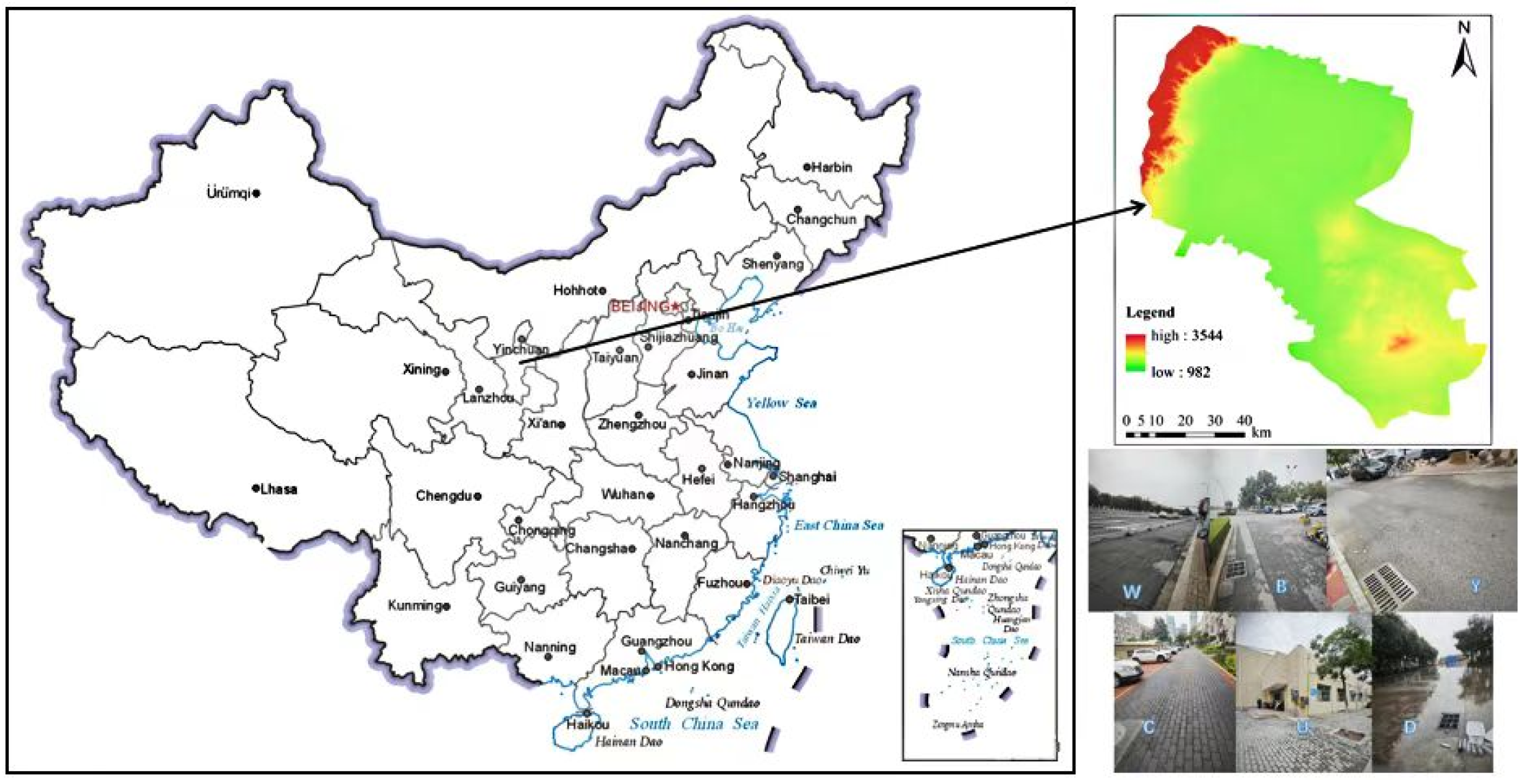
This study focused on stormwater runoff from different grades of road underlying surfaces in Yinchuan. The sample collection time was from July to September 2024, and more than 200 bottles of water samples were collected. According to the characteristics of the study area, the sampling points were selected, including the following four main road types in the central urban area of Yinchuan: municipal trunk road, municipal sub-trunk road, municipal branch road and community road. The sampling points are named Wencui North Street (W), Beijing West Road (B) and Yingbin Lane (Y). These three roads are called motorways in this study. The remaining sampling points are Yinchuan Hospital of Traditional Chinese Medicine and Institute of Traditional Chinese Medicine (H), Dahe CNC Machine Tool Factory (D) and Caiyun Home (C), and Wencui Campus of Ningxia University (U). These sampling points are collectively referred to as non-motorways. This study selected sampling points based on the natural conditions and the social environment, focusing on areas with high population and traffic flow, as well as on economically developed streets, to ensure that the results were representative. The specific sampling locations are shown in Figure 1.

2.1.2. Sampling During Rainfall Events

The rainfall in Yinchuan City has the characteristics of short duration, high-intensity rainfall, and occasional occurrence. Sampling frequency was determined based on actual rainfall conditions during fieldwork. Therefore, this study decided to adopt the following sampling strategy: samples were collected every 10 min at the initial stage of rainfall (within 1 h after runoff) until the runoff water quality tended to be stable.
Rainfall characteristics of the 10 monitored rainfall events were summarized based on data from the Yinchuan Housing and Urban–Rural Development Bureau, as shown in Table 1.

2.2. Experimental Preparation and Test Methods

In this study, a total of 10 sets of valid stormwater runoff water quality data of rainfall were collected from July to September 2024. This study shares a similar research background with [22]. In order to study the pollution status of conventional five items and heavy metals in road runoff, the water quality monitoring indicators were determined according to the previous studies on road stormwater runoff, including SS, COD, TN, NH3-N, TP, Cu, Fe, As, Mn, Zn, Pb, Cr and Cd. The types of pollutants and test methods are shown in Table 2.
After sampling, the water samples were quickly sent back to the laboratory for analysis. If immediate testing was not possible, samples were stored in a refrigerator at approximately 4 °C.
SS was determined by gravimetric analysis using a balance, while other pollutants were measured using a Hach spectrophotometer (Model DR 3900). The manufacturer is Hach, located in Loveland, Colorado, USA. Heavy metal pollutants were detected using a BOWEI inductively coupled plasma emission spectrometer (Model ICP700T) with a detection limit of 0.1 μg/L. The manufacturer is Suzhou Bowei Instrument Technology Co., Ltd., located in Suzhou City, Jiangsu Province, China.

2.3. Water Quality Evaluation Standards

By comparing the water quality parameters with national standards, pollutant concentration levels were evaluated. COD, NH3-N, TP and TN were assessed against China’s Surface Water Environmental Quality Standard (GB 3838-2002) [29] Class IV criteria (COD: 30 mg/L, TN: 1.5 mg/L, NH3-N: 1.5 mg/L, TP: 0.3 mg/L), and heavy metals against the same standard’s Class IV criteria (Cu: 1000 μg/L, Zn: 2000 μg/L, Cd: 5 μg/L, Cr: 50 μg/L, Pb: 50 μg/L). SS was assessed against the Discharge Standard of Pollutants for Municipal Wastewater Treatment Plant (GB18918-2002) [30] Class III-B criteria (SS: 50 mg/L). For the specific meanings of the concentrations of the relevant indicators, see Table A1.

2.4. First Flush Effect Analysis

Runoff water quality was evaluated, and associated carcinogenic risks were calculated. The first flush effect of rainwater was analyzed using the M(V) rainwater scouring curve method [31,32], and the runoff pollution control depth for Yinchuan City was estimated based on runoff pollution reduction rate requirements specified in sponge city construction guidelines. The calculation formula for the M(V) curve is as follows:
M ( V ) = M ( t ) V ( t ) = 0 t Q ( t ) ρ ( t ) d t / 0 T Q ( t ) ρ ( t ) d t 0 t Q ( t ) d t / 0 T Q ( t ) d t
where M(t)—amount of pollution load discharged during rainfall at time t, kg; V(t)—amount of runoff volume discharged during the rainfall process, L; Q(t)—instantaneous runoff flow at time t, L/min; p(t)—instantaneous pollutant concentration at time t, mg/L; T—duration from the beginning to the end of runoff, min.

2.5. Improved Nemerow Index Method

The Nemerow index is a weighted multi-factor environmental quality index that accounts for the impact of peak concentrations, widely used globally for calculating comprehensive pollution indices. For water quality assessment, the improved Nemerow index method [33] was employed, calculated as follows:
I i = C i C i 0
I ave = i = 1 n I i
P = I ave 2 + I max 2 2
I m a x = I m a x + I ω 2
w i = r i i = 1 n r i
r i = C m a x C i 0
where Ci—concentration value of the i-th factor, mg/L; Ci0—standard value of the i-th factor, mg/L; Ii—single pollution index of the evaluation factor i; Imax—maximum value of the evaluation factor pollution index; Iave—average value of the pollution index of evaluation factors; P′—improved Nemero pollution index; IωCi/Ci0 of the factor with the largest weight value; ri—correlation ratio of the evaluation factor of item i; Cmax—maximum value of the evaluation factor standard, mg/L; ωi—weight value of each pollution factor.

2.6. Human Health Risk Assessment

The non-carcinogenic risk of a single pathway was assessed using hazard quotient (HQ) [34]. The HQ reflects the non-carcinogenic risk of a single pathway. By calculating the average daily dose of individuals under each pathway (oral or ingestion; and absorption through bare skin), the average daily dose formula is as follows:
HQ = ADD/RfD
H I = H Q i n g + H Q d e r m
ADD oral = C w × I R × A B S g × E F × E D B W × A T
ADD demal = C w × S A × K p × E F × E T × E D B W × A T
where ADDoral—average daily dose received through oral and nasal intake; ADDdermal—average daily dose received by absorption through exposed skin; Cw—EMC of heavy metal elements on each underlying surface; IR—feeding rate, L/day; EF—exposure frequency, year/day; SA—exposed skin area, cm2; ET—time of exposure, hours/day; ED—exposure duration, years; BW—body weight, kg; the average time of AT being a non-carcinogenic substance, days; ABSg—gastrointestinal absorption factor.
The key factors influencing water pollution characteristics were identified through cluster analysis, while explanatory methods systematically examined additional factors contributing to pollution status.

3. Results and Discussion

3.1. Temporal Variation in Water Quality of Urban Road Runoff

In this paper, the roads were divided into municipal trunk road, municipal sub-trunk road, municipal branch road and community road, and were divided into motorways and non-motorways for comparative study. According to road design standards, the width of motorways is typically between 3.25 m and 3.75 m, while the width of non-motorways is generally 1.0 m [35].

3.1.1. Motorways

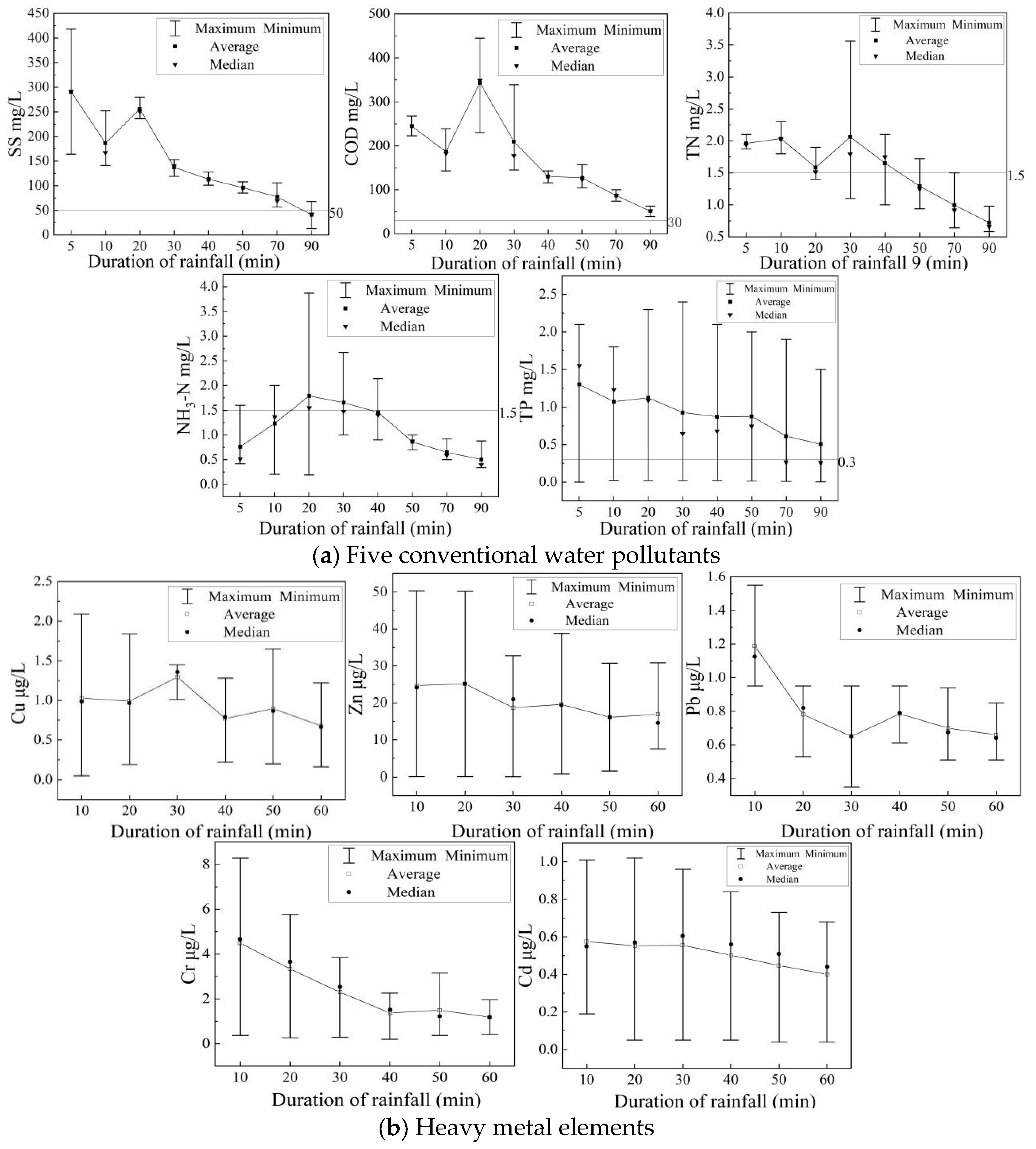
Figure 2 shows the distribution characteristics of each pollutant concentration in the motorway during different rainfall events. Among them, the maximum concentration of SS was 8.36 times of Class III-B standard of the discharge standard, and the maximum concentrations of COD, TN, NH3-N and TP reached 14.8 times, 2.37 times, 2.58 times and 7.67 times of Class IV water quality standards, respectively. The minimum concentration of SS also exceeded the Class III-B standard of the discharge standard. The minimum concentrations of COD, TN and NH3-N were 1.77 times, 0.65 times and 0.4 times of the Class IV water quality standard, respectively, while the minimum concentration of TP met the Class IV water quality standard. The results showed that the minimum concentrations of NH3-N and TP in the stormwater runoff of the motorway were lower than the Class IV water quality standards, and the concentrations of other pollutants were significantly higher than the relevant limits.
In runoff from Wencui North Street (W), Cd concentrations exceeded the Class IV standard by 1.2 times, and the concentration of Pb and Zn ions in the road runoff exceeded the Class IV water quality standard by 1.9 and 0.75 times, respectively. All other heavy metal ions did not exceed the standard range. Pb and Cr ions are the main heavy metal pollutants in stormwater runoff, and the concentration of pollutants in motorways with large traffic volume is significantly higher.
The tires and road wear products produced by the large traffic flow on the motorway may be the main sources of SS and heavy metal pollutants. The exhaust gas emitted by a large number of vehicles on the motorway and the litter produced by the road green belt are the main sources of organic pollution in the stormwater runoff of the motorway [36].

3.1.2. Non-Motorways

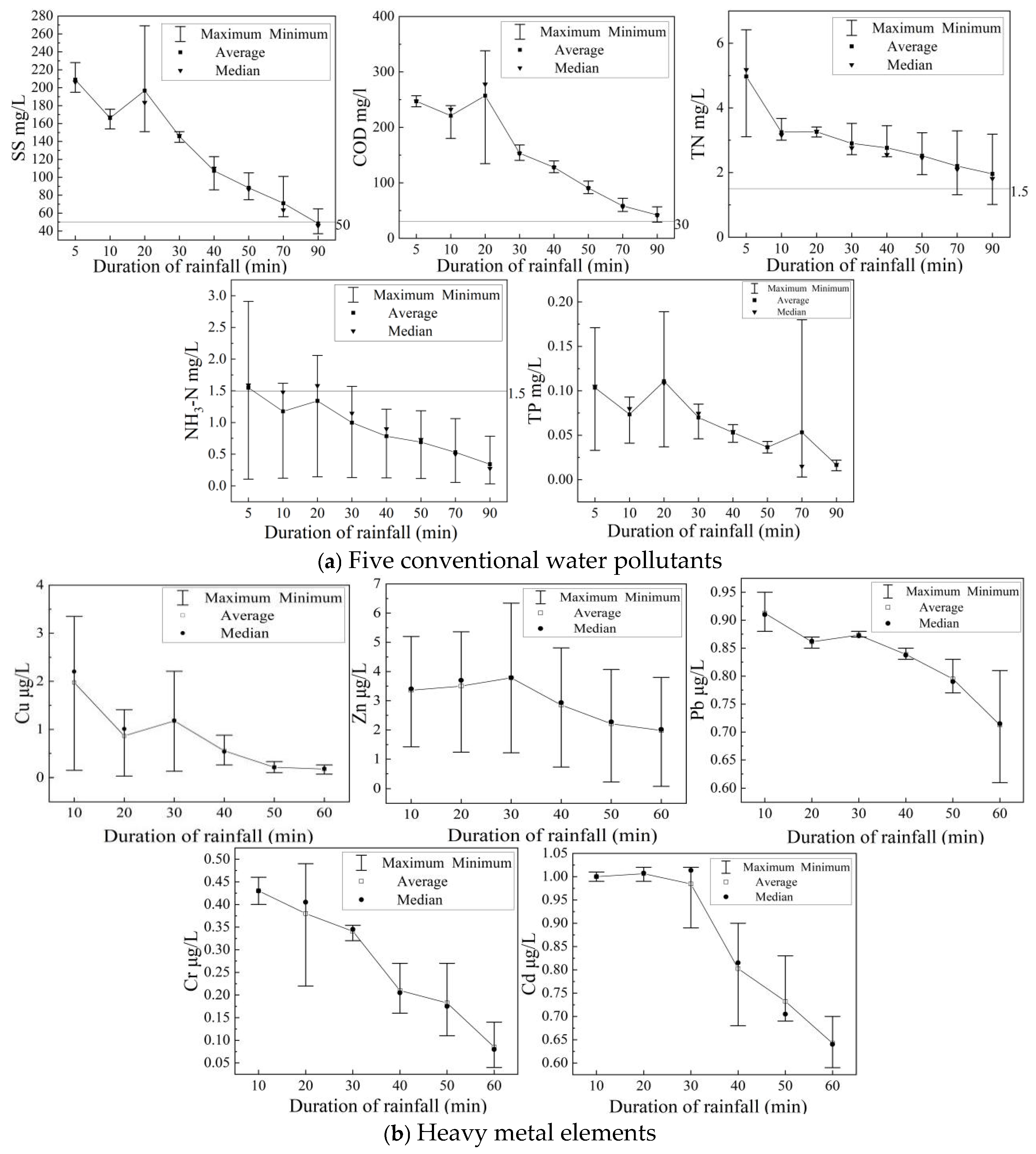
Figure 3 presents the temporal variation in pollutant concentrations in non-motorway runoff. The maximum concentration of SS exceeded 3.66 times of the Class III-B standard, and the maximum concentrations of COD, TN, NH3-N and TP reached 16.01 times, 21.97 times, 6.41 times and 1.99 times of the Class IV standard, respectively. The minimum concentration of SS was 1.30 times of the class III standard, and the minimum concentrations of COD, TN, NH3-N and TP all reached the Class IV standard. The results show that the maximum concentrations of SS, COD and TN in stormwater runoff of non-motorway are significantly higher than the relevant standard limits, but for the average concentration of the whole rainfall, the concentrations of the three pollutants are within the Class IV water quality standards.
Only Zn concentrations exceeded the Class IV standard (by 0.9 times) in non-motorway runoff; all other heavy metals were within the standard range. On the whole, Pb and Cr remained the main heavy metal pollutants in stormwater runoff, but their concentrations were significantly lower than those in motorway runoff.
The reason for the high average concentration of organic pollutants in the stormwater runoff of non-motor vehicle roads may be the domestic waste generated by the shops near the monitoring point and the garbage generated by the pedestrians on the road [37].
Both motorways and non-motorways exhibit more severe pollution of conventional indicators (SS, COD, TN, NH3-N, and TP) than heavy metals. This is likely due to Yinchuan’s arid climate: Arid and hot conditions restrict the growth of green vegetation on the ground, resulting in elevated levels of suspended particulate matter in the air and consequently increasing pollutant concentrations in stormwater runoff [35]. Furthermore, the frequent sprinkling of dry urban road surfaces is precisely the reason why heavy metal pollution in the urban area remains relatively mild. Through the comparison of the full text, it is not difficult to see that the pollution degree of the arid area represented by Yinchuan City is significantly higher than that of the humid area. For example, the cities around the Yangtze River Delta reported a maximum SS concentration of 339.6 mg/L [38,39,40,41,42,43], which was significantly lower than the Yinchuan area studied. Because of the frequent rainfall in humid areas, it is not conducive to the accumulation of pollutants, so the concentration of various pollutants in humid areas is lower than that in arid areas.

3.2. Influencing Factors of Urban Road Runoff Pollution

3.2.1. The Influence of Basic Parameters of Rainfall on Road Stormwater Runoff Pollution

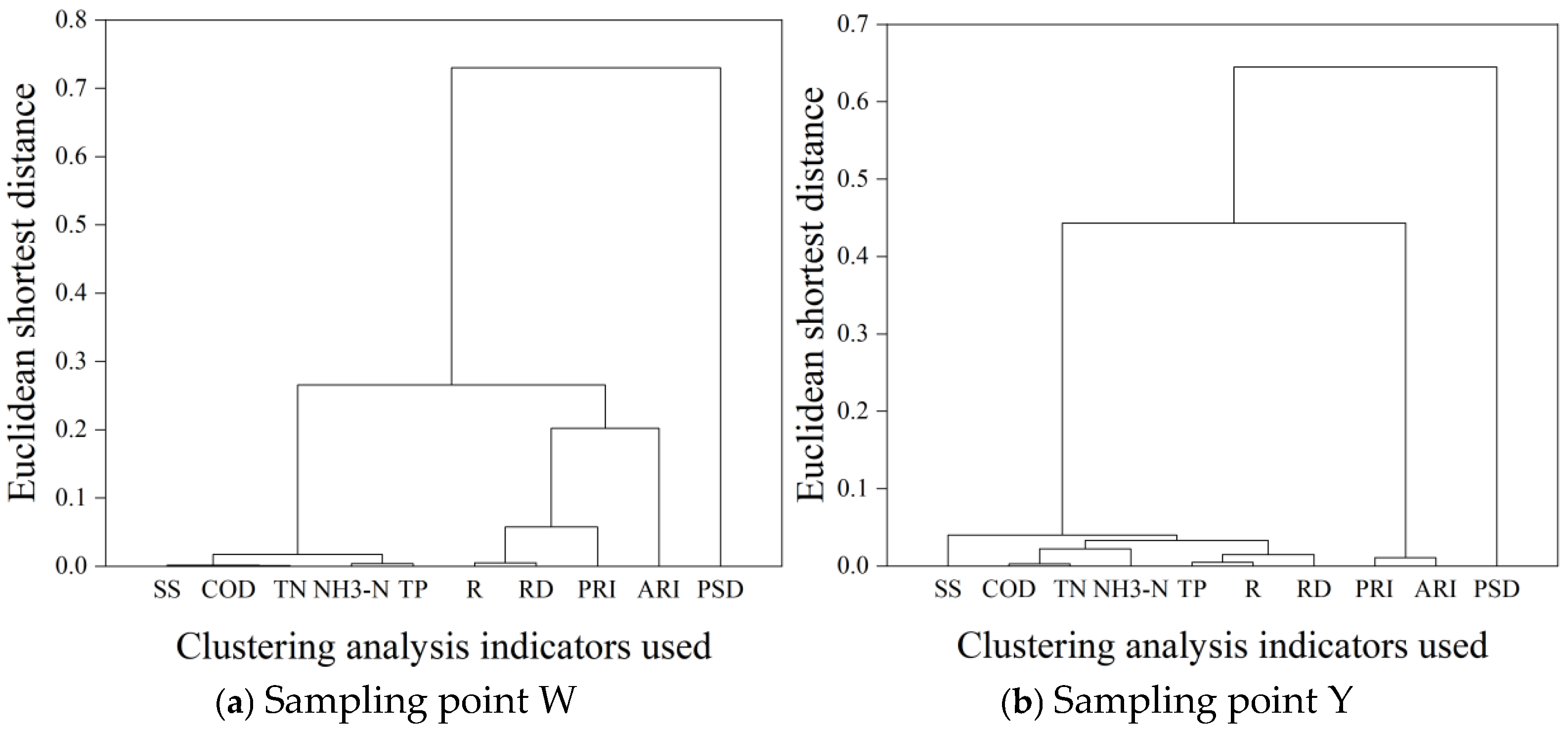
To analyze the impact of rainfall characteristics on runoff pollution, four representative rainfall events (one light rain, two moderate rains, and one heavy rain) were selected for cluster analysis at two high-traffic sampling points (W and Y). Four rainfalls include light rain, two moderate rains, and heavy rain. Cluster analysis was conducted using Origin 2021 (OriginLab Corporation, One Roundhouse Plaza, Suite 303, Northampton, MA 01060, USA). In the cluster analysis, this study selects five categories of indicators, which are conventional pollution indicators (SS, COD, TN, NH3-N, and TP) and basic parameters of rainfall [39,40]. The basic parameters of rainfall include: rainfall (R), rainfall duration (RD), peak rainfall intensity (PRI), average rainfall intensity (ARI) and previous sunny days (PSD). The basic parameters of rainfall under the selected rainfall event are shown in Table 3.
For sampling point W, as shown in Figure 4, all parameters and indicators can be divided into the following three categories according to the dendrogram: pollution indicators, rainfall parameters, and previous sunny days. Among these, the pollution indicators show the closest mutual relationship. Regarding the five rainfall-related parameters studied, previous sunny days mainly affect the accumulation of surface pollutants before a rainfall event, while the other parameters are related to the scouring of surface pollutants. Rainfall duration and peak rainfall intensity also have a significant influence on the pollution level of road runoff, whereas average rainfall intensity shows a weak correlation with the level of each pollutant. This indicates that during the mobilization of road runoff pollutants, variations in rainfall intensity have a significant impact on pollutant concentrations in the early and late stages of a rainfall event, but the correlation is weak when considering the entire event. Finally, the figure shows that antecedent dry days have the weakest correlation with the concentration level of each pollutant, exerting the lowest degree of influence.
For sampling point Y, the intercorrelation among pollution indicators is stronger than that observed at sampling point W. In terms of rainfall-driven impacts, the lower rate of road surface pollutant accumulation at Y, in comparison with W, can be attributed to its lower road traffic volume and passenger flow. Under the condition of sufficient with runoff wash-off curve, the discrepancy in pollutant accumulation levels will be directly reflected in the runoff pollution degree of the rainfall event. On the other hand, the road conditions of the branch road are more complex and the road surface porosity is higher, resulting in a higher sensitivity to rainfall intensity parameters—including both average rainfall intensity (ARI) and peak rainfall intensity (PRI).

3.2.2. The Influence of Urban Functional Areas on Road Stormwater Runoff Pollution

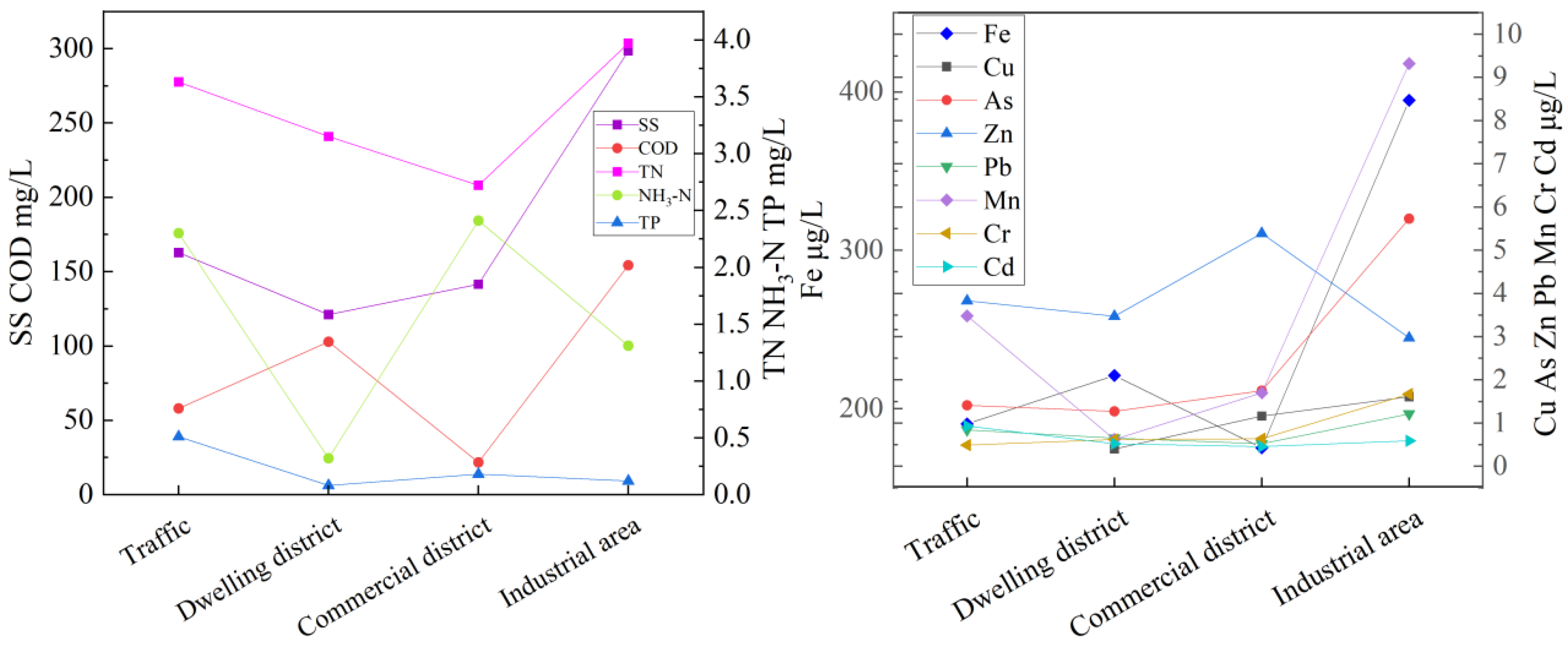
Differences in urban functional distribution give rise to significant variations in the sources and intensities of runoff pollution across different regions. Usually, due to the high intensity of human activities and the complex types of pollutant input, the degree of runoff pollution in busy traffic areas, industrial production areas and commercial intensive areas is significantly higher than that in areas dominated by residential functions [41]. The results are as shown in Figure 5.
In the effective rainfall, the surface runoff of W, C, B and D, which represent the traffic area, dwelling area, commercial area and industrial area respectively, were analyzed. The results are shown in Figure 4. The differences in the concentrations of COD, SS, TN, NH3-N and TP in the surface runoff can reflect the impact of urban functional areas. The differences in the concentrations of Cu, Fe, Zn, As, Pb, Mn, Cr and Cd can also reflect the impact of different urban functional areas on heavy metal pollutants. From the diagram, it can be seen that the concentration of pollutants in different urban functional areas varies, and the pollution of industrial areas is significantly higher than that of other types of functional areas, which indicates that different urban functional areas have different effects on stormwater runoff pollution. Industrial areas have the greatest impact on runoff pollution, and commercial areas have the least impact on runoff pollution.

3.3. First Flush Effect of Urban Road Runoff

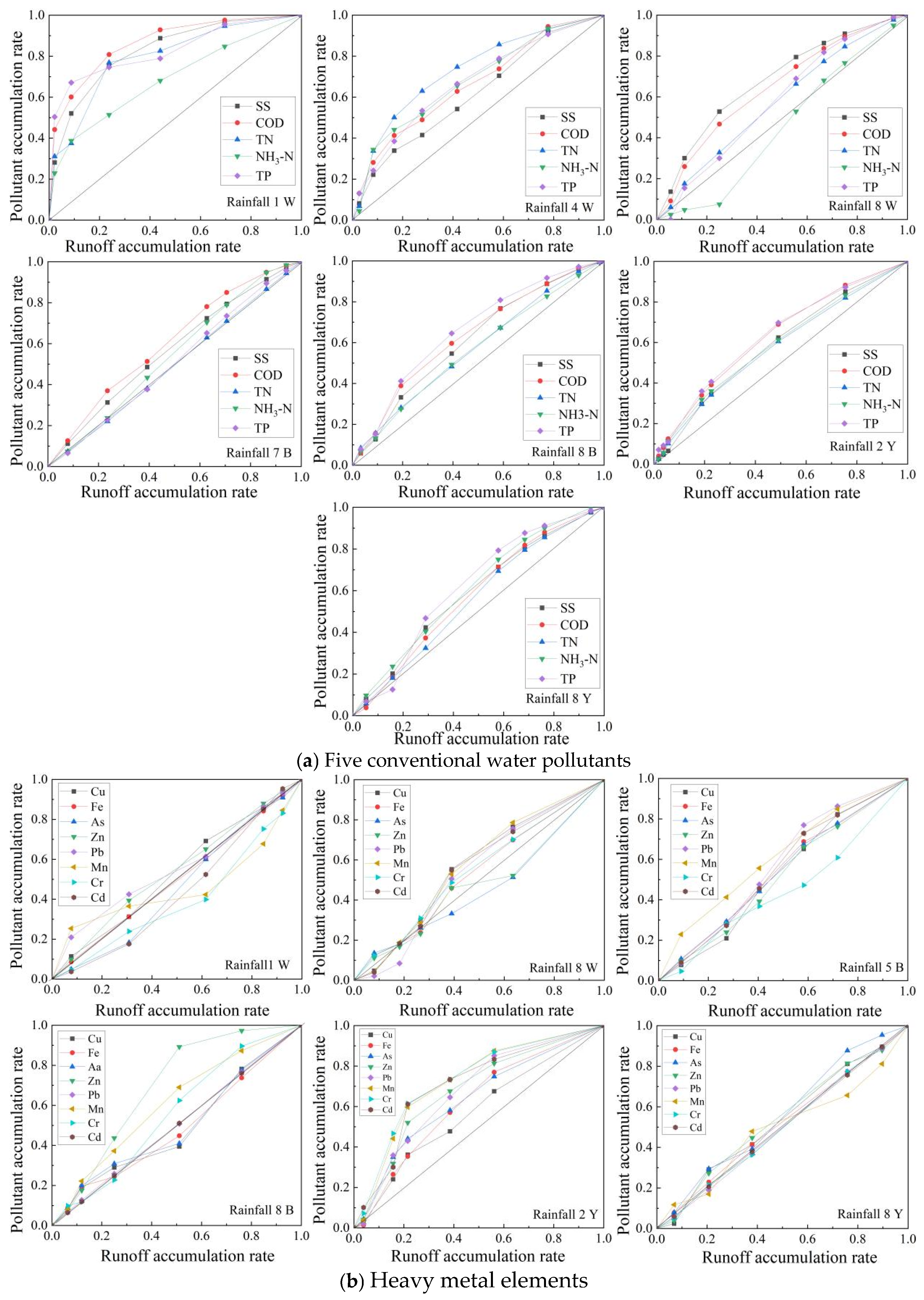
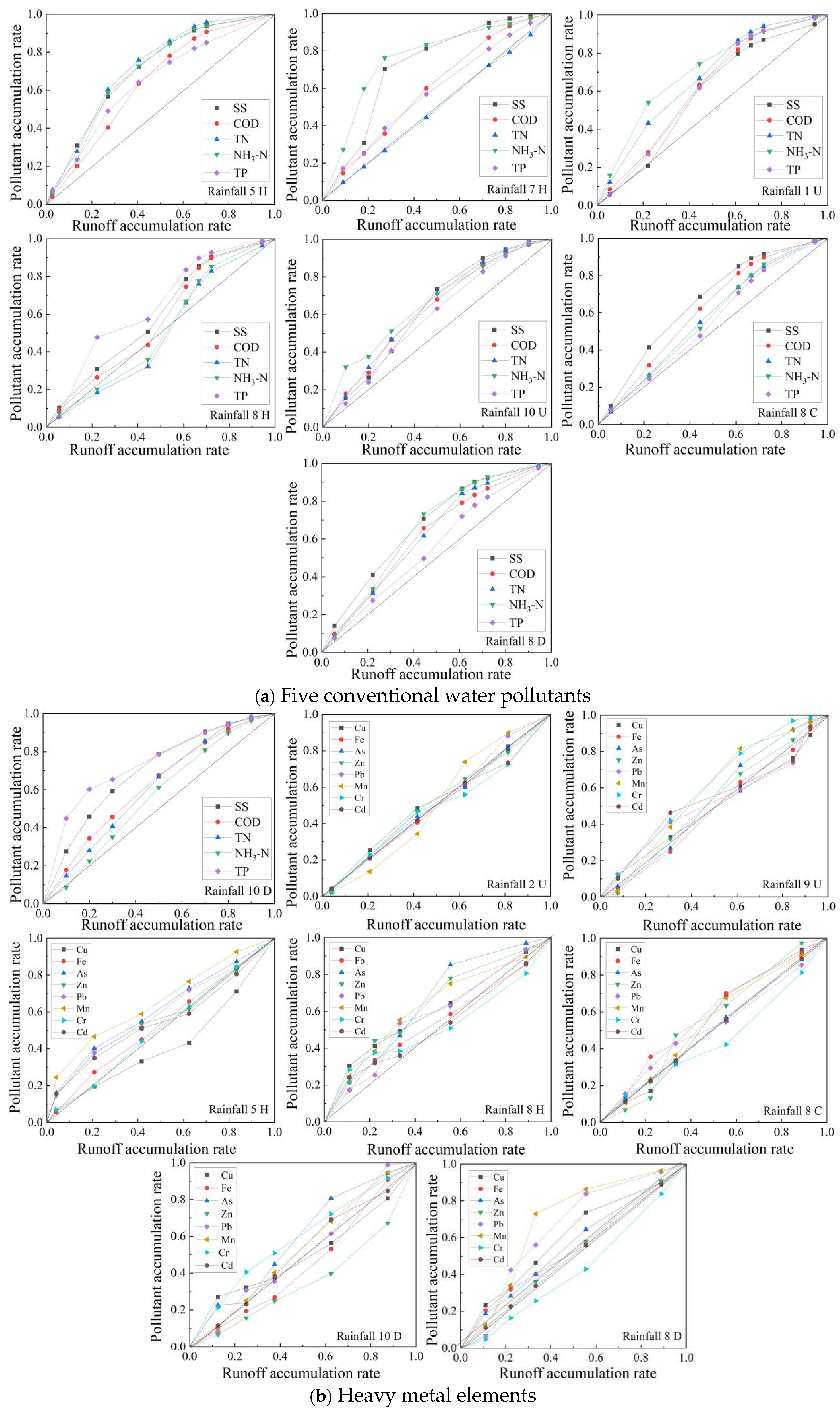
The first flush effect of urben road runoff was assessed based on the relationship between the runoff scouring curve and the 45° line. Specifically, a scouring effect is identified when the scouring curve plots above the 45° line, and the scouring intensity increases with the vertical distance from this line. In contrast, a scouring effect is not considered to occur when the curve falls below the 45° line [42].

3.3.1. Motorways

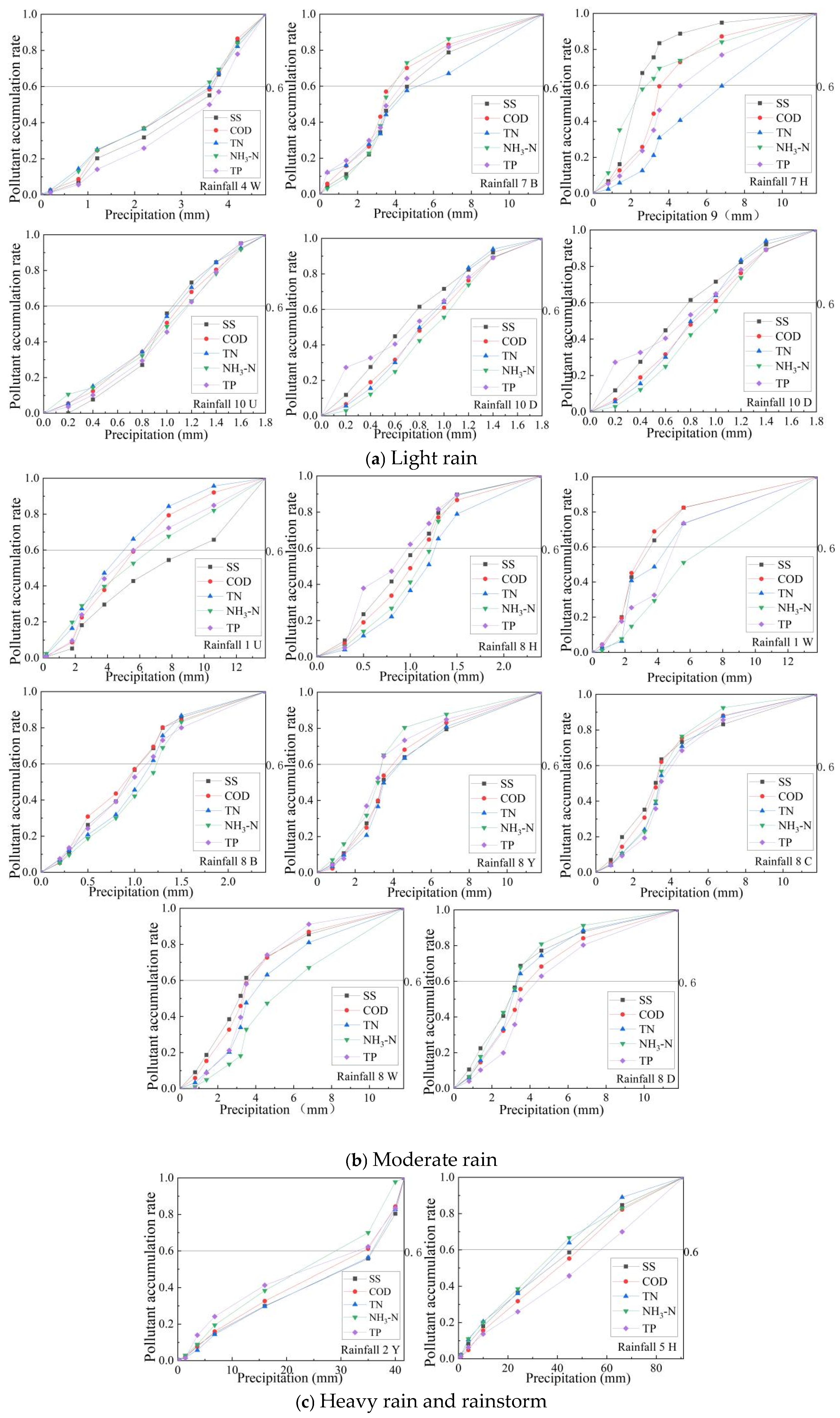
The M(V) curves for each rainfall event on motorways are presented in Figure 6. For Rainfall 1, the first flush effect of NH3-N was weaker than that of the other pollutants. During Rainfall 2, COD and TP exhibited relatively pronounced scouring effects, while heavy metals showed a notably stronger scouring effect than SS and organic pollutants. In contrast, during Rainfall 4, TN exhibited the most significant scouring effect, whereas SS showed the weakest effect throughout the event. Rainfall 7 exhibited a generally weak scouring effect overall. COD demonstrated a pronounced first flush effect, while TP performed the weakest in this regard, occasionally even lacking a detectable first flush effect. For Rainfall 8, all pollutants except NH3-N and TP at both sampling points W and Y exhibited a first flush effect. Specifically, across all rainfall events, various pollutants displayed scouring effects to varying degrees, among which SS and COD showed relatively strong first flush effects, whereas NH3-N exhibited a weak effect. Regarding heavy metals, most areas experienced rainfall events in which certain heavy metal species exhibited no scouring effect. Overall, across all monitored rainfall events, heavy metals presented a consistently weak first flush effect on the monitored road sections.
It can be observed that SS, COD and TP in the stormwater runoff of motor vehicle-dominated roads generally exhibit a first flush effect. By contrast, NH3-N and TN may fail to manifest this effect under certain rainfall conditions. Meanwhile, heavy metal pollutants consistently show a weak first flush effect throughout the entire rainfall process.
This finding indicates that SS, COD, TN, NH3-N and TP are significantly easier to remove during runoff generation compared to heavy metals. Given the absence of a strong first flush effect in heavy metals, long-term exposure to stormwater runoff containing heavy metals may elevate the risk of disease incidence.

3.3.2. Non-Motorways

The M(V) curves for each rainfall event on non-motorized roads are presented in Figure 7. For Rainfall 1, the first flush effect of SS was very weak in the early stage of rainfall, while TN maintained a strong scouring effect throughout the entire rainfall process. In Rainfall 5, the scouring effect was weak in the early stage but exhibited a strong first flush effect in the later stage. Among these pollutants, TN showed the most pronounced first flush effect, whereas COD performed relatively weakly in this regard. It can be observed that the first flush effect in the early stage of rainfall was less pronounced than that in the later stage. Additionally, among all heavy metal pollutants, Mn exhibited a strong scouring effect. For Rainfall 7, NH3-N demonstrated a strong first flush effect, TP showed the weakest first flush effect, and SS exhibited a notable first flush effect in the later stage of rainfall. In Rainfall 8, TN and NH3-N displayed an obvious first flush effect in the later stage of rainfall on road H, while consistent scouring patterns were observed on roads C and D. Regarding heavy metal pollutants, a distinct first flush effect occurred in the middle stage of the entire rainfall event, whereas only weak scouring effects were detected in both the early and late stages. In Rainfall 10, all types of pollutants exhibited strong scouring in both the early and late stages of rainfall. Overall, the first flush effect on non-motorized roads was relatively pronounced across all rainfall events, demonstrating a strong scouring effect.
Overall, it can be concluded that SS and TN in the stormwater runoff of non-motorized roads generally exhibit a first flush effect. By contrast, NH3-N, TP and TN may fail to manifest this effect under certain rainfall conditions. Among heavy metal pollutants, Mn and Zn have a significantly stronger first flush effect than other heavy metal species.

3.4. Determination of Road Runoff Pollution Control Depth Based on Pollutant Reduction Rate

With the objective of achieving total pollutant reduction for stormwater runoff pollution control, and considering the 40–60% removal rate range for stormwater runoff pollutants by sponge facilities as specified in the Technical Guide for Sponge City Construction, the results of this study indicate that pollutant concentrations in stormwater runoff generally exceed the Class V limits of the Environmental Quality Standards for Surface Water. Accordingly, this study sets the target removal rate for stormwater runoff pollution control at 60% (hereinafter referred to as D60) to minimize the adverse impacts of pollutants on the aquatic environment. Investigating the D60 control rate in stormwater runoff pollutants essentially addresses the core capacity for urban non-point source pollution control. It serves not only as the “passing line” for assessing compliance with sponge city construction standards but also as a key indicator for evaluating whether facilities can effectively remove composite pollutants (e.g., heavy metals and phosphorus) attached to fine particles. Therefore, this study establishes the target removal rate for stormwater runoff pollution control at 60% (D60) to maximize the assessment of runoff pollution status and to reduce the adverse effects of pollutants on the water environment.

3.4.1. Light Rain

As shown in Figure 7, under the background of light rain runoff, the D60 ranges of various pollutants are defined as follows: the D60 ranges of W, B, U and D are 3.4–3.8 mm, 3.8–4.5 mm, 1–1.7 mm and 0.7–0.9 mm, respectively. Preliminary analysis showed that the characteristic pollutants of W, B, U and D were TP, TN, TP and NH3-N, respectively, and their D60 values were 3.8 mm, 4.5 mm, 1.7 mm and 0.9 mm, respectively. However, the concentration of TP in the stormwater runoff of W ranged from 0.003 to 0.025 mg/L, which was lower than the Class I water quality limit. Therefore, TP should not be used as a characteristic pollutant in this area. Based on the aforementioned analysis, SS with the sub-maximum D60 value was designated as the characteristic pollutant for sampling point W, with a corresponding D60 value of 3.5 mm. In addition, the concentrations of TN and NH3-N of B were lower than the Class III-B water quality limit. Therefore, SS was selected as the characteristic pollutant in this point, and its D60 value was 4.5 mm. In summary, under light rain conditions, the depth of stormwater runoff pollution control ranges of W, B, U and D are 3.5 mm, 4.5 mm, 1.7 mm and 0.9 mm, respectively.

3.4.2. Moderate Rain

As shown in Figure 7, under the background of moderate rain runoff, the D60 range of pollutants at each monitoring point is: W 2.9–6.8 mm, B 3.8–5.1 mm, Y 3.4–4.4 mm, H 2.4–6.8 mm, C 3.4–4.2 mm and D 3.4–4.5 mm. Further analysis showed that the concentrations of NH3-N and TP of C were 0.46–0.05 mg/L and 0.11–0.02 mg/L, respectively, which were lower than the Class III-B water quality limits. Therefore, NH3-N and TP should not be used as characteristic pollutants at this point. Based on this, the TN with D60 sub-maximum value was used as the characteristic pollutant, and its D60 value was 3.8 mm. The concentrations of TN and NH3-N of D were lower than the Class III-B water quality limit. Therefore, COD was selected as the characteristic pollutant in this area, and its D60 value was 3.8 mm. The comprehensive analysis showed that the characteristic pollutants of W, B, Y, H, C and D were SS, COD, TN, NH3-N and TP, and their D60 values were 6.8 mm, 5.1 mm, 4.4 mm, 6.8 mm, 3.8 mm and 3.8 mm, respectively. Therefore, under moderate rain conditions, the stormwater runoff pollution control depth ranges of the above points are 6.8 mm, 5.1 mm, 4.4 mm, 6.8 mm, 3.8 mm and 3.8 mm, respectively.

3.4.3. Heavy Rain and Rainstorm

As shown in Figure 8, Yinchuan City experiences a low frequency of heavy rains and rainstorms; accordingly, the monitoring scope was limited to Branch Road Y and Community Road H. Under the scenario of heavy rain and rainstorm runoff, the D60 ranges of pollutants were determined as 28–36 mm for Y and 40–58 mm for H, respectively.
Further analysis revealed that the characteristic pollutants for Y and H were TN and TP, with corresponding D60 values of 36 mm and 58 mm, respectively. Therefore, under heavy rain and rainstorm conditions, the stormwater runoff pollution control depth thresholds were set at 36 mm for Branch Road Y and 40 mm for Community Road H.
The results show that the range of rainwater runoff control depth of roads at all levels in Yinchuan City is 0.9–4.5 mm for light rain, 3.8–6.8 mm for moderate rain, and 36–40 mm for heavy rain and rainstorm. The results indicate that the runoff control depth in arid regions is higher than that in humid regions. For example, ref. [43,44] reported that for the control of 70% of runoff pollutants in road rainwater runoff in Xiamen City, the control depth of light and moderate rain ranged from 3.0 to 9.4 mm, and the control depth of heavy rain ranged from 4.4 to 13.6 mm.
According to the research results of rainwater runoff control depth, the following measures can be taken to reduce runoff pollution. Rainwater inlet is an important part of urban drainage system. Road rainwater runoff enters the municipal rainwater pipe network system through the rainwater grate [45]. In this process, a sewage interception device can be set up to reduce the pollution of rainwater runoff. The improved rainwater outlet can have the function of sewage interception. For example, ceramsite is used as a pollution interception module, which has good pollution interception ability and economic practicability.
We recommend developing innovative double-layer drainage pipeline systems and double-layer inspection wells to enhance urban road runoff control. Designed to address both road runoff pollution and combined sewer overflow (CSO) challenges, these treatment facilities enable effective interception of polluted runoff under varying contamination conditions while controlling overflow events. These measures are expected to help arid-region countries effectively mitigate urban road pollution and provide guidance for future road infrastructure renewal planning.

3.5. Water Quality Evaluation Based on the Improved Nemerow Pollution Index Evaluation

Table 4 shows the evaluation factor calculation index standard. According to the evaluation factors in the table, the cleanliness of runoff pollutants is evaluated, and the water pollution status of urban runoff pollution is obtained.
Using the average concentration of stormwater runoff pollutants in different underlying surfaces calculated in Table 5, the improved Nemero pollution index evaluation method was used to evaluate the water quality of various types of stormwater runoff in the study area. According to the above formula, the calculation results are shown in Table 5.
From Table 5, it can be seen that the improved Nemero pollution index of stormwater runoff of municipal trunk roads is 8.36, and that of secondary trunk roads is 5.83. The evaluation results are all moderate pollution, and the pollution level of secondary trunk roads is lower than that of municipal trunk roads. The improved Nemerow pollution index of municipal branch road is 4.47, and the evaluation result is relatively clean. The improved Nemerow pollution index of Road H is 5.60, with the evaluation result of “polluted”; the improved Nemerow pollution index of the internal roads in Area U is 3.32, with the evaluation result of “clean”; the improved Nemerow pollution index of the internal roads in Area D is 3.62, with the evaluation result of “clean”. By comparing the improved Nemerow pollution indexes of stormwater runoff pollutants on different underlying surfaces, the following rule is obtained: W > Y> H >B > D > U. The above data indicate that traffic intensity is the primary influencing factor for road stormwater runoff pollution in Yinchuan City, followed by regional functional type. Municipal trunk roads exhibit the highest pollution level (8.36), approaching the threshold for severe pollution, whereas internal roads in residential areas show the lowest pollution levels (3.32–3.62). This pattern provides a quantitative basis for formulating a “graded and zoned” strategy for stormwater runoff pollution control.

3.6. Human Health Risk Assessment

This study classified individuals’ exposure to runoff rainwater into the following two pathways: oral–nasal ingestion and absorption through exposed skin. Health risk assessment of trace elements in runoff rainwater was conducted by selecting relevant parameters tailored to these two exposure pathways. First, the average daily dose (ADD) of individuals via each pathway was calculated based on their daily activity patterns. Subsequently, this dose was compared with basic data and toxicological reference dose (RfD) data collected and analyzed by relevant institutions. Specifically, this study adopted the non-carcinogenic reference dose (RfD) standards issued by the U.S. Environmental Protection Agency (USEPA), which were derived from an extensive compilation of clinical trial data and population health surveys (Table 6 and Table 7).
The total non-carcinogenic risk of the combined effects of the two pathways was assessed using the hazard index (HI). The hazard index (HI) reflects the total potential non-carcinogenic risk caused by the above two pathways. By calculating the sum of hazard quotient (HQ) under the two pathways, if the sum is greater than 1, it is considered that the body toxic substances contained in runoff have potential adverse effects on human health [46,47]. All the original parameter data were from the United States Environmental Protection Agency and related research. The calculation results are shown in Table 8.
The average daily doses (ADDoral and ADDdermal) and corresponding health hazard indices (HQoral and HQdermal) for As, Cd, Cr, Cu, Fe, Zn, Cd, and Pb in runoff were calculated and analyzed using Table 8. The value in the table indicates the potential health risk. The larger the value, the higher the health risk. The results indicated that the risk of adult disease from pollution was significantly higher than that of children. In this study, non-carcinogenic risk was assessed by HQ. As the values were less than one, no adverse health effects are expected. Cd and Pb were identified as major factors inducing cancer in the study. At the same exposure level, adults were found to be equally affected by Cd as children. However, under the influence of Pb, adults showed significantly higher risk than children. Therefore, attention should be paid to prevention when rainfall runoff occurs.

4. Conclusions

This study draws the following conclusions:
  • On urban roads, the event mean concentrations (EMCs) of most pollutants exceed the Class IV surface water quality standard, with runoff pollution being more severe on arterial and secondary roads. For arterial roads, the EMC ranges of SS and COD are 28.4–418 mg/L and 39.13–945.1 mg/L, respectively, and both increase with traffic volume. Based on the pollutant reduction rate, the required stormwater runoff control depths in Yinchuan are 0.9–4.5 mm for light rain, 3.8–6.8 mm for moderate rain, and 36–40 mm for heavy rain and rainstorms.
  • Among rainfall parameters, those driving runoff pollutant releases (e.g., rainfall amount, rainfall intensity, and rainfall duration) are more likely to cause regional variations in runoff pollution than accumulation-related factors (e.g., antecedent dry days). Furthermore, urban functional zones play a crucial role, with industrial zones exhibiting the most significant impact on road runoff pollution.
  • According to the improved Nemerow pollution index, no severe pollution was detected. Further calculations indicate no potential health risk exposure, confirming that stormwater runoff from Yinchuan’s urban roads does not represent a substantial threat.
Because water samples were repeatedly collected from fixed monitoring sites across multiple rainfall events, the data exhibit non-independence, introducing correlations among observations within each site. Future research should employ larger datasets and appropriate statistical methods to validate the findings of this study and generate more robust results.

Author Contributions

This paper mainly writes and revises, S.W.; thesis modification, X.W.; data analysis, W.F.; data analysis, C.F.; data analysis, Y.Q.; auxiliary data analysis, M.Q.; data analysis, X.Z. Auxiliary data analysis. All authors have read and agreed to the published version of the manuscript.

Funding

National Key R&D Program of China (Grand No. 2022YFC3800500).

Institutional Review Board Statement

Not applicable.

Informed Consent Statement

Not applicable.

Data Availability Statement

The original contributions presented in this study are included in the article. Further inquiries can be directed to the corresponding author.

Conflicts of Interest

Authors Chao Fan, Yun Qu and Mengxi Qiao were imployed by the China Academy of Planning and Design (Beijing) Co., Ltd., Beijing, China, during the writing of this manuscript. Other authors declare no conflict of interest.

Abbreviations

CODChemical Oxygen Demand
SSSuspended Solids
TNTotal Nitrogen
TPTotal Phosphorus
NH3-NAmmonia Nitrogen

Appendix A

The Environmental Quality Standards for Surface Water (GB 3838-2002). According to this standard, surface water quality is classified into the following five categories based on environmental functions and protection objectives:
Class I: Source water and national nature reserves;
Class II: First-class protection zones for centralized drinking water sources, habitats for rare and precious aquatic organisms, etc.;
Class III: Second-class protection zones for centralized drinking water sources, aquaculture areas, etc.;
Class IV: General industrial water use areas, recreational water areas with no direct human contact;
Class V: Agricultural water use areas, water bodies for general landscape requirements.
Table A1. Surface water (GB 3838-2002).
CodeTesting ParameterDetection Limit (mg/L)
IIIIIIIVV
1COD≤1515203040
2NH3-N≤0.150.511.52
3TP≤0.020.10.20.30.4
4TN≤0.20.51.01.52.0
5Pb≤0.010.010.050.050.1
6Cr≤0.010.050.050.050.1
7Zn≤0.051.01.02.02.0
8Cu≤0.011.01.01.01.0
9As≤0.050.050.050.10.1

References

  1. Mwinjuma, M.; Wang, R.; Mtupili, M.; Twaha, M. Comparisons of SPI and SPEI in capturing drought dynamics: A global assessment across arid and humid regions. Atmos. Res. 2026, 329, 108475. [Google Scholar] [CrossRef]
  2. Alessia, M. Drought decreases annual streamflow response to precipitation, especially in arid regions. Hydrol. Earth Syst. Sci. 2025, 29, 2749–2764. [Google Scholar] [CrossRef]
  3. Helmreich, B.; Hilliges, R.; Schriewer, A.; Horn, H. Runoff pollutants of a highly trafficked urban road—Correlation analysis and seasonal influences. Chemosphere 2010, 80, 991–997. [Google Scholar] [CrossRef]
  4. Legret, M.; Pagotto, C. Evaluation of pollutant loadings in the runoff waters from a major rural highway. Sci. Total Environ. 1999, 235, 143–150. [Google Scholar] [CrossRef]
  5. Geonha, K.; Yur, J.; Kim, J. Diffuse pollution loading from urban stormwater runoff in Daejeon city, Korea. J. Environ. Manag. 2007, 85, 9–16. [Google Scholar] [CrossRef]
  6. Xu, H.; Zhang, Y.; Zhu, X.; Zheng, M. Effects of rainfall runoff pollution on eutrophication in coastal zone: A case study in Shenzhen Bay, southern China. Nord. Hydrol. 2019, 50, 1062–1075. [Google Scholar] [CrossRef]
  7. Mouritz, M. Sustainable Urban Water Systems: Policy and Professional Praxis; Murdoch University: Perth, Australia, 1996. [Google Scholar]
  8. Wang, Q.; Huang, J.; Chang, N.; Yu, Z. Regional heterogeneity and driving factors of road runoff pollution from urban areas in China. Environ. Geochem. Health 2022, 45, 3041–3054. [Google Scholar] [CrossRef]
  9. Foster, J.; Lowe, A.; Winkelman, S. The value of green infrastructure for urban climate adaptation. Cent. Clean. Air Policy 2011, 750, 1–52. [Google Scholar]
  10. Rahman, M.; Rima, S.A.; Saha, S.K.; Saima, J.; Hossain, M.S.; Tanni, T.N.; Bakar, M.A.; Siddique, M.A.M. Pollution evaluation and health risk assessment of heavy metals in the surface water of a remote island Nijhum Dweep, northern Bay of Bengal. Environ. Nanotechnol. Monit. Manag. 2022, 18, 100706. [Google Scholar] [CrossRef]
  11. Tkaczyk, A.; Malinowski, K.; Pontianak, A. Synthetic organic dyes as contaminants of the aquatic environment and their implications for ecosystems: A review. Sci. Total Environ. 2020, 717, 137222. [Google Scholar] [CrossRef] [PubMed]
  12. Carolin, C.F.; Kumar, P.S.; Saravanan, A.; Joshiba, G.J.; Naushad, M. Efficient techniques for the removal of toxic heavy metals from aquatic environment: A review. J. Environ. Chem. Eng. 2017, 5, 2782–2799. [Google Scholar] [CrossRef]
  13. Sarma, G.K.; Sen Gupta, S.; Bhattacharyya, K.G. Nanomaterials as versatile adsorbents for heavy metal ions in water: A review. Environ. Sci. Pollut. Res. 2019, 26, 6245–6278. [Google Scholar] [CrossRef] [PubMed]
  14. Wang, L.; Wang, W.D.; Liu, D.; Li, G.; Yu, H.M.; Huang, S.; Xu, Y.Y. Risk assessment and source analysis of heavy metals in the river of a typical bay watershed. Environ. Sci. 2020, 41, 3194–3203. [Google Scholar]
  15. Liu, Y.Z.; Xiao, T.F.; Xiong, Y.; Ning, Z.P.; Shuang, Y.; Li, H.; Ma, L.; Chen, H.Y. Accumulation of heavy metals in agricultural soils and crops from an area with a high geochemical background of cadmium, southwestern China. Environ. Sci. 2019, 40, 2877–2884. [Google Scholar]
  16. Rai, P.K.; Lee, S.S.; Zhang, M.; Tsang, Y.F.; Kim, K.H. Heavy metals in food crops: Health risks, fate, mechanisms, and management. Environ. Int. 2019, 125, 365–385. [Google Scholar] [CrossRef]
  17. Seller, J.; Stephenson, J.; Olivieri, K. Evaluation of seasonal scale first flush pollutant loading and implications for urban runoff management. J. Environ. Manag. 2005, 76, 309–318. [Google Scholar] [CrossRef]
  18. Song, G. The Characteristics and traceability analysis of the overflow pollution during the flood season in an urban area. Water 2024, 16, 22. [Google Scholar] [CrossRef]
  19. De Buyck, P.J.; Van Hulle, S.W.; Dumoulin, A.; Rousseau, D.P. Roof runoff contamination: A review pollutant nature, material leaching and deposition. Rev. Environ. Sci. Bio Technol. 2021, 20, 549–606. [Google Scholar] [CrossRef]
  20. Dai, Z.Y.; Xie, J.F.; Xu, R. Runoff characteristics of green roofs in Beijing. Build. Energy Effic. 2022, 50, 99–104. [Google Scholar]
  21. Li, X.Y.; Hou, J.M.; Pan, Z.P. Simulation study on dynamic response of stormwater process in urban renewal—A case study of Yinchuan City. J. Water Resour. 2023, 54, 1347–1358. [Google Scholar]
  22. Qian, G.; Zhang, J.; Li, X.; Yu, H.; Gong, X.; Chen, J. Study on pollution characteristics of urban pavement runoff. Water Sci. Technol. 2021, 84, 1745–1756. [Google Scholar] [CrossRef]
  23. GB 11901-89; Water Quality-Determination of Suspended Substance-Gravimetric Method. Ministry of Ecology and Environment of the People’s Republic of China: Beijing, China, 1989.
  24. HJ/T 399-2007; Water Quality-Determination of the Chemical Oxygen Demand-Fast Digestion-Spectrophotometric Method. Ministry of Ecology and Environment of the People’s Republic of China: Beijing, China, 2007.
  25. T/ZJATA 0025-2024; Determination of Water Quality with High Matrix Heavy Metal Industry—Inductively Coupled Plasma Optical Emission Spectrometry (ICP-OES). Zhejiang Analysis and Test Association: Zhejiang, China, 2024.
  26. GB 11893-1989; Water Quality-Determination of Total Phosphorus-Ammonium Molybdate Spectrophotometric Method. Ministry of Ecology and Environment of the People’s Republic of China: Beijing, China, 1989.
  27. HJ 535-2009; Water Quality-Determination of Ammonia Nitrogen-Nessler’s Reagent Spectrophotometry. Ministry of Ecology and Environment of the People’s Republic of China: Beijing, China, 2009.
  28. HJ 776-2015; Water Quality-Determination of 32 Elements-Inductively Coupled Plasma Optical Emission Spectrometry. Ministry of Ecology and Environment of the People’s Republic of China: Beijing, China, 2015.
  29. GB 3838-2002; China’s Surface Water Environmental Quality Standard. Beijing COC Tech Co., Ltd.: Beijing, China, 2002.
  30. GB18918-2002; Discharge Standard of Pollutants for Municipal Wastewater Treatment Plant. Ministry of Ecology and Environment The People’s Republic of China: Beijing, China, 2002.
  31. Sasidharan, S.; Pattathil, V.; Sarasamma, J.D. Heavy Metals Bioaccumulation in Mugil cephalus Linnaeus in Kadinamkulam Estuary, South India and Its Implications to Human Health. Bull. Environ. Contam. Toxicol. 2025, 115, 60. [Google Scholar] [CrossRef]
  32. Li, L.; Guo, J.P.; Jian, L.Y. Application of improved Nemerow water pollution index method in water quality evaluation of canal section in Jiaxing City. Environ. Dev. 2020, 32, 89–91. Available online: https://kns-cnki-net-443.door.bucea.edu.cn/kcms2/article/abstract?v=3AJmsS-kAvgawpwwWzw8XEVsR3G2ccTsF_3BqlZ9At2B9zVEHd2FgxlAqdH47WuH4lTXGQvYEDaoFzt083cmLVA-xkUFGUSxW5Y-eGsyoxOm3CVQoK8Q_JF4Nr3vN7-r8l_jHpuvEgP532bQcbuld3Za6loOp83E0fvWkHATJ-Y=&uniplatform=NZKPT (accessed on 2 March 2026).
  33. Selvam, S.; Jesuraja, K.; Roy, P.D.; Venkatramanan, S.; Khan, R.; Shukla, S.; Manimaran, D.; Muthukumar, P. Human health risk assessment of heavy metal and pathogenic contamination in surface water of the Punnakayal estuary, South India. Chemosphere 2022, 298, 134027. [Google Scholar] [CrossRef] [PubMed]
  34. Soltaninia, S.; Eskandaripour, M.; Ahmadi, Z.; Ahmadi, S.; Eslamian, S. The hidden threat of heavy metal leaching in urban runoff:investigating the long erm consequences of land use changes on human health risk exposure. Environ. Res. 2024, 251, 118668. [Google Scholar] [CrossRef] [PubMed]
  35. American Association of State Highway and Transportation Officials. A Policy on Geometric Design of Highways and Streets, 6th ed.; American Association of State Highway and Transportation Officials: Washington, DC, USA, 2011. [Google Scholar]
  36. Zhu, R.; Newman, G.; Han, S.; Kaihatu, J.; Wang, T. An adaptive toolkit for projecting the impact of green infrastructure provisions on stormwater runoff and pollutant load—A case study on the city of Galena Park, Texas, USA. Landsc. Archit. Front. 2023, 11, 72–87. [Google Scholar] [CrossRef]
  37. Arrett, M.E.; Kearfott, P.; Malina, J.F. Stormwater Quality Benefits of a Porous Friction Course and Its Effect on Pollutant Removal by Roadside Shoulders. Water Environ. Res. 2006, 78, 2177–2185. [Google Scholar] [CrossRef]
  38. Sharafi, S.; Mohammadi, G.M. Climate-driven dynamics of air quality, land use, and vegetation health across arid regions. J. Environ. Manag. 2025, 373, 123862. [Google Scholar] [CrossRef]
  39. Wang, Z.; Qi, F.; Liu, L.; Chen, M.; Sun, D.; Nan, J. How do urban rainfall-runoff pollution control technologies develop in China A systematic review based on bibliometric analysis and literature summary. Sci. Total Environ. 2021, 789, 148045. [Google Scholar] [CrossRef]
  40. Li, Y.; Wang, H.; Zhang, L.; Chen, J. Evaluating particulate matter wash-off characteristics in runoff from clogged permeable concrete pavement: A pilot-scale experimental study. J. Environ. Eng. 2025, 151, 04025087. [Google Scholar]
  41. Xiao, J.; Wang, L.; Deng, L.; Jin, Z. Characteristics, sources, water quality and health risk assessment of trace elements in river water and well water in the Chinese Loess Plateau. Sci. Total Environ. 2019, 650, 2004–2012. [Google Scholar] [CrossRef]
  42. Lin, W.H. study on stormwater runoff pollution of municipal roads in Xiamen. China Water Supply Drain. 2024, 40, 19–24. [Google Scholar]
  43. Liu, Q.L. Study on pollution control and storage reuse of initial stormwater runoff in expressway service area. Sci. Technol. Innov. Appl. 2025, 15, 87–90. [Google Scholar]
  44. She, B.; Du, Y. Analysis of pollution characteristics and control technology of stormwater runoff in Yangtze River Delta urban agglomeration. Water Purif. Technol. 2025, 44, 37–48. [Google Scholar]
  45. Yang, L.; Li, J.; Zhou, K.; Feng, P.; Dong, L. The effects of surface pollution on urban river water quality under rainfall events in Wuqing district, Tianjin, China. J. Clean. Prod. 2021, 293, 126136. [Google Scholar] [CrossRef]
  46. Xu, W.; Meng, K.; Du, W.; Cai, Z.; Li, Y.; Chen, X.; Zhang, Y. Cadmium dominance in heavy metal pollution: Ecological risks and human health implications in the Guan River Estuary, China. Front. Mar. Sci. 2025, 12, 1554838. [Google Scholar] [CrossRef]
  47. Cao, B.C. Evaluation of Runoff Pollution Control in Mountainous Residential Areas Under the Guidance of Sponge City Technology; Chongqing Jiaotong University: Chongqing, China, 2021. [Google Scholar]
Figure 1. The specific sampling locations of Yinchuan. Note. From http://bzdt.ch.mnr.gov.cn/ (accessed on 17. February 2026.) In the public domain.
Sustainability 18 04544 g001
Figure 2. Analysis chart of concentration variation in pollutants of motorway.
Sustainability 18 04544 g002
Figure 3. Analysis chart of concentration changes in pollutants of non-motorway.
Sustainability 18 04544 g003
Figure 4. Clustering analysis of basic rainfall parameters for sites W and Y.
Sustainability 18 04544 g004
Figure 5. Distribution map of runoff pollution in different urban functional areas.
Sustainability 18 04544 g005
Figure 6. First flush effect of motorways.
Sustainability 18 04544 g006
Figure 7. First flush effect of non-motorways.
Sustainability 18 04544 g007
Figure 8. Determination of stormwater runoff pollution control depth under different rainfall types.
Sustainability 18 04544 g008
Table 1. Rainfall characteristics of individual rainfall events in Yinchuan City (2024).
Rainfall EventRainfall DateRainfall Depth
(mm)
Previous Sunny Days (d)The Highest Rainfall Intensity
(mm/h)
18.613.866.6
28.841.6211
38.100.420.2
48.144.842.2
58.2491743.6
69.215913.8
79.51.230.8
89.614.203.2
99.91.430.4
109.109.401.8
Table 2. Methods of water quality appraisal.
Test ItemsDetect MethodMethod Source
SSGravimetric methodGB 11901-89 [23]
CODPotassium dichromate spectrophotometric methodHJ/T 399-2007 [24]
TNAlkaline potassium persulfate digestion ultraviolet spectrophotometryT/ZJATA 0025-2024 [25]
TPPotassium persulfate digestion-ammonium molybdate spectrophotometryGB 11893-1989 [26]
NH3-NNessler’s reagent spectrophotometryHJ 535-2009 [27]
Heavy Metal (Cu, Fe, As, etc.)O-phenanthroline spectrophotometryHJ776-2015 [28]
Table 3. Basic rainfall parameters in Yinchuan City (2024).
DateRainfall
(mm)
Rainfall Duration (min)Peak Rainfall Intensity (mm/h)Average Rainfall Intensity (mm/h)Previous Sunny Days (d)
8.613.83606.62.176
8.841.6480118.252
8.144.82402.21.24
9.614.67203.22.310
Table 4. Nemerow pollution index evaluation method to evaluate factor weight.
ContaminantCleaning Standard Limits (mg/L)Weight (ωi)
SS100.021
COD300.007
TN1.50.139
NH3-N1.50.139
TP0.30.694
Table 5. Calculation results of the improved Nemerow pollution index.
Underlying Surface TypeImproved Nemerow Pollution IndexEvaluation Result
W8.36Moderate pollution
Y5.83Contamination
B4.47Relatively clean
H 5.60Contamination
U 3.32Relatively clean
D 3.62Relatively clean
Table 6. Reference dose table of non-carcinogenic substances.
Heavy Metal ElementsRfDing (μg·kg−1d−1)RfDder (μg·kg−1d−1)
As0.30.285
Cd0.50.025
Cr30.075
Cu4012
Fe700140
Mn240.96
Pb1.40.42
Zn30060
Table 7. Calculation parameter table [40].
Parameter NameAdultChild
IR (L·d−1)2.00.64
EF (a·d−1)350350
SA (cm2)18,0006600
ET (h·d−1)0.581.0
ED (a)706
BW (kg)6520
AT (d)25502190
Table 8. Computation of HQ (oral) and HQ (dermal).
Heavy MetalsADDoral (mg/kg/Day)ADDdermal
(mg/kg/Day)
HQ (Oral)HQ (Dermal)
AdultChildAdultChildAdultChildAdultChild
As3.43 × 10−31.01 × 10−47.26 × 10−63.86 × 10−41.14 × 10−23.37 × 10−41.20 × 10−23.54 × 10⁻⁴
Cd1.4 × 10−44.17 × 10−52.9 × 10−61.58 × 10−42.80 × 10−48.34 × 10−55.60 × 10−31.67 × 10⁻³
Cr6.63 × 10−41.90 × 10−41.4 × 10−47.47 × 10−42.21 × 10−46.33 × 10−58.84 × 10−32.53 × 10⁻³
Cu2.72 × 10−38.10 × 10−45.8 × 10−63.07 × 10−46.80 × 10−52.03 × 10−52.27 × 10−46.75 × 10⁻⁵
Fe6.77 × 10−52.01 × 10−51.44 × 10−37.63 × 10−49.67 × 10−82.87 × 10−84.84 × 10−71.44 × 10⁻⁷
Mn6.46 × 10−41.9 × 10−51.36 × 10−57.27 × 10−42.69 × 10−57.92 × 10−76.73 × 10−41.98 × 10⁻⁵
Pb2.25 × 10−46.88 × 10−64.8 × 10−62.53 × 10−41.61 × 10−44.91 × 10−65.36 × 10−41.64 × 10⁻⁵
Zn6.3 × 10−61.80 × 10−61.27 × 1036.79 × 10−32.10 × 10−86.00 × 10−91.05 × 10−73.00 × 10−8
Disclaimer/Publisher’s Note: The statements, opinions and data contained in all publications are solely those of the individual author(s) and contributor(s) and not of MDPI and/or the editor(s). MDPI and/or the editor(s) disclaim responsibility for any injury to people or property resulting from any ideas, methods, instructions or products referred to in the content.