1. Introduction
In the modern era, digital tools enabled access to educational content from any geographical location and allowed inclusive access to higher education resources and self-paced education, overcoming physical attendance and synchronous instruction [
1,
2]. Among them are podcasts, i.e., audio content delivered through the web in a conversational style. The potential of podcasting in education was first investigated in the early 2000s [
3]. Audio content can capture learners’ attention while increasing motivation [
4] and support knowledge sharing on subjects ordinarily restricted to highly technical contexts. Podcasts are rooted in several pedagogical frameworks, e.g., constructivist learning, metacognition, connectivism, and networked learning [
5,
6]. Used as a Teaching-Learning Activity (TLA), podcast production promotes autonomy, collaboration, and synthesis skills, thereby positioning students as active agents in the learning process [
7,
8]. Moreover, podcast recording as a TLA fosters inclusive, participatory, and student-centered education by enhancing communication skills, digital literacy, and active knowledge construction, aligning with the principles of SDG 4 [
9,
10]. Such practices promote equitable access to diverse learning modalities and support lifelong learning competencies through experiential and collaborative approaches [
11].
Podcast scriptwriting and recording draw on design-based research and possible collaborative learning pedagogical models [
12], promoting experiential and active learning [
13] and reinforcing content mastery while enhancing metacognitive awareness. Several studies examined student-generated podcasting as a TLA in higher education across different disciplines, cohort sizes, and assessment contexts [
14]. Literature converges on two main formats: dialogic podcasts, typically structured as interviews, and narrative or expository podcasts.
Dialogic podcasting is predominantly adopted for early exploration of complex topics and conceptual familiarisation. Learning is mediated through interaction, questioning, and negotiated meaning. Del-Río et al. [
15] engaged undergraduate students in interview-based podcast episodes addressing circular-economy processes. A similar approach is reported in a different work [
16]. In both cases, dialogue functions as a scaffold for initial knowledge construction, aligning with social constructivist perspectives on learning [
17] and with Mercer’s [
18] notion of exploratory talk, which emphasises collaborative reasoning and shared meaning-making.
As learning objectives shift toward consolidation and synthesis, narrative podcasting becomes more prevalent. Narrative podcasting, used as an alternative or extension to traditional written assessment, requires students to address the upper levels of Bloom’s taxonomy [
19]. This transition is particularly evident in assessment-oriented designs. Recent works involving narrative podcasting [
12,
20] reflect principles of Mastery Learning [
21] and are supported by cognitive models of multimedia learning that emphasise purposeful selection and integration of information [
22].
Narrative podcasting allows technical or academic content to be translated into a discourse accessible to non-specialist audiences. This process can be interpreted through Bernstein’s theory of recontextualization [
23], whereby knowledge is reshaped as it moves from expert discourse into communication meant for a broad audience. In this way, podcast production shifts learners from passive transmitters of content to intentional authors responsible for framing, emphasis, and meaning-making [
15,
20].
Highly structured designs, characterised by explicit guidelines, staged activities, and analytic rubrics, are most common when podcasting is embedded in summative assessment [
12,
15]. In contrast, McLoughlin et al. [
24] implemented voluntary, non-assessed podcast production to foster learner autonomy and strategic awareness. In such configurations, solo narrative podcasting supported self-regulated learning [
25] and reflective practice [
26], as students must independently monitor conceptual accuracy, coherence, and communicative effectiveness.
Building on individual production, collaborative podcast scriptwriting and recording represent a further pedagogical evolution widely reported in the literature. Group-based podcasting [
12,
15,
20] requires learners to defend, negotiate, and refine narrative choices with peers. In this collaborative dimension, the shared script functions as a boundary object through which understanding is collectively examined and refined via social critique, activating powerful forms of peer-mediated scaffolding.
From a theoretical perspective, podcast production is expected to enhance metacognition, communication, and collaborative learning through identifiable cognitive and social mechanisms. The requirement to transform written disciplinary analysis into a coherent audio narrative prompts learners to plan, monitor, and evaluate their understanding, fostering metacognitive regulation consistent with models of self-regulated learning and reflective practice [
25,
26]. At the communicative level, podcasting imposes constraints of clarity, structure, and audience awareness, reinforcing processes of recontextualisation and intentional authorship [
23]. When production is collaborative, these regulatory processes become socially distributed: learners must externalise reasoning, negotiate interpretations, and align narrative decisions, thereby activating dialogic learning mechanisms grounded in social constructivism and exploratory talk [
17,
18]. Moreover, the use of audio media situates learning within participatory communicative practices that enhance student agency and media literacy [
27].
Despite the growing body of literature on student-generated podcasting, several gaps remain. Existing studies largely focus either on interview-based dialogic formats or on narrative podcasting implemented as a standalone alternative to writing. Less attention was devoted to staged designs that explicitly connect collaborative written analytical work to subsequent narrative podcast production. Addressing this gap, the present exploratory study aims to understand the value of podcast episode production when integrated into a staged learning design that links collaborative essay writing to narrative audio dissemination. Pursuing such an aim, the authors focus on students’ self-reported information related to perceptions of task difficulty, synthesis and critical reasoning, development of transversal competencies (metacognitive, communicative, and collaborative), and transferability to other courses. As an exploratory investigation, the study does not test predefined hypotheses or measure objective learning outcomes but seeks to characterise students’ perceived learning processes and experiences within the proposed instructional design.
The originality of the proposed approach lies in positioning podcasting as a recontextualisation of prior analytical reasoning rather than as a replacement for writing, within a small multidisciplinary course focused on material science and technology. The study examines students’ self-reported perceptions rather than objective learning outcomes, with particular attention to engagement, collaboration, and perceived support for mastering complex topics.
2. Methodology
2.1. Course Structure and Learners’ Background
The activities were referred to the “Nanotechnologies and functional materials for design” course taught at an M.Sc. level. Previous organisation of the course is described elsewhere [
28], following Biggs’ constructive alignment [
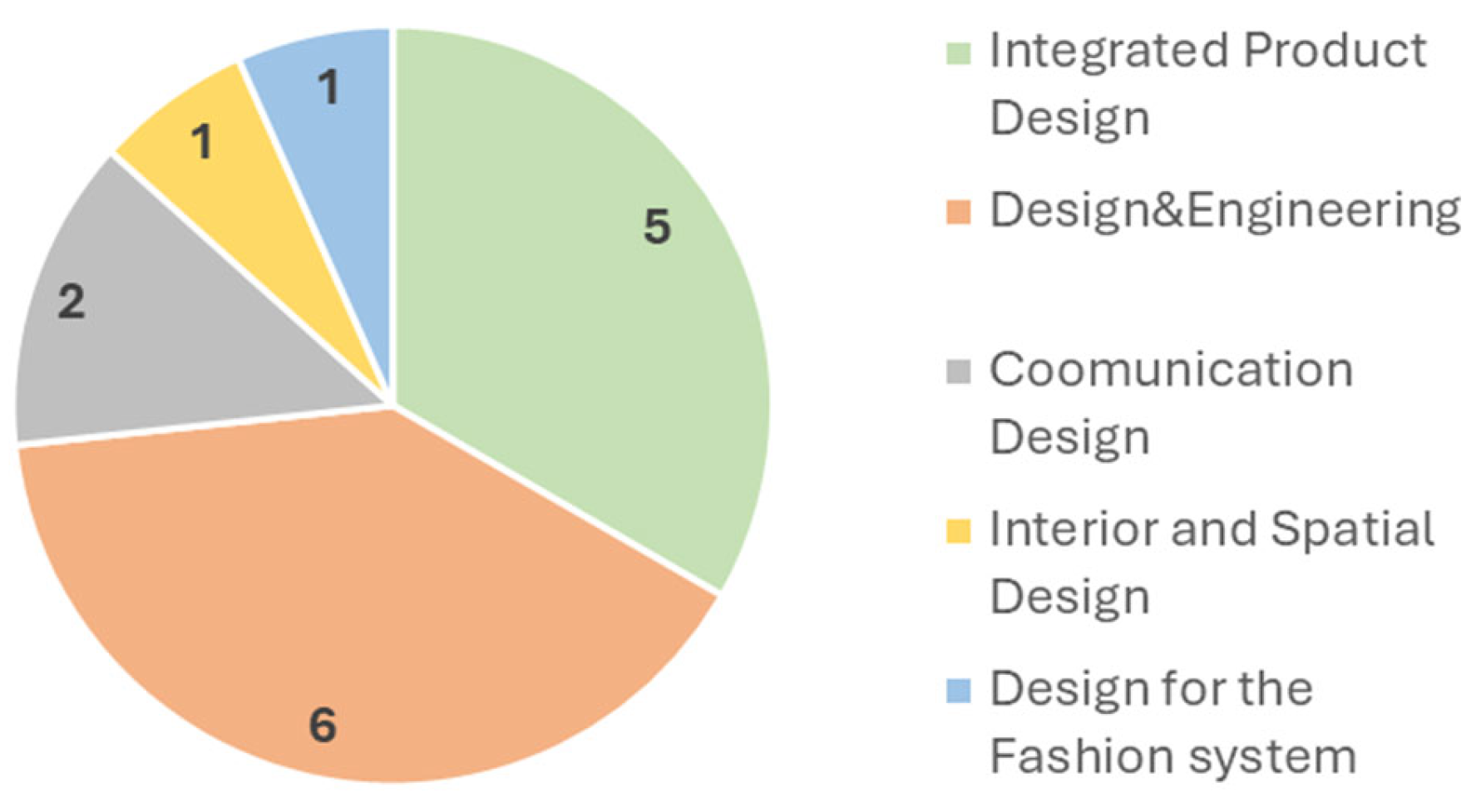
29]. In A.Y. 2024–2025, a total of 21 students in their first year of a master’s degree enrolled in the course edition under analysis. Apart from one student, none had prior experience with podcast scriptwriting, recording, and editing. The learners had a multidisciplinary background, all belonging to the School of Design courses of Politecnico di Milano (
Figure 1). Learners enrolled in Design courses are keen on group work and class presentations as part of their final exams. However, they typically take only one material science and technology course in their bachelor’s and possibly one further in their master’s. Therefore, their technical knowledge of such a discipline is limited.
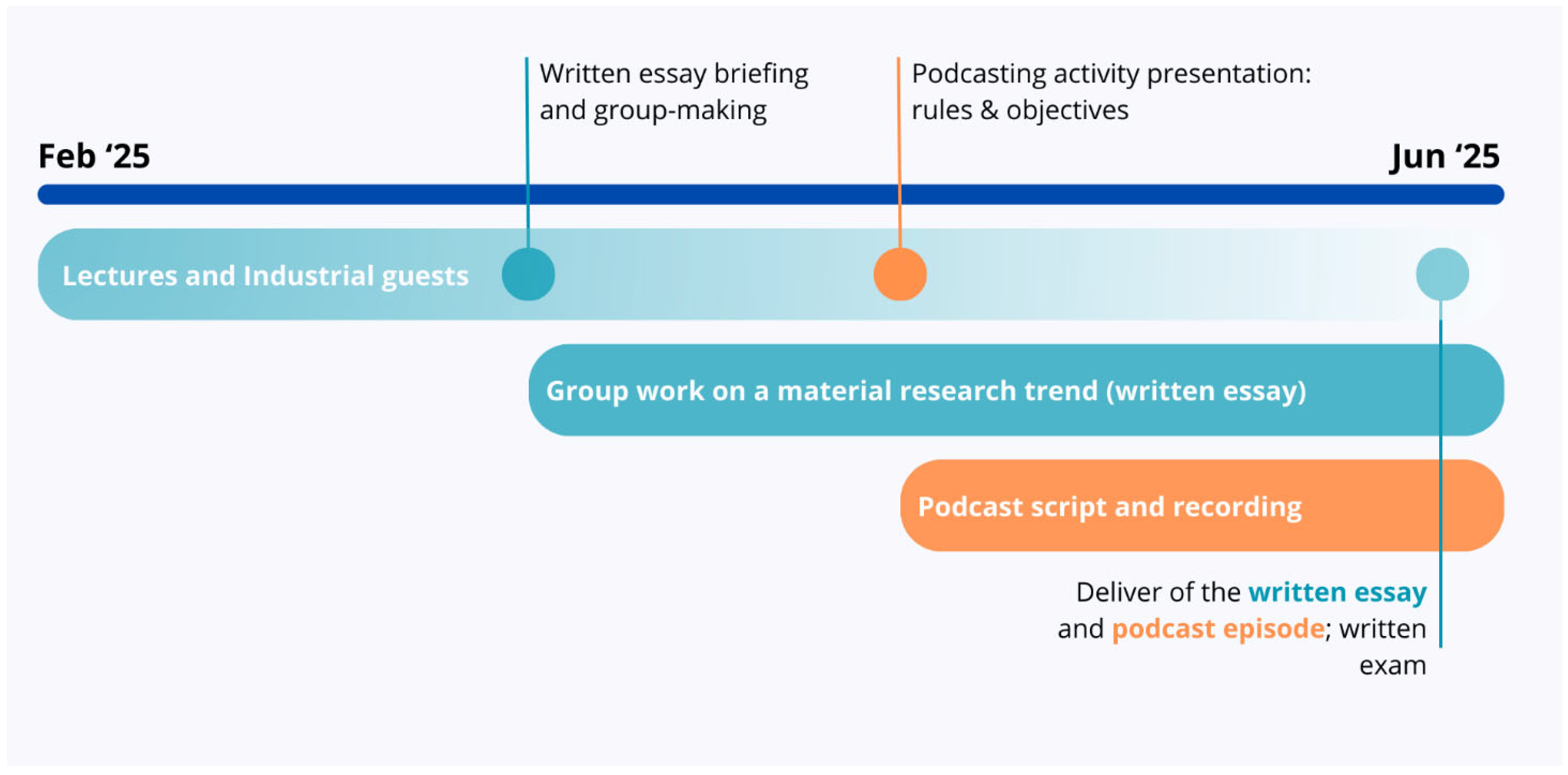
Although most of the course structure remained unchanged from previous editions, some parts were modified, as shown in
Figure 2, to introduce the podcast activity. The podcast TLA included group episode scriptwriting, peer-reviewing sessions, recording, and related audio editing.
The learners produced a podcast episode based on a specific material research trend [
30] addressed as part of the written essay TLA, launched approximately one month earlier (
Figure 2). The proposed materials research trends refer to emergent materials classes that are difficult to classify exhaustively in traditional ones.
The topics addressed in the course and as part of material research trends overlap with material science and technology, chemical engineering, and chemistry. As an example, self-healing materials, i.e., materials capable of autonomously repairing damage through intrinsic chemical mechanisms or embedded healing agents, represent a relevant example of sustainable material innovation. By extending service life and reducing the need for replacement, such materials contribute to resource efficiency and waste minimisation, in line with the principles of the circular economy and with Sustainable Development Goal (SDG) 12 (Responsible Consumption and Production). In this context, learners framed the repair mechanisms while critically evaluating their potential to reduce material consumption and environmental impact. The activity required students to connect material design choices to system-level sustainability outcomes through the investigation of existing prototypes and commercial applications.
A complementary example involved biobased polymeric matrix composites incorporating agrifood waste as functional fillers [
31]. These materials directly address SDG 12 and SDG 13 (Climate Action) by valorising industrial by-products, reducing reliance on fossil-based polymers, and promoting waste-to-resource strategies. Learners were invited to examine the effects of such incorporation—also in relation to filler characteristics and possible modification—to ensure adequate performance, while simultaneously discussing the environmental implications of such a trend. This included comparing biobased composites and conventional polymers for specific applications, fostering critical reflection on trade-offs between material performance, processing requirements, and environmental sustainability.
Through these case studies, the learning activity aligned with Education for Sustainable Development (ESD) by encouraging systems thinking, critical evaluation of technological solutions, and the integration of environmental, technological, and socio-economic dimensions. Students were thus guided to view material design not only as a technical challenge but also as a lever for sustainable transformation within industrial and societal contexts.
2.2. Written Essay and Podcast TLA
As a prerequisite, the learners autonomously grouped into a maximum of two to three participants and selected a specific topic among six emerging material research trends [
30]. The teaching team introduced the topics, methodology, and structure of a required deliverable (i.e., written essay). Specific constraints about reference selection, critical analysis, and specific terminology were provided to help the learners identify meaningful and authoritative references to support their argumentation [
29]. By looking at authoritative sources and shaping their own line of argument, the learners engaged in a process of constructing meaning, which is consistent with the constructivist view of learning.
Halfway to written essay delivery, two hours were dedicated to synchronously introducing the podcast TLA objectives, what a podcast is, and how it is structured. Possible single-member groups joined other groups who explored the same material research trend in the written essay in the production of the podcast episode. Four additional synchronous hours were committed to reviews with the teaching staff, setting plenary sessions to share knowledge and tips across the groups. Plenary discussions also aimed to promote critical thinking and refinement of the script draft. Further asynchronous work was left to the groups, for which the teaching staff has no data on the total time dedicated.
The podcast review and plenary session phases broadened the constructivist dynamic, including connectivist principles [
6]. Exchanges across groups and the peer-review discussions let learners draw on one another’s interpretations and expertise, promoting understanding also through the wider flow of ideas circulating in the class. By discussing other groups’ episodes and offering constructive feedback, learners took on the dual role of authors and critical readers, collaboratively refining the clarity and coherence of their work. This ensures compliance with the theoretical framework [
4,
5,
6,
13,
32] and promotes an active intervention on the final output, questioning practitioners’ skills on a higher level of Bloom’s taxonomy (i.e., analysing, evaluating, and creating) [
19].
Design-based research fits into this context by providing a rationale for the iterative cycles of drafting, feedback, and refinement involved in the activity, ensuring that both the learning process and the instructional design evolve through a continuous, practice-grounded improvement.
Qualitatively, the scripts were considered adequate if the minimum requirements were met: alignment with the proposed structure, selection of relevant case studies, proper and affordable argumentation, and intriguing narrative. These elements respond to the SDG4 objective of promoting education for sustainable development.
Episode recording trials were done autonomously by the groups, whereas the professional recording (optional, during extracurricular hours after the course end) occurred in a setup facility at Politecnico di Milano.
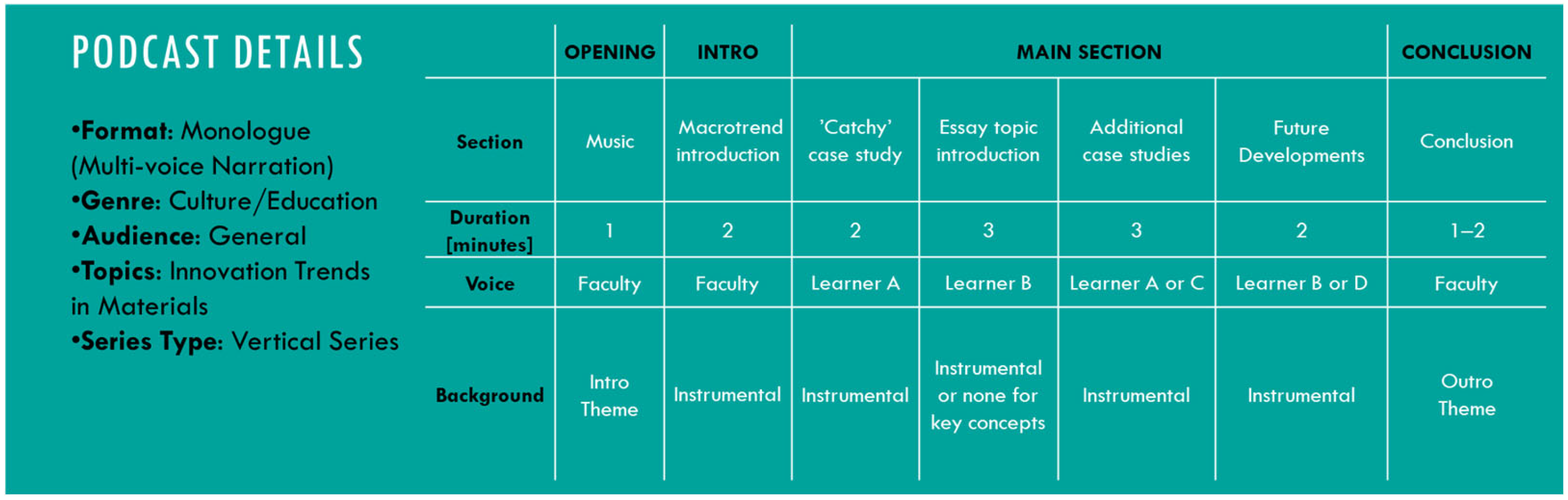
The choice to use AI tools to support content and style optimisation to meet the required episode structure was left to the groups, but this was not monitored by the teaching staff (
Figure 3). The teaching staff encouraged style optimisation to achieve multiple coherent and homogeneous episodes that might be grouped in a course podcast, possibly uploaded on streaming platforms.
Each episode was organised into four sections, the first of which is provided by the teaching staff: (1) An introduction, declaring the podcast objective and episode topic; (2) A general grounding on the investigated material research trend, discussing a case study alongside technical content, both to be extracted from the written essay. The aim is to let the audience understand the topic with matters of fact; (3) A critical argument on the topic, discussing further case studies and their own perspective on possible future developments and applications; (4) Conclusions with a few remarks. Given the structure, the podcast TLA traced the traditional oral presentation of the written essay on material trends, possibly fostering deeper topic comprehension to reinterpret and divulge it to a broad audience.
After broadcasting the episode in class, cross-group peer-reviewing allowed pair discussions. Such activities proceeded in turns, providing constructive feedback to improve the deliverable quality. A detailed overview of the main activities described in this section and the associated time commitment is provided in
Table S1 (Supporting Information). The implementation of the activity was time-intensive, particularly as a first-time introduction within the course. In densely packed curricula, this highlights the importance of careful instructional planning to balance workload, ensure sufficient time for revision, and support learners’ content elaboration and metacognitive engagement. At the end of the course, final grades were determined by multiple marks. Alongside the written essay (group mark—final grade weight: 40%) and the written exam (individual mark—final grade weight: 40%), the formal assessment of the podcasting activity accounted for 20% of the final grade. The assessment criteria were set on content synthesis and reworking, clarity, communication skills, and activity participation, as detailed in
Table S2. The evaluation criteria were equally weighed (30% each), apart from active participation, which contributed to only 10% of the podcasting mark. For each criterion, four grading levels were defined. No evaluation criteria were related to the technical editing of the recordings, e.g., audio quality and speaker emphasis, because this was out of the scope of the course and because the recordings were done at home due to the unavailability of the recording room before the first exam session. On the last day of the course, after listening to all podcast episodes, the teaching staff posed questions to all groups to set a constructive feedback session. The learners provided an opinion on replacing the final presentation with the podcasting activity, the possible additional effort, and their willingness to record a professional version of the delivered work. A final online questionnaire (using Microsoft Forms) was submitted to the learners. A total of 10 questions were presented to the audience, divided into four sections.
Section 1 was dedicated to defining the student’s profile (i.e., one open question on the master’s course programme and two multiple-choice questions on the master’s course year and previous podcasting experience).
Section 2 was dedicated to the evaluation of the podcasting experience (i.e., three Likert scale questions from 1 to 5, to evaluate difficulty in realising short pitch and key elements to insert in the episode, translating technical or scientific content into a divulgative language, efficacy of podcasting for synthesis ability, and critical reasoning enhancement, from low to high).
Section 3 was dedicated to self-assessment (i.e., two multiple-choice questions on perceived developed competencies and main difficulties encountered). Finally,
Section 4 was dedicated to suggestions (i.e., an open question and a yes/no question). The format was structured as reported in
Table 1. The questionnaire was designed for exploratory purposes, aiming to capture students’ perceptions across multiple dimensions rather than to establish causal relationships.
3. Results and Discussion
During the course, each group produced a podcast episode based on the research trend analysed in their written essay. These episodes were used exclusively for educational purposes and were assessed according to the criteria reported in
Table S2.
Building on the positive engagement observed throughout the activity, the teaching staff subsequently curated a collective podcast entitled “Material Trends”, consisting of seven revised episodes derived from selected student productions. In some cases, the podcast episodes resulted from cooperation between groups addressing the same materials trend through different case studies or perspectives. Participation in this extracurricular initiative was voluntary and required additional effort from both students and instructors, as discussed in the
Supporting Information. Comparison of essay evaluation outcomes across three consecutive academic years reveals an upward descriptive trend in overall performance following the introduction of the podcast-based TLA. As reported in
Table 2, the median total score increased from 26.0 in A.Y. 2022–2023 to 28.5 in A.Y. 2024–2025, the latter being the only cohort exposed to the podcast intervention. Increases in median scores were observed across several evaluation criteria, particularly critical analysis, use of references, and lexicon, while argumentation scores remained stable at a consistently high level across all course editions. Comparable descriptive improvements—often not accompanied by statistically significant differences—were reported in higher-education studies adopting podcast-based or podcast-supported assessment tasks [
12,
20].
Notably, one-tailed
t-testing for heteroscedastic means did not identify significant differences in mean values across academic years (
p > 0.05) due to high standard deviation (
Figure S1). The persistently high median scores, frequently approaching the upper bounds of the scoring scale, suggest a potential ceiling effect associated with the evaluation rubric, limiting its capacity to discriminate performance among higher-achieving students. Such limitations are well documented in the podcasting literature, particularly in assessment designs aligned with Universal Design for Learning (UDL) principles [
14]. Consequently, these results should be interpreted as indicative of descriptive trends rather than as evidence of causal effects attributable to the podcasting activity.
From an interpretative perspective, the observed performance shifts may reflect the increased cognitive and communicative demands introduced by parallel podcast production. Students were required to re-elaborate written analytical content into an oral narrative format, a process that likely supported deeper processing, synthesis, and reflective engagement with disciplinary knowledge. Prior research on student-generated podcasting [
12,
24] identifies content recontextualisation as a key mechanism fostering higher-order cognitive activity and metacognitive regulation, consistent with the upper levels of Bloom’s revised taxonomy [
19]. However, as emphasised in the literature, such cognitive benefits are often inferred indirectly through performance indicators or self-reported data rather than demonstrated via controlled experimental designs [
8,
14].
Rather than establishing effectiveness, the findings contribute to an emerging body of evidence suggesting that podcast-based activities can reshape how students engage with disciplinary content, while also highlighting the methodological challenges involved in isolating their impact on formally assessed written performance.
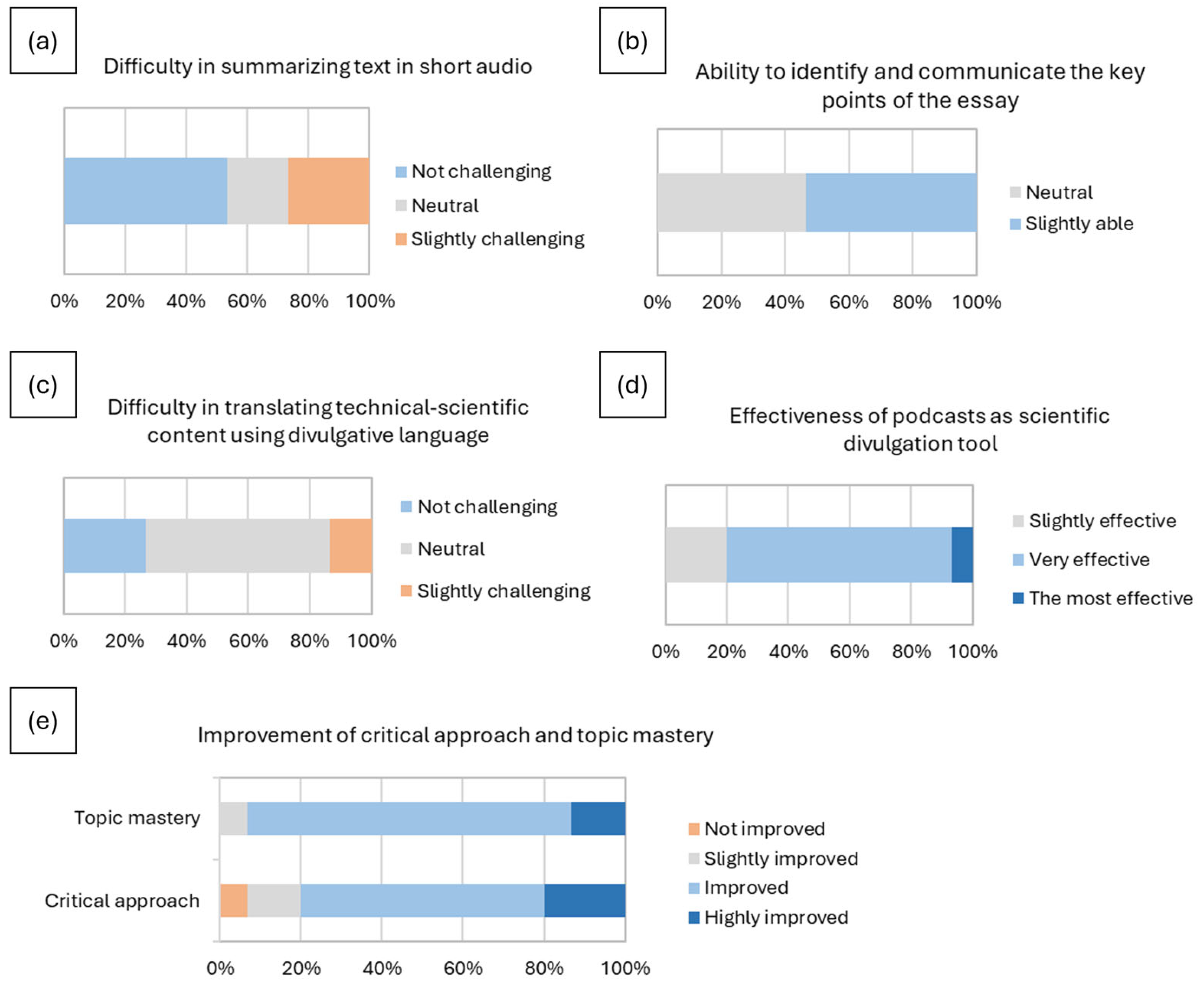
Results from the post-activity questionnaire (response rate = 71.4%) further inform students’ perceived experience of the podcast-based TLA. Most respondents reported limited perceived difficulty in summarising scientific content within a short audio format and in identifying and communicating the key points of their essays (
Figure 4a,b). Translation of technical scientific content into more divulgative language was largely perceived as neutral or only mildly challenging (
Figure 4c). Together, these responses indicate a general perception of proficiency in adapting written analytical work into oral narration. As the data are self-reported, they should be interpreted as reflecting perceived confidence rather than objectively measured communicative competence, in line with previous perception-based studies on student-generated podcasting [
14].
Students also expressed strong appreciation of podcasting as a tool for scientific dissemination, with most respondents rating it as “very effective” or “the most effective” (
Figure 4d). This finding aligns with prior reports of high engagement and motivation associated with podcast production activities [
12,
15]. At the same time, such favourable perceptions may reflect contextual factors such as novelty effects, increased ownership of learning products, and familiarity with contemporary podcast formats, which are known to positively influence student evaluations of innovative digital TLAs [
14].
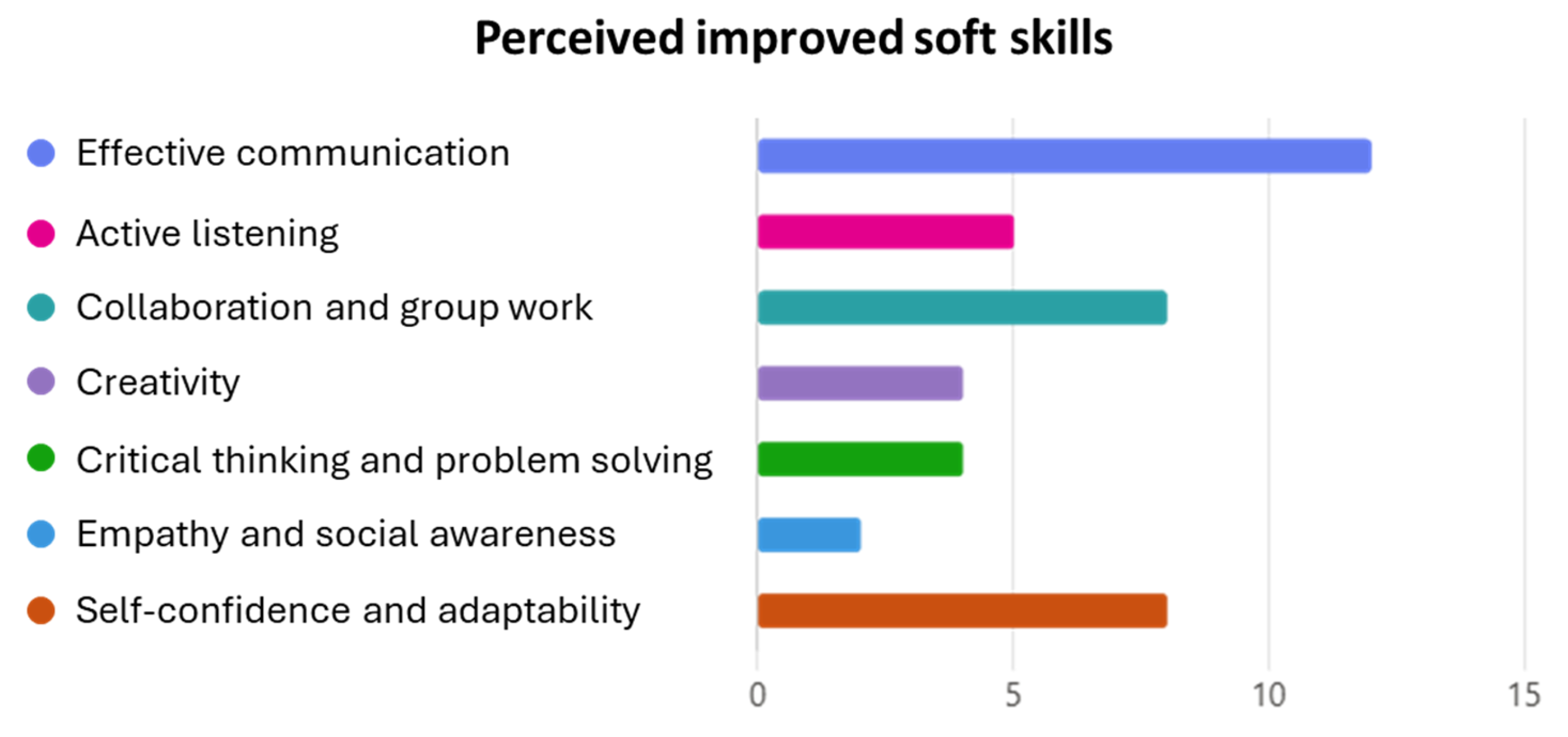
Additionally, students reported perceived improvements across a range of transversal skills (
Figure 5). Communication skills emerged as the most frequently reported area of improvement, followed by teamwork, adaptability to new challenges, and self-confidence. A smaller yet non-negligible proportion of respondents also indicated gains in active listening, creativity, critical thinking, and problem-solving abilities. Overall, these findings suggest that the podcast-based TLA was perceived as supporting not only discipline-specific competencies but also a diversified set of soft skills, albeit with varying levels of perceived impact across different domains.
Qualitative feedback and questionnaire responses also highlighted organisational aspects of the activity. Several learners expressed interest in podcast episodes featuring higher levels of interaction, such as interview- or debate-based formats, while others requested improved organisation and a longer interval between essay writing and podcast production. These responses can be interpreted through the distinction between dialogic and narrative podcasting, widely discussed in the literature and presented in the introduction. In the present exploratory design, podcast scriptwriting was intentionally positioned after collaborative essay writing to provide a conceptual backbone for narrative production. However, partial temporal overlap between essay writing and podcast production—imposed by course constraints—may have limited opportunities for full internalisation of concepts prior to narrative re-expression. This process of internalisation was further affected by concurrent deadlines and asynchronous coursework from parallel modules, which may have delayed sustained engagement with essay writing. Students’ preference for dialogic elements and requests for improved organisational structuring can therefore be interpreted as adaptive responses to epistemic readiness and temporal compression, rather than as resistance to narrative podcasting per se. In this sense, hybrid podcast formats combining a narrative backbone with dialogic elements may represent a pragmatic mediation capable of balancing cognitive demands, instructional constraints, and learners’ communicative expectations [
12,
15].
4. Limitations
Being an exploratory study adopting a case study approach, the present work has limitations that restrict the generalizability of its outcomes. First, the study involved a small cohort (21 students), of whom 15 responded to the post-activity questionnaire. Given the limited sample size and the single-institution context, the inclusion of a control group was not feasible. Dividing such a small class would have resulted in statistically underpowered subgroups and, from a pedagogical standpoint, would have unfairly deprived part of the cohort of a potentially beneficial learning activity. For this reason, a quasi-experimental design was adopted, using historical data from previous academic years—specifically, median values—as a comparative benchmark.
Second, the absence of a fully experimental design and of external, objective performance measures limits the ability to isolate the specific impact of the podcast-based Teaching-Learning Activity. While the use of a consistent analytic evaluation rubric across course editions supports grading reliability and transparency (
Table S1), comparisons across academic years remain subject to contextual variation.
In particular, students enrolled in different editions did not follow identical instructional pathways, as the A.Y. 2024–2025 edition devoted additional time to synchronous revision activities, which may have influenced performance independently of the podcasting intervention. Third, the assessment of the methodology’s effectiveness relies partly on learners’ self-reported perceptions collected through a multiple-choice questionnaire. Although such data are valuable for capturing students’ experiences and perceived development, they cannot substitute for independent or external measures of learning or skill acquisition. Taken together, these limitations indicate that the present findings should be interpreted as descriptive and hypothesis-generating rather than as evidence of causal effectiveness.
5. Future Perspectives
According to the received feedback from the learners, future implementations may include a staged design with clearer temporal separation between analytical writing and audio production, earlier scaffolding of podcast specifications, and the allocation of dedicated revision phases, which may help mitigate time pressure while preserving the pedagogical value of the activity. Such adjustments could facilitate deeper conceptual internalisation and more effective engagement with higher-order cognitive tasks.
As an extracurricular activity, the recording in a professional setup was done in collaboration with students, and the episodes were assembled. The podcast episodes were published on a weekly basis on the Spotify platform and are currently available as part of Season 1 [
33]. Views, sharing, downloads, and other related metrics will be monitored by authors and considered as key efficacy indicators of the podcasting activity. These data will also constitute a benchmark, allowing for comparative analyses with future iterations of the podcast.
In the current edition of the podcasting activity, Artificial Intelligence tools were encouraged to refine stylistic elements and align content with the pre-established episode structure.
Nevertheless, the authors are aware of the rapid development of Artificial Intelligence tools and their widespread use among students: data from Italy indicate that half of Generation Z and four out of ten Millennials use GenAI on a daily basis [
34]. Thus, the teaching staff will evaluate the integration of AI-based tools in future editions of the course. Recent advancements confirm that these tools can be game-changers in podcast-making activities. Nevertheless, previous works highlighted some drawbacks, e.g., generation of hallucinations and a sub-optimal content understanding [
35], as well as an unengaging AI-generated voice [
36].
When podcasting is involved as a TLA and part of formal assessment tasks, the role of AI can help in structuring the content, especially if the learners are not experts in podcast-making. Previous studies [
37] highlighted how high-order cognitive tasks should require humans to assess the reliability of AI-generated responses. Therefore, learners and educators need to critically assess the AI-provided answers, and the educators should promote ethical AI use [
38].
The present study is more involved in presenting a flexible methodology that goes beyond specific course topics, whether from an engineering or design program. Future works involving engineering courses may further investigate the topic, validating or disagreeing with the present work.
6. Conclusions
This work explored the implementation of a podcast-based teaching and learning activity within a graduate-level course, adopting an exploratory case study approach. The activity was positively received by students and perceived as meaningful for supporting disciplinary understanding as well as transversal skills, particularly communication, synthesis, and metacognitive reflection. While cognitively demanding, the translation of complex scientific content into accessible audio narratives was recognised as valuable for consolidating learning.
Students’ feedback highlighted practical aspects for improvement in relation to sequencing and activity organisation, which will inform future iterations of the course. The extracurricular dissemination of selected podcast episodes further extended the activity beyond the classroom, offering opportunities for public science communication. Due to the partial temporal overlap between written essay preparation and podcast scriptwriting, future implementations may benefit from adopting hybrid episode formats. In particular, incorporating dialogic elements—similar to those commonly used in contemporary podcasting—may help reduce cognitive and organisational demands when time for conceptual internalisation is limited.
Future research should move beyond perceptual evidence and focus on more robust evaluation strategies. Possible directions include the objective assessment of communication and synthesis skills through, e.g., the use of validated instruments to measure metacognitive and self-regulation competencies. Comparative designs examining narrative, dialogic, and hybrid podcast formats, as well as studies involving larger and multi-institutional cohorts, would further support generalisability.
Overall, this exploratory study suggests that podcasting, when constructively aligned with collaborative analytical work, can foster active learner engagement and meaningful knowledge recontextualisation. By promoting reflective learning, collaborative production, and the translation of specialised knowledge for broader audiences, the proposed approach is consistent with Education for Sustainable Development principles and contributes to Sustainable Development Goals related to inclusive, high-quality education and responsible knowledge sharing.