Article

Optimization of Organic Waste Composting Using the Effective Microorganisms Klebsiella oxytoca, Sphingomonas paucimobilis, and Pantoea spp.

1
Grupo de Investigación en Química y Biotecnología (QUIBIO), Facultad de Ciencias Básicas, Universidad Santiago de Cali, Cali 760035, Colombia
2
Programa de Microbiología, Facultad de Ciencias Básicas, Universidad Santiago de Cali, Cali 760035, Colombia
3
Departamento de Biología, Facultad de Ciencias, Universidad del Tolima, Ibagué 730001, Colombia
4
Grupo de Investigación en Ecología y Conservación de la Biodiversidad (ECOBIO), Facultad de Ciencias Básicas, Universidad Santiago de Cali, Cali 760035, Colombia
*
Authors to whom correspondence should be addressed.
Sustainability 2026, 18(9), 4393; https://doi.org/10.3390/su18094393
Submission received: 15 February 2026 / Revised: 21 April 2026 / Accepted: 27 April 2026 / Published: 30 April 2026

Abstract

Inadequate management of urban organic waste generates significant environmental impacts, including the accumulation of biodegradable residues and greenhouse gas emissions. Composting represents a key biotechnological strategy for the valorization of organic waste; however, its efficiency may be limited by long stabilization periods. This study evaluated the effect of a microbial consortium composed of Klebsiella oxytoca, Sphingomonas paucimobilis, and Pantoea spp. on the composting of organic waste generated at a higher education institution in Colombia using the Earthgreen SAC-2250 Autonomous Composting System. Four treatments based on different proportions of organic waste (OW) and sawdust (DM) were evaluated, and the best-performing formulation was subsequently inoculated with the microbial consortium and compared with a non-inoculated control pile. The 3:1 ratio (OW:DM) showed the best performance, reaching compost stabilization within 45 days. Inoculation with the microbial consortium reduced the stabilization time by approximately 20 days compared with the control treatment. These results demonstrate that microbial bioaugmentation using selected environmental isolates can significantly accelerate organic matter degradation and improve the efficiency of composting systems, providing a promising strategy for sustainable organic waste management in institutional environments.

1. Introduction

Inefficient management of organic waste (OW) is a critical global environmental problem, particularly in regions with accelerated urbanization and industrialization processes. Indiscriminate waste accumulation promotes leachate generation with high loads of toxic compounds, which can alter the physical and chemical properties of the soil and infiltrate groundwater bodies, posing a significant risk to public and environmental health [1]. In addition, anaerobic decomposition of OW emits methane (CH4) and carbon dioxide (CO2), two greenhouse gases with a high global warming potential, thereby contributing to climate change [2]. In many developing countries, the lack of efficient waste management strategies has led to overloaded landfills, loss of fertile soils, and contamination of water sources, exacerbating food security and public health problems [3].
Within this context, composting is an efficient biotechnological strategy for OW valorization, converting it into a stabilized biofertilizer with agroecological applications. However, conventional composting methods often exhibit long stabilization periods and cause nutrient loss, limiting their applicability on a large scale. Composting is a microbially mediated process; distinct bacterial consortia play key roles in depolymerizing and biotransforming organic macromolecules [4,5]. In particular, effective microorganisms (EMs) have been used to optimize the degradation of cellulose, hemicellulose, and lignin, which are the main structural components of lignocellulosic organic matter [6].
Among EMs with biotechnological potential, Sphingomonas paucimobilis possesses a high ligninolytic capacity due to the activity of LigAB type II dioxygenase, which catalyzes the cleavage of the aromatic core, favoring the decomposition of recalcitrant polymers [7]. Klebsiella spp. can efficiently reduce nitrogen losses during composting, minimizing ammonia volatilization by approximately 43% and favoring compost stability [8]. Species of the genus Pantoea, such as Pantoea agglomerans, can solubilize phosphates, promoting the availability of essential nutrients in the final compost [9].
The introduction of composting technologies in academic institutions has attracted growing interest in recent years [10,11,12]. These initiatives not only improve waste management practices and reduce disposal costs but also contribute to the transition towards circular economy models within the university sector. In this context, it has been demonstrated that the incorporation of microbial consortia into organic substrates accelerates biodegradation processes, improves compost stability and optimises physicochemical properties, thereby promoting the production of sustainable, high-quality organic soil amendments [4,13,14].
This study evaluated the efficiency of organic waste (OW) composting through the inoculation of a consortium of effective microorganisms (EM) in the Earthgreen SAC-2250 autonomous composting system, implemented at a higher education institution in southwestern Colombia. The institution hosts approximately 25,000 students, in addition to academic and administrative staff, and generates around 30 tons of waste annually, of which nearly 60% corresponds to organic waste, according to the Environmental Coordination Office. A recent assessment of municipal solid waste indicated that daily waste generation ranged between 7 and 12 m3 during the first months of 2025, with a similar proportion attributed to organic fractions. This increasing trend is mainly driven by the continuous growth of the institutional population, highlighting the urgent need to develop and implement efficient waste management strategies to mitigate the environmental impacts associated with organic waste generation.
Although microbial bioaugmentation has been widely proposed as a strategy for improving composting performance, most previous studies have focused on commercial inoculants or laboratory-scale experiments [15,16,17,18]. Consequently, the effectiveness of environmentally derived microbial consortia under real-world operating conditions in institutional composting systems remains insufficiently documented or studied.
This knowledge gap is particularly relevant for institutional waste management systems seeking sustainable strategies, tailored to the local context, for the recovery of organic waste. Therefore, the aim of this study was to evaluate the effect of a selected microbial consortium, composed of bacterial strains of environmental origin, on the composting of organic waste generated at a higher education institution using an autonomous composting system. By assessing the impact of microbial inoculation on compost stabilisation and physicochemical dynamics, this study provides evidence of the potential of locally adapted microbial consortia to improve composting efficiency in controlled institutional settings.

2. Materials and Methods

2.1. Study Area and Standardization of the Conventional Composting Process

This study was conducted at the Universidad Santiago de Cali, Pampalinda Campus, located in the department of Valle del Cauca, Colombia (3°24′12″ N, 76°32′52″ W), at an altitude of 972 m above sea level. Composting was performed in an Earthgreen composter (SAC-2250, Earthgreen, Medellin, Colombia), which consists of four individuals rectangular with covered piles with the following measurements: 1.2 × 1.2 × 1.7 m. Four treatments with different OW proportions were evaluated (Table 1); the composting mixtures were prepared by combining organic waste with sawdust (DM) at different proportions to evaluate their influence on the composting process generated within the university campus. Moisture conditions were regulated through the proportion of organic waste and dry material in each treatment, without the addition of external water. The OW consisted of biodegradable residues generated within the university campus, mainly including food scraps and plant-based organic residues.
Each treatment was monitored for 45 days. Temperature and moisture were recorded daily at the same time using a digital compost thermometer and a portable moisture meter, respectively, with probes inserted at different points and depths of each pile to obtain representative measurements. All measurements were performed in triplicate, and the reported values correspond to the mean of independent readings. pH was monitored twice per week and determined using a digital pH meter previously calibrated with standard buffer solutions (pH 4.0, 7.0, and 10.0). Compost samples were collected using a probe to ensure representativeness, obtaining subsamples from different points and depths of each pile. The subsamples were subsequently homogenized and diluted in a beaker containing 500 mL of distilled water to obtain a representative suspension. The suspension was allowed to stand for 30 min at room temperature to reach solid–liquid equilibrium, after which pH was measured. Each measurement was performed in duplicate to ensure analytical reproducibility, and the average value was recorded. The pH meter was periodically recalibrated throughout the monitoring period to ensure measurement accuracy.

2.2. Identification of Effective Microorganisms (EM)

Random soil sampling was conducted in various areas of the university campus to obtain environmental bacterial isolates with potential organic matter degradation capacity for composting applications. Soil samples were subjected to serial dilutions from 10−1 to 10−10. For the initial suspension, 10 g of soil sample was homogenized in 90 mL of sterile saline solution (0.85% NaCl). Subsequently, 1 mL of this suspension was transferred to a tube containing 9 mL of sterile saline solution, and this procedure was repeated sequentially until the desired dilution levels were reached.
Aliquots (0.1 mL) of the 10−3, 10−5, 10−7, and 10−10 dilutions were surface plated on trypticase soy agar (TSA) in duplicate and incubated to obtain isolated colonies. Colonies were initially differentiated based on macromorphological characteristics, and representative morphotypes were selected for enzymatic screening. Selected isolates were inoculated onto enzymatic detection media to evaluate their degradative potential. Carboxymethyl cellulose agar (1% CMC) was used to assess cellulolytic activity, while starch agar was used to evaluate amylolytic activity. Plates were incubated at 37 °C for 24 h. Hydrolytic activity was detected using Congo red (0.1%) and Lugol’s iodine solution (0.1%) to visualize cellulose and starch degradation halos, respectively [19,20]. Enzyme activity was quantified by measuring the diameters of the hydrolysis halos. Finally, the bacterial isolates exhibiting the highest hydrolytic activity were selected for taxonomic identification. Identification was performed using the Vitek2® (version 9.01 software) automated identification system (bioMérieux, Durham, NC, USA) according to the manufacturer’s protocol. Subsequently, the already identified bacterial isolates were combined to form the microbial consortium applied in composting.

2.3. Composting with Effective Microorganisms

For inoculum preparation and composting process assessment with EMs, the bacterial species with the highest amylolytic and cellulolytic activities were selected and identified as described in the previous section. Colonies of each species were resuspended in SS (0.85%) and adjusted to an optical density corresponding to the 0.5 standard on the McFarland scale to ensure a homogeneous concentration. The inoculum was formulated with the three selected microorganisms, each at a final concentration of 1 × 10⁷ CFU/mL. Then, the inoculum was applied uniformly on the biomass at a rate of 2 L/m3 OW via spraying, with a single inoculation at the beginning of the process. A non-inoculated pile served as the control. Composting was monitored for 45 days—with daily measurements of key variables such as temperature, pH, and moisture content—to evaluate the dynamics of the process and the influence of biostimulation on compost process stabilization.
Net compost yield was determined using specific formulas that allowed the quantification of the efficiency of the biological treatment. Yield calculations were made based on the following equations:
Y i e l d =   F i n a l   k g   i n i t i a l   k g × 100
%   N e t   Y i e l d = %   A c t u a l   Y i e l d %   T h e o r e t i c a l   Y i e l d × 100
where % Actual Yield refers to the yield obtained experimentally from each treatment, and % Theoretical Yield refers to the expected compost yield estimated based on values reported in the literature for optimized composting systems [21,22,23] which typically report an average recovery of approximately one-third of the initial organic waste mass.

2.4. Statistical Analysis

To assess the treatment effects of the control and EM treatments (Table 1) on temperature, moisture, and pH over the 45-day monitoring period, semiparametric generalized additive mixed models (GAMMs) were used to evaluate the temporal dynamics of composting parameters. In GAMMs, the estimated degrees of freedom (edf) associated with smoothing terms provide information about the complexity of the fitted relationship. Values of edf close to 1 indicate an approximately linear relationship between the predictor and response variables, whereas values greater than 1 indicate increasing deviations from linearity, reflecting non-linear patterns captured by the smoothing function [24,25]. These models allow flexible representation of nonlinear relationships between explanatory variables and response variables, providing a more accurate description of the temporal dynamics of each parameter. Time (days) was included as a treatment-specific smooth term to capture non-linear temporal patterns, while replicate piles were considered as experimental units and included as a random effect to account for repeated measurements within each pile. Model parameters were estimated using restricted maximum likelihood (REML). Model selection was performed by comparing additive and multiplicative GAMM formulations using information criteria (AIC and BIC). The multiplicative GAMM consistently showed lower AIC and BIC values across all response variables (temperature, moisture, and pH), indicating improved model fit relative to the additive formulation (Supplementary Table S1). Therefore, the multiplicative GAMM was selected as the final model for subsequent analyses. To identify significant differences between treatments, multiple contrasts were applied to the model coefficients using a significance level of 5%. Models were fitted assuming a Gaussian error distribution with identity link function. All statistical analyses were performed in the R programming environment (version 4.4.2) [26].
The graphical representations illustrate the fitted trends obtained from the GAMMs, which describe the temporal dynamics of composting parameters while accounting for variability among replicate piles through random effects.

3. Results

3.1. Standardization of the Conventional Composting Process

This study reveals that the application of specific microbial consortium can significantly improve key composting parameters. Comparative analysis with prior literature revealed that climatic conditions, waste composition, and inoculum type influenced process efficiency.
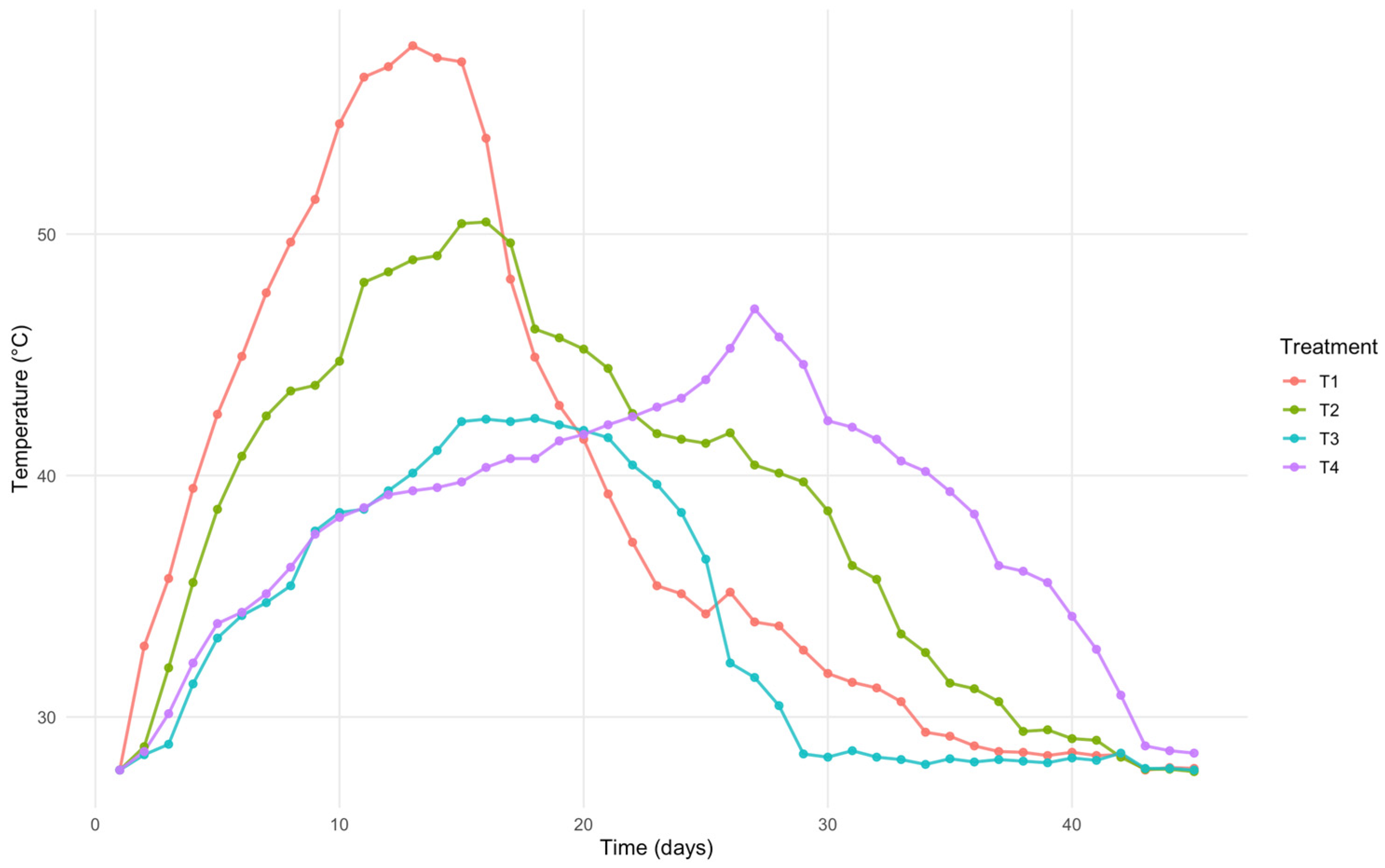
Figure 1 shows the thermal dynamics of the treatments evaluated during the composting process, showing significant variations in the values achieved. Treatment 1 recorded the highest temperature, with a peak of 57.1 °C, indicating thermophilic conditions favorable for organic matter biodegradation and compost process stabilization. In contrast, treatments 2, 3, and 4 did not exceed 50 °C, suggesting a possible limitation in the physicochemical factors essential for microbial activity, especially moisture availability.
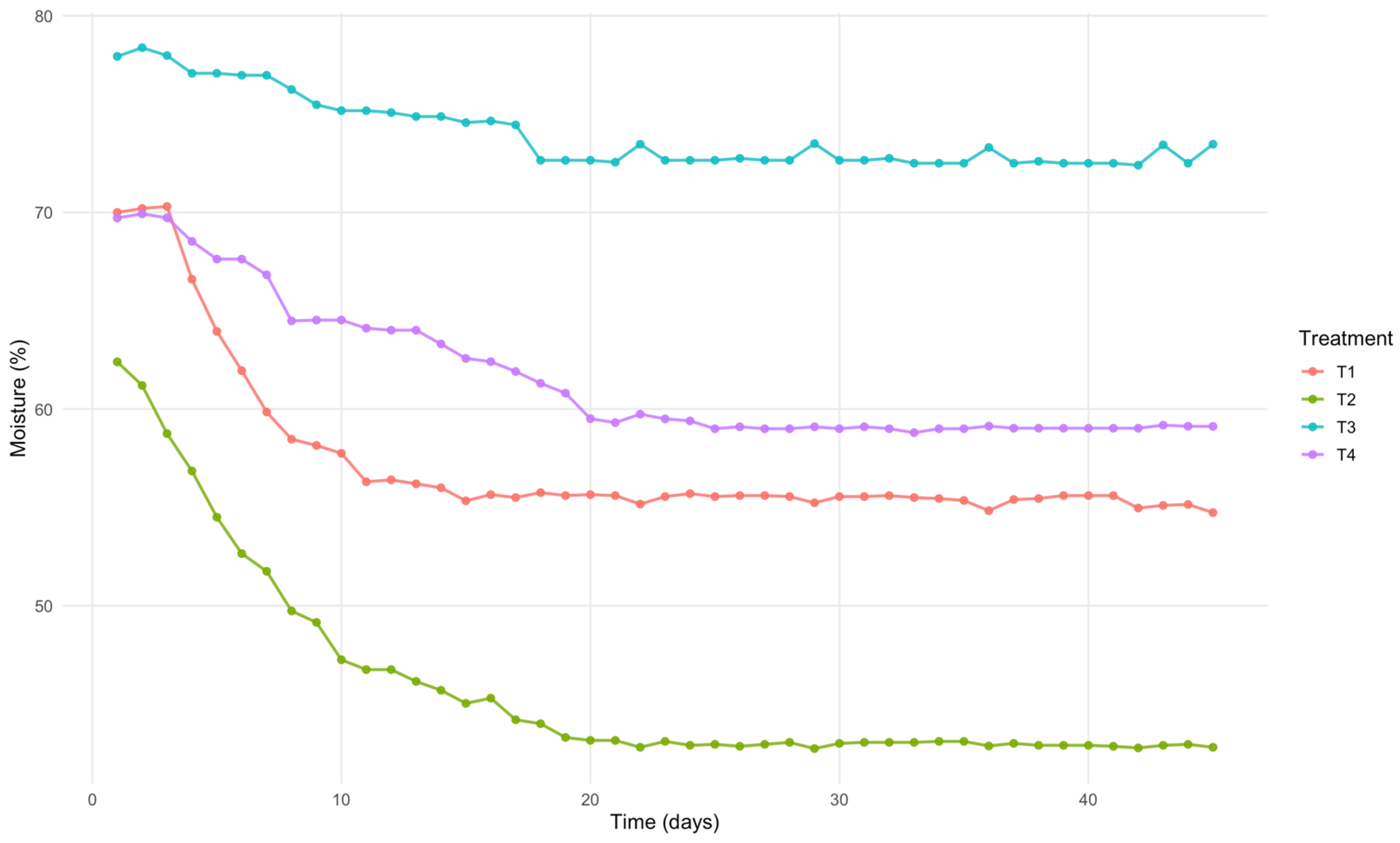
Figure 2 shows moisture evolution throughout the composting process, showing significant variations among treatments. In treatment 1, moisture remained within the optimum range (45–60%), which favored microbial activity and efficient degradation of organic matter. In contrast, treatments 2, 3, and 4 presented moisture levels below the required threshold, suggesting a possible limitation in water availability for microorganisms.
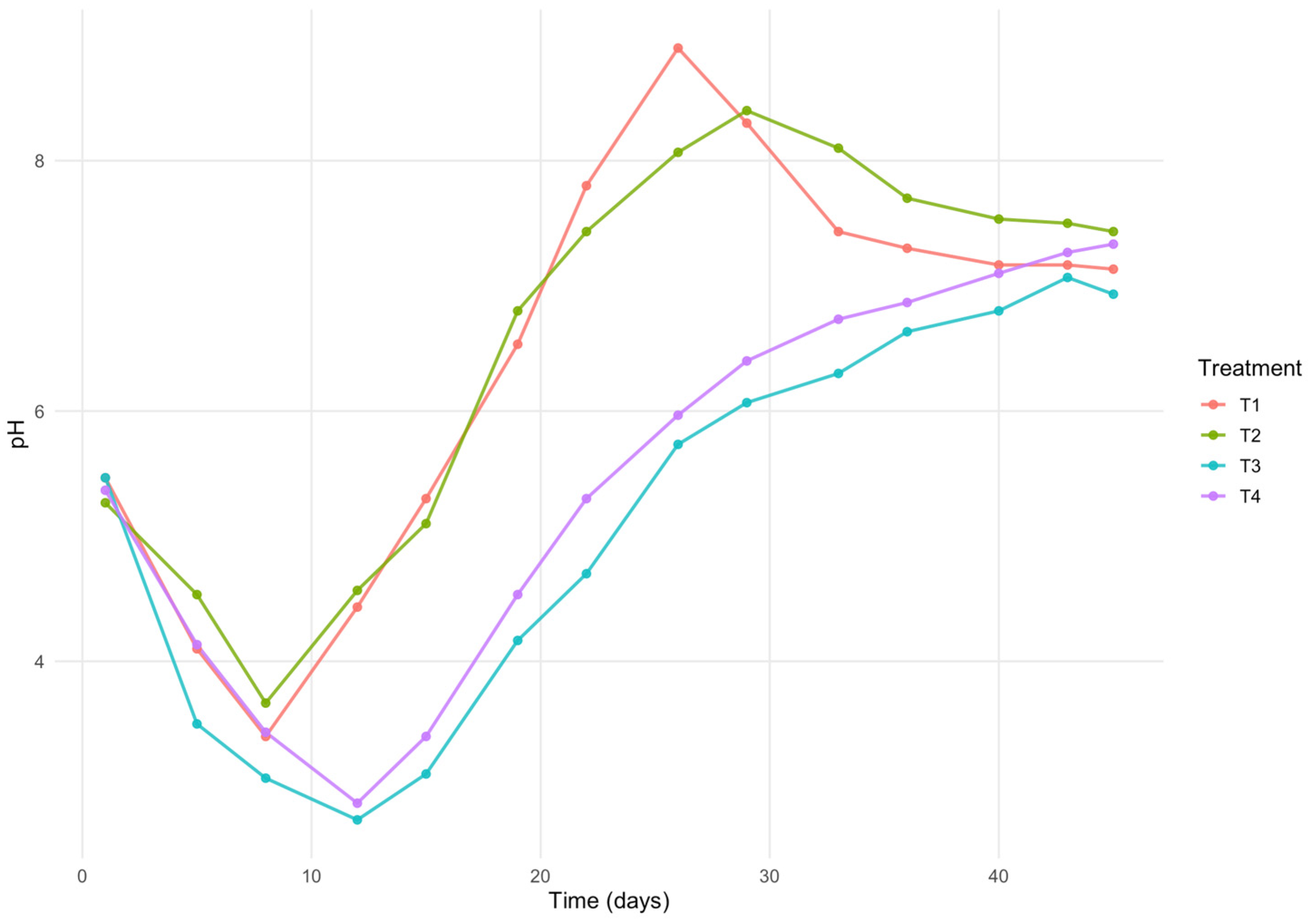
pH is a key parameter in the dynamics of composting as it directly influences microbial activity and process stability [27,28]. Figure 3 shows a significant decrease in pH in treatments 3 and 4, suggesting acidification of the medium attributed to the release of organic acids from the degradation of plant and fruit waste.
The physicochemical parameters evaluated directly influence composting efficiency, as reflected in the yield and net yield of the treatments (Table 2). It was observed that treatment 1 (T1) had the highest values, with a yield of 29.6% and a net yield of 98.6%, suggesting optimal conditions for organic matter degradation and compost process stabilization.

3.2. Evaluation of the Effect of the Four Treatments on Temperature, Moisture, and pH

The analysis of variance applied to the generalized additive mixed model (GAMM) revealed a significant effect of the treatments on the temperature, moisture, and pH variables (Table 3). Additionally, the smooth terms showed effective degrees of freedom (edf) values greater than 1, confirming the presence of non-linear temporal dynamics in temperature, moisture, and pH across treatments.

3.3. EM Identification

Once the OW/DM conditions were defined in the Earthgreen composter (SAC-2250) and treatment 1 was selected as the one that best suited the conditions evaluated in the study area, the amylolytic and cellulolytic activities of the isolated bacteria were analyzed. The results showed the growth of viable and quantifiable colonies on TSA plates at 10−3 and 10−5 dilutions. In total, nine bacterial morphotypes were identified; of these, one showed cellulolytic activity and two showed amylolytic activity. Table 4 shows the microscopic characteristics, gram staining results, and taxonomic identifications (genus and species) of the most relevant bacteria in terms of their degradative capacity. No viable counts of the inoculated strains were assessed in the final compost.

3.4. Composting with Effective Microorganisms (EM)

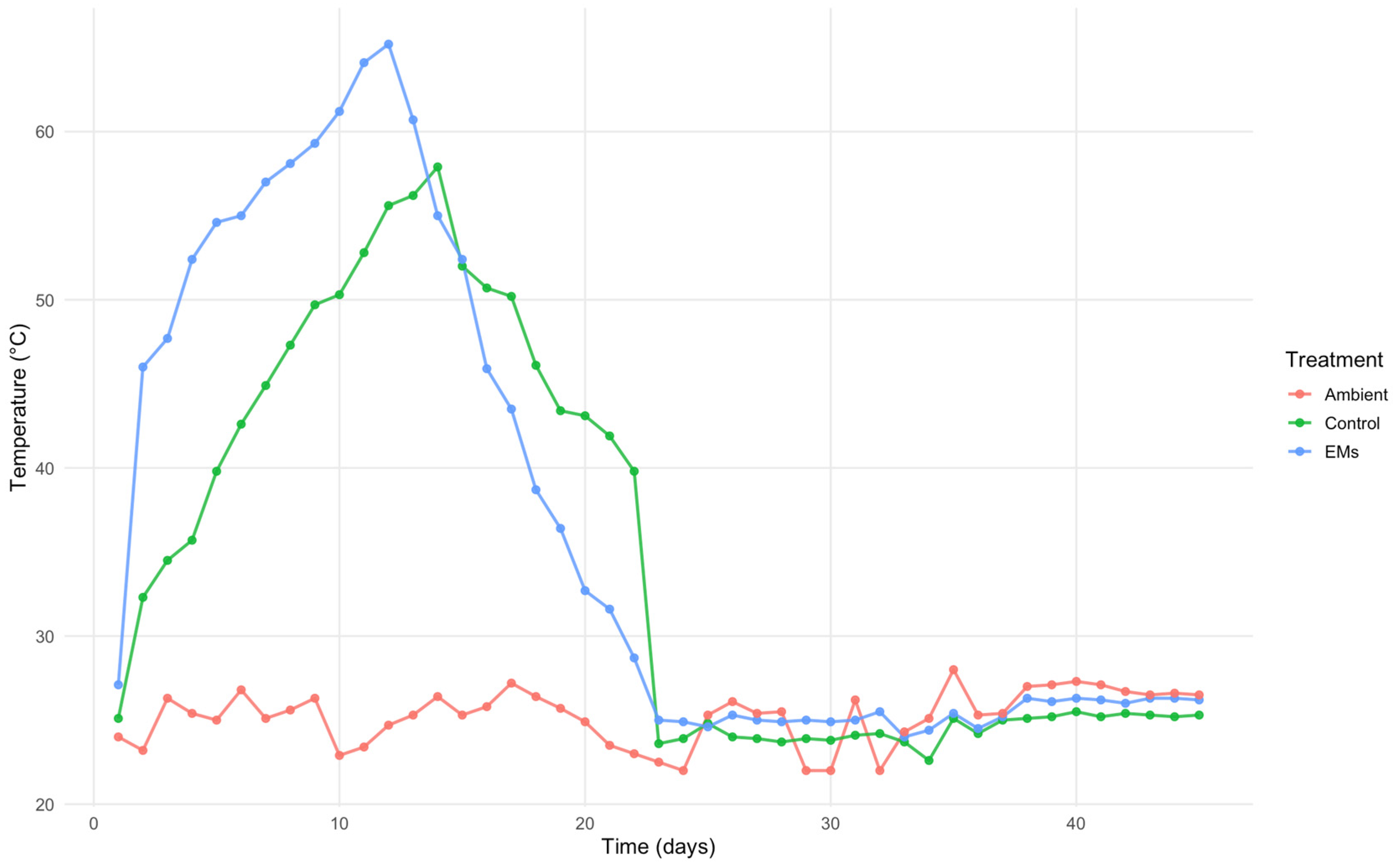
Figure 4 shows a remarkable increase in the temperature of the pile inoculated with the microbial consortium (K. oxytoca, Pantoea spp., and S. paucimobilis) compared with the control pile. The control pile reached a maximum temperature of 57.9 °C on day 14, whereas the pile inoculated with the microbial consortium reached a maximum temperature of 65.2 °C on day 12, indicating a faster and higher increase in temperature.
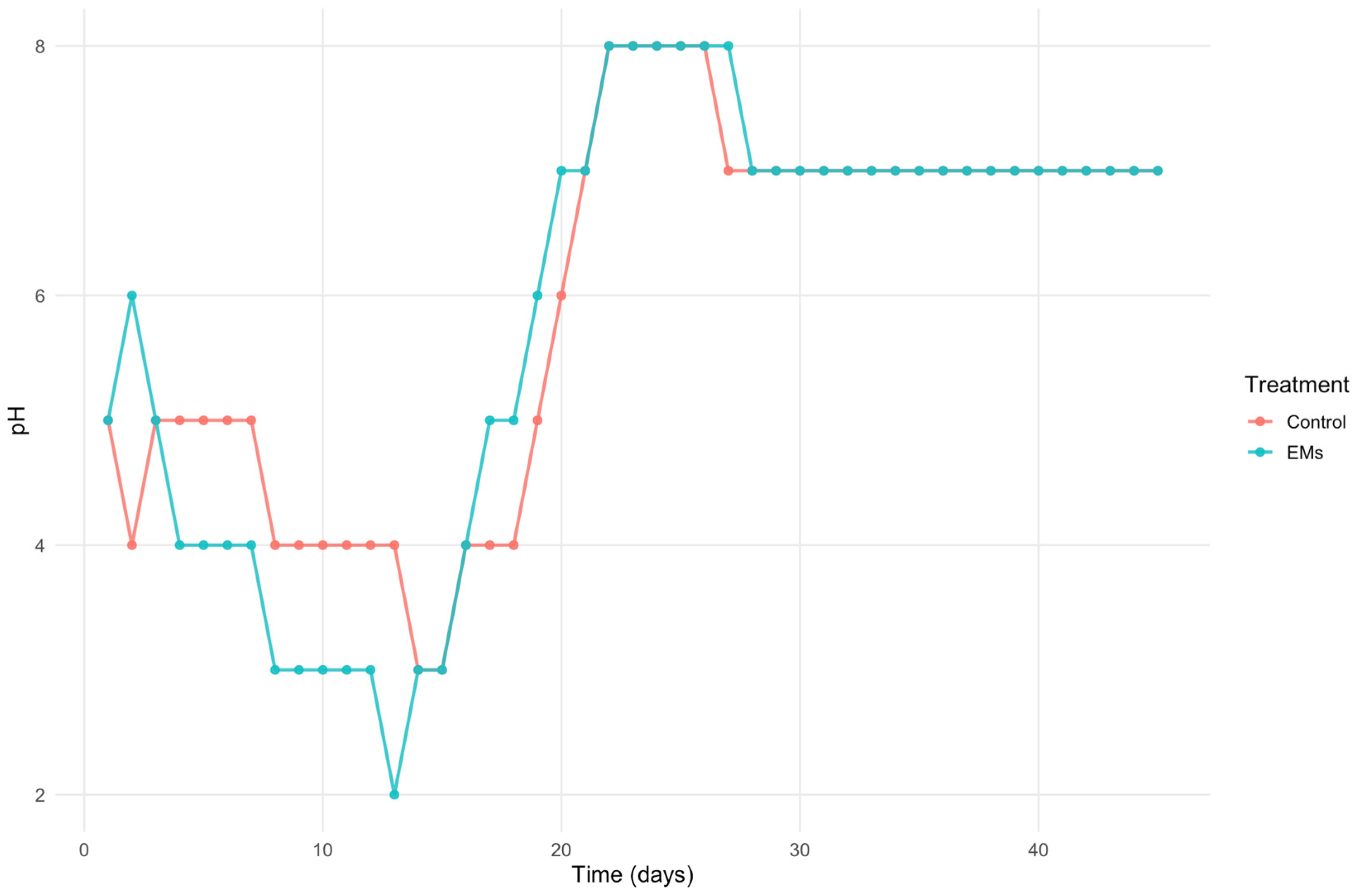
Figure 5 shows variations in pH in the control pile and in the pile inoculated with the microbial consortium (EM) throughout the composting process.
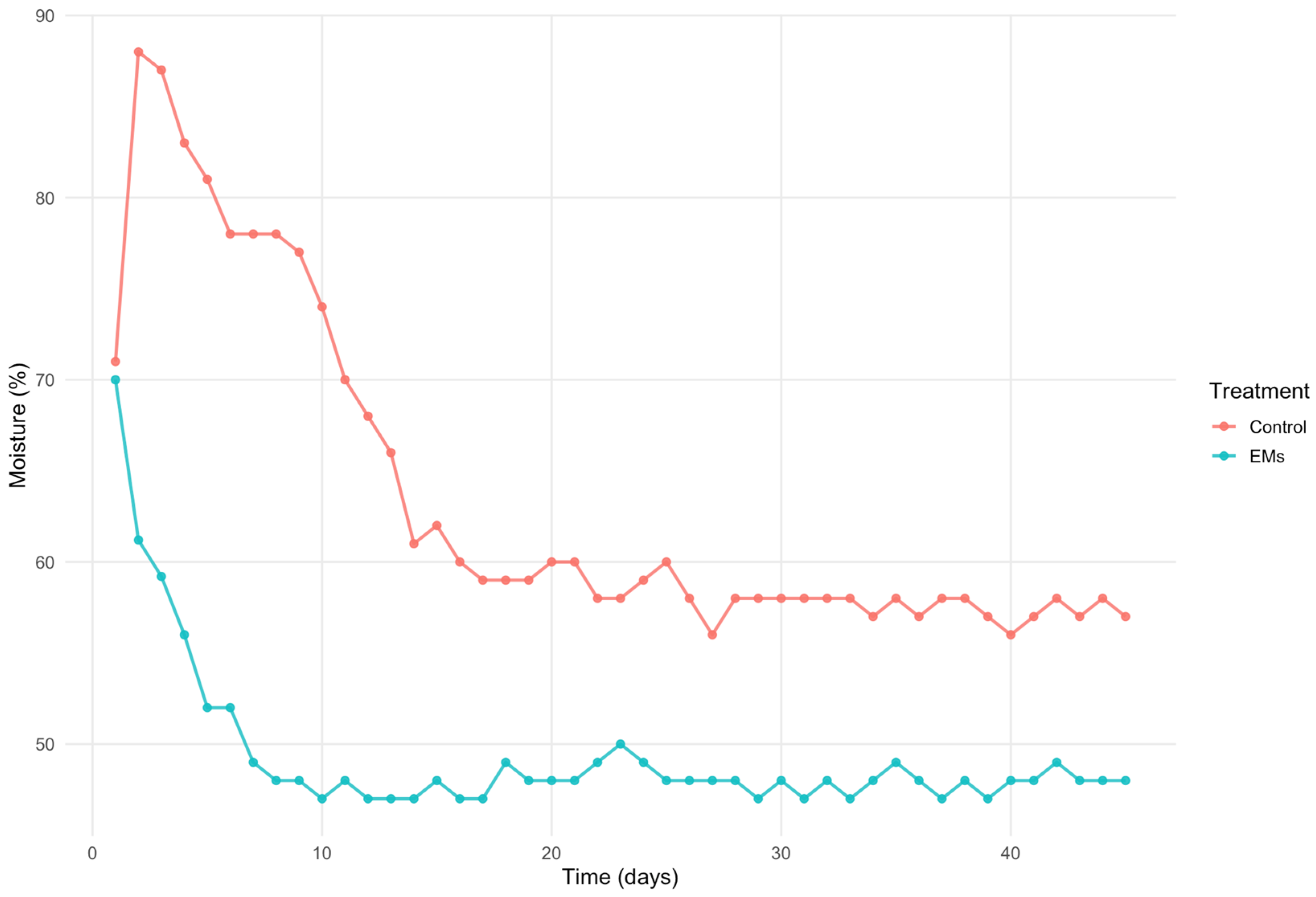
As shown in Figure 6, the average moisture of the EM-inoculated pile was 50%, which was lower than that of the control pile (64%).

3.5. Assessment of the Effect of the Control Group and ME Group on the Behavior of the Temperature, Moisture, and pH Variables

The results of the analysis of variance for the multiplicative GAMM, presented in Table 5, show the significant influence of the treatment with EMs (TreatEM) on the temperature, moisture, and pH variables while analyzing their temporal variation during composting. Effective degrees of freedom (edf) values greater than 1 for the smooth terms further supported the non-linear temporal behavior of the evaluated variables in both control and EM treatments.

4. Discussion

4.1. Process Dynamics: Temperature and Moisture

Temperature is widely recognized as a key parameter influencing composting efficiency because it regulates microbial metabolic activity and contributes to the sanitization of organic materials during the process [4,29]. Temperatures above 60 °C are particularly important for pathogen inactivation and inhibition of fungal growth, favoring the predominance of thermophilic microorganisms such as actinobacteria, which play a key role in the degradation of complex polymers such as cellulose and lignin [27,30].
Moisture availability is another critical factor controlling composting dynamics. Insufficient water content can restrict the diffusion of substrates and extracellular enzymes, thereby reducing microbial metabolic rates and slowing organic matter degradation [31]. Conversely, excessive moisture may reduce oxygen availability and promote anaerobic conditions, which can impair aerobic biodegradation processes [28].
Optimal composting moisture typically ranges between 50% and 60%, ensuring sufficient microbial activity while maintaining adequate aeration of the compost matrix. In the present study, treatments with lower moisture levels may have experienced reduced microbial activity due to limitations in nutrient solubilization and transport, which could explain the lower biodegradation efficiency observed in these systems [32]. In addition, moisture levels are closely linked to the initial composition of organic waste. Substrates with a high proportion of dry materials, such as sawdust or lignocellulosic residues, may reduce water retention capacity and create suboptimal conditions for microbial activity [33,34].
Therefore, the appropriate selection and proportion of composting materials are essential to maintain favorable thermal and moisture conditions, which ultimately determine the efficiency of organic matter transformation and the agronomic quality of the final compost product [35,36,37,38].
Water deficiency may have restricted the solubilization of nutrients and the diffusion of extracellular enzymes, thereby reducing microbial metabolic activity and slowing the biodegradation process [39,40,41,42,43].

4.2. Moisture Behavior and Microbial Activity

Low moisture levels observed in some treatments may be associated with the initial composition of the organic residues, particularly the high proportion of dry materials such as sawdust, straw, and leaves, which exhibit limited water retention capacity [32]. Under these conditions, microbial activity can be constrained because insufficient water availability restricts the diffusion of substrates and extracellular enzymes required for organic matter degradation.
Previous studies have reported that suboptimal moisture conditions can significantly compromise microbial metabolism and prolong compost stabilization times [5,24]. Therefore, adequate regulation of moisture is essential to maintain effective aerobic biodegradation and ensure the production of stable compost.
Corrective strategies commonly recommended in composting systems include adjusting the proportion of organic waste and bulking agents, incorporating residues with higher moisture content (e.g., fruits, vegetables, or grass), or applying water during the process to maintain optimal microbial activity [44]. In this context, the results obtained in the present study suggest that the proportion of organic waste and dry materials plays a key role in regulating moisture dynamics and, consequently, composting efficiency.
The superior performance observed in treatment T1 may therefore be associated with improved moisture availability and enhanced microbial activity, which likely promoted faster biodegradation of organic substrates [40,41]. In contrast, treatments with lower yields may have experienced limitations related to moisture availability, substrate composition, or other environmental factors affecting microbial metabolism.

4.3. pH Evolution During the Composting Process

pH analysis revealed significant differences in its temporal evolution among treatments. These fluctuations are commonly associated with the biochemical transformations occurring during composting, particularly the accumulation of organic acids during the early stages of the process and the subsequent release of ammonia during the thermophilic phase [30,36].
In the present study, treatment 1 reached the highest pH values, suggesting a higher intensity of nitrogen mineralization and ammonia release [45]. Treatments 3 and 4 showed more pronounced decreases in pH, which may be associated with the production and temporary accumulation of organic acids derived from the degradation of plant-based materials. Such acidification is commonly observed during the early stages of composting, when the rapid microbial breakdown of readily degradable substrates leads to the formation of low-molecular-weight organic acids. These results highlight the strong interdependence among temperature, moisture, and pH in regulating composting dynamics, emphasizing the need for adequate control of these parameters to optimize biodegradation and ensure the production of stabilized compost with suitable physicochemical characteristics for agricultural application.
Moisture availability is another critical factor influencing composting performance. Because water facilitates nutrient solubilization, enzymatic activity, and metabolite transport, inadequate moisture conditions can restrict microbial metabolism and reduce decomposition efficiency [29]. The differences observed among treatments therefore likely reflect variations in substrate composition and water retention capacity, which ultimately influence microbial activity and the stability of the composting environment [31].
When compost yield was analyzed, treatment 1 showed the highest performance, achieving a net yield of 98.6% and an overall yield of 29.6%. In comparison, treatment 2 presented a net yield of 71.0% and an overall yield of 21.3%, whereas treatments 3 and 4 showed net yields of 72.0% and 55.3% and overall yields of 21.6% and 16.6%, respectively. These results are consistent with previous studies indicating that composting efficiency largely depends on the ability to maintain favorable environmental conditions—particularly temperature, moisture, and pH—throughout the decomposition process [24].
The superior performance observed in treatment 1 may therefore be explained by its ability to maintain environmental conditions favorable for microbial metabolism. Appropriate temperature levels likely promoted efficient degradation of complex organic compounds while preventing excessive nitrogen losses through ammonia volatilization. At the same time, moisture remained within the optimal range (40–60%), ensuring adequate water availability for enzymatic reactions and microbial activity [37]. In addition, pH fluctuations remained within ranges compatible with microbial metabolism, facilitating the stabilization of organic matter and contributing to the production of compost with suitable agronomic properties.

4.4. Implications of Microbial Inoculation for Composting Efficiency

In this study, Klebsiella oxytoca was identified as one of the effective microorganisms (EMs) responsible for cellulolytic activity. This bacterium, a member of the family Enterobacteriaceae, is widely distributed in diverse environments, including soils and aquatic ecosystems, and is also part of the human intestinal microbiota. The ability of K. oxytoca to degrade cellulose has been reported in previous studies, highlighting the production of cellulosomes, multi-enzyme complexes that act synergistically in cellulose catalysis [8,46]. This mechanism could partly explain the acceleration of the composting process observed in this study.
Although K. oxytoca has been described as an opportunistic pathogen, its use in the present work was restricted to controlled composting conditions. Composting processes typically include thermophilic phases in which temperatures exceed 55–65 °C, conditions that have been widely reported to significantly reduce the viability of potentially pathogenic microorganisms. Therefore, any potential application of this strain should remain restricted to controlled composting systems, and further biosafety assessments are required before considering agricultural applications in open environments.
Regarding bacteria with amylolytic capacity, Pantoea spp., also belonging to the Enterobacteriaceae family, showed remarkable starch-degrading activity. The ability of some species of the genus Pantoea, such as P. agglomerans, to decompose starch has been previously documented [47,48], with potential applications in the bioremediation of environments contaminated with herbicides and heavy metals such as lead (Pb), copper (Cu), and iron (Fe). This metabolic capability is often accompanied by nitrogen fixation and plant growth-promoting properties, which have motivated their exploration for agricultural applications [48,49].
The use of microbial inoculants containing species such as K. oxytoca and Pantoea spp. nevertheless raises important biosafety considerations. While composting systems generally reach thermophilic temperatures capable of reducing the survival of potentially pathogenic microorganisms [21,50], the persistence of the inoculated strains and the possible dissemination of antibiotic resistance determinants were not directly evaluated in the present study. Therefore, further studies should incorporate microbiological safety assessments, including pathogen monitoring, antibiotic resistance screening, and phytotoxicity or germination index tests, in order to ensure the environmental safety of compost, products intended for agricultural use.
Finally, S. paucimobilis, a Gram-negative bacterium belonging to the family Sphingomonadaceae, also showed significant amylolytic activity. This genus has been extensively studied for its capacity to degrade starch through enzymes such as α-amylases and glucoamylases that hydrolyze glycosidic polymers [51].
Taken together, these results reinforce the idea that bacteria with amylolytic and cellulolytic activities, such as K. oxytoca, Pantoea spp., and S. paucimobilis, play a key role in the decomposition of organic matter [14]. Combined based on enzymatic complementarity, not proven metabolic synergy.
Moreover, the temperature of the control pile returned to ambient levels on day 33, whereas this occurred on day 23 in the pile inoculated with the microbial consortium (Figure 4). This pattern may be explained by increased microbial metabolic activity in the EM-inoculated pile [52]. As microbial populations increase, their metabolic processes generate heat as a by-product of organic matter degradation, which accelerates the thermophilic phase of composting [16,49]. In contrast, the control pile exhibited sharper temperature fluctuations, likely reflecting the natural variability of microbial colonization in non-inoculated composting systems.
In the inoculated pile, the lowest pH measured was 2 on day 13, indicating an acidic environment associated with intense microbial activity during the initial decomposition phase [24]. This decrease in pH may be related to the production of organic acids such as acetic and butyric acids during the early degradation of organic substrates [53]. Subsequently, the pH increased significantly, reaching values close to 9 between days 23 and 25. This alkalinization can be attributed to ammonia (NH3) release during microbial deamination of nitrogen-containing compounds in organic matter [36,45].
In the control pile, the lowest pH was 3, whereas the highest pH reached was 8 (Figure 5). Compared with the EM-inoculated pile, pH variations in the control pile were less pronounced, suggesting a slower progression of the composting process in the absence of the microbial consortium. Both systems approached neutral pH values (~7) by day 28, indicating progressive stabilization of the composting process. These acidic conditions likely represent a transient acidification phase associated with the temporary accumulation of low-molecular-weight organic acids during the rapid degradation of carbohydrate-rich organic substrates [53].
The activity of the microbial consortium likely contributed to the observed acceleration of the composting process through the production of extracellular enzymes such as cellulases, amylases, and ligninases, which facilitate the breakdown of complex organic polymers including cellulose, hemicellulose, and starch [29,30]. The enzymatic breakdown of these substrates promotes microbial metabolism and contributes to dynamic changes in pH, temperature, and nutrient availability during the composting process [28].
Differences in moisture dynamics between the control and EMs-inoculated piles (Figure 6) may also be attributed to variations in microbial activity. Increased microbial metabolism in the EM-inoculated pile likely resulted in higher temperatures and consequently greater water evaporation. Despite these fluctuations, the average moisture content in the inoculated pile remained close to 50%, which falls within the optimal range for aerobic composting processes. Moisture levels between 50% and 60% typically favor microbial activity while preventing anaerobic conditions, whereas moisture levels below 40% may inhibit microbial metabolism and levels above 70% may limit oxygen diffusion [54]. Therefore, the moisture conditions observed in the inoculated pile remained suitable for efficient composting [16,49,52,53].
Based on the monitored parameters, the composting process in the control pile lasted 45 days, whereas in the EMs-inoculated pile process stabilization was achieved after 25 days, representing a reduction of 20 days in the total decomposition time. This reduction suggests that the microbial consortium enhanced microbial activity and accelerated the mineralization and stabilization of organic matter. Previous studies have reported that microbial inoculation can significantly shorten composting times by enhancing enzymatic degradation of complex biopolymers [7,29,55].
The statistical analysis using multiplicative GAMMs confirmed the significant influence of microbial inoculation on temperature and moisture dynamics, whereas pH evolution appeared to be primarily influenced by substrate composition and natural decomposition processes rather than by EMs inoculation alone.
Although temperature, moisture, and pH are widely used to monitor composting dynamics, additional parameters such as the C/N ratio, germination index, respiration activity, nutrient composition, and biological stability indicators should be included to achieve a more comprehensive evaluation of compost maturity and agronomic quality. Furthermore, important considerations remain regarding the biosafety of opportunistic microorganisms used in microbial inoculants, as the survival and persistence of the inoculated strains were not assessed in this study. Therefore, future research should incorporate phytotoxicity tests and molecular approaches to confirm microbial identification, monitor population dynamics, and evaluate the elimination of inoculated strains during composting, ensuring the sanitary safety of the final product.
An important limitation of this study is that the persistence and abundance of the inoculated microbial strains were not monitored throughout the composting process. Although the observed acceleration of composting suggests a functional contribution of the microbial consortium, the survival dynamics and specific contribution of each strain were not directly evaluated. Future studies should incorporate microbial monitoring approaches such as culture-based enumeration, quantitative PCR (qPCR), or metagenomic analyses to better understand the ecological dynamics of inoculated microorganisms during composting.
Finally, these results demonstrate that microbial bioaugmentation with selected environmentally derived isolates can significantly accelerate organic matter degradation and enhance composting efficiency. This represents a promising strategy for sustainable organic waste management in institutional settings. The application of effective microorganisms strengthens circular economy principles. It transforms organic waste into value-added products, such as stabilized compost, which can be reintegrated into local ecosystems or utilized in institutional green spaces. This approach offers multiple environmental benefits. It reduces the volume of waste sent to landfills, mitigates greenhouse gas emissions associated with improper disposal, and improves overall campus environmental quality. By integrating biologically based solutions into waste management practices, institutions can advance toward more sustainable and resilient urban organic waste management systems. At the same time, this fosters environmental awareness and promotes responsible practices within the academic community.

5. Conclusions

The results obtained in this study demonstrate that the application of effective microorganisms (EMs) can influence the dynamics of the composting process. Inoculation with Klebsiella oxytoca, Sphingomonas paucimobilis, and Pantoea spp. was associated with a reduction of approximately 20 days in the total composting time compared with the control treatment, suggesting an acceleration of organic matter decomposition under the evaluated conditions. These findings indicate that microbial inoculation may represent a strategy to improve composting efficiency in controlled systems, particularly in institutional contexts such as higher education facilities where organic waste is generated continuously. Overall, this study contributes experimental evidence on the potential role of locally isolated microorganisms with degradative enzymatic activities in composting processes, providing a basis for future research aimed at optimizing organic waste management strategies within the framework of sustainable and circular economy approaches.

Supplementary Materials

The following supporting information can be downloaded at: https://www.mdpi.com/article/10.3390/su18094393/s1, Table S1. Model comparison for additive and multiplicative GAMM models.

Author Contributions

Conceptualization, S.A.Q. and A.F.; methodology, S.A.Q., A.F., J.C.-P. and A.M.; software, J.C.-P. and A.M.; validation, S.A.Q. and A.F.; formal analysis, S.A.Q., A.F., J.C.-P. and A.M., investigation, S.A.Q., A.F., J.C.-P. and A.M.; resources, S.A.Q. and A.F.; data curation, J.C.-P. and A.M.; writing—original draft preparation, J.C.-P. and A.M.; writing—review and editing, S.A.Q. and A.F.; supervision, S.A.Q. and A.F.; project administration, S.A.Q. and A.F.; funding acquisition, S.A.Q. and A.F. All authors have read and agreed to the published version of the manuscript.

Funding

This research has been funded by Dirección General de Investigaciones of Universidad Santiago de Cali under call No. DGI-01-2026.

Institutional Review Board Statement

Not applicable.

Informed Consent Statement

Not applicable.

Data Availability Statement

The data used to support the findings of this study are included within the article and are available from the corresponding authors upon request.

Acknowledgments

The authors gratefully acknowledge the Environmental Coordination and Student Welfare Office at the University of Santiago de Cali for their logistical support in waste management. The authors also extend their sincere thanks to Carmen Mondragón and Madelen Panesso for their valuable contributions.

Conflicts of Interest

The authors declare no conflicts of interest.

References

  1. Xu, M.; Legradi, J.; Leonards, P. Using Comprehensive Lipid Profiling to Study Effects of PFHxS during Different Stages of Early Zebrafish Development. Sci. Total Environ. 2022, 808, 151739. [Google Scholar] [CrossRef] [PubMed]
  2. Bagdat, S.; Tokay, F.; Demirci, S.; Yilmaz, S.; Sahiner, N. Removal of Cd(II), Co(II), Cr(III), Ni(II), Pb(II) and Zn(II) Ions from Wastewater Using Polyethyleneimine (PEI) Cryogels. J. Environ. Manag. 2023, 329, 117002. [Google Scholar] [CrossRef]
  3. Kaza, S.; Yao, L.C.; Bhada-Tata, P.; Van Woerden, F. What a Waste 2.0: A Global Snapshot of Solid Waste Management to 2050; World Bank: Washington, DC, USA, 2018. [Google Scholar]
  4. Aguilar-Paredes, A.; Valdés, G.; Araneda, N.; Valdebenito, E.; Hansen, F.; Nuti, M. Microbial Community in the Composting Process and Its Positive Impact on the Soil Biota in Sustainable Agriculture. Agronomy 2023, 13, 542. [Google Scholar] [CrossRef]
  5. Meilander, J.; Caporaso, J.G. The Microbiome Science of Composting and Human Excrement Composting: A Review. arXiv 2024, arXiv:2409.07376. [Google Scholar] [CrossRef]
  6. Velasquez Huacho, G.I. Uso de Microorganismos Eficientes y Su Impacto Térmico En El Compostaje de Residuos Orgánicos. Sciencevolution 2024, 4, 100–106. [Google Scholar] [CrossRef]
  7. Barry, K.P.; Taylor, E.A. Characterizing the Promiscuity of LigAB, a Lignin Catabolite Degrading Extradiol Dioxygenase from Sphingomonas paucimobilis SYK-6. Biochemistry 2013, 52, 6724–6736. [Google Scholar] [CrossRef]
  8. Xu, M.; Chen, L.; Xin, Y.; Wang, X.; Wang, Z.; Meng, X.; Zhang, W.; Sun, H.; Li, Y.; Zhang, W.; et al. Characteristics and Mechanism of Ammonia Nitrogen Removal by Heterotrophic Nitrification Bacterium Klebsiella Pneumoniae LCU1 and Its Application in Wastewater Treatment. Microorganisms 2025, 13, 297. [Google Scholar] [CrossRef]
  9. Sharma, P.; Pandey, R.; Chauhan, N.S. Unveiling Wheat Growth Promotion Potential of Phosphate Solubilizing Pantoea agglomerans PS1 and PS2 through Genomic, Physiological, and Metagenomic Characterizations. Front. Microbiol. 2024, 15, 1467082. [Google Scholar] [CrossRef]
  10. Gómez-Brandón, M.; Martínez-Cordeiro, H.; Domínguez, J. Changes in the Nutrient Dynamics and Microbiological Properties of Grape Marc in a Continuous-Feeding Vermicomposting System. Waste Manag. 2021, 135, 1–10. [Google Scholar] [CrossRef]
  11. Li, F.; Wei, X.; Chen, Y.; Zhu, N.; Zhao, Y.; Cui, B.; Wu, P. Efficient Recovery of Lead and Iron from Disposal Residues of Spent Lead-Acid Batteries. Resour. Conserv. Recycl. 2022, 187, 106614. [Google Scholar] [CrossRef]
  12. Yang, W.; Zhang, J. Assessing the Performance of Gray and Green Strategies for Sustainable Urban Drainage System Development: A Multi-Criteria Decision-Making Analysis. J. Clean. Prod. 2021, 293, 126191. [Google Scholar] [CrossRef]
  13. Isiuku, B.O.; Enyoh, C.E. Pollution and Health Risks Assessment of Nitrate and Phosphate Concentrations in Water Bodies in South Eastern, Nigeria. Environ. Adv. 2020, 2, 100018. [Google Scholar] [CrossRef]
  14. Tahsini, M.J.; Nikaeen, M.; Mohammadi, F.; Taghipour, A.; Tahmasebi, M.; Nafez, A.H. Composting of Municipal Solid Waste with Microbial-Inoculated Biochar Amendment: Impact on Process and End-Product Quality. Biochar 2025, 7, 25. [Google Scholar] [CrossRef]
  15. Dong, W.; Zhou, R.; Li, X.; Yan, H.; Zheng, J.; Peng, N.; Zhao, S. Effect of Simplified Inoculum Agent on Performance and Microbiome during Cow Manure-Composting at Industrial-Scale. Bioresour. Technol. 2024, 393, 130097. [Google Scholar] [CrossRef] [PubMed]
  16. Wang, Q.; Li, N.; Jiang, S.; Li, G.; Yuan, J.; Li, Y.; Chang, R.; Gong, X. Composting of Post-Consumption Food Waste Enhanced by Bioaugmentation with Microbial Consortium. Sci. Total Environ. 2024, 907, 168107. [Google Scholar] [CrossRef]
  17. Zhu, L.; Zhao, Y.; Yao, X.; Zhou, M.; Li, W.; Liu, Z.; Hu, B. Inoculation Enhances Directional Humification by Increasing Microbial Interaction Intensity in Food Waste Composting. Chemosphere 2023, 322, 138191. [Google Scholar] [CrossRef]
  18. Zainudin, M.H.M.; Zulkarnain, A.; Azmi, A.S.; Muniandy, S.; Sakai, K.; Shirai, Y.; Hassan, M.A. Enhancement of Agro-Industrial Waste Composting Process via the Microbial Inoculation: A Brief Review. Agronomy 2022, 12, 198. [Google Scholar] [CrossRef]
  19. Balla, A.; Silini, A.; Cherif-Silini, H.; Bouket, A.C.; Boudechicha, A.; Luptakova, L.; Alenezi, F.N.; Belbahri, L. Screening of Cellulolytic Bacteria from Various Ecosystems and Their Cellulases Production under Multi-Stress Conditions. Catalysts 2022, 12, 769. [Google Scholar] [CrossRef]
  20. Millones, C.E.; Vásquez, E.R.; Fernandez-Güimac, S.L.; Bustamante, D.E.; Calderon, M.S. Cellulolytic and Amylolytic Bacteria with Potential for Composting Urban Solid Waste at Low Temperatures in Northern Peru. SSRN J. 2022. Epub ahead of printing. [Google Scholar] [CrossRef]
  21. Epstein, E. Industrial Composting; CRC Press: Boca Raton, FL, USA, 2011. [Google Scholar]
  22. Bernal, M.P.; Alburquerque, J.A.; Moral, R. Composting of Animal Manures and Chemical Criteria for Compost Maturity Assessment. A Review. Bioresour. Technol. 2009, 100, 5444–5453. [Google Scholar] [CrossRef]
  23. Haug, R.T. The Practical Handbook of Compost Engineering, 1st ed.; Routledge: Abingdon, UK, 2018. [Google Scholar]
  24. Putri, R.E.; Maharani, I.P.; Putri, I. Real-Time Monitoring System for Temperature, Humidity, and pH for Composting Process. J. Tek. Pertan. Lampung 2025, 14, 380. [Google Scholar] [CrossRef]
  25. Wood, S.N. Generalized Additive Models: An Introduction with R, 2nd ed.; Chapman and Hall/CRC: Boca Raton, FL, USA, 2017. [Google Scholar]
  26. R Core Team. R: A Language and Environment for Statistical Computing; R Foundation for Statistical Computing: Vienna, Austria, 2016. [Google Scholar]
  27. Biyada, S.; Merzouki, M.; Dėmčėnko, T.; Vasiliauskienė, D.; Ivanec-Goranina, R.; Urbonavičius, J.; Marčiulaitienė, E.; Vasarevičius, S.; Benlemlih, M. Microbial Community Dynamics in the Mesophilic and Thermophilic Phases of Textile Waste Composting Identified through Next-Generation Sequencing. Sci. Rep. 2021, 11, 23624. [Google Scholar] [CrossRef]
  28. Gaspar, S.S.; Assis, L.L.R.; Carvalho, C.A.; Buttrós, V.H.; Ferreira, G.M.D.R.; Schwan, R.F.; Pasqual, M.; Rodrigues, F.A.; Rigobelo, E.C.; Castro, R.P.; et al. Dynamics of Microbiota and Physicochemical Characterization of Food Waste in a New Type of Composter. Front. Sustain. Food Syst. 2022, 6, 960196. [Google Scholar] [CrossRef]
  29. Zhang, J.; Kong, Y.; Yang, Y.; Ma, R.; Li, G.; Wang, J.; Cui, Z.; Yuan, J. Effects of Thermophilic Bacteria Inoculation on Maturity, Gaseous Emission and Bacterial Community Succession in Hyperthermophilic Composting. Sci. Total Environ. 2024, 927, 172304. [Google Scholar] [CrossRef]
  30. Finore, I.; Feola, A.; Russo, L.; Cattaneo, A.; Di Donato, P.; Nicolaus, B.; Poli, A.; Romano, I. Thermophilic Bacteria and Their Thermozymes in Composting Processes: A Review. Chem. Biol. Technol. Agric. 2023, 10, 7. [Google Scholar] [CrossRef]
  31. Tang, R.; Liu, Y.; Ma, R.; Zhang, L.; Li, Y.; Li, G.; Wang, D.; Lin, J.; Li, Q.; Yuan, J. Effect of Moisture Content, Aeration Rate, and C/N on Maturity and Gaseous Emissions during Kitchen Waste Rapid Composting. J. Environ. Manag. 2023, 326, 116662. [Google Scholar] [CrossRef] [PubMed]
  32. Gurusamy, N.N.; Puffer, N.; De Jongh, C.; Rodriguez Gil, C.; Aspray, T.J. Effect of Initial Moisture Content and Sample Storage Duration on Compost Stability Using the ORG0020 Dynamic Respiration Test. Waste Manag. 2021, 125, 215–219. [Google Scholar] [CrossRef] [PubMed]
  33. Blanco, V.M.; Maya, J.J.; Correa, A.; Perenguez, M.; Muñoz, J.S.; Motoa, G.; Pallares, C.J.; Rosso, F.; Matta, L.; Celis, Y.; et al. Prevalencia y factores de riesgo para infecciones del tracto urinario de inicio en la comunidad causadas por Escherichia coli productor de betalactamasas de espectro extendido en Colombia. Enfermedades Infecc. Microbiol. Clín. 2016, 34, 559–565. [Google Scholar] [CrossRef]
  34. Pérémé, M.; Haddon, A.; Steyer, J.-P.; Jimenez, J. SoilFract: A Mechanistic Model Accounting for the Fate of Exogenous Organic Matter in Soil Carbon and Nitrogen Cycles. Waste Manag. 2023, 159, 63–74. [Google Scholar] [CrossRef] [PubMed]
  35. Chinakwe, E.C.; Ibekwe, V.I.; Ofoh, M.C.; Nwogwugwu, N.U.; Adeleye, S.A.; Chinakwe, P.O.; Nwachukwu, I.N.; Ihejirika, C.E. Effect of Temperature Changes on the Bacterial and Fungal Succession Patterns during Composting of Some Organic Wastes in Greenhouse. J. Adv. Microbiol. 2019, 15, 1–10. [Google Scholar] [CrossRef]
  36. De Boer, H.C.; Wiersma, M. Thermophilic Composting of the Pack Can Reduce Nitrogen Loss from Compost-Bedded Dairy Barns. Biosyst. Eng. 2021, 210, 20–32. [Google Scholar] [CrossRef]
  37. Li, G.; Zhu, Q.; Niu, Q.; Meng, Q.; Yan, H.; Wang, S.; Li, Q. The Degradation of Organic Matter Coupled with the Functional Characteristics of Microbial Community during Composting with Different Surfactants. Bioresour. Technol. 2021, 321, 124446. [Google Scholar] [CrossRef] [PubMed]
  38. Wang, P.; Han, S.; Lin, Y. Role of Microbes and Microbial Dynamics during Composting. In Current Developments in Biotechnology and Bioengineering; Elsevier: Amsterdam, The Netherlands, 2023; pp. 169–220. [Google Scholar]
  39. Bello, H.; Ajao, J.O.; Sadiku, N.A. Co-Composting of Sawdust with Food Waste: Effects of Physical Properties on Composting Process and Product Quality. Detritus 2023, 23, 3–15. [Google Scholar] [CrossRef]
  40. Kazemi, K.; Zhang, B.; Lye, L.M. Assessment of Microbial Communities and Their Relationship with Enzymatic Activity during Composting. World J. Eng. Technol. 2017, 5, 93–102. [Google Scholar] [CrossRef]
  41. Mironov, V.; Vanteeva, A.; Merkel, A. Microbiological Activity during Co-Composting of Food and Agricultural Waste for Soil Amendment. Agronomy 2021, 11, 928. [Google Scholar] [CrossRef]
  42. Roy, D.; Gunri, S.K.; Neogi, S.; Ali, O.; Sharma, J.; Bhadu, A.; Singh, B. Effect of Microbes in Enhancing the Composting Process: A Review. Int. J. Plant Soil Sci. 2022, 34, 630–641. [Google Scholar] [CrossRef]
  43. Roy, D.; Gunri, S.K.; Kundu, C.K.; Bandyopadhyay, P.K. Rapid Composting of Groundnut Residues through Novel Microbial Consortium: Evaluating Maturity, Stability, and Microbial Activity. Curr. Res. Microb. Sci. 2024, 7, 100277. [Google Scholar] [CrossRef]
  44. Sadef, Y.; Poulsen, T.G.; Bester, K. Quantifying Measurement Uncertainty in Full-Scale Compost Piles Using Organic Micro-Pollutant Concentrations. Waste Manag. Res. 2014, 32, 371–378. [Google Scholar] [CrossRef]
  45. Chen, H.; Zhou, W.; Zhu, S.; Liu, F.; Qin, L.; Xu, C.; Wang, Z. Biological Nitrogen and Phosphorus Removal by a Phosphorus-Accumulating Bacteria Acinetobacter Sp. Strain C-13 with the Ability of Heterotrophic Nitrification–Aerobic Denitrification. Bioresour. Technol. 2021, 322, 124507. [Google Scholar] [CrossRef]
  46. Korsa, G.; Masi, C.; Konwarh, R.; Tafesse, M. Harnessing the Potential Use of Cellulolytic Klebsiella oxytoca (M21WG) and Klebsiella Sp. (Z6WG) Isolated from the Guts of Termites (Isoptera). Ann. Microbiol. 2022, 72, 5. [Google Scholar] [CrossRef]
  47. Goel, C.; Shakir, C.; Tesfaye, A.; Raghavanpillai Sabu, K.; Idhayadhulla, A.; Manilal, A.; Woldemariam, M.; Vijayan, N.; Shah, S. Antibiofilm Potential of Alpha-Amylase from a Marine Bacterium, Pantoea agglomerans. Can. J. Infect. Dis. Med. Microbiol. 2022, 2022, 7480382. [Google Scholar] [CrossRef]
  48. Suman, A.; Marag, P.S.; Verma, P.; Gond, S.; Sai Prasad, J. Potential Use of Plant Colonizing Pantoea as Generic Plant Growth Promoting Bacteria for Cereal Crops. J. Environ. Biol. 2020, 41, 987–994. [Google Scholar] [CrossRef]
  49. Wu, M.; Guo, X.; Wu, J.; Chen, K. Effect of Compost Amendment and Bioaugmentation on PAH Degradation and Microbial Community Shifting in Petroleum-Contaminated Soil. Chemosphere 2020, 256, 126998. [Google Scholar] [CrossRef] [PubMed]
  50. Sidhu, J.; Toze, S. Human Pathogens and Their Indicators in Biosolids: A Literature Review. Environ. Int. 2009, 35, 187–201. [Google Scholar] [CrossRef]
  51. Gong, Y.; Li, J.; Deng, X.; Chen, Y.; Chen, S.; Huang, H.; Ni, L.; Long, T.; He, W.; Zhang, J.; et al. Application of Starch Degrading Bacteria from Tobacco Leaves in Improving the Flavor of Flue-Cured Tobacco. Front. Microbiol. 2023, 14, 1211936. [Google Scholar] [CrossRef]
  52. Costa, L.A.D.M.; Costa, M.S.S.D.M.; Damaceno, F.M.; Chiarelotto, M.; Bofinger, J.; Gazzola, W. Bioaugmentation as a Strategy to Improve the Compost Quality in the Composting Process of Agro-Industrial Wastes. Environ. Technol. Innov. 2021, 22, 101478. [Google Scholar] [CrossRef]
  53. Wang, W.-K.; Liang, C.-M. Enhancing the Compost Maturation of Swine Manure and Rice Straw by Applying Bioaugmentation. Sci. Rep. 2021, 11, 6103. [Google Scholar] [CrossRef]
  54. Su, Y.; Zhou, S.; Tian, P.; Qi, C.; Xu, Z.; Zhang, Y.; Huh, S.-Y.; Luo, W.; Li, G.; Li, Y. Techno-Economic Assessment of Industrial Food Waste Composting Facility: Evaluating Bulking Agents, Processing Strategies, and Market Dynamics. Bioresour. Technol. 2024, 408, 131210. [Google Scholar] [CrossRef] [PubMed]
  55. Cao, Z.; Deng, F.; Wang, R.; Li, J.; Liu, X.; Li, D. Bioaugmentation on Humification during Co-Composting of Corn Straw and Biogas Slurry. Bioresour. Technol. 2023, 374, 128756. [Google Scholar] [CrossRef]
Figure 1. Temperature over time for each treatment.
Sustainability 18 04393 g001
Figure 2. Percentage of moisture over time for each treatment.
Sustainability 18 04393 g002
Figure 3. pH over time for each treatment.
Sustainability 18 04393 g003
Figure 4. Temperature over time in the control pile (without EMs) and in the pile with EMs.
Sustainability 18 04393 g004
Figure 5. Variation in pH through time in the control pile (without EMs) and in the pile with EMs.
Sustainability 18 04393 g005
Figure 6. Moisture variation over time in the control pile (without EMs) and in the pile with EMs.
Sustainability 18 04393 g006
Table 1. Amount of OW and DM used in each treatment.
TreatmentRatio (OW/DM)Organic Waste (kg)Dry Material–Sawdust (kg)
T13/13010
T22/13015
T33/0.5305
T42/0.5307.5
Table 2. Yield and net yield of treatments.
TreatmentYield (%)Net Yield (%)
T129.698.6
T221.371.0
T321.672.0
T416.655.3
Table 3. Analysis of variance for the treatment factor and functions smoothed over time for each treatment.
VariableModel TermsF Statisticp-ValueOutcome
Temperature
Parametric Term:
Treatment227.2<2 × 10⁻¹⁶Significant
Smoothed Terms:
s (Time): Treatment 11482.9<2 × 10⁻¹⁶Significant
s (Time): Treatment 2824.6<2 × 10⁻¹⁶Significant
s (Time): Treatment 3482.4<2 × 10⁻¹⁶Significant
s (Time): Treatment 4414.4<2 × 10⁻¹⁶Significant
Moisture
Parametric Term:
Treatment458.9<2 × 10⁻¹⁶Significant
Smoothed Terms:
s (Time): Treatment 1421.4<2 × 10⁻¹⁶Significant
s (Time): Treatment 2691.2<2 × 10⁻¹⁶Significant
s (Time): Treatment 3134.4<2 × 10⁻¹⁶Significant
s (Time): Treatment 4392.0<2 × 10⁻¹⁶Significant
pH
Parametric Term:
Treatment16.314.13 × 10−9Significant
Smoothed Terms:
s (Time): Treatment 1113.5<2 × 10⁻¹⁶Significant
s (Time): Treatment 2118.2<2 × 10⁻¹⁶Significant
s (Time): Treatment 3121.1<2 × 10⁻¹⁶Significant
s (Time): Treatment 4120.7<2 × 10⁻¹⁶Significant
Table 4. Identification of bacteria with high cellulolytic (CMC) and amylolytic (ALM) capacity.
Culture IDMicroscopic DescriptionVitek IDConfidence Level and Probability
GenusSpecies
CMC1Gram-negative bacilliKlebsiellaKlebsiella oxytocaExcellent (99%)
ALM1Gram-negative bacilliSphingomonasSphingomonas paucimobilisVery Good (94%)
ALM4Gram-negative bacilliPantoeaPantoea spp.Excellent (97%)
Table 5. Analysis of variance for treatment and smoothed time effects in composting with and without EMs.
VariableModel TermsF Statisticp-ValueOutcome
Temperature
Parametric term:
Treatment25.63<8 × 10⁻⁷Significant
Smoothed Terms:
s (Time): Control528.1<2 × 10⁻¹⁶Significant
s (Time): EMs1013.0<2 × 10⁻¹⁶Significant
Moisture
Parametric term:
Treatment5096<2 × 10⁻¹⁶Significant
Smoothed Terms:
s (Time): Control497.2<2 × 10⁻¹⁶Significant
s (Time): EMs185.4<2 × 10⁻¹⁶Significant
pH
Parametric term:
Treatment0.0830.774Not Significant
Smoothed Terms:
s (Time): Control82.39<2 × 10⁻¹⁶Significant
s (Time): EMs131.60<2 × 10⁻¹⁶Significant
Disclaimer/Publisher’s Note: The statements, opinions and data contained in all publications are solely those of the individual author(s) and contributor(s) and not of MDPI and/or the editor(s). MDPI and/or the editor(s) disclaim responsibility for any injury to people or property resulting from any ideas, methods, instructions or products referred to in the content.