Article

Pathogenic Alternaria Species Associated with Young Cedrus atlantica Manetti: Morphological and Molecular Characterization


1
Laboratory of Biotechnology of Bioactive Molecules and Cellular Physiopathology, Faculty of Natural and Life Sciences, University of Batna 2, Batna 05078, Algeria
2
Department of Ecology and Environment, Faculty of Natural and Life Sciences, University of Batna 2, Batna 05078, Algeria
3
Department of Life, Health and Environmental Sciences, University of L’Aquila, 67100 L’Aquila, Italy
4
Biodiversity and Natural Ecosystems Section, Belezma National Park, Batna 05047, Algeria
*
Author to whom correspondence should be addressed.
Sustainability 2026, 18(9), 4253; https://doi.org/10.3390/su18094253
Submission received: 19 February 2026 / Revised: 16 April 2026 / Accepted: 22 April 2026 / Published: 24 April 2026
(This article belongs to the Special Issue Sustainable Management: Plant, Biodiversity and Ecosystem)

Abstract

The seedlings of the young Atlas cedar (Cedrus atlantica Manetti) are very important for the regeneration and restoration of forest populations of this endemic species, which inhabits a very fragmented area in the highest mountains of North Africa (Algeria and Morocco). There is very minimal information on the diseases that are afflicting these young plants. In this work, Alternaria strains CHP2, S4.2, and SP1.1 were isolated from different plants and subjected to identification and pathogenicity testing. The infected plants developed clear symptoms of light brown disease spots on the leaves with a yellowish or chlorotic halo around them, which gradually developed to a yellowing of the plantlets and their complete drying. Some spots merged to form large areas of necrosis which covered an average of 80% of the plantlets. The impact of the infection on plant physiology was determined using measurements of photosynthetic pigments, which showed reductions of 46.28% in chlorophyll and 59.90% in carotenoids in strains SP1.1 and CHP2, respectively. Molecular characterization of the ITS region of the isolates revealed that strains CHP2 and S4.2 showed high sequence similarity to reference sequences of Alternaria spp., including taxa related to A. destruens and A. murispora, although species-level identification remains tentative. These findings highlight the growing relevance of fungal pathogens in forest regeneration under global climate change. By revealing the pathogenic role of Alternaria species, this study contributes to sustainable forest management and conservation strategies in changing environments.

1. Introduction

Cedar (Cedrus spp.) comprises emblematic coniferous tree species that play a key ecological and economic role in Mediterranean and montane forest ecosystems. In recent decades, Atlas cedar forests have been increasingly exposed to multiple stress factors, including prolonged drought, rising temperatures, and recurrent fire events associated with climate change in the Mediterranean basin. These stressors have been linked to regeneration failures and progressive decline phenomena in several North African cedar stands. Under such conditions, biotic agents, particularly fungal pathogens, may play a more significant role in amplifying tree vulnerability and mortality [1]. Among them, Cedrus atlantica Manetti is native to the mountain ranges of North Africa, particularly Algeria and Morocco [2]. This endemic species is of considerable ecological, economic and landscape importance in the Aurès Mountains in the Batna region of Algeria [3].
The early developmental stages of Cedrus atlantica are particularly critical, as seedlings exhibit reduced structural defenses and limited root system development, making them more susceptible to both abiotic stress and pathogen infection. In conifer species, foliar pathogens can significantly reduce the photosynthetic surface area during this vulnerable phase, thereby impairing carbon assimilation and compromising long-term stand establishment [4]. Moreover, environmental stress conditions may enhance the pathogenic potential of necrotrophic fungi, facilitating the transition from endophytic or saprophytic lifestyles to active disease development.
Among phytopathogenic fungi, the genus Alternaria is particularly important, affecting more than 4000 host plants and distributed worldwide, with a wide range of hosts including agricultural, ornamental, and vegetable plants, fruit trees, and animals [5]. The genus Alternaria is taxonomically complex, and species delimitation based only on morphology may be unreliable, especially within small-spored groups showing overlapping conidial traits. For this reason, accurate identification increasingly relies on an integrated approach combining cultural and morphological observations, and molecular characterization has become particularly important for resolving species boundaries within the genus [6]. Alternaria species are ubiquitous and include saprophytic, endophytic, and pathogenic forms [7]. Some species produce toxic secondary metabolites, such as alternariol and tenuazonic acid, which can disrupt plant metabolic functions and cause characteristic leaf lesions, such as concentric spots, necrosis, and premature drying of needles, reducing the photosynthetic surface area and compromising the growth of young plants [8]. Leaf scorch, leaf spots, black spots, stem cancer, fruit rot, and heart rot are well-known symptoms of infections caused by Alternaria species [5,9,10]. Although traditionally considered secondary colonizers in forest ecosystems, several Alternaria species have been increasingly recognized as primary or opportunistic pathogens under stress conditions, especially in young or weakened hosts. However, studies focusing on the occurrence and pathogenicity of Alternaria species on coniferous forest species remain limited, particularly in Mediterranean cedar ecosystems.
In Algeria, and more broadly in North African cedar ecosystems, information on the diversity, taxonomy, and pathogenic potential of fungal species associated with young C. atlantica seedlings remains scarce. In particular, the occurrence and role of Alternaria species in the decline of young plants has not been thoroughly investigated. Given the ecological and economic importance of Atlas cedar forests, this knowledge gap limits our understanding of disease etiology and hinders the development of effective phytosanitary management strategies. With the persistence of climate change, seedling establishment may be threatened by favorable disease expression and growing environmental stress [11]. Thus, the earlier the biotic threats are detected, the more significant the conservation and adaptive management of C. atlantica can be.
Considering the ecological plasticity and taxonomic complexity of the genus Alternaria, as well as its ability to act as both opportunistic and primary pathogen under stress conditions, we hypothesize that Alternaria species associated with symptomatic young cedar seedlings represent pathogenic taxa contributing to needle necrosis and seedling decline, and that their accurate identification requires an integrative approach combining morphological traits and molecular markers. The research on the presence of fungal pathogens in young C. atlantica seedlings is not only of interest due to its phytopathological role, but also due to the long-term management of forests as a result of the condition of regeneration cohorts, which is a major factor in the long-term stability of the ecosystem, the preservation of biodiversity, and the survival of the habitat of mountain cedar forests [12,13,14,15].
Therefore, the objectives of the present study were to (i) isolate Alternaria strains from symptomatic young Cedrus atlantica seedlings, (ii) characterize the environmental context of the sampled cedar stands, (iii) characterize the fungal isolates through morphological and molecular analyses, and (iv) assess their pathogenicity under controlled conditions to clarify their role in cedar seedling decline and provide scientific support for forest protection and management strategies in Algerian cedar ecosystems.

2. Materials and Methods

2.1. Soil Sampling and Analysis

2.1.1. Study Area and Sampling Methodology

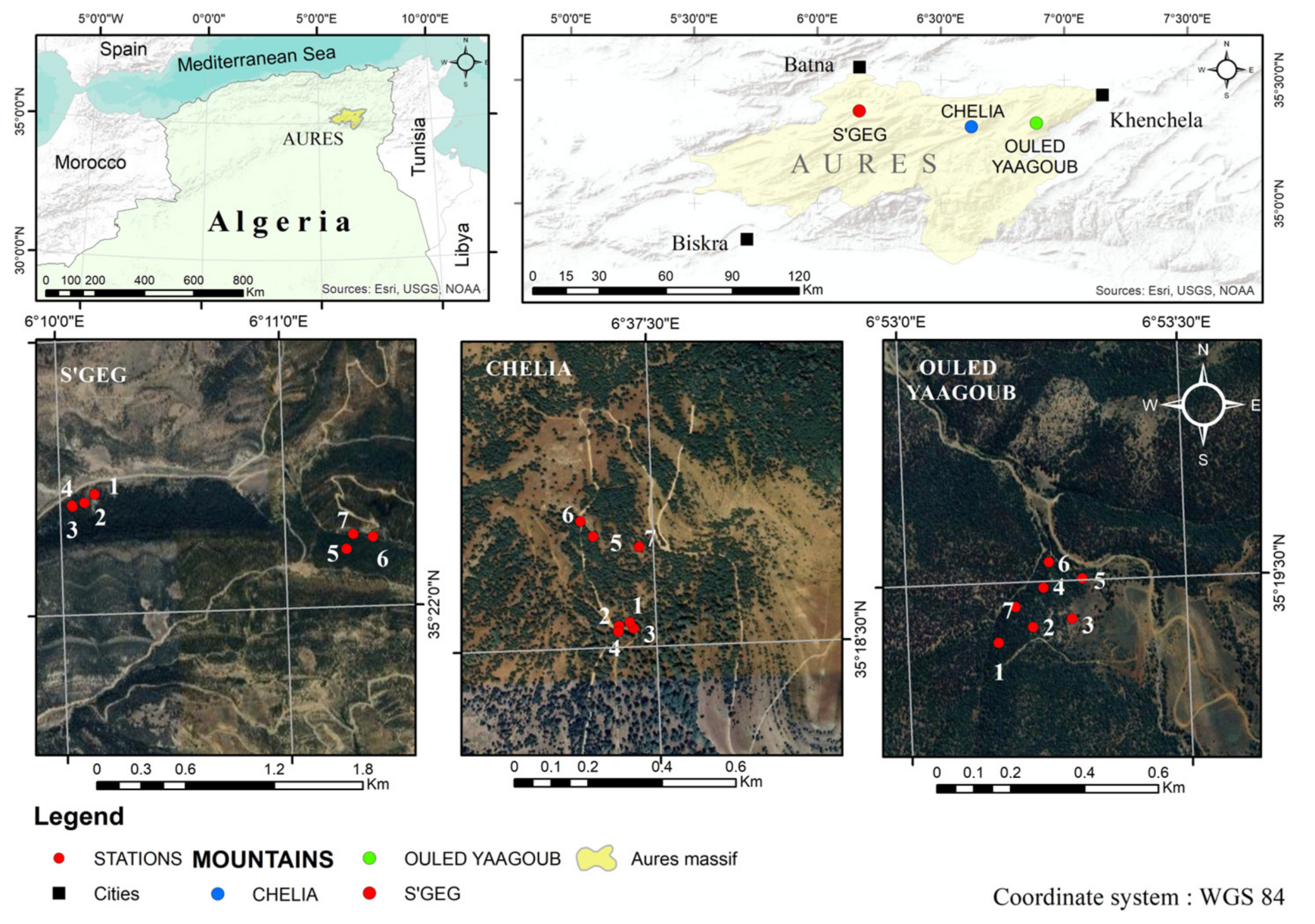
The study was conducted in the Aurès Mountains, located in the southeastern part of Batna Province, in eastern Algeria. It includes the S’Geg massif (1650–1850 m), the Chelia massif (2328 m), and the Ouled Yaagoub massif (1754–1815 m), which are part of the Saharan Atlas range and are characterized by a decline in Cedrus atlantica stands.
Soil and leaf samples showing symptoms (yellowing, spots, needle drop, wilting) were aseptically collected from the three representative sites: S’Geg (35°22′26.34″ N, 6°10′9.18″ E), Chelia (35°18′39.78″ N, 6°37′23.58″ E), and Ouled Yaagoub (35°19′32.40″ N, 6°53′15.18″ E). At each site, soil subsamples (1.5–2 kg each) were collected at a depth of 10–15 cm using a sterilized auger. Subsamples were thoroughly homogenized and pooled to obtain one composite sample (1.5–3 kg) per site. Symptomatic leaves were collected from several plants using sterile gloves, following the methodology of [16].
Sampling sites were mapped using GPS and ArcGIS 10.8 software to produce a cartographic representation of the study area (Figure 1).
In order to give a more detailed account of the ecological situation, in which the symptomatic young C. atlantica seedlings were found, the soil physicochemical and enzymatic characteristics were also evaluated at every sampling location as additional environmental indicators.

2.1.2. Physicochemical Soil Analysis

Each composite soil sample collected was dried and passed through a 2 mm mesh. The physicochemical properties of the soil, including pH, electrical conductivity (EC), organic matter (OM), sulfates (SO42−), chlorides (Cl), and calcium carbonate (%), were analyzed in triplicate following the standard procedures of the Laboratory for the Improvement and Development of Plant and Animal Production (LADPVA), University of Setif, Algeria. For each composite soil sample, analyses were repeated three times.

2.1.3. Phosphatase Activity Determination

Phosphodiesterase (PDE) activity in soil was determined spectrophotometrically at 400 nm, following the method described by [17]. Briefly, for each soil sample, three aliquots of 1 g were placed in a 50 mL Erlenmeyer flask. For each replicate, 0.2 mL of toluene, 4 mL of TRIS buffer (0.05 M, pH 8.0), and 1 mL of 0.005 M bis-p-nitrophenyl phosphate solutions were added. The mixture was shaken, sealed, and incubated at 37 °C for 1 h. The reaction was stopped by adding 1 mL of 0.5 M CaCl2 and 4 mL of TRIS-NaOH buffer (pH 12). The suspension was then shaken briefly and filtered through Whatman No. 2 filter paper. The absorbance of the filtrate was measured at 400 nm against appropriate blanks. Phosphodiesterase activity was expressed as µg p-nitrophenol g−1 h−1, using a calibration curve of standard p-nitrophenol.

2.2. Dehydrogenase Activity (DHA) Assay

The dehydrogenase activity (DHA) of the soil was determined using fresh samples according to the method described by [18]. For each soil sample, three aliquots of 6 g were placed in test tubes and mixed with 4 mL of distilled water. Each mixture was amended with 0.12 g of CaCO3 and 1 mL of 2,3,5-triphenyltetrazolium chloride (TTC, 3% w/v), followed by incubation at 30 °C for 20 h. After incubation, the samples were filtered, and the produced triphenylformazan (TPF) was extracted with ethanol (≥99.8%, analytical grade). The extracts were homogenized and kept in the dark for 1 h. The supernatant was then recovered by centrifugation, and its absorbance was measured at 485 nm. The DHA values were expressed as µg TPF g−1 min−1, based on a calibration curve [13].

2.3. Pathogen Isolation and Preservation

Symptomatic plant samples were thoroughly rinsed under running tap water to remove adhering soil particles. Under a laminar airflow cabinet, small fragments (1–2 mm) were excised from the infected tissues using a sterilized scalpel. Under aseptic conditions, these fragments were surface-sterilized with a sodium hypochlorite (NaOCl) solution (5%, v/v) for 30 s and rinsed three times with sterile distilled water. Excess moisture was removed using sterile filter paper, and the fragments were placed onto sterile Petri dishes containing potato dextrose agar (PDA) medium. The plates were incubated at 25 ± 2 °C and examined daily to monitor mycelial growth. Fungal colonies obtained were purified using the hyphal tip technique and maintained on PDA slants at 4 °C in a refrigerator, with subculturing performed every two weeks to ensure viability [14,15].

2.4. Morphological Characterization of Fungal Isolates

Seven days after the onset of fungal growth, the cultural characteristics of each isolate were assessed. The recorded parameters included the colony shape, margin type, surface texture, coloration, and mycelial appearance. Microscopic features were examined using the wet mount method with cotton blue (0.2%), where hyphae taken from the colony margin were mounted on a slide and observed under a DM500 optical microscope (Leica; Leica Microsystems GmbH, Wetzlar, Germany) at 400× magnification [16]. For each sample, genus relative abundance (%) was calculated as the number of isolates assigned to a given genus divided by the total number of fungal isolates recovered from that region × 100.

2.5. Pathogenicity Test

In each region, multiple Alternaria isolates exhibiting similar morphological characteristics were observed. To represent this local homogeneity, the most frequent isolate displaying the most recurrent morphological traits was selected from each region. For this reason, three Alternaria isolates, each originating from a different region, were chosen for pathogenicity assays and molecular identification. It should be noted that these isolates, repeatedly recovered from different samples across various sites, are likely responsible for the observed pathogenicity.
To confirm the identification of the disease and its causal agent, a pathogenicity test was performed in accordance with Koch’s postulates [14,17]. The seeds of Cedrus atlantica were surface-sterilized with 5% sodium hypochlorite for 5 min, rinsed with sterile distilled water, soaked in water for 3 days, and then incubated at 20 °C on moist filter paper until germination [18]. The germinated seedlings were transplanted into pots containing sterile soil (three seedlings per pot) and maintained at 22 °C/20 °C (day/night) with a 12 h photoperiod, irrigated as needed [19,20]. After two months, healthy seedlings of similar size were transplanted into new pots with sterile soil and allowed to acclimate for one week (one plant per pot). The needles were disinfected with 75% ethanol, air-dried, and then inoculated by spraying with 4 mL of conidial suspension (106 conidia mL−1) using a hand-operated compressed air sprayer. The conidial suspension was standardized with a Malassez cell [21,22]. Control plants received sterile water. Experiments were performed in triplicate using a randomized block design and 5 plants per block (15 plants per treatment). To promote fungal development, the seedlings were kept in plastic bags for 3 days. Lesion progression was recorded until characteristic symptoms appeared. Finally, the fungus was re-isolated and identified based on its morphological characteristics, confirmed by microscopic examinations (MZ16A stereo microscope and DM500 optical microscope, Leica; Leica Microsystems GmbH, Wetzlar, Germany), in accordance with Koch’s postulates [14,17,23].

2.6. Measurement of Chlorophyll Content

The content of photosynthetic pigments (chlorophyll a, Chl a; chlorophyll b, Chl b, total chlorophyll, Chl t (Chl a + Chl b); and carotenoids) was determined from 0.25 g of fresh leaves collected from three independents plants per treatment. The leaves were cut into 1–2 mm fragments, homogenized in 5 mL of acetone 80% v/v, stored at −20 °C overnight, and then centrifuged at 14,000 rpm for 5 min. The absorbance of the supernatant was measured at 663 nm (Chl a), 645 nm (Chl b), and 470 nm (carotenoids) using a MultiscanGo Microplate Spectophotometer (Thermo Fisher Scientific, Waltham, MA, USA). For each biological replicate (plant), three technical replicates (independent measurements) were performed, and the mean values were used for statistical analysis. Photosynthetic pigment concentrations were calculated according to the following equations described by Cherif et al. [23].
Chl a (mg/g) = 12. 41 A (663) − 2. 69 A (645)
Chl b (mg/g) = 22. 9 A (645) − 4. 68 A (663)
Chl t = Chl a + Chl b
Carotenoids (mg/g) = [(1000 × A (470)) − 1.9 Chl a − 63.14 Chl b)]/214

2.7. Molecular Identification of Fungal Isolates

The fungal isolates (CHP2, S4.2 and SP1.1) were subjected to ITS gene barcoding [24] at the Agro-Environmental Microbiology Laboratory of the University of L’Aquila (Italy). A direct PCR was performed for DNA amplification of the internal transcribed spacer (ITS) region using the primer pair ITS-5 (5′-GGA AGT AAA AGT CGT AAC AAG G-3′) and ITS-4 (5′-TCC TCC GCT TAT TGA TAT GC-3′). Sanger sequencing was performed by an external service provider, BMR Genomics (Padua, Italy). The obtained sequence was compared with sequences in the NCBI genetic database using BLAST (version 2.17.0) from the National Center for Biotechnology Information (NCBI; http://www.ncbi.nlm.nih.gov/). Isolates showing high sequence identity were considered to belong to the same genus or species complex. However, species-level assignment was treated with caution due to the known limitations of ITS resolution in Alternaria. Phylogenetic analyses were conducted in MEGA version 11 [25] using the maximum likelihood (ML) approach with the kimura 2-parameter model [26]. Fusarium oxysporum strain CBS144134 (MH485044.1) was utilized as an outgroup, and a maximum likelihood bootstrap analysis was carried out by 1000 bootstrap replicates.

2.8. Statistical Analysis

Statistical differences among isolates were analyzed using one-way analysis of variance (ANOVA). Post hoc pairwise comparisons of means were performed using Tukey’s Honestly Significant Difference (HSD) test at a significance level of p < 0.05. All experiments were conducted with three biological replicates per treatment, and data were analyzed using SAS software (version 9). The results are presented as mean ± standard error (SE), and differences were considered significant if the p-value was less than 0.05.

3. Results

3.1. Physicochemical and Enzymatic Characterization of Soil

The physicochemical and biological analysis of the soils revealed notable variations between the different sites (Table 1).
The pH of the soils ranged from 6.84 to 7.82, indicating neutral to slightly alkaline soils. The highest values were recorded for the S’Geg site (7.74), followed by Chelia (7.37) and Ouled Yaagoub (6.88) (p < 0.05). No statistical differences were observed for electrical conductivity values, which ranged from 0.105 to 0.154 dS m−1. The organic matter content showed heterogeneity within sites, ranging from 4.98% to 15.16%. The highest values were recorded at the S’Geg site (p < 0.05). The concentrations of sulphate (SO42−) and chloride (Cl) ions were low for all sites. The presence of calcium carbonates (CaCO3) was primarly detected in the Chelia and Ouled Yaagoub sites, with concentrations reaching 13.63% and 17.02%, respectively. Statistical differences were observed only at the Chelia site.
On the biological front, dehydrogenase activity (DHA) showed relatively homogeneous values among the samples (from 15.63 to 16.61 µg TPF g−1 DW) with statistical differences observed in the S’Geg and Chelia sites. Phosphodiesterase (PDE) activity showed significant variability depending on the site, ranging from 7.08 to 35.11 µg PNP g−1 h−1. The highest values were observed for S’Geg and Ouled Yaagoub, while the lowest activity was recorded in Chelia (p < 0.05).

3.2. Isolation and Selection of Alternaria Fungal Strains

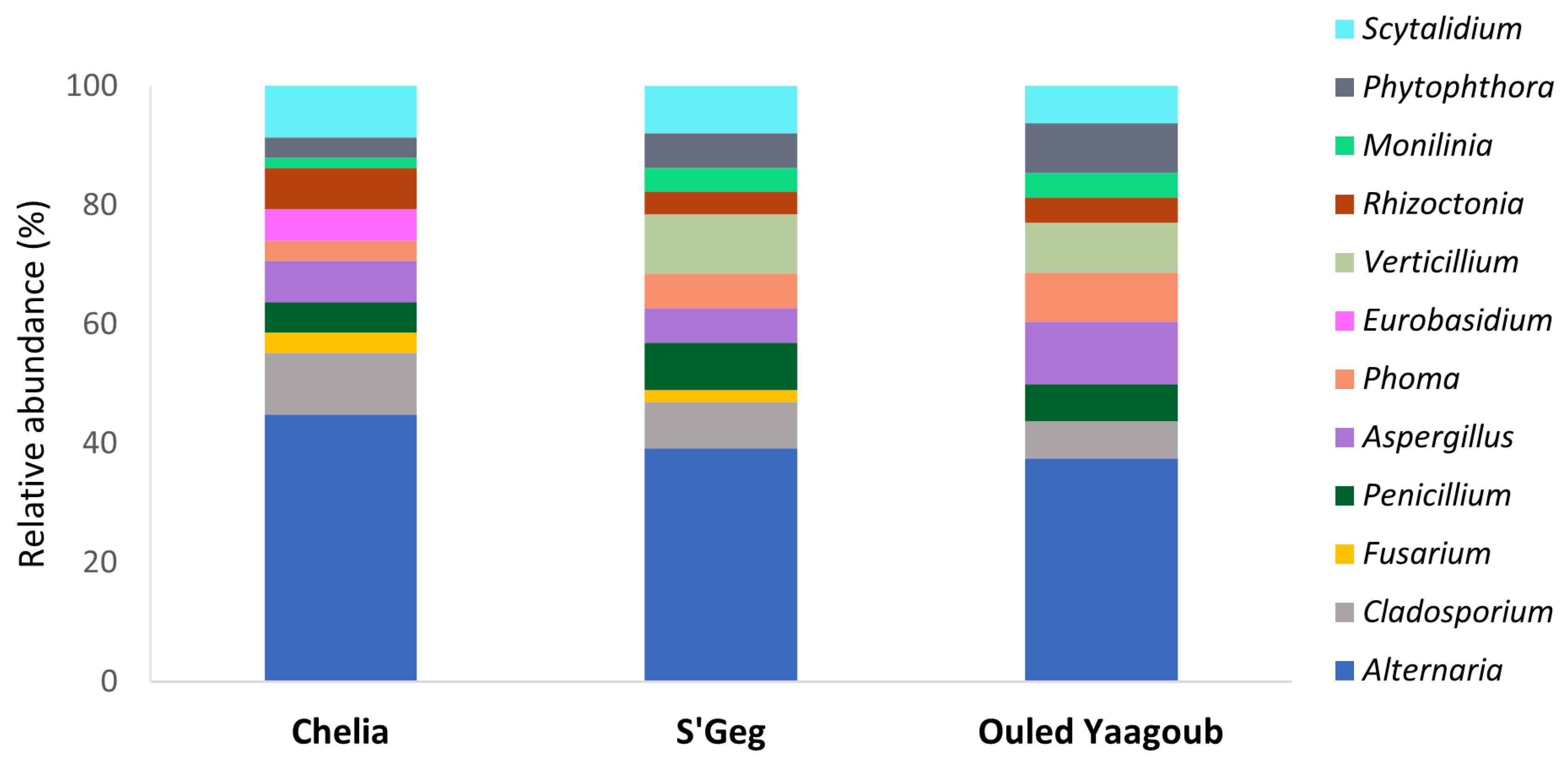
Fungal isolation and morphological identification from Cedrus atlantica needles revealed the presence of 12 genera. For each sample, culturable communities were expressed as the relative abundance of isolation of culturable genera recovered in the sampled regions (Figure 2).
Among the identified genera, Alternaria was the most frequently isolated and the most widely distributed across all sampled regions, with occurrence rates of 44.83% in Chelia, 39.22% in S’Geg, and 37.5% in Ouled Yaagoub.

3.3. Morphological and Microscopic Analysis of Fungal Isolates

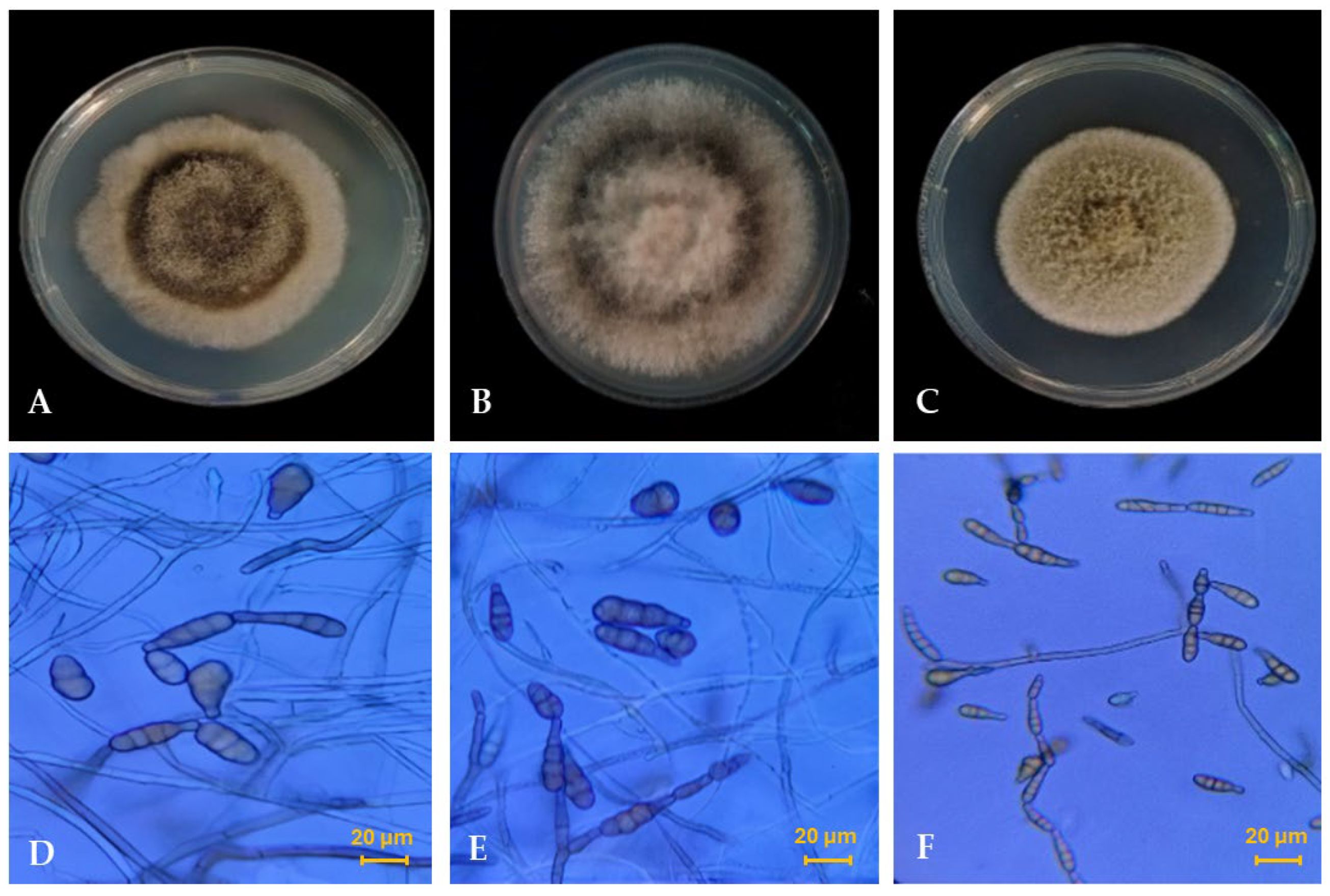
Macroscopic and microscopic observations revealed the presence of conidia typical of the genus Alternaria. Morphological description of the isolates CHP2, S4.2 and SP1.1 indicated characteristics that matched the classification into the genus Alternaria. On potato dextrose, isolates CHP2 and S4.2 generated colonies of very similar macromorphology: circular, flat and zonate with a dark olive-brown to blackish center and a light gray-white marginal zone. Both colonies were dark brown or black on their opposite side and the colony surface was velvety or slightly hairy with a distinct and pale slightly fimbriate margin. Isolate SP1.1, on the contrary, was also a circular colony with a floccose to velvety texture and an olivaceous-gray surface, with a slightly darker central area. The SP1.1 coloration was olive-brown to grayish brown in its reverse color, and the colony margin was filamentous and similar in color to one of the colony surfaces. The morphological difference between the isolates was also supported using the microscopic observations that validated the affinity of the isolates with Alternaria. The mycelium in the three isolates was spreading, and the conidiophores were short, simple, smooth-walled, hyaline to pale brown, and sometimes flexuous. In CHP2 and S4.2, conidia were mostly solitary, whereas in SP1.1, they were single or in short chains. CHP2 and S4.2 conidia were oval to oblong with slight or no curvature or constriction at the septa and an average of 1–4 transverse septa. In SP1.1, the conidia were also oval to oblong in shape but exhibited slight curvature or constriction of both the septa and apex more often and more transverse septa. All isolates had conidia that were light to golden brown that darkened at the septa, the apex tapped slightly and the base really rounded. Morphological and conidial characteristics are summarized in Table 2 and Figure 3.

3.4. Pathogenic Potential of Fungal Isolates

3.4.1. Symptoms

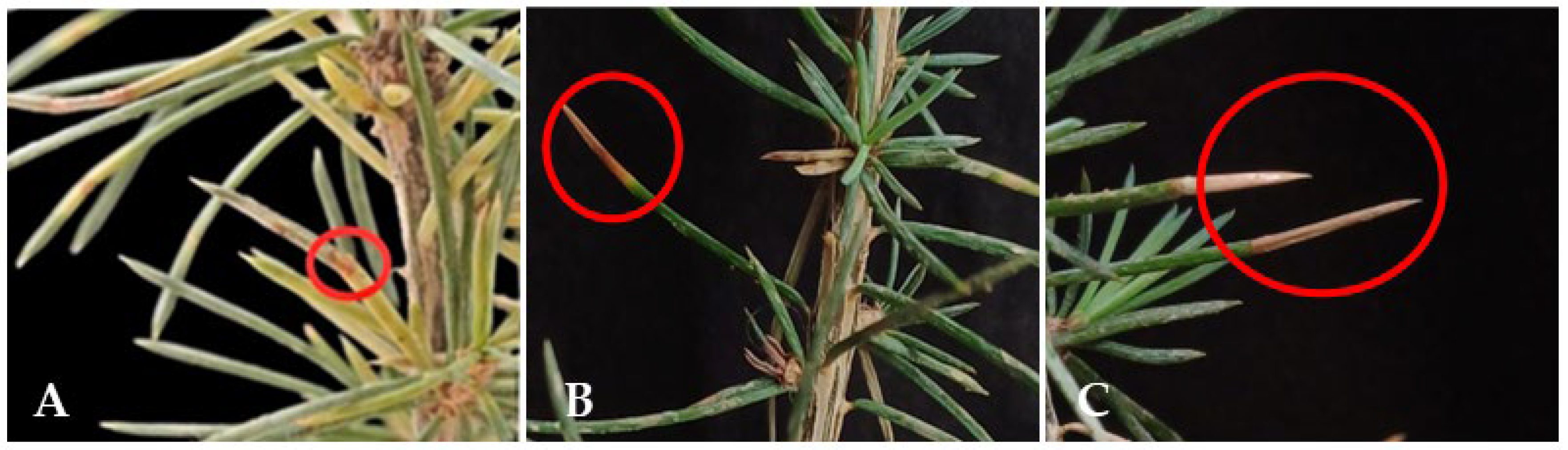
The assessment of the pathogenic potential of the fungal isolates CHP2, SP1.1, and S4.2 on young Cedrus atlantica seedlings showed that all inoculated plants developed leaf spot disease symptoms, affecting on average 80% of the needles per plant (Figure 4).
Lesions initially appeared as small light-brown spots, surrounded by a chlorotic or yellowish halo, and subsequently progressed to a gradual yellowing of the needles and complete desiccation, leading to the death of foliar tissues. The spots were generally isolated but could merge to form larger necrotic areas. These symptoms are comparable to those reported for foliar infections caused by Alternaria spp.
The re-isolation of fungi from the needles of inoculated seedlings showing infection yielded typical cultures of isolates CHP2, S4.2 and SP1.1, thereby confirming their pathogenicity according to Koch’s postulates.

3.4.2. Impact of Fungal Isolate on Plant Photosynthetic Pigments

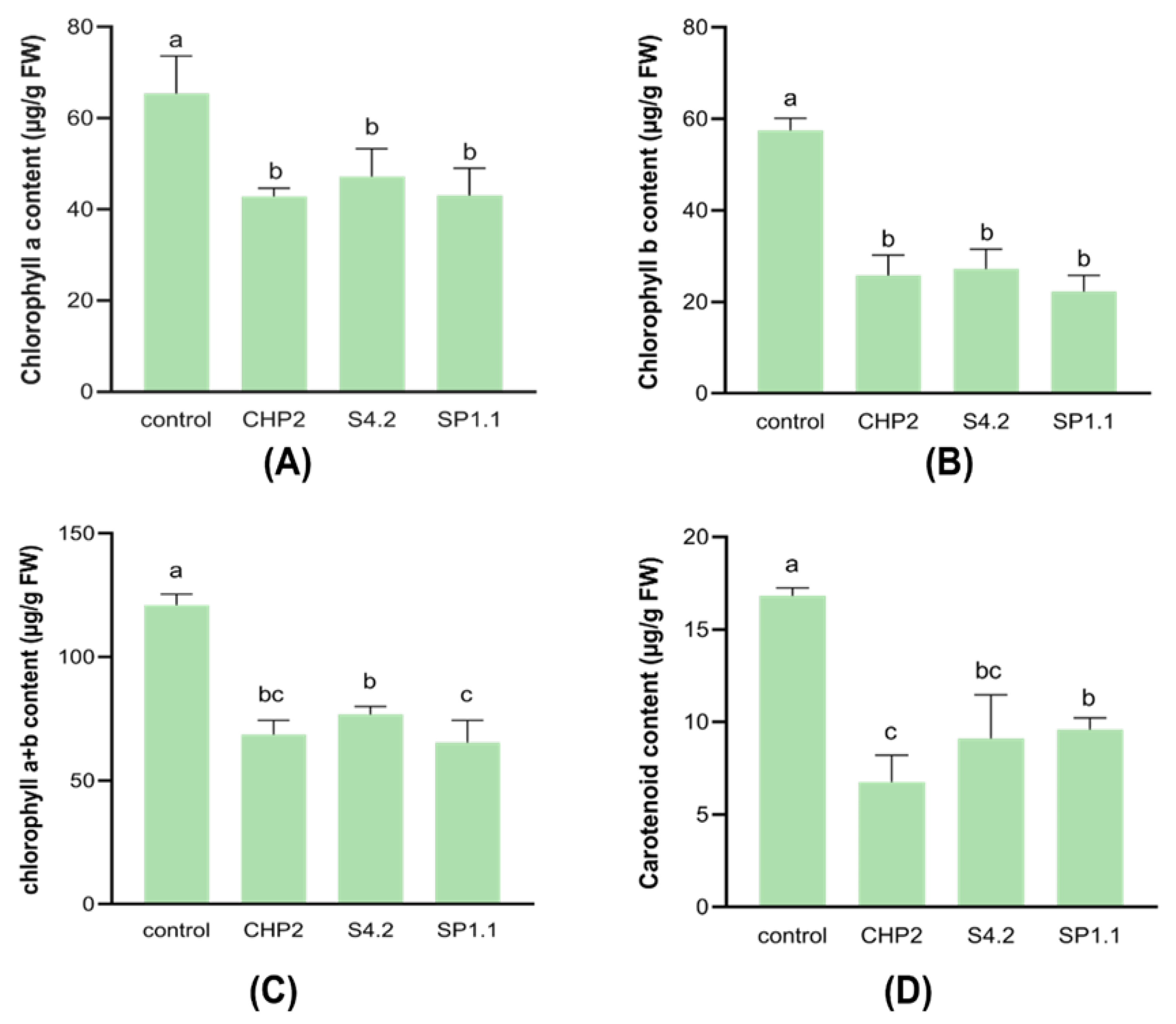
Statistical analysis using Tukey’s HSD test of pigment content in the leaves of Cedrus atlantica infected by the fungal strains CHP2, SP1.1, and S4.2 (Figure 5) showed that the concentrations of chlorophyll pigments (chlorophyll a, chlorophyll b, total chlorophyll) as well as carotenoids were significantly reduced in infected seedlings compared with the healthy control. The degree of reduction varied depending on the fungal strain (p < 0.05).
The chlorophyll a and chlorophyll b contents were significantly lower in seedlings infected with the fungal isolates compared to the control (p < 0.05). No statistical differences were observed within infected plants (p > 0.05). For total chlorophyll contents (a + b), SP1.1 exhibited the most substantial decreases compared to the control (p < 0.05). CHP2 was statistically comparable to SP1.1 and S4.2 (p > 0.05). In terms of carotenoid concentrations, CHP2 caused significant reductions compared to the control. The reduction in SP1.1 was less pronounced, though still significant compared to the control (p < 0.05). S4.2 was statistically comparable to SP1.1 and CHP2 (p > 0.05).

3.5. Molecular Profiles of Fungal Isolates

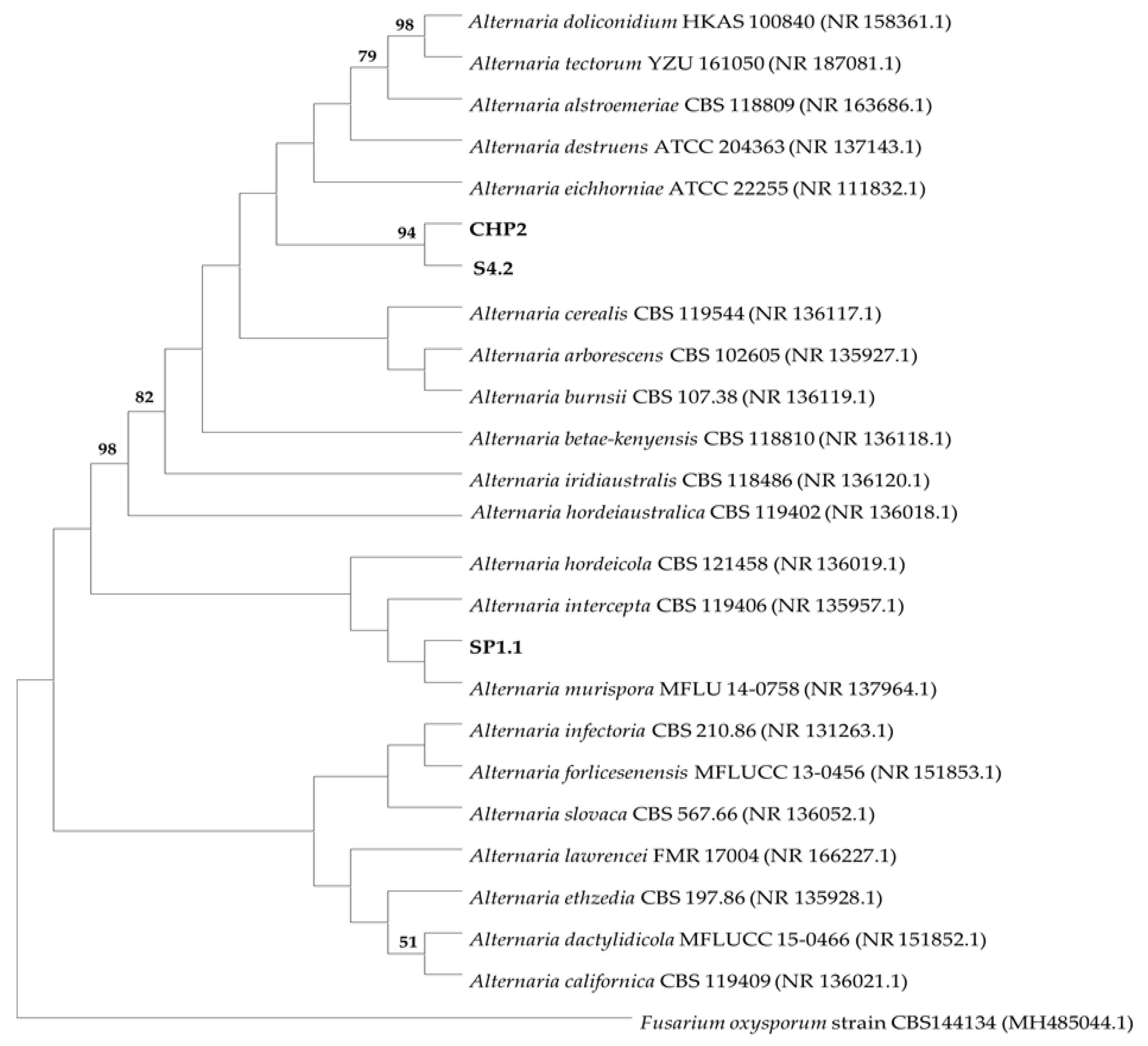
The strains (CHP2, S42 and SP1.1) were characterized through ITS gene barcoding and phylogenetic analysis (Figure 6).
The isolates were associated with the Alternaria genus through phylogenetic analysis. Isolates CHP2 and S4.2 were clustered within Alternaria spp. and showed high similarity to sequences reported for taxa related to A. destruens and A. murispora, although this does not allow definitive species identification.

4. Discussion

Alternaria species are widely recognized as phytopathogenic fungi and are frequently isolated from infected or necrotic plant tissues [27]. These fungi are responsible for a wide range of plant diseases, among which leaf spot and black spot diseases are the most prevalent. Such infections, caused by Alternaria spp., lead to significant reductions in crop yield and considerable economic losses worldwide [28,29,30].
In the present study, soil physicochemical and enzymatic data were used to characterize the environmental context of the sampled cedar stands. All the physicochemical parameters and enzymatic activities of soils from different sampling regions revealed low biological functionality of the soil, especially in terms of enzymatic activities. The soils analyzed reveal a neutral to slightly alkaline pH (6.84–7.82), which is a favorable range that does not limit the development and establishment of many pathogen species at the various sites [31]. The low electrical conductivity values (0.105–0.154 dS/m), along with reduced concentrations of chloride and sulfate ions compared to soils affected by salinity stress (where soils are classified as saline when electrical conductivity is 4.0 dS/m or higher), suggest that the plants were not subjected to abiotic stress caused by salinity [32]. This effectively rules out the possibility of leaf necrosis symptoms associated with salinity stress. The variability in organic matter content fell within the 5–15.16% range, with the highest values for the S’Geg site (13–15%). Nevertheless, this range made it possible to classify all of them within the same category of “mineral soil with organics” following the classification proposed by Huang and collaborators [33].
Biologically, dehydrogenase (DHA) activity across the different sites was low, ranging from 15 to 17 µg TPF g−1 DW, compared to soils previously studied during Fusarium outbreaks in L’Aquila (Central Italy), where DHA ranged from 30 to 40 µg TPF g−1 DW. This suggests that the overall microbial community in the studied soils is less active [34]. This may limit the establishment of plant-induced systemic defense mechanisms, making leaves more susceptible to pathogens. This may result in increasing plant vulnerability to disease, particularly infection by root or leaf pathogens [35]. Phosphodiesterase (PDE) activity, on the other hand, shows significant variability between sites (7–35 µg PNP g−1 h−1). These levels fall within the range observed for coniferous forest soils (15–75.77 μg PNP g−1 h−1), and their low values may reflect low soil fertility [36]. This finding is reinforced by the notable presence of carbonates (CaCO3) in Chelia and Ouled Yaagoub soils, causing a reduction in the solubility and availability of phosphorus, which can lead to a decrease in the physiological vigor of plants [37,38,39,40,41].
Morphological characterization based on macroscopic features observed after 7 days of culture on PDA revealed circular, flattened, spreading colonies with a velvety to slightly hairy or cottony to floccose texture, olive to grayish-brown in color, with a slightly darker center and well-defined, slightly fimbriate or filamentous margins. These observations are consistent with previous studies describing the cultural characteristics of Alternaria spp. grown on PDA medium [42,43,44]. Additionally, microscopic observations revealed the presence of conidia that were oval to oblong, sometimes slightly curved or constricted at the septa, consistent with the typical morphological characteristics of the genus Alternaria, as reported by several previous studies [9,44,45,46].
Pathogenicity tests on young cedar plants indicated that all fungal isolates were virulent and induced characteristic leaf spot symptoms. Leaf blight and needle spots are well-recognized symptoms of infection by Alternaria species [9,10,47].
Molecular identification of the isolates using ITS sequences revealed that strains CHP2 and S4.2 are closely related to A. destruens, while SP1.1 is closely related to A. murispora. Although these isolates cluster into separate subclades, indicating a close evolutionary relationship and some local genetic diversity, the morphological and ITS data are insufficient for definitive species delimitation, and thus these taxonomic assignments should be considered tentative. Additionally, while culture-dependent methods were effective for isolating Alternaria spp., they limit the resolution of the fungal community by capturing only culturable species, potentially overlooking non-culturable fungi. To gain a more comprehensive understanding of the fungal biodiversity associated with Cedrus atlantica, next-generation sequencing (NGS) techniques are recommended, as they enable the detection of both culturable and non-culturable species, providing a more detailed view of the fungal community. As far as we know, taxa related to A. destruens or A. murispora had not been previously reported as pathogens of young cedar plants. Therefore, it will be necessary to perform multilocus analyses with other loci like GAPDH, ACT, or beta-tubulin to verify the delimitation of the species [6]. Nevertheless, Alternaria species were isolated from needles of C. atlantica in the Belezma Massif (Batna, Algeria), though they were not identified as primary causal agents [48]. Similarly, Cherak and collaborators reported Alternaria arborescens and A. tenuissima in needles from three Belezma sites: Telmet (slightly degraded), Boumerzoug (moderately degraded), and Tougurt (highly degraded) [49]. These findings confirm that Alternaria species are part of the cedar’s endophytic mycoflora, yet their pathogenic role in foliar symptoms remains unproven. Yang et al. reported that Alternaria destruens causes characteristic necrotic leaf spots on Ligustrum sinense in China [50]. In contrast, Alternaria murispora is mainly described as a leaf endophyte, for example, in olive trees, and as an entomopathogenic fungus used in the biocontrol of the mealybug Phenacoccus solenopsis, illustrating the diversity of its ecological roles without any leaf pathogenicity on Cedrus spp. having been reported to date [51].
Conversely, several other studies have investigated the virulence of different Alternaria species on various coniferous plants, confirming the importance of this genus in leaf phytopathology. A recent study by Zhang et al. demonstrated that Alternaria alternata is responsible for a novel needle blight disease on Pinus bungeana in China [5]. Inoculation of young seedlings reproduced symptoms like those observed in natural field conditions, confirming the pathogenic role of the fungus. One of the characteristics of the genus Alternaria is its ability to produce various metabolites, notably mycotoxins such as alternariol (AOH) and alternariol monomethyl ether (AME), which enable it to efficiently degrade different plant tissues, thereby expanding its pathogenicity to multiple plant species [52]. They also reported that fungal isolates with a broader host range are more virulent to plants [53]. Characteristic leaf spot symptoms caused by A. arborescens, A. tenuissima, A. alternata, and A. consortialis were observed on seedlings of Phoenix dactylifera [54]. Similarly, A. arborescens and A. alternata have been identified as causal agents of leaf blotch and fruit spot on apple and pear [53,55], while A. tenuissima induces foliar necrosis on cherry [56]. These findings demonstrate that the genus Alternaria comprises multiple species capable of infecting woody plants and causing significant damage to leaf tissues. Similarly, A. triticina has been identified as a major pathogen of wheat (Triticum aestivum), causing necrotic lesions on the leaves [57]. The fungi responsible for leaf spots on Datura metel and Aronia melanocarpa (aronia) in Korea were identified as A. tenuissima, indicating that this pathogen is directly responsible for these symptoms [58].
Following the observed foliar symptoms, a detailed analysis of biochemical parameters highlighted the physiological impact of the infection. Infected plants exhibited a significant reduction in photosynthetic pigment contents, indicating disruption of the photosynthetic apparatus and a decline in the overall metabolic activity of the plant. These effects can probably be explained by the production of toxins by Alternaria, such as tenuazonic acid (TeA), which induces oxidative stress via ROS, damaging chloroplasts and causing membrane lipid peroxidation [52]. This stress can trigger cell death and leaf necrosis, leading to a reduction in the number of functional chloroplasts and a decrease in the photosynthetic capacity of the leaves [59]. In addition, Alternaria can directly cause chloroplast damage, with rupture of thylakoid membranes, disruption of electron transport, and reduced carbon fixation [51], leading to a reduction in the number of functional chloroplasts, which decreases the photosynthetic capacity of the leaves [60]. Several studies have established links between fungal diseases and the biosynthesis or catabolism of carotenoids and chlorophyll [53]. Carotenoids, accessory pigments involved in stabilizing chloroplast lipid membranes and protecting the photosystems, were reduced, likely because of structural damage and cell death caused by the progression of the infection in leaf tissues.
Although the reduction in chlorophyll pigments and carotenoids following infection in young cedar seedlings has not been widely documented, numerous studies on other plant species have reported a significant decrease in chlorophyll content because of infections by pathogens of the genus Alternaria. According to Dehgahi et al., the fungus Alternaria negatively affected photosynthetic activity, caused leaf necrosis, and led to a reduction in chlorophyll and carotenoid contents [61]. Moreover, several studies have demonstrated that Alternaria infection adversely impacts leaf chlorophyll content. A significant reduction in chlorophyll was detected in broad bean leaves infected with A. alternata [62]. Similarly, Pati and collaborators reported a decrease in chlorophyll and carotenoid content in Withania somnifera affected by Alternaria [63]. In addition, other authors observed a reduction in photosynthetic pigment content in soybean leaves infected with Alternaria [64]. A significant decrease in chlorophyll and carotenoid was also observed in the leaves of Brassica oleracea [65], Cyamopsis tetragonoloba [66]. Several studies have reported a decrease in carotenoid content because of fungal infection. Zarger and collaborators reported a decrease of up to 14% in carotenoid content in leaves infected with A. alternata [67]. These findings collectively confirm the deleterious effect of Alternaria on photosynthesis and overall leaf health.
According to current knowledge, no study has reported Alternaria spp. as a pathogen responsible for needle leaf diseases in young Cedrus atlantica seedlings. However, the symptoms observed in this study, characterized by scattered lesions across different regions of the needles, suggest that Alternaria spp. can infect young C. atlantica needles and induce necrotic lesions like those reported in other conifers. These findings highlight the need to investigate the distribution, infection mechanisms, and disease spread caused by Alternaria spp. in cedar, as well as to develop appropriate management strategies to mitigate its potential impact on stand health. Fungi can change soil enzyme activities and microbial biomass [68,69].

5. Conclusions

This research is the first study of fungal agents related to symptoms of decline in young Cedrus atlantica plants in Algeria. The combination of morphological and molecular characterization with pathogenicity tests led to the identification of three Alternaria isolates (CHP2, S4.2, and SP1.1) which were obtained on symptomatic cedar tissues. The pathogenicity of these isolates towards C. atlantica seedlings was validated under controlled conditions. The plants inoculated with these isolates showed signs of disease, and infection was also characterized by massive changes in the photosynthetic pigment contents, which demonstrated a detrimental impact on plant physiological activity. These results contribute to the diversity and pathogenic importance of Alternaria spp. in C. atlantica habitats and point out to their possible contribution to the decrease in the natural regeneration of this species in the Aurès Mountains. More research is required to gain more in-depth insight on molecular species identification using multilocus analyses, dynamics of infections, host–pathogen interactions, and how abiotic stress factors affect disease progression, along with the promotion of sustainable disease control initiatives to protect and restore Algerian cedar forests. Nevertheless, the study offers baseline knowledge that can be applied in the future in the monitoring and detection of disease risks and for long-term restoration options of Algerian cedar forests. Ecologically, the presence of pathogenic Alternaria isolates in symptomatic young C. atlantica plants is of relevance in that the extent of damage caused at the seedling stage could negatively affect regeneration success, and this could have long term implications on the renewal of cedar forest stands, the continuity of habitat habitats and the stability of cedar forest ecosystems. The discovery of these isolates offers baseline data that could be used to support forest surveillance programs, nursery sanitation practices, early disease surveillance and restoration planning that could assist in enhancing the sustainability of C. atlantica populations. The findings underline the necessity to adopt adaptive forest management policies which combine plant health surveillance, monitoring of the environmental stress, and conservation efforts geared towards regeneration in the context of the evolving climatic conditions.

Author Contributions

Conceptualization, F.N. and M.P.; methodology, R.D., B.F. and M.Y.H.; software, R.A.M.; validation, F.N. and M.P.; formal analysis, H.A. and M.Y.H.; investigation, R.D. and M.Y.H.; resources, F.N. and M.P.; data curation, M.P.; writing—original draft preparation, M.Y.H., B.F. and M.P.; writing—review and editing, B.F. and M.P.; visualization, R.A.M. and M.Y.H.; supervision, F.N. and M.P.; project administration, M.P. All authors have read and agreed to the published version of the manuscript.

Funding

This research received no external funding.

Institutional Review Board Statement

Not applicable.

Informed Consent Statement

Not applicable.

Data Availability Statement

The original contributions presented in this study are included in the article. Further inquiries can be directed to the corresponding author.

Conflicts of Interest

The authors declare no conflict of interest.

References

  1. Alileche, A. Regeneration in Gaps of Atlas Cedar (Cedrus Atlantica Endl.) in the Djurdjura National Park, Northern Algeria. Agrobiologia 2021, 11, 2444–2456. [Google Scholar]
  2. Chauiyakh, O.; Fahime, E.E.; Ninich, O.; Aarabi, S.; Bentata, F.; Chaouch, A.; Ettahir, A. First Report of the Phytopathogenic Fungus Alternaria Tenuissima in Cedarwood (Cedrus Atlantica m.) in Morocco. Wood Res. 2023, 68, 619–626. [Google Scholar] [CrossRef]
  3. Bentouati, A. La Situation Du Cèdre de l’Atlas Dans Les Aurès (Algérie). Forêt Méditerranéenne 2008, 29, 203–208. [Google Scholar]
  4. Montoro Girona, M.; Lussier, J.-M.; Morin, H.; Thiffault, N. Conifer Regeneration after Experimental Shelterwood and Seed-Tree Treatments in Boreal Forests: Finding Silvicultural Alternatives. Front. Plant Sci. 2018, 9, 1145. [Google Scholar] [CrossRef] [PubMed]
  5. Zhang, M.-J.; Zheng, X.-R.; Li, H.; Chen, F.-M. Alternaria Alternata, the Causal Agent of a New Needle Blight Disease on Pinus Bungeana. J. Fungi 2023, 9, 71. [Google Scholar] [CrossRef]
  6. Li, J.-F.; Jiang, H.-B.; Jeewon, R.; Hongsanan, S.; Bhat, D.J.; Tang, S.-M.; Lumyong, S.; Mortimer, P.E.; Xu, J.-C.; Camporesi, E.; et al. Alternaria: Update on Species Limits, Evolution, Multilocus Phylogeny, and Classification. Stud. Fungi 2022, 8, 1–61. [Google Scholar] [CrossRef]
  7. Matić, S.; Tabone, G.; Garibaldi, A.; Gullino, M.L. Alternaria Leaf Spot Caused by Alternaria Species: An Emerging Problem on Ornamental Plants in Italy. Plant Dis. 2020, 104, 2275–2287. [Google Scholar] [CrossRef]
  8. Geng, X.; Mvchir, H.; Liu, J.; Hua, K.; Miao, Q.; Shu, J. Molecular Characterization and Pathogenicity Analysis of Alternaria Alternata Associated with Leaf Spot Disease of Toona Sinensis in China. Horticulturae 2025, 11, 279. [Google Scholar] [CrossRef]
  9. Elfar, K.; Zoffoli, J.P.; Latorre, B.A. Identification and Characterization of Alternaria Species Associated with Moldy Core of Apple in Chile. Plant Dis. 2018, 12, 2158–2169. [Google Scholar] [CrossRef]
  10. Loganathan, M.; Venkataravanappa, V.; Saha, S.; Rai, A.B.; Tripathi, S.; Rai, R.K.; Pandey, A.K.; Chowdappa, P. Morphological, Pathogenic and Molecular Characterizations of Alternaria Species Causing Early Blight of Tomato in Northern India. Proc. Natl. Acad. Sci. India Sect. B Biol. Sci. 2016, 86, 325–330. [Google Scholar] [CrossRef]
  11. Mageroy, M.H.; Nagy, N.E.; Steffenrem, A.; Krokene, P.; Hietala, A.M. Conifer Defences against Pathogens and Pests—Mechanisms, Breeding, and Management. Curr. For. Rep. 2023, 9, 429–443. [Google Scholar] [CrossRef]
  12. Jactel, H.; Nicoll, B.C.; Branco, M.; Gonzalez-Olabarria, J.R.; Grodzki, W.; Långström, B.; Moreira, F.; Netherer, S.; Christophe Orazio, C.; Piou, D.; et al. The Influences of Forest Stand Management on Biotic and Abiotic Risks of Damage. Ann. For. Sci. 2009, 66, 701. [Google Scholar] [CrossRef]
  13. Demeter, L.; Molnár, Á.P.; Öllerer, K.; Csóka, G.; Kiš, A.; Vadász, C.; Horváth, F.; Molnár, Z. Rethinking the Natural Regeneration Failure of Pedunculate Oak: The Pathogen Mildew Hypothesis. Biol. Conserv. 2021, 253, 108928. [Google Scholar] [CrossRef]
  14. Domínguez-Begines, J.; Ávila, J.M.; García, L.V.; Gómez-Aparicio, L. Soil-Borne Pathogens as Determinants of Regeneration Patterns at Community Level in Mediterranean Forests. New Phytol. 2020, 227, 588–600. [Google Scholar] [CrossRef]
  15. Brunet, J.; Bukina, Y.; Hedwall, P.O.; Holmström, E.; Von Oheimb, G. Pathogen Induced Disturbance and Succession in Temperate Forests: Evidence from a 100-Year Data Set in Southern Sweden. Basic Appl. Ecol. 2014, 15, 114–121. [Google Scholar] [CrossRef]
  16. Suksiri, S.; Laipasu, P.; Soytong, K.; Poeaim, S. Isolation and Identification of Phytophthora Sp. and Pythium Sp. from Durian Orchard in Chumphon Province, Thailand. Int. J. Agric. Technol. 2018, 14, 389–402. [Google Scholar]
  17. Tabatabai, M.A.; Bremner, J.M. Use of P-Nitrophenyl Phosphate for Assay of Soil Phosphatase Activity. Soil Biol. Biochem. 1969, 1, 301–307. [Google Scholar] [CrossRef]
  18. Casida, L.E.; Klein, D.A.; Santoro, T. Soil dehydrogenase activity. Soil Sci. 1964, 98, 371–376. [Google Scholar] [CrossRef]
  19. Xie, J.; Hu, W.; Pei, H.; Dun, M.; Qi, F. Detection of Amount and Activity of Living Algae in Fresh Water by Dehydrogenase Activity (DHA). Environ. Monit. Assess. 2008, 146, 473–478. [Google Scholar] [CrossRef]
  20. Thakur, R.; Tomar, M.; Sharma, R. Survey, Pathogenicity and Molecular Characterization of Root Pathogens Associated with Root Rot of Cedrus Deodara (Roxb.) G. Don in District Solan, Himachal Pradesh, India. Int. J. Environ. Clim. Change 2022, 12, 1079–1092. [Google Scholar] [CrossRef]
  21. Tisserat, N.; Altman, J.; Campbell, C.L. Pesticide-Plant Disease Interactions: The Influence of Aldicarb on Growth of Rhizoctonia Solani and Damping-off of Sugar Beet Seedlings. Phytopathology 1977, 67, 791–793. [Google Scholar] [CrossRef]
  22. Al-Abbasi, S.H.A.; Al-Majmaei, A.A.M.; Al-Naqib, A.T.H.; Hameed, A.M.; Al-Samarraie, M.Q.; Altaef, A.H. Isolation and Identification of Some Fungi from Rhizospheric Soils of Some Wild Plants at Samarra University, Iraq. Casp. J. Environ. Sci. 2021, 19, 829–839. [Google Scholar] [CrossRef]
  23. Cherif, H. Amélioration de La Croissance Du Blé Dur En Milieu Salin Par Inoculation Avec Bacillus Sp. et Pantoea Agglomerans Isolées de sols arides. Ph.D. Thesis, Université Ferhat Abbas Sétif 1, Setif, Algérie, 2014; p. 177. [Google Scholar]
  24. Pellegrini, M.; Ercole, C.; Gianchino, C.; Bernardi, M.; Pace, L.; Del Gallo, M. Fusarium oxysporum f. Sp. Cannabis Isolated from Cannabis sativa L.: In Vitro and in Planta Biocontrol by a Plant Growth Promoting-Bacteria Consortium. Plants 2021, 10, 2436. [Google Scholar] [CrossRef]
  25. Tamura, K.; Stecher, G.; Kumar, S. MEGA11: Molecular Evolutionary Genetics Analysis Version 11. Mol. Biol. Evol. 2021, 38, 3022–3027. [Google Scholar] [CrossRef]
  26. Kimura, M. A Simple Method for Estimating Evolutionary Rates of Base Substitutions through Comparative Studies of Nucleotide Sequences. J. Mol. Evol. 1980, 16, 111–120. [Google Scholar] [CrossRef]
  27. Bessadat, N.; Bataillé-Simoneau, N.; Colou, J.; Hamon, B.; Mabrouk, K.; Simoneau, P. New Members of Alternaria (Pleosporales, Pleosporaceae) Collected from Apiaceae in Algeria. MycoKeys 2025, 113, 169–192. [Google Scholar] [CrossRef]
  28. Wang, J.; Zhai, W.; Gao, H.; Han, R.; Qi, F. Serious Damage to Crop Production Caused by Alternaria Diseases and the Safety of Agricultural Products. Plant Prot. 2017, 43, 9–15. [Google Scholar]
  29. Kang, Z.T.; Jiang, L.M.; Luo, Y.Y.; Liu, C.J.; Li, X.R. The Research Advances of Mechanism of Pathogenicity of Alternaria Phytopathogenic Fungi. Chin. Bull. Life Sci. 2013, 25, 908–914. [Google Scholar]
  30. Yang, Y.; Gan, Y.; Xu, W.; Huang, Y.; Xin, T.; Tan, R.; Song, J. Analysis of Whole-Genome for Alternaria Species Identification. J. Fungi 2025, 11, 185. [Google Scholar] [CrossRef] [PubMed]
  31. Thomma, B.P.H.J. Alternaria Spp.: From General Saprophyte to Specific Parasite. Mol. Plant Pathol. 2003, 4, 225–236. [Google Scholar] [CrossRef] [PubMed]
  32. Munns, R.; Tester, M. Mechanisms of Salinity Tolerance. Annu. Rev. Plant Biol. 2008, 59, 651–681. [Google Scholar] [CrossRef]
  33. Huang, P.-T.; Patel, M.; Santagata, M.C.; Bobet, A.; Huang, P.-T.; Patel, M.; Santagata, M.C.; Bobet, A. Classification of Organic Soils; Technical Reports; Indiana Department of Transportation and Purdue University: West Lafayette, Indiana, 2009. [Google Scholar] [CrossRef]
  34. Farda, B.; Djebaili, R.; Bernardi, M.; Pace, L.; Del Gallo, M.; Pellegrini, M. Bacterial Microbiota and Soil Fertility of Crocus Sativus L. Rhizosphere in the Presence and Absence of Fusarium spp. Land 2022, 11, 2048. [Google Scholar] [CrossRef]
  35. Compant, S.; Duffy, B.; Nowak, J.; Clément, C.; Barka, E.A. Use of Plant Growth-Promoting Bacteria for Biocontrol of Plant Diseases: Principles, Mechanisms of Action, and Future Prospects. Appl. Environ. Microbiol. 2005, 71, 4951–4959. [Google Scholar] [CrossRef] [PubMed]
  36. He, X.; Dai, S.; Ma, T.; Zhang, T.; He, J.; Wu, Y. Altitudinal Variation in Soil Acid Phosphomonoesterase Activity in Subalpine Coniferous Forests in China. Forests 2024, 15, 1729. [Google Scholar] [CrossRef]
  37. Dick, R.P. Soil Enzyme Activities as Integrative Indicators of Soil Health. In Biological Indicators of Soil Health; Cab International: Wallingford, UK, 1997; pp. 121–156. [Google Scholar]
  38. Berendsen, R.L.; Pieterse, C.M.J.; Bakker, P.A.H.M. The Rhizosphere Microbiome and Plant Health. Trends Plant Sci. 2012, 17, 478–486. [Google Scholar] [CrossRef]
  39. Samaddar, S.; Karp, D.S.; Schmidt, R.; Devarajan, N.; McGarvey, J.A.; Pires, A.F.A.; Scow, K. Role of Soil in the Regulation of Human and Plant Pathogens: Soils’ Contributions to People. Philos. Trans. R. Soc. B Biol. Sci. 2021, 376, 1834. [Google Scholar] [CrossRef]
  40. Singh, B.K.; Jiang, G.; Wei, Z.; Sáez-Sandino, T.; Gao, M.; Liu, H.; Xiong, C. Plant Pathogens, Microbiomes, and Soil Health. Trends Microbiol. 2025, 33, 887–902. [Google Scholar] [CrossRef]
  41. Luo, L.; Wang, Z.; Yan, X.; Ye, C.; Hao, J.; Liu, X.; Zhu, S.; Yang, M. Diversified Alternaria Pathogenicity Alters Plant-Soil Feedbacks through Leaf-Root-Microbiome Dynamics in Agroforestry Systems. Hortic. Res. 2025, 12, uhaf137. [Google Scholar] [CrossRef] [PubMed]
  42. Ma, G.; Bao, S.; Zhao, J.; Sui, Y.; Wu, X. Morphological and Molecular Characterization of Alternaria Species Causing Leaf Blight on Watermelon in China. Plant Dis. 2021, 105, 60–70. [Google Scholar] [CrossRef]
  43. Pryor, B.M.; Michailides, T.J. Morphological, Pathogenic, and Molecular Characterization of Alternaria Isolates Associated with Alternaria Late Blight of Pistachio. Phytopathology 2002, 92, 407. [Google Scholar] [CrossRef] [PubMed]
  44. Pavicich, M.A.; Nielsen, K.F.; Patriarca, A. Morphological and Chemical Characterization of Alternaria Populations from Apple Fruit. Int. J. Food Microbiol. 2022, 379, 109842. [Google Scholar] [CrossRef]
  45. Wee, J.I.; Park, J.H.; Back, C.G.; You, Y.H.; Chang, T. First Report of Leaf Spot Caused by Alternaria tenuissima on Black Chokeberry (Aronia melanocarpa) in Korea. Mycobiology 2016, 44, 187–190. [Google Scholar] [CrossRef]
  46. Riquelme, D.; Zuniga, C.; Tapia, E. First Report of Fruit Rot of Sweet Cultivars of Japanese Plum Caused by Alternaria alternata, A. Arborescens, and A. Tenuissima in Chile. Plant Dis. 2021, 105, 4167. [Google Scholar] [CrossRef]
  47. Al-Nadabi, H.H.; Maharachchikumbura, S.S.N.; Agrama, H.; Al-Azri, M.; Nasehi, A.; Al-Sadi, A.M. Molecular Characterization and Pathogenicity of Alternaria Species on Wheat and Date Palms in Oman. Eur. J. Plant Pathol. 2018, 152, 577–588. [Google Scholar] [CrossRef]
  48. Bensaci, O.A.; Harzallah, D.; Gouaref, K. Endophytic Mycoflora of Cedrus atlantica: Diversity Patterns and Determinism of the Phytosanitary Situation of Atlas Cedar Forests in Belezma Massif (Algeria). For. Sci. Technol. 2015, 11, 36–43. [Google Scholar] [CrossRef][Green Version]
  49. Cherak, I.; Si Bachir, A.; Cherak, L.; Ghazi, C.; Loucif, L.; Sellami, M. Diversity and Distribution Patterns of Endophytic Mycoflora of Atlas Cedar (Cedrus Atlantica Manetti) Needles in Belezma Biosphere Reserve (Batna, Algeria). Biodivers. J. 2021, 12, 573–583. [Google Scholar] [CrossRef]
  50. Yang, Q.Q.; Ma, X.Y.; Chen, T.G.; Liang, W.X. First Report of Alternaria Destruens Causing Leaf Spot on Ligustrum Sinense in China. Plant Dis. 2019, 103, 2959. [Google Scholar] [CrossRef]
  51. El Aalaoui, M.; Rammali, S.; Kamal, F.Z.; Calin, G.; Rarinca, V.; Hritcu, L.D.; Ciobică, A.; Sbaghi, M. Effectiveness of the Entomopathogenic Fungus Alternaria murispora and the Predatory Ladybird Harmonia convergens in Controlling Phenacoccus Solenopsis (Tinsley). Front. Sustain. Food Syst. 2025, 8, 1469247. [Google Scholar] [CrossRef]
  52. Saleh, I.; Zeidan, R.; Abu-Dieyeh, M. The Characteristics, Occurrence, and Toxicological Effects of Alternariol: A Mycotoxin. Arch. Toxicol. 2024, 98, 1659–1683. [Google Scholar] [CrossRef] [PubMed]
  53. Li, Y.X.; Dong, X.F.; Yang, A.L.; Zhang, H.B. Diversity and Pathogenicity of Alternaria Species Associated with the Invasive Plant Ageratina Adenophora and Local Plants. PeerJ 2022, 10, e13012. [Google Scholar] [CrossRef]
  54. Rabaaoui, A.; Masiello, M.; Somma, S.; Crudo, F.; Dall’Asta, C.; Righetti, L.; Susca, A.; Logrieco, A.F.; Namsi, A.; Gdoura, R.; et al. Phylogeny and Mycotoxin Profiles of Pathogenic Alternaria and Curvularia Species Isolated from Date Palm in Southern Tunisia. Front. Microbiol. 2022, 13, 1034658. [Google Scholar] [CrossRef] [PubMed]
  55. Elfar, K.; Bustamante, M.I.; Arreguin, M.; Nouri, M.T.; Eskalen, A. Identification and Pathogenicity of Alternaria Species Causing Leaf Blotch and Fruit Spot of Apple in California. Phytopathol. Mediterr. 2023, 62, 467–479. [Google Scholar] [CrossRef]
  56. Waqas, M.; Prencipe, S.; Guarnaccia, V.; Spadaro, D. Molecular Characterization and Pathogenicity of Alternaria Spp. Associated with Black Rot of Sweet Cherries in Italy. J. Fungi 2023, 9, 992. [Google Scholar] [CrossRef]
  57. Kakraliya, S.S.; Zacharia, S.; Bajiya, M.R.; Sheshma, M. Management of Leaf Blight of Wheat (Triticum aestivum L.) with Bio-Agents, Neem Leaf Extract and Fungicides. Int. J. Curr. Microbiol. Appl. Sci. 2017, 6, 296–303. [Google Scholar] [CrossRef][Green Version]
  58. Aktaruzzaman, M.; Kim, J.-Y.; Afroz, T.; Kim, B.-S. First Report of Leaf Spot of Datura metel Caused by Alternaria tenuissima in Korea. Res. Plant Dis. 2015, 21, 330–333. [Google Scholar] [CrossRef]
  59. Tománková, K.; Luhová, L.; Petřivalský, M.; Peč, P.; Lebeda, A. Biochemical Aspects of Reactive Oxygen Species Formation in the Interaction between Lycopersicon Spp. and Oidium Neolycopersici. Physiol. Mol. Plant Pathol. 2006, 68, 22–32. [Google Scholar] [CrossRef]
  60. Kretschmer, M.; Damoo, D.; Djamei, A.; Kronstad, J. Chloroplasts and Plant Immunity: Where Are the Fungal Effectors? Pathogens 2020, 9, 19. [Google Scholar] [CrossRef]
  61. Dehgahi, R.; Subramaniam, S.; Zakaria, L.; Joniyas, A.; Firouzjahi, F.B.; Haghnama, K.; Razinataj, M. Review of Research on Fungal Pathogen Attack and Plant Defense Mechanism against Pathogen. Int. J. Sci. Res. Agric. Sci. 2015, 2, 197–208. [Google Scholar] [CrossRef]
  62. Saalem, A.; El-Said, A.H.M.; Maghraby, T.A.; Hussein, M.A. Pathogenicity and Pectinase Activity of Some Facultative Mycoparasites Isolated from Vicia Faba Diseased Leaves in Relation to Photosynthetic Pigments of Plant. J. Plant Pathol. Microbiol. 2012, 3, 6. [Google Scholar] [CrossRef]
  63. Pati, P.K.; Sharma, M.; Salar, R.K.; Sharma, A.; Gupta, A.P.; Singh, B. Studies on Leaf Spot Disease of Withania Somnifera and Its Impact on Secondary Metabolites. Indian J. Microbiol. 2008, 48, 432–437. [Google Scholar] [CrossRef] [PubMed]
  64. Matniyazova, H. Alternaria alternata fungus effects on physiological and biochemical processes of soybean. SABRAO J. Breed. Genet. 2024, 56, 1060–1071. [Google Scholar] [CrossRef]
  65. Macioszek, V.K.; Gapińska, M.; Zmienko, A.; Sobczak, M.; Skoczowski, A.; Oliwa, J.; Kononowicz, A.K. Complexity of Brassica Oleracea–Alternaria Brassicicola Susceptible Interaction Reveals Downregulation of Photosynthesis at Ultrastructural, Transcriptional, and Physiological Levels. Cells 2020, 9, 2329. [Google Scholar] [CrossRef]
  66. Sharma, S.; Singh, R.; Kumar, A. The Biochemical Changes in Cluster Bean Leaves Due to Alternaria Blight Infection. Int. J. Chem. Stud. 2020, 8, 146–153. [Google Scholar] [CrossRef]
  67. Zarger, S.A.; Rizvi, G.; Parashar, R.; Singh Paijwar, M. Impact of Alternaria Alternata on Organic Components of Mango Leaves. Mycopath 2014, 12, 129–131. [Google Scholar]
  68. Vasconcellos, R.L.F.; Bonfim, J.A.; Baretta, D.; Cardoso, E.J.B.N. Arbuscular Mycorrhizal Fungi and Glomalin-Related Soil Protein as Potential Indicators of Soil Quality in a Recuperation Gradient of the Atlantic Forest in Brazil. Land Degrad. Dev. 2016, 27, 325–334. [Google Scholar] [CrossRef]
  69. Erdel, E.; Şimşek, U.; Kesimci, T.G. Effects of Fungi on Soil Organic Carbon and Soil Enzyme Activity under Agricultural and Pasture Land of Eastern Türkiye. Sustainability 2023, 15, 1765. [Google Scholar] [CrossRef]
Figure 1. Geographical location of the study area and sampling point.
Sustainability 18 04253 g001
Figure 2. Relative abundance of fungus and oomycete genera isolated from Cedrus atlantica needles across three regions (Chelia, S’Geg, and Ouled Yaagoub). Genera were identified based on morphological observations and taxonomic keys.
Sustainability 18 04253 g002
Figure 3. Colony morphology and conidial characteristics of three Alternaria isolates after 7 days of growth on PDA at 26 °C. Upper row: colony appearance—(A) CHP2, (B) S4.2, and (C) SP1.1. Lower row: conidiophores and conidia observed under light microscopy (400×)—(D) CHP2, (E) S4.2, and (F) SP1.1.
Sustainability 18 04253 g003
Figure 4. Leaf spot symptoms caused by different fungal isolates. In the panel, (A) shows the symptoms observed in the CHP2 experimental condition, (B) shows the symptoms in the SP1.1 condition, and (C) shows the symptoms in the S4.2 condition. The red circles were added to highlight the signs of pathogenesis induced by the pathogens.
Sustainability 18 04253 g004
Figure 5. Effect of fungal isolates on chlorophyll a (A), chlorophyll b (B), chlorophyll a + b (C), and carotenoid (D) content of Cedrus atlantica. Values are means ± standard error of three replicates. Lowercase letters (a, b, c) indicate significant differences (p < 0.05) between the control and the different fungal isolates according to one-way ANOVA followed by Tukey’s HSD test.
Sustainability 18 04253 g005
Figure 6. Phylogenetic analysis of the fungal isolates (S4.2, CHP 2, and SP1.1) compared with the closest species of the genus Alternaria (GenBank accession numbers is shown in brackets). The maximum likelihood method was used with a bootstrap consensus tree (from 1000 replicates to represent the distance). The analysis included 25 sequences, and the evolutionary inference was performed in MEGA11 using parallel computation. Fusarium oxysporum strain CBS 144134 (MH485044.1) was introduced as an outgroup. Only branches with ≥50% bootstrap support are retained.
Sustainability 18 04253 g006
Table 1. Physicochemical and enzymatic characteristics of soil. Data is presented as the mean of three replicates. Statistical differences across isolates were established using Tukey’s HSD test (p < 0.05); different letters indicate significant differences.
Sampling AreaS’GegCheliaOuled Yaagoub
Soil Sample123456
pH7.82 a7.66 ab7.32 c7.41 bc6.91 d6.84 d
EC (dS/m)0.14 a0.15 a0.11 a0.101 a0.13 a0.12 a
OM (%)13.41 a15.16 b4.98 f6.55 e9.45 d10.10 c
SO42− mg. kg−126.66 c22.67 c35.67 a31.33 b27.20 c29.23 bc
Cl mg. kg−1TraceTraceTraceTraceTraceTrace
CaCO3 (%)TraceTrace13.63 c15.22 b17.03 a16.43 a
DHA (µg TPF g−1 DW)15.95 b16.61 a16.44 a15.63 b15.91 b15.82 b
PDE (µg PNP g−1 min−1)26.79 b32.21 a17.47 c7.09 d26.67 b35.11 a
EC, electrical conductivity; OM, organic matter; SO42−, sulfates; Cl, chlorides; CaCO3, calcium carbonate; DHA, dehydrogenase; PDE, phosphodiesterase.
Table 2. Morphological characteristics of fungal isolates cultured on PDA at 25 °C for 5–7 days.
CharacteristicCHP2S4.2SP1.1
Colony
appearance (obverse)
Circular, flat and zonate; center dark olive-brown to blackish with a pale gray-white margin.Circular, flat and zonate; center dark olive-brown to blackish with a pale gray-white margin.Circular colony, floccose to velvety; olivaceous gray with a slightly darker central area.
Colony
reverse
Dark brown to blackDark brown to blackOlive-brown to grayish brown
TextureVelvety to slightly hairyVelvety to slightly hairyCottony to floccose becoming olivaceous buff when mature
MarginWell-defined, pale, slightly fimbriate.Well-defined, pale, slightly fimbriate.Filamentous, concolorous with colony surface.
MyceliumSpreadingSpreadingSpreading
ConidiophoresShort, simple, smooth-walled, hyaline to pale brown, arising singly, sometimes flexuous.Short, simple, smooth-walled, hyaline to pale brown, arising singly, sometimes flexuous. Short, simple, hyaline to pale brown, sometimes flexuous.
Conidia
arrangement
SingleSingleSingle or in short chains
Conidia shapeOval to oblong, sometimes slightly curved or constricted at septa.Oval to oblong, sometimes slightly curved or constricted at septa.Oval to oblong, occasionally curved or constricted at septa and apex.
Number of transverse septa1–41–43–6
ColorationLight to golden brown, darker at septaLight to golden brown, darker at septaLight to golden brown, darker at septa
Apex/BaseApex slightly tapered; base roundedApex slightly tapered; base roundedApex slightly tapered; base rounded
Taxonomic identificationAlternaria sp.Alternaria sp.Alternaria sp.
Disclaimer/Publisher’s Note: The statements, opinions and data contained in all publications are solely those of the individual author(s) and contributor(s) and not of MDPI and/or the editor(s). MDPI and/or the editor(s) disclaim responsibility for any injury to people or property resulting from any ideas, methods, instructions or products referred to in the content.