Systematic Review

A Systematic Review of Green and Sustainable AI: Taxonomy, Metrics, Challenges, and Open Research Directions


by
Outmane Marmouzi
*,
Ilham Oumaira
and
Mehdia Ajana El Khaddar
*
Engineering Sciences Laboratory, National School of Applied Sciences, Ibn Tofail University, Kenitra 14000, Morocco
*
Authors to whom correspondence should be addressed.
Sustainability 2026, 18(8), 4115; https://doi.org/10.3390/su18084115
Submission received: 27 February 2026 / Revised: 29 March 2026 / Accepted: 31 March 2026 / Published: 21 April 2026
(This article belongs to the Special Issue Artificial Intelligence and Sustainable Development)

Abstract

Due to the recent rapid development of artificial intelligence (AI) and its expanding impact on the planet, green and sustainable AI research has increasingly gained attention. This systematic literature review searches main databases, including Scopus, Web of Science, and Google Scholar, using an organized methodological approach. Following a thorough screening process, 49 final studies published between 2016 and 2026 are selected from an initial identification of 325 original records. We identify and analyze four key categories of sustainable AI practices: (1) model-level algorithmic efficiency, (2) hardware- and system-level optimization, (3) lifecycle- and data-centric approaches, and (4) operational and policy-level sustainability. We also highlight and explain four dimensions at the intersection of AI and environmentally responsible behavior: AI for sustainable applications’ development in industries, ethical considerations and accountability in using AI, and opportunities enabled by generative AI. We then combine existing taxonomies, evaluation metrics, and challenges to identify areas for improvement and suggest future research directions. Based on our analysis, we emphasize the need for interdisciplinary cooperation to facilitate responsible AI innovation and match it with global sustainable development goals (SDGs). We also highlight the importance of developing adequate frameworks along with precisely defined and standardized metrics to assess the environmental impact of AI. This review aims to encourage more responsible and environmentally friendly AI practices by providing a structured framework for researchers, educators, and professionals engaged in sustainable AI.

1. Introduction

Over the past decade, artificial intelligence (AI) and Machine Learning (ML) have advanced significantly, driven by deep learning, massive datasets, and enhanced computational architectures. However, training and deploying large AI models require significant amounts of water and energy, increasing carbon emissions and environmental pressure [1].
Although numerous studies have examined how AI affects the environment and suggested certain energy-saving methods, the body of current research frequently remains fragmented. Prior studies often concentrate on discrete aspects, including hardware optimization or algorithmic efficiency, without offering an integrative framework that connects technical metrics to operational policies [2]. There is a lack of comprehensive systematic reviews that synthesize these disparate categories into a cohesive taxonomy. To address this gap, this work proposes a multi-dimensional classification integrating lifecycle-aware, hardware-level, and model-level data management techniques [3].
By the end of 2025, AI workloads accounted for as much as 47.4 gigawatts of global data center electricity consumption [4]. Studies suggest that AI-related operations could generate between 3.5 and 6.0 million tons of CO2 and require hundreds of billions of liters of water annually for cooling and operational functions.
The increasing complexity of AI models exacerbates this environmental impact. Deep learning-based recommendation systems can consume approximately 23 gigawatt-hours (GWh) of electricity per experiment, resulting in significant emissions of approximately 5000 tons of CO2 [4]. Modern AI models currently require up to 4600 times as much power compared to traditional Machine Learning techniques. By 2030, this disparity is expected to lead to a 24-fold increase in the amount of electricity used globally for AI activities [4,5].
Additionally, from a broader perspective, researchers have highlighted the political, economic, and environmental implications of large-scale AI infrastructures, emphasizing the need for sustainable AI development and responsible governance [6].
The purpose of this work is to provide a thorough and systematic review of green and sustainable AI techniques to address this research gap. The specific objectives of this work are to (1) analyze current approaches to mitigate the environmental impact of AI systems, (2) suggest a taxonomy of green AI strategies, and (3) investigate the sustainability metrics used to assess environmental impact and energy usage supporting the development of a causal interaction model that correlates technical optimizations with long-term sustainability goals.
The paper is organized as follows. First, background concepts are introduced in Section 2. Next, the systematic review methodology is described in Section 3. A taxonomy of green and sustainable AI approaches is then presented in Section 4, followed by a discussion of sustainability metrics. The paper also examines the challenges and trade-offs of integrating sustainable AI systems in Section 5, followed by a proposition of future research directions and emerging opportunities related to this field in Section 6. A final conclusion about the paper’s contribution is given in Section 7.

2. Background

2.1. Evolution of Green and Sustainable AI

The effects of AI on society and our planet are receiving increasing attention, which is changing the direction of the AI research field. New research directions focus on how to create AI models that are both accurate and sustainable, and reduce their energy use and carbon emissions:
  • 2012 to 2018 (red AI phase): The focus was on maximizing performance; researchers raced to build larger models, and greenhouse gas emissions rose sharply in parallel [7,8,9,10]. Predictive accuracy took precedence over energy-efficiency during this era of unrestricted computational growth.
Our methodical mapping shows that a “performance-at-any-cost” attitude was fostered by the race for large neural architectures, which led to an increase in carbon footprints. This stage serves as the crucial baseline of inefficiency by which later green innovations and the past patterns found in our taxonomy are evaluated.
  • 2019 to 2021 (the awakening phase): This period served as a wake-up call. Studies began to delve deeper into the environmental effects of the use of NLP (Natural Language Processing). There was more interest in green AI and the new goals were efficiency and model compression [11,12,13,14]. The shift to a resource-constrained optimization paradigm is signified by this “awakening phase”. Our methodical extraction shows that the democratization of efficiency methods like quantization and trimming was sparked by the examination of NLP footprints. Through the use of saturation-based filtering, we were able to pinpoint this time frame as the turning point in the development of green AI from a specialized field to a fundamental area of study.
These years set the empirical standards that required the later regulatory frameworks and cooling improvements found in the later stages of our taxonomy, and they were captured inside our unchangeable evidentiary baseline.
  • 2022 to 2024 (expansion and regulation phase): Generative AI proliferated significantly and the EU AI Act established a new regulatory framework. As a result, companies were prompted to become more transparent and focus on green models [15,16,17,18]. This legislative turning point represents a paradigm change from “ethical intent” to required algorithmic accountability and was sparked by the formalization of the EU AI Act. The literature shifted from theoretical sustainability aims to the real-world application of transparency-by-design concepts throughout this phase, according to our analysis.
We saw a noticeable rise in research on the interplay between compliance and innovation nexus, where regulatory pressure started to push the improvement of energy-efficient generative structures, upon stabilizing the search results through our version-controlled archiving. This stage functions as the structural link in our taxonomy, demonstrating how top-down policy frameworks successfully galvanized the sector toward the measurable green indicators found in later years.
  • 2025 and 2026 (sustainable AI): A comprehensive vision came into place including the incorporation of water-efficient cooling systems to support AI sustainability, carbon-aware scheduling, and hardware lifecycle evaluation throughout all stages of AI systems’ development and operation [19,20,21]. A crucial change in the literature from limited efficiency measurements to integrated sustainable governance is highlighted by this move towards a holistic lifecycle approach.
Our analysis, which uses a saturation-based sampling procedure, verifies that recent research has come to a consensus regarding the ‘Triple Bottom Line’ (environmental, social, and economic) of AI, where operational transparency and environmental KPIs are now closely related. These new trends, particularly carbon-aware scheduling and water-resource management, are guaranteed to be provable thematic shifts in the green AI paradigm rather than fleeting observations thanks to the unchangeable evidentiary baseline created by our search approach. As a result, this synthesis offers a solid basis for upcoming policy decisions, based on a dataset that balances the volatility of quick technical advancements.

2.2. Shifting Paradigms

AI has evolved from a single focus on performance, marked by high energy and water use as well as carbon emissions, to a sustainable AI paradigm focused on effective training, model compression, and lifespan evaluations. This paradigm offers a promising investment opportunity in responsible AI and represents a growing alignment between sustainability, economic feasibility, and performance.
The authors of [22] show the relationship between a company’s size and the amount spent on responsible AI in 2024. They state that all companies, of all sizes, are investing more in ethically sound and sustainable AI, and they see it as an essential part of their strategy. Small enterprises usually spend between $1 and $5 million a year, while larger corporations spend between $1 and $50 million [22].

2.3. Operational Definitions

To establish a rigorous analytical framework while mitigating conceptual overlap between environmental, economic, governance, and ethical dimensions of artificial intelligence, the following operational definitions are adopted:
Green AI: This refers to the design, training, and deployment of artificial intelligence systems with a primary focus on computational efficiency and environmental footprint reduction. Operationally, it emphasizes minimizing energy consumption, carbon emissions, and hardware resource usage throughout model training and inference processes, often through efficient algorithms, model compression, or energy-aware infrastructure.
Sustainable AI: This represents a holistic lifecycle approach to artificial intelligence development and deployment. It considers the environmental, social, and economic impacts of AI systems across the entire value chain; from raw material extraction for hardware manufacturing to energy consumption during operation and eventual electronic waste management, aiming to align AI innovation with the triple bottom line of sustainability.
Responsible AI: This refers to a governance and implementation framework that ensures artificial intelligence systems are developed and deployed in a manner that is transparent, accountable, reliable, and compliant with regulatory and societal standards. Operationally, it encompasses mechanisms such as auditing, risk management, explainability, and oversight to guarantee trustworthy AI practices.
Ethical AI: This denotes the normative dimension of AI development, grounded in moral principles and human values. It focuses on ensuring that AI systems respect fairness, non-discrimination, privacy, human autonomy, and fundamental rights, with particular attention to mitigating algorithmic bias and protecting individuals and communities from harm.
AI for Sustainability: This refers to the application of artificial intelligence technologies as tools to address environmental and societal sustainability challenges. This includes domains such as climate modeling, renewable energy optimization, smart resource management, biodiversity monitoring, and sustainable urban planning.

3. Review Methodology

3.1. Search Strategy and Study Selection

This systematic review was conducted in accordance with the PRISMA 2020 guidelines to find and assess high-quality research on the topic of green and sustainable AI, ensuring methodological rigor, transparency, and repeatability.
The process is intended to capture progress to date, emphasize measurable sustainability contributions, and provide a reproducible basis for research. The process of selecting the studies is summarized below.
  • Step 1: Selection of Studies
To maintain topic coherence in our analysis, we exclusively investigated green AI solutions that enhance lifecycle evaluations, conserve resources (e.g., water, power, etc.), and improve hardware efficiency. This approach stems from a desire to comprehend the intersection of Responsible AI and environmentalism. We independently evaluated the titles and abstracts to identify irrelevant publications related to our research topic. This allowed us to focus on research where Machine Learning, Natural Language Processing, and generative AI could positively affect the environment by lowering carbon footprints and improving sustainable industrial practices.
  • Step 2: Information Retrieval from Databases
To systematically identify high-impact research, we utilized three primary scholarly databases: Web of Science, Scopus, and Google Scholar. Web of Science and Scopus were prioritized for their stringent peer-review, indexing, and reliable metadata, while Google Scholar was used to capture emerging transdisciplinary expert frameworks and management perspectives [23,24]. To ensure full reproducibility, the search strategy was operationalized through a tri-layer Boolean architecture across three clusters: Technology (e.g., Machine Learning, Neural Networks), Optimization (e.g., Edge Computing, Efficient Architectures), and Sustainability (e.g., green AI, carbon footprint). The specific search strings were: (Scopus and Web of Science) TITLE-ABS-KEY (“Green AI” OR “Sustainable AI” OR “Responsible AI”) AND (“Energy Efficiency” OR “Carbon Footprint” OR “Lifecycle Assessment”) AND (“Machine Learning” OR “Neural Networks”)); and (Google Scholar) “Green AI” AND “Sustainable AI” AND (“carbon footprint” OR “energy efficiency”).
To mitigate the inherent algorithmic volatility of Google Scholar, we deployed a saturation-based sampling protocol designed to ensure a stable and rigorous search process. Unlike deterministic databases such as Scopus or Web of Science, Google Scholar’s ranking heuristics are subject to temporal fluctuations; consequently, the extraction process was systematically bounded to the first 200 results (top 20 pages).
The methodological literature confirms that in specialized technical fields like green AI, thematic saturation, i.e., the threshold where marginal information utility diminishes, is effectively reached within this range. To guarantee absolute auditability and neutralize “results-drift,” all 200 identified records were converted into time-stamped immutable digital snapshots. This approach established a fixed evidentiary baseline, insulating the study from the instability of live search engines and ensuring that the qualitative synthesis originates from a verifiable, permanent, and transparent dataset [25].
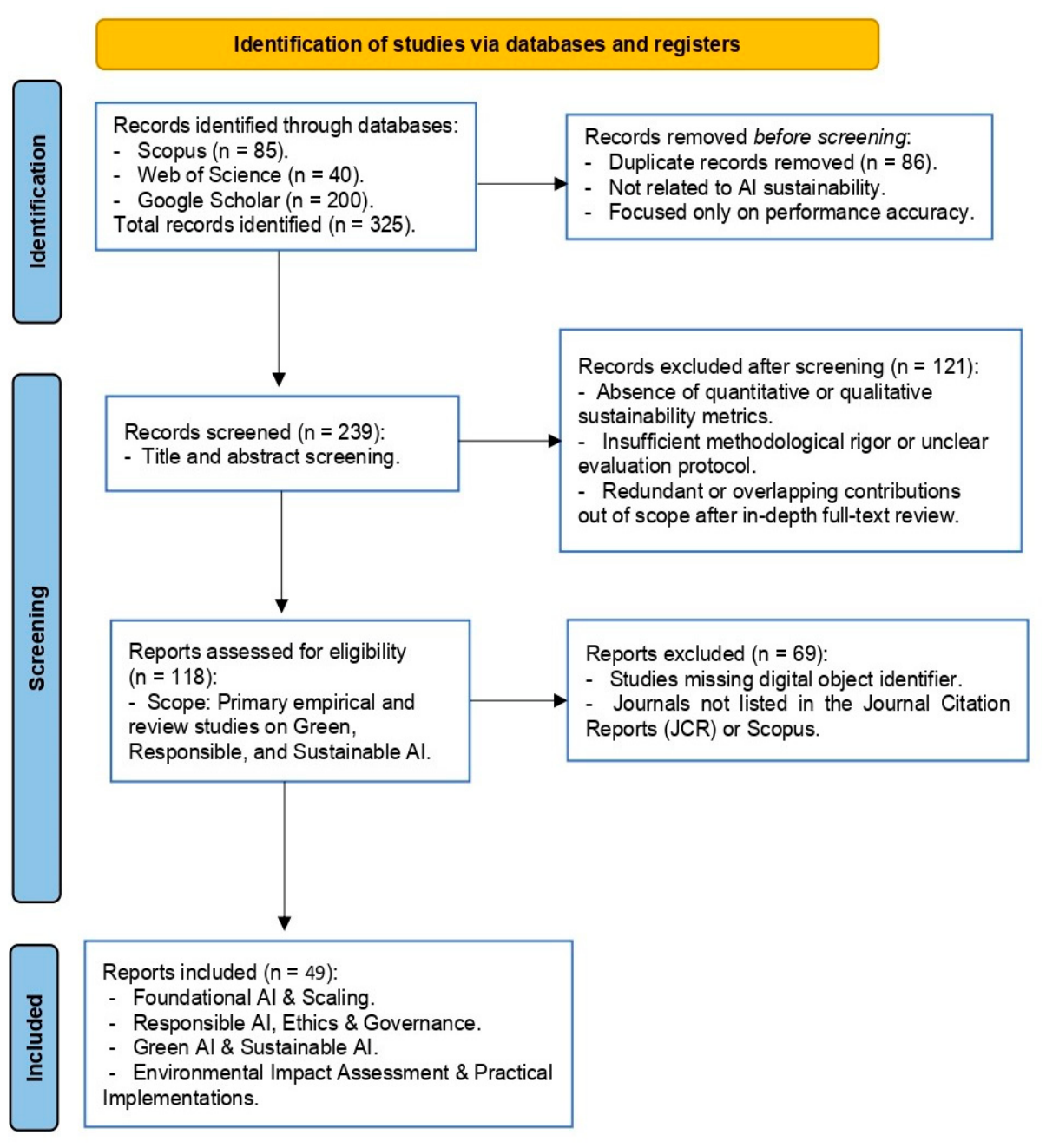
Figure 1 illustrates the study selection process in accordance with the PRISMA 2020 guidelines, emphasizing the systematic filtering applied to ensure the quality and relevance of the included studies. Initially, a large number of records were identified across multiple databases, reflecting the increasing research interest in green and sustainable AI. These records were progressively refined through a structured multi-stage screening process.
During the first phase of the study, multiple records were captured across the various databases [25]. With the use of multi-stage filtering, records were narrowed down. First, irrelevant records were removed across the three databases. Second, titles and abstracts were reviewed for relevance to the topic. Furthermore, there was an in-depth analysis to determine the relevance of each study to the scope of the review. This exhaustive process was implemented to capture only studies that were methodologically sound and relevant for the final qualitative synthesis.
The search query included rigorous Boolean logic, with embedded ‘AND’ and ‘OR’ operators, to connect AI technology designs with environmental sustainability standards. The research was performed on three operational clusters: Technology Layer (e.g., AI, Machine Learning, generative AI), Optimization Layer (e.g., Edge Computing, neural hardware, Efficient Architectures), and Sustainability Layer (e.g., green AI, carbon footprint, lifecycle assessment). Such an elaborate strategy helped to ensure that the research findings remained focused on studies related to the computational economics and environmental management of contemporary AI, in compliance with the PRISMA 2020 statement reporting standards [26]. A completed PRISMA checklist is available in the Supplementary Materials (Supplementary File S1).
  • Step 3: Screening
The first stage of the refining process involved centralizing all the obtained records into one location to facilitate management and duplicate resolution. Using a DOI (Digital Object Identifier) as a verification metric, the final version of the records was retained to ensure data consistency and peer-review integrity. The dataset was then evaluated through title and abstract screening to determine clear thematic alignment to the study objectives.
Studies published in English, with complete text access, and associated with sustainable AI and environmental impact were included. This phase focused on refining the records for green AI, energy-efficient Machine Learning, and low-energy artificial intelligence. The literature was narrowed down to studies concentrating on efficient neural architecture design and AI deployment optimization, excluding articles devoid of considerations of AI lifespan, carbon emissions, neuromorphic hardware, and AI footprint. This first round of filtration ensured that the analysis focused on measuring the environmental impact of AI.
  • Step 4: Eligibility Check and Methodical Selection
To ensure the integrity of the qualitative synthesis, all full-text articles underwent a formal Quality Assessment (QA) protocol operationalized through a dual-reviewer blind screening process, where any discrepancies were resolved via third-party consensus to eliminate selection bias. Methodological rigor was strictly appraised against the verification requirements defined in Table 1, with a primary mandate for studies to demonstrate high-fidelity alignment with the core dimensions of problem definition, metric precision, and hardware specificity.
This stringent appraisal ensured that the synthesis was not merely descriptive but grounded in reproducible data; consequently, studies were systematically excluded if they failed to provide primary empirical results (e.g., specific reductions in kWh or CO2) or if the hardware telemetry (e.g., specific GPU/TPU models and configurations) was undisclosed. Such omissions were deemed to preclude a rigorous comparative analysis of green AI interventions, ensuring that only methodologically transparent research reached the final inclusion stage.
  • Step 5: Data Extraction and Systematic Synthesis
The final process involved extracting relevant streams of data from the completed corpus and synthesizing them in a coherent manner. To ensure consistency across all the completed research, a grid was designed for the systematic extraction of the data. This procedure facilitated a comprehensive assessment of the green AI ecosystem. Five key pillars of information guided the extraction process:
The analysis first examined the year and location of publication to demonstrate the field’s progression from 2016 to January 2026. A technological taxonomy was then applied to identify the main AI approaches involved, including deep learning, Large Language Models (LLMs), and neuromorphic computing. Power Usage Effectiveness (PUE), carbon intensity, and energy consumption per inference (in joules) are all examples of quantitative indicators that were used to look at sustainability metrics. Evaluation approaches can be categorized based on their dependence on physical hardware experimentation, simulation-based modeling, or lifecycle assessments (LCA). Finally, we analyzed the trade-offs between performance and the environment by looking at the “accuracy versus energy” tension that is built into modern algorithmic execution.
For the synthesis, we utilized a theme analysis methodology, which formed the basis for the taxonomy and discussion sections. This phase facilitated the identification of recurring themes, such as algorithmic pruning and edge-based optimization, by contrasting technical advancements with their environmental impacts. It also revealed significant deficiencies in research concerning the standardization of environmental reporting. This comprehensive synthesis ensures that the ensuing discussion serves as both a literature review and a critical examination of the advancements toward responsible AI and computational sustainability.

3.2. Results

We conducted a systematic review from 2016 to 2026 using three main databases, i.e., Scopus, Web of Science, and Google Scholar. A total of 325 records were retrieved in the preliminary electronic search: Scopus (85), Web of Science (40), and Google Scholar (200). After 86 duplicates and irrelevant results were excluded, 239 eligible studies remained for further assessment. The screening approach was conducted in two parts:
(1)
Screening and Quality Appraisal: During the title and abstract screening of the 239 records, 121 studies were excluded based on a formalized Quality Assessment (QA) protocol. To minimize selection bias, this phase involved a dual-reviewer blind screening process, where any discrepancies were resolved through third-party consensus. The primary grounds for exclusion focused on methodological insufficiencies, specifically the following:
  • Threshold 1 (Empirical Data): Systematic exclusion of studies providing only qualitative assertions of “efficiency” without reporting quantified sustainability KPIs (kwh, CO2).
  • Threshold 2 (Technical Transparency): Exclusion of research failing to disclose hardware telemetry (GPU/TPU architectures), as this precludes data commensurability.
  • Threshold 3 (Trade-off Analysis): Studies where the accuracy–energy trade-off was not explicitly measured against established baselines were deemed to lack the analytical depth required for this synthesis.
(2)
Eligibility Assessment:
Subsequently, 118 articles were selected for an exhaustive full-text eligibility review. These articles were methodologically evaluated based on criteria focusing on green, responsible, and sustainable AI. At this point, 69 studies were eliminated through a balanced selection protocol. We explicitly included prestigious conference proceedings (e.g., CVPR, ACL) and high-fidelity preprints (arXiv) to ensure the inclusion of “state-of-the-art” data that traditional journal cycles might miss. Simultaneously, the requirement for a DOI or JCR/Scopus indexing was maintained as a crucial quality proxy to ensure peer-review integrity and data reproducibility. This dual approach allowed us to incorporate the most recent, high-impact research while mitigating selection bias and ensuring the empirical reliability of the final 49 studies.
The last collection of articles encompassed various applications for green and sustainable AI, serving as evidence for the diversity in strategies and environmental impact evaluation that the field could take. The research, which was presented across the 49 publications, including conference sessions, took place between 2016 and 2026 with a total of 158 authors representing 22 countries. This indicates that individuals worldwide are very engaged in and worried about AI and its sustainability.
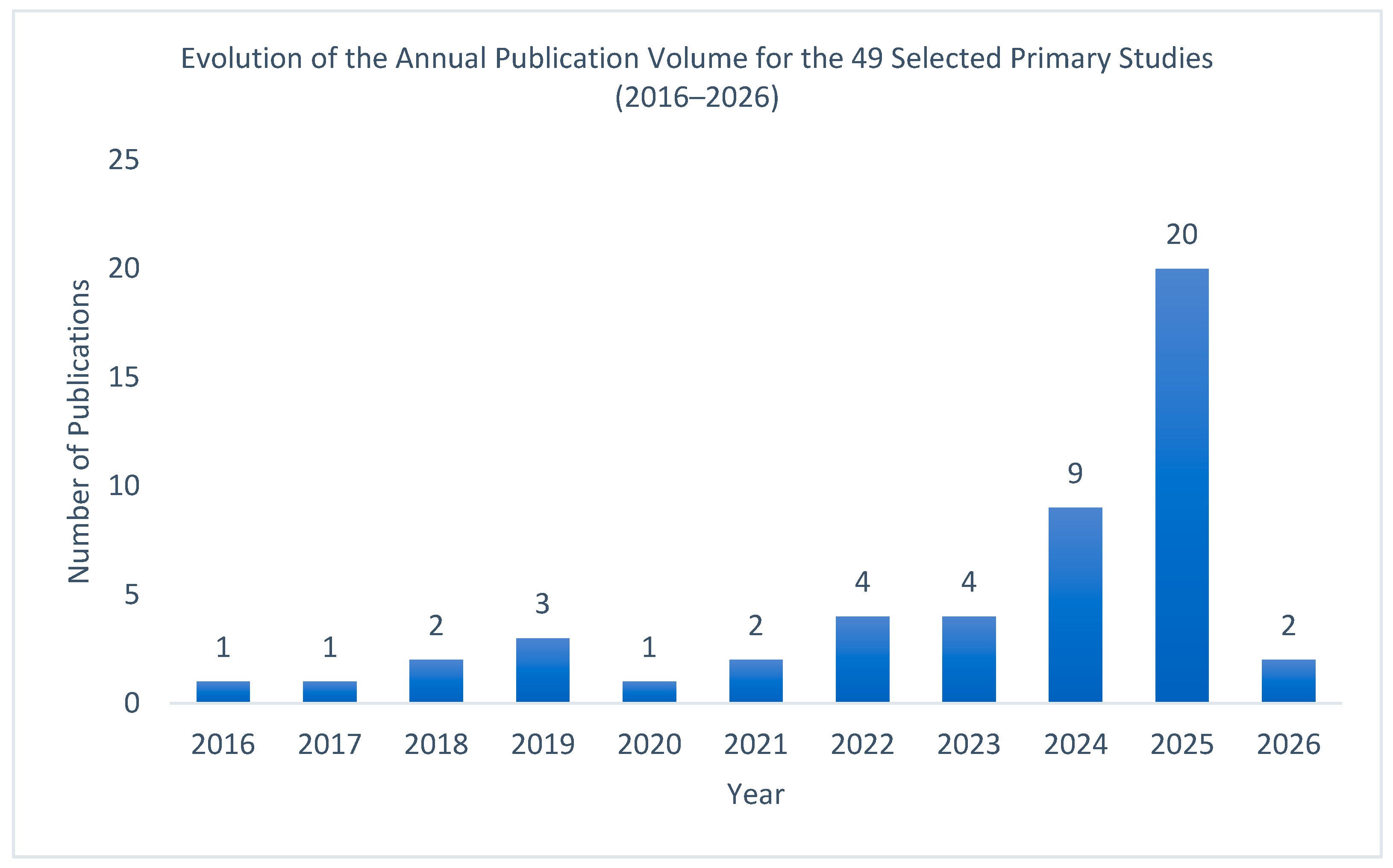
The trend of the selected scientific paper publications also indicates a significant jump in research attention, with only one article in 2016 growing to a maximum of 20 articles in 2025. This continued growth, almost twenty times faster than over the past decade, reflects very significant and measurable progress within the academic community. The focus is presently on the “Green, Responsible, and Sustainable AI” framework utilized in the selection process. This trend begins with a phase of foundational research and then grows rapidly after 2020. The increase is likely driven by concerns about the greenhouse gas emissions associated with AI models and their regulation of increasingly rigorous ESG (Environmental, Social, and Governance) reporting standards.
The growing number of publications in 2025 and 2026 shows that sustainability has changed from being a minor concern to a key factor that influences the quality of institutions and the trustworthiness of peer-reviewed research in the field (Figure 2).
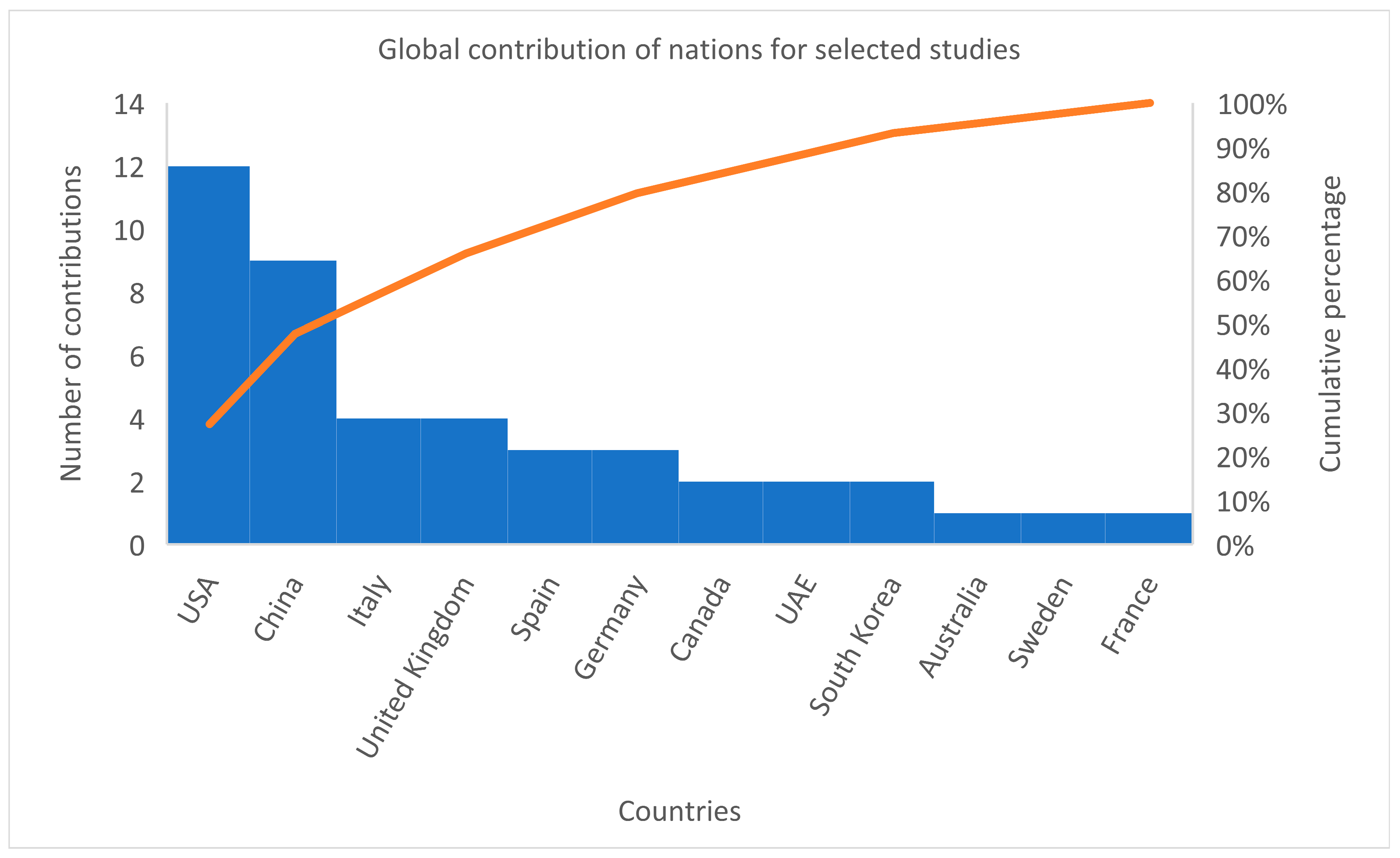
Figure 3 illustrates the geographical origins of the first authors of selected studies about green and sustainable AI. The orange line in the figure represents the cumulative percentage of total contributions, illustrating how these top-contributing nations account for the majority of the research output in this field. The United States (12 of 49) and China (8 of 49) are the two nations that have made the most significant contributions. This finding indicates that they are the most proactive in advancing research in this emerging domain. Other nations, such as the UK (4), Spain (4), Italy (3), and the EU (2), also provided smaller yet meaningful contributions. Taiwan, Canada, France, South Korea, and Switzerland each produced one publication, indicating a global increase in interest. This distribution demonstrates that an increasing number of both developed and developing nations are becoming engaged. This shows that we are just beginning to participate in and lead global research on green and sustainable AI.
The marked concentration of research output in the United States (24%) and China (16%) reflects a strategic intersection between high-intensity AI industrialization and national sustainability mandates. The dominance of the United States is primarily driven by the presence of major hyperscale cloud providers and AI pioneers whose massive operational expenditures on training Large Language Models (LLMs) have necessitated immediate innovations in energy-aware computing and carbon-mitigation strategies. Conversely, China’s robust output is deeply linked to state-led initiatives, such as the “East-to-West Computing” project and the national “Dual Carbon” goals, which prioritize the relocation of data centers to regions with high renewable energy capacity. Furthermore, the significant contributions from European countries such as Spain and Italy, along with the UK, are increasingly shaped by a regulatory-first approach, catalyzed by the EU AI Act’s transparency requirements. This geographical disparity suggests that while the environmental impacts of AI are global, the leadership in sustainable research is currently dictated by access to high-performance computing (HPC) infrastructure and the urgency of national regulatory frameworks, leaving a potential “sustainability gap” for developing regions with less centralized AI infrastructure.
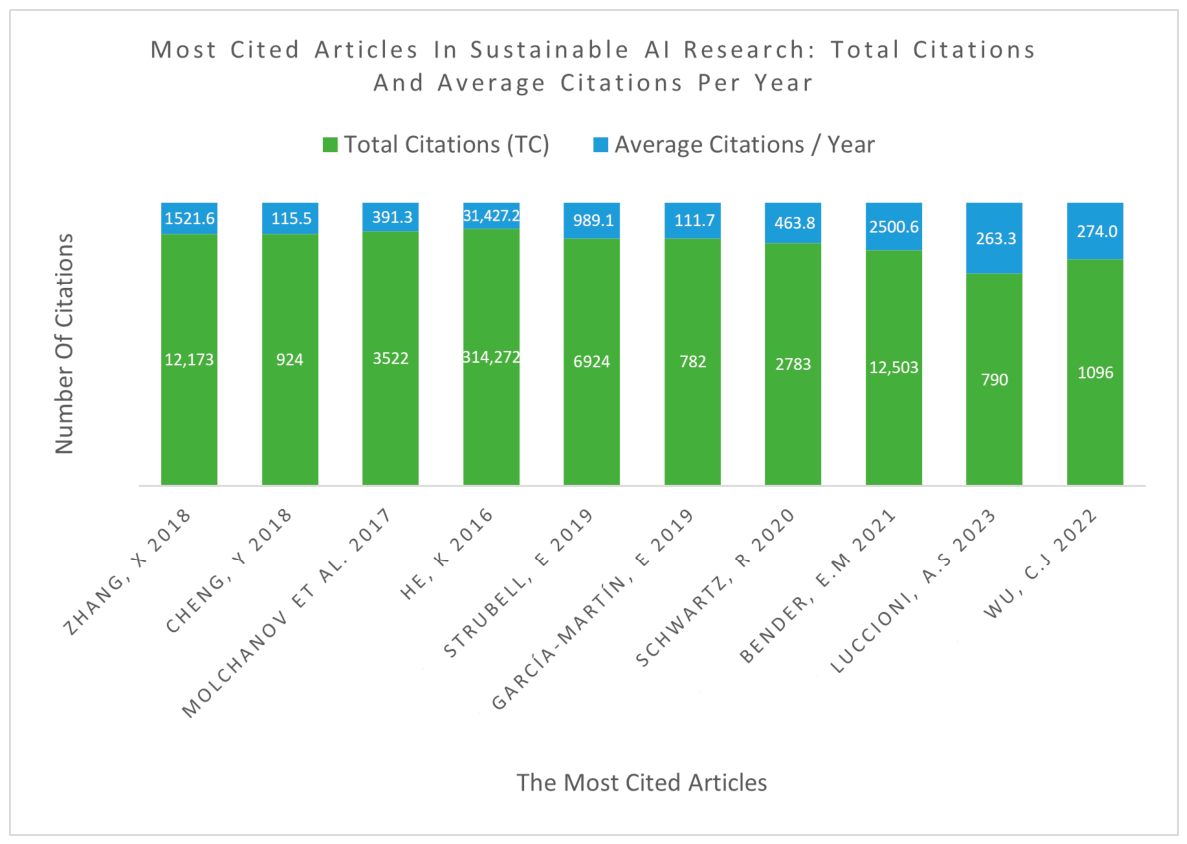
Citation metrics measure research impact. The ten most cited articles of the selected studies are presented in Figure 4, according to total citations (TC) and average citations per year (Avg. Citations/Year = TC ÷ (2026 − Year of Publication). This means that the research community is committed to addressing sustainable-technology problems. Figure 4 emphasizes the significance of this research by presenting highly cited papers from two different perspectives: overall citation volume and speed of impact over time. According to the data, the 10 most influential studies in this field, ranked by their total citation volume (TC), are as follows: Ref. [7] with 12173 citations focusing on model pruning; [8] with 924 citations investigating deep model compression; and [9] with 3522 citations establishing the foundations of efficient neural architectures. Ref. [10] stands as the most cited work in the entire dataset with an extraordinary 314272 citations, providing the fundamental architectural framework for modern deep learning. This is followed by [11] (6924 citations), which pioneered the discourse on the energy costs of NLP, and [12] (782 citations) regarding energy estimation. Furthermore, the list includes [13] with 2783 citations advocating for Green AI reporting; [14] with 12503 citations highlighting the environmental risks of large-scale models; [18] with 790 citations focusing on carbon intensity; and [27] with 1096 citations addressing broader sustainability in AI systems. The rapid gain in influence of the 2025 papers shows a fast-growing interest and leadership in research on green and sustainable AI, shifting from isolated efficiency metrics toward the integrated systems-level taxonomy proposed in this study.
The analysis of the 49 articles (2016–2026) suggests that the next decade will be extremely important for green and sustainable AI, and the focus of most of the growing body of research will shift from basic model compression to a comprehensive understanding of and adherence to environmental regulation. This body of work, published in 32 high-quality journals and produced by 158 authors from 22 different countries, illustrates the beginnings of multidisciplinarity. It demonstrates the collaboration between established technical journals, such as IEEE TPAMI, and recent emerging journals focused on sustainability, like Joule and Nature Sustainability, in tackling challenges at the intersection of climate and technology. We notice a significant change in the year 2020, focusing on green AI, and a substantial increase projected for 2024–2026 regarding the Euro-Compliance AI Act, water footprint, lifecycle, and compliance studies. This collection of work articulates a shift from the ultra-efficient AI systems discourse to the diverse and more intricate concerns of sustainable development and social justice in the generative AI era.

3.3. Key Findings and Study Synthesis

This review synthesized a core set of key publications, which are summarized in Table 2 by year, AI domain, primary technical approach, sustainability focus, key performance metrics, and main contribution. This carefully assembled collection serves as the fundamental literature for grasping the current situation, difficulties, and possibilities at the crossroads of AI development and environmental sustainability.

3.4. Synthesis of Systematic Review Results

The systematic review identifies a clear correlation between the technical dimensions of the AI lifecycle and their environmental footprint. Table 3 synthesizes the evidence across these dimensions, emphasizing the “Transparency Gap” identified in the final 49 studies.

4. Green and Sustainable AI Taxonomy and Metrics

4.1. Taxonomy

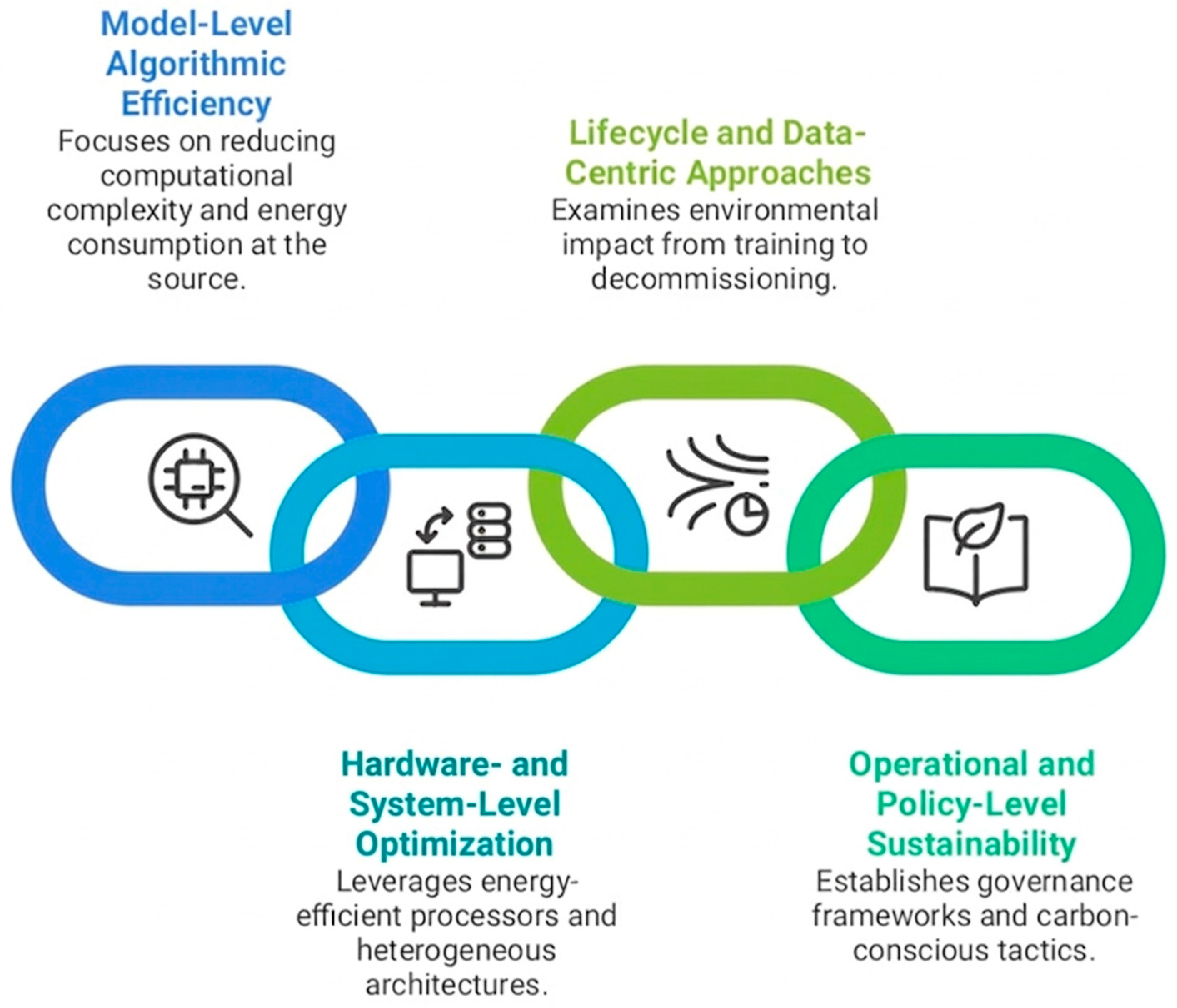
Based on the systematic literature review conducted in this work, we offer a thorough taxonomy of green and sustainable AI techniques that integrates technological, ecological, and systemic characteristics of AI sustainability. Four complementary categories are included in this taxonomy: (1) model-level algorithmic efficiency, (2) hardware- and system-level optimization, (3) lifecycle- and data-centric approaches, and (4) operational/policy-level sustainability. These categories, which cover the whole AI lifecycle, were chosen to be both mutually exclusive and comprehensive. They support both the comprehensive and lifecycle-focused sustainable AI paradigm, and the efficiency-focused green AI paradigm [28,29].
  • Algorithmic efficiency and energy-aware learning cut down on computation and energy use, right at the model level. Methods like pruning, quantization, knowledge distillation, and energy-aware training make models run cleaner without much of an effect on performance [30,31].
  • AI workloads are matched with energy-efficient hardware, mixed architectures, and Edge Computing through hardware-side, system-aware optimization. This configuration preserves the initial learning objectives while reducing latency and energy consumption [32,33,34].
  • With a lifecycle-aware, data-centric methodology, the emphasis switches to carbon accounting, lifecycle assessments, and data quality. From training to deployment, to a model’s end-of-life, this enables people to see the actual environmental impact throughout the model’s lifecycle [35].
  • Sustainability at the operational, infrastructure, and policy levels considers the big picture. Standardized reporting, carbon-aware scheduling, and utilization of clean energy source centers all contribute to the development of scalable and accountable AI [36,37].
The four areas of the proposed taxonomy interact synergistically throughout the AI lifetime to promote holistic sustainability, as shown in Figure 5. Reducing computational complexity and energy consumption at the source is the main goal of model-level algorithmic efficiency. Because efficient models are better suited to leverage energy-efficient processors and heterogeneous architectures, this decrease immediately increases the benefits of hardware- and system-level optimization.
Concurrently, lifetime and data-centric approaches offer the necessary analytical frameworks to examine the environmental impact of algorithmic and hardware-level decisions from training to decommissioning, particularly through carbon accounting and lifetime assessments. Lastly, operational and policy-level sustainability creates the governance frameworks and carbon-conscious tactics required to direct the upkeep of these models in infrastructures driven by cleaner energy. These four dimensions work together to create an ecosystem that is integrated and reinforces itself. Enhancements at any one level spread to the others, making it possible to create AI systems that are scalable, responsible, and ecologically conscious.
Model-level, hardware-level, lifecycle, data-centric, operational, and policy-level sustainability interact synergistically throughout the AI lifecycle to promote holistic sustainability. As illustrated, model-level efficiency reduces computational complexity and energy consumption at the source, which in turn enhances the benefits achievable through hardware- and system-level optimization. Simultaneously, lifecycle- and data-centric approaches provide the analytical frameworks necessary to assess environmental impacts of both algorithmic and hardware-level decisions, particularly through carbon accounting and lifecycle assessments. Operational and policy-level sustainability establishes governance frameworks and carbon-conscious strategies that guide the management of these models within cleaner energy infrastructures.
Collectively, these dimensions form an integrated ecosystem where improvements at any single level reinforce gains across the others, enabling the development of scalable, responsible, and ecologically conscious AI systems.

4.2. Metrics

Green and sustainable AI evaluation calculates cost, performance, water use, and environmental impact. Computational cost, energy consumption, carbon emissions, water consumption, and accuracy are common metrics. Benchmarks and monitoring tools facilitate model comparisons and efficiency optimization. However, there are still issues with the assessment and standardization of energy and water required for training, as well as full lifecycle coverage. Table 4 below summarizes the key metrics and evaluation aspects in green and sustainable AI.
The majority of research on AI emphasizes conventional measures such as accuracy while neglecting sustainability considerations. Around half of the studies report energy consumption, and only a third talk about CO2 emissions. In addition, only a few of them consider full lifecycle impacts. The development of AI in recent years has gradually filled these gaps, paying attention to coding efficiency, minimizing the use of computational and operational energy, and environmental considerations along the entire lifecycle of AI [38,39]. This is a reflection of the increasing need for sustainability as well as model performance.
There are still a number of significant limitations even with the growing adoption of the measurements shown in Table 4. First, comparing results across many platforms and infrastructures is challenging due to the hardware dependence of many energy measurement instruments. Second, estimates of carbon emissions frequently depend on assumptions about the area energy mix, which might not fully reflect the sources of electricity available today. Third, the majority of evaluation methods currently in use concentrate primarily on the training phase of AI models, neglecting other stages of the lifecycle such hardware production, deployment, maintenance, and end-of-life disposal. Because of this, it is possible that AI systems’ overall environmental impact is greatly understated.

5. Discussions and Limitations

5.1. Discussion: Synthesis of Evidence and Field Maturity

This systematic review of 49 primary studies demonstrates that green and sustainable AI is maturing across multiple interrelated domains, yet critical gaps and inconsistencies remain. At the algorithmic level, studies show that pruning, quantization, knowledge distillation, efficient model scaling, and energy-aware training significantly reduce computational energy and training costs [40,41]. Quantitative assessment of the selected studies reveals that weight pruning and 8-bit quantization protocols typically yield energy reductions within the 35% to 85% range. Concurrently, knowledge distillation techniques demonstrate the capacity to reduce inference-phase energy requirements by a factor of 3 to 5 compared with baseline models. These approaches exemplify the potential of model-level optimization to balance performance and sustainability. However, the majority of studies still emphasize accuracy and latency, often neglecting full lifecycle impacts, limiting the practical environmental relevance of their findings. Only a small subset of studies evaluated energy reductions in large-scale or industrial deployments, highlighting a persistent gap between experimental and real-world applicability.
In the domain of hardware- and system-level optimization, innovations such as heterogeneous computing, Edge AI deployment, energy-efficient touch interfaces, and federated medical imaging have been reported to reduce operational carbon footprints [42,43,44,45,46]. Empirical evidence derived from the synthesized corpus indicates that Edge AI architectures can mitigate data transmission energy consumption by approximately 70% relative to cloud-centric inference. Furthermore, domain-specific hardware accelerators—notably ASICs and TPUs—exhibit a 15-fold to 50-fold increase in energy efficiency compared to the operational baselines of general-purpose central processing units (CPUs). While these studies provide compelling evidence of the potential to decrease system-level environmental costs, the results are often context-specific, limited to simulations or narrow experimental scenarios, which constrains generalizability. Moreover, the interplay between hardware design and algorithmic efficiency is underexplored, suggesting opportunities for cross-domain co-optimization that few studies have systematically addressed.
Lifecycle- and data-centric approaches represent a promising direction for comprehensive sustainability assessment. Techniques such as dataset pruning, synthetic data generation, and lifecycle carbon evaluations allow for the quantification of environmental impacts beyond training and deployment [47,48,49]. The synthesis of the findings shows that data-centric approaches, such as dataset distillation, can reduce required training iterations by 40% to 60%, directly lowering the carbon footprint of the development phase. Nevertheless, implementation is inconsistent, and reporting standards vary widely, which hinders aggregation and comparison of results across studies. Few studies incorporate water usage, e-waste generation, or indirect environmental costs, leaving a substantial gap in holistic environmental accounting.
At the operational, infrastructure, and policy levels, evidence shows that renewable-powered data centers, energy-efficient cooling, workload scheduling, and adherence to sustainability regulations can positively influence Environmental Impact at Scale (EIS) [50,51,52,53]. Studies evaluating carbon-aware scheduling report potential emissions reductions ranging from 15% to 30% by shifting tasks to periods of high renewable energy availability. Despite these advances, standardized sustainability metrics remain scarce, and organizations rarely apply existing frameworks consistently, reducing transparency and the ability to benchmark interventions.
In contrast to earlier systematic reviews, this study provides a more comprehensive and integrated perspective on the multi-layered nature of sustainable AI. For instance, whereas [2] structured the literature according to the stages of the Machine Learning pipe-line, our review adopts a comparative approach that evaluates the relative effective-ness of hardware- and algorithm-level interventions. The analysis reveals a substantial disparity: hardware-based optimizations, such as application-specific integrated circuits (ASICs), can deliver efficiency improvements ranging from fifteen-fold to fifty-fold, where-as algorithmic techniques, including model pruning, typically achieve gains in the order of three-fold to five-fold.
Furthermore, while [16] established a foundational taxonomy primarily focused on software engineering practices and algorithmic green AI strategies, the present work ex-tends this framework by explicitly incorporating the Environmental Impact at Scale (EIS) perspective. This addition enables the identification of critical infrastructure-level sus-tainability gaps; particularly those related to water consumption By identifying this “optimization gap,” the study moves beyond descriptive synthesis to offer a critical evaluation of where the most significant sustainability improvements are currently being realized. Ultimately, this multi-dimensional perspective bridges the divide between theoretical green AI frameworks and operational sustainability policies, a connection that remains insufficiently developed in the existing literature.

5.2. Limitations of the Field

Several overarching trends emerge from this synthesis. First, there is a strong bias toward reporting energy and carbon reductions, while other environmental externalities such as water consumption, e-waste, and supply chain impacts are largely ignored. Second, studies are predominantly conducted in controlled research settings, with few real-world validations at industrial scale. Third, despite advances in multi-modal and federated AI, scalability and cross-domain applicability remain challenging, particularly for large language and foundation models. Fourth, the heterogeneity of experimental design and reporting makes comparative evaluation difficult and precludes meta-analytic synthesis.
Taken together, these findings indicate that while green and sustainable AI research has made substantial technical progress, there is an urgent need for systematic standardization, cross-domain validation, and holistic lifecycle accounting. Future research should prioritize multi-dimensional sustainability metrics, benchmarked across real-world settings, and explicitly integrate algorithmic, system-level, lifecycle, and policy considerations to bridge the gap between theoretical optimization and practical environmental stewardship.
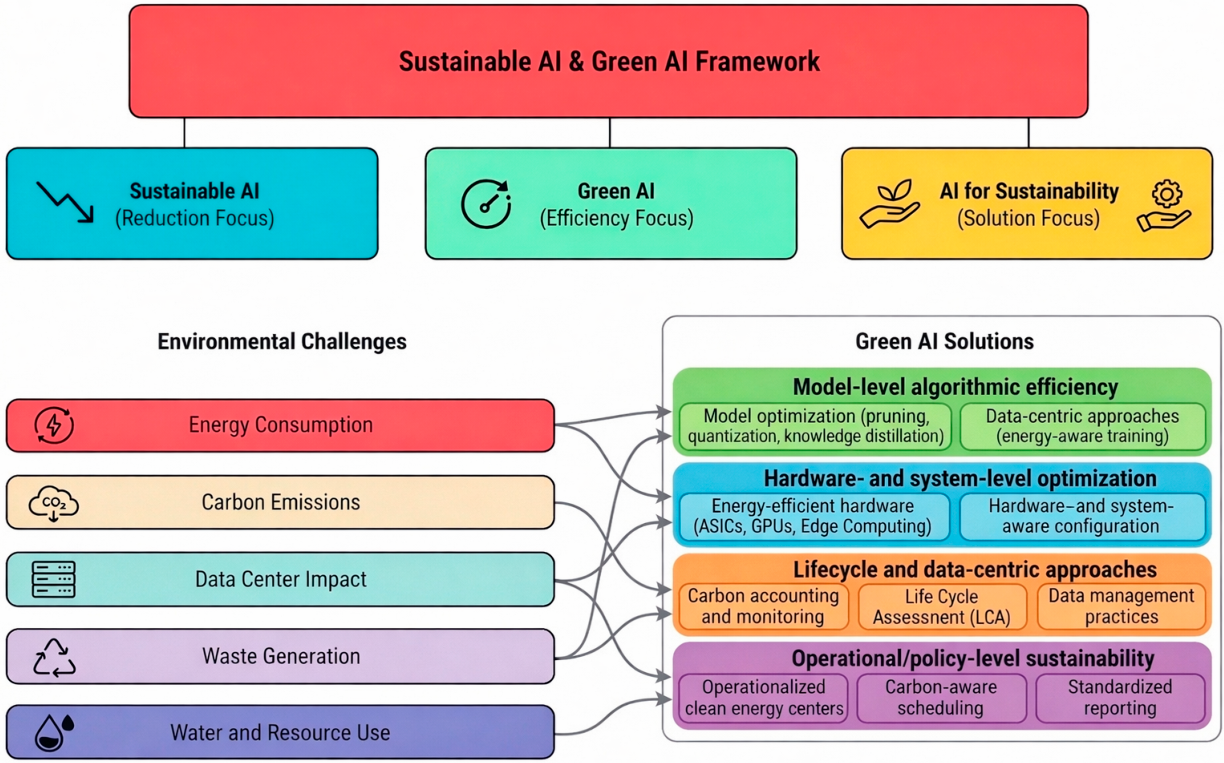
As AI scales rapidly, these persistent research gaps underscore a fundamental misalignment between theoretical algorithmic optimization and the holistic environmental stewardship now required. The existing literature has typically concentrated on computational performance and direct carbon emissions; however, broader environmental externalities, specifically high water consumption for cooling and the fast-rising volume of electronic waste, are rarely integrated into traditional assessment frameworks. Consequently, incorporating the physical costs of AI infrastructure into standardized reporting is essential for transitioning toward a multi-dimensional sustainability analysis. A high-level conceptual taxonomy of these pervasive environmental challenges, and their corresponding strategic responses, is depicted in Figure 6. This framework systematically groups the fundamental obstacles obstructing a genuinely sustainable AI ecosystem and maps them directly to the four pillars of green AI solutions: algorithmic efficiency, hardware optimization, lifecycle management, and operational policy. The arrows in the figure represent conceptual correspondences between each environmental challenge and the relevant mitigation strategies, illustrating that multiple solution layers may simultaneously address interconnected sustainability issues rather than reflecting a one-to-one or strictly causal relationship.
Multidimensional environmental externalities and systemic mitigation strategies must be critically aligned, according to the architectural framework summarized in Figure 6 above. Instead of considering sustainability as a single goal, this mapping establishes a functional correspondence between four different pillars of green and sustainable AI interventions and five key environmental challenges, which range from high-granularity energy consumption to the more general physical costs of water and resource depletion. Decoupling computational performance from carbon intensity is primarily accomplished through model-level algorithmic efficiency and hardware-level optimization at the operational core.
However, the paradigm incorporates lifecycle- and data-centric approaches to overcome the limitations of localized efficiency and address the systemic rebound effect, where technological optimizations paradoxically lower the marginal cost of computation, thereby catalyzing a net expansion of the total environmental footprint. By focusing on addressing the often-overlooked impacts and effects of data center water footprints and electronic waste through Lifecycle Assessment (LCA), these approaches enable a comprehensive assessment of environmental costs. Lastly, the systemic governance layer is operational and policy-level sustainability, which makes sure that technical improvements are converted into quantifiable environmental stewardship through carbon-aware scheduling and standardized reporting. As a result, this integrated taxonomy goes beyond descriptive aggregation and provides a strict framework for coordinating algorithmic advancements with the practical limitations of global resource management.

5.3. Limitations of This Systematic Review

It is essential to distinguish the inherent challenges of the green AI field from the specific methodological limitations of this systematic review. First, a selection and database bias may exist; although restricting the search to JCRs and Scopus-indexed records was necessary to ensure high-fidelity peer-reviewed data, this approach may have omitted valuable contributions from the gray literature or emerging academic repositories. Second, a linguistic and geographic constraint is present, as the study was limited to English-language publications, potentially overlooking significant localized research from non-English-speaking regions such as East Asia or Latin America. Third, access limitations regarding non-standardized databases like Google Scholar may have narrowed the initial screening breadth. Finally, the extreme heterogeneity of experimental designs and reporting metrics across the 49 included studies precluded a formal meta-analysis. Consequently, this synthesis remains thematic and descriptive, offering a qualitative mapping of the field rather than a quantitative statistical pooling of effects.

6. Future Directions and Emerging Research Opportunities

In addition to the directions mentioned in the Discussion, the future of green and sustainable AI will be multi-faceted, including the following:
  • Algorithmic Efficiency and Energy-Constrained Learning: More research is needed on adapting AI algorithms to real-time changes in available energy and/or carbon, including energy-constrained neural architecture search, adaptive precision, and carbon-aware scheduling.
  • Data-Centric and Lifecycle Sustainability: Focusing on data and their quality, dataset pruning, synthetic data, and lifecycle assessment (LCA) can mitigate the storage and both computational and environmental costs across the AI lifecycle.
  • Distributed Green AI and Federated Learning: Incorporating distributed, edge, and federated computing in green AI can help avoid the energy and computational costs of centralized routing, and ensure data privacy.
  • Hardware- and System-Level Optimization: Adapting energy-efficient computing models, heterogeneous computing, and co-design techniques to cloud, edge, and IoT systems will facilitate the development of more efficient systems.
  • Increased Use of Renewable Energy Sources: Using AI to predict and schedule workloads in a renewable-powered environment will help reduce the carbon output.
  • Sustainability Metrics Benchmarking and Standardization. A more comprehensive energy, carbon, and water metric system will allow comparative analysis of disparate systems and facilitate the adoption of sustainability practices in green AI.
These recommendations highlight the importance of carrying out comprehensive and socially responsible research in a flexible AI that blends state-of-the-art technology with environmentally responsible methods.

7. Conclusions

The present article analyzes the contribution of artificial intelligence (AI) to the improvement of environmental sustainability as discussed in 49 peer-reviewed publications between 2016 and 2026. Three categories of AI were identified in this emerging research field: (1) AI for sustainable development aids constructive processes and captures operational carbon emissions to assist “green” initiatives, (2) ethical and accountable AI promotes transparency and governs algorithmic decision-making, and (3) green AI provides an opportunity for the advancement of creative problem-solving and sustainable design to reduce the operational and environmental costs associated with the entire AI lifecycle. Collectively, these AI classifications shape the dual purpose of promoting modern technology and protecting the environment.
This review highlights a persistent “performance-versus-planet” tension, where the push for higher accuracy often contradicts the goals of computational frugality. Beyond the observed trends, this systematic review reveals a major methodological tension regarding the reproducibility of efficiency gains. Although many studies report energy reduction percentages ranging from 30% to 70%, these results are often strictly tied to specific hardware architectures (e.g., TPU or latest-generation GPU clusters) and are not systematically transposable to heterogeneous computing environments. This “hardware dependency” creates a bias in the literature: green AI solutions validated in cutting-edge data centers may prove ineffective, or even counter-productive, when deployed on legacy hardware or in developing economies’ infrastructures. Furthermore, the lack of standardized measurement protocols prevents a direct comparison between “black-box” proprietary models and open-source alternatives. Consequently, the scientific community must transition toward hardware-agnostic metrics and real-time telemetry to transform theoretical estimations into robust empirical evidence, thereby mitigating the risk of technological greenwashing.
Moreover, an environmental, social, and economic conundrum that cannot be solved by separate technology solutions impedes sustainable AI. Carbon accounting must give way to comprehensive resource management, which includes e-waste and water. Socially, since smaller businesses cannot afford specialist technology, green AI regulations run the risk of expanding the digital gap. Economically, short-term market demands and high R&D costs for frugal models clash. Thus, the implementation of an Integrated Management Framework is strategically necessary. Technical optimization, ESG strategies, and regulatory compliance must all be coordinated by this framework. Organizations may turn regulatory burdens into drivers of innovation and resilience by incorporating sustainability costs into the AI lifecycle
The current literature lacks a thorough discussion around the comprehensive environmental footprint of AI. AI is described as a key instrument to tackle and resolve many environmental dilemmas; however, the computational resources (e.g., GPUs) that enable AI, the data centers that require cooling and consume large quantities of water, and the problem of electronic waste (e-waste) are seldom, if ever, discussed. The lack of such studies is a substantial problem for researchers defending that AI is ‘green.’ The development of more sophisticated LCA (Lifecycle Assessment) frameworks that consider the full value chain will be foundational to green AI research that seeks to answer the crucial question of whether AI-based solutions actually reduce, or merely shift, the environmental problems across the value chain.
There is a significant lack of uniform metrics and transparency in reporting. Numerous studies depend on large-scale data modeling, and they often ignore the standardization of procedures in the reporting of carbon footprints and energy efficiency. There needs to be a simplification of suggestions on the transparency of the proposal’s data collection process and the integration of human regulation in the scope of AI, to adapt the use of digital ethics and the accompanying regulations like the EU AI Act.
There is still a lack of research with a longitudinal and global perspective. Most studies focus on developed and technologically advanced areas while ignoring developing economies or areas with varied cultural and regulatory contexts. This is a key factor in the limited global applicability of current green AI solutions. For applicable research on AI’s sustainable potential in varied and especially underdeveloped contexts and to foster global accountability in the use of AI, longitudinal and cross-comparative studies are essential.
Based on our analysis, we have the following recommendations related to governance: First, we must define clear benchmarks for environmental accountability in the domain of Machine Learning. Second, the provision for large-scale systems to publish their ‘resource footprint’ is a precondition for deployment. Third, all sustainable modeling frameworks need seamless integration of privacy-centric architectures and systematic bias mitigation. And most importantly, there is a need for the provision of monetary incentives for innovations that can show a measurable decrease in carbon intensity with no compromise to transparency.
Overall, in order to achieve green and sustainable AI, it will be necessary to develop integrated lifecycle assessments and standardized regulatory reporting. To improve and support sustainable AI, it is necessary to develop and implement transparency, international collaboration, and regulatory alignment to support and ensure sustainable AI. Sustainable AI will only be achieved through transparent and documented efforts to ensure that AI is used to meet the needs of the environment in a sustainable way.

Supplementary Materials

The following supporting information which includes the PRISMA 2020 checklist can be downloaded at: https://www.mdpi.com/article/10.3390/su18084115/s1. The references [23,24,25,26], cited in the Methodology section to define the search strategy and PRISMA 2020 guidelines, as well as References [54,55] on ISO standards, are all included and cited in the main text. These references are excluded from the final 49 articles analyzed in the systematic review.

Author Contributions

Conceptualization, M.A.E.K. and O.M.; methodology, M.A.E.K. and I.O.; validation, O.M. and I.O.; formal analysis, M.A.E.K.; investigation, M.A.E.K.; resources, O.M.; data curation, M.A.E.K. and I.O.; writing—original draft preparation, M.A.E.K.; writing—review and editing, O.M. and I.O.; visualization, M.A.E.K.; supervision, O.M.; project administration, O.M. All authors have read and agreed to the published version of the manuscript.

Funding

This research was funded by the National Center for Scientific and Technical Research (CNRST) and the Ministry of Digital Transition and Administration Reform (MTNRA) under the PhD-Associate Scholarship—PASS Program, grant number [No. 11286UIT2025].

Institutional Review Board Statement

Not applicable.

Informed Consent Statement

Not applicable.

Data Availability Statement

The data presented in this study (the 49 articles included in the systematic review) are available within the article text and tables. Further details are available upon request from the corresponding author.

Acknowledgments

This work was carried out with the co-financed support of the National Center for Scientific and Technical Research (CNRST) and the Ministry of Digital Transition and Administration Reform (MTNRA) under the PhD-Associate Scholarship—PASS Program in the digital field toward 2027, within the framework of the National Strategy Digital Morocco 2030 under grant number [No. 11286UIT2025]. The authors deeply appreciate this financial support, which was instrumental in the successful completion of this work.

Conflicts of Interest

The authors declare no conflicts of interest.

Abbreviations

The following abbreviations are used in this manuscript:
AIArtificial Intelligence
MLMachine Learning
LLMLarge Language Model
NLPNatural Language Processing
PRISMAPreferred Reporting Items for Systematic Reviews and Meta-Analyses
LCALifecycle Assessment
PUEPower Usage Effectiveness
ESGEnvironmental, Social, and Governance
CO2Carbon Dioxide
KPIsKey Performance Indicators
FLOPsFloating Point Operators
SOTAState-of-the-art
EISEnvironmental Impact at Scale
IoTInternet of Things
MECMulti-access Edge Computing
CPUCentral Processing Unit
GPUGraphics Processing Unit
TPUTensor Processing Unit
GWhGigawatt-hours
kWhKilowatt-hour
DOIDigital Object Identifier
JCRJournal Citation Report
WoSWeb of Science

References

  1. Li, P.; Yang, J.; Islam, M.A.; Ren, S. Making AI Less ‘Thirsty’: Uncovering and Addressing the Secret Water Footprint of AI Models. Commun. ACM 2025, 68, 54–56. Available online: https://arxiv.org/abs/2304.03271 (accessed on 7 February 2026). [CrossRef]
  2. Bolón-Canedo, V.; Morán-Fernández, L.; Cancela, B.; Alonso-Betanzos, A. A review of green artificial intelligence: Towards a more sustainable future. Neurocomputing 2024, 599, 128096. [Google Scholar] [CrossRef]
  3. Schneider, I.; Xu, H.; Benecke, S.; Patterson, D.; Huang, K.; Ranganathan, P.; Elsworth, C. Life-Cycle Emissions of AI Hardware: A Cradle-To-Grave Approach and Generational Trends. arXiv 2025, arXiv:2502.0167. Available online: https://arxiv.org/abs/2502.01671 (accessed on 7 February 2026).
  4. De Vries, A. Artificial intelligence: Supply chain constraints and energy implications. Joule 2025, 9, 101961. [Google Scholar] [CrossRef]
  5. He, H.; Zhou, C.; Huang, F.; Shen, H.; Li, S. Energy-Efficient Task Offloading in Wireless-Powered MEC: A Dynamic and Cooperative Approach. Mathematics 2024, 12, 2326. [Google Scholar] [CrossRef]
  6. Brevini, B. An Eco-political economy of AI: Environmental harms and what to do about them. In Is AI Good for the Planet? Brevini, B., Ed.; Polity Press: Cambridge, UK, 2024; pp. 102–121. Available online: https://www.etui.org/sites/default/files/2024-03/Chapter6_An%20Eco-political%20economy%20of%20AI%20environmental%20harms%20and%20what%20to%20do%20about%20them.pdf (accessed on 7 February 2026).
  7. Zhang, X.; Zhou, X.; Lin, M.; Sun, J. ShuffleNet: An Extremely Efficient Convolutional Neural Network for Mobile Devices. In Proceedings of the 2018 IEEE/CVF Conference on Computer Vision and Pattern Recognition (CVPR), Salt Lake City, UT, USA, 18–23 June 2018; pp. 6848–6856. Available online: https://ieeexplore.ieee.org/document/8578814 (accessed on 7 February 2026).
  8. Cheng, Y.; Wang, D.; Zhou, P.; Zhang, T. Model Compression and Acceleration for Deep Neural Networks: The Principles, Progress, and Challenges. IEEE Signal Process. Mag. 2018, 35, 126–136. Available online: https://ieeexplore.ieee.org/document/8253600 (accessed on 7 February 2026). [CrossRef]
  9. Molchanov, P.; Tyree, S.; Karras, T.; Aila, T.; Kautz, J. Pruning Convolutional Neural Networks for Resource Efficient Inference. arXiv 2017, arXiv:1611.06440. Available online: https://arxiv.org/abs/1611.06440 (accessed on 7 February 2026).
  10. He, K.; Zhang, X.; Ren, S.; Sun, J. Deep Residual Learning for Image Recognition. In Proceedings of the 2016 IEEE Conference on Computer Vision and Pattern Recognition (CVPR), Las Vegas, NV, USA, 27–30 June 2016; pp. 770–778. Available online: https://ieeexplore.ieee.org/document/7780459 (accessed on 7 February 2026).
  11. Strubell, E.; Ganesh, A.; McCallum, A. Energy and Policy Considerations for Deep Learning in NLP. In Proceedings of the 57th Annual Meeting of the Association for Computational Linguistics (ACL), Florence, Italy, 28 July–2 August 2019; pp. 3645–3650. Available online: https://arxiv.org/abs/1906.02243 (accessed on 7 February 2026).
  12. García-Martín, E.; Rodrigues, C.F.; Riley, G.; Grahn, H. Estimation of energy consumption in machine learning. J. Parallel Distrib. Comput. 2019, 134, 75–88. [Google Scholar] [CrossRef]
  13. Schwartz, R.; Dodge, J.; Smith, N.A.; Etzioni, O. Green AI. Commun. ACM 2020, 63, 54–63. [Google Scholar] [CrossRef]
  14. Bender, E.M.; Gebru, T.; McMillan-Major, A.; Shmitchell, S. On the Dangers of Stochastic Parrots: Can Language Models Be Too Big? In Proceedings of the 2021 ACM Conference on Fairness, Accountability, and Transparency (FAccT ‘21), Virtual Event, Canada, 3–10 March 2021; pp. 610–623. [Google Scholar] [CrossRef]
  15. Selvan, R.; Bhagwat, N.; Anthony, L.F.W.; Kanding, B.; Dam, E.B. Carbon Footprint of Selecting and Training Deep Learning Models for Medical Image Analysis. arXiv 2022, arXiv:2203.02202. Available online: https://arxiv.org/abs/2203.02202 (accessed on 7 February 2026).
  16. Verdecchia, R.; Lago, P.; de Vries, C.; Santillo, S. A Systematic Review of Green AI. WIREs Data Min. Knowl. Discov. 2023, 13, e1507. [Google Scholar] [CrossRef]
  17. Araújo, L.O.N.D.; Outtagarts, A. Sustainability of AI—Energy Consumption Estimation of an mMTC Admission Control. In Proceedings of the 2024 7th Conference on Cloud and Internet of Things (CIoT), Montreal, QC, Canada, 29–31 October 2024; Available online: https://ieeexplore.ieee.org/document/10757159 (accessed on 7 February 2026).
  18. Luccioni, A.S.; Viguier, S.; Ligozat, A.-L. Estimating the Carbon Footprint of BLOOM, a 176B Parameter Language Model. J. Mach. Learn. Res. 2023, 24, 1–38. [Google Scholar]
  19. Nature Electronics. A new model for AI. Nat. Electron. 2025, 8, 95. [Google Scholar] [CrossRef]
  20. Samson, H.H. Lightweight Transformer Architectures for Edge Devices in Real-Time Applications. arXiv 2026, arXiv:2601.03290. [Google Scholar] [CrossRef]
  21. Hrithika, L. Sustainable AI: Strategies to Reduce the Environmental Footprints of AI. Int. J. Adv. Bus. Manag. Res. 2025, 3, 215–223. [Google Scholar] [CrossRef]
  22. Maslej, N.; Fattorini, L.; Perrault, R.; Gil, Y.; Parli, V.; Kariuki, N.; Capstick, E.; Reuel, A.; Brynjolfsson, E.; Etchemendy, J.; et al. The AI Index 2025 Annual Report; AI Index Steering Committee, Institute for Human-Centered AI, Stanford University: Stanford, CA, USA, 2025. Available online: https://arxiv.org/abs/2504.07139 (accessed on 7 February 2026).
  23. Schmidt, L.; Mohamed, S.; Meader, N.; Bacardit, J.; Craig, D. Automated data analysis of unstructured grey literature in health research: A mapping review. Res. Synth. Methods 2024, 15, 421–442. [Google Scholar] [CrossRef]
  24. Martín-Martín, A.; Orduna-Malea, E.; Thelwall, M.; Delgado López-Cózar, E. Google Scholar, Web of Science, and Scopus: A systematic comparison of citations in 252 subject categories. J. Informetr. 2018, 12, 1160–1177. [Google Scholar] [CrossRef]
  25. Page, M.J.; McKenzie, J.E.; Bossuyt, P.M.; Boutron, I.; Hoffmann, T.C.; Mulrow, C.D.; Shamseer, L.; Tetzlaff, J.M.; Akl, E.A.; Brennan, S.E.; et al. The PRISMA 2020 statement: An updated guideline for reporting systematic reviews. BMJ 2021, 372, n71. [Google Scholar] [CrossRef] [PubMed]
  26. Higgins, J.P.T.; Thomas, J.; Chandler, J.; Cumpston, M.; Li, T.; Page, M.J.; Welch, V.A. (Eds.) Cochrane Handbook for Systematic Reviews of Interventions, 2nd ed.; John Wiley & Sons: Chichester, UK, 2019; Available online: https://www.cochrane.org/authors/handbooks-and-manuals/handbook (accessed on 7 February 2026).
  27. Wu, C.J.; Raghavendra, R.; Gupta, U.; Acun, B.; Ardalani, N.; Maeng, K.; Chang, G.; Behram, F.A.; Huang, J.; Bai, C.; et al. Sustainable AI: Environmental Implications, Challenges and Opportunities. Proc. Mach. Learn. Syst. 2022, 4, 795–813. Available online: https://arxiv.org/abs/2111.00364 (accessed on 7 February 2026).
  28. Thakur, D.; Guzzo, A.; Fortino, G.; Piccialli, F. Green Federated Learning: A New Era of Green Aware AI. ACM Comput. Surv. 2025, 57, 194. [Google Scholar] [CrossRef]
  29. Desislavov, R.; Martínez-Plumed, F.; Hernández-Orallo, J. Trends in AI inference energy consumption: Beyond the performance-vs-parameter laws of deep learning. Sustain. Comput. Inform. Syst. 2023, 38, 100857. [Google Scholar] [CrossRef]
  30. Saad, M.; López, J.A.H.; Chen, B.; Varró, D.; Sharma, T. An Adaptive Language-Agnostic Pruning Method for Greener Language Models for Code. Proc. ACM Softw. Eng. 2025, 2, 1183–1204. Available online: https://arxiv.org/abs/2407.04147 (accessed on 7 February 2026). [CrossRef]
  31. Khan, S.A.; Suresh, M.L.; Mohammed, M.A.; Sheet, S.A.W.; Mahmoud, M.I.; Manochitra, S. Exploring Energy-Efficient Deep Learning with Neuromorphic Computing for Edge AI and IoT Applications. In Proceedings of the 2025 International Conference on Recent Advances in Engineering and Technology (ICRAET), Pune, India, 4–5 July 2025; pp. 1–6. Available online: https://ieeexplore.ieee.org/document/11210727 (accessed on 7 February 2026).
  32. Eappen, G.; Daoud, S.S.A.; Skatchkovsky, N.; Ortiz, F.G.; Lagunas, E.; Martins, W.A.; Chatzinotas, S. Neuromorphic Models for Energy-Efficient Onboard Interference Detection in Satellite Systems. IEEE Trans. Aerosp. Electron. Syst. 2025, 61, 17682–17702. [Google Scholar] [CrossRef]
  33. Patterson, D.; Gonzalez, J.; Hölzle, U.; Le, Q.; Liang, C.; Munguia, L.M. The Carbon Footprint of Machine Learning Training Will Plateau, Then Shrink. Computer 2022, 55, 27–39. Available online: https://arxiv.org/abs/2204.05149 (accessed on 7 February 2026). [CrossRef]
  34. Dodge, J.; Prewitt, T.; Tachet des Combes, R.; Odmark, E.; Schwartz, R.; Strubell, E.; Luccioni, A.S.; Smith, N.A.; DeCario, N.; Buchanan, W. Measuring the Carbon Intensity of AI in Cloud Instances. In Proceedings of the 2022 ACM Conference on Fairness, Accountability, and Transparency (FAccT ‘22), Seoul, Republic of Korea, 21–24 June 2022; pp. 1877–1894. Available online: https://arxiv.org/abs/2206.05229 (accessed on 7 February 2026).
  35. Almagrabi, A.O.; Khan, R.A. Optimizing Secure AI Lifecycle Model Management with Innovative Generative AI Strategies. IEEE Access 2024, 12, 162451–162465. [Google Scholar] [CrossRef]
  36. Yigitcanlar, T.; Mehmood, R.; Corchado, J.M. Green Artificial Intelligence: Towards an Efficient, Sustainable and Equitable Technology for Smart Cities and Futures. Sustainability 2021, 13, 8952. [Google Scholar] [CrossRef]
  37. Li, Y.; Antwi-Afari, M.F.; Anwer, S.; Mehmood, I.; Umer, W.; Mohandes, S.R.; Wuni, I.Y.; Abdul-Rahman, M.; Li, H. Artificial Intelligence in Net-Zero Carbon Emissions for Sustainable Building Projects: A Systematic Literature and Science Mapping Review. Buildings 2024, 14, 2752. [Google Scholar] [CrossRef]
  38. Melnatami Krishnaram, P.C. Green AI: Optimizing Energy Efficiency of Workloads for Sustainable Data Centers. In Proceedings of the 2025 IEEE Green Technologies Conference (GreenTech), Bentonville, AR, USA, 1–3 April 2025; pp. 1–6. Available online: https://ieeexplore.ieee.org/document/10977613 (accessed on 7 February 2026).
  39. Spillo, G.; De Filippo, A.; Fontana, E.; Milano, M.; Semeraro, G. Training Green and Sustainable Recommendation Models: Introducing Carbon Footprint Data into Early Stopping Criteria. In Proceedings of the 33rd ACM Conference on User Modeling, Adaptation and Personalization (UMAP ‘25); ACM: New York, NY, USA, 2025; pp. 341–346. Available online: https://dl.acm.org/doi/10.1145/3699682.3728336 (accessed on 7 February 2026).
  40. Raggad, B.; Bouri, E. Artificial intelligence and clean/dirty energy markets: Tail-based pairwise connectedness and portfolio implications. Future Bus. J. 2025, 11, 29. [Google Scholar] [CrossRef]
  41. Almalki, F.A.; Alsamhi, S.H.; Sahal, R.; Hassan, J.; Hawbani, A.; Rajput, N.S.; Saif, A.; Morgan, J.; Breslin, J. Green IoT for Eco-Friendly and Sustainable Smart Cities: Future Directions and Opportunities. Mob. Netw. Appl. 2023, 28, 178–202. [Google Scholar] [CrossRef]
  42. Zhan, L.; Xiong, T.; Zhang, H.; Guo, S.; Chen, X.; Gong, J.; Lin, J.; Qin, Y. TouchEditor: Interaction Design and Evaluation of a Flexible Touchpad for Text Editing of Head-Mounted Displays in Speech-unfriendly Environments. Proc. ACM Interact. Mob. Wearable Ubiquitous Technol. 2024, 7, 198. [Google Scholar] [CrossRef]
  43. Ranganathan, R.; Annamalai, A.; Ruban, S.; Mythili, S.; Shuriya, B.; Balajishanmugam, V. Sustainable AI for Medical Imaging: A Federated, Edge-based Approach to Chest X-ray Triage. In Proceedings of the 2025 International Conference on Modern Sustainable Systems (CMSS), Shah Alam, Malaysia, 12–14 August 2025; pp. 1–6. Available online: https://ieeexplore.ieee.org/document/11182494 (accessed on 7 February 2026).
  44. Mazhar, S.; Mumtaz, M.W.; El Oirdi, M.; Mukhtar, H.; Raza, M.A.; Farhan, M.; Aatif, M.; Muteeb, G. Synergizing advanced materials and artificial intelligence for next-generation carbon capture, utilization, and storage (CCUS): A review. RSC Adv. 2026, 16, 2621–2651. [Google Scholar] [CrossRef]
  45. Alghieth, M. Sustain AI: A Multi-Modal Deep Learning Framework for Carbon Footprint Reduction in Industrial Manufacturing. Sustainability 2025, 17, 4134. [Google Scholar] [CrossRef]
  46. Penev, K.; Gegov, A.; Isiaq, O.; Jafari, R. Energy Efficiency Evaluation of Artificial Intelligence Algorithms. Electronics 2024, 13, 3836. [Google Scholar] [CrossRef]
  47. Alissa, H.; Nick, T.; Raniwala, A.; Raniwala, A.; Herranz, A.A.; Frost, K.; Manousakis, I.; Lio, K.; Warrier, B.; Oruganti, V.; et al. Using life cycle assessment to drive innovation for sustainable cool clouds. Nature 2025, 641, 331–338. [Google Scholar] [CrossRef]
  48. Usman, Y.; Ihejirika, C.J.; Offor, S.N.; Akl, R.; Chataut, R. Green Cybersecurity: Leveraging AI, ML, and LLMs to Optimize Energy, Threat Detection, and Sustainability Frameworks. IEEE Access 2025, 13, 159345–159379. [Google Scholar] [CrossRef]
  49. Ojuawo, O.; Joseph, J.F. Sustainable AI and Green Computing: Reducing the Environmental Impact of Large-Scale Models with Energy-Efficient Techniques. Int. J. Sci. Res. Netw. Secur. Commun. 2025, 13, 276. [Google Scholar]
  50. Philipo, A.G.; Ning, H.; Sarwatt, D.S.; Mohamed, J.A.; Yusufu, A.S.; Shi, F. Sustainable AI: Emerging Trends, Impacts, and Future Challenges. IEEE Trans. Sustain. Comput. 2025, 10, 1278–1291. [Google Scholar] [CrossRef]
  51. European Parliament; Council of the European Union. Regulation (EU) 2024/1689 (Artificial Intelligence Act). Off. J. Eur. Union 2024, L 1689, 1–144. [Google Scholar]
  52. Yañez-Barnuevo, M. Data Centers and Water Consumption. Available online: https://www.eesi.org/articles/view/data-centers-and-water-consumption (accessed on 2 November 2025).
  53. Xiao, T.; Nerini, F.F.; Matthews, H.D.; Tavoni, M.; You, F. Environmental impact and net-zero pathways for sustainable artificial intelligence servers in the USA. Nat. Sustain. 2025, 8, 1541–1553. [Google Scholar] [CrossRef]
  54. ISO 14040:2006; Environmental management—Life Cycle Assessment—Principles and Framework. International Organization for Standardization: Geneva, Switzerland, 2006. Available online: https://www.iso.org/obp/ui/en/#iso:std:iso:14040:ed-2:v1:en (accessed on 7 February 2026).
  55. ISO 14044:2006; Environmental Management—Life Cycle Assessment—Requirements and Guidelines. International Organization for Standardization: Geneva, Switzerland, 2006. Available online: https://www.iso.org/obp/ui/en/#iso:std:iso:14044:ed-1:v1:amd:2:v1:en (accessed on 7 February 2026).
Figure 1. PRISMA flow diagram.
Sustainability 18 04115 g001
Figure 2. Yearly distribution of the 49 studies included in this systematic review from 2016 to January 2026.
Sustainability 18 04115 g002
Figure 3. Contribution of nations according to first-author affiliation.
Sustainability 18 04115 g003
Figure 4. Impact analysis of the most cited articles according to Total Citations and Annual Citation speed [7,8,9,10,11,12,13,14,18,27].
Sustainability 18 04115 g004
Figure 5. A causal interaction framework for responsible and sustainable AI governance.
Sustainability 18 04115 g005
Figure 6. AI environmental challenges.
Sustainability 18 04115 g006
Table 1. Matrix of inclusion and exclusion criteria.
DimensionInclusion Criteria (IC)Exclusion Criteria (EC)Verification Requirement
Methodological ScopeStudies explicitly addressing the energy–accuracy trade-off or green AI paradigms.Research focusing solely on predictive performance without energy metrics.Problem definition must link accuracy to power consumption.
Data TransparencyUse of open-source datasets or high-fidelity private telemetry with source disclosure.Studies with opaque data sources or non-reproducible results.Detailed description of data origin or repository link.
Energy ProfilingDetailed reporting of hardware specifications (e.g., NVIDIA H100, Edge TPU).Research lacking hardware context, preventing energy-per-task calculation.Disclosure of GPU/CPU models and thermal design power (TDP).
Sustainability KPIsUse of standardized metrics: kWh, CO2, or FLOPs per watt.Qualitative descriptions only (e.g., “efficient”) without numerical data.Precision in units (energy intensity or carbon footprint).
Optimization TechEvaluation of specific green AI methods: pruning, quantization, or distillation.Studies focusing on “Red AI” scaling without efficiency frameworks.Analysis of algorithmic innovation vs. baseline energy.
Lifecycle AnalysisReporting on operational energy or embodied carbon.Software-only logic audits that ignore physical infrastructure costs.Inclusion of hardware manufacturing or e-waste considerations.
Validation RigorFormal comparison against SOTA benchmarks or established baselines.Predatory journal publications or non-peer-reviewed white papers.Benchmarking against recognized models (e.g., ResNet, BERT).
Strategic OutlookProvision of actionable recommendations for sustainable AI deployment.Purely descriptive papers without strategic or practical implications.Clear guidelines for “Responsible AI” implementation.
Table 2. Overview of selected studies.
StudiesDomainPublication Year(s)Sustainability FocusKey Findings
[1]Lifecycle Assessment (LCA)2025Water and Energy FootprintHighlights the “hidden” water consumption of AI and proposes methods to mitigate it.
[2]Machine Learning and General AI2024Algorithmic EfficiencyProvides a comprehensive review of green AI strategies for a sustainable technological future.
[3]Lifecycle Assessment (LCA)2025AI hardware EmissionsOffers a “cradle-to-grave” analysis of emissions related to AI hardware and generational trends.
[4]Infrastructure and Data Centers2025Global Energy DemandAnalyzes supply chain constraints and the rapid escalation of energy demand in AI.
[5]Infrastructure and Data Centers2024Wireless Networks (MEC)Proposes dynamic task offloading in MEC to optimize energy usage in mobile networks.
[6]Political Economy2024Environmental HarmsExamines the global ecological impact of AI infrastructure from a political–economic perspective.
[7]Model Compression2018Mobile Model DesignIntroduces ShuffleNet, an ultra-efficient CNN designed to reduce power consumption on mobile devices.
[8]Model Compression2018Network AccelerationReviews compression principles to accelerate deep networks without excessive energy consumption.
[9]Model Compression2017Pruning TechniquesIntroduces pruning methods to reduce inference costs and energy requirements for CNNs.
[10]Machine Learning and General AI2016Efficient Training (ResNet)Landmark study on residual networks that facilitates training deep models more effectively.
[11]Machine Learning (NLP)2019Energy and NLP PolicyEvaluates the massive energy costs of deep learning specifically for Natural Language Processing.
[12]Machine Learning and General AI2019Consumption EstimationProvides tools and frameworks to estimate energy consumption across various ML algorithms.
[13]Machine Learning and General AI2020Green AI ConceptDefines the green AI concept (vs. Red AI) and advocates for transparent environmental reporting.
[14]Machine Learning2021Risks of Large ModelsDiscusses the environmental costs and risks of oversized language models.
[15] Lifecycle Assessment (LCA)2022Medical AIQuantifies the carbon footprint of deep learning models used in medical imaging analysis.
[16] Machine Learning and General AI2023Systematic ReviewProposes a taxonomy and reviews existing research regarding Green Artificial Intelligence.
[17]Infrastructure and Data Centers2023Large Language Models (LLMs)Estimates the actual carbon footprint of training the BLOOM model (176B parameters).
[18]Infrastructure2024Cloud and IoT networksEstimates energy for admission control in massive Machine Type Communications.
[19]Machine Learning and General AI2025New Model ParadigmsDiscusses emerging hardware and software architectures for improved energy efficiency.
[20]Model Optimization2026Edge ArchitecturesDesigns lightweight Transformers for real-time tasks on low-power devices.
[21]Machine Learning and General AI2025Reduction StrategiesPresents concrete methods to reduce the overall environmental footprint of AI systems.
[22]Reports and Trends2025Global AI StatusAnnual report summarizing global developments, energy use trends, and AI sustainability ethics.
[27]Infrastructure and Data Centers2022Cloud Carbon IntensityMethodology for measuring real-time carbon intensity of AI in cloud instances.
[28]Machine Learning and General AI2025Green Federated LearningIntroduces energy-aware decentralized training to reduce communication overhead.
[29]Infrastructure and Data Centers2023Inference Energy LawsAnalyzes energy consumption in AI inference beyond standard performance scaling.
[30]Model Compression and Optimization2025Language-Agnostic PruningAdaptive pruning methods for greener and more efficient code-generation models.
[31]Edge AI and Large-Scale AI2025Neuromorphic ComputingExplores ultra-low-power deep learning via neuromorphic hardware for IoT devices.
[32]Object Detection2025Satellite InterferenceUses neuromorphic models for energy-efficient interference detection in space.
[33]Lifecycle Assessment (LCA)2022Training Footprint PlateauPredicts that the carbon footprint of ML training will plateau then shrink.
[34]Lifecycle Assessment (LCA)2022Global AI LifecycleMaps environmental implications and opportunities across the entire AI pipeline.
[35]AI Software Systems2024Secure Lifecycle ManagementOptimizes secure AI model management using sustainable generative AI strategies.
[36]Machine Learning and General AI2021Smart Cities and FuturesFramework for efficient and equitable AI deployment in urban environments.
[37]Machine Learning and General AI2024Net-Zero Building ProjectsSystematic review of AI’s role in achieving carbon neutrality in construction.
[38]Infrastructure and Data Centers2025Data Center WorkloadsOptimizes energy efficiency for large-scale workloads in sustainable data centers.
[39]Model Compression and Optimization2025Early Stopping CriteriaIntegrates carbon footprint data into stopping criteria to reduce training waste.
[40]Infrastructure and Data Centers2025Clean Energy MarketsAnalyzes the link between AI and clean energy market portfolio implications.
[41]Infrastructure and Data Centers2023Green IoTIdentifies future pathways for eco-friendly IoT within sustainable cities.
[42]AI Software Systems2024Interaction EfficiencyEvaluates interaction design to improve text editing efficiency in HMDs.
[43]Edge AI and Large-Scale AI2025Federated Edge Medical AIA sustainable federated edge approach for medical imaging (Chest X-ray triage).
[44]Machine Learning and General AI2026Carbon Capture (CCUS)Reviews the synergy between AI and material science for carbon capture.
[45]AI Software Systems2025Industrial ManufacturingMulti-modal framework for carbon footprint reduction in manufacturing.
[46]Machine Learning and General AI2024Algorithm EvaluationComparative study on the energy efficiency of different AI algorithm classes.
[47]Infrastructure and Data Centers2025Sustainable Cool CloudsUses LCA to drive innovation for energy-efficient data center cooling systems.
[48]Edge AI and Large-Scale AI2025Green CybersecurityLeverages AI and LLMs to optimize energy and threat detection frameworks.
[49]Edge AI and Large-Scale AI2025Large-Scale Model ImpactEnergy-efficient techniques to reduce the footprint of large-scale AI models.
[50]Machine Learning and General AI2025Sustainable AI TrendsAnalyzes emerging trends, impacts, and future challenges for sustainable AI.
[51]AI Software Systems2024EU AI Act RegulationLegal requirements for environmental transparency in AI systems (EU Regulation).
[52]Infrastructure and Data Centers2025Data Center Water UseDetailed analysis of water consumption and cooling in intensive AI data centers.
[53]Lifecycle Assessment (LCA)2025Net-Zero PathwaysEnvironmental impact and net-zero pathways for AI servers in the USA.
Table 3. Critical synthesis: major themes, evidence strength, and identified research Gap.
DimensionTechnical Scope and Key FindingsEvidence StrengthCritical Gaps
Algorithmic DesignRobust evidence on pruning and quantization reducing energy consumption by up to 70%.HighLack of standardization in energy–accuracy trade-off metrics.
Hardware StrategyData confirms that Edge AI and TPU/NPU usage lowers operational carbon compared to traditional GPU clusters.Medium–HighSignificant lack of data on Scope 3 (embodied carbon) of specialized AI hardware.
Lifecycle AssessmentSuccessful mapping of training-phase emissions (CO2) for Large Language Models (LLMs).MediumScarcity of longitudinal studies on the long-term impact of the inference phase at scale.
Policy and EthicsEmergence of carbon-aware scheduling and governance frameworks (e.g., EU AI Act).EmergingAbsence of mandatory hardware telemetry reporting; 65% of studies omit GPU/TDP specifics.
Table 4. Key metrics and evaluation aspects in green and sustainable AI.
CategoryMetricsBenchmarking and Monitoring ToolsPurposeLimitations/Challenges
Computation and Energy UseFLOPs, kWh, Wh, WattsPowerTOP, PowerAPI, Intel RAPL, MLPerfMeasure real-time power consumption and total energy cost during AI training and inference.Often hardware-specific (e.g.,
Intel, NVIDIA), limiting cross-platform comparability.
Environmental ImpactCO2 (kg), water usage (L)CodeCarbon,
CarbonTracker, Green Algorithms
Quantify carbon footprint and environmental resource impact of AI workloads.Accuracy depends heavily on regional energy mix data and emission factor assumptions.
PerformanceAccuracy, F1-score, latencyNVIDIA-SMI,
InterpretML
Balance model effectiveness with energy-efficient and resource-aware design.“Red AI” bias: optimization often prioritizes accuracy over sustainability considerations.
Hardware and ProcessorsPUE, energy per taskIntel Power Gadget, AMD Ryzen MasterCompare energy efficiency across hardware platforms (CPU, GPU, TPU).Lack of universal standards for measuring and comparing AI energy efficiency.
Lifecycle and Global ImpactLCA, E-waste, raw materialsISO 14040/14044 standards [54,55], MiNumEco Assess environmental impact across the full lifecycle, from manufacturing to end-of-life.High complexity; impacts of rare earth mineral extraction and supply chains are difficult to quantify.
Disclaimer/Publisher’s Note: The statements, opinions and data contained in all publications are solely those of the individual author(s) and contributor(s) and not of MDPI and/or the editor(s). MDPI and/or the editor(s) disclaim responsibility for any injury to people or property resulting from any ideas, methods, instructions or products referred to in the content.