Article

How Can Artificial Intelligence Policies Promote the Sustainable Enhancement of Regional Science and Technology Industrial Competitiveness? A Fuzzy-Set Qualitative Comparative Analysis (fsQCA) of Policy Instruments


School of Public Administration, Yan Shan University, Qinhuangdao 066000, China
*
Author to whom correspondence should be addressed.
Sustainability 2026, 18(8), 4052; https://doi.org/10.3390/su18084052
Submission received: 23 March 2026 / Revised: 11 April 2026 / Accepted: 17 April 2026 / Published: 19 April 2026

Abstract

The sustainable enhancement of regional science and technology industrial competitiveness is an important objective of artificial intelligence (AI) policy. However, how different AI policy instruments can be combined to achieve this goal remains insufficiently understood. This study aims to address this issue by identifying the configurational pathways through which combinations of AI policy instruments contribute to the sustainable enhancement of regional science and technology industrial competitiveness. Based on a policy instrument framework, we analyze AI policies issued by provincial-level governments in China and apply fuzzy-set qualitative comparative analysis (fsQCA), which is appropriate for examining the combined effects of multiple policy instruments. The results show that no single policy instrument is sufficient to produce high regional science and technology industrial competitiveness. Instead, sustained competitiveness is achieved through multiple equivalent configurations of policy instruments. Three driving pathways are identified—(supply and demand)-environmental resonance, demand-driven (supply-environmental) assurance, and supply–demand complementarity—covering five specific configurations. The variation across configurations indicates that effective AI policy mixes are contingent on regional resource endowments and development conditions. Technology R&D support, talent cultivation and collaboration, and application demonstration and promotion emerge as the most recurrent core conditions across configurations. Accordingly, local governments should develop coordinated AI policy mixes, align differentiated policy pathways with regional conditions, and prioritize technology R&D support, talent cultivation and collaboration, and application demonstration and promotion to sustain long-term regional competitiveness.

1. Introduction

Artificial intelligence has become a strategic innovation driving a new wave of technological change and industrial transformation, and it is increasingly recognized as an important engine for economic upgrading and sustainable development. In China, provincial governments have actively promoted the integration of AI with the real economy and identified AI-related industries as priority areas for regional technological and industrial development. Since the State Council issued the New-Generation Artificial Intelligence Development Plan in 2017, provincial governments actively responded to the national policy call and addressed the practical needs of industrial development. They gradually introduced a series of policies to strengthen planning and guidance for AI industry development [1]. Although regions such as Beijing–Tianjin–Hebei, the Yangtze River Delta, and the Pearl River Delta have developed relatively strong AI clusters, substantial disparities in science and technology industrial competitiveness remain across provinces [2]. Against this backdrop, understanding how provincial governments can scientifically design AI policies to systematically strengthen regional science and technology industrial competitiveness—a comprehensive measure reflecting the capacity for regional innovation, industrial growth, and long-term sustainability—has become a critical issue for implementing the innovation-driven development strategy.
Policy instruments are methods and measures adopted to achieve specific policy goals [3]. The scientific combination and application of policy tools directly affect the effectiveness of policy implementation. Existing studies have examined the classification, structure, and use characteristics of AI policy instruments, providing useful insights into the content and orientation of AI policy design. However, important gaps remain. First, prior research has paid little attention to how combinations of policy instruments generate policy effects, which constrains efforts to optimize policy mixes in practice. Second, most studies assess the effects of AI policies through specific economic or innovation indicators, while relatively few examine regional science and technology industrial competitiveness as a comprehensive outcome, particularly from the perspective of policy instrument configurations. Third, conventional text analysis and econometric approaches are often less well suited to capturing the complex interactions among multiple policy instruments and the possibility that different combinations may lead to similar outcomes. These limitations point to the need for a configurational perspective capable of revealing how multiple policy instruments jointly influence regional competitiveness through distinct pathways. To address these limitations, this study is set in the context of sustainably enhancing regional science and technology industrial competitiveness, which reflects the capacity of regions to sustain innovation, industrial growth, and long-term technological development. It focuses on AI policies issued by provincial governments in China and adopts a configurational perspective using fuzzy-set qualitative comparative analysis (fsQCA). The study addresses the following questions: Which policy instruments have provincial governments used to promote AI industry development? What types of policy instrument configurations contribute to the sustainable enhancement of regional science and technology industrial competitiveness? Which policy instruments play core roles within these configurations? By answering these questions, this study aims to provide both theoretical insights into the configurational mechanisms of AI policies and practical guidance for optimizing AI policy systems to foster the sustainable enhancement of regional science and technology industrial competitiveness.
This study makes two main contributions. Theoretically, it extends research on AI policy by moving beyond the analysis of individual policy instruments and single-dimensional outcomes, revealing how multiple instruments jointly influence regional science and technology industrial competitiveness. It also demonstrates how equifinal policy pathways captured through fsQCA can explain regional heterogeneity in competitiveness outcomes. Practically, this study provides evidence-based guidance for local governments on designing coordinated and context-sensitive AI policy mixes, highlighting the importance of aligning differentiated policy pathways with regional conditions and prioritizing key instruments such as technology R&D support, talent cultivation and collaboration, and application demonstration and promotion to foster sustained regional competitiveness.
The structure of this paper is as follows: Section 2 provides a review of the relevant literature and the theoretical analytical framework; Section 3 outlines the research design, introducing research methods, data collection, variable definitions, and data calibration; Section 4 presents the analysis of the results, including single-variable necessity tests, condition combination analysis, and robustness tests; and Section 5 concludes with policy implications, summarizes the findings, offers policy recommendations, and discusses the limitations and future research directions.

2. Literature Review and Analytical Framework

2.1. Literature Review

Currently, international research on AI policies has primarily focused on areas such as industrial development [4,5,6,7], regulation [8,9,10], legal frameworks [11,12], ethics [13], data governance [14,15], education [16,17,18,19], and international comparisons [20,21,22]. Scholars have widely employed methods such as text mining, PMC index models, content analysis, LDA topic modeling, co-word analysis, and new word discovery to quantitatively examine AI policies, revealing policy objectives, characteristics, quality [23,24], key content areas [25], diffusion patterns [26], and thematic hotspots and their evolution [27,28]. Although these studies provide valuable information on AI policy, most focus on single dimensions or specific domains, leaving a systematic understanding of how policies affect broader regional outcomes largely unexplored.
Research on AI policy instruments. The academic literature commonly classifies AI policy instruments based on the three-dimensional framework proposed by Rothwell and Zegveld, consisting of supply-side, demand-side, and environmental instruments. For instance, Gao Xiujuan and colleagues define environmental instruments as intellectual property, regulatory frameworks, public–private partnerships, financial taxes, and strategic planning; demand-side instruments include foreign institutions, trade controls, purchase subsidies, market applications, and government procurement; and supply-side instruments encompass basic resources, education and training, technological research and development (R&D), and public services [24]. Yang Jiawen and others extend the supply-side category to include talent cultivation, financial investment, support platforms, innovation bases, smart infrastructure, and technology support, while adjusting the scope of environmental and demand-side instruments accordingly [29]. In addition, He Hanxu and colleagues propose a four-dimensional framework consisting of orientation, output, resource, and safeguard instruments [23], further enriching the theoretical conceptualization of AI policy tools. Empirical studies have also highlighted notable imbalances in the application of AI policy tools. Song Qi observes that policies are dominated by supply-side and environmental instruments, with demand-side tools used less frequently [5], whereas Tang Zhiwei finds that supply-side instruments are applied most often, while demand-side and environmental tools are comparatively underutilized [6]. Other research indicates a two-tier differentiation within policy tools and significant regional variations [25,29]. Notably, these studies differ in how they define and describe instrument classifications and usage patterns, and no unified standard has been established. Overall, while these studies provide important insights into the types and usage of AI policy instruments, they do not systematically analyze how combinations of instruments interact to produce policy effects, representing a significant gap in the existing literature.
Research on AI policy effects. Most studies focus on the effects of AI policies on promoting economic gains and innovation, with increasing attention to the heterogeneity of the impacts of these policies and their underlying mechanisms. Regarding economic effects, quasi-natural experiments in the New-Generation AI Innovation Development Pilot Zones indicate that pilot policies significantly enhance new productivity, with effects strengthening over time; talent agglomeration and industrial restructuring serve as key mediating mechanisms [30]. Other studies suggest that the initial impacts on corporate profitability are limited, yet the effects are more pronounced for firms in eastern regions and manufacturing industries, driven by increased innovation investment and alleviated financing constraints [31]. In terms of the promotion of innovation, multi-agent simulations and enterprise patent data analyses demonstrate that combinations of AI policy instruments can stimulate collaborative urban innovation, although the effects exhibit a non-linear pattern characterized by rapid early-stage gains followed by a slowdown [32,33]. These findings reveal significant heterogeneity in policy outcomes across regions, industries, and firm sizes. However, most studies focus on individual economic or innovation indicators and rarely integrate outcomes into a comprehensive measure of sustainable regional science and technology industry competitiveness, limiting our understanding of how policy instrument combinations contribute to long-term, multi-dimensional regional competitiveness.
Methodological limitations and research gaps. The existing studies predominantly rely on text analysis and econometric models, which are effective for examining individual policy instruments or single indicators but are limited in capturing complex interactions among multiple instruments. These methods are unable to account for equifinal paths, where different combinations of policy instruments may yield similar outcomes. Taken together, three major limitations emerge. First, the synergistic effects of policy instrument combinations remain underexplored. Second, few studies examine sustainable regional science and technology industrial competitiveness as a multi-dimensional, comprehensive outcome. Third, conventional methods cannot adequately address the complex, non-linear interactions among multiple policy instruments. To address these gaps, the present study employs machine learning techniques to identify policy instrument types and usage frequencies, and applies a configurational perspective using fuzzy-set qualitative comparative analysis (fsQCA) to systematically investigate the driving paths through which AI policy instrument combinations influence sustainable regional science and technology industrial competitiveness. This approach provides both theoretical insights and practical guidance for optimizing AI policy design and enhancing regional sustainable competitiveness.

2.2. Analytical Framework

The research on policy tool classification theory originated in the political science field in Europe and North America. Political scientist Cushman conducted policy tool classification research as early as 1941 [34]. However, it was not until the 1980s that the theory of policy tool classification became more refined and developed into several different frameworks. Among them, the three-dimensional classification method of “supply–demand–environment” proposed by Rothwell and Zegveld has been widely adopted in AI policy research due to its comprehensive coverage of the impacts of policies. This study adopts this framework based on two considerations. On the one hand, from the perspective of policy mechanisms and the characteristics of the AI industry, development is not driven solely by government resource provision but is shaped simultaneously by technology supply, market demand, and the institutional environment. The AI sector, a technology-intensive, application-driven, and institutionally dependent industry, requires supply-side support such as talent, funding, and technological capabilities, while also relying on expanded application scenarios, market stimulation, and robust institutional arrangements. Compared with classifications focusing only on government intervention or implementation processes, the supply–demand–environment framework systematically captures how policies push, pull, and influence the sector across resource, market, and institutional dimensions. On the other hand, from a methodological perspective, the framework’s clear structure and well-defined boundaries facilitate the operationalization of policy instruments as fsQCA conditions and support the analysis of how different combinations of instruments collaboratively drive regional science and technology industrial competitiveness.
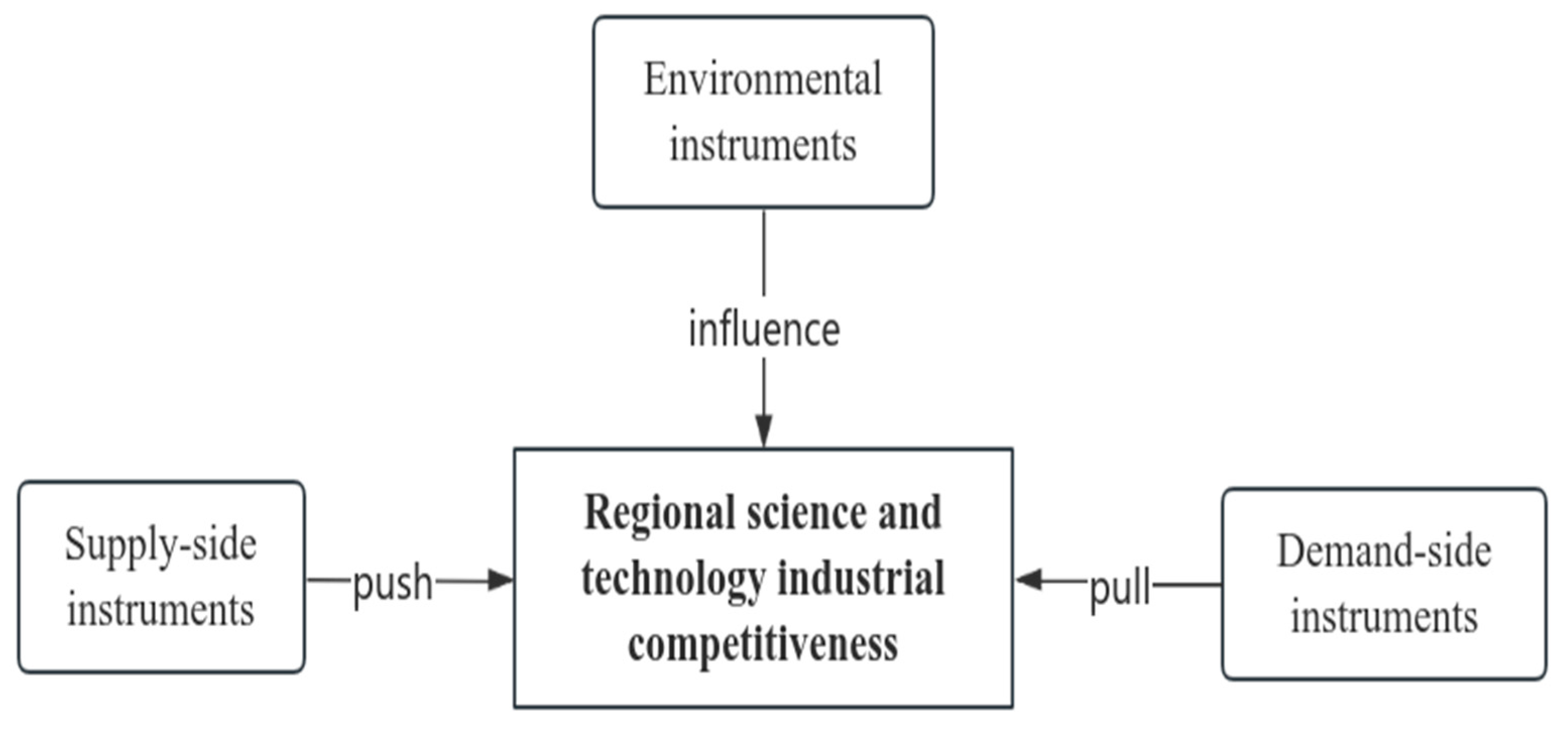
Within this framework, AI policy instruments are conceptually grouped into three categories: supply-side, demand-side, and environmental instruments. Supply-side instruments primarily strengthen the resource base of industrial development by supporting talent, funding, and technological capabilities, thereby pushing improvements in regional innovation capacity. Demand-side instruments, in contrast, operate mainly through market mechanisms, stimulating adoption and commercialization via expanded application scenarios and demonstration projects, thus pulling industrialization and scaling. Environmental instruments exert more indirect, enabling effects, shaping the institutional framework, regulatory conditions, and broader business environment, thereby influencing the long-term sustainability of regional science and technology industrial competitiveness. Importantly, these instruments do not operate independently, as supply-side measures may affect the performance of demand-side instruments, and environmental instruments may modulate the effectiveness of both supply-side and demand-side instruments. For fsQCA condition coding, instruments are assigned according to their dominant function to ensure conceptual clarity, while the subsequent configurational analysis emphasizes how their combinations jointly influence regional science and technology industrial competitiveness.
In summary, the analytical framework provides a theoretical basis for categorizing AI policy instruments and establishes a methodological foundation for the selection of fsQCA conditions and analysis of configurations. It enables the identification of how different policy instrument combinations collaboratively enhance regional science and technology industrial competitiveness (see Figure 1).

3. Research Design

3.1. Research Method

Qualitative comparative analysis (QCA) is a social science research method based on Boolean algebra and set theory that overcomes the traditional dichotomy between quantitative and qualitative research. This method views cases as different combinations of antecedent conditions from a configurational perspective, and it is capable of identifying sufficient and necessary condition configurations that lead to outcomes. QCA is especially suitable for revealing equivalence paths and asymmetric causal relationships under the interactions of multiple factors [35]. It has been widely applied in fields such as sociology, management, and economics. QCA generally includes three types: crisp-set qualitative comparative analysis (csQCA), multi-value qualitative comparative analysis (mvQCA), and fuzzy-set qualitative comparative analysis (fsQCA). This study employs the fsQCA method, a choice motivated by its strong methodological alignment with the research problem. First, regional competitiveness may be achieved through multiple distinct policy tool configurations, reflecting the principle of equifinality. fsQCA is capable of capturing such alternative paths, which traditional linear methods may overlook. Second, the relationships among policy instruments and regional competitiveness are complex and nonlinear, involving interactions and contingent effects among supply-side, demand-side, and environmental tools. fsQCA allows the explicit modeling of these causal complexities and interaction effects, providing insights into how different policy combinations jointly influence outcomes. Third, fsQCA is appropriate for medium-to-small sample sizes, aligning with the case set of Chinese provincial-level administrative units and enabling the identification of causal mechanisms that govern how different policy tool configurations influence regional competitiveness.
Notably, fsQCA has inherent methodological limitations. The moderate number of provincial-level cases constrains the generalizability of the findings. In addition, causal asymmetry implies that the absence of specific policy instruments or combinations does not necessarily yield the opposite outcome of their presence, requiring a careful interpretation. Furthermore, fsQCA does not provide precise estimates of the marginal effects of individual conditions, limiting insights into the isolated contribution of each policy tool. Nevertheless, these characteristics also represent the unique analytical value of fsQCA; by examining configurations of multiple policy instruments rather than individual variables, it can uncover alternative pathways and interaction effects that jointly enhance regional science and technology industrial competitiveness—insights that conventional linear or purely quantitative methods would likely miss. This configurational approach enables a nuanced understanding of how diverse policy combinations contribute to regional innovation, industrial growth, and long-term technological development.

3.2. Data Collection

Policy documents issued by 25 provincial-level governments in China were collected for the period of 2017–2023, starting from the release of the New-Generation Artificial Intelligence Development Plan by the State Council on 8 July 2017, to capture both the initial implementation and subsequent evolution of AI policies. Documents were retrieved using the keyword “artificial intelligence” by searching the titles in provincial government portals, relevant departmental websites, and authoritative Chinese legal databases. Only formal, publicly accessible policy texts that addressed AI-related technological and industrial development were included, while documents issued outside the observation window, documents from regions with separate administrative systems (Hong Kong, Macao, or Taiwan), informal announcements, duplicative texts, or documents lacking substantive AI policy content were excluded. This procedure resulted in a sample of 51 policy documents from 25 provincial-level units, covering approximately 80% of China’s provinces and ensuring representativeness and comparability.

3.3. Definitions of the Variables

3.3.1. Condition Variables

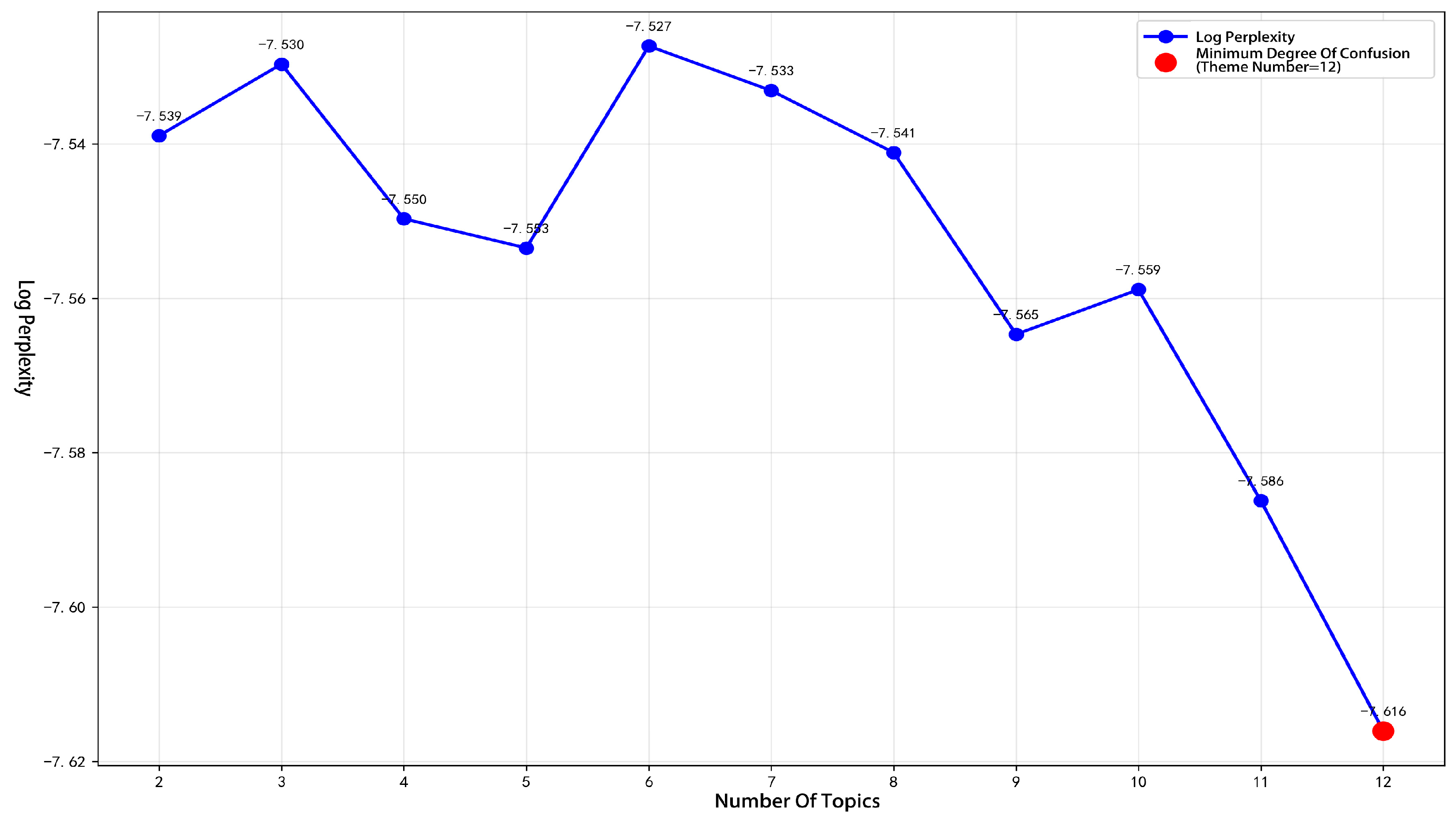
The condition variables capture the policy instruments employed by provincial governments in the AI sector. Drawing on policy instrument theory, this study applied Python-based natural language processing (NLP) techniques to perform topic modeling on the collected policy texts. First, the Jieba tool was used for word segmentation and part-of-speech tagging. Irrelevant words were filtered using a built-in stopword list, while nouns, verbs, and adjectives were retained for preprocessing. Next, Latent Dirichlet Allocation (LDA) was employed to identify latent topics within the texts. The optimal number of topics was determined to be 12 using a perplexity curve (Figure 2), and the key feature words for each topic were extracted to reveal the semantic structure of the policy texts (Table 1). Finally, based on the LDA clustering results and the policy instrument framework, a refined policy tool dictionary was constructed, identifying eight policy sub-tools as condition variables for fsQCA: technology research and development support, infrastructure development, talent training and cooperation, financial investment, application demonstration and promotion, industrial cultivation and support, strategic planning leadership, and regulatory and standards management. Among these, the first four are classified as supply-side tools, the next two as demand-side tools, and the last two as environmental tools. Using the policy tool dictionary in combination with a text-matching algorithm, the frequency of each sub-tool appearing in provincial policies was counted using Python3.11.9 and used as the quantitative value for the fsQCA condition variables. These frequencies not only quantify the distribution of policy resources across different dimensions but also provide a conceptual basis for the fsQCA configurational analysis, enabling an examination of how combinations of policy instruments drive the sustainable competitiveness of regional AI technology industries.

3.3.2. Outcome Variables

The outcome variables capture the regional sustainable competitiveness of AI technology industries across provinces. While multiple measurement approaches exist—such as AI patent counts, AI enterprise numbers, AI industry value added as a share of the GDP, or composite indices published by private organizations—each has limitations. AI patent counts mainly reflect invention activity rather than commercialization capacity; AI enterprise numbers do not account for traditional firms that are adopting AI technologies; industry value-added data are often unavailable at the provincial level; and private indices lack methodological transparency. Therefore, this study adopts the Artificial Intelligence Technology Industry Regional Competitiveness Evaluation Index (2024) jointly published by the Chinese New Generation Artificial Intelligence Development Strategy Institute and the Nankai University Institute for Chinese-style Modernization [2]. This institute, a high-end think tank co-established by the Chinese Academy of Engineering, Tianjin Municipal Government, and Nankai University, is an important strategic research institution in the field of AI in China. Its annual report has become a critical reference for government decision-making and academic research. This index is grounded in innovation ecosystem theory and evaluates regional competitiveness along two dimensions: industrial foundation and the development environment. It includes the following six core indicators: enterprise capabilities, academic ecosystem, capital environment, international openness, linkage capabilities, and government response capacity. The index provides comprehensive scores and rankings for each province. Compared with single indicators, this composite index more fully and reliably captures the sustainable competitiveness of regional AI technology industries, offering a robust, comparable, and replicable foundation for analysis in this study.

3.4. Data Calibration

Calibrating the variables is a prerequisite and foundation for fsQCA. Data calibration refers to the process of converting the raw data of variables into values within a range [0, 1] and categorizing different cases based on the numerical values into different sets [36]. Fuzzy-set calibration relies on clear theoretical anchoring to ensure that set membership reflects substantive theoretical meaning rather than purely mechanical transformation. Accordingly, this study adopts the direct calibration method, considering the practical situation of the case data, and refers to calibration standards from previous studies [35,37], with calibration anchors set at 0.95, 0.5, and 0.05 for full membership, the crossover point, and full non-membership, respectively, according to Ragin’s widely accepted recommendation [38]. The calibration anchors for each variable are shown in Table 2. In addition, to avoid a large number of cases being at the crossover point of 0.5, which would make categorizing the cases difficult and potentially affect the results of the analysis, this study uses Fiss’s approach and adds 0.001 to all membership scores with a value of 0.5 [39].

4. Results and Discussion

4.1. Univariate Necessity Analysis

Before conducting the configuration analysis, the necessity of individual conditions must first be examined, meaning that a condition must always be present for a specific outcome to occur. This is reflected when a condition consistently appears whenever the outcome is present. The analysis of necessary conditions was performed using fsQCA 4.1 software, and the results are presented in Table 3. Consistency indicates the extent to which a particular condition variable consistently leads to the outcome, while coverage reflects the explanatory power of that condition and its combination in relation to the outcome. When the consistency exceeds the threshold of 0.9, the condition is considered necessary for the outcome. The results indicate that all individual condition variables have consistency values below 0.9, suggesting that the eight policy sub-tools provide some explanatory power for the outcome, but none of them are necessary conditions. This finding aligns with theoretical expectations regarding the complementarity and synergy of policy instruments, as regional science and technology industrial competitiveness is a multi-dimensional outcome that requires the coordinated actions of multiple policy tools rather than a reliance on any single measure. Therefore, further investigation into the combinations and the multiple concurrent effects of the policy tools is warranted.

4.2. Condition Configuration Analysis

Building upon the necessity analysis, further sufficiency tests of the truth table were conducted using fsQCA 4.1 software. Considering the scale and heterogeneity of the provincial-level samples, the case frequency threshold was set to one. To control counterfactuals and improve the robustness of the solution, the consistency threshold was set to 0.80, and the PRI consistency threshold was set to 0.75. The standard analysis resulted in three solutions: complex, intermediate, and parsimonious. Achieving theoretical and practical alignment with only one solution is difficult; so, this study adopted the result presentation model proposed by Ragin and Fiss that combines the intermediate and parsimonious solutions. Variables common to both solutions are considered core conditions, while those present only in the intermediate solution are regarded as auxiliary conditions to distinguish the relative importance of each condition variable within the configuration [35].
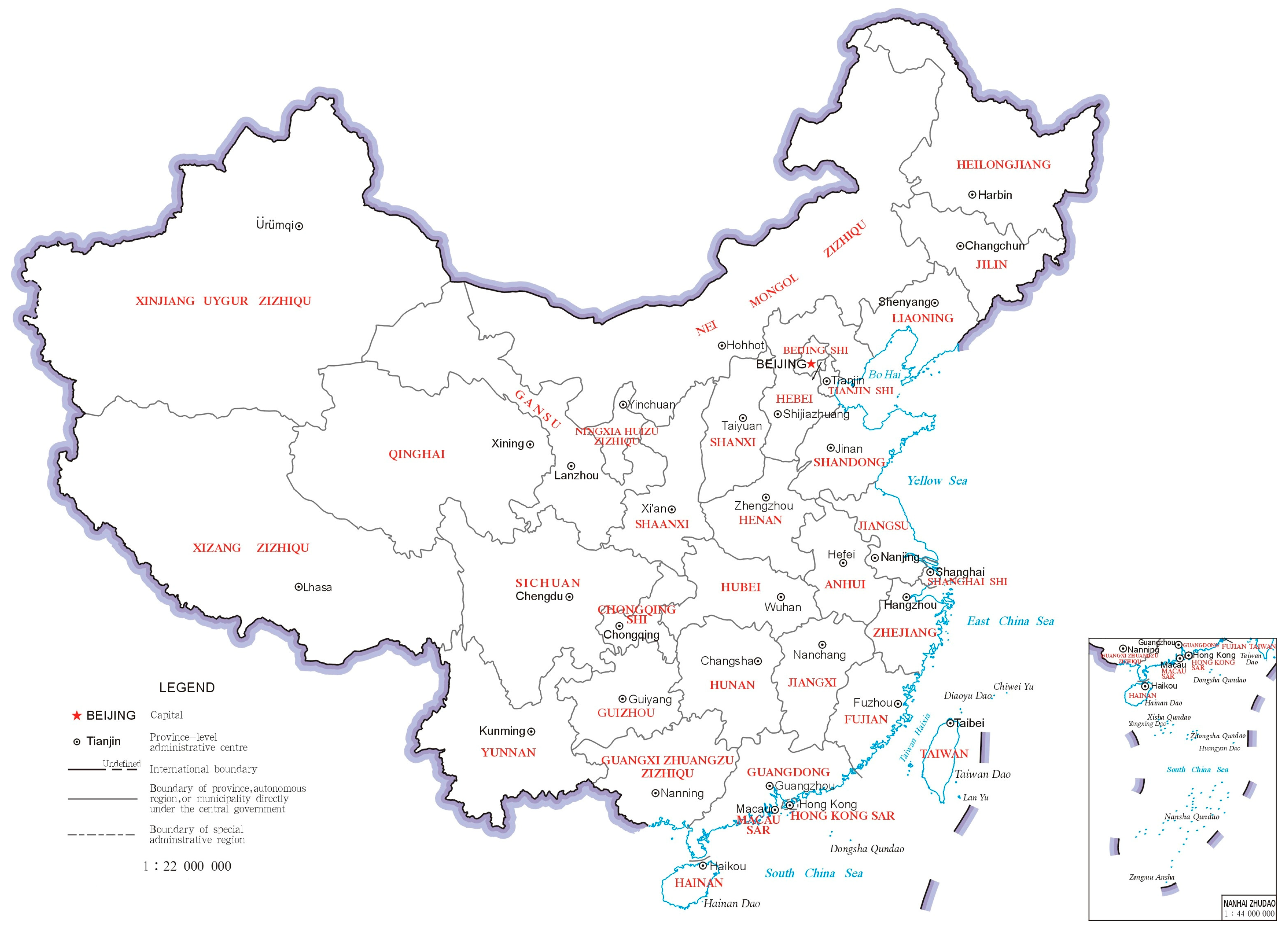
Table 4 presents five configurations that explain high-level regional competitiveness in the technology industry. Based on core and auxiliary conditions, three driving paths can be identified. These paths are labeled for clarity as the (supply and demand)-environmental resonance path, the demand-driven (supply-environmental) assurance path, and the supply–demand complementary path. These labels serve only as convenient descriptors and do not substitute for the analytical interpretation. Each path represents a distinct combination of policy instruments, in which core conditions consistently drive high regional competitiveness, while auxiliary conditions modulate or enhance their effects. The following subsections elaborate how these configurations operate in practice, linking the presence and interaction of conditions to observed outcomes in specific provincial contexts. The overall consistency of the solution is 0.880, and the coverage is 0.730, indicating that all cases matching these configurations exhibit high competitiveness and that the solution covers 73% of the relevant cases. Both the overall consistency and overall coverage exceed the threshold, demonstrating the reliability of the empirical findings. To present the configuration results and corresponding cases more clearly, Table 5 lists the policy tool combinations and representative policy entries for several provinces with strong technological industrial competitiveness, and a map of China (Figure 3) is shown to illustrate the geographic distribution of the provinces and support the analysis of the three driving paths in relation to the provincial policy content and location.

4.2.1. (Supply and Demand)–Environment Resonance Path

This path includes three different configurations: configurations 1, 2, and 3. The common feature of these configurations is that supply-side and demand-side tools (such as technology research and development support, talent training and cooperation, and application demonstration and promotion) serve as core conditions, while environmental tools (such as strategic planning leadership and regulatory and standards management) serve as auxiliary conditions. These configurations illustrate how different policy tools reinforce each other, as supply-side investments increase the capacity for innovation, demand-side tools stimulate adoption and industrialization, and environmental tools create enabling conditions that sustain and regulate the process. Such synergy generates a positive feedback loop that increases regional technological industrial competitiveness. Representative provinces employing these three configurations include the Guangdong, Anhui, and Yunnan Provinces.
Guangdong focuses on systematically arranging innovation chains and industrial chains, constructing a “technology–talent–application–industry–infrastructure–system” closed-loop ecosystem. Leveraging strategic technological forces such as Pengcheng Laboratory and the Provincial AI and Digital Economy Laboratory, the province continues to advance frontier research in large models, intelligent computing power, and core algorithms. The introduction and cultivation of high-end teams are facilitated through programs such as the Pearl River Talent Plan, and “Artificial Intelligence +” disciplinary construction is strengthened. Guangdong focuses on developing large-scale application scenarios in intelligent manufacturing, smart healthcare, and digital government, and relies on the Guangzhou and Shenzhen national AI innovation application pilot zones to strengthen industrial agglomeration and strategic leadership. The systematic layout of AI industrial parks and specialty towns promotes a full-chain industrial ecosystem. At the same time, Guangdong is the first province to explore institutional innovations in cross-border data, model testing, and ethical security, providing a comprehensive supportive environment for the deep integration of AI and the real economy. Through these coordinated supply, demand, and environmental interventions, Guangdong demonstrates how core and auxiliary tools reinforce each other and innovation capabilities are quickly applied in practice, creating industrial clustering, which in turn attracts talent and further R&D investment, forming a self-reinforcing ecosystem.
Anhui’s policy practices emphasize leveraging local research strengths and industrial foundations to promote the deep integration of AI innovation and industry through systematic policy combinations. The province relies on institutions such as the University of Science and Technology of China and Hefei University of Technology to strengthen fundamental research and key technology breakthroughs in areas like brain-like intelligence and intelligent speech. Anhui also actively fosters industrial clusters in intelligent speech, intelligent robotics, and other niche sectors through platforms such as “China Voice Valley”. At the same time, the province has expanded application scenarios in intelligent manufacturing and smart healthcare, driving technological iteration and achievement transformation through demand pull. The provincial government has established special industrial funds and increased fiscal support for computing power construction and enterprise financing, issuing numerous implementation plans and standards in various subfields. These coordinated actions show that the combination of core supply-side and demand-side policies, supported by environmental guidance, amplifies the impacts of individual policy tools, demonstrating the configurational mechanism underlying high regional competitiveness.
Yunnan, leveraging its geographical advantage, has established an integrated “industry–university–research–application” development model. In terms of technological R&D, the province focuses on breakthroughs in multi-lingual natural language processing, machine translation, and other niche technologies, creating an AI innovation platform and public service system oriented towards South and Southeast Asia. Yunnan promotes the deep integration of AI and advantageous industries. In terms of talent development, Yunnan fosters multidisciplinary talent through university–enterprise cooperation and international exchanges, creating a regional AI talent hub. In terms of application demonstration, the province has launched a series of initiatives under the “One Mobile Phone” program in areas such as smart tourism, digital governance, and green agriculture, creating replicable solutions for further promotion. Additionally, the province has accelerated the development of new infrastructures such as 5G networks and data centers and has improved data security and ethical regulatory systems, providing strong support for AI innovation and development. This configuration shows how a strategic combination of supply-side investments and demand-side initiatives, supported by a conducive environment, enables less resource-intensive regions to develop targeted competitive advantages, highlighting the role of contextual adaptation in policy effectiveness.
Overall, the (supply and demand)–environment resonance path, through the collaborative resonance of various policy tools, forms a full-chain support system that is beneficial for generating stable long-term gains, increasing the resilience and sustainability of regional technological industrial competitiveness, and providing a replicable model for regional technological industrial upgrades.

4.2.2. Demand-Driven (Supply–Environmental) Assurance Path

This path is characterized by industrial cultivation and support as the core condition, with financial investment and strategic planning leadership as auxiliary conditions. The mechanism is demand-driven: strong market demand and industrial priorities stimulate enterprise activity, while supply-side interventions provide the necessary capacity, and environmental tools ensure coordination, compliance, and strategic alignment. This approach is especially effective in areas where market demand is relatively active, but the supply system is not yet well developed.
A typical example of this path is Sichuan Province. Here, industrial cultivation functions as the primary driver, pulling technological innovation and industrial expansion, while fiscal investment provides the necessary resources for firms to scale and experiment. Strategic planning leadership coordinates these efforts, ensuring alignment between market opportunities and governmental support. The province’s “New-Generation AI Development Implementation Plan” establishes a “five-in-one” collaborative advancement mechanism, explicitly linking demand stimulation, supply development, and regulatory guidance into a coherent policy system. Key focus areas include intelligent manufacturing equipment, robotics, smart airports, drones, and intelligent connected vehicles, with the creation of a full-chain policy support system from key technology breakthroughs to product development, scenario applications, and industrial cluster cultivation. The provincial government provides fiscal support through the establishment of an AI industry development fund, major scientific and technological projects, and the formulation of clear development goals and industrial roadmaps to strengthen strategic leadership. The combination of these tools creates a reinforcing loop: as market-oriented policies stimulate enterprise activity, supply-side measures and financial resources enable the scaling and implementation of AI technologies, while strategic planning ensures that these efforts are aligned with provincial development priorities.
The dominance of the demand instrument in this path can be explained by the regional context; active market demand provides the initial impetus, which pulls supply-side actions and triggers financial investment and planning interventions. This creates a virtuous cycle where demand-led stimulation drives policy coordination and effective implementation, enhancing regional competitiveness even when the technological supply is initially limited. This approach achieves a balance between resource constraints and policy enforceability, thus ensuring the sustainable accumulation of competitiveness, especially in regions with limited factor endowments.

4.2.3. Supply–Demand Complementary Path

This path is characterized by technology research and development support, talent training and cooperation, application demonstration and promotion, and industrial cultivation and support as core conditions, with infrastructure development and financial investment as auxiliary conditions. The path emphasizes a dual-action mechanism in which supply-side policies enhance technological and talent capacities while demand-side policies stimulate market uptake, together creating a complementary and mutually reinforcing system that sustains the development of the artificial intelligence industry.
A typical example of this path is Shandong Province. On the supply side, Shandong Province implements major projects for the new generation of artificial intelligence technologies, focusing on key technologies such as intelligent sensors, AI chips, and algorithm frameworks, relying on platforms like the National Supercomputing Jinan Center to strengthen computing power support. Financial mechanisms like industrial development funds and “cloud service vouchers” reduce investment barriers, enabling enterprises to engage in innovation actively. It has also vigorously promoted AI-related disciplines and the cultivation of high-end talents, establishing joint university–enterprise laboratories and talent training bases to continuously supply professional technical forces for the industry. These measures correspond directly to the four supply-side policy instruments identified in the fsQCA—technology research and development support, infrastructure development, talent training and cooperation, and financial investment—demonstrating empirical alignment between provincial policy practices and the fsQCA-identified conditions. On the demand side, Shandong Province is guided by the concept of “modern advantageous industrial clusters + artificial intelligence”, opening up major application scenarios in areas such as smart manufacturing, smart healthcare, smart homes, and intelligent rail transportation that promote the implementation of artificial intelligence technology in various industries. Leading enterprises drive adoption across smaller firms, creating iterative cycles where practical application informs further research. It leverages leading enterprises to drive the development of small and medium-sized enterprises, cultivating a group of smart enterprises and distinctive industrial clusters, and effectively stimulating the market demand for large-scale AI technologies. These policy practices correspond to the demand-side instruments in the fsQCA, specifically application demonstration and industrial cultivation. Shandong Province supports demand-driven upgrades with supply-side innovations using application scenarios to drive technological iteration, forming an efficient matching and dual-promotion development pattern between supply and demand that significantly enhances artificial intelligence technology innovation and industrial competitiveness.
The supply–demand complementary path, through the dual actions of supply and demand and their effective matching, reduces resource misallocation and duplication, and increases the efficiency of factor allocation, thus achieving the sustainable enhancement of regional technological industrial competitiveness in the dynamic equilibrium between efficiency and growth.

4.2.4. Commonalities and Differences Across Paths

Overall, the structures of the three driving paths exhibit both commonalities and differences. The commonality lies in the fact that, among the five configurations covered by the three paths, supply-side and demand-side tools frequently appear as core conditions. Specifically, “technology research and development support”, “talent training and cooperation”, and “application demonstration and promotion” appear as core elements in configurations 1, 2, 3, and 5, while “industrial cultivation and support” is also a core element in configurations 1, 2, and 5. This highlights the universal importance of these factors in enhancing the competitiveness of regional technological industries. The differences mainly manifest in two aspects: (1) Environmental tools are not universally required. In the (supply and demand)–environment resonance path, at least one environmental tool is included as an auxiliary condition in all three configurations (1, 2, and 3). However, the demand-driven (supply–environment) assurance path (configuration 4) only includes “strategic planning leadership” as an auxiliary condition, and the supply–demand complementary path (configuration 5) does not require environmental tools. (2) The functionality of peripheral elements can be substituted. In the two resonance-type configurations with the same core structure (configurations 1 and 2), infrastructure development and financial investment can act as interchangeable peripheral support while maintaining a high explanatory power (with original coverage values of 0.651 and 0.610, respectively). From the distribution of indicators, configurations 1 and 2 provide the primary coverage; configuration 3 has the highest consistency (0.982) but a smaller coverage (0.270), demonstrating a “high match, narrow coverage” niche feature. Configurations 4 and 5 have moderate coverage (0.360 and 0.354, respectively). This result suggests that a single tool is insufficient to support the outcome, and the sustained enhancement of regional technological industrial competitiveness depends on the synergistic and interchangeable configurations of multiple tools, exhibiting typical concurrent causality and equifinality features.

4.3. Robustness Testing

QCA is a set-theoretic method, and when slight adjustments to the operations lead to subset relationships in the results without changing the core interpretation of the findings, the results are considered robust [40]. To assess the robustness of the analysis, the conclusions of this study were validated by adjusting the calibration points to 0.9, 0.5, and 0.1, and increasing the PRI threshold from 0.75 to 0.8. The results indicated that the configuration structure did not undergo significant changes, and the core conditions and case assignments of the original configurations remained largely consistent. The core condition combinations remain stable, with technology research and development support, talent training and cooperation, application demonstration and promotion, and industrial cultivation and support consistently identified as key conditions across multiple configurations. The marginal configuration conditions exhibit slight fluctuations, which indicates that auxiliary conditions such as financial investment and infrastructure development are somewhat more sensitive to variations in the parameters. Nevertheless, this does not alter the overall logic and explanatory power of the configurations. In conclusion, changes in calibration strategies and threshold settings did not lead to substantial modifications of the core conclusions, and the research findings are considered robust.

5. Conclusions and Implications

5.1. Conclusions

This study adopts the policy tools theory as the analytical framework, utilizing machine learning techniques to identify the types and frequencies of artificial intelligence (AI) policy tools. Based on this approach, fuzzy-set qualitative comparative analysis (fsQCA) was applied to the AI policy texts from 25 provinces in China to reveal the causal relationship between the combination of policy tools and regional competitiveness of the technology industry. The main conclusions are described below.
(1) By employing Python text-mining technology to process and cluster AI policy entries, eight policy sub-tools were identified, namely, technology research and development support, infrastructure development, talent training and cooperation, financial investment, application demonstration and promotion, industrial cultivation and support, strategic planning leadership, and regulatory and standards management. None of these eight policy sub-tools can serve as a necessary condition for improving regional technological industrial competitiveness on their own, meaning that a single policy tool cannot effectively achieve the desired policy outcomes. Compared with previous studies relying on subjective coding, this study provides a more objective classification of AI policy tools, quantitatively confirms the insufficiency of singular policy instruments in the Chinese AI context, and aligns with the literature emphasizing the importance of coordinated multi-tool policy combinations.
(2) There are three paths for driving the sustainable improvement of regional competitiveness in the technology industry through AI policies: the (supply and demand)–environment resonance path, the demand-driven (supply–environmental)assurance path, and the supply–demand complementary path. Each path reflects a tailored mix of supply-side, demand-side, and environmental instruments in response to provincial characteristics, including local resource endowments, market conditions, industrial structures, and other contextual factors. For instance, Guangdong, Anhui, and Yunnan predominantly follow the (supply and demand)–environment resonance path leveraging strong combinations of supply-side, demand-side, and environmental tools to create positive feedback loops. Sichuan exemplifies the demand-driven (supply–environmental) assurance path, where market demand actively stimulates supply while strategic planning ensures coordinated implementation. Shandong follows the supply–demand complementary path, in which supply-side innovations and demand-side stimulation interact to enhance technological and industrial competitiveness. These examples illustrate the boundary conditions and contextual adaptation of policy tool combinations. There is no single “optimal solution”, and different regions can select the most appropriate path according to their endowments, industrial foundations, and development stages. The identification of these paths provides novel empirical insights into how combinations of AI policy instruments drive the sustainable competitiveness of regional technology industries and offers guidance for other economies seeking to tailor policy portfolios to regional resource endowments and market conditions.
(3) A horizontal comparison of the five configurations revealed that technology research and development support, talent training and cooperation, and application demonstration and promotion consistently appear as core conditions across most configurations, while auxiliary conditions such as infrastructure development and financial investment exhibit greater sensitivity to changes in the parameters. This pattern represents a novel theoretical insight, showing that certain core policy tools consistently drive regional technological competitiveness across multiple configurations, while peripheral tools provide flexibility according to contextual conditions, highlighting the mechanism through which different combinations of instruments achieve similar high-competitiveness outcomes.

5.2. Implications

The essence of the continuous improvement of regional competitiveness in the technology industry lies in the dynamic adaptation process between policy tool combinations and regional endowments. Local governments should base their actions on the “multiple concurrent causality” principle, design policy portfolios systematically based on the interactions of supply-side, demand-side, and environmental instruments, and select differentiated development paths that align with their specific industrial foundations and market conditions. Based on the research findings, the following policy recommendations are proposed:
(1)
Focus on a combination of policy tools and avoid reliance on a single policy. Since a single policy tool cannot effectively and continuously improve the regional competitiveness of the technology industry, provinces should establish mechanisms for policy coordination, leveraging synergistic interactions among supply-side, demand-side, and environmental instruments, as identified in the three driving paths. This also helps avoid policy fragmentation and isolated implementation, reduces redundant construction and institutional friction, and improves resource allocation efficiency, thereby enhancing the sustainability of policy effects.
(2)
Scientifically diagnose provincial endowments and choose the appropriate development path. Provinces should select the most suitable policy-driven path based on their own AI industry foundation, resource endowments, and development orientation. The choice of path should be informed by the strategic combination of the three types of policy tools—supply-side, demand-side, and environmental instruments—and their fit with the local industrial structure, market demand, and technological capacity. Regions with strong industrial foundations and concentrated innovation elements may explore the “supply–demand–environment resonance” path. Provinces with a strong market demand but insufficient technological supply should focus on the “demand-driven supply–environment support” path. Regions with specific element advantages may adopt the “supply–demand complementarity” path to achieve differentiated development. Continuous evaluations and dynamic adjustments should be used to address technological iterations and external shocks, increasing the resilience and long-term stability of the policy system.
(3)
Strengthen investment in core elements to consolidate competitive advantages. Across all configurations, technology research and development support, talent training and cooperation, and application demonstration and promotion consistently emerge as critical drivers of regional technological competitiveness. Provinces should focus on continuing investment in these three core policy tools. In terms of technology research and development support, provinces should formulate a core technology breakthrough list, establish industry–university–research collaboration innovation platforms, and focus on overcoming “bottleneck” technologies in AI. Regarding talent training and cooperation, provinces should improve high-level talent recruitment policies, establish joint training bases with universities and enterprises, and create a talent pool for AI. For application demonstration and promotion, key fields should be selected to carry out scenario innovation applications using demonstration projects to drive technology promotion and industrial upgrading, thereby laying the foundation for the sustainable improvement of competitiveness. Provinces should establish an “R&D–talent–application” positive feedback mechanism to form sustainable advantages.
In conclusion, the optimization of these policy tools and path selections is highly aligned with the United Nations Sustainable Development Goals (SDGs), especially SDG 9 (Industry, Innovation, and Infrastructure) and SDG 8 (Decent Work and Economic Growth). This will help achieve the sustainable improvement of regional competitiveness in the technology industry, balancing efficiency, growth, and resilience.

5.3. Research Limitations

This study reveals the complex causal relationships between artificial intelligence policy tool combinations and regional science and technology industrial competitiveness, providing theoretical support for the development of differentiated policies in different regions. However, there are several limitations that should be acknowledged. First, this research primarily relies on cross-sectional policy texts due to data accessibility constraints, which limits the ability to capture the dynamic evolution of policy tool combinations over time. Second, although three typical pathways were identified using fsQCA and representative provinces were analyzed, the method does not fully explore the micro-level mechanisms and interactions within each configuration, leaving some of the operational logic of policy tools underexamined. Third, this study focuses on provincial-level units, which ensures sample representativeness but may obscure intra-regional differences in policy implementation, as cities within provinces often vary substantially in digital infrastructure, industrial foundations, and talent distribution. Finally, while this study provides insights specific to China, the generalizability of the findings to other national contexts is limited. Nonetheless, the conceptual insights regarding the synergistic combinations of supply-side, demand-side, and environmental policy tools, as well as the importance of path differentiation and context-specific adaptation, may provide valuable guidance for policymakers and researchers in other countries, provided that adjustments are made to accommodate local institutional, market, and technological conditions.

5.4. Future Research Directions

Building on the limitations, several avenues for future research are suggested. First, future studies could adopt time-series QCA or multi-period QCA methods to analyze the dynamic causal relationships between policy tool combinations and regional science and technology industrial competitiveness, revealing time-lag effects and the cumulative impacts of policies. Second, in-depth case studies, interviews, and process tracking could be employed to uncover the mechanisms and interactions of policy tools within different configurations, providing richer micro-level insights. Third, research could explore more granular units, such as municipal-level analyses, to account for intra-provincial heterogeneity and more precisely inform localized policy design. Finally, future studies could expand the scope of the analysis by using alternative measures of technological competitiveness and exploring cross-country comparisons, which would increase the robustness, generalizability, and theoretical contribution of the findings.

Author Contributions

Conceptualization, C.L. and X.P.; methodology, C.L. and X.P.; validation, C.L. and X.P.; formal analysis, C.L.; investigation, X.P.; resources, C.L.; data curation, X.P.; writing—original draft preparation, X.P.; writing—review and editing, C.L. and X.P.; visualization, C.L.; supervision, C.L.; project administration, C.L.; funding acquisition, C.L. All authors have read and agreed to the published version of the manuscript.

Funding

This research was funded by the General Project of Education of National Social Science Foundation of China (Grant No. BIA210179).

Institutional Review Board Statement

Not applicable.

Informed Consent Statement

Not applicable.

Data Availability Statement

The data supporting the findings of this study are available from the authors upon reasonable request.

Conflicts of Interest

The authors declare no conflicts of interest.

References

  1. Fei, Y.; Liu, C. Heterogeneity of central and local artificial intelligence policies from the perspective of responsible innovation. Forum Sci. Technol. China 2021, 40-50+148. [Google Scholar] [CrossRef]
  2. Institute for the Study of Chinese-Style Modernization. The Innovation Landscape of China’s AI Technology Industry: “Polarization” and “Diffusion”; China Institute for New Generation Artificial Intelligence Development Strategies: Tianjin, China, 2024; Available online: https://cingai.nankai.edu.cn/_t311/2024/0621/c35261a546068/page.htm (accessed on 16 May 2025).
  3. Chen, Z. Policy Science, 2nd ed.; Renmin University Press: Beijing, China, 2003; p. 177. [Google Scholar]
  4. Zhu, Q.; Li, B.; Zhang, X.; Wu, Y. Evolution of China’s AI industrial policy under uncertainty. J. Mod. Inf. 2025, 45, 72–86. [Google Scholar]
  5. Song, Q.; Gu, H. Central–local AI policy from a “tool–function” perspective. Sci. Soc. 2022, 12, 84–102. [Google Scholar] [CrossRef]
  6. Tang, Z.; Lei, H.; Guo, Y. Local government AI industrial policy from the perspective of policy tools and the innovation value chain. J. Intell. 2019, 38, 49–56. [Google Scholar] [CrossRef]
  7. Hong, Z.Y.; Yi, C.G. Analysis of the promotion policy of Chinese artificial intelligence industry through the policy network model: Focusing on the Three-Year Action Plan for Promoting Development of a New Generation AI Industry. J. China Stud. 2022, 25, 1–34. [Google Scholar] [CrossRef]
  8. Liu, P.; Yang, Y. Provincial regulation of generative AI: A comparative study based on policy texts and filing outcomes. E-Government 2025, 16–30. [Google Scholar] [CrossRef]
  9. Yang, C.; Qiao, H.; Li, R. Complexity and proximity of U.S. AI regulatory policy: A topic-model analysis at the state level. Stud. Sci. Sci. 2025. Epub ahead of print. [Google Scholar] [CrossRef]
  10. Mao, T.T.; Peng, Y.H. Thematic Hotspots and Strategy Analysis of International AI Regulatory Texts Based on LDA Models. Sci. Inf. Res. 2025, 7, 70–81. [Google Scholar] [CrossRef]
  11. Wang, X.; Liu, B.; Qiu, J. Quantitative evaluation and optimization of policy and legal texts on generative artificial intelligence from the perspective of information governance. J. China Soc. Sci. Tech. Inf. 2025, 44, 309–324. [Google Scholar] [CrossRef]
  12. Zhang, Y. Coordinated governance of artificial intelligence policy and law. Orient. Law 2024, 187–200. [Google Scholar] [CrossRef]
  13. Hu, X.Y.; Li, Y.F.; Lin, Z.R. Global Consensus, National Differences and China’s Educational Path in the Governance of Artificial Intelligence Ethics. E-Educ. Res. 2026, 47, 13–22. [Google Scholar] [CrossRef]
  14. Zhou, W.; Ye, Y.; Xiong, X. Progress and prospects for building China’s data-governance policy system for artificial intelligence. Libr. Trib. 2025, 45, 141–150. [Google Scholar]
  15. Xu, W.; He, Y. Governance system and optimization path for data-security risks of generative artificial intelligence: A grounded analysis of 38 policy texts. E-Government 2024, 42–58. [Google Scholar] [CrossRef]
  16. Huang, C.; Lu, C.; Tian, Y. Policy evolution and prospects of AI-enabled higher education: A three-dimensional framework of “themes–instruments–evaluation”. High. Educ. Explor. 2025, 48–59. [Google Scholar] [CrossRef]
  17. Luo, J.; Zhong, W.; Chen, Y. Differences, consensus and trends in policies for the educational application of artificial intelligence: A comparative study of China, Japan, the UK and the USA. Mod. Distance Educ. Res. 2025, 37, 73–83. [Google Scholar] [CrossRef]
  18. Na, H.S.; Baek, S.E. Analyzing artificial intelligence education policies of elementary and secondary schools in China. Chin. Stud. 2021, 75, 537–555. [Google Scholar] [CrossRef]
  19. Stracke, C.M.; Griffiths, D.; Pappa, D.; Bećirović, S.; Polz, E.; Perla, L.; Di Grassi, A.; Massaro, S.; Skenduli, M.P.; Burgos, D.; et al. Analysis of artificial intelligence policies for higher education in Europe. Int. J. Interact. Multimed. Artif. Intell. 2025, 9, 124–137. [Google Scholar] [CrossRef]
  20. Yang, H.; Xu, J.; Zeng, X.; Gu, X. Comparing AI literacy policies in the European Union, the United States, India, and China. Telecommun. Policy 2026, 50, 103142. [Google Scholar] [CrossRef]
  21. Kim, J.J. China’s artificial intelligence technique and a comparison of US–China artificial intelligence policy. J. China Area Stud. 2020, 7, 67–97. [Google Scholar] [CrossRef]
  22. Wang, S.; Zhang, Y.; Xiao, Y.; Liang, Z. Artificial intelligence policy frameworks in China, the European Union and the United States: An analysis based on structural topic modeling. Technol. Forecast. Soc. Change 2025, 212, 123971. [Google Scholar] [CrossRef]
  23. He, H.; Li, Q. Quality evaluation of provincial AI development special policies under the “goal–path–instrument” framework. Sci. Technol. Manag. Res. 2025, 45, 63–72. [Google Scholar] [CrossRef]
  24. Gao, X.; Peng, C. Characteristics of China’s AI policies and quantitative evaluation using the PMC index model. Sci. Technol. Manag. Res. 2022, 42, 56–65. [Google Scholar] [CrossRef]
  25. Song, L.; Pan, W. Seizing the initiative through comprehensive deployment of China’s AI policy. J. Hohai Univ. (Philos. Soc. Sci.) 2024, 26, 1–14. [Google Scholar] [CrossRef]
  26. Wu, K.; Dong, Y. Diffusion characteristics of China’s AI policy based on the innovation value chain and text association mining. J. Mod. Inf. 2024, 44, 12–22. [Google Scholar] [CrossRef]
  27. Zhang, T.; Ma, H. Hot topics and evolution of China’s AI policy. J. Mod. Inf. 2021, 41, 150–160. [Google Scholar] [CrossRef]
  28. Gao, J.; Huang, X.; Zhang, L. Comparative analysis between international research hotspots and national-level policy keywords on artificial intelligence in China from 2009 to 2018. Sustainability 2019, 11, 6574. [Google Scholar] [CrossRef]
  29. Yang, J.; Zhao, Z.; Gao, F.; Jia, X.; Li, M. Provincial-level AI policy layout in China based on quantitative text analysis. J. Mod. Inf. 2022, 42, 125–135. [Google Scholar]
  30. Ouyang, J.; Wei, D.; Wang, Y. The impact of artificial intelligence on new-quality productive forces: Policy effects of the pilot zones for innovative development of new-generation AI. Soft Sci. 2025, 39, 28–36. [Google Scholar] [CrossRef]
  31. Sun, H.; Li, S. Economic effects of artificial intelligence policy: Evidence from a quasi-natural experiment based on the 2015 AI policy. J. Shanxi Univ. Financ. Econ. 2023, 45, 16–29. [Google Scholar] [CrossRef]
  32. Wang, K.; Guo, Z.; Wu, J. Simulation analysis of how AI policy instrument portfolios affect intercity collaborative innovation. J. Mod. Inf. 2025, 45, 112–125. [Google Scholar] [CrossRef]
  33. Chen, Y.; Zhang, P. Innovation-promoting effects of AI industrial policy: Evidence from firm patent data. Mod. Econ. Res. 2024, 69–79, 132. [Google Scholar] [CrossRef]
  34. Cushman, R.E. The Independent Regulatory Commissions; Oxford University Press: New York, NY, USA, 1941; pp. 168–196. [Google Scholar]
  35. Du, Y.; Jia, L. Configuration perspective and qualitative comparative analysis (QCA): A new path for management research. Manag. World 2017, 155–167. [Google Scholar] [CrossRef]
  36. Zhou, Y.; Xu, J. Business-environment configurations influencing farmers’ entrepreneurial activity: An fsQCA analysis based on 31 Chinese provinces. J. Agro-For. Econ. Manag. 2023, 22, 47–55. [Google Scholar] [CrossRef]
  37. Tao, K.; Zhang, S.; Zhao, Y. What determines government public health governance performance? A QCA-based study of linkage effects. Manag. World 2021, 37, 128–138, 156. [Google Scholar] [CrossRef]
  38. Ragin, C.C. Redesigning Social Inquiry: Fuzzy Sets and Beyond; University of Chicago Press: Chicago, IL, USA, 2008; pp. 44–68. [Google Scholar]
  39. Fiss, P.C. Building better causal theories: A fuzzy-set approach to typologies in organization research. Acad. Manag. J. 2011, 54, 393–420. [Google Scholar] [CrossRef]
  40. Zhang, M.; Du, Y. Application positioning, strategies and directions of the QCA method in organization and management research. Chin. J. Manag. 2019, 16, 1312–1323. [Google Scholar]
Figure 1. Analytical framework for AI policy instruments.
Sustainability 18 04052 g001
Figure 2. Line chart of topic perplexity for the LDA model.
Sustainability 18 04052 g002
Figure 3. Geographic distribution of Chinese provinces.
Sustainability 18 04052 g003
Table 1. Topic modeling of AI policy texts.
Topic IDTopic NameKeywordsTheme Description
Topic 1Industrial R&D and Policy Planningmanufacturing, cultivation, reform, responsibility, industrial base, science and technology department, economy, informatization, center, increaseCovers technology research and development support and strategic planning leadership, focusing on industrial base development, manufacturing innovation, and top-level policy design.
Topic 2AI Computing Power and Application Scenariosmodel, computing power, scenario, build, smart, responsibility, construct, government affairs, encourage, systemEmphasizes computing power infrastructure, AI model development, and application scenarios, corresponding to technology R&D support, infrastructure development, and strategic planning leadership.
Topic 3Intellectual Property and Standards Managementintellectual property, protection, patent, examination, infringement, carry out, center, dispute, rights protection, riskFocuses on patent protection, IP rights, and standards management, primarily corresponding to regulatory and standards management.
Topic 4Food and Health Industry Developmentfood, manufacturing, rehabilitation, formula, hemp, production, nutrition, auxiliary, special vehicle, cultivationRelates to industrial cultivation and support, emphasizing the development of food, health, and specialized industries.
Topic 5Domestic Computing Power and Talent Chaindomestic, talent chain, advance, review, dynamic/static, high computing power, steward, simulation computing, patience, programmingFocuses on technology R&D and talent development, highlighting domestic computing power and programming talent chain, corresponding to technology R&D support and talent training and cooperation.
Topic 6Intelligent Manufacturing and Industrial Systemsresearch, system, robot, intelligent, manufacturing, learning, foundation, computing, industry, systemEmphasizes industrial automation and smart manufacturing, covering technology R&D and industrial support.
Topic 7Education and High-Level Talent Developmenteducation, university, science and technology, Beijing, cultivation, system, teaching, international, discipline, cooperationFocuses on talent training and cooperation, including higher education, research talent cultivation, and international collaboration.
Topic 8Smart Cities and Key Technologiessmart, robot, system, chip, demonstration, town, military–civilian, Xi’an, Shaanxi, provincial workRelates to technology R&D, application demonstration, and strategic planning, focusing on smart cities and key technological industrial development.
Topic 9Intelligent Voice and Engineering Demonstrationvoice, smart, demonstration, encourage, system, China, engineering, intelligent, build, systemEmphasizes application demonstration and promotion, driving intelligent projects and engineering pilots.
Topic 10Computing and Infrastructure Developmentcomputing, system, form, smart, manufacturing, open, foundation, system, demonstration, intelligentFocuses on infrastructure and technology R&D, supporting smart manufacturing and computing foundations, corresponding to technology R&D support and infrastructure development.
Topic 11Smart Economy and Information Demonstrationsmart, economy, intelligent, demonstration, information, cultivation, city, coordination, center, reformHighlights application demonstration, industrial cultivation, and policy coordination, corresponding to application demonstration and promotion and industrial cultivation and support.
Topic 12Financial Support and Computing Power Guaranteecomputing power, provide, funding, highest, general, economy, responsibility, exceed, informatization, people’s governmentCovers the financial investment and infrastructure guarantee, supporting computing power and technology R&D, corresponding to financial investment and infrastructure development.
Table 2. Calibration anchors for outcome and condition variables.
Variable CategoryVariable NameFull MembershipCrossover PointFull Non-Membership
Outcome Variable Regional Science and Technology Industrial Competitiveness93.24664.3929.254
Condition Variable Technology Research and Development Support138547155.2
Infrastructure Development358.813610.2
Talent Training and Cooperation27310013.2
Financial Investment174.4526.4
Application Demonstration and Promotion314.4566.6
Industry Cultivation and Support515.811117.8
Strategic Planning Leadership147.44310.2
Regulatory and Standards Management213.2612.2
Table 3. Analysis of necessary conditions.
Condition (Code)MeaningHigh CompetitivenessLow Competitiveness
ConsistencyCoverageConsistencyCoverage
X1High Technology Research and Development Support0.8080.7980.4950.539
~X1Low Technology Research and Development Support0.5330.4890.8150.823
X2High Infrastructure Development0.7870.8100.5240.594
~X2Low Infrastructure Development0.6050.5360.8320.812
X3High Talent Training and Cooperation0.7780.7430.5250.552
~X3Low Talent Training and Cooperation0.5310.5040.7560.790
X4High Financial Investment0.7170.7870.5180.625
~X4Low Financial Investment0.6590.5540.8240.762
X5High Application Demonstration and Promotion0.7920.8070.5240.588
~X5Low Application Demonstration and Promotion0.5960.5320.8290.814
X6High Industry Cultivation and Support0.8110.8080.5010.550
~X6Low Industry Cultivation and Support0.5480.5000.8250.828
X7High Strategic Planning Leadership0.7250.8000.5050.612
~X7Low Strategic Planning Leadership0.6490.5430.8360.770
X8High Regulatory and Standards Management0.7860.7800.5600.611
~X8Low Regulatory and Standards Management0.6080.5560.7980.804
Table 4. Configurational analysis of regional S&T industrial competitiveness.
Condition(Supply and Demand)-Environmental ResonanceDemand-Driven (Supply-Environmental) AssuranceSupply–
Demand Complementary
Configuration 1Configuration 2Configuration 3Configuration 4Configuration 5
Supply-side instrumentsTechnology Research and Development Support
Infrastructure Development
Talent Training and Cooperation
Financial Investment
Demand-side instrumentsApplication Demonstration and Promotion
Industrial Cultivation and Support
Environmental instrumentsStrategic Planning Leadership
Regulatory and Standards Management
Consistency0.9130.9210.9820.9050.972
Raw coverage0.6510.6100.2700.3600.354
Unique coverage0.0180.0030.0280.0090.014
Solution consistency0.880
Solution coverage0.730
Notes: ● denotes that a core condition is present; • denotes that a peripheral condition is present; ⦻ denotes that a peripheral condition is absent; a blank cell indicates a “don’t care” state (the condition may be either present or absent).
Table 5. Qualitative comparison of provinces with strong regional S&T industrial competitiveness.
Path TypePolicy Instrument MixRepresentative ProvinceExample Policy Clauses
(Supply and demand)–environmental resonanceTechnology Research and Development Support;
Infrastructure Development;
Talent Training and Cooperation; Application Demonstration and Promotion;
Industrial Cultivation and Support; Strategic Planning Leadership; Regulatory and Standards Management
Guangdong(1) Focus on breaking through bottlenecks in application-oriented key technologies.
(2) Build open and collaborative innovation platform systems.
(3) Attract and cluster high-level talent.
(4) Accelerate multi-domain, multi-scenario AI demonstration applications.
(5) Promote intensive and clustered development of the AI industry.
(6) Strengthen top-level design, implement work plans, and advance steadily and in an orderly manner.
(7) Establish standards and intellectual property systems; improve regulatory and safety oversight frameworks.
Technology Research and Development Support;
Talent Training and Cooperation; Financial Investment;
Application Demonstration and Promotion;
Industrial Cultivation and Support;
Strategic Planning Leadership; Regulatory and Standards Management
Anhui(1) Achieve breakthroughs in fundamental theories and key technologies.
(2) Build a high-caliber talent workforce.
(3) Increase financial support.
(4) Implement “AI Plus” action plans.
(5) Foster industrial clustering.
(6) Uphold S&T leadership, highlight priorities, be market-led and application-driven.
(7) Enhance information security assurance capabilities.
Technology Research and Development Support;
Infrastructure Development;
Talent Training and Cooperation;
Application Demonstration and Promotion;
Regulatory and Standards Management
Yunnan(1) Strengthen frontier basic theory and applied research; advance innovation in key generic technologies.
(2) Step up intelligent infrastructure construction.
(3) Cultivate and attract innovative talent.
(4) Vigorously promote AI demonstration applications.
(5) Strengthen safety regulations.
Demand-driven (supply–environmental) assuranceFinancial Investment;
Industrial Cultivation and Support;
Strategic Planning Leadership
Sichuan(1) Strengthen guidance and support; introduce targeted incentives and preferential policies.
(2) Implement enterprise-cluster cultivation programs.
(3) Target frontiers, be market-led, dynamically optimize, and ensure government guidance.
Supply–demand complementaryTechnology Research and Development Support;
Infrastructure Development;
Talent Training and Cooperation; Financial Investment;
Application Demonstration and Promotion;
Industrial Cultivation and Support
Shandong(1) Break through key generic AI technologies that upgrade intelligent manufacturing.
(2) Implement AI “strengthening the foundations” projects.
(3) Accelerate talent training.
(4) Encourage and guide greater private capital investment.
(5) Advance application demonstration projects.
(6) Build a set of flagship industrial clusters.
Note: Only a subset of representative provinces and policy clauses is shown due to space constraints.
Disclaimer/Publisher’s Note: The statements, opinions and data contained in all publications are solely those of the individual author(s) and contributor(s) and not of MDPI and/or the editor(s). MDPI and/or the editor(s) disclaim responsibility for any injury to people or property resulting from any ideas, methods, instructions or products referred to in the content.