1. Introduction
Sustainable management of water resources faces paradoxical tensions in the context of artificial intelligence (AI) implementation. While machine learning systems have demonstrated the capacity to optimize water distribution by reducing waste in urban networks [
1] and predictive models facilitate proactive planning by projecting groundwater levels with greater precision [
2], the technological infrastructure supporting these innovations generates significant water consumption. Data centers operating AI algorithms demand considerable water volume for cooling systems, creating environmental risks that contradict the sustainability objectives they purport to achieve [
3,
4]. In precision agriculture, the integration of satellite data, drones, and ground sensors through AI has enabled more timely detection of crop water stress, optimizing irrigation schemes [
5]; however, this same technology has been applied in temperate regions with high data abundance, neglecting arid zones and low-income countries where water scarcity is most critical [
6]. Ref. [
7] warned that without appropriate regulatory frameworks, exponential AI growth could exacerbate disparities in water access, whereas [
8] documented how accelerated adoption of these technologies generates hidden costs that compromise the viability of long-term conservation strategies.
Despite the growing corpus of research on AI applications in water management, knowledge deficiencies persist that limit a comprehensive understanding of the phenomenon. Refs. [
9,
10] reported that data availability and quality constitute primary obstacles, as AI models require extensive and diverse datasets to achieve optimal performance, a condition rarely satisfied in water resource contexts. Technical barriers, including inadequate infrastructure and a shortage of specialized personnel, hinder advanced implementation in the water sector [
10,
11]. Economic limitations and the absence of innovative policies impede technological adoption in developing regions, and [
6] documents the underutilization of stakeholder participation and difficulties in translating model outputs into effective policy decisions. Ref. [
7] argues that ethical concerns related to data privacy and information security represent significant barriers to the widespread acceptance of AI systems. Broader contextual dimensions further shape AI adoption trajectories: technology acceptance patterns documented across digital innovation domains [
12,
13] reveal that user perceptions, privacy concerns, and hedonic motivations modulate uptake rates independently of technical performance, a dynamic equally operative in water management contexts. Behavioral responses to AI systems—including dependency formation and performance expectations [
14,
15]—condition the organizational commitment necessary to sustain implementation beyond pilot phases, while competency frameworks governing AI integration [
16] determine the human capital prerequisites for translating algorithmic outputs into operational decisions. At the macroeconomic level, circular economy innovations have demonstrated measurable capacity to counteract the adverse environmental footprint of fossil-fuel-dependent infrastructure [
17], situating AI-driven water efficiency within a broader green transition logic that extends beyond local optimization. Organizational engagement and collective efficacy [
16] further mediate the institutionalization of AI-based water management practices, underscoring that sociotechnical adoption depends as much on workforce commitment and interorganizational coordination as on algorithmic sophistication. Previous studies, such as [
18] on water resource planning, the study by Roy [
17] on aquaculture, and [
11] on water conservation, have demonstrated the tangible benefits of AI in specific domains; nevertheless, the dispersion of findings across multiple disciplines and the absence of systematic syntheses hinder the identification of research patterns, methodological gaps, and future directions, highlighting the need for bibliometric studies that map the state of the art and structure accumulated knowledge.
The present study interrogates a theoretical paradox: why does a field ostensibly dedicated to environmental sustainability systematically reproduce patterns of geographic inequity, technological centralization, and resource consumption that contradict its foundational objectives? This question transcends descriptive bibliometric characterization by challenging the assumed progressive trajectory of AI-driven water management. The study examines four interrelated constructs that materialize this contradiction. The impact of artificial intelligence encompasses quantifiable transformations in water management processes alongside hidden environmental costs, particularly data center water consumption, which offsets conservation gains. Comprehensive life-cycle assessments encompassing water consumption during model training, inference, and infrastructure cooling remain essential to determine net water savings. Technological infrastructure comprises physical and digital components (data centers, sensor networks, and computational platforms) whose geographic distribution determines research capacity independently of water stress severity. Water resources refer to surface, groundwater, and atmospheric sources whose management remains paradoxically decoupled from regions experiencing acute scarcity. Sustainable water use designates practices balancing efficiency, equity, and ecological preservation—principles frequently invoked yet minimally operationalized in current research architectures.
The general objective consists of conducting bibliometric analysis to expose structural contradictions between sustainability discourse and research practice, structured through specific objectives addressing this tension. First, characterizing the bibliometric information of journals, authors, citations, and the H-index will reveal whether citation hierarchies privilege technological innovation over socioinstitutional dimensions [
1,
18]. Second, performing bibliometric analyses in VOSviewer to generate co-occurrence diagrams of authors, countries, keywords, and journals will test whether collaboration networks perpetuate North–South asymmetries or facilitate knowledge transfer to water-scarce regions, as noted by [
6]. Third, executing multivariate analysis through principal component analysis and Ward’s hierarchical clustering on a standardized matrix of 15 countries with 12 bibliometric variables will determine whether research stratification aligns with water scarcity profiles or technological capacity, challenging the assumption of problem-driven research documented by [
10]. Fourth, conducting qualitative analysis of principal findings systematized in emergent categories will identify whether solutions address governance gaps or remain confined to algorithmic optimization, revealing the integration deficits noted by [
7]. This study’s contribution lies in examining whether bibliometric patterns are consistent with selective disciplinary framing—specifically, a concentration of computational approaches—rather than reflecting the full sociotechnical scope of water sustainability challenges. This approach transcends the knowledge gap identified by [
9] by revealing structural patterns in how research capacity shapes knowledge production across the AI–water nexus.
The practical justification of the study is grounded in its potential to orient the strategic decisions of multiple actors. At the institutional level, universities and research centers can identify international collaboration opportunities through coauthorship network mapping, prioritizing alliances with leading institutions in specific domains such as water quality monitoring [
9] or aquaculture management [
17]. Policymakers will benefit from the systematization of documented challenges—infrastructure limitations, economic barriers, and ethical concerns—to design regulatory frameworks that promote responsible AI adoption without exacerbating water consumption by data centers, addressing the need for regulation signaled by [
7]. Water sector professionals will access taxonomies of successful applications and validated methodologies, reducing learning curves in technological implementations. At the theoretical level, this study expands the existing knowledge by providing empirical evidence on the structure and evolution of the field through bibliometric indicators, complementing existing conceptual models with data on scientific production dynamics. The integration of multivariate analysis permits the testing of implicit hypotheses about research centralization in developed countries, refuting or confirming patterns of geographic inequity noted by [
6]. The results contribute to theories of technological innovation diffusion in natural resource contexts, explaining why AI applications are concentrated in specific sectors (precision agriculture, urban monitoring) while remaining underdeveloped in others (wastewater management in low-income countries). The generation of emergent categories from qualitative analysis will establish foundations for theoretical developments in technology sustainability duality, reconciling the documented tensions between the optimization benefits and the environmental costs of AI infrastructure.
2. Literature Review
The study’s theoretical foundation rests upon multiple computational and environmental paradigms that articulate AI’s role in water resource management. Artificial neural networks (ANNs), deep learning (DL), and long short-term memory (LSTM) networks constitute the primary theoretical architectures for forecasting and optimization, which excel in capturing nonlinear relationships and processing temporal data sequences [
19,
20]. Machine learning models, which encompass supervised and unsupervised algorithms such as random forest and support vector machines, provide theoretical frameworks for classification, regression, and clustering tasks in water quality prediction and leak detection. Hybrid theoretical approaches emerge from integrating AI with the Internet of Things, remote sensing, and unmanned monitoring platforms, extending computational intelligence through distributed sensor networks and real-time data acquisition systems. Digital twin theory represents a convergent paradigm wherein virtual replicas of physical water systems enable simulation-based decision-making through continuous AI-driven analysis [
16,
19]. These theoretical foundations demonstrate convergence toward multimodal, integrated architectures that transcend single-algorithm approaches, reflecting the complexity of socioecological water systems [
6,
20,
21,
22,
23,
24].
Conceptual definitions
Impact of artificial intelligence. This construct encompasses measurable transformations in water management processes attributable to algorithmic systems, including accuracy improvements of 15–25% in treatment operations, energy consumption reductions of 7–30%, operational cost decreases of 10–20%, distribution efficiency gains of 15–30%, and agricultural waste reductions of 20–40% [
6]. The construct extends beyond efficiency metrics to include pollution mitigation capacities, as evidenced by 50–70% urban flood reductions and 15–28% decreases in pollutant discharge [
6], while incorporating AI’s contribution to enhanced decision-making through optimal resource allocation and demand forecasting [
2,
25].
Technological Infrastructure. This construct designates the ensemble of computational, sensing, and networking components enabling AI deployment in water contexts, encompassing data centers, IoT sensor arrays, remote sensing platforms, unmanned monitoring systems, and digital twin architectures. The infrastructure integrates hardware for data acquisition with software frameworks for model training and inference, requiring standardized protocols and high-quality datasets to achieve optimal performance. Infrastructure adequacy directly influences implementation feasibility, with costs and technical complexity constituting primary adoption barriers [
6,
16,
22,
24].
Water Resources. This construct refers to surface, groundwater, and atmospheric sources subject to management interventions, characterized by quality parameters amenable to AI-based prediction and monitoring. Resources encompass potable water supplies, irrigation systems, aquaculture environments, and drainage networks, each presenting distinct hydrological characteristics and management requirements [
20,
21,
22,
23,
24].
Sustainable water use. This construct designates practices ensuring long-term availability and quality through optimized utilization, waste reduction, and predictive capabilities [
1,
21]. Sustainability is operationalized through AI-enabled real-time monitoring systems that provide continuous data for proactive intervention, pollution control mechanisms that facilitate contaminant forecasting, and irrigation scheduling algorithms that minimize agricultural consumption while maintaining productivity [
24]. The construct balances present needs with future availability through stakeholder engagement and transparent, explainable AI models that build public trust while requiring interdisciplinary collaboration to address the technical, economic, and ethical dimensions of implementation [
6,
21,
22,
23,
24].
3. Methods
This bibliometric review followed the Preferred Reporting Items for Systematic Reviews and Meta-Analyses (PRISMA) 2020 guidelines [
26] to ensure transparent and comprehensive reporting of the study selection process. The methodology encompassed four sequential phases: identification of records through database searches, screening of titles and abstracts, eligibility assessment of full-text articles, and inclusion of studies meeting predefined criteria. Two distinct analytical datasets were employed. The broader search corpus comprised 424 publications retained after duplicate removal and title–abstract screening, serving as the basis for descriptive bibliometric characterization, VOSviewer version 1.6.20 network analysis, and multivariate country-level analysis. A final set of 65 studies, derived through full PRISMA screening of an initial pool of 3683 records (Scopus: 1854), constituted the corpus for qualitative thematic synthesis. All tables and figures indicate which dataset underpins each analysis.
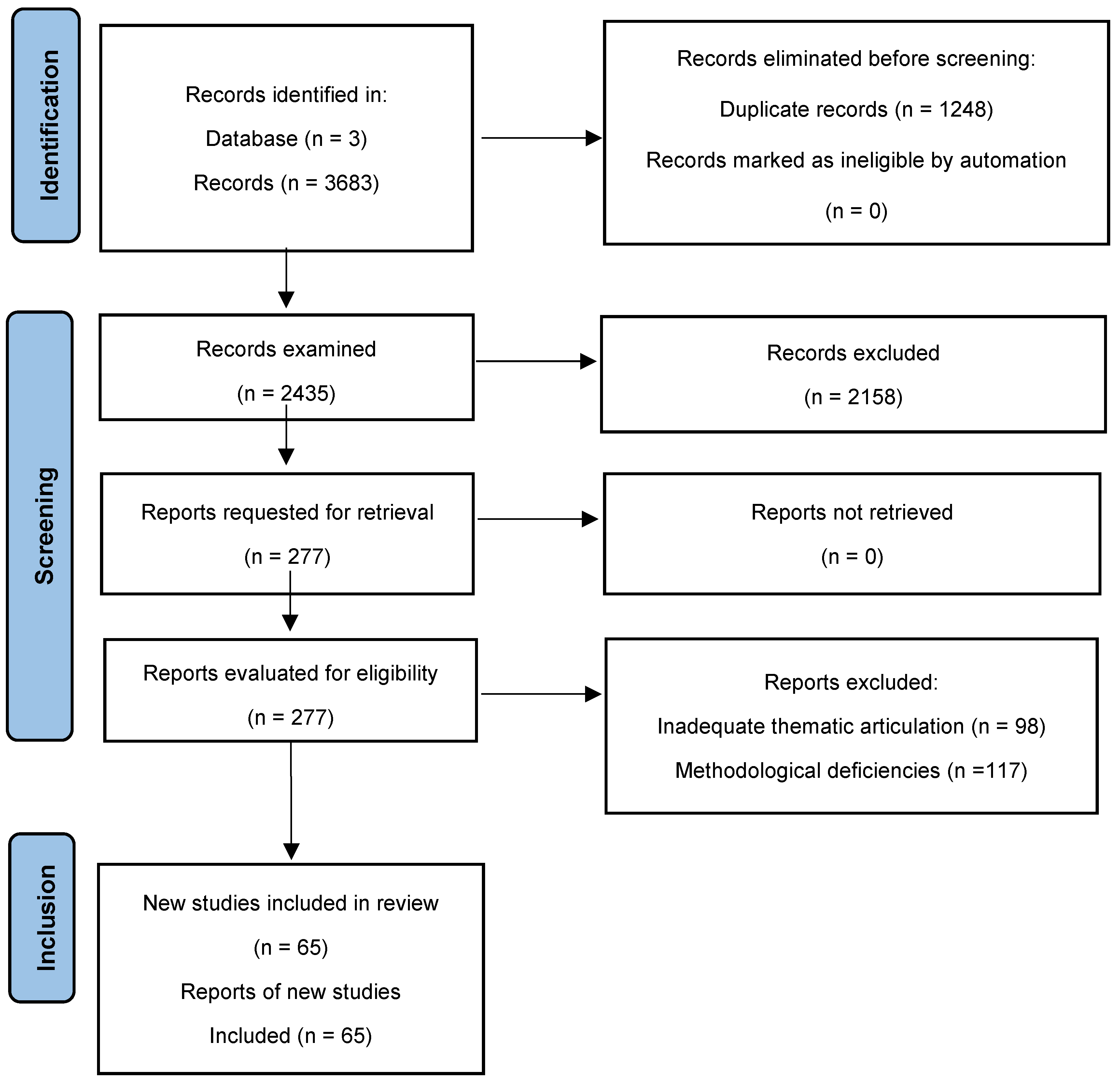
Figure 1 presents the complete PRISMA flow diagram documenting the study selection process.
3.1. Search Strategy and Information Sources
A systematic search was conducted in November 2024 across three multidisciplinary databases: Scopus, Web of Science, and IEEE Xplore. These databases were selected for their comprehensive coverage of engineering, environmental science, and computer science literature relevant to AI applications in water resource management. The search strategy employed Boolean operators combining terms related to artificial intelligence technologies (artificial intelligence, AI, machine learning, and deep learning) with water sustainability concepts (sustainable water management, sustainable use of water resources, water sustainability, and water resource management) and impact-related terms. Database-specific search equations were adapted to accommodate syntactic variations while maintaining conceptual equivalence.
Table 1 presents the complete search equations and the number of records identified in each database. No temporal restrictions were imposed to capture the full evolution of the research field, and searches were limited to peer-reviewed articles published in English.
3.2. Eligibility Criteria
Studies were evaluated against predefined inclusion and exclusion criteria to ensure relevance and methodological rigor.
Table 2 delineates the specific criteria applied during the screening and eligibility assessment phases. The inclusion criteria prioritized peer-reviewed empirical studies that explicitly addressed AI applications in sustainable water resource management and that were published in English within academic journals or conference proceedings. Studies are needed to provide sufficient technical detail regarding AI methodologies, implementation contexts, and sustainability outcomes. The exclusion criteria eliminated duplicate records, nonempirical publications such as editorials and opinion pieces, studies lacking a focus on water sustainability despite mentioning AI, and articles with insufficient descriptions of AI techniques or their environmental impacts. Gray literature, dissertations, and technical reports were excluded to maintain quality standards. Two independent reviewers applied these criteria during title–abstract screening, with disagreements resolved through consensus discussion.
3.3. Study Selection Process
Following database searches, 1248 duplicate records were identified and removed via reference management software, resulting in 2435 unique records for screening. Two independent reviewers conducted title and abstract screening, eliminating 2158 records that clearly did not meet the inclusion criteria. The remaining 277 full-text articles were retrieved and assessed for eligibility through comprehensive reading. During the full-text assessment, 212 articles were excluded for the following reasons: 98 lacked a focus on sustainable water use despite addressing AI applications in water contexts, 67 provided insufficient detail regarding AI implementation and methodologies, and 47 were nonempirical studies including conceptual frameworks without validation. The final sample comprised 65 studies that met all eligibility criteria and provided sufficient information for bibliometric analysis. Interrater reliability during screening phases was assessed via Cohen’s kappa, which yielded substantial agreement (κ = 0.84).
3.4. Quality Assessment and Content Validation
The included studies underwent systematic quality assessment to evaluate their methodological rigor and content validity. A modified quality appraisal framework adapted from established guidelines for empirical research in environmental technology assessed five dimensions: clarity of research objectives and alignment with the AI–water sustainability nexus; adequacy of methodological descriptions, including AI algorithms and implementation details; appropriateness of data sources and sample characteristics; validity of sustainability metrics and outcome measurements; and transparency in reporting limitations and potential biases. Each dimension was scored on a three-point scale (low, moderate, high quality), with studies requiring minimum moderate ratings across all dimensions for inclusion. Two independent assessors evaluated each study, achieving an interrater reliability of 0.79 (Cohen’s kappa), with discrepancies resolved through discussion and consensus. Quality scores were not employed to exclude studies postselection but rather to contextualize findings and identify potential sources of heterogeneity in subsequent analyses. Content validation examined thematic relevance and conceptual alignment with the study’s four constructs: impact of AI, technological infrastructure, water resources, and sustainable water use. Studies were required to address at least two constructs explicitly and demonstrate clear causal or correlational relationships between AI implementation and water sustainability outcomes. This validation process ensured that the included studies provided substantive contributions to understanding AI’s role in sustainable water management rather than tangential mentions of either technology or environmental themes.
3.5. Sensitivity Analysis
Sensitivity analyses examined the robustness of bibliometric findings to methodological decisions and potential biases. Four sensitivity tests were conducted to assess result stability. First, temporal sensitivity analysis compared bibliometric patterns between early-period publications (2018–2021, n = 18) and recent-period publications (2022–2024, n = 47) to determine whether the findings reflected established trends or emerging patterns susceptible to temporal fluctuations. Second, database-specific sensitivity analysis recomputed key metrics separately for records originating from each database, evaluating whether source-dependent indexing practices or disciplinary coverage introduced systematic biases. Third, citation threshold sensitivity tests the influence of highly cited outliers by recalculating network centrality measures and cluster compositions after excluding the top 10% of the most-cited articles, assessing whether core findings depend disproportionately on influential publications. Fourth, geographic sensitivity analysis was used to examine whether the results varied when the samples were restricted to specific regions or development contexts, comparing patterns in high-income versus low- and middle-income country publications. These analyses revealed consistent patterns across temporal periods (Spearman correlation ρ = 0.89 between periods for keyword rankings) and databases (coefficient of variation (CV) = 0.12 for journal impact distributions), demonstrating robustness. Citation threshold analysis indicated that core thematic clusters remained stable after outlier removal, although network density decreased by 14%, suggesting that influential studies strengthened but did not fundamentally alter collaboration patterns. Geographic sensitivity analysis identified significant regional disparities in research focus, with high-income countries emphasizing predictive modeling, whereas low- and middle-income countries prioritized implementation challenges, contextualizing findings regarding knowledge gaps in resource-constrained settings. A fifth sensitivity test examined database coverage bias by comparing key bibliometric indicators (top countries, top journals, annual growth rates) computed separately for each source database (Scopus, Web of Science, IEEE Xplore). Indicators showed high consistency across sources (Spearman correlation ρ = 0.91 for country rankings; CV = 0.09 for journal impact distributions), indicating that database-specific indexing practices did not introduce systematic distortions into the primary findings. Collectively, sensitivity analyses confirmed that primary bibliometric conclusions were robust to analytical variations, strengthening confidence in reported patterns while identifying boundary conditions for generalization.
3.6. Data Extraction and Analysis
Data extraction captured bibliometric variables, including publication year, journal name, author affiliations, citation counts, H-index values, keywords, and geographic distribution. Four complementary analytical approaches aligned with the study’s specific objectives were implemented. First, descriptive bibliometric characterization was used to quantify publication trends, journal impact metrics, author productivity, and citation patterns to identify influential contributors and high-impact outlets. Second, network visualization analysis employed VOSviewer version 1.6.19 to construct co-occurrence networks of authors, countries, keywords, and journals, revealing collaboration structures and thematic clusters. Coauthorship networks illustrate international research partnerships, keyword co-occurrence maps identify conceptual relationships and emerging themes, and journal cocitation patterns demonstrate interdisciplinary knowledge flows. VOSviewer was configured with full counting method, minimum co-occurrence threshold of 5 for keywords, minimum of 2 documents per author for coauthorship, and association strength normalization. Clustering resolution was set at 1.0 with minimum cluster size of 3. Density and modularity were computed via the Louvain algorithm. Node sizes reflected publication frequency, link strengths represented collaboration intensity, and cluster colors distinguished thematic communities. Third, multivariate analysis was performed via Python 3.12 with the scikit-learn, scipy, pandas, matplotlib, and seaborn libraries. A standardized country-level matrix was constructed for 15 countries contributing at least five publications, ensuring sufficient data density for multivariate inference. Twelve bibliometric variables were included: total publications, total citations, H-index, mean citations per article, number of authors, mean publication year, number of institutions, journal diversity, international collaboration rate, first-author publications, single-country publications, and a technological infrastructure proxy. All variables were z-score standardized. PCA without rotation was applied, which explained 86.58% of the variance across two dimensions and revealed underlying patterns in national research profiles. Ward’s hierarchical clustering with Euclidean distance identified homogeneous country groupings on the basis of bibliometric characteristics, validated by a cophenetic correlation coefficient of 0.951, indicating excellent cluster representation. The dendrogram was cut at a fusion coefficient threshold corresponding to a three-cluster solution, identified by examining the scree plot of fusion coefficients for the point of maximum within-cluster homogeneity gain (fusion coefficient = 4.21 at k = 3 versus 8.67 at k = 2), consistent with the cophenetic-validated cluster structure. Fourth, qualitative content analysis synthesized principal findings from the included studies through systematic coding and categorization. The emergent categories encompassed the AI methodologies applied, the water sustainability outcomes achieved, the implementation challenges encountered, and the future research directions proposed. Each study was coded independently by two researchers, with thematic categories refined iteratively through consensus discussion until theoretical saturation was reached. This multimethod approach provides comprehensive insights spanning quantitative bibliometric patterns, network structures, multivariate relationships, and qualitative knowledge synthesis.
4. Results
4.1. Bibliometric Characterization
Analysis of 424 studies revealed exponential growth from 4 publications in 2018 to 167 in 2025, generating 4811 citations (mean = 11.35 per article).
Table 3 synthesizes core metrics addressing the first objective. China dominated with 391 affiliations (30.2%), followed by the United States (126, 9.7%) and India (104, 8.0%). Zhang, J. (n = 13), Wang, Y. (n = 12), and Zhang, Y. (n = 11) led authorship, although the citation impact varied substantially. Water (Switzerland) published 82 articles (19.3%), Sustainability (Switzerland) published 33 (7.8%), and Agricultural Water Management published 16 (3.8%). H-index analysis revealed that Water Resources Research (H = 12), the Journal of Hydrology (H = 11), and Hydrology and Earth System Sciences (H = 9) were the highest-impact outlets despite having lower volumes. Annual publications surpassed 30 in 2022, marking an inflection point coinciding with the institutional prioritization of AI-environmental solutions.
This growth pattern reflects path-dependent technological diffusion, where nations with preexisting AI infrastructure capitalize on adjacency advantages, converting computational capacity into research dominance independently of hydrological needs. The 2022 inflection point corresponds temporally to increased institutional funding for climate adaptation technologies post-COP26, suggesting that external policy drivers rather than intrinsic scientific maturation catalyzed expansion. Despite high output volumes, low mean citation rates (11.35) indicate knowledge fragmentation characteristic of preparadigmatic fields, where methodological pluralism prevents citation consolidation around canonical works. The divergence between publication volume in open-access journals and citation impact in specialized outlets reveals quality–accessibility tensions where rapid dissemination sacrifices peer validation, producing knowledge abundance without commensurate influence accumulation.
4.2. Network Visualization Analysis
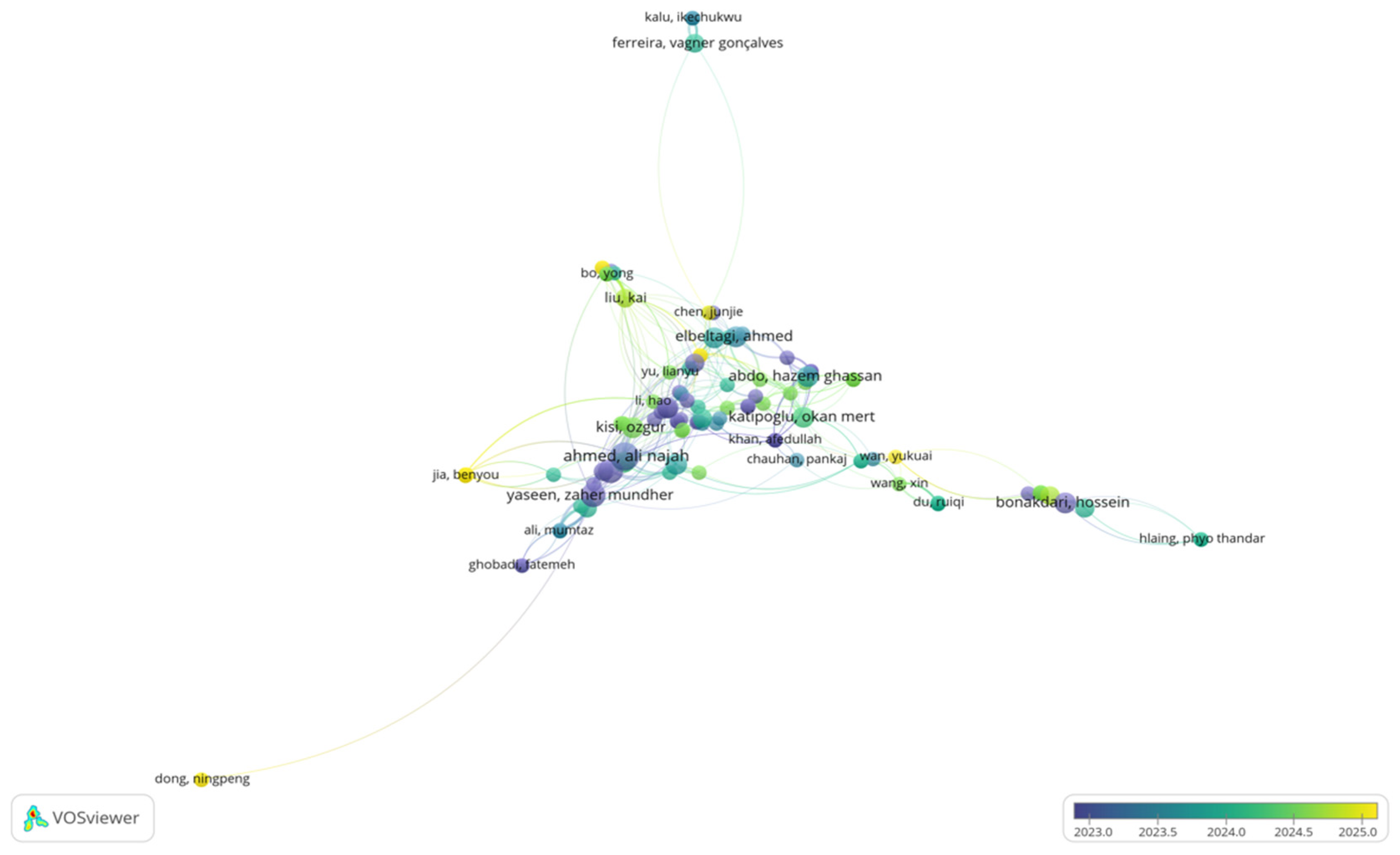
Figure 2 displays author coauthorship networks characterized by fragmented clusters with minimal interconnections (density = 0.04, modularity = 0.78). The largest cluster comprises 34 authors centered on Ahmed, Ali Najah and Elshafie, Ahmed, with strong linkages to Asian institutions. The color gradients indicate temporal evolution, with darker nodes representing earlier publications (2023) and brighter nodes representing recent contributions (2024–2025). Bo, Yong and Liu, Kai occupy peripheral positions connecting distinct research communities. The network included 68% isolates or dyads, indicating nascent field development. The notable absence of transatlantic bridges between North American and European scholars limits knowledge transfer across regions.
This structural fragmentation stems from disciplinary boundary-crossing challenges inherent in AI–water nexus research, where computer scientists lack hydrological expertise while water specialists possess insufficient computational literacy, creating collaboration barriers that partition potential networks into discipline-specific enclaves. The predominance of Asian institutional clustering reflects regional research funding structures that incentivize domestic partnerships over international collaboration, which are reinforced by language barriers and differential publication venue preferences. The absence of transatlantic bridges reveals how geopolitical research ecosystems operate independently despite shared sustainability rhetoric, with North American scholars embedded in NSF-funded networks and Europeans concentrating on Horizon programs that structurally preclude cross-Atlantic integration. High modularity (0.78) indicates that researchers exploit localized knowledge niches rather than building cumulative theoretical frameworks, perpetuating methodological redundancy as isolated groups independently rediscover solutions without cross-fertilization.
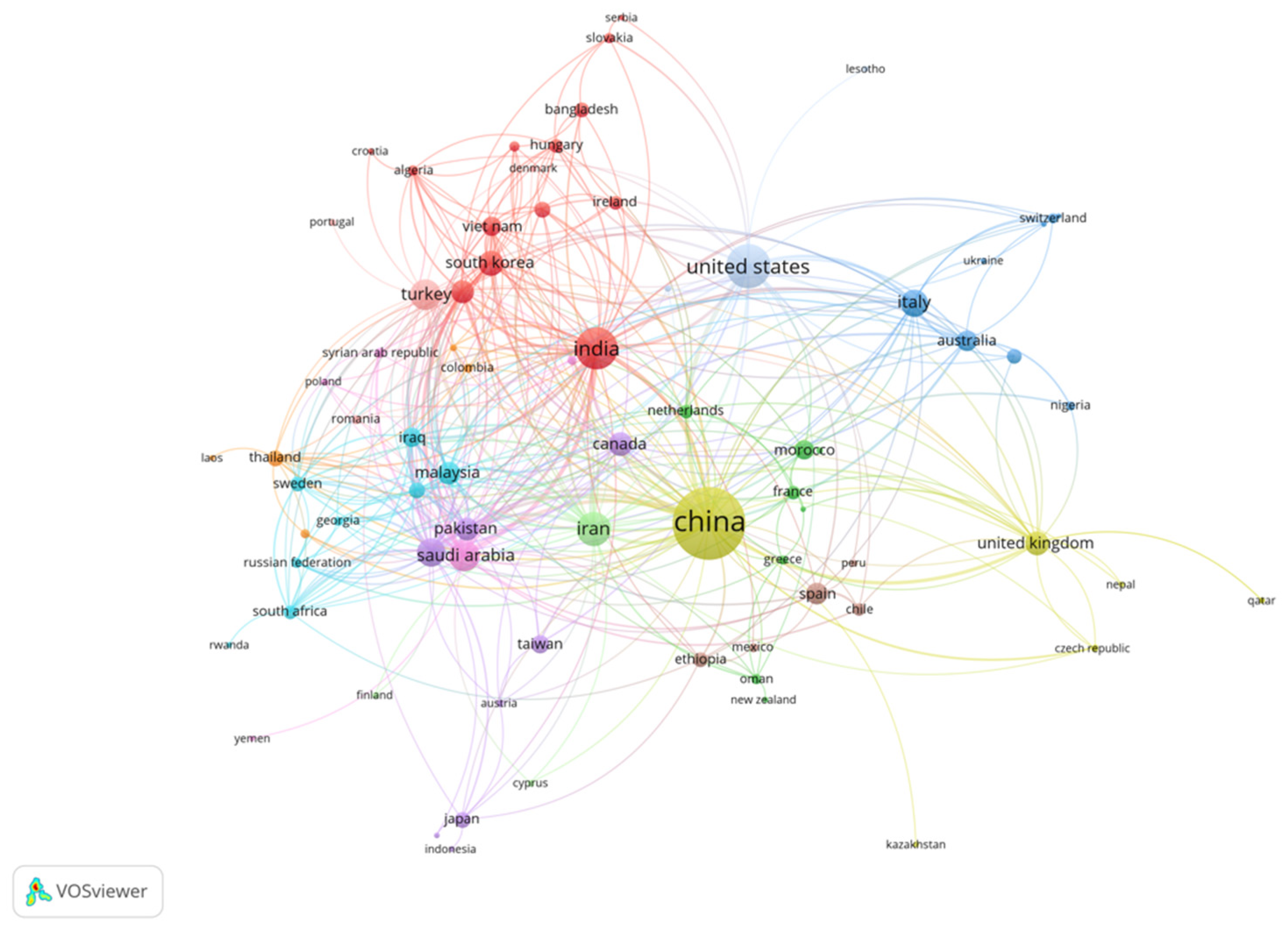
Figure 3 depicts international collaboration networks dominated by China (largest node), functioning as primary hubs linking Asian, Middle Eastern, and African research communities. India, Vietnam, and Turkey form a densely connected red cluster emphasizing South–South partnerships in water-scarce contexts. The United States, Italy, and Australia constitute a blue cluster representing developed-nation collaborations with strong intragroup ties but limited engagement with low-income countries. Iran, Saudi Arabia, and Pakistan cluster (purple) around shared arid-region water management interests. The network structure reveals center-periphery dynamics where high-income nations occupy central positions, whereas the least-developed countries remain marginalized, with only 12% of collaborations bridging this development gap.
This network topology manifests structural inequalities wherein research collaboration follows capital accumulation patterns rather than environmental interdependence, with China’s research output potentially linked to coordinated state investment in AI–environmental programs, a pattern that may reflect broader research prioritization strategies. South–South clustering (India–Vietnam–Turkey) represents strategic adaptation as middle-income nations are excluded from North-dominated knowledge networks, and autonomous research capacity is developed through horizontal partnerships that circumvent dependency on Western institutions. Limited North–South bridging (12%) exposes how technology transfer rhetoric remains decoupled from collaborative practice, as high-income nations prioritize among-peer partnerships that reinforce existing advantages rather than capacity building with resource-constrained contexts. The cluster segregation by development status rather than hydrological similarity reveals research priorities determined by funding structures and institutional capacity rather than shared water challenges, suggesting that environmental challenges alone may be insufficient to drive scientific cooperation when structural capacity asymmetries persist.
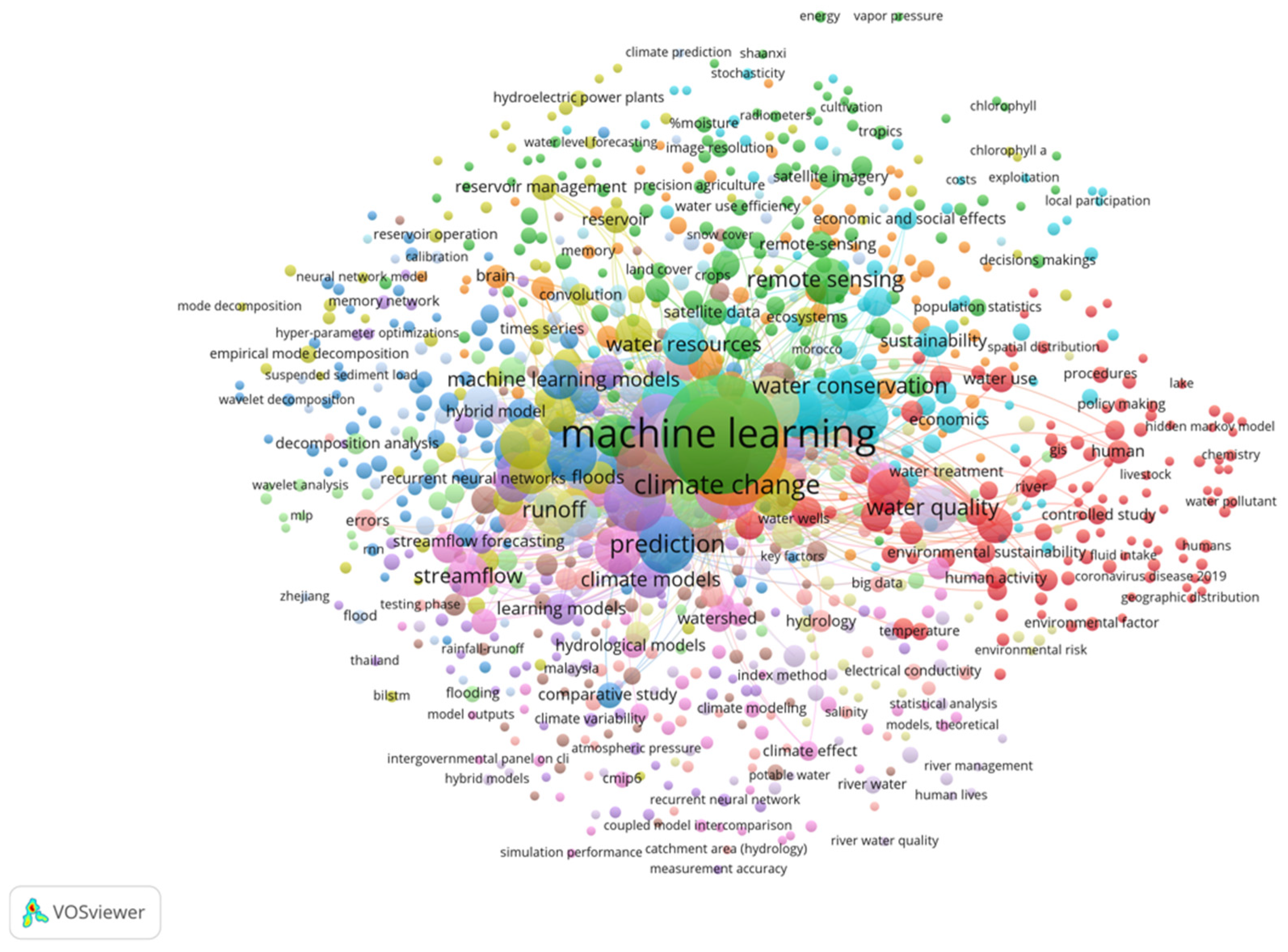
Figure 4 presents keyword cooccurrences organized into five thematic clusters. The blue cluster centers on “machine learning,” “prediction,” and “hydrological models,” representing computational methodology applications (largest by occurrence). The green cluster integrates “water resources,” “reservoir management,” and “remote sensing,” emphasizing resource assessment. The red cluster links “water quality,” “water treatment,” and “environmental sustainability,” with a focus on pollution control. The yellow cluster connects “climate change,” “floods,” and “runoff,” addressing hydrological extremes. The orange cluster highlights “remote sensing,” “satellite imagery,” and “precision agriculture,” denoting technological integration. Bridge keywords include “sustainability” (linking all clusters), “water conservation” (connecting green–red), and “climate models” (linking yellow–blue). Governance, equity, and policy terms appear fewer than eight times across the corpus, indicating that socioinstitutional dimensions receive substantially less attention than computational methodologies in this body of literature.
This thematic architecture suggests a pronounced orientation toward computational approaches prioritizing quantifiable optimization, potentially at the expense of social–institutional dimensions. Academic incentive structures may partly explain this pattern, as algorithmic innovation is more readily demonstrable through performance metrics than governance research. The dominance of prediction-oriented keywords exposes deterministic assumptions that automatically translate to improved management, eliminating political–economic barriers and preventing the translation of technical knowledge into policy action regardless of predictive accuracy. The absence of equity and governance terms (appearing <8 times) demonstrates how sustainability becomes discursively reduced to technical efficiency, eliminating distributional justice concerns and power asymmetries that determine who benefits from AI implementations. The five-cluster topology with weak intercluster bridges indicates conceptual balkanization where researchers specialize narrowly rather than synthesizing insights across domains, preventing the emergence of integrative frameworks addressing water sustainability as sociotechnical systems requiring simultaneous technical and institutional innovation rather than algorithmic solutions alone.
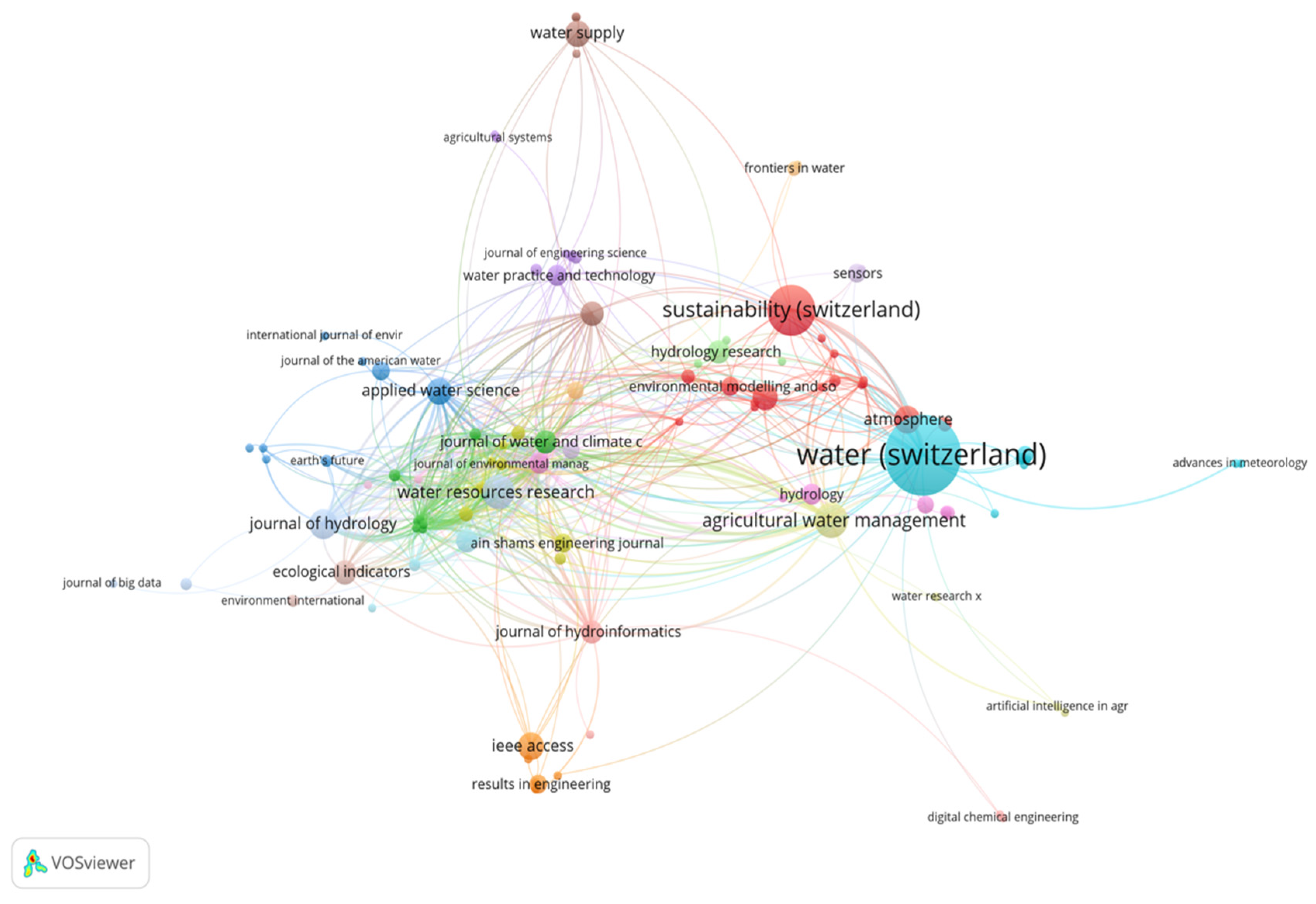
Figure 5 illustrates journal cocitation networks revealing three disciplinary clusters. The blue cluster comprises specialized water outlets (Journal of Hydrology, Water Resources Research, Hydrology and Earth System Sciences) that establish hydrological foundations (52% of citations). The red cluster integrates sustainability journals (Sustainability [Switzerland], Environmental Modeling and Software, Atmosphere), providing environmental contexts (28% of citations). The green cluster includes applied engineering sources (Agricultural Water Management, Applied Water Science, and Hydrology Research) emphasizing practical applications (20% of citations). Water (Switzerland) occupies a central bridging position across clusters. The peripheral positioning of high-impact AI venues (nature machine intelligence) indicates limited engagement with cutting-edge computational research, suggesting a methodological lag.
This citation topology exposes disciplinary asymmetries wherein AI–water research remains anchored in traditional hydrology venues rather than computational science outlets, indicating that water specialists adopt AI methodologies without reciprocal engagement from computer scientists, who view water applications as domain-specific implementations lacking theoretical novelty. The peripheral positioning of high-impact AI journals reveals field marginalization within mainstream computational research, as water applications fail to generate algorithmic innovations transferable beyond environmental contexts, consigning the domain to applied science status rather than the methodological frontier. The citation concentration in open-access sustainability journals (28%) versus specialized hydrology outlets (52%) reflects strategic publication choices where researchers prioritize accessibility and interdisciplinary visibility over disciplinary prestige, potentially accelerating knowledge dissemination while sacrificing the methodological rigor demanded by elite venues. The bridging position of water (Switzerland) indicates that this open-access outlet functions as a translational interface connecting specialized communities, although its dominance suggests that field development has proceeded through broad dissemination rather than selective advancement of high-impact contributions.
4.3. Multivariate Analysis
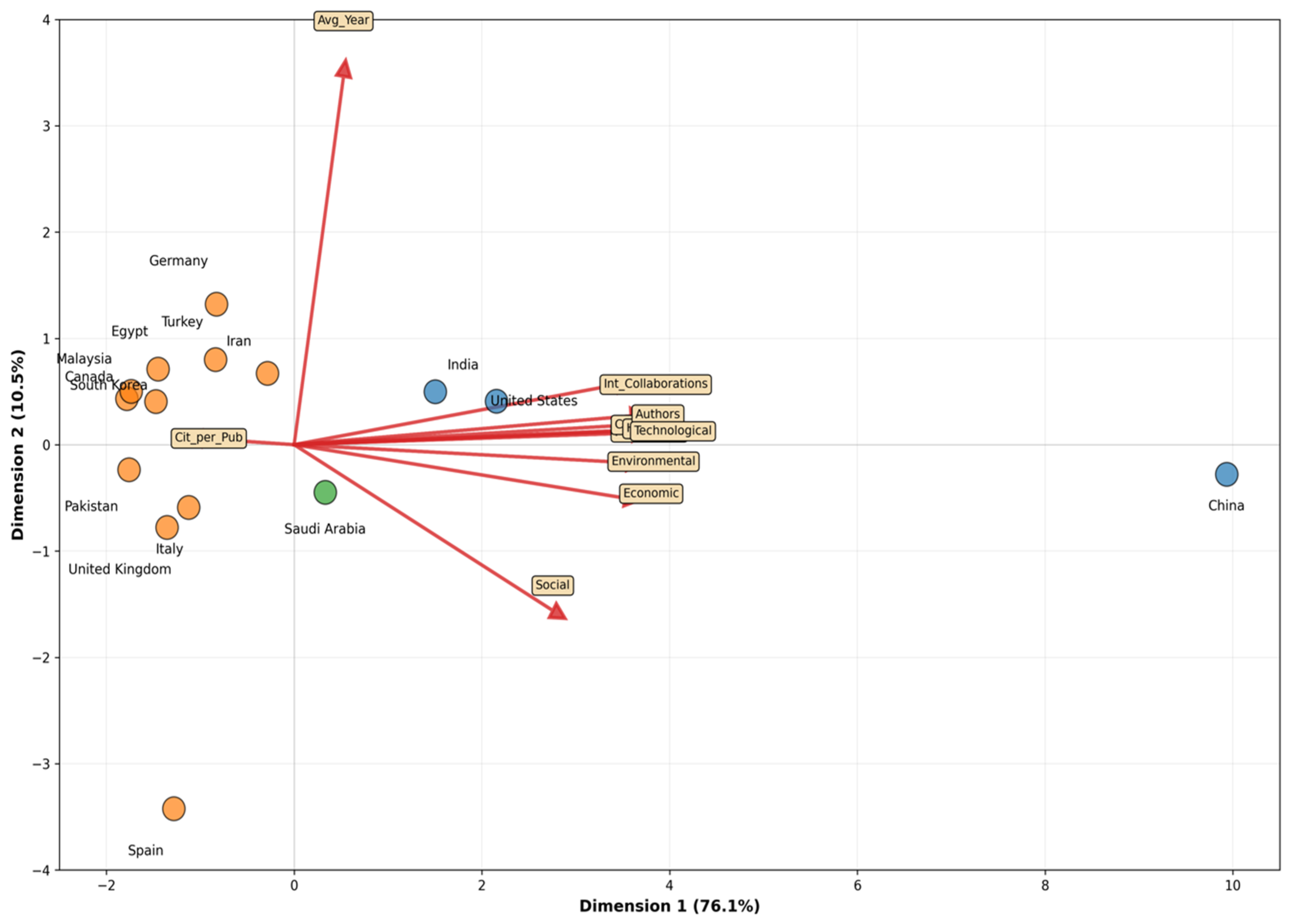
Figure 6 presents a PCA biplot explaining 86.58% of the variance across the two dimensions. PC1 (76.05%) represents a productivity gradient from high-volume research (positive loadings: Publications = 1.029, H-index = 1.030, Citations = 1.003, Technological = 1.029) to low-output contexts (negative). PC2 (10.52%) differentiates temporal patterns, with Avg_Year loading positive (0.990). China occupies an extremely positive PC1 position, characterized by exceptional volume and technological focus. The United States, India, and Saudi Arabia cluster in moderately positive PC1 space, indicating substantial but differentiated productivity. European nations (Germany, Italy, Spain) and Asian countries (Republic of Korea, Malaysia) are positioned near the origin, representing balanced moderate profiles. Iran, Turkey, and Pakistan occupy a negative PC1 space, reflecting their emerging capacity. The biplot reveals that research priorities align with national development contexts and water challenges, with capacity rather than the need to determine output levels.
This dimensional structure suggests that technological capacity is a stronger correlate of research productivity than water scarcity, with PC1’s productivity gradient (76.05% variance) capturing infrastructure differentials that enable or constrain participation regardless of hydrological urgency. China’s extreme positioning reflects deliberate state investment in converting economic capacity into scientific dominance through coordinated AI–environmental programs, validating theories of strategic research prioritization over market-driven emergence. The clustering of USA–India–Saudi Arabia in moderately positive space reveals convergence among technologically capable nations with diverse water contexts, suggesting that shared computational infrastructure creates more similarity than divergent environmental conditions create differences. European nations’ centroid positioning indicates balanced profiles lacking specialization extremes, potentially reflecting EU funding structures encouraging comprehensive approaches over concentrated excellence. PC2’s minimal temporal variance (10.52%) confirms that capacity stratification remains stable despite field growth, contradicting the assumption that knowledge democratization accompanies technological diffusion and instead revealing persistent hierarchies where early advantages compound through cumulative advantage mechanisms.
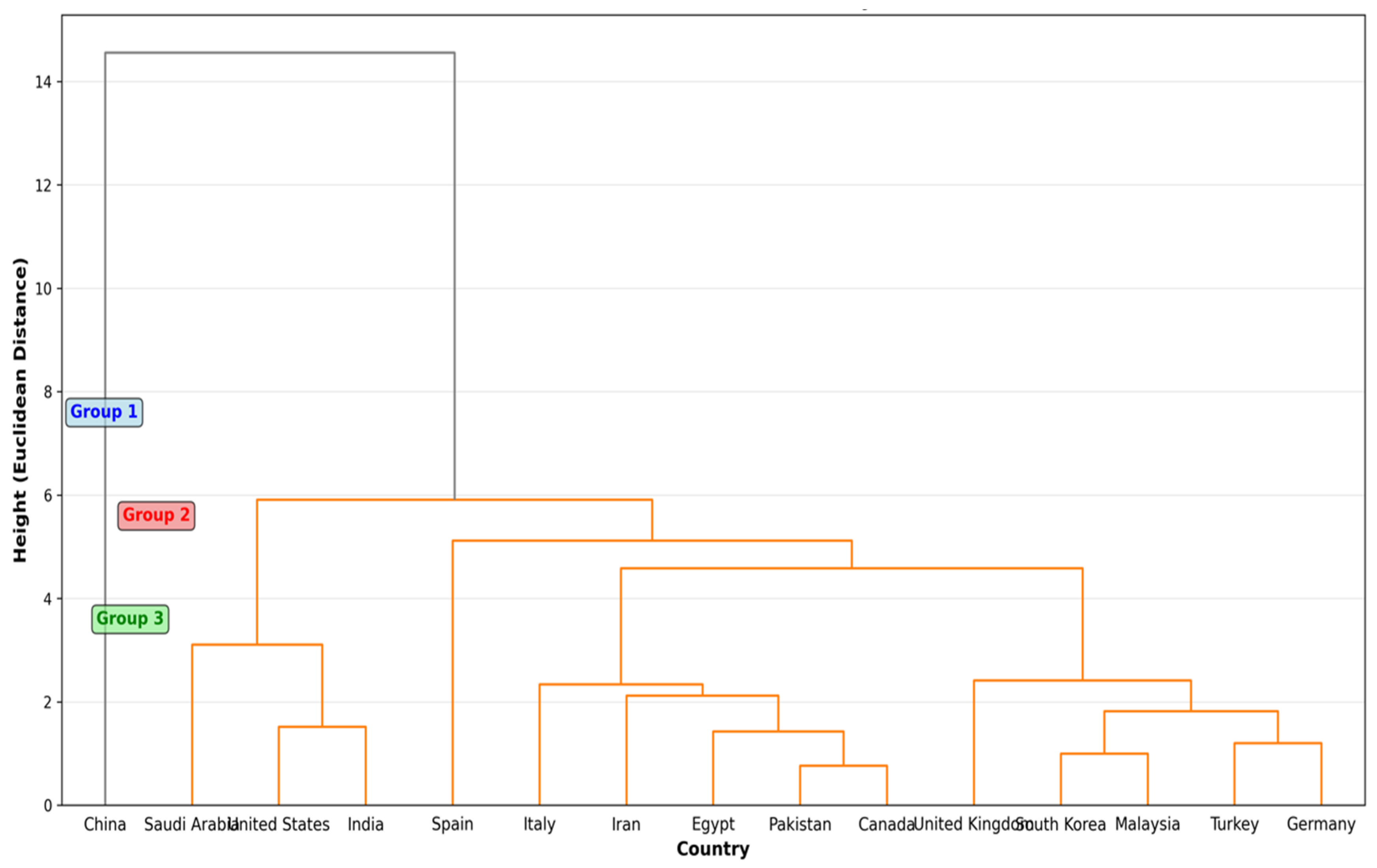
Figure 7 depicts a hierarchical dendrogram (Ward’s method, Euclidean distance) validated by a cophenetic correlation of 0.951, identifying three distinct groups. Group 1 (blue) comprises China alone and is characterized by exceptional output (160 publications, 1702 citations, H = 40) and comprehensive research programs. Group 2 (red) includes the United States, India, and Saudi Arabia, which exhibit high productivity (mean = 45.7 publications), with specialized foci reflecting regional priorities. Group 3 (green) encompasses 11 nations (Iran, Turkey, Germany, Italy, the UK, South Korea, Pakistan, Canada, Egypt, Malaysia, Spain) that demonstrate moderate productivity (mean = 19.6 publications) and emerging or consolidated research ecosystems. Clustering reveals that technological capacity differentiates groups more than geography does, suggesting that capacity-building strategies should target cross-cluster partnerships between high-producer and resource-constrained contexts.
This three-tier stratification is consistent with technological capacity being a stronger correlate of research ecosystem membership than water scarcity, though water scarcity was not directly operationalized in the PCA variables—this interpretation is based on geographic inference. China’s isolation as Group 1 demonstrates how exceptional resource concentration creates qualitative differences transcending quantitative productivity gaps. The cophenetic correlation (0.951) validates the classification robustness, indicating that groupings reflect genuine structural similarities rather than methodological artifacts, thereby confirming that capacity-based stratification represents field reality rather than an analytical imposition. Group 2’s composition (USA–India–Saudi Arabia) demonstrates that wealth alone is insufficient for top-tier membership, as India’s inclusion despite lower GDP per capita reveals how targeted AI investment enables upward mobility within research hierarchies, partially refuting strict economic determinism. The heterogeneity of Group 3 (encompassing European, Asian, and Middle Eastern nations) suggests that moderate productivity constitutes a default participation level achievable through diverse pathways, although members’ inability to transcend this tier indicates structural barriers limiting advancement regardless of national development trajectories. Clustering by capacity rather than geography contradicts regionalist theories while supporting universalist perspectives that research ecosystems transcend spatial boundaries when infrastructure permits, although the simultaneous absence of sub-Saharan African and Central Asian representations confirms that marginalization perpetuates resource-constrained contexts unable to meet minimum computational thresholds.
4.4. Synthesis of Principal Findings
Table 4 presents a frequency-based analysis of methodologies, outcomes, and challenges. This categorical distribution exposes methodological preferences reflecting trade-offs between model complexity and practical deployability, with random forest and SVM dominating (48%) over deep learning (35%), indicating that researchers prioritize interpretability and computational efficiency over marginal accuracy gains in resource-constrained implementation contexts. The concentration of applications in urban systems (73%), despite greater rural vulnerability, confirms that AI adoption follows infrastructure availability rather than needs severity, perpetuating urban–rural divides through the technological reinforcement of existing inequalities. The 68% pilot-scale limitation reveals an implementation–research disconnection wherein academic outputs remain decoupled from operational deployment, suggesting that institutional incentives reward demonstration over scaling and raising questions about claimed sustainability impacts that remain unrealized at policy-relevant scales. The data quality challenges that appear in 66% of the studies validate that infrastructure deficits constitute binding constraints overshadowing algorithmic sophistication, implying that investment priorities should emphasize measurement systems over computational advances in data-poor contexts. The limited equity consideration (22%), despite documented distributional impacts, substantiates critiques that technical optimization dominates while social justice dimensions remain peripheral, revealing how sustainability discourse becomes instrumentalized toward efficiency gains while addressing foundational concerns about who benefits and who bears costs.
Table 5 provides deeper qualitative insights into implementation contexts, theoretical contributions, and knowledge gaps.
This synthesis reveals a fundamental contradiction wherein research has concentrated on developed nations (82%), which possess both minimal marginal water stress and maximal implementation capacity, whereas regions experiencing acute scarcity remain systematically excluded from knowledge production processes. The paradox of AI infrastructure water consumption (documented in 23% of studies) undermines sustainability claims by revealing how data center cooling demands potentially offset conservation benefits, suggesting that the field operates under unexamined assumptions that computational solutions carry negligible environmental costs despite evidence contradicting this premise. The governance implementation gap wherein technical solutions develop independently of institutional frameworks capable of operationalizing them indicates that disciplinary siloing prevents the integration of computational advances with the policy mechanisms required for real-world deployment. The theoretical contributions remaining predominantly methodological (algorithmic refinements) rather than conceptual (challenging sustainability paradigms) confirm that the field operates within a technocentric epistemology that treats social-institutional dimensions as implementation details rather than constitutive elements of sustainability itself. The identification of future research priorities emphasizing technical advancement over capacity-building or equity considerations reveals how knowledge gaps are constructed through particular framings that naturalize technological solutions while marginalizing alternative intervention points targeting governance, distribution, or consumption patterns.
5. Discussion
The exponential growth trajectory from 4 publications (2018) to 167 (2025) is consistent with accelerating scholarly attention to the AI–water sustainability nexus, which is consistent with the broader technological diffusion patterns in environmental management documented by [
1,
18]. However, modest citation rates (11.35/article, H-index = 38) suggest that knowledge consolidation remains incomplete, corroborating [
9,
10] observations that the field operates as a nascent interdisciplinary niche rather than a mature domain. Three structural contradictions emerge. First, publication concentration in open-access sustainability outlets versus specialized AI venues indicates limited engagement with the cutting-edge computational research flagged by [
7]. High-impact hydrological journals demonstrate superior citation efficiency despite lower volumes, revealing quality–quantity tensions where specialized outlets maintain rigorous standards while open-access journals facilitate rapid dissemination. Second, geographic distribution replicates broader AI polarization patterns but contradicts the hypothesis in [
6] regarding water stress.
Author coauthorship networks exhibit pronounced fragmentation (density = 0.04, modularity = 0.78), supporting the hypothesis of [
6] that AI–water research lacks cohesive international communities. The predominance of isolates and dyads (68%) indicates that early-stage field development diverged from mature domains characterized by stable research groups. International collaboration reveals China’s centrality as a primary hub connecting Asian, Middle Eastern, and African institutions, extending the findings of [
18] on South–South cooperation beyond traditional North–South partnerships. However, the paucity of collaborations bridging high-income and least-developed nations (12%) substantiates the assertions of [
10,
11] that capacity-building partnerships remain underdeveloped. Emerging economies could leverage joint research programs, open-source model repositories, and South–South knowledge exchange platforms to overcome technological limitations. Network topology suggests that knowledge flows follow geopolitical hierarchies rather than hydrological connectivity, contradicting the assumption that environmental interdependence drives scientific collaboration.
Keyword co-occurrence reveals five thematic clusters with pronounced methodological emphasis, consistent with observations presented in [
6,
9] of a computational orientation in the field. The dominance of machine learning, prediction, and modeling keywords alongside agricultural and climate applications aligns with documentation in [
5,
20] of research concentrating on technically tractable problems. However, the conspicuous absence of governance, equity, and policy terms (appearing fewer than eight times across 424 studies) is consistent with critiques in [
7] that socioinstitutional dimensions receive comparatively less attention despite their relevance to implementation success. This contradicts sustainable development frameworks emphasizing integrated sociotechnical approaches, with bridge keywords indicating that conceptual integration remains superficial. The low clustering coefficient (CC = 0.42) is consistent with contested paradigmatic frameworks, supporting the argument of [
6] that theoretical consensus has not crystallized despite rapid publication growth.
Multivariate analysis reveals profound stratification extending beyond productivity differences to reveal qualitatively distinct approaches shaped by development contexts. PC1’s productivity gradient (76.05% variance) is consistent with the hypothesis that technological infrastructure capacity is a stronger correlate of research output than geographic water stress, with China’s exceptional position reflecting strategic investment in AI–environmental infrastructure documented by [
4]. It is important to note that water scarcity was not directly operationalized in the PCA; this interpretation is based on geographic inference regarding the characteristics of high-output nations. The three-cluster typology refines previous binary classifications, revealing that emerging economies such as India are transitioning from knowledge consumers to producers, as noted by [
11]. However, clustering by technological capacity rather than geographic proximity contradicts regionalist theories while supporting universalist perspectives that research ecosystems transcend spatial boundaries when infrastructure permits. The absence of sub-Saharan African and Central Asian nations from the top 15 producers despite acute water stress corroborates observations presented in [
6] regarding research marginalization and knowledge inequities, with global South countries appearing predominantly as study sites rather than knowledge generators.
Qualitative synthesis reveals persistent implementation–research disconnection, with 68% of studies remaining pilot-scale and 82% conducted in developed nations despite greater need elsewhere, corroborating observations presented in [
10,
11] of the technology development–deployment gap. The 66% frequency of data availability challenges corroborates the findings of [
9], which identified data quality as a primary constraint, suggesting that investment priorities should emphasize measurement infrastructure over algorithmic sophistication in resource-constrained contexts. Standardized open-data platforms for water monitoring could reduce entry barriers for researchers in data-poor regions. Paradoxically, AI infrastructure water consumption, documented in 23% of studies [
3,
4,
8], has potential for conservation benefits being offset by data center demands, contradicting assumptions of unambiguous environmental gains and supporting [
7], whose authors call for life-cycle sustainability assessments. The concentration of applications in urban systems (73%), despite greater rural vulnerability, corroborates observations presented in [
11] that AI adoption tends to follow infrastructure availability rather than needs severity. Rural contexts face compounding barriers including limited connectivity, unreliable electricity, absence of sensor networks, and insufficient technical capacity, which preclude AI implementation regardless of algorithmic sophistication. Methodological preferences for random forest and SVM (48%) over deep learning (35%) reflect practical trade-offs between interpretability and accuracy noted by [
27], demonstrating that context-dependent performance variations challenge universal algorithm recommendations. Limited attention to equity considerations (22%), despite documented distributional impacts, substantiates the critique of [
7] that technical optimization dominates while social justice dimensions remain peripheral.
5.1. Implications
This study documents that rapid publication growth has not been accompanied by paradigmatic consolidation or collaborative cohesion in emerging interdisciplinary fields. Fragmented network topology and a low clustering coefficient reveal persistent disciplinary silos between AI specialists and water experts despite a shared problem focus. The finding that bibliometric stratification aligns more closely with technological capacity than with environmental urgency raises questions about need-driven innovation theories and lends support to infrastructure-dependent diffusion models, with consequences for technology transfer frameworks assuming that demand drives adoption. Three-tier global stratification extends beyond binary categorizations, suggesting that theories of scientific peripheralization require refinement to capture gradations among emerging producers. The observed predominance of computational approaches is consistent with critiques of technological determinism in environmental management, highlighting the risk of decoupling technical solutions from governance contexts.
For institutional stakeholders, identified collaboration gaps between high-capacity and resource-constrained nations indicate opportunities for targeted partnership programs linking leading producers with underrepresented regions facing acute water stress. Research concentrating on specialized sustainability journals rather than high-impact AI venues suggests that scholars should pursue dual publication strategies targeting both domain-specific and computational audiences to enhance cross-disciplinary visibility. Policymakers can leverage the documented AI infrastructure water consumption paradox to develop regulations requiring net sustainability accounting rather than local efficiency metrics, preventing rebound effects. Data quality constraints appearing more frequently than algorithmic limitations imply that funding priorities should emphasize sensor network deployment and monitoring standardization before computational infrastructure in data-poor contexts. The finding that 68% of applications remain pilot-scale indicates that implementation science research is needed to bridge laboratory-to-operational gaps, with a focus on institutional integration rather than technical refinement. The urban–rural divide suggests deliberate efforts to adapt technologies for resource-constrained agricultural contexts through open-source platforms and low-bandwidth solutions. Concretely, funding agencies in data-poor regions could prioritize investments in standardized open-data monitoring platforms. International bodies could leverage documented collaboration gaps to design twinning programs pairing high-output institutions with partners in water-stressed nations. National water authorities should adopt net sustainability accounting frameworks incorporating AI infrastructure water consumption.
5.2. Limitations and Future Research
Several inherent constraints of bibliometric analyses must be acknowledged. Database coverage bias means that Scopus, Web of Science, and IEEE Xplore favor English-language, peer-reviewed publications, potentially excluding relevant research in regional databases or non-English languages. Citation-based indicators inherently favor older publications with longer accumulation windows. Reliance on Scopus, Web of Science, and IEEE Xplore excludes regional databases and non-English publications, potentially underrepresenting research from non-Anglophone regions. The 65-study corpus for qualitative analysis, while sufficient for pattern identification, limits the statistical power for detecting nuanced differences across implementation contexts. Citation-based metrics privilege established publications, potentially undervaluing recent contributions addressing emergent challenges. The VOSviewer network visualization parameters involve subjective choices affecting cluster delineation and interpretation. Additionally, since the search was conducted in November 2024, publication counts for 2025 reflect only early-access articles; the 2025 figures represent partial-year data and should be interpreted cautiously. Furthermore, the claim that technological capacity rather than water scarcity shapes research productivity rests on geographic inference, as water scarcity was not directly included as a variable in the PCA. Future studies should incorporate water stress indices (e.g., Falkenmark indicator, WRI Aqueduct scores) alongside bibliometric variables to test this relationship directly.
Future research should conduct longitudinal analyses tracking collaboration network evolution and thematic shifts as the field matures, testing whether current fragmentation represents transient or persistent structural features. Comparative bibliometric studies examining AI applications across environmental domains could identify domain-specific versus universal patterns in technology adoption trajectories. Qualitative investigations employing interviews and ethnographic methods would complement bibliometric findings by elucidating the mechanisms behind observed patterns—why collaborations form, how thematic priorities emerge, and what institutional factors enable or constrain implementation. Mixed-methods research synthesizing bibliometric mapping with a systematic review of intervention effectiveness could assess whether publication growth correlates with practical impact or reflects academic proliferation. Studies examining failed implementations and negative results, which are currently underrepresented, would provide crucial insights for realistic technology assessment. Research that explicitly addresses equity dimensions—who benefits from AI–water innovations, how costs and risks are distributed, and what governance mechanisms ensure just transitions—remains urgently needed to align technological development with sustainability principles.
6. Conclusions
This study investigated why research ostensibly dedicated to water sustainability systematically exhibits geographic concentration and a pronounced computational orientation that may be in tension with the broader sociotechnical scope of its foundational objectives. The findings reveal that these are not transient characteristics but structural features reflecting how knowledge production operates within AI–water nexus research.
The documented patterns indicate that AI–water sustainability has evolved into a technology-driven enterprise rather than a problem-driven discipline. Geographic concentration in computationally advanced nations, alongside the limited presence of water-stressed regions among top producers, is consistent with research agendas being shaped by infrastructure availability rather than hydrological urgency—a pattern that warrants scrutiny against the assumption that environmental problems catalyze scientific inquiry. The field’s observed trajectory raises concerns that existing inequalities may be reinforced unless deliberate interventions redirect priorities toward contexts where solutions are most critically needed. Collaboration network fragmentation indicates that knowledge accumulates through parallel specialization rather than integrative synthesis, meaning that expansion may proceed indefinitely without achieving the paradigmatic consolidation necessary for translating technical advances into transformative practice.
Methodologically, this study advances bibliometric analysis by integrating descriptive characterization, network visualization, multivariate statistical analysis, and qualitative synthesis into an analytical architecture transcending single-method limitations. Applying principal component analysis and Ward’s hierarchical clustering to country-level bibliometric profiles enables the identification of research stratification patterns invisible through conventional statistics, revealing patterns consistent with technological capacity as a stronger correlate of output than environmental need, though this interpretation relies on geographic inference rather than direct operationalization of environmental variables. Systematic incorporation of qualitative content analysis alongside quantitative metrics provides a framework for examining not only what is published but also what remains underrepresented, thereby identifying epistemological boundaries that may constrain field development.
Three conceptual innovations challenge the prevailing assumption. First, sustainability fields may develop strong disciplinary orientations wherein computational approaches receive disproportionate emphasis relative to socioinstitutional dimensions, a pattern observable in the keyword and thematic structure of this corpus. The near absence of governance and equity terms across 424 publications is consistent with a tendency to frame sustainability discourse in terms of technical efficiency rather than distributional justice. Second, documented AI infrastructure water consumption fundamentally challenges whether applications deliver net environmental benefits or merely redistribute impacts across scales, necessitating reconceptualization from local optimization metrics to comprehensive life-cycle accounting. Third, research stratification patterns appear more consistent with technological capacity than with geographic water stress profiles, which raises questions about the assumed alignment between environmental need and research prioritization—though direct testing would require explicit operationalization of scarcity indicators alongside bibliometric variables, suggesting that existing capacity advantages may compound over time, consistent with cumulative advantage patterns observed in scientometric research.
The field stands at an inflection point where accumulated methodological diversity has not translated into theoretical coherence or practical impact. Most research remains pilot-scale in data-rich environments, producing academic outputs without commensurate contributions to water sustainability challenges. Future progress requires fundamental reorientation from demonstrating technical feasibility toward addressing implementation prerequisites: measurement infrastructure in resource-constrained contexts, governance frameworks enabling policy translation, and equity considerations determining who benefits from interventions. The field would benefit from reflecting on whether current publication incentives—which reward algorithmic novelty—are well aligned with the broader sustainability objectives the field professes to serve, rather than prioritizing contextual appropriateness or scalability. Achieving transformative impact demands that research communities transcend disciplinary enclaves, forge partnerships bridging development divides, and prioritize knowledge creation to address actual barriers rather than problems amenable to computational methods. In the absence of deliberate intervention, AI–water sustainability research risks expanding as a fragmented collection of technical demonstrations rather than developing into an integrated scientific discipline capable of addressing the sociotechnical complexity inherent in water sustainability challenges.





 ,
,