1. Introduction
The Fourth Industrial Revolution, characterized by advancements in artificial intelligence and digital transformation, is fundamentally changing global economic structures and production processes, with significant implications for labor markets. In response, governments worldwide have intensified their efforts to promote digitalization, acknowledging the transformative potential of digital technologies to enhance productivity, employment, and economic growth [
1]. Nevertheless, the effects of digitalization on labor markets and productivity remain uncertain, as they are influenced by factors such as economic development, labor market dynamics, and the quality of human and physical capital [
2].
While digital transformation is often associated with enhancements in efficiency, cost reductions, and increased productivity, it also induces significant disruptions. These disruptions encompass a shift in labor demand toward more skilled occupations and the displacement of routine roles, resulting in structural changes in employment patterns. Reports from Ref. [
3] have emphasized uncertain long-term implications, noting that digital skills have not yet generated a sufficient number of new jobs to compensate for the loss of traditional ones. Similarly, the UNCTAD report highlighted the necessity of investigating how digitalization modifies employment structures [
4].
Although digital technologies have been extensively adopted, the growth of labor productivity has decelerated in numerous advanced and emerging economies; this phenomenon is frequently referred to as the productivity paradox [
5,
6,
7]. Despite significant investments in ICT and the widespread adoption of digital technologies, productivity in some areas has either stagnated or decreased, illustrating a perplexing paradox [
8,
9,
10]. This situation can be attributed to various factors, such as delays in the implementation process, the uneven distribution of digital innovations across different sectors, and labor market challenges, such as skill mismatches and job displacement due to automation [
11,
12,
13].
The productivity paradox is a particularly significant issue for Gulf Cooperation Council (GCC) countries. For a long time, these countries have relied extensively on hydrocarbons to fuel their economic growth, making their economies vulnerable to oil price volatility and the global shift toward renewable energy. In response to these challenges, GCC countries have introduced ambitious economic diversification strategies—most notably, Saudi Arabia’s Vision 2030, the UAE’s Digital Government Strategy, and Qatar’s National Vision 2030—aimed at fostering sustainable growth through digital transformation. Since 2020, the region has made notable strides in digital infrastructure, GovTech, and FinTech, effectively closing digital access and affordability gaps with respect to more developed economies [
14]. However, these advancements have not improved labor productivity, highlighting the persistence of the productivity paradox.
Several structural factors explain the gap between the rapid adoption of digital technologies and stagnant productivity levels. First, the shortage of digitally skilled labor constrains firms and institutions from fully leveraging new technologies; in particular, the proportion of digital jobs in GCC countries is 1.7%, which is much lower than the 5.4% reported in the EU [
15]. Second, technologies are often adopted without corresponding changes in processes, governance, or skills, leading to their underuse and inefficiency. Additionally, rigid labor markets, limited private sector innovation, and dependence on expatriate labor may hinder the spread of productivity-boosting digital practices. GCC policymakers must take measures to address this paradox, thus ensuring that digitalization efforts lead to real improvements in productivity, competitiveness, and economic resilience.
Most studies on the impacts of digitalization on the labor market have predominantly focused on advanced economies. However, there is a lack of evidence from emerging markets, particularly in the GCC region. To fill this gap, we explore the relationships between digital transformation, labor productivity, and employment structure in six GCC countries using the Autoregressive Distributed Lag (ARDL) model.
This study contributes to the literature at the intersection of digitalization, employment structure, and productivity in the GCC context, offering three integrated contributions. First, rather than relying on narrow digital proxies, we construct a multidimensional composite index—the Digital Economy and Society Index (DESI)—encompassing connectivity, human capital, integration of digital technologies, and digital public services, thereby addressing the measurement limitations inherent to single-indicator approaches and extending the evidence base beyond recent studies [
16,
17]. Second, we expand the empirical framework to a GCC-wide panel that jointly examines economy-wide employment, sectoral employment (agriculture, industry, and services), and labor productivity. This scope matters due to the pronounced sectoral differences in technology adoption, skills, and adjustment costs in the GCC, while prior works have typically focused on total employment [
16] or a single country [
17] with limited sectoral or regional coverage. Third, we explicitly address endogeneity, including potential reverse causality between digitalization and labor productivity. Empirically, we employ a dual strategy—namely, a panel ARDL framework to identify long-run relationships, complemented by System-GMM as a robustness check against simultaneity—that has not been utilized in prior GCC studies.
The remainder of this paper is organized as follows: In
Section 2, we present a review of the literature. In
Section 3, we present a graphical exploration of the DESI and its relationships with specific labor market outcomes. In
Section 4, we detail the empirical methodology adopted. In
Section 5, we present and discuss our findings. In
Section 6, we provide a robustness check analysis. Finally, in
Section 7, we conclude by summarizing our key findings and the associated policy implications.
2. Literature Review
The concept of a digital economy pertains to economic sectors influenced by digital transformation. As outlined by the [
3], there are two common methods for defining and measuring the digital economy.
The first is a “bottom-up” approach, which focuses specifically on economic activities that produce information and communication technology (ICT) goods and digital services, thereby supporting the digitalization of the economy. In contrast, the “top-down” approach covers a broader range, including any economic activity enhanced using ICT goods and digital services. This view emphasizes the widespread impact of digitalization on the economy.
Numerous definitions of the digital economy have been proposed, highlighting its multi-dimensional nature. Digital transformation generally refers to the ongoing technological revolution that is reshaping value chains in transformative ways and creating new opportunities for value addition and structural change [
4]. It has also been described as the integration of digital technology into business operations, which leads to changes in business processes [
18]. Furthermore, Ref. [
19] defined digital transformation as a change driven by the widespread adoption of digital technology that generates, processes, shares, and transfers information. This transformation involves conducting activities in a novel, digital manner and is closely linked to the digital revolution.
The literature refers to various indices employed to evaluate the development of the digital economy, highlighting a wide range of digital economy indicators. Among the most widely recognized measures is the Digital Adoption Index, a global index developed by the World Bank. This index is based on three primary dimensions—people, government, and business—and focuses on the “supply side” of digital adoption. Another notable index is the Enabling Digitalization Index, which was calculated in 2018 for 115 countries. This index assesses the capacity and agility of nations to support digital enterprises and assist traditional businesses in leveraging the advantages of digitalization. Additionally, the Digital Economy and Society Index, introduced by the European Union in 2014, offers a comprehensive framework for evaluating the various facets of digital transformation. It comprises 37 indicators across 4 dimensions: connectivity, human capital, integration of digital technology, and digital public services. In our study, we concentrate on the Digital Economy and Society Index and explore its relationships with selected labor market outcomes.
Extensive research has examined the effects of digitalization on employment, revealing the complexities of technological transformation. Numerous studies have confirmed that digitalization significantly transforms the nature of work in several ways, such as decreasing routine tasks through automation and increasing the need for highly skilled technical workers [
20,
21]. This aligns with the theory of skill-biased technological change, which argues that technological progress boosts the demand for skilled labor while lowering the demand for unskilled labor, leading to job polarization. Conversely, alternative views highlight the compensatory effects of technological progress, suggesting that digitalization can promote faster job creation and offset displacement through the emergence of new jobs and industries [
22,
23,
24]. These effects include productivity-driven growth, cost reductions that improve competitiveness, and new markets created by digital platforms and AI services. Importantly, the impact of technology on employment varies significantly, with studies reporting significant differences across sectors, occupations, and skill levels. Workers with low- and medium-level skills face a higher risk of job loss, while highly skilled workers benefit from the increased demand for digital skills [
21,
25].
According to the Petty–Clark theorem, digitalization drives a structural transformation in employment, shifting labor from agriculture in the primary sector to industry in the secondary sector and ultimately to services in the tertiary sector as economies develop [
26]. Digitalization functions as a catalyst in this process, promoting a service-oriented economy by augmenting service-based activities and reducing reliance on traditional production methods [
27]; however, the impact of automation varies significantly across industries. Empirical studies have indicated that the agriculture and manufacturing sectors are more prone to automation because their tasks are routine and can be easily codified. In contrast, the service industry generally shows more resilience, especially in roles that require interpersonal skills and cognitive flexibility [
28].
The impact of digital transformation on labor productivity remains a subject of ongoing debate. Classical and endogenous growth theories suggest that technological progress enhances productivity through mechanisms such as capital deepening, knowledge spillovers, and efficiency gains [
29,
30]; however, empirical evidence in this context has been inconsistent, leading to the emergence of what is commonly known as the productivity paradox [
5]. This paradox highlights that despite the significant increase in digitalization over recent decades, productivity levels in advanced economies have stagnated and, in some cases, even declined.
Various theories have been proposed to explain this phenomenon. One explanation involves structural constraints, such as premature industrialization and sectoral rigidities, which may hinder the reallocation of resources toward higher productivity activities [
31]. Another factor is digital price deflation, where the rapid decline in the cost of digital goods and services is not fully captured in output measures, potentially leading to an underestimation of real productivity improvements [
32]. Additionally, the uneven distribution of digital technologies across different firms, sectors, and countries results in notable differences in productivity outcomes, with leading firms gaining most of the benefits while others fall behind [
33].
Recent studies in advanced economies have consistently indicated that digitalization exerts a positive, albeit variable, influence on firm-level productivity. Reference [
34] asserted that the integration of digital technologies is closely linked to productivity enhancements, particularly within the manufacturing sector and industries characterized by routine and intensive tasks. However, these improvements depend on firms having strong managerial capabilities and a skilled workforce, indicating that digital technologies alone are not sufficient without supporting organizational resources.
The European Central Bank has acknowledged that the integration of digital technologies can foster medium-term productivity growth. However, the extent of these advantages is largely reliant on continuous investments in intangible assets (e.g., software, data, and organizational capital) in addition to workforce development. Moreover, the ECB pointed out that the returns from digital technologies are not uniform, and improvements in productivity often require time to materialize due to the essential processes of organizational restructuring and learning [
35].
Micro-level analyses offer deeper insights into the effects of digital transformation on labor productivity. Reference [
36] revealed that digitalization enhances labor productivity by optimizing management processes, reducing operational redundancy, and improving decision-making. They highlighted the role of industry structure, such as monopoly power, in determining the extent of productivity gains in an industry. In the context of emerging economies, Ref. [
37] provided evidence from Chinese SMEs that demonstrated a U-shaped relationship between digitalization and labor productivity. While early digital adoption may temporarily lower productivity due to adjustment costs and implementation challenges, the advantages become more evident as firms digitally mature.
These studies indicate that while digitalization has significant potential to boost firm productivity, its success relies on various enabling factors, including managerial quality, human capital, industry characteristics, and the levels of digital adoption and maturity. These insights offer a valuable foundation for investigating similar dynamics in other regions, such as GCC countries, where digital transformation is advancing quickly but remains relatively underexplored in firm-level research.
The impact of digitalization on productivity remains unclear in emerging markets. Reference [
38] showed that adopting information and communication technology (ICT) leads to only a modest boost in total factor productivity (TFP) growth in developing countries. This limited effect is linked to structural issues, skill gaps, and weak institutional frameworks. Reference [
2] examined the relationships between the digital revolution and employment in 25 developing countries and found that Malaysia, Chile, and China have effectively leveraged the digital revolution to generate increased employment opportunities. Conversely, Turkey, South Africa, and Jordan did not experience the anticipated growth in job creation.
In contrast, research concerning GCC countries remains relatively limited. Existing studies have predominantly focused on the employment effects of digital transformation, often relying on broad indicators that mask sector-specific differences and underlying structural dynamics. Additionally, there is a significant gap in understanding labor productivity. While theoretical models propose that digitalization might boost productivity, there is a distinct lack of empirical evidence supporting this idea in GCC economies.
The authors of Ref. [
16] utilized a panel Autoregressive Distributed Lag (ARDL) model to analyze data from GCC countries between 2000 and 2020. Their findings indicated that the development of information and communication technology (ICT) has a negative and statistically significant effect on employment in the industrial and service sectors; however, its overall impact on employment was positive (albeit limited). Reference [
17] employed the ARDL-ECM methodology over the period 2001–2019 and identified a positive correlation between fixed broadband subscriptions and employment in Saudi Arabia’s service and industrial sectors. Conversely, mobile subscriptions and communication service imports exhibited no significant short-term impacts on service sector employment and exerted a negative influence on the industrial sector. In the long term, all digital variables contributed to a reduction in unemployment, suggesting that their effects on the labor market are contingent on skill levels. The authors of Ref. [
39] examined how digitalization, industrialization, and financial development affect environmental sustainability in GCC countries using STIRPAT-based long-run estimators. Their results show that digitalization improves environmental quality over the long term, whereas industrialization and financial development increase ecological degradation. Recently, Ref. [
40] investigated the productivity effects of digital adoption in GCC economies using a composite digital index (CDI) and panel estimators for 2000–2023. The study finds that digital adoption significantly boosts labor productivity, but the magnitude of this effect is shaped by institutional quality, with stronger governance enhancing the gains and oil-rent dependence reducing them.
3. Descriptive Analysis
This section presents a graphical exploration of the DESI and its relationships with specific labor market outcomes.
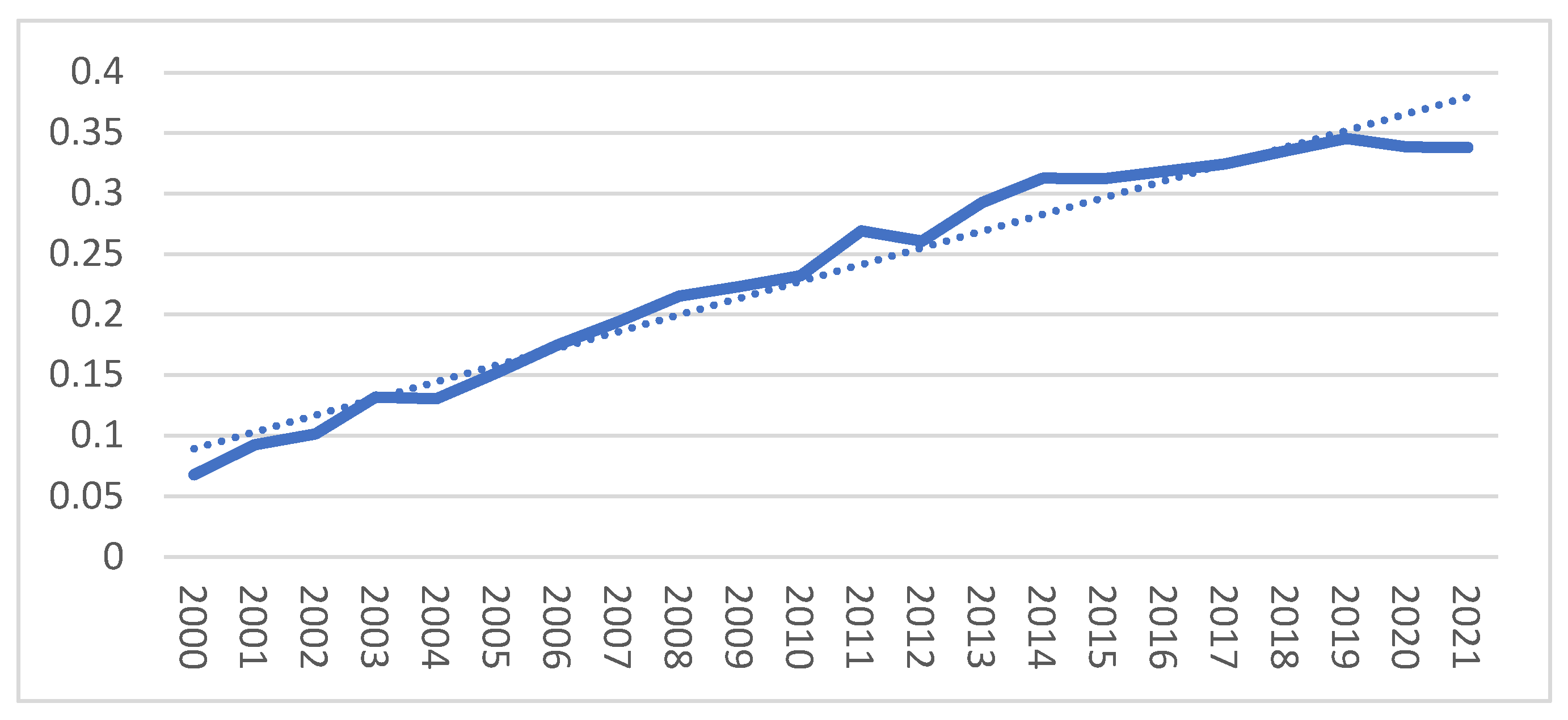
Figure 1 traces the GCC-wide evolution of the DESI region, highlighting a steady upward trend over the sample period. This pattern is consistent with sustained regional investment in digital infrastructure and connectivity, as well as expanded initiatives in digital skill development across GCC economies.
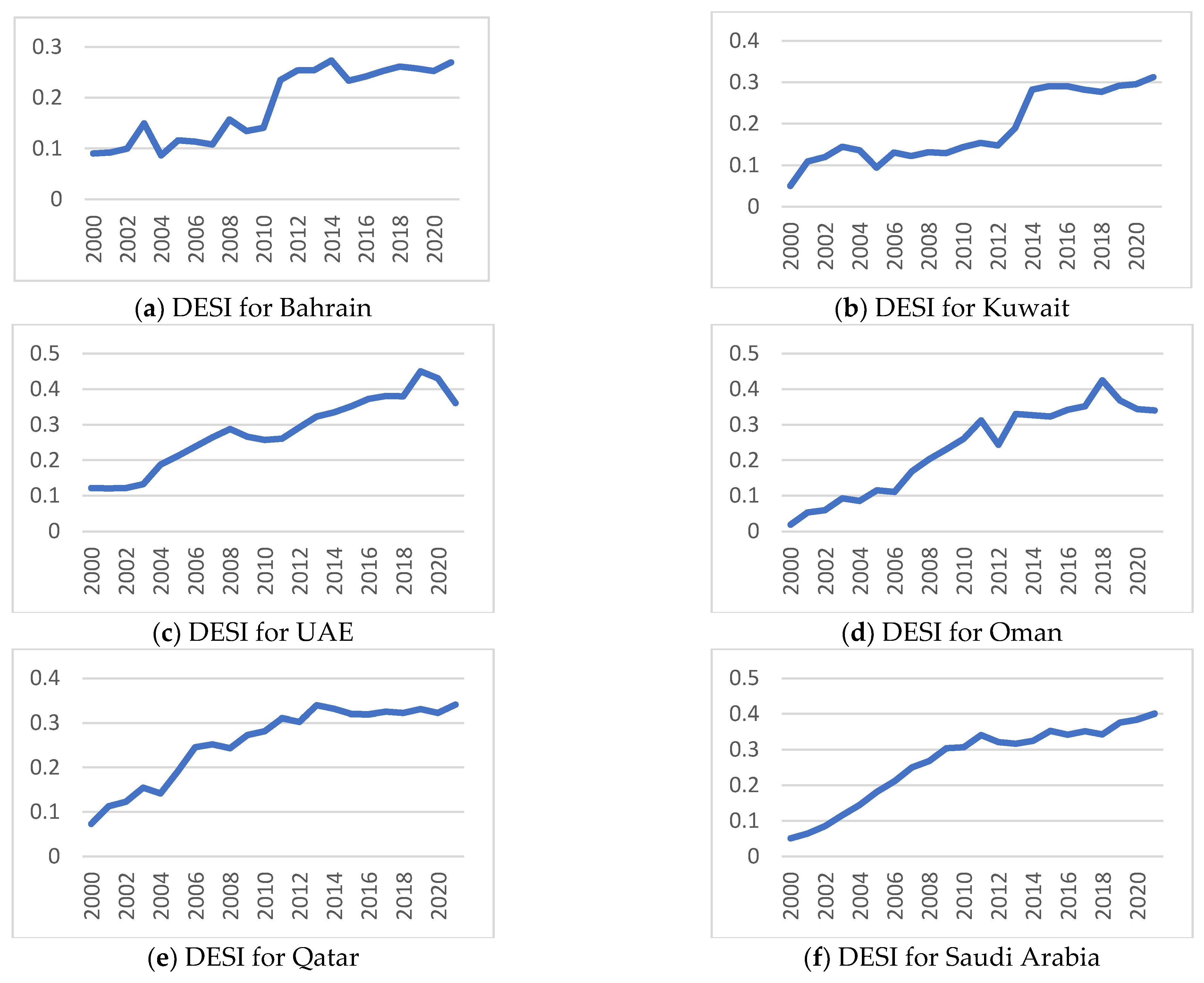
Figure 2 breaks this trend at the national level, showing that progress in digital transformation varies across the GCC countries. While some countries have advanced rapidly—likely due to targeted policy frameworks, significant levels of investment in information and communication technology (ICT), and the active adoption of new technologies—others have advanced more slowly, indicating structural, institutional, or resource constraints.
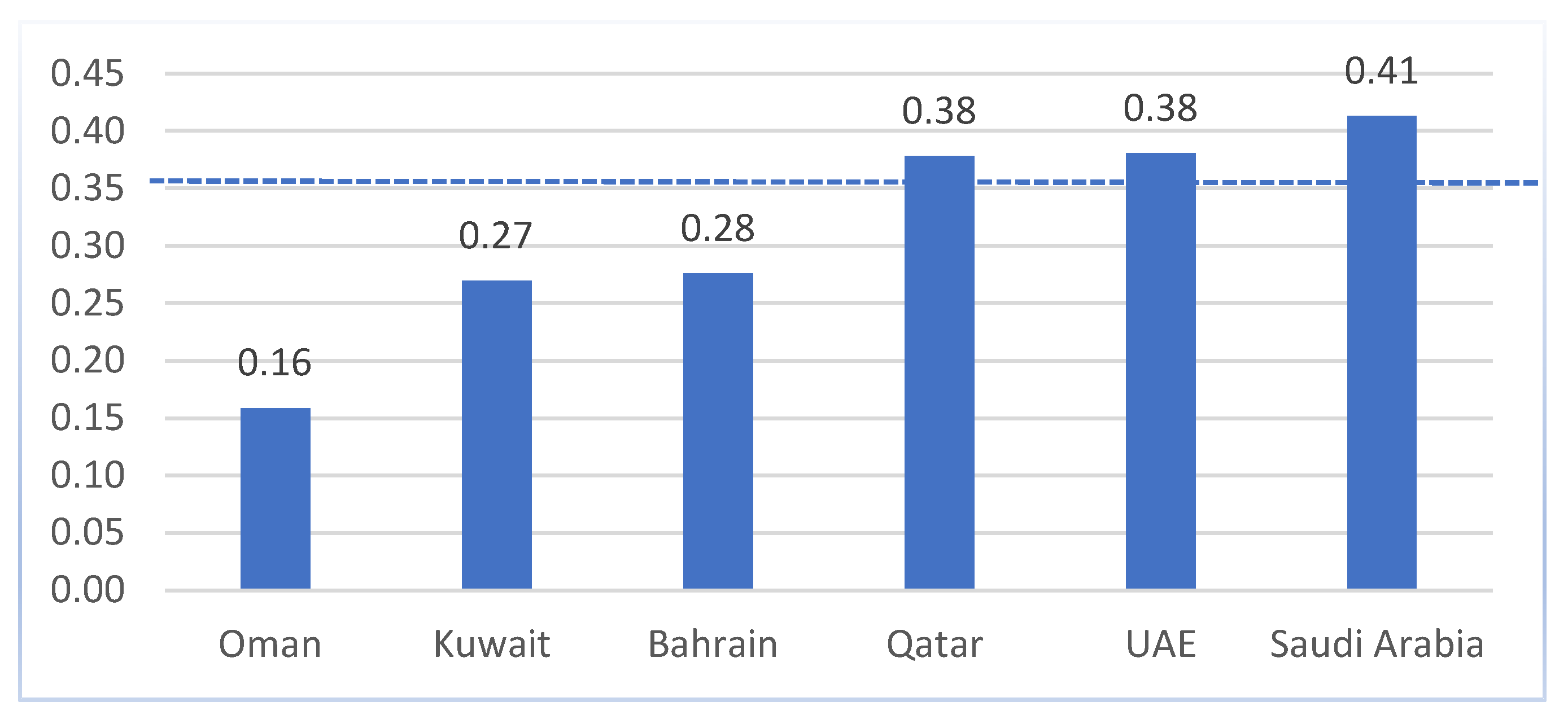
Figure 3 indicates that Saudi Arabia leads the GCC in digital transformation (DESI: 0.41), followed by the United Arab Emirates (UAE) (0.38) and Qatar (0.32). At the same time, Bahrain and Kuwait remain below the 2022 regional average, and Oman recorded the lowest score in the region. The GCC countries fall into two clusters: “Digital Learners” (Oman, Kuwait, and Bahrain (DESI < 0.35)), where policy priority centers on basic connectivity and foundational adoption, and “Digital Adopters” (Qatar, Saudi Arabia, UAE (DESI: 0.35–0.60)), which have established connectivity standards and now emphasize talent development, digital innovation, and localization of digital services.
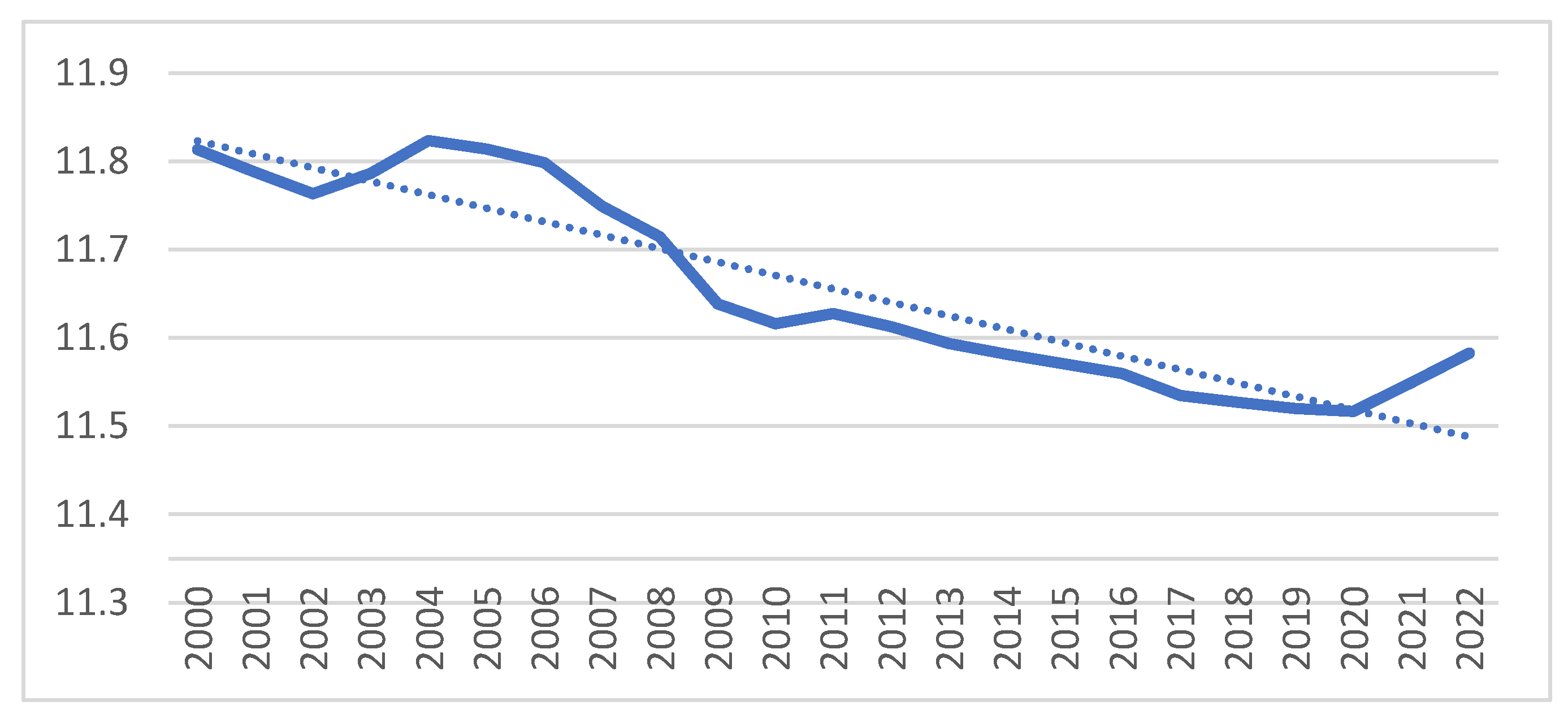
Figure 4 shows a steady decline in labor productivity from 2000 to 2022, reflecting a decrease in labor efficiency. All countries experienced a drop in labor productivity, ranging from −3.52% in Bahrain to 0.015% in Qatar. While some countries, such as Saudi Arabia, Qatar, and the UAE, have recently shown signs of recovery, others, such as Oman, continue to present shrinking output per worker. The main causes of these negative trends include a lack of economic diversification, dependence on low-productivity sectors, insufficient investment in skills and technology, and additional challenges such as rapid population growth and fluctuating oil prices.
Dividing the period into two separate sub-periods—2000–2011 and 2012–2022—the most significant downturn was experienced in the first phase, with losses from −6.53% in Kuwait to −1.88% in the UAE. This sharp decline was mainly caused by major economic shocks, which are marked by high volatility in economic growth and a steep drop in global commodity prices, rather than digitalization.
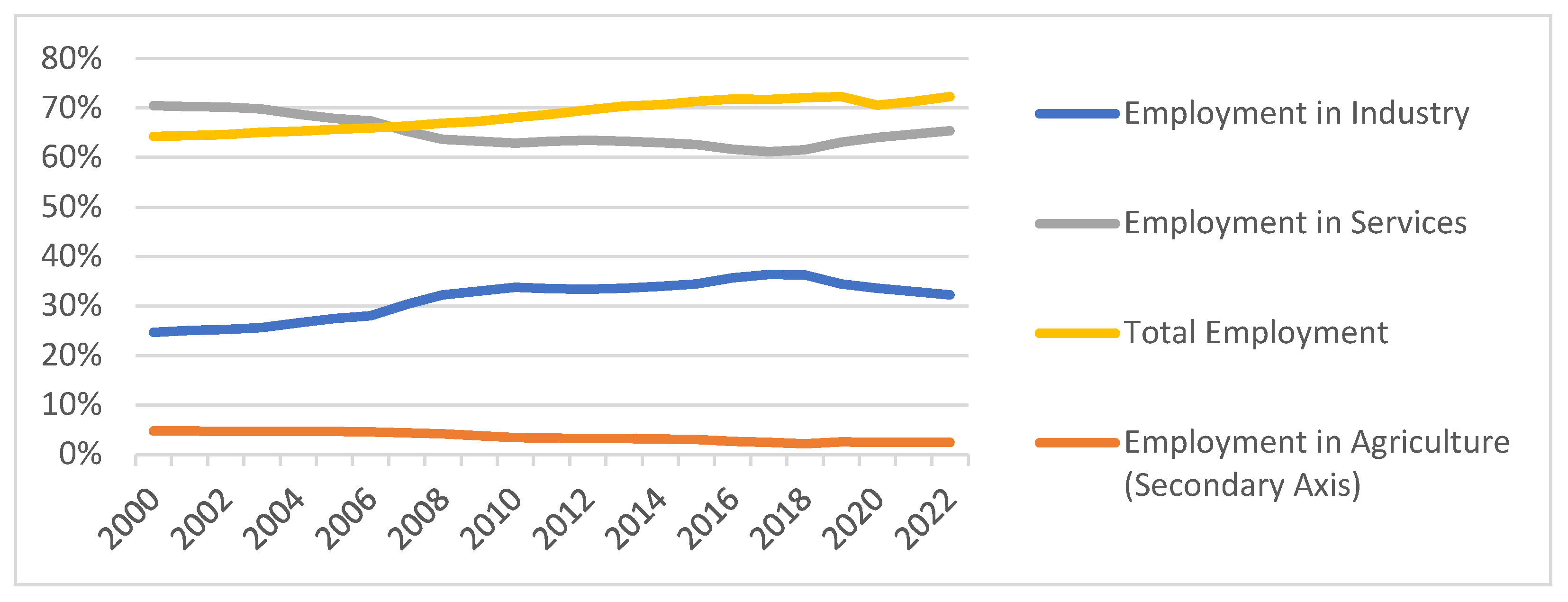
Figure 5 shows steady increases in total employment and in both the service and industry sectors, with services emerging as the fastest growing and increasingly central component of the region’s labor market. Meanwhile, the industrial sector has experienced moderate but consistent growth. By contrast, the agriculture sector makes up the smallest share of total employment—less than 2% of total employment in most GCC countries—and continues to decline, underscoring the sector’s diminishing role.
5. Empirical Results
Table 5 reports the cross-sectional dependence (CD) statistics [
47], and the null hypothesis of no cross-sectional dependence is rejected at the 1% significance level for all variables. This result highlights the potential influence of common shocks, such as the global financial crisis and global oil price shocks.
Table 6 reports the second-generation Pesaran–Shin (CIPS) unit root test results, indicating the level stationarity for the human capital index, employment in the service sector, and investment—i.e., these series are
, while all other variables are
. This mixed order of integration enables the use of the ARDL framework.
Following the panel unit root analysis, we applied the second-generation panel cointegration test proposed by [
48]. This approach is particularly robust in the presence of cross-sectional dependence and is designed to detect long-run equilibrium relationships between variables. The results presented in
Table 7 indicate that the null hypothesis of no cointegration was rejected at the 1% significance level across all model specifications, confirming the existence of a long-term relationship between digital transformation and labor market outcomes. Given the presence of cointegration, long-run elasticities are well-defined and can be estimated without concerns regarding spurious regression. Furthermore, an Error Correction Model (ECM) can be employed to distinguish between long- and short-run dynamics, as well as to quantify the speed of adjustment back to equilibrium.
Table 8 presents the long- and short-term effects of digital transformation on labor productivity using the MG, PMG, and DFE estimators. The Hausman test was conducted to identify the most efficient and reliable estimators. The test resulted in a
-value of 0.38, which was well above 0.05. Therefore, the null hypothesis was strongly rejected, indicating that the PMG estimator effectively captures both the long- and short-term relationships between the variables, and thus, is most suitable.
The digitalization variable was statistically significant and consistently demonstrated a negative impact on labor productivity. Specifically, the PMG estimator’s coefficient for digitalization was −3.119. Although the magnitude of this effect was somewhat reduced when using the MG and DFE estimators, the negative sign remained consistent across all models, reinforcing the robustness of this finding. The findings reveal that digital transformation in the GCC region has not yet significantly boosted labor productivity. Although there have been notable advancements in digital technologies, such as enhanced mobile technology, broader internet accessibility, and the progression of artificial intelligence, these developments have not yet led to a measurable increase in productivity at the macroeconomic level.
The productivity paradox is notably evident in the GCC region, where significant investments in digital technologies have not yet translated into substantial productivity gains [
8]. Numerous structural and institutional factors contribute to this issue. First, although many firms have access to advanced digital infrastructure, their ability to effectively implement productivity-enhancing digital tools remains limited. Consequently, most GCC economies are classified as digital learners or early adopters, rather than digital leaders. Second, the lack of digital skills hinders the productive use of digital technology in the region. Consequently, the benefits of digital innovation can only be realized after significant investments in digital skill development. Finally, the labor market in the GCC region mainly consists of low- and semi-skilled foreign workers, especially in sectors such as construction, retail, and services. These industries typically respond less to technological investments than capital-intensive sectors such as manufacturing.
The human capital index had a positive and statistically significant coefficient, indicating that improvements in human capital significantly boost the ability to adopt and use new technologies. This supports endogenous growth theories, which emphasize the importance of education and skills in fostering innovation and enhancing productivity.
The positive correlation between gross fixed capital formation and labor productivity highlights the complementary roles of physical and intangible investments in boosting economic performance. The results prove that a 1% rise in investment leads to a 0.34% increase in productivity, highlighting capital accumulation as a key driver. This aligns with neoclassical growth theory, which focuses on capital deepening as a growth mechanism, and endogenous growth models, where asset investment supports innovation.
The short-term estimation results provide further insights into the dynamic adjustment process of the long-term equilibrium. The error correction term was negative and statistically significant, confirming the existence of a long-run relationship between the variables. The coefficient of the DESI was significantly negative, indicating that digitalization initially hampers labor productivity due to transitional costs such as those associated with restructuring, workforce adaptation, and the time needed for investments to yield returns. Regarding the accumulation factors, short-term estimates demonstrated that human capital does not significantly boost labor productivity immediately, likely due to the lag effect of human capital. In contrast, physical capital accumulation was found to have a positive and significant effect on labor productivity.
Table 9 presents the impacts of digitalization on total employment. The results reveal a positive and statistically significant long-term relationship between digital transformation and the total employment rate. Specifically, a 1% enhancement in the DESI leads to a 0.25% increase in the employment rate, providing robust empirical evidence that digitalization fosters job creation. Several mechanisms can explain the positive effects of digital transformation on employment. First, digital transformation enables organizations to scale their production and employ additional workers, despite the prevalence of automation. Furthermore, digitalization increases the productivity of skilled labor, leading to increased demand for high-skilled positions and related employment opportunities in sectors such as logistics and marketing. Moreover, digitalization stimulates the development of new markets and products; platforms such as e-commerce and FinTech introduce novel job categories and lower entry barriers for small- and medium-sized enterprises, thereby promoting entrepreneurship [
22,
23,
24].
However, reconciling the positive employment effects of digitalization with the productivity paradox remains challenging. In most GCC countries—which primarily act as digital adopters rather than frontier innovators—digital adoption tends to enhance employment through scale and diffusion effects. However, measured productivity often lags due to reorganization costs, delayed returns on intangible investments, and structural inefficiencies in labor markets.
Real GDP was found to exert a positive influence on employment, consistent with the growth–employment nexus, as economic expansion boosts labor demand through increased production, investment, and business activity. In contrast, the working-age population (15+) shows a negative effect on employment, which can occur when labor-force growth outpaces the creation of new jobs, thereby intensifying pressure on the labor market—particularly in economies with structural rigidities, limited diversification, or skill mismatches.
The error correction coefficients were both significant and negative, suggesting the presence of a long-term co-integration relationship between the variables. The short-run coefficients for the DESI, RGDP, and POP were consistent with those observed in the long-run; specifically, the DESI and RGDP have positive effects, whereas POP negatively influences total employment.
Table 10,
Table 11 and
Table 12 present the sector-specific impacts of digital transformation on employment in the agriculture, industry, and service sectors. The Hausman test indicated that the PMG provides more consistent and efficient estimates than the MG and DFEs.
The long-run estimates indicated a positive and statistically significant relationship between digital transformation and industrial employment. Specifically, a 1% rise in the DESI correlates with a 0.53% increase in industrial employment. In GCC countries, the industrial sector is typically characterized by low technology intensity and a high proportion of low-skilled labor. Digital advancements have expanded employment opportunities in this sector by generating new occupations and increasing labor demand. This finding contrasts with that by [
16], who reported that ICT adoption has a negative effect on industrial employment in GCC countries.
In contrast, the long-term coefficients for the agriculture and service sectors were negative, indicating that digitalization reduces employment in these sectors. Specifically, a 1% increase in the DESI was associated with a 0.09% decline in agricultural employment and a 0.61% decline in service employment, reflecting the structural constraints identified in studies such as that by [
49]. The decline in employment in the agricultural sector is mainly due to its low value-added output and its limited ability to adopt digital technologies. As digital adoption accelerates, the primary sector faces significant challenges in adapting, leading to a reduced demand for labor. Although the service sector is highly technology-intensive and employs many skilled workers, digital transformation poses certain challenges. In the GCC context, a shortage of skilled local labor limits the ability to adopt digital innovations, leading to a decline in employment in the sector.
In the short term, the error correction coefficients were both significant and negative, suggesting a long-term co-integration relationship between the variables. The short-run coefficients align with those observed in the long run, providing evidence that the digital economy affects various economic sectors.
7. Conclusions and Policy Recommendations
The GCC countries have significantly invested in digital infrastructure and technology as part of their diversification efforts, such as Saudi Arabia’s Vision 2030, the UAE’s Digital Government Strategy, and Qatar’s National Vision 2030. These initiatives have led to notable progress in digital infrastructure, connectivity, and public services. However, despite widespread digital adoption, the region still faces ongoing challenges such as stagnant labor productivity, skill gaps, and uneven benefits across sectors. This contrast raises important questions about whether digitalization delivers the expected economic advantages.
This study empirically evaluated the impacts of digital transformation on labor market outcomes in the GCC countries from 2000 to 2022. Employing a composite Digital Economy and Society Index (DESI) and a panel Autoregressive Distributed Lag (ARDL) model, it investigated both short- and long-term relationships, providing insights into the intricate links between digitalization and labor markets. Three principal findings were obtained. First, digital transformation is associated with increased overall employment, suggesting that the adoption of digital technology may create jobs. Second, the observed negative correlation with labor productivity indicates the “productivity paradox”—a pattern consistent with transitional frictions, where productivity gains lag behind technological investments. Third, the effects of sectoral reallocation are significant: industrial employment rises with digitalization, while employment in the agriculture and service sectors declines. This indicates that digitalization is intensifying structural change while also displacing routine work in sectors that have not yet completed complementary upgrades (e.g., skills, organization, and capital deepening).
The findings of this study identified the shortage of skilled professionals as a significant barrier to enhancing productivity through digitalization. To address these challenges, it is imperative to prioritize the enhancement of STEM education, the provision of advanced technical training, and the promotion of lifelong learning opportunities in fields such as artificial intelligence, data analytics, cybersecurity, and cloud computing. These measures can effectively prepare the workforce for high-tech roles in the future.
The productivity paradox highlights the importance of investing in areas beyond physical infrastructure; for example, policymakers should encourage the development of intangible assets, such as software, data platforms, and organizational capital.
The observed heterogeneity in employment effects across sectors requires tailored policies. For the industrial sector, policies should promote the development of advanced manufacturing technologies, such as the IoT and robotics. These technologies can enhance efficiency, sustain job creation, and improve industry productivity. In the agricultural sector, emphasis should be placed on reversing the decline in employment and enhancing value-added outputs through the implementation of digital technology, such as smart irrigation systems and digital extension services. For the service sector, where employment has contracted due to automation and skill shortages, reskilling initiatives must aim to transition workers into tradable digital services such as FinTech, HealthTech, and EdTech.