1. Introduction and Background
Digital platforms are reshaping industries by enabling lower costs, higher operational efficiency, improved data analytics, and new work modalities—a shift conceptualized as “platform urbanism” [
1]. Recent crises have accelerated this transformation: the COVID-19 pandemic precipitated a rapid expansion of ICT demand and adoption [
2,
3], while the war in Ukraine intensified labor-market disruptions, skill gaps, and migration pressures, further compelling firms to adapt digitally [
4]. As a result, scholars and consultants increasingly frame digital transformation as a strategic necessity to secure competitive advantage, enhance customer experience, and reduce costs [
5,
6], with the digital economy outpacing traditional sectors in growth [
7].
Existing research highlights both opportunities and limits of digitalization. On the one hand, enabling technologies (IoT, AI, cloud, blockchain, big data, etc.) can drive innovation, product superiority, and customer-centric marketing [
8,
9]. On the other hand, technology alone does not ensure value creation or successful business model change; digital initiatives can introduce cybersecurity, compliance, communication, and workforce development challenges [
10,
11]. Organizational routines, entrenched marketing practices, and cultural resistance often mediate transformation outcomes, making HR, leadership, and managerial practices critical enablers or barriers [
12,
13].
Despite growing interest in digital transformation, limited evidence shows how crises catalyze—or fail to catalyze—sustainable change in resource-constrained SMEs, particularly in Montenegro. Although advanced technologies such as AI, IoT, cloud computing, big data, and blockchain can improve automation, market reach, and value creation, their effects are not automatic. Outcomes depend on complementary organizational capabilities, HR practices, and institutional support. Against this background, this study examines how digital adoption in Montenegrin SMEs affects: (1) process automation and operational outcomes, (2) resource allocation and HR/marketing practices, and (3) the emergence of platform-based or disruptive business models. To address this gap, the study explores how digital adoption interacts with organizational resilience, HR practices, and marketing logic in Montenegrin SMEs through the following research questions:
RQ1: To what extent does the adoption of advanced digital technologies (AI, IoT, cloud, big data, blockchain) automate tasks previously performed under traditional models in Montenegrin SMEs, and how does such automation affect process quality, operational efficiency, and firm performance when mediated by organizational capabilities, leadership, and change management practices?
RQ2: How does digital transformation—through digital platforms, marketplace participation, and digitally enabled HR practices—affect resource allocation in SMEs (human, financial, and marketing resources), and what are the consequent implications for HR systems (skills, training, retention), marketing/communications strategies, and organizational change readiness?
RQ3: In what ways does digital transformation stimulate the development of new business models and organizational structures among SMEs (including platform-based, hybrid, or circular-economy models), which disruptive innovations emerge, and how do these changes create novel value for clients and influence long-term competitiveness and sustainability?
Following this Introduction, the Literature Review synthesizes research on digital transformation, platform urbanism, HR and managerial enablers and barriers, and the relationship between digital adoption and organizational resilience. The
Section 3 describes the quantitative online survey, sample selection, data collection procedures, and analytical approaches, including descriptive statistics and chi-square tests. The
Section 4 presents descriptive findings on firm demographics, market orientation, digital marketing adoption, use of advanced tools (e.g., ChatGPT), platform utilization, employee attitudes, and institutional support. It also summarizes sectoral patterns and highlights key barriers to online sales and platform use.
The subsequent section interprets the empirical evidence, translating descriptive findings into thematic insights on organizational, HR, and managerial constraints and the reactive role of crises in prompting substantive change. The Discussion situates the findings within the wider literature, emphasizing practical implications for leadership, HR policy, training, and public support, and identifies opportunities to foster academic–industry collaboration. The paper concludes with key takeaways, policy and managerial recommendations, study limitations (including a single-country convenience sample), and directions for future research, highlighting the need for longitudinal, comparative, and multivariate analyses to better understand the causal drivers of sustainable digital transformation.
2. Literature Review
Digital transformation has emerged as one of the most extensively discussed phenomena in contemporary management and entrepreneurship research, particularly in the context of SMEs. The rapid adoption of advanced digital technologies—including the Internet of Things (IoT), artificial intelligence (AI), cloud computing, blockchain, and big data analytics—has become a major driver of organizational innovation. These technologies enable the development of customer-centric marketing strategies, enhance operational efficiency, and support the differentiation and competitive superiority of products and services [
8].
However, empirical evidence indicates that the mere implementation of digital technologies does not, by itself, guarantee value creation or successful business model transformation. Without complementary organizational capabilities, strategic alignment, and effective integration processes, technology adoption may fail to deliver anticipated benefits [
9]. Moreover, digitalization can generate operational vulnerabilities, particularly in cybersecurity and labor market compliance [
10,
11]. Consequently, transformation outcomes are frequently mediated by organizational routines, established marketing practices, and cultural resistance, with HR systems, leadership quality, and managerial practices serving as critical enablers—or, conversely, inhibitors—of change [
12,
13].
Structural constraints, including inadequate ICT infrastructure, limited digital literacy, and deficiencies in human resource capacities, further impede digital development [
14]. These limitations restrict the effective deployment of emerging technologies and weaken an organization’s ability to adapt to digitally driven market dynamics. More critically, digital investments do not inherently generate added value. In the absence of strategic coherence and organizational readiness, such investments may fail to strengthen infrastructure, enable agile project-based operations, or contribute to sustainable competitive advantage [
15].
Beyond structural and technological considerations, digital transformation also carries significant workforce implications. Digital technologies create new professional roles, enable hybrid work arrangements, support flexible engagement models, and improve labor market conditions [
16,
17]. Nevertheless, transformation processes can raise concerns regarding employee motivation, retention, and psychological development, particularly among younger employees [
18,
19]. Such tensions are amplified in environments characterized by continuous technological change [
20].
A key gap in the literature is whether SME performance is driven primarily by technology adoption itself or by a broader configuration of complementary factors, including HR management, marketing capabilities, change and risk management, and regulatory alignment [
21,
22]. Addressing this distinction is essential for clarifying how digital transformation contributes to organizational performance and long-term competitiveness. Recent research increasingly frames digital transformation as a multidimensional process extending beyond digitalization alone [
23]. Long-term sustainability may depend on firms’ ability to operate within digitally integrated ecosystems characterized by circular economy principles, interconnected value chains, digitally enabled partnerships, and process efficiency [
24].
Systemic crises—most notably the COVID-19 pandemic—have acted as catalysts for accelerated digital transformation among SMEs. These crises triggered rapid technology adoption, business model reconfiguration, and a pronounced shift toward remote and flexible work arrangements [
25,
26]. However, empirical evidence consistently indicates that long-term organizational resilience and sustainability depend less on technology adoption per se and more on the quality of leadership, change management capabilities, and sustained managerial commitment [
27].
In practice, digitalization enables firms to deploy digital tools efficiently, fostering disruptive innovations and reshaping dynamic markets [
28]. Adoption rates are particularly high in areas such as e-commerce and platform-based business models, reflecting firms’ efforts to leverage digital capabilities for competitive differentiation and market responsiveness.
3. Methods and Materials
This study was designed to provide a comprehensive assessment of business operations across Montenegrin enterprises, with a particular focus on the adoption and utilization of digital technologies to overcome operational challenges and enhance competitiveness in global markets. The research evaluated the current state of business and marketing operations, the role of human resources as a foundation for digital transformation, organizational reform potential, and employee expectations regarding the use of digital technologies. It also examined firms’ understanding of digital transformation as a driver of radical and disruptive changes in business operations.
The study was conducted between 2023 and 2024 (
Table 1), targeting a sample of 209 companies from a population of 847 contacted firms in Montenegro. While larger populations generally require proportionally larger samples to ensure representativeness, deviations from ideal sample sizes are acceptable for medium or small populations without materially affecting results. For reference, the total number of active business entities in Montenegro is 45,675, according to MONSTAT data for 2022. The sample included companies of varying sizes, employee counts, founding dates, and market orientations, ensuring coverage of diverse sectors and operational contexts. The findings from this research enabled comparison with prior desktop research and informed the development of additional support programs aimed at accelerating digital adoption among Montenegrin enterprises.
Therefore, the research includes an assessment of the current state of business and marketing operations (which digital technologies are being used in companies in Montenegro and to what extent, the human resource as basis of digital transformation, and companies’ reform possibilities), as well as the expectations of employees regarding the use of digital technologies and understanding the concept of digital transformation towards radical, disruptive changes in business operations.
As part of the mentioned research, interviews were conducted with managers of institutions and company owners in Montenegro to gather specific recommendations and ways to support and ensure economic and business ecosystem progress in Montenegro.
3.1. Data Collection Instruments (Questionnaire)
The primary data collection instrument was a structured questionnaire designed to assess the level of digitalization among companies in Montenegro, with a focus on SMEs. The instrument captured technological, organizational, human resource, and institutional dimensions of digital transformation and was aligned with the study’s analytical framework.
The questionnaire consisted of 34 items organized into six sections:
Basic company characteristics
Digitalization in enterprises
Innovation and digital transformation focus
Personnel capacities and digital skills
Impact of the COVID-19 pandemic and the war in Ukraine on business digitalization
Perceptions of future digital technology needs and adoption
The questionnaire assessed: (1) the current implementation and use of modern digital technologies; (2) organizational and personnel capacities for digital transformation; (3) investment patterns and development opportunities; (4) expectations regarding future digital adoption; and (5) perceived challenges and barriers related to digitalization. It also included items examining the role of public institutions and the academic sector in supporting digital transformation, as well as opportunities for digital networking among companies.
Most attitudinal and perception-based variables were measured using five-point Likert-type scales ranging from “strongly disagree” to “strongly agree,” while descriptive and structural variables were collected through closed-ended categorical questions. Prior to full-scale implementation, a pilot study was conducted to identify potential ambiguities and clarity issues, and minor revisions were introduced to improve item wording and structure.
As no standardized instrument validated for the Montenegrin SME context existed, content validity was ensured through expert review and alignment with established theoretical constructs. Reliability and consistency were supported through pilot testing and systematic database verification procedures. Data quality was further enhanced through a multi-stage verification process, including elimination of duplicate responses, detection of data-entry errors, and review of incomplete questionnaires. Data processing and statistical analysis were conducted using SPSS software-SPSS Statistics 25.0. This study uses a 95% confidence level, which is the standard most frequently used in social research.
The combination of literature-informed instrument design, pilot testing, expert review, and rigorous data verification provides strong evidence of the questionnaire’s adequacy and reliability for investigating digital transformation processes among SMEs in Montenegro.
A convenience sample was used in this study, meaning that the companies surveyed were selected based on their availability and willingness to participate. Given the topic and the constraints on time and financial resources, this strategy enabled rapid and efficient data collection. Nevertheless, the sample structure ensured representation across Montenegro’s different regions (central, northern, and coastal) and various business sectors.
All respondents provided informed consent; survey responses and interview recordings were assigned unique study IDs and any direct identifiers were removed at the point of transcription. Electronic files (raw survey exports) are stored on encrypted drives with access limited to the core research team. All procedures complied with the project’s ethics approval and applicable data-protection standards.
3.2. Interviews
As part of the study, semi-structured interviews were conducted with managers and company owners to collect qualitative insights and recommendations for enhancing the economic and business ecosystem in Montenegro. Interviews were conducted either online or in person, according to participant preference. Strict measures ensured the confidentiality and privacy of both individuals and organizations, including informed consent procedures and non-disclosure agreements. Participation was voluntary, and all respondents were guaranteed anonymity.
This interview-based research was conducted three years after a comparable study under the DIGagCOV project (Supporting Companies in Fighting Against Virus COVID-19 through Digitization and Digital Payment), implemented by the University of Donja Gorica in cooperation with the Ministry of Science of Montenegro. That project explored challenges faced by companies during the COVID-19 lockdown. Building upon its findings, a similar set of interview questions was developed to assess current digital technology adoption and ongoing organizational challenges.
The phased approach of conducting comparable studies allowed for longitudinal analysis, enabling the identification of progress in integrating digital tools into routine business operations. The sample was selected through random sampling to ensure representation across firm sizes, sectors, employee numbers, geographic locations, and market orientations.
In total, ten interviews were conducted between company representatives and project team members who had undergone specialized training and received standardized guidelines for interview administration. Each interview lasted between 30 and 45 min and followed a structured protocol addressing technological adoption, organizational challenges, and digital transformation practices, supplemented by several open-ended questions. Responses to these open-ended items provided the basis for formulating actionable recommendations to improve digital transformation processes.
The interview instrument was grounded in prior empirical research and focused on the adoption of digital tools, transformation-related challenges, recruitment and reward systems, and value creation processes. No incomplete responses were recorded, largely due to the high trust established through confidentiality assurances. Any incomplete responses would have been analytically contextualized rather than excluded. To interrogate alternative causal pathways (including reverse causality), we use the qualitative interviews (n = 10) analytically rather than merely confirmatorily. Several interviewees explicitly reported pre-existing digital strategies that were accelerated—rather than created—by crisis conditions, consistent with the “accelerator” interpretation. We now present these qualitative vignettes to illustrate how prior strategic agility can shape observed responses, and we contrast them with cases where crisis pressure generated first-order digital experimentation in previously inert firms. The practical implication is consequential: if crisis primarily accelerates already-agile firms, policy should prioritise capability-building (leadership development, sustained HR upskilling, and institutional partnerships) to create a broader base of firms able to convert emergency adoption into durable transformation. Conversely, if crises generate genuine first-time adoption among less agile firms, short-term support that couples technology access with immediate training and governance assistance can produce rapid resilience gains. We therefore recommend longitudinal or quasi-experimental follow-ups (panel data, matched difference-in-differences, or instrumental-variable strategies) to disentangle timing and directionality; until such evidence is available, we present our findings as theoretically cautious, empirically grounded, and policy-oriented.
The methodological framework comprised ten core questions, allowing for an in-depth examination of challenges, opportunities, and constraints associated with digitalization, particularly in the post-COVID-19 and increasingly AI-driven business environment. Interviews primarily involved senior management, with supplementary input from personnel responsible for information technology, human resources, and production processes. This design enabled evidence-based conclusions and allowed the research team to categorize organizational challenges and recommendations according to sectoral and operational characteristics. Additionally, participants provided proposals for strengthening institutional and organizational support mechanisms for digitalization during post-pandemic recovery and ongoing technological disruption.
4. Results
This section presents empirical findings structured to address the three research questions: (1) the extent to which advanced digital technologies and automation affect process quality, operational efficiency, and firm performance, conditional on organizational capabilities and change-management practices; (2) the manner in which digital transformation reallocates resources through digital platforms and digitally enabled HR and marketing practices, and the consequent implications for skills development, retention, and communication strategies; and (3) the emergence of new business models, platform-based practices, and disruptive innovations that generate novel client value and influence competitiveness and sustainability. This organization reflects the literature’s framing of digital transformation as a multidimensional process shaped by technological adoption, leadership, human-resource systems, institutional support, and firm-level constraints.
The empirical evidence derives from a stratified sample of 209 Montenegrin firms (response rate 24.7%) representing all three regions and a broad range of sectors (NACE Rev.2, excluding M–Q). The sample encompasses diverse firm sizes and ages: 2% employ more than 1000 workers, 11% are large (>250 employees), 18% are medium (50–250 employees), 22% are micro (10–50 employees), and 47% are small. This heterogeneity permits analysis of variation in technology adoption, resource allocation, and business-model innovation across firm characteristics (size, sector, and market orientation), and facilitates direct linkage of empirical patterns to the study’s theoretical propositions and research questions.
The geographic and sectoral distribution of the sample is consequential for interpreting the findings and directly relates to the study’s research questions. The strong concentration of firm headquarters in the central region (81.1%) and the predominance of domestically oriented firms (44.3% selling solely on the domestic market) may constrain exposure to external markets, reduce incentives for rapid platform adoption, and limit access to specialized digital infrastructure and skilled labor—factors that are relevant to RQ1’s examination of technology adoption and automation outcomes. Likewise, the dominance of service sectors (trade, tourism, hospitality) and the substantive presence of manufacturing and ICT influence resource-allocation dynamics addressed in RQ2: service-led firms may prioritize digital marketing and external platforms, whereas manufacturing and ICT firms may invest more in internal platforms, IoT, and process automation. Finally, the sectoral mix affects the plausibility and form of emergent business models considered in RQ3, since platform-based, subscription, or hybrid models are more readily observable in service and ICT contexts, while manufacturing firms may exhibit distinct trajectories toward digital-enabled value chains. Consequently, regional concentration and sectoral composition must be considered when generalizing results and when mapping empirical patterns to the theoretical propositions articulated in the literature review.
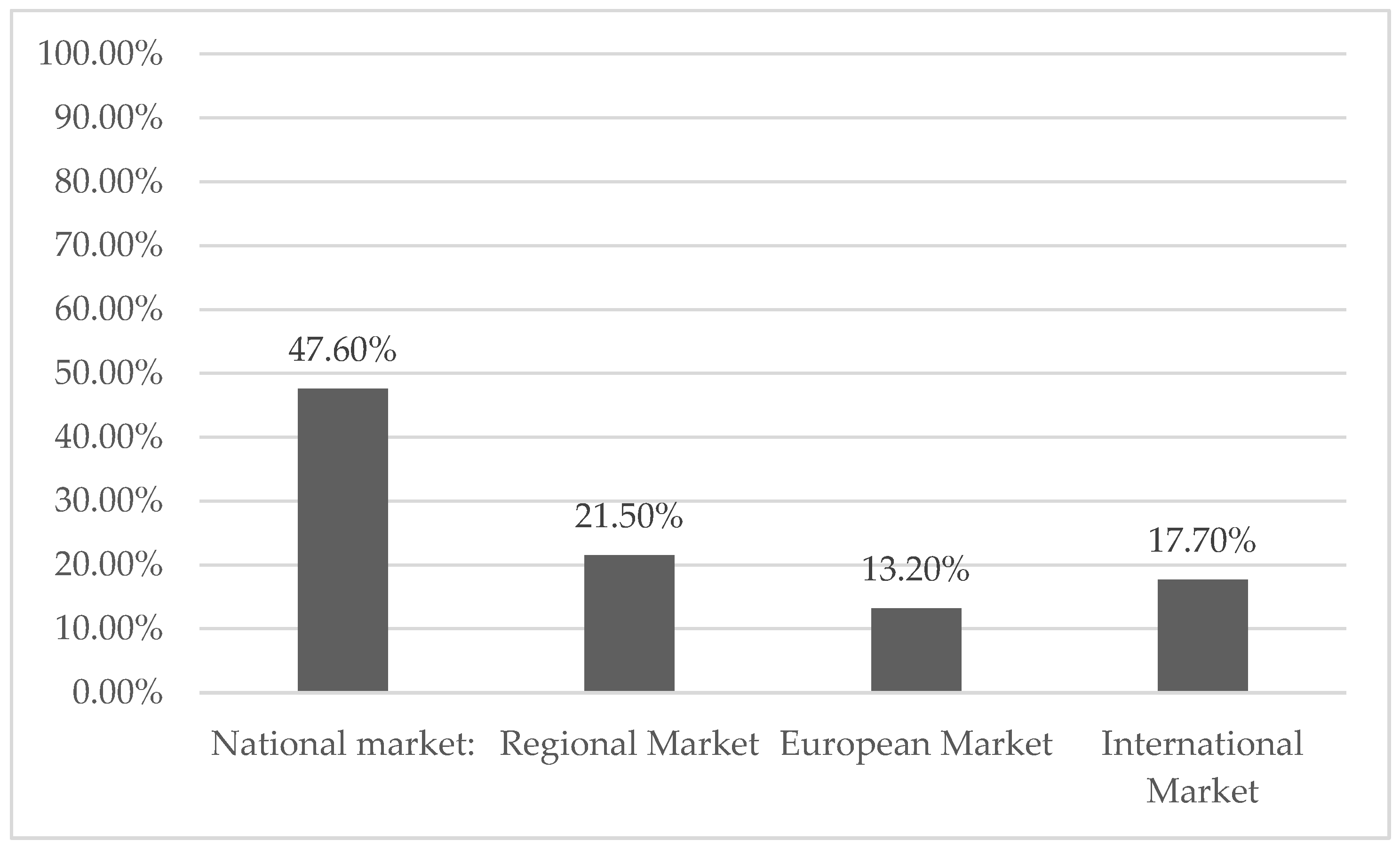
Market orientation has direct implications for the study’s research questions and the interpretation of observed digitalization patterns. With 47.6% of firms primarily focused on the national market, 21.5% on regional markets, 17.7% operating internationally, and 13.2% oriented to the broader European market, market scope shapes exposure to competition, customer demands, and digital ecosystems—factors that influence technology adoption (RQ1), resource allocation to platforms and marketing (RQ2), and the likelihood of adopting novel business models (RQ3). Firms with international or European orientations are more likely to face competitive pressures and cross-border opportunities that incentivize investment in advanced digital tools, internal platforms, and process automation, whereas nationally oriented firms may prioritize local market needs, cost-sensitive marketing solutions, and incremental digital adoption. Therefore, market orientation functions as a moderating variable in our analyses and is systematically examined as a potential determinant of differences in automation outcomes, resource reallocation strategies, and the emergence of disruptive or platform-based business models.
Figure 1.
4.1. Digital Marketing Adoption and Strategic Implications
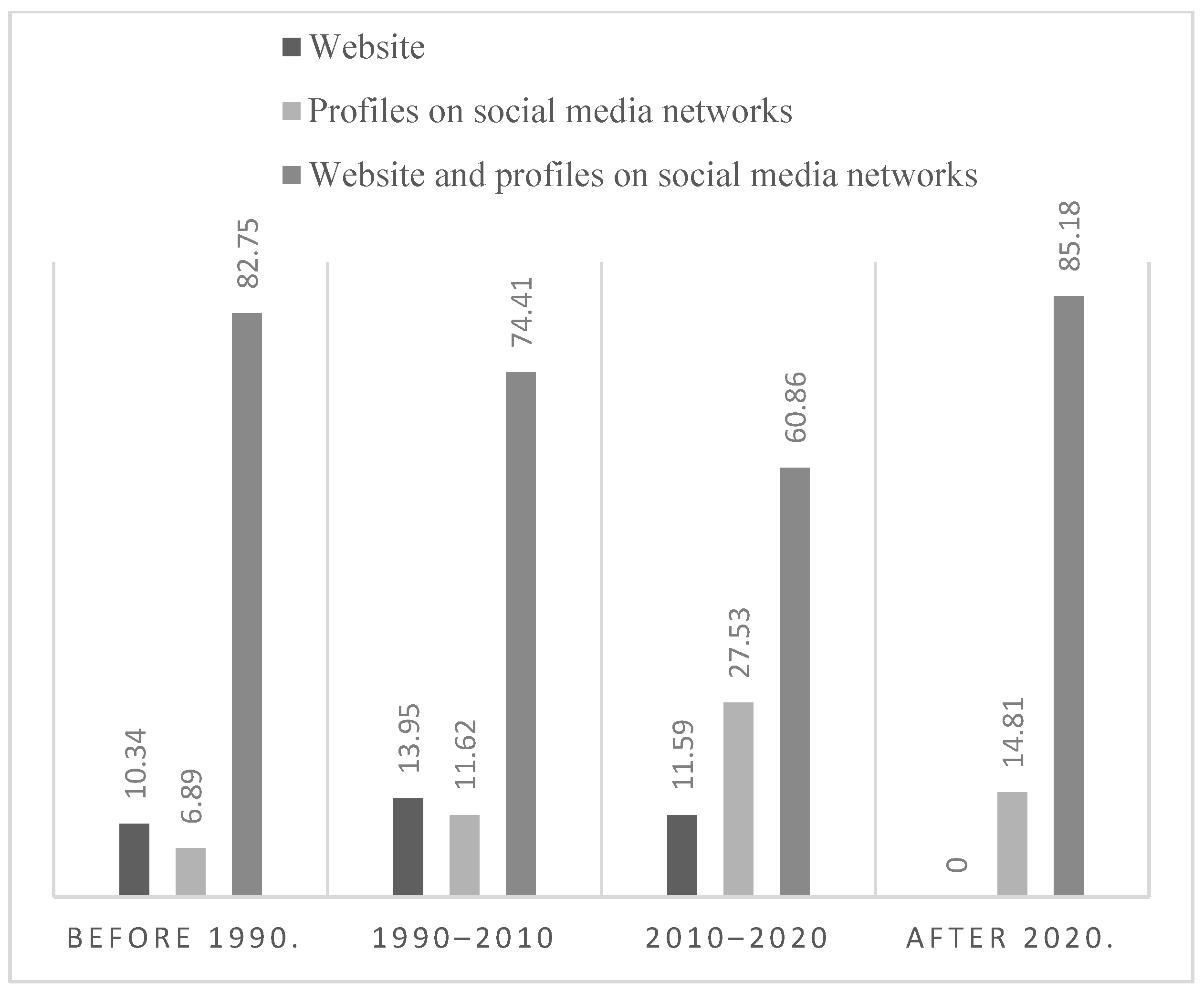
The data from the survey reveal heterogeneous adoption of digital marketing among Montenegrin firms: 37.3% report a full transition to digital marketing, 20.5% plan to adopt digital approaches, 35.4% continue to rely exclusively on traditional methods, and 6.7% indicate insufficient resources for marketing. Combined use of websites and social-media profiles is pervasive (94.8%), up from 83.2% in 2020, while exclusive reliance on a single channel has declined. Firms established after 2020 exhibit the highest rate of digital adoption (81.5% fully digital), whereas firms founded in 2010–2020 show the largest incidence of resource constraints (15%). Observed channel preferences are mediated by workforce composition: younger employees favor social media, while older cohorts demonstrate greater reliance on websites (
Figure 2).
These findings bear directly on RQ2 concerning resource reallocation and marketing/communication implications of digital transformation. The shift toward multichannel digital strategies indicates reallocation of marketing expenditure toward scalable, cost-effective channels and underscores the role of personnel capacities (skills, training) in enabling adoption. The substantial share of firms maintaining traditional marketing reflects heterogeneity in organizational readiness and resource availability, factors that also intersect with RQ1 (technology adoption and operational outcomes) and RQ3 (propensity to develop platform-based or novel business models), since more digitally advanced firms are comparatively better positioned to exploit platform economies and generate new value propositions.
Furthermore, comparative analysis of marketing investment by firm founding period, workforce age composition, industry, and market orientation is therefore essential. Examining these covariates permits identification of whether digital-marketing adoption is impeded by older employee cohorts, legacy business models, sectoral characteristics, or a predominantly local market focus—factors that function as moderators or boundary conditions in our theoretical framework. Empirically, such stratified analyses inform RQ2 by revealing how resource allocation decisions for marketing differ across firm types and by exposing the HR-related constraints that limit digital investment. They also inform RQ1 by indicating whether differences in workforce composition and organizational inertia mediate the operational benefits of technology adoption, and RQ3 by clarifying which firms are predisposed to pursue platform-based or novel business models. Consequently, disaggregating marketing investment along these dimensions strengthens causal inference and enhances the policy relevance of our findings.
The chi-square test reveals a statistically significant association between firm founding period and marketing strategy (χ
2 = 26.39, df = 9,
p = 0.0018), indicating systematic generational differences in digital adoption. Firms established before 1990 predominantly rely on traditional marketing (55.6%), whereas those founded between 1990 and 2010 exhibit continued reliance on traditional channels but with substantial plans or partial adoption (39.7% planning, 42.3% already digital). Firms founded in 2010–2020 demonstrate a pronounced shift toward digital marketing (51.5% fully digital), and the youngest cohort (post-2020) shows the highest digital penetration (84% fully digital) (
Table 2). These results substantiate the role of firm age as a significant moderating variable for RQ2—resource reallocation to digital marketing—and suggest that organizational inertia and legacy practices constrain digital transition in older firms, thereby affecting the firms’ ability to realize efficiency and performance gains examined in RQ1. Consequently, policy and managerial interventions aiming to accelerate digital adoption should be tailored to firm founding cohorts, with targeted support for legacy firms to overcome structural and cultural barriers.
Extending the preceding analysis, sectoral composition was examined to assess whether industry affiliation drives digital marketing investment and, by extension, organizational sustainability. Although descriptive differences appear (higher digital marketing prevalence in ICT, design, hospitality, and media), chi-square analysis finds no statistically significant association between industry and marketing strategy (χ
2 = 30.78, df = 36,
p = 0.715) (
Table 3). This indicates that sector alone does not systematically account for variation in digital marketing adoption or related sustainability investments; rather, firm-level attributes—such as founding cohort, market orientation, and workforce composition—exert stronger explanatory power. For RQ2, this finding implies that resource reallocation toward digital marketing is conditioned more by internal firm characteristics than by sectoral norms. It also informs RQ1 by suggesting that operational gains from technology adoption depend on firm readiness and human-resource capacity across industries, and RQ3 by indicating that the emergence of platform-based or novel business models is not confined to particular sectors but contingent on firm-level capabilities and market scope. Accordingly, policy and managerial interventions should prioritize firm-targeted measures (and their interactions with resource constraints), while future longitudinal and mixed-method research should probe causal links between marketing investment, digital adoption, and sustainable performance.
Building on the preceding analyses, we examine how market orientation relates to marketing strategy. Descriptively, firms focused on the national market exhibit the highest prevalence of traditional marketing (46.0%) and a lower incidence of full digital adoption (51.1%), whereas firms oriented to European and international markets report higher digital adoption rates (63.4% and 58.5%, respectively), with regional firms showing the largest share planning a digital transition (34.8%) (
Table 4). However, a chi-square test reveals no statistically significant association between market orientation and marketing strategy (χ
2 = 7.14, df = 9,
p = 0.623), indicating that market scope alone does not systematically determine marketing approach. For RQ2, these results suggest that resource reallocation toward digital marketing is mediated primarily by firm-level characteristics (e.g., founding cohort, workforce composition, and internal capabilities) rather than by market orientation per se. The finding also informs RQ1 by implying that differences in operational gains from technology adoption are contingent on internal readiness rather than market scope, and RQ3 by indicating that the propensity to develop platform-based or novel business models is not strictly a function of market orientation but depends on firm capabilities and strategic choices.
4.2. Familiarity with and Adoption of Advanced Digital Technologies: Implications for Automation, Resource Allocation, and Business-Model Innovation
This subsection examines firms’ familiarity with and adoption of advanced digital technologies, which constitutes a key empirical basis for addressing the study’s research questions. Identifying the specific technologies in use, the level of digital literacy, and articulated technology needs is critical for evaluating (RQ1) the scope and operational impact of automation, (RQ2) the required reallocation of resources and HR practices to support digitalization, and (RQ3) the feasibility and likely forms of emergent platform-based or disruptive business models.
Findings reveal uneven diffusion: conversational AI (e.g., ChatGPT) attains the highest penetration (48.3%), whereas adoption of digital twins (9.9%), augmented reality (16.6%), and metaverse applications (19.0%) remains limited and 50.2% of firms report unfamiliarity with the suite of advanced solutions. Stated technology priorities—mobile technologies (60.7%), cloud services (48.8%), and AI (35.5%)—together with age-cohort disparities in use (notably lower uptake among firms with employees aged 30–40) indicate that digitalization is constrained more by human-resource capacities and organizational readiness than by mere availability of technologies. Chi-square analysis confirms that market orientation does not significantly explain advanced-tool adoption (χ2 = 6.27, df = 12, p = 0.902), underscoring the primacy of firm-level determinants. Collectively, these results corroborate the literature gap identified in the review: technology adoption alone is insufficient for value creation—realized benefits are contingent on integrated capabilities (leadership, HR systems, training, and strategic alignment), with direct implications for RQ1 (localized rather than systemic automation effects), RQ2 (targeted resource and HR reallocation), and RQ3 (conditional emergence of platform-based or disruptive business models).
To further interrogate the role of external context, we examine whether firms’ market orientation conditions their adoption of advanced digital tools and related transformation outcomes. The results indicate that market scope is not a significant determinant of firms’ adoption of advanced digital tools (
Table 5). Firms operating in national and regional markets report higher unfamiliarity (50.3% and 57.6%, respectively), whereas those oriented toward European (41.5%) and international (51.9%) markets exhibit somewhat greater uptake of tools such as ChatGPT, AR, and metaverse applications, with the largest difference observed for ChatGPT (European 56.1%, international 50.0%, regional 40.9%). However, chi-square analysis confirms these differences are not statistically significant (χ
2 = 6.27, df = 12,
p = 0.902). For the research questions, this pattern implies that market orientation alone does not explain variation in automation outcomes (RQ1), nor does it primarily drive resource reallocation or HR responses to digitalization (RQ2); instead, adoption appears contingent upon firm-level factors (e.g., sector, size, workforce composition, strategic orientation). Consequently, the potential for platform-based or disruptive business models (RQ3) is likewise more dependent on internal capabilities and strategic choices than on geographic market scope.
Extending the analysis to sectoral patterns, the distribution of identified digital technologies reveals sector-specific familiarity and uptake that, while descriptively notable, do not yield a statistically significant association with technology recognition (χ2 = 92.4, df = 84, p = 0.25). The ICT sector reports the highest recognition of mobile, cloud, IoT, and AI; media, entertainment, and design sectors also show strong awareness of cloud and AI, whereas manufacturing and agriculture demonstrate moderate engagement with mobile/cloud but limited identification of advanced analytics and machine learning. These disparities, together with high unfamiliarity in trade and hospitality, indicate heterogeneous digital literacy and readiness across industries, which informs RQ1 by identifying where automation potential is most and least likely to be realized given current capabilities.
By contrast, mode of platform utilization does vary significantly by industry (χ2 = 14.82, p = 0.039): internal platforms are concentrated in ICT, tourism, and hospitality, while external platforms dominate consumer-facing sectors and non-use is highest in construction, finance, and agriculture. This sectoral heterogeneity in platform uptake is directly relevant to RQ2 (resource reallocation and marketing/HR implications) and RQ3 (the emergence of platform-based business models), implying that the locus of disruptive model innovation will be sector contingent and dependent on firm-level capabilities. Collectively, these findings reinforce the literature review’s identification of a gap: technology availability alone is insufficient for value creation; sectoral patterns of diffusion interact with firm-level readiness, necessitating targeted capacity-building and policy interventions tailored to industry and firm characteristics.
4.3. Platform Ownership, Digital-Channel Dependence and HR Capacity as Determinants of Digital Resilience
This sub-section examines platform ownership and workforce development as structural determinants of digital resilience—an empirical nexus directly relevant to the study’s theoretical framing and research questions. Empirical evidence shows that 22.75% of firms possess proprietary platforms with integrated payment functionality and 12.32% operate customized non-payment platforms, whereas 12.80% rely on external platforms and 15.64% use social-media channels for sales; 46.44% reported no online sales or platform presence. Proprietary platform ownership confers greater capacity for end-to-end process integration, data governance, and internalization of value-chain activities, thereby increasing the likelihood that technology adoption produces measurable quality, efficiency, and performance gains (RQ1). Conversely, dependence on third-party infrastructures limits strategic autonomy, elevates exposure to external shocks, and constrains firms’ ability to capture value from digitalization—conditions that attenuate the operational benefits attributed to technology adoption in the literature.
These platform modalities also have distinct implications for resource allocation and human-resource strategies (RQ2). Firms controlling internal platforms require sustained investment in in-house technical competencies, cybersecurity, and platform governance, whereas firms using external channels tend to allocate resources toward marketing and third-party management. Workforce development indicators corroborate this divergence: 45.97% of firms report primarily internal training, 27.01% use external training, and 19.43% consider additional education unnecessary. Employee attitudes toward digitalization—ranging from proactive adoption to perceiving change as an imposed obligation or competitive threat—function as pivotal mediators of organizational readiness and adaptive capacity.
Collectively, these findings address the literature gap identified in the review: technology adoption per se does not guarantee value creation; realized benefits depend on the alignment of technological choices with organizational capabilities, HR systems, and governance arrangements. For RQ3, the distribution of platform ownership suggests that the emergence and form of platform-based or disruptive business models will be concentrated among firms with both technological control and complementary human-resource capacities. Accordingly, policy and managerial responses should prioritize integrated interventions that combine platform investment support with targeted capacity-building and behavioural change initiatives.
The crosstab analysis of employee attitudes by market orientation provides critical insight into the human-resource dimension of digital transformation and its relevance to the study’s research questions (
Table 6). Across the sample, a majority (62.7%) of employees report willingness to adopt digital technologies and to initiate change proactively, with readiness highest among firms oriented to European (70.7%) and regional (68.2%) markets and lowest—though still substantial—in national (60.4%) and international (66.0%) markets. Notably, sizeable minorities treat digitalization as an imposed obligation (overall ~25%) or as competitive threat (8.0%), with the highest obligation rate in national-market firms (29.9%). These attitudinal distributions bear directly on RQ2 by indicating heterogeneous HR readiness for resource reallocation, training, and role reconfiguration: firms with predominantly willing workforces are better positioned to internalize digital investments and reorient resources toward platform and automation initiatives, whereas firms with higher proportions perceiving change as compulsory will likely face implementation resistance and higher training needs. For RQ1, employee disposition moderates the translation of technology adoption into operational gains—positive attitudes facilitate effective use and process improvement, while resistance attenuates expected efficiency and performance benefits. Finally, regarding RQ3, workforce readiness constitutes a necessary precondition for the diffusion of novel business models: proactive employee engagement increases the probability that firms can develop and sustain platform-based or disruptive innovations. These findings therefore address the literature gap by underscoring that human attitudes and HR capacity—not technology adoption alone—determine whether digitalization delivers organizational value.
Building on the preceding analysis of platform ownership and workforce attitudes, we examined why a substantial share of Montenegrin firms do not offer online sales. Respondents identify structural and contextual constraints—business-model specificities that preclude online transactions, regulatory and procedural barriers at national or international levels, product complexity incompatible with e-commerce, rigid organizational structures and deficient innovation culture, and limited market reach. Compared with earlier studies that emphasized resource scarcity and preference for traditional channels, these findings signal a shift toward organizational and institutional impediments that align with recent literature highlighting capability- and governance-related barriers to digitalization.
This articulation of barriers is directly relevant to the research questions. For RQ1, such constraints limit the scope for automation and the realization of process-level quality and efficiency gains, even where enabling technologies exist. For RQ2, they shape resource-allocation choices by redirecting investment away from platform development toward compliance, product adaptation, or maintenance of legacy operations and indicate specific HR and capacity-building needs (e.g., product digitization skills, change-management competencies). For RQ3, these barriers reduce the likelihood that firms will adopt platform-based or disruptive business models, unless accompanied by targeted organizational reform and regulatory adaptation.
Hence, addressing these structural and institutional obstacles is essential to close the literature gap that identifies technology availability as insufficient without complementary organizational, regulatory, and cultural readiness. Organizational rigidity, procedural inertia, and limited innovation culture constrain SMEs’ capacity to translate digital tools into sustainable competitive advantage. Compared to earlier research, the current study shifts focus from financial constraints and trust in traditional channels toward challenges aligned with global trends, including workplace innovation deficits, resistance to change, and product and process complexity.
Overall, digital transformation contributes to organizational resilience in Montenegrin SMEs only under specific contingency conditions. Proprietary platform ownership, academic collaboration, employee readiness, and broader market exposure collectively strengthen adaptive capacity. Conversely, skills gaps, cultural resistance, and structural rigidity limit the effective conversion of digital adoption into sustainable value. These results underscore that in transitional economies, resilience is not an automatic outcome of digitalization, but rather the product of strategically integrating technological, human, and institutional dimensions.
4.4. Digital Transformation—Institutional Support, Capacity-Building Needs, and Perceived Disruption Risks
Building on the preceding analyses of platform ownership, workforce attitudes, and sectoral readiness, this subsection critically examines the role of institutional support and capacity-building in determining digital transformation outcomes. Institutional alignment and access to targeted training constitute essential complementary capabilities that mediate whether technological adoption yields measurable operational improvements (RQ1), enables effective reallocation of resources and human-resource interventions (RQ2), and facilitates the diffusion of platform-based or disruptive business models (RQ3).
Assessment of firms’ satisfaction with state and institutional support for digital transformation reveals mixed and, in many cases, muted evaluations: 23.3% of respondents report being fully satisfied, 42.9% partially satisfied, and 35.8% not satisfied. When asked specifically about support from sectoral and local institutions for implementation, full and partial satisfaction decline by approximately 6% and 16%, respectively. These patterns suggest a possible post-crisis attenuation of public interventions (i.e., more intensive measures during emergency periods such as COVID-19 that were not sustained), a finding that relates directly to the literature gap concerning the insufficiency of technology adoption absent coherent institutional and governance support.
Respondents attribute dissatisfaction to a set of institutional and capacity constraints: limited awareness of digitization benefits, inadequate understanding of requisite skills, weak alignment between private-sector needs and public programmes, low public-sector digital maturity, and poor uptake of available knowledge. These deficits bear on RQ2 (resource reallocation and HR implications) by identifying systemic barriers to workforce upskilling and targeted investment, and on RQ1 (realization of operational gains) by indicating why technology deployment may fail to translate into measurable improvements without complementary institutional facilitation. Consistent with this diagnosis, firms express strong demand for capacity-building and academic collaboration: 58.3% request employee training in technology application and 48.3% seek academic assistance in analysing digital-transformation challenges; over half indicate a need for support in product and service innovation. These expressed needs underscore the multidimensionality of digital transformation emphasized in the literature review—technical adoption must be coupled with HR development, knowledge transfer, and institutional alignment to produce sustainable value—and directly inform the design of interventions intended to close the identified gap.
Finally, firms’ perceived external risks frame the urgency of these needs: the principal anticipated disruptions are liquidity problems (44.6%), supply-chain/raw-material shortages (41.7%), and delivery failures (33.2%). Notably, concerns about workforce skills and competitiveness are less prominent, suggesting that many firms prioritize short-term operational continuity over long-term capability building. This orientation has implications for RQ3 (emergence of new business models): unless institutional support and firm-level capacity building are scaled up, the shift toward platform-based, resilient business models is likely to remain uneven and concentrated among firms that combine technology control with sustained investment in human and institutional capabilities.
5. Discussion
The empirical results of this study substantiate the proposition that digital transformation’s benefits are contingent upon the alignment of technological adoption with firm-level capabilities and contextual conditions. The findings from Montenegro require us to refine standard assumptions of dynamic-capability theory by explicitly accounting for institutional and resource boundary conditions that are characteristic of transitional economies. Although the majority of Montenegrin firms reliably sense digital opportunities (≈95% maintain a website or social profile), our results show that the critical subsequent phases—“seize” (formalizing tactical experiments into strategic initiatives) and “reconfigure” (reallocating resources and routines to sustain new capabilities)—are frequently externally conditioned rather than purely firm-internal processes. Empirically, only ≈23% of firms report proprietary platform ownership and 50% not familiar). Together, these patterns reveal a recurrent sequence in which crises lower hesitation and stimulate short-term experimentation, but weak platform governance, fragmented and episodic institutional support, constrained access to sustained training, and limited HR/governance investment systematically prevent tactical experiments from being routinized and scaled. Framed this way, “fragile adoption” in Montenegro is better understood not primarily as a firm-level failure of initiative or intent, but as an outcome of resource dependence on underdeveloped external actors (public agencies, sectoral bodies, academic partners, and platform providers) whose limited and poorly coordinated support traps SMEs in transient adoption states. Interpreting the phenomenon through this lens has direct policy and managerial implications: isolated technology subsidies are unlikely to produce durable transformation. Instead, interventions should be conditional and bundled—for example, platform grants linked to certified HR upskilling, on-site change-management coaching, and facilitated academic–industry partnerships—so that external resource provision explicitly strengthens platform governance, HR capabilities, and institutional linkages necessary to convert crisis-driven experimentation. Although firms consistently sense and experiment with digital tools, their ability to convert these experiments into routinized capabilities is frequently externally conditioned. In many cases, dependence on fragmented or episodic institutional support—rather than lack of firm initiative—limits the resources and governance arrangements necessary for sustained ‘seize’ and ‘reconfigure’ actions.
Importantly,
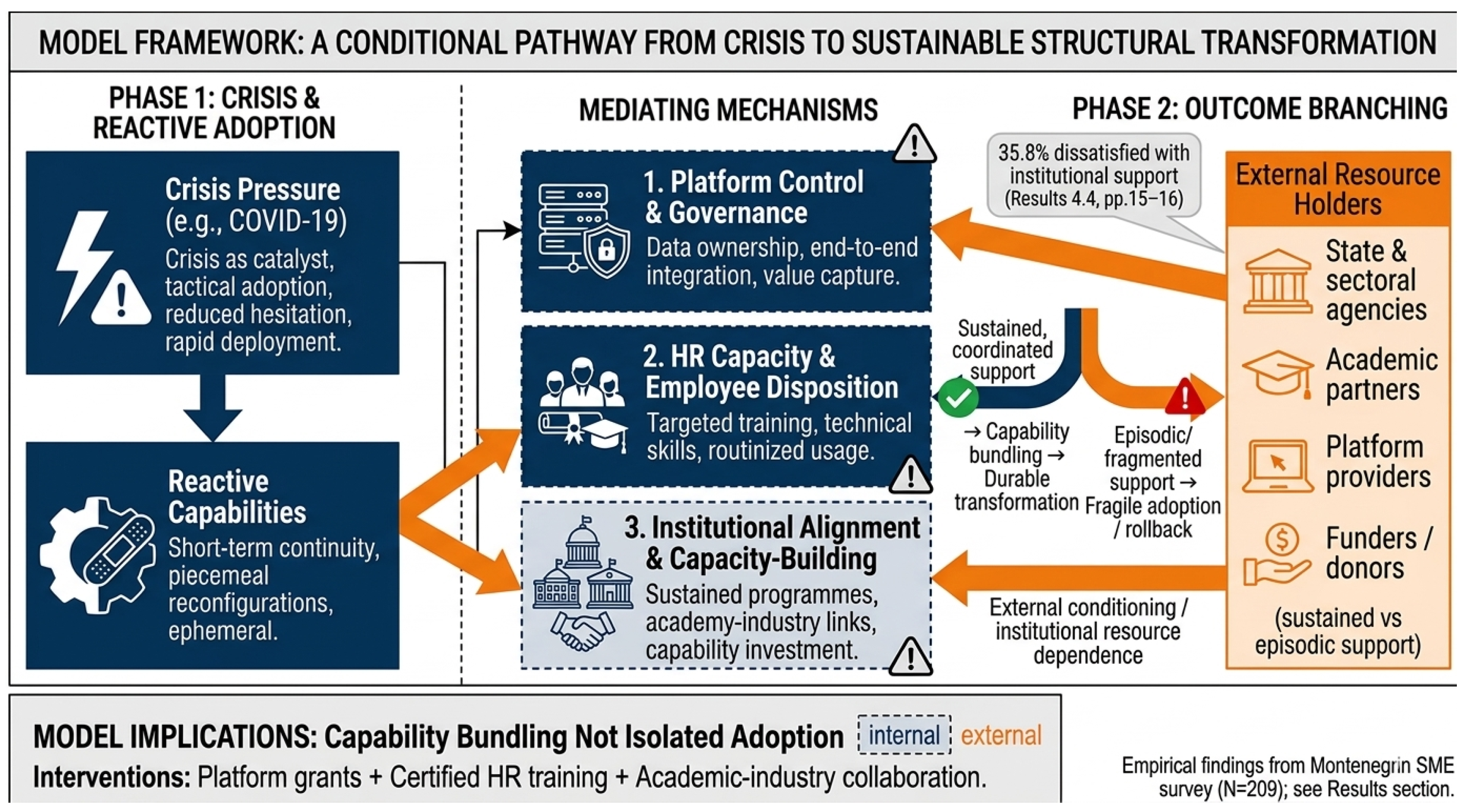
Figure 3 makes explicit that the transition from crisis-driven experimentation to routinized capability formation is not solely a firm-internal process but is externally conditioned by the availability, continuity, and coordination of institutional resources (state agencies, academic partners, platform providers)—when these external supports are episodic or fragmented, SMEs remain trapped in fragile adoption.
5.1. From Crisis Pressure to Structural Transformation: A Conditional Pathway
To clarify the transition from crisis pressure to structural transformation, according to results we propose a conditional pathway that makes explicit the mediating mechanisms observed in the Montenegrin context. First, crises act as catalysts for rapid, tactical adoption—lowering hesitation, accelerating experimentation, and creating short-term incentives to deploy digital solutions. However, this crisis-induced adoption typically yields reactive capabilities: piecemeal, short-lived reconfigurations that address immediate continuity needs but do not automatically produce durable organizational change. Second, for crisis pressure to evolve into structural transformation, three mediators must be sufficiently present and mutually reinforcing see
Figure 3.
The diagram (
Figure 3) highlights how external resource holders (state and sectoral agencies, academic partners, platform providers, and funders) condition the transition from reactive experimentation to durable capability formation: when external support is episodic, fragmented, or poorly coordinated, firms’ “seize” and “reconfigure” activities remain transient.
Platform control and governance—proprietary or well-managed internal platforms enable end-to-end integration, data ownership, and value capture (see platform ownership and online-sales data). HR capacity and employee disposition—targeted training, in-house technical skills, and predominantly proactive employee attitudes materially increase the likelihood that new tools will be routinized rather than abandoned (employee attitudes and training patterns). Institutional alignment and capacity-building—sustained public programs, academic–industry collaboration, and stable sectoral support convert episodic crisis funding into long-term capability investments (satisfaction and demand for institutional support).
When any mediator is weak, crises tend to produce only transient, adaptive responses: firms adopt technologies but fail to internalize governance structures, HR routines, or institutional linkages required for sustained performance gains. Conversely, when all three mediators are present, firms mobilize bundled capabilities—technical, managerial, and institutional—that enable genuine structural transformation. This model thereby extends dynamic-capability theory by treating the “seize” and “reconfigure” phases as externally conditioned processes in transitional economies: capabilities are not only firm-level constructs but also emergent properties of firm–institution ecosystems. Policy and managerial implications follow directly. Interventions that target single dimensions (e.g., subsidising software purchases) are unlikely to yield sustained transformation unless paired with measures that strengthen platform governance, workforce reskilling, and institutional coordination. In Montenegro, obtained data suggest the most promising levers are combined programs linking platform grants with certified HR training and facilitated academic partnerships—an integrated approach that supports capability bundling rather than isolated adoption.
The empirical evidence suggests that the effectiveness of the dynamic-capability phases “seize” and “reconfigure” is co-determined by the availability and coordination of external resources controlled by institutional actors (state and sectoral agencies, academia, and platform providers). When these external resource holders are fragmented or offer only episodic support (e.g., crisis-period programs that are not sustained), firms retain sensing capacity but lack the sustained inputs—platform governance, certified training, persistent funding, and ecosystem linkages—required to convert experimentation into routinized capabilities. From a resource dependence perspective, SMEs in transitional economies are therefore structurally constrained: dependence on weak or poorly coordinated resource providers reduces firm autonomy to reallocate investments toward HR governance and platform stewardship, producing the observed “fragile adoption” trajectory. The theoretical contribution of this study is twofold. First, it extends dynamic-capability theory by modelling “seize” and “reconfigure” as emergent, ecosystem-conditioned processes rather than purely firm-centric routines. Second, it situates fragile adoption within resource dependence logic—showing that in transitional contexts, capability formation requires both internal investments and targeted alignment of external resource providers. For the future research, empirically, this claim can be tested within the existing dataset (for example, by estimating the association between institutional satisfaction/platform ownership and indicators of durable adoption using χ2 or a simple logistic model). Doing so would empirically substantiate the mechanism by which institutional voids translate into trapped, transient adoption states and would strengthen the paper’s contribution to both resource dependence and digital-transformation literature.
5.2. Mediation of Realized Gains and Theoretical Implications
Our findings—selective adoption of AI tools (notably conversational AI), heterogeneous platform ownership, significant variation by firm age and workforce composition, and pronounced institutional support deficits—collectively indicate that technology uptake alone does not produce uniform improvements in process quality, efficiency, or firm performance. This observation directly addresses the literature gap identified in the review by demonstrating that realized gains (RQ1) are mediated by leadership, HR capacity, training regimes, and platform governance: firms possessing proprietary platforms and proactive employee attitudes are more likely to translate adoption into measurable operational improvements, whereas firms dependent on external channels or characterised by resistance and limited training struggle to capture such benefits. While digital interventions can rapidly enhance user experience and create new behavioural norms, sustained competitiveness requires continuous investment in applied digital solutions; absent such commitment, firms risk losing relevance in highly fluid digital markets where products and services are easily substituted. The literature indicates that technology alone is insufficient: value accrues when employees combine available tools with coherent business logic, supported by appropriate investments and capabilities [
29]. Accordingly, transformation is driven by integrating digital solutions with operational agility, organizational culture, and digital leadership rather than by ICT deployment per se [
30,
31].
Second, the patterns of resource allocation and marketing adoption observed in the data clarify mechanisms relevant to RQ2. The movement toward multichannel digital marketing among younger and smaller firms, juxtaposed with persistent traditionalism in older cohorts, reflects differential reallocation of financial and human resources and signals where capacity-building efforts should be targeted. Resource reallocation decisions are therefore endogenous to firm characteristics (founding period, workforce age, market orientation) rather than exogenously determined by sector or market geography. Consequently, policy interventions and managerial strategies that seek to accelerate digitalization should prioritise tailored upskilling, support for in-house technical competencies, and incentives for platform governance rather than one-size-fits-all technology subsidies. The findings also reaffirm that successful transformation depends more on adaptive human and managerial capacities than on mere technical adoption. Contemporary competitive advantage increasingly rewards versatile “smart generalists” and creative problem-solvers [
32] while leadership and strategy failures remain major causes of digital projects collapsing [
33,
34]. Generative AI and related tools are already reshaping value creation, customer communication, and content generation; organisations must therefore learn and adapt rapidly, discontinue low-value technologies, and prioritise agile, problem-driven management over large capital outlays.
Finally, with respect to RQ3, the limited diffusion of platform-enabling and immersive technologies constrains the breadth of emergent platform-based and disruptive business models across the sample. Where such models do emerge, they are concentrated in firms that combine technological control with complementary capabilities—technical staff, strategic leadership, and institutional linkages (including academic collaboration). Thus, the potential for disruptive innovation is conditional on integrated capability development rather than on opportunistic technology acquisition. Collectively, these findings reinforce the review’s contention that future research and policy should adopt a capability-centred perspective—employing longitudinal and mixed-method designs—to unpack causal pathways from technology adoption, through organizational adaptation, to sustained value creation [
35,
36].
Practically, firms should cultivate a digital culture that fosters innovation, continuous learning, collaboration, and data-driven decision making, because cultural maturity determines how technologies influence vision, innovation focus, and competitive positioning [
37,
38]. However, crises have accelerated technological uptake [
39,
40]. Many firms remain insufficiently prepared for remote work, cyber risk, and AI-driven automation [
41]. Therefore, firms must rigorously assess their transformation needs and align investments in human capital, software, and organisational redesign [
42]. Ultimately, the ability to recognise digital impacts on clients and to adapt—without reflexively abandoning valuable elements of traditional offerings—will determine which firms successfully navigate future disruptions and sustain competitiveness [
43].
5.3. HR Governance and Contingency Pathways
Moderation results indicate that HR capacity and digital skills materially condition the depth and durability of digital adoption. To move beyond a descriptive account, we reframe HR capacity as a scarce governance resource that interacts with capital investments under binding budget constraints in many Montenegrin SMEs. Empirically, nearly half of firms report primarily internal training (45.97%), while only about 22.75% own proprietary platforms. Simultaneously, 62.7% of employees express willingness to adopt digital tools yet substantial minorities treat digitalization as an obligation or threat. These co-occurring patterns signal a substantive organizational tension: managers must simultaneously decide whether to allocate scarce funds to (a) technology acquisition and platform investment that enable scale and data capture, or (b) HR governance—training, structured change management, performance systems—that is necessary to routinize and sustain technology use. Below is a concise, revision-ready passage you can insert into the Discussion to address the reviewer’s point and integrate the qualitative interview evidence as a theoretical boundary condition.
Additionally, the qualitative interviews (n = 10) reveal theoretically consequential heterogeneity in causal pathways that the cross-sectional quantitative design cannot resolve but that importantly qualifies the “crisis as a catalyst” claim. Many firms—especially in ICT and tourism—reported pre-existing digital strategies that were accelerated, not originated, by the COVID-19 shock. Industrial firms with international exposure described being steered toward digital process corrections before the pandemic to maintain global competitiveness; ICT respondents explained they had already adapted to client demands prior to the crisis. By contrast, firms in trade and portions of industry lacking prior digital infrastructure were exposed by the crisis precisely because no prior strategic commitment existed: the shock revealed capability gaps rather than created capabilities, sometimes forcing closure or radical pivots. A minority reported mixed paths where partial prior investment yielded partial resilience.
Crucially, interviewees attributed these differences less to technology availability than to management orientation and prior investment decisions. This points to an endogeneity concern: baseline agility (leadership, HR governance, and prior digital investment) plausibly drove both early digital adoption and the capacity to adapt HR practices pre-crisis, complicating a straightforward causal reading that crisis alone produces durable organizational capability. The appropriate theoretical reframing is therefore a boundary condition: crises act as accelerators of durable transformation primarily when firms possess baseline leadership, HR governance, and institutional investments; absent these conditions, crisis-induced adoption risks remaining fragile and transient. This does not negate the crisis-catalyst proposition but delimits it—turning a methodological limitation into a testable theoretical claim that future longitudinal and quasi-experimental work should examine: specifically, whether prior agile leadership is the unobserved catalyst that precedes both HR adaptation and digital adoption, and under what conditions crisis exposure converts acceleration into sustained capability.
The statistical interaction therefore captures not only an amplifying effect of HR on adoption outcomes, but also a latent trade-off that can generate two qualitatively different trajectories.
First, when capital and HR investments are balanced (or when firms possess prior strategic agility), investments bundle into reinforcing capabilities: proprietary or well-governed platforms are matched by certified training and internal governance routines, producing routinized use, process improvement, and durable performance gains. Our qualitative interviews provide corroborative vignettes where pre-existing HR systems enabled firms to internalize crisis-induced adoption and convert experimentation into formalized routines. Second, where resource constraints force a choice in favor of visible capital outlays (e.g., platforms, hardware, third-party integrations) but HR governance remains weak, adoption is prone to superficiality and rollback risk. In such “fragile adoption” cases, technologies are deployed to meet immediate continuity needs but remain under-utilized or abandoned when crisis urgency subsides; interviewees described precisely this pattern in firms that lacked follow-through training or incentive structures. Thus, rather than treating digital literacy as a uniformly beneficial moderator, we argue that HR capacity must be conceptualized as a governance mechanism that determines whether digital investments are converted into sustainable dynamic capabilities or remain transient coping devices.
The theoretical implication is a refined contingency proposition: the value of digital adoption is co-determined by capability bundling under budgetary governance constraints. In resource-constrained SMEs, the survival and long-term competitiveness hinge on how managers allocate a fixed investment envelope across conflicting demands—platform governance, cybersecurity, HR training, and short-term liquidity needs. Accordingly, policy and managerial prescriptions should shift from isolated technology subsidies to conditional, bundled interventions (e.g., platform grants tied to certified training, on-site coaching, or facilitated academic partnerships). Empirically, this perspective invites research designs that directly model budget allocation choices, capture temporal sequencing of investments, and assess interaction effects between capital and HR governance using panel or experimental methods. Until such evidence is available, our findings caution that promoting digital adoption without commensurate HR governance risks producing widespread but fragile technological footprints rather than scalable, resilient capability bundles.
6. Conclusions and Recommendation
The study’s most consequential and deliberately counter-intuitive finding for practitioners and policymakers is simple: digital presence is widespread, but genuine organizational transformation remains rare. Near-universal digital visibility (≈95% maintain a website or social profile) coexists with limited proprietary platform ownership (≈23%), widespread HR governance deficits, and predominantly reactive—not anticipatory—change. This paradox—abundant digital tools but insufficient organizational capacity to convert them into sustained value—is not incidental. It follows predictably from a logic that equates technology acquisition with transformation and treats software purchase as a proxy for capability building. Our longitudinal cycles and qualitative interviews show that firms who converted adoption into durable advantage had already invested in people, platform governance, and leadership before crises accelerated uptake: technology reveals and amplifies pre-existing capability rather than creating it. For policymakers and SME managers the implication is unequivocal: the greatest danger is not under-digitalization but forced, under-governed digitalization—being “caught in the middle.” Crisis-driven adoption without concurrent HR governance, change-management support, and institutional scaffolding yields firms that are statistically digitized but operationally fragile: they bear sunk technology costs, ongoing maintenance burdens, and a workforce that often treats change as an imposed obligation rather than a strategic opportunity. This fragility is a structural trap that deepens if successive crises prompt repeated reactive adoption without sustained capability investment. In resource-constrained SME environments, technology subsidies must be conditional and bundled with governance and capability supports: (a) platform grants tied to certified HR upskilling and on-site change coaching; (b) facilitated, sustained academic–industry partnerships for applied upskilling and knowledge transfer; and (c) institutional capacity building that moves support from episodic crisis programs to continuous ecosystem services. In transitional economies such as Montenegro, sustainable digital resilience is primarily a governance achievement—the strategic integration of human, institutional, and technological dimensions under binding resource constraints. Until firms develop the internal capability to use tools well rather than merely to own them, digitalization will expand while genuine transformation remains, for many, a promise deferred.
The study’s conclusions explicitly address the research questions and the theoretical lacuna identified in the literature review by demonstrating that digital transformation is a contingent, capability-dependent process rather than an automatic outcome of technology acquisition. With respect to RQ1 (automation and operational outcomes), our evidence indicates that automation effects within Montenegrin SMEs are currently uneven and largely task-specific (notably concentrated in conversational AI), and that measurable improvements in process quality, efficiency, and firm performance are contingent on complementary conditions—ownership and governance of digital platforms, leadership commitment to digital agendas, and workforce digital literacy. Consequently, claims in the literature that treat technology adoption as a primary driver of performance must be qualified by the mediating role of organizational routines and managerial practices.
While most firms maintain digital visibility and a substantial proportion report using tools such as ChatGPT, nearly half lack proprietary digital platforms and remain dependent on external infrastructures. This reliance constrains strategic autonomy and limits the capacity to develop resilient, self-sustaining digital ecosystems. Furthermore, although the majority of employees express willingness to adopt digital tools, a notable minority perceive digital transformation as an externally imposed obligation or even as competitive pressure, highlighting latent cultural and organizational barriers that may impede effective transformation. Concerning RQ2 (resource allocation, HR, and communication), the findings show that reallocation of financial and human resources toward digital channels is heterogenous and endogenous to firm characteristics (founding cohort, workforce composition, market orientation). Firms that reallocate resources effectively demonstrate concomitant investments in in-house competencies, training programmes, and platform stewardship; by contrast, firms that depend on external platforms or exhibit cultural resistance tend to externalize costs and forgo opportunities for value capture. Thus, the data substantiate the literature-identified gap: HR systems, targeted upskilling, and governance arrangements are critical mediators of the effectiveness of digital investments.
Regarding RQ3 (new business models and disruptive innovations), the analysis reveals that emergent platform-based or hybrid business models are concentrated among firms that combine technological control with complementary organizational and institutional capabilities—technical staff, managerial strategic alignment, and institutional linkages (including academic collaboration). In settings lacking these complementarities, disruptive model innovation remains constrained. Hence, the propensity for structural transformation is a function of capability bundling rather than technology presence alone. The study confirms that digital transformation in transitional economies, such as Montenegro, is predominantly reactive rather than anticipatory. Firms tend to intensify transformation efforts during crises; however, sustained competitiveness requires ongoing investment in leadership development, human resource capacity, employee training, and institutional collaboration. Engagement with academic institutions emerges as a critical external mechanism for enhancing organizational resilience, particularly for younger firms. In contrast, limited institutional support and fragmented public-sector digital maturity restrict systemic progress and impede the broader adoption of digital innovations.
By integrating digital platform adoption, employee readiness, market orientation, and crisis dynamics within a resilience framework, this research contributes to the literature by demonstrating that sustainable digital transformation is inherently contingency-based. Its effectiveness depends not solely on technological deployment but on the strategic alignment of organizational culture, managerial capabilities, and institutional adaptation. Proprietary platform ownership, collaboration with academia, workforce preparedness, and exposure to competitive markets collectively enhance adaptive capacity. Conversely, skills gaps, cultural resistance, and structural rigidity limit the translation of digital adoption into long-term value and competitive advantage.
For policymakers and organizational leaders, these findings underscore that strengthening digital resilience requires coordinated investment in human capital, interoperable digital infrastructure, transparent support mechanisms, and sustained collaboration among academia, government, and the private sector. In transitional economies, sustainable digital transformation is not merely a technological endeavor but a systemic organizational adaptation that demands long-term strategic commitment.
In conclusion, the study highlights that resilience in SMEs emerges from the interplay of technological, human, and institutional dimensions rather than from digital adoption alone. Future research adopting longitudinal, comparative, and multivariate approaches can further clarify the causal mechanisms and boundary conditions under which crises catalyze sustainable digital transformation, offering insights for both scholars and practitioners in transitional and emerging economies.
7. Future Research
Future research should extend these findings by adopting a contingency-based, longitudinal approach to digital transformation and organizational resilience in transitional economies. Longitudinal designs (panel data, repeated surveys, and process tracing) will clarify whether observed crisis-driven adoption patterns are transient responses or evolve into sustained, anticipatory strategic change.
Specifically, scholars should investigate generational and psychological dimensions of technology perception. The paradox whereby younger employees—despite greater digital familiarity—sometimes view digital tools as competitive threats merits focused study. Research should unpack the cognitive, cultural, and structural determinants of such perceptions and their effects on engagement, retention, and firm-level adaptation.
Researchers should also probe the distinction between chronological exposure to digital environments and substantive digital maturity. The finding that firms founded in the digital era do not uniformly exhibit advanced-tool adoption suggests that leadership orientation, organizational learning capacity, and institutional embeddedness, rather than firm vintage alone, drive digital resilience. Comparative case studies and mixed-method work can illuminate the micro-mechanisms through which capability bundling arises.
Comparative cross-country and cross-sectoral analyses are necessary to identify institutional moderators (regulatory frameworks, public support mechanisms, market openness) that condition the linkage between adoption and sustained performance. Finally, future work should explicitly model moderating and mediating effects of digital skills, HR development systems, organizational culture, and platform governance on the relationship between crisis pressure and digital adoption. Such integrative, causal inquiry will advance a more robust theoretical framework of digital resilience and inform targeted policy and managerial interventions.
Furthermore, we recommend that future research evaluate bundled interventions through rigorously designed pilot programs combined with longitudinal impact assessment. Specifically, scholars should implement and compare pilot schemes that pair platform grants with mandatory or incentivized HR governance components (certified training, on-site change coaching, and academic-industry collaboration) using randomized or quasi-experimental designs (e.g., matched controls, difference-in-differences, or propensity-score matching) where feasible. Impact metrics should include not only short-term adoption indicators (platform deployment, digital sales) but also medium- and long-term outcomes tied to capability formation: routinization of digital practices, employee skill retention, process quality, productivity, and firm survival/growth. Mixed-methods follow-ups (repeated surveys, process tracing, and in-depth interviews) will be essential to unpack causal mechanisms and organizational pathways, while cost-effectiveness and scalability analyses will inform policy transferability across sectors and regions. Pilots conducted in Montenegro and comparable transitional economies would both test the theoretical boundary conditions identified here and produce actionable guidance for designing policy instruments that convert crisis-driven adoption into durable digital resilience.
Future Limitations
Despite its contributions, this study has several limitations. First, the sample is limited to companies operating in Montenegro, which may constrain the generalizability of findings to other transitional or developed economies. Second, the cross-sectional design of the study prevents causal inferences regarding the long-term impact of digital transformation on organizational resilience. Third, the reliance on self-reported data introduces potential response biases, particularly in assessments of digital readiness and innovation capacity. Finally, the study does not incorporate longitudinal or experimental methods, which could provide deeper insight into the dynamic mechanisms of resilience and the evolution of digital capabilities over time.