Article

The Algicidal Potential of Some Volatile Substances on Oil Base: Effect of Structure–Species–Effectivity Relationships


1
Department of Materials Engineering and Chemistry, Faculty of Civil Engineering, Czech Technical University in Prague, 166 29 Prague, Czech Republic
2
Department of Food Science, Faculty of Agrobiology, Food and Natural Resources, Czech University of Life Sciences Prague, 166 29 Prague, Czech Republic
*
Author to whom correspondence should be addressed.
Sustainability 2026, 18(8), 3788; https://doi.org/10.3390/su18083788
Submission received: 29 December 2025 / Revised: 30 March 2026 / Accepted: 8 April 2026 / Published: 10 April 2026

Abstract

The bio-colonization of building materials by green algae is a widespread problem. To prevent this, it is advisable to use natural substances to avoid environmental damage. This study examined the effectiveness of four essential oils (cinnamon, thyme, oregano and hop) and four oil-based substances (trans-cinnamaldehyde, thymol, carvacrol and β-caryophyllene) in preventing bio-colonization. The effectiveness of these chemicals against three algal species (Haematococcus pluvialis, Chlorella mirabilis and Stichococcus sp.) and a mixture of these species was tested. The tests were carried out under laboratory conditions over a period of 14 days. The concentrations tested were in the range of 3–200 mg/L. Growth densities were assessed spectrometrically as absorbencies at a wavelength of 750 nm. Caryophyllene, thymol, oregano oil, and hop oil did not negatively affect the growth of algal biomass. The algicidal effect increased in the following order for the other chemicals: cinnamon oil and trans-cinnamon aldehyde < thyme oil and carvacrol. Their biocidal effect was influenced by their structure, particularly their molecular weight and solubility in fat (log Kow). H. pluvialis was a less sensitive species than the smaller S. sp and Ch. mirabilis. The artificial biofilm was sensitive to thyme oil and carvacrol, similarly to natural biofilms, as was demonstrated in previously published studies.

1. Introduction

Green algae are among the most widespread groups of organisms in the world. They inhabit various aquatic and terrestrial environments [1,2]. These photoautotrophic organisms play a key role in oxygen production, but they can also have harmful effects. They are often found on building stones, where they form biofilms together with other organisms [3,4]. Consequently, they play a significant role in the biodeterioration of building materials. They can metabolize various organic acids and compounds that etch the surface of building materials [5,6,7,8,9]. Their decomposition produces simpler compounds that can serve as a nutrient source for other microorganisms, thereby supporting the systematic deterioration of surfaces [10].
Algae can attack all known building materials. Most studies focus on the restoration of historical buildings, paintings, plaster, marble, and wooden structures [11,12]. Algae inhabit outdoor materials due to their phototrophic activities; without access to sunlight, their growth is limited [13,14]. The most common identified algal genera include Chlorella, Stichococcus, Gloeocystis, Tetracystis, Cystomonas, Muriella, Scenedesmus, Klebsormidium, Apatococcus, and Trebouxia [15,16,17,18,19]. The removal of algae from building materials has been receiving increasing attention, with structural and technical methods of preventing algae growth and the use of various impregnation products being considered. However, commercial products currently in use are often not ecological because they contain various metals or organic pollutants. These compounds and elements are persistent, can accumulate in living organisms, and may be toxic to them. The goal of this study is therefore to find the most ecological ways to remove algae from building materials, ideally preventing their growth altogether [20,21,22,23,24,25].
One possibility is to use organic substances produced by plants to protect themselves against pathogens, such as bacteria, viruses, molds, fungi, nematodes, and beetle larvae [26,27,28,29]. One such group is essential oils. These substances and oils tend to be volatile, poorly soluble in water, and have an intense aroma. Since essential oils generally have an antimicrobial effect in small quantities, they may also be effective as algicidal agents. They are organic substances that degrade over time and therefore do not accumulate in the environment. They can be extracted directly from plants or produced synthetically. The biocidal effects of essential oils are already used across various industrial sectors for pests.
Essential oils are now used extensively, mainly in the food, perfume, and clothing industries. The most commonly used essential oils are derived from tropical or Mediterranean plants, such as tea tree, grapefruit, orange, lavender, and thyme. These oils contain various substances at different concentrations, which determine their properties and effectiveness [30,31]. From a chemical point of view, the most important groups of essential oil components are terpenoids, alcoholic compounds, acidic compounds, aldehydes, ketones, and aromatic phenols [32]. There are more than 100,000 published articles on the pesticidal/biocidal effects of essential oils in the Web of Science database. However, most focus is on fungi, bacteria, or molds in the context of building materials [16,26,30,33,34,35,36,37,38,39,40,41,42,43]. Very few studies primarily investigate the effects of essential oils on green algae [44,45,46,47,48,49,50].
In the first study, the authors investigated the efficacy of oregano essential oil and eugenol when applied directly in solution or encapsulated within silica nano-capsules against Chlorococcus sp. in a 100-day in vitro test. Both chemicals showed potential for use in protective biocidal coatings for stone artifacts [44]. In another study, Macchia et al. examined the impact of eucalyptus, basil, cloves, thyme, pine, and tea tree oil and their combinations on a natural biofilm containing algae. The most effective essential oils were tea tree, pine, and thyme oils in mixtures in their study [45]. Other authors investigated the effect of carvacrol and thymol on green algae growing on model ceramics, marble, and cement grit. They found that a mixture of these substances, together with an emulsifier (kaolin) and a gelling agent (laponite), was effective against the biofilm and destroyed it. The biofilm was then removed with the emulsion. The authors state that the disadvantage of this emulsion is its odor [46]. In another study, the authors focused on the use of essential oils (EOs) from Thymus vulgaris and Oreganum vulgare plants against bacteria, fungi, cyanobacteria, and green algae (Chlorella). Oregano oil was found to be more effective than thyme oil against algae [47]. Spada et al. [48] studied the effectiveness of carvacrol, eugenol, trans-cinnamon aldehyde, and thymol. They prepared various mixtures of essential oils, other chemicals, and carriers. The authors claimed that their mixtures enhanced biocidal action without damaging the stone substrate, enabling the use of low concentrations. In their final study, they isolated algal species from biofilms formed on deteriorating stone.
The new directions of the present study, compared with previously published papers, are as follows:
(1) Various essential oils have thus far been tested primarily in natural biofilms. This study aimed to compare the sensitivity of three model algae species and a laboratory-produced mixed artificial biofilm. The selected species are widespread algae commonly found on building stones or cultivated in bioreactors for the production of their metabolites. The use of artificially created biofilm (from abundant green species on building materials) aims to facilitate research into the use of biofilms from acquired sources, because it is very difficult to adequately cultivate biofilm removed from in situ in a laboratory environment—a selection always occurs, and it is not possible to cultivate all species of organisms that naturally occur in a natural biofilm. The results of the current study were then discussed and compared with data from the literature on natural biofilms.
(2) Thyme oil, thymol, carvacrol, and oregano oil are among the most studied oils in the construction industry. In this study, in addition to these substances, the algicidal effect of hops and caryophyllene was tested for the first time. Hop and caryophyllene were tested only as pesticidal substances in agriculture, not in building research.
(3) The algicidal effect of the substances was also discussed in terms of the chemical structure of the substances tested (thymol, carvacrol, trans-cinnamaldehyde, and caryophyllene), which are found in essential oils.

2. Materials and Methods

2.1. Chemicals and Reagents

The essential oils (cinnamon bark oil, thyme oil, and oregano oil) were purchased from the Ingredients Store (United Kingdom). Trans-cinnamaldehyde, carvacrol, thymol, and β-caryophyllene were purchased from Sigma-Aldrich Ltd. (Prague, Czech Republic).
Dimethyl sulfoxide (DMSO) (Sigma-Aldrich Ltd., Czech Republic) was used as a solvent at a ratio of 1:5. The dissolved essential substances were then added to the algal BBM medium. Deionized water was used as a solvent to prepare the BBM culture medium (CCALA—Czech Academy of Sciences, Třeboň, Czech Republic).
Reference substance for ecotoxicological tests with algae, potassium dichromate (K2Cr2O7) and reference biocide terbutryne were purchased from Sigma-Aldrich Ltd. (Czech Republic).

2.2. Extraction of Hop Essential Oil

The hop oil was obtained by steam distillation from 2 kg of hop pellets, which were purchased from HopProducts CZ (Čepirohy, Czech Republic). The pellets were placed in a 65-liter essential oil extractor (Albrigi Luigi, Italy) together with 5 L of water. The pellets were separated from the water by a double-perforated bottom. The essential oil was collected from the separator and stored at 6 °C for further use after 2 h of distillation. The composition of the test essential oils is shown in Table 1.

2.3. Chemical Analysis of the Studied Essential Oils

The composition of the essential oils was analyzed using an Agilent 7890A gas chromatograph coupled with a 5975C single quadrupole mass spectrometer (Agilent, Santa Clara, CA, USA). Separation was performed on a VF-5 MS column (30 m × 0.25 mm × 0.25 µm) with helium as the carrier gas (1 mL/min). Samples (1 µL) were injected in splitless mode at 250 °C. The oven temperature was programmed from 70 °C (2 min hold) to 230 °C at 5 °C/min, with a final 2 min hold. Ion source and quadrupole temperatures were set at 230 °C and 150 °C, respectively. Mass spectra were recorded in scan mode (m/z 35–550), and compounds were identified by comparison with reference standards, the NIST library, and Kovats retention indices.
Relative quantification was performed using the same GC system equipped with a flame ionization detector under identical conditions. Compound amounts were expressed as the ratio of individual peak area to the total peak area.

2.4. Organisms

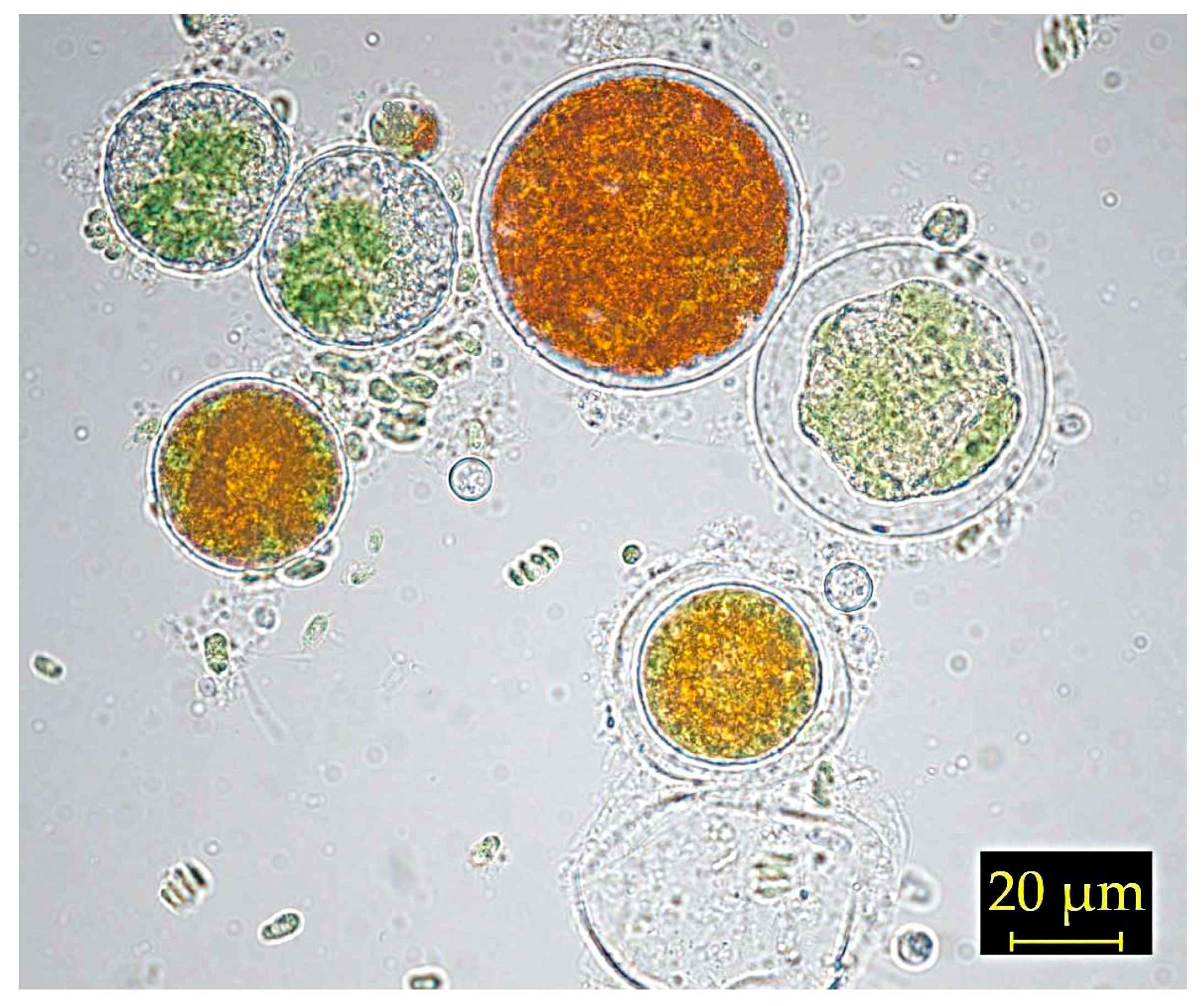
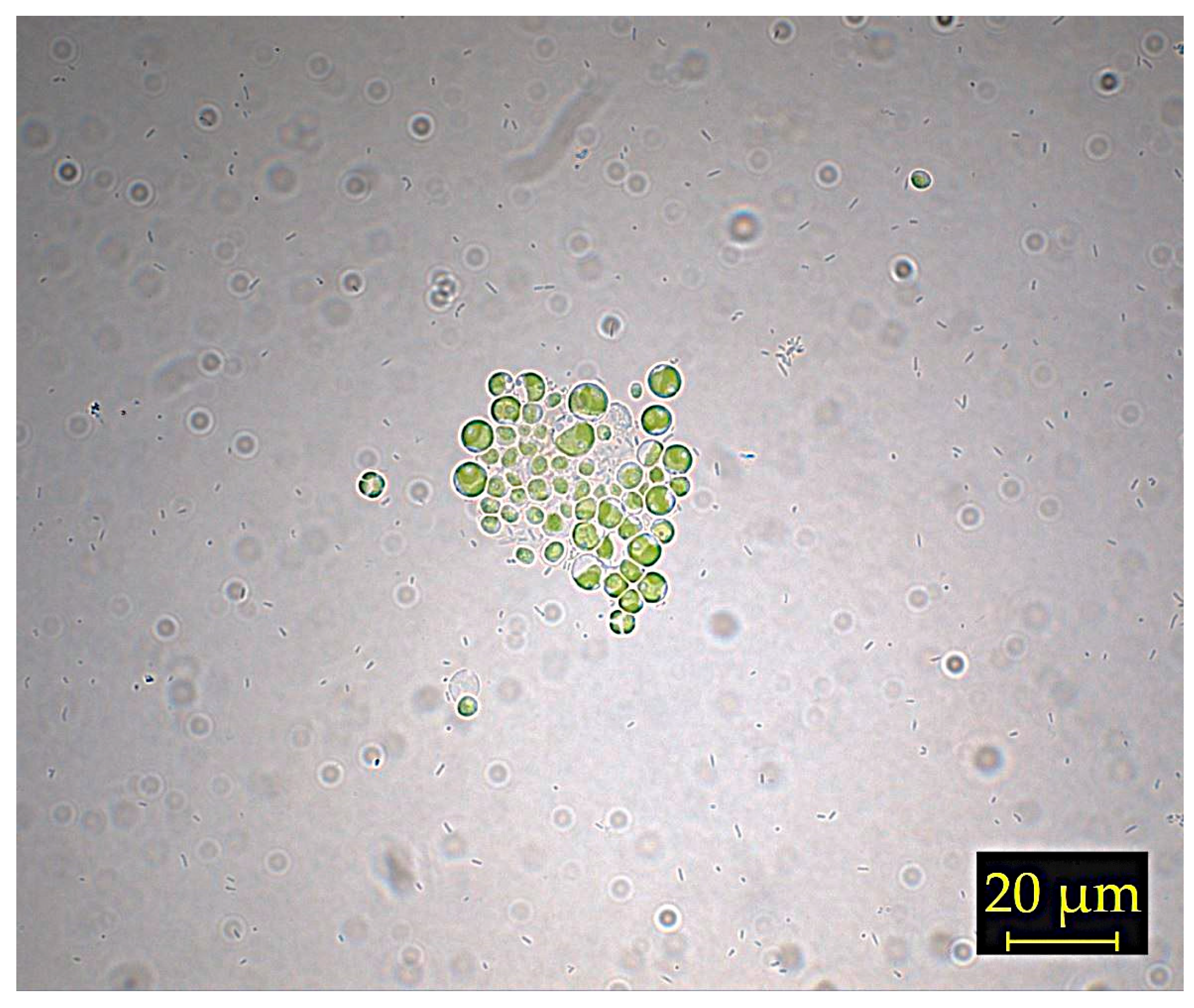
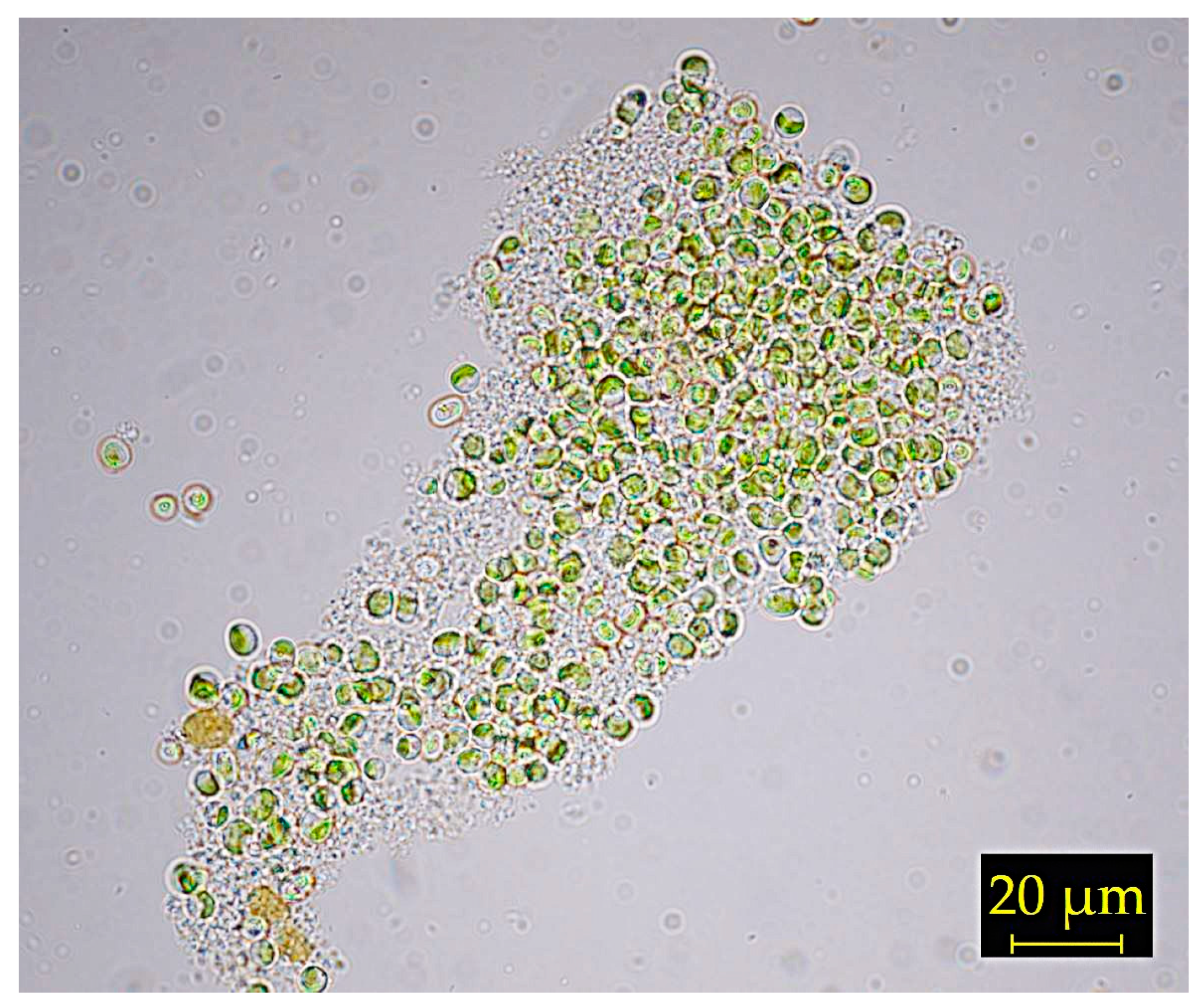
Hematococcus pluvialis, Chlorella mirabilis, Stichococcus sp., and the BBM salt stock solution were purchased from CCALA (Czech Academy of Sciences, Třeboň, Czech Republic). The artificial biofilm consisted of the aforementioned species at a ratio of 1:1:1 (Figure 1, Figure 2 and Figure 3).

2.5. Bioassay

Stock solutions of all the tested species were cultured in a thermostat at a temperature of 22 ± 2 °C with a light intensity of 6000–8000 Lux. The control medium (Bold’s basal medium, BBM) with a pH of 7.0 ± 0.2 was prepared according to Bold.
The test methodology was adapted according to the number of substances tested and the number of model algae species. Therefore, the tests were performed in plastic microplates, with the density of the solution being measured as an indicator of algal cell concentration. As each model species has slightly different growth requirements, a compromise was chosen, and the tests were extended from the standard 72 h to 14 days to allow sufficient biomass to be produced by all the test species. The tests were carried out at gradually increasing temperatures (20 °C for the first two days and 22 °C for the remainder of the test, according to our preliminary practical experience—unpublished).
The test was carried out in plastic microplates, with a volume of 5 mL per well. Five replicates of the control medium and the individual oil concentrations were prepared. The experiment was performed at concentrations of 0 mg/L (control), 50 mg/L, 100 mg/L, and 200 mg/L. A subsequent experiment was performed with concentrations of 0, 3, 6, 12, and 25 mg/L of the most effective chemicals, based on the previous experiment. The appropriate amount of control medium and algal biomass (control) + individual test essential oil or oil substance, diluted in DMSO in a ratio of 1:5, were pipetted into each hole of the microplates. No negative effect of DMSO on algae was confirmed in our previous study [49]. The microplates were incubated in a thermostat under defined test conditions over a period of 14 days.
Algal growth was expressed as absorbance values. These values were measured using a YENWAY 6300 spectrophotometer at a wavelength of 750 nm [50].
Absorbances of the controls and concentrations were measured at the start (0 h) and end (336 h) of the experiments. The initial algal absorbance values were about 50 each time at the start of the experiments. The control medium and concentrations were incubated under light of 2000–4000 Lux at a temperature of 22 ± 2 °C. The measured absorbance values were used to calculate algal growth. The MIC values (the concentrations that caused 100% inhibition of growth) were determined after the experiments were completed.

2.6. Calculations

The absorbance values used in the inhibition calculations were estimated for each microplate (controls and tested concentrations) using the following equation:
Afinal = (Atime336h − Atime0h)
MIC values corresponded to Afinal = 0 ± 0.010.

2.7. Statistical Evaluation

The comparison of species sensitivity and the toxicity of EOs and substances at different concentrations was statistically evaluated using the nonparametric Dunn test (level of significance p > 0.005). The comparison of algicidal effects between the concrete EO and its paired substance was statistically evaluated by the nonparametric Mann–Whitney test (level of significance p > 0.005). The used statistical software was GraphPad Instat, version 3.0 (San Diego, CA, USA).

3. Result

3.1. Chemical Composition of Essential Oils

The essential oils were analyzed by GS-MS. Their chemical composition is shown in Table 1.

3.2. Algicidal Effects

Three species of green algae were used in the bioassays of the present study. Chlorella sp. is the dominant species, reproducing quickly and able to increase its biomass in various environments, including rivers, ponds, stones, and soils. It is therefore also used commercially for producing chlorophyll. Hematococcus pluvialis is another abundant species with large cells that is widespread in a variety of environments. Stichococcus sp. is cultivated for its fatty acid production for gas generation.
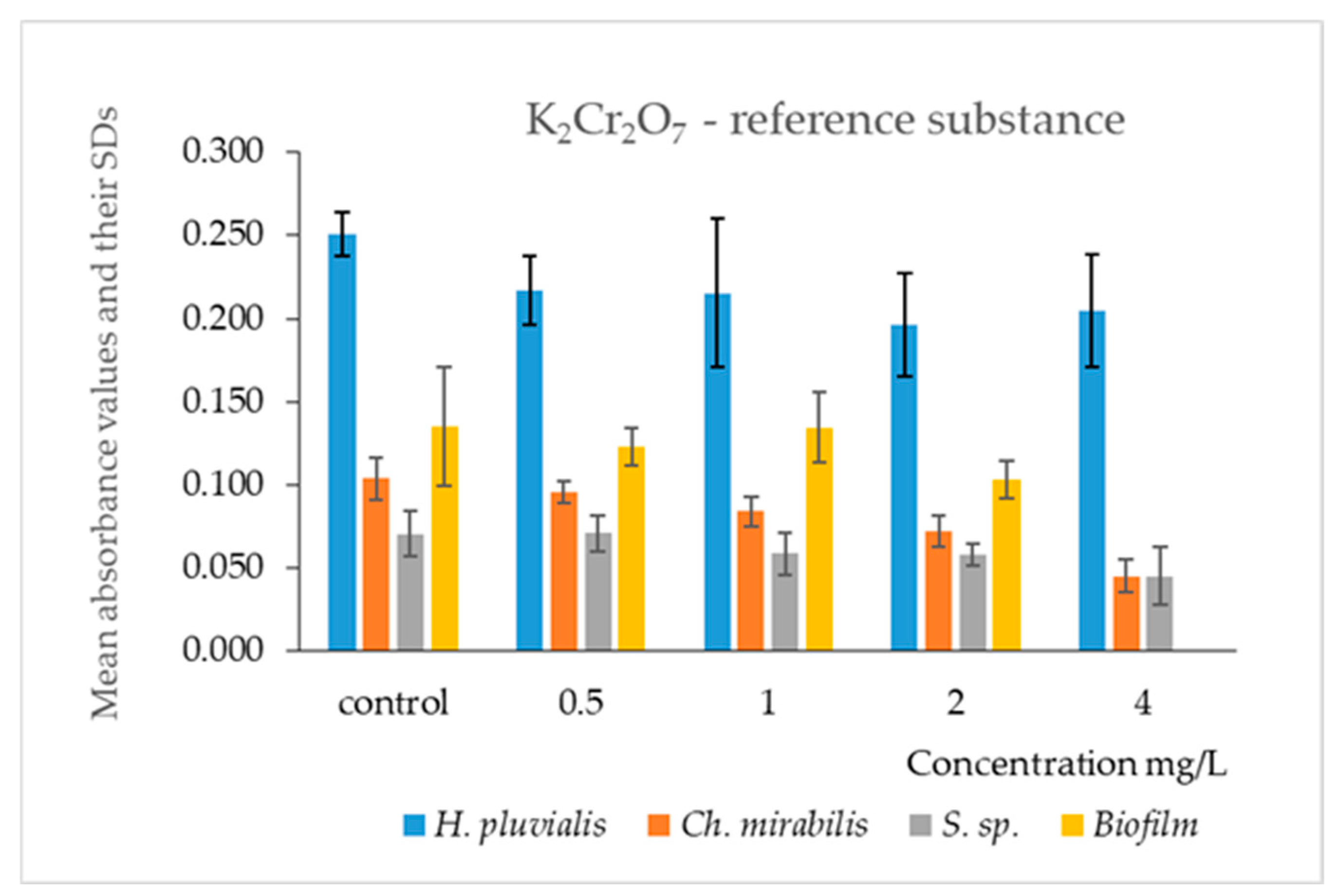
The reference chemical for performance of ecotoxicological tests with green algae—K2Cr2O7 was tested on all model species and their mixture–biofilm, under the same conditions as is usual in the appropriate guideline [50]. The results indicate that the most sensitive species was Ch. mirabilis and the least sensitive H. pluvialis (Figure 4), but H. pluvialis was able to produce the highest biomass. The biofilm sensitivity was somewhere in the middle, thanks to the presence of less or more sensitive species in the mass, but its own growth rate was the least. The primary data are in Supplement No. S3.
In addition, the test with the standard commercial herbicide Terbutryne was conducted on the most sensitive species, Ch. mirabilis. The results are in Supplement No. S3.
The increase in biomass in the control group of the test with EOs and their components varied, but all species met the validity criteria of the algae test according to the standard at the end of the experiments [50]. The primary data—absorbance values (A) for each microplate and well—are presented in Table 2, Table 3, Table 4 and Table 5 for all test chemicals and organisms. Absorbance values were also measured for solutions containing substances/oils in the absence of algae, with values not exceeding 0.020. The results are included in Supplement No. S1.
Based on the initial data, it was found that hop oil, caryophyllene and thymol did not exhibit any significant toxic effects on organisms at any of the tested concentrations. Cinnamon oil, trans-cinnamon aldehyde, and oregano oil exhibited variable toxicity to certain species and biofilms, though MIC values were not reached. These substances were therefore not tested further. Thyme oil and carvacrol were only tested at concentrations of 25, 12, 6, and 3 mg/L, as these chemicals caused MIC of 50 or 100 mg/L for some of the species and biofilms (Table 3, Table 4 and Table 5).
The results of the second experiment indicate that thyme oil is not toxic within the tested concentration range (see Table 6). Initially, the carvacrol solutions (3, 6, 12, and 25 mg/L) were colorless. However, during the test, they began to turn pink and were mostly red by the end. This indicates the presence of carotenoids in these holes (see Supplement No. S2). No algal cells were observed under a light microscope in the plates, and thus, the resulting solutions were not evaluated. Additionally, carvacrol exhibited a strong aroma even at the lowest tested concentration of 3 mg/L.
Table 7 shows the MIC (maximum inhibitory concentration) values for all the chemicals and species tested. It is evident that the sensitivity of the algal species varied to some extent. The lowest effective concentrations (LOEC) were statistically verified (Table 8) and revealed earlier, indicating more variable species sensitivity than the MIC values.

3.3. Sensitivity of Algal Species

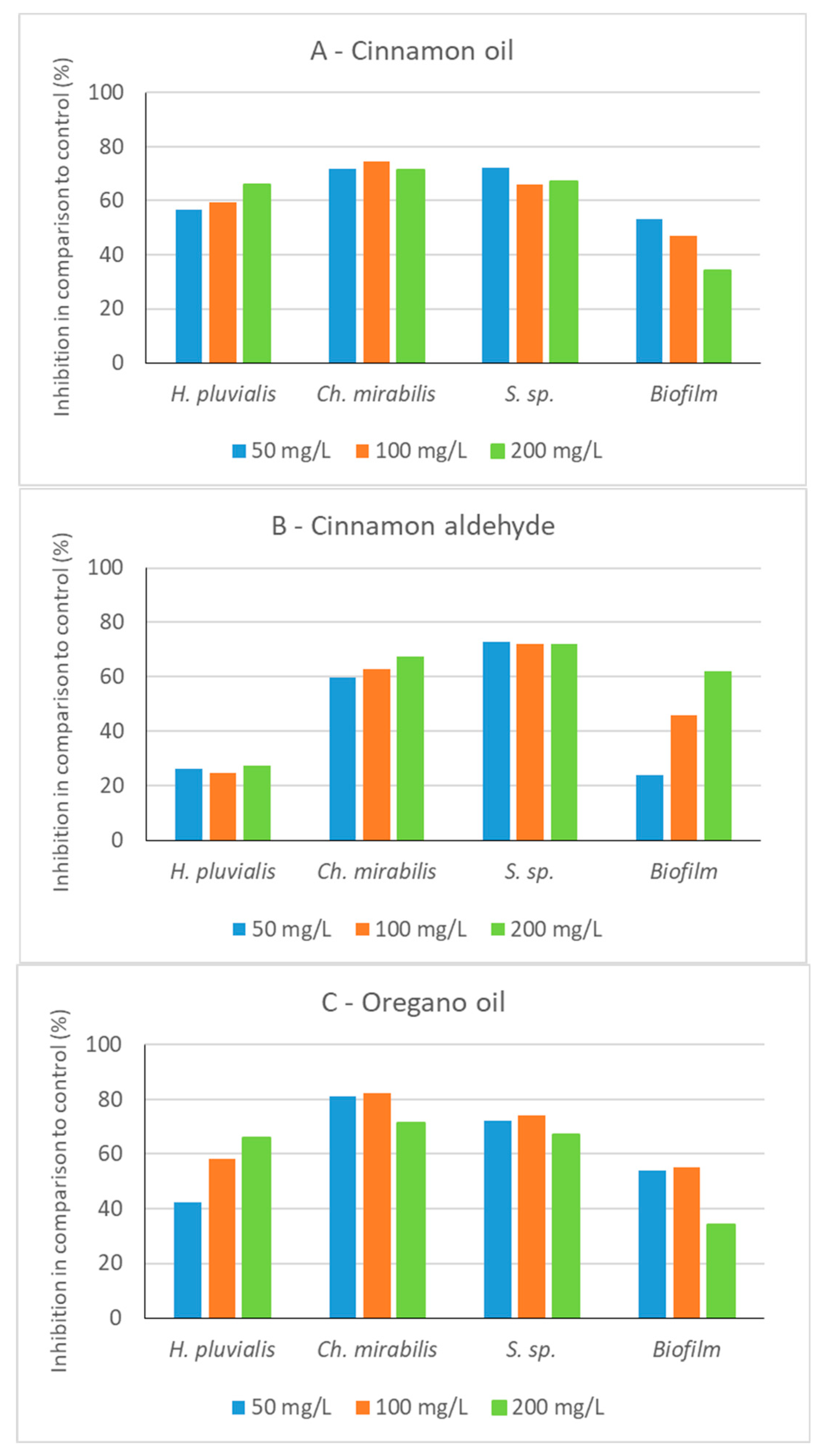
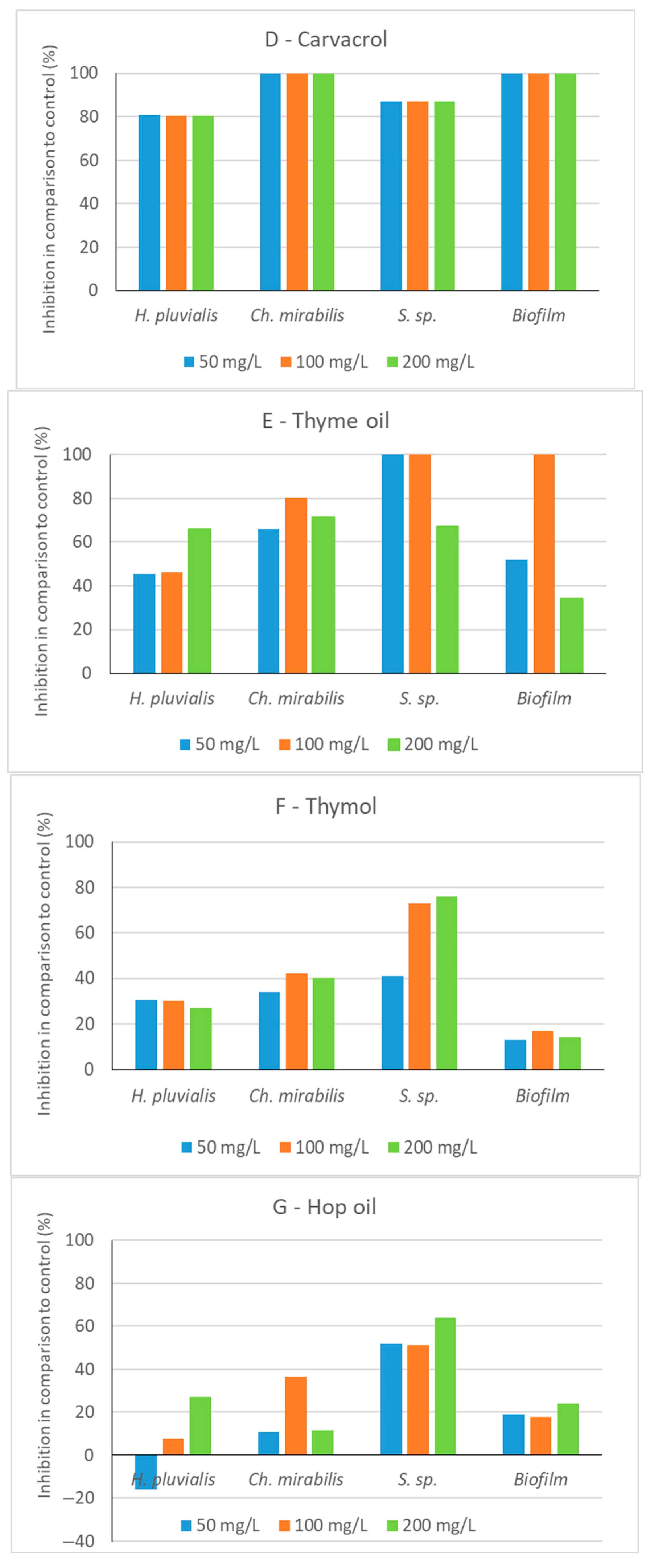
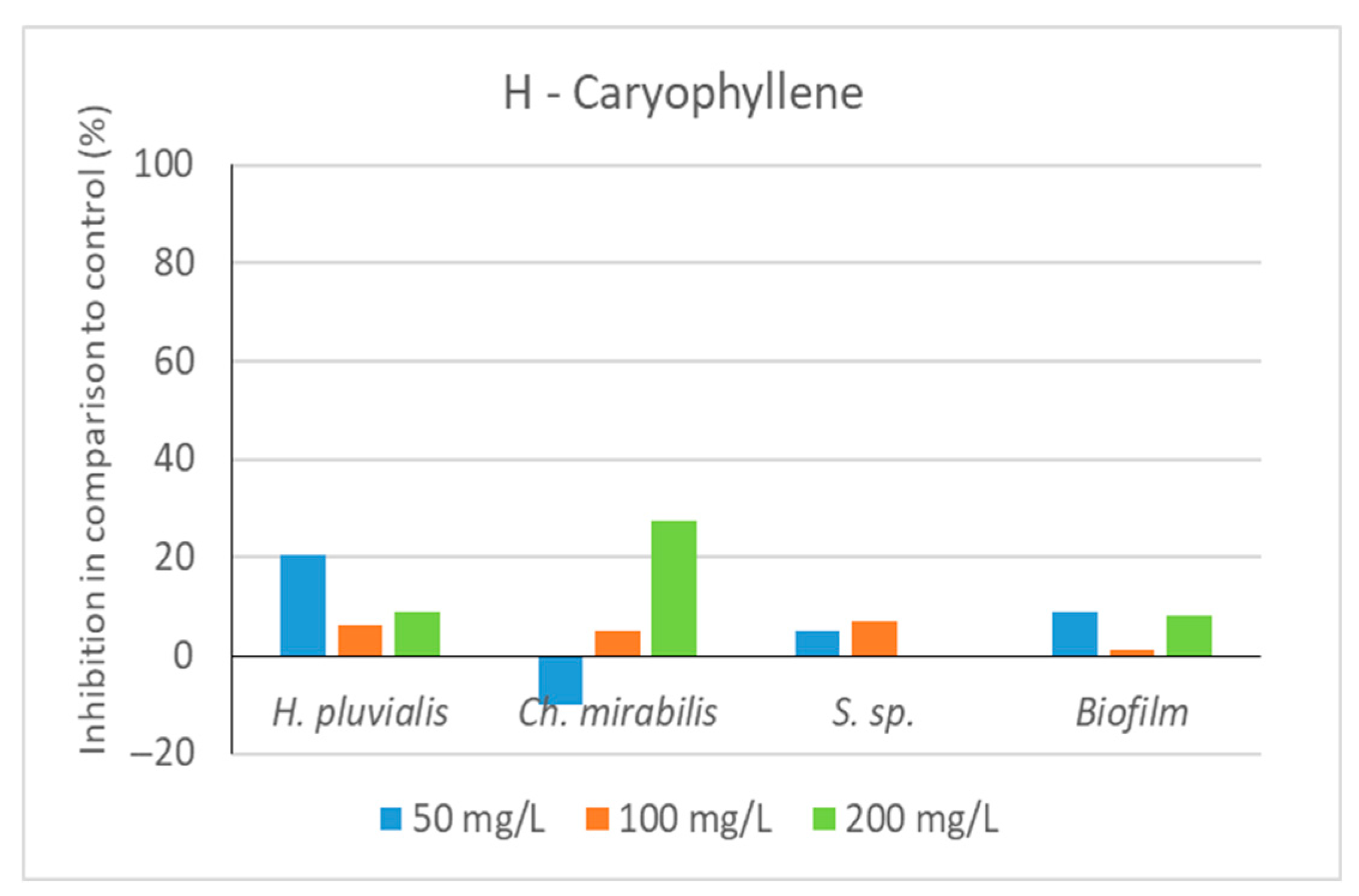
Graphs 5A–5H in Figure 5 show the sensitivity of individual species to the tested compounds/essential oils. It is evident that sensitivity differs between species. H. pluvialis appears to be the least sensitive species, while the biofilm, Ch. m., and S. sp. were more sensitive than H. pluvialis. The most toxic chemicals at lower concentrations were thyme oil and carvacrol, as shown in Table 8.

3.4. Effects on the Base of Chemical Composition and Structure

The statistical difference between pairs cinnamon oil-trans–cinnamon aldehyde, thyme oil–thymol, oregano oil–carvacrol, and hop oil–caryophyllene was verified using the Mann–Whitney Test (see Table 9 and, for more details, also Supplement S1, Excel list named “oils contra compounds”). The data indicated no significant difference between cinnamon oil and trans-cinnamon aldehyde. The other pairs were either significantly (hop oil and caryophyllene) or extremely significantly different (thyme oil and thymol, oregano oil and carvacrol).

4. Discussion

Comparison of their composition with other essential oils from previously published studies is not very easy, because individual oils always less or more differ slightly in their composition and percentage of individual substances, depending on the growing conditions, area of location (mainly country) and the method of extraction of oils from plants. Nevertheless, some correlations were confirmed. Some authors described similar levels of thymol in their thyme oil—47.6% [51,52] but a lower amount of p-cymene (about 8%). A total of 30 constituents of thyme oil were identified: thymol (39.44%), P-cymene (23.6%), and γ-terpinene (12.51%) were the main components comprising 79.91% of the thyme oil in a study of Abozid and Asker [53]. Dong et al. [54] also detected thymol as a main compound in the tested thyme oil. The main component of the oregano oils was carvacrol (76.64–85.70%) in a study of Walasek-Janusz et al. [55]. These authors wrote that mainly the Polish essential oils consisted of the highest levels of carvacrol in the oregano oils. The composition of our analyzed hop essential oil did not significantly change from the others [56,57]. The other authors analyzed the composition of cinnamon bark oil [58]. Their results show that (E)-cinnamaldehyde (71.50%), linalool (7.00%), β-caryophyllene (6.40%), eucalyptol (5.40%), and eugenol (4.60%) in their EO are similar to our results.
The sensitivity of species to the reference substance potassium dichromate was on the same level as for standard species Desmodesmus subspicatus. The species used were less sensitive in comparison to the species Selenastrum capricornutum. Chlorella mirabilis as the most sensitive species in the present study was selected as the species for test with model herbicide Terbutryne. Ch. mirabilis was more sensitive to herbicide than Pseudokirchneriela subcapitata but similarly sensitive as D. subspicatus (see Supplement No. S3).
The results indicate that carvacrol (5-isopropyl-2-methylphenol), which belongs to the monoterpenes group (see Table 10), was the most effective compound against all the tested species. Monoterpenes are considered secondary plant metabolites and function as attractants, morpho-regulators, or protective substances [59]. Carvacrol can react with hydroxyl radicals, leading to oxidative stress [60]. It has been found to reduce the expression of genes that encode antioxidant enzymes, influencing the production and activity of antistress enzymes [61]. Other research has confirmed that carvacrol causes cell death by decreasing ergosterol, which leads to membrane destruction [62]. In another study, EO mixtures exhibited higher biocide activity than individual EOs due to their synergistic effects against biofilms containing Chlorella on stone surfaces [63]. In the present study, the effect of carvacrol was observed as color changes, with biofilm and Stichococcus cultures turning red (Supplement S2). It indicates the production of protective pigments, such as carotenoids, which are indicators of oxidative stress. In addition, a comparison experiment confirming carotenoid production by the used model species was performed, and the results are presented in Supplement S1.
Conversely, strong similarities were found between cinnamon oil and trans-cinnamon aldehyde, as the tested cinnamon oil had a very high concentration of trans-cinnamon aldehyde in the present study (see Figure 3, Table 1 and Table 9). The tested hop oil contained only around 8% caryophyllene, but its slightly higher toxicity appears to be caused by other components, likely humulene (Table 1). The low toxicity of oregano oil compared to carvacrol was surprising, but this may be due to the presence of 17.8% p-Cymene in the tested oil and its interactions with the other components. Similarly, some discrepancies were observed between toxic thyme oil and non-toxic thymol. It can be assumed that the presence of 43.4% p-Cymene affects the overall toxicity of the thyme oil tested.
The robust QSAR methodology could not be used in the present study because the tested essential oils contained many different chemicals, and the individual test substances were quite structurally dissimilar (e.g., monoterpenes such as thymol and carvacrol, trans-cinnamon aldehyde, and the bicyclic sesquiterpene caryophyllene). The study only discusses a simple dual structure–activity relationship (SAR). This method links a single aspect of the chemical structure to the observed biological activity. Some authors have described how the biological activity of a compound is directly proportional to its hydrophobicity, with the cytoplasmic membrane being the primary site of toxicity [63,64], while others have suggested that molecular size, hydrophobicity, polar surface area (PSA), log Kow values, and hydrogen bond donor capacity can effectively describe chemical–biological interactions [65]. In the present study, no clear property–activity relationship was observed at any significant level, likely due to the small number of chemicals tested. Only lower lipophilicity (log Kow < 3.1) and higher water solubility (>1 g/L) were partial factors in the higher toxicity of carvacrol and trans-cinnamon aldehyde, as opposed to thymol and caryophyllene (Table 10). Conversely, hop oil and caryophyllene were not toxic, likely because the large size of caryophyllene limited its bioavailability to algae. It was unable to penetrate the algal cell walls and membranes and destroy them, consistent with previous findings that membrane accessibility is limited to compounds with log p values below 5 and molecular weights ≤ 500 [65].
Interestingly, the anti-algal activity of carvacrol and thymol differs, even though these compounds are isomers with the same molecular weight and other properties (Table 10). The main differences are likely to be found in the dipole moment or energy gap, which indicates the higher toxicity of carvacrol. Another possible factor is the bond dissociation enthalpy of the phenolic O–H bond (ΔH) in carvacrol than in thymol [66]. Carvacrol’s enthalpy is about 85.4 kcal/mol, whereas thymol’s is lower at approximately 80.3 kcal/mol. The effect of dissociation enthalpy is explained in detail in [66], which states that free hydroxyl groups lead to proton exchange, disturbing the membrane gradient and ultimately resulting in cell rupture. It also states that the relative position of the hydroxyl group on the phenolic ring influences the antimicrobial efficacy of these molecules. Another study confirmed that carvacrol is more effective than its isomer, thymol, and that their combination did produce a synergistic effect at the tested concentrations [67]. Furthermore, the reaction of other organisms, such as earthworms, Vibrio (sea bacteria), and Daphnia magna (crustaceans), was again more pronounced for carvacrol than for thymol [68].
The different sensitivities of individual algal species are mainly due to their size or ecology. As can be seen in Figure 2, H. pluvialis has significantly larger cells than Stichococcus sp. or Chlorella mirabilis, which could explain why it is less accessible to substances or essential oils. H. pluvialis can produce carotenoids under stressful conditions, including the red-colored astaxanthin, which is considered the most powerful natural antioxidant. This protects cell membranes from damage caused by UV radiation and chemical oxidants and is often commercially cultivated under stress conditions to produce as much of this pigment as possible [69]. Chlorella sp. generally contains higher levels of chlorophyll than other green algae. This pigment plays a key role in photosynthesis, and its antioxidant properties have been demonstrated in numerous studies (e.g., [69,70,71]. Conversely, some species of the genus Stichococcus are cultivated for their fatty acid production. Stichococcus sp. is likely unable to produce such a large quantity of protective metabolites, and its small molecules may be more sensitive to essential oils [72]. The measured concentrations of total carotenoids were analyzed spectrometrically for all three model species in the present study. The results suggest that carotenoid production is higher during the resting phase of H. pluvialis culturing than during the culturing of C. mirabilis and S. sp., indicating that carotenoids may play a more important role in algal tolerance of essential oils. (Supplement S1).
One Italian study found that cinnamon, oregano, and thyme essential oils (EOs) at a concentration of 5% (v/v) were the most effective against microorganisms, including green algae from the genus Chlorella isolated from biofilms in the Colosseum [48]. In another Italian study, the authors measured lower algae biomass on marble using colorimetry after applying a gel containing 0.25% thyme oil. Only a single treatment was needed to completely remove these microorganisms. The biomass consisted of various green algae species (Chlorella sp.) [73]. Candela et al. [53] applied emulsion systems containing an essential oil/water ratio of 1:3, stabilized with 4% kaolinite and Laponite®, against natural biofilms. This formulation eliminated algae from treated surfaces without leaving residues, and the effect persisted for up to four months, according to the authors. Finally, Kobetičová et al. [57] tested carvacrol, thyme oil, cinnamon oil, eugenol, and thymol on a natural biofilm isolated from lime–cement plaster. The results were consistent with the findings of the present study.
Our results are consistent with previous studies that have investigated the effectiveness of essential oils or their components on natural algal biofilms. As expected, the artificial biofilm in the present study exhibited sensitivity to the tested chemicals similar to that of the three individual species. Therefore, artificial biofilms can be used as a model for natural algal biofilms in future studies, since essential oils and their components generally have an anti-algal effect on many species of green algae that live on building facades, bricks or concrete.

5. Conclusions

In the present study, carvacrol (MIC = 3 mg/L) and thyme oil (50 mg/L) were found to be the most effective substances in enhancing the algacidal effect. Hop oil and caryophyllene were not toxic to algae at concentrations of up to 200 mg/L. The chemical structures of the test chemicals indicate that molecular size, log Kow, water solubility, and dipole moment influence their potential toxicity to algae. Hematococcus pluvialis was less sensitive than Ch. mirabilis and S. sp., likely due to its production of protective pigments. The results indicate that the artificial biofilm compost of the three green algal species (H. pluvialis, Ch. mirabilies, S. sp.) exhibited similar sensitivity to algal species isolated from natural conditions (from previous studies or the authors’ own work). This suggests that suitable artificial biofilms can replace natural biofilms, which are often difficult to cultivate in a laboratory setting. Limitations of the present study: the number of substances tested and compared was relatively small; however, future research could expand the range of essential substances for QSAR analysis. The tested EOs or their components were evaluated only on green algae, whereas natural biofilms consist of diverse microorganisms. Future research: Carvacrol was the most effective compound, but it produces an intense aroma and colors solutions. Therefore, future studies should focus more intensively on its fate in the environment and on building material surfaces. Its ecotoxicity will be tested, and its properties in coating systems will be studied in more detail.

Supplementary Materials

The following supporting information can be downloaded at: https://www.mdpi.com/article/10.3390/su18083788/s1, as a Supplement S1 or S2 or S3.

Author Contributions

Conceptualization, K.K. and A.F.; methodology, K.K. and D.N.; validation, K.K., M.B. and M.J.; formal analysis, K.K.; investigation, K.K., I.B. and M.B.; resources, K.K.; data curation, K.K., and A.F.; writing—original draft preparation, K.K.; writing—review and editing, K.K. and M.B. a; visualization, D.N. and K.K.; supervision, K.K.; funding acquisition, K.K. All authors have read and agreed to the published version of the manuscript.

Funding

This research was funded by the Czech Science Foundation, project No. 24-10395S.

Institutional Review Board Statement

Not applicable.

Informed Consent Statement

Not applicable.

Data Availability Statement

All data supporting the findings of this study are included within the article or in the Supplements of the manuscript.

Conflicts of Interest

The authors declare no conflicts of interest.

References

  1. Delwiche, C.F.; Cooper, E.D. The Evolutionary Origin of a Terrestrial Flora. Curr. Biol. 2015, 25, R899–R910. [Google Scholar] [CrossRef] [PubMed]
  2. Keeling, P.J. Diversity and evolutionary history of plastids and their hosts. Am. J. Bot. 2004, 91, 1481–1493. [Google Scholar] [CrossRef] [PubMed]
  3. Hallmann, C.; Stannek, L.; Fritzlar, D.; Hause-Reitner, D.; Friedl, T.; Hoppert, M. Molecular diversity of phototrophic biofilmson building stone. FEMS Microbiol. Ecol. 2023, 84, 355–372. [Google Scholar] [CrossRef] [PubMed]
  4. Macedo, M.F.; Vilarigues, M.G.; Coutinho, M. Biodeterioration of Glass-Based Historical Building Materials: An Overview of the Heritage Literature from the 21st Century. Appl. Sci. 2021, 11, 9552. [Google Scholar] [CrossRef]
  5. Lepage, R.; Glass, S.V.; Knowles, W.; Mukhopadhyaya, P. Biodeterioration Models for Building Materials: Critical Review. J. Archit. Eng. 2019, 35, 04019021. [Google Scholar] [CrossRef]
  6. Korkanc, M.; Savran, A. Impact of the surface roughness of stones used in historical buildings on biodeterioration. Constr. Build. Mater. 2015, 80, 279–294. [Google Scholar] [CrossRef]
  7. Gutarowska, B.; Czyzowska, A. The ability of filamentous fungi to produce acids on indoor building materials. Ann. Microbiol. 2009, 59, 807–813. [Google Scholar] [CrossRef]
  8. Gutarowska, B. Metabolic Activity of Moulds as a Factor of Building Materials Biodegradation. Pol. J. Microbiol. 2010, 59, 119–124. [Google Scholar] [CrossRef]
  9. Crispim, C.A.; Gaylarde, C.C. Cyanobacteria and biodeterioration of cultural heritage: A review. Microb. Ecol. 2005, 49, 1–9. [Google Scholar] [CrossRef]
  10. Kobetičová, K.; Černý, R. Terrestrial eutrophication of building materials and buildings: An emerging topic in environmental studies. Sci. Total Environ. 2019, 689, 1316–1328. [Google Scholar] [CrossRef]
  11. Stupar, M.; Grbič, M.L.; Simič, G.S.; Jelikič, A.; Vukojevič, J.; Saboljevič, M. A sub-aerial biofilms investigation and new approach in biocide application in cultural heritage conservation: Holy Virgin Church (Gradac Monastery, Serbia). Indoor Built Environ. 2014, 23, 584–593. [Google Scholar] [CrossRef]
  12. Ortega-Calvo, J.J.; Hernandez-Marine, M.; Saiz-Jimenez, C. Biodeterioration of building materials by cyanobacteria and algae. Int. Biodeterior. 1991, 28, 165–185. [Google Scholar] [CrossRef]
  13. de Gómez Saravia, S.G.; Rastelli, S.E.; Blustein, G.; Viera, M.R. Natural compounds as potential algaecides for waterborne paints. J. Coat. Technol. Res. 2018, 15, 1191–1200. [Google Scholar] [CrossRef]
  14. Grzesik, M.; Romanowska-Duda, Z. Ability of Cyanobacteria and Green Algae to Improve Metabolic Activity and Development of Willow Plants. Pol. J. Environ. Stud. 2015, 24, 1003–1012. [Google Scholar] [CrossRef]
  15. Grbič, M.; Vukojevič, J.; Subakov, S.G.; Krizmanič, J.; Stupar, M. Biofilm forming cyanobacteria, algae and fungi on two historic monuments in Belgrade, Serbia. Arch. Biol. Sci. 2010, 62, 625–631. [Google Scholar] [CrossRef]
  16. Hallmann, C.; Hoppert, M.; Mudimu, O.; Friedl, T. Biodiversity of green algae covering artificial hard substrate surfaces in a suburban environment: A case study using molecular approaches. J. Phycol. 2016, 52, 732–744. [Google Scholar] [CrossRef]
  17. Haubner, N.; Schumann, R.; Karsten, U. Aeroterrestrial microalgae growing in biofilms on facades—Response to temperature and water stress. Microb. Ecol. 2006, 51, 285–293. [Google Scholar] [CrossRef]
  18. Warscheid, T.; Braams, J. Biodeterioration of stone: A review. Int. Biodeterior. Biodegrad. 2000, 46, 343–368. [Google Scholar] [CrossRef]
  19. Nowicka-Krawczyk, P.; Zelazna-Wieczorek, J.; Otlewska, A.; Kozirog, A.; Rajkowska, K.; Piotrowska, M.; Gutarowska, B.; Zydzik-Białek, A. Diversity of an aerial phototrophic coating of historic buildings in the former Auschwitz II-Birkenau concentration camp. Sci. Total Environ. 2014, 493, 116–123. [Google Scholar] [CrossRef]
  20. Gomez-Villalba, L.S.; Salcines, C.; Fort, R. Application of Inorganic Nanomaterials in Cultural Heritage Conservation, Risk of Toxicity, and Preventive Measures. Nanomaterials 2023, 13, 1454. [Google Scholar] [CrossRef]
  21. McIntyre, J.K.; Winters, N.; Rozmyn, L.; Haskins, T.; Stark, J.D. Metals leaching from common residential and commercial roofing materials across four years of weathering and implications for environmental loading. Environ. Pollut. 2019, 255, 113262. [Google Scholar] [CrossRef]
  22. Vermeirssen, E.L.; Campiche, S.; Dietschweiler, C.; Werner, I.; Burkhardt, M. Ecotoxicological assessment of immersion samples from façade render containing free or encapsulated biocides. Environ. Toxicol. Chem. 2018, 37, 2246–2256. [Google Scholar] [CrossRef] [PubMed]
  23. Paijens, C.; Bressy, A.; Frere, B.; Moilleron, R. Biocide emissions from building materials during wet weather: Identification of substances, mechanism of release and transfer to the aquatic environment. Environ. Sci. Pollut. Res. 2020, 27, 3768–3791. [Google Scholar] [CrossRef] [PubMed]
  24. Burkhardt, M.; Zuleeg, S.; Vonbank, R.; Bester, K.; Carmeliet, J.; Boller, M.; Wangler, T. Leaching of biocides from façades under natural weather conditions. Environ. Sci. Technol. 2012, 46, 5497–5503. [Google Scholar] [CrossRef] [PubMed]
  25. Reiß, F.; Kiefer, N.; Noll, M.; Kalkhof, S. Application, release, ecotoxicological assessment of biocide in building materials and its soil microbial response. Ecotoxicol. Environ. Saf. 2021, 224, 112707. [Google Scholar] [CrossRef]
  26. Fidanza, M.R.; Caneva, G. Natural biocides for the conservation of stone cultural heritage: A review. J. Cult. Herit. 2019, 38, 271–286. [Google Scholar] [CrossRef]
  27. Pánek, M.; Borůvka, V.; Nábělková, J.; Šimůnková, K.; Zeidler, A.; Novák, D.; Černý, R.; Kobetičová, K. Efficacy of Caffeine Treatment for Wood Protection—Influence of Wood and Fungi Species. Polymers 2021, 13, 3758. [Google Scholar] [CrossRef]
  28. Ni, L.X.; Hao, X.Y.; Li, S.Y.; Chen, S.J.; Ren, G.X.; Zhu, L. Inhibitory effects of the extracts with different solvents from three compositae plants on cyanobacterium Microcystis aeruginosas. Sci. China Chem. 2011, 54, 1123–1129. [Google Scholar] [CrossRef]
  29. Wozniak, M. Antifungal Agents in Wood Protection—A Review. Molecules 2022, 27, 6392. [Google Scholar] [CrossRef]
  30. Reale, R.; Medeghini, L.; Botticelli, M. Stealing from Phytotherapy—Heritage Conservation with Essential Oils: A Review, from Remedy to Sustainable Restoration Product. Sustainability 2024, 16, 5110. [Google Scholar] [CrossRef]
  31. Tanasă, F.; Nechifor, M.; Teacă, C.-A. Essential Oils as Alternative Green Broad-Spectrum Biocides. Plants 2024, 13, 3442. [Google Scholar] [CrossRef]
  32. Sadgrove, N.J.; Padilla-González, G.F.; Phumthum, M. Fundamental Chemistry of Essential Oils and Volatile Organic Compounds, Methods of Analysis and Authentication. Plants 2022, 11, 789. [Google Scholar] [CrossRef]
  33. Korenblum, E.; de Vasconcelos Goulart, F.R.; de Almeida Rodrigues, I.; Abreu, F.; Lins, U.; Alves, P.B.; Blank, A.F.; Valoni, É.; Sebastián, G.V.; Alviano, D.S.; et al. Antimicrobial action and anti-corrosion effect against sulfate reducing bacteria by lemongrass (Cymbopogon citratus) essential oil and its major component, the citral. AMB Express 2013, 3, 44. [Google Scholar] [CrossRef] [PubMed]
  34. Purwasena, I.A.; Astuti, D.I.; Taufik, I.; Putri, P.F. The Potential of Clove Essential Oil Microemulsion as an Alternative Biocide Against Pseudomonas aeruginosa Biofilm. J. Pure Appl. Microbiol. 2020, 14, 261–269. [Google Scholar] [CrossRef]
  35. Mateus, D.; Costa, F.; de Jesus, V.; Malaquias, L. Biocides Based on Essential Oils for Sustainable Conservation and Restoration of Mural Paintings in Built Cultural Heritage. Sustainability 2024, 16, 11223. [Google Scholar] [CrossRef]
  36. Myszka, K.; Schmidt, M.T.; Majcher, M.; Juzwa, W.; Olkowicz, M.; Czaczyk, K. Inhibition of quorum sensing-related biofilm of Pseudomonas f luorescens KM121 by Thymus vulgare essential oil and its major bioactive compounds. Int. Biodeterior. Biodegrad. 2016, 114, 252–259. [Google Scholar] [CrossRef]
  37. Gabriele, F.; Ranaldi, R.; Brunob, L.; Casieri, C.; Rugnini, L.; Spreti, N. Biodeterioration of stone monuments: Studies on the influence of bioreceptivity on cyanobacterial biofilm growth and on the biocidal efficacy of essential oils in natural hydrogel. Sci. Total Environ. 2023, 870, 161901. [Google Scholar] [CrossRef]
  38. Filali, Z.; Braish, N.; Locoge, T.; Andres, Y. Impact of the Aging Process on the Ability of Decorative Materials Containing Biocides to Support Fungal Growth. Buildings 2024, 14, 3859. [Google Scholar] [CrossRef]
  39. Marco, A.; Santos, S.; Caetano, J.; Pintado, M.; Vieira, E.; Moreira, P.R. Basil essential oil as an alternative to commercial biocides against fungi associated with black stains in mural painting. Build. Environ. 2020, 167, 106459. [Google Scholar] [CrossRef]
  40. Medaglia, S.; Morellá-Aucejo, Á.; Ruiz-Rico, M.; Sancenón, F.; Villaescusa, L.A.; Martínez-Máñez, R.; Marcos, M.D.; Bernardos, A. Antimicrobial Surfaces: Stainless Steel Functionalized with the Essential Oil Component Vanillin. Int. J. Mol. Sci. 2024, 25, 12146. [Google Scholar] [CrossRef]
  41. Santo, A.P.; Agostini, B.; Cuzman, O.A.; Michelozzi, M.; Salvatici, T.; Perito, B. Essential oils to contrast biodeterioration of the external marble of Florence Cathedral. Sci. Total Environ. 2023, 877, 162913. [Google Scholar] [CrossRef]
  42. Ranaldi, R.; Rugnini, L.; Migliore, G.; Tasso, F.; Gabriele, F.; Spreti, N.; Scuderi, F.; Braglia, R.; Di Martino, P.; Pujia, A.; et al. The role of essential oils as eco-friendly strategy to control biofilm collected in the Colosseum (Rome, Italy). Appl. Microbiol. Biotechnol. 2025, 109, 48. [Google Scholar] [CrossRef]
  43. Vettraino, A.M.; Zikeli, F.; Humar, M.; Biscontri, M.; Bergamasco, S.; Romagnoli, M. Essential oils from Thymus spp. as natural biocide against common brown- and white-rot fungi in degradation of wood products: Antifungal activity evaluation by in vitro and FTIR analysis. Eur. J. Wood Wood Prod. 2023, 81, 747–763. [Google Scholar] [CrossRef]
  44. Bartoli, F.; Hosseini, Z.; Graziani, V.; Zuena, M.; Venettacci, C.; Della Ventura, G.; Tortora, L.; Sodo, A.; Caneva, G. In Situ Evaluation of New Silica Nanosystems as Long-Lasting Methods to Prevent Stone Monument Biodeterioration. Coatings 2024, 14, 163. [Google Scholar] [CrossRef]
  45. Macchia, A.; Aureli, H.; Prestileo, F.; Ortenzi, F.; Sellathurai, S.; Docci, A.; Cerafogli, E.; Colasanti, I.A.; Ricca, M.; La Russa, M.F. In-Situ Comparative Study of Eucalyptus, Basil, Cloves, Thyme, Pine Tree, and Tea Tree Essential Oil Biocide Efficacy. Methods Protoc. 2022, 5, 37. [Google Scholar] [CrossRef] [PubMed]
  46. Candela, R.G.; Maggi, F.; Lazzara, G.; Rosselli, S.; Bruno, M. The essential oil of Thymbra capitata and its application as a biocide on stone and derived surfaces. Plants 2019, 8, 300. [Google Scholar] [CrossRef]
  47. Rotolo, V.; De Caro, M.L.; Giordano, A.; Palla, F. Solunto archaeological park in Sicily: Life under mosaic tesserae. Flora Medit. 2018, 28, 233–245. [Google Scholar]
  48. Spada, M.; Cuzman, O.A.; Tosini, I.; Galeotti, M.; Sorella, F. Essential oils mixtures as an eco-friendly biocidal solution for a marble statue restoration. Int. Biodeterior. Biodegrad. 2021, 163, 105280. [Google Scholar] [CrossRef]
  49. Kobetičová, K.; Fišer, A.; Fraňková, A. Antialgal potential of selected botanicals against biofilm isolated from lime plaster. J. Phys. Conf. Ser. 2025, 3146, 012029. [Google Scholar] [CrossRef]
  50. ČSN EN ISO 8692 (757740); Kvalita Vod—Zkouška Inhibice Růstu Sladkovodních Zelených Řas. ČSN: Prague, Czech Republic, 2012.
  51. Borugă, O.; Jianu, C.; Mişcă, C.; Goleţ, I.; Gruia, A.T.; Horhat, F.G. Thymus vulgaris essential oil: Chemical composition and antimicrobial activity. J. Med. Life 2014, 7, 56–60. [Google Scholar]
  52. Grigore, A.; Paraschiv, I.; Colceru-Mihul, S.; Bubueanu, C.; Draghici, E.; Ichim, M. Chemical composition and antioxidant activity of Thymus vulgaris L. volatile oil obtained by two different methods. Rom. Biotechnol. Lett. 2010, 15, 5436–5443. [Google Scholar]
  53. Abozid, M.M.; Asker, M.M.S. Chemical composition, antioxidant and antimicrobial activity of the essential oil of the thyme and rosemary. Int. J. Acad. Res. A 2013, 5, 186–195. [Google Scholar] [CrossRef]
  54. Dong, Y.; Wei, Z.; Yang, R.; Zhang, Y.; Sun, M.; Bai, H.; Mo, M.; Yao, C.; Li, H.; Shi, L. Chemické složení esenciálního oleje extrahovaného z osmi druhů tymiánu a potenciální biologické funkce. Plants 2023, 12, 4164. [Google Scholar] [CrossRef] [PubMed]
  55. Walasek-Janusz, M.; Grzegorczyk, A.; Malm, A.; Nurzyńska-Wierdak, R.; Zalewski, D. Chemical Composition, and Antioxidant and Antimicrobial Activity of Oregano Essential Oil. Molecules 2024, 29, 435. [Google Scholar] [CrossRef] [PubMed]
  56. Rutnik, K.; Ocvirk, M.; Košir, I.J. Changes in Hop (Humulus lupulus L.) Oil Content and Composition during Long-Term Storage under Different Conditions. Foods 2022, 11, 3089. [Google Scholar] [CrossRef] [PubMed]
  57. Rutnik, K.; Knez Hrnčič, M.; Jože Košir, I. Hop Essential Oil: Chemical Composition, Extraction, Analysis, and Applications. Food Rev. Int. 2021, 38, 529–551. [Google Scholar] [CrossRef]
  58. Alizadeh, B.B.; Falah, F.; Lavi, A.F.; Vasiee, M.; Tabatabaee, Y.F. Chemical Composition and Antioxidant, Antimicrobial, and Antiproliferative Activities of Cinnamomum zeylanicum Bark Essential Oil. Evid. Based Complement. Altern. Med. 2020, 2020, 5190603. [Google Scholar]
  59. Dvořáková, M.; Valterová, I.; Vaněk, T. Monoterpenes in plants. Chem. Lett. 2011, 105, 839–845. [Google Scholar]
  60. Peñuelas, J.; Staudt, M. BVOCs and global change. Trends Plant Sci. 2010, 15, 133–144. [Google Scholar] [CrossRef]
  61. Ismail, M.; Srivastava, V.; Marimani, M.; Ahmad, A. Carvacrol modulates the expression and activity of antioxidant enzymes in Candida auris. Res. Microbiol. 2022, 173, 103916. [Google Scholar] [CrossRef]
  62. Qu, C.; Li, Z.; Wang, X. UHPLC-HRMS-Based Untargeted Lipidomics Reveal Mechanism of Antifungal Activity of Carvacrol against Aspergillus flavus. Foods 2022, 11, 93. [Google Scholar] [CrossRef] [PubMed]
  63. Ahmad, A.; Ishaku, L.E.; van Vuuren, S. Volatile phenolics: A comprehensive review of the anti-infective properties of an important class of essential oil constituents. Phytochemistry 2021, 190, 112864. [Google Scholar] [CrossRef] [PubMed]
  64. Weber, F.J.; de Bont, J.A. Adaptation mechanisms of microorganisms to the toxic effects of organic solvents on membranes. Biochim. Biophys. Acta (BBA)-Rev. Biomembr. 1996, 1286, 225–245. [Google Scholar] [CrossRef]
  65. Lipinski, C.A.; Lombardo, F.; Dominy, B.W.; Feeney, P.J. Experimental and computational approaches to estimate solubility and permeability in drug discovery and development settings. Adv. Drug Deliv. Rev. 1997, 23, 3–25. [Google Scholar] [CrossRef]
  66. Arfa, A.B.; Combes, S.; Preziosi-Belloy, L.; Gontard, N.; Chalier, P. Antimicrobial activity of carvacrol related to its chemical structure. Lett. Appl. Microbiol. 2006, 43, 149–154. [Google Scholar] [CrossRef]
  67. Al-Mansori, B.; El-Ageeli, W.H.; Alsagheer, S.H.; Ben-Khayal, F.A. Antioxidant Activity-Synergistic Effects of Thymol and Carvacrol. Al-Mukhtar J. Sci. 2020, 35, 185–194. [Google Scholar] [CrossRef]
  68. Gan, C.; Langa, E.; Ballestero, D.; Pino-Otín, M.R. Comparative ecotoxicity assessment of highly bioactive isomeric monoterpenes carvacrol and thymol on aquatic and edaphic indicators and communities. Chemosphere 2024, 368, 143666. [Google Scholar] [CrossRef]
  69. Collins, A.M.; Jones, H.D.T.; Han, D.; Hu, Q.; Beechem, T.E.; Timlin, J.A. Carotenoid Distribution in Living Cells of Haematococcus pluvialis (Chlorophyceae). PLoS ONE 2011, 6, e24302. [Google Scholar] [CrossRef]
  70. Hidhayati, N.; Purba, L.D.A.; Firman, N.F.A.; Admirasari, R.; Rahman, D.Y.; Agustini, N.W.S.; Maryati, M.; Anam, K.; Prayitno, J. Current status and future prospects of Chlorella as raw materials in cosmeceuticals: Cultivation, extraction, and commercial applications. J. Appl. Phycol. 2025, 37, 343–354. [Google Scholar] [CrossRef]
  71. Coelho, P.; Khemiri, S.; Figueira, D.; Sousa, I.; Raymundo, A. Incorporation of Chlorella vulgaris in mayonnaise—A sustainable and healthy strategy. In XII Foro Iberoamericano de los Recursos Marinos y la Acuicultura Foro Iberoam; Ediciones AFRIMAR-AFIRMA: Las Palmas de Gran Canaria, Spain, 2024; Volume 12, pp. 477–480. [Google Scholar]
  72. Sivakumar, G.; Jeong, K.; Lay, J.O. Bioprocessing of Stichococcus bacillaris strain siva 2011. Biotechnol. Biofuels 2014, 7, 62. [Google Scholar] [CrossRef]
  73. Bruno, L.; Casieri, C.; Spreti, N. In situ application of alginate hydrogels containing oxidant or natural biocides on Fortunato Depero’s mosaic (Rome, Italy). Int. Biodeterior. Biodegrad. 2023, 183, 105641. [Google Scholar] [CrossRef]
Figure 1. Model algal species: Hematococcus pluvialis. The image in transmitted light of algae in water was captured at 500× magnification using a Zeiss AxioZoom V16 optical microscope (Carl Zeiss, Jena, Germany). Image acquisition and analysis were performed using ZEN Blue 3.5 software (Carl Zeiss, Jena, Germany).
Sustainability 18 03788 g001
Figure 2. Model algal species Chlorella mirabilis. The image in transmitted light of algae in water was captured at 500× magnification using a Zeiss AxioZoom V16 optical microscope (Carl Zeiss, Jena, Germany). Image acquisition and analysis were performed using ZEN Blue 3.5 software (Carl Zeiss, Jena, Germany).
Sustainability 18 03788 g002
Figure 3. Model algal species Stichococcus sp. The image in transmitted light of algae in water was captured at 500× magnification using a Zeiss AxioZoom V16 optical microscope (Carl Zeiss, Jena, Germany). Image acquisition and analysis were performed using ZEN Blue 3.5 software (Carl Zeiss, Jena, Germany).
Sustainability 18 03788 g003
Figure 4. Algal biomass expressed as mean absorbances with their standard deviations (SDs) for species H. pluvialis, Ch. mirabilis, Stichococcuss sp. and biofilm compost of the 3 species after exposition to the reference substance K2Cr2O7.
Sustainability 18 03788 g004
Figure 5. Sensitivity of individual algal species (A–H) to all eight tested substances. The data are expressed as inhibition in comparison to the control group (% of inhibition). These values were statistically verified using Dunn’s test at an α-level of 0.05. The inhibition values are available in the Supplement—Excel S1, list No. S1.
Sustainability 18 03788 g005aSustainability 18 03788 g005bSustainability 18 03788 g005c
Table 1. Main compounds of the tested essential oils.
Essential OilComposition of Individual Essential Oils (%)
Cinnamon70.7% trans-cinnamaldehyde,
8.8% Acetic acid, cinnamyl ester,
5.1% Eugenol
Thyme43.4% p-Cymene,
42.4% Thymol
Oregano65.3% Carvacrol,
17.8% p-Cymene
Hop34.22% Humulene,
19.9% Humulene epoxide,
12.9% ß-Myrcene,
8.0% Caryophyllene oxide,
6.4% ß Caryophyllene
Table 2. Primary data + mean values and standard deviations for algal tests with eight chemicals: A = cinnamon oil, B = thyme oil, C = oregano oil, D = hop oil, E = trans-cinnamon aldehyde, F = thymol, G = carvacrol, H = β-caryophyllene and the alga Hematococcus pluvialis.
ReplicateABCDEFGH
Control
10.2610.1540.2420.1930.2610.2280.4300.239
20.2880.1770.2000.1850.3400.3390.4700.323
30.2680.1820.1940.1950.2520.2740.5210.311
40.2650.1710.1660.1860.2140.2560.6820.341
50.2530.2050.2030.2230.2810.2340.6570.338
mean0.2670.1790.2010.1960.2700.2660.5520.310
SD0.0130.0190.0270.0160.0460.0450.1120.042
50 mg/L
10.1390.1020.1430.1570.1820.2170.1040.199
20.0850.0980.0920.1540.2040.1690.1040.241
30.1040.0960.0820.2540.1920.2170.1040.207
40.1220.0950.1060.2630.2110.1460.1110.279
50.1250.0980.1550.3060.2060.1760.1050.309
mean0.1160.0980.1160.2270.1990.1850.1060.247
SD0.0210.0030.0320.0680.0120.0310.0030.047
100 mg/L
10.0760.0980.0830.2150.2450.2240.1140.204
20.1440.0970.0800.2130.1350.1880.1070.238
30.0850.0860.0830.1590.1510.2070.1030.331
40.1390.0990.0900.1620.2820.1480.1040.337
50.0940.0980.0850.1550.2820.1610.1080.344
mean0.1080.0960.0840.1810.2030.1860.1070.291
SD0.0320.0050.0040.0300.0720.0320.0040.065
200 mg/L
10.1170.0900.0850.1590.1650.2510.1140.198
20.0840.0930.0860.1440.1470.1970.1070.287
30.0830.0960.0850.1410.3060.1880.1010.295
40.0840.0950.0900.1370.1990.1670.1040.313
50.0850.0970.0850.1350.1620.1650.1080.321
mean0.0910.0940.0860.1430.1960.1940.1070.283
SD0.0150.0030.0020.0100.0650.0350.0050.050
Table 3. Primary data + mean values and standard deviations for algal tests with eight chemicals: A = cinnamon oil, B = thyme oil, C = oregano oil, D = hop oil, E = trans-cinnamon aldehyde, F = thymol, G = carvacrol, H = β-caryophyllene and the alga Chlorella mirabilis.
ReplicateABCDEFGH
Control
10.3870.5030.5540.2650.2980.1930.1600.381
20.4740.6210.5830.5370.4830.1820.1740.374
30.5450.7830.5230.3770.3800.2430.1760.359
40.4980.6510.4180.2330.3570.2550.1670.338
50.4450.5910.4580.2160.2880.1670.1550.340
mean0.4700.6300.5070.3260.3620.2080.1660.358
SD0.0590.1020.0680.1340.0780.0390.0090.019
50 mg/L
10.1370.1850.0910.3320.1780.174under
limit
of
detection
0.344
20.1650.2510.1050.2200.1250.1110.361
30.1140.2190.0860.2430.1380.1290.340
40.1060.2160.0830.2530.1480.1250.432
50.1450.2040.1150.4070.1420.1450.491
mean0.1330.2150.0960.2910.1460.1370.394
SD0.0240.0240.0140.0770.0200.0240.066
100 mg/L
10.1170.1190.0790.2600.1120.167values
under
limit
of
detection
0.291
20.1130.1090.0820.2670.1850.0880.274
30.1120.1320.0850.1780.1200.0100.337
40.1140.1320.1080.1920.1160.0870.399
50.1390.1210.1030.1380.1420.1600.401
mean0.1190.1230.0910.2070.1350.1200.340
SD0.0110.0100.0130.0550.0300.0400.059
200 mg/L
10.1360.0860.0790.3320.1211.283values
under
limit
of
detection
0.177
20.1090.0850.0840.2460.1201.4050.266
30.1090.0820.0780.2580.1150.9940.266
40.1630.0830.0720.2330.1171.2480.302
50.1520.0870.0760.3730.1171.2710.286
mean0.1340.0850.0790.2880.1181.2400.259
SD0.0250.0020.0030.0610.0030.1510.049
Table 4. Primary data + mean values and standard deviations for algal tests with eight chemicals: A = cinnamon oil, B = thyme oil, C = oregano oil, D = hop oil, E = trans-cinnamon aldehyde, F = thymol, G = carvacrol, H = β-caryophyllene and the alga Stichococcus sp.
ReplicateABCDEFGH
Control
10.3310.3100.2760.3910.4300.7720.7940.344
20.3120.3140.3630.3570.3470.7301.0530.375
30.3240.3410.3610.4000.3260.6400.9590.416
40.3440.3340.3190.3630.2340.6471.0920.337
50.3030.3080.3130.4000.2600.7411.1500.340
mean0.3230.3210.3260.3780.3190.7061.0100.362
SD0.0160.0150.0370.0210.0770.0590.1390.300
50 mg/L
10.132values under
limit
of
detection
0.1000.2330.0941.0420.1300.386
20.0830.0880.1860.0891.0880.1400.358
30.0770.0940.1550.0850.7090.1430.363
40.0730.0870.1480.0850.9680.1330.307
50.0780.0920.1550.0831.1850.1350.310
mean0.0890.0920.1810.0870.9980.1360.345
SD0.0250.0050.0390.0040.1800.0050.035
100 mg/L
10.097values under
limit
of
detection
0.0890.2600.0901.5160.1340.372
20.0780.0890.1690.0890.7910.1240.403
30.1170.0750.1810.0891.2030.1060.324
40.1600.0890.1270.0911.0570.1310.296
50.0950.0900.1810.0881.5360.1480.290
mean0.1090.0860.1840.0891.2210.1290.337
SD0.0310.0060.0560.0010.3160.0150.049
200 mg/L
10.076values under
limit
of
detection
0.0810.1720.0931.2830.1340.377
20.0840.0860.1300.0901.4050.1450.386
30.1340.0820.1210.0900.9940.1330.388
40.1210.0850.1200.0841.2480.1380.365
50.1120.0770.1720.0901.2710.1290.301
mean0.1070.0820.1360.0891.2400.1360.363
SD0.0250.0040.0250.0030.1510.0060.039
Table 5. Primary data + mean values and standard deviations for algal tests with eight chemicals: A = cinnamon oil, B = thyme oil, C = oregano oil, D = hop oil, E = trans-cinnamon aldehyde, F = thymol, G = carvacrol, H = β-caryophyllene, and a biofilm consisting of 3 species (H. pluvialis, Ch. m., S. sp.). Absorbance values at the time 0 were up to 50.
ReplicateABCDEFGH
Control
10.3310.3100.2760.3910.4300.7720.7940.344
20.3120.3140.3630.3570.3470.7301.0530.375
30.3240.3410.3610.4000.3260.6400.9590.416
40.3440.3340.3190.3630.2340.6471.0920.337
50.3030.3080.3130.4000.2600.7411.1500.340
mean0.3230.3210.3260.3780.3190.7061.0100.362
SD0.0160.0150.0370.0210.0770.0590.1390.304
50 mg/L
10.132values under
limit
of
detection
0.1000.2330.0941.0420.1300.386
20.0830.0880.1860.0891.0880.1400.358
30.0770.0940.1550.0850.7090.1430.363
40.0730.0870.1480.0850.9680.1330.307
50.0780.0920.1550.0831.1850.1350.310
mean0.0890.0920.1810.0870.9980.1360.345
SD0.0250.0050.0390.0040.1800.0050.035
100 mg/L
10.097values under
limit
of
detection
0.0890.2600.0901.5160.1340.372
20.0780.0890.1690.0890.7910.1240.403
30.1170.0750.1810.0891.2030.1060.324
40.1600.0890.1270.0911.0570.1310.296
50.0950.0900.1810.0881.5360.1480.290
mean0.1090.0860.1840.0891.2210.1290.337
SD0.0310.0060.0560.0010.3160.0150.049
200 mg/L
10.076values under
limit
of
detection
0.0810.1720.0931.2830.1340.377
20.0840.0860.1300.0901.4050.1450.386
30.1340.0820.1210.0900.9940.1330.388
40.1210.0850.1200.0841.2480.1380.365
50.1120.0770.1720.0901.2710.1290.301
mean1070.0820.1360.0891.2400.1360.363
SD0.0250.0040.0250.0030.1510.0060.039
Table 6. Absorbance values and their standard deviations for tests involving thyme oil, Stichococcus sp., and the biofilm.
Thyme Oil
SpeciesS. sp.
Concentrationcontrol3 mg/L6 mg/L12 mg/L25 mg/L
11.9701.8341.8291.8251.486
21.9451.4151.4381.3941.992
31.9321.2971.0281.5101.799
41.9081.3120.8021.4851.986
51.9621.8601.6321.6991.978
mean1.9391.4651.2741.5541.816
SD0.0260.2520.4540.1880.237
SpeciesBiofilm
Concentrationcontrol3 mg/L6 mg/L12 mg/L25 mg/L
10.6390.6620.6940.6160.616
20.4580.5100.5700.5500.474
30.4430.4790.4990.4390.497
40.4190.4710.5120.4250.497
50.4760.1800.4440.2670.474
mean0.4870.4600.5440.4590.529
SD0.0780.1560.0850.1200.062
Table 7. The MIC concentration values (mg/L) of oil chemicals for each algal species and biofilm are shown below. Notes: A = cinnamon oil, B = thyme oil, C = oregano oil, D = hop oil, E = trans-cinnamon aldehyde, F = thymol, G = carvacrol, H = β-caryophyllene.
ABCDEFGH
Species
Ch. m. >200>200200>200>200>200>20050
H. p. >200>200>200>200>200>200>200>200
S. sp. >20050>200>200>200>200>200>200
Biofilm>20050>200>200>200>200>20050
Table 8. The lowest effective tested concentration (LOEC) values (mg/L) of oil chemicals for individual algal species and biofilms are shown below. These values were statistically verified using Dunnett’s test at α level of 0.05. Statistical analyses were performed with GraphPad InStat software, version 3, using Dunn’s Multiple Comparisons Test (GraphPad Software, San Diego, CA, USA). The calculations are available in the Supplement (Excel S1—a list named LOEC).
SpeciesABCDEFGH
Ch. m. 100100100200>200100503 *
H. p. 200200200200100>200503 *
S. sp. 5050200>200501001003 *
Biofilm5050200200501001003 *
*—The value was selected as the LOEC values, because the algae were not able to live in the solution.
Table 9. U-values and p-values of the corresponding oil–compound pairs and the level of difference expressed by these values. The comparisons were performed using the Mann–Whitney test (InStat, GraphPad software, Vesion 3).
PairU’Differencep-Value
cinnamon oil x trans-cinnamon aldehyde90.00no0.3120
thyme oil x thymol134.00extremely significant0.0001
oregano oil x carvacrol136.50extremely significant0.0002
hop oil x caryophyllene117.50very significant0.0094
Table 10. Physical and chemical properties of carvacrol, thymol, trans-cinnamaldehyde, and caryophyllene. These values were obtained from https://pubchem.ncbi.nlm.nih.gov/.
SubstanceCarvacrolThymolCin. AldehydeCaryophyllene
Chemical structureSustainability 18 03788 i001Sustainability 18 03788 i002Sustainability 18 03788 i003Sustainability 18 03788 i004
Systematic name5-isopropyl-2-methylfenol 5-methyl-2-(propan-2-yl)fenol (2E)-3-fenylprop-2-enal(1R,4E,9S)-4,11,11-Trimethyl-8-methylidenebicyclo[7.2.0]undec-4-ene
Molecular weight150.22 g/mol150.22 g/mol132.16 g/mol204.36 g/mol
log Kow3.103.301.906.23
Solubility in water1.25 g/L0.9 g/L1.42 g/L˂1 g/L
ElectrophilicityDonor of el.Donor of el.Acceptor of el.Donor of el.
Refractive index1.5231.5221.619–1.6271.492–1.502
Dipole moment1.4381 D1.893 D4.762–5.1 D0
Energy gap4.8–5.0 eV5.5 eV4.371 eV0
Disclaimer/Publisher’s Note: The statements, opinions and data contained in all publications are solely those of the individual author(s) and contributor(s) and not of MDPI and/or the editor(s). MDPI and/or the editor(s) disclaim responsibility for any injury to people or property resulting from any ideas, methods, instructions or products referred to in the content.