1. Introduction
Adventure tourism has been rapidly growing, which is formed around nature-based activities, thrilling experiences, and direct interaction between tourists and the environment. It not only has economic benefits but also encompasses social, cultural, and environmental dimensions [
1,
2,
3,
4]. Recent reports indicate that the global adventure tourism market continues to expand rapidly, driven by increasing demand for nature-based and outdoor experience-oriented travel [
5]. Recent developments show that adventure tourism is moving away from traditional high-risk activities toward soft adventure, environmental sustainability, and experience-oriented approaches [
6,
7,
8,
9]. Global market reports on adventure tourism (2024) indicate that activities such as hiking, mountain biking, rafting, surfing, and nature trekking have experienced the highest growth.
In Iran, the exceptional climatic and geomorphological diversity provides extensive potential for the development of adventure tourism, ranging from the Alborz and Zagros mountain ranges to the southern coasts, central deserts, and Hyrcanian forests. Activities such as mountaineering, rock climbing, paragliding, skiing, rafting, and nature trekking have witnessed significant growth in recent years. However, the development of these activities has largely occurred without a comprehensive spatial assessment framework and integrated analysis of infrastructure, accessibility, and service infrastructure. This lack of integrated spatial assessment may lead to uneven spatial concentration, environmental pressure, and suboptimal utilization of capacities [
10]. In this context, integrating spatial analyses with sustainable development principles provides a foundation for smart planning, minimizing negative impacts, and optimizing the use of natural and infrastructural capacities for adventure tourism.
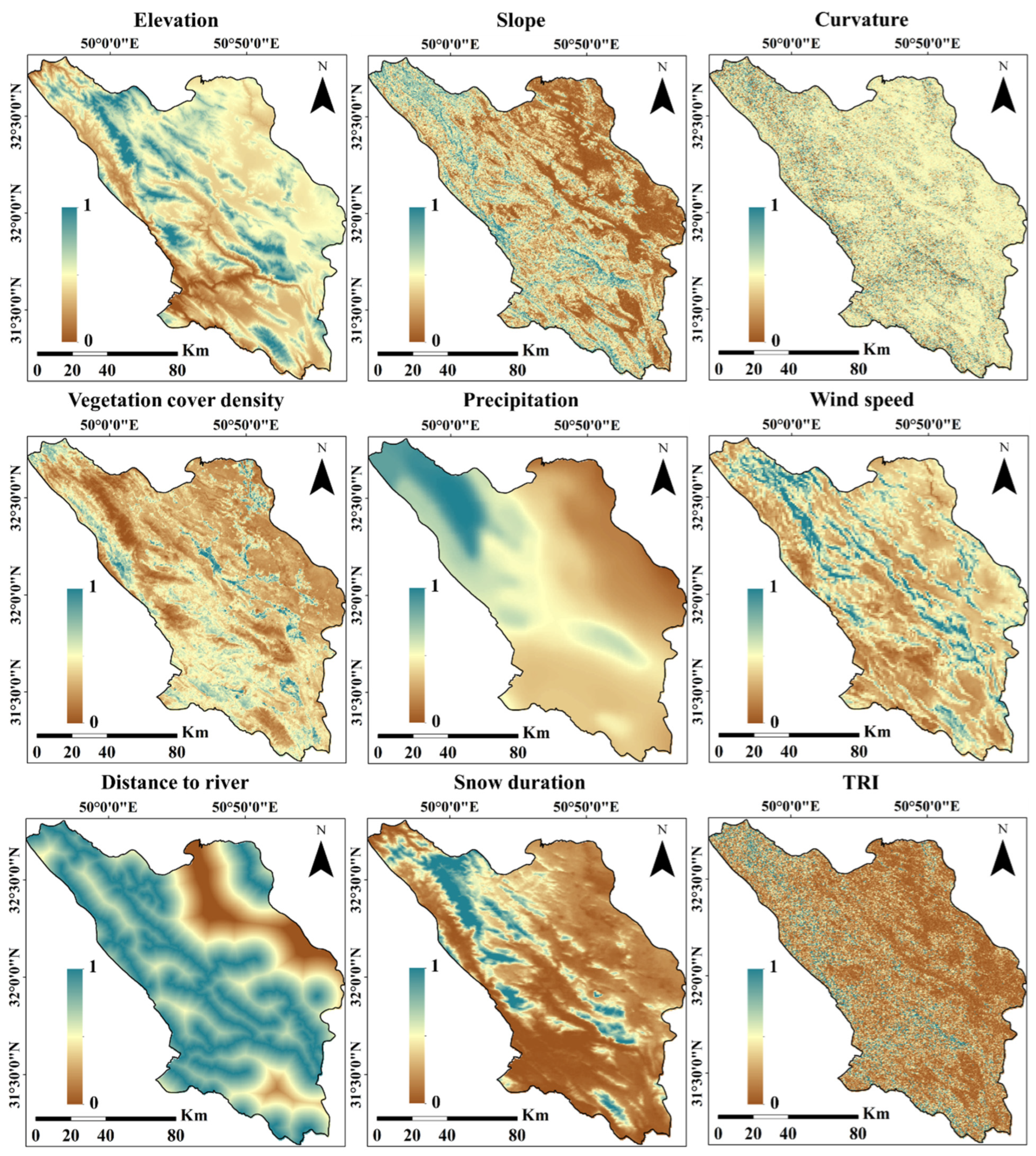
The development of adventure tourism is highly site-dependent, as the quality of tourist experiences, safety levels, and environmental sustainability are all influenced by spatial characteristics such as slope, elevation, climatic conditions, land cover, water resources, and accessibility. In this context, Geographic Information Systems (GIS), when integrated with Multi-Criteria Decision-Making (MCDM) approaches, provide an effective platform for the simultaneous analysis of diverse and sometimes conflicting criteria [
11,
12]. This approach allows for the weighting of indicators, integration of multiple spatial layers, and generation of transparent and reproducible suitability maps. Although the application of GIS–MCDM in tourism land-use planning and ecotourism potential assessment is expanding, its use for planning adventure tourism camps particularly under conditions of future uncertainty remains limited. The literature indicates that adventure tourism has emerged as one of the rapidly growing sectors of the global tourism industry, attracting considerable attention from researchers due to its economic, social, and environmental implications. Some studies have focused on the spatial distribution patterns of tourism resources and infrastructure. Another strand of the literature focuses on spatial analyses and land suitability assessment for tourism development. Zhou and Yang [
13] examined the relationship between the attractiveness of tourism facilities and tourists’ satisfaction in historic contexts using the Multiscale Geographically Weighted Regression (MGWR) model and spatiotemporal analysis. Aşılıoğlu and Çay [
14], combining the ROS framework and the Analytic Hierarchy Process (AHP), identified various levels of spatial suitability for tourism activities in both natural and urban environments. Similar studies conducted in Qilian National Park [
15] and the Tianshan Mountains, Xinjiang [
16], demonstrated that integrating GIS with MCDM methods can identify suitable locations for ecotourism and adventure tourism while accounting for ecological sensitivity, route difficulty, and activity safety. Beyond spatial approaches, behavioral and motivational studies have also expanded in recent years. Jia et al. [
17] found that adventure tourism in natural settings can generate profound meanings such as a sense of challenge, attachment to nature, and social bonding, and may even reduce occupational dissatisfaction. Orden-Mejía, et al. [
9] highlighted the role of motivations such as health improvement, stress reduction, and intellectual curiosity in shaping the quality of experience and tourist loyalty. At a broader level, studies such as Víquez-Paniagua et al. [
18] and Sand and Gross [
19] emphasize the importance of spatial requirements, accessibility, safety, and service quality for achieving sustainable adventure tourism development. Additionally, Azimi et al. [
20] demonstrated that the integration of natural resources, infrastructure, and sustainability considerations plays a crucial role in the competitiveness of tourism destinations, particularly in island regions.
Despite the expansion of studies in the field of adventure tourism, several important gaps remain. Existing studies can generally be grouped into two main directions. First, spatially oriented research that employs tools such as GIS, Analytic Hierarchy Process (AHP), Multiscale Geographically Weighted Regression (MGWR), and data mining methods to identify patterns in the distribution of tourism resources and activities [
21,
22,
23]. Second, studies focusing on the behavioral and motivational dimensions of tourists, addressing aspects such as tourist experiences, travel motivations, and welfare outcomes [
2,
17,
18]. While these studies provide valuable insights, in a significant portion of spatial studies, the focus has largely been on urban scales or protected areas, such as national parks, and integrated analyses of the relationships among spatial suitability of natural resources, accessibility, environmental attractiveness, and supporting services within a sustainable adventure tourism development framework at the regional scale remain limited. On the other hand, behavioral studies have primarily addressed motivations, satisfaction, and tourist loyalty, and rarely incorporate environmental and service-related data into a cohesive spatial framework. Also, many spatial suitability analyses remain primarily focused on environmental conditions and often provide limited integration of infrastructural services and planning scenarios. Furthermore, relatively few studies have applied scenario-based GIS–MCDM frameworks to explore how different planning priorities may influence the spatial distribution of suitable tourism areas, particularly at the regional or provincial scale. This limitation is especially relevant in mountainous regions where environmental potential, accessibility constraints, and tourism service infrastructure interact in complex ways.
The present study introduces a four-component framework that simultaneously integrates environmental potential, accessibility, attractions, and service infrastructure. Moreover, this research adopts an explicit multi-scenario design to examine how different planning priorities influence spatial suitability patterns. Finally, rather than focusing on a single protected park, the analysis is conducted at a broader regional scale, enabling a more comprehensive assessment of tourism development potential and infrastructure distribution. To better structure the analysis and clarify the objectives of this research, the following research questions are addressed: (i) How do different development priorities (accessibility, attractions, and services) modify the spatial distribution of high and very high suitability zones for adventure tourism camps?; (ii) Which parts of Chaharmahal and Bakhtiari Province combine strong environmental potential with adequate accessibility and service infrastructure?; (iii) How can scenario-based spatial suitability assessments support sustainable tourism planning and infrastructure investment decisions at the regional scale?
2. Study Area
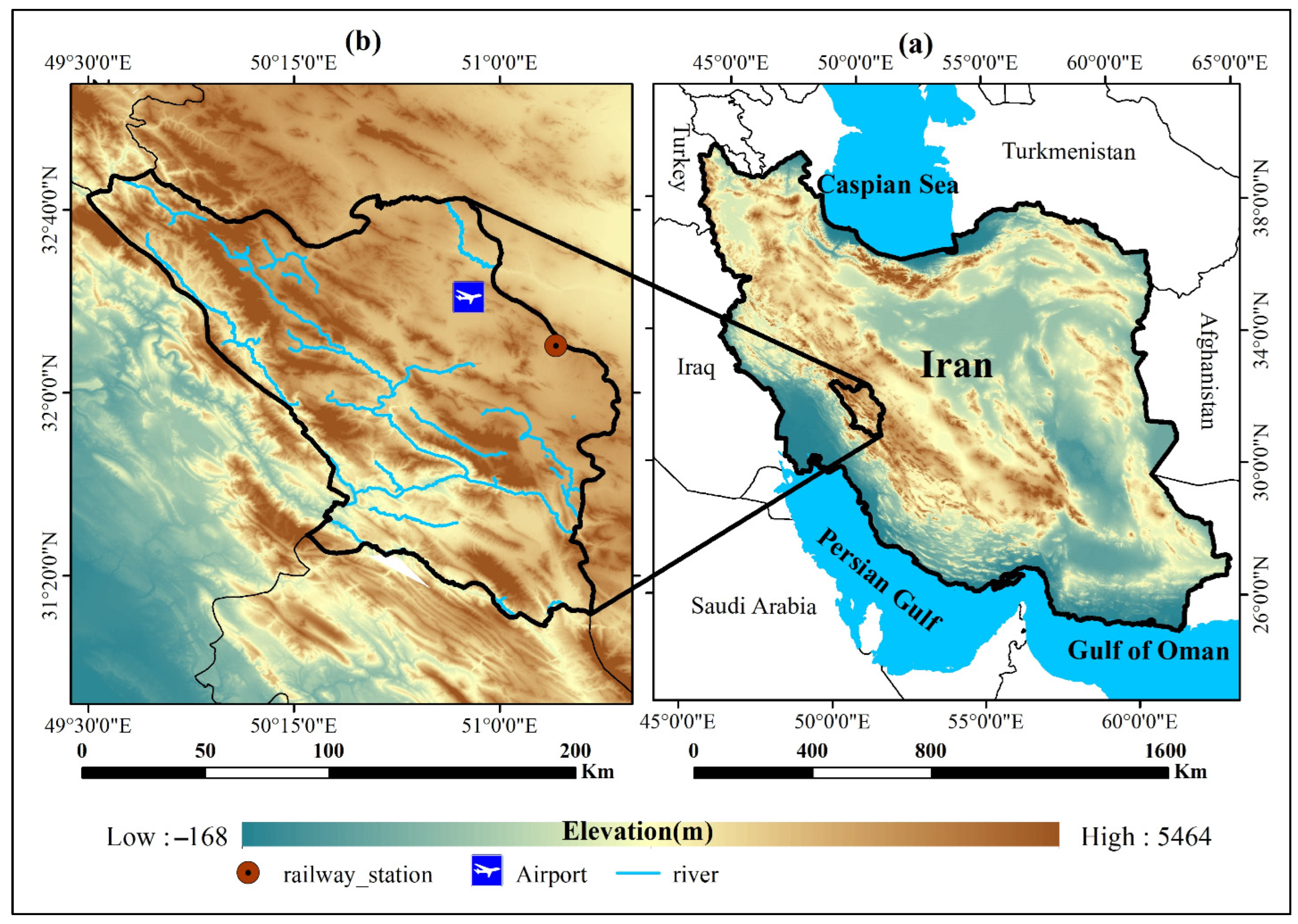
Chaharmahal and Bakhtiari Province, located in southwestern Iran between approximately 32°10′ to 32°50′ N latitude and 50°30′ to 51°30′ E longitude, forms part of the Central Zagros mountainous region (
Figure 1). The province covers an area of about 16,332 km
2 and had a population of over 1,001,000 according to the 2025 census, with natural features such as rivers, forests, and highlands significantly influencing settlement patterns [
24]. A prominent characteristic of the province is its mountainous terrain, with more than 75% of its area consisting of elevations and rugged landscapes; notable peaks include Zard-Kuh Bakhtiari, which rises above 4200 m. The high elevations and extensive slopes and natural curvatures create favorable conditions for adventure tourism activities, including mountaineering, nature trekking, and rock climbing. Due to its location along western moist air currents and high-altitude topography, the province experiences substantial precipitation and prolonged snow cover during cold seasons, supporting the development of winter tourism and seasonal adventure events [
25]. Water resources are another prominent feature; several major rivers, including the Karun and Zayandeh-Rud, originate in these mountains, forming an extensive network of waterways that provide both high ecological value and increased potential for adventure water activities [
26]. Forest cover in the western and northwestern parts creates a combination of green landscapes, rocky structures, and high elevations, which, along with numerous springs and waterfalls, generate pristine natural attractions for tourists [
27]. The combination of these natural, climatic, service, and cultural factors positions Chaharmahal and Bakhtiari as one of Iran’s prime regions for the development of adventure tourism. By conducting a detailed analysis of environmental factors, accessibility, natural attractions, and services, optimal spatial scenarios for adventure tourism camp development can be designed and planned in this region. In addition to its environmental characteristics, Chaharmahal and Bakhtiari Province has become an increasingly important destination for nature-based and adventure tourism in southwestern Iran. Several well-known natural attractions, including the Zard-Kuh mountain massif, the Kuhrang waterfalls, and numerous alpine valleys and rivers, attract domestic tourists interested in outdoor recreation and mountain landscapes. Adventure-related activities in the province include mountaineering, trekking, rock climbing, rafting, skiing, and nature-based camping. The presence of perennial rivers and mountainous terrain also supports seasonal activities such as rafting and winter sports. Tourism demand is strongly seasonal, with peak visitation occurring during spring and summer when weather conditions are favorable for outdoor activities, while winter months attract visitors interested in snow-based recreation in high-altitude areas. These characteristics make the province a representative case for examining the spatial planning of adventure tourism camps in mountainous environments.
5. Discussion
The findings of this study highlight the multi-dimensional nature of spatial suitability for adventure tourism camp development. The proposed framework integrates four key components (natural potential, accessibility, attractions, and services) within a GIS-based analytical environment, enabling a comprehensive evaluation of environmental, infrastructural, and human dimensions of tourism destinations. The natural potential component, relying on indicators such as slope, elevation, climate, and vegetation cover, plays a decisive role in assessing the level of difficulty, safety, and attractiveness of activities. The alignment of the results with Wang and Yang [
22] indicates that an optimal combination of slope and elevation provides the greatest capacity for mountain-based activities. However, as noted by Becken [
30], reliance on accurate and up-to-date environmental data can significantly influence the precision of the analysis.
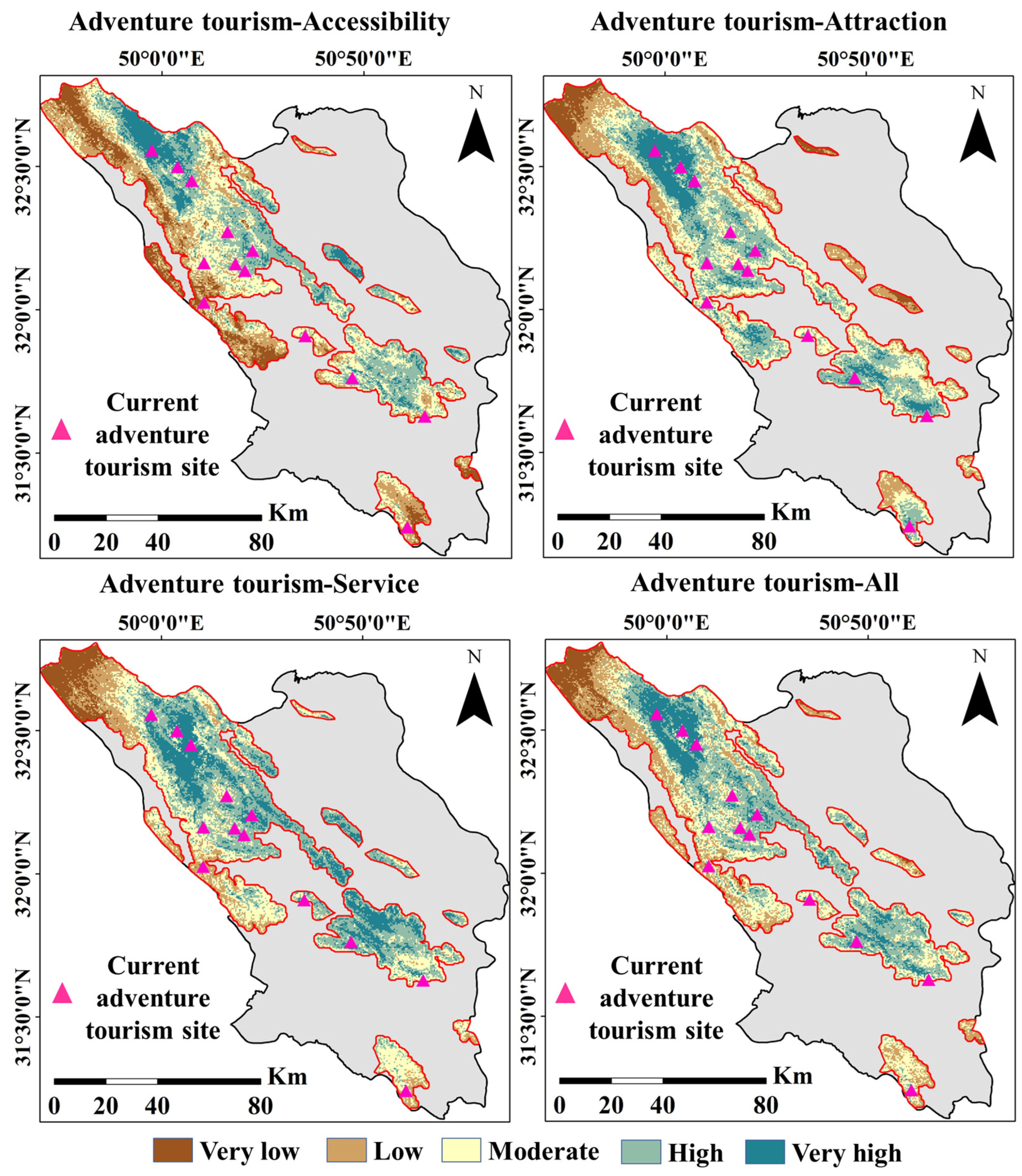
The results also reveal important trade-offs between different development priorities, as demonstrated by the scenario-based analysis. When accessibility is emphasized, areas located near major transportation corridors gain higher suitability, while more remote mountainous zones experience reduced suitability due to limited connectivity. This pattern is consistent with the findings of Kasiyanchuk et al. [
31], who highlight the critical role of transportation networks in tourism spatial planning. Conversely, prioritizing the service component increases the proportion of areas classified as highly suitable, particularly in regions where accommodation facilities, medical services, and safety infrastructure are already available. A balanced scenario, however, provides a broader distribution of moderately to highly suitable areas, illustrating the importance of integrating environmental attractiveness with infrastructural support. These results demonstrate that spatial planning for adventure tourism is highly sensitive to policy priorities and investment strategies. From a methodological perspective, the research framework demonstrates the usefulness of GIS-based MCDM approaches for tourism spatial planning. The integration of Min–Max standardization, AHP weighting, and WLC approaches commonly applied in tourism spatial analysis [
15,
22,
32,
33] enabled the systematic combination of diverse environmental and infrastructural indicators. Min–Max standardization enabled uniform scaling of criteria, while AHP, through pairwise comparisons, generated consistent expert-based weights. Although WLC offers simplicity and computational transparency, it assumes independence among criteria, a limitation also noted by Sadeghi et al. [
34], who suggest the use of nonlinear models or local weighting methods to better capture complex interactions.
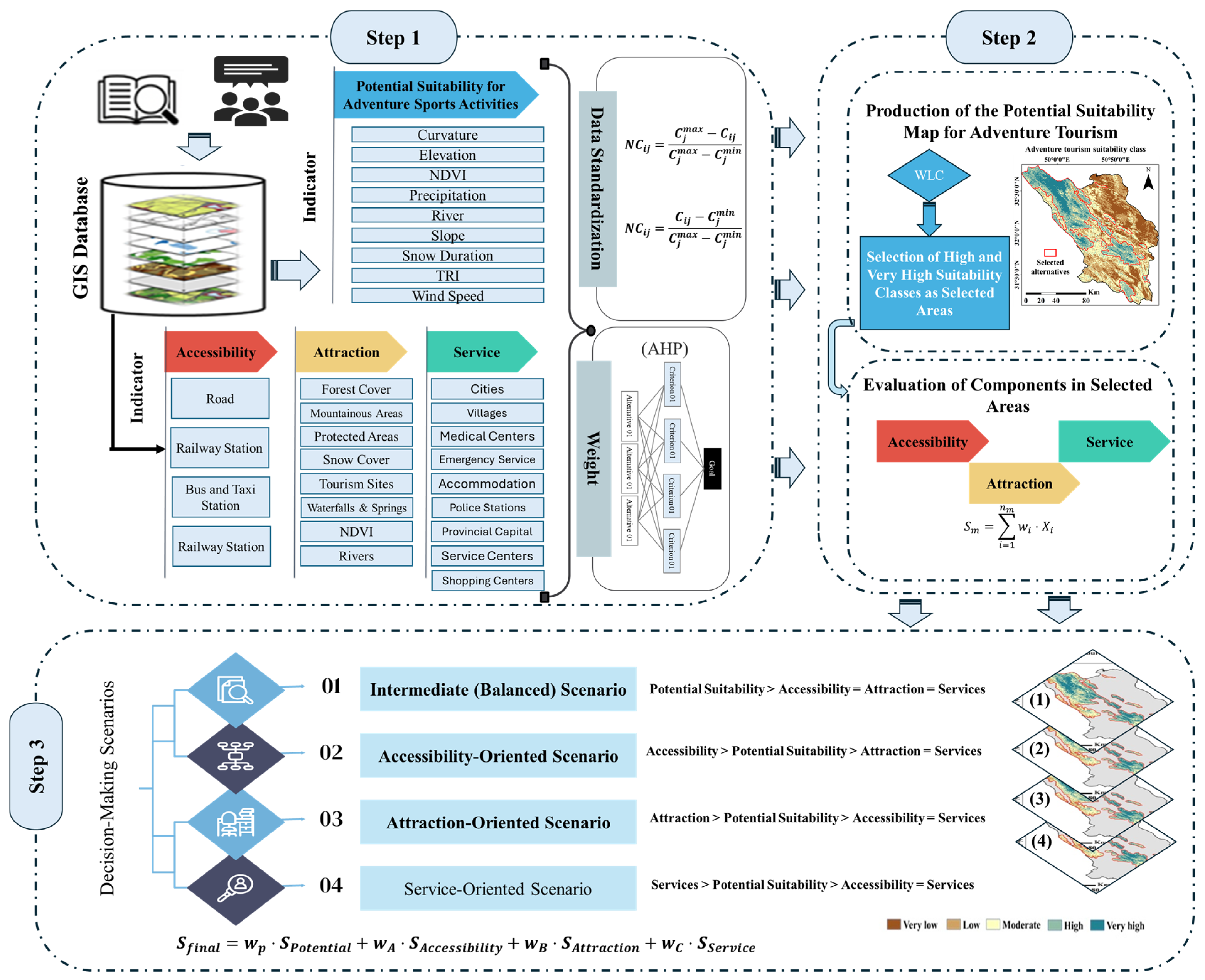
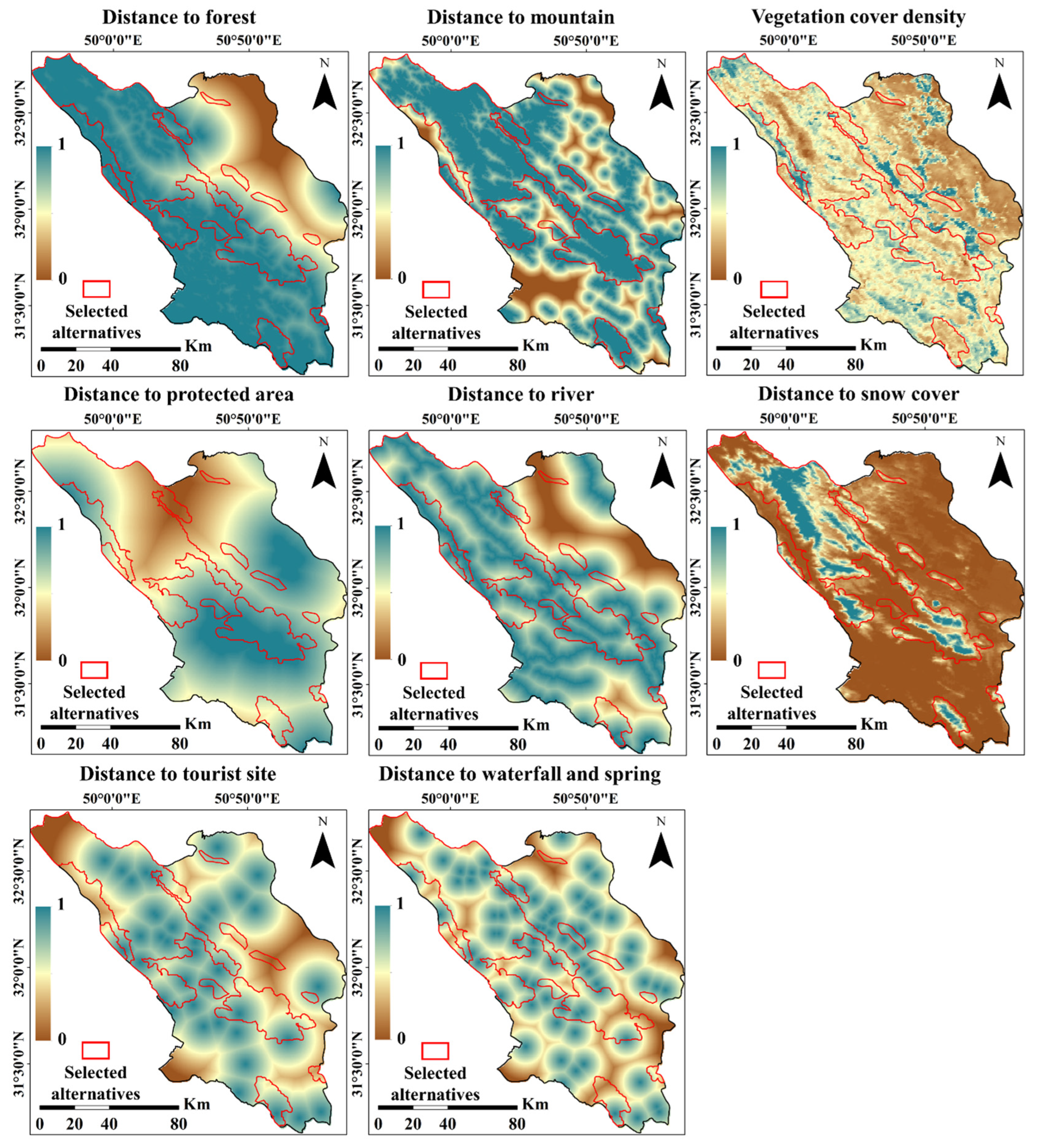
The study adopts a two-step evaluation approach in which areas with high and very high natural potential are first identified and then further evaluated using accessibility, attraction, and service indicators. This approach reflects the fact that adventure tourism activities are strongly dependent on specific environmental conditions, such as terrain characteristics, landscape features, and ecological suitability. In other words, the presence of adequate natural potential is considered a prerequisite condition for the development of adventure tourism camps. The main advantage of this approach is that it prevents areas with strong infrastructure but insufficient environmental suitability from being mistakenly identified as highly suitable locations for adventure tourism. However, the method may also exclude some locations where moderate natural potential could be compensated by strong accessibility or service infrastructure. Compared with a fully integrated evaluation of all criteria across the entire study area, the two-step approach places greater emphasis on environmental feasibility before infrastructure considerations. Therefore, the approach is particularly suitable for nature-based tourism activities where environmental characteristics play a dominant role.
Beyond methodological insights, the findings also offer important policy implications at the provincial scale. The spatial distribution of highly suitable areas suggests that strategic investments in transportation infrastructure and tourism services could significantly expand the potential for adventure tourism development. At the same time, careful planning is necessary to ensure that tourism expansion remains compatible with environmental conservation objectives, particularly in mountainous landscapes and areas located near protected zones. The results emphasize that successful development of adventure tourism depends not only on the presence of natural attractions but also on the synergy between environmental resources, accessibility, and service infrastructure.
The findings of this study also directly contribute to the achievement of the United Nations Sustainable Development Goals (SDGs). In particular, the spatial identification of highly suitable areas while excluding ecologically sensitive zones supports SDG 15 (Life on Land) by promoting habitat conservation and minimizing environmental degradation. By directing development toward areas with appropriate ecological resilience and existing infrastructure, the framework helps prevent biodiversity loss and uncontrolled land-use change. Furthermore, the strategic development of adventure tourism camps in highly suitable areas contributes to SDG 8 (Decent Work and Economic Growth) through the creation of local employment opportunities, diversification of rural economies, and strengthening of regional tourism value chains. The scenario-based approach ensures that economic benefits can be aligned with environmental sustainability objectives.
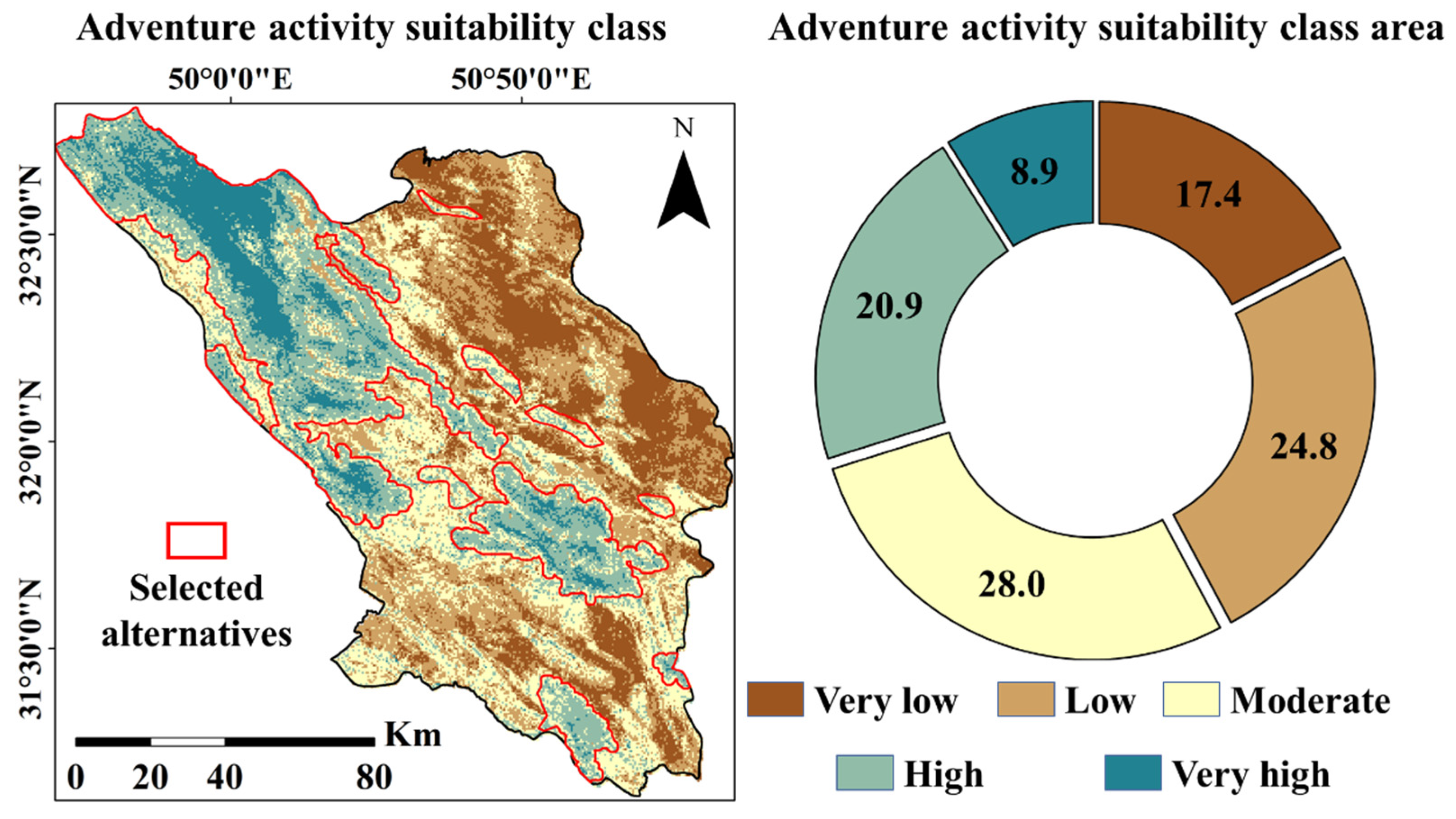
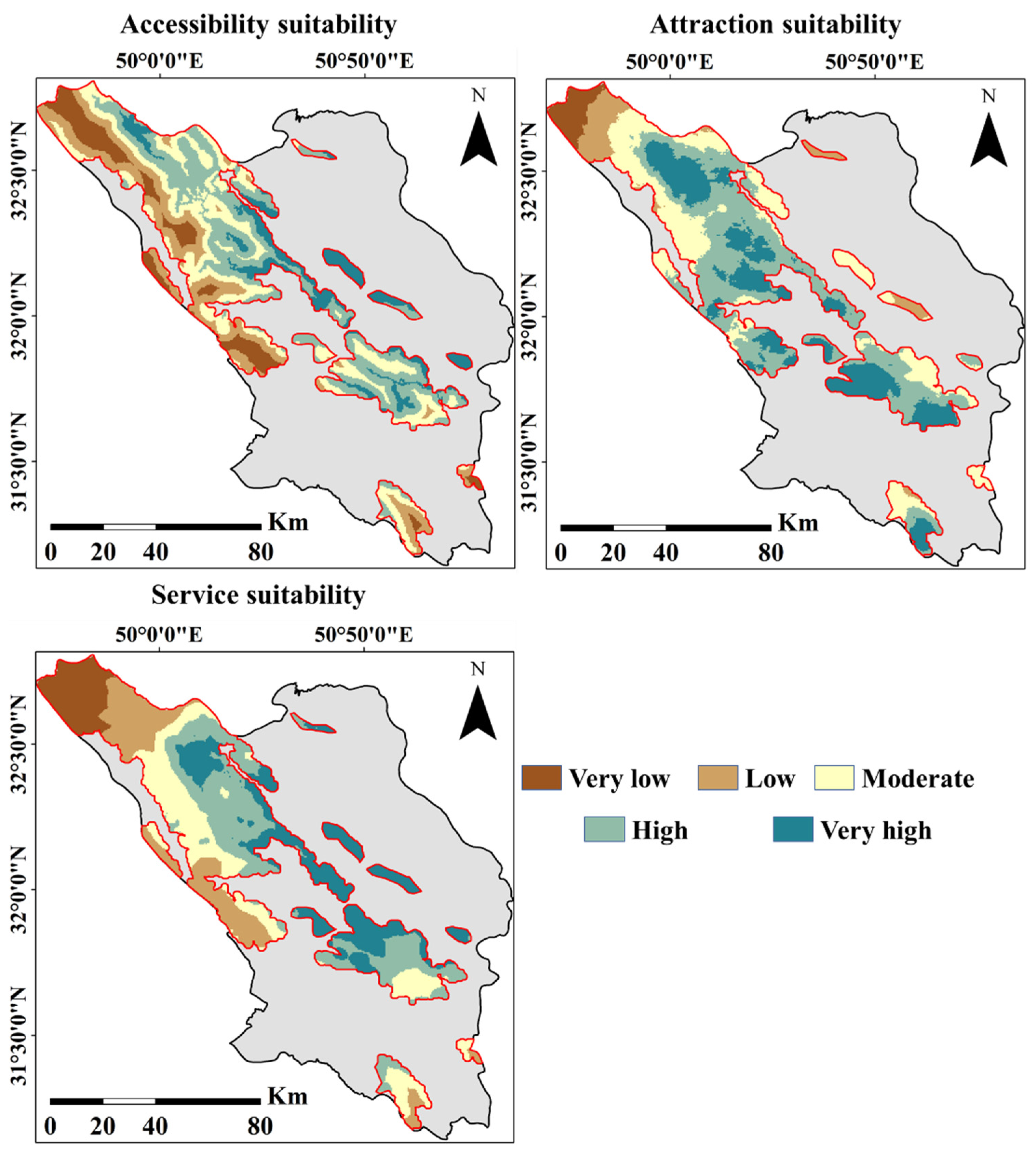
Beyond the spatial distribution of suitability classes, it is also important to consider the underlying mechanisms shaping these spatial patterns. The higher suitability observed in the eastern and northeastern parts of the province appears to result from the interaction of several structural factors. First, these areas benefit from relatively favorable topographic and environmental conditions, including suitable mountain landscapes, moderate slopes, and diverse natural attractions that support adventure tourism activities such as trekking and mountaineering. Second, these regions are characterized by better-developed transportation infrastructure, which improves accessibility to tourism sites and reduces travel barriers. Third, the spatial concentration of tourism services and support facilities, including accommodation, medical services, and security infrastructure, further strengthens their capacity to host tourism activities. In contrast, the lower suitability observed in some western and northwestern areas is mainly associated with infrastructural constraints and limited accessibility, despite the presence of attractive natural landscapes. These patterns suggest that the spatial suitability of adventure tourism camps is not determined by environmental potential alone, but rather by the combined influence of natural resources, infrastructure development, and service availability.
In the present study, the spatial suitability assessment was conducted using geographic datasets and GIS-based multi-criteria analysis, which are commonly applied in regional-scale tourism planning. While this approach allows for systematic evaluation of large areas, it does not directly verify the conditions of specific locations on the ground.
Consequently, the suitability maps generated in this study should be interpreted as preliminary spatial screening tools that help identify potentially suitable areas for adventure tourism development. Detailed field investigations and site-level feasibility studies are necessary before the implementation of tourism camps in specific locations.
5.1. Limitations and Recommendations
One of the main limitations of this study was access to up-to-date, accurate data with appropriate spatial resolution for certain indicators. A substantial portion of environmental variables, such as NDVI, snow cover duration, and climatic indices, were derived from remote sensing data. Although commonly used in spatial studies, such data may lack the capacity to detect subtle spatial variations at local scales [
16]. This limitation may affect the accuracy of identifying highly suitable zones, as small variations in slope, vegetation cover, or snow conditions can have direct implications for safety and the quality of adventure experiences. Climate change represents another critical factor influencing the long-term sustainability of adventure tourism in mountainous regions. Variations in temperature and precipitation regimes may significantly alter snow duration, river discharge, and seasonal accessibility patterns. In particular, projected warming trends in Iran’s mountainous regions may reduce snow cover persistence, thereby affecting winter-based adventure activities. Similarly, increased precipitation variability could intensify extreme weather events, influencing safety conditions and infrastructure resilience. Therefore, future spatial suitability assessments should incorporate climate projection scenarios (e.g., CMIP6-based models) to evaluate the long-term viability of adventure tourism development under changing climatic conditions.
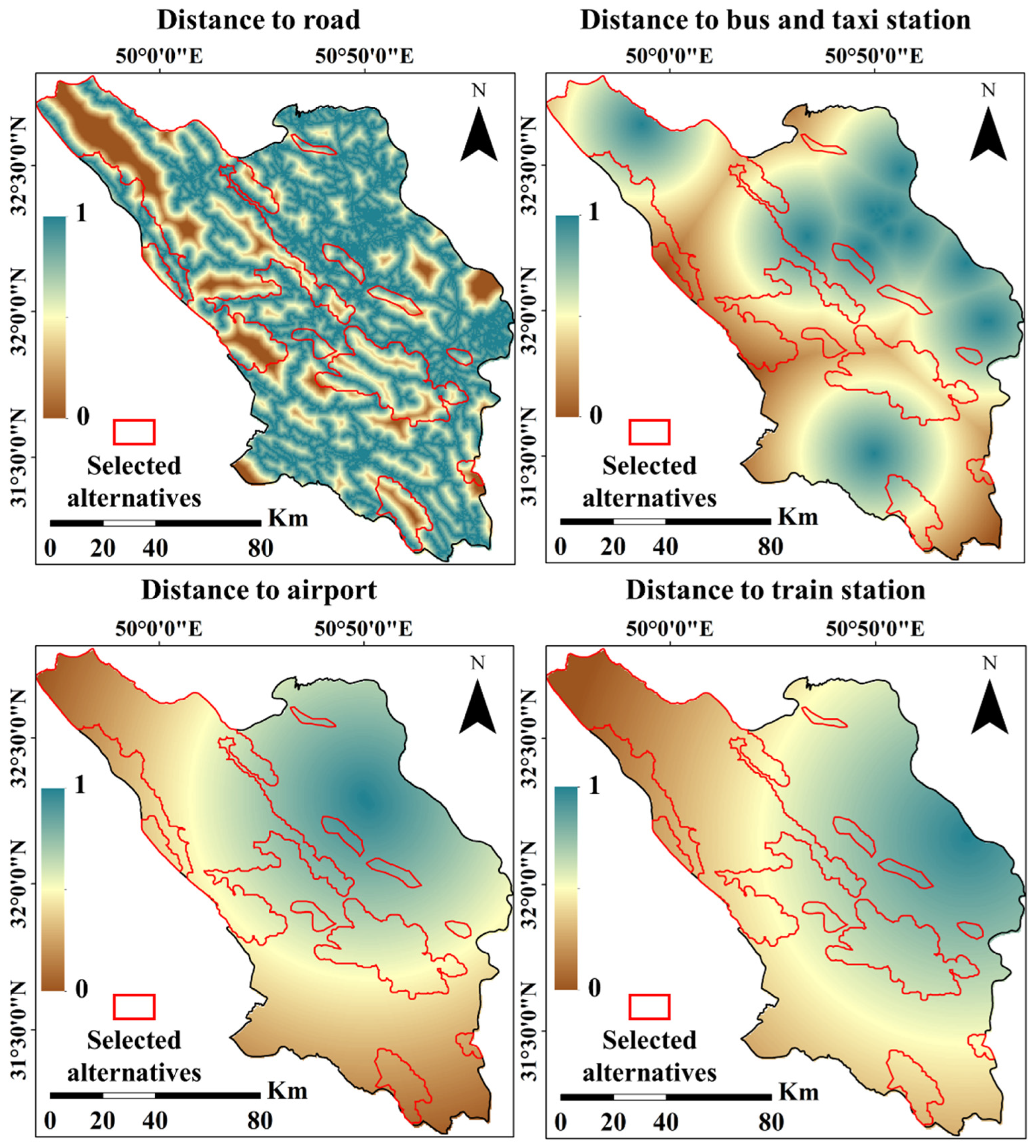
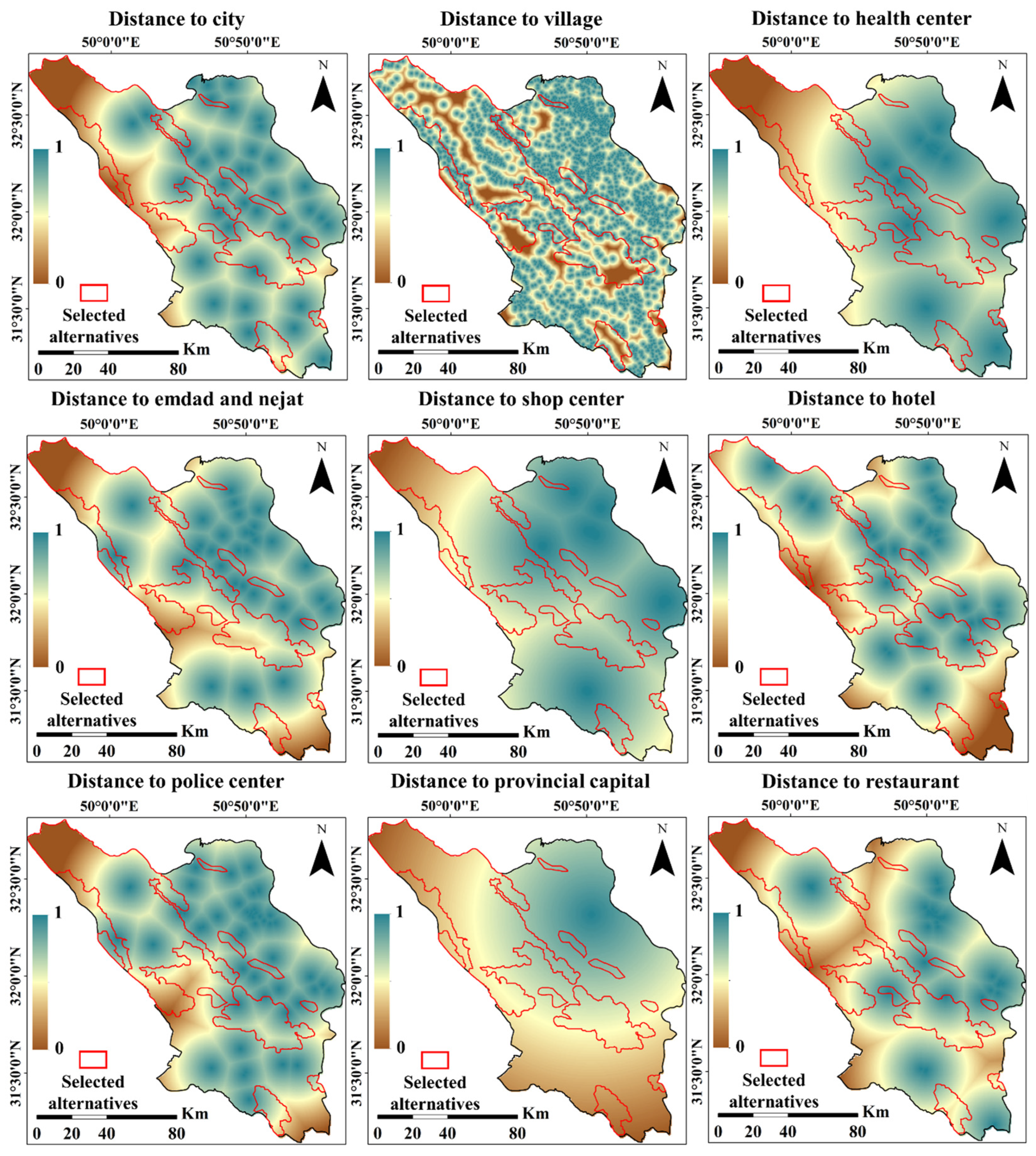
The accessibility assessment in this study is primarily based on spatial proximity to transportation infrastructure, including roads, airports, and railway or bus/taxi stations. While this approach is widely used in GIS-based suitability analysis, it does not fully capture the complexity of real travel conditions. Factors traffic network’s capacity, road grades (such as the difficulty of traveling on mountainous roads versus flat roads), travel costs (time/economy), and seasonal traffic restrictions (such as road closures in mountainous areas during winter) may substantially influence actual accessibility. These issues are especially relevant in the rugged terrain of the Zagros Mountains, where travel conditions can vary considerably between seasons. Therefore, future studies could extend the present framework by developing spatio-temporal accessibility models that integrate travel time analysis, road network characteristics, and seasonal accessibility conditions.
Another methodological limitation of this study relates to the weighting and aggregation procedures used in the GIS–MCDM framework. The weights derived from the AHP method are based on expert judgment and, despite the widespread validity of this approach, some degree of subjectivity and variation in evaluations may remain, particularly when quantitative and qualitative criteria are integrated simultaneously [
22,
33]. In addition, the application of the WLC model assumes relative independence among evaluation indicators, which may oversimplify the complex interactions among environmental, accessibility, and service-related factors [
32]. In practice, certain variables may exhibit correlations or combined effects. For example, slope and snow duration jointly influence the safety and feasibility of winter adventure activities, while vegetation-related indicators such as the Normalized Difference Vegetation Index and forest coverage may be partially correlated. Likewise, service-related indicators such as medical centers and emergency response facilities may function in a complementary manner. Although the WLC approach remains widely used due to its transparency, interpretability, and suitability for regional-scale decision-making, this assumption may limit the comprehensive representation of interactions among indicators. Recent studies suggest that more advanced modelling approaches, such as geographically weighted regression (GWR/MGWR), nonlinear models, or fuzzy comprehensive evaluation methods, may better capture spatial heterogeneity and complex relationships among variables [
13]. Furthermore, behavioral and perceptual indicators of tourists were not incorporated in this research, despite the important role that individual preferences, motivations, and risk tolerance play in destination choice [
9,
17].
Another limitation of this study is that the analysis represents a static assessment of current environmental and infrastructural conditions. In practice, climate change, land-use transformation, and future infrastructure investments may significantly modify spatial suitability patterns over time. Future research could extend the present framework by incorporating dynamic scenarios, such as climate change models, land-use change simulations, or infrastructure development plans, to evaluate how suitability patterns may shift under different long-term development pathways. Accordingly, it is recommended that future studies utilize environmental data with higher spatial and temporal resolution to enhance the sensitivity of suitability analyses [
16]. The application of hybrid weighting models such as AHP–Entropy or ANP may help reduce subjective bias and achieve a more balanced integration of quantitative and qualitative data [
22,
33]. Moreover, integrating tourist behavioral data obtained from GPS tracking and social media into GIS-based frameworks could improve the identification of actual destination use patterns [
35]. Finally, the use of advanced spatial models, such as MGWR or neural networks, is recommended to analyze nonlinear relationships among criteria [
13]. Such approaches can facilitate the production of more operational suitability maps, strengthen evidence-based decision-making, and support more effective policymaking for the sustainable development of adventure tourism [
15].
The evaluation framework developed in this study primarily relies on objective environmental and infrastructural data derived from spatial datasets, which are suited for regional-scale spatial planning. However, it does not incorporate the behavioral preferences and perceptions of adventure tourists (e.g., the different age groups’ demands for adventure difficulty, preferences for facilities), risk perception (e.g., tolerance for steep slopes or strong winds), and tourism experience evaluation which may limit the ability of the model to fully represent the heterogeneity of adventure tourism camps demand. Nevertheless, the current framework provides a robust first-order spatial assessment of environmental and infrastructural suitability for adventure tourism development. Future studies could further improve the framework by integrating behavioral preference analysis, and participatory approaches with GIS-based spatial modeling.
It should also be noted that socio-cultural and governance factors (e.g., community attitudes, land tenure, and regulatory constraints) are not fully captured by spatial indicators used in this study but can strongly influence the feasibility of tourism development in practice. Future research could therefore combine GIS-based spatial analysis with qualitative or participatory methods to better integrate social and governance dimensions into adventure tourism planning.
5.2. Practical Applications and Policy Implications
The findings of this study provide several practical and policy-related implications for tourism managers, urban planners, and regional policymakers. First, the spatial suitability maps can serve as a strategic tool for identifying infrastructure investment priorities. In particular, areas classified as moderate in the services scenario may be targeted for upgrading accommodation, medical, and security infrastructure to enhance the overall capacity of the adventure tourism destination [
15].
Second, the scenario analysis enables decision-makers to select an optimal combination of indicators based on specific development objectives. For example, in regions with rich natural resources, strengthening accessibility and services can maximize the utilization of attractions. Conversely, in areas with well-developed infrastructure, greater emphasis on enhancing attractions and developing adventure routes is recommended. This approach aligns with the findings of Wang and Yang [
22] in the Tianshan Mountains, demonstrating that a balanced integration of indicators improves the efficiency of tourism management.
Third, the results can provide a foundation for designing adventure tourism packages. Adventure routes, support services, and complementary facilities can be developed in highly suitable areas to improve visitor experience while ensuring safety and comfort. Similar practical applications have been confirmed in previous GIS-based ecotourism development studies, which identified such strategies as effective in increasing tourist satisfaction and length of stay [
36].
Fourth, although adventure tourism camp planning may ultimately require micro-site evaluation at a finer spatial scale, the present study adopts a 500 m raster resolution to ensure consistency among the various spatial datasets used in the analysis. Some key indicators, such as remotely sensed environmental variables and regional infrastructure layers, are originally available at relatively coarse spatial resolutions. Therefore, a 500 m grid was selected as a practical compromise that maintains data compatibility while still allowing meaningful regional-scale spatial analysis. It should be noted that the resulting suitability maps are intended for regional-level planning and preliminary site identification, while detailed field-based assessments at finer scales are recommended for final campsite selection.
Finally, policymakers can utilize these findings to formulate regional development policies by managing the spatial distribution of investment and services. This can help prevent excessive tourist concentration in a single area and promote balanced spatial development. Such an approach is particularly important for provinces characterized by high spatial diversity and dispersed resources, and it aligns with the objectives of sustainable tourism development, improved destination management, and enhanced regional competitiveness [
13]. Therefore, this research not only provides a scientific assessment of adventure tourism capacity but also offers a practical framework for strategic decision-making and regional-level policymaking.
While the results of this study identify areas with high and very high suitability for the development of adventure tourism camps, these findings should not be interpreted as an indication of unlimited development potential. From a sustainable management perspective, it is essential to consider the carrying capacity of these regions to prevent environmental degradation and ensure long-term viability. High-suitability areas are often environmentally sensitive and may include ecosystems with limited resilience to human pressure. Therefore, tourism development in these regions should be carefully managed by considering ecological thresholds, land degradation risks, and biodiversity conservation priorities. In this context, carrying capacity assessment plays a crucial role in determining the acceptable level of tourism activities. Integrating visitor limits, zoning strategies, and environmental monitoring can help maintain a balance between tourism development and environmental protection. Future research is recommended to incorporate quantitative carrying capacity models and field-based assessments to refine the spatial suitability outputs and support more sustainable decision-making. In addition, the implementation of adaptive management strategies, such as seasonal regulation of tourist flows and the designation of conservation buffer zones, can further enhance the sustainability of identified regions.
6. Conclusions
Adventure tourism, as a high-value segment of the tourism industry, requires careful planning and the identification of suitable areas based on natural characteristics, accessibility, and service infrastructure. The significance of this study lies in its provision of accurate spatial suitability maps, which enable better resource management, enhance tourist experiences, and reduce risks associated with adventure tourism camp development. Given the rapid growth of adventure tourism globally and in Iran, the development of decision-making tools based on spatial analysis and multi-criteria data is increasingly essential. The aim of this study was to conduct a multi-scenario assessment of spatial suitability for developing adventure tourism camps using a GIS-based MCDM approach. By integrating four key components including natural potential for adventure activities, accessibility, attractions, and services, the research provided a comprehensive and multidimensional analysis, identifying the capacities and limitations of different regions within the province. The results show that the eastern and northern regions of the province possess the highest spatial suitability for adventure tourism camp development due to the favorable combination of natural attractions, relatively good accessibility, and the presence of supporting service infrastructure. The southeastern and southern regions show moderate to high suitability and, with improvements in infrastructure and services, could support activities and events of moderate difficulty. In contrast, the western and northwestern regions exhibit lower suitability mainly due to limitations in accessibility and service availability, indicating the need for targeted infrastructure development and improved connectivity. Beyond the descriptive spatial patterns, the findings also reveal the underlying mechanisms shaping the suitability distribution across the province. Areas with higher suitability generally emerge where favorable natural conditions such as mountainous landscapes, river systems, and diverse natural environments coincide with relatively accessible transportation routes and existing tourism services. In contrast, regions with strong natural potential but limited accessibility or service infrastructure tend to show lower overall suitability, demonstrating that the spatial pattern of adventure tourism potential is not determined by a single factor but rather by the interaction and spatial coupling of environmental resources, accessibility conditions, and tourism services. Scenario analysis further demonstrated that indicator prioritization significantly affects the spatial pattern of suitability. Prioritizing services increased areas classified as high and very high suitability, emphasizing attractions expanded more areas into moderate and high classes, and a balanced approach provided broader and more equitable coverage of suitable zones. These results highlight that the spatial configuration of suitable areas is highly sensitive to planning priorities, indicating that policy choices and development strategies can substantially reshape the spatial opportunities for adventure tourism development. Practical applications of these findings include optimizing infrastructure planning, designing adventure tourism routes and packages, prioritizing investments, and formulating regional policies for balanced tourism development. Furthermore, the conceptual model and methodology proposed in this study are generalizable to other regions with similar characteristics at national and international scales, especially areas with diverse topography, natural attractions, and accessibility challenges. The model can assist planners and policymakers in identifying target areas, optimizing infrastructure, enhancing tourist experiences, and providing a scientific and practical framework for sustainable adventure tourism development. Ultimately, by integrating natural, accessibility, attraction, and service indicators within a GIS-based multi-scenario framework, this study not only maps spatial suitability but also provides insight into the key factors and interactions shaping the spatial pattern of adventure tourism potential, offering a useful reference for strategic decision-making and sustainable tourism development.





 and
and