Article

Energy Use Efficiency and Carbon Footprint of Inorganic Fertilizer and Liquid Animal Manure in Maize Production Under Semi-Arid Conditions

by
Ergün Çıtıl
1,
Kazım Çarman
1,
Osman Özbek
1,
Nicoleta Ungureanu
2,* and
Nicolae-Valentin Vlăduț
3,*
1
Department of Agricultural Machineries and Technologies Engineering, Faculty of Agriculture, Selcuk University, Konya 42130, Turkey
2
Department of Biotechnical Systems, Faculty of Biotechnical Systems Engineering, National University of Science and Technology Politehnica Bucharest, 060042 Bucharest, Romania
3
National Institute of Research—Development for Machines and Installations Designed for Agriculture and Food Industry—INMA Bucharest, 013813 Bucharest, Romania
*
Authors to whom correspondence should be addressed.
Sustainability 2026, 18(8), 3742; https://doi.org/10.3390/su18083742
Submission received: 16 February 2026 / Revised: 30 March 2026 / Accepted: 8 April 2026 / Published: 10 April 2026

Abstract

Improving energy efficiency and reducing the carbon footprint of crop production are critical for sustainable agriculture, particularly in semi-arid regions where resource use efficiency is essential. This study evaluated the effects of different fertilization strategies on energy use efficiency and carbon footprint in maize production. A field experiment was conducted during the 2023 growing season in Konya Province, Türkiye, using a randomized block design with three treatments and three replications. The treatments included an unfertilized control (U1), inorganic fertilizer application (U2), and liquid animal manure application (U3). The results showed that the highest grain yield was obtained in the liquid manure treatment, which was 2.08 times higher than the unfertilized treatment and 1.18 times higher than the inorganic fertilizer treatment. The highest total energy input was recorded in the inorganic fertilizer treatment (26,235.12 MJ ha−1), while the highest total energy output was observed in the liquid manure treatment (203,154 MJ ha−1). The liquid manure treatment also showed higher net energy efficiency, output–input ratio, carbon efficiency, and carbon sustainability index, while producing the lowest carbon footprint per unit of product. These findings indicate that liquid animal manure can improve maize productivity while enhancing energy efficiency and reducing carbon emissions in semi-arid agroecosystems.

1. Introduction

One of the fundamental challenges of global agriculture is to ensure food security for a steadily growing population while simultaneously reducing environmental pressures. Energy use in the agricultural sector depends on several factors, including the size of the agricultural workforce, the amount of arable land, input intensity in production, and the level of mechanization. Although agriculture is a vital sector for ensuring sustainable food security, its relative importance has been declining due to the rapid growth observed in the industrial and service sectors.
The rational management of natural resources represents a fundamental condition for achieving sustainability in agricultural production systems. Among these resources, energy efficiency represents a key pillar of sustainability in agriculture. Currently, global energy demand continues to rise, driven by demographic growth, the progressive limitation of arable land, and increasing expectations regarding living standards. Meeting the growing food demand has intensified agricultural practices, resulting in expanded use of chemical fertilizers, pesticides, mechanized equipment, and other resource inputs. Nevertheless, high energy consumption in agriculture generates environmental externalities that may compromise long-term sustainability. Greenhouse gas (GHG) emissions, particularly carbon-related emissions, are key contributors to climate change, and the agricultural sector represents a substantial source of these emissions. According to the United States Environmental Protection Agency (EPA), the “Agriculture, Forestry, and Other Land Use” sector was responsible for approximately 22% of global GHG emissions in 2019, arising from crop production, livestock activities, deforestation, and land use change processes [1]. Within the European Union, agriculture accounted for 10.8% of total GHG emissions, as indicated in the Sixth Assessment Report of the Intergovernmental Panel on Climate Change (IPCC) [2]. In this context, the adoption of climate mitigation measures, combined with improved energy efficiency in agricultural systems, is essential for reducing GHG emissions, limiting natural resource depletion, and promoting environmentally sustainable agricultural development [3,4].
De Figueiredo et al. (2010) [5] investigated the relationship between sugarcane production and greenhouse gas emissions in Brazil. They reported emissions of 2406 kg of carbon dioxide equivalent (CO2-eq) per hectare of cultivated land. A significant portion of total emissions (44%) was attributed to the burning of crop residues, approximately 20% to fertilizer use, and around 18% to fossil fuel consumption. Similarly, Pishgar-Komleh et al. (2012) [6] investigated energy consumption and CO2 emissions in potato production in Iran. They reported total energy consumption as 47 GJ ha−1 and GHG emissions as 992.88 kg CO2-eq ha−1. They also stated that the largest energy input was chemical fertilizers, accounting for 49% of total energy use, followed by seed input with a 24% share. They calculated specific energy consumption and energy efficiency as 2.12 MJ kg−1 and 0.47 kg MJ−1, respectively.
A comparison of energy input data over the past 30 years indicates a recent downward trend in energy input per unit of agricultural output. These findings confirm the economic feasibility of implementing energy-saving practices [7,8,9,10]. Input–output energy analysis is widely applied to evaluate the relationship between energy consumption and production performance across different crops. Numerous researchers have conducted energy and economic analyses to determine energy efficiency in crop production. For instance, Sartori et al. (2005) [11] studied soybean, maize, and wheat in Italy; Rafiee et al. (2010) [12] analyzed apple production in Iran; and Bojacá and Schrevens (2010) [13] examined coriander, lettuce, radish, and spinach in Colombia. Rajabi Hamedani et al. (2011) [14] analyzed the pattern of energy use and examined the correlation between energy inputs and potato yield in Hamadan province, Iran. The findings revealed that nitrogen fertilizer represented the dominant component of total energy consumption, accounting for 39% of overall input energy. Diesel fuel and seed inputs followed, contributing 21% and 14.9%, respectively, to the total energy requirement of the production system.
Although there has been substantial research on agricultural sustainability and energy use in agricultural production systems, studies specifically focused on determining the carbon footprint of agricultural production remain quite limited. The Central Anatolia region experiences very low annual precipitation (300–350 mm), with hot and dry summers and cold winters. In recent years, farmers in the region have tended to use resources excessively and inefficiently in pursuit of higher productivity, thereby accelerating soil degradation, particularly due to the overuse of chemical fertilizers and water.
In this study, the effect of using liquid animal manure as an alternative to chemical fertilizer on maize yield under semi-arid agricultural conditions was investigated. Furthermore, the study assessed the key determinants responsible for variations in energy consumption and environmental impacts across different fertilization approaches, while also identifying the technical measures necessary to mitigate their ecological footprint. To assess energy efficiency, input and output values obtained under field conditions were quantified using measured data, and the energy equivalents of the input and output components were determined based on established conversion coefficients. By integrating energy balance analysis with carbon footprint assessment under real field conditions, this research contributes to a better understanding of how alternative nutrient management practices can improve the environmental performance and sustainability of maize-based cropping systems in water-limited agroecological regions.

2. Materials and Methods

The study was conducted at the Sarıcalar Application and Research Farm of the Faculty of Agriculture, Selçuk University, Konya Province, located in the Central Anatolia region of Türkiye. To determine the physical properties of the soil, soil samples taken from each parcel were analyzed in the laboratory of the Soil Department, Faculty of Agriculture, Selçuk University. The soil properties of the trial area are given in Table 1. The parcel dimensions of all applications were arranged as 5 m × 50 m = 250 m2.
The plots for each application were prepared and BORA F1 variety (Zea mays indentata) Hybrid Horsetooth Maize was planted at 70 × 20 planting density with a calculation of 71.420 seeds per hectare (ha). The three different applications that were tested are as follows:
U1: No application was made (control plot).
U2: Only mineral fertilizer was used, considering the amount of N, P and K required by the maize plant as 200 kg N ha−1, 100 kg P2O5 ha−1 and 80 kg K2O ha−1, respectively; half of the fertilizer was applied with planting, and the other half was applied during the second hoeing process.
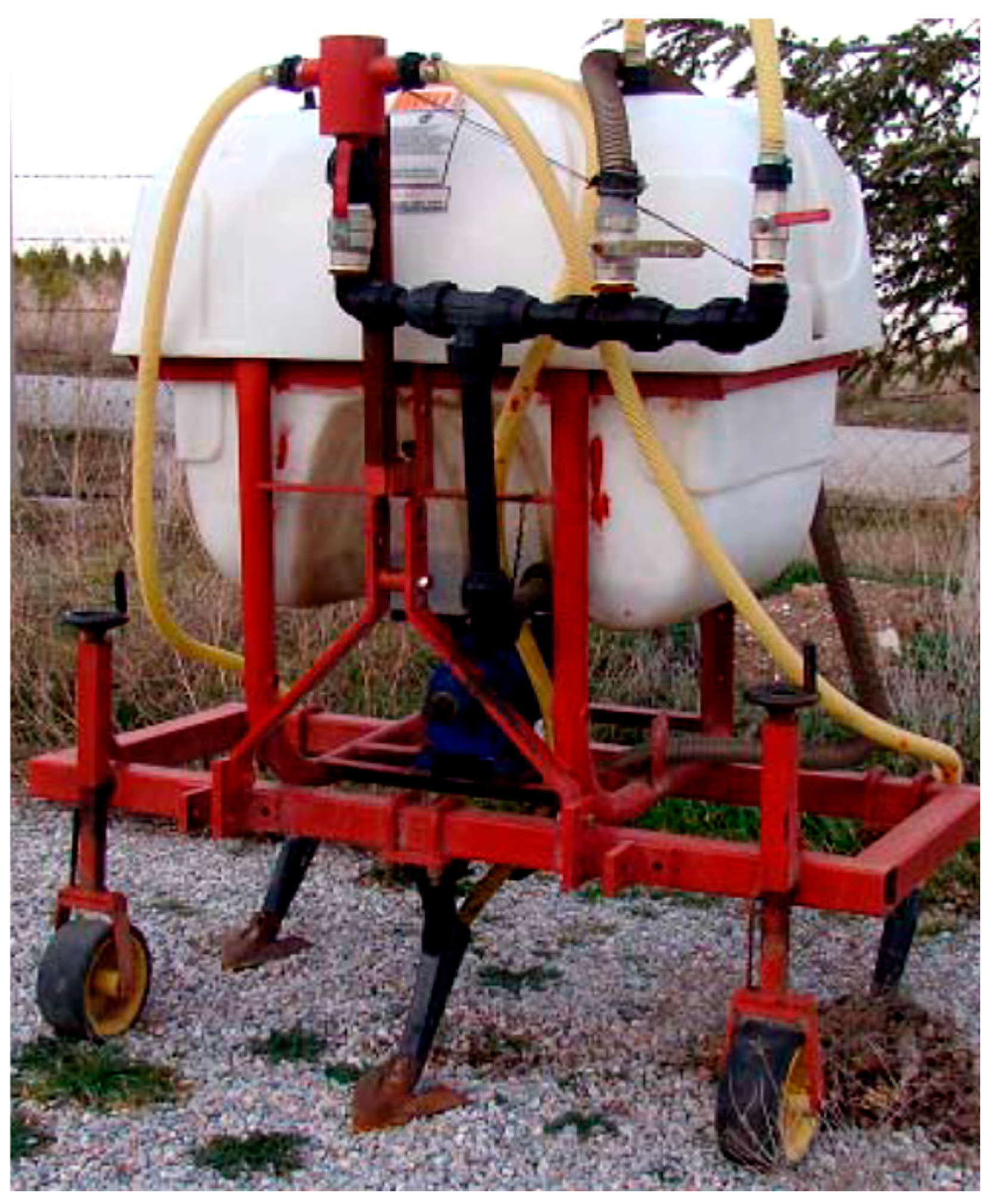
U3: The nitrogen content of the liquid fertilizer was determined according to soil characteristics and the required amount of nitrogen (200 kg N ha−1). Nitrogen was applied in three stages, in equal amounts in each stage: at a depth of 10 cm, after plant emergence, during intercropping, and at the last stage when fertilizer could be applied to the plants (Figure 1). The properties of liquid manure are given in Table 2.
The applications were carried out with three replications. For all treatments, planting, irrigation, spraying, inter-row cultivation (hoeing), and harvesting were performed under the same standard conditions. Harvesting was conducted at the stage of physiological maturity, identified by the formation of the black layer at the point where the kernels attach to the cob, based on observations from five plants in each plot.
In the experimental plots, soil tillage and seedbed preparation were performed using a plow, cultivator, disk harrow, and roller. Planting was carried out using a four-row pneumatic precision planter. During the hoeing period, inter-row cultivation and fertilizer application were performed using an inter-row cultivator equipped with a fertilization unit. The main technical characteristics of the machinery used in the experiments are presented in Table 3.
For each application, an Aqua metro fuel consumption measuring device, model Contoil (Aqua metro Oil & Marine GmbH, Rostock, Germany), that can measure with 1 mL precision was used to determine the fuel consumption of the tractor.

2.1. Energy Input–Output Calculations

Seed energy input, fertilizer energy input, fuel-oil energy input, and labor energy input were calculated by multiplying the quantity of each input used per unit area by its corresponding energy equivalent coefficient. The energy equivalent values and resource coefficients adopted from previous studies are presented in Table 4.
For the calculation of human labor energy, one operator (driver) was considered in the analysis. The calculated energy indicators and the formulas applied in the analysis are provided in Table 5.
Machine energy input was calculated with the following equation [17,18,19,20,21,22,23,24,25,26,27,28,29,30,31]:
ME   =   A · E T · C
where
ME: Machine energy input (MJ ha−1);
A: Weight of the tool (kg);
E: Production energy of agricultural machine or tool (MJ kg−1);
T: Annual working hours (h);
C: Effective area capacity (ha h−1).

2.2. Calculation of Carbon Footprint

Carbon equivalents (CEs) were obtained by multiplying the inputs given in Table 6 by the respective carbon emission coefficients. Total carbon input and output were calculated as the sum of carbon equivalents of all inputs and outputs of each application.
According to Choudhary et al. (2017) [20], carbon output in crop production systems is estimated based on the total above-ground biomass produced. The methodology in Lal (2004) [34] assumes that dry plant biomass contains approximately 44% carbon and therefore carbon output is calculated by multiplying total biological yield (grain + straw) by a carbon fraction coefficient of 0.44.
This approach represents the amount of carbon accumulated in plant biomass during the growing period and is used as an indicator of carbon fixation within the production system. It does not represent net ecosystem sequestration but rather biomass-based carbon accumulation at field level.
Carbon output (kg CO2-eq ha−1) = Total biomass (grain yield + stem yield) × 0.44
C use efficiency (CE), C sustainability index (CSI) and C footprint (CF) were calculated using Equations (3)–(5), according to the methodology presented in [20]:
CF (kg CO2-eq kg−1 grain) = Total carbon input (kg CO2-eq ha−1)/Grain yield (kg ha−1)
C = Total carbon output/total carbon input
CSI = (Total carbon output − total carbon input)/total carbon input
Energy and carbon inputs were calculated using standard energy equivalent and emission coefficients, which represent the upstream energy use and emissions embodied in each input. Each input was accounted for only once within the defined system boundary, and no overlap or duplication between direct and indirect energy components was allowed.
Statistical analysis was performed using a randomized complete block design with three replications. Data were subjected to one-way ANOVA, and treatment means were compared using Tukey’s HSD test at p < 0.05.

3. Results and Discussion

As a result of the experiments, 6640 kg ha−1, 11,700 kg ha−1 and 13,820 kg ha−1 grain yields were obtained from U1, U2 and U3 applications, while biological yield values were determined as 13,978.95 kg ha−1, 24,631.58 kg ha−1 and 29,094.74 kg ha−1, respectively.
With the data obtained from the experiments, the energy efficiency of maize production with different fertilizer applications was calculated and the results are given in Table 7.
The highest total energy input was obtained from the U2 application as 26,235.12 MJ ha−1, while the highest total energy output was obtained from the U3 application as 203,154 MJ.ha−1. The lower total energy input observed in the U1 application was mainly due to the absence of fertilizer use. In the U2 and U3 applications, fertilizer use increased the total energy input, and the high energy contribution of fertilizers reduced the relative share of other energy inputs within the total energy input. While the highest energy input was obtained from irrigation energy in the U1 application, the highest energy input rate was chemical fertilizer energy input in the U2 application as a result of the use of chemical fertilizers. The highest energy input rate was determined as irrigation energy in the U3 application, followed by liquid manure energy. In all applications, human labor, agricultural pesticides, machinery and seed energy inputs had the lowest rates.
Although the total energy input was high in the U2 application where chemical fertilizer was used and in the U3 application where liquid manure was used, the highest total energy output was obtained from the U3 application, followed by the U2 application. In the U1 application, the highest energy input was irrigation energy with a share of 70.49%, followed by fuel-oil energy with a share of 16.86%. In the U2 application, the highest energy input was chemical fertilizer energy with a share of 52.47%, followed by irrigation energy with a share of 33.50%. Konak et al. (2004) [37] reported a share of chemical fertilizer in energy inputs in maize production as 48.27%. Dilay (2021) [38] reported that the energy of chemical fertilizers had the highest share in energy inputs in maize production with 60.51%. In the U3 application, the highest energy input was obtained from liquid manure energy with a share of 48.43%, followed by irrigation energy with 33.50%. Although the liquid manure output in the U3 application had the highest share in the total energy input, it was lower than the share of the chemical fertilizer used in the U2 application in the total energy input. In all applications, fuel-oil energy was the energy input with the third-highest share. The highest fuel-oil energy input was obtained from U1 application with 16.86%. This was followed by U3 application with 9.35% and U2 application with 8.01% share. Plappally and Lienhard (2012) [39] highlighted that groundwater extraction in agricultural systems, particularly through pressure-driven pumping technologies, is characterized by substantial energy intensity. They further emphasized that the energy demand associated with irrigation practices differs depending on crop type, cultivated surface area, and the pressure levels required for water delivery.
The energy efficiency of the applications is given in Table 8. Among the applications, the highest value in terms of net energy efficiency was obtained from U3 application with 177,525.46 MJ ha−1, followed by U2 application with 148,106.88 MJ ha−1. Among the applications, the highest output/input ratio was obtained from U3 application as 7.93, followed by U1 application with 7.83 and U2 application with 6.65. It can be said that the reason why U1 application has higher output/input ratio than U2 application is that no fertilizer application is made in U1 application. Mohammadi et al. (2014) [40] reported that the average values of energy use efficiency for canola, soybean, barley, wheat, paddy and maize silage were 6.8, 4.8, 4.4, 4.0, 3.8 and 2.7, respectively. Konak et al. (2004) [37] reported the energy input–output ratio of maize production as 3.98.
When the applications were examined in terms of energy efficiency, the highest energy efficiency was obtained from the U3 application with 0.54 kg MJ−1, followed by the U1 application with 0.53 kg MJ−1. The U2 application was the least energy-efficient with 0.45 kg MJ−1.
When the applications were examined in terms of the energy value required for one kg of product production, the best result was obtained from the U3 application as 1.85 kg MJ−1. It was obtained in the U2 application as 1.88 kg MJ−1. Dilay (2021) [38] reported the specific energy and energy efficiency in maize production as 1.20 kg MJ−1 and 0.83 kg MJ−1, respectively.

Carbon Footprint

The environmental impacts of U1, U2 and U3 applications were quantitatively evaluated (Table 9, Table 10 and Table 11).
It was determined that U1 (592.60 kg CO2-eq ha−1) application had less C input than U2 (884.60 kg CO2-eq.ha−1) and U3 (870.09 kg CO2-eq ha−1) applications. The reason why carbon input in U2 and U3 applications was higher than U1 application is due to the use of chemical fertilizer in U2 application and liquid farm manure in U3 application. While only mineral fertilizer inputs were included in the calculations in U2 application, in U3 application, liquid farm manure and separation processes used to obtain this fertilizer were included in the calculations and also fuel consumption increased due to the use of a liquid farm manure spreader machine, which increased the C input of U3 application. Although no fertilizer was applied in the U1 treatment, resulting in lower carbon input, a significant decrease in biological efficiency was observed. When the C inputs within the applications were examined, the highest C input rate was obtained from irrigation with 86.06% in the U1 application. Since no fertilizer was used in the U1 application, the share of irrigation in C input increased. This was followed by fuel input with 8.68%. The highest C input rate was determined in irrigation with 57.65% in the U2 application, followed by mineral fertilizer and fuel with 33.01% and 5.82%, respectively. In the U3 application, the highest C input was determined in irrigation with 58.61%, followed by liquid farm fertilizer and fuel-oil with 30.53% and 6.64%, respectively. It was determined that the lowest C inputs were in seed, labor, herbicide and machinery inputs in all applications, and the electrical energy used in the U3 application was one of the lowest C inputs. Follett (2001) [41] reported that the C emission from pumped irrigation was 150–200 kg CO2-eq ha−1 per year, depending on the energy source. When carbon outputs were examined, the highest carbon output was obtained from U3 application as 12,801.60 kg CO2-eq ha−1. It was determined that U2 and U3 applications followed this with 10,837.89 kg CO2-eq.ha−1 and 6150.74 kg CO2-eq ha−1 values, respectively. Although the carbon inputs of U3 and U2 applications were higher than U1 application, the use of different fertilizers in U3 and U2 applications provided higher biological yields and higher carbon outputs than U1 application. The carbon output of U3 application was found to be 1.18 and 2.08 times higher than U2 and U1 applications, respectively, and U2 application was found to be 1.76 times higher than U1 application. Zhang et al. (2017) [42], based on data from 2013, estimated the carbon footprint of cereal production to be 4052 kg CO2 ha−1 or 0.48 kg CO2 kg−1 for maize and 5455 kg CO2 ha−1 or 0.75 kg CO2 kg−1 for wheat. The study reported that the main factors determining carbon emissions were nitrogen fertilizer application (8–49%), straw burning (0–70%), energy consumption by agricultural machinery (6–40%), and energy use for irrigation (0–44%). Xi et al. (2024) [43] compared Japonica rice (JR) and indica rice (IR) cultivation systems and reported that although the carbon input of the indica rice (IR) cultivation system was less than the carbon input of the Japonica rice (JR) cultivation system, the carbon output of the JR cultivation system was on average 11.8% higher than the IR cultivation system and that chemical fertilizer applied at different rates increased the carbon input by 32.4%.
The CE, CF and CSI results of the applications are given in Table 12. Among the applications, the U3 application was found to be higher than the U1 and U2 applications in terms of carbon efficiency (CE) and carbon sustainability index (CSI). Lal. (2004) [34] reported that the sustainability of agricultural ecosystems requires the carbon output/input ratio expressed as carbon efficiency (CE) to be >1 and to have an increasing trend over time. The reason why the carbon output in the application where liquid manure was used was higher than the applications where no fertilizer was applied and inorganic fertilizer was applied was because biological efficiency was higher in these applications.
U3 application created the lowest carbon footprint (CF) with a value of 0.06 kg CO2-eq kg−1, while 0.08 kg CO2-eq kg−1 was obtained in U2 application and 0.09 kg CO2-eq kg−1 in U1 application. Mohammadi et al. (2014) [40] indicated that demographic expansion, together with ongoing global climate change, exerts increasing pressure on food production systems. As a consequence, the intensified exploitation of water and energy resources has led to an expansion of agriculture’s environmental footprint. Moungsree et al. (2022) [44] evaluated greenhouse gas emissions and life cycle costs associated with maize production in Thailand. The authors reported that the average total greenhouse gas emissions from maize production were 0.429 ± 0.027 kg CO2-eq kg−1 of grain, with the highest emissions occurring during the dry season.
The findings of this study indicate that the relationship between energy inputs and carbon emissions highlights the important role of fertilization strategies in determining both energy efficiency and environmental performance in maize production systems. In particular, the use of inorganic fertilizers increased total energy input due to the high energy demand associated with fertilizer production, which in turn contributed to higher carbon emissions. In contrast, the application of liquid animal manure improved energy efficiency through higher grain yield and lower energy intensity per unit of product. These results suggest that nutrient management strategies can simultaneously influence productivity, energy use efficiency, and carbon footprint in semi-arid agroecosystems. However, the results of this study are based on a single growing season and site-specific conditions. Therefore, long-term field experiments conducted under different climatic and soil conditions are needed to provide a more comprehensive evaluation of the sustainability of nutrient management systems based on liquid animal manure. Organic materials with a high C/N ratio can lead to temporary nitrogen immobilization under certain conditions. However, this depends not only on the C/N ratio but also on the form of nitrogen and soil conditions. In liquid animal manure systems, a significant portion of nitrogen is found in mineral forms that can be rapidly absorbed by plants, especially ammonium (NH4+) (Kirchmann and Witter, 1992, [45]; Sommer and Hutchings, 2001, [46]). Furthermore, nitrogen dynamics in the soil are determined by the interaction of microbial activity, decomposition processes, and environmental conditions (Recous et al., 1995) [47]. The significantly higher yield obtained in this study with liquid manure application demonstrates that nitrogen is available in sufficient quantities for plants and that immobilization is not a limiting factor. Therefore, nitrogen immobilization in this system is a non-limiting, condition-dependent process.
Beyond energy efficiency and carbon footprint indicators, the results of this study can also be interpreted within a broader sustainability framework. The use of liquid animal manure contributes to nutrient recycling and can be considered consistent with circular economy principles in agriculture, as livestock-derived residues are reused as nutrient sources in crop production systems. Such practices may reduce reliance on synthetic fertilizers while improving resource use efficiency. In semi-arid regions, where water availability is often a limiting factor, the application of organic amendments may also indirectly enhance soil structure and water retention capacity, thereby supporting more efficient water use. At the same time, sustainable nutrient management remains essential, since excessive nitrogen (N) and phosphorus (P) inputs may lead to environmental problems such as nutrient leaching and eutrophication. In this context, appropriate application rates and integrated nutrient management strategies are necessary to minimize potential environmental risks. These considerations are also consistent with the principles of conservation agriculture promoted by the FAO, which emphasize improved soil management, efficient resource use, and reduced environmental impacts in agricultural production systems.
Grain yield differed significantly among treatments (Table 13) (p < 0.05), with the highest value observed in the liquid manure treatment (U3), followed by inorganic fertilizer (U2) and the unfertilized control (U1). A similar trend was observed for biological yield. Energy efficiency was significantly affected by fertilization strategy, with U3 showing the highest values and U2 the lowest. In contrast, carbon footprint was significantly reduced in U3, whereas the highest values were recorded in U1. These findings indicate that liquid manure application significantly improves both productivity and environmental performance in maize production systems.

4. Conclusions

The grain yield obtained from the liquid manure treatment was 2.08 times higher than the unfertilized treatment and 1.18 times higher than the inorganic fertilizer treatment. This increase suggests that liquid manure improved nutrient availability and soil fertility, which enhanced maize productivity under semi-arid conditions. Kirchmann and Witter (1992) [45] reported that a large proportion of nitrogen in animal slurry exists in ammonium form and becomes immediately available for plant uptake after application. Furthermore, organic amendments such as liquid manure can improve soil fertility not only through nutrient supply but also through enhanced microbial activity, improved soil structure, and increased soil water retention, which may contribute to higher crop yields (Lal, 2004) [34].
Net energy efficiency in the liquid manure treatment was 2.09 times higher than the unfertilized treatment and 1.20 times higher than the inorganic fertilizer treatment. The higher energy efficiency indicates that liquid manure improved the conversion of energy inputs into crop output, mainly due to higher grain yield and more efficient nutrient utilization.
The output/input ratio in the liquid manure treatment was 1.01 times higher than the unfertilized treatment and 1.19 times higher than the inorganic fertilizer treatment. Similarly, energy efficiency was 1.01 times higher than the unfertilized treatment and 1.21 times higher than the inorganic fertilizer treatment. These results indicate that the liquid manure treatment produced more energy output relative to the energy inputs, reflecting improved resource use efficiency in maize production.
The energy required per kilogram of product was higher in the unfertilized and inorganic fertilizer treatments. These values were 1.01 and 1.21 times higher, respectively, compared with the liquid manure treatment. The lower energy requirement in the liquid manure treatment suggests that this practice reduces production energy intensity while maintaining higher productivity.
Carbon efficiency in the liquid manure treatment was 1.42 times higher than the unfertilized treatment and 1.20 times higher than the inorganic fertilizer treatment. The carbon sustainability index was 1.46 times higher than the unfertilized treatment and 1.22 times higher than the inorganic fertilizer treatment. These results indicate that liquid manure improved carbon use efficiency and contributed to a more sustainable production system.
The carbon footprint of the unfertilized and inorganic fertilizer treatments was 1.42 and 1.20 times higher, respectively, than that of the liquid manure treatment. The lower carbon footprint in the liquid manure treatment highlights its potential to reduce greenhouse gas emissions per unit of maize production.
The statistically significant differences among treatments confirm that fertilization strategy plays a key role in determining both productivity and carbon performance in maize production systems
Overall, the liquid manure treatment produced the highest yield, energy efficiency, carbon efficiency, and carbon sustainability index, while generating the lowest carbon footprint. These findings suggest that liquid animal manure represents a promising management strategy for improving maize productivity while reducing energy use and environmental impacts in semi-arid agroecosystems.

Author Contributions

Conceptualization, E.Ç., K.Ç., O.Ö., N.U. and N.-V.V.; methodology, E.Ç., K.Ç., O.Ö. and N.-V.V.; software, E.Ç., K.Ç. and O.Ö.; validation, E.Ç., K.Ç. and N.-V.V.; formal analysis, O.Ö., N.U. and N.-V.V.; investigation, E.Ç., K.Ç., O.Ö., N.U. and N.-V.V.; resources, E.Ç., K.Ç. and O.Ö.; data curation, E.Ç., N.U. and N.-V.V.; writing—original draft preparation, E.Ç., N.U. and N.-V.V.; writing—review and editing, E.Ç., N.U. and N.-V.V.; visualization, E.Ç., K.Ç. and O.Ö.; supervision, E.Ç., N.U. and N.-V.V.; project administration, E.Ç.; funding acquisition, N.U. and N.-V.V. All authors have read and agreed to the published version of the manuscript.

Funding

The APC was funded by the National University of Science and Technology Politehnica Bucharest, Romania, within the PubArt Program.

Institutional Review Board Statement

Not applicable.

Informed Consent Statement

Not applicable.

Data Availability Statement

The original contributions presented in this study are included in the article. Further inquiries can be directed to the corresponding authors.

Acknowledgments

The authors express their gratitude to the Department of Agricultural Machinery and Technologies Engineering, Faculty of Agriculture, Selcuk University, for providing the institutional and technical support necessary for conducting this research.

Conflicts of Interest

The authors declare no conflicts of interest.

References

  1. United States Environmental Protection Agency—US EPA. Global Greenhouse Gas Overview. Available online: https://www.epa.gov/ghgemissions/global-greenhouse-gas-overview (accessed on 13 January 2026).
  2. Intergovernmental Panel on Climate Change—IPCC. Climate Change 2023 Synthesis Report Summary for Policymakers. Available online: https://www.ipcc.ch/report/ar6/syr/downloads/report/IPCC_AR6_SYR_SPM.pdf (accessed on 13 January 2026).
  3. Dalgaard, T.; Halberg, N.; Porter, J.R. A model for fossil energy use in Danish agriculture used to compare organic and conventional farming. Agric. Ecosyst. Environ. 2001, 87, 51–65. [Google Scholar] [CrossRef]
  4. Jadidi, M.R.; Sabuni, M.S.; Homayounifar, M.; Mohammadi, A. Assessment of energy use pattern for tomato production in Iran: A case study from the Marand region. Res. Agric. Eng. 2012, 58, 50–56. [Google Scholar] [CrossRef]
  5. De Figueiredo, E.B.; Panosso, A.R.; Romao, R.; La Scala, N., Jr. Greenhouse gas emission associated with sugar production in southern Brazil. Carbon Balance Manag. 2010, 5, 3. [Google Scholar] [CrossRef]
  6. Pishgar-Komleh, S.H.; Ghahderijani, M.; Sefeedpari, P. Energy consumption and CO2 emissions analysis of potato production based on different farm size levels in Iran. J. Clean. Prod. 2012, 33, 183–191. [Google Scholar] [CrossRef]
  7. Pimentel, D. Environmental and social implications of waste in U.S. agriculture and food sectors. J. Agric. Environ. Ethics 1990, 3, 5–20. [Google Scholar] [CrossRef]
  8. Swanton, C.J.; Murphy, S.D.; Hume, D.J.; Clements, D.R. Recent improvements in the energy efficiency of agriculture: Case studies from Ontario, Canada. Agric. Syst. 1996, 52, 399–418. [Google Scholar] [CrossRef]
  9. Gheorghiță, E.; Biriș, S.Ș.; Vlăduț, V.; Ungureanu, N.; Maican, E.; Matache, M. Research on the development of a calculus algorithm to estimate the resistant force of self-vibrating cultivators used for seedbed preparation. UPB Sci. Bull. Ser. D 2022, 84, 185–195. [Google Scholar]
  10. Vlăduț, N.-V.; Ungureanu, N. Beyond Agriculture 4.0: Design and Development of Modern Agricultural Machines and Production Systems. Agriculture 2024, 14, 991. [Google Scholar] [CrossRef]
  11. Sartori, L.; Basso, B.; Bertocco, M.; Oliviero, G. Energy use and economic evaluation of a three year crop rotation for conservation and organic farming in NE Italy. Biosyst. Eng. 2005, 91, 245–256. [Google Scholar] [CrossRef]
  12. Rafiee, S.; Moussavi Avval, S.H.; Mohammadi, A. Modeling and sensitivity analysis of energy inputs for apple production in Iran. Energy 2010, 35, 3301–3306. [Google Scholar] [CrossRef]
  13. Bojaca, C.R.; Schrevens, E. Energy assessment of peri-urban horticulture and its uncertainty: Case study for Bogota, Colombia. Energy 2010, 35, 2109–2118. [Google Scholar] [CrossRef]
  14. Rajabi Hamedani, S.; Shabani, Z.; Rafiee, S. Energy inputs and crop yield relationship in potato production in Hamadan province of Iran. Energy 2011, 36, 2367–2371. [Google Scholar] [CrossRef]
  15. Barut, Z.B.; Ertekin, C.; Karaagac, H.A. Tillage effects on energy use for maize silage in Mediterranean Coastal of Turkey. Energy 2011, 36, 5466–5475. [Google Scholar] [CrossRef]
  16. Kizilaslan, H. Input–output energy analysis of cherry production in Tokat province, Türkiye. Appl. Energy 2009, 86, 1354–1358. [Google Scholar] [CrossRef]
  17. Doering, O.C. Accounting for energy in agricultural machinery and buildings. In Handbook of Energy Use in Agriculture; Pimentel, D., Ed.; CRC Press: Boca Raton, FL, USA, 1980; pp. 9–14. [Google Scholar]
  18. Reinhardt, G. Energie- und CO2-Bilanzierung Nachwachsender Rohstoffe: Theoretische Grundlagen ve Fallstudie Raps; Vieweg Umweltwissenschaften: Braunschweig/Wiesbaden, Germany, 1993. [Google Scholar]
  19. Yang, Z.; Zhu, Y.; Zhang, J.; Li, X.; Ma, P.; Sun, J.; Sun, Y.; Ma, J.; Li, N. Comparison of energy use between fully mechanized and semi-mechanized rice production in Southwest China. Energy 2022, 245, 123270. [Google Scholar] [CrossRef]
  20. Choudhary, M.; Rana, K.S.; Bana, R.S.; Ghasal, P.C.; Choudhary, G.L.; Jakhar, P.; Verma, R.K. Energy budgeting and carbon footprint of pearl millet–mustard cropping system under conventional and conservation agriculture in rainfed semi-arid agro-ecosystem. Energy 2017, 141, 1052–1058. [Google Scholar] [CrossRef]
  21. Devasenapathy, P.; Senthilkumar, G.; Shanmugam, P.M. Energy management in crop production. Indian J. Agron. 2009, 54, 80–90. [Google Scholar] [CrossRef]
  22. Mittal, J.P.; Dhawan, K.C. Research Manual on Energy Requirements in Agricultural Sector; ICAR: New Delhi, India, 1988; p. 150. [Google Scholar]
  23. Singh, M.K.; Pande, K.K.; Sachan, V.K.; Singh, N.K.; Sahu, R.P.; Singh, M.P. Energy input–output relationship of cropping systems. Indian J. Agric. Sci. 1997, 67, 262. [Google Scholar]
  24. Calisir, S. The evaluation of performance and energy usage in submersible deep well irrigation pumping plants. Agric. Mech. Asia Afr. Lat. Am. 2007, 38, 9. [Google Scholar]
  25. Singh, S.; Mittal, J.P. Energy in Production Agriculture; Mittal Publications: New Delhi, India, 1992. [Google Scholar]
  26. Soni, P.; Taewichit, C.; Salokhe, V.M. Energy consumption and CO2 emissions in rainfed agricultural production systems of Northeast Thailand. Agric. Syst. 2013, 116, 25–36. [Google Scholar] [CrossRef]
  27. Mousavi-Avval, S.H.; Rafiee, S.; Jafari, A.; Mohammadi, A. Optimization of energy consumption for soybean production using Data Envelopment Analysis (DEA) approach. Appl. Energy 2011, 88, 2156–2164. [Google Scholar] [CrossRef]
  28. Tabatabaeefar, A.; Emamzadeh, H.; Ghasemi Varnamkhasti, M.; Rahimizadeh, R.; Karimi, M. Comparison of energy of tillage systems in wheat production. Energy 2009, 34, 41–45. [Google Scholar] [CrossRef]
  29. Zangeneh, M.; Omid, M.; Akram, A. Comparative study on energy use and cost analysis of potato production under different farming technologies in Hamadan province of Iran. Energy 2010, 35, 2927–2933. [Google Scholar] [CrossRef]
  30. Öztürk, H.H. Energy Management in Plant Production; Hasat Publishing: Pune, India, 2011. (In Turkish) [Google Scholar]
  31. Yaldiz, O.; Ozturk, H.H.; Zeren, Y.; Bascetincelik, A. Energy use in production of field crops in Türkiye. Akdeniz Univ. J. Fac. Agric. 1993, 3, 527–536. (In Turkish) [Google Scholar]
  32. Deng, J.L. Grey controlling system. Cent. Inst. Technol. 1982, 10, 9–18. [Google Scholar]
  33. Lal, B.; Gautam, P.; Nayak, A.K.; Panda, B.B.; Bihari, P.; Tripathi, R.; Shahid, M.; Guru, P.K.; Chatterjee, D.; Kumar, U.; et al. Energy and carbon budgeting of tillage for environmentally clean and resilient soil health of rice–maize cropping system. J. Clean. Prod. 2019, 226, 815–830. [Google Scholar] [CrossRef]
  34. Lal, R. Carbon emissions from farm operations. Environ. Int. 2004, 30, 981–990. [Google Scholar] [CrossRef]
  35. Houshyar, E. Energy input for tomato production: What economy says, and what is good for the environment. J. Clean. Prod. 2015, 89, 99–109. [Google Scholar] [CrossRef]
  36. Wang, H.; Yang, Y.; Zhang, X.; Tian, G. Carbon footprint analysis for mechanization of maize production based on Life Cycle Assessment: A case study in Jilin province, China. Sustainability 2015, 7, 15772–15784. [Google Scholar] [CrossRef]
  37. Konak, M.; Aydin, C.; Arslan, A.; Yilmaz, I. Energy balance at maize production. Selcuk J. Agric. Food Sci. 2004, 18, 28–30. [Google Scholar]
  38. Dilay, Y. Determination of energy sources in maize farming (Zea mays L.). Eur. J. Sci. Technol. 2021, 27, 583–587. (In Turkish) [Google Scholar]
  39. Plappally, A.K. Energy requirements for water production, treatment, end use, reclamation, and disposal. Renew. Sustain. Energy Rev. 2012, 16, 4818–4848. [Google Scholar] [CrossRef]
  40. Mohammadi, A.; Rafiee, S.; Jafari, A.; Keyhani, A.; Mousavi-Avval, S.H.; Nonhebel, S. Energy use efficiency and greenhouse gas emissions of farming systems in north Iran. Renew. Sustain. Energy Rev. 2014, 30, 724–733. [Google Scholar] [CrossRef]
  41. Follett, R.F. Soil management concepts and carbon sequestration in cropland soils. Soil Tillage Res. 2001, 61, 77–92. [Google Scholar] [CrossRef]
  42. Zhang, D.; Shen, J.; Zhang, F. Carbon footprint of grain production in China. Sci. Rep. 2017, 7, 4126. [Google Scholar] [CrossRef] [PubMed]
  43. Xi, M.; Xu, Y.; Zhou, Y.; Wu, C.; Tu, D.; Li, Z.; Sun, X.; Wu, W. Energy use and carbon footprint in response to the transition from indica rice to japonica rice cropping systems in China. Energy 2024, 299, 131408. [Google Scholar] [CrossRef]
  44. Moungsree, S.; Neamhom, T.; Polprasert, S. Carbon footprint and life cycle costing of maize production in Thailand with temporal and geographical resolutions. Int. J. Life Cycle Assess. 2022, 28, 891–906. [Google Scholar] [CrossRef]
  45. Kirchmann, H.; Witter, E. Composition of fresh, aerobic and anaerobic farm animal dungs. Bioresour. Technol. 1992, 40, 137–142. [Google Scholar] [CrossRef]
  46. Sommer, S.G.; Hutchings, N.J. Ammonia emission from field applied manure and its reduction. Eur. J. Agron. 2001, 15, 1–15. [Google Scholar] [CrossRef]
  47. Recous, S.; Robin, D.; Darwis, D.; Mary, B. Soil inorganic N availability: Effect on maize residue decomposition. Soil Biol. Biochem. 1995, 27, 1529–1538. [Google Scholar] [CrossRef]
Figure 1. Machine for the injection of liquid animal manure (author’s own picture).
Sustainability 18 03742 g001
Table 1. Soil properties of the experimental area.
SpecificationsValues
Clay (%)40.6
Silt (%)33
Sand (%)26.4
Organic matter (%)1.55
Volumetric density (g cm−3)1.22
Soil penetration resistance (MPa) (0–20 cm)0.69
Soil shear strength (Ncm−2)1.03
Soil surface roughness (%)7.05
Table 2. Properties of liquid barn manure used in this study.
SpecificationsValues
Volumetric weight (t m−3)1.024
Viscosity (mm2·s−1)1.49
pH6.98
NH4-N (mg kg−1) 207.56
NO3-N (mg kg−1)29.50
Total N (%)0.85
C (%)30.20
P (%)0.10
K (%)0.20
Table 3. Characteristics of the machines used in the trials.
Equipment Used in Applications Working Width (mm) Working Depth (mm) Working Speed
(kmh−1)
Plow9002505
Cultivator21801207
Disc harrow21001006
Roller22007
Liquid fertilizer injection machine21001004.5
Pneumatic precision planting machine 2800507
Intermediate hoe3010504.5
Table 4. Input and output equivalents of the energy used in maize production.
ParametersUnitEnergy Equivalent (MJ Unit−1)References
A. Input
Laborh2.3[15,16]
Machineh121.3[15,17]
Tractorh158.3[15,17]
Fuel-oilL41[18]
ElectrickWh3.6[19]
FertilizerNkg60.6[20,21]
Pkg11.1[22]
Kkg6.7[23]
Herbicidekg254.45[22,23]
Irrigationm32.93[24]
Seedkg15.3[25,26]
A. Output
Yieldkg14.7[25,26]
Table 5. Energy parameters [27,28,29,30].
ParametersUnitDefinitions
Total energy inputMJ ha−1EI
Total energy outputMJ ha−1E.O.
Net energy efficiencyMJ ha−1Total energy output−Total energy input
Output/input ratio%Total energy output/Total energy input
Net energy ratio%Net energy efficiency/Total energy input
Energy efficiencykg MJ ha−1Grain yield/Total energy input
Energy required per unit productMJ kg−1Total energy input/Grain yield
Table 6. Equivalent carbon emission estimates of agricultural inputs used in our study.
Unit ha−1kg CO2-eq ha−1References
Laborh0.23[32,33]
Tractor + machineh0.89[32,33]
Fuel (diesel)L0.94[34]
Irrigationm30.17[34,35]
Nkg1.3[33,34]
Pkg0.2[33,34]
Kkg0.15[33,34]
Herbicidekg1.5[34]
ElectrickWh0.0725[34]
Seedkg0.32[36]
Output (biological yield)kg0.44[34]
Table 7. Energy balance of the applications.
A-InputsU1U2U3
MJ ha−1%MJ ha−1%MJ ha−1%
Labor18.130.1518.130.0723.470.09
Tractor637.645.11637.642.43882.633.44
Machine259.042.08259.040.99309.271.21
Fuel-oil2101.7516.862101.758.012396.459.35
Electric 153.360.60
Liquid manure 12,410.8048.43
Inorganic fertilizer 13.76652.47
Herbicide203.561.63203.560.78203.560.79
Irrigation879070.49879033.50879034.30
Seed4593.684591.75459.001.79
Total input12,469.1210026,235.1210025,628.54100.00
B-Output
Yield97,608174,342203,154
Table 8. Energy efficiency of applications.
ParametersU1U2U3
Total energy input (MJ ha−1)12,469.1226,235.1225,628.54
Total energy output (MJ ha−1)97,608.00174,342203,154.00
Net energy efficiency (MJ ha−1)85,138.88148,106.88177,525.46
Output/input ratio (%)7.836.657.93
Net energy ratio (%)6.835.656.93
Energy efficiency (kg MJ−1)0.530.450.54
Energy required per unit product (MJ kg−1)1.882.241.85
Table 9. Carbon input and output amounts of U1 application.
U1
UnitUnit ha−1 kg CO2-eqkg CO2-eq ha−1 %
LaborDay (8 h)80.231.840.31
Tractor + machineh20.780.8918.493.12
Fuel-oilL54.750.9451.478.68
Irrigationm330000.1751086.06
Herbicidekg0.81.51.20.20
Seedkg300.329.61.62
Total input592.60100
Output (biological yield)kg13,978.950.446150.74
Table 10. Carbon input and output amounts of U2 application.
U2
UnitUnit.ha−1kg CO2-eqkg CO2-eq ha−1%
LaborDay (8 h)80.231.840.21
Tractor + machineh20.780.8918.492.09
Fuel-oilL54.750.9451.475.82
Irrigationm330000.1751057.65
Inorganic
fertilizers
Nkg2001.326029.39
Pkg1000.2202.26
Kkg800.15121.36
Herbicidekg0.81.51.20.14
Seedkg300.329.61.09
Total input884.60100
Output (biological yield)kg24,631.580.4410,837.89
Table 11. Carbon input and output amounts of U3 application.
U3
UnitUnit ha−1kg CO2-eqkg CO2-eq.ha−1%
LaborDay (8 h)80.231.840.21
Tractor + machineh23.540.8920.952.41
Electrickwh42.60.07253.090.35
Fuel-oilL61.450.9457.766.64
Irrigationm330000.1751058.61
Liquid manureNkg195.51.3254.1529.21
Pkg230.24.600.53
Kkg460.156.900.79
Herbicidekg0.81.51.20.14
Seedkg300.329.601.10
Total input870.09100
Output (biological yield)kg29,094.740.4412,801.68
Table 12. CE, CF and CSI results of the applications.
U1U2U3
Carbon efficiency (CE)10.3812.2514.71
Carbon footprint (CF)
(kg CO2-eq kg−1)
0.090.080.06
Carbon sustainability index (CSI)9.3811.2513.71
Table 13. Analysis of variance (ANOVA) results showing the effects of fertilization treatments on grain yield, biological yield, energy efficiency, and carbon footprint in maize production.
TreatmentGrain Yield
(kg ha−1)
Biological Yield
(kg ha−1)
Energy Efficiency
(kg MJ−1)
Carbon Footprint
(kg CO2-eq kg−1)
U16640 ± 35.0 c13,978.95 ± 59.3 c0.53 ± 0.007 b0.09 ± 0.005 a
U211,700 ± 19.3 b24,631.58 ± 50.8 b0.45 ± 0.012 c0.08 ± 0.002 b
U313,820 ± 35.0 a29,094.74 ± 94.4 a0.54 ± 0.003 a0.06 ± 0.001 c
Values are presented as mean ± standard error (n = 3). Different letters within each column indicate significant differences at p < 0.05 (Tukey’s HSD test).
Disclaimer/Publisher’s Note: The statements, opinions and data contained in all publications are solely those of the individual author(s) and contributor(s) and not of MDPI and/or the editor(s). MDPI and/or the editor(s) disclaim responsibility for any injury to people or property resulting from any ideas, methods, instructions or products referred to in the content.