Article

Urban Pluvial Flood Resilience Under Extreme Rainfall Events: A High-Resolution, Process-Based Assessment Framework


1
College of Water Science, Beijing Normal University, Beijing 100875, China
2
Beijing Key Laboratory of Urban Hydrological Cycle and Sponge City Technology, Beijing 100875, China
*
Author to whom correspondence should be addressed.
Sustainability 2026, 18(8), 3732; https://doi.org/10.3390/su18083732
Submission received: 25 February 2026 / Revised: 26 March 2026 / Accepted: 6 April 2026 / Published: 9 April 2026
(This article belongs to the Section Sustainable Urban and Rural Development)

Abstract

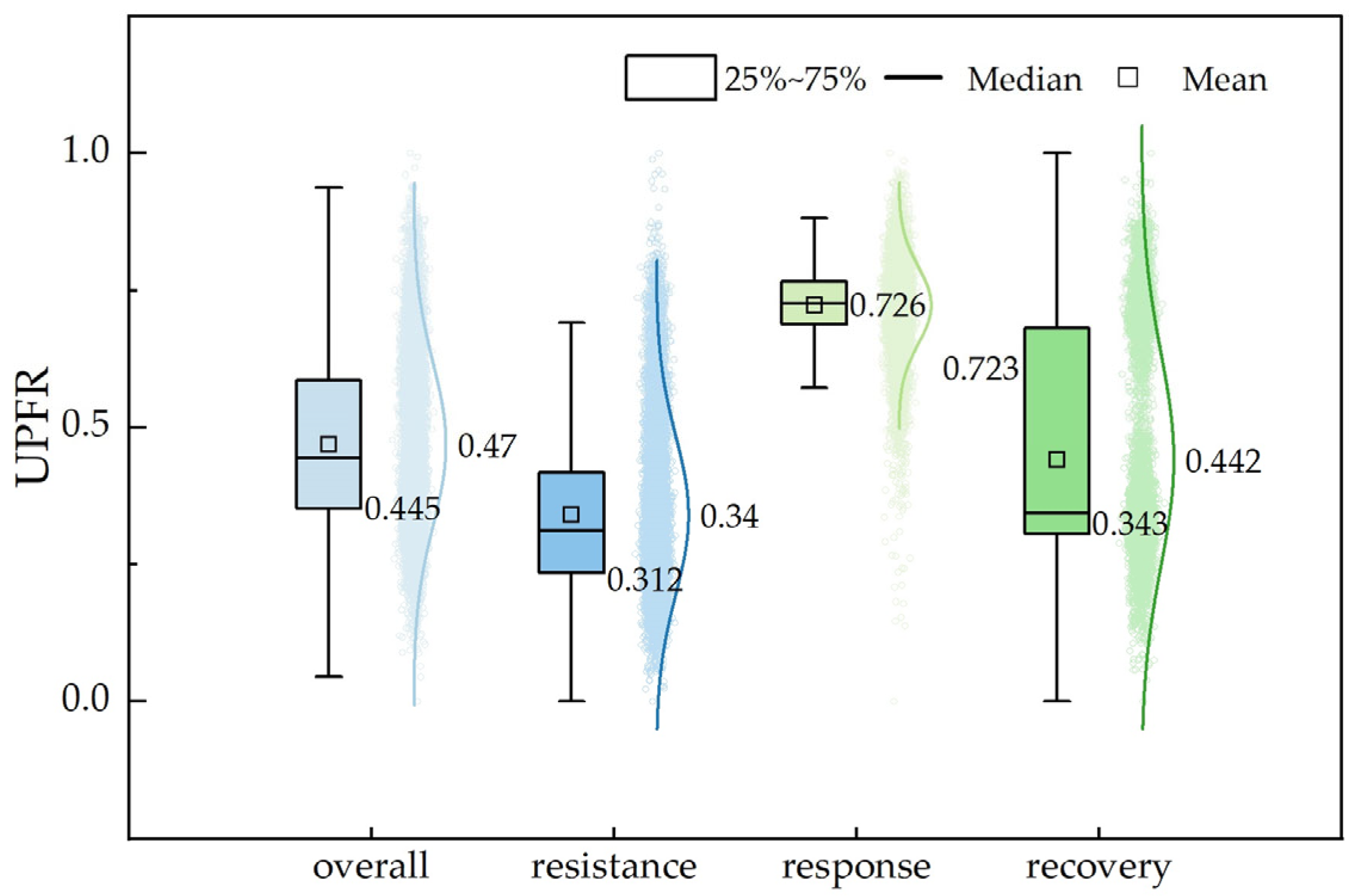
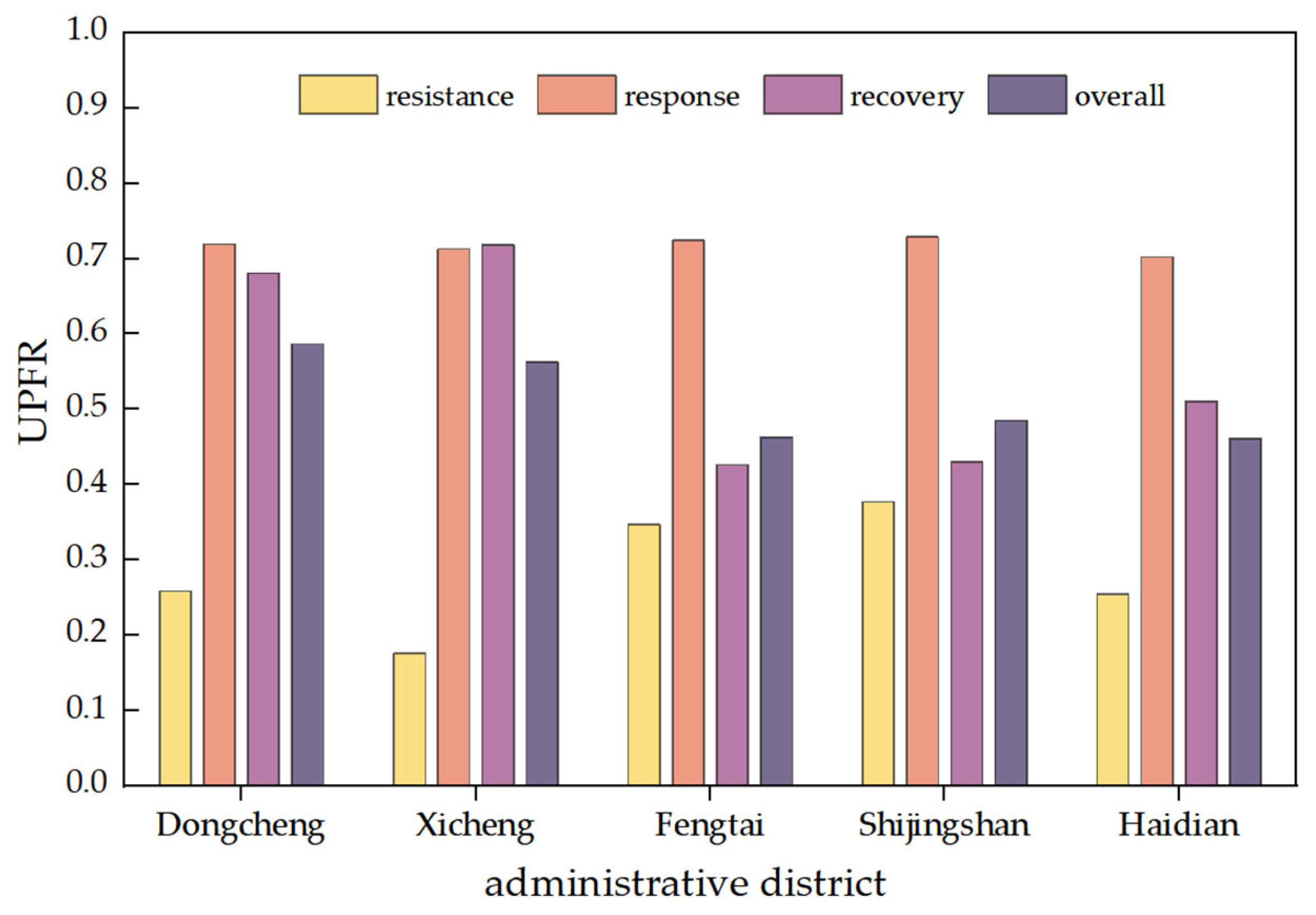
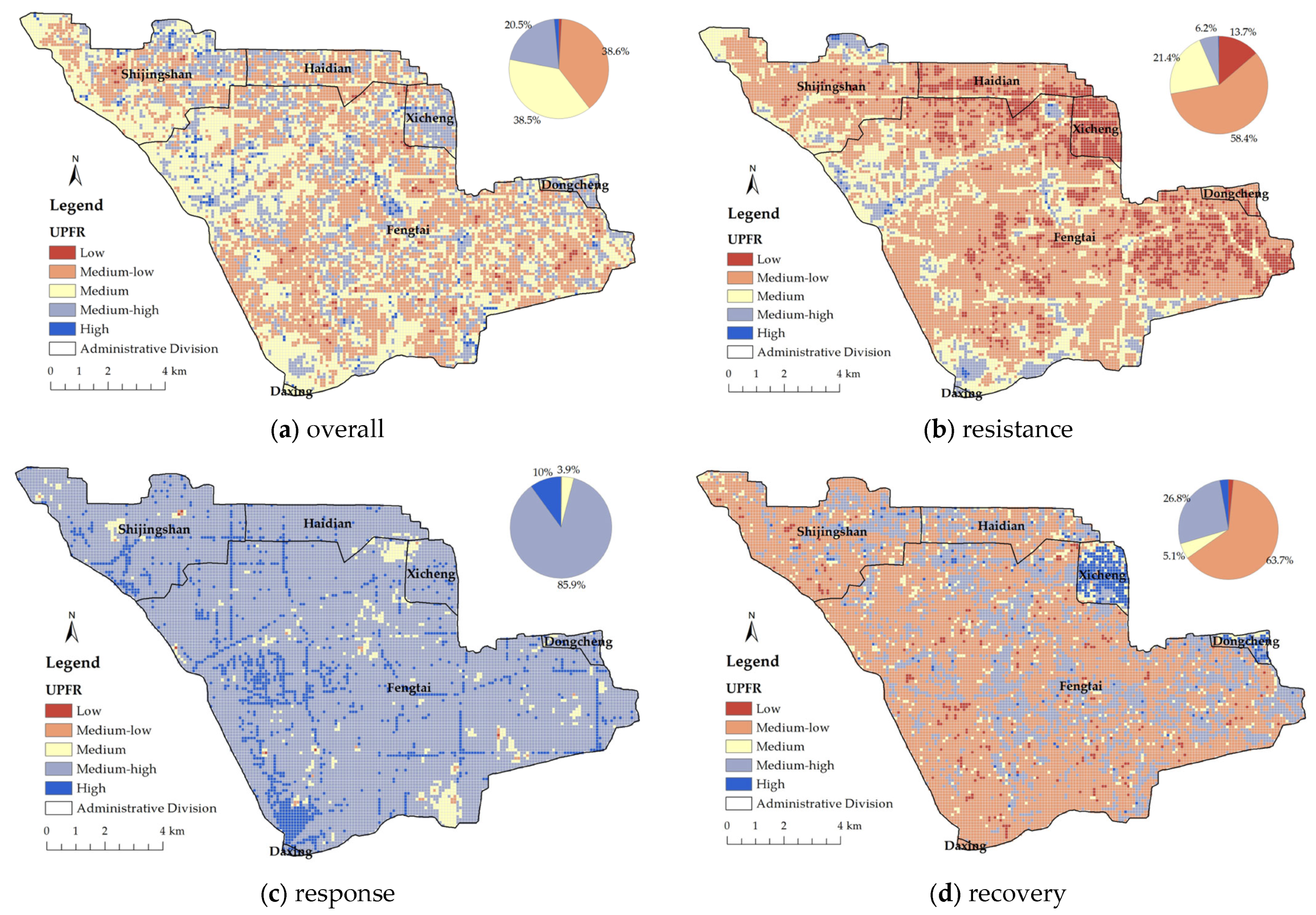
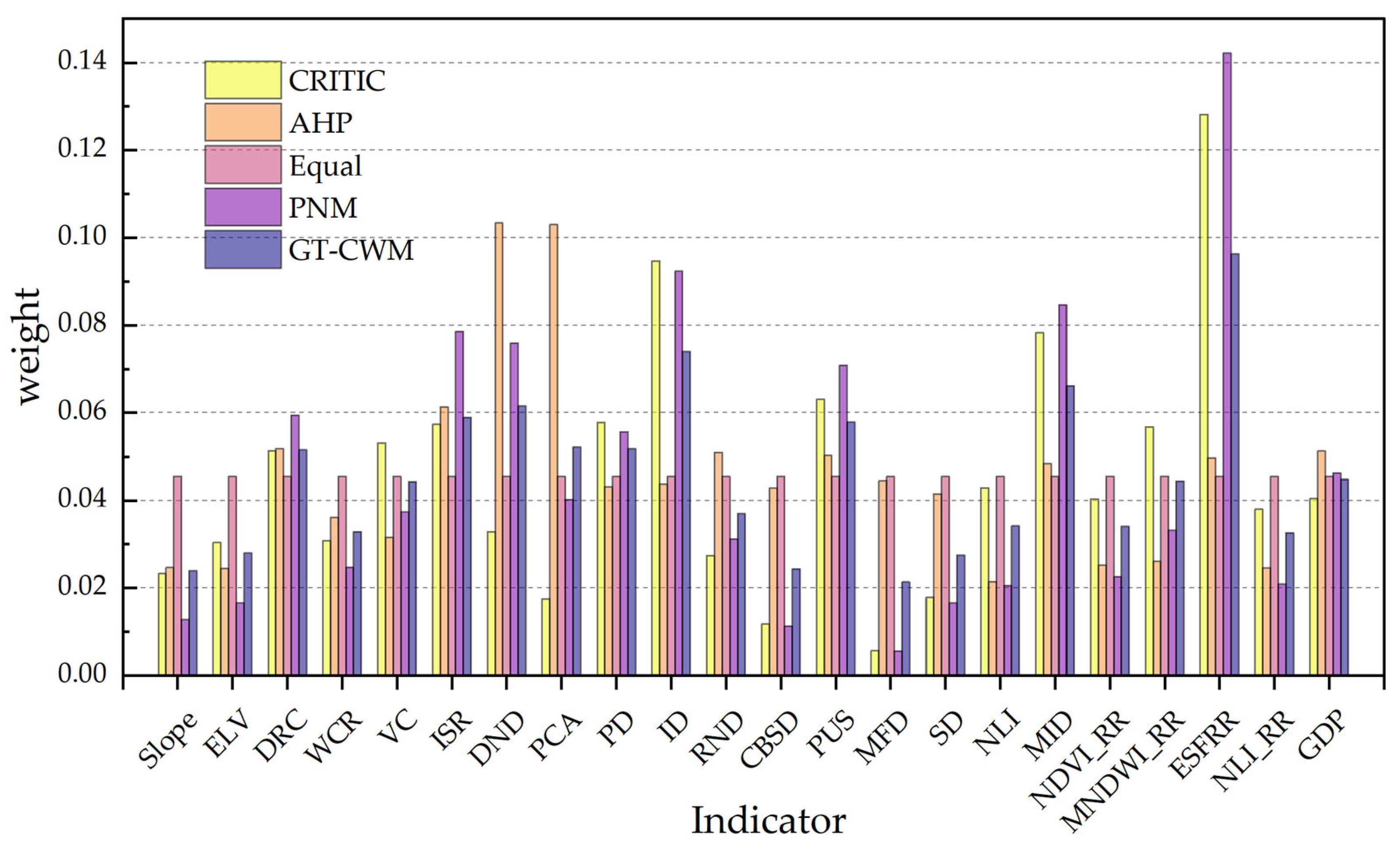
Climate change and rapid urbanization are intensifying urban pluvial flooding and threatening sustainable urban development. This study proposes a three-stage, four-dimensional framework (TSFD-UPFR) to assess urban pluvial flood resilience across resistance, response, and recovery phases that integrate natural, infrastructural, social, and economic dimensions. Using a representative urban catchment affected by a typical extreme rainfall event, we couple hydrological–hydrodynamic simulations with multi-source remote sensing and socio-economic indicators at a 100 m grid resolution to enable spatially explicit assessment. The results indicate moderate overall resilience with pronounced spatial heterogeneity. Resistance is primarily constrained by drainage capacity and impervious surfaces, response is shaped by road connectivity and public service accessibility, and recovery is determined by essential facility restoration and economic support. Low-resilience clusters are concentrated in dense built-up areas and transport hubs, revealing structural weaknesses in adaptive capacity. By linking flood processes with socio-economic recovery dynamics, the framework captures cross-stage interactions within urban systems. The findings support climate-adaptive planning, targeted infrastructure investment, and resilience-oriented governance, contributing to sustainable and equitable urban transformation in megacities facing intensifying extreme rainfall.
Keywords: urban pluvial flood resilience (UPFR); sustainable urban development; hydrological–hydrodynamic coupled model; multi-source data integration; high-resolution assessment urban pluvial flood resilience (UPFR); sustainable urban development; hydrological–hydrodynamic coupled model; multi-source data integration; high-resolution assessment