Article

Modeling the Land-Use-Driven Energy Consumption Nexus in Shaanxi Province, China: A Digital Approach Integrating Machine Learning and Spatial Simulation

1
School of Sociology and Law, Shanxi Normal University, Taiyuan 030031, China
2
Institute of the Building Environment & Sustainability Technology, School of Human Settlements and Civil Engineering, Xi’an Jiaotong University, Xi’an 710049, China
*
Author to whom correspondence should be addressed.
Sustainability 2026, 18(8), 3709; https://doi.org/10.3390/su18083709
Submission received: 28 February 2026 / Revised: 4 April 2026 / Accepted: 7 April 2026 / Published: 9 April 2026

Abstract

Within the context of regional energy governance, land use has emerged as a critical regulatory interface for managing energy demand. Clarifying the land-use–energy nexus is a technical prerequisite for evidence-based and spatially explicit energy planning. This study develops a digital modeling framework that integrates machine learning (Random Forest, achieving R2 = 0.95/0.91 for training/testing) and spatial simulation (Patch-generating Land Use Simulation model, with 82.5% accuracy for industrial land) to quantify land-use-driven energy dynamics in Shaanxi Province, China (2005–2030). Key findings reveal: (1) socioeconomic factors dominate land-use expansion, with service industries (14.8–22.4%) and infrastructure (13.5–18.9%) acting as primary drivers, leading to a projected 94.2% growth in urban built-up areas and a tripling of total energy consumption; (2) structural transitions indicate a declining industrial energy share (from 68% to 54%) and reduced coal dependency (from 78% to 62%), though with significant regional disparities; (3) spatial analysis identifies critical energy path-dependency risks in Xi’an City and Yulin City, which are projected to account for 70% of provincial consumption by 2030. These results demonstrate that land-use structure constitutes a direct physical interface linking regional development with energy demand trajectories. The findings underscore the necessity of transitioning from generalized energy policies toward data-driven, land-use-based energy constraints, providing a digital evidentiary base for more precise and stable regional energy governance.

1. Introduction

The global surge in energy consumption, driven by industrialization and urbanization, has placed unprecedented pressure on Sustainable Development Goals (SDGs), energy security, and environmental sustainability [1]. According to the International Energy Agency (IEA), global energy demand is projected to increase by 50% by 2050, with fossil fuels still dominating the energy mix [2], exacerbating greenhouse gas emissions and resource depletion [3]. Accurate energy consumption forecasting is thus critical for optimizing energy allocation, mitigating supply risks, and achieving the United Nations Sustainable Development Goals (SDGs), particularly SDG 7 (Affordable and Clean Energy) and SDG 13 (Climate Action). Quantifying future energy demands enables policymakers to design resilient energy systems that balance economic growth with ecological constraints [4].
Recent studies highlight the underexplored role of land use as a pivotal factor in shaping energy consumption patterns [5]. Land use changes—such as urban expansion, agricultural intensification, and infrastructure development—directly influence energy demand by altering spatial distributions of human activities and resource flows. For instance, compact urban forms reduce per capita energy use by minimizing transportation needs [6], while industrial land conversion escalates energy-intensive production [7]. This emerging perspective offers a novel lens to characterize and predict energy consumption [8], bridging the gap between socio-economic drivers and spatial dynamics [9]. By integrating land use data, which is often more granular and stable than traditional economic indicators, energy forecasts can achieve higher accuracy and spatial explicitness [10]. Given the urgency of transitioning to sustainable energy systems, constructing a land use-based energy consumption prediction framework holds significant theoretical and practical value [11]. Such a framework not only enhances the precision of energy planning [12] but also identifies leverage points for low-carbon land use policies [13]. As climate change and energy crises escalate, advancing this interdisciplinary approach is imperative to inform timely, spatially targeted interventions that align energy security with long-term sustainability.
The governance and planning of global energy systems are both important and meaningful. However, many provinces in China, particularly resource-dependent regions such as Shaanxi, face a pronounced spatial–energy conflict, where geographic patterns and infrastructure demands are closely linked to land-use decisions. A critical research gap remains in translating high-resolution spatial simulations and machine learning insights into actionable carbon governance frameworks.
To systematically address these gaps, this study focuses on three core research questions: RQ1: What are the primary spatial and socioeconomic drivers of land-use expansion, and how do their contributions vary across different land-use types? RQ2: To what extent can an integrated machine learning and spatial simulation framework accurately characterize and predict the land-use–energy nexus? RQ3: What are the projected spatio-temporal trends for land use and energy consumption?
To address the technical and scientific needs of energy consumption prediction and regional scientific management, the subsequent chapters of this research will include the following: Section 2: Literature Review will review various energy consumption prediction methods and case studies, revealing the knowledge gap in existing research. In Section 3: Materials and Methods, the data and methodologies adopted in this study will be presented, with the model’s precision and accuracy being demonstrated in Section 4: Model Validation. Section 5: Results and Section 6: Discussion will report the model’s prediction results, including the relationship between land use and energy consumption, expansion driving factors of land use impacting energy consumption, as well as the prediction outcomes for both land use and energy consumption. Finally, Section 7: Conclusion will present the research conclusions, contributions, and future directions.

2. Literature Review

Energy consumption prediction has long constituted a critical research domain, with conventional approaches predominantly relying on linear statistical methodologies such as multiple regression [14] and structural equation modeling [15]: While computationally tractable, these techniques frequently fail to capture the intrinsic nonlinearities characterizing energy demand patterns [16], particularly in rapidly urbanizing regions where socioeconomic transitions introduce threshold-dependent dynamics and complex system behaviors [17]. The fundamental assumption of linear relationships between conventional predictors (e.g., GDP growth, demographic changes) and energy consumption often results in systematic forecasting errors [18], especially during periods of structural economic transformation when linear approximations prove particularly inadequate [19]. These well-documented limitations have driven the exploration of alternative methodological paradigms to enhance predictive performance.
In response to the limitations of linear models, the research community has progressively adopted machine learning techniques. Yin et al. [20] and Luo et al. [21] pioneered the application of artificial neural networks (ANNs) for electricity demand modeling, demonstrating statistically significant improvements in predictive accuracy compared to traditional regression approaches. Lee et al. [22] then employed support vector machines to account for nonlinear interactions between economic development and energy utilization, achieving enhanced short-term forecasting capabilities. Ensemble methods, including random forests and gradient boosting machines (GBMs), have emerged as prominent tools, with Kang et al. [23], Ma et al. [24], and Luo et al. [25] demonstrating their superior capacity to handle high-dimensional datasets and capture complex variable interactions. However, despite their predictive advantages, these advanced machine learning approaches frequently suffer from limited model interpretability [26]. Furthermore, most existing implementations operate at aggregated spatial scales, failing to incorporate the fine-grained spatial heterogeneity of energy consumption patterns that proves essential for regional infrastructure planning and sustainable development strategies [27].
The selection of appropriate predictive variables has generated substantial scholarly debate. Foundational studies by Li and Kayae [28] and Kumar et al. [29] relied extensively on macroeconomic indicators such as GDP and industrial output, which, while exhibiting correlation with energy demand, offer limited direct policy levers for intervention. Subsequent research by Zhang et al. [30], Dong et al. [31], and Wang et al. [32] incorporated nighttime light data as a spatially explicit proxy for economic activity, providing improved geographical resolution but remaining an indirect measure of actual energy consumption. Hybrid modeling frameworks developed by Rao et al. [33], Nazir and Li [34], and Abbasian Hamedani and Talebi [35] combined multiple indicators, including population density, transportation infrastructure, and industrial productivity, to enhance predictive robustness. However, these composite approaches frequently introduce problematic multicollinearity [36], wherein modifications to one predictor variable generate unpredictable cascading effects across the model system: a phenomenon that significantly complicates scenario analysis and long-term energy planning [37]. Crucially, none of these conventional indicators provides direct mechanisms for policy intervention, substantially limiting their utility in practical energy governance applications and management [38].
An emerging research paradigm has identified land use patterns as a particularly promising alternative for energy demand modeling. Song et al. [39] and Kamoona et al. [40] established robust correlations between industrial land allocation and manufacturing-related energy consumption, while subsequent studies by Luo et al. [41] and Ramírez-Aguilar et al. [42] demonstrated how urban residential areas encapsulate both operational building energy demands and household appliance usage patterns. Complementary research by Zhao et al. [43] further quantified the contribution of transportation networks to non-point source energy demand through vehicular mobility analysis. Recent methodological innovations by Maki et al. [44] and Falchetta et al. [45] have successfully integrated high-resolution satellite-derived land cover data into energy modeling frameworks, achieving unprecedented levels of both predictive accuracy and spatial granularity. Unlike traditional economic indicators, land use systems offer three distinct advantages: (1) Inherent spatial explicitness that enables precise geographical targeting; (2) Direct modifiability through zoning policies and urban planning instruments; (3) Increasingly precise measurability through advanced remote sensing technologies. Nevertheless, despite these theoretical advantages, operational frameworks that fully leverage land use dynamics for predictive energy modeling remain notably scarce in both research and practice.
Overall, the frameworks of various research cases can be summarized as shown in Table 1. In summary, the present study addresses this critical research gap through the development of an integrated land use–energy prediction framework that synergistically combines machine learning algorithms with advanced spatial simulation techniques [46]. While foundational work established important theoretical connections between land use and energy demand [47], the modeling approaches often lacked regional scalability or failed to incorporate dynamic land use change processes. Similarly, ambitious attempts by Zhou et al. [48] and Zhang et al. [49] to integrate geospatial data into energy forecasting systems were constrained by computational limitations and methodological shortcomings.
Building upon these intellectual foundations while systematically addressing the gaps, this research advances the field through a novel analytical framework that not only enhances predictive accuracy but also generates spatially explicit, policy-relevant insights for sustainable energy planning and climate-responsive urban development. The framework’s unique capacity to translate land use scenarios into energy demand projections represents a significant methodological advancement with substantial practical implications for energy transition strategies.

3. Materials and Methods

3.1. Site

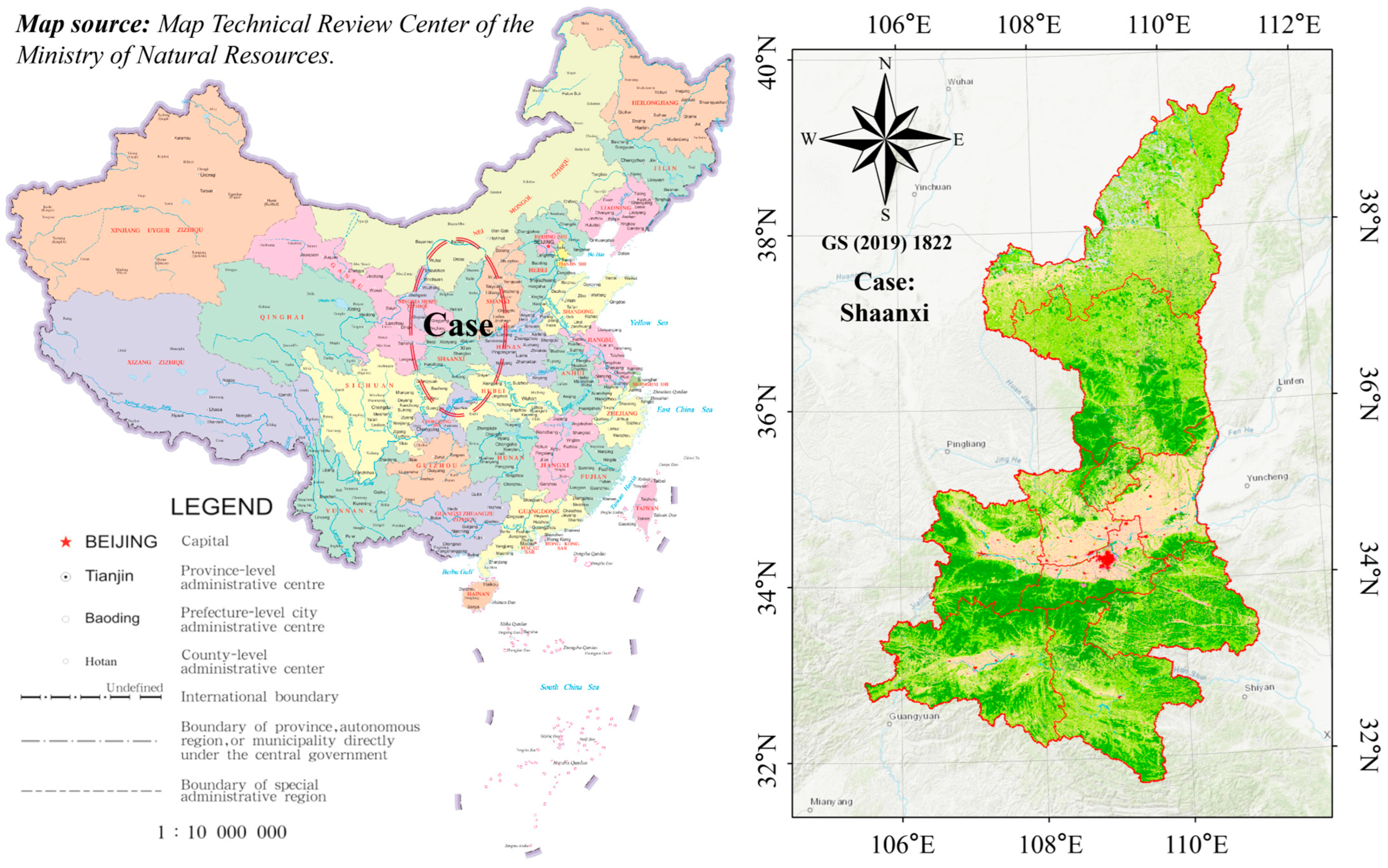
Shaanxi Province, located at the pivotal junction of China’s Loess Plateau and the Qinling, has developed into a middle-tier economic region with a GDP of approximately 3.27 trillion CNY in 2022, as shown in Figure 1 [55]. Its economy is dual structured, combining traditional fossil and fuel industries with emerging high-tech sectors, aviation, aerospace, and advanced manufacturing, while the urbanization rate rose steadily from 45.7% in 2010 to 64.0% by 2022 [56]. These trends influence a broad spectrum of societal welfare. Thus, Shaanxi is a fitting case study for land-use-driven energy consumption analysis, addressing challenges with clear relevance to human well-being [57].
The province spans a complex land use: Loess-covered arable plains, rugged mountain forests, arid northern terrains, and urbanizing zones in the Guanzhong Plain. Rapid urbanization—more than an 18% increase in urban residents since 2010—has intensified built-up land and energy demand, particularly for heating, transport, and industrial processes [7]. From 2000 to 2021, Shaanxi’s total primary energy consumption soared from around 26 million to 145 million tons of standard coal equivalent, a more than fivefold rise [58]. This level of energy use equates roughly to the entire annual consumption of a mid-sized European country, such as Belgium or Sweden, when converted to comparable primary energy units.

3.2. Materials

To examine how land-use change drives energy consumption in Shaanxi, China, the study draws on multiple provincially relevant datasets:
Annual time-series data on Shaanxi’s GDP (total and by three industrial sectors), population, and energy consumption were extracted from the Shaanxi Statistical Yearbook and national statistical databases [56]. Provincial-scale climate indicators (e.g., evaporation, precipitation, relative humidity, sunshine duration, air temperature, and wind speed) were sourced from the National Meteorological Information Center and interpolated spatially across Shaanxi using meteorological station networks [59]. These form critical environmental drivers influencing land expansion dynamics.
A 30 m resolution digital elevation model (DEM) for Shaanxi from national geospatial resources from the Data Center for Resources and Environment, Chinese Academy of Sciences (https://www.resdc.cn/) enabled slope analysis as a driver for land conversion. Night-Time Light Data: Inter-calibrated NPP-VIIRS-derived night-time light data (with historical DMSP-OLS integration, from NASA and GEE: https://earthengine.google.com/) from 2012 onwards were employed to approximate human activity intensity and urban area expansion. Road and railway networks were downloaded from the OpenStreetMap database (https://m.osmtools.de/ (accessed on 16 February 2026)), enabling calculation of distances to urban infrastructure as influencing factors of land-use change. Provincial-level land-use classification data, delineating agricultural, forest, built-up, and other categories, were obtained from the Shaanxi Land Survey Yearbook and validated against remote-sensing classification algorithms [55].

3.3. Methods

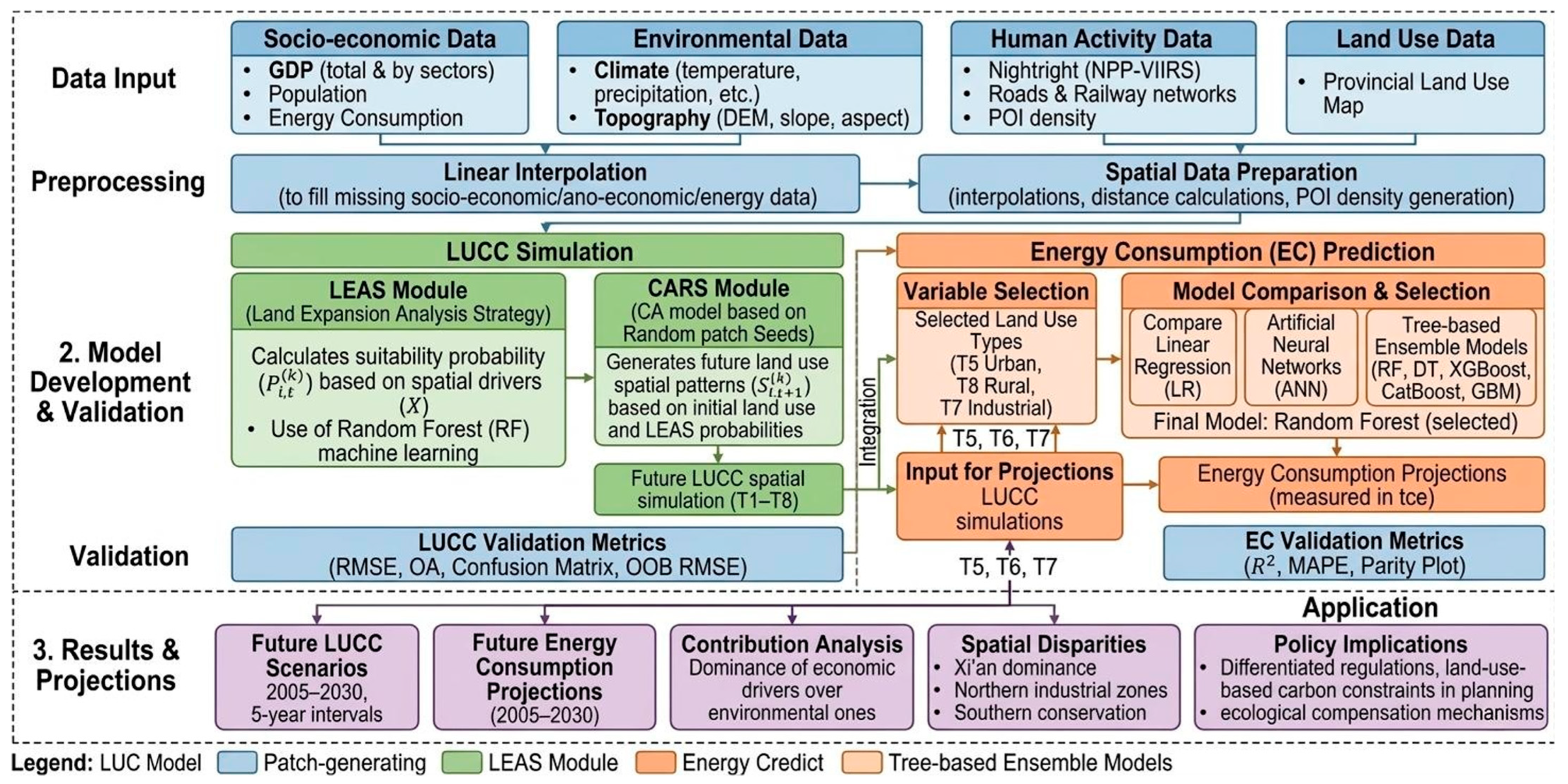
This research involves data preprocessing, model development and validation, as well as results and projections. The framework is shown in Figure 2.
To ensure temporal completeness and consistency of socioeconomic and energy indicators, linear interpolation was applied to fill missing annual records in the panel dataset [60]. Let X i , t denote the value of a given variable (e.g., GDP, population, electricity consumption) for region i in year t . When the X i , t value is missing, and known values exist at t 1 < t < t 2 , the interpolated value is estimated as Equation (1):
X ^ i , t = X i , t 1 + t t 1 t 2 t 1 × ( X i , t 2 X i , t 1 )
This linear temporal interpolation assumes a constant rate of change between two observed time points. It was applied uniformly across all prefecture-level units in Shaanxi Province to reconstruct continuous time series for variables such as GDP (total and by industry), population, and energy consumption.
To quantify the influence of land use on energy consumption across Shaanxi’s prefectures, three modeling techniques were employed: Linear Regression (LR), Artificial Neural Networks (ANN), and tree-based ensemble models (e.g., Random Forest, Decision Tree, XG Boost 3.2.1, Cat Boost 1.2.10, and Gradient Boosting). Land use indicators were used as independent variables, while electricity consumption served as the dependent variable. The general form of each model is shown in Equations (2)–(4):
Y i , t = β 0 + j = 1 p β j X i , t ( j ) + ε i , t
Y i , t = f ( L ) ( W ( L ) × f ( L 1 ) ( F ( 1 ) ( W ( 1 ) X i , t + b ( 1 ) ) ) + b ( L ) )
Y i , t = m = 1 M w m T m ( X i , t )
where Y i , t is energy consumption in region i at time t ; X i , t ( j ) is land use variable (e.g., built-up land, cropland, forest) in region i at time t . Specifically, land use areas are aggregated by the smallest available administrative units within each region, as energy consumption statistics are reported at the city level.
Subsequently, the Patch-generating Land Use Simulation (PLUS) model was used to achieve the simulation of future land use change [61]. The model integrates machine learning-based suitability analysis with a patch-level land expansion mechanism under a cellular automata (CA) framework [62]. It consists of two modules: LEAS for probability estimation and CARS for spatial simulation [63], as shown in Equations (5) and (6):
P i , t ( k ) = F k ( X i , t )
S i , t + 1 ( k ) = 1 if   N i ( k ) × ω + α × P i , t ( k ) + β × R i ( k ) > θ k 0 otherwise
where P i , t ( k ) is the probability of land use type k expanding to cell i at time t , predicted by a machine learning model F k (e.g., Random Forest); X i , t is a vector of spatial driving factors at cell i at time t (e.g., DEM, POI density, road distance, night-time light intensity); S i , t + 1 ( k ) is the simulation result indicating whether cell i is occupied by land type k at time t + 1 .
The regression results were evaluated using R2 and MAPE, while the land use simulation results were assessed with RMSE and OA, as calculated by the equations shown in Equations (7)–(10):
R 2 = 1 i = 1 n ( y i y ^ i ) 2 i = 1 n ( y i y ¯ ) 2
M A P E = 100 % n i = 1 n y i y ^ i y i
R M S E = 1 n i = 1 n ( y i y ^ i ) 2
O A = k = 1 K C k k k = 1 K m = 1 K C k m × 100 %
where y i is observed value of the dependent variable for the i -th sample; y ^ i is the predicted value of the dependent variable; y ¯ is the mean of observed values; n is total number of samples; C k m is the element in the k -th row and m -th column of the confusion matrix; K is the total number of land use classes (T1–T8 in this study); and C k k is the correctly classified pixels for class k .

4. Model Validations

4.1. Regional Modeling Site

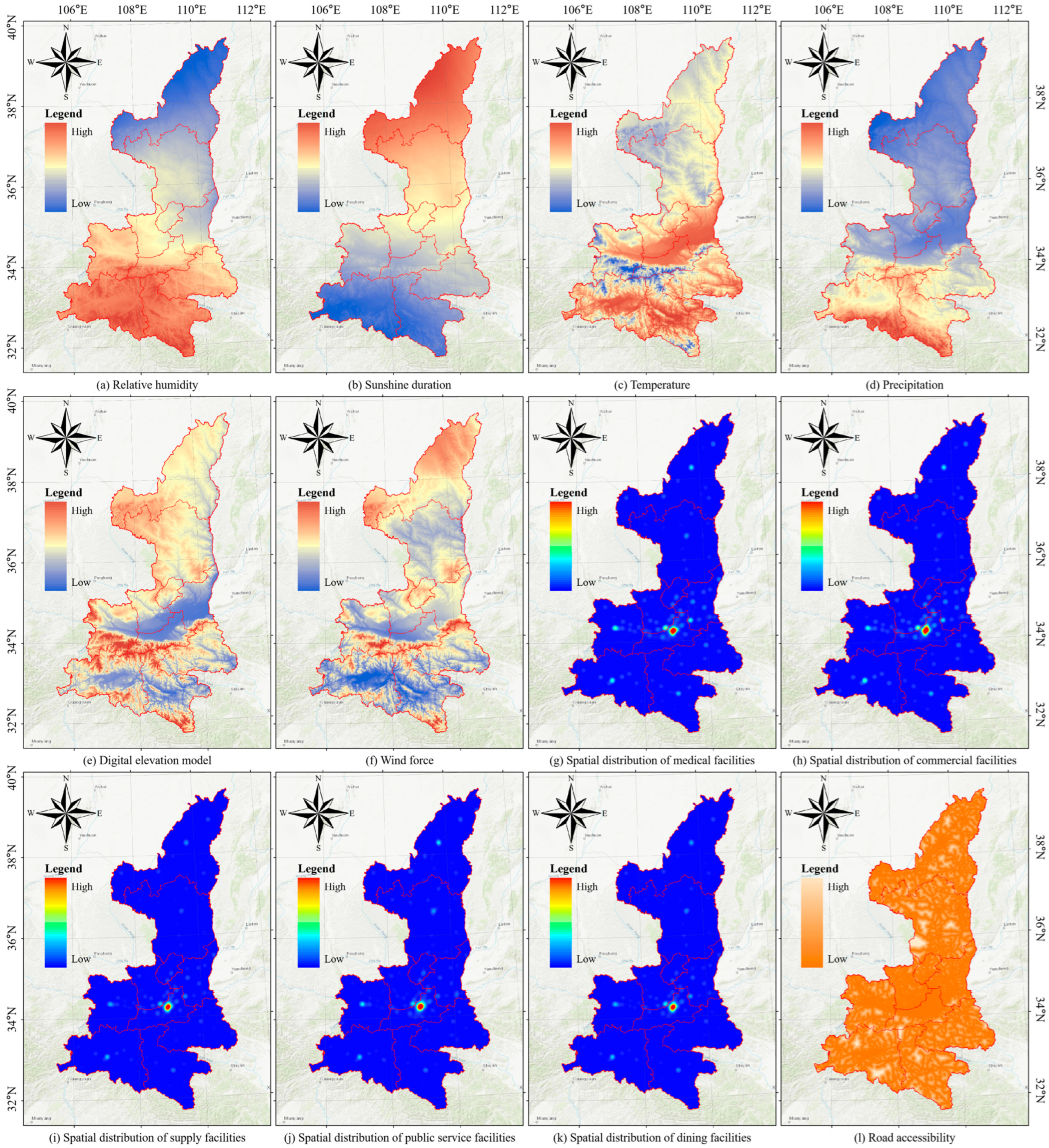
To quantitatively capture the spatial heterogeneity of land use change drivers in Shaanxi Province, a series of geospatial layers representing both natural and anthropogenic factors was constructed (in Figure 3).
The natural environment was characterized using elevation, slope, and aspect derived from a DEM, along with annual precipitation and sunshine duration, reflecting topographic constraints and climatic gradients. These variables highlight the significant north–south ecological transition across the province, particularly the mountainous terrain in the south and the relatively flat Guanzhong Plain in the central region.
Anthropogenic influences were incorporated through indicators of accessibility and human activity intensity. Euclidean distances to major roads and railway networks were calculated to represent infrastructural connectivity, while nighttime lights data captured spatial patterns of economic development and urbanization. Furthermore, the density of Points of Interest (POI) across commercial, residential, industrial, medical, and service-related categories was extracted to reflect urban function and development pressure. Lastly, the base-year land use classification map was used as a reference for subsequent transition modeling.
These spatial drivers served as the input variables for the LEAS module of the PLUS model, enabling machine learning-based estimation of land use expansion probabilities. By integrating natural constraints and human dynamics, the model ensured a comprehensive and spatially explicit simulation framework tailored to Shaanxi’s diverse landscape.

4.2. Model and Variable Selection

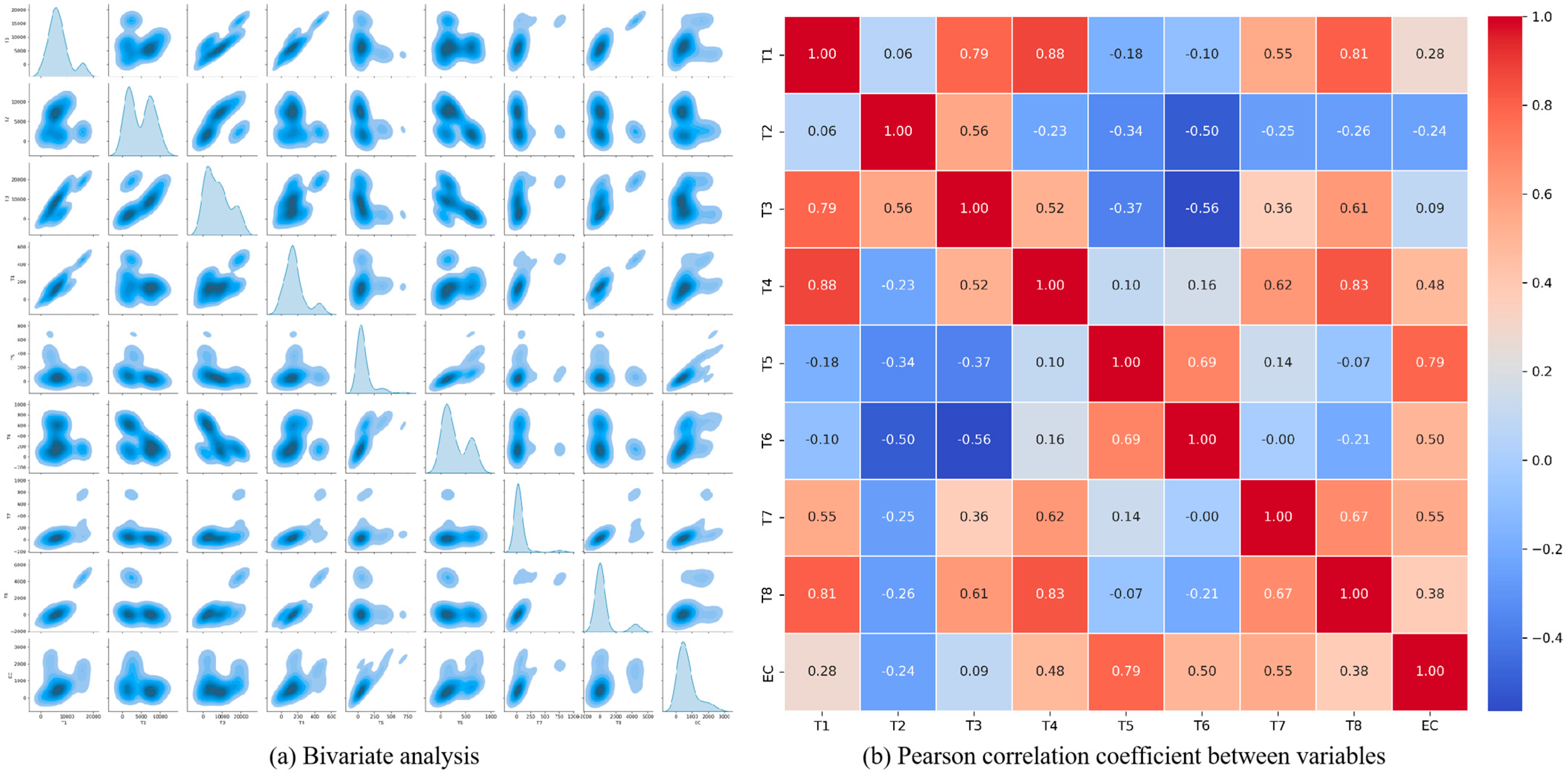
To identify the most influential land use types on energy consumption (EC), we conducted a correlation analysis and density-based pairwise plotting among the eight candidate land use variables. As shown in Figure 4, multiple land use categories exhibit strong intercorrelations, for instance, T1 and T4 (r = 0.88), T4 and T8 (PCCs = 0.83), and T3 and T1 (PCCs = 0.79), indicating potential multicollinearity issues in regression modeling.
To reduce redundancy and enhance model interpretability, we selected T5 (urban built-up land), T6 (rural settlements), and T7 (industrial land) as the final independent variables. These land types directly correspond to concentrated human activities and infrastructure, which are more likely to drive spatial and temporal variations in energy consumption. The dependent variable, EC, represents the total energy consumption measured in 10,000 tons of standard coal equivalent. This refined variable set was subsequently used to construct regression models.
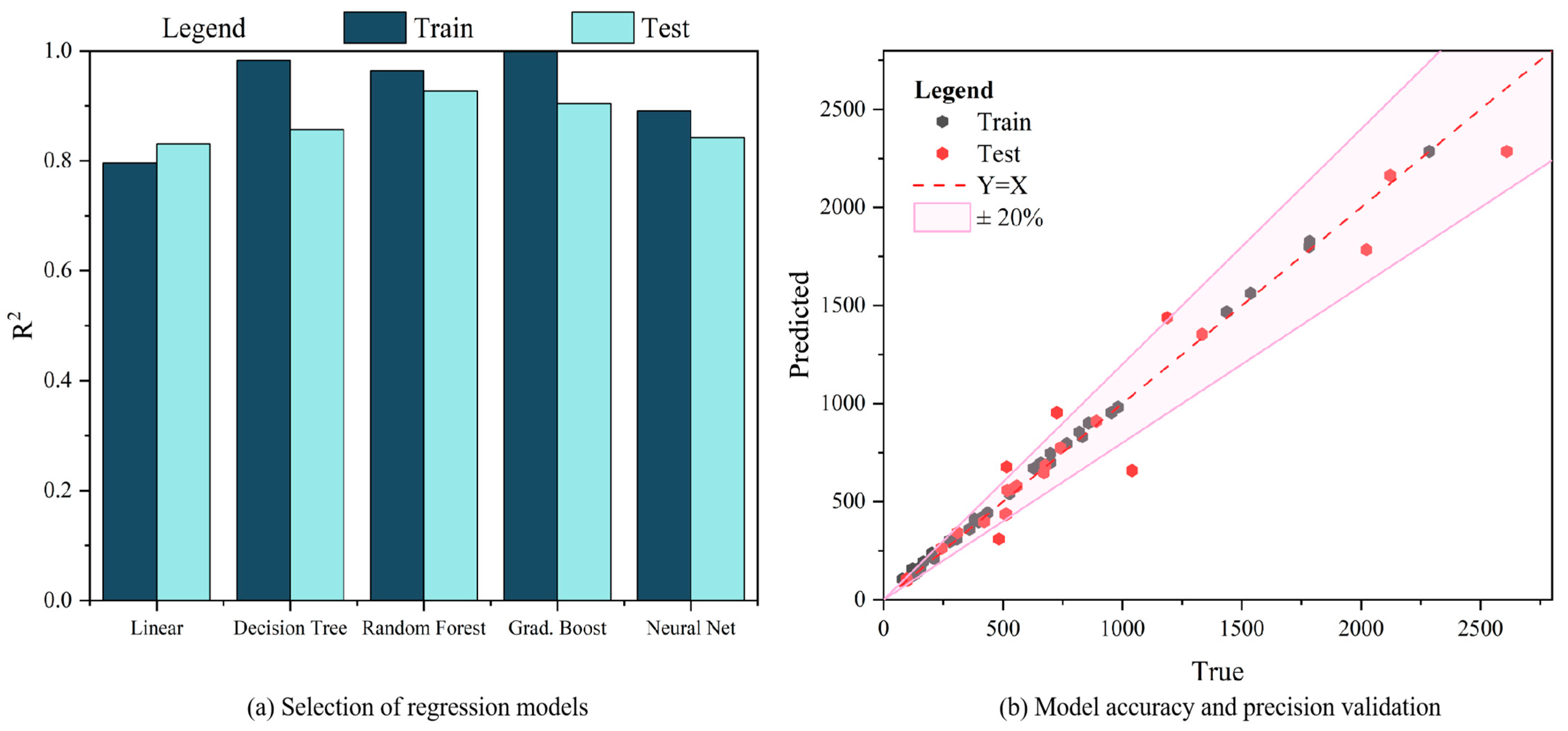
To evaluate the predictive performance of different regression techniques in modeling the relationship between land use types (T5, T6, T7) and energy consumption, five commonly used models were tested: linear regression, decision tree, random forest, gradient boosting, and neural networks. As shown in Figure 5a, even the linear model exhibited a reasonably high coefficient of determination (R2 = 0.82 for training and R2 = 0.85 for testing), indicating a largely linear relationship between selected land use variables and energy consumption.
Among all models, the random forest achieved a robust balance between accuracy and generalization, with R2 values of 0.95 and 0.91 for training and testing datasets, respectively. This consistency suggests that the model effectively captures underlying nonlinear patterns without overfitting or underfitting, a conclusion further supported by the parity plot in Figure 5b, where the majority of predicted values fall within the ±20% range of the observed values. Consequently, the random forest model was selected for subsequent energy consumption prediction tasks.

4.3. Land Use Simulation

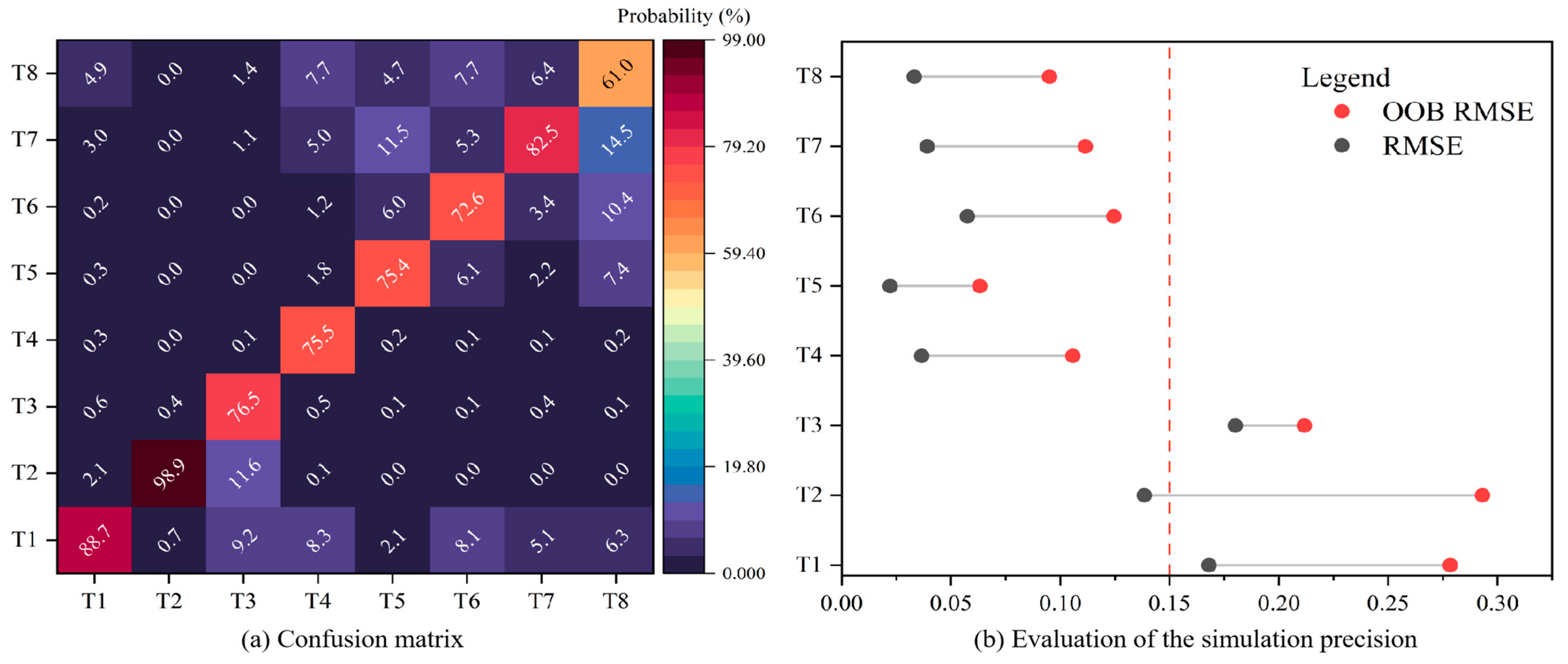
The confusion matrix (in Figure 6a) and precision evaluation (Figure 6b) quantify the model performance in simulating eight land use categories (T1–T8). The confusion matrix reveals stark contrasts in predictive accuracy across land types. Anthropogenic landscapes demonstrate superior performance, with urban built-up land (T5, 75.4%), rural settlements (T6, 72.6%), and industrial land (T7, 82.5%) achieving the highest producer accuracies. These categories exhibit distinct spectral and spatial characteristics—such as uniform building materials in T5/T6 and standardized infrastructure in T7—that minimize spectral confusion. Conversely, natural and transitional land covers show significant misclassification. Cropland (T1) is frequently confused with grassland (T3, 9.2%) and unused land (T8), reflecting challenges in distinguishing spectrally similar vegetation during seasonal transitions. Forest (T2) exhibits catastrophic misclassification (producer accuracy: 98.9%), predominantly misassigned as grassland (T3) due to overlapping reflectance signatures in densely vegetated areas. Unused land (T8, producer accuracy: 61.0%), confusion with industrial land (T7, 6.4%), and water bodies (T4, 7.7%) underscore ambiguities in classifying fragmented or barren terrains.
Simulation precision metrics in Figure 6b corroborate these findings. Low RMSE and out-of-bag (OOB) RMSE values for T5, T6, and T7 (<2.5 units) confirm robust modeling of anthropogenic features. Conversely, elevated RMSE for T1, T2, and T8 (>5.0 units) aligns with their high misclassification rates, implicating heterogeneous land cover dynamics and spectral variability as primary error sources. The model’s proficiency in simulating human-dominated landscapes (T5–T7) supports its utility for urban and industrial planning analyses. However, caution is warranted when interpreting results for agricultural and natural ecosystems (T1–T3), where contextual feature engineering (e.g., seasonal NDVI thresholds) or advanced classifiers may mitigate current limitations. This validation underscores the model’s contextual strengths while highlighting critical avenues for refining ecological land type discrimination.
Overall, the specific errors were found within the allowable range, and the land use simulation results are acceptable.

5. Results

5.1. Contribution of Land Use Expansion

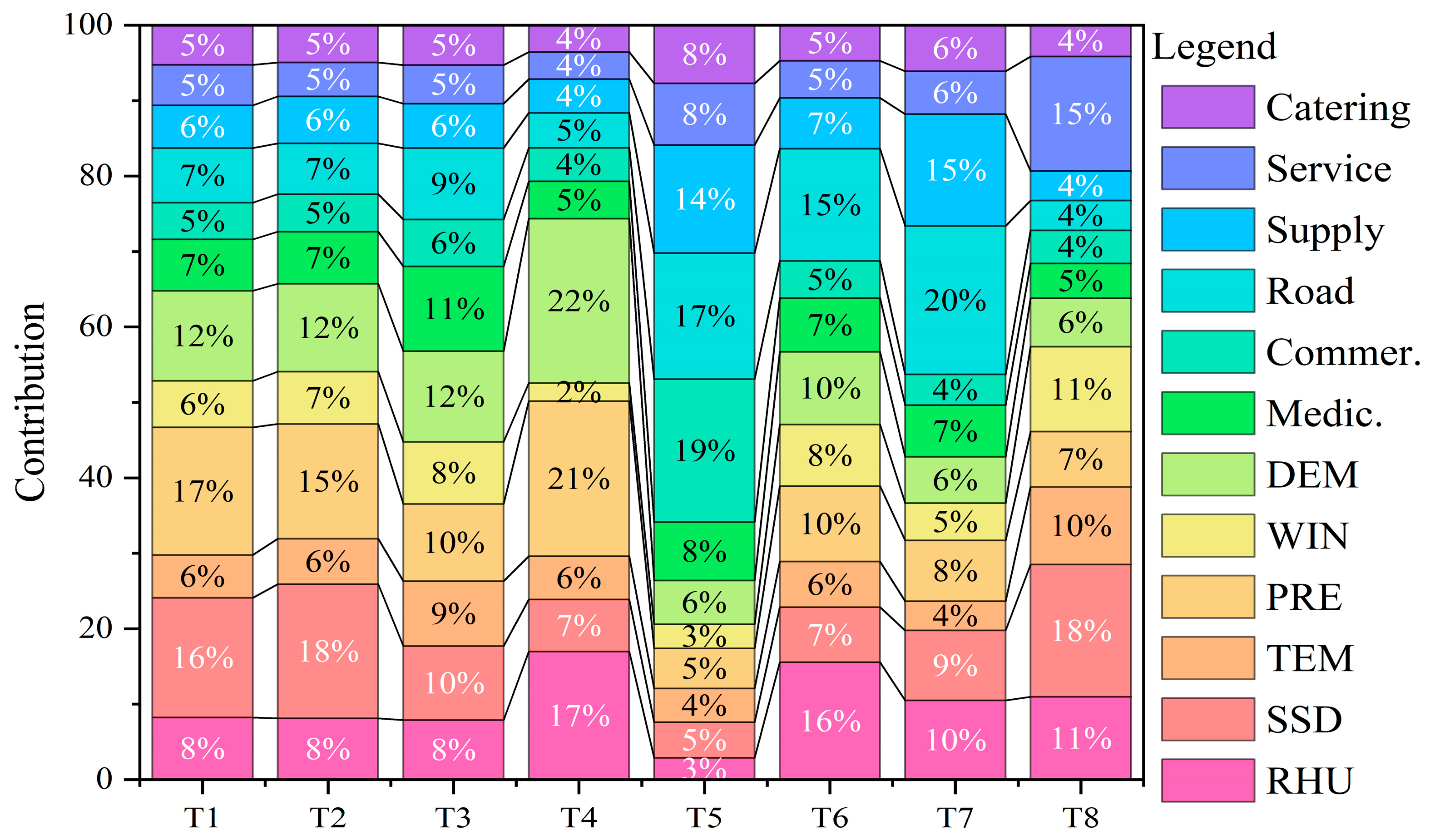
The spatial distribution patterns and quantitative contributions of various land expansion drivers reveal complex interactions between socioeconomic development and environmental conditions in Shaanxi Province, as shown in Figure 3. Figure 7 demonstrates that the service industry (14.8–22.4%) and road infrastructure (13.5–18.9%) emerge as the dominant drivers, collectively accounting for 32–41% of land expansion across all categories. This economic dominance is particularly pronounced in industrial land (T7) and urban built-up areas (T5), where service industry contributions peak at 22.4% and 19.6% respectively. The spatial maps (Figure 1) corroborate this finding, showing dense concentrations of commercial and service facilities along major transportation corridors in urban centers, creating a self-reinforcing cycle of development.
Environmental factors exhibit more limited but distinct spatial patterns. Precipitation (2.8–4.1%), temperature (1.9–3.5%), and soil conditions (3.1–4.8%) collectively contribute less than 15% to land expansion overall, with their influence primarily concentrated in agricultural areas (T1 and T3). The spatial distribution of these factors shows clear geographic differentiation, with precipitation and temperature gradients following the province’s north–south topographic transition. The digital elevation model reveals how topographic constraints (3.4–5.0% influence) primarily affect forest (T2) and grassland (T3) expansion in the mountainous southern regions.
The analysis reveals several important spatial–economic interactions. Commercial development (6.0–10.7%) shows particular significance in rural settlements (T6, 10.7%), reflecting the province’s rural restructuring as seen in the gradual extension of commercial facilities along transportation routes into rural areas. This pattern contrasts with the more concentrated urban service sector development, highlighting the divergent pathways of rural and urban land use change. Meanwhile, socio-demographic factors like residential demand (4.7–6.9%) and healthcare (3.2–4.5%) demonstrate consistently limited influence across all land types, with their spatial distribution (Figure 4) showing lagging rather than leading patterns of urban expansion.
The findings underscore three fundamental characteristics of land use change in Shaanxi: First, the overwhelming dominance of economic drivers (45.9 ± 3.7% for T5–T7) confirms the primacy of market forces in shaping land use patterns, particularly in urban-industrial contexts. Second, the limited role of environmental factors (<5% combined influence for T5–T7) reveals a concerning disregard for ecological constraints in contemporary land governance. Third, the spatial differentiation of driver impacts highlights the need for regionally tailored land management policies that account for the province’s diverse geographic and economic conditions. These patterns collectively demonstrate how Shaanxi’s land systems are being transformed through complex interactions between economic modernization processes and environmental conditions.

5.2. Land Use Prediction

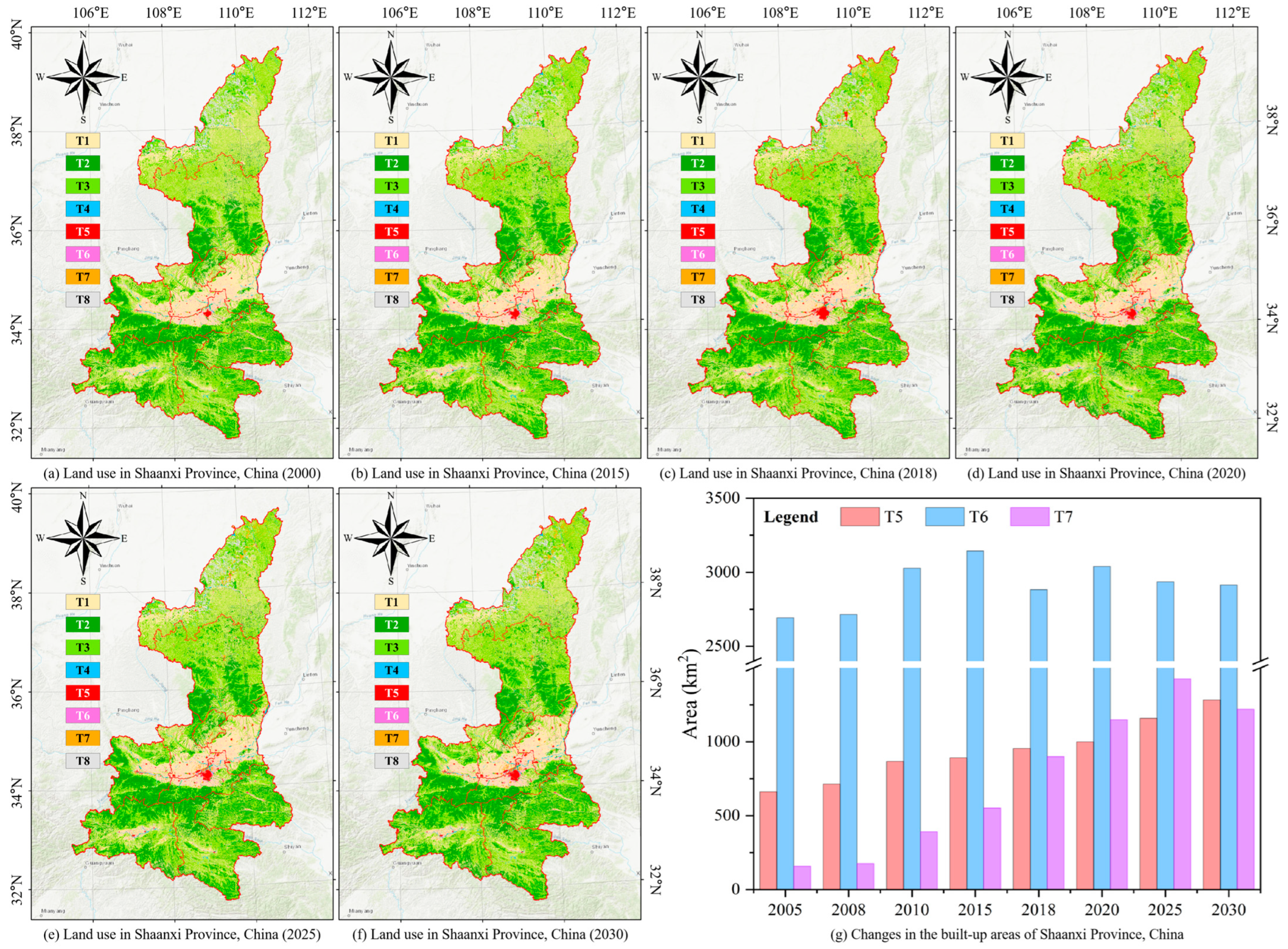
The temporal analysis shown in Figure 8 reveals dramatic anthropogenic expansion across Shaanxi Province, with urban built-up areas (T5) demonstrating the most consistent growth trajectory—increasing from 661.06 km2 (2005) to 1283.06 km2 (2030), representing a 94.2% expansion. This urban sprawl primarily concentrates in the Guanzhong Plain, particularly radiating outward from Xi’an’s metropolitan core. Industrial land (T7) exhibits a distinctive growth pattern: rapid expansion from 157.00 km2 (2005) to 1424.94 km2 (2025), followed by a 14.4% contraction to 1220.19 km2 (2030), reflecting policy-driven industrial zone development and subsequent efficiency optimization. Rural settlements (T6) show more complex dynamics, peaking at 3142.94 km2 (2015) before declining to 2914.56 km2 (2030), indicative of rural restructuring and urban migration trends. Collectively, these anthropogenic land types (T5 + T6 + T7) are projected to occupy 6.2% of provincial land area by 2030, up from 4.0% in 2005.
The spatial distribution patterns demonstrate clear regional disparities in development trajectories. In the Guanzhong Urban Corridor (Xi’an-Xianyang axis), T5 expansion occurs through radial sprawl, consuming 105.44 km2 of surrounding cropland (T1) between 2005–2010 alone. This pattern aligns with national urbanization policies prioritizing regional economic hubs. Contrastingly, Northern Shaanxi (Yulin) shows explosive industrial growth (T7 increasing 35.9% during 2005–2008) through conversion of unused land (T8 reduced by 95.31 km2), driven by energy sector investments under the Western Development Strategy. The Southern Mountainous Region maintains ecological stability, with forest cover (T2) consistently exceeding 7000 km2 across all cities (Hanzhong city and Ankang city) and minimal (<5 km2) net T5-T7 growth, reflecting topographic constraints and ecological conservation policies.
Three fundamental drivers explain these patterns: First, economic modernization prioritizes service sector growth in urban cores (T5 expansion averaging 6.0% annually in Xi’an) while driving industrial consolidation elsewhere (T7 contraction post-2025). Second, infrastructure investments create path dependencies—new highways and rail networks facilitate urban expansion in the Guanzhong Plain while enabling resource extraction in the north. Third, policy interventions produce distinct outcomes: ecological redlines protect southern forests, while industrial land quotas (evident in T7’s 2025 peak) reflect temporary development zone designations. The rural settlement decline after 2015 (−7.3% by 2030) particularly illustrates the national “village merger” policy’s impact, consolidating dispersed dwellings into centralized communities.
These projections raise critical sustainability challenges. The concentration of 84% of new anthropogenic land in the Guanzhong Plain by 2030 risks exacerbating regional inequalities and creating urban heat islands. Meanwhile, northern industrial zones face brownfield remediation needs (204.75 km2 of declining T7 land post-2025), while southern ecosystems require continued protection against developmental pressures. The data suggests three policy priorities:
(1)
Implementing urban growth boundaries around Xi’an to preserve remaining croplands;
(2)
Developing circular economy strategies for northern industrial areas;
(3)
Strengthening payments for ecosystem services in southern conservation zones.
Without such targeted interventions, current trends may lead to unsustainable spatial polarization between the province’s rapidly urbanizing north-central regions and its ecological southern periphery.

5.3. Prediction of Energy Consumption

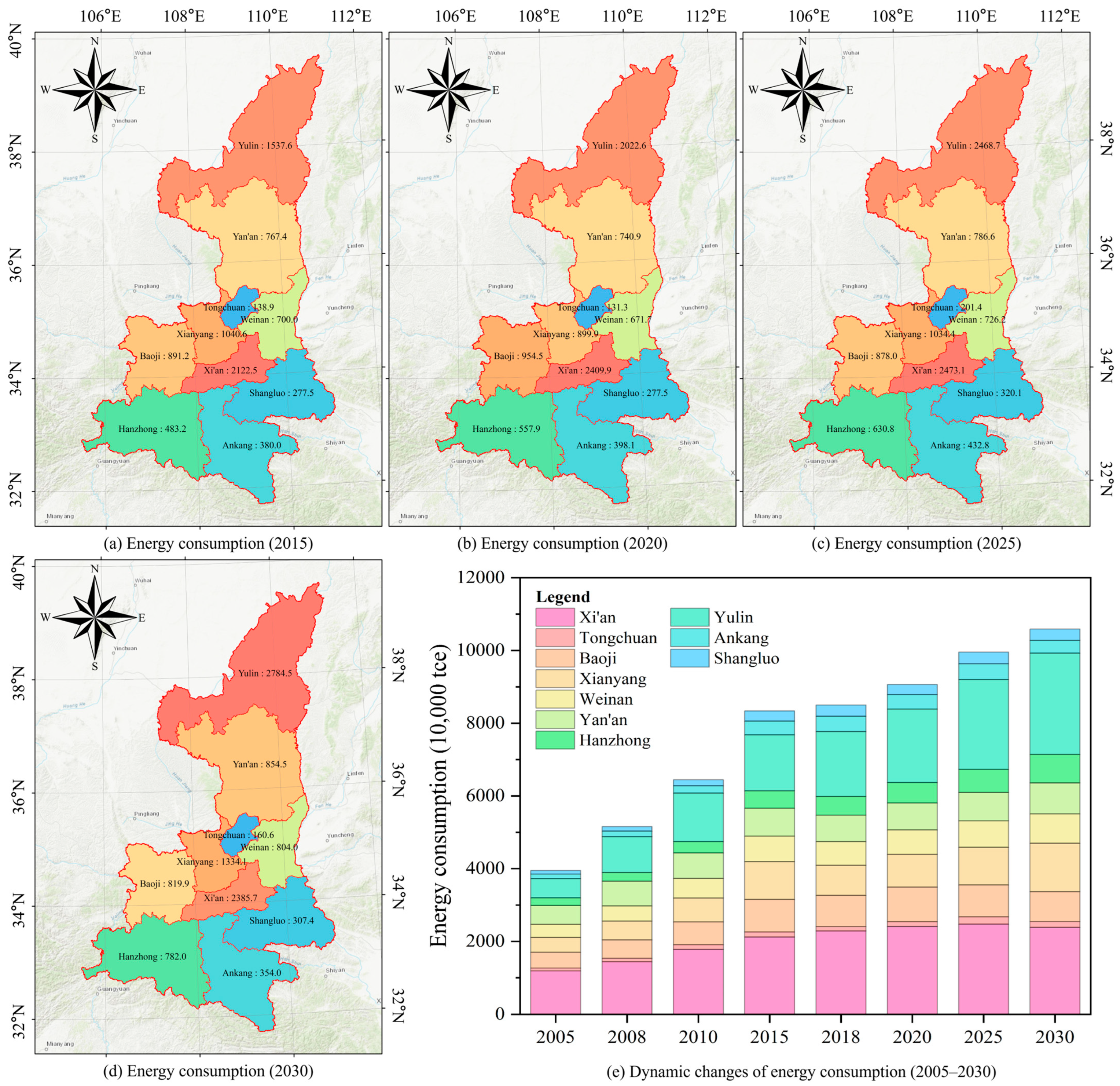
The comprehensive analysis of energy consumption patterns in Shaanxi Province reveals significant temporal and spatial variations that reflect the region’s economic development and energy transition pathways, as shown in Figure 9. The data demonstrates a clear upward trajectory in provincial energy demand, growing from approximately 4000 × 104 tce in 2005 to a projected 12,000 × 104 tce by 2030. This tripling of energy consumption over a 25-year period underscores the rapid industrialization and urbanization processes underway in the province. The growth trajectory shows distinct phases, with particularly rapid expansion during 2005–2015 (averaging 5.8% annual growth), followed by a moderation in growth rates during 2015–2020 (2.3% annually) before stabilizing at around 4.1% annual growth in the current decade.
Geospatial analysis of the consumption patterns reveals pronounced regional disparities that highlight Shaanxi’s diverse economic geography. Xi’an emerges as the dominant energy consumption center, accounting for 22.3% of provincial demand in 2015 (891.2 × 10⁴ tce) and projected to reach 42.3% by 2030 (2473.1 × 104 tce). This remarkable growth reflects Xi’an’s transformation into a major service economy hub, with commercial and residential energy needs driving demand. In contrast, Yulin’s energy profile reflects its role as the province’s energy production base, showing more moderate growth from 1537.6 × 104 tce in 2015 to a projected 2468.7 × 104 tce in 2030. The southern cities of Hanzhong and Ankang maintain consistently low consumption levels below 320 × 104 tce throughout the period, constrained by both ecological protection policies and their mountainous terrain.
The sectoral composition of energy use shows important structural transitions that signal broader economic changes. Industrial energy share is declining province-wide from 68% in 2015 to a projected 54% by 2030, while coal dependency decreases from 78% to 62% over the same period. These aggregate figures mask significant regional variations, with Xi’an transitioning more rapidly to electricity and gas (projected 45% electricity share by 2030) while Yulin maintains 83% coal dependence due to its energy-intensive industries. Urban service sectors, particularly in Xi’an, are becoming increasingly important drivers of energy demand growth in the latter part of the study period.
The analysis reveals several critical policy challenges that emerge from these consumption patterns. The concentration of energy demand in Xi’an and Yulin creates significant energy path dependency risks, with these two cities projected to account for nearly 70% of provincial consumption by 2030. The diminishing returns on energy efficiency investments in Xi’an’s expanding service economy present particular challenges for decarbonization efforts. Meanwhile, the development constraints faced by southern ecological zones raise important questions about regional equity and compensation for environmental protection.
These findings suggest the need for differentiated regional development pathways. The Xi’an metropolitan area requires comprehensive building efficiency standards and district energy systems to manage its growing demand. The northern energy belt centered on Yulin needs structured phase-out plans for coal capacity coupled with worker transition programs. The southern ecological zone warrants innovative compensation mechanisms that recognize its role in maintaining environmental quality while ensuring adequate energy access for residents. Theoretical contributions of this analysis include important insights into the spatial dimensions of energy transitions, particularly how regional economic specialization creates distinct energy system pathways. The empirical evidence of energy path dependency in regional energy systems adds to our understanding of path dependency in energy transitions. The clear tradeoffs between economic development and ecological conservation observed in Shaanxi’s southern regions contribute to ongoing discussions about regional equity in sustainability transitions.
In conclusion, Shaanxi’s energy trajectory provides a compelling case study of the complex challenges facing rapidly developing regions in China. The province’s spatial disparities and sectoral shifts highlight the need for place-based policies that recognize regional specialization while addressing systemic sustainability challenges. Without targeted interventions, current trends risk creating unsustainable energy geographies that will require more drastic corrections in the future. The findings underscore the importance of spatially differentiated approaches to energy planning and the need to balance economic development with environmental protection across diverse regional contexts.

6. Discussion

6.1. Digital Decision-Support Systems as an Evidentiary Basis for Carbon Compliance

The transition from discretionary environmental management to rule-based energy governance requires a robust digital foundation [64]. While traditional administrative methods often rely on static, low-resolution socioeconomic indicators, the Random Forest and PLUS modeling framework developed in this study represents a significant shift toward Digital Technology-Driven spatial intelligence.
In the context of Shaanxi’s carbon neutrality goals, the high predictive accuracy (R2 = 0.91) of our ML-driven framework serves as more than a technical validation; it provides the Digital Evidentiary Basis required for administrative accountability. Under the Environmental Protection Law of the PRC, regulatory interventions must be based on scientific monitoring and objective data [65]. By quantifying the non-linear drivers of land-use expansion (e.g., the 22.4% contribution of service industries identified in Section 5), this digital approach allows for Precision Regulation—a core component of China’s Digital Government initiative. Unlike the “out-of-thin-air” digital concepts often cited in the literature, the digital innovation here lies in the automation of spatial causal inference, which enables planners to move from ex-post damage assessment to ex-ante digital simulation of energy-land trade-offs.

6.2. Integrating Spatial Simulation into the Statutory Planning Framework

The empirical findings (Section 5) indicate that Shaanxi’s energy consumption is projected to triple by 2030, largely driven by urban and industrial expansion. From a legal perspective, these findings necessitate the formal integration of carbon constraints into the Territorial Spatial Planning system [66].
Specifically, the Land Management Law of the PRC and the Regulations on the Protection of Basic Farmland provide the statutory basis for Red Lines. However, these regulations traditionally focus on food security rather than carbon intensity. Our research provides the empirical justification for a Carbon Red Line—a legally operable threshold for energy-intensive land use. For instance, the identified energy path dependency in Yulin City suggests that current industrial land quotas are misaligned with national carbon-neutrality mandates. To bridge this gap, the PLUS-model projections can be adopted as Statutory Reference Data for the “Three-Zone and Three-Line” optimization process, ensuring that provincial spatial planning is not only geographically coherent but also legally compliant with the Energy Conservation Law.

6.3. Addressing Structural Path Dependency Through Spatially Differentiated Regulation

A critical legal challenge identified through our spatial analysis is the Carbon Path Dependency of specific urban-industrial hubs like Xi’an City and Yulin City. The simulation results demonstrate that once infrastructure (e.g., road networks with 18.9% contribution) is anchored, the resulting energy trajectory becomes rigid. This phenomenon requires a shift in the doctrinal approach to environmental law: from generalized provincial mandates to Spatially Differentiated Regulation.
In the Guanzhong Plain (high urbanization), legal mechanisms should focus on Stock Development and land-use mix optimization to reduce transit-related energy demand. In contrast, for Northern Shaanxi (energy-intensive), the law must enforce Carbon-Contingent Land Access—a regulatory regime where industrial land grants are legally conditional upon a facility’s energy intensity benchmarks. By leveraging the spatial disparities revealed in our results (Section 5.2), policymakers can develop a multi-tiered legal framework that recognizes regional economic diversity while maintaining a unified carbon ceiling, thereby operationalizing the Common but Differentiated Responsibilities principle at the intra-provincial level.

6.4. Contribution and Uncertainty

This study makes theoretical contributions by elucidating the spatial dynamics of energy transitions in developing regions, demonstrating how regional economic specialization creates distinct energy system pathways, and revealing energy path dependency in regional energy systems. Methodologically, it advances the field through its innovative integration of machine learning techniques with spatial simulation, establishing a robust framework for analyzing land-use–energy relationships. The research provides practical value by offering policymakers evidence-based tools for implementing spatially differentiated energy planning strategies, particularly in addressing the trade-offs between economic development and ecological conservation in rapidly urbanizing regions. The combination of high-resolution land use data, comprehensive socioeconomic indicators, and advanced modeling approaches yields actionable insights for sustainable regional development while contributing novel methodological approaches to land-use–energy research.
While this study provides valuable insights into land-use-driven energy consumption patterns, future research should enhance the modeling framework by incorporating higher-resolution temporal data (e.g., seasonal land-use dynamics) and integrating climate change scenarios to improve long-term projection accuracy. Additionally, the current model’s limitations in accurately simulating natural land covers (e.g., forest misclassification rates of up to 91.1%) suggest the need for advanced remote sensing techniques and machine learning refinements to better capture ecological transitions. Further studies could also explore the carbon emission implications of projected land-use changes to strengthen the sustainability assessment framework.

7. Conclusions

This study develops an integrated modeling framework to systematically address the land-use–energy nexus in Shaanxi Province, providing clear answers to the three core research questions. Regarding the drivers of land expansion (RQ1), the results reveal that socioeconomic factors—particularly the service industry (14.8–22.4%) and road infrastructure (13.5–18.9%)—act as the primary catalysts for land-use change, particularly for urban and industrial land. In terms of framework efficacy (RQ2), the integration of Random Forest and the PLUS model demonstrated high predictive confidence (R2 = 0.91), confirming that machine learning is a robust tool for quantifying these complex spatial relationships. Concerning future trends and governance (RQ3), projections indicate a tripling of energy demand by 2030, heavily concentrated in the Guanzhong Plain and northern industrial hubs like Yulin. This spatial clustering underscores a significant energy path dependency risk, necessitating a transition from purely technical management to legally grounded spatial governance.
Based on these findings, Shaanxi and other resource-dependent provinces in China should embed “carbon constraints” into statutory spatial planning. Specifically, industrial land quotas should be legally linked to energy efficiency benchmarks, promoting a shift from expansion-oriented planning to low-carbon intensity regulation. In rapidly urbanizing regions, policies should prioritize vertical redevelopment over horizontal expansion to decouple economic growth from land-driven energy surges. However, it must be acknowledged that the current framework is unidirectional (land use to energy consumption) and lacks dynamic feedback loops. Future research should employ system dynamics to capture how economic levers, such as high energy prices or carbon taxes, might retroactively influence industrial land expansion, thereby accounting for the non-linear interactions within the land-energy-climate system.

Author Contributions

Conceptualization, L.L. and X.Y.; Methodology, L.L. and X.Y.; Validation, X.Y.; Formal analysis, X.Y.; Resources, L.L.; Data curation, X.Y.; Writing—original draft, X.Y.; Writing—review & editing, L.L. and X.Y.; Visualization, L.L. and X.Y.; Supervision, X.Y.; Project administration, X.Y.; Funding acquisition, X.Y. All authors have read and agreed to the published version of the manuscript.

Funding

This research received no external funding.

Institutional Review Board Statement

Not applicable.

Informed Consent Statement

Not applicable.

Data Availability Statement

The original contributions presented in this study are included in the article. Further inquiries can be directed to the corresponding author.

Conflicts of Interest

The authors declare no conflicts of interest.

References

  1. Lee, H.; Calvin, K.; Dasgupta, D.; Krinner, G.; Mukherji, A.; Thorne, P.; Trisos, C.; Romero, J.; Aldunce, P.; Barrett, K.; et al. Climate Change 2023 Synthesis Report; AR6SYR; Intergovernmental Panel on Climate Change: Geneva, Switzerland, 2023; Available online: https://www.ipcc.ch/report/ar6/syr/ (accessed on 16 February 2026).
  2. Birol, F.; Camera, F.L.; Schweinfest, S.; Papathanasiou, D.; Neira, M.; Govindarajalu, C.; Takada, M. Tracking SDG7: The Energy Progress Report 2024; International Energy Agency (IEA): Paris, France, 2024; Available online: https://www.iea.org/reports/tracking-sdg7-the-energy-progress-report-2024 (accessed on 16 February 2026).
  3. Liu, L.; Hu, X.; Li, L.; Sun, Z.; Zhang, Q. Understanding China’s agricultural non-carbon-dioxide greenhouse gas emissions: Subnational insights and global trade dynamics. Environ. Impact Assess. Rev. 2024, 106, 107487. [Google Scholar] [CrossRef]
  4. Pörtner, H.; Roberts, D.C.; Adams, H.; Adelekan, I.; Adler, C.; Adrian, R.; Aldunce, P.; Ali, E.; Begum, R.A.; Bednar-Friedl, B.; et al. Climate Change 2022: Impacts, Adaptation and Vulnerability; AR6WG2; Intergovernmental Panel on Climate Change: Geneva, Switzerland, 2023; Available online: https://www.ipcc.ch/report/ar6/wg2/ (accessed on 16 February 2026).
  5. Li, L.; Huang, X.; Yang, H. Optimizing land use patterns to improve the contribution of land use planning to carbon neutrality target. Land Use Pol. 2023, 135, 106959. [Google Scholar] [CrossRef]
  6. Pan, H.; Qi, L.; Zhang, Z.; Yan, J. Kinetic energy harvesting technologies for applications in land transportation: A comprehensive review. Appl. Energy 2021, 286, 116518. [Google Scholar] [CrossRef]
  7. Luo, H.; Li, Y.; Gao, X.; Meng, X.; Yang, X.; Yan, J. Carbon emission prediction model of prefecture-level administrative region: A land-use-based case study of Xi’an city, China. Appl. Energy 2023, 348, 121488. [Google Scholar] [CrossRef]
  8. Zhou, Y.; Chen, M.; Tang, Z.; Mei, Z. Urbanization, land use change, and carbon emissions: Quantitative assessments for city-level carbon emissions in Beijing-Tianjin-Hebei region. Sust. Cities Soc. 2021, 66, 102701. [Google Scholar] [CrossRef]
  9. Li, W.; Chen, Z.; Li, M.; Zhang, H.; Li, M.; Qiu, X.; Zhou, C. Carbon emission and economic development trade-offs for optimizing land-use allocation in the Yangtze River Delta, China. Ecol. Indic. 2023, 147, 109950. [Google Scholar] [CrossRef]
  10. Gasparatos, A.; Doll, C.N.H.; Esteban, M.; Ahmed, A.; Olang, T.A. Renewable energy and biodiversity: Implications for transitioning to a Green Economy. Renew. Sustain. Energy Rev. 2017, 70, 161–184. [Google Scholar] [CrossRef]
  11. Luo, H.; Liu, Z.; Li, Y.; Meng, X.; Yang, X. Characterizing and predicting carbon emissions from an emerging land use perspective: A comprehensive review. Urban Clim. 2024, 58, 102141. [Google Scholar] [CrossRef]
  12. Sun, Y.; Li, Y.; Wang, R.; Ma, R. Modelling potential land suitability of large-scale wind energy development using explainable machine learning techniques: Applications for China, USA and EU. Energy Conv. Manag. 2024, 302, 118131. [Google Scholar] [CrossRef]
  13. Park, G.; Kim, D. Spatial analysis of Urban land use impact on new solar photovoltaic capacity: A case study of South Korea. Energy Policy 2025, 199, 114545. [Google Scholar] [CrossRef]
  14. Fumo, N.; Rafe Biswas, M.A. Regression analysis for prediction of residential energy consumption. Renew. Sustain. Energy Rev. 2015, 47, 332–343. [Google Scholar] [CrossRef]
  15. He, C.; Duan, H.; Liu, Y. A neural network grey model based on dynamical system characteristics and its application in predicting carbon emissions and energy consumption in China. Expert Syst. Appl. 2025, 266, 126101. [Google Scholar] [CrossRef]
  16. Ma, X.; He, Q.; Li, W.; Wu, W. Time-delayed fractional grey Bernoulli model with independent fractional orders for fossil energy consumption forecasting. Eng. Appl. Artif. Intell. 2025, 155, 110942. [Google Scholar] [CrossRef]
  17. Li, Y.; Bai, X.; Liu, B. Forecasting clean energy generation volume in China with a novel fractional Time-Delay polynomial discrete grey model. Energy Build. 2022, 271, 112305. [Google Scholar] [CrossRef]
  18. Yang, H.; Ran, M.; Zhuang, C. Prediction of Building Electricity Consumption Based on Joinpoint−Multiple Linear Regression. Energies 2022, 15, 8543. [Google Scholar] [CrossRef]
  19. Sennefelder, R.M.; Martín-Clemente, R.; González-Carvajal, R. Energy Consumption Prediction of Electric City Buses Using Multiple Linear Regression. Energies 2023, 16, 4365. [Google Scholar] [CrossRef]
  20. Yin, Q.; Han, C.; Li, A.; Liu, X.; Liu, Y. A Review of Research on Building Energy Consumption Prediction Models Based on Artificial Neural Networks. Sustainability 2024, 16, 7805. [Google Scholar] [CrossRef]
  21. Luo, X.; Yan, R.; Xu, L.; Wang, S. Accuracy and applicability of ship’s fuel consumption prediction models: A comprehensive comparative analysis. Energy 2024, 310, 133187. [Google Scholar] [CrossRef]
  22. Lee, H.; Kim, D.; Gu, J.-H. Prediction of Food Factory Energy Consumption Using MLP and SVR Algorithms. Energies 2023, 16, 1550. [Google Scholar] [CrossRef]
  23. Kang, Y.; Jianshu, W.; Zhihua, L.; Xiao, K. An energy consumption prediction model for electric buses based on extreme gradient boosting fusion algorithm. Int. J. Green Energy 2025, 22, 2504–2517. [Google Scholar] [CrossRef]
  24. Ma, C.; Pan, S.; Cui, T.; Liu, Y.; Cui, Y.; Wang, H.; Wan, T. Energy consumption prediction for office buildings: Performance evaluation and application of ensemble machine learning techniques. J. Build. Eng. 2025, 102, 112021. [Google Scholar] [CrossRef]
  25. Luo, H.; Li, Y.; Zhang, Y.; Song, X.; Gao, X.; Luo, X.; Meng, X.; Yang, X.; Liu, Z.; Yan, J. Land–energy–population Nexus: A systemic framework for per capita energy consumption characterization and prediction toward land use structure optimization. Appl. Energy 2025, 402, 126874. [Google Scholar] [CrossRef]
  26. Shams Amiri, S.; Mueller, M.; Hoque, S. Investigating the application of a commercial and residential energy consumption prediction model for urban Planning scenarios with Machine Learning and Shapley Additive explanation methods. Energy Build. 2023, 287, 112965. [Google Scholar] [CrossRef]
  27. Eskandari, H.; Saadatmand, H.; Ramzan, M.; Mousapour, M. Innovative framework for accurate and transparent forecasting of energy consumption: A fusion of feature selection and interpretable machine learning. Appl. Energy 2024, 366, 123314. [Google Scholar] [CrossRef]
  28. Li, H.; Kayae, A. Predicting energy consumption in Mexico: Integrating environmental, economic, and energy data with machine learning techniques for sustainable development. Energy 2025, 324, 135992. [Google Scholar] [CrossRef]
  29. Kumar, S.; Shukla, A.K.; Muhuri, P.K.; Lohani, Q.M.D. CO2 emission based GDP prediction using intuitionistic fuzzy transfer learning. Ecol. Inform. 2023, 77, 102206. [Google Scholar] [CrossRef]
  30. Zhang, Z.; Fu, S.; Li, J.; Qiu, Y.; Shi, Z.; Sun, Y. Spatiotemporal Analysis and Prediction of Carbon Emissions from Energy Consumption in China through Nighttime Light Remote Sensing. Remote Sens. 2024, 16, 23. [Google Scholar] [CrossRef]
  31. Dong, B.; Zhang, R.; Li, S.; Ye, Y.; Huang, C. A meta-analysis for the nighttime light remote sensing data applied in urban research: Key topics, hotspot study areas and new trends. Sci. Remote Sens. 2025, 11, 100186. [Google Scholar] [CrossRef]
  32. Wang, C.; Wang, J.; Ma, L.; Jia, M.; Chen, J.; Shao, Z.; Chen, N. Prediction Modeling and Driving Factor Analysis of Spatial Distribution of CO2 Emissions from Urban Land in the Yangtze River Economic Belt, China. Land 2024, 13, 1433. [Google Scholar] [CrossRef]
  33. Rao, A.; Kumar, S.; Karim, S. Accelerating renewables: Unveiling the role of green energy markets. Appl. Energy 2024, 366, 123286. [Google Scholar] [CrossRef]
  34. Nazir, M.U.; Li, J. Forecasting of electricity consumption in Pakistan based on integrating machine learning algorithms and Monte Carlo simulation. Electr. Eng. 2025, 107, 7539–7559. [Google Scholar] [CrossRef]
  35. Abbasian Hamedani, E.; Talebi, S. Modeling and long-term forecasting of CO2 emissions in Asia: An optimized Artificial Neural Network approach with consideration of renewable energy scenarios. Energy Convers. Manag. X 2025, 26, 101030. [Google Scholar] [CrossRef]
  36. Hoxha, J.; Çodur, M.Y.; Mustafaraj, E.; Kanj, H.; El Masri, A. Prediction of transportation energy demand in Türkiye using stacking ensemble models: Methodology and comparative analysis. Appl. Energy 2023, 350, 121765. [Google Scholar] [CrossRef]
  37. Ke, Y.; Zhou, L.; Zhu, M.; Yang, Y.; Fan, R.; Ma, X. Scenario Prediction of Carbon Emission Peak of Urban Residential Buildings in China’s Coastal Region: A Case of Fujian Province. Sustainability 2023, 15, 2456. [Google Scholar] [CrossRef]
  38. Li, W.; Zhang, S.; Lu, C. Exploration of China’s net CO2 emissions evolutionary pathways by 2060 in the context of carbon neutrality. Sci. Total Environ. 2022, 831, 154909. [Google Scholar] [CrossRef]
  39. Song, S.; Leng, H.; Guo, R. Multi-Agent-Based Model for the Urban Macro-Level Impact Factors of Building Energy Consumption on Different Types of Land. Land 2022, 11, 1986. [Google Scholar] [CrossRef]
  40. Kamoona, A.; Song, H.; Keshavarzian, K.; Levy, K.; Jalili, M.; Wilkinson, R.; Yu, X.; McGrath, B.; Meegahapola, L. Machine learning based energy demand prediction. Energy Rep. 2023, 9, 171–176. [Google Scholar] [CrossRef]
  41. Luo, H.; Li, Y.; Zhang, Y.; Gao, X.; Liu, Z.; Meng, X.; Yang, X. Spatiotemporal big data-driven suitability assessment and high-efficiency utilization of renewable electricity consumption in China. Energy Conv. Manag. 2026, 352, 120982. [Google Scholar] [CrossRef]
  42. Ramírez-Aguilar, E.A.; Sailor, D.J.; Wentz, E.A. Household, sociodemographic, building and land cover factors affecting residential summer electricity consumption: A systematic statistical study in Phoenix, AZ. Energy 2024, 313, 133819. [Google Scholar] [CrossRef]
  43. Zhao, J.; Wu, J.; Fotedar, S.; Li, Z.; Liu, P. Fleet availability analysis and prediction for shared e-scooters: An energy perspective. Transp. Res. Part D Transp. Environ. 2024, 136, 104425. [Google Scholar] [CrossRef]
  44. Maki, S.; Fujii, M.; Fujita, T.; Shiraishi, Y.; Ashina, S.; Gomi, K.; Sun, L.; Budi Nugroho, S.; Nakano, R.; Osawa, T.; et al. A deep reinforced learning spatiotemporal energy demand estimation system using deep learning and electricity demand monitoring data. Appl. Energy 2022, 324, 119652. [Google Scholar] [CrossRef]
  45. Falchetta, G.; Kasamba, C.; Parkinson, S.C. Monitoring hydropower reliability in Malawi with satellite data and machine learning. Environ. Res. Lett. 2020, 15, 014011. [Google Scholar] [CrossRef]
  46. Yang, T.; Yao, W.; Lei, T.; Cao, J.; Dewancker, B.J. Study on the impact of land-sea distribution on future building energy consumption in Chinese cities under the background of climate change. Energy Build. 2025, 332, 115434. [Google Scholar] [CrossRef]
  47. Lee, R.; Kim, D.; Yoon, J.; Kang, E.; Cho, H.; Kim, J. Development and calibration of apartment building energy model based on architectural and energy consumption characteristics. Renew. Sustain. Energy Rev. 2024, 206, 114874. [Google Scholar] [CrossRef]
  48. Zhou, X.; Huang, Z.; Scheuer, B.; Wang, H.; Zhou, G.; Liu, Y. High-resolution estimation of building energy consumption at the city level. Energy 2023, 275, 127476. [Google Scholar] [CrossRef]
  49. Zhang, S.; Chen, L.; Xu, L.; Wang, Z. GeoBEM: A geospatial computing empowered framework for urban-scale building energy modeling. Sust. Cities Soc. 2025, 121, 106203. [Google Scholar] [CrossRef]
  50. Proque, A.L.; dos Santos, G.F.; Betarelli Junior, A.A.; Larson, W.D. Effects of land use and transportation policies on the spatial distribution of urban energy consumption in Brazil. Energy Econ. 2020, 90, 104864. [Google Scholar] [CrossRef]
  51. Rith, M.; Fillone, A.; Biona, J.B.M. The impact of socioeconomic characteristics and land use patterns on household vehicle ownership and energy consumption in an urban area with insufficient public transport service—A case study of metro Manila. J. Transp. Geogr. 2019, 79, 102484. [Google Scholar] [CrossRef]
  52. Yiran, G.A.B.; Ablo, A.D.; Asem, F.E. Urbanisation and domestic energy trends: Analysis of household energy consumption patterns in relation to land-use change in peri-urban Accra, Ghana. Land Use Pol. 2020, 99, 105047. [Google Scholar] [CrossRef]
  53. Abulibdeh, A.; Pirasteh, S.; Mafi-Gholami, D.; Kucukvar, M.; Onat, N.C.; Zaidan, E. Unveiling the Nexus Between Land Use, Land Surface Temperature, and Carbon Footprint: A Multi-Scale Analysis of Building Energy Consumption in Arid Urban Areas. Earth Syst. Environ. 2025, 9, 2563–2601. [Google Scholar] [CrossRef]
  54. Luo, H.; Wang, C.; Li, C.; Meng, X.; Yang, X.; Tan, Q. Multi-scale carbon emission characterization and prediction based on land use and interpretable machine learning model: A case study of the Yangtze River Delta Region, China. Appl. Energy 2024, 360, 122819. [Google Scholar] [CrossRef]
  55. National Bureau of Statistics. Statistical Bulletin of the National Economic and Social Development of the People’s Republic of China in 2024; National Bureau of Statistics: Beijing, China, 2024. Available online: https://www.stats.gov.cn/sj/zxfb/202502/t20250228_1958817.html (accessed on 16 February 2026).
  56. Shaanxi Bureau of Statistics. Shaanxi Statistical Yearbook; China Statistics Press: Shaanxi, China, 2024. Available online: https://tjj.shaanxi.gov.cn/upload/2022/zl/index.htm (accessed on 16 February 2026).
  57. Li, C.; Sampene, A.K.; Agyeman, F.O.; Brenya, R.; Wiredu, J. The role of green finance and energy innovation in neutralizing environmental pollution: Empirical evidence from the MINT economies. J. Environ. Manag. 2022, 317, 115500. [Google Scholar] [CrossRef] [PubMed]
  58. National Bureau of Statistics of China. China Energy Statistical Yearbook 2024; China Statistics Press: Beijing, China, 2024. Available online: https://www.stats.gov.cn/sj/ndsj/2024/indexch.htm (accessed on 16 February 2026).
  59. Xu, X. Monthly Spatial Interpolation Data Set of Meteorological Elements in China. 2023. Available online: https://www.resdc.cn/DOI/ (accessed on 16 February 2026).
  60. Zhang, W.; Lin, Z.; Liu, X. Short-term offshore wind power forecasting—A hybrid model based on Discrete Wavelet Transform (DWT), Seasonal Autoregressive Integrated Moving Average (SARIMA), and deep-learning-based Long Short-Term Memory (LSTM). Renew. Energy 2022, 185, 611–628. [Google Scholar] [CrossRef]
  61. Yao, Y.; Liu, X.; Li, X.; Liu, P.; Hong, Y.; Zhang, Y.; Mai, K. Simulating urban land-use changes at a large scale by integrating dynamic land parcel subdivision and vector-based cellular automata. Int. J. Geogr. Inf. Sci. 2017, 31, 2452–2479. [Google Scholar] [CrossRef]
  62. Liu, X.; Liang, X.; Li, X.; Xu, X.; Ou, J.; Chen, Y.; Li, S.; Wang, S.; Pei, F. A future land use simulation model (FLUS) for simulating multiple land use scenarios by coupling human and natural effects. Landsc. Urban Plan. 2017, 168, 94–116. [Google Scholar] [CrossRef]
  63. Liang, X.; Guan, Q.; Clarke, K.C.; Liu, S.; Wang, B.; Yao, Y. Understanding the drivers of sustainable land expansion using a patch-generating land use simulation (PLUS) model: A case study in Wuhan, China. Comput. Environ. Urban Syst. 2021, 85, 101569. [Google Scholar] [CrossRef]
  64. Mardani, A.; Streimikiene, D.; Nilashi, M.; Arias Aranda, D.; Loganathan, N.; Jusoh, A. Energy Consumption, Economic Growth, and CO2 Emissions in G20 Countries: Application of Adaptive Neuro-Fuzzy Inference System. Energies 2018, 11, 2771. [Google Scholar] [CrossRef]
  65. Chen, H.; Li, C.; Liu, J.; Xu, R. Navigating digital frontiers: The impact of China’s cybersecurity law on corporate digital innovation. Int. Rev. Financ. Anal. 2025, 103, 104182. [Google Scholar] [CrossRef]
  66. Fang, Z.; Xue, S.; Cheng, C.; Zhou, Q.; Ali, M.; Xu, R.; Xu, J.; Ding, T.; Wang, J.; Huang, Z.; et al. Framework of land use planning for an energy producing city of Northwest China based on water-energy-food nexus. J. Clean. Prod. 2024, 451, 142126. [Google Scholar] [CrossRef]
Figure 1. Research site.
Sustainability 18 03709 g001
Figure 2. Research framework.
Sustainability 18 03709 g002
Figure 3. Natural environment and social environment.
Sustainability 18 03709 g003
Figure 4. Bivariate analysis and variable selection. cropland (T1), forest (T2), grassland (T3), water bodies (T4), urban built-up land (T5), rural settlements (T6), industrial land (T7), and unused land (T8). Energy Consumption (EC).
Sustainability 18 03709 g004
Figure 5. Model training and validation.
Sustainability 18 03709 g005
Figure 6. Validation of land use simulation.
Sustainability 18 03709 g006
Figure 7. Contribution of land use expansion: cropland (T1), forest (T2), grassland (T3), water bodies (T4), urban built-up land (T5), rural settlements (T6), industrial land (T7), and unused land (T8).
Sustainability 18 03709 g007
Figure 8. Land use simulation: cropland (T1), forest (T2), grassland (T3), water bodies (T4), urban built-up land (T5), rural settlements (T6), industrial land (T7), and unused land (T8). Energy Consumption (EC).
Sustainability 18 03709 g008
Figure 9. Prediction results of energy consumption.
Sustainability 18 03709 g009
Table 1. Summary of Global Research on the Land-Use–Energy.
ReferenceRegionResearch ObjectiveMethodologyKey Findings
[50]Brazil, Germany To evaluate the impact of compact urban planning on building thermal energy demand.Spatial morphology analysis and GIS-based energy modeling.Demonstrated that high-density residential areas can reduce seasonal heating demand by 15–20% by lowering the surface-to-volume ratio.
[51]Manila, PhilippinesTo explore the role of Transit-Oriented Development (TOD) in suppressing regional transport energy consumption.Integrated Land-Use/Transport Interaction (LUTI) models and regression analysis.Found that a 10% increase in land-use mix reduces per capita Vehicle Miles Traveled and associated energy consumption by approximately 6.5%.
[52]Accra, GhanaTo analyze the long-term energy lock-in caused by industrial land expansion during rapid industrialization.Land-use change analysis and System Dynamics (SD) modeling.Revealed that unbalanced industrial zone siting leads to “geographic structural lock-in,” significantly increasing regional transmission and distribution losses.
[53]QatarTo study the impact of land fragmentation on the energy efficiency of public facilities in an aging society.Remote sensing monitoring and spatial autocorrelation models.Indicated that “fragmented” land-use patterns lead to a decline in the unit energy efficiency of municipal infrastructure and public services.
[54]China (Yangtze River Delta)To investigate the non-linear relationship between industrial land-use intensity and carbon emission efficiency.Random Forest (RF) and spatial econometric models.Confirmed an “Inverted U-shaped” relationship between industrial land intensity and carbon efficiency, significantly moderated by government land-leasing policies.
Disclaimer/Publisher’s Note: The statements, opinions and data contained in all publications are solely those of the individual author(s) and contributor(s) and not of MDPI and/or the editor(s). MDPI and/or the editor(s) disclaim responsibility for any injury to people or property resulting from any ideas, methods, instructions or products referred to in the content.