1. Introduction
Understanding the resilience of urban socio-economic systems to climate change has become increasingly critical, as cities worldwide face growing environmental, social, and economic challenges that threaten their sustainability and adaptive capacity. The term “resilience”, as defined by the
Explanatory Dictionary of the Romanian Language [
1], refers to a material property describing the ability of materials to withstand impact, quantified as the ratio between the mechanical work required to break a specimen by bending under impact and the initial cross-sectional area at the point of failure. In the scholarly literature, the meaning of “resilience” varies depending on the field of study [
2]. In economics, resilience is understood as the capacity of an economic system to return to equilibrium following a shock, as well as its ability to adapt during a crisis to mitigate adverse effects and minimize losses [
3]. Its opposite is economic vulnerability, which reflects the degree of susceptibility to shocks and a limited capacity to cope with them, either through adaptation or by returning to a stable state [
4]. Economic resilience is frequently assessed alongside social resilience [
5], a combined concept often referred to as socio-economic resilience [
6,
7]. Shocks or crises can arise from multiple factors, including geopolitical events (e.g., the war in Ukraine), health crises (e.g., the COVID-19 pandemic), and environmental challenges (e.g., climate change). In the context of climatology, “climate resilience” denotes the ability of economic, social, and environmental sectors to withstand and adapt to climate change through targeted measures designed to reduce its impact and ensure long-term sustainability [
8].
For the purposes of this study, urban socio-economic resilience to climate change is understood as the capacity of urban social and economic systems, including households, institutions, labour markets, and governance structures, to anticipate, absorb, adapt to, and recover from the impacts of climate-related hazards, while maintaining or improving long-term sustainability and equity. This definition integrates the three conceptual dimensions present in the literature: urban resilience (referring to the spatial and systemic context of cities), climate resilience (addressing hazard-specific adaptive capacity), and socio-economic resilience (emphasizing the human and institutional dimensions of adaptive responses). Throughout this research, the term urban socio-economic resilience is used consistently in this integrated sense, and the studies are interpreted within this operational framework.
According to the World Bank, the global population in 2023 was approximately 8.1 billion, with an upward trend [
9]. Projections indicate that the population will continue to grow, reaching 9.7 billion by 2050 [
10]. Currently, over 57% of the global population lives in urban areas, representing roughly 4.61 billion people. However, some regions are experiencing stagnation or even decline of their urban populations [
9]. Urban populations face intertwined economic, health, and environmental challenges [
11,
12]. Socially disadvantaged groups, particularly those on the brink of poverty, are the most vulnerable to extreme climate events, such as floods, droughts, and heatwaves [
13]. Inadequate housing designs that fail to ensure thermal comfort further amplify the risks, frequently leading to health problems, especially among individuals with cardiovascular conditions, obesity, or diabetes [
14]. Recent events, however, have demonstrated that climate change can negatively affect all social groups. For instance, wildfires in Greece and the United States have caused significant human and material losses, highlighting the need for more resilient constructions, even in economically developed regions [
15,
16,
17,
18]. Assessing the resilience of urban socio-economic environments is therefore essential for identifying existing vulnerabilities and implementing measures that can enable effective crisis management and preparedness for future challenges.
Global awareness of climate change and its multifaceted impacts has driven policymakers to implement strategies to mitigate its current effects and prevent future ones. The most notable of these is the Paris Agreement, signed in December 2015, which seeks to limit global warming to 1.5 °C [
19]. In line with this, the European Union launched the European Green Deal in 2019, aiming to transition to a green economy and achieve climate neutrality by 2050 [
20]. Recently, the climate crisis has been compounded by the COVID-19 pandemic and the war in Ukraine. The research suggests that the economic and energy challenges arising from these crises do not hinder climate action; rather, they underscore the importance of energy independence and the adoption of renewable energy, although short-term reliance on fossil fuels remains under consideration [
21,
22].
The aim of this study is to evaluate the current state of knowledge regarding the resilience of urban socio-economic systems to climate change. While prior reviews have examined urban resilience in general or climate adaptation within specific hazard domains, no study has systematically applied a combined bibliometric and thematic analytical framework to a dataset of this scale specifically targeting the socio-economic dimension of urban resilience across a 35-year period. The existing reviews have tended to focus either on single hazard categories (flooding, heatwaves) or on aggregate resilience concepts without operationalizing the socio-economic dimension across disciplines; consequently, the intellectual structure and thematic evolution of this interdisciplinary field remain poorly mapped. The present study addresses this gap by providing a comprehensive, PRISMA-guided synthesis of 5076 peer-reviewed publications, tracing how the socio-economic dimensions have been conceptualized, measured, and applied in urban resilience research from 1990 to 2025. The 2025 dataset endpoint coincides with the completion of the IPCC Sixth Assessment Report cycle (2021–2023), the most comprehensive synthesis of climate science to date, making this a particularly appropriate moment for a systematic stock-taking of the field.
2. Materials and Methods
This systematic review was conducted and reported in accordance with the Preferred Reporting Items for Systematic Reviews and Meta-Analyses (PRISMA) 2020 guidelines [
23]. The methodological framework was designed to ensure transparency, reproducibility, and analytical consistency in identifying and synthesizing the scientific literature addressing urban socio-economic resilience to climate change.
2.1. Data Source and Search Strategy
Scientific records were identified through a structured search of the Web of Science Core Collection database covering the period 1990–2025. The search was conducted on 4 December 2025, using an advanced Boolean query combining socio-economic, urban, resilience, and climate change-related terminology. The query was constructed to capture the conceptual variations commonly used across disciplines while maintaining thematic relevance to the research scope. The search expression included the following terms:
where SSE represents socio-economic-related terms (socio-economic, socioeconomic, economic, socioeconomics, socio-economics, population), Surban represents urban descriptors (urban, city, cities), Sresilience represents resilience terminology (resilience), and SclimateChange represents climate change keywords (climate change).
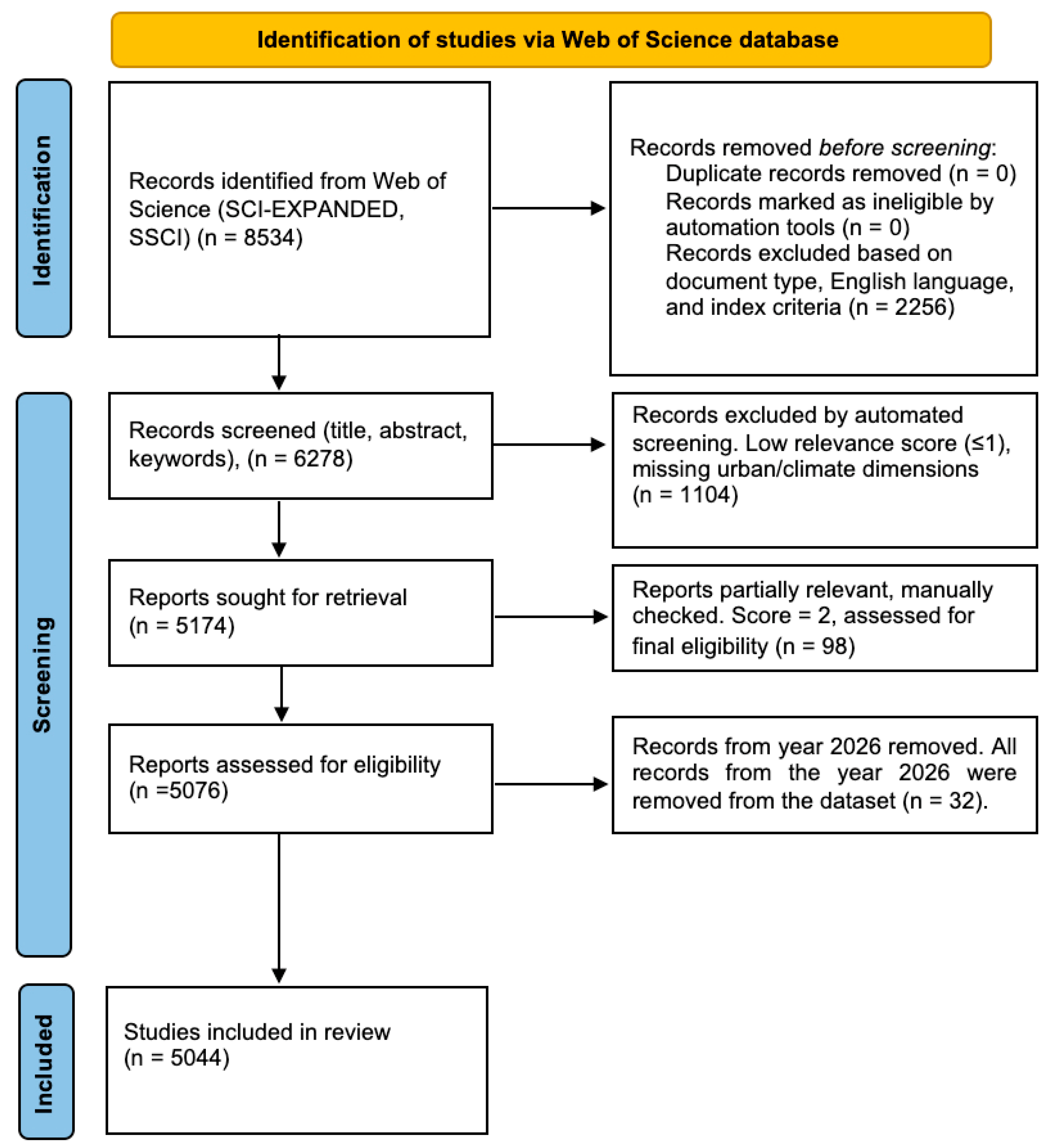
The initial search returned 8534 records. Database-level filters were subsequently applied to ensure comparability and academic quality, including document type (article, review article, proceeding paper, book chapter, early access), language (English), and indexing categories restricted to SCI-EXPANDED and SSCI. After applying these criteria, 6278 records remained for further screening.
2.2. Screening and Eligibility Assessment
The retained records were subjected to a multi-stage screening procedure combining automated filtering and manual evaluation. An automated screening step was implemented using a custom Python 3.10.19 script designed to assess the thematic relevance based on four predefined analytical dimensions:
Each record was assigned a relevance score ranging from 0 to 4 based on the presence of these dimensions in the titles, author keywords, and abstracts. This scoring system was used as an initial filtering mechanism to manage the large dataset while maintaining consistency in eligibility assessment. To ensure conceptual consistency with the study scope, the socio-economic dimension was treated as a mandatory inclusion criterion during the manual validation stage. The records that achieved the automated relevance threshold but did not explicitly address socio-economic processes, impacts, or governance dimensions were excluded following the qualitative review. This additional verification step reduced potential classification bias associated with keyword-based scoring and ensured alignment between the dataset and the analytical focus on urban socio-economic resilience.
The records lacking an explicit urban focus or a climate-related component were excluded. The studies achieving a relevance score of three or higher were classified as relevant and retained for further analysis, while the records with a score of two were manually reviewed to determine their thematic alignment with urban socio-economic resilience. The records scoring one or lower were excluded due to insufficient conceptual relevance. This stage resulted in the exclusion of 1104 records that did not adequately address urban socio-economic resilience to climate change. The manual verification of borderline cases led to the exclusion of an additional 98 records following the qualitative assessment.
The combined automated and manual procedure was adopted to balance scalability with interpretative accuracy. The automated screening ensured consistency across thousands of records, while the manual validation minimized classification bias and reduced the risk of excluding conceptually relevant studies. Following this process, a total of 5076 publications were retained for final analysis (
Figure 1). The complete list of selected publications is provided in the
Supplementary Materials.
2.3. Data Processing and Analytical Approach
The final dataset was analysed using an integrated bibliometric and thematic framework. A bibliometric analysis was applied to examine the publication dynamics, geographic distribution, keyword co-occurrence patterns, and thematic clustering within the scientific literature. These analyses enabled the identification of dominant research trajectories and emerging thematic structures across the study period.
A temporal trend analysis was conducted to evaluate the evolution of publication output from 1990 to 2025, thereby identifying phases of accelerated scientific production. Network-based keyword analyses were used to reveal conceptual linkages and thematic concentrations within the research field. A sectoral categorization was subsequently performed to explore the distribution of research attention across socio-economic domains.
Complementing the quantitative analysis, a thematic interpretation was conducted to synthesize the conceptual developments, methodological approaches, and policy-oriented perspectives identified within the literature. This combined approach enabled the transition from descriptive mapping to analytical synthesis by contextualizing the bibliometric patterns within the broader theoretical and research debates.
2.4. Methodological Scope and Limitations
Several methodological considerations should be acknowledged. First, restricting the search to the Web of Science Core Collection, while ensuring rigorous and consistent indexing standards, excludes the Scopus database, which offers complementary coverage, particularly in the social sciences and engineering; this choice may result in the underrepresentation of publications indexed only in Scopus. Second, restricting the results to English-language publications improves the comparability but may introduce geographic and linguistic bias. Third, automated keyword-based screening depends on textual metadata and may not fully capture nuanced conceptual discussions; however, manual validation procedures are applied to mitigate this limitation. Fourth, the automated screening script’s classification performance is not formally validated using Precision and Recall calculations against a gold-standard manually labelled sample; this represents a methodological limitation, partially mitigated by the mandatory manual validation stage applied to all records that reached the relevance threshold.
Despite these constraints, the adopted methodology provides a transparent and reproducible framework for large-scale literature synthesis, enabling a comprehensive assessment of the evolution and structure of research on urban socio-economic resilience to climate change over the 1990–2025 period.
3. Results
3.1. Temporal Variability in Papers and Spatial Distribution of Studied Urban Areas
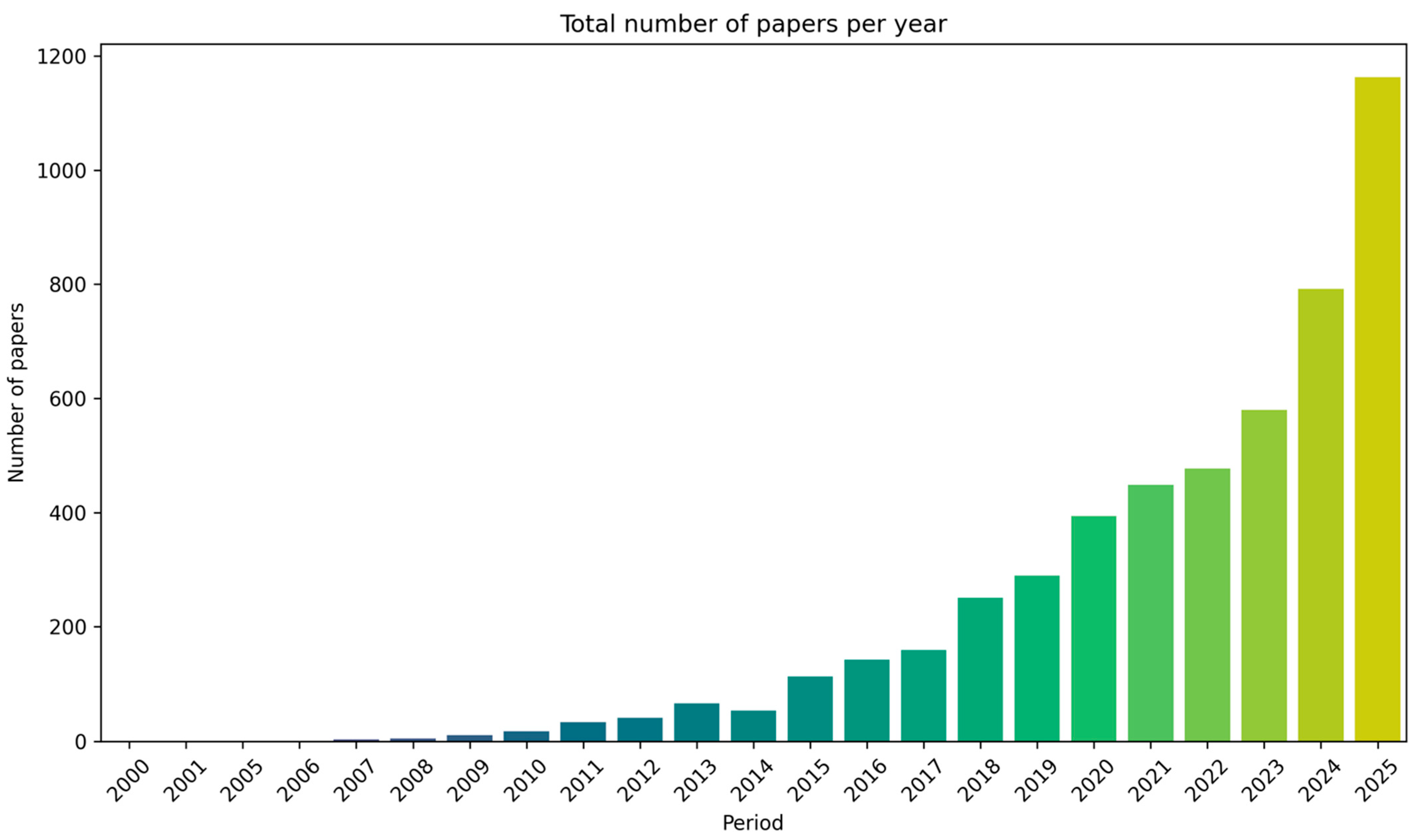
Figure 2 illustrates the annual evolution of scientific publications on climate change across the analysed economic sectors from 2000 to 2025. The temporal trajectory reveals a progressive transition from an emerging research domain to a consolidated, rapidly expanding field of scientific inquiry. Overall, the publication output demonstrates a sustained upward trend, confirming the increasing centrality of climate change within interdisciplinary research agendas.
During the early phase (2000–2008), the number of publications remained limited, indicating that sector-specific analyses of climate change were still in development and had not yet attracted widespread scholarly attention. Between 2009 and 2014, a gradual increase became evident, suggesting the consolidation of climate change as a recognized research topic across multiple disciplines. After 2015, publication activity accelerated sharply, marking a structural expansion of research production. This inflection point reflects the growing institutionalization of climate research within global scientific and policy frameworks.
The most pronounced growth occurred after 2018, with steep increases continuing into the early 2020s and culminating in a peak in 2025. This inflection point coincided with three concurrent institutional developments: the publication of the IPCC Special Report on Global Warming of 1.5°C (October 2018), which generated an unprecedented surge in policy-aligned resilience research; the activation of monitoring mechanisms under the Sendai Framework for Disaster Risk Reduction (2015–2030); and the proliferation of Nationally Determined Contributions submitted under the Paris Agreement’s first transparency cycle, which created strong demand for evidence-based urban resilience assessments across socio-economic domains. Rather than representing isolated fluctuations, this trajectory indicates a systemic intensification of scientific engagement with climate-related challenges across economic sectors. The value shown for 2026 was excluded from the interpretation because it likely reflects incomplete data coverage rather than an actual decline in research output. When considering the full 2000–2025 interval, the pattern closely resembles exponential growth, highlighting the escalating scientific priority of climate change research.
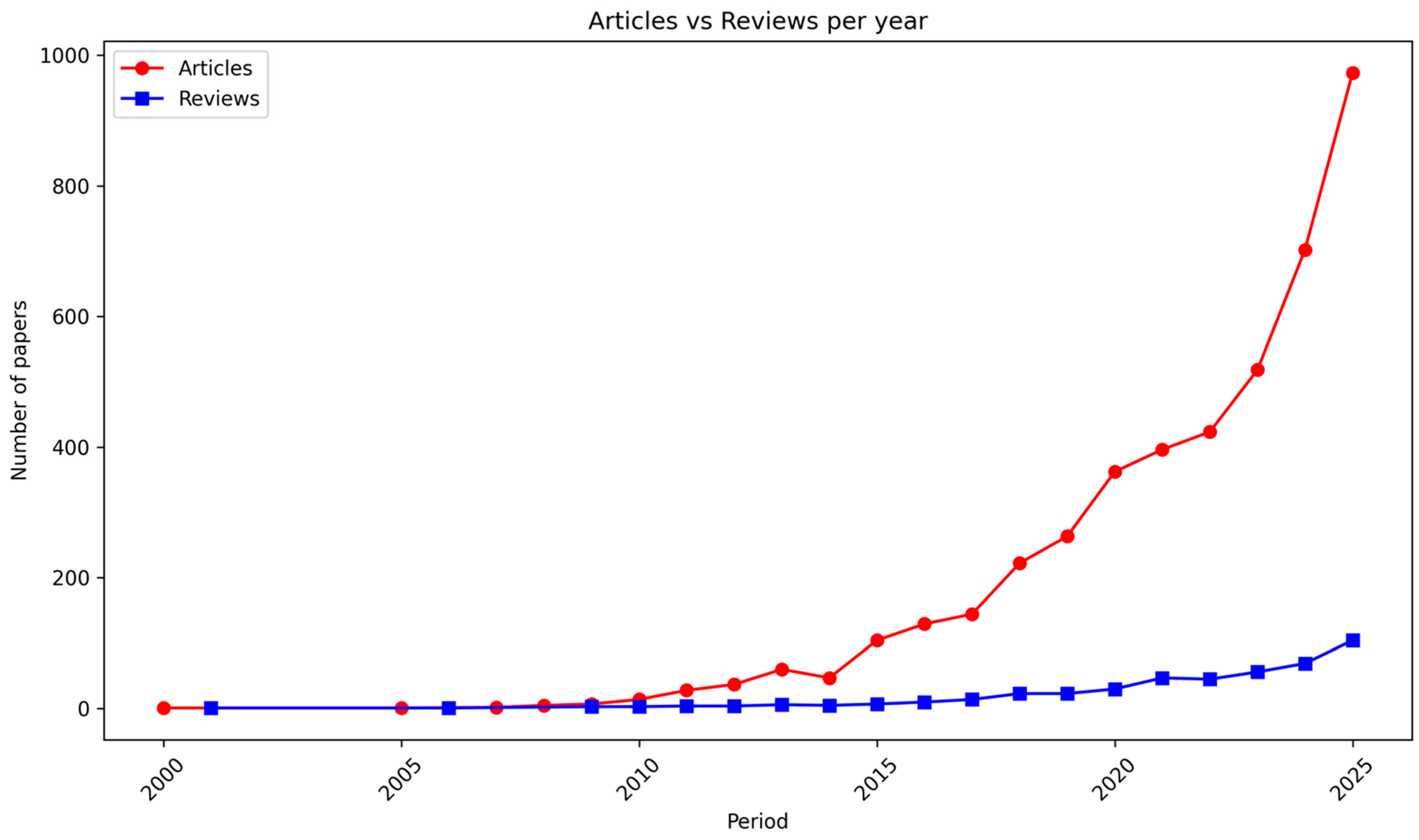
Further differences in the publication dynamics by document type, distinguishing between article papers and review papers, are shown in
Figure 3. The results show the clear predominance of article publications throughout the analysed period, indicating that empirical and methodological contributions drove the field’s expansion. In the early years, both publication types remained scarce, reflecting the formative stage of the research domain.
From approximately 2009 onward, article production increased steadily, followed by rapid growth after 2014. This acceleration suggests the maturation of the research field, characterized by diversification of study topics and increased empirical investigation. Review papers displayed a slower but consistent rise, reflecting the growing need to synthesize the accumulated knowledge as the literature expanded. The coexistence of an increasing number of empirical studies and synthesis-oriented reviews indicates a transition toward conceptual consolidation and scholarly maturity.
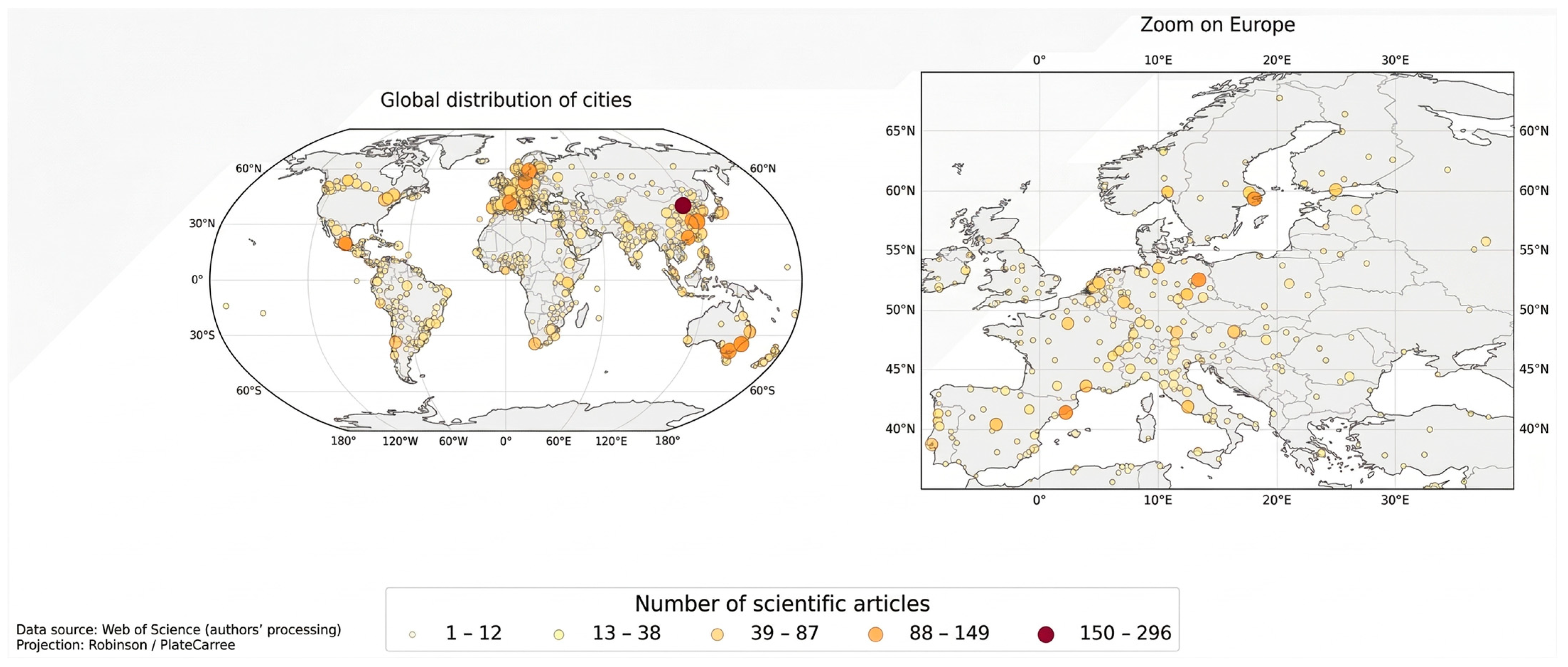
The spatial distribution of research activity is presented in
Figure 4, which maps the cities mentioned in article abstracts at global and European scales. The global map reveals a strong concentration of research attention in East Asia, particularly in China, where several urban centres have contributed exceptionally high numbers of publications. Europe and North America have also demonstrated substantial research activity, though at a lower spatial density than that of East Asia.
Within Europe, the research output is concentrated primarily in Western and Central European metropolitan areas, while Southern and Eastern Europe show moderate levels of representation, and Northern Europe exhibits a more dispersed pattern. The clustering of publications in major metropolitan regions suggests that research production is closely linked to the presence of established academic institutions, research infrastructure, and urban innovation hubs.
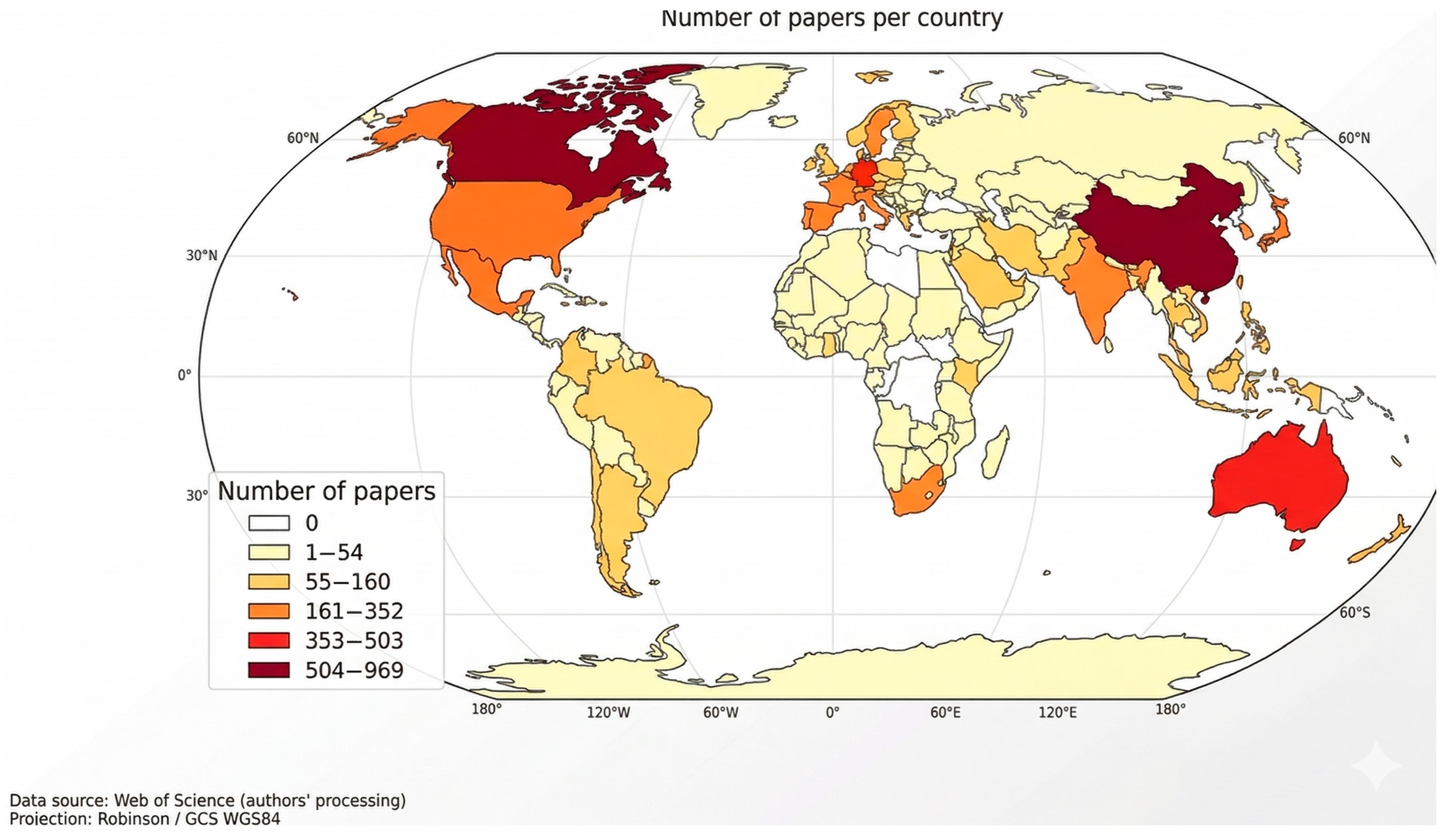
At the national scale,
Figure 5 highlights the pronounced geographical imbalance in scholarly attention. A limited number of countries dominate the literature, with China emerging as the most frequently referenced national context. The United States, Australia, and Canada also appear prominently, indicating sustained research engagement across diverse thematic areas.
Western and Central European countries display moderate-to-high representation, whereas Eastern Europe and several southern European regions appear less frequently. Large portions of Africa, Central Asia, and South America remain weakly represented or absent, revealing structural disparities in global knowledge production. These patterns suggest that current resilience research is disproportionately shaped by data-rich and institutionally strong regions.
3.2. Topics of Papers Subjected to Bibliometric Analysis (1990–2025)
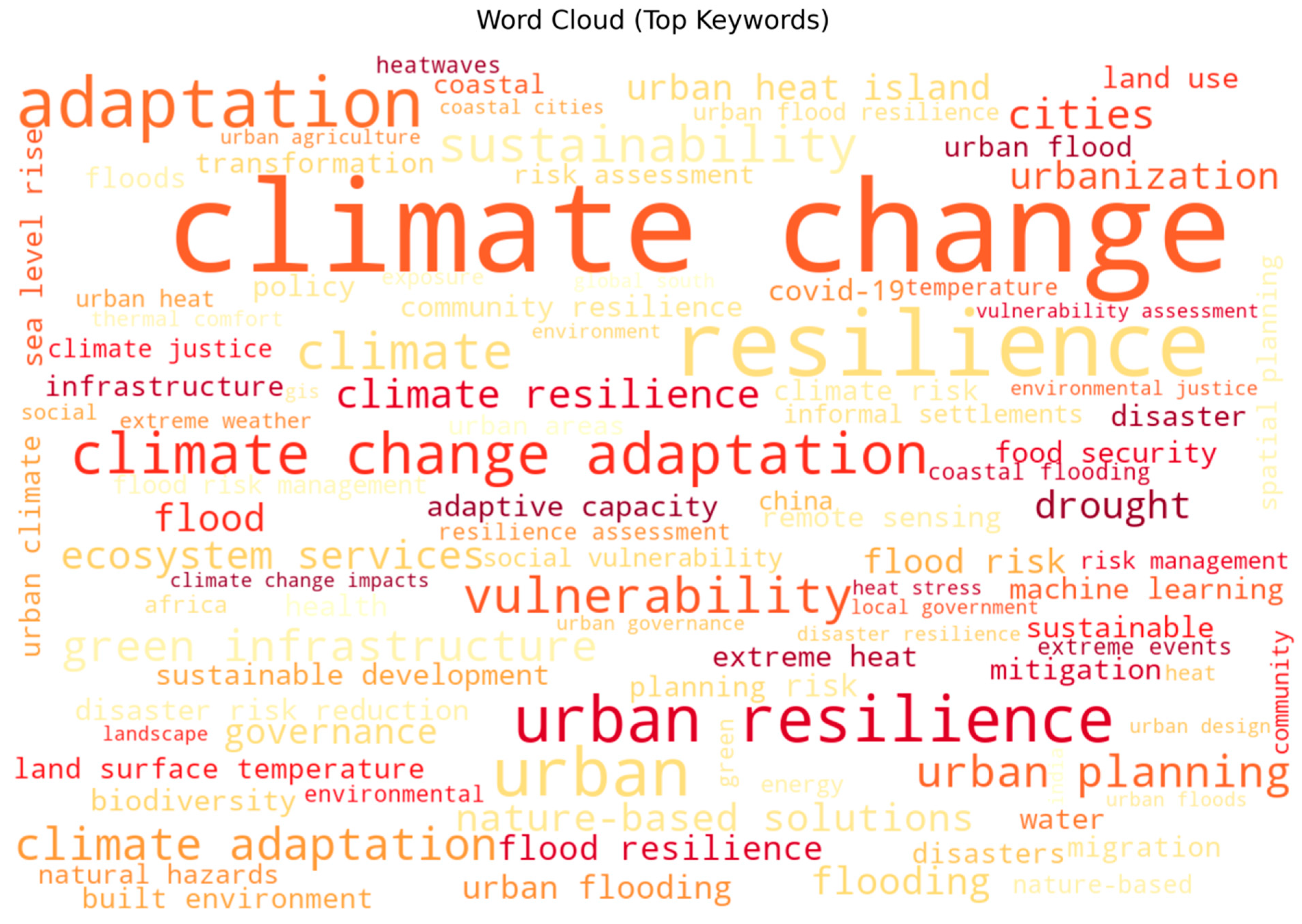
The keyword frequency visualization presented in
Figure 6 provides insight into the conceptual structure of the analysed literature. Dominant terms, such as “climate change,” “resilience,” and “adaptation”, occupy central positions, underscoring their foundational role within the research domain. Their prominence indicates that the literature primarily frames resilience through adaptation-oriented perspectives addressing climate impacts.
Urban-related terminology, including “urban resilience,” “cities,” “urban planning,” and “green infrastructure,” appears frequently, demonstrating the recognition of cities as critical arenas for climate adaptation. The recurrence of these terms reflects a growing emphasis on urban-scale interventions and governance mechanisms designed to enhance adaptive capacity.
Risk-oriented concepts, such as “vulnerability,” “disaster,” “flood,” “drought,” and “extreme events”, highlight the hazard-focused orientation of the literature. Simultaneously, the presence of terms such as “nature-based solutions,” “ecosystem services,” and “sustainability” indicates a gradual shift toward integrative and environmentally grounded adaptation strategies.
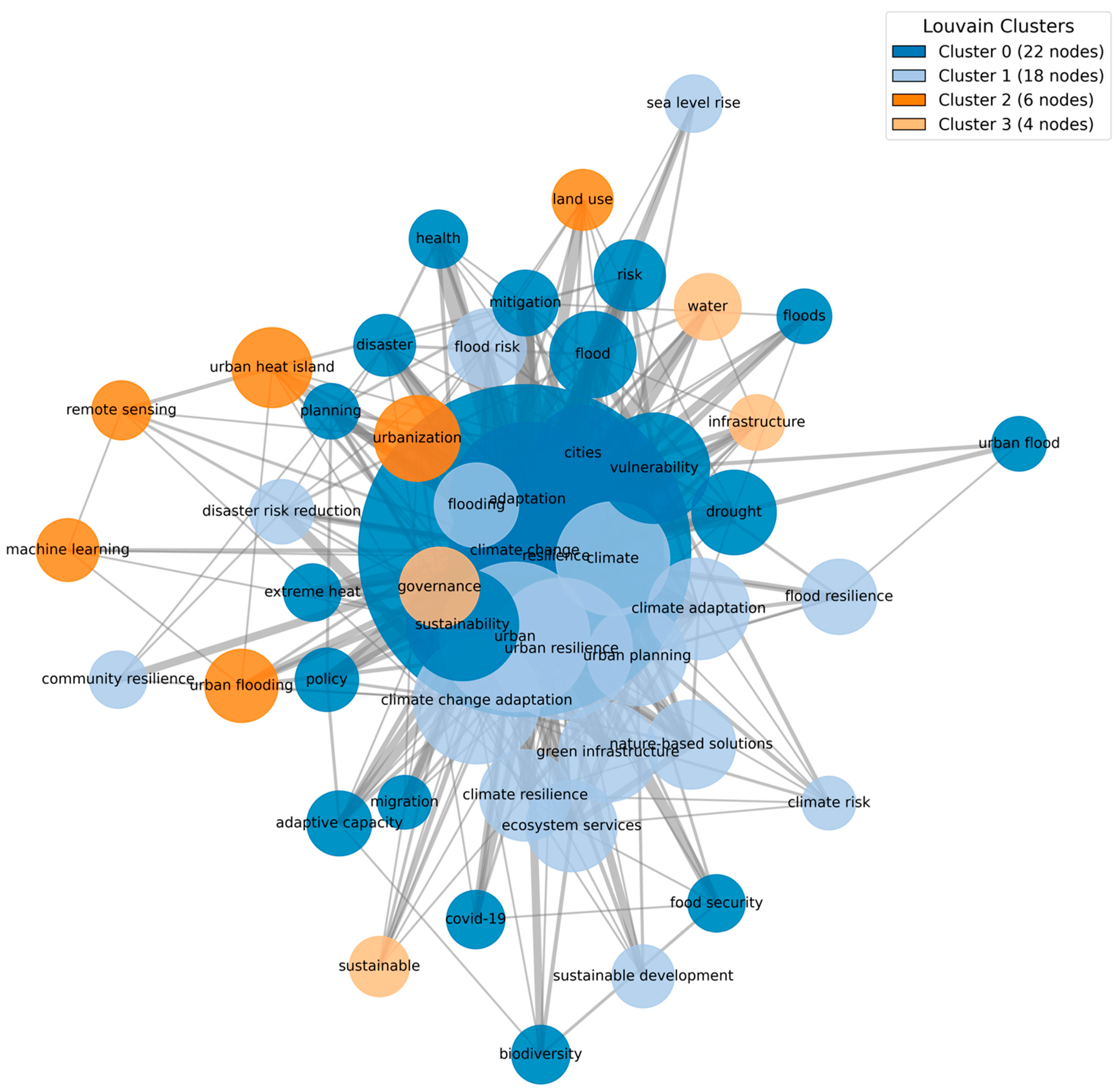
The keyword co-occurrence network (
Figure 7) reveals the relational structure among the research themes. The central nodes correspond to highly interconnected concepts, including “climate change,” “urban resilience,” and “adaptation,” confirming their integrative role across multiple research strands. The clustering structure identifies thematic communities representing closely related research domains.
The peripheral nodes, such as “machine learning,” “COVID-19,” and “biodiversity,” suggest emerging interdisciplinary intersections that extend beyond traditional resilience research. The network structure reflects both consolidation around core concepts and diversification toward new analytical frontiers.
3.3. Conceptual Frameworks and Definitions of Urban Socio-Economic Resilience to Climate Change
The reviewed literature demonstrates that urban socio-economic resilience remains a concept characterized by theoretical plurality and ongoing conceptual evolution. Early contributions emphasized the absence of a universally accepted definition and advocated for multidimensional interpretations that integrate social, economic, infrastructural, and ecological components [
24].
The subsequent frameworks expanded this perspective by linking resilience with sustainability transitions and urban transformation processes, highlighting resilience as both an adaptive and transformative capacity [
25]. Community-level analyses further underlined the importance of institutional arrangements and social dynamics in shaping resilience responses under redevelopment pressures [
26], while spatial decision-support approaches introduced operational tools for neighbourhood-scale resilience planning [
27].
Recent cross-disciplinary frameworks have integrated engineering, environmental science, urban planning, and socio-economic analyses, reflecting the growing recognition of resilience as a systems-based concept requiring coordinated, multi-sectoral approaches [
28]. Systematic reviews have reinforced this evolution by identifying emerging research themes and conceptual linkages between environmental change and socio-economic processes [
29,
30].
3.4. Climate-Related Extreme Events and Socio-Economic Impacts on Urban Systems
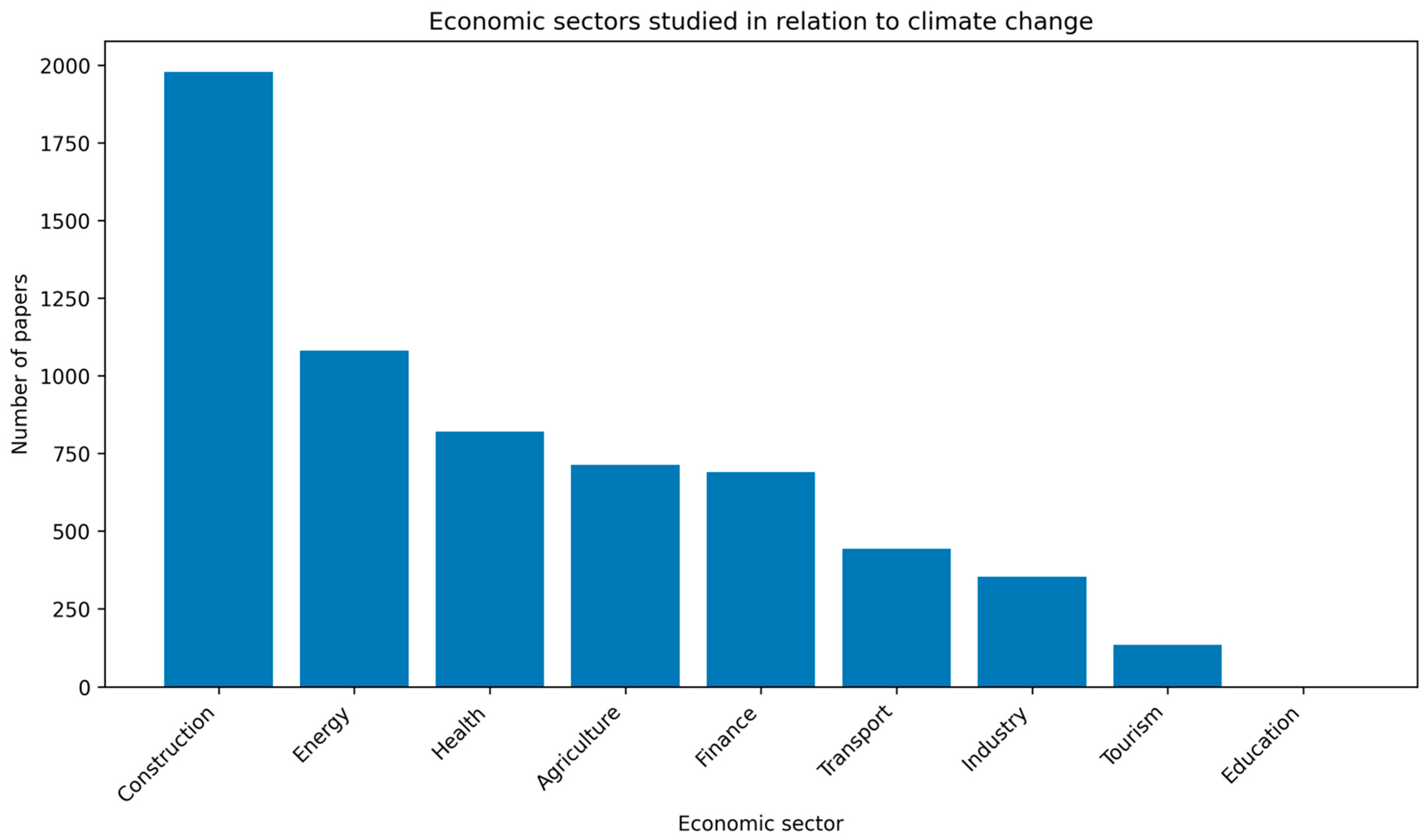
Figure 8 shows the distribution of publications on climate change across different economic sectors. The construction sector leads the literature, followed by the energy sector. Both sectors show the fastest growth, indicating increased recognition of resilient infrastructure development and energy transition as key adaptation strategies. The health, agriculture, and finance sectors have received substantial attention, reflecting growing awareness of climate-related economic risks and public health consequences. Transport is moderately represented, while industry and tourism remain comparatively underexplored despite their economic and environmental significance.
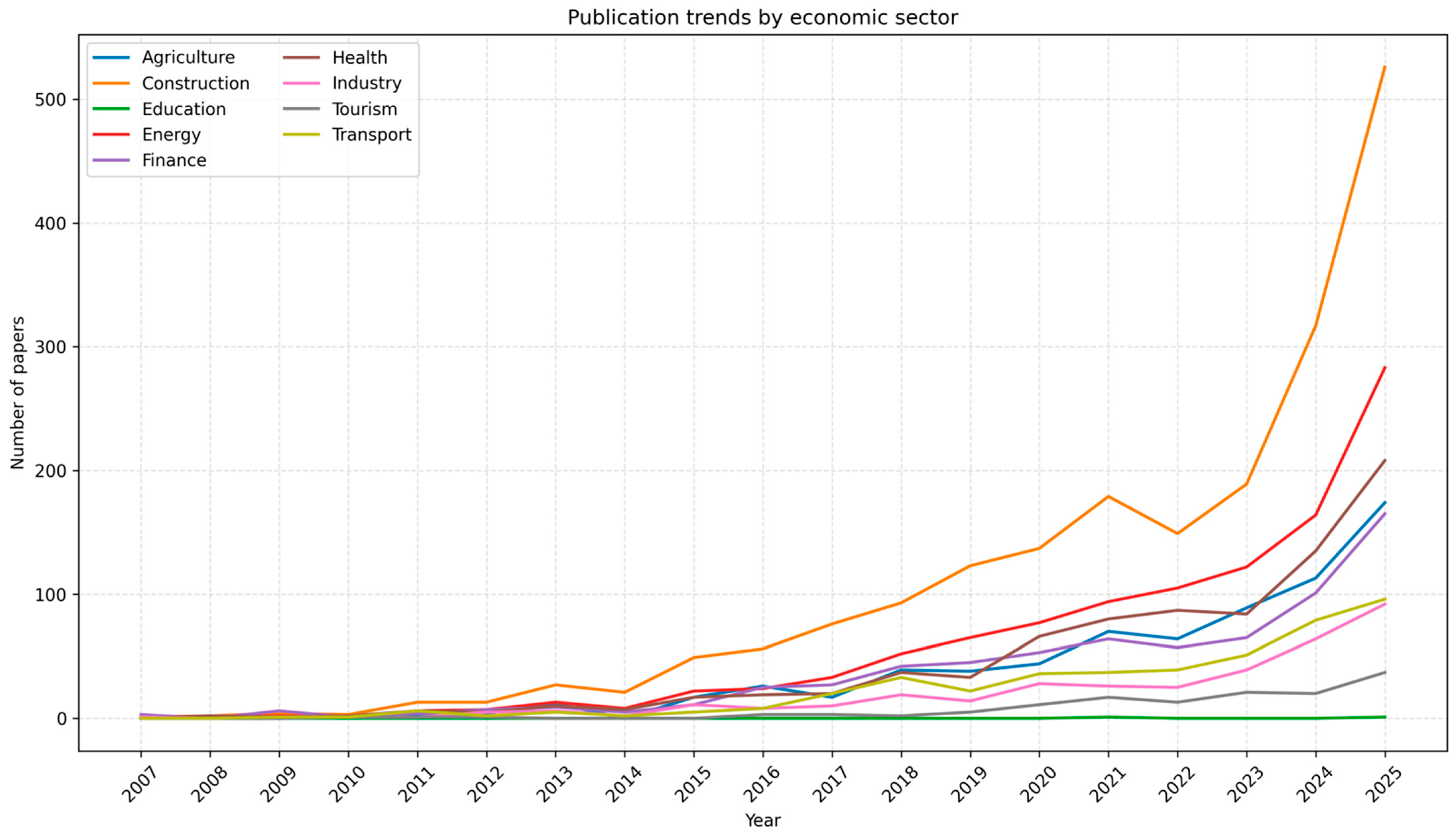
The temporal sectoral trends (
Figure 9) show consistent growth across all sectors, particularly after 2010. The construction and energy sectors display the steepest increases, suggesting an expanding recognition of resilient infrastructure development and energy transition as critical adaptation pathways. The sustained growth of education-related publications, while now ranking lower than construction in overall volume, continues to reflect the increasing role of knowledge systems and climate literacy in building long-term adaptive capacity. Finance and health follow similar upward trajectories, reflecting growing awareness of climate-related economic risks and public health consequences.
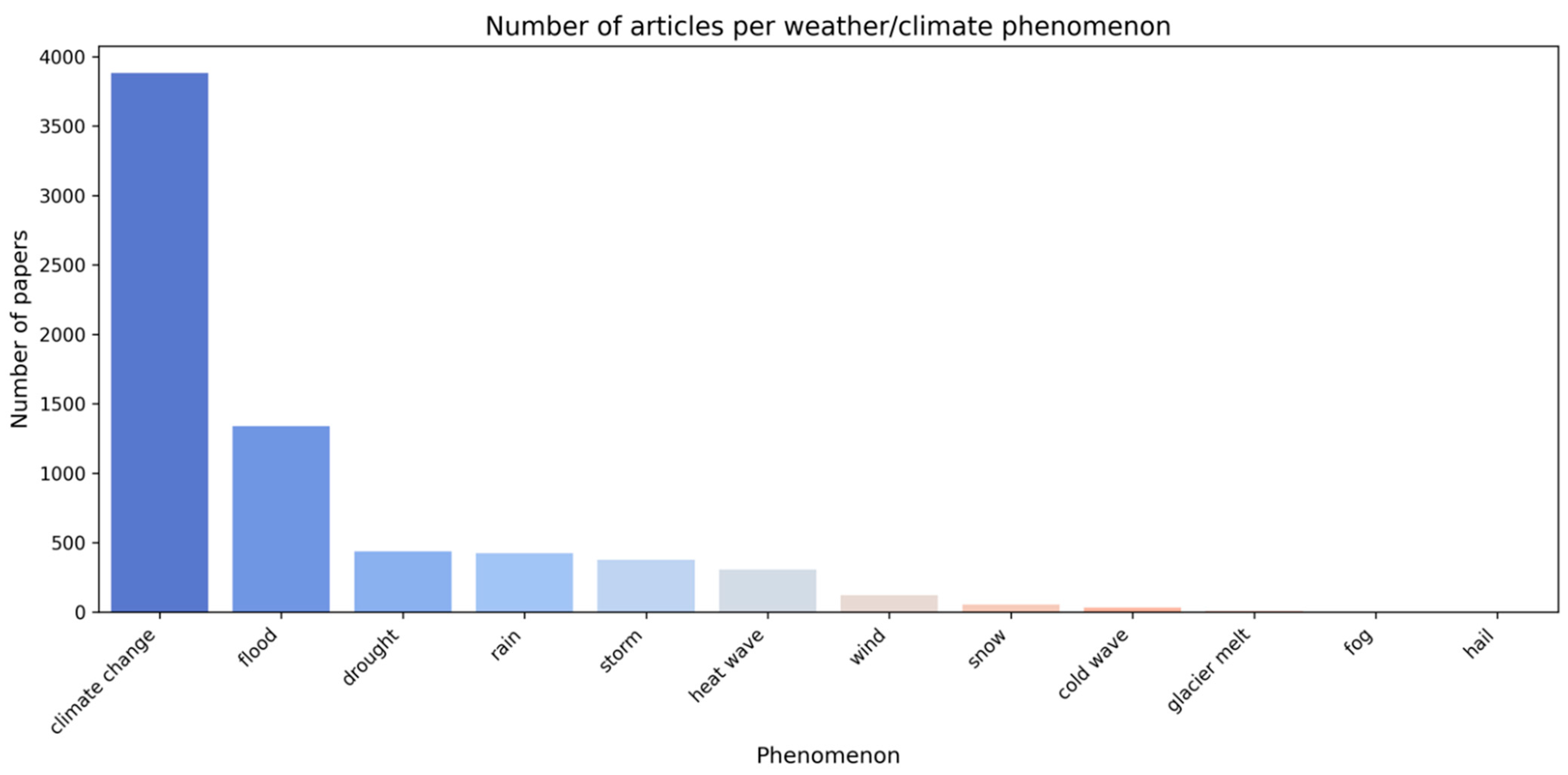
Figure 10 illustrates the frequency with which climatic phenomena are addressed in the literature. “Climate change” overwhelmingly dominates, while flooding emerges as the most frequently analysed specific hazard. Other phenomena, including droughts, storms, and heat waves, occur less frequently, suggesting uneven thematic attention in climate impact research.
The existing studies demonstrate that extreme climate events generate complex socio-economic consequences for urban systems. Early-warning systems play a critical role in reducing vulnerability to sudden hazards, such as storm surges [
31]. Broader assessments have highlighted the cascading impacts on infrastructure, energy systems, and social stability [
32,
33,
34]. Flooding, in particular, produces significant economic losses and social disruption, reinforcing the importance of integrated adaptation strategies [
35].
The health-related impacts further reveal the disproportionate effects on vulnerable populations, emphasizing the intersection between climate risks and socio-economic inequality [
36,
37]. Infrastructure degradation and systemic vulnerabilities amplify these risks [
38], while economic analyses have demonstrated the potential for climate hazards to destabilize broader socio-economic systems [
39].
3.5. Methodological Approaches and Indicators for Assessing Urban Socio-Economic Resilience
The literature employs diverse methodological approaches to evaluate urban socio-economic resilience, reflecting its multidimensional character. Composite indices that integrate socio-economic and environmental indicators are widely used to identify spatial inequalities and patterns of environmental justice [
40]. Integrated assessment frameworks combine sustainability and resilience perspectives to support decision-making processes [
41].
Quantitative resilience indices enable cross-city comparisons [
42], while scenario-based simulations incorporate disaster risk reduction and climate adaptation into planning processes [
43]. Context-specific tools, including resilience scorecards, enhance localized evaluation and stakeholder relevance [
44]. Innovative approaches extend to simulation and gaming techniques designed to generate early-warning indicators [
45].
Other studies integrate circular economy principles into resilience frameworks [
46] and develop comprehensive vulnerability assessments, combining disaster risk reduction with climate change adaptation [
47]. Conceptual models addressing urban public space resilience further illustrate the expanding methodological diversity [
48].
3.6. Adaptation Strategies and Policy Instruments for Enhancing Urban Socio-Economic Resilience
The literature emphasizes integrated adaptation strategies combining infrastructural reinforcement, ecosystem-based approaches, and participatory governance. Operational resilience frameworks demonstrate how inclusive planning processes can support adaptive urban systems [
49], while adaptive planning approaches highlight the opportunities to generate socio-economic value through climate-responsive infrastructure design [
50].
The research on informal settlements underscores the importance of socio-political dimensions and community engagement in strengthening the adaptive capacity [
51]. Slum-upgrading initiatives illustrate how climate adaptation and socio-economic development objectives can be jointly addressed [
52].
Ecosystem-based adaptation strategies, such as the Sponge City initiative, demonstrate the effectiveness of nature-based solutions for managing urban water challenges [
53,
54]. Stakeholder-driven planning approaches further enhance implementation effectiveness by aligning adaptation measures with local priorities [
55]. Strategies addressing urban heat risks emphasize integrated technological, policy, and community responses [
56], while comparative analyses confirm the importance of multifaceted governance frameworks in disaster resilience [
57].
3.7. Research Gaps, Emerging Themes, and Future Directions (1990–2025)
The synthesis of literature reveals persistent research gaps alongside emerging thematic directions. The bibliometric analyses highlight the growing integration of socio-economic data in resilience research while emphasizing the remaining limitations in understanding the socio-economic drivers of resilience processes [
58].
Justice and equity considerations increasingly appear central, reflecting recognition that resilience outcomes are unevenly distributed across populations [
59]. Urban health resilience and nature-based solutions represent expanding research frontiers [
60,
61], while smart city governance introduces new technological and institutional dimensions [
62].
Studies focusing on rapidly urbanizing regions emphasize the importance of context-sensitive strategies aligned with local socio-economic realities [
63]. Additional gaps include limited attention to certain sectors and socio-ecological systems, such as livestock and wildlife adaptation within urban contexts [
64,
65].
4. Discussion
Rather than merely documenting the publication trends, the results reveal structural transformations in how resilience has been conceptualized, operationalized, and applied within urban research and policy contexts. The 5076 publications collectively trace a paradigmatic trajectory in the conceptualization of urban socio-economic resilience over three-and-a-half decades. Prior to 2010, the literature predominantly operated within equilibrist frameworks, measuring resilience as a system’s capacity to return to a pre-disturbance state following a shock. From approximately 2010 onwards, adaptive frameworks gained dominance, emphasizing learning, flexibility, and iterative adjustment under changing conditions, a shift reflected in the rapid growth of publications addressing governance mechanisms, participatory planning, and institutional capacity. The post-2018 acceleration coincided with the consolidation of transformative frameworks, which reconceptualized resilience as a pathway toward systemic reorganization rather than mere recovery, integrating socio-economic equity, structural vulnerability, and long-term sustainability transitions. Unlike prior bibliometric reviews that have mapped urban resilience in general [
24,
29] or focused on specific hazard domains, the present analysis reveals that the socio-economic dimension has been the principal axis along which this transformative turn has expanded, and this is an observation only made possible by the combined bibliometric and thematic methodology adopted here.
The rapid increase in publications observed after 2015 reflects a broader paradigm shift in climate research, in which resilience has moved from a peripheral concept to a central analytical framework that links environmental change to socio-economic systems. This expansion coincides with intensified global policy engagement following major international agreements and sustainability agendas, which have stimulated interdisciplinary research and funding opportunities. The predominance of article-type publications indicates an expanding empirical foundation, while the steady growth of review studies suggests an ongoing effort to consolidate the theoretical understanding within a rapidly evolving field.
Despite this quantitative growth, the spatial distribution of research remains uneven. The dominance of China, North America, and Western Europe indicates that knowledge production is highly concentrated in regions with advanced research infrastructure and greater data availability. Consequently, many resilience frameworks are implicitly shaped by the institutional and socio-economic conditions specific to these regions, potentially limiting their applicability to rapidly urbanizing or resource-constrained contexts. The relative underrepresentation of Africa, South America, and parts of Asia highlights a structural imbalance in global scientific discourse and underscores the need for greater geographical inclusivity in future research.
The keyword and network analyses confirm that climate change, resilience, and adaptation form the conceptual core of the literature, demonstrating a strong alignment between scientific inquiry and policy priorities. The prominence of flooding and disaster-related risks indicates that the research has largely developed within a hazard-oriented paradigm. While this focus has advanced understanding of acute climate impacts, it may have also reduced analytical attention toward slower-onset or compound risks, such as heat stress, drought, and systemic socio-economic vulnerability, which are increasingly shaping urban sustainability challenges.
The growing visibility of concepts such as nature-based solutions, ecosystem services, and green infrastructure suggests an ongoing transition toward integrative adaptation strategies that combine environmental, social, and economic objectives. This shift reflects a broader evolution from infrastructure-centred resilience toward systems-oriented approaches that recognize the interdependencies between ecological processes and socio-economic stability.
Conceptually, the literature demonstrates considerable diversity in how urban socio-economic resilience is defined. Rather than converging toward a single definition, recent studies have increasingly framed resilience as a dynamic and transformative process encompassing governance capacity, institutional learning, and socio-economic adaptation. This evolution aligns with interdisciplinary perspectives that view cities as complex adaptive systems, in which resilience entails not only recovery from disturbances but also long-term transformation pathways.
The socio-economic dimension of resilience remains unevenly operationalized across the literature. Many studies emphasize physical infrastructure or environmental performance indicators, while inequality, governance effectiveness, and economic vulnerability receive comparatively limited analytical attention. This imbalance suggests that resilience research continues to prioritize measurable physical outcomes over socially embedded processes, representing a structural limitation of current assessment frameworks. The governance dimensions emerge in the literature as critical mediators between climate exposure and socio-economic outcomes, yet they remain systematically underrepresented in quantitative resilience assessments. Institutional arrangements, including polycentric governance, participatory planning mechanisms, and multi-level coordination capacities, are consistently identified in the qualitative and case study literature as key enablers of adaptive capacity, but are rarely operationalized within the composite indices and scenario-based models that dominate the quantitative strand of research. Bridging this gap between qualitative governance insights and quantitative resilience measurement represents one of the most important unresolved challenges in the field. Social inequality and equity considerations appear as a persistent structural gap. The resilience research disproportionately measures the aggregate adaptive capacity at the city or system level, masking the distributional reality that climate shocks deepen pre-existing socio-economic inequalities and affect socially marginalized populations with disproportionate severity. The concentration of research in East Asia, North America, and Western Europe further implies that the dominant resilience frameworks are implicitly calibrated to the institutional and economic conditions specific to data-rich regions, potentially limiting their transferability to rapidly urbanizing contexts in sub-Saharan Africa, South Asia, and Latin America, where the socio-economic vulnerabilities are most acute.
The dominance of flooding within the analysed literature reflects both the visibility and measurable impacts of hydrological hazards in urban environments. Nevertheless, the comparatively lower representation of heatwaves and droughts indicates a potential mismatch between research attention and emerging climate risks. As climate change intensifies, future research may need to rebalance thematic priorities to better capture the complex and interacting hazards affecting urban systems.
The sectoral analysis further reveals uneven research engagement across economic domains. Construction and energy have received the greatest scholarly attention, reflecting their perceived roles in resilient infrastructure development and energy transition, whereas the education-related publications, though substantial, exhibit a more dispersed thematic profile spanning climate literacy and institutional capacity-building. In contrast, transport, industry, and tourism remain underexplored despite their significant socio-economic and environmental implications. Addressing these gaps will be essential to developing comprehensive resilience strategies that support sustainable urban transitions.
Methodologically, the reviewed literature demonstrates substantial diversity, ranging from composite indices and simulation models to participatory frameworks and performance-based assessments. While this diversity indicates methodological innovation, it also introduces challenges related to comparability and standardization. Composite indicators enable large-scale comparisons but risk oversimplifying complex socio-economic dynamics, whereas localized approaches enhance contextual relevance but limit transferability across urban contexts.
The adaptation strategies identified in the literature consistently emphasize integrated approaches that combine infrastructural investment, ecosystem-based solutions, and stakeholder participation. Nature-based solutions, particularly in water management and heat mitigation, have emerged as key mechanisms for simultaneously addressing climate risks and sustainability objectives. These findings suggest that effective urban resilience policies increasingly rely on hybrid solutions that bridge the environmental and socio-economic dimensions.
Overall, the findings indicate that urban socio-economic resilience research is transitioning from descriptive assessments of vulnerability toward more integrated and policy-oriented frameworks. Significant gaps remain, particularly regarding socio-economic inequalities, regional representation, and sector-specific analyses. Emerging themes, such as climate justice, urban health resilience, and smart governance, indicate promising directions but require stronger empirical grounding to support their practical implementation.
4.1. Limitations of the Review Process
While this study provides a comprehensive synthesis of research on urban socio-economic resilience, several methodological limitations should be acknowledged. First, the reliance on publications indexed in major scientific databases may exclude relevant grey literature, regional reports, and non-English publications. This limitation may partially contribute to the observed geographical concentration of research outputs.
Second, bibliometric techniques capture patterns of frequency and connectivity rather than the qualitative depth or contextual relevance of individual studies. As a result, nuanced socio-economic processes may not be fully represented within the quantitative analyses. Third, thematic classification and conceptual interpretation inherently involve analytical judgments, which introduce a degree of subjectivity despite the systematic procedures.
Finally, although the 1990–2025 timeframe enables a long-term trend analysis, the rapid developments in urban resilience research—particularly in the post-pandemic period—may not yet be fully reflected in the peer-reviewed literature. Consequently, the results should be interpreted as indicative of broader research trajectories rather than exhaustive representations of global practice.
4.2. Implications of the Results for Practice, Policy, and Future Research
The findings of this study have several implications for urban practice, policy development, and future research agendas.
Urban planners and practitioners can benefit from integrating socio-economic considerations more explicitly into resilience planning processes. Addressing inequality, vulnerability, and institutional capacity alongside infrastructural adaptation can enhance the effectiveness and inclusiveness of resilience interventions. Cross-sectoral approaches and ecosystem-based solutions appear particularly promising for improving urban adaptive capacity while delivering environmental co-benefits.
Policymakers should account for the uneven geographical distribution of research and prioritize context-sensitive adaptation strategies in underrepresented regions. Embedding resilience objectives within broader urban development policies and sustainability frameworks can facilitate long-term transformation. The integration of nature-based solutions and green infrastructure into planning processes represents a cost-effective pathway for strengthening climate adaptation while promoting social and ecological benefits.
The key research priorities can be articulated as four operationally specific pathways for the post-2026 research agenda. First, cross-city longitudinal studies comparing resilience trajectories using harmonized socio-economic vulnerability indicators across Global South cities with comparable urbanization rates and climate exposure profiles would address the current absence of large-scale, systematically comparable evidence from underrepresented regions. Second, mixed-method resilience assessments that integrate insurance claim data, labour market statistics, and community-level qualitative evidence would capture the recovery dynamics over time, moving beyond snapshot vulnerability assessments toward a longitudinal understanding of socio-economic resilience processes. Third, sector-specific analyses of transport infrastructure under compound hazard scenarios, such as the simultaneous occurrence of flooding and extreme heat events, represent a critical gap, given that transport is both economically vital and virtually unexamined in the current resilience literature. Fourth, governance mechanism studies examining how different institutional configurations (centralized versus polycentric) mediate socio-economic resilience outcomes under accelerating climate stress would provide evidence-based guidance for adaptive governance design in the post-2030 policy landscape.
These implications underscore the importance of integrating scientific knowledge with actionable strategies to support resilient, sustainable urban development amid accelerating climate change.
5. Conclusions
This review makes three principal theoretical contributions to the study of urban socio-economic resilience to climate change. First, it provides the first integrated bibliometric and thematic mapping of how resilience has been conceptualized, operationalized, and applied in urban contexts across a 35-year period, revealing a paradigmatic trajectory from equilibrist recovery frameworks toward transformative, socio-economically grounded models. Second, it demonstrates that the socio-economic dimension, encompassing governance capacity, equity considerations, and economic vulnerability, has been the primary axis of this conceptual evolution, yet remains systematically under-operationalized in quantitative assessments. Third, it identifies the structural gaps in geographic coverage, sectoral analysis, and governance integration that constrain the global applicability of current frameworks and define the most productive directions for post-2026 research.
The results demonstrate that the research on urban socio-economic resilience has undergone a significant transformation, particularly after 2015, evolving from fragmented discussions of vulnerability and environmental risk to integrated analyses linking climate change adaptation to socio-economic systems. The accelerated growth of publications reflects an increasing global recognition of cities as critical arenas for climate action, where environmental pressures intersect with economic development, governance structures, and social inequality.
A central contribution of this review lies in clarifying the intellectual organization of the field. The literature is strongly anchored around adaptation, resilience, and climate risk reduction, with flooding emerging as the most extensively studied hazard affecting urban socio-economic systems. At the same time, the analysis reveals important thematic imbalances, including comparatively limited attention to slow-onset climate risks, socio-economic inequalities, and several key economic sectors. These findings indicate that current research priorities only partially reflect the multidimensional nature of urban resilience challenges.
The study also highlights the substantial geographical disparities in knowledge production. Research activity is concentrated primarily in East Asia, North America, and Western Europe, while many regions characterized by rapid urbanization and heightened climate vulnerability remain underrepresented. This imbalance suggests that existing resilience frameworks may reflect region-specific institutional and socio-economic conditions, emphasizing the need for broader empirical representation and context-sensitive approaches.
From a conceptual perspective, urban socio-economic resilience is a dynamic, multidimensional construct that integrates social, economic, infrastructural, institutional, and ecological dimensions. The growing adoption of interdisciplinary frameworks, composite indicators, scenario-based analyses, and participatory approaches demonstrates ongoing methodological innovation. The socio-economic dimension of resilience remains insufficiently operationalized in many studies, underscoring the need to integrate governance capacity, equity considerations, and economic vulnerability into resilience assessment frameworks.
Beyond synthesizing the existing knowledge, this review identifies four specific research pathways for the post-2026 agenda. First, cross-city longitudinal studies that use harmonized socio-economic vulnerability indicators across Global South cities would address the current lack of systematically comparable evidence from underrepresented regions. Second, mixed-method resilience assessments that integrate insurance data, labor market statistics, and community-level qualitative evidence would enable a longitudinal understanding of recovery dynamics beyond snapshot vulnerability assessments. Third, sector-specific analyses of transport infrastructure under compound hazard scenarios—such as the simultaneous occurrence of flooding and extreme heat—represent a critical and virtually unexamined research gap. Fourth, governance mechanism studies that examine how different institutional configurations mediate socio-economic resilience outcomes amid accelerating climate stress would provide actionable guidance for adaptive governance design in the post-2030 policy landscape.
Advancing theoretically informed, empirically grounded, and socially inclusive resilience research, built on cross-sectoral collaboration among science, policy, and urban practice, remains a critical priority for supporting sustainable urban futures amid accelerating climate change.