Article

Hydrothermal and Vegetation-Mediated Controls on Soil Organic Carbon in an Alpine Headwater Region of the Tibetan Plateau: Implications for Sustainable Grassland Management


1
College of Agriculture and Animal Husbandry, Qinghai University, Xining 810016, China
2
College of Eco-Environmental Engineering, Qinghai University, Xining 810016, China
3
State Key Laboratory of Plateau Ecology and Agriculture, Qinghai University, Xining 810016, China
*
Author to whom correspondence should be addressed.
Sustainability 2026, 18(7), 3584; https://doi.org/10.3390/su18073584
Submission received: 18 February 2026 / Revised: 25 March 2026 / Accepted: 31 March 2026 / Published: 6 April 2026
(This article belongs to the Section Soil Conservation and Sustainability)

Abstract

Soil organic carbon (SOC) is essential for ecosystem stability and long-term carbon storage in alpine grasslands, yet the relative importance and interactions of hydrothermal and biotic controls remain poorly understood at regional scales. In this study, we quantified surface SOC (0–20 cm) across the Yellow River Source Region (YRSR) on the northeastern Tibetan Plateau, a climate-sensitive alpine headwater system characterized by strong hydrothermal gradients and freeze–thaw dynamics. Field-based SOC measurements were integrated with multi-source remote sensing and reanalysis data that describe thermal conditions, moisture processes, vegetation productivity, soil properties, topography, and human influence. A two-step screening approach was applied using Boruta and variance inflation factor filtering, followed by modeling with random forest. The model outputs were interpreted using Shapley Additive Explanations (SHAP). SOC displayed significant spatial heterogeneity across the region. Vegetation productivity, moisture availability, and thermal conditions were identified as the dominant nonlinear drivers of SOC variation. Moisture availability emerged as a central regulator of SOC, affecting it both directly and indirectly through vegetation productivity and thermal conditions. These findings underscore the importance of hydrothermal stability in sustaining soil carbon stocks and provide a quantitative basis for adaptive grassland management under a warming climate.

1. Introduction

Soil organic carbon (SOC) is a major component of terrestrial biogeochemical cycling and is widely regarded as an important indicator of soil function, ecosystem resilience, and carbon–climate interactions [1,2]. In alpine grasslands, SOC dynamics is intricately linked to hydrological regulation, vegetation productivity, and permafrost dynamics. Even slight variations in soil temperature and moisture under ongoing climate warming can significantly alter the carbon balance, making alpine SOC both a vulnerable component of the climate system and highly relevant to sustainable land management [3]. However, SOC should be interpreted within a broader soil biogeochemical framework, as soil functioning is also shaped by nutrient availability, hydrological conditions, and vegetation–soil interactions [1,4]. The Tibetan Plateau, often referred to as the “Third Pole,” contains vast alpine grasslands and permafrost systems that are highly sensitive to warming [5]. These grasslands store approximately 7.4 Pg of SOC within the upper 100 cm of soil, with significant spatial variation largely driven by moisture availability [6,7]. However, warming-induced permafrost degradation may accelerate organic matter decomposition and carbon release, whereas increases in vegetation productivity may enhance carbon inputs [8,9]. These opposing processes generate complex, spatially heterogeneous SOC responses, adding uncertainty to the assessment of regional carbon balance and alpine soil functioning.
At regional scales, SOC in alpine environments is characterized by strong spatial heterogeneity, typically exhibiting right-skewed distributions with localized high-carbon patches embedded within broader low-carbon areas [5]. These spatial patterns suggest that regional carbon stability is strongly dependent on areas characterized by favorable hydrothermal conditions, including wetlands and seasonally moist grasslands. Identifying and protecting these high-SOC areas is thus essential for sustainable grassland management and climate adaptation strategies [10]. The dynamics of SOC in these alpine systems are governed by interacting thermal, hydrological, biological, and edaphic processes [11]. Temperature influences microbial activity and freeze–thaw disturbances, moisture availability governs vegetation growth and soil redox conditions, and soil texture and mineral composition affect carbon stabilization YRSR [12,13]. These tightly coupled processes generate nonlinear and hierarchical responses, which are difficult to capture using conventional linear models [14,15,16]. Recent advances in remote sensing have enabled spatially explicit assessment of vegetation productivity, surface temperature, moisture conditions, and cryospheric processes, providing new opportunities for SOC research in remote alpine environments [17,18,19]. Although machine-learning approaches such as RF have improved SOC prediction, many studies still emphasize predictive accuracy over ecological interpretation and management relevance [20,21]. Bridging predictive modeling with process-based understanding is therefore critical for translating SOC mapping into effective land management.
Against this background, this study examines SOC variability in the YRSR. By integrating field-measured SOC data with multi-source environmental predictors, this study aims to characterize SOC spatial heterogeneity, identify its dominant hydrothermal and biotic drivers, and clarify the pathways influencing SOC distribution. These objectives are relevant for identifying vulnerable carbon pools and supporting adaptive grassland management under climate change.

2. Materials and Methods

2.1. Study Area

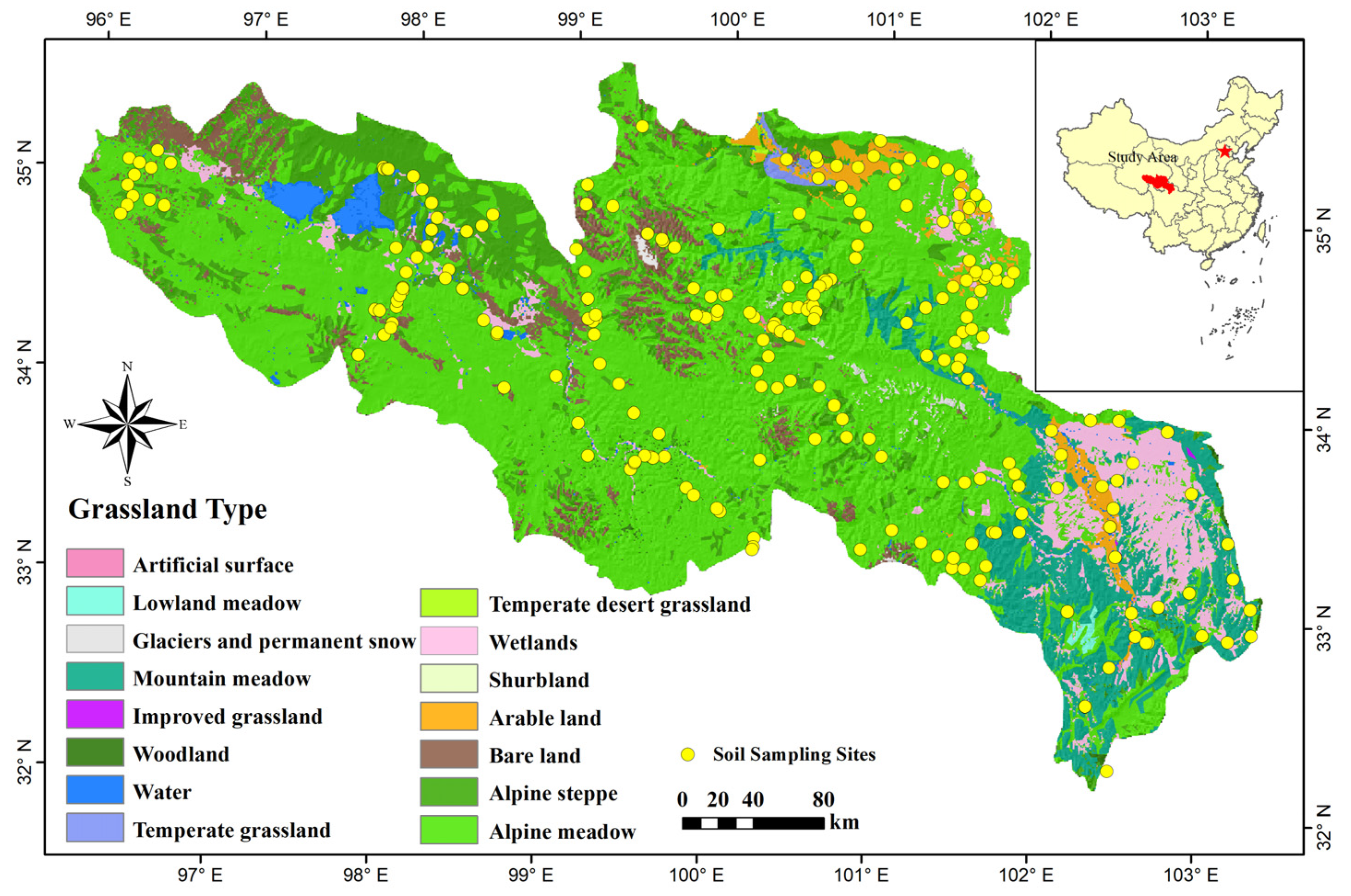
The YRSR, located on the northeastern Tibetan Plateau, forms the headwaters and a critical water supply area of the Yellow River. As an ecologically important region, it plays a key role in regulating regional hydrological processes, maintaining alpine ecosystem stability, and supporting downstream socioeconomic development [22,23]. Environmental changes in the YRSR therefore affect not only local ecosystem functioning but also water security and sustainable development across the broader Yellow River Basin (Figure 1). Originating from the Bayan Har Mountains, the study area ranges in elevation from approximately 2680 to 6248 m, with topography generally decreasing from northwest to southeast [24,25]. The landscape is characterized by glaciers, seasonal snow cover, lakes, and permafrost, representing a typical alpine ecosystem of the Tibetan Plateau [13,26]. The regional climate is cold and continental, with low mean annual temperatures, a short growing season, and frequent freeze–thaw cycles. Precipitation occurs mainly between May and September and shows pronounced seasonal and spatial heterogeneity [27,28]. Vegetation is dominated by alpine meadows, alpine steppes, and wetlands, with localized floodplains, marshes, and seasonally inundated depressions. Wetland and marsh areas, characterized by low temperatures and high moisture conditions, often develop peat-rich or humus-enriched soils with relatively high SOC accumulation. In contrast, surrounding alpine grasslands and wind-eroded uplands typically exhibit lower SOC contents [29,30]. The strong climatic, hydrological, and vegetation gradients across the YRSR provide a suitable environmental setting for examining spatial variability in SOC.

2.2. Data Sources

2.2.1. Field Sampling and Laboratory Analysis

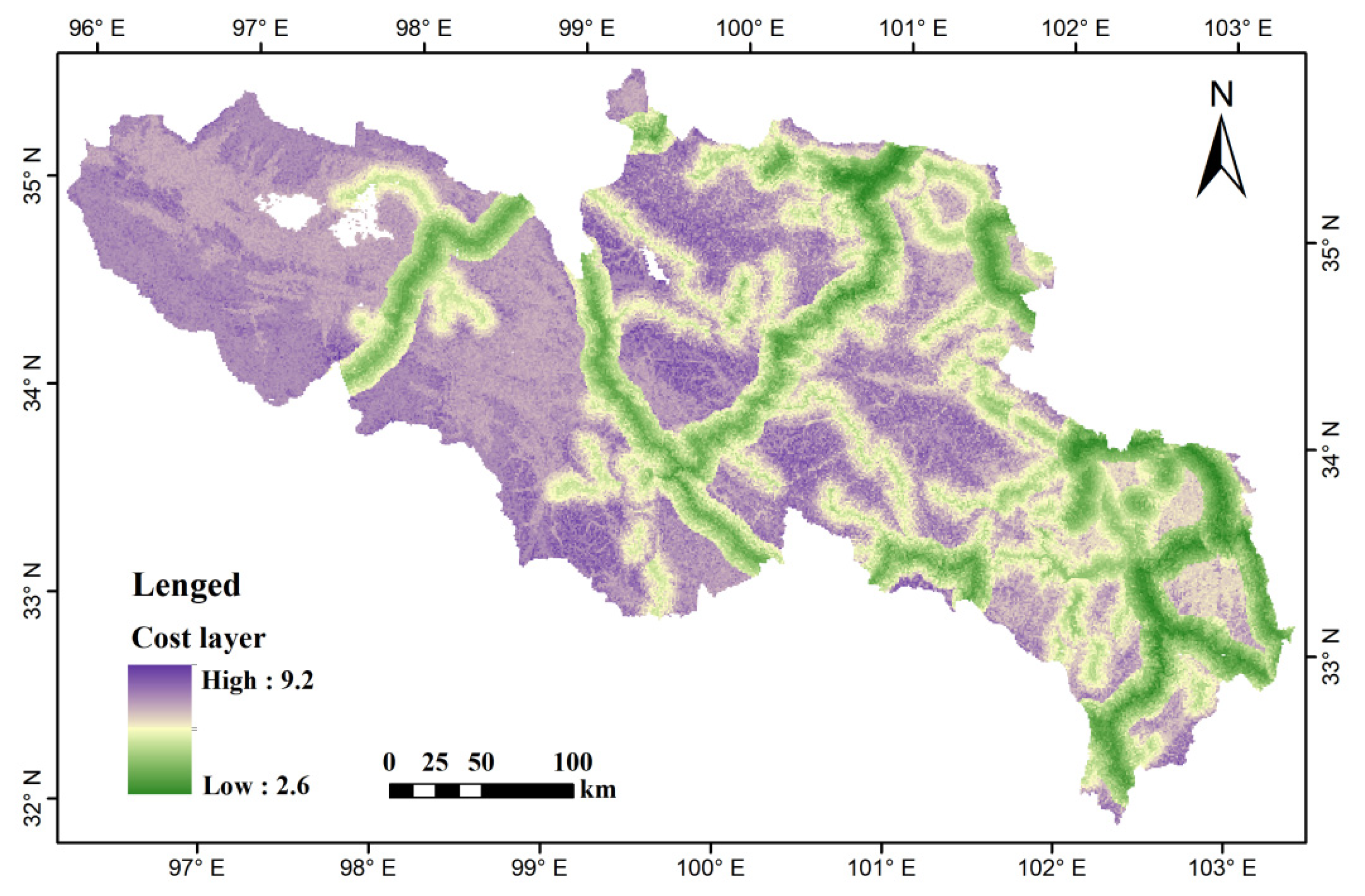
Soil sampling was conducted during July–August 2023 across the YRSR on the Qinghai-Tibet Plateau. A total of 240 sampling sites were selected to capture the spatial variability of SOC (Figure 1). To ensure representative coverage of environmental gradients with a limited number of samples, conditional Latin hypercube sampling (cLHS) was used to design the sampling sites. Auxiliary variables representing topography, climate, vegetation, and hydrological conditions were resampled to a 500 m resolution. Road networks, settlements, elevation, and slope were incorporated as constraints to construct a sampling cost surface, assigning penalty weights to inaccessible areas (Figure 2). The sampling design was implemented in R (version 4.5.2; R Foundation for Statistical Computing, Vienna, Austria) [31]. Samples were collected using a handheld soil auger (5 cm diameter) from the 0–20 cm soil layer to represent surface SOC characteristics. This depth was selected because it corresponds to the biologically active surface soil, where vegetation-derived carbon input, hydrothermal fluctuations, and management effects are most pronounced, and it is also commonly used in regional assessments of surface SOC in alpine grassland (Figure 1). Potential uncertainty in the soil dataset may arise from microsite heterogeneity, disturbance during sampling, and laboratory processing error. To reduce these effects, three sub-samples were collected and composited at each site, and combined into a composite sample to reduce the influence of small-scale spatial heterogeneity. All samples were air-dried, cleared of plant residues and gravel, ground, and passed through a 0.25 mm sieve prior to analysis. SOC content was determined using the potassium dichromate–sulfuric acid external heating oxidation method following standard procedures [32,33].

2.2.2. Construction of Environmental Predictor Set

To ensure that variable grouping and pathway specification were based on ecological processes rather than purely statistical associations, we adopted the STEP–AWBH framework as a process-oriented conceptual structure for organizing environmental predictors. In this study, the framework was used to group variables into ecologically meaningful components and to guide interpretation of potential regulatory pathways, rather than as a rigid standardized protocol [34]. Specifically, environmental drivers were partitioned into eight interacting components: soil properties (S), topography (T), ecological and vegetation processes (E), precipitation (P), atmospheric conditions (A), hydrological processes (W), biotic activity (B), and human influences (H) [34]. This process-oriented framework enabled the systematic representation of thermal regulation, moisture mediation, biological productivity, and anthropogenic disturbance within a unified conceptual model. Following this framework, 37 initial candidate environmental variables were compiled from multi-source remote sensing products and reanalysis datasets (Table 1), ensuring that variable selection reflected ecological mechanisms relevant to SOC regulation rather than purely statistical associations. Environmental predictor values were extracted at the SOC sampling coordinates from the original raster layers while retaining their native spatial resolutions. To generate the regional SOC distribution map, the predictor layers used for spatial prediction were subsequently resampled and harmonized to a common 500 m spatial resolution. This ensured consistency among variables during regional mapping while preserving the original data characteristics during point-based extraction. The microclimatic influences were not measured directly at each sampling site, but were represented indirectly through spatial proxies of near-surface hydrothermal conditions. These variables included land surface temperature, freeze–thaw cycle days, soil moisture, snow-related indicators, and moisture-sensitive indices, which together reflect local thermal buffering, moisture availability, and seasonal energy–water balance.

2.2.3. Sentinel-2 Remote Sensing Data and Cloud Masking

High-resolution environmental variables representing vegetation productivity, surface moisture status, and cryospheric dynamics were derived from Sentinel-2 Multispectral Instrument (MSI) Level-2A surface reflectance products (10–20 m spatial resolution). The red-edge and near-infrared bands were used to compute vegetation indices sensitive to canopy structure and physiological activity, which are closely linked to carbon input processes in alpine ecosystems [35,36]. To reduce the influence of frequent cloud cover and terrain-induced shadows, all imagery was subjected to strict cloud and cloud-shadow masking prior to index calculation. Variable-specific temporal compositing strategies were applied to reflect ecological seasonality. Leaf Area Index (LAI) was derived from Sentinel-2 Level-2A surface reflectance data using the ESA SNAP Biophysical Processor, which applies a neural network trained on radiative transfer simulations to retrieve biophysical variables from red-edge and shortwave infrared bands. Growing-season (May–September) LAI was composited using the median to represent peak vegetation productivity. Surface moisture-related indices were calculated as growing-season means to represent average hydrothermal conditions. Snow-related metrics, including the normalized difference snow index (NDSI), were computed for the cold season (October–April), and snow frequency was quantified as the proportion of snow-covered observations relative to the total number of valid observations during the cold season [37,38,39]. This seasonally stratified preprocessing framework minimized atmospheric noise and ensured that derived variables were ecologically consistent with SOC formation and stabilization processes. Sentinel-2 imagery and other remote sensing datasets were accessed and processed using the Google Earth Engine (GEE) cloud-computing platform (https://earthengine.google.com/).

2.3. Methods

2.3.1. Screening and Optimization of Environmental Predictors

To construct an independent and ecologically interpretable predictor set, a two-stage variable convergence strategy combining relevance screening and multicollinearity control was implemented. First, the Boruta algorithm was applied to evaluate the relevance of each environmental predictor to SOC. Boruta was selected because it is well suited to high-dimensional environmental datasets and can account for nonlinear relationships and interactions among predictors, thereby providing a robust basis for subsequent model construction and interpretation [34]. Boruta compares the importance of original predictors with that of randomly permuted shadow variables [12]. For each predictor X i , its importance score is I ( X i ) compared with the maximum importance of shadow features I s h a d o w m a x . A predictor was confirmed as relevant when:
I ( X i ) > I   s h a d o w m a x
consistently across repeated iterations. This procedure retained only predictors with statistically significant explanatory power.
Second, multicollinearity among retained predictors was assessed using the Variance Inflation Factor V I F i [40]. For each predictor X i   V I F i is defined as follows:
V I F i   = 1 1 R i 2
where R i 2 is the coefficient of determination obtained by regressing predictor X i against all remaining predictors. A high R   i 2   indicates strong linear dependence on other variables. Predictors with V I F 5 were iteratively removed, beginning with the variable exhibiting the highest V I F i value, while maintaining ecological representativeness [41]. The final predictor set satisfied:
V I F i   < 5       i
ensuring statistical independence and model stability for subsequent analyses.

2.3.2. Random Forest Modeling and SHAP Interpretation

The RF algorithm was chosen for modeling SOC due to its ability to capture nonlinear relationships and high-order interactions among multiple environmental predictors without assuming specific distributions [42]. RF also handles high-dimensional datasets effectively and is robust to multicollinearity among predictors, which is particularly important given the 37 candidate variables in this study. Compared to alternative methods such as support vector machines, gradient boosting, or multiple linear regression, RF provides a favorable balance between predictive accuracy and interpretability. The ensemble prediction for an observation x is expressed as follows:
y i ^ ( x ) = 1 T   t = 1 T f t ( x )
where T denotes the number of trees and f t ( x ) represents the prediction from the t-th tree.
Model performance was evaluated using the coefficient of determination ( R 2 ) and root mean square error (RMSE) [43]. The coefficient of determination was calculated as follows:
R 2 = 1 i = 1 n ( y i y i ^ ) 2 i = 1 n ( y i y i ¯ ) 2
where y i   denotes observed SOC, y ^ i represents predicted SOC, and y ˉ is the mean of observed SOC values. RMSE was defined as follows:
R M S E = 1 n i = 1 n y i y i ^ 2
To improve model interpretability, SHAP was applied after RF model construction. SHAP was used to quantify the contribution of each factor to SOC predictions and to interpret the direction, magnitude, and nonlinear effects of the retained environmental variables [1,12]. Feature i , the SHAP value ϕ i quantifies its marginal contribution to the prediction and is defined as follows:
ϕ i = S N \ i s ! N S 1 ! N ! f S i f S
where N represents the set of all predictors and S denotes a subset not containing feature i .
Global variable importance was assessed using the mean absolute SHAP value:
ϕ i j i ¯ = 1 n j = 1 n ϕ i j
where ϕ i j denotes the SHAP value of predictor i for sample j, and n is the total number of samples. This metric reflects the average contribution magnitude of predictor i across all observations, and SHAP dependence patterns were examined to characterize nonlinear SOC responses to dominant environmental drivers.
SHAP attribution was used strictly for model interpretation and identification of influential predictors, rather than for causal inference.

2.3.3. Spatial Prediction and Distribution Analysis of SOC

Based on the final predictor set selected through the RF–SHAP framework, a point-based analytical dataset was constructed by extracting environmental variable values at the coordinates of SOC sampling locations using the Sample tool in ArcGIS 10.2 (Esri, Redlands, CA, USA). This dataset, linking observed SOC values with their corresponding environmental predictors, was used to train an RF model for predicting SOC distribution across the YRSR [9,41]. To evaluate differences among vegetation types, the predicted SOC raster was overlaid with land cover data, and zonal statistical analysis was performed to extract descriptive statistics [44,45].

3. Results

3.1. Characteristics of Soil Organic Carbon Measurements

SOC at a depth of 0–20 cm in the YRSR exhibited considerable variability, ranging from 2.96 to 169.32 g/kg (Table 2). The mean and median values were 46.61 g/kg and 40.75 g/kg, respectively, indicating moderate central tendency but substantial dispersion. The coefficient of variation (CV) was 64.97%, reflecting high relative variability across sampling sites. The SOC distribution was positively skewed (skewness = 1.22) and leptokurtic (kurtosis = 4.85), suggesting a right-skewed and heavy-tailed pattern. Most observations clustered in lower SOC ranges, while a few high-value samples extended the upper tail of the distribution. This distribution pattern indicates that localized high-SOC patches disproportionately contribute to regional variability. Spatially, elevated SOC concentrations were concentrated in discrete areas, whereas lower SOC values dominated the broader regional background. This patch-matrix configuration implies that SOC accumulation is strongly regulated by localized hydrothermal and ecological conditions, rather than by uniform regional controls. The observed non-normality and spatial concentration patterns underscore the importance of employing spatially explicit and nonlinear approaches to resolving SOC variability in alpine environments.

3.2. Identification of Key Environmental Predictors for SOC

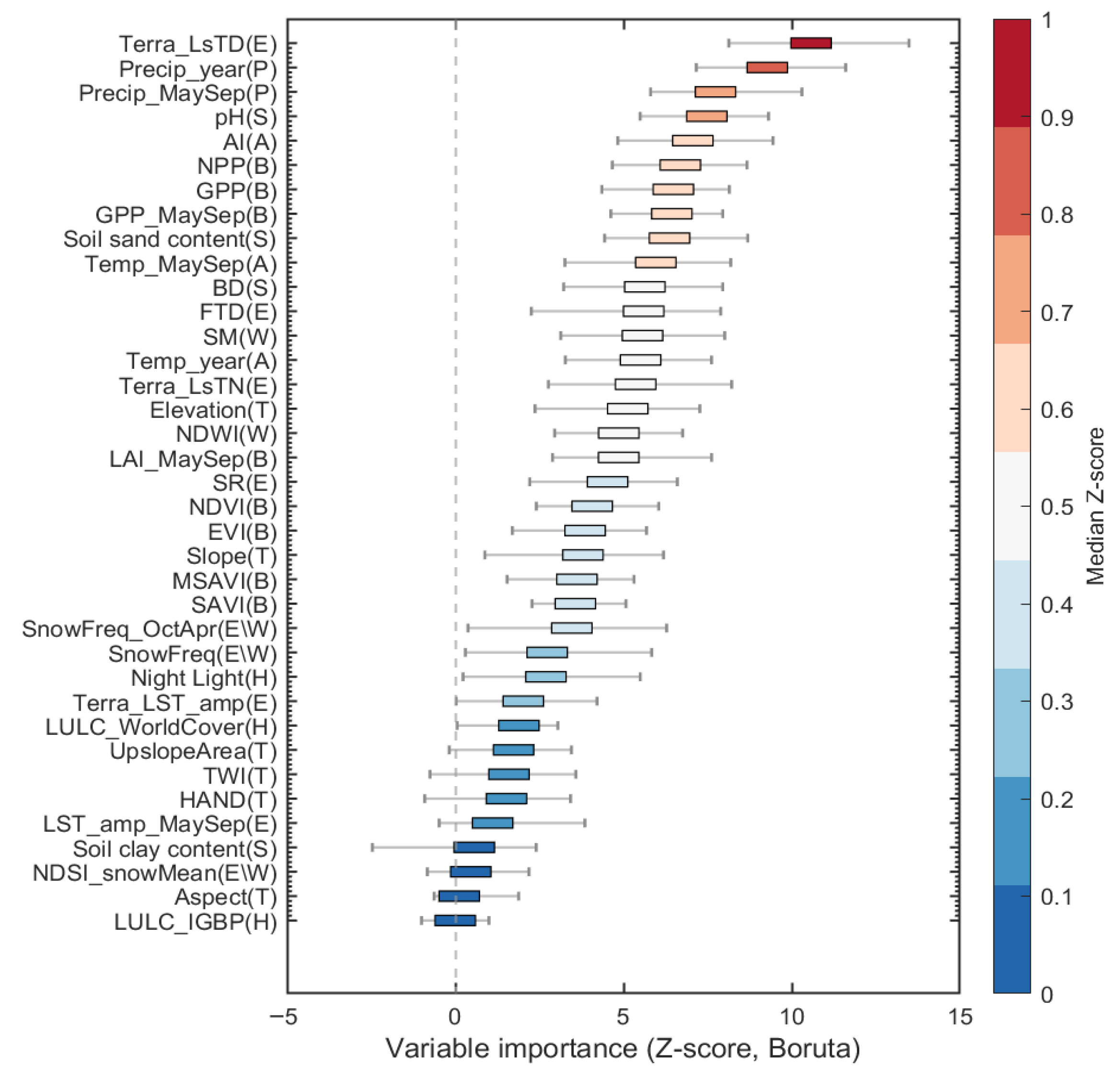
The Boruta algorithm was applied to assess the relevance of 37 candidate environmental variables to SOC in the YRSR. After iterative comparison with randomly permuted shadow variables, 27 predictors were identified as significant contributors to SOC variability, with their importance values significantly exceeding those of the random shadow variables (Figure 3). These retained variables encompassed key environmental factors, including thermal conditions (e.g., land surface temperature), moisture-related factors (e.g., precipitation and soil moisture), vegetation productivity (e.g., Leaf Area Index (LAI), Gross Primary Productivity (GPP)), and soil properties (e.g., pH, bulk density). To control for multicollinearity among the retained predictors, the Variance Inflation Factor (VIF) was applied. Predictors with VIF values greater than 5 were iteratively removed until all remaining variables exhibited acceptable VIF values (<5), ensuring statistical independence and reducing potential model instability (Table 3). The final predictor set included 16 variables, which adequately represent the dominant environmental gradients shaping SOC spatial variability in the region. These variables will serve as robust inputs for subsequent nonlinear modeling, offering a comprehensive, ecologically interpretable basis for assessing SOC in the YRSR.

3.3. Nonlinear Importance Patterns of SOC Revealed by RF–SHAP

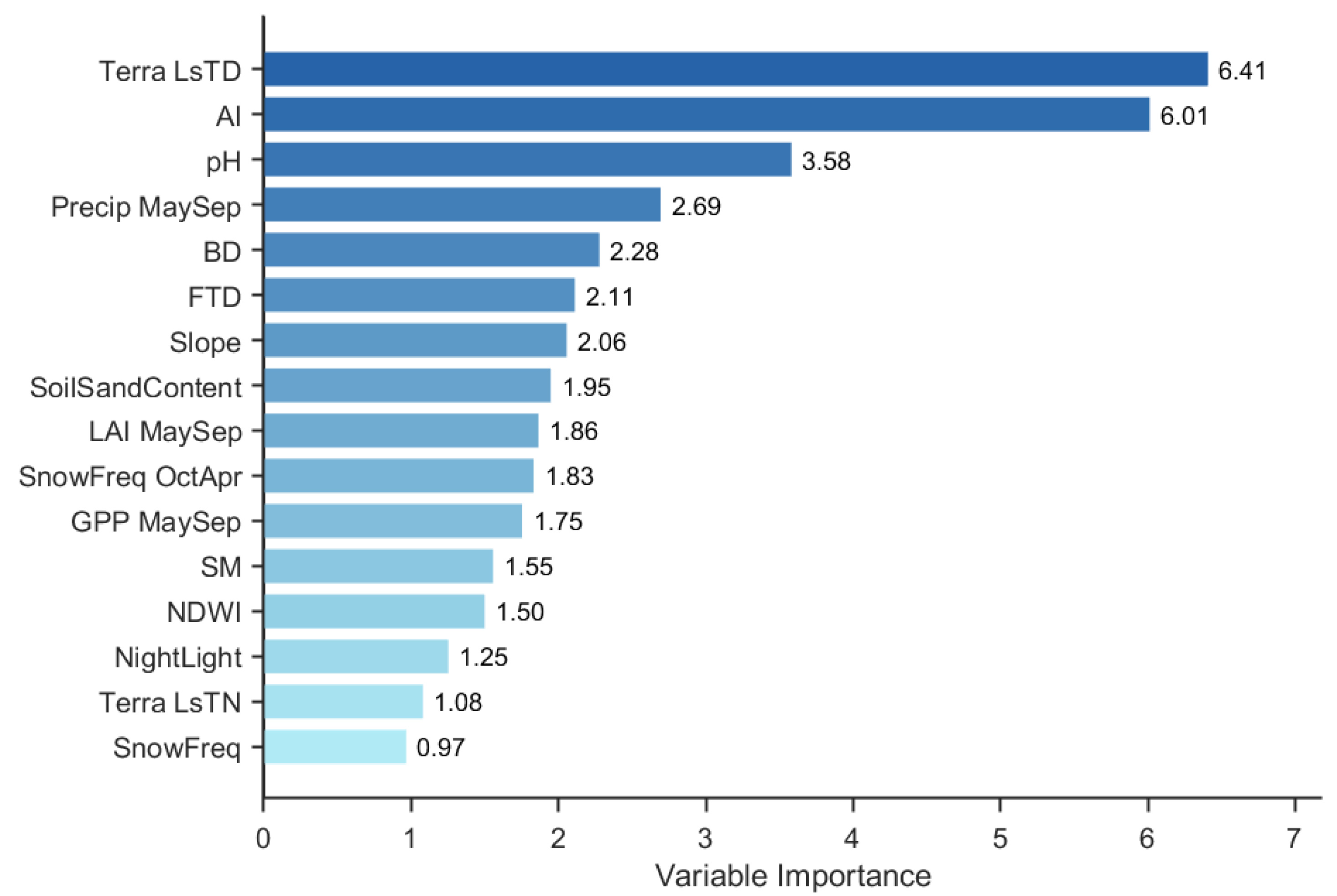
The random forest (RF) model demonstrated robust predictive performance, explaining 68% of the variance in soil organic carbon (SOC), with an RMSE of 15.59 g/kg (Figure S1). These results indicate that the optimized environmental predictors effectively captured the primary spatial gradients in the YRSR. To further interpret the RF model, SHAP was used to quantify the contribution and effect patterns of individual predictors on SOC, and the corresponding interpretation is presented in Figure 4. As shown in Figure 4, vegetation productivity indicators, particularly LAI and GPP, were the most influential predictors, with high SHAP values indicating their strong contributions to SOC accumulation. Their effects were clearly nonlinear, with SOC increasing with vegetation productivity and then tending to level off beyond certain ranges. Moisture-related variables, such as NDWI and SM, also showed substantial contributions, with SHAP results indicating that moderate to high moisture conditions generally promoted SOC accumulation, whereas drier conditions were associated with lower SOC values. Thermal variables, especially daytime land surface temperature (Terra_LsTD) and aridity index (AI), further exhibited significant and nonlinear effects on SOC variability. Lower temperatures generally corresponded to higher SOC levels, likely because reduced microbial activity slowed organic matter decomposition, whereas strong thermal fluctuations, particularly those associated with freeze–thaw processes, tended to decrease SOC stability. Overall, the RF–SHAP results demonstrated that SOC regulation in the YRSR is governed by nonlinear and context-dependent interactions among vegetation productivity, hydroclimatic conditions, and thermal factors.

3.4. Spatial Heterogeneity and Vegetation-Type Differences in SOC in the YRSR

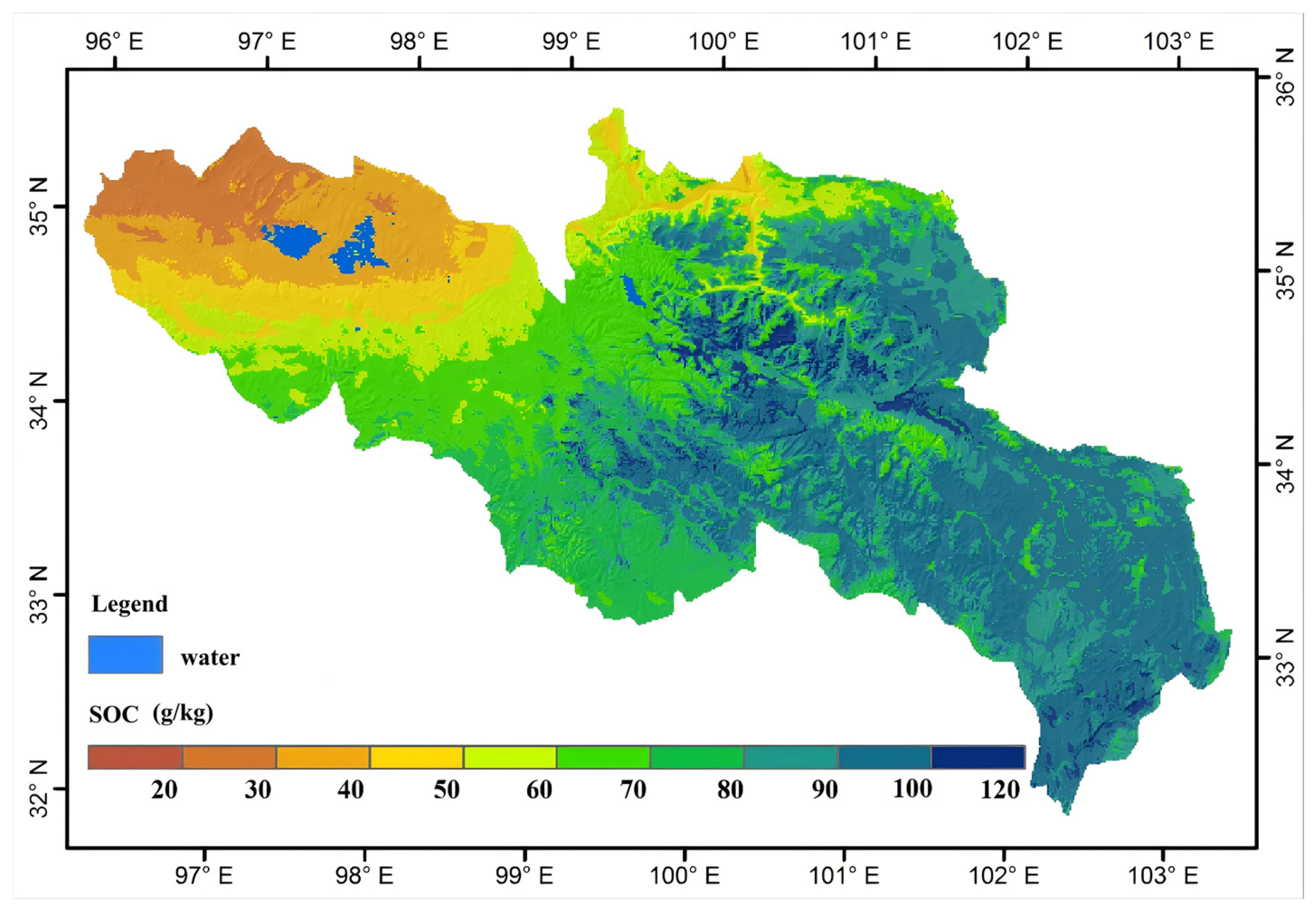
SOC in the Yellow River Source Region exhibited pronounced spatial heterogeneity in 2023 (Figure 5). The mean SOC during the study period was 69.2 g/kg. Overall, SOC showed a clear spatial gradient, decreasing from southeast to northwest. High SOC values were primarily concentrated in the southeastern part of the region, whereas relatively low SOC levels were observed in the northwestern areas. Significant differences in SOC were identified among vegetation types. Mountain meadow exhibited the highest mean SOC (85.63 g/kg), representing the most carbon-rich ecosystem in the region. Forest land, improved grassland, lowland meadow, and wetlands also showed relatively high SOC levels, with mean values exceeding 76 g/kg. Alpine meadow and alpine steppe had intermediate SOC levels, with mean values of 70.63 g/kg and 53.12 g/kg, respectively. Temperate steppe showed a mean SOC of 58.75 g/kg, while temperate desert grassland exhibited the lowest SOC content (42.40 g/kg). In terms of variability, alpine meadow and wetland displayed relatively large SOC ranges, with standard deviations of 17.72 g/kg and 16.82 g/kg, respectively, indicating stronger spatial fluctuations. In contrast, improved grassland and lowland meadow showed smaller standard deviations, suggesting a more uniform spatial distribution of SOC. Overall, SOC in the Yellow River Source Region demonstrated clear vegetation-type differentiation and a distinct spatial gradient, reflecting substantial heterogeneity in carbon storage among different grassland ecosystems.

4. Discussion

4.1. Spatial Heterogeneity of Soil Organic Carbon in the Yellow River Source Region

Surface SOC in the YRSR exhibited pronounced spatial heterogeneity, consistent with observations from other alpine regions. SOC values ranged from 2.96 to 169.32 g/kg, with a mean of 46.61 g/kg and a high coefficient of variation (64.97%), indicating substantial spatial variability across the study area. The right-skewed and heavy-tailed distribution further suggests that a limited number of high-SOC sites contribute disproportionately to the regional SOC pattern [46,47].
This spatial structure implies that SOC accumulation in the YRSR is not governed by uniform regional controls, but by localized environmental conditions that favor carbon storage. In particular, moist grasslands, wetlands, and other hydrothermally favorable patches are likely to function as local SOC hotspots, whereas drier or more exposed upland areas tend to maintain lower SOC levels. This interpretation is consistent with previous studies showing that alpine SOC often exhibits strong patchiness in response to moisture gradients, temperature constraints, and vegetation heterogeneity [48,49]. But our results further suggest that such patchiness may be especially pronounced in alpine headwater landscapes like the YRSR, where wetland grassland mosaics and strong hydrothermal contrasts intensify local SOC differentiation [50].
These findings highlight the need to interpret regional SOC not as a spatially uniform property, but as a heterogeneous carbon pool shaped by localized hydrothermal and ecological conditions. From a management perspective, identifying and conserving high-SOC patches may be particularly important for maintaining carbon stability and ecological resilience in climate-sensitive alpine source regions.

4.2. Hydrothermal and Vegetation Controls on SOC Variability: Key Drivers and Nonlinear Interactions

Vegetation productivity, moisture availability, and thermal conditions emerged as the dominant controls on SOC variability in the YRSR [51]. In the present study, vegetation-related variables such as LAI and GPP were positively associated with SOC accumulation, likely because greater biomass production increases litter input, root-derived carbon input, and the overall supply of organic substrates to the soil [52]. Moisture-related variables, including precipitation and soil moisture, also played major roles in SOC regulation, but their effects were clearly nonlinear. In alpine headwater environments such as the YRSR, moisture influences SOC through several interconnected pathways. Adequate soil moisture promotes vegetation growth and carbon input, while also affecting soil aeration, microbial activity, and decomposition intensity [4]. Under relatively cool and moist conditions, SOC accumulation is favored because plant-derived carbon input remains sufficient while decomposition is constrained. Under dry conditions, by contrast, reduced vegetation productivity and limited organic matter input may restrict SOC formation [53,54].
Thermal conditions, especially surface temperature and freeze–thaw dynamics, were likewise important contributors to SOC variability [55]. Temperature may affect SOC directly by regulating microbial decomposition and carbon turnover, and indirectly by altering plant growth, soil moisture status, and freeze–thaw intensity [56,57]. Lower temperatures were generally associated with higher SOC concentrations, likely because microbial activity and decomposition were suppressed. However, frequent freeze–thaw cycles may destabilize soil aggregates, alter water availability, and accelerate organic matter turnover, thereby reducing SOC stability in some locations [58,59].
A notable feature of SOC regulation in the YRSR is that these hydrothermal and biotic controls operate nonlinearly rather than as simple independent effects. SOC increased with vegetation productivity only up to a certain level, after which the relationship weakened or plateaued, suggesting that carbon input alone does not guarantee continuous SOC accumulation because stabilization processes, substrate saturation, and decomposition may increasingly constrain additional SOC storage at higher productivity levels [60,61]. A similar threshold-like pattern was observed for moisture: moderate to high moisture availability generally favored SOC accumulation, whereas dry conditions were associated with lower SOC levels [62]. These results indicate that hydrothermal regulation of SOC in the YRSR is highly context-dependent. In cold and moist environments, low temperatures may suppress decomposition while sufficient moisture sustains vegetation-derived carbon input, thereby favoring SOC accumulation. In warmer or drier conditions, this balance may shift because plant inputs decline and microbial turnover increases. This difference may reflect the environmental setting of the region, where permafrost influence, strong moisture gradients, and wetland–grassland mosaics intensify the interaction between temperature, moisture, and vegetation productivity.

4.3. Ecological and Management Implications of SOC Spatial Heterogeneity for Alpine Grassland Management

The pronounced spatial heterogeneity of SOC in the YRSR has important environmental and management implications. Wetlands, moist grasslands, and other hydrothermally favorable areas are likely to function as local SOC hotspots, making them disproportionately important for regional carbon storage and ecological stability. In contrast, drier and more exposed alpine grasslands generally contain lower SOC stocks and may be more vulnerable to carbon loss under ongoing climate warming [63]. The strong dependence of SOC on moisture availability and vegetation productivity further suggests that changes in hydrological conditions, freeze–thaw activity, and plant growth may substantially alter carbon stability in alpine headwater landscapes [13,64]. In the YRSR, warming-induced shifts in soil moisture or freeze–thaw dynamics could reduce SOC persistence by weakening plant-derived carbon inputs while accelerating organic matter decomposition [65].
These findings support the need for spatially differentiated management in alpine source regions of the Tibetan Plateau. In particular, the conservation of wetlands, seasonally moist grasslands, and other high SOC areas may be especially important for maintaining both carbon stability and ecosystem resilience under climate change [8,66]. More broadly, identifying and protecting SOC-rich patches may contribute not only to soil carbon conservation, but also to the broader goals of grassland sustainability, water source protection, and climate adaptation in cold and environmentally sensitive ecosystems [19,67].
In addition, machine learning methods such as RF offer clear advantages when integrated with multi-source remote sensing data, particularly because they can capture nonlinear relationships between SOC and environmental predictors. Our results highlight the value of combining multi-sensor remote sensing data with advanced modeling approaches to better characterize SOC dynamics across regions with strong environmental gradients [3,43]. Future research should further explore the integration of high-resolution optical, thermal, and radar remote sensing data with machine learning models to improve SOC prediction in remote and data-scarce regions such as the Tibetan Plateau.

4.4. Study Limitations and Future Perspectives

While this study highlights the importance of hydrothermal conditions and vegetation productivity in regulating shallow SOC, SOC should not be viewed as the sole indicator of soil ecological functioning [51,68]. Soil biogeochemical regulation is jointly shaped by carbon, nitrogen, plant-available nutrients, macro- and microelements, hydrological processes, and vertical heterogeneity within the root zone. Another limitation of this study is that only surface soil layers (0–20 cm) were analyzed. Deeper soil horizons, which may store substantial amounts of carbon, were not included, thereby limiting our understanding of the full soil carbon profile and its long-term stability [69]. In addition, SOC data were collected during a single growing season (July–August 2023). Consequently, the findings represent only a temporal snapshot and may not fully capture seasonal or interannual variability in SOC distribution. Future research should incorporate deeper soil layers, as well as multi-year and multi-season field observations, to provide a more comprehensive understanding of SOC dynamics and to improve the generalizability of these results.
Although the RF SHAP framework was effective for identifying dominant predictors and capturing nonlinear SOC environment relationships, it remains fundamentally correlational. Variable importance may partly reflect covariance among hydrothermal, vegetation, and terrain factors, and the model cannot by itself establish causal pathways [70]. Therefore, the ecological mechanisms discussed above should be interpreted as plausible explanations supported by the observed spatial patterns, rather than as direct causal proof. In addition, microclimatic influences were not measured directly at each sampling site, but were represented indirectly through spatial proxies of near-surface hydrothermal conditions, including land surface temperature, freeze–thaw cycle days, soil moisture, and snow-related variables [2]. These proxies capture important aspects of local energy and water regulation, but they cannot fully resolve fine-scale microclimatic heterogeneity beneath plant canopies or across microsites.
The broader relevance of these findings lies in their potential applicability to other alpine regions of the Tibetan Plateau and to similar cold, moisture-sensitive ecosystems. In particular, many alpine grasslands across the Tibetan Plateau are also shaped by permafrost-related processes, freeze–thaw activity, moisture limitation, and strong spatial heterogeneity in plant productivity. From this perspective, the general ecological mechanisms identified here may be transferable to regions with comparable climatic and landscape settings. Nevertheless, direct spatial extrapolation should be approached with caution. The strength and form of SOC–environment relationships may differ across regions because of variation in soil type, permafrost extent, vegetation composition, topographic complexity, and land-use or grazing intensity [65]. Therefore, the main scalable contribution of this study is not a direct transfer of model parameters, but an interpretable analytical framework that combines field observations, multi-source environmental predictors, and RF SHAP analysis to identify dominant SOC controls in environmentally heterogeneous alpine systems.

5. Conclusions

This study quantified the spatial heterogeneity of surface soil organic carbon (SOC) in the Yellow River Source Region, identifying the dominant hydrothermal and biotic controls using an integrated RF–SHAP framework. The results revealed significant spatial variability in SOC, with moisture-related processes acting as a central mediator between thermal conditions, vegetation productivity, and soil properties. Thermal regimes and freeze–thaw dynamics directly influenced SOC, while vegetation productivity and soil properties primarily affected SOC through moisture-mediated pathways. These findings underscore the hierarchical and nonlinear nature of SOC regulation in alpine headwater ecosystems. From a sustainability perspective, maintaining favorable hydrothermal conditions is crucial for stabilizing soil carbon stocks. Prioritizing wetland conservation, adaptive grazing management, and reducing soil disturbance in high-SOC areas will help mitigate carbon loss, especially under climate warming. The integrated modeling approach developed in this study provides a transferable method for identifying vulnerable carbon pools and supporting sustainable land management in other alpine and climate-sensitive regions.

Supplementary Materials

The following supporting information can be downloaded at: https://www.mdpi.com/article/10.3390/su18073584/s1. Figure S1. Observed versus predicted SOC from out-of-fold predictions of the RF model.

Author Contributions

Conceptualization, Y.Z. and C.J.; Methodology, Y.Z., C.J. and C.L.; Software, Y.Z. and K.Z.; Validation, Y.Z.; Formal analysis, Y.Z.; Investigation, Y.Z. and C.J.; Resources, Y.Z., C.J. and K.Z.; Data curation, Y.Z. and C.J.; Writing–original draft, Y.Z.; Writing–review & editing, Y.Z., C.L. and K.Z.; Visualization, Y.Z.; Supervision, Y.Z. and C.L.; Project administration, Y.Z. and C.J.; Funding acquisition, Y.Z. All authors have read and agreed to the published version of the manuscript.

Funding

This research was funded by the Qinghai Provincial Science and Technology Plan, Basic Research Program (Youth Project), grant number 2023-ZJ-985Q, and by the Self-Supported Project of the World-Class Discipline of Ecology at Qinghai University (Ecosystem Succession and Management Program), grant number 2025-ZZ-08.

Institutional Review Board Statement

Not applicable.

Informed Consent Statement

Not applicable.

Data Availability Statement

Remote sensing and reanalysis datasets used in this study are publicly available from their respective data providers. Sentinel-2 imagery was accessed and processed via the Google Earth Engine (GEE) platform (https://earthengine.google.com/). ERA5-Land climate data were obtained from the Copernicus Climate Data Store (https://cds.climate.copernicus.eu/). Soil and terrain datasets were derived from publicly available products, including SoilGrids and the 30 m SRTM digital elevation model provided by USGS (https://earthexplorer.usgs.gov/). Field-measured SOC data supporting the findings of this study are available from the corresponding author upon reasonable request. Access may be subject to institutional and data protection policies. Modeling scripts and derived datasets can be provided upon reasonable request to facilitate result replication.

Acknowledgments

We greatly appreciate the valuable advice provided by Xilai Li on the discussion of the soil–landscape relationship and the literature review section. The authors thank Yan Lei, Xiaojie Tang, Yu Deng, Hailing Liu, and Yapei Shan from the College of Eco-Environmental Engineering, Qinghai University, for their assistance with field sampling.

Conflicts of Interest

The authors declare no conflicts of interest.

Abbreviations

The following abbreviations are used in this manuscript:
SOCSoil organic carbon
YRSRYellow River Source Region
VIFVariance inflation factor
RFRandom forest
SHAPSHapley Additive exPlanations
CLHSConditional Latin hypercube sampling

References

  1. Tripathi, S.K.; Chanda, R.; Ao, A.; Moirangthem, B.; Chauhan, S.; Mizo, L.; Singh, S.S.; Singh, N.S.; Upadhyay, K.K.; Vanlalfakawma, D.C.; et al. Elevation and Management-Induced Vegetation and Soil Carbon Shift in Eastern Himalayan Forests: Advancing Nature-Based Sustainability Solutions (NbS). Environ. Sustain. Indic. 2026, 29, 101082. [Google Scholar] [CrossRef]
  2. Yadav, M.; Mittal, R.; Kumari, A.; Bhatia, A.; Khatri, A.; Bhateria, R. Soil Carbon Fractions and Their Role in Climate-Resilient Agriculture: A Review. Sustain. Chem. Clim. Action 2025, 7, 100127. [Google Scholar] [CrossRef]
  3. Gorain, S.; Dutta, S.; Balo, S.; Malakar, A.; Roy Choudhury, M.; Das, S. Harnessing Green Wealth: A Two-Decade Global Assessment of Forest Carbon Sequestration and Credits and the Economic Implications of Sustainable Forest Management Practices. J. Environ. Manag. 2025, 393, 126987. [Google Scholar] [CrossRef] [PubMed]
  4. She, Y.; Zhang, Z.; Ma, L.; Xu, W.; Huang, X.; Zhou, H. Vegetation Attributes and Soil Properties of Alpine Grassland in Different Degradation Stages on the Qinghai-Tibet Plateau, China: A Meta-Analysis. Arab. J. Geosci. 2022, 15, 193. [Google Scholar] [CrossRef]
  5. Shen, T.; Yu, Z.; Ju, Q.; Jin, J.; Wang, G.; Liu, Y.; Hu, C.; Lyu, S.; Lin, H.; Si, X.; et al. Climate Change Intensifies Carbon Emissions from the Earth’s Third Pole: Projected Trajectories of Soil and Ecosystem Respiration. Glob. Planet. Change 2026, 259, 105359. [Google Scholar] [CrossRef]
  6. Lin, X.; Han, P.; Zhang, W.; Wang, G. Sensitivity of Alpine Grassland Carbon Balance to Interannual Variability in Climate and Atmospheric CO2 on the Tibetan Plateau during the Last Century. Glob. Planet. Change 2017, 154, 23–32. [Google Scholar] [CrossRef]
  7. Hou, Y.; Chen, Y.; Chen, X.; He, K.; Zhu, B. Changes in Soil Organic Matter Stability with Depth in Two Alpine Ecosystems on the Tibetan Plateau. Geoderma 2019, 351, 153–162. [Google Scholar] [CrossRef]
  8. Wang, Y.; Ao, D.; Wang, B.; Chen, Y.; Hu, Y.; Zhang, B.; Zhang, H.; Guo, W.; An, S. Particulate Organic Carbon Dominates Soil Organic Carbon Dynamics in Alpine Ecosystems for Its Climate Sensitivity and Continuous Storage. Catena 2026, 262, 109607. [Google Scholar] [CrossRef]
  9. Kasraei, B.; Schmidt, M.G.; Zhang, J.; Bulmer, C.E.; Filatow, D.S.; Arbor, A.; Pennell, T.; Heung, B. A Framework for Optimizing Environmental Covariates to Support Model Interpretability in Digital Soil Mapping. Geoderma 2024, 445, 116873. [Google Scholar] [CrossRef]
  10. Yang, R.-M.; Huang, L.-M.; Liu, F. Evaluation and Mapping Soil Organic Carbon in Seasonally Frozen Ground on the Tibetan Plateau. Catena 2024, 235, 107631. [Google Scholar] [CrossRef]
  11. Elias, S.A. Environmental Consequences of Permafrost Degradation. In Reference Module in Earth Systems and Environmental Sciences; Elsevier: Amsterdam, The Netherlands, 2025; ISBN 978-0-12-409548-9. [Google Scholar]
  12. Gao, H.; Gong, J.; Liu, J.; Wen, X.; Huang, L.; Maier, M. Modeling of Soil Organic Carbon Stock and Sequestration Potential in Grassland and Cropland in Qinghai-Tibet Plateau: Prediction and Carbon Management Strategies Based on Different Climate Scenarios. Catena 2025, 261, 109545. [Google Scholar] [CrossRef]
  13. Chang, Y.; Ding, Y.; Zhang, S.; Shangguan, D.; Qin, J.; Zhao, Q. Contribution of Climatic Variables and Their Interactions to Reference Evapotranspiration Changes Considering Freeze-Thaw Cycles in the Tibetan Plateau during 1960–2022. Atmos. Res. 2024, 305, 107425. [Google Scholar] [CrossRef]
  14. Zhou, Y.; Duan, L.; Guo, J.; Yan, D.; Wu, Y.; Wang, Y.; Guan, H.; Batelaan, O.; Liu, T. Responses of Plant Productivity and Soil Nutrient Concentration to Different Levels of Semi-Arid Grassland Degradation. Agric. Ecosyst. Environ. 2026, 399, 110198. [Google Scholar] [CrossRef]
  15. Saba, T.; Chen, Q.; Lei, Y.; Shen, J.; Liu, L.; Sun, G. Plant-Soil Synchrony and Its Role in the Restoration of Desertified Grassland on the Qinghai-Tibet Plateau. Soil Tillage Res. 2026, 255, 106787. [Google Scholar] [CrossRef]
  16. Mortensen, E.Ø.; Abalos, D.; Rasmussen, J. Well-Designed Multi-Species Grassland Mixtures Enhance Both Soil Carbon Inputs and Aboveground Productivity. Agric. Ecosyst. Environ. 2025, 385, 109578. [Google Scholar] [CrossRef]
  17. Liu, Z.; Si, J.; Jia, B.; Zhou, D.; Zhu, X.; Ndayambaza, B.; Bai, X.; Wang, B. Soil Organic Carbon Distribution and Multi-Scale Drivers in Semi-Arid Alpine Regions: Implications for Carbon Storage Function Stability. J. Environ. Manag. 2025, 393, 126989. [Google Scholar] [CrossRef]
  18. Zheng, H.; Liu, M.; Chu, H.; Gaffney, P.P.J.; Pan, J.; Wang, Q.-C.; Li, Y.; Tian, D.; Zhang, R.; Zhou, R.; et al. Water Table-Driven Divergent Patterns and Drivers of Particulate and Mineral-Associated Organic Carbon in Alpine Peatlands. Catena 2026, 262, 109650. [Google Scholar] [CrossRef]
  19. Wang, Z.; Huang, L.; Shao, M. Spatial Variations and Influencing Factors of Soil Organic Carbon under Different Land Use Types in the Alpine Region of Qinghai-Tibet Plateau. Catena 2023, 220, 106706. [Google Scholar] [CrossRef]
  20. Shen, J.; Ou, B.; Lei, Y.; He, Y.; Xue, J.; Deng, X.; Wang, C.; Li, Y.; Sun, G. Mechanisms of Soil Persistent Organic Carbon Loss in Alpine Ecosystems: Insights into Microbial and Calcium Spatial Footprint. Soil Biol. Biochem. 2025, 204, 109765. [Google Scholar] [CrossRef]
  21. Xu, H.; Chen, T.; Huang, K.; Liu, Z.; Wang, X. Sensitivity of Alpine Grassland Productivity to Atmospheric Aridity and Soil Moisture on the Qinghai-Tibet Plateau: Spatial Patterns and Determinants. J. Hydrol. 2026, 664, 134476. [Google Scholar] [CrossRef]
  22. Huiling, Z.; Zongxing, L.; Zhengliang, Y.; Yunying, W.; Fa, D.; Jian, X. Permafrost Impacts on Chemical Weathering and CO2 Budgets in the Tibetan Plateau: Micro-Watershed Perspective on a Headwater Catchment. Catena 2024, 247, 108479. [Google Scholar] [CrossRef]
  23. Zhang, Y.; Li, X.; Shi, F.; Zhang, X.; Hu, G.; Zuo, F.; Wang, Z.; Liu, X. Spatiotemporal Variability of Dissolved Carbon and Sources of Dissolved Inorganic Carbon Influenced by Freeze–Thaw and Subsurface Flow in an Alpine Headwater Catchment of the Qinghai-Tibetan Plateau. J. Hydrol. 2024, 640, 131740. [Google Scholar] [CrossRef]
  24. Liu, X.; Wang, M.; Liu, Z.; Bao, Y.; Li, X.; Wang, F.; Ji, X. Improving Spatial Prediction of Soil Organic Matter in Typical Black Soil Area of Northeast China Using Structural Equation Modeling Integration Framework. Comput. Electron. Agric. 2025, 236, 110404. [Google Scholar] [CrossRef]
  25. Ye, Y.; Tan, X. The Yellow River Headwater Is Shrinking in Response to the Northeastward Expansion of the Tibetan Plateau. Palaeogeogr. Palaeoclimatol. Palaeoecol. 2025, 657, 112609. [Google Scholar] [CrossRef]
  26. Li, X.; Jin, R.; Pan, X.; Zhang, T.; Guo, J. Changes in the Near-Surface Soil Freeze–Thaw Cycle on the Qinghai-Tibetan Plateau. Int. J. Appl. Earth Obs. Geoinf. 2012, 17, 33–42. [Google Scholar] [CrossRef]
  27. Zheng, J.; Zhao, T.; Lü, H.; Zou, D.; Rodriguez-Fernandez, N.; Mialon, A.; Richaume, P.; Xiao, J.; Ma, J.; Fan, L.; et al. Use of a New Tibetan Plateau Network for Permafrost to Characterize Satellite-Based Products Errors: An Application to Soil Moisture and Freeze/Thaw. Remote Sens. Environ. 2024, 300, 113899. [Google Scholar] [CrossRef]
  28. Liu, W.; Wen, J.; Chen, J.; Wang, Z.; Lu, X.; Wu, Y.; Jiang, Y. Characteristic Analysis of the Spatio-Temporal Distribution of Key Variables of the Soil Freeze-Thaw Processes over the Qinghai-Tibetan Plateau. Cold Reg. Sci. Technol. 2022, 197, 103526. [Google Scholar] [CrossRef]
  29. Du, J.; Yu, X.; Zhou, L.; Li, X.; Ao, T. Less Concentrated Precipitation and More Extreme Events over the Three River Headwaters Region of the Tibetan Plateau in a Warming Climate. Atmos. Res. 2024, 303, 107311. [Google Scholar] [CrossRef]
  30. Liu, W.; Li, Y.; Li, D.; Lin, P.; Wang, X.; Pritchard, H.D.; Kraaijenbrink, P.D.A. Impacts of Changes in Climate, Cryosphere, and Vegetation on Freshwater Supply in the Southeastern Tibetan Plateau. J. Hydrol. 2025, 661, 133713. [Google Scholar] [CrossRef]
  31. Tang, R.; Zhao, Y.; Lin, H. Spatio-Temporal Variation Characteristics of Aboveground Biomass in the Headwater of the Yellow River Based on Machine Learning. Remote Sens. 2021, 13, 3404. [Google Scholar] [CrossRef]
  32. Gu, J.; Yang, F.; Li, D.-X.; Ye, M.-L.; Wen, H.-Y.; Feng, W.-L.; Song, X.-D.; Zhang, G.-L. Stock and Carbon Sequestration Potential of Mineral-Associated Organic Carbon in the Qinghai-Tibetan Plateau. Geoderma 2025, 463, 117585. [Google Scholar] [CrossRef]
  33. Jiang, M.; Zhang, W.; Liu, J.; Zhang, Q. Increasing Soil Organic Carbon Stock of Alpine Wetlands on the Tibetan Plateau: Results of Future Scenarios. Glob. Planet. Change 2025, 255, 105104. [Google Scholar] [CrossRef]
  34. Xiong, X.; Grunwald, S.; Myers, D.B.; Kim, J.; Harris, W.G.; Comerford, N.B. Holistic Environmental Soil-Landscape Modeling of Soil Organic Carbon. Environ. Model. Softw. 2014, 57, 202–215. [Google Scholar] [CrossRef]
  35. Wicaksono, P.; Harahap, S.D.; Ananda, S.R.; Benyamin, K.O.; Nabiha, R.I.; Maharsi, V.W. Compressed High-Spatial-Resolution Imagery to Train and Validate Seagrass Percent Cover Mapping Using Sentinel-2 Imagery. Reg. Stud. Mar. Sci. 2026, 95, 104808. [Google Scholar] [CrossRef]
  36. Stefanescu Miralles, G.; Biglia, A.; Ricauda Aimonino, D.; Mattetti, M.; Gay, P.; Comba, L. Maize Yield Estimation from Sentinel-2 Multi-Temporal Imagery and CANbus Data Integration: A Non-Parametric Regression Approach. Biosyst. Eng. 2026, 264, 104401. [Google Scholar] [CrossRef]
  37. Reisi Gahrouei, O.; Guindon, L.; Perbet, P.; Correia, D.L.P.; Cøté, J.-F.; Béland, M. Windthrow Mapping in Boreal Forests Using a Spatio-Temporal Deep Learning Approach and Sentinel-2 Imagery. Remote Sens. Environ. 2026, 335, 115270. [Google Scholar] [CrossRef]
  38. Wang, Y.; Foody, G.; Zhou, P.; Li, Y.; Li, X.; Zhang, Y.; Du, Y.; Li, X. Dynamic Surface Water Fraction (DSWF): Global Surface Water Fraction Mapping at 10-Meter Spatial Resolution with Sentinel-2 Imagery in Google Earth Engine. Int. J. Appl. Earth Obs. Geoinf. 2025, 143, 104813. [Google Scholar] [CrossRef]
  39. Liu, J.; Wang, Z.; Sun, Z.; Geng, S.; Yu, F.; Liu, N.; Wen, M.; Yang, L. Integrating Multi-Temporal Information for Monitoring Plant Spectral Diversity with PlanetScope and Sentinel-2 Satellite Imagery. Ecol. Indic. 2025, 180, 114348. [Google Scholar] [CrossRef]
  40. Tian, L.; Huang, W.; Cui, G.; Huang, X.; Cui, F.; Wei, Y.; Zhao, C.; Tong, S.; Wang, A. Wetland Restoration Enhances Soil Carbon Sequestration in Lake Ecosystems: Integrating Multi-Source Remote Sensing and Optimized Ensemble Machine Learning to Map Soil Organic Carbon Density. Ecol. Indic. 2026, 182, 114551. [Google Scholar] [CrossRef]
  41. Yang, M.; Chen, S.; Guo, X.; Shi, Z.; Zhao, X. Exploring the Potential of Vis-NIR Spectroscopy as a Covariate in Soil Organic Matter Mapping. Remote Sens. 2023, 15, 1617. [Google Scholar] [CrossRef]
  42. Zhou, W.; Li, H.; Xie, L.; Nie, X.; Wang, Z.; Du, Z.; Yue, T. Remote Sensing Inversion of Grassland Aboveground Biomass Based on High Accuracy Surface Modeling. Ecol. Indic. 2021, 121, 107215. [Google Scholar] [CrossRef]
  43. Liu, Y.; Samat, A.; Du, P.; Chen, J.; Abuduwaili, J.; Luo, K.; Zhu, E.; Shokparova, D. High-Resolution Spatiotemporal Analysis and Driver Attribution of Floods in Kazakhstan Using SHAP and Remote Sensing Integration. Clim. Risk Manag. 2026, 51, 100783. [Google Scholar] [CrossRef]
  44. Wu, Y.; Dong, M.; Wang, Y.; Yu, X.; Wang, Z.; Ye, X. The Mechanisms of Microbial and Soil Carbon Pool Responses to Soil Aggregates Improvement by Different Organic Fertilizers. J. Environ. Manag. 2025, 395, 127814. [Google Scholar] [CrossRef] [PubMed]
  45. Pan, Y.; Tang, H.; Jin, Q.; Shi, P. Organic Carbon Density in Qingzang Plateau Grasslands Is Highly Variable and Primarily Controlled by Soil Properties. Pedosphere, 2026; in press. [CrossRef]
  46. Guidi, P.; Falsone, G.; Wilson, C.; Cavani, L.; Ciavatta, C.; Marzadori, C. New Insights into Organic Carbon Stabilization in Soil Macroaggregates: An in Situ Study by Optical Microscopy and SEM-EDS Technique. Geoderma 2021, 397, 115101. [Google Scholar] [CrossRef]
  47. Liu, B.; Huang, L.; Zhang, F.; Cai, J.; Tian, L.; Jiang, X.; Liang, Y.; Zhu, G.; Huang, G. High PH Decreases the Contents of Stable Organic Nitrogen Fractions and Nitrogen Supply Capacity by Inhibiting Soil Organic Carbon in Saline-Sodic Paddy Fields. Soil Tillage Res. 2026, 258, 107018. [Google Scholar] [CrossRef]
  48. Kong, D.; Chu, N.; Luo, C.; Liu, H. Urbanization Gradient Effects and Spatial Heterogeneity of Soil Organic Carbon Stocks in Northeast China. Catena 2026, 262, 109610. [Google Scholar] [CrossRef]
  49. Lin, X.; Zhang, S.; Huete, A.; Chen, H.Y.H.; Zhao, H.; He, Q.; Lv, S.; Zhang, Q.; Zhang, X.; Zhang, X. Global-to-Regional Variations in the Effects of Grassland Management on Soil Carbon. Agric. Ecosyst. Environ. 2026, 400, 110251. [Google Scholar] [CrossRef]
  50. Li, H.; Jin, X.; Shan, W.; Han, B.; Zhou, Y.; Tittonell, P. Optimizing Agricultural Management in China for Soil Greenhouse Gas Emissions and Yield Balance: A Regional Heterogeneity Perspective. J. Clean. Prod. 2024, 452, 142255. [Google Scholar] [CrossRef]
  51. Liu, Z.; Feng, T.; Wei, W.; Tan, M.; Li, Z.; Wang, H.; Jin, L.; Wang, P. The Effect of Vegetation Restoration on Soil Organic Carbon Mineralization in Bibliometric Analysis and a Review. Ecol. Front. 2025, 45, 1546–1556. [Google Scholar] [CrossRef]
  52. Zeng, F.; Yang, R.; Liu, H.; Du, Q.; Liu, Y.; Cun, H. Spring Factors Controlling Interannual CO2 Flux Variations in a Subtropical Humid Alpine Meadow on the Southeastern Tibetan Plateau. Agric. For. Meteorol. 2025, 370, 110603. [Google Scholar] [CrossRef]
  53. Fan, B.; Peng, H.; Yao, H.; Li, K.; Hong, B. Seasonal and Inter-Annual Dynamics of Water Vapor Flux Based on Five-Year Eddy Covariance Measurements over an Alpine Grassland in Arid Central Asia. J. Hydrol. 2025, 663, 134259. [Google Scholar] [CrossRef]
  54. Xing, Y.; Wang, P.; Zhang, D.; Sun, H.; Li, S. Convergent Control of Soil Temperature on Seasonal Carbon Flux in Tibetan Alpine Meadows: An in-Situ Monitoring Study. Ecol. Indic. 2023, 156, 111116. [Google Scholar] [CrossRef]
  55. Zuo, F.; Li, X.; Zhang, Y.; Wang, Z.; Xiao, X.; Li, D. Seasonal Freeze–Thaw Front Dynamics and Effects on Hydrothermal Processes in Diverse Alpine Grasslands on the Northeastern Qinghai–Tibet Plateau. J. Hydrol. 2025, 647, 132301. [Google Scholar] [CrossRef]
  56. Hou, Q.; Yu, X. Seasonal Variation in Carbon Flux and the Driving Mechanisms in the Grassland Ecosystem in a Mountain Region of Northwest China. Ecol. Indic. 2025, 179, 114168. [Google Scholar] [CrossRef]
  57. Wang, W.; Rong, Y.; Zhang, C.; Wang, C.; Huo, Z. Data Assimilation of Soil Moisture and Leaf Area Index Effectively Improves the Simulation Accuracy of Water and Carbon Fluxes in Coupled Farmland Hydrological Model. Agric. Water Manag. 2024, 291, 108646. [Google Scholar] [CrossRef]
  58. Fu, Y.; Cao, Y.; Sun, L.; Liang, N.; Bahadur, A.; Jin, J.; Yang, P.; Chen, S. Seasonal Freeze-Thaw Processes Controlled the Carbon Flux Components of an Alpine Meadow Ecosystem above 4000 m. Res. Cold Arid. Reg. 2025; in press. [CrossRef]
  59. Shi, L.; Lin, Z.; Shi, Y.; He, Y.; Yao, Z.; Zhang, R.; Shao, X. Contrasting Effects of Long-Term Warming and Increased Precipitation on Ecosystem Respiration and Methane Fluxes in an Alpine Meadow. J. Integr. Agric. 2025; in press. [CrossRef]
  60. Zeng, Y.; Liu, Y.; Yu, X. Contribution of Hydrological Connectivity to the Retention of Soil Organic Carbon by Vegetation Patches: Insight from a Dryland Hillslope on the Loess Plateau, China. Catena 2022, 216, 106436. [Google Scholar] [CrossRef]
  61. Zhu, B.; Xie, X.; Yao, Y.; Zhao, X. Evaluating the Impact of Elevated CO2 on the Hydrological Cycle and Carbon Budgets in the Loess Plateau. J. Hydrol. Reg. Stud. 2026, 63, 103104. [Google Scholar] [CrossRef]
  62. Chen, H.; Bittner, D.; Yin, W.; Thompson, L.; Campbell, G.; Hastings, A.; Abdalla, M. Dynamics of Methane Flux in Permafrost-Affected Wetlands: A Meta-Analysis of Permafrost Continuity Effects and Hydrological Controls. Environ. Pollut. 2025, 385, 127040. [Google Scholar] [CrossRef] [PubMed]
  63. Zhao, D.; Zhu, Y.; Wu, S.; Lu, Q. Simulated Response of Soil Organic Carbon Density to Climate Change in the Northern Tibet Permafrost Region. Geoderma 2022, 405, 115455. [Google Scholar] [CrossRef]
  64. Zheng, L.; Pei, Y.; Yang, F.; Yuan, X.; Peng, J.; Zhu, B.; Wang, G. Modeling Grazing Effects on Carbon Dynamics in Alpine Grasslands of the Qinghai-Tibetan Plateau Using the Biome-BGCMuSo Model. Agric. Ecosyst. Environ. 2026, 397, 110056. [Google Scholar] [CrossRef]
  65. Chen, L.; Jing, X.; Flynn, D.F.B.; Shi, Y.; Kühn, P.; Scholten, T.; He, J.-S. Changes of Carbon Stocks in Alpine Grassland Soils from 2002 to 2011 on the Tibetan Plateau and Their Climatic Causes. Geoderma 2017, 288, 166–174. [Google Scholar] [CrossRef]
  66. Zhu, Q.; Chen, H.; Peng, C.; Liu, J.; Piao, S.; He, J.-S.; Wang, S.; Zhao, X.; Zhang, J.; Fang, X.; et al. An Early Warning Signal for Grassland Degradation on the Qinghai-Tibetan Plateau. Nat. Commun. 2023, 14, 6406. [Google Scholar] [CrossRef]
  67. Fenetahun, Y.; Yongdong, W.; Yuan, Y.; Chukwuka, O.; Ibrahim, Y.; Xinwen, X. Mapping and Modeling Aboveground Biomass Dynamics in Savanna Grasslands Southern Ethiopia. Rangel. Ecol. Manag. 2025, 102, 128–138. [Google Scholar] [CrossRef]
  68. Ya, Y.; Dongdong, L.; Lin, Y. Staging Effects of Biological Soil Crust-Driven Coupled Soil–Water-Vegetation Mechanisms in Vegetation-Limited Areas. Catena 2025, 260, 109430. [Google Scholar] [CrossRef]
  69. Cui, G.; Li, W.; Meng, Y.; Dong, L. Differential Effects of Vegetation Types on Regional Carbon Stocks in China: A Meta-Analysis-Based Integrated Assessment of above-Ground and Surface Soil Carbon Pools. Environ. Dev. 2026, 57, 101377. [Google Scholar] [CrossRef]
  70. Zhang, Z.; Zhang, L.; Liu, Y.; Jin, M. Responses of Annual Streamflow Variability to Annual Precipitation, Extreme Climate Events and Large-Scale Climate Phenomena in the Qinghai-Tibet Plateau. J. Hydrol. 2024, 632, 130969. [Google Scholar] [CrossRef]
Figure 1. Spatial distribution of field sampling sites in the YRSR on the Tibetan Plateau.
Sustainability 18 03584 g001
Figure 2. Spatial distribution of sampling cost layers used for field sampling of SOC.
Sustainability 18 03584 g002
Figure 3. Boruta feature selection results for all candidate predictors.
Sustainability 18 03584 g003
Figure 4. Relative importance of environmental predictors controlling SOC based on mean absolute SHAP values.
Sustainability 18 03584 g004
Figure 5. Spatial Distribution of SOC in the YRSR in 2023.
Sustainability 18 03584 g005
Table 1. Assembled environmental variables representing STEP-AWBH factors (S: soil, T: topography p, E: ecology, P: precipitation, A: Atmosphere, W: Water, B: Biota, H: Human).
VariableRelevant Variable
Abbreviation
FactorSourceResolutionUnitsDate
Soil pHpHSOpenLandMap250 mStatic
Soil clay contentSoil clay contentSSoilGrids v2.0250 m%Static
Soil sand contentSoil sand contentSSoilGrids v2.0250 m%Static
Soil bulk densityBDSOpenLandMap250 mg/cm3Static
ElevationElevationTSRTM DEM30 mmStatic
SlopeSlopeTSRTM DEM30 m°Static
AspectAspectTSRTM DEM30 m°Static
Height above nearest drainage HANDTSRTM DEM30 mmStatic
Upslope contributing areaUpslopeAreaTMERIT Hydro90 mm2Static
Topographic Wetness IndexTWITSRTM + MERIT Hydro 30 mStatic
Surface shortwave radiationSREERA5-Land~9 kmJ m−22023
Terra daytime LSTTerra_LsTDEMODIS Terra MOD11A1.0611 km°CGS 1
Terra nighttime LSTTerra_LsTNEMODIS Terra MOD11A1.0611 km°CGS 1
Terra diurnal LST amplitude (annual)Terra_LST_ampEMODIS Terra MOD11A1.0611 km°CGS 1
Freeze–thaw cycle daysFTDEMODIS Terra MOD11A1.0611 kmdays2023
Soil thaw proxy (MaySep)LST_amp_MaySepEMODIS Terra MOD11A1.0611 km°C2023
Normalized Difference Snow IndexNDSI_snowMeanE\WSentinel-2 Level-2A20 mCS 1
Cold-season snow frequencySnowFreq_OctAprE\WSentinel-2 Level-2A20 m%CS 1
Annual snow frequencySnowFreq_yearE\WSentinel-2 Level-2A20 m%2023
Annual precipitationPrecip_yearPERA5-Land (ECMWF)~9 kmmm2023
May–Sep precipitationPrecip_MaySepPERA5-Land (ECMWF)~9 kmmmGS 1
Annual mean temperatureTemp_yearAERA5-Land (ECMWF)~9 km°C2023
May–Sep temperatureTemp_MaySepAERA5-Land (ECMWF)~9 km°CGS 1
Aridity Index (P/PET)AIAERA5-Land (ECMWF)10 km2023
Soil moistureSMWSMAP L3~9 kmm3 m−3GS 1
Normalized Difference Water IndexNDWIWSentinel-2 MSI L2A20 m2023
Leaf Area IndexLAIBSentinel-2 Level-2A biophysical product10 m–m2/m2GS 1
Normalized Difference Vegetation IndexNDVIBSentinel-2 Level-2A Surface 10 mGS 1
Enhanced Vegetation IndexEVIBSentinel-2 Level-2A Surface 10 mGS 1
Soil Adjusted Vegetation IndexSAVIBSentinel-2 Level-2A Surface 10 mGS 1
Modified Adjusted Vegetation IndexMSAVIBSentinel-2 Level-2A Surface 10 mGS 1
Gross Primary Productivity
(May–Sep)
GPP_MaySepBMODIS/061/MOD17A3HGF500 mg C m−2 yr−1GS 1
Net Primary Productivity (annual)NPPBMODIS/061/MOD17A3HGF500 mg C m−2 yr−12023
Gross Primary Productivity (annual)GPPBMODIS/061/MOD17A3HGF500 mg C m−2 yr−12023
Land cover class (ESA WorldCover)LC_WorldCoverHESA WorldCover10 mClass2020
Land cover class (MODIS IGBP)LC_IGBPHMODIS MCD12Q1500 mClass2023
Nighttime light intensityNightLightHNOAA VIIRS500 mnW cm−2 sr−12023
1 Note: GS represents the growing season (May–September 2023), and CS represents the cold season (October 2022–April 2023).
Table 2. Descriptive statistics of soil organic carbon at 0–20 cm in the YRSR.
VariableUnitNMinMeanMedianMaxMADSDCV%SkewnessKurtosis
SOCg kg−12402.9646.6140.75169.3217.9430.2964.971.224.85
Table 3. Variance inflation factors (VIF) of predictors retained after collinearity screening.
VariableVIF
LAI_MaySep4.98
GPP_MaySep4.95
NDWI4.37
Terra_LsTN3.96
Soil sand content3.74
Terra_LsTD3.67
SnowFreq_OctApr3.66
SnowFreq_ year3.53
AI3.40
Precip_MaySep3.10
FTD2.37
pH2.23
BD1.55
Slope1.40
SM1.24
Night Light1.13
Disclaimer/Publisher’s Note: The statements, opinions and data contained in all publications are solely those of the individual author(s) and contributor(s) and not of MDPI and/or the editor(s). MDPI and/or the editor(s) disclaim responsibility for any injury to people or property resulting from any ideas, methods, instructions or products referred to in the content.