1. Introduction
According to generally accepted scientific and historical understanding, humanity represents the most technologically advanced species that has ever existed on Earth. At the same time, “Mother Earth” has never witnessed such an extensive and intensive exploitation of its resources, whether in terms of renewable raw materials, ecosystems, mineral resources, or fossil fuels. Humanity has reached an unprecedented level of technological development, yet this progress has been accompanied by an equally unprecedented exploitation of natural resources. Scientific evidence shows that many resources are finite and that current production and consumption patterns exceed planetary boundaries. The scale, speed, and global reach of resource extraction and consumption are without historical precedent. Scientific studies increasingly demonstrate that many of these resources are finite and that current trajectories of use are unsustainable [
1]. Moreover, humanity is now confronted with the reality that present-day behavior can generate profound and irreversible consequences for future generations.
One underlying driver of this development can be traced to the dominant economic paradigm of the past century. Capitalistic systems, as they have evolved over the last 100 years, tend to prioritize monetary success, short-term profitability, and continuous growth. Corporate performance is typically measured in quarterly cycles, and strategic planning horizons rarely exceed ten years. Beyond this timeframe, considerations are often limited to abstract strategic growth objectives rather than concrete long-term responsibility. Such key performance indicators reflect a short-term orientation that is increasingly incompatible with the temporal scales of ecological processes and climate dynamics. Wealth generated today loses its value if it cannot be inherited in a livable world. A society that prioritizes short-term gains over long-term resilience risks becoming fundamentally unsustainable.
In contrast, alternative philosophical and ethical frameworks emphasize intergenerational responsibility. The “Great Law of Peace,” for example, contains a principle that decisions should be made in a way that benefits generations to come [
2], or at least carefully weighs their impacts on future generations [
3]. This perspective aligns closely with contemporary sustainability concepts and highlights the need to rethink not only technologies but also values, decision-making processes, and evaluation criteria.
Man-made climate change is now empirically proven, and its impacts are increasingly visible across ecological, economic, and social systems [
4]. The responsibility to address these challenges lies with the current leading generation, whose decisions will shape risks and opportunities for decades to come [
5]. As DeMarco succinctly states, “We cannot harm the environment without in turn harming ourselves” [
6]; climate change is therefore not merely an environmental issue but a systemic challenge that affects human health, economic stability, social cohesion, and geopolitical security.
Fossil fuels occupy a special position in this context. They represent energy that has been converted into a stable and highly concentrated medium through natural geological processes over millions of years [
7]. Humanity did not create these energy carriers but merely discovered and learned how to exploit them. Every major phase of industrial and technological evolution has been built upon this foundation. However, the apparent abundance and convenience of fossil fuels have fostered a culture of dependency and complacency. The time has come to stop taking these advantages for granted and to confront the structural consequences of fossil-based development.
When considering future energy carriers, a holistic approach to technical solutions is essential. For static energy storage, numerous options exist, ranging from batteries to thermal storage systems. However, as soon as energy must be transported over long distances or used in mobile applications, technical complexity, resource requirements, and losses increase significantly. In the transport sector, electric energy storage systems combined with electric motors are currently promoted as the most energy-efficient solution. Indeed, from a purely energetic perspective, this combination offers superior efficiency. Nevertheless, it is associated with complex production processes, dependence on critical raw materials, unresolved questions regarding reuse and recycling, and uncertainties related to resource scarcity, especially under conditions of globalization.
Within this landscape, the potential of synthetic fuels remains comparatively underrated. Their production relies primarily on two core raw materials: hydrogen and carbon [
8,
9]. Carbon can be captured either directly from the atmosphere via direct air capture (DAC) or from industrial emission sources [
9]. Through well-established and intensively researched processes [
10] such as Fischer–Tropsch synthesis, methanol and other hydrocarbons can be produced [
11], serving as starting materials for a wide range of applications as indicated in the literature [
10,
11,
12,
13,
14,
15]. Direct synthesis of usable fuels from carbon dioxide [
16] is also technically feasible [
16,
17].
Biofuels represent another potential pathway [
18], although their economic viability depends strongly on production efficiency [
19] and the source of biomass [
18,
19,
20]. In general, higher energy efficiency correlates with higher profitability, underscoring the importance of efficiency as a core evaluation criterion.
Despite their technical potential, alternative fuels, including synthetic fuels, face significant societal and political challenges. The origins of many grievances can be traced to a lack of knowledge, weak beliefs in technological solutions, and insufficient systemic understanding within society. Acceptance is not only required from decision-makers in politics and industry but is critically dependent on societal support. Empirical evidence suggests that acceptance of alternative fuels depends more strongly on resulting costs than on emission performance [
21]. This highlights the importance of economic framing and perceived personal impact in shaping public attitudes.
Against this background, the present paper aims to provide an empirically grounded assessment of synthetic fuels within the energy transition. By conducting qualitative interviews, it explores expert perspectives on efficiency, awareness, knowledge gaps, and acceptance. The objective is not to position synthetic fuels as a universal solution, but to critically examine their realistic role within a resource-constrained, efficiency-driven, and socially embedded energy system.
As we navigate an increasingly complex global environment, there is a pressing need for frameworks that transcend short-term profitability to incorporate sustainable management and a holistic understanding of systemic impacts. By examining the realistic potential of synthetic fuels, this study contributes to identifying effective approaches and responsible practices that align with the latest developments. It serves as a lens through which to view modern transformations, advocating for a shift toward responsible systemic behavior where technological advancement—supported by the precision of digital transformation—is balanced with the ethical imperative of long-term ecological resilience.
Despite growing research on synthetic fuels [
22,
23] several gaps remain. Many existing studies [
22,
24] focus primarily on technical efficiency or economic feasibility; however, there is a lack of studies examining how technological assessments interact with societal awareness, knowledge dissemination, and public acceptance [
25]. Furthermore, expert perspectives integrating these dimensions in the context of the energy transition remained unexplored.
Therefore, this study assumes pioneering exploration work that aims to investigate how experts evaluate the potential role of synthetic fuels by considering efficiency, awareness, knowledge, and acceptance simultaneously.
2. Materials and Methods
Aiming to address the lack of studies integrating societal aspects—awareness, knowledge dissemination, and public acceptance of synthetic fuel technologies—with their technical efficiency or economic feasibility, our research employs a qualitative methodology centered on semi-structured, in-depth interviews with key experts in the field.
The overarching goal was to provide a nuanced understanding of both the general and contextual dimensions of the synthetic fuel transition. To facilitate honest and critical discourse, all interviewees were guaranteed confidentiality and anonymity, with results presented only in an aggregated format.
2.1. Research Design and Instrument
Aiming to address the lack of studies integrating societal aspects—awareness, knowledge dissemination, and public acceptance of synthetic fuel technologies—with technical efficiency or economic feasibility, our research employs an exploratory qualitative methodology centered on semi-structured, in-depth interviews with key experts in the field, based on participants’ informed consent.
This approach was chosen because it allows an in-depth exploration of the phenomenon, providing a nuanced understanding of both its general and contextual dimensions.
To facilitate honest and critical discourse, all interviewees were guaranteed confidentiality and anonymity, with results presented only in an aggregated format.
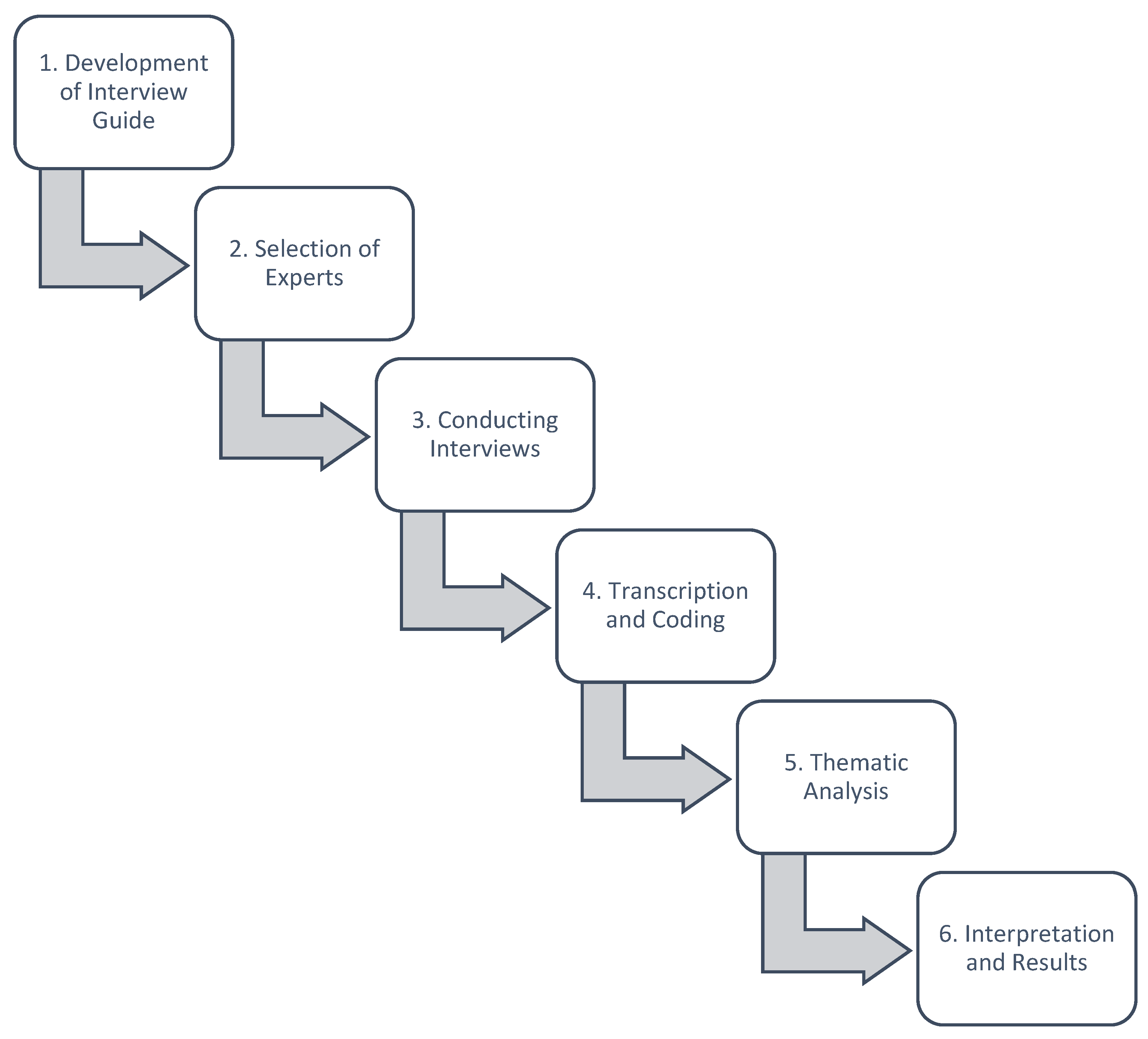
Figure 1 illustrates the methodological process of the study, from the development of interview guide according to literature, to the final thematic analysis of expert interviews.
The investigation was conducted using an interview guide with 17 open-ended questions, supplemented by clarifications designed to capture the widest possible range of meanings—from technical hurdles to the nuances of social perception. The aim was to encourage spontaneous responses and allow participants to articulate their perspectives freely, so keyword-based prompts were only introduced if a respondent was unable to respond ad hoc. The overarching goal was to elicit unfiltered, experience-based answers specific to phenomenological interviews, which are known to be often used for collecting rich, descriptive data regarding the participants’ experiences.
The interview guide with 17 open-ended questions presented in
Table 1 was developed according to the literature [
23,
24,
25,
26,
27,
28] to explore through 4 to 5 questions each of the 4 analytical dimensions of interest: technological efficiency; societal awareness, knowledge dissemination, and public acceptance of synthetic fuel technologies.
Therefore, the development of the research framework and the formulation of the interview questions were informed by the four key thematic clusters identified in the academic debate on synthetic fuels and energy transition described below.
Existing research investigates the role of synthetic fuels in the energy transition from several perspectives. The first group of studies [
29,
30,
31] focuses on technical efficiency and lifecycle emissions, assessing the overall climate impact of e-fuels compared to alternative decarbonization pathways. A second strand [
32,
33,
34,
35] examines economic feasibility and infrastructure requirements, particularly the cost competitiveness of synthetic fuels relative to electrification. Based on the critically examined efficiency of synthetic fuels, these two groups of studies indicate that application areas of the various types of synthetic fuels are crucial for their economic potential. Considering the electrification of private mobility, which is also strongly politically driven, a direct comparison with the alternative of combustion engines in combination with synthetic fuels is also recommended. Therefore, these two groups of studies informed the formulation of the first five questions included in our research instrument for assessing the dimension of efficiency (Q1–Q5).
Finally, several studies employ quantitative modeling approaches, such as energy system models or scenario analyses, to evaluate the long-term role of synthetic fuels within integrated energy systems, as well as concerns regarding the lack of awareness, knowledge, and acceptance criteria among the public and decision-makers [
29,
36,
37] arising from the circumstances described in the Introduction of our paper. This group of studies informed the formulation of Q6–Q17 open-ended questions included in our research instrument for assessing the awareness (Q6–Q9), knowledge (Q10–Q13) and acceptance (Q14–Q17), which influence the societal feasibility of implementing synthetic fuel strategies.
Therefore, the interview guide comprising the 17 questions presented in
Table 1 was developed to explore expert perspectives across these interconnected dimensions that reflect central determinants influencing the implementation of new energy technologies, and addresses a research gap by exploring how experts assess the interplay between efficiency, awareness, knowledge, and societal acceptance in the context of synthetic fuels.
2.2. Participant Selection and Sample
The selection of interview participants was based on their authority in the field as it was derived from the analysis of online information sources such as LinkedIn professional network and bibliometric search of Scopus database for the papers published between 1919–2023 on the topic of synthetic fuels in relation to efficiency, awareness, knowledge, and acceptance.
Based on the results of this analysis, a total of 59 experts were identified and contacted via contact information publicly available on institutional websites and professional social media platforms such as LinkedIn.
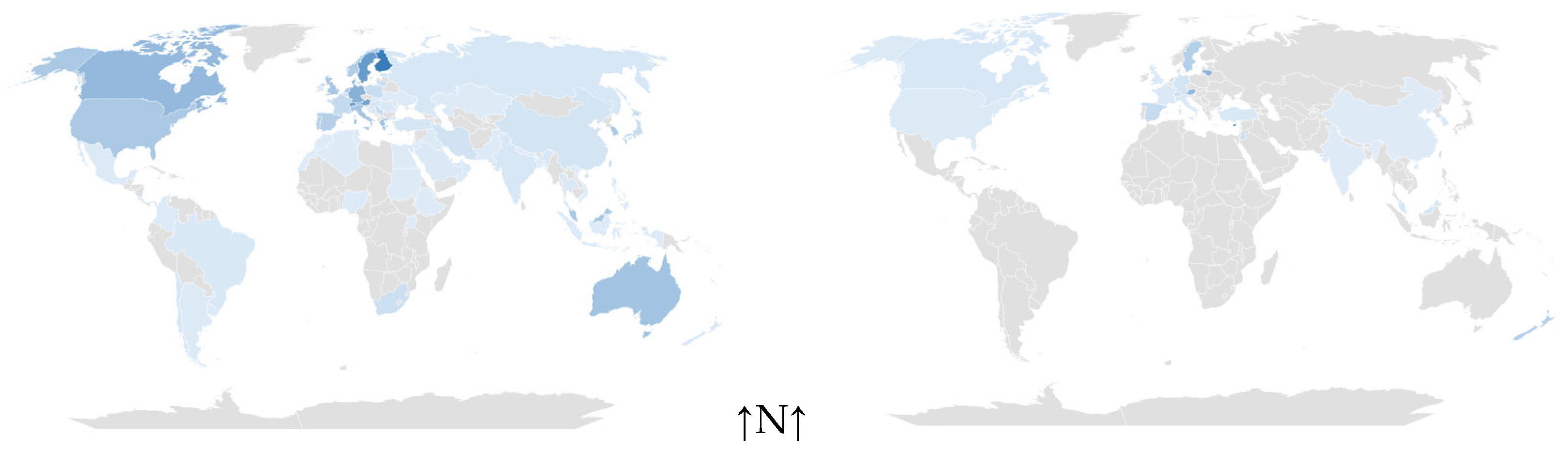
The invitations to participate in the study was therefore sent to the 59 experts—most of them placed in the European context (Germany especially), as reflected by the geographical concentration of our analysis results and the relevance of Germany within European energy and mobility debates (see
Figure 2). Germany represents a leading case in energy transition policy and industrial transformation, making it a particularly relevant context for analyzing the role of synthetic fuels within a broader European and global debate. As 77.78% of the participants of the expert survey identified themselves as belonging to the energy sector and 78.38% to the profession of engineering and technology, the selection was refined accordingly. Furthermore, the selection process considered the strong connection to mobility and focused on inviting experts with a high influence on the topic.
Within the available timeframe (8 March 2024–30 April 2024), 11 experts agreed to participate and were interviewed. All participants were based in Germany; however, it was acknowledged that many of the represented companies and institutions operate internationally, allowing the interviews to capture perspectives beyond a purely national scope.
All participants (P1 to P11) and organizations were pseudonymized for data protection reasons. Sectors and roles were indicated only in categorical form (see
Table 2).
The composition of the sample followed a cross-sectoral approach. The primary focus was on the energy sector, which constituted the largest share of participants. In addition, experts from research institutes and universities, environmental organizations, the political and regulatory environment, and engineering and technology-oriented fields were included. To enable counter-comparisons, experts in electric drives and electromobility were deliberately selected. Although attempts were made to include representatives from the automotive sector, this was not feasible within the given period.
Participants represented a wide range of organizational sizes, from small and medium-sized enterprises to large organizations with more than 250 employees or annual revenues exceeding 50 million euros. This categorization served as an orientation for assessing decision-making power and institutional influence [
26,
27].
In terms of roles, participants included technical specialists, scientific experts, engineers, and strategic or managerial decision-makers. This encompassed researchers and authors known from the literature review, practitioners with system and implementation-oriented expertise, and individuals involved in strategic planning, policy-related functions, and organizational leadership.
2.3. Data Analysis
All interviews were recorded using OBS Studio software (version 30.1.2) to ensure reliable audio and video documentation. The recordings were subsequently transcribed and analyzed using a qualitative coding approach. Transcription and translation to English were conducted via TurboScribe, resulting in 187 A4 pages. The systematic assignment of the answers to the questions in the interview guide and all further analysis purposes were done with MAXQDA software (version 24.4.1)—one of the industry-leading tools for qualitative and mixed-methods research.
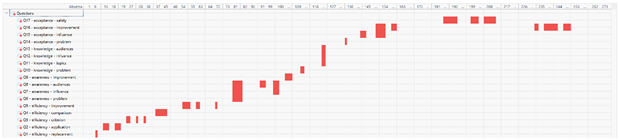
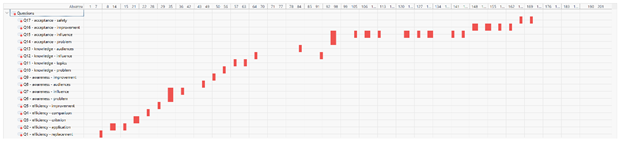
An analysis of response length and distribution showed that all participants addressed all questions, albeit with varying depth (see
Appendix A,
Table A1). Participants frequently combined answers to multiple questions, reflecting the interconnected nature of the topics. Overall, the interviews closely followed the question catalogue, with no major deviations or outliers, indicating methodological consistency and reliability. The coding process followed a thematic analysis procedure. First, transcripts were reviewed to identify preliminary themes related to efficiency, awareness, knowledge, and acceptance. In a second step, statements were systematically coded and grouped into thematic categories. Finally, the categories were analyzed to identify recurring patterns and expert consensus or divergence across the interviews (
Table 3).
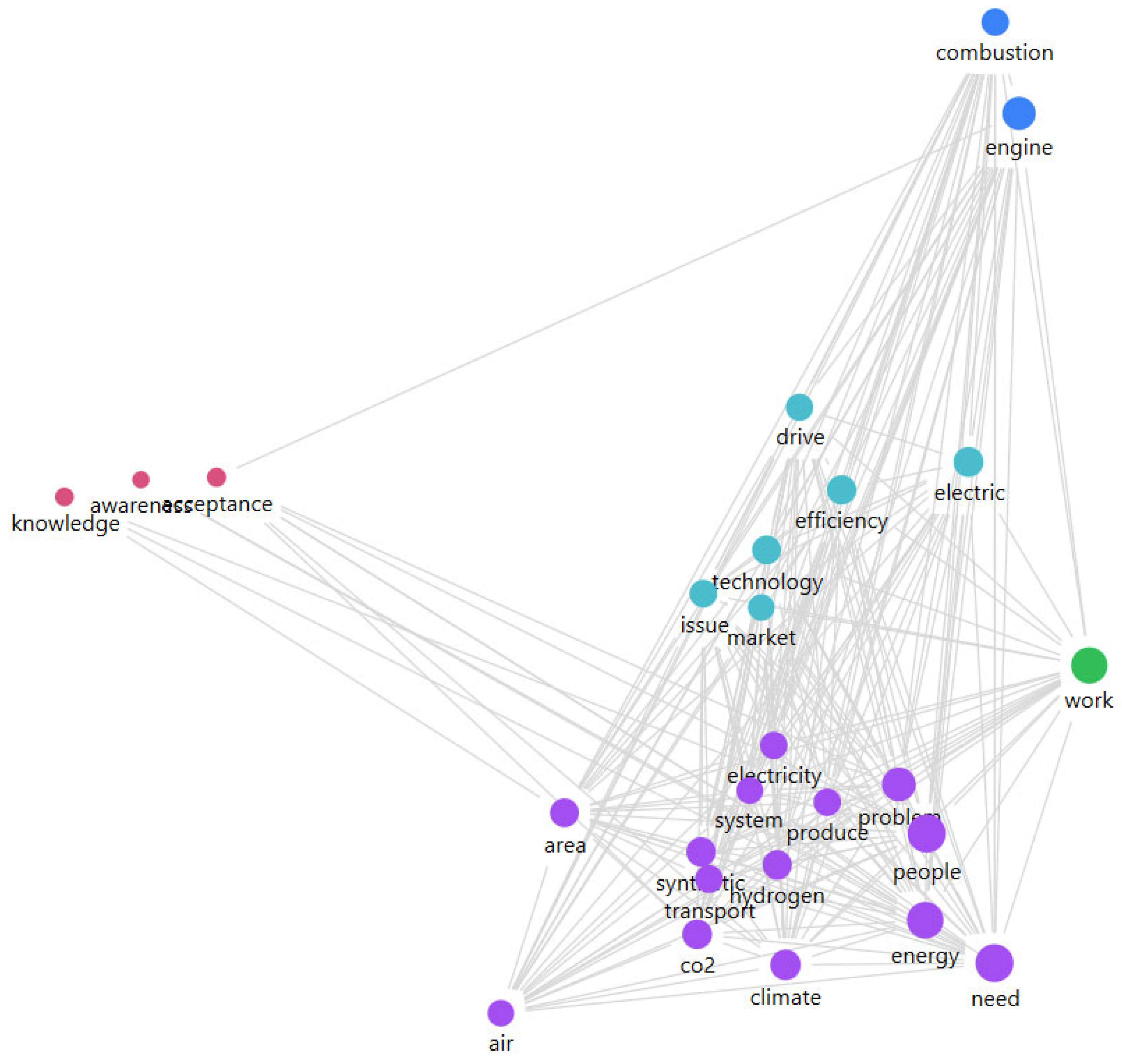
To filter out the most relevant subject areas, the most relevant keywords in accordance with their occurrence were used and filler words were removed beforehand. The resulting code co-occurrence network in
Figure 3 exhibits a clustered structure dominated by a densely connected techno-energy core, in which concepts such as hydrogen, energy, system, electricity, transport, synthetic, CO
2, climate, and production are strongly interlinked, indicating that the discourse primarily revolves around energy system configuration, alternative fuels, and environmental impacts (purple cluster). This core is closely connected to a technological performance cluster comprising engine, combustion, electric, drive, efficiency, technology, and market, reflecting an integrated framing of propulsion technologies, system efficiency, and market-related issues (blue and light blue clusters). In contrast, socio-cognitive concepts including knowledge, awareness, and acceptance form a small, peripheral cluster (red cluster) with comparatively weak ties to the central techno-economic network, suggesting that public understanding and social acceptance remain marginal within the dominant narrative. The positioning of work (green cluster) as a distinct but connected node points to an instrumental framing of implementation and practical feasibility, while the overall network topology underscores a technocratic orientation of the discourse, in which technological solutions and system-level considerations are foregrounded, and social dimensions are comparatively under-integrated.
To enhance the validity of the findings, the coding process was conducted iteratively and cross-checked for consistency. In addition, the results were compared with existing literature to ensure conceptual alignment and robustness of interpretations.
Across all interviews, efficiency-related codes were the most frequently identified category, followed by acceptance, awareness, and knowledge, indicating a strong emphasis on technological and system-level considerations.
3. Results
3.1. Efficiency and Systematic Role of Synthetic Fuels
Efficiency emerged as the central and structuring theme across all interviews. Participants consistently emphasized the substantial energy losses associated with synthetic fuels along the entire production chain, from renewable electricity generation through electrolysis, synthesis, and final use. Several interviewees explicitly problematized the way efficiency is discussed in public and political debates, stressing that different system boundaries are often conflated. In this regard, Participant 1 emphasized that it is necessary to distinguish between efficiency from “tank to wheel” and efficiency along the upstream chain “from the production of the fuel to the tank,” arguing that current debates frequently mix these perspectives and thus compare fundamentally different analytical frames.
In direct comparison with electro-mobility, the interviews clearly highlighted that the direct use of renewable electricity is significantly more efficient wherever technically feasible. Participant 4 pointed out that even if synthesis processes improve over time, the overall efficiency of synthetic fuels will structurally remain significantly worse than that of direct electrification, as multiple energy-intensive conversion steps cannot be avoided. This efficiency gap was repeatedly framed as a core systemic constraint rather than as a temporary technological drawback. Participant 11 further noted that when comparing battery-electric vehicles with combustion engines operated on synthetic fuels, the electricity demand for the latter is several times higher for the same mobility service, thereby underlining that efficiency differences are not marginal but decisive at the system level.
As a result, synthetic fuels were broadly rejected as a universal replacement for fossil fuels across all sectors. Instead, experts converged on the view that their application should be limited to specific, hard-to-electrify use cases where high energy density or particular chemical properties are required, such as aviation, maritime transport, long-distance heavy-duty transport, or certain industrial processes. This differentiation was repeatedly stressed across interviews. Participant 6 summarized that while synthetic fuels can technically be used “basically everywhere,” their sensible application depends on where alternatives such as battery-electric or hydrogen-electric solutions are technically and economically feasible. Participant 11 emphasized that, from a system-wide and economic perspective, synthetic fuels “only make sense in some areas where there are no technical alternatives,” explicitly referring to aviation and ocean shipping.
Efficiency was thus not treated as a secondary drawback but as a decisive criterion that fundamentally limits the future role of synthetic fuels within a resource-constrained energy system. Renewable electricity was consistently described as a scarce resource that must be allocated strategically to maximize climate mitigation effects. In this context, Participant 8 argued that using renewable electricity for inefficient conversion chains entails significant opportunity costs, as the same electricity could achieve far greater emission reductions if used directly. The conversion of electricity into synthetic fuels and subsequent reconversion at the point of use was therefore consistently described as a last-resort option rather than a preferred pathway. As Participant 8 put it, from a system perspective synthetic fuels are more of a fallback solution than a primary strategy, particularly given the limited short-term availability of renewable electricity at scale.
These findings are consistent with previous research emphasizing the systemic efficiency disadvantages of synthetic fuels compared to direct electrification pathways [
32,
36]. Several studies similarly highlight that synthetic fuels should be prioritized for hard-to-electrify sectors due to their conversion losses [
33,
37].
3.2. Awareness
Beyond efficiency, awareness was repeatedly framed as a societal and communicative challenge rather than a purely technological one. Participants from science, energy, and politics emphasized that public discourse is dominated by simplified and binary narratives that hinder a nuanced understanding of energy systems, technological trade-offs, and systemic interactions. From a scientific perspective, awareness was described as insufficiently developed with regard to the functioning of the overall energy system, the distinction between decarbonization and defossilization, and the conditional role synthetic fuels could play within a diversified energy mix. Several participants observed that the complexity of these interrelations is incomprehensible to most societal actors, not due to a lack of intelligence or formal education, but because these issues require systemic thinking that goes beyond everyday experience.
Awareness was therefore not seen merely as a question of information availability, but as a problem of framing, long-term thinking, and the ability to relate technological solutions to broader societal and climatic challenges. Participant 1 noted that many people, including decision-makers and experts from adjacent fields, tend to reject synthetic fuels simply because they do not fit into their established mental models of how energy transitions “should” work. This was linked to the dominance of efficiency-first narratives and all-electric visions promoted by highly visible opinion leaders, which, while sounding plausible at first glance, obscure the complexity of system-level trade-offs.
Educational measures were repeatedly highlighted, including the need to communicate advantages and disadvantages of different technological pathways, to provide best-practice examples, and to foster a deeper understanding of energy systems, social circumstances, and long-term problem-solving strategies. Participant 3 explicitly referred to the need to motivate younger generations while simultaneously correcting misconceptions that have accumulated over time in older generations. Political communication and scientific outreach were described as decisive in shaping awareness, with Participant 1 emphasizing that without systematic education and credible examples, synthetic fuels remain an abstract concept for most people.
From the energy sector, awareness was similarly framed as a matter of experience and visibility. Participant 2 argued that large-scale demonstration systems are necessary to build credibility and awareness, as abstract discussions alone are insufficient. According to Participant 2, experience gained through pilot projects and industrial-scale applications would allow discussions to be based on “hard facts” rather than assumptions or ideological positions. Several participants suggested that sustainability, circular economy principles, and boundary conditions of energy systems should be taught more systematically, for example as dedicated subjects within MINT education (Mathematics, Informatics, Natural Sciences, and Technology—the German equivalent of STEM) at schools and universities. Awareness was thus closely linked to formal education as well as to practical exposure. In addition, Participant 7 explicitly referred to the concept of a climate-friendly combustion engine in combination with the broader consequences of an all-electric energy transition, suggesting that awareness must encompass systemic interactions rather than isolated technologies.
Political-sector participants emphasized communication and narrative construction as central elements of awareness. Participant 5 highlighted that climate protection is no longer a niche topic but a highly visible societal issue, deeply intertwined with employment, economic stability, and geopolitical developments. Awareness was therefore described as being shaped by media reporting, political framing, and the perceived complexity of the topic. Several political participants stressed that awareness-building must acknowledge the global nature of climate change and energy transitions, rather than framing them as exclusively national or European challenges. Overall, awareness was repeatedly described as a prerequisite for informed decision-making, yet currently characterized by fragmentation, oversimplification, and competing narratives.
This observation aligns with existing literature highlighting that public discourse on energy transition technologies is often characterized by simplified narratives and limited system understanding [
29,
36].
3.3. Knowledge
Closely connected to awareness, the interviews revealed substantial knowledge gaps across all sectors. When asked whether knowledge gaps exist, responses predominantly indicated that such gaps are present, although their nature varies. In the scientific sector, some participants initially expressed neutral or hesitant positions, but the overall tendency pointed toward a lack of large-scale industrial experience rather than a lack of theoretical knowledge. Participant 1 emphasized that the fundamental processes of synthetic fuel production are well known, but that empirical knowledge from industrial-scale deployment and continuous operation is largely missing. Participants noted that while many synthesis processes are well understood on a laboratory or pilot scale, there is limited empirical knowledge regarding industrial-scale deployment, system integration, and long-term operation.
Scientific participants further identified specific knowledge gaps related to process chains, large-scale interconnections between the chemical industry and fuel production, infrastructural advantages and limitations, fuel standards, quality, composition, quantities, and the diversity of production pathways. Participant 6 pointed out that the question of what should even be defined as “e-fuel” already reveals conceptual uncertainty along the value chain. Concerns were also raised about potential knowledge loss resulting from an exclusive focus on electrification. Participant 9 warned that competencies related to combustion engines and fuel synthesis might erode if alternative pathways are not pursued in parallel, thereby reducing technological flexibility in the long term.
From the energy sector, knowledge gaps were described in terms of both research and development and societal understanding. Participant 2 acknowledged that fundamental synthesis processes have been known for decades but pointed to uncertainties regarding optimal production locations, hydrogen infrastructure such as pipelines, and the marketing of green solutions under conditions of higher pricing. Participant 8 added that large-scale production is likely to take place in regions with high renewable energy potential, which raises unresolved questions regarding geopolitical dependencies and global supply chains.
Political-sector participants emphasized knowledge gaps related to industrialization at scale, such as the deployment of electrolyzers capable of processing salt water directly or the integration of direct air capture technologies. Participant 4 referred to the need for reorganization of industrial building blocks on a large scale, indicating systemic uncertainties rather than isolated technical questions. Engineering-sector participants highlighted disinformation and instrumentalized climate protection narratives as major contributors to perceived knowledge gaps. Participant 1 argued that ideological narratives may dominate short-term debates, but that real-world experience and physical constraints will eventually challenge these positions, underlining the importance of experiential knowledge gained through implementation.
When discussing influences on knowledge gaps, participants across sectors pointed to political, social, and economic factors. Scientific participants referred to green methanol initiatives involving industrial actors but also highlighted declining societal awareness of climate protection, time pressure, limited budgets, and infrastructural constraints. From the energy sector, Participant 2 mentioned renewable-based projects in South Africa and Chile as illustrative examples, alongside the argument that the widespread claim that “everything is cheaper with renewables” is misleading and that transformation inevitably involves costs that must be communicated honestly. Political uncertainty, particularly at the European level, the lack of clear frameworks, combustion engine bans, blending targets, and funding mechanisms were repeatedly cited by Participant 4 and Participant 11 as contributors to uncertainty and knowledge gaps.
Across all sectors, politics was consistently identified as the most critical audience influencing knowledge development and dissemination. Scientific institutions, national and EU-level decision-makers, and actors dependent on political strategies were described as central audiences whose lack of clarity, consistency, or transparency significantly shapes learning processes. This assessment was shared even by political participants themselves, who acknowledged untraceable decision-making processes and insufficient alignment between funding, education, and long-term strategy.
The identified knowledge gaps, particularly regarding large-scale industrial implementation, are consistent with previous studies pointing to the limited empirical experience with synthetic fuel systems at scale [
32,
35].
3.4. Acceptance
Acceptance was the most intensively discussed topic. Nearly all participants agreed that acceptance problems exist, not only regarding synthetic fuels but also in relation to electromobility and the broader mobility transition. Acceptance was framed as a systemic and societal issue, rather than a technology-specific one. Participant 11 explicitly emphasized that acceptance problems concern electromobility and the entire mobility transition, not synthetic fuels alone.
When discussing influences on acceptance, participants articulated a wide range of interrelated factors. From the scientific perspective, Participant 3 highlighted generational responsibility, short-term financial interests, and the lack of long-term planning among shareholders, managers, and politicians. Germany’s long-standing role as an energy importer was repeatedly mentioned by Participant 1, along with the need for technology openness, considerations of individual mobility needs, regulatory perspectives, energy security, and the inherent complexity of the topic. Energy-sector participants pointed to high costs, an exhausted public debate, black-and-white thinking, and problematic wording as central acceptance barriers. Several participants, including Participant 9, explicitly argued that the discourse should shift from “decarbonization” toward “defossilization,” emphasizing the reduction of fossil resource dependence rather than a narrow focus on carbon emissions.
Political-sector participants framed acceptance within the context of a freedom-oriented society, geopolitical crises, employment risks in the automotive industry, and uncertainties regarding the consequences of climate change. Participant 5 referred to ideological polarization and competing visions of societal transformation, such as degrowth versus technology-driven approaches. Engineering-sector participants reinforced the defossilization narrative and stressed the importance of market-based competition, freedom, and the continued use of existing infrastructure. Time, cost, resource availability, and efficiency gains through existing systems were cited as additional acceptance-related factors.
Measures to improve acceptance consistently emphasize positive communication, education, incentives over prohibitions, regulatory simplification, transparency, and long-term political commitment. Participant 2 argued that rewarding desired behavior is more effective than punishment. Technology openness, global perspectives, blending quotas, funding mechanisms, and faster ramp-up were repeatedly mentioned as relevant levers. Overall, acceptance was portrayed not as a single-variable problem but as the outcome of complex interactions between political frameworks, societal narratives, economic incentives, and technological realities.
These findings support prior research suggesting that acceptance of alternative fuels is strongly influenced by cost perceptions and societal framing rather than purely environmental considerations [
21].
3.5. Conceptual Ambiguity and Discursive Framing
A recurring theme across the coded material was the conceptual ambiguity of e-fuels. They were frequently treated as imprecise umbrellas encompassing a wide range of production pathways, energy carriers, and use contexts. This lack of conceptual precision obscures crucial differences regarding electricity sources, carbon sources, and the resulting climate impacts, thereby complicating both scientific assessment and political debate. Participant 6 emphasized that already the question of what should be defined as “e-fuel” reveals significant conceptual uncertainty along the value chain.
Closely related to this ambiguity was a problematic framing of e-fuels as an apparently simple drop-in solution. Participants repeatedly observed that e-fuels are often presented as near-direct substitutes for fossil fuels, implying that existing infrastructures and usage patterns can be maintained without substantial change. This frame systematically neglects the significant efficiency losses that occur throughout the entire production chain of e-fuels. Participant 4 noted that these losses are frequently downplayed in public discourse, leading to an overestimation of the performance and climate benefits of e-fuels relative to other technological options.
The coded material further highlighted a widespread tendency to overestimate the short-term availability and scalability of e-fuels. Expectations of rapid deployment were described as poorly aligned with constraints related to renewable electricity supply, infrastructure development, and economic feasibility. Participant 11 emphasized that even under optimistic assumptions, current project pipelines would only be able to cover a fraction of the demand in those sectors where e-fuels are indispensable. In this context, several participants suggested that references to e-fuels function as a discursive instrument that allows actors to postpone or soften more immediate and transformative measures.
Overall, the coded segments portrayed synthetic fuels as a technology with a limited, highly conditional, and context-dependent role in energy transition. They were neither dismissed outright nor embraced as a comprehensive solution. Instead, the material consistently called for a sober and differentiated assessment that takes efficiency losses, resource constraints, infrastructural limitations, and systemic interactions seriously. Synthetic fuels were thus framed as a complementary option for narrowly defined applications, whose contribution to climate mitigation depends on strict boundary conditions and realistic communication of both potential and limitations.
This conceptual ambiguity has also been discussed in previous studies, which highlight the inconsistent use of the term “e-fuels” across different technological pathways and policy debates [
32,
36].
3.6. Limitations and Directions for Future Research
While this study provides nuanced qualitative insights into the role of synthetic fuels, several limitations coming from the exploratory nature of qualitative research, the sample composition and geographical focus should be considered when interpreting the results.
The empirical basis consists of in-depth interviews with 11 experts, most of whom are embedded in institutions operating within the German and European context. Although the sample size is appropriate for qualitative exploration to reach thematic saturation, and the participant experts often work internationally, their perspectives may still be influenced by regional policy frameworks and technological debates, which limits the generalizability of the results. The findings reflect a high-level strategic alignment—specifically the consensus on synthetic fuels as an option for hard-to-electrify situations—which might be further diversified with a larger, more heterogeneous sample.
Therefore, the first limitation that should be considered is related to the fact that the findings might be influenced by the German sociopolitical context, characterized by a dominant all-electric policy narrative and specific regulatory debates like the combustion engine ban discussed in the literature [
27]. To enhance generalizability, future research is called to examine expert perceptions in regions with different energy profiles or policy priorities—such as North America or sun-rich regions in the Global South.
A second significant limitation is the current absence of representatives from the automotive manufacturers in the sample. Since automakers represent the primary end-user industry for transport fuels, their experts might have provided a more balanced view regarding the market viability of drop-in solutions and the practicalities of maintaining existing vehicle fleet infrastructures.
Future research should broaden sectoral and geographical scope. It should broaden sectoral scope to explicitly incorporate the automotive and logistics industries to capture market-pull perspectives and industrial implementation strategies. Future research, including automakers’ perspectives regarding the practical deployment of synthetic fuels in the transport sector, could provide additional insights into industry-specific technological and economic considerations.
Additional future studies might apply cross-regional analyses by conducting comparative studies between Germany and countries with high renewable energy export potential (e.g., Australia) to see how geographical resource abundance changes the efficiency (versus availability) discourse.
The third limitation concerns subjectivity—the inherent limit of qualitative research. The results reported in this paper reflect subjective assessments of the experts participating in the study, rather than quantitative measurements. Still, the paper provides a conceptual research framework with four dimensions (efficiency, awareness, knowledge, and acceptance) that can be further used in quantitative modeling approaches.
4. Discussion
The findings clearly position synthetic fuels as a technology with a limited and highly conditional role in the energy transition. They are neither dismissed outright nor endorsed as a comprehensive solution. Instead, their meaningful use is restricted to applications that are difficult or impossible to electrify directly and only under conditions of sufficient renewable electricity availability that do not compete with more efficient uses. This conditionality reflects not merely a pragmatic limitation, but fundamental systemic constraints arising from thermodynamic efficiency losses, infrastructure requirements, and the scarcity of renewable electricity as a strategic resource. Importantly, this study extends existing research [
23,
32,
36] by embedding these findings within expert-based qualitative insights across efficiency, awareness, knowledge, and acceptance dimensions.
Therefore, these findings are consistent with previous studies highlighting the efficiency limitations of synthetic fuels and their restricted applicability to hard-to-electrify sectors [
32,
33]. Existing research similarly emphasizes the importance of prioritizing direct electrification wherever technically feasible [
32,
36]. The results of this study therefore reinforce a growing consensus [
32,
33,
34,
35,
36] that synthetic fuels must be understood as a complementary rather than primary pathway within decarbonization strategies.
The strong emphasis on efficiency highlights the systemic implications of resource allocation within a constrained renewable energy system. Efficiency is not treated as a purely technical parameter, but as a normative and strategic criterion shaping priorities within the energy transition [
36,
37]. Allocating large amounts of renewable electricity to comparatively inefficient conversion chains entail significant opportunity costs, as the same electricity could achieve substantially higher emission reductions if used directly. This finding can be explained by structural factors such as limited renewable energy availability, economic cost pressures, and institutional constraints, which collectively shape the prioritization of technological pathways.
At the same time, the analysis reveals that efficiency assessments are frequently distorted by inconsistent system boundaries in public and political debates. Comparisons between technologies often neglect upstream processes, leading to misleading conclusions regarding overall system performance. This underscores the need for transparent, comparable, and life-cycle-oriented evaluation frameworks to support evidence-based decision-making.
Beyond technological considerations, awareness, knowledge, and acceptance emerge as deeply interrelated dimensions of the socio-technical transformation. Deficits in awareness regarding system complexity and trade-offs contribute to simplified and often polarized public debates. Knowledge gaps, particularly in relation to large-scale industrial implementation and system integration, limit the ability of stakeholders to assess realistic potential. Acceptance, in turn, is shaped by economic considerations, ideological positioning, and perceived risks related to employment, energy security, and individual mobility. These dimensions form a reinforcing feedback loop in which limited awareness constrains knowledge development, while contested acceptance dynamics influence political decision-making.
A cross-cutting challenge identified in the analysis is the conceptual ambiguity surrounding synthetic fuels. The use of “e-fuels” as an umbrella term obscures important differences in production pathways, carbon sources, and resulting climate impacts [
33,
36]. This lack of conceptual clarity facilitates simplified narratives that present synthetic fuels as near-universal drop-in solutions, thereby underestimating efficiency losses and resource constraints. The tendency to overestimate short-term scalability further contributes to unrealistic expectations and may distort policy priorities.
The findings also highlight the central role of governance. Political actors were identified as key drivers of knowledge dissemination, regulatory stability, and investment conditions. Inconsistent policy frameworks, shifting regulatory targets, and contested instruments such as bans or blending quotas create uncertainty and hinder long-term industrial development. At the same time, political communication and media framing significantly influence public awareness and acceptance. This underscores the importance of coherent, transparent, and long-term policy strategies grounded in system-level realities.
Overall, the results indicate that synthetic fuels must be embedded within a broader, system-oriented perspective that integrates technological, economic, and societal dimensions. Their role cannot be assessed in isolation, but only in relation to alternative decarbonization pathways and the structural constraints of the energy system.
5. Conclusions
This study explored expert perspectives on the role of synthetic fuels in the sustainable management of energy transition, with particular focus on efficiency, awareness, knowledge, and acceptance.
The findings indicate that synthetic fuels are not a universal solution, but a complementary option for specific applications, particularly in sectors where direct electrification is technically or economically limited. Their potential contribution is strongly constrained by efficiency losses, limited availability of renewable electricity, infrastructural requirements, and slow industrial scale-up. In addition, societal factors such as insufficient awareness, persistent knowledge gaps, and contested acceptance dynamics significantly influence their future role. Without addressing these dimensions, technological potential alone is unlikely to translate into large-scale implementation. The study highlights the need for a differentiated and system-oriented approach. Synthetic fuels should be strategically prioritized for applications where more efficient alternatives do not exist, while direct electrification should remain the preferred pathway wherever feasible. This requires transparent evaluation frameworks, consistent life-cycle perspectives, and realistic communication of both potentials and limitations.
The findings presented in this paper have the merit of paving the way for future research approaching quantitative validation and longitudinal tracking. The four dimensions identified here (efficiency, awareness, knowledge, and acceptance) offer a ready-to-use framework for large-scale quantitative surveys for measuring societal and industrial readiness more broadly. In terms of longitudinal tracking, the paper provides the start and the tools for future studies investigating how expert consensus evolves as pilot projects move to industrial-scale applications, particularly with regard to closing current knowledge gaps regarding large-scale systems integration.
From a policy perspective, the results underline the importance of stable and coherent governance frameworks. Long-term regulatory clarity, targeted funding mechanisms, and support for large-scale demonstration projects are essential to enable learning processes and reduce uncertainty. At the same time, effective communication strategies and educational initiatives are necessary to improve awareness, close knowledge gaps, and foster societal acceptance.
Ultimately, the paper offers a critical contribution to knowledge by fostering new systems of thought regarding sustainable development and a more nuanced understanding of synthetic fuels within the broader energy transition. It emphasizes that sustainable transformation cannot rely on singular technological solutions but requires the integration of technological feasibility with systemic responsibility, resource constraints, and long-term societal considerations. Synthetic fuels can play a meaningful role, but only under clearly defined conditions within a diversified and strategically managed energy system.