Design and Implementation of a Sustainable Engineering Education Model Based on the Integration of Lean Management Within Outcome-Based Engineering Education (OBEE): A Performance-Driven Approach


Abstract
1. Introduction
2. Literature Review
2.1. OBEE Approach
- Program Educational Objectives (PEO): The intended achievements of engineering graduates during their professional career, and specifically what they should demonstrate and achieve in the first few years following their graduation.
- Program Outcomes (POs): Detailed statements explicitly outline what is expected from engineering graduates upon graduation. POs are supposed to be closely aligned with Graduate Attributes.
- Course Outcomes (COs): describe the significant and fundamental knowledge and skills mastered by students and reliably demonstrated upon completion of the course. COs support and correlate with POs.
2.2. Lean Management
- X-Matrix: is used as a pivotal tool for strategy deployment. It is a Lean Management method that provides a systematic, rational, and visual framework for organizing, communicating, and evaluating the mission, vision, objectives, members responsible, and measures of organizational projects/initiatives [39]. The X-matrix serves as the primary document for monitoring the implementation of strategies grounded in Hoshin Kanri [40]. Hoshin Kanri is a Japanese concept that can be interpreted as “a ship navigating through a storm in the right direction,” a Lean approach that aligns strategy with implementation at all levels of an organization [41,42]. The following are the main steps to develop an X-matrix [43,44]:
- Define the main strategic objectives;
- Outline the key initiatives required to meet the objectives;
- Describe the tactical actions to undertake the primary initiatives;
- Identify the important metrics to measure tactical actions.
- PDCA cycles: are a core tool of Lean Management that promotes continuous improvement (Kaizen). The PDCA is a four-step cycle that uses a structured, effective process for problem-solving, testing ideas, learning from results, and putting changes into successful practices [45].
- Poka Yoke: is one of the most effective mistake-proofing techniques in Lean Management. Poka-Yoke has been used as one of the tools to overcome challenges that can affect errors and defects in the process. The concept consists of a thinking method that has been proven to deliver substantial outcomes for organizations that seek to decrease operational mistakes [46,47].
- Flow: one of the Lean concepts, it indicates the creation of a smooth, continuous workflow of products, information, or tasks that adds value to customers without waiting, batching, or bottlenecks [48].
- Takt Time: In Lean Management, Takt Time enables organizations to decrease waste production. Takt Time defines the production rate needed to satisfy customer demand for a particular product or service. Manufacturing systems that manage production rates based on consumer requirements can avoid overproduction, reduce inventory costs, and improve process efficiency [49].
- Muri: stands for overload, excess. The concept refers to the overload on equipment or personnel, which may result in errors, fatigue, and reduced efficiency. Poor planning or unrealistic expectations may lead to employee overload and poor performance [50].
- Standard: Lean production is based on “Standard Work,” which defines documented standards, discovers best practices, and identifies the most effective activities or operations to ensure quality, safety, and efficiency. Thus, it forms the cornerstone of continuous improvement by reducing variation and enabling problem-solving [51,52].
- Collective Intelligence: In Lean Management, the collective intelligence of an entire workforce mobilizes their knowledge, creativity, and problem-solving skills to foster a culture of continuous improvement. Instead of a top-down approach to decision-making, the focus is on frontline teams identifying constraints and providing innovative solutions [53].
2.3. Lean Management in Higher Education
3. Materials and Methods
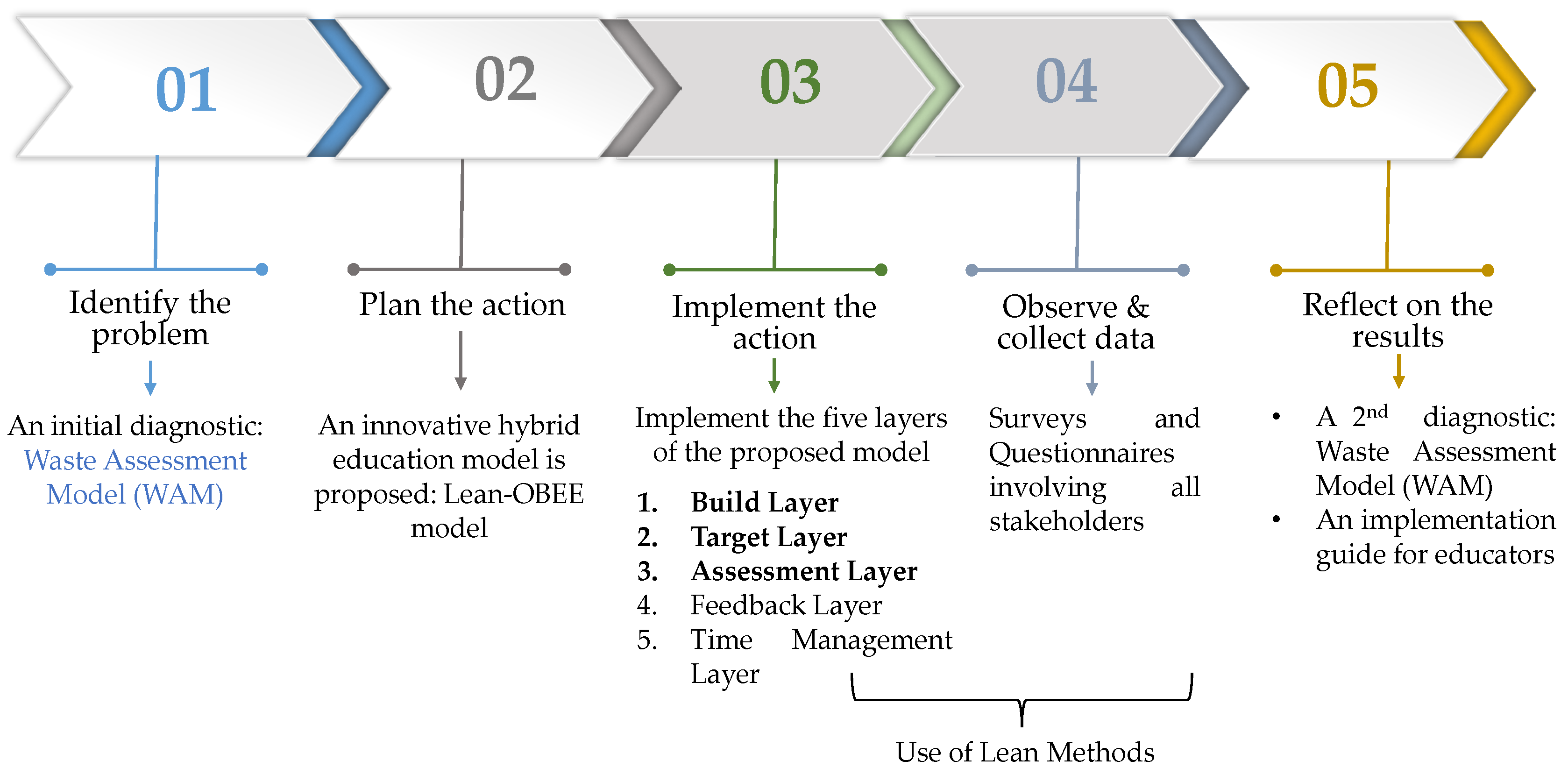
3.1. Research Methodology
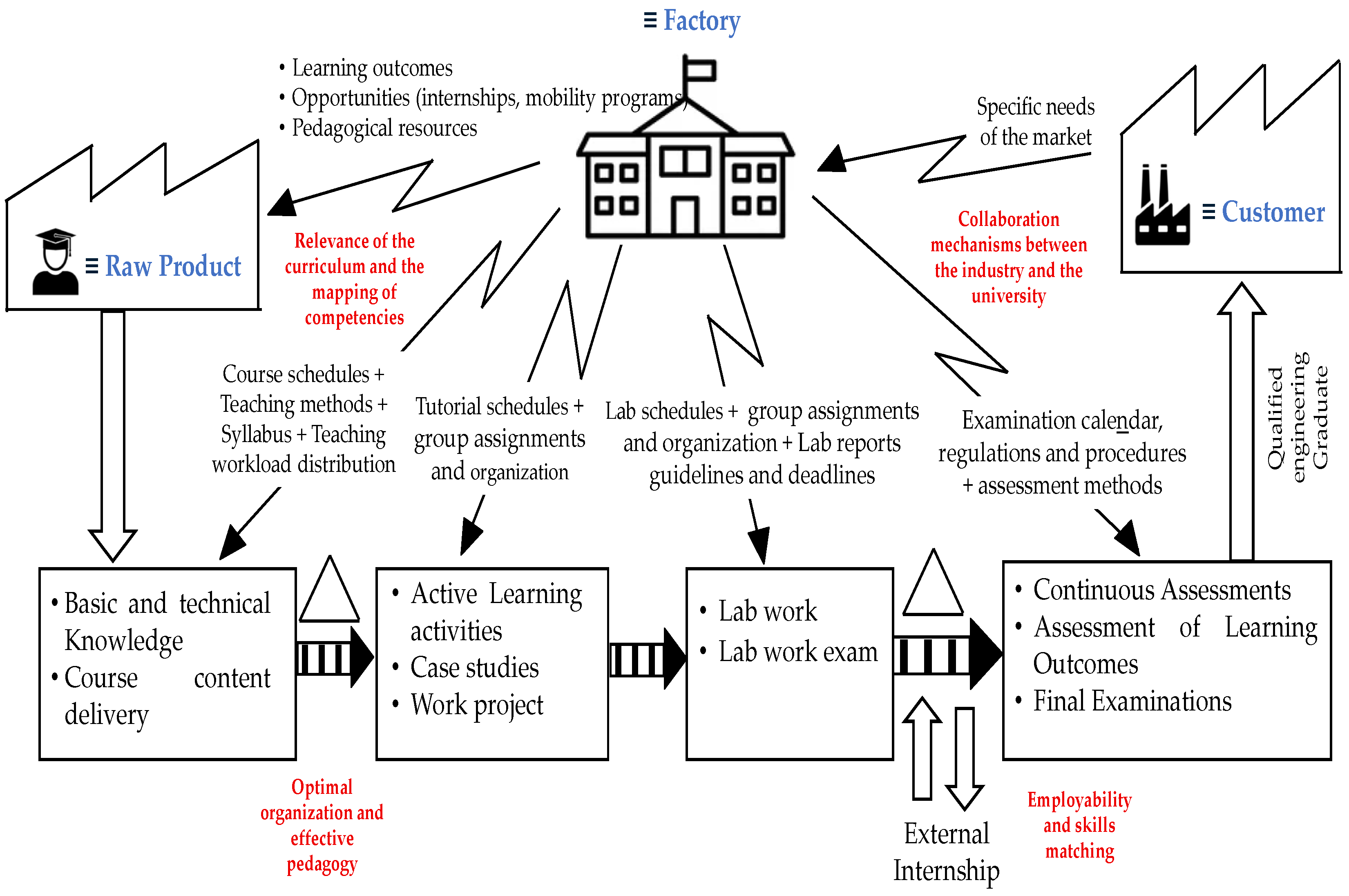
- Strategic alignment of educational content to current and future labor market requirements;
- Relevance of the curriculum and competency mapping;
- Industry-University collaboration mechanisms;
- Technological adaptation and pedagogical optimization.

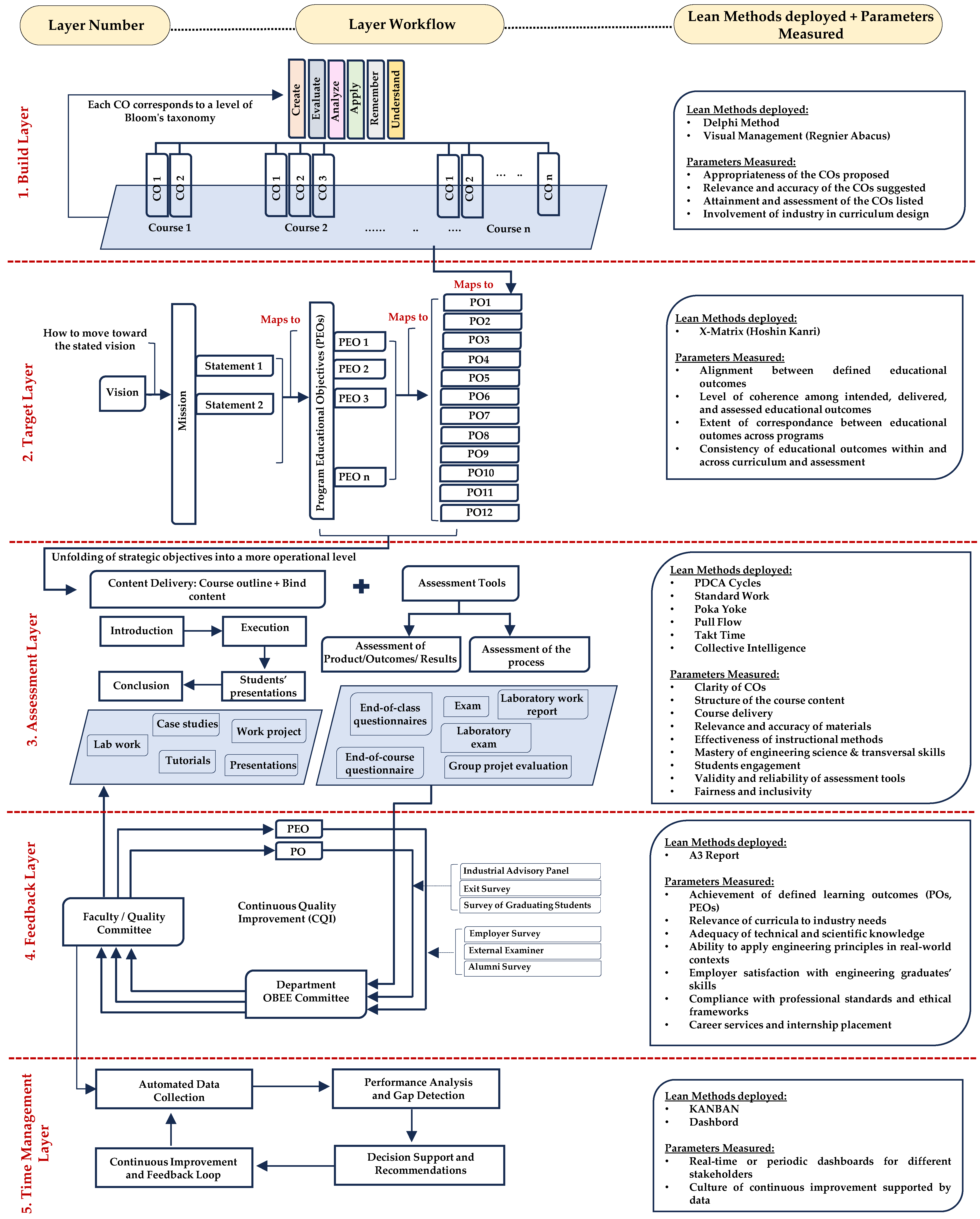
3.2. The Proposed Framework: LEAN-OBEE Design
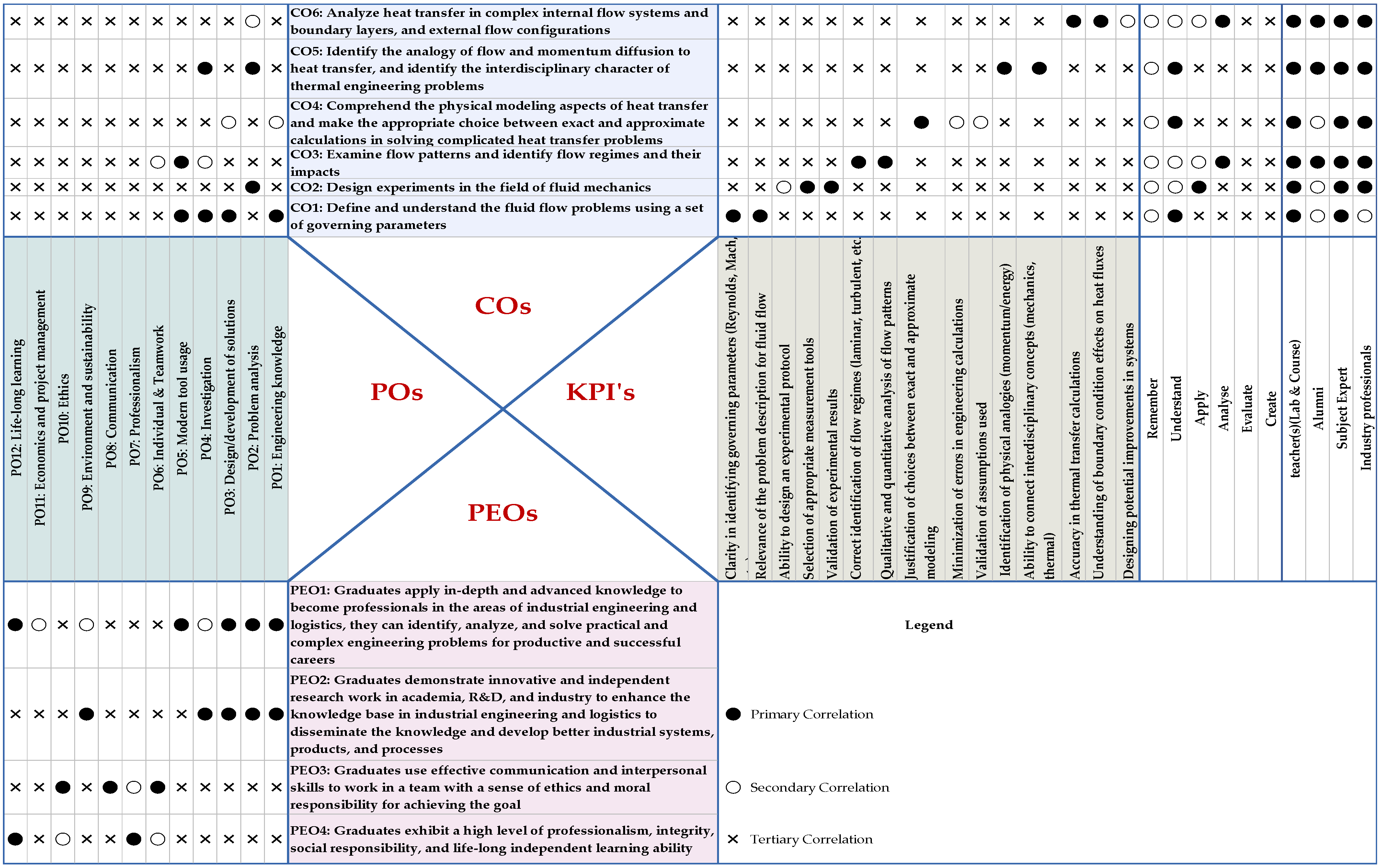
3.3. Target Layer
- Bottom Row: Long-term outcomes (PEOs)
- Left Column: POs
- Top Row: COs
- Key Performance Indicators (KPIs)
- Teams and Responsibilities
- Correlations and Legend
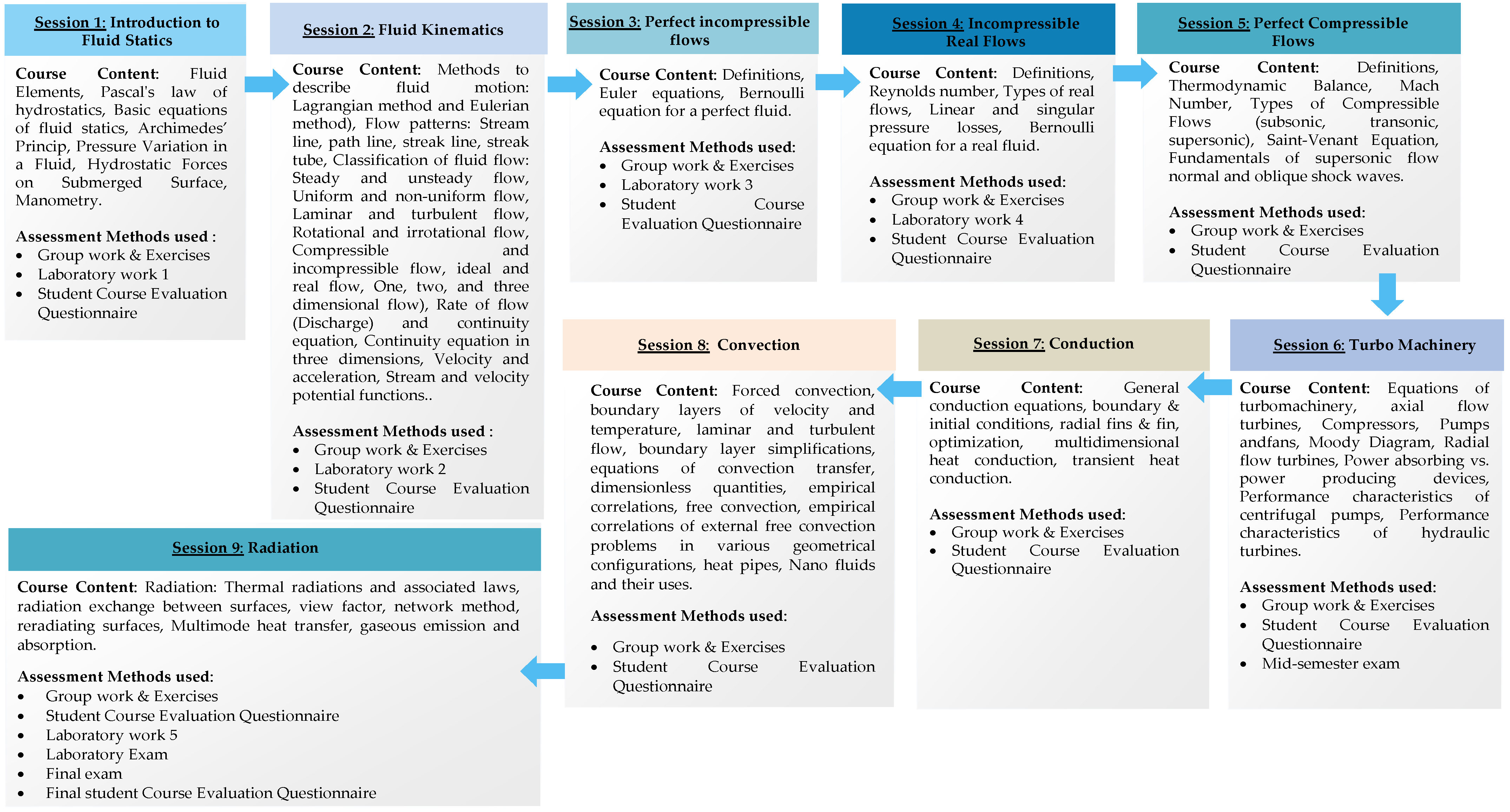
3.4. Assessment Layer
3.4.1. Content Delivery: Classroom Structure
3.4.2. Assessment Tools
4. Results
4.1. Study Context and Sample
4.2. Reliability Test and Inferential Analysis
4.3. Rationale of Case Study Selection
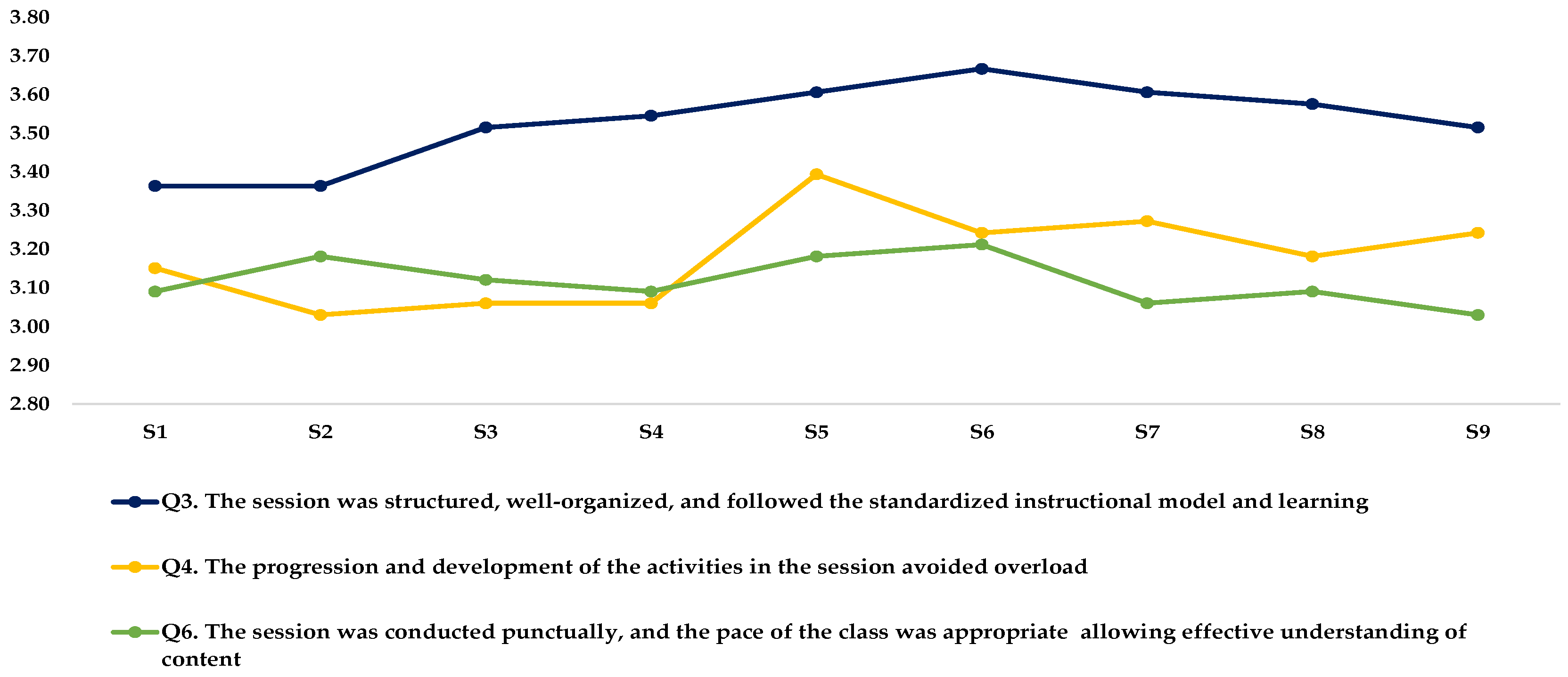
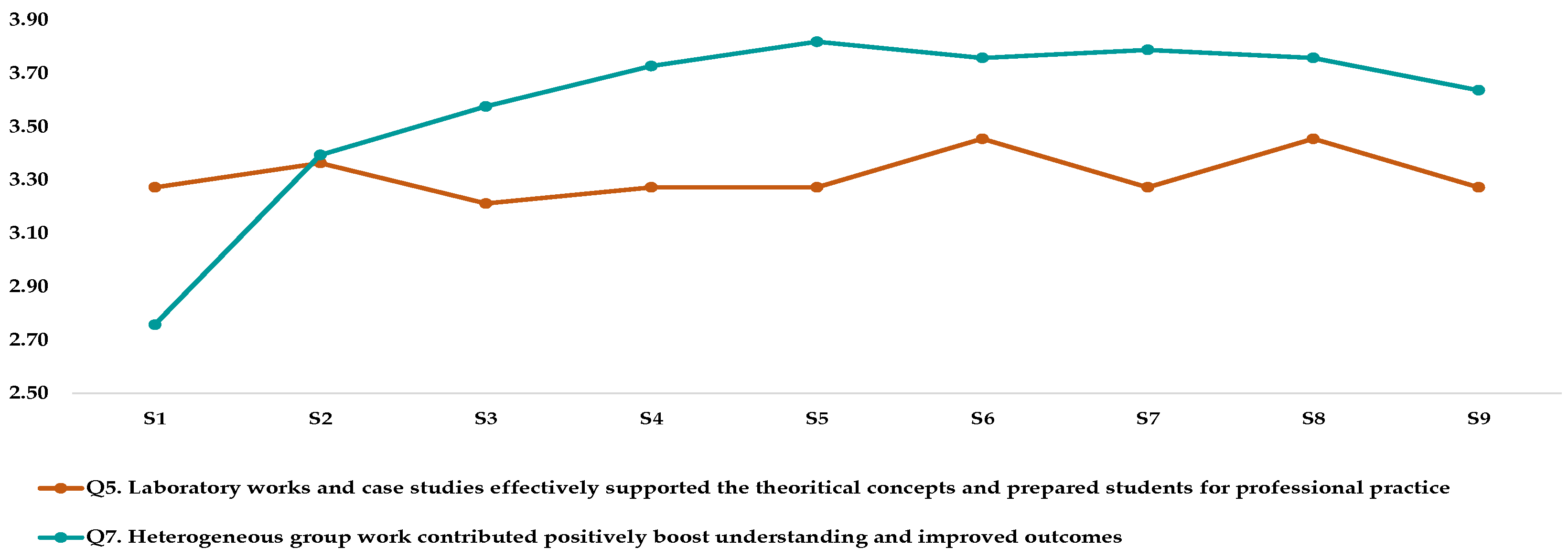
4.4. Lean-OBEE Implementation: Target and Assessment Layers
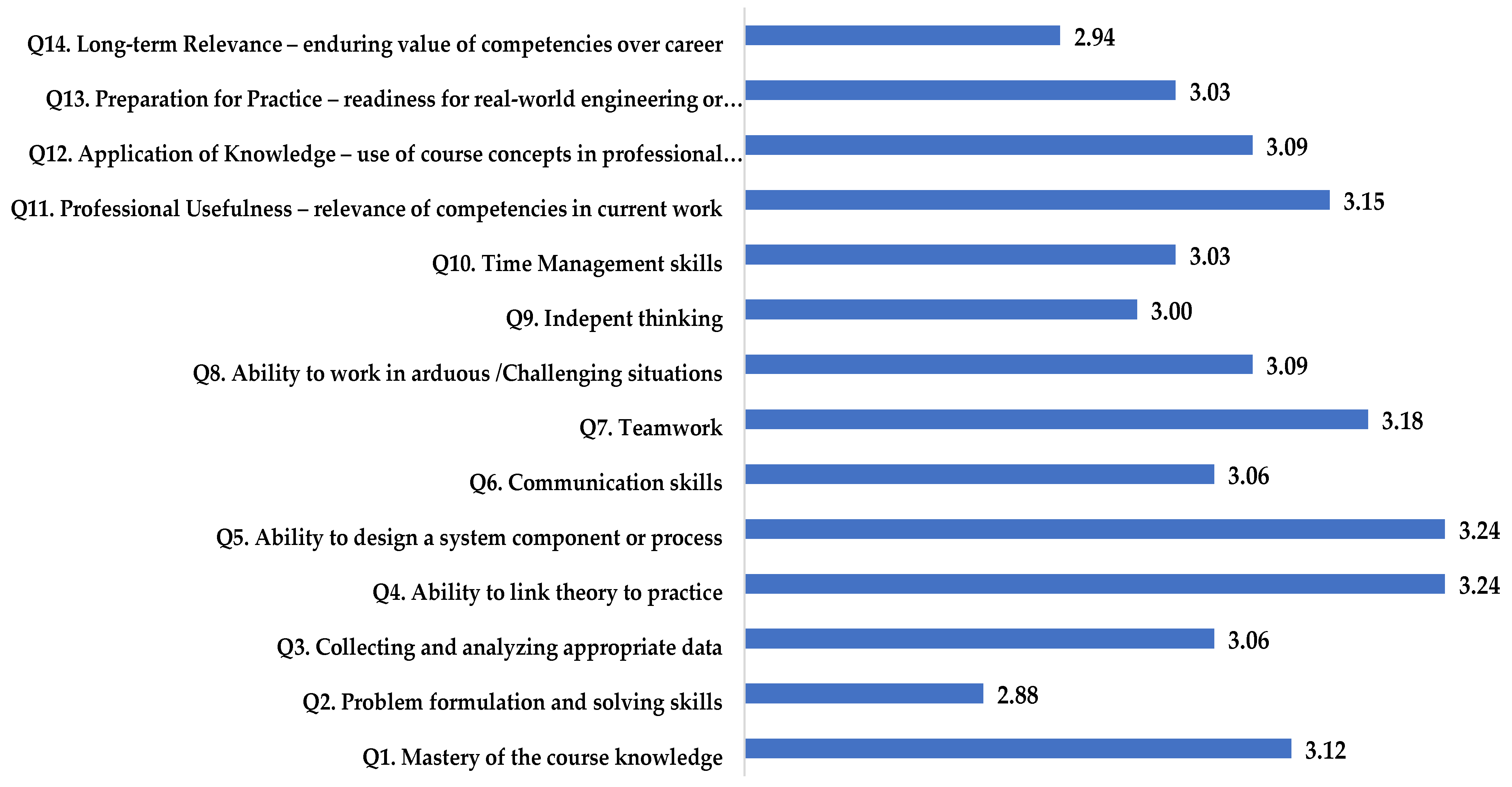
4.5. Preliminary Findings from Course Alumni and Employers
5. Discussion and Limitations
6. Conclusions
Author Contributions
Funding
Institutional Review Board Statement
Informed Consent Statement
Data Availability Statement
Conflicts of Interest
References
- Silva, P.; Felgueiras, C.; Caetano, N.S.; Martins, F.; Onofrei, G.; Blue, J.; Sintejudeanu, M.; Acitores, A.; Cruz, F.; Erro, A.M.; et al. Engineering Education for a Sustainable Future—A Systematic Literature Review and a Perspective. In Proceedings of TEEM 2024; Springer Science and Business Media Deutschland GmbH: Singapore, 2025; Volume Part F642, pp. 1207–1215. [Google Scholar] [CrossRef]
- Sidnyaev, N.I.; Opletina, N.V.; Butenko, Y.I.; Bolotova, E.E. Development of the Future Engineering Education System: New Solutions and Predictions. ITM Web Conf. 2020, 35, 07004. [Google Scholar] [CrossRef]
- Caratozzolo, P.; Chans, G.M.; Dominguez, A. Editorial: Continuing Engineering Education for a Sustainable Future. Front. Educ. 2025, 10, 1629507. [Google Scholar] [CrossRef]
- Fahim, A.; Tan, Q.; Bhatti, U.A.; Nizamani, M.M.; Nawaz, S.A. The Nexus between Higher Education and Economic growth in Morocco: An Empirical Investigation UsingVaR Model and VECM. Multimed. Tools Appl. 2022, 82, 5709–5723. [Google Scholar] [CrossRef]
- El Foutoun, M.; Kchikeche, A.; Mafamane, D. Exploring Youth Unemployment in Morocco: Evidence from Micro-Level Data. Econ. Horiz. 2023, 25, 49–62. [Google Scholar] [CrossRef]
- The Labor Market Situation in the Second Quarter of 2025. Available online: https://www.hcp.ma/ (accessed on 16 February 2026).
- Oustous, O.; Ihichr, A.; Idrissi, Y.E.B.E.; Lahcen, A.A. Evaluation and Quality Assurance for Higher Education in Morocco: The ANEAQ as the Main Actor. In Proceedings of the International Conference on Humanities, Social and Education Sciences, New York, NY, USA, 22–25 April 2021; Available online: https://files.eric.ed.gov/fulltext/ED626609.pdf (accessed on 20 February 2026).
- Pholphirul, P. Educational Mismatches and Labor Market Outcomes: Evidence from Both Vertical and Horizontal Mismatches in Thailand. Educ. Train. 2017, 59, 534–546. [Google Scholar] [CrossRef]
- Trajkov, A.; Kurunovski, S.; Karadjova, V.; Dicevska, S. Education and Labor Market Mismatch. In Proceedings of the ICEMIT, Blace, Serbia, 21–23 September 2023; pp. 105–116. [Google Scholar] [CrossRef]
- Marois, G.; Potančoková, M.; Bezat, A.; Crespo Cuaresma, J. Projecting Labour Market Imbalances and Skill Mismatch Under Demographic Change in the EU. Eur. J. Popul. 2026, 42, 4. [Google Scholar] [CrossRef]
- Rikala, P.; Braun, G.; Järvinen, M.; Stahre, J.; Hämäläinen, R. Understanding and Measuring Skill Gaps in Industry 4.0—A Review. Technol. Forecast. Soc. Change 2024, 201, 123206. [Google Scholar] [CrossRef]
- De, D.; Chowdhury, S.; Dey, P.K.; Ghosh, S.K. Impact of Lean and Sustainability Oriented Innovation on Sustainability Performance of Small and Medium Sized Enterprises: A Data Envelopment Analysis-Based Framework. Int. J. Prod. Econ. 2020, 219, 416–430. [Google Scholar] [CrossRef]
- Afif, F.-e.; Bouyahia, F. Waste Assessment Model for an Innovative Engineering Educational Framework: Integrating Lean Management into Outcome-Based Engineering Education (OBEE). Int. J. Eng. Trends Technol. 2025, 73, 127–146. [Google Scholar] [CrossRef]
- Qadir, J.; Shafi, A.; Al-Fuqaha, A.; Taha, A.; Yau, K.A.; Ponciano, J.; Hussain, S.; Imran, M.; Muhammad, S.S.; Rais, R.N.B.; et al. Outcome-Based (Engineering) Education (OBE): International Accreditation Practices. In Proceedings of the 2020 ASEE Virtual Annual Conference Content Access Proceedings, Online, 22–26 June 2020. [Google Scholar] [CrossRef]
- Heinzova, R.; Hoke, E.; Jánová, N. Lean Management Methods: Evidence from the Manufacturing Industry in the Czech Republic. Probl. Perspect. Manag. 2024, 22, 517–527. [Google Scholar] [CrossRef]
- Oliveira, K.B.; dos Santos, E.F.; Junior, L.V.G. Lean Healthcare as a Tool for Improvement: A Case Study in a Clinical Laboratory. In Proceedings of the Advances in Intelligent Systems and Computing; Springer: Cham, Switzerland, 2017; Volume 482, pp. 129–140. [Google Scholar] [CrossRef]
- Marsilio, M.; Pisarra, M. Lean Management in Health Care: A Review of Reviews of Socio-Technical Components for Effective Impact. J. Health Organ. Manag. 2021, 35, 475–491. [Google Scholar] [CrossRef] [PubMed]
- Aureliano, F.S.; Costa, A.A.F.; Júnior, I.F.; Rodrigues, R.A. Application of Lean Manufacturing in Construction Management. In Proceedings of the Procedia Manufacturing; Elsevier B.V.: Amsterdam, The Netherlands, 2019; Volume 38, pp. 241–247. [Google Scholar] [CrossRef]
- Garcés, G.; Peña, C. A Review on Lean Construction for Construction Project Management. Rev. Ing. Constr. 2023, 38, 43–60. [Google Scholar] [CrossRef]
- Cabrita, M.D.R.; Santos, J. Lean Banking: Application of Lean Concepts and Tools to the Banking Industry. In Proceedings of the 2016 International Conference on Systematic Innovation, Lisbon, Portugal, 20–22 July 2016; pp. 1–16. [Google Scholar]
- Grozdić, V.; Demko-Rihter, J.; Benković, S. Lean Management in the Banking Industry: A Case Study. Int. J. Ind. Eng. Manag. 2023, 14, 336–348. [Google Scholar] [CrossRef]
- Höfer, S.; Naeve, J. The application of lean management in higher education. Int. J. Contemp. Manag. 2017, 16, 63–80. [Google Scholar] [CrossRef]
- Klein, L.L.; De Guimarães, J.C.F.; Severo, E.A.; Dorion, E.C.H.; Schirmer Feltrin, T. Lean Practices toward a Balanced Sustainability in Higher Education Institutions: A Brazilian Experience. Int. J. Sustain. High. Educ. 2023, 24, 259–278. [Google Scholar] [CrossRef]
- Mira, A.; Kuşakcı, A.O. Lean Service Operations and A Lean Management Application at a Foundation University. Unisia 2022, 40, 161–186. [Google Scholar] [CrossRef]
- Bhat, S.; Bhat, S.; Raju, R.; D’Souza, R.; Binu, K.G. Collaborative Learning for Outcome Based Engineering Education: A Lean Thinking Approach. In Proceedings of the Procedia Computer Science; Elsevier B.V.: Amsterdam, The Netherlands, 2020; Volume 172, pp. 927–936. [Google Scholar] [CrossRef]
- Yan, Q.; Li, L.; Chen, M.; Gu, X. Research on the Sustainable Improvement Mechanism of the Chemical Engineering and Technology Major Based on the Concepts of Outcome-Based Education–Plan-Do-Check-Act (OBE–PDCA) in Engineering Education. Sustainability 2025, 17, 4051. [Google Scholar] [CrossRef]
- Augustine Bull, D. Impact of Curriculum Misalignment and Assessment Practices on Student Learning Outcomes in Higher Education: A PRISMA-Guided Qualitative Content Synthesis. Int. J. Interdiscip. Res. Innov. 2025, 13, 65–87. [Google Scholar] [CrossRef]
- Syeed, M.M.; Shihavuddin, A.; Faisal Uddin, M.; Hasan, M.; Hayat Khan, R. Outcome Based Education (OBE): Defining the Process and Practice for Engineering Education. IEEE Access 2022, 10, 119170–119192. [Google Scholar] [CrossRef]
- Pradhan, D. Effectiveness of Outcome Based Education (OBE) toward Empowering the Students Performance in an Engineering Course. J. Adv. Educ. Philos. 2021, 5, 58–65. [Google Scholar] [CrossRef]
- Zhang, X.; Ma, Y.; Jiang, Z.; Chandrasekaran, S.; Wang, Y.; Fofou, R.F. Application of Design-Based Learning and Outcome-Based Education in Basic Industrial Engineering Teaching: A New Teaching Method. Sustainability 2021, 13, 2632. [Google Scholar] [CrossRef]
- Zheng, W.; Wen, S.; Lian, B.; Nie, Y. Research on a Sustainable Teaching Model Based on the OBE Concept and the TSEM Framework. Sustainability 2023, 15, 5656. [Google Scholar] [CrossRef]
- Wu, Y.; Xu, L.; Philbin, S.P. Evaluating the Role of the Communication Skills of Engineering Students on Employability According to the Outcome-Based Education (OBE) Theory. Sustainability 2023, 15, 9711. [Google Scholar] [CrossRef]
- Hu, A.; Mao, X.; Fu, C.; Wu, M.; Zhou, S. Engineering Curriculum Reform Based on Outcome-Based Education and Five-Color Psychology Theory. Sustainability 2023, 15, 8915. [Google Scholar] [CrossRef]
- Spady, W.G. Outcome-Based Education: Critical Issues and Answers; American Association of School Administrators: Alexandria, VA, USA, 1994. Available online: https://files.eric.ed.gov/fulltext/ED380910.pdf (accessed on 20 February 2026).
- Tunde Oladiran, M.; Pezzota, G.; Uziak, J.; Gizejowski, M. Re-Engineering an Engineering Education Programme: Example of the University of Botswana. In Proceedings of the AAEE 2012 CONFERENCE, Melbourne, Australia, 3–5 December 2012. [Google Scholar]
- Klein, L.L.; Vieira, K.M.; Feltrin, T.S.; Pissutti, M.; Ercolani, L.D. The Influence of Lean Management Practices on Process Effectiveness: A Quantitative Study in a Public Institution. SAGE Open 2022, 12, 21582440221088837. [Google Scholar] [CrossRef]
- Nikiforova, A.; Bicevska, Z. Application of LEAN Principles to Improve Business Processes: A Case Study in a Latvian IT Company. Balt. J. Mod. Comput. 2018, 6, 247–270. [Google Scholar] [CrossRef]
- Andrés-López, E.; González-Requena, I.; Sanz-Lobera, A. Lean Service: Reassessment of Lean Manufacturing for Service Activities. In Proceedings of the Procedia Engineering; Elsevier Ltd.: Amsterdam, The Netherlands, 2015; Volume 132, pp. 23–30. [Google Scholar] [CrossRef]
- Correia, B.M.; Gomes, J.; Romão, M.J.B.; Ferreira, J.L. The X-Matrix as an Integrating Element Between Definition and Strategic Implementation. Int. J. Proj. Manag. Product. Assess. 2022, 10, 1–16. [Google Scholar] [CrossRef]
- Ennals, R. Hoshin Kanri: The strategic approach to continuous improvement. AI Soc. 2010, 25, 371–372. [Google Scholar] [CrossRef]
- Souad, D.; Messaouda, C.; Maazouzi, K. Planning Using Hoshin Kanri. Int. J. Acad. Res. Econ. Manag. Sci. 2017, 6, 1–13. [Google Scholar] [CrossRef]
- Pavlíčková, M.; Mojžišová, A.; Pócsová, J. Hoshin Kanri Process: A Review and Bibliometric Analysis on the Connection of Theory and Practice. Processes 2022, 10, 1854. [Google Scholar] [CrossRef]
- Dombrowski, U.; Krenkel, P.; Richter, T. Dynamic Coordination within a Lean Enterprise. In Proceedings of the Procedia Manufacturing; Elsevier B.V.: Amsterdam, The Netherlands, 2017; Volume 11, pp. 2147–2155. [Google Scholar] [CrossRef]
- Marques, P.A.; Guerreiro, F.F.; Saraiva, P.M. Lean Six Sigma methods and tools in ISO 9001:2015 management systems. J. Eng. Sci. Res. 2019, 3, 28–35. [Google Scholar] [CrossRef]
- Isniah, S.; Hardi Purba, H.; Debora, F. Plan Do Check Action (PDCA) Method: Literature Review and Research Issues. J. Sist. Manaj. Ind. 2020, 4, 72–81. [Google Scholar] [CrossRef]
- Lazarevic, M.; Mandic, J.; Debevec, M.; Sremcev, N. A Systematic Literature Review of Poka-Yoke and Novel Approach to Theoretical Aspects. J. Mech. Eng. 2019, 65, 454–467. [Google Scholar] [CrossRef]
- Febri Prabowo, R.; Aisyah, S.; Prabowo, R.F. Poka-Yoke Method Implementation in Industries: A Systematic Literature Review. Indones. J. Ind. Eng. Manag. 2020, 1, 12–24. [Google Scholar] [CrossRef]
- García-Alcaraz, J.L.; Díaz Reza, J.R.; Sánchez Ramírez, C.; Limón Romero, J.; Jiménez Macías, E.; Lardies, C.J.; Rodríguez Medina, M.A. Lean Manufacturing Tools Applied to Material Flow and Their Impact on Economic Sustainability. Sustainability 2021, 13, 10599. [Google Scholar] [CrossRef]
- Kozlovská, M.; Klosova, D. Influence of Takt Time Planning on Construction Efficiency. IOP Conf. Ser. Mater. Sci. Eng. 2022, 1252, 012044. [Google Scholar] [CrossRef]
- Hosen, M.I.; Tushar, S.R.; Alam, M.F.B.; Syduzzaman, M. Strategies for Economic Sustainability: An Empirical Study on Muri, Mura, and Muda in the Readymade Garment Sector. Green Technol. Sustain. 2025, 3, 100115. [Google Scholar] [CrossRef]
- Mogaramedi, M.; Nel, H.; Marnewick, A. Impact of Standard Work for Leaders on Reducing Unused Employee Creativity during Lean Implementation. S. Afr. J. Ind. Eng. 2020, 31, 1–10. [Google Scholar] [CrossRef]
- Dos Santos, D.M.C.; Dos Santos, B.K.; Dos Santos, C.G. Implementation of a Standard Work Routine Using Lean Manufacturing Tools: A Case Study. Gest. Prod. 2021, 28, e4823. [Google Scholar] [CrossRef]
- Stein, J.M. Utilizing Collective Intelligence to Combine Theory of Constraints with Lean Six Sigma. Int. J. Bus. Manag. 2022, 17, 34. [Google Scholar] [CrossRef]
- Emiliani, M.L. Improving Business School Courses by Applying Lean Principles and Practices. Qual. Assur. Educ. 2004, 12, 175–187. [Google Scholar] [CrossRef]
- Emiliani, M.L. Using Kaizen to Improve Graduate Business School Degree Programs. Qual. Assur. Educ. 2005, 13, 37–52. [Google Scholar] [CrossRef]
- Alagaraja, M. Lean Thinking as Applied to the Adult Education Environment. Int. J. Hum. Resour. Dev. Manag. 2010, 10, 51–62. [Google Scholar] [CrossRef]
- Doman, M.S. A New Lean Paradigm in Higher Education: A Case Study. Qual. Assur. Educ. 2011, 19, 248–262. [Google Scholar] [CrossRef]
- Mota, A.C.; Shenoy, D.; Cárdenas-Barrón, L.E. Application of Lean Manufacturing Concepts to Evolving a Policy for Engineering Education. Educ. Sci. 2021, 11, 755. [Google Scholar] [CrossRef]
- Sanahuja, S.M. Towards Lean Teaching: Non-Value-Added Issues in Education. Educ. Sci. 2020, 10, 160. [Google Scholar] [CrossRef]
- Dinis-Carvalho, J.; Fernandes, S. Applying Lean Concepts to Teaching and Learning in Higher Education: Findings from a Pilot Study. Int. J. Eng. Educ. 2017, 33, 1048–1059. [Google Scholar]
- Bednarek, M.; Buczacki, A.; Bielakowski, L.; Gladysz, B.; Bryke, M. Postgraduate Studies on Lean Management—A Review of Initiatives. Educ. Sci. 2020, 10, 197. [Google Scholar] [CrossRef]
- Mulyana, I.J.; Hartanti, L.P.S.; Herdianto, V.A.; Gunawan, I.; Herwinarso, H. Lean Waste Identification in Higher Education Institution Using Waste Assessment Model. Manag. Syst. Prod. Eng. 2022, 30, 200–206. [Google Scholar] [CrossRef]
- Mulyana, I.J.; Singgih, M.L.; Partiwi, S.G.; Hermanto, Y.B. Identification and Prioritization of Lean Waste in Higher Education Institutions (HEI): A Proposed Framework. Educ. Sci. 2023, 13, 137. [Google Scholar] [CrossRef]
- Katipoglu, G.; Utku, S.; Mijailović, I.; Mekić, E.; Avdić, D.; Milić, P. Action Research Approach to Analysis of Teaching of Blockchain Web 3.0 Application Based on MACH Architecture. Appl. Sci. 2024, 14, 11158. [Google Scholar] [CrossRef]
- Aisha Annet, K. Action Research in Educational Management. Eurasian Exp. J. Humanit. Soc. Sci. (EEJHSS) 2025, 7, 7–13. [Google Scholar]
- Rahani, A.R.; Al-Ashraf, M. Production Flow Analysis through Value Stream Mapping: A Lean Manufacturing Process Case Study. In Proceedings of the Procedia Engineering; Elsevier Ltd.: Amsterdam, The Netherlands, 2012; Volume 41, pp. 1727–1734. [Google Scholar] [CrossRef]
- Momen, A.; Ebrahimi, M.; Hassan, A.M. Importance and Implications of Theory of Bloom’s Taxonomy in Different Fields of Education. In Proceedings of the 2nd International Conference on Emerging Technologies and Intelligent Systems; Springer Science and Business Media Deutschland GmbH: Cham, Switzerland, 2023; Volume 573, pp. 515–525. [Google Scholar] [CrossRef]
- Tavakol, M.; Dennick, R. Making Sense of Cronbach’s Alpha. Int. J. Med. Educ. 2011, 2, 53–55. [Google Scholar] [CrossRef]
- Kim, H.-Y. Statistical Notes for Clinical Researchers: Nonparametric Statistical Methods: 2. Nonparametric Methods for Comparing Three or More Groups and Repeated Measures. Restor. Dent. Endod. 2014, 39, 329. [Google Scholar] [CrossRef]
- Afif, F.-e.; Bouyahia, F.; Rafouk, L. Enhancing Student Outcomes Through Educational Big Data and Data Mining: A Systematic Literature Review. In Industrial and Logistics Systems Design and Efficient Operation. SIL 2024; Benmoussa, R., Benazzouz, T., Dahbi, S., Eds.; Lecture Notes in Networks and Systems; Springer: Cham, Switzerland, 2025; Volume 1332. [Google Scholar] [CrossRef]






| OBEE Principles | Features |
|---|---|
| Clarity of focus: Concentrate on what learners will achieve effectively |
|
| Design down: Begin designing the curriculum by clearly defining the desired outcomes that students should have achieved by completion of their formal education |
|
| High expectations: Set ambitious and challenging performance expectations |
|
| Expanded opportunities: Present a requirement to learn through different methods |
|
| Introduction (10 min) |
|
| Execution (90 min) | Present the course content planned for this session: Concepts and knowledge related to the given session, tutorial classes, or group work (practical work is scheduled in parallel with the progress of the course, in sessions separate from the regular course sessions) |
| Students’ Presentations (15 min) | In the project presentation, all teams provide a brief update on the work done since the last presentation. Feedback is given by the teacher and other students. Project work is assessed at the end of the course |
| Conclusion (5 min) | Open discussion regarding lessons learned, improvement opportunities, and future steps |
| Pedagogical Mechanism | Implementation in the Laboratory | Expected Effect/Professional Competency |
|---|---|---|
| Validation of prerequisites | Pre-lab short quiz on key concepts, safety procedures, and background knowledge |
|
| Guided execution | Protocols for experiments step by step with mandatory checkpoints, annotated diagrams, and color-coded equipment | Prevents procedural errors, wrong connections, or omission of procedures |
| Immediate feedback | Monitoring of measurements by the teacher or through the use of software, with an instant alert to identify out-of-range readings | Instant detection of errors, which allows correction before affecting the result |
| Post-lab reflection and consolidation | Discussion session to analyze errors, correct procedures, and proper procedures, along with the difficulties faced in the experiment | Enhances learning and reduces the chance of repeating mistakes |
| Structured data recording | Pre-formatted lab sheets or templates to record data, which need to be filled in accurately |
|
| Error simulation and scenario exploration | Controlled introduction of regular experimental mistakes as learning challenges with guided correction | Students identify mistakes, which are then corrected while keeping the experiment safe |
| Checklists & verification points | Stepwise verification in the major stages: installation, measuring, and recording… |
|
| Composition | Rationale | Methodology for Selection |
|---|---|---|
| Member 1 | A student who may have achieved academic success in the present semester or the previous academic year | Select the highest-performing students based on their overall grades throughout the years |
| Member 2 | A student who excels in technical subjects | Identify the top-achieving ten students based on their grades as reflected in their marks register or portfolio |
| Member 3 | Students who have a good knowledge of technology or good communication abilities | Identify students proficient in both French and English or who have strong software skills, based on their grades in subjects related to information technology and communication |
| Member 4 | A student who is a scholarship recipient or a resident | Identify students who live nearby |
| Member 5 | A student who does not fit into any of the mentioned categories | The rest of the students |
| Assessment Method | Sub-Criteria | Max Points | Notes/Scoring | Pedagogical Justification | |
|---|---|---|---|---|---|
| Exam (Average of Two Exams) | 1st Exam: Fluid Mechanics (Max pts: 20) | Conceptual understanding | 9 | Correctness and depth of answers (scored 0 to 9) | Assesses students’ individual understanding of fundamental concepts |
| Problem-Solving and correctness of response | 9 | Correctness and depth of answers (scored 0 to 9) | Measures individual analytical skills and problem-solving abilities | ||
| Clarity and presentation of responses/solutions | 2 | Organization, notation, clarity (scored 0 to 2) | Encourages clear expression and scientific communication | ||
| 2nd Exam: Heat Transfer (Max pts: 20) | Conceptual understanding | 9 | Correctness and depth of answers (scored 0 to 9) | Assess students’ individual understanding of fundamental concepts | |
| Problem-Solving and correctness of response | 9 | Correctness and depth of answers (scored 0 to 9) | Measures individual analytical skills and problem-solving abilities | ||
| Clarity and correctness of responses/solutions | 2 | Organization, notation, clarity (scored 0 to 2) | Encourages clear expression and scientific communication | ||
| Final Exam Score | 20 | The final score is determined by calculating the average of the two exams (scored 0 to 20) | Ensures a balanced evaluation of students’ knowledge across the key theoretical topics covered in the course | ||
| Laboratory Work | Experimental Setup | 3 | Assessment of the correct utilization of laboratory tools and adherence to experimental procedures and laboratory protocol (scored 0 to 3) | Provides methodological rigor and proper practice of experimental equipment | |
| Data Collection and Accuracy | 4 | Precision and reliability of recorded experimental data (scored 0 to 4) | Assesses students’ capacity to produce valid and accurate experimental results | ||
| Simulation Exercises | 4 | Execution and interpretation of simulation activities related to course topics (scored 0 to 4) | Builds computational and analytical abilities by simulation-based investigation of physical phenomena | ||
| Quality of Lab Reports | 5 | Analysis of clarity, completeness, structure, and discussion in the provided reports of experimental results (scored 0 to 5) | Promotes scientific communication skills and proper documentation of experimental work | ||
| Attendance and Participation | 4 | Based on students’ presence, engagement, and active participation during laboratory sessions (scored 0 to 4) | Encourages regular interaction in practical learning activities and collaborative work | ||
| Laboratory Exam | Applied Case Study | 8 | Students work on a practical case study as their final applied laboratory exam (integrates both Fluid Mechanics and Heat Transfer) | Evaluates the ability to use theoretical knowledge in a real experimental situation (Individually) | |
| Accuracy and Reliability of Results | 6 | Analysis and verification of accuracy, correct units, and validity of measurements taken | Ensures high technical accuracy and reliability in experimental analysis (Individually) | ||
| Methodology and Procedural Correctness | 4 | Check that students correctly follow the experimental protocol and that the steps are carried out in a logical sequence | Confirms the mastery of experimental methodology and experimental thinking (Individually) | ||
| Safety and Laboratory Conduct | 2 | Follow safety regulations and use of equipment responsibly as prescribed for the lab examination | Reinforces safe practice and professional conduct in the lab (Individually) | ||
| Group Project | Teamwork & Collaboration | 5 | Assessment of the group’s ability to coordinate their tasks, leverage complementary skills, and collaboratively solve the assigned problem | Promotes learning amongst peers and the creation of collective knowledge through heterogeneous group work | |
| Technical Solution | 5 | Evaluation of the accuracy, completeness, and technical quality of the suggested solution created by the team | Measures the integration of theoretical and practical knowledge within the group project | ||
| Report Quality | 4 | Assessment of the project report written, including structure, clarity, and documentation of the work conducted | Makes sure the group communicates and documents project outputs | ||
| Presentation Skills & Individual Contribution | 6 | At the end, each group gives a 15 to 20 min presentation on the project. Every student delivers a specific part of the work individually, and the instructor evaluates individual performance based on communication skills, clarity of explanation, and justification of results during the presentation | Ensures individual accountability within collaborative work while assessing communication and scientific presentation skills | ||
| Total Students: 33 | CO1 | CO2 | CO3 | CO4 | CO5 | CO6 | ||||||
|---|---|---|---|---|---|---|---|---|---|---|---|---|
| Exam (Mid-semester exam + Final exam) | 26 | 79% | 23 | 70% | 22 | 67% | 28 | 85% | 21 | 64% | 21 | 64% |
| Laboratory Work | 30 | 91% | 27 | 82% | 21 | 64% | 25 | 76% | 25 | 76% | 20 | 61% |
| Laboratory Exam | 28 | 85% | 26 | 79% | 21 | 64% | 22 | 67% | 24 | 73% | 20 | 61% |
| Group Project | 30 | 91% | 31 | 94% | 33 | 100% | 29 | 88% | 27 | 82% | 27 | 82% |
| COs attainment | 28 | 85% | 24 | 73% | 21 | 64% | 25 | 76% | 20 | 61% | 21 | 64% |
| Assessment Tool | CO1 | CO2 | CO3 | CO4 | CO5 | CO6 | |
|---|---|---|---|---|---|---|---|
| Exam | Fluid Mechanics | ✓ | ✓ | ✓ | |||
| Heat Transfer | ✓ | ✓ | ✓ | ||||
| Lab Work | Laboratory Work 1 | ✓ | ✓ | ||||
| Laboratory Work 2 | ✓ | ✓ | |||||
| Laboratory Work 3 | ✓ | ✓ | |||||
| Laboratory Work 4 | ✓ | ✓ | |||||
| Laboratory Work 5 | ✓ | ✓ | ✓ | ||||
| Final Laboratory Exam | ✓ | ✓ | ✓ | ✓ | ✓ | ✓ | |
| Group project (Final Presentation) | ✓ | ✓ | ✓ | ✓ | ✓ | ✓ | |
| Suggestions from “Course Alumni” | Suggestions from “Employers” |
|---|---|
| Some parts of the course need better additional examples to clarify complex principles and methods | Core competencies associated with particular industry-specific tools or professional practices could be further developed to improve alignment with workplace expectations |
| A short review session before assessments would enable students to better synthesize the key concepts covered throughout the course | Having students engaged in multidisciplinary projects can provide them with better skills in how to collaborate in a professional environment |
| Some of the course components could be more engaging and interactive by integrating digital tools. | A specific focus on project management skills throughout the course might be more effective in equipping students to deal with the constraints encountered in professional settings |
| Some of the topics were dense; adding extra time or complementary exercises might be helpful to strengthen students’ understanding of some key concepts | Systematic feedback from professionals can better align learning with workplace expectations |
Disclaimer/Publisher’s Note: The statements, opinions and data contained in all publications are solely those of the individual author(s) and contributor(s) and not of MDPI and/or the editor(s). MDPI and/or the editor(s) disclaim responsibility for any injury to people or property resulting from any ideas, methods, instructions or products referred to in the content. |
© 2026 by the authors. Licensee MDPI, Basel, Switzerland. This article is an open access article distributed under the terms and conditions of the Creative Commons Attribution (CC BY) license.
Share and Cite
Afif, F.-E.; Bouyahia, F. Design and Implementation of a Sustainable Engineering Education Model Based on the Integration of Lean Management Within Outcome-Based Engineering Education (OBEE): A Performance-Driven Approach. Sustainability 2026, 18, 3515. https://doi.org/10.3390/su18073515
Afif F-E, Bouyahia F. Design and Implementation of a Sustainable Engineering Education Model Based on the Integration of Lean Management Within Outcome-Based Engineering Education (OBEE): A Performance-Driven Approach. Sustainability. 2026; 18(7):3515. https://doi.org/10.3390/su18073515
Chicago/Turabian StyleAfif, Fatima-Ezzahra, and Fatima Bouyahia. 2026. "Design and Implementation of a Sustainable Engineering Education Model Based on the Integration of Lean Management Within Outcome-Based Engineering Education (OBEE): A Performance-Driven Approach" Sustainability 18, no. 7: 3515. https://doi.org/10.3390/su18073515
APA StyleAfif, F.-E., & Bouyahia, F. (2026). Design and Implementation of a Sustainable Engineering Education Model Based on the Integration of Lean Management Within Outcome-Based Engineering Education (OBEE): A Performance-Driven Approach. Sustainability, 18(7), 3515. https://doi.org/10.3390/su18073515