1. Introduction
Freshwater systems, such as rivers, lakes, wetlands, and groundwater, are essential to ecological balance and the preservation of a rich and varied biodiversity [
1]. These ecosystems are home to thousands of species—fish, amphibians, plants, and microorganisms—many of which are endemic, unable to survive elsewhere. Freshwater environments play a crucial role in nutrient cycling, soil quality, and maintaining habitat for wildlife. They also provide vital water resources for agriculture, industry, and human consumption. In addition to their ecological importance, freshwater systems are essential to human societies. They provide access to drinking water, agricultural irrigation, hydroelectric power, transportation routes, and spaces for recreation and cultural activities. Beyond their direct use by humans, they provide a variety of ecosystem services, such as climate regulation, flood control, and decomposition of organic matter, thereby supporting the health of the entire biosphere.
Despite their importance, freshwater systems are under growing threat by pollution [
2,
3], particularly by industrial chemical discharges [
4,
5]. According to the United Nations Environment Program, more than 80% of global wastewater is discharged into the environment without adequate treatment, particularly in developing countries where industrial treatment infrastructure is limited. The World Health Organization estimates that over 2 billion people rely on drinking water sources contaminated with pollutants, posing significant health risks. To better illustrate the magnitude of industrial chemical pollution and its implications for freshwater systems, key global indicators reported in recent international assessments are summarized in
Table 1. These global indicators demonstrate the scale and urgency of industrial freshwater pollution and highlight the need for comprehensive assessments of sustainable mitigation strategies. Industrial pollutants, such as heavy metals [
6], toxic chemicals [
7], and pharmaceuticals [
8] are often discharged directly into water bodies or end up in these environments through agricultural runoff, sewage, and inadequate waste management [
9]. Environmental disasters associated with poorly managed waste sites, such as fires at illegal landfills, can further aggravate contamination, as rainfall can mobilize toxic residues and produce leachates that infiltrate soils and contaminate groundwater and nearby surface waters [
10,
11,
12]. Heavy metals are a major concern due to their non-biodegradability, which leads to their accumulation in water, sediments and living organisms [
13]. This phenomenon causes bioaccumulation and bio magnification processes within food chains, which can lead to serious health risks for aquatic ecosystems and humans, such as neurological damage, reproductive disorders and even cancers [
14]. In addition, toxic chemicals such as pesticides [
15], industrial solvents and persistent organic pollutants [
16] alter the chemical composition of freshwater systems, causing lasting ecological damage. They disrupt the reproductive, developmental and immune systems of aquatic organisms, leading to a decline in biodiversity and impaired ecosystem functioning. Pharmaceuticals, including antibiotics, hormones and painkillers, are also a growing concern. Often introduced into freshwater through human waste and agricultural runoff, these substances persist in aquatic environments and can interfere with the endocrine systems of species, affecting their behavior, growth and reproductive success [
17]. Polycyclic aromatic hydrocarbons are also a significant hazard in freshwater environments. These compounds are mainly produced during the incomplete combustion of fossil fuels and are released from industrial activities such as petroleum refining, coal processing, and vehicle emissions. They enter aquatic systems through atmospheric deposition, industrial effluents, and urban runoff [
18]. As industrialization and urbanization continue, chemical pollution of freshwater ecosystems is likely to worsen, making it essential to develop strategies to mitigate this pollution and protect these vital ecosystems [
19]. The cumulative effects of chemical contaminants threaten not only biodiversity, but also the ability of freshwater systems to provide services essential to human well-being and ecosystem health [
20].
Industrial pollution of freshwater ecosystems has become an urgent global concern, with profound impacts on environmental health, social well-being and economic stability. By dumping harmful chemicals, heavy metals and untreated waste into rivers, lakes and streams, industries are seriously compromising the integrity of these essential resources. The uncontrolled release of pollutants leads to degradation of water quality, loss of biodiversity and disruption of aquatic ecosystems [
21]. In the long term, this pollution reduces oxygen levels, kills aquatic life and destroys vital habitats for many species, threatening the ecological balance and risking the collapse of ecosystems on which millions of people depend for food, water and livelihoods [
22]. On the social level, communities near polluted water sources face increased health risks, such as waterborne diseases, cancers and develop mental disorders due to exposure to contaminated water [
23]. Vulnerable populations, often located near industrial areas, withstand the worst of these impacts, exacerbating social inequalities [
24]. The scarcity of drinking water resources also fuels conflicts, causes migration and reduces the quality of life of those who depend on freshwater for their daily survival [
25].
Table 1.
Global indicators illustrate the scale and impact of industrial chemical pollution on freshwater systems.
Table 1.
Global indicators illustrate the scale and impact of industrial chemical pollution on freshwater systems.
| Indicator | Estimated Value | Implications | References |
|---|
| Untreated wastewater discharged globally | ~80% | Major contributor to freshwater pollution | [26] |
| Population exposed to contaminated drinking water | >2 billion people | Public health risks including waterborne diseases and toxic exposure | [27] |
| Annual industrial wastewater generation | ~380 billion m3 | Increasing pressure on freshwater ecosystems | [28] |
| Major pollutant categories in industrial effluents | Heavy metals, dyes, pesticides, pharmaceuticals, microplastics | Persistent contamination and ecological damage | [29,30,31,32,33] |
Industrial pollution of freshwater systems imposes a heavy economic burden. Costs related to water treatment, health care for exposed populations, diminished fisheries, and reduced agricultural productivity strain public and private resources. In regions already facing water scarcity, pollution compounds the crisis by threatening sectors such as agriculture, tourism, and energy production that depend on clean and accessible water [
34]. Adopting sustainable approaches to reduce industrial pollution of freshwater is not only an environmental imperative, but also an economic and social necessity [
35,
36]. These initiatives must include strict regulations on industrial waste disposal, investments in green technologies, and the application of circular economy principles to limit waste generation and promote water reuse [
37,
38]. Without rapid action, the long-term effects of freshwater pollution risk becoming irreversible, with serious consequences for future generations. Sustainable practices are essential to preserve aquatic ecosystems, protect public health, and ensure economic resilience in the face of environmental challenges.
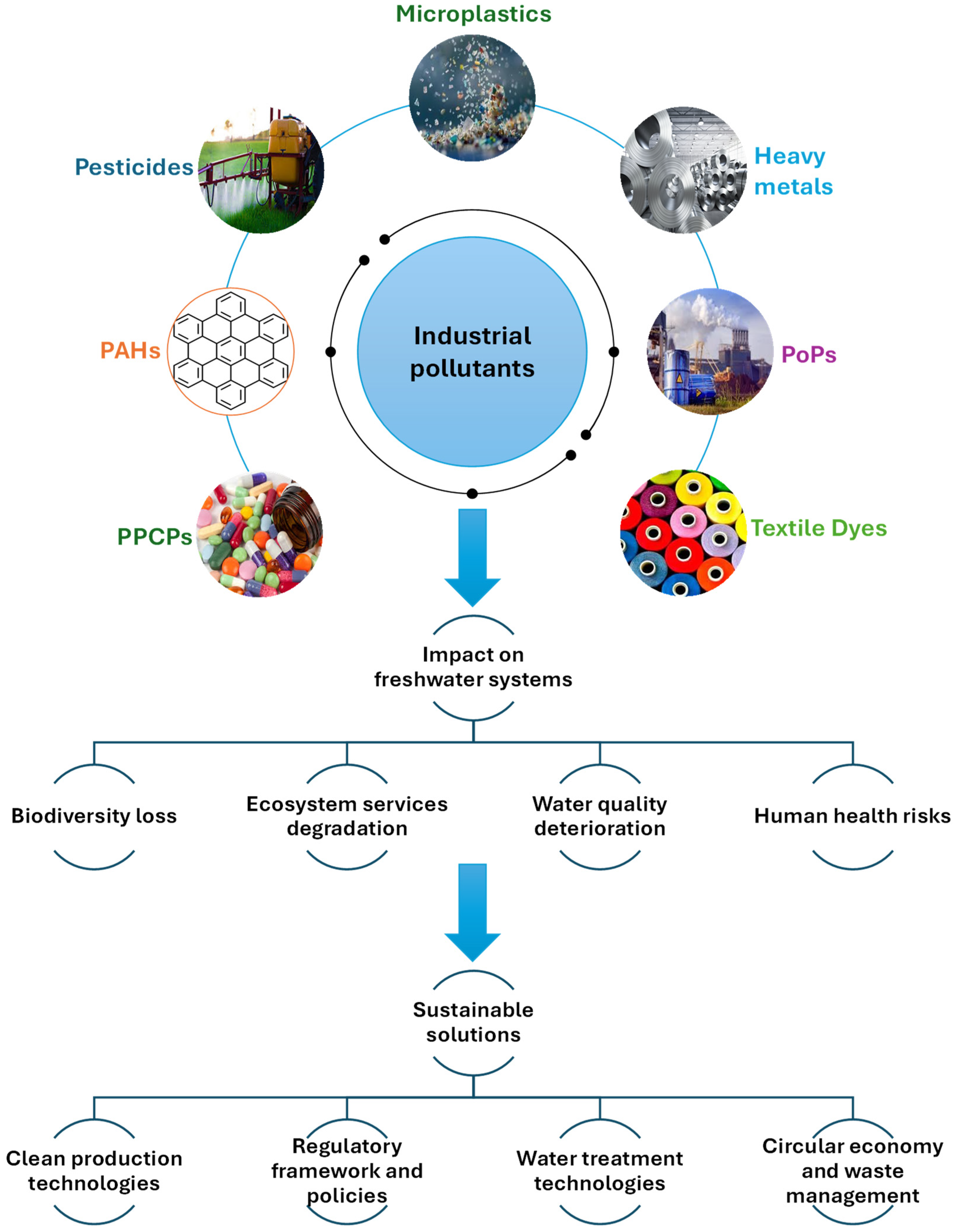
Figure 1 provides a conceptual overview of the major industrial chemical pollutants affecting freshwater systems, their associated impacts on freshwater systems, and the sustainable approaches proposed to mitigate these pressures. Several review studies have addressed specific aspects of industrial chemical pollution in freshwater systems, including pollutant occurrence, treatment technologies, or risk assessment. However, most existing reviews focus on contaminant or mitigation approaches rather than providing an integrated perspective.
Table 2 summarizes selected review articles and highlights the distinctive contribution of the present study. As shown in
Table 2, previous reviews have generally focused on individual pollutant categories or specific treatment technologies. In contrast, the present review provides an integrated assessment that links major industrial pollutants, their ecological implications for freshwater systems, and the range of sustainable strategies—technological, regulatory, and circular economy-based—developed to mitigate their impacts.
This review aims to assess the sustainable approaches currently implemented to address industrial pollution in freshwater ecosystems, with particular attention to pollutants. It aims to analyze the effectiveness of these strategies in reducing pollution, restoring ecological balance, and ensuring long-term water quality. By identifying effective practices and areas requiring improvement, the study will also explore future directions to strengthen sustainable solutions. This includes a review of innovations in policies, technologies, and industrial practices that can help further mitigate industrial pollution, thereby ensuring the protection and preservation of freshwater resources for future generations. The review therefore addresses two central questions: (i) which industrial pollutants represent the most significant threats to freshwater systems, and (ii) which sustainable mitigation strategies are most effective for addressing these pollution challenges under different technological and economic conditions.
3. Global Impact on Freshwater Systems
Industrial pollution is a major contributor to loss of biodiversity in freshwater systems. In some areas, species diversity has dramatically decreased due to exposure to toxic chemicals, even leading to the collapse of aquatic food webs. Pollution of freshwater systems by industry is a growing and alarming threat to ecosystems and human health. The diversity of pollutants calls for comprehensive solutions, including strengthened environmental regulations, advanced treatment technologies and improved waste management practices on a global scale. Meeting this challenge is essential to protect biodiversity and ensure access to safe drinking water. Assessing the impacts of industrial pollutants on biodiversity, ecosystem services, water quality, and human health helps determine the severity of contamination and supports the prioritization of appropriate mitigation strategies.
Industrial pollution represents one of the main factors of biodiversity loss in freshwater ecosystems [
136]. Many contaminants, including heavy metals, pesticides, pharmaceuticals, and persistent organic pollutants, can alter the physicochemical conditions of water and disrupt the ecological processes that support aquatic communities [
137]. Several studies have shown that exposure to toxic metals such as cadmium, mercury, and lead causes physiological stress, reproductive impairment, and increased mortality in fish and invertebrates [
138,
139,
140]. Research has shown that metal contamination of freshwater environments can significantly reduce species richness and alter community composition, favoring pollution-tolerant organisms at the expense of sensitive taxa [
141]. In addition to their direct toxicity, pollutants can indirectly affect biodiversity by altering trophic interactions and reducing primary productivity. Industrial discharges rich in nutrients can trigger eutrophication, leading to decreased oxygen levels and the collapse of fish and macroinvertebrate populations [
142,
143]. Comparative studies conducted on polluted and unpolluted rivers have consistently shown lower biodiversity indices and simplified trophic structures in contaminated ecosystems, thus highlighting the severe ecological consequences of industrial pollution.
Freshwater ecosystems provide essential ecosystem services that contribute to environmental stability and human well-being. These services include natural water purification, nutrient cycling, flood regulation, and the provision of habitats for aquatic organisms [
145]. However, industrial chemical pollution can significantly alter these ecological functions. When toxic substances accumulate in sediments and the water column, the natural self-purification capacity of freshwater systems is compromised [
146]. For example, heavy metals and organic pollutants can inhibit microbial communities responsible for nutrient cycling and the decomposition of organic matter [
147]. Studies conducted in industrialized watersheds have shown that contamination reduces the ability of wetlands and riverbeds to filter pollutants and regulate nutrient flows [
148]. Moreover, excessive nutrient inputs from industrial discharges can promote the proliferation of harmful algae that further degrade ecosystem functioning [
149]. Such disturbances reduce the resilience of freshwater ecosystems and decrease their ability to provide vital ecosystem services in the long term.
Industrial activities are a major source of chemical contamination that significantly degrades the quality of freshwater [
150]. Effluents from the mining, chemical, textile, and pharmaceutical industries introduce various pollutants, notably heavy metals, organic compounds, dyes, and microplastics, into aquatic environments [
151,
152]. These substances can alter fundamental parameters of water quality such as dissolved oxygen, pH, turbidity, and nutrient concentrations. Numerous studies have reported high concentrations of metals and organic pollutants in rivers impacted by industry, often exceeding regulatory thresholds for water potability and ecological safety [
153]. For example, heavy metals from industrial processes tend to accumulate in sediments, where they can persist for decades and constitute sources of secondary pollution [
154]. Similarly, industrial discharges rich in nitrogen, phosphorus, and organic compounds can promote eutrophication, leading to a decrease in oxygen and the formation of hypoxic dead zones [
155,
156]. Consequently, industrial pollution not only undermines ecological integrity but also reduces the quality of freshwater resources for drinking water supply and agriculture.
Contamination of freshwater systems by industrial chemicals also presents serious risks to human health. Communities that depend on rivers, lakes, or groundwater for drinking water, irrigation, and fishing are particularly vulnerable to this contamination [
157]. Toxic metals such as arsenic, mercury, and lead are known to accumulate in aquatic organisms and can enter the human food chain through fish consumption. Prolonged exposure to these contaminants has been associated with neurological disorders, kidney damage, and various forms of cancer [
151]. In addition to heavy metals, the presence of endocrine disruptors, pharmaceutical products, and persistent organic pollutants in freshwater systems is causing increasing public health concerns [
158]. These substances can interfere with hormonal regulation and reproductive health, even at low concentrations [
159,
160]. Epidemiological studies conducted in industrialized regions have reported an increase in the incidence of chronic diseases among populations exposed to contaminated water sources [
161]. Consequently, protecting freshwater resources from industrial pollution is essential not only for environmental preservation but also for safeguarding public health.
4. Relevance of Sustainability to Mitigating Industrial Pollution
Sustainable freshwater management is based on the judicious and efficient use of freshwater resources to meet the needs of the present without compromising those of future generations. It aims to preserve aquatic ecosystems, ensure their sustainability, and balance environmental, economic and social imperatives. This includes maintaining the quality and quantity of water resources, protecting aquatic environments, ensuring equitable access, and integrating conservation practices [
162,
163]. Addressing industrial chemical pollution requires sustainability-based approaches that integrate environmental protection, resource efficiency, and responsible industrial practices. Industrial pollution, through the discharge of toxic chemicals, heavy metals, and untreated wastewater, is a major source of freshwater contamination [
164,
165]. Sustainable water management seeks to limit the quantity and toxicity of industrial effluents through strict regulations [
166], treatment technologies [
167], and recycling practices [
168], thereby helping to preserve water resources. By encouraging industries to adopt greener processes, such as reducing water consumption [
169], reducing hazardous substances [
170], and using closed-loop systems [
171], wastewater discharges can be significantly reduced. These practices contribute to sustainability goals by minimizing industrial impact on freshwater resources [
172]. Sustainability focuses on preserving freshwater ecosystems (rivers, lakes, wetlands) that are home to essential biodiversity and provide ecological services such as water filtration and flood prevention [
173]. Industrial pollution threatens these ecosystems, leading to biodiversity loss and compromising natural purification systems. Sustainable practices aim to preserve these environments and their vital functions [
174]. Climate change and increasing industrial activity are increasing pressures on the availability and quality of freshwater resources [
175]. Sustainable water management promotes resilience by protecting resources from environmental risks such as pollution, droughts and increased demand [
176]. By limiting industrial pollution, this approach strengthens the capacity of freshwater systems to cope with these challenges. The sustainable policies include regulations on pollutant discharges, incentives for water-efficient technologies and sanctions against industries that overuse or pollute water resources [
177]. Economic instruments, such as pollution taxes, fines and water pricing, encourage industries to adopt environmentally friendly practices and reduce their ecological footprint [
178].
Several countries have implemented sustainability-oriented policies and industrial practices to mitigate pollution from industrial activities. For example, the European Union Water Framework Directive has encouraged industries to adopt cleaner production technologies and stricter wastewater management practices to reduce pollutant discharges into freshwater systems [
166]. In China, the development of eco-industrial parks has promoted industrial symbiosis and resource sharing between industries, significantly reducing waste generation and water consumption [
179]. Similarly, Singapore’s water management strategy, including the reuse of treated wastewater through the NEWater program, has demonstrated how circular water management can enhance water security while reducing industrial discharges [
180]. In India, stricter regulations and the promotion of Zero-Liquid-Discharge (ZLD) systems in the textile sector have helped limit wastewater pollution and improve industrial water reuse [
181].
In conclusion, sustainable freshwater management is crucial to limiting the negative impacts of industrial pollution. By adopting cleaner production processes, protecting ecosystems and implementing long-term management strategies, it ensures that water resources remain available for future generations and the environment.
5. Sustainable Approaches to Prevent and to Reduce Pollution
To address these pollution challenges, a range of sustainable mitigation strategies have been developed. Evaluating their effectiveness and applicability under different environmental and economic conditions is essential for identifying the most appropriate solutions.
5.1. Cleaner Production Technologies
Cleaner production technologies aim to minimize environmental impacts by preventing pollution at the source, rather than treating it after the fact [
182]. They rely on strategies such as eco-design, green chemistry and process optimization, which prioritize the reduction in waste, emissions and hazardous materials throughout the product life cycle [
183]. These approaches allow industries to gain efficiency, conserve resources and reduce their environmental impact. Eco-design represents a key component of cleaner production by incorporating environmental considerations into product development and manufacturing processes. It aims to reduce the ecological footprint of products by taking into account each stage of their life cycle, from the extraction of raw materials to their end of life [
184]. For example, life cycle-based eco-design approaches implemented in manufacturing industries have demonstrated reductions in material use by up to 30% while simultaneously lowering greenhouse gas emissions and waste generation. Compared with conventional product design approaches, eco-design integrates environmental performance indicators during the design stage, allowing industries to minimize environmental impacts before products enter large-scale production. Green chemistry is another important pillar of cleaner production, focusing on the development of safer chemical processes and products, generating less waste and limiting the use of hazardous substances [
185]. In the pharmaceutical industry, green chemistry reduces the ecological footprint of drug production, aligning with sustainability goals by reducing the carbon footprint and the use of toxic substances [
186,
187]. Pfizer developed a green synthesis process for the manufacture of sertraline (Zoloft), applying the principles of green chemistry [
188]. This process reduces solvent consumption by approximately 90% and significantly decreases the generation of hazardous waste. Similar green chemistry strategies have been adopted in several industrial sectors. For example, Merck developed a biocatalytic process to produce the antidiabetic drug sitagliptin, replacing a rhodium-catalyzed reaction with an enzymatic synthesis that significantly reduced hazardous waste generation [
189]. Several chemical companies have introduced catalytic processes and solvent-reduction strategies to decrease volatile organic compound emissions and improve the sustainability of chemical production systems [
190]. In addition, continuous-flow synthesis technologies are increasingly applied in pharmaceutical manufacturing to improve reaction efficiency while reducing solvent use and energy demand [
191]. Process optimization also plays a critical role in reducing industrial pollution. It seeks to improve production efficiency, thereby reducing raw material and energy consumption while minimizing emissions and waste [
192]. A novel painting process has been developed to optimize energy-intensive automotive paint shops as in Ford Motor Company (Dearborn, MI, USA). This technique involves applying three consecutive coats of paint without drying time between applications, resulting in a reduction in energy consumption and a decrease in volatile organic compound VOC emissions [
193]. This process has significantly reduced energy consumption and emissions by nearly 20%, while increasing the efficiency of the production line. Such technological innovations demonstrate how operational improvements can contribute to both economic and environmental benefits. In water-intensive industries such as textile manufacturing, cleaner production strategies increasingly focus on water conservation and wastewater minimization. Zero-Liquid-Discharge (ZLD) systems have emerged as a promising solution for preventing wastewater discharge from industrial facilities [
194]. These systems recycle all the water used in the dyeing process by removing contaminants through filtration and evaporation techniques. The water is reused, and the recovered chemicals are recycled or disposed of safely [
195]. Studies report that ZLD systems can achieve water recovery rates exceeding 90%, significantly reducing freshwater consumption and preventing the release of contaminated effluents into natural water bodies by combining membrane concentration processes with thermal evaporation and crystallization stages [
184]. However, the technology is associated with high capital and operational costs, largely due to the energy-intensive evaporation processes and specialized corrosion-resistant equipment required for handling highly concentrated brine. Consequently, ZLD is generally implemented in regions facing water scarcity or strict environmental regulations, where the economic benefits of water recovery and regulatory compliance outweigh the operational costs. Recent research therefore focuses on improving energy efficiency through hybrid membrane–thermal systems and optimized pretreatment strategies, enabling ZLD to be integrated into circular water management frameworks for industrial wastewater reuse [
185]. By limiting the ecological footprint of production processes and products, cleaner production technologies support global sustainable development goals, which aim to mitigate climate change, conserve natural resources and protect ecosystems. They encourage a circular economy, where materials are continually reused and waste production is minimized.
Although cleaner production strategies provide clear environmental benefits, their effectiveness varies depending on industrial context, pollutant characteristics, and economic constraints. Compared with end-of-pipe treatment technologies such as advanced oxidation processes or membrane filtration, cleaner production approaches focus on preventing pollutant generation at the source, which often leads to lower long-term operational costs and reduced environmental burdens [
192]. However, their implementation typically requires process redesign, technological upgrades, and organizational changes, which may involve significant initial investments. For example, eco-design and process optimization strategies are particularly effective for industries with high material consumption and complex supply chains, where reductions in raw material use and waste generation can generate substantial economic savings [
196]. In contrast, technologies such as Zero-Liquid-Discharge systems are more suitable for water-intensive industries and regions facing water scarcity or strict regulatory constraints, where water recovery provides a clear economic incentive [
181].
From a techno-economic perspective, the choice of treatment technology depends on pollutant concentration, treatment scale, and regulatory requirements. Highly contaminated industrial effluents often require advanced processes such as membrane filtration or advanced oxidation, whereas preventive approaches like green chemistry and process optimization reduce pollution at the source. Although nanotechnology-based treatments show very high removal efficiencies, their large-scale application remains limited by high material costs and potential environmental risks. As a result, nanotechnology is currently most viable where strict discharge standards or high-value water recovery justify higher investment costs. Effective mitigation strategies therefore often combine source-reduction measures with advanced treatment technologies to balance environmental performance and economic feasibility.
In conclusion, cleaner production technologies, through strategies like eco-design, green chemistry, and process optimization, are essential tools for industries looking to minimize their environmental impact. Compared with traditional end-of-pipe treatment technologies, these technologies not only help reduce pollution at the source but also align with economic and sustainability goals, leading to more efficient and responsible production practices across sectors. Nevertheless, the effectiveness of cleaner production strategies depends strongly on industry-specific conditions, economic feasibility, and regulatory incentives that encourage industries to adopt sustainable production practices. A synthesis of cleaner production approaches, including eco-design, green chemistry, process optimization, and zero-liquid-discharge systems, is presented in
Table 11.
5.2. Regulatory Frameworks and Policies
5.2.1. Existing Regulations
Environmental regulations governing industrial pollutants exist at several levels (local, national and international). They aim to control and reduce industrial pollution. In 1972, Clean Water Act regulates the discharge of pollutants into the waters of the United States. It establishes quality standards for surface waters, requires industries to obtain permits for their discharges and imposes the use of best available technologies to minimize pollutants at source [
198,
199]. In 2000, European Water Framework Directive aims to protect and improve water quality throughout Europe. It requires member states to achieve a good ecological and chemical status of water bodies, limiting industrial discharges and enforcing compliance with environmental quality standards to avoid excessive contamination [
166]. In 2004, Stockholm Convention on Persistent Organic Pollutants regulates the production, use and disposal of chemicals that persist in the environment, accumulate in living organisms and pose risks to human health and ecosystems. The convention covers industrial chemicals imposing global restrictions to minimize harmful emissions [
200]. As part of the Clean Air Act, the National Emission Standards for Hazardous Air Pollutants in the United States sets limits on emissions of hazardous air pollutants, such as heavy metals, volatile organic compounds and other toxic substances [
201]. It requires industries to adopt maximum achievable emission control technologies to limit their impact. The international treaty of Minamata Convention on Mercury aims to reduce mercury pollution worldwide. It regulates the use and emissions of mercury in industrial sectors such as mining, waste incineration, and chemical production, to protect the environment and public health [
202].
5.2.2. Focus on Sustainability
Environmental regulations aim not only to reduce pollution, but also to promote sustainable practices by encouraging industries to adopt environmentally friendly methods. Regulations such as the US Clean Water Act and the EU Water Framework Directive focus on preventing pollution at source. They encourage the use of Best Available Techniques [
203] and Cleaner Production Technologies [
204], which limit pollutants before they are generated, in line with sustainability principles. Initiatives such as the European Circular Economy Action Plan, under the European Green Deal [
205], encourage industries to reduce their use of resources, recycle waste and adopt green production processes. Similarly, the Stockholm Convention advocates for the sustainable management of chemicals by phasing out persistent organic pollutants. Many regulatory frameworks require industries to demonstrate compliance with sustainability objectives when applying for permits. For example, in the EU, companies must demonstrate how they intend to reduce pollution by adopting sustainable and resource-efficient production methods. Some regulations introduce financial incentives to reduce environmental impacts. The EU Emissions Trading System, for example, uses a market mechanism to lower greenhouse gas emissions, encouraging industries to innovate and adopt greener technologies to reduce their emissions costs [
206].
5.2.3. Challenges
Despite significant progress, regulatory frameworks face various challenges in achieving sustainability goals and promoting green practices in industries. Effective enforcement of regulations remains a major challenge in many regions. Limited resources in developing countries, for example, often result in insufficient oversight of industrial activities. Even in countries with strong regulations such as the US or the EU, enforcement can be uneven, particularly in complex or smaller-scale industries. Some pollutants or practices still escape regulation. For example, while standards for water and air quality are often well defined, emerging substances such as microplastics and nanomaterials are less well regulated, despite their potential impacts on the environment and human health [
207,
208]. Regulatory frameworks differ widely across regions, with the EU enforcing strict water quality controls while other areas face weaker standards or limited enforcement, leading to environmental disparities. Regulatory frameworks often struggle to keep up with technological advances. As industries adopt new materials and production techniques, regulators may struggle to assess and regulate their environmental impacts in a timely manner. Artificial intelligence or nanotechnology, for example, raise environmental issues that current regulations struggle to address [
209]. While schemes such as emissions trading provide financial incentives, some industries still perceive sustainable investments as having low short-term returns. Furthermore, subsidies and incentives for clean technologies sometimes remain insufficient to encourage the widespread adoption of sustainable practices, particularly in energy-intensive or fossil fuel-dependent sectors.
5.2.4. Areas for Improvement
To strengthen regulatory frameworks and better align them with sustainable development goals, several improvements can be considered. Allocating more resources to monitoring, enforcing regulations and imposing penalties for non-compliance could make frameworks more effective. Increased transparency, for example by requiring industries to disclose their pollution data publicly, could also encourage better compliance. Establishing uniform global standards for pollutants, emissions and sustainability criteria would reduce regional disparities and ensure high standards everywhere. The success of the Paris Agreement [
210] for climate illustrates the potential for global cooperation in combating climate change. Furthermore, regulatory frameworks should evolve to include emerging pollutants, such as endocrine disruptors [
211], microplastics and nanomaterials [
212], ensuring that standards are aligned with scientific advances. Governments and international agencies could increase financial incentives, such as tax breaks, subsidies and specific grants, to encourage industries to adopt environmentally friendly technologies. Extending carbon-pricing mechanisms [
213] to more sectors and regions could also help this transition. Moreover, many small and medium-sized enterprises face financial barriers to adopting cleaner technologies, and targeted support such as technical assistance, low-interest loans, or grants can help accelerate their transition to more sustainable practices.
In conclusion regulatory frameworks, at all levels, play a crucial role in managing industrial pollution and promoting sustainability. While current regulations have been successful in reducing some pollutants, they face challenges in terms of enforcement, gaps in standards, and adaptation to technological advances. By strengthening enforcement, harmonizing international standards, and increasing incentives for cleaner production practices, regulatory frameworks can better support sustainable industrial development.
5.3. Technological Solutions for Water Treatment
Technological solutions for water treatment play a critical role in mitigating industrial freshwater pollution by removing contaminants before discharge or reuse. These solutions include physical, chemical, and biological processes that enhance water quality and support sustainable water management. They can target a wide spectrum of pollutants such as heavy metals, organic contaminants, pharmaceuticals, and dyes. In recent decades, research has increasingly focused on combining different treatment processes to enhance removal efficiency while reducing energy consumption and operational costs. Bioremediation represents a sustainable strategy that relies on microorganisms, fungi or plants, to decontaminate water by breaking down or transforming contaminants into less harmful substances through enzymatic reactions [
214,
215]. Numerous studies have demonstrated that microbial communities can effectively degrade organic contaminants such as dyes, pesticides, and pharmaceutical residues through enzymatic biodegradation pathways [
216]. For example, microbial consortia have achieved 80–99% decolorization of textile dyes in wastewater [
217], while bacterial biofilms have been shown to degrade pesticide compounds and dye pollutants with efficiencies exceeding 70–86% [
218]. Compared with physicochemical treatments, bioremediation offers lower operational costs and reduced chemical usage. However, its efficiency is strongly influenced by environmental conditions such as temperature, pH, oxygen availability, and contaminant concentration, which may limit its application in highly contaminated industrial effluents. Nature-based systems such as constructed wetlands provide another environmentally friendly treatment option by mimicking natural purification processes. These systems combine physical filtration, plant uptake, microbial degradation, and sedimentation to remove contaminants from wastewater [
219,
220]. Studies have shown that constructed wetlands can achieve removal efficiencies exceeding 70–90% for nutrients and organic pollutants under optimized conditions depending on wetland design, hydraulic loading rate, and plant species composition [
99,
221]. Compared with conventional treatment plants, wetlands require lower energy inputs and can provide additional ecosystem services such as habitat creation and carbon sequestration. Nevertheless, their application is constrained by land requirements and climatic conditions, which may limit their feasibility in densely populated industrial regions. Nanotechnology has emerged as a promising field in advanced water treatment due to the unique properties of nanomaterials, including high surface area, catalytic activity, and selective adsorption capacity. Nanomaterials such as metal oxide nanoparticles, carbon nanotubes, and nano-adsorbents have demonstrated strong potential for removing heavy metals and organic pollutants from contaminated water [
222,
223]. For example, several studies report removal efficiencies above 90% for metals such as lead and cadmium using nano-adsorbent materials [
52]. Despite these advantages, concerns remain regarding the potential environmental risks associated with nanoparticle release, as well as the high production cost and challenges related to large-scale implementation. Membrane filtration technologies represent one of the most widely applied advanced treatment solutions for industrial wastewater purification. Processes such as reverse osmosis [
224], ultrafiltration [
225], and nanofiltration [
226] rely on semi-permeable membranes to separate contaminants from water. These technologies have demonstrated high removal efficiencies for a wide range of pollutants, including heavy metals, pharmaceuticals, dyes, and microorganisms. For example, nanofiltration and reverse osmosis systems can achieve removal efficiencies greater than 90–99% for many dissolved contaminants [
50,
224]. Membrane systems are widely used in desalination and industrial water reuse applications due to their high reliability and treatment performance. However, their operation requires significant energy input and is often affected by membrane fouling, which increases maintenance requirements and operational costs.
Recent research trends increasingly focus on hybrid treatment systems, combining biological processes with advanced technologies such as membranes or adsorption. Such integrated systems aim to improve pollutant removal efficiency while reducing energy consumption and operational costs. For example, membrane bioreactors combine biological degradation with membrane separation, allowing simultaneous removal of organic contaminants and suspended solids [
88,
132]. These hybrid systems have shown promising results for treating complex industrial wastewater streams, particularly in sectors such as textile, pharmaceutical, and chemical manufacturing.
A comparative evaluation of these treatment technologies indicates that their applicability depends strongly on pollutant characteristics, treatment scale, and economic constraints, as summarized in
Table 12. Biological approaches such as bioremediation are generally more suitable for moderate pollutant concentrations and biodegradable contaminants, where microbial activity can efficiently degrade organic compounds with relatively low operational costs [
214]. In contrast, advanced physicochemical treatments such as membrane filtration or advanced oxidation processes are more effective for highly contaminated industrial effluents containing recalcitrant compounds, heavy metals, or pharmaceutical residues, where rapid and high removal efficiencies are required [
87]. Nature-based systems such as constructed wetlands provide a cost-effective option for decentralized or low-strength wastewater treatment, but their implementation is often limited by land availability and hydraulic loading capacity [
219].
From a techno-economic perspective, advanced technologies such as nanotechnology-based adsorption systems demonstrate excellent pollutant removal efficiencies; however, their large-scale implementation remains constrained by material production costs, nanoparticle stability, and environmental safety concerns. Nanotechnology becomes economically viable primarily in applications requiring selective removal of specific contaminants, high-value water recovery, or compliance with strict discharge regulations, where conventional treatments are insufficient. Consequently, recent research increasingly promotes hybrid treatment systems, combining biological, membrane, and adsorption processes to balance treatment efficiency, operational cost, and environmental sustainability [
132].
Overall, technological solutions for water treatment represent essential tools for reducing industrial freshwater pollution. While advanced technologies such as membrane filtration and nanotechnology offer high removal efficiencies, nature-based and biological treatments provide more sustainable and energy-efficient alternatives. Consequently, the selection of appropriate treatment strategies should consider pollutant characteristics, economic feasibility, and environmental sustainability.
5.4. Circular Economy and Waste Management
5.4.1. Circular Economy Principles
The circular economy (CE) aims to design products without generating waste or pollution, to preserve materials and products for as long as possible, and to regenerate natural ecosystems [
227]. In the context of water treatment and waste management, CE strategies focus on wastewater reuse, resource recovery, and process integration to reduce industrial discharges into freshwater ecosystems. Recent studies indicate that circular water management strategies can reduce industrial freshwater consumption by 30–70%, depending on the sector and treatment technologies employed. Compared with traditional linear production systems, circular approaches improve resource efficiency while simultaneously reducing pollutant loads entering aquatic environments. Water recycling and reuse represent key circular strategies for pollution prevention in industrial systems [
228,
229]. Several industries have successfully implemented closed-loop water management systems in which treated wastewater is reused within the same facility [
197,
230]. For example, industrial wastewater recycling in manufacturing facilities has been reported to reduce freshwater consumption by 40–60%, while significantly decreasing the discharge of contaminants into receiving water bodies [
231,
232,
233]. In water-intensive sectors such as textiles and chemical manufacturing, advanced treatment technologies combined with internal water reuse can enable near-complete recycling of process water [
127,
234]. However, despite these benefits, wastewater recycling systems often require substantial investment in treatment infrastructure and operational monitoring to maintain water quality suitable for reuse. Another important element of the circular economy is resource recovery from waste streams. Industrial wastewater contains valuable resources such as nutrients, organic matter, and thermal energy that can be recovered and reused [
235,
236]. Nutrient recovery technologies, such as struvite precipitation, have been widely applied to recover phosphorus and nitrogen from wastewater streams, producing fertilizers that can be reused in agricultural systems [
237,
238]. In addition, heat recovery systems have been implemented in wastewater treatment plants to capture thermal energy for district heating or industrial processes, reducing reliance on external energy sources [
239,
240]. By designing more durable, repairable, and scalable products, industries reduce the amount of waste entering water systems [
241]. This also reduces resource consumption and the energy required for production [
242]. This principle is particularly applicable to water-using products and technologies, reducing their water footprint and impact on water quality in the long term. Compared with conventional wastewater treatment, resource recovery approaches transform waste streams into valuable resources, thereby improving both environmental and economic sustainability.
5.4.2. Industrial Symbiosis
Industrial symbiosis represents a complementary circular economy strategy in which industries exchange materials, energy, water, and by-products to improve overall resource efficiency. In such systems, the waste generated by one facility becomes a resource for another. Compared with conventional end-of-pipe treatment approaches, this model can significantly reduce freshwater consumption, energy demand, and waste generation by optimizing resource flows within industrial networks [
243,
244]. One of the most common examples is the Kalundborg Eco-Industrial Park in Denmark, where industries exchange resources and by-products, such as water, steam and waste [
196,
245]. For example, excess heat from a power plant heats local homes, while wastewater from one company is treated and reused by another. This closed-loop system significantly reduces freshwater usage and waste discharges. Similar industrial symbiosis initiatives have been implemented in the Ulsan Eco-Industrial Park in South Korea, where co-located industries—including petrochemical, automotive, and shipbuilding facilities—share water, energy, and by-products [
196,
246]. Treated wastewater is reused, waste heat is recovered, and materials are exchanged, reducing resource consumption and environmental impacts while improving industrial efficiency. In China, Tianjin Economic–Technological Development Area provides another example of large-scale industrial symbiosis. In this industrial cluster, the treated wastewater, waste heat, and by-products are shared among industries [
179]. This reduces freshwater use, pollution, and energy consumption, demonstrating circular economic principles in practice. In the textile sector, industrial symbiosis involves the exchange and reuse of resources such as water, chemicals, and energy between processes or facilities [
247]. For example, treated wastewater from rinsing or dyeing can be reused in other production stages, and sludge or fiber residues can be repurposed for energy or materials. These practices reduce freshwater consumption, minimize effluent discharge, and support circular and more sustainable textile manufacturing. The effectiveness of this approach depends strongly on several operating conditions, including geographical proximity between industries, compatible material and energy flows, and the availability of shared infrastructure for resource exchange. However, the implementation of industrial symbiosis also faces several economic, technical, and social challenges. Initial investment costs for shared treatment and distribution infrastructure can be substantial, and coordination between independent companies often requires strong governance structures and trust among stakeholders. Compared with nano-technologies industrial symbiosis generally offers lower operational costs but requires long-term planning and collaborative management. From an economic perspective, emerging technologies can complement industrial symbiosis by enabling more efficient pollutant removal prior to resource exchange. However, the widespread adoption of nanotechnology remains limited by high material costs and uncertainties regarding large-scale deployment. Consequently, environmental regulations play a critical role in promoting the adoption of advanced treatment technologies within circular industrial systems. Regulatory frameworks that encourage wastewater reuse, resource recovery, and stricter discharge standards can significantly accelerate the implementation of industrial symbiosis networks while facilitating the integration of advanced treatment technologies as alternatives to conventional wastewater treatment systems.
From a techno-economic perspective, circular economy strategies are most effective in industrial sectors characterized by high water consumption, recoverable resources, and stable production flows, such as textile, chemical, and food-processing industries [
241]. Compared with conventional end-of-pipe treatment technologies, circular approaches focus on resource efficiency and pollution prevention, allowing industries to simultaneously reduce environmental impacts and operational costs. However, their implementation often requires significant initial investment in infrastructure, monitoring systems, and coordination between industrial actors. For example, wastewater reuse systems and resource recovery technologies are generally more viable in large industrial clusters or eco-industrial parks, where shared infrastructure reduces operational costs [
196]. In contrast, advanced treatment technologies such as nanotechnology-based systems may offer higher pollutant removal efficiencies but remain economically viable primarily in cases requiring strict discharge compliance or high-value water recovery. Consequently, recent research increasingly emphasizes integrated industrial systems combining circular economy strategies with advanced treatment technologies, enabling industries to balance environmental performance, regulatory compliance, and economic feasibility.
Circular economy practices have proven effective in reducing pollution and limiting the industrial impact on freshwater resources. Companies that adopt these principles report significant reductions in their water consumption, pollutant discharges and overall environmental footprint. By integrating circular economy principles, industries contribute to more sustainable management of freshwater resources, reducing their pollution footprint and promoting long-term environmental and economic sustainability.
Table 13 summarizes the circular economy and industrial symbiosis strategies for reducing industrial freshwater pollution.
5.5. Integrated Approaches for Sustainable Industrial Water Management
Although regulatory frameworks, technological solutions, and circular economy strategies are often discussed separately, their effectiveness increases when they are implemented in an integrated manner. Addressing complex industrial pollution challenges requires evaluating how different mitigation strategies interact and which combinations of technologies and policies provide the most effective solutions. Environmental regulations frequently drive the adoption of cleaner production technologies and advanced treatment systems by imposing stricter discharge limits. At the same time, circular economy approaches, such as wastewater reuse and industrial symbiosis, can improve the economic feasibility of advanced technologies by enabling resource recovery and shared infrastructure. However, these interactions may also create trade-offs, such as higher energy demand or investment costs associated with advanced treatment systems. In addition, selecting appropriate mitigation strategies requires consideration of the specific characteristics of industrial pollution. Biological treatments such as bioremediation and constructed wetlands are generally most suitable for biodegradable organic pollutants and moderate contaminant loads, offering relatively low operational costs and environmental compatibility. In contrast, advanced physicochemical technologies such as membrane filtration and advanced oxidation processes are more effective for highly contaminated industrial effluents containing persistent organic pollutants, heavy metals, or pharmaceutical residues that require rapid and high removal efficiency. Nanotechnology-based systems show promising performance for selective contaminant removal but remain economically viable mainly in applications requiring high-value water recovery or strict discharge standards. Consequently, integrated treatment strategies that combine preventive measures, advanced treatment technologies, and circular resource management approaches are often the most effective solution for addressing complex industrial pollution challenges.
6. Conclusions and Future Perspectives
The literature reviewed in this study demonstrates that industrial chemical pollution—including heavy metals, microplastics, persistent organic pollutants, pharmaceuticals, pesticides, textile dyes, and polycyclic aromatic hydrocarbons—poses significant risks to freshwater ecosystems, biodiversity, and human health. Addressing these challenges requires a combination of pollution prevention strategies, advanced treatment technologies, and circular resource management approaches. Cleaner production practices such as eco-design, green chemistry, and process optimization can reduce pollutant generation at the source, while treatment technologies including membrane filtration, advanced oxidation processes, bioremediation, and nature-based systems have shown strong potential for removing contaminants from industrial effluents. In parallel, circular economy strategies such as wastewater recycling, nutrient recovery, and industrial symbiosis can reduce freshwater consumption and minimize pollutant discharges through closed-loop resource use.
However, the reviewed studies also highlight that the performance and feasibility of these approaches vary depending on wastewater composition, industrial sector, and economic constraints. High-efficiency technologies such as reverse osmosis and zero-liquid-discharge systems provide excellent contaminant removal and water recovery but often involve high energy demand and operational costs. Conversely, biological and nature-based solutions are generally more cost-effective and environmentally compatible but may require larger land areas or longer treatment times. These findings suggest that integrated treatment strategies combining multiple technologies are often the most effective option for managing complex industrial wastewater streams.
Future research should focus on addressing several critical gaps identified in the literature. First, more comprehensive life cycle and techno-economic assessments of advanced treatment systems, particularly zero-liquid-discharge (ZLD) technologies, are needed to determine their economic feasibility for small and medium-sized industries. Second, further investigation is required to develop integrated treatment systems combining biological, membrane, and advanced oxidation processes capable of efficiently treating complex industrial wastewater containing mixed pollutants. Third, additional studies should evaluate the long-term environmental risks, operational stability, and cost thresholds of nanotechnology-based treatment systems under real industrial conditions. Finally, future work should examine policy instruments and regulatory frameworks that promote circular water management, including incentives for wastewater reuse, resource recovery, and industrial symbiosis within eco-industrial parks. Such targeted research efforts will help bridge the gap between laboratory-scale innovation and large-scale industrial implementation.