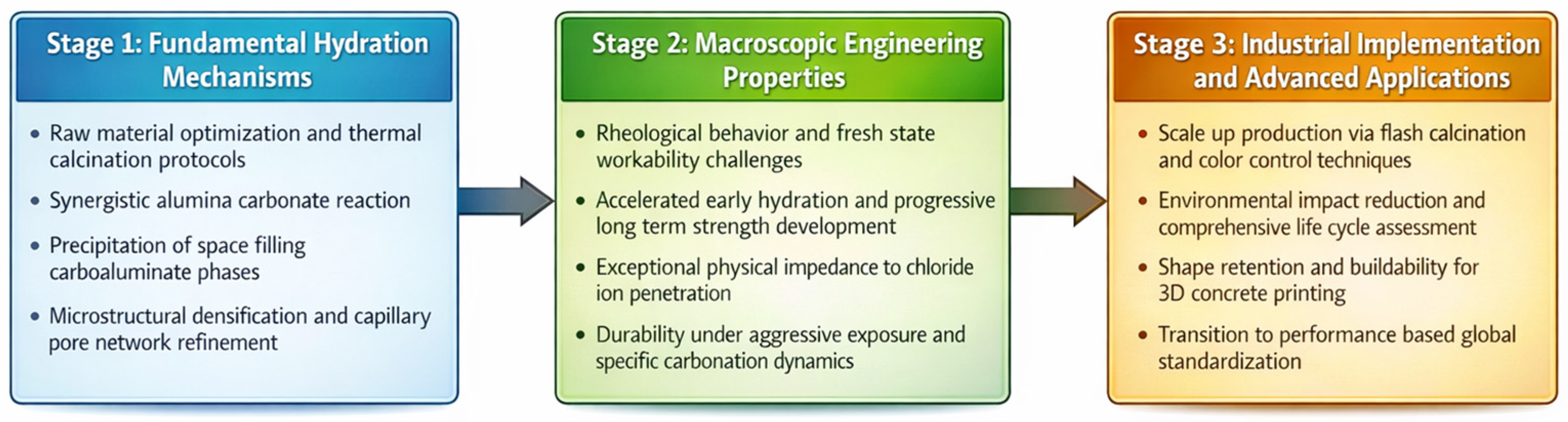
Limestone Calcined Clay Cement (LC3): The Evolution of a Ternary Binder from Laboratory Innovation to Sustainable Industrial Application


Abstract
1. Introduction
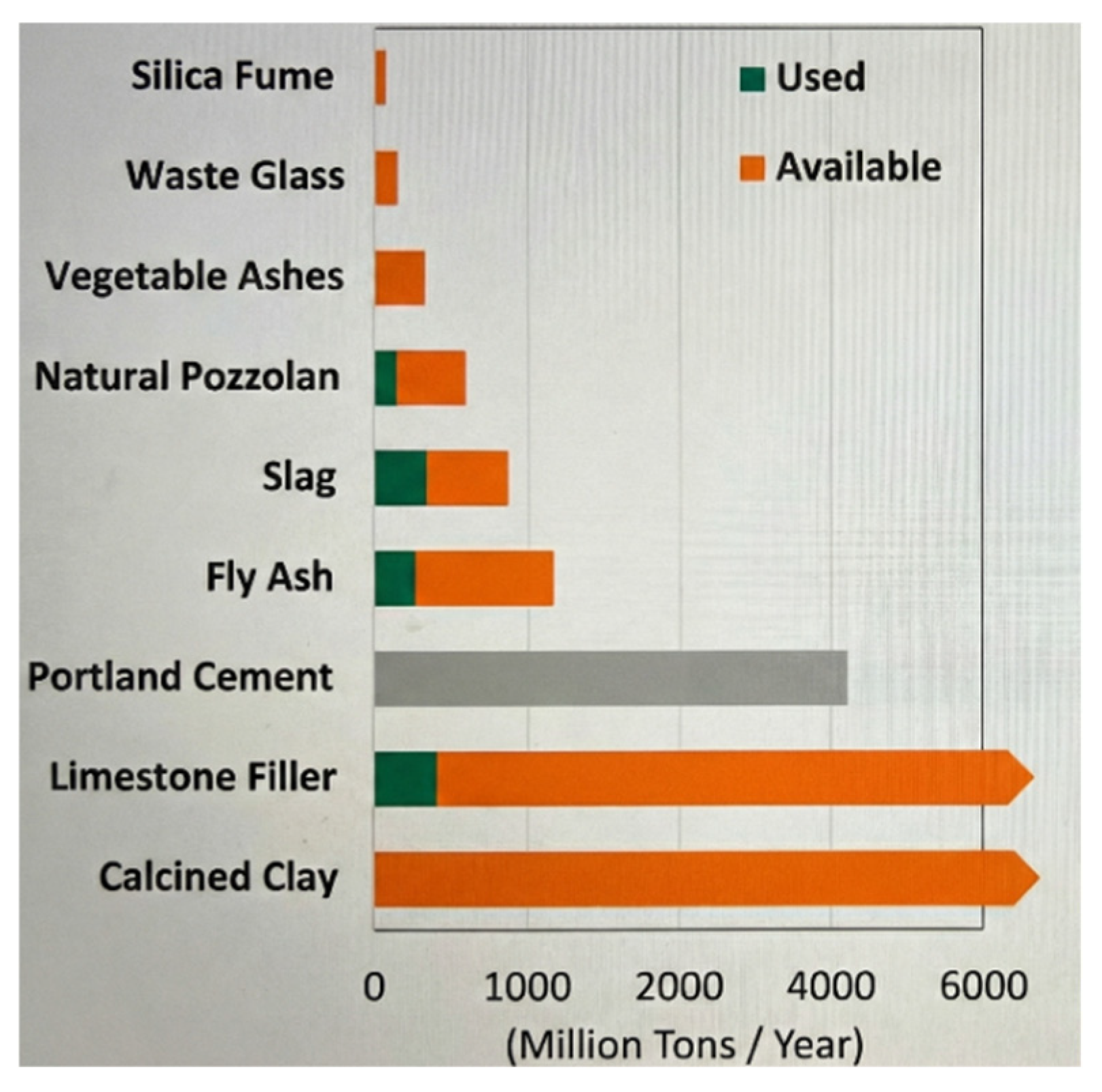
1.1. Global Context: The Imperative for Low-Carbon Binders and SCM Scarcity
1.2. The Rise of Calcined Clays: Abundance and Reactivity
1.3. The LC3 Concept: Synergistic Hydration Mechanisms and Microstructure
1.4. Rheology, Workability, and Challenges
1.5. Scope of the Review and Emerging Applications
1.6. Methodology and Literature Selection Process

| Binder Composition | SCM/Replacement Ratio (%) | Workability and Rheology Findings | Compressive Strength Outcomes | Durability and Porosity Observations | Microstructural Findings | References |
|---|---|---|---|---|---|---|
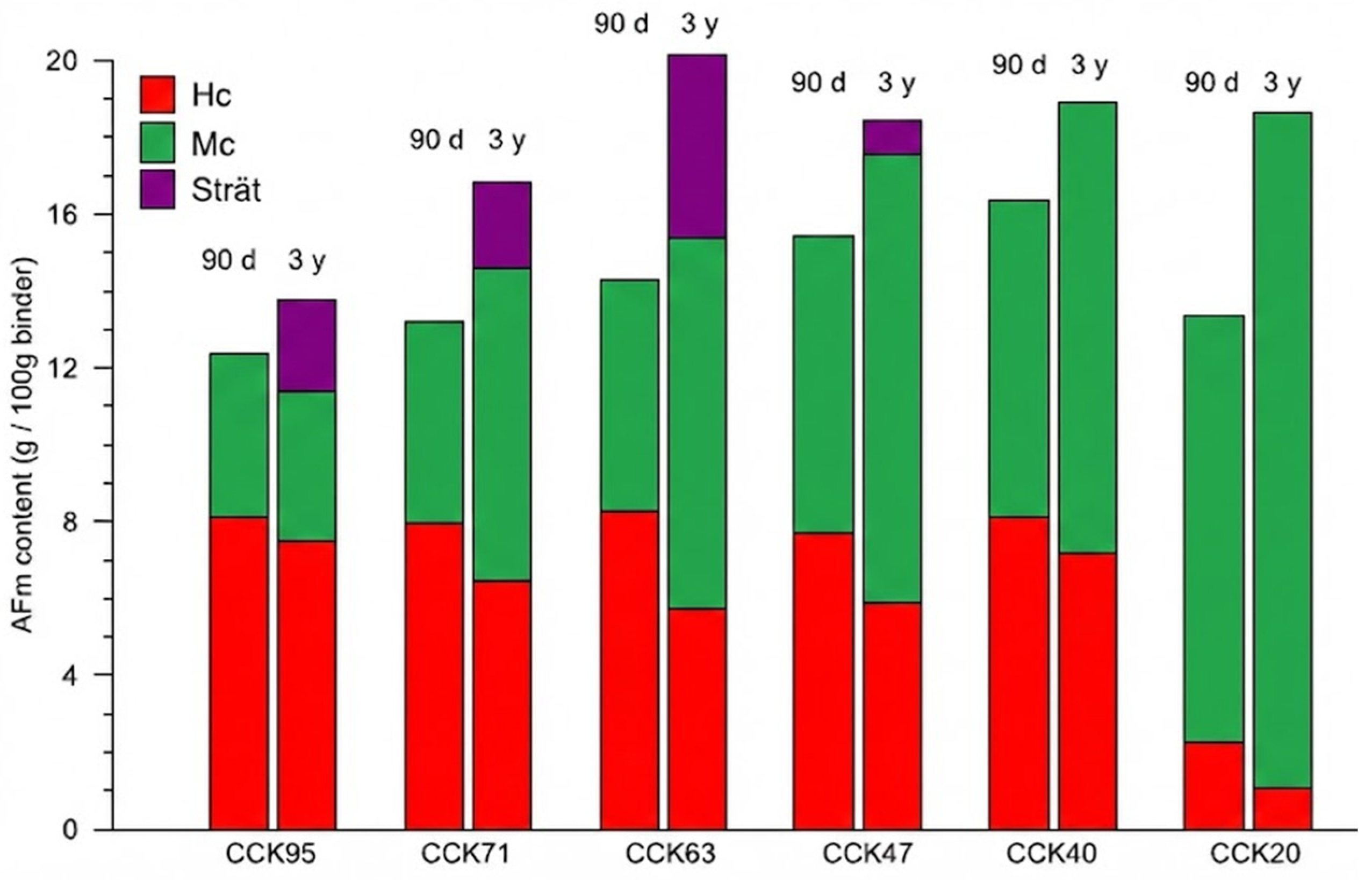
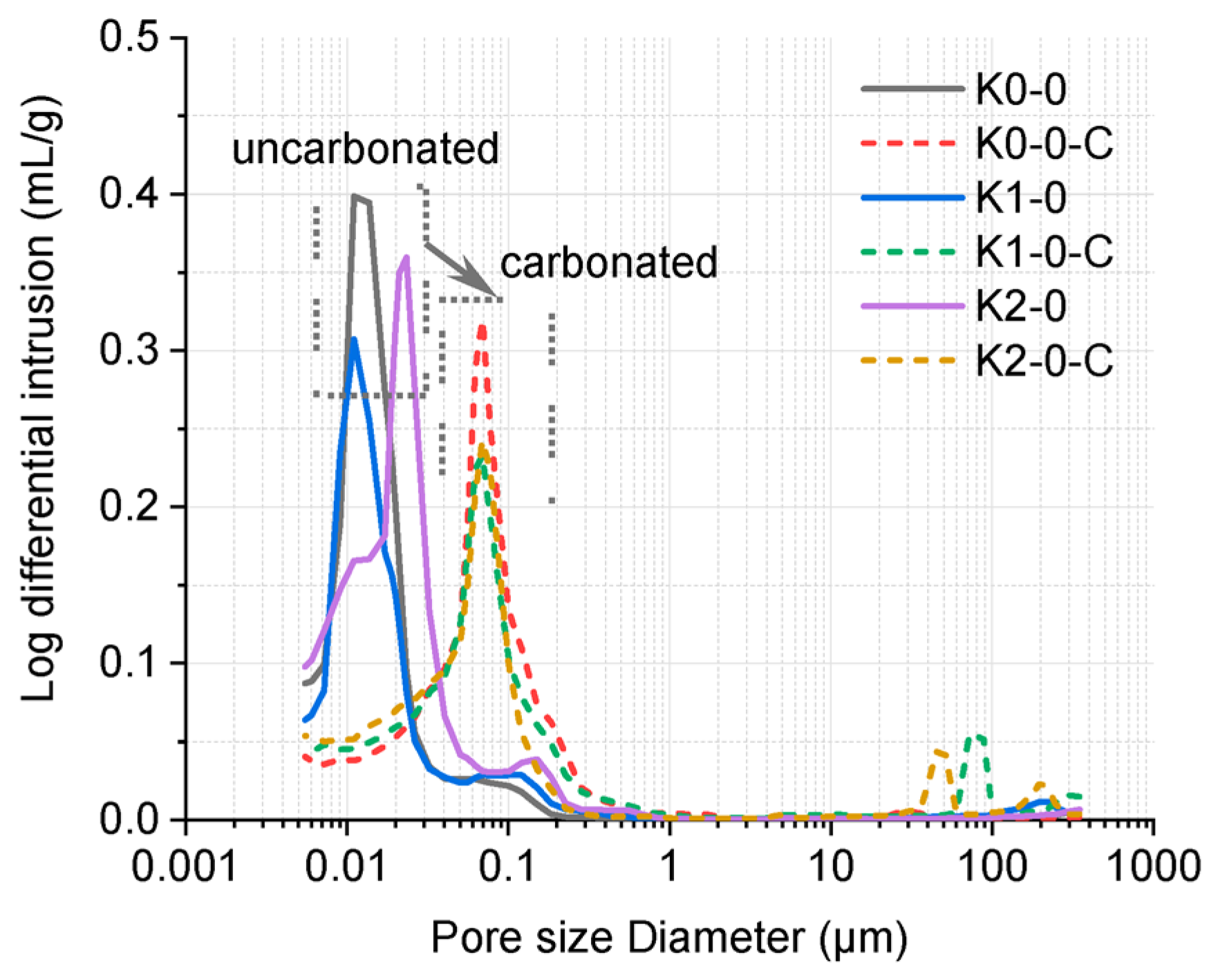
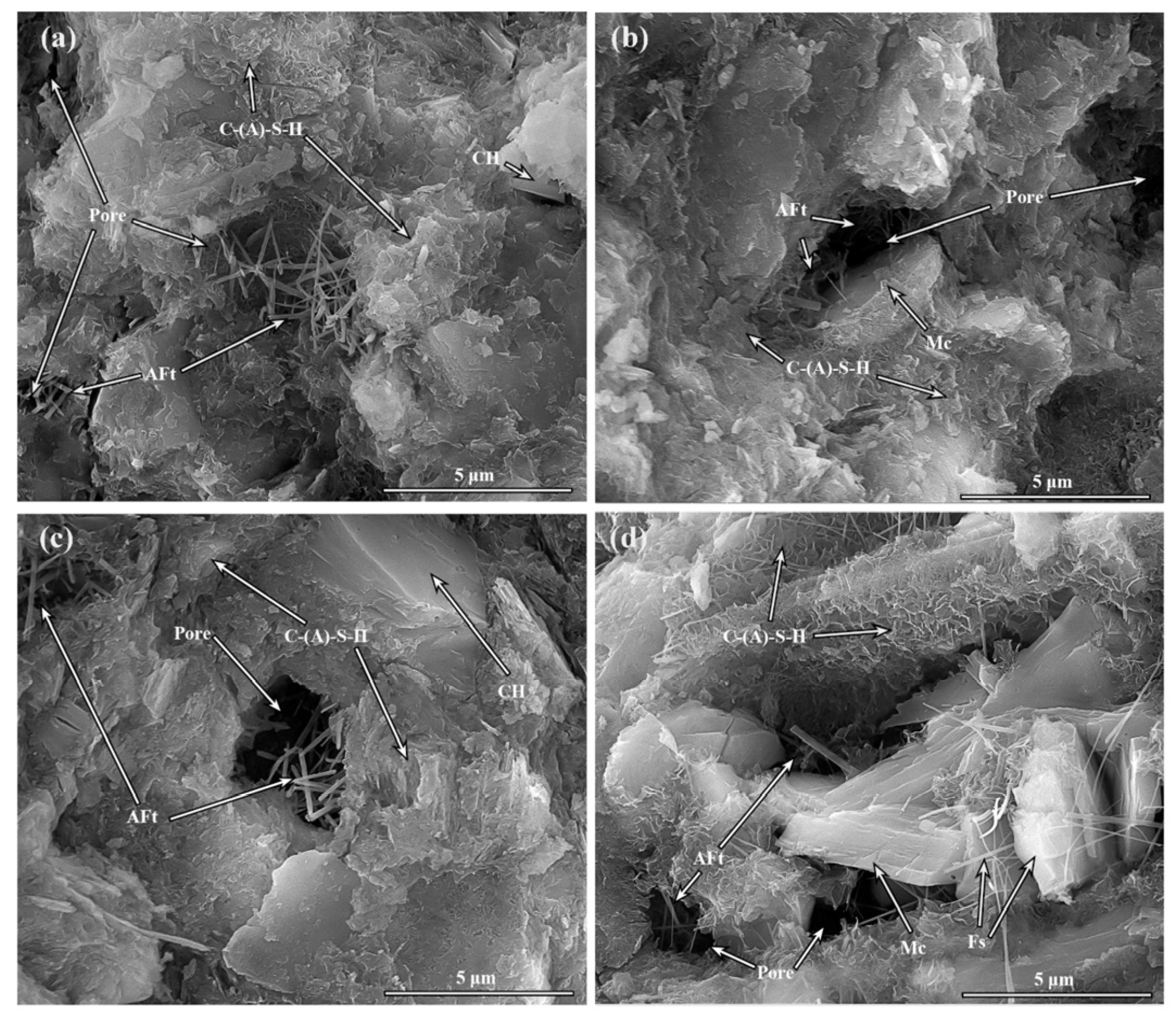
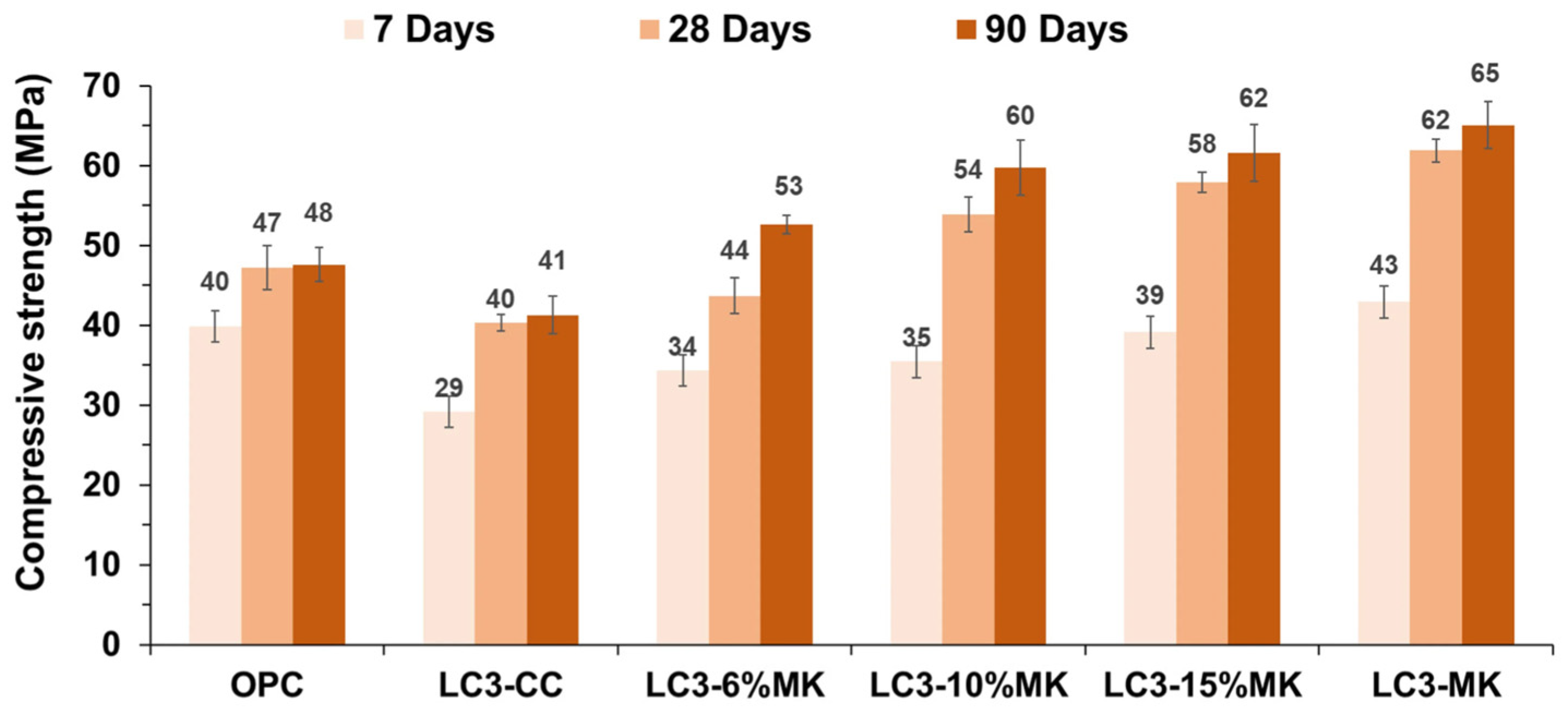
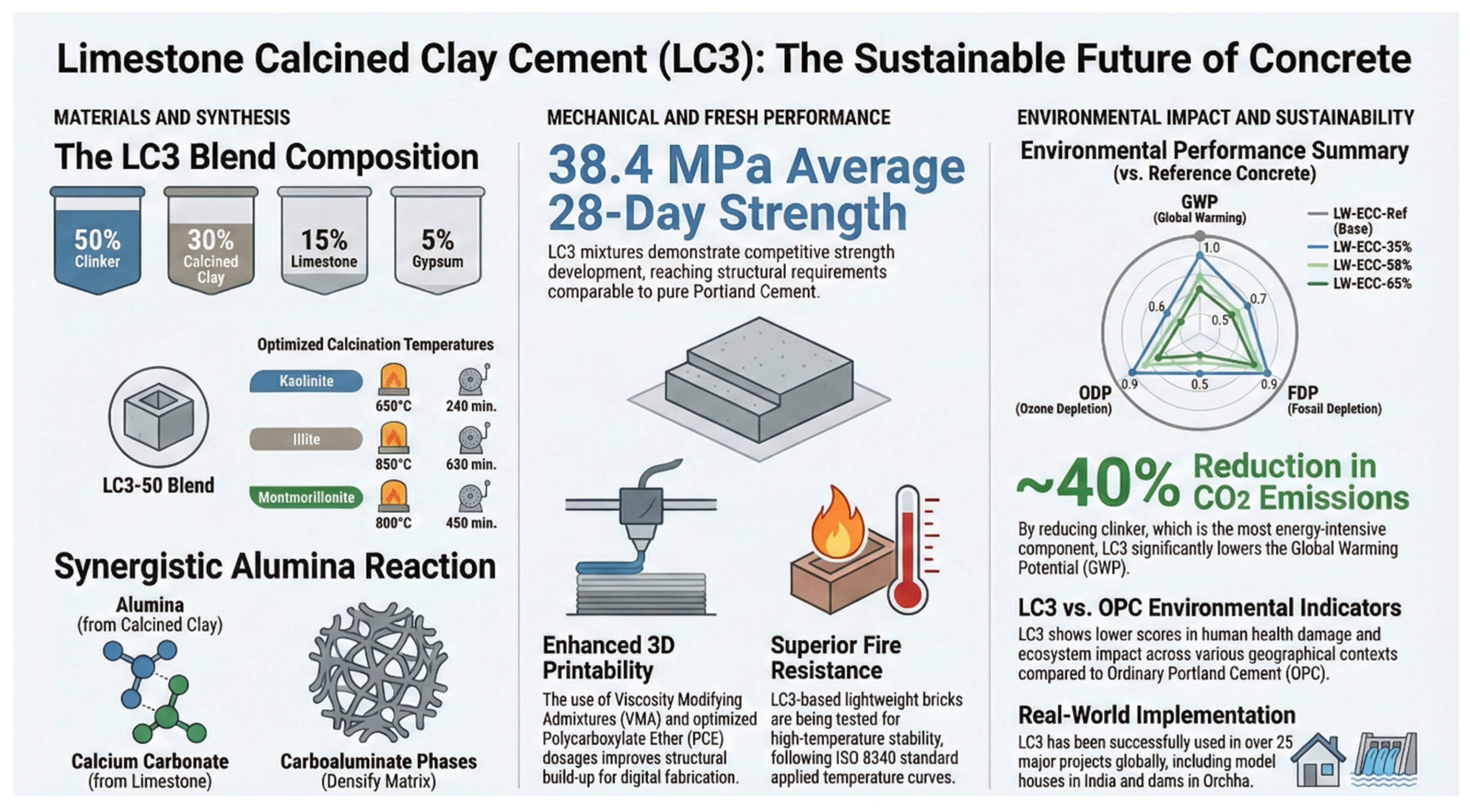
| OPC, Calcined Clay, Limestone, Gypsum | 45–50% | High specific surface area of calcined clay necessitates higher HRWR/PCE dosages (up to 1.8%). Pronounced thixotropy and yield stress are attributed to clay clustering. Substitution levels exceeding 30% result in unsatisfactory slump retention. | Twenty-eight-day strength matches or surpasses OPC (approx. 45–55 MPa). Late-age strength (365 days) is superior to OPC. Early strength (3 day) is comparable to OPC and surpasses slag/fly ash blends. | Pore refinement reduces volume by 30–50%. Chloride diffusion coefficients reduced by 50–60%. Outstanding resistance to sodium sulfate expansion (0.03% vs. 0.12% for OPC). | Synergistic reaction between alumina and calcite forms carboaluminate phases (Hc and Mc). C-(A)-S-H gel formation is the primary binder matrix. ITZ width reduced to 10 μm. | [5,8,44,78,79]. |
| OPC, Calcined Clay, Limestone, Gypsum (3D Printed) | 45–50% | LC2/LC3 enhances printability, buildability, and thixotropy. Direct superplasticizer addition increases yield stress by a factor of 1.2–2.5 compared to delayed addition. VMA improves shape stability but reduces flow. | Printed samples show anisotropic behavior, 28-day strength (35–44 MPa); 3D-printed samples often exhibit 20–28% lower strength than cast samples. Higher grade metakaolin enhances early strength. | Total porosity of printed samples approx. 2.05%. Average compactness ratio increased by 28.2% compared to fly ash/silica fume controls. | C-(A)-S-H bridges identified as dominant in elastic behavior. Formation of extra C-A-S-H and carboaluminates enhances mechanical properties. | [67,69,70,72]. |
| OPC, Calcined Clay, Limestone, Gypsum, Carbonated Waste Paste (CWP) | 50% | Superplasticizer used for workability, CWP blends show earlier setting and shorter induction periods than standard LC3 due to silica-alumina gel reactivity. | CWP-LC3 reached 44.8 MPa at 28 days. Showed 15.7% higher 7-day strength than standard LC3 due to gel pozzolanic reactivity. | CWP refined early pore structure via rapid pozzolanic reaction. Chloride resistance improved compared to OPC. | Silica-alumina gel (from CWP) intermixed with calcite clusters. Synergistic hydration formed C-(A)-S-H and AFm phases (Hc/Mc). | [80] |
| OPC, Calcined Clay, Limestone, Gypsum, Recycled Aggregates | 30–70% | Slump declines linearly with substitution (29.1% reduction at 70%). High water absorption of recycled fine aggregates (9.67%) impacts fluidity. | Strength for LC3 and OPC converges by 28 days. Replacement above 50% results in mechanical deterioration. 15% LC3 with 30% RFA is comparable to the control. | Water absorption approx. 11.9% (high due to recycled aggregates). LC3 improved pore size distribution and reduced total porosity (3.66% for LC3-30). | LC3 and RFA improve the performance of the Interfacial transition zone (ITZ). Formation of additional hydration products (Mc, Hc, and C-A-S-H). | [10,50,74] |
| OPC, Calcined Clay, Limestone, CSA Cement, Gypsum | 45–50% | Flowability decreased with graphite content (256 mm to 191 mm), but still met self-leveling requirements (>170 mm). | Optimum binder reached 35.24 MPa (28 days); 12% graphite reduced UCS to 26.04 MPa. | CSA addition reduced LC3 shrinkage from −0.11% to −0.039%. 12% graphite reduced shrinkage to negligible −0.0091%. | TGA identified C-(A)-S-H, AFt (from CSA), Mc, and Hc. Graphite acted as a physical filler but inhibited hydration at high dosages. | [52] |
| GP/OPC, Calcined Clay, Limestone (LC3) | 44–50% | Accelerated early age hydration compared to fly ash blends, higher chemical shrinkage until 20 days. High water demand in blends with >40% kaolinite. | Twenty-eight-day strength ranges from 31.0 to 38.4 MPa. Sodium silicate (SS) addition can increase 1-day strength from 9.4 to 22.1 MPa. | High autogenous shrinkage (1.5 times control) compensated by low drying shrinkage. SS addition reduced cumulative pore volume by 36% at 1 day. | Formation of carboaluminate phases (Hc and Mc) from 3 days. High Na2O (2.5%) leads to deleterious U-phase. | [3,6] |
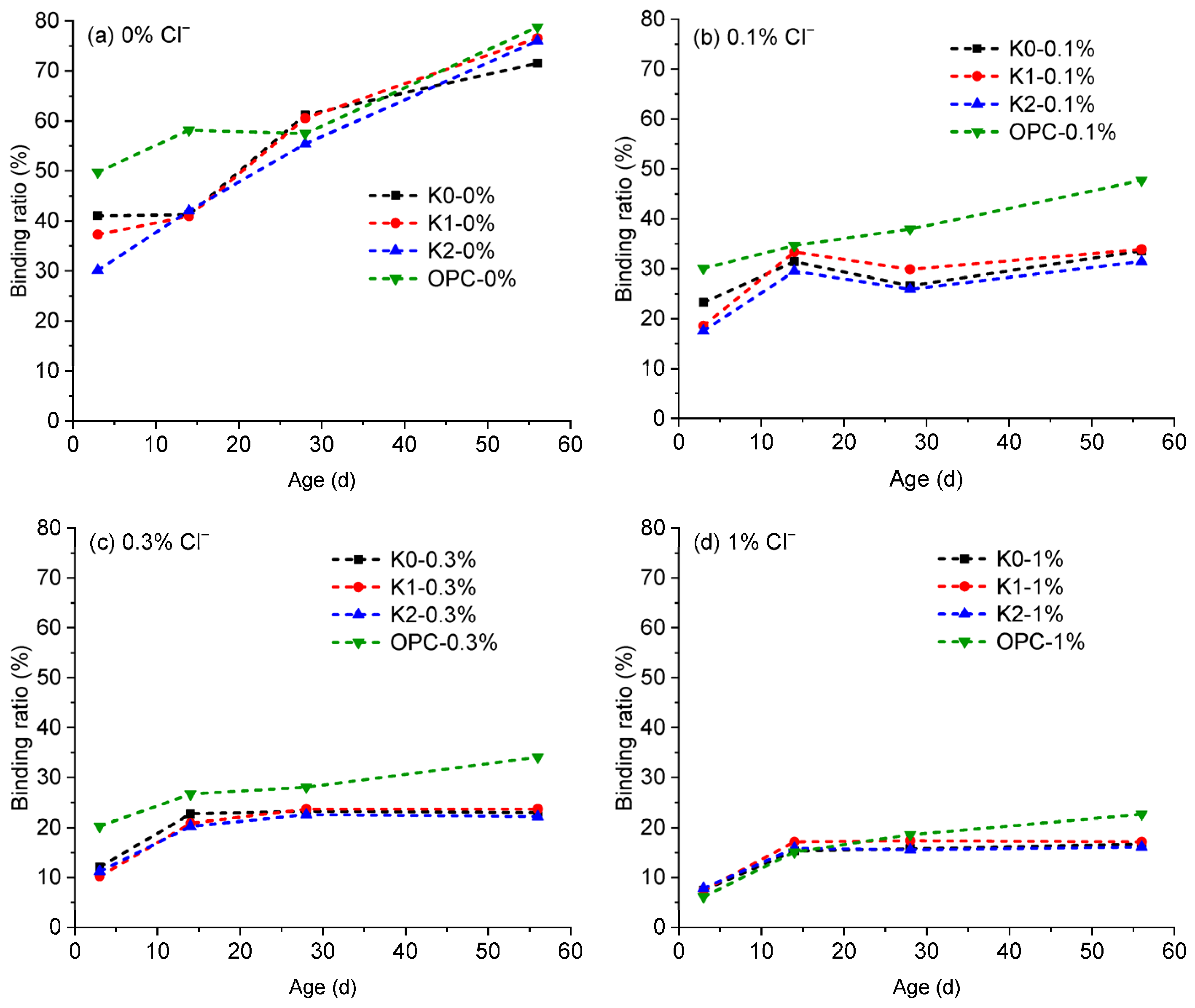
| LC3 with Crystalline Admixture (CA) | 50% | Superplasticizer used to achieve 200 ± 10 mm flow diameter. | LC3CA reached 61.5 MPa at 28 days compared to 54.8 MPa for plain LC3. | Superior chloride resistance (42% reduction vs. OPC). CA enhanced the crack healing ratio up to 85.9% in seawater. | Healing products in seawater are dominated by brucite and aragonite; the matrix contains carboaluminates, which bind chloride ions as Friedel’s salt. | [81] |
| LC3 with C-S-H Seeding/Slag/Fly Ash/Silica Fume | 50–80% | Partial replacement of calcined clay with fly ash or GGBFS significantly improved workability and mortar flow. PCE demand decreases when clay is substituted with industrial by-products. | A 5% silica fume (SF) boosted 28-day strength by 36.1% over base LC3. Seeding allows parity with OPC even at a 25% clinker factor. | C-S-H seeding reduced the critical pore size from 0.26 μm to 0.10 μm at 1 day. 5% SF achieved the highest electrical resistivity (60 Ohm.m). | C-S-H seeding acts as a nucleus for hydration. Reactive metakaolin introduces Al into C-A-S-H. Mc transforms to Hc at high substitution levels. | [35,59,73,82] |
| OPC, Calcined Clay, GGBFS, Limestone | Up to 57% | GGBFS compensated for CC-induced workability reduction. Optimized mix achieved a slump of 65 mm with 1.2% SP. | Optimized mix achieved 42.8 MPa at 28 days. Retained 56 MPa residual strength after 400 °C exposure. | Porosity is reduced through the formation of amorphous phases and compact morphology. | FESEM identified C-A-S-H flakes in honeycomb structures and needle-like ettringite. | [2] |
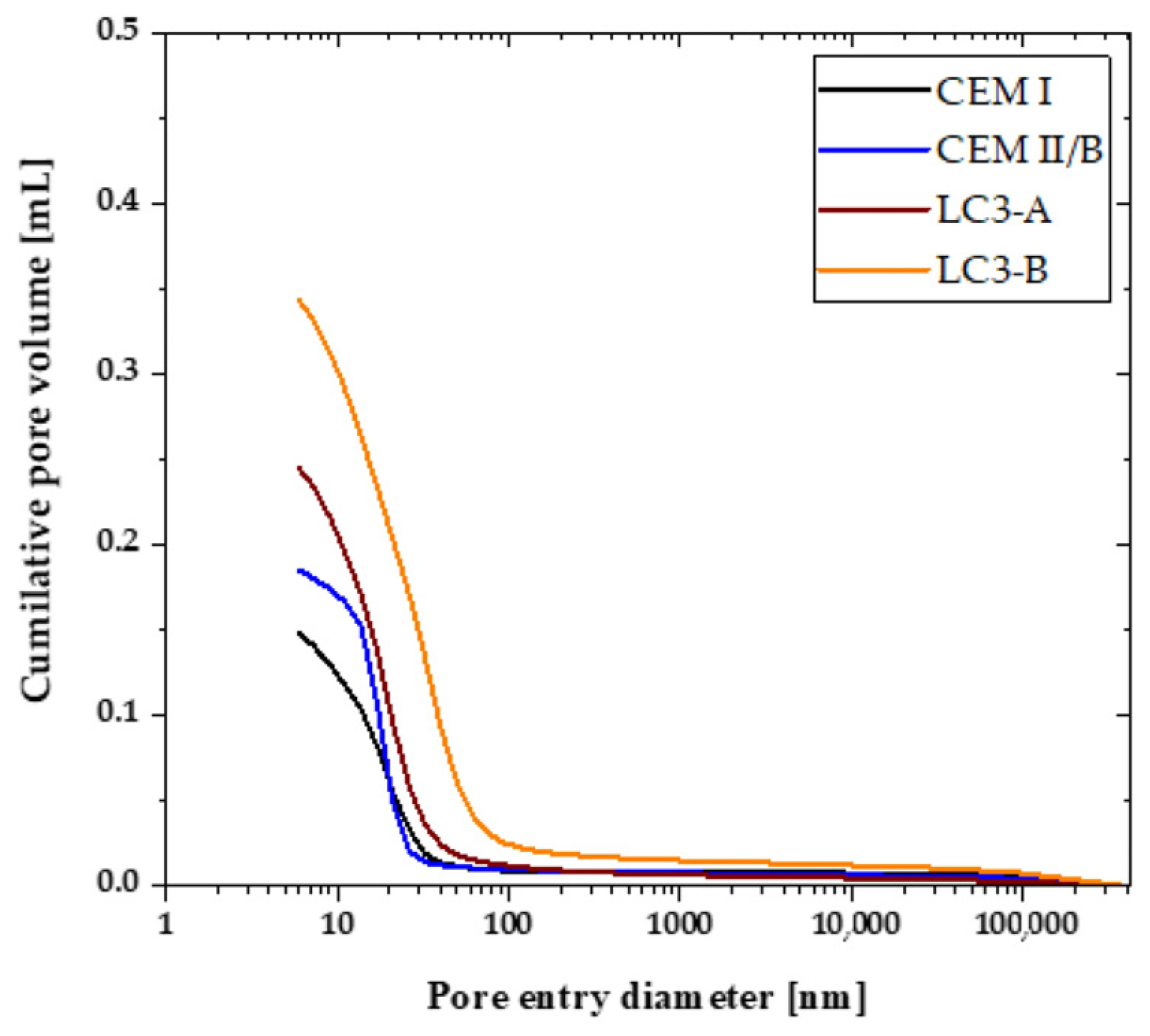
| LC3 with varying w/b ratio | 50% | High w/b (0.9) used for fabric impregnation, dewatering reduced final w/b to 0.5. At low w/b (0.25), yield strength was 7.5× higher than PC. | High-performance LC3 concrete achieved over 100 MPa at 28 days with w/b 0.25. 1-day strength was low (10 MPa) due to retardation. | LC3 had higher mesopore content (<100 nm), but strength improved through pore refinement. | Carboaluminate peaks (Hc and Mc) are less apparent at low w/b (0.25) due to space confinement and restricted crystal growth. | [23,50] |
| OPC, Calcined Clay, Limestone, Gypsum (High Strength) | 30% | Flowable consistency achieved with a slump flow of 440–450 mm using 2% superplasticizer; slightly less flowable than plain OPC. | High compressive strength of approx. 70 MPa (7 days) and 90 MPa (28 days). | Very low chloride permeability (<1000 Coulombs). Water absorption approx. 2%. Drying shrinkage 203–213 microns (1 month). | Matrix contains a higher content of C-(A)-S-H gel and carboaluminate phases filling the pores. | [62] |
| OPC, Calcined Bentonite, Limestone, Plasterboard Waste/Gypsum | 50% | Dissolution rate of sulphate source (PW vs. gypsum) influences early hydration. PW impacted reactions more than virgin gypsum. | CB-based blends achieved 95–102% of 28-day OPC strength (up to 62.8 MPa). | B-CB pastes had slightly coarser pores than metakaolin pastes, both coarser than the OPC control. | CB promoted C-S-H with higher Si/Ca ratios and strätlingite formation. PW improved early pozzolanic reactivity. | [32] |
| OPC, Limestone, Calcined Clay, Steel Slag | 30–50% | SCMs decreased the slump, increased the SP dosage (0.8–1.7%) required due to the high fineness of CC and slag. | A 30% and 40% replacement gave higher 90-day strength than OPC. 50% replacement reached 54.56 MPa at 90 days. | Water absorption slightly increased in 50% replacement (up to 4.2% higher than control). UPV values indicated good quality. | Finer SCM particles fill interstices (filler effect). Pozzolanic reaction and hydraulic slag densify the matrix. | [16] |
| OPC, Limestone, Metakaolin (UHPSSC) | 10–40% | Fluidity and setting time decreased with MK increase. LSMK30 flow spread was 67% of the control. | Optimum substitution at 20% MK + 10% LS reached 117.8 MPa at 90 days. | Chlorides in seawater promoted chemical binding by alumina to form Friedel’s salt, improving density. | MK consumed Portlandite to form C-(A)-S-H gels with higher Si/Ca and Al/Ca ratios. | [37] |
| OPC, Calcined Clay, Limestone, Soil | 45% | Hydraulic conductivity between 4.69 × 10⁻⁶ and 1.65 × 10⁻⁵ cm/s. | Seven-day UCS increased from 150 to 500 kPa. Decline of 14.5–20% at 56 days due to micro-cracking and swelling. | Reduction in macro-pores, electrical resistivity increases with LC3 content, but decreases with curing time. | XRD/SEM confirms the formation of C-S-H and C-A-S-H gel; expansive soil causes micro-cracking. | [83] |
| OPC, Calcined Clay, Limestone, Nano-Silica | 45% | Nano-silica increases SP demand (up to 0.85 wt%) and decreases flowability. | Adding 2% nano-silica increased the 1-day compressive strength by 55.8% compared to the reference LC3. | Improved carbonation resistance (7–11% reduction), resistivity, and ultrasonic pulse velocity increased significantly. | NS provides nucleation sites for C-(A)-S-H, resulting in a denser matrix with fewer pores. | [49] |
| LC3 with Waste Rockwool (RW) Bricks | 60% | W/B ratios adjusted (0.5 to 0.59) to maintain workability, RW leads to higher water demand due to fineness. | Seven-day strength > 8.6 MPa, 10% RW replacement increased strength by 42.44% relative to reference LC3. | RW addition decreased porosity and water absorption (15.8% to 12.7%), and 90% residual strength after fire. | SEM showed improved packing with RW fibers and formation of three-dimensional staggered networks. | [4] |
| LC3 with Aloe Vera (AVM) Admixture | 50% | AVM bio-admixture acts as a set retarder and reduces yield stress. | LC3 reached 31.67 MPa at 28 days, 2.5% AVM dosage enhanced compressive strength. | Bulk density approx. 2283 kg/m3, density reduced with higher AVM content. | Phenol groups in AVM adsorb on ions via steric hindrance to retain flow. | [84] |
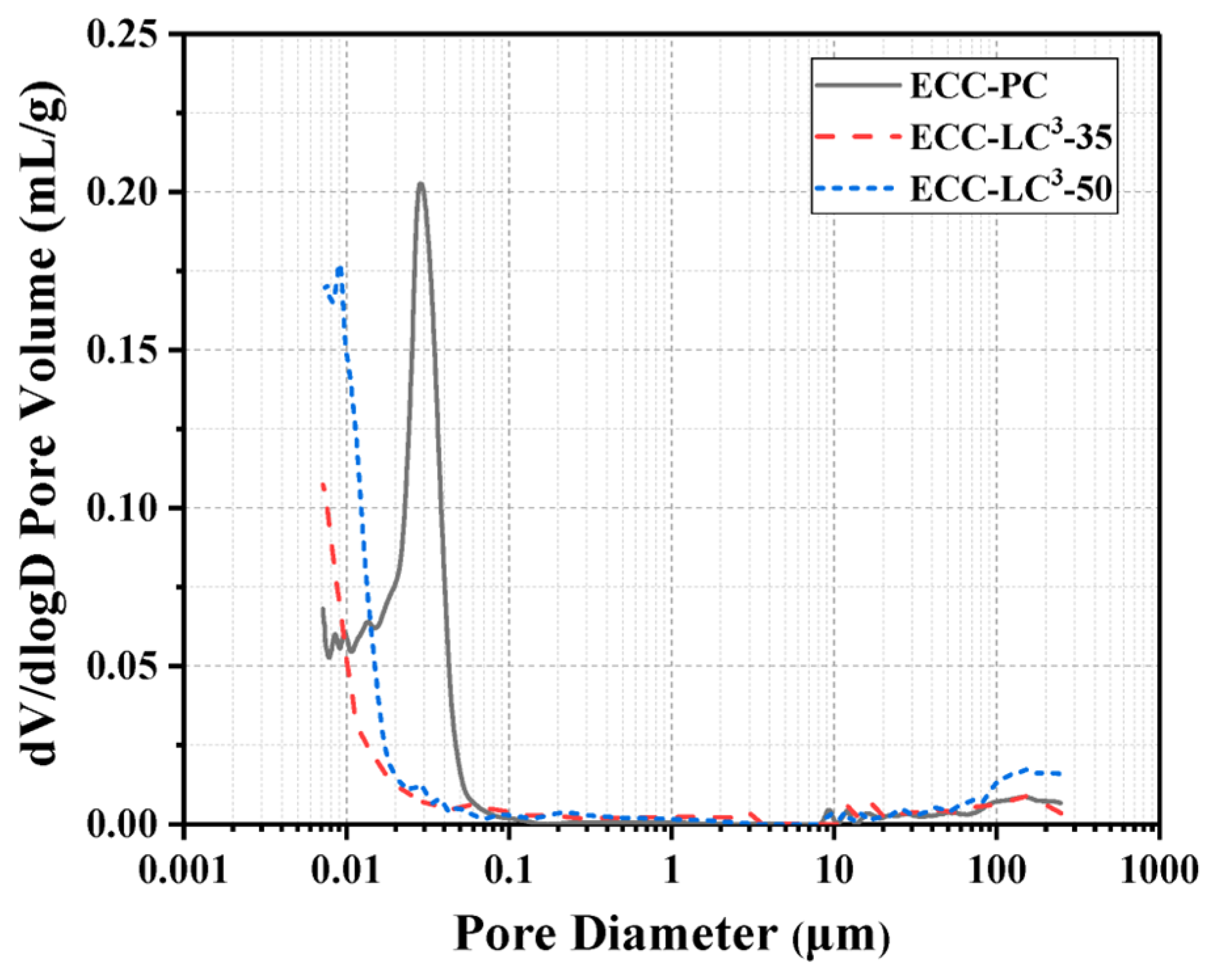
| LC3 for HS-SHCC/LW-ECC | 10–65% | LC3 required higher mixing energy and reduced flowability. LC3 weight fraction increase required more superplasticizer. | A 50% replacement reduced compressive strength but increased flexural strength/ductility due to C-A-S-H polymerization. | A 30% substitution densified pore structure, 50% replacement increased porosity. LC3 shifted the pore size distribution to the left. | Formation of highly polymerized C-A-S-H gel and needle-like ettringite acting as nano-reinforcement. | [33,85] |
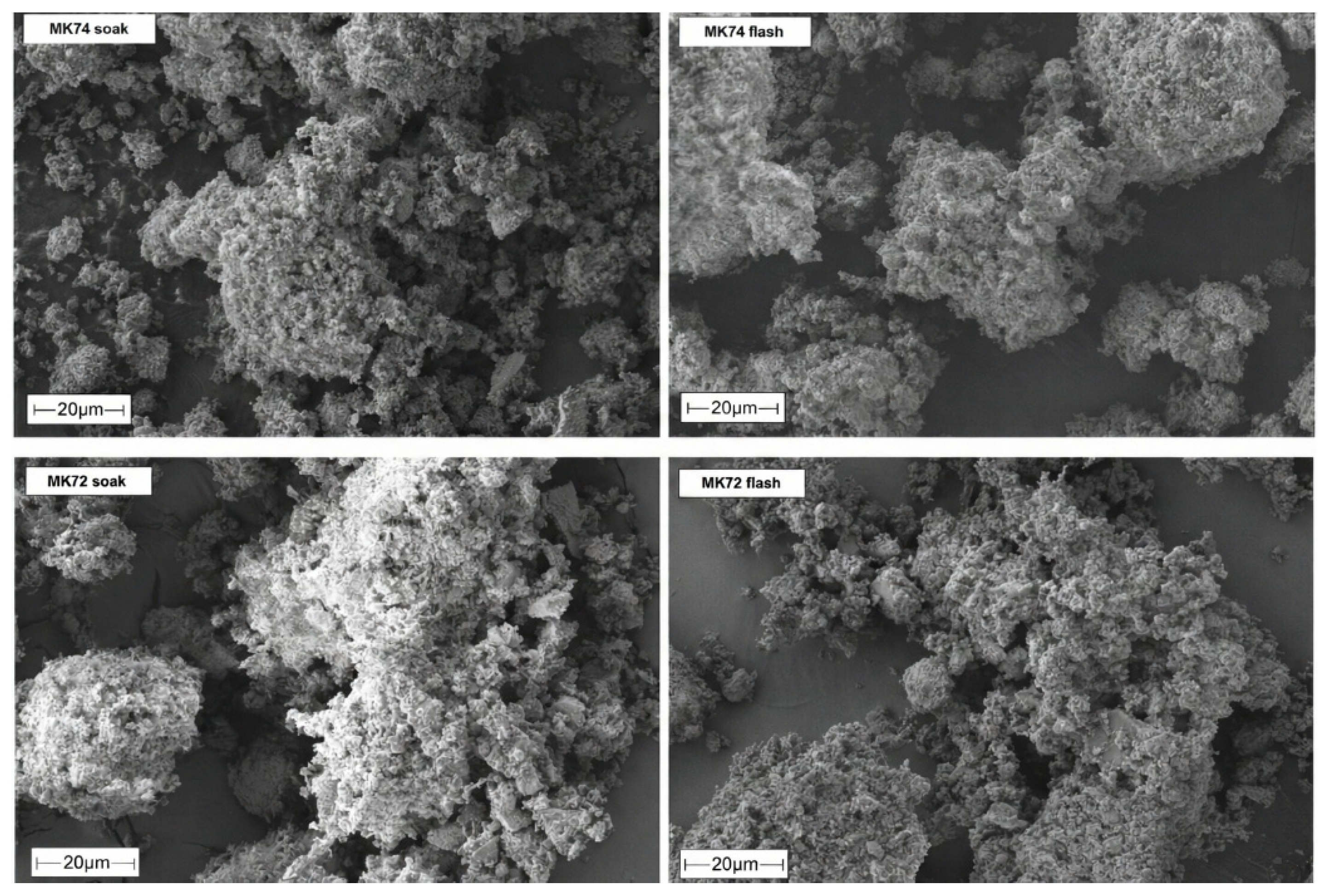
| LC3: Effect of Clay Type/Calcination | 45% | Metakaolinite (1:1 clay) reacts faster and requires more water/SP than 2:1 clays (illite/montmorillonite). Soak and flash calcination yield similar results. | Twenty-eight-day strength: 38.4 MPa (kaolinitic), 32.8 MPa (illite), 33.7 MPa (montmorillonite). Strength maximized at 850 °C calcination. | Porosity is higher with coarse clay. Illite pastes have larger threshold pore diameters than kaolinite. | Kaolinite produces denser microstructures. Hc formed in all blends; Mc depends on the clay type. | [40,42,86] |
| LC3 vs. Limestone-Calcined Laterite (LCLC) | 45% | LC3 and LCLC have similar workability requirements. Limestone improved workability compared to calcined laterite alone. | No significant difference between laterite-based and clay-based concrete. LC3 28-day strength 85–90% of control. | Blended cements showed higher initial surface absorption (ISAT-10) than the control, normalizing with age. | Laterite is slightly more amorphous than clay. Both have flat, irregular shapes, limestone is rounder, aiding lubrication. | [64] |
| LC3 with Recycled Concrete Slurry Waste (CDCSW)/Powder (TARCP) | 15–45% | CDCSW/TARCP decreased fluidity and significantly increased yield stress/viscosity due to porous morphology. | CDCSW mortar strength was higher than standard LC3 specimens at all ages. TARCP improved strength via matrix densification. | Refined pore structure with reduced critical pore diameter. Small effective chloride diffusion (1.08 × 10⁻¹¹ m2/s). | Mc content at 28 days was 11.2% for LC3-CDCSW vs. 9.5% for standard LC3. TARCP facilitates greater Al incorporation into C-A-S-H. | [17,87,88] |
| Rubberized LC3 Self-compacting Concrete | 50% | Slump flow (655–680 mm) satisfied EFNARC criteria, excellent flowability despite crumb rubber addition. | Twenty-eight-day strength decreased from 67.5 MPa (0% CR) to 25.2 MPa (40% CR). | Bulk electrical resistivity increased with CR, and chloride-ion penetrability remained very low. | Compactness and ITZ tightness improved, resulting in lower leaching of heavy metals due to improved microstructure. | [89] |
| Ultra-high Substitution LC3 (LCC) | 75–95% | Yield stress increases (61.94% to 1383%) as the substitution ratio increases. The addition of Portlandite (CH) shortens the induction period. | Max strength 146 MPa at 55% substitution. Extra CH improved 28-day strength by up to 60% in ultra-high LCC systems. | Refined pore structure with a threshold size below 10 nm, total porosity remains below 7%. | Additional CH supports continuous pozzolanic reaction forming more C-A-S-H, gypsum encourages ettringite over mono-carboaluminate. | [24,30,73] |
| LC3 with Partially Calcined Limestone (PCL) | Up to 80% | PCL provides an alkaline environment and a core-shell structure (CaO shell, CaCO3 core), accelerating early hydration. | At a 52.3% calcination level, 28-day strength was 137% higher than standard LC3 with uncalcined limestone. | Total porosity reduced by half, pore sizes refined to the 5–10 nm range. | The core-shell structure of PCL promotes the formation of a dense layer of hydration products around particles. | [88] |
| Category | Research Variables and Methods | Key Findings, Mechanisms |
|---|---|---|
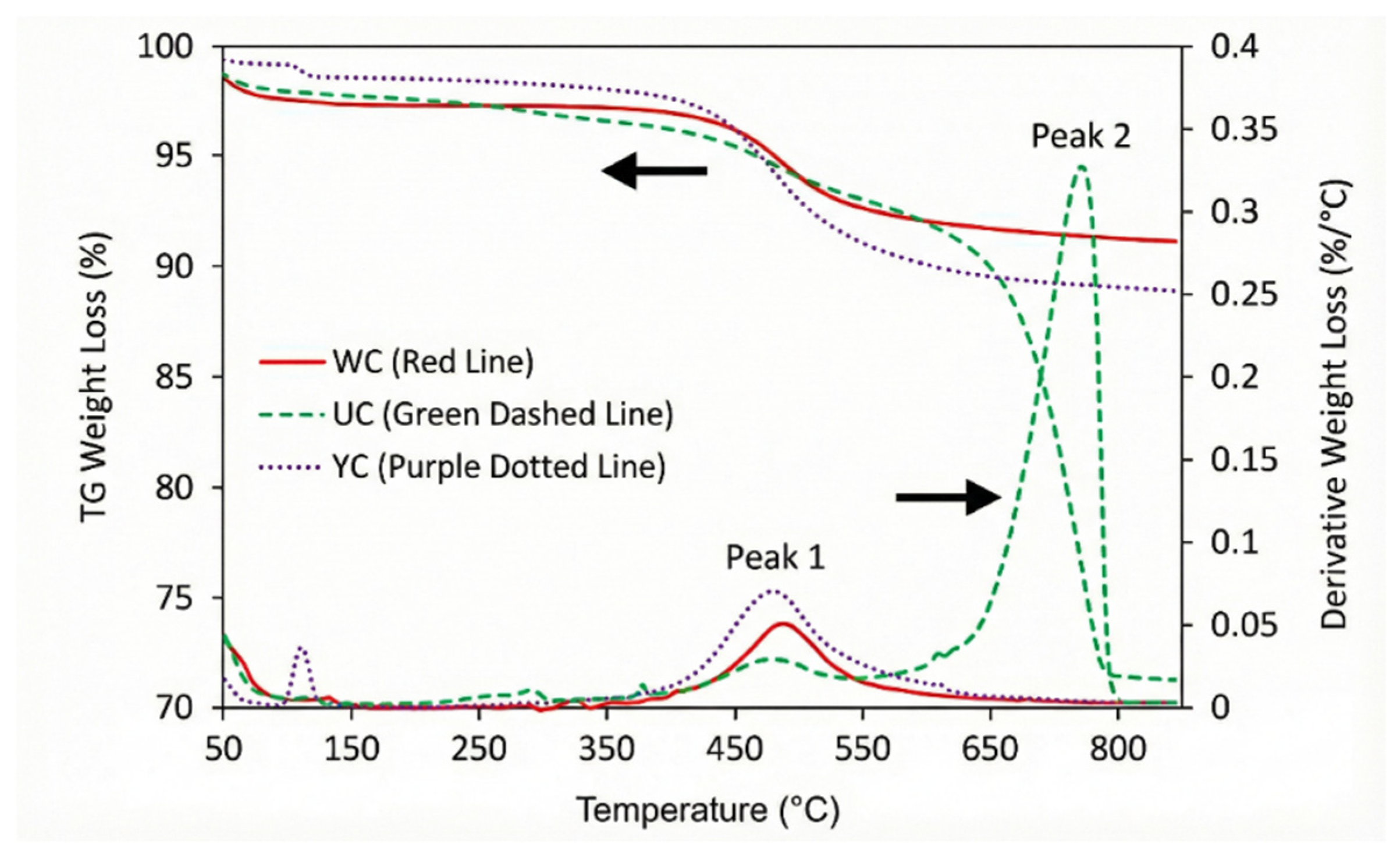
| Raw Material Characterization and Calcination | Variables: Clay mineralogy (kaolinite, Illite, montmorillonite), calcination temperature (600−900 °C), residence time, grinding fineness. Methods: XRD, TGA, R3 test (ASTM C1897 [90]), PSD, and BET surface area. | Kaolinitic Clays (more than 40% purity): Maximum pozzolanic reactivity is achieved at 800 °C. These clays yield 28-day compressive strengths of 45–60 MPa and reduce critical pore diameters strictly to the 5–10 nm range [63,79,91]. Flash Calcination (0.1–1.0 s): Increases specific surface area to 15–25 m2/g and enhances early age reactivity. This method increases superplasticizer demand (typically 1.5–2.0% dosage) while maintaining high late-age strength (40–55 MPa) [40,92]. Soak/Rotary Calcination (30–60 min): Produces more regular particle morphology and lower surface areas (10–15 m2/g). This results in lower admixture demand (0.8–1.2% dosage) with comparable 28-day strength ranges (40–50 MPa) [40,61,93]. Low-Grade Clays: Lower reactivity requires higher calcination temperatures (850–900 °C). They typically yield 28-day strengths of 30–40 MPa and slightly coarser critical pore diameters in the 10–15 nm range [42,86,94]. |
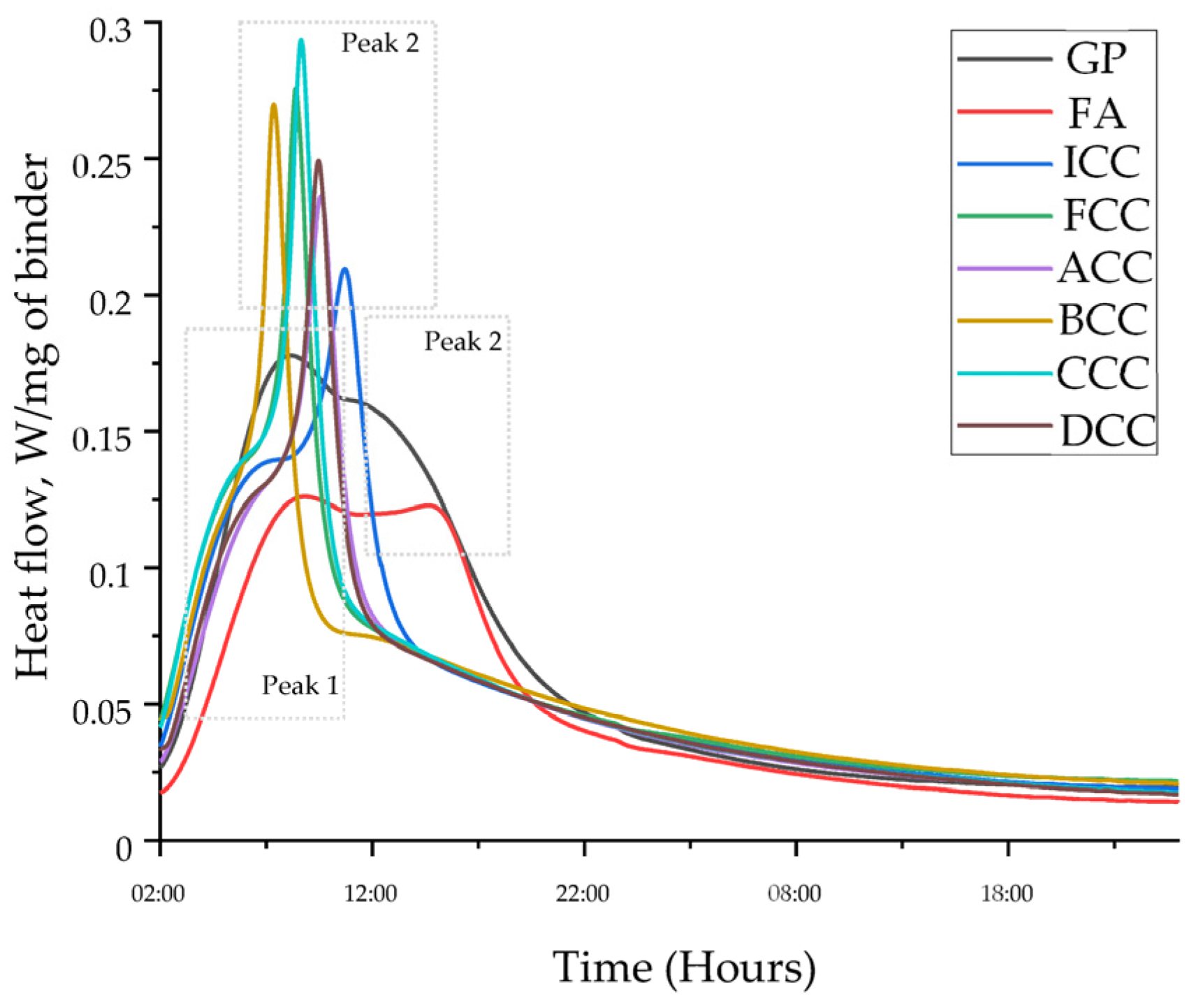
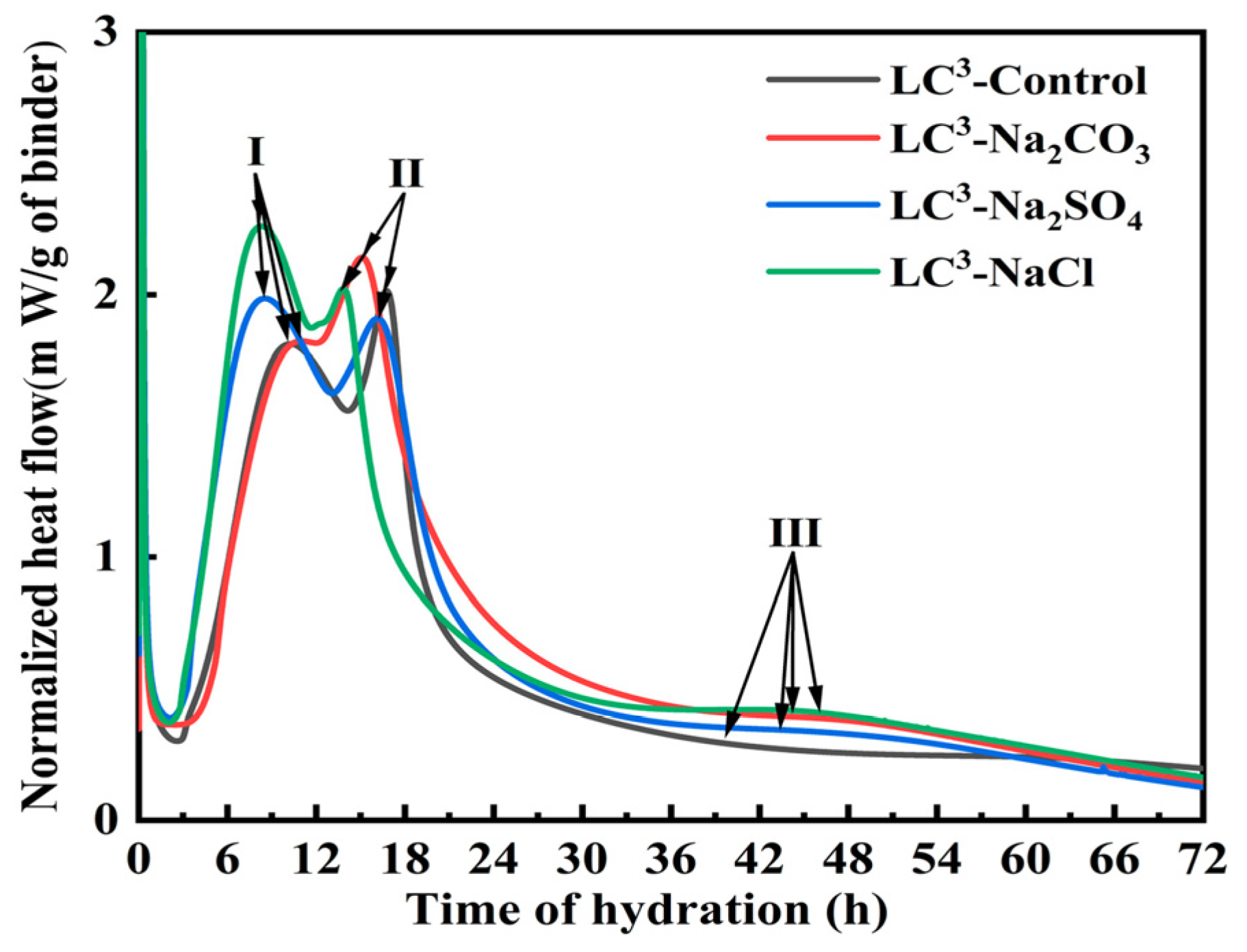
| Hydration Mechanism and Phase Development | Variables: Clinker/clay/limestone ratios, sulfate balance (gypsum/anhydrite), curing temperature. Methods: Isothermal calorimetry, in situ XRD, SEM-EDS, and thermodynamic modeling (GEMS). | Synergistic Effect: Alumina from metakaolin reacts with carbonate from limestone to form carboaluminates (Hc and Mc), filling capillary pores and refining the microstructure [95]. Reaction Kinetics: This reaction often corresponds to a “third hydration peak” occurring after the main clinker hydration peaks [95]. Sulfate Balance: Proper sulfate optimization is critical to control the aluminate reaction, prevent flash set, and maximize strength [45,96]. Long-Term Evolution: Hydration continues significantly beyond 90 days, with Hc often converting to Mc and porosity continuing to decrease up to 3 years [18]. |
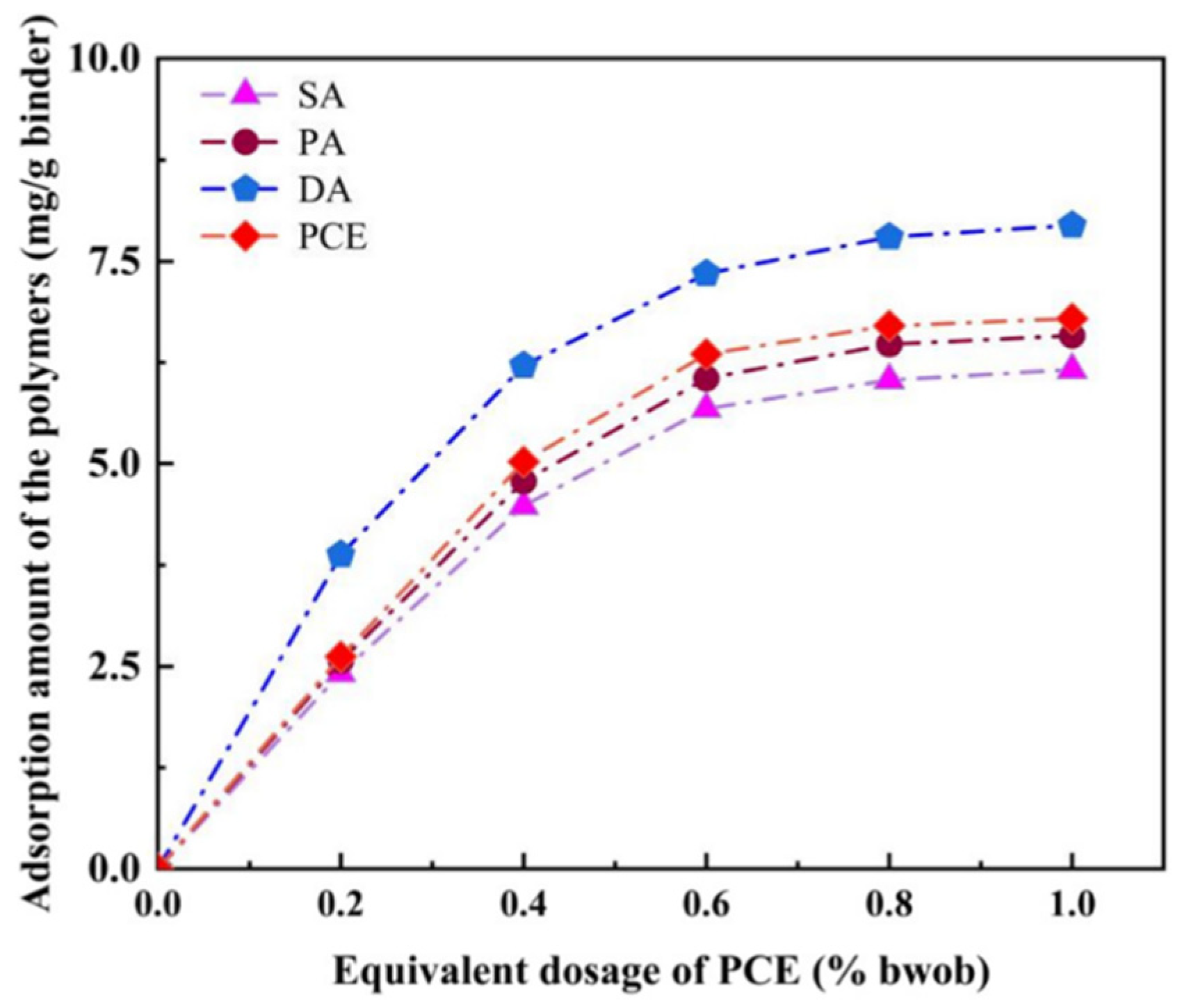
| Rheology and Workability | Variables: w/b ratio, SP type (PCE, SNF), and dosage, addition time (delayed/direct). Methods: Rotational rheometry, slump flow, Zeta potential, TOC (adsorption). | Water Demand: Calcined clays have high BET surface area and layered structures, leading to increased water demand and yield stress compared to OPC [21,29]. PCE Compatibility: Clays can adsorb or intercalate PCE polymers, reducing their dispersing efficiency. Delayed addition of superplasticizers or using specific clay-mitigating admixtures improves workability [29,45]. Thixotropy: LC3 pastes exhibit higher thixotropy and structural build-up, which can be challenging for pumping but advantageous for 3D printing [65,97]. |
| Mechanical Performance | Variables: Clinker replacement levels (35–80%), Accelerators (C-S-H seeding, nano-silica), and curing conditions. Methods: Compressive/flexural strength, elastic modulus. | Strength Development: LC3-50 (50% clinker) typically achieves comparable strength to OPC after 7 days and can surpass it at 28 days due to pore refinement [5]. Early-Age Strength: Early strength (1–3 days) is often lower due to the dilution effect but can be enhanced by alkali activation, nano-silica, or C-S-H seeding [47,59]. Clinker Factor: Reducing clinker below 50% (LC3-35) results in lower strength, but optimization of particle packing and chemical activation can mitigate this loss [57]. |
| Durability Performance | Variables: Chloride exposure, carbonation, sulfate attack, ASR. Methods: RCPT, migration tests (RCMT), MIP (porosimetry), surface resistivity. | Chloride Resistance: LC3 exhibits superior chloride resistance compared to OPC (often by an order of magnitude) due to a highly refined pore network and tortuosity [63,78]. Carbonation: The carbonation rate is generally faster than OPC due to lower portlandite (CH) buffer capacity, making proper curing essential [98]. ASR and Sulfate: The system shows effective mitigation of alkali–silica reaction (ASR) expansion and improved resistance to sulfate attack [41]. |
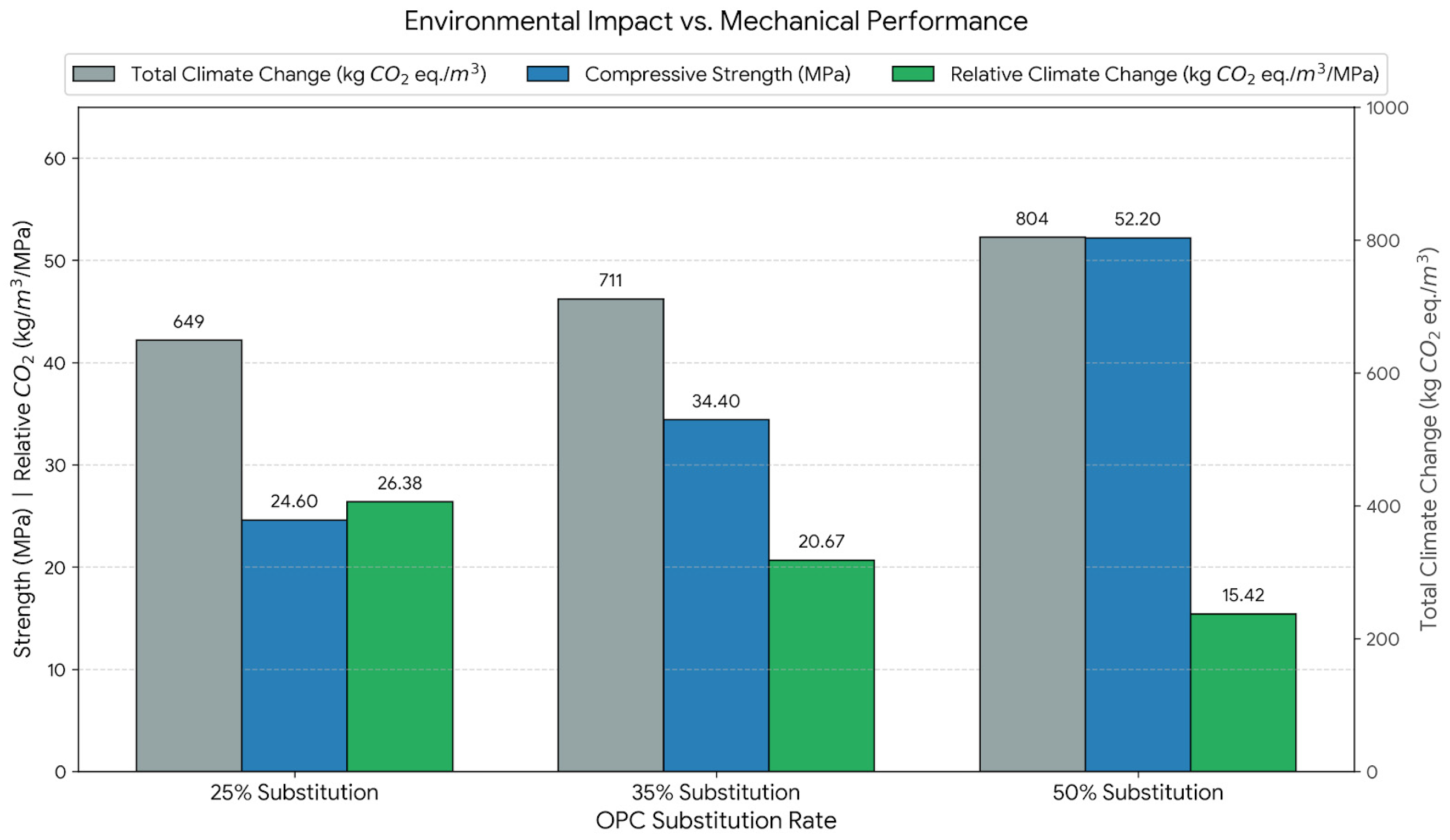
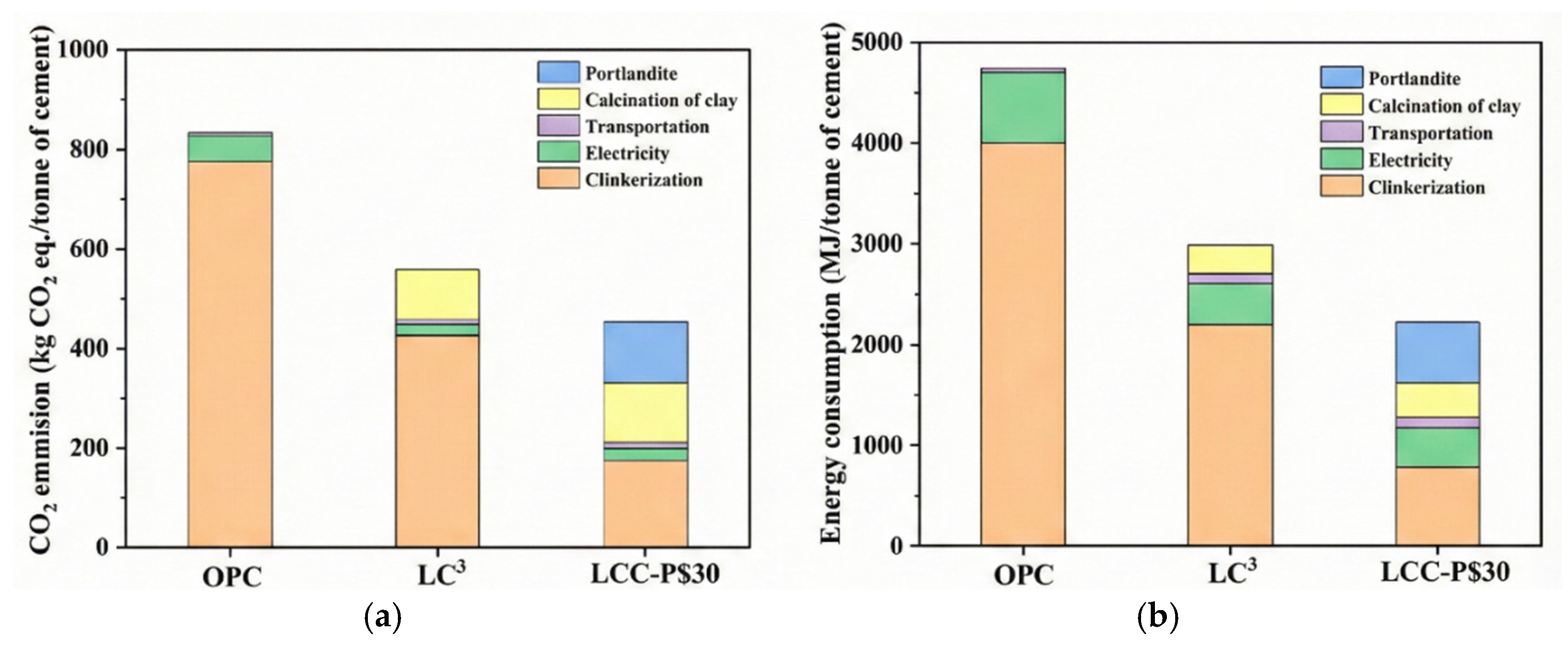
| Sustainability and Environmental Impact | Variables: CO2 emissions, embodied energy, cost analysis. Methods: Life cycle assessment (LCA), cost–benefit analysis. | Emission Reduction: LC3 technology can reduce CO2 emissions by 30–40% compared to OPC [26,99]. Energy: Calcination of clay requires lower temperatures (800 °C) than clinker production (1450 °C), resulting in energy savings [100]. Economics: The use of abundant low-grade clays and limestone overburden offers economic advantages, particularly in regions lacking high-quality fly ash or slag [44]. |
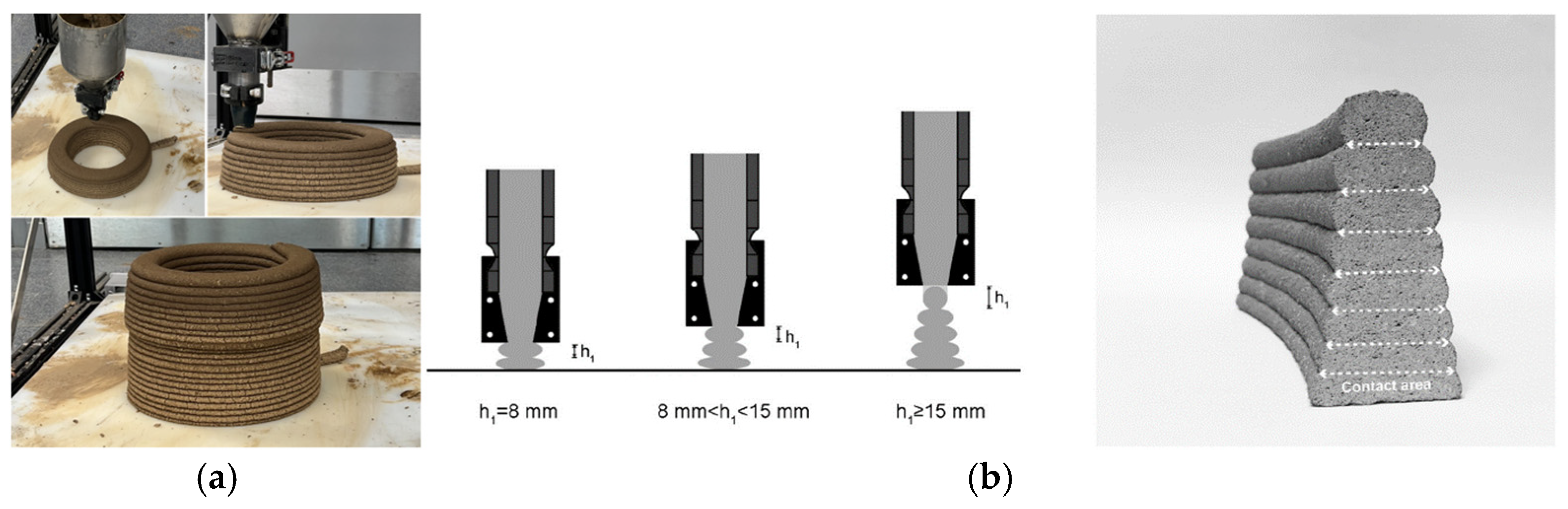
| Advanced Applications (3D Printing, UHPC) | Variables: 3D concrete printing (3DCP), UHPC design, fiber reinforcement (ECC). Methods: Printability, extrudability, micromechanics. | 3D Printing: High thixotropy and yield stress of LC3 are beneficial for shape retention (buildability) in 3D printing applications [43,66]. UHPC: LC3-based ultra-high-performance concrete demonstrates high packing density and sustainability, though it requires careful rheology management [73,74]. Composites: In ECC, LC3 contributes to high tensile strain capacity and controlled crack widths [33,71]. |
2. Evolution of Binder Design: From Random Blending to Scientific Optimization
2.1. Constituent Raw Materials and Characterization
2.1.1. Clays: Mineralogy, Calcination, and Reactivity
2.1.2. Limestone
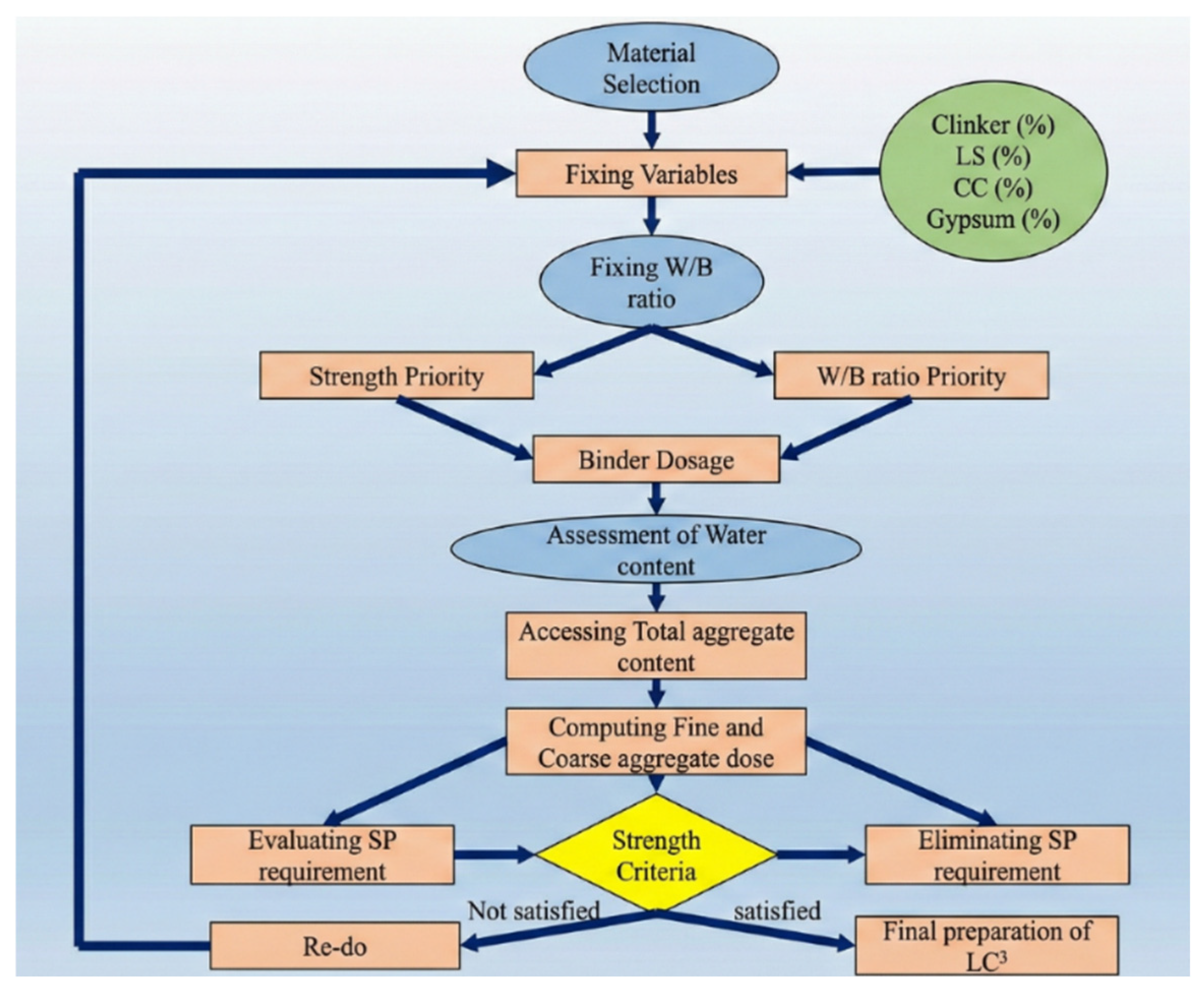
2.2. Mix Proportioning: From Empirical to D-Optimal Design
2.3. Sulfation Optimization
3. Hydration Mechanisms and Microstructure
3.1. The Synergistic Effect
3.2. Phase Assemblage Evolution
3.2.1. C-A-S-H Gel Structure and Al-Uptake
3.2.2. Carboaluminates
3.3. Pore Structure Refinement
4. Fresh and Mechanical Properties
4.1. Rheology and Workability
4.1.1. Water Demand and Yield Stress
4.1.2. Superplasticizer Compatibility
4.2. Strength Development
4.2.1. Early-Age Strength (1–3 Days): Clinker and Limestone Effect
4.2.2. Late-Age Strength (28+ Days): The Pozzolanic Contribution
4.2.3. Comparative Performance with OPC
5. Durability Performance
5.1. Chloride Resistance
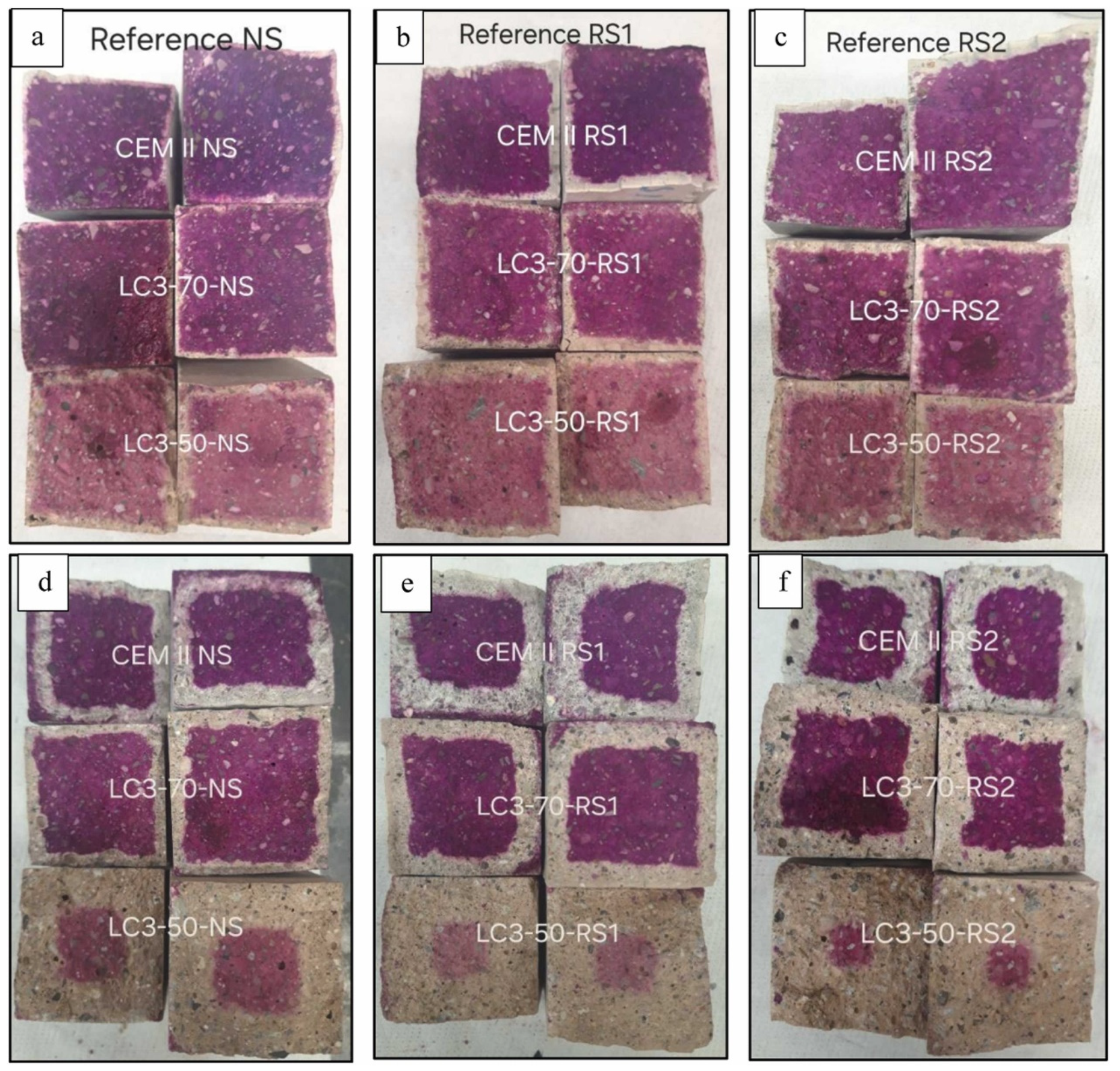
5.2. Carbonation
5.3. Alkali–Silica Reaction (ASR)
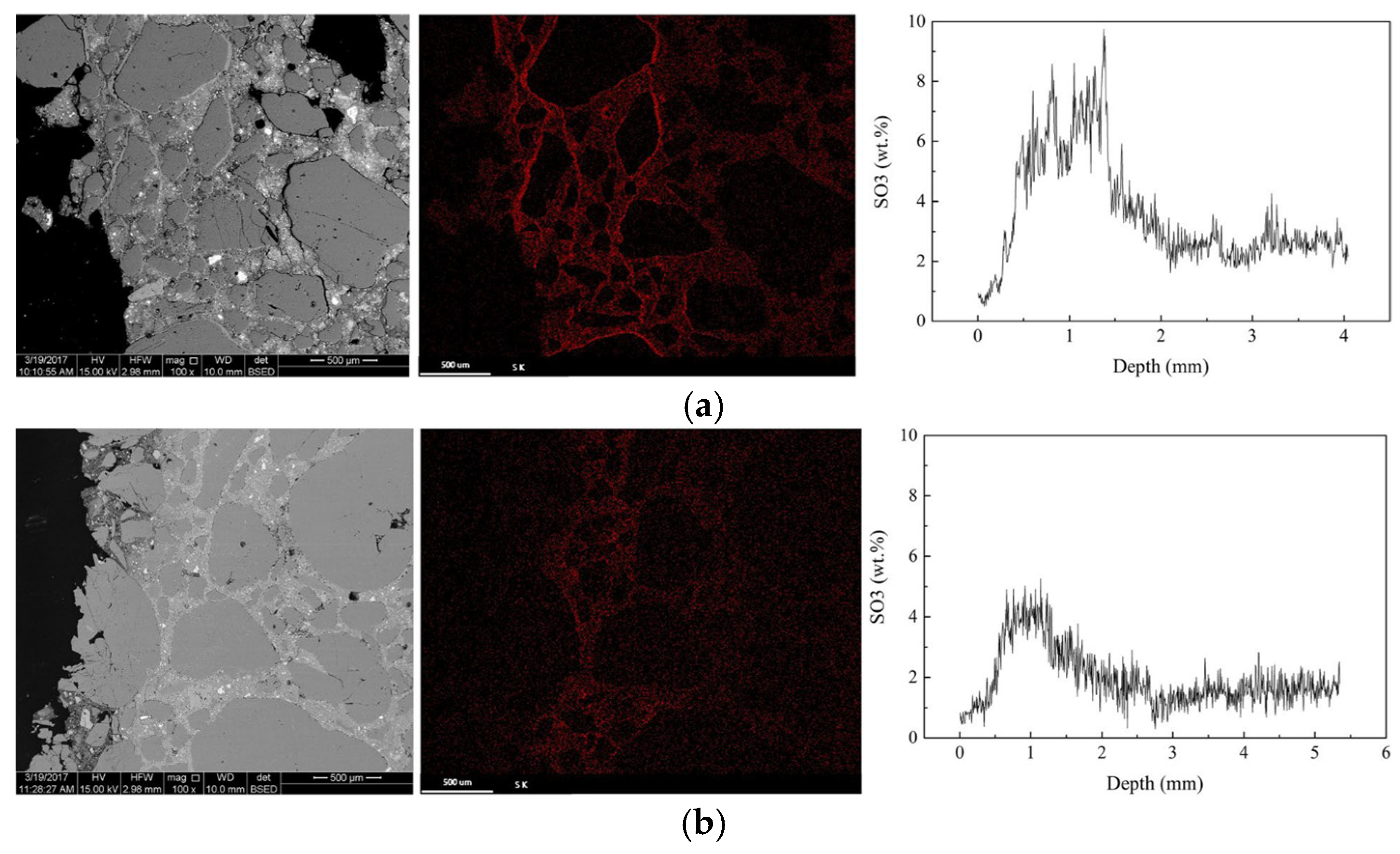
5.4. Sulfate Resistance
6. From Lab to Field: Scale-Up and Implementation
6.1. Production Technology
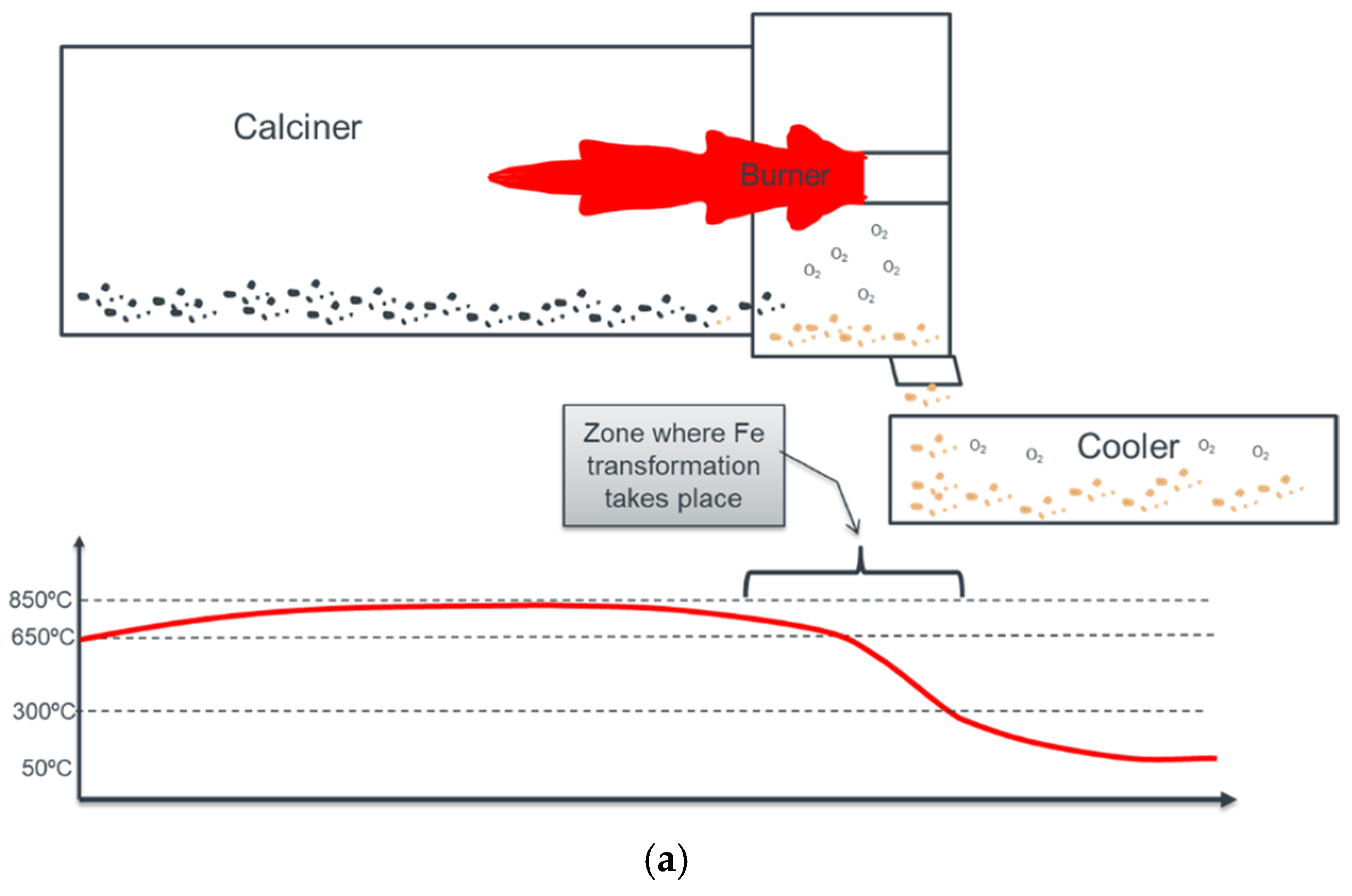
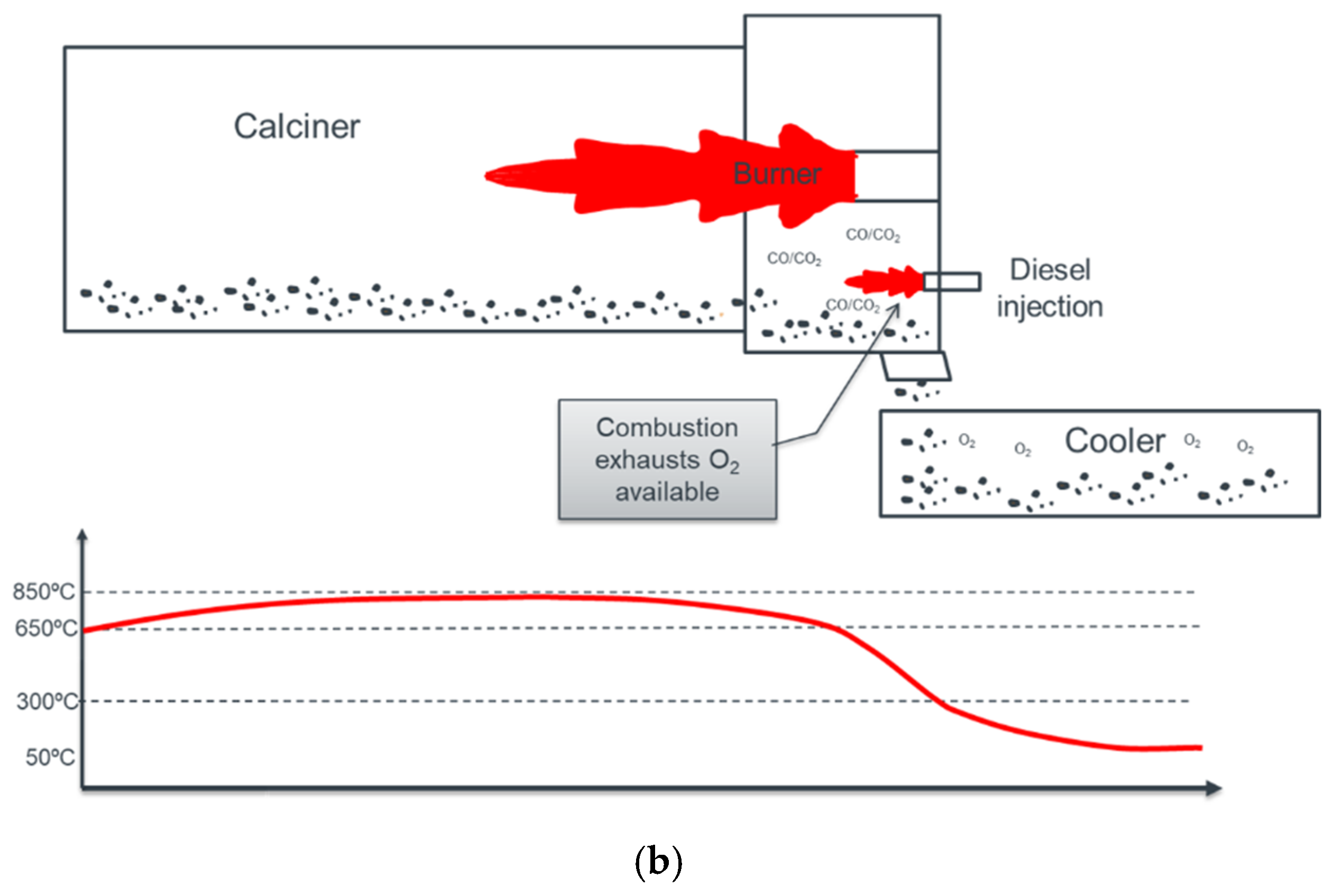
6.1.1. Adapting Existing Infrastructure
6.1.2. Flash Calcination: Efficiency and Reactivity
6.2. Color Control
6.3. Sustainability and LCA
6.4. Standardization
7. Conclusions and Future Outlook
7.1. Summary of Current Knowledge
7.2. Critical Research Frontiers and Gaps
7.3. Future Recommendations
Author Contributions
Funding
Institutional Review Board Statement
Informed Consent Statement
Data Availability Statement
Acknowledgments
Conflicts of Interest
References
- Abdulqader, M.; Khalid, H.R.; Ibrahim, M.; Adekunle, S.K.; Al-Osta, M.A.; Ahmad, S.; Sajid, M. Physicochemical Properties of Limestone Calcined Clay Cement (LC3) Concrete Made Using Saudi Clays. J. Mater. Res. Technol. 2023, 25, 2769–2783. [Google Scholar] [CrossRef]
- Gowri, K.; Abdul Rahim, A. Studies on Hybrid Quaternary Blended Limestone Calcined Clay Cement (LC3) for Sustainable Concrete. Innov. Infrastruct. Solut. 2024, 9, 430. [Google Scholar] [CrossRef]
- Afroz, S.; Zhang, Y.; Nguyen, Q.D.; Kim, T.; Castel, A. Shrinkage of Blended Cement Concrete with Fly Ash or Limestone Calcined Clay. Mater. Struct./Mater. Constr. 2023, 56, 15. [Google Scholar] [CrossRef]
- Alghamdi, H.; Shoukry, H.; Abdel-Gawwad, H.A.; Hossain, M.U.; Abadel, A.A.; Eltawil, K.A.; Youssef, A.S. Development of Limestone Calcined Clay Cement-Based Lightweight Bricks Incorporating Waste Rockwool: A Step into Leading the Way in Low-Carbon Bricks. Buildings 2024, 14, 3937. [Google Scholar] [CrossRef]
- Avet, F.; Sofia, L.; Scrivener, K. Concrete Performance of Limestone Calcined Clay Cement (LC3) Compared with Conventional Cements. Adv. Civ. Eng. Mater. 2019, 8, 275–286. [Google Scholar] [CrossRef]
- Dai, X.; Yio, M.; Wu, H.; Lopez, S.B.; Cheeseman, C.; Wong, H.S. Enhancing the Rheology, Reaction Kinetics and Early-Age Strength of Limestone Calcined Clay Cement (LC3) with Sodium Silicate Addition. Cem. Concr. Res. 2025, 198, 107997. [Google Scholar] [CrossRef]
- De Weerdt, K.; Kjellsen, K.O.; Sellevold, E.; Justnes, H. Synergy between Fly Ash and Limestone Powder in Ternary Cements. Cem. Concr. Compos. 2011, 33, 30–38. [Google Scholar] [CrossRef]
- Du, H.; Pang, S.D. High-Performance Concrete Incorporating Calcined Kaolin Clay and Limestone as Cement Substitute. Constr. Build. Mater. 2020, 264, 120152. [Google Scholar] [CrossRef]
- Yaghmour, E.; Ibarra Campa, J.; Torres, M.; Brown, M.; Llantero, L.; Quiel, S.; Naito, C. Residual Properties after High Temperature Exposure for Normal Weight Concrete Made with Cement Blends That Include Calcined Clay and Limestone. Fire Saf. J. 2025, 157, 104483. [Google Scholar] [CrossRef]
- Yu, Y.; Yang, M.; Wan, C.; Lin, L. Mechanical, Workability, Economic and Environmental Properties of Concrete with Limestone Calcined Clay Cement and Recycled Aggregates. Sci. Rep. 2025, 15, 14122. [Google Scholar] [CrossRef]
- Arbab, F.; Tarighat, A.; Shayanfar, M.A. Evaluation of Electrical Resistivity, Hydration, and Durability against Sulfate Attack of Limestone Calcined Clay Cement (LC3) with Various Kaolinite Content at High-Replacement Levels. Constr. Build. Mater. 2025, 469, 140505. [Google Scholar] [CrossRef]
- Li, R.; Lei, L.; Sui, T.; Plank, J. Effectiveness of PCE Superplasticizers in Calcined Clay Blended Cements. Cem. Concr. Res. 2021, 141, 106334. [Google Scholar] [CrossRef]
- Ren, J.; Guo, J.; Jin, Y.; Liu, F.; Liu, B.; Yan, S.; Yan, W.; Lu, C.; Shi, S. Enhancing Workability of High-Volume Calcined Clay Blend Cement Pastes through Optimized Addition Sequences of PCE Superplasticizer. Case Stud. Constr. Mater. 2024, 21, e03541. [Google Scholar] [CrossRef]
- Jia, H.; Yao, S.; Tang, X.; Zheng, M.; Dong, Y.; Fan, F.; Yang, S.; Zhang, H. Multi-Objective Machine Learning for Health-Oriented O3 and PM2.5 Control: Integrating VOC Photochemical Consumption and Source Apportionment. J. Hazard. Mater. 2026, 505, 141483. [Google Scholar] [CrossRef]
- Ruan, Y.; Jamil, T.; Hu, C.; Gautam, B.P.; Yu, J. Microstructure and Mechanical Properties of Sustainable Cementitious Materials with Ultra-High Substitution Level of Calcined Clay and Limestone Powder. Constr. Build. Mater. 2022, 314, 125416. [Google Scholar] [CrossRef]
- Shamseldeen Fakhri, R.; Thanon Dawood, E. Limestone Powder, Calcined Clay and Slag as Quaternary Blended Cement Used for Green Concrete Production. J. Build. Eng. 2023, 79, 107644. [Google Scholar] [CrossRef]
- Li, S.; Liu, J.; Yu, C.; Li, Z.; Xie, W. Study on the Performance of Ternary Blended Cement with Calcined Clay and Recycled Concrete Powder. Low-Carbon Mater. Green Constr. 2024, 2, 4. [Google Scholar] [CrossRef]
- Zunino, F.; Scrivener, K. Microstructural Developments of Limestone Calcined Clay Cement (LC3) Pastes after Long-Term (3 Years) Hydration. Cem. Concr. Res. 2022, 153, 106693. [Google Scholar] [CrossRef]
- Antoni, M.; Rossen, J.; Martirena, F.; Scrivener, K. Cement Substitution by a Combination of Metakaolin and Limestone. Cem. Concr. Res. 2012, 42, 1579–1589. [Google Scholar] [CrossRef]
- Cardinaud, G.; Rozière, E.; Martinage, O.; Loukili, A.; Barnes-Davin, L.; Paris, M.; Deneele, D. Calcined Clay—Limestone Cements: Hydration Processes with High and Low-Grade Kaolinite Clays. Constr. Build. Mater. 2021, 277, 122271. [Google Scholar] [CrossRef]
- Chen, Y.; Çopuroğlu, O. Understanding the Role of Calcined Clay in Yield Stress Evolution of LC3 with Ultra-High Volume of Calcined Clay and Limestone. Constr. Build. Mater. 2025, 492, 142898. [Google Scholar] [CrossRef]
- Ferreiro, S.; Herfort, D.; Damtoft, J.S. Effect of Raw Clay Type, Fineness, Water-to-Cement Ratio and Fly Ash Addition on Workability and Strength Performance of Calcined Clay—Limestone Portland Cements. Cem. Concr. Res. 2017, 101, 1–12. [Google Scholar] [CrossRef]
- Hay, R.; Celik, K. Effects of Water-to-Binder Ratios (w/b) and Superplasticizer on Physicochemical, Microstructural, and Mechanical Evolution of Limestone Calcined Clay Cement (LC3). Constr. Build. Mater. 2023, 391, 131529. [Google Scholar] [CrossRef]
- Hu, C.; Tao, Y.; Gautam, B.P.; Wang, F. Performance Enhancement of Sustainable Cementitious Material with Ultrahigh Content Limestone and Calcined Clay. ACS Sustain. Chem. Eng. 2022, 10, 10733–10742. [Google Scholar] [CrossRef]
- Dhers, S.; Müller, A.; Guggenberger, R.; Freimut, D.; Weldert, K.; Sachsenhauser, B.; Yermakou, V.; Mikanovic, N.; Schwesig, P. On the Relationship between Superplasticizer Demand and Specific Surface Area of Calcined Clays in LC3 Systems. Constr. Build. Mater. 2024, 411, 134467. [Google Scholar] [CrossRef]
- Kanagaraj, B.; Anand, N.; Johnson Alengaram, U.; Samuvel Raj, R.; Karthick, S. Limestone Calcined Clay Cement (LC3): A Sustainable Solution for Mitigating Environmental Impact in the Construction Sector. Resour. Conserv. Recycl. Adv. 2024, 21, 200197. [Google Scholar] [CrossRef]
- Ribeiro, F.R.C.; Silvestro, L.; Py, L.G.; Sakata, R.D.; Gleize, P.J.P.; de Campos, C.E.M.; de Matos, P.R.; Kirchheim, A.P. Assessing Hydration Kinetics and Rheological Properties of Limestone Calcined Clay Cement (LC3): Influence of Clay-Mitigating and Superplasticizer Admixtures. Case Stud. Constr. Mater. 2024, 20, e03364. [Google Scholar] [CrossRef]
- Rossetti, A.; Ikumi, T.; Segura, I.; Irassar, E.F. Sulfate Performance of Blended Cements (Limestone and Illite Calcined Clay) Exposed to Aggressive Environment after Casting. Cem. Concr. Res. 2021, 147, 106495. [Google Scholar] [CrossRef]
- Moghul, S.; Zunino, F.; Flatt, R.J. Flow Loss in Superplasticized Limestone Calcined Clay Cement. J. Am. Ceram. Soc. 2025, 108, e20344. [Google Scholar] [CrossRef]
- Yu, J.; Wu, H.L.; Mishra, D.K.; Li, G.; Leung, C.K. Compressive Strength and Environmental Impact of Sustainable Blended Cement with High-Dosage Limestone and Calcined Clay (LC2). J. Clean. Prod. 2021, 278, 123616. [Google Scholar] [CrossRef]
- Nair, N.; Mohammed Haneefa, K.; Santhanam, M.; Gettu, R. A Study on Fresh Properties of Limestone Calcined Clay Blended Cementitious Systems. Constr. Build. Mater. 2020, 254, 119326. [Google Scholar] [CrossRef]
- Rehman, M.U.; MacLeod, A.J.N.; Gates, W.P. Phase Development and Mechanical Strength of Limestone Calcined Clay Cement Utilising Australian Bentonite and Plasterboard Waste. Constr. Build. Mater. 2024, 445, 137937. [Google Scholar] [CrossRef]
- Zhou, Y.; Gong, G.; Xi, B.; Guo, M.; Xing, F.; Chen, C. Sustainable Lightweight Engineered Cementitious Composites Using Limestone Calcined Clay Cement (LC3). Compos. B Eng. 2022, 243, 110183. [Google Scholar] [CrossRef]
- Kandagaddala, R.K.; Dhanapal, S.V.; Nanthagopalan, P. Rheological Characterization of Limestone Calcined Clay Cement Pastes with Various Generations of Superplasticizers for Pumping Applications. J. Build. Eng. 2023, 76, 107410. [Google Scholar] [CrossRef]
- Al Kindi, H.; Abdel-Gawwad, H.A.; Meddah, M.S.; Al Jabri, K.; Mohamedzein, Y. An Overview of the Critical Influential Parameters on the Performance of Limestone Calcined Clay Cement Paste, Mortar, and Concrete. Constr. Build. Mater. 2024, 444, 137615. [Google Scholar] [CrossRef]
- Overmann, S.; Eggimann, M.; Vollpracht, A.; Matschei, T. Impact of Clay Reactivity on the Hydration of Calcined Clay Limestone Cements. Constr. Build. Mater. 2024, 449, 138455. [Google Scholar] [CrossRef]
- Wang, J.; Huang, Y. Mechanical Properties and Hydration of Ultra-High-Performance Seawater Sea-Sand Concrete (UHPSSC) with Limestone Calcined Clay Cement (LC3). Constr. Build. Mater. 2023, 376, 130950. [Google Scholar] [CrossRef]
- Gholap, V.D.; Mulay, S.B.; Kolase, P.K. Emerging Trends in Sustainable Construction: The Case of Limestone Calcined Clay Cement. J. Phys. Conf. Ser. 2025, 3076, 012011. [Google Scholar] [CrossRef]
- Li, R.; Lei, L.; Plank, J. Influence of PCE Superplasticizers on the Fresh Properties of Low Carbon Cements Containing Calcined Clays: A Comparative Study of Calcined Clays from Three Different Sources. Cem. Concr. Compos. 2023, 139, 105072. [Google Scholar] [CrossRef]
- Koutsouradi, A.; Muzenda, T.R.; Jensen, P.A.; Leal da Silva, W.R.; Damø, A.J.; Georget, F.; Matschei, T. Impact of Clay Calcination Method on the Physicochemical Properties of Limestone Calcined-Clay Cement. Constr. Build. Mater. 2025, 473, 140939. [Google Scholar] [CrossRef]
- Yu, C.; Li, Z.; Liu, J. Degradation of Limestone Calcined Clay Cement (LC3) Mortars under Sulfate Attack. Low-Carbon Mater. Green Constr. 2023, 1, 4. [Google Scholar] [CrossRef]
- Atasever, M.; Erdoğan, S.T. Effects of Clay Type and Component Fineness on the Hydration and Properties of Limestone Calcined Clay Cement. Mater. Struct./Mater. Constr. 2024, 57, 183. [Google Scholar] [CrossRef]
- Ibrahim, K.A.; van Zijl, G.P.A.G.; Babafemi, A.J. Influence of Limestone Calcined Clay Cement on Properties of 3D Printed Concrete for Sustainable Construction. J. Build. Eng. 2023, 69, 106186. [Google Scholar] [CrossRef]
- Shao, J.; Guo, S.; Wang, H. A Review of the Performance, Sustainable Applications, and Research Challenges of Limestone-Calcined Clay-Cement (LC3) Systems. Coatings 2025, 15, 611. [Google Scholar] [CrossRef]
- de Matos, P.R.; Andrade Neto, J.S.; Sakata, R.D.; Campos, C.E.M.; Kirchheim, A.P.; Rodríguez, E.D. Effect of Superplasticizer Addition Time and Metakaolin Source on the Early-Age Hydration of Limestone Calcined Clay Cement (LC3). Mater. Struct./Mater. Constr. 2022, 55, 218. [Google Scholar] [CrossRef]
- Ram, K.; Flegar, M.; Serdar, M.; Scrivener, K. Influence of Low- to Medium-Kaolinite Clay on the Durability of Limestone Calcined Clay Cement (LC3) Concrete. Materials 2023, 16, 374. [Google Scholar] [CrossRef]
- Zhou, W.; Wu, S.; Chen, H. Early Strength-Promoting Mechanism of Inorganic Salts on Limestone-Calcined Clay Cement. Sustainability 2023, 15, 5286. [Google Scholar] [CrossRef]
- Zhou, Y.; Zhang, C.; Zhou, Q.; Guo, M.; Hu, R. Unveiling the Role of LC3 in Chloride Penetration Resistance of Chloride Contaminated Mortar. Constr. Build. Mater. 2025, 458, 139658. [Google Scholar] [CrossRef]
- Lin, R.S.; Oh, S.; Du, W.; Wang, X.Y. Strengthening the Performance of Limestone-Calcined Clay Cement (LC3) Using Nano Silica. Constr. Build. Mater. 2022, 340, 127723. [Google Scholar] [CrossRef]
- Sadrolodabaee, P.; de la Fuente, A.; Ardanuy, M.; Claramunt, J. Limestone Calcined Clay Cementitious (LC3) Paving Flags with Textile Waste Fibers and Fine Recycled Aggregates: Mechanical, Durability and Multi-Criteria Sustainability Analysis. Constr. Build. Mater. 2025, 501, 144241. [Google Scholar] [CrossRef]
- Kim, G.; Cho, S.; Moon, J.; Suh, H.; Her, S.; Sim, S.; Bae, S. Investigation of the Hydrate Formation and Mechanical Performance of Limestone Calcined Clay Cement Paste Incorporating Nano-CaCO3 and Nano-SiO2 as Partial Limestone Substitutes. Constr. Build. Mater. 2024, 418, 135335. [Google Scholar] [CrossRef]
- Zhao, J.; Feng, Z.; Arachchilage, C.B.; Dushyantha, N.; Gupta, R.; Liu, W.V. Utilizing Limestone Calcined Clay Cement (LC3) to Develop Eco-Friendly Grouts for Shallow Geothermal Energy Applications—A Laboratory Study. J. Build. Eng. 2025, 112, 113872. [Google Scholar] [CrossRef]
- Zhang, M.; Yang, L.; Wang, F. Influence of C–S–H Seed and Sodium Sulfate on the Hydration and Strength of Limestone Calcined Clay Cement. J. Clean. Prod. 2023, 408, 137022. [Google Scholar] [CrossRef]
- Yu, T.; Zhang, B.; Yuan, P.; Guo, H.; Liu, D.; Chen, J.; Liu, H.; Setti Belaroui, L. Optimization of Mechanical Performance of Limestone Calcined Clay Cement: Effects of Calcination Temperature of Nanosized Tubular Halloysite, Gypsum Content, and Water/Binder Ratio. Constr. Build. Mater. 2023, 389, 131709. [Google Scholar] [CrossRef]
- Canbek, O.; Xu, Q.; Mei, Y.; Washburn, N.R.; Kurtis, K.E. Predicting the Rheology of Limestone Calcined Clay Cements (LC3): Linking Composition and Hydration Kinetics to Yield Stress through Machine Learning. Cem. Concr. Res. 2022, 160, 106925. [Google Scholar] [CrossRef]
- Wyrzykowski, M.; Di Bella, C.; Sirtoli, D.; Toropovs, N.; Lura, P. Plastic Shrinkage of Concrete Made with Calcined Clay-Limestone Cement. Cem. Concr. Res. 2025, 189, 107784. [Google Scholar] [CrossRef]
- Sun, J.; Zunino, F.; Scrivener, K. Hydration and Phase Assemblage of Limestone Calcined Clay Cements (LC3) with Clinker Content below 50%. Cem. Concr. Res. 2024, 177, 107417. [Google Scholar] [CrossRef]
- Rehman, M.U.; MacLeod, A.J.N.; Aldridge, L.; Collins, F.G.; Gates, W.P. Enhancing Cement Replacement in Calcined Clay Based Blends Using Limestone and Calcium Hydroxide. J. Build. Eng. 2025, 112, 113913. [Google Scholar] [CrossRef]
- Li, X.; Dengler, J.; Hesse, C. Reducing Clinker Factor in Limestone Calcined Clay-Slag Cement Using C-S-H Seeding—A Way towards Sustainable Binder. Cem. Concr. Res. 2023, 168, 107151. [Google Scholar] [CrossRef]
- Ez-zaki, H.; Marangu, J.M.; Bellotto, M.; Dalconi, M.C.; Artioli, G.; Valentini, L. A Fresh View on Limestone Calcined Clay Cement (LC3) Pastes. Materials 2021, 14, 3037. [Google Scholar] [CrossRef]
- Nasiri, S.; Madandoust, R.; Ranjbar, M.M. Investigating the Calcination Temperature and Grinding Time of Calcined Clay on the Mechanical Properties and Durability of LC3 Concrete. Infrastructures 2023, 8, 139. [Google Scholar] [CrossRef]
- Shaqraa, A.A.; Abdali, A.M.; Ahmad, S.; Al-Osta, M.A.; Khalid, H.R.; Adekunle, S.K. Experimental Study on High-Strength Concrete with Hybrid Limestone Calcined Clay Cement Blends. Arab. J. Sci. Eng. 2025, 50, 17211–17233. [Google Scholar] [CrossRef]
- Maraghechi, H.; Avet, F.; Wong, H.; Kamyab, H.; Scrivener, K. Performance of Limestone Calcined Clay Cement (LC3) with Various Kaolinite Contents with Respect to Chloride Transport. Mater. Struct./Mater. Constr. 2018, 51, 125. [Google Scholar] [CrossRef]
- Musbau, K.D.; Kolawole, J.T.; Babafemi, A.J.; Olalusi, O.B. Comparative Performance of Limestone Calcined Clay and Limestone Calcined Laterite Blended Cement Concrete. Clean. Eng. Technol. 2021, 4, 100264. [Google Scholar] [CrossRef]
- Ji, Y.; Wang, S.; Rößler, C.; Stephan, D. Structural Build-up in Sustainably Plasticized Limestone Calcined Clay Cement (LC3) Pastes with Accelerator Addition. Constr. Build. Mater. 2025, 487, 142074. [Google Scholar] [CrossRef]
- Chen, Y.; Chaves Figueiredo, S.; Li, Z.; Chang, Z.; Jansen, K.; Çopuroğlu, O.; Schlangen, E. Improving Printability of Limestone-Calcined Clay-Based Cementitious Materials by Using Viscosity-Modifying Admixture. Cem. Concr. Res. 2020, 132, 106040. [Google Scholar] [CrossRef]
- Chen, Y.; Zhang, Y.; He, S.; Liang, X.; Schlangen, E.; Çopuroğlu, O. Improving Structural Build-up of Limestone-Calcined Clay-Cement Pastes by Using Inorganic Additives. Constr. Build. Mater. 2023, 392, 131959. [Google Scholar] [CrossRef]
- Dong, Y.; Liu, Y.; Hu, C. Towards Greener Ultra-High Performance Concrete Based on Highly-Efficient Utilization of Calcined Clay and Limestone Powder. J. Build. Eng. 2023, 66, 105836. [Google Scholar] [CrossRef]
- de Matos, P.R.; Zat, T.; Lima, M.M.; da Silva Andrade Neto, J.; Souza, M.T.; Rodríguez, E.D. Effect of the Superplasticizer Addition Time on the Fresh Properties of 3D Printed Limestone Calcined Clay Cement (LC3) Concrete. Case Stud. Constr. Mater. 2023, 19, e02419. [Google Scholar] [CrossRef]
- Babafemi, A.J.; Norval, C.; Kolawole, J.T.; Chandra Paul, S.; Ibrahim, K.A. 3D-Printed Limestone Calcined Clay Cement Concrete Incorporating Recycled Plastic Waste (RESIN8). Results Eng. 2024, 22, 102112. [Google Scholar] [CrossRef]
- Wang, Y.; Chen, M.; Zhang, T.; Zhang, M. Rheology and Mechanical Properties of Limestone Calcined Clay Based Engineered Cementitious Composites with Nano CaCO3. Cem. Concr. Compos. 2025, 157, 105923. [Google Scholar] [CrossRef]
- Al-Noaimat, Y.A.; Chougan, M.; Sambucci, M.; Valente, M.; Tirillò, J.; Albar, A.; Nematollahi, B.; Ghaffar, S.H. Optimising Limestone Calcined Clay Cement Containing Excavated Low-Grade Waste Clay for 3D Printing Applications. Clean. Eng. Technol. 2025, 27, 100991. [Google Scholar] [CrossRef]
- Liu, X.; Chen, Q.; Song, F.; Zhang, Q.; Guo, S.; Qiao, Y.; Jiang, Z.; Zhu, H. Research on Limestone Calcined Clay Cement-Based Ultra-High Performance Concrete with High Cement Substitution: Mixture Design and Engineering Properties. Constr. Build. Mater. 2023, 409, 133913. [Google Scholar] [CrossRef]
- Guo, D.; Guo, M.; Xing, F.; Zhou, Y.; Huang, Z.; Cao, W. Using Limestone Calcined Clay Cement and Recycled Fine Aggregate to Make Ultra-High-Performance Concrete: Properties and Environmental Impact. Constr. Build. Mater. 2023, 394, 132026. [Google Scholar] [CrossRef]
- Chen, W.; Zhu, H.; Li, Y.; Yang, L.; Cheng, S.; Yu, H. Engineered Cementitious Composites Using Blended Limestone Calcined Clay and Fly Ash: Mechanical Properties and Drying Shrinkage Modeling. Case Stud. Constr. Mater. 2024, 20, e02960. [Google Scholar] [CrossRef]
- Zhang, D.; Jaworska, B.; Zhu, H.; Dahlquist, K.; Li, V.C. Engineered Cementitious Composites (ECC) with Limestone Calcined Clay Cement (LC3). Cem. Concr. Compos. 2020, 114, 103766. [Google Scholar] [CrossRef]
- Hu, Z.; Yang, Y.W.; Zhang, H. Durability and Damage Evolution of Steel Fiber and Nano-SiO2 Reinforced Concrete under Freeze-Thaw and Salt Erosion Environments Based on Acoustic Emission and Computed Tomography Analysis. J. Build. Eng. 2025, 115, 114595. [Google Scholar] [CrossRef]
- Dhandapani, Y.; Sakthivel, T.; Santhanam, M.; Gettu, R.; Pillai, R.G. Mechanical Properties and Durability Performance of Concretes with Limestone Calcined Clay Cement (LC3). Cem. Concr. Res. 2018, 107, 136–151. [Google Scholar] [CrossRef]
- Scrivener, K.; Avet, F.; Maraghechi, H.; Zunino, F.; Ston, J.; Hanpongpun, W.; Favier, A. Impacting Factors and Properties of Limestone Calcined Clay Cements (LC3). Green Mater. 2018, 7, 3–14. [Google Scholar] [CrossRef]
- Liu, Q.; Yan, Y.; Hu, Y.; You, Q.; Geng, G. Carbonated Waste Paste Calcined Clay Cement with Enhanced CO2 Mineralization and Early Strength. Carbon Capture Sci. Technol. 2025, 14, 100343. [Google Scholar] [CrossRef]
- Huang, G.; Liu, Y.; Benn, T.; Ataabadi, H.S.; Zhuge, Y. The Self-Healing Performance and Mechanism of Limestone Calcined Clay Composites Coupling with Crystalline Admixture in Chloride-Rich Environments. Constr. Build. Mater. 2025, 463, 140097. [Google Scholar] [CrossRef]
- Huraira, A.; Ltifi, M.; Rashid, K.; Zafar, I. Boosting Early Strength in Limestone Calcined Clay Cement (LC3) and Its Phase Evolution Using Waste-Derived Silica Mineral. Case Stud. Constr. Mater. 2025, 23, e05484. [Google Scholar] [CrossRef]
- Huang, C.; Zhang, S.; Ni, P.; Wu, H. Engineering Properties of Low-Carbon Limestone-Calcined Clay-Cement Binder Treated Expansive Clay: Macro-Mechanical and Micro-Mechanism. Case Stud. Constr. Mater. 2025, 23, e05215. [Google Scholar] [CrossRef]
- Nyabuto, A.O.; Abuodha, S.O.; Mwero, J.N.; Scheinherrová, L.; Marangu, J.M. Aloe Vera-Based Concrete Superplasticizer for Enhanced Consolidation with Limestone Calcined Clay Cement. Appl. Sci. 2024, 14, 358. [Google Scholar] [CrossRef]
- Wang, L.; Ur Rehman, N.; Curosu, I.; Zhu, Z.; Beigh, M.A.B.; Liebscher, M.; Chen, L.; Tsang, D.C.W.; Hempel, S.; Mechtcherine, V. On the Use of Limestone Calcined Clay Cement (LC3) in High-Strength Strain-Hardening Cement-Based Composites (HS-SHCC). Cem. Concr. Res. 2021, 144, 106421. [Google Scholar] [CrossRef]
- Ferreiro, S.; Canut, M.M.C.; Lund, J.; Herfort, D. Influence of Fineness of Raw Clay and Calcination Temperature on the Performance of Calcined Clay-Limestone Blended Cements. Appl. Clay Sci. 2019, 169, 81–90. [Google Scholar] [CrossRef]
- Hu, S.; Liu, Q.; Cai, H.; Zhao, Z.; Hu, Y.; Han, C.; Geng, G. Performance of Limestone Calcined Clay Cement (LC3) Made with CO2-Mineralized Concrete Slurry Waste. J. Clean. Prod. 2024, 472, 143476. [Google Scholar] [CrossRef]
- Qian, X.; Ruan, Y.; Jamil, T.; Hu, C.; Wang, F.; Hu, S.; Liu, Y. Sustainable Cementitious Material with Ultra-High Content Partially Calcined Limestone-Calcined Clay. Constr. Build. Mater. 2023, 373, 130891. [Google Scholar] [CrossRef]
- Mohamed, M.A.; Al-Fakih, A.; Assaggaf, R.; Harun, M. Limestone Calcined Clay Cement-based Rubberized Self-compacting Concrete: Fresh, Mechanical, Durability, and Embodied-carbon Assessment. Constr. Build. Mater. 2025, 501, 144358. [Google Scholar] [CrossRef]
- ASTM C1897-20; Standard Test Methods for Measuring the Reactivity of Supplementary Cementitious Materials by Isothermal Calorimetry and Bound Water Measurements. ASTM International: West Conshohocken, PA, USA, 2020.
- Avet, F.; Boehm-Courjault, E.; Scrivener, K. Investigation of C-A-S-H Composition, Morphology and Density in Limestone Calcined Clay Cement (LC3). Cem. Concr. Res. 2019, 115, 70–79. [Google Scholar] [CrossRef]
- Hanein, T.; Thienel, K.C.; Zunino, F.; Marsh, A.T.M.; Maier, M.; Wang, B.; Canut, M.; Juenger, M.C.G.; Ben Haha, M.; Avet, F.; et al. Clay Calcination Technology: State-of-the-Art Review by the RILEM TC 282-CCL. Mater. Struct./Mater. Constr. 2022, 55, 3. [Google Scholar] [CrossRef]
- Vizcaíno-Andrés, L.M.; Sánchez-Berriel, S.; Damas-Carrera, S.; Pérez-Hernández, A.; Scrivener, K.L.; Martirena-Hernández, J.F. Industrial Trial to Produce a Low Clinker, Low Carbon Cement. Mater. Constr. 2015, 65, e045. [Google Scholar] [CrossRef]
- Hay, R.; Celik, K. Performance Enhancement and Characterization of Limestone Calcined Clay Cement (LC3) Produced with Low-Reactivity Kaolinitic Clay. Constr. Build. Mater. 2023, 392, 131831. [Google Scholar] [CrossRef]
- Zunino, F.; Scrivener, K. The Reaction between Metakaolin and Limestone and Its Effect in Porosity Refinement and Mechanical Properties. Cem. Concr. Res. 2021, 140, 106307. [Google Scholar] [CrossRef]
- Hay, R.; Li, L.; Celik, K. Shrinkage, Hydration, and Strength Development of Limestone Calcined Clay Cement (LC3) with Different Sulfation Levels. Cem. Concr. Compos. 2022, 127, 104403. [Google Scholar] [CrossRef]
- Hou, P.; Muzenda, T.R.; Li, Q.; Chen, H.; Kawashima, S.; Sui, T.; Yong, H.; Xie, N.; Cheng, X. Mechanisms Dominating Thixotropy in Limestone Calcined Clay Cement (LC3). Cem. Concr. Res. 2021, 140, 106316. [Google Scholar] [CrossRef]
- Nguyen, Q.D.; Castel, A. Reinforcement Corrosion in Limestone Flash Calcined Clay Cement-Based Concrete. Cem. Concr. Res. 2020, 132, 106051. [Google Scholar] [CrossRef]
- Jin, W.; Roux, C.; Ouellet-Plamondon, C.; Caron, J.F. Life Cycle Assessment of Limestone Calcined Clay Concrete: Potential for Low-Carbon 3D Printing. Sustain. Mater. Technol. 2024, 41, e01119. [Google Scholar] [CrossRef]
- Scrivener, K.; Martirena, F.; Bishnoi, S.; Maity, S. Calcined Clay Limestone Cements (LC3). Cem. Concr. Res. 2018, 114, 49–56. [Google Scholar] [CrossRef]
- Fernandez, R.; Martirena, F.; Scrivener, K.L. The Origin of the Pozzolanic Activity of Calcined Clay Minerals: A Comparison between Kaolinite, Illite and Montmorillonite. Cem. Concr. Res. 2011, 41, 113–122. [Google Scholar] [CrossRef]
- Krishnan, S.; Bishnoi, S. Understanding the Hydration of Dolomite in Cementitious Systems with Reactive Aluminosilicates Such as Calcined Clay. Cem. Concr. Res. 2018, 108, 116–128. [Google Scholar] [CrossRef]
- Berodier, E.; Scrivener, K. Understanding the Filler Effect on the Nucleation and Growth of C-S-H. J. Am. Ceram. Soc. 2014, 97, 3764–3773. [Google Scholar] [CrossRef]
- Luzu, B.; Trauchessec, R.; Lecomte, A. Packing Density of Limestone Calcined Clay Binder. Powder Technol. 2022, 408, 117702. [Google Scholar] [CrossRef]
- Canda, E.; San Nicolas, R.; Rasekh, H.; Castel, A. Autogenous and Chemical Shrinkage of Limestone Calcined Clay Cement (LC3) Pastes. Buildings 2025, 15, 4089. [Google Scholar] [CrossRef]
- Sui, H.; Wang, W.; Lin, J.; Tang, Z.Q.; Yang, D.S.; Duan, W. Spatial Correlation and Pore Morphology Analysis of Limestone Calcined Clay Cement (LC3) via Machine Learning and Image-Based Characterisation. Constr. Build. Mater. 2023, 401, 132721. [Google Scholar] [CrossRef]
- Dhandapani, Y.; Santhanam, M. Investigation on the Microstructure-Related Characteristics to Elucidate Performance of Composite Cement with Limestone-Calcined Clay Combination. Cem. Concr. Res. 2020, 129, 105959. [Google Scholar] [CrossRef]
- Li, Y.; Miao, L.; Dong, Z.; Jin, Y.; Liu, W.; Gao, F.; Li, Y. Carbonation and Chloride Resistance Characteristics of Self-Developed Limestone Calcined Clay Cement (LC3) Derived from Excavated Spoil. Materials 2025, 18, 2546. [Google Scholar] [CrossRef]
- Sposito, R.; Maier, M.; Beuntner, N.; Thienel, K.C. Physical and Mineralogical Properties of Calcined Common Clays as SCM and Their Impact on Flow Resistance and Demand for Superplasticizer. Cem. Concr. Res. 2022, 154, 106743. [Google Scholar] [CrossRef]
- Akhlaghi, O.; Aytas, T.; Tatli, B.; Sezer, D.; Hodaei, A.; Favier, A.; Scrivener, K.; Menceloglu, Y.Z.; Akbulut, O. Modified Poly(Carboxylate Ether)-Based Superplasticizer for Enhanced Flowability of Calcined Clay-Limestone-Gypsum Blended Portland Cement. Cem. Concr. Res. 2017, 101, 114–122. [Google Scholar] [CrossRef]
- Cui, Y.; Chen, S.; Li, L.; Wang, X.; Liu, J. Atomistic Insights into the Hydration Behavior of N-A-S-H Gel via Ca2+ Substitution: A Molecular Dynamics Simulation Study. J. Non. Cryst. Solids 2026, 673, 123892. [Google Scholar] [CrossRef]
- Kanavaris, F.; Vieira, M.; Bishnoi, S.; Zhao, Z.; Wilson, W.; Tagnit Hamou, A.; Avet, F.; Castel, A.; Zunino, F.; Visalaksh, T.; et al. Standardisation of Low Clinker Cements Containing Calcined Clay and Limestone: A Review by RILEM TC-282 CCL. Mater. Struct./Mater. Constr. 2023, 56, 169. [Google Scholar] [CrossRef]
- Vargas, P.; Borrachero, M.V.; Payá, J.; Macián, A.; Tobón, J.I.; Martirena, F.; Soriano, L. Optimisation of Using Low-Grade Kaolinitic Clays in Limestone Calcined Clay Cement Production (LC3). Materials 2025, 18, 285. [Google Scholar] [CrossRef] [PubMed]
- Liu, Z.; Qi, X.; Ke, J.; Shui, Z. Enhancing the Toughness of Ultra-High Performance Concrete through Improved Fiber-Matrix Interface Bonding. Constr. Build. Mater. 2025, 491, 142616. [Google Scholar] [CrossRef]
- Gong, G.; Guo, M.; Zhou, Y.; Zheng, S.; Hu, B.; Zhu, Z.; Huang, Z. Multiscale Investigation on the Performance of Engineered Cementitious Composites Incorporating PE Fiber and Limstone Calcined Clay Cement (LC3). Polymers 2022, 14, 1291. [Google Scholar] [CrossRef]
- Avet, F.; Scrivener, K. Influence of PH on the Chloride Binding Capacity of Limestone Calcined Clay Cements (LC3). Cem. Concr. Res. 2020, 131, 106031. [Google Scholar] [CrossRef]
- Sui, S.; Georget, F.; Maraghechi, H.; Sun, W.; Scrivener, K. Towards a Generic Approach to Durability: Factors Affecting Chloride Transport in Binary and Ternary Cementitious Materials. Cem. Concr. Res. 2019, 124, 105783. [Google Scholar] [CrossRef]
- ASTM C1202-25; Standard Test Method for Electrical Indication of Concrete’s Ability to Resist Chloride Ion Penetration. ASTM International: West Conshohocken, PA, USA, 2025.
- Jan, A.; Ferrari, L.; Mikanovic, N.; Ben-Haha, M.; Franzoni, E. Chloride Ingress and Carbonation Assessment of Mortars Prepared with Recycled Sand and Calcined Clay-Based Cement. Constr. Build. Mater. 2024, 456, 139337. [Google Scholar] [CrossRef]
- Khan, M.S.H.; Nguyen, Q.D.; Castel, A. Performance of Limestone Calcined Clay Blended Cement-Based Concrete against Carbonation. Adv. Cem. Res. 2020, 32, 481–491. [Google Scholar] [CrossRef]
- Pillai, R.G.; Gettu, R.; Santhanam, M.; Rengaraju, S.; Dhandapani, Y.; Rathnarajan, S.; Basavaraj, A.S. Service Life and Life Cycle Assessment of Reinforced Concrete Systems with Limestone Calcined Clay Cement (LC3). Cem. Concr. Res. 2019, 118, 111–119. [Google Scholar] [CrossRef]
- Nguyen, Q.D.; Kim, T.; Castel, A. Mitigation of Alkali-Silica Reaction by Limestone Calcined Clay Cement (LC3). Cem. Concr. Res. 2020, 137, 106176. [Google Scholar] [CrossRef]
- Skaropoulou, A.; Kakali, G.; Tsivilis, S. Thaumasite Form of Sulfate Attack in Limestone Cement Concrete: The Effect of Cement Composition, Sand Type and Exposure Temperature. Constr. Build. Mater. 2012, 36, 527–533. [Google Scholar] [CrossRef]
- Shi, Y.; Wang, Y.; Wang, L.N.; Wang, W.N.; Yang, T.Y. Bridge Cable Performance Warning Method Based on Temperature and Displacement Monitoring Data. Buildings 2025, 15, 2342. [Google Scholar] [CrossRef]
- Shi, Y.; Wang, Y.; Wang, L.N.; Wang, W.N.; Yang, T.Y. Bridge Tower Warning Method Based on Improved Multi-Rate Fusion Under Strong Wind Action. Buildings 2025, 15, 2733. [Google Scholar] [CrossRef]
- Bishnoi, S.; Maity, S.; Mallik, A.; Joseph, S.; Krishnan, S. Pilot Scale Manufacture of Limestone Calcined Clay Cement: The Indian Experience. Indian Concr. J. 2014, 88, 22–28. [Google Scholar]
- UNIDO. Standards for Building a Low-Carbon and Low-Clinker Future; UNIDO: Vienna, Austria, 2024. [Google Scholar]
- Salvador, S. Pozzolanic Properties of Flash-Calcined Kaolinite: A Comparative Study with Soak-Calcined Products. Cem. Concr. Res. 1995, 25, 102–112. [Google Scholar] [CrossRef]
- San Nicolas, R.; Cyr, M.; Escadeillas, G. Characteristics and Applications of Flash Metakaolins. Appl. Clay Sci. 2013, 83–84, 253–262. [Google Scholar] [CrossRef]
- Martirena, F.; Almenares, R.; Zunino, F.; Alujas, A.; Scrivener, K. Color Control in Industrial Clay Calcination. RILEM Tech. Lett. 2020, 5, 1–7. [Google Scholar] [CrossRef]
- Gartner, E. Industrially Interesting Approaches to “Low-CO2” Cements. Cem. Concr. Res. 2004, 34, 1489–1498. [Google Scholar] [CrossRef]
- Damtoft, J.S.; Lukasik, J.; Herfort, D.; Sorrentino, D.; Gartner, E.M. Sustainable Development and Climate Change Initiatives. Cem. Concr. Res. 2008, 38, 115–127. [Google Scholar] [CrossRef]
- Haverkamp, P.; Traverso, M.; Ahmed, A.H.; Liebscher, M.; Mechtcherine, V. Evaluating the Environmental Impacts and Social Risks of Limestone Calcined Clay Cement (LC3) Mortars. Sustainability 2025, 17, 8364. [Google Scholar] [CrossRef]
- Arruda Junior, E.S.; de Sales Braga, N.T.; Barata, M.S. Life Cycle Assessment to Produce LC3 Cements with Kaolinitic Waste from the Amazon Region, Brazil. Case Stud. Constr. Mater. 2023, 18, e01729. [Google Scholar] [CrossRef]
- Sánchez Berriel, S.; Favier, A.; Rosa Domínguez, E.; Sánchez MacHado, I.R.; Heierli, U.; Scrivener, K.; Martirena Hernández, F.; Habert, G. Assessing the Environmental and Economic Potential of Limestone Calcined Clay Cement in Cuba. J. Clean. Prod. 2016, 124, 361–369. [Google Scholar] [CrossRef]
- Chandler, R.; Skinner, B.; Sun, J.; Raju, S.S. The Business Case for LC3: A Global Solution for Low-Carbon, Low-Cost Cement; RMI: Basalt, CO, USA, 2024. [Google Scholar]
- Sabir, B.; Wild, S.; Bai, J. Metakaolin and Calcined Clays as Pozzolans for Concrete: A Review. Cem. Concr. Compos. 2001, 23, 441–454. [Google Scholar] [CrossRef]
- EN 197-5:2021; Cement—Part 5: Portland-Composite Cement CEM II/C-M and Composite Cement CEM VI. EN Standards: Newark, DE, USA, 2021.
- Avet, F.; Snellings, R.; Alujas Diaz, A.; Ben Haha, M.; Scrivener, K. Development of a New Rapid, Relevant and Reliable (R3) Test Method to Evaluate the Pozzolanic Reactivity of Calcined Kaolinitic Clays. Cem. Concr. Res. 2016, 85, 1–11. [Google Scholar] [CrossRef]
- Chen, Y.; He, S.; Zhang, Y.; Wan, Z.; Çopuroğlu, O.; Schlangen, E. 3D Printing of Calcined Clay-Limestone-Based Cementitious Materials. Cem. Concr. Res. 2021, 149, 106553. [Google Scholar] [CrossRef]








| Binders | Rheological Properties | 0 min | Resting Time 30 min | 60 min |
|---|---|---|---|---|
| K | τcr (Pa) | 0.17 | 7.91 | 54.83 |
| γcr (%) | 3.10 × 10⁻³ | 3.11 × 10⁻³ | 5.63 × 10⁻³ | |
| G′ (Pa) | 5.27 × 10³ | 2.52 × 10⁵ | 9.50 × 10⁵ | |
| γco (Pa) | 3.64 × 10⁻² | 3.20 | 10.20 | |
| LC3 | τcr (Pa) | 0.12 | 11.83 | 32.61 |
| γcr (%) | 3.30 × 10⁻³ | 5.60 × 10⁻³ | 9.82 × 10⁻³ | |
| G′ (Pa) | 5.94 × 10³ | 2.08 × 10⁵ | 9.87 × 10⁵ | |
| γco (Pa) | 2.14 × 10⁻² | 5.78 | 10.50 |
Disclaimer/Publisher’s Note: The statements, opinions and data contained in all publications are solely those of the individual author(s) and contributor(s) and not of MDPI and/or the editor(s). MDPI and/or the editor(s) disclaim responsibility for any injury to people or property resulting from any ideas, methods, instructions or products referred to in the content. |
© 2026 by the authors. Licensee MDPI, Basel, Switzerland. This article is an open access article distributed under the terms and conditions of the Creative Commons Attribution (CC BY) license.
Share and Cite
Ünverdi, M.; Mardani, A. Limestone Calcined Clay Cement (LC3): The Evolution of a Ternary Binder from Laboratory Innovation to Sustainable Industrial Application. Sustainability 2026, 18, 3473. https://doi.org/10.3390/su18073473
Ünverdi M, Mardani A. Limestone Calcined Clay Cement (LC3): The Evolution of a Ternary Binder from Laboratory Innovation to Sustainable Industrial Application. Sustainability. 2026; 18(7):3473. https://doi.org/10.3390/su18073473
Chicago/Turabian StyleÜnverdi, Murteda, and Ali Mardani. 2026. "Limestone Calcined Clay Cement (LC3): The Evolution of a Ternary Binder from Laboratory Innovation to Sustainable Industrial Application" Sustainability 18, no. 7: 3473. https://doi.org/10.3390/su18073473
APA StyleÜnverdi, M., & Mardani, A. (2026). Limestone Calcined Clay Cement (LC3): The Evolution of a Ternary Binder from Laboratory Innovation to Sustainable Industrial Application. Sustainability, 18(7), 3473. https://doi.org/10.3390/su18073473