Review

Castor Bean (Ricinus communis L.) for Phytoremediation: Strategy to Improve and Integrate the Circular Economy


Department of Agricultural and Environmental Sciences—Production, Landscape and Agroenergy, University of Milan, Via Celoria 2, 20133 Milan, Italy
*
Author to whom correspondence should be addressed.
Sustainability 2026, 18(7), 3419; https://doi.org/10.3390/su18073419
Submission received: 16 February 2026 / Revised: 14 March 2026 / Accepted: 25 March 2026 / Published: 1 April 2026
(This article belongs to the Special Issue Sustainable Agricultural Production and Crop Plants Protection)

Abstract

Phytoremediation is increasingly recognized as a sustainable and low-impact approach for the remediation of contaminated and marginal soils, particularly when combined with the cultivation of resilient non-food crops. Castor bean (Ricinus communis L.) is a multipurpose industrial oilseed crop characterized by high biomass production, strong tolerance to abiotic stresses, and a remarkable ability to accumulate and tolerate potentially toxic elements. This review provides a comprehensive overview of the role of castor bean in phytoremediation systems, integrating agronomic management, physiological traits, traditional and industrial uses, and sustainability perspectives. Particular attention is given to agronomic practices that enhance plant establishment and remediation efficiency on contaminated lands. Beyond its environmental role, this review highlights the long-standing traditional uses of castor oil and the growing importance of castor bean as an energy and industrial crop, supplying renewable feedstocks for biofuels, bio-based chemicals, and materials within a circular economy framework. While genetic improvement and molecular tools offer future opportunities to optimize specific traits, the current potential of castor bean relies largely on its agronomic adaptability and multifunctionality. Overall, R. communis emerges as a strategic species for integrated phytoremediation systems that couple soil restoration with renewable resource production and sustainable land management.

1. Introduction

1.1. The Strategic Role of Ricinus communis in the Green Transition

Green transition requires the adoption of sustainable solutions capable of simultaneously addressing environmental remediation, renewable resource production, and climate resilience [1]. In this context, Ricinus communis L. emerges as a strategic crop due to its multifunctional role at the intersection of environmental remediation, bio-based industrial production, and sustainable land management [2]. As a non-food industrial crop, castor bean can be cultivated on marginal, degraded, or contaminated lands without competing with food production, thereby aligning with key principles of sustainable development and land-use efficiency [2,3]. Its high tolerance to abiotic stresses such as drought, salinity, and heavy metal contamination makes it particularly suitable for climate-change-prone environments, contributing to ecosystem restoration and soil quality improvement.
Beyond its phytoremediation potential, R. communis plays a significant role in the bioeconomy through the production of castor oil, containing mainly ricinoelic acid (Table 1), a valuable renewable feedstock for biofuels, biolubricants, biopolymers, pharmaceuticals, and bio-based chemicals. The integration of castor bean cultivation with phytoremediation strategies offers a circular economy approach, where contaminated or marginal lands are valorized while generating economic returns from biomass and oil production [4,5]. Moreover, castor bean cultivation contributes to carbon sequestration through high biomass accumulation and reduced reliance on fossil-based raw materials, supporting greenhouse gas mitigation goals [6,7].
Despite challenges related to seed toxicity, mechanization, and biomass management, ongoing advances in agronomy, breeding, and biomass valorisation are progressively enhancing the sustainability and safety of castor-based systems. Overall, R. communis represents a versatile and resilient crop with strong potential to support green transition by coupling environmental remediation with renewable resource production, economic diversification, and climate-adaptive land use [3].

1.2. Literature Search Strategy and Evidence Mapping Approach

This review was conducted using a structured narrative approach aimed at synthesizing the available literature on the role of Ricinus communis L. in phytoremediation systems and its integration within circular bioeconomy frameworks.
The literature search was performed using major scientific databases including Web of Science, Scopus, and Google Scholar. Searches were conducted between January and March 2026, and publications available up to February 2026 were considered. The search strategy combined keywords related to the plant species with terms associated with phytoremediation processes and contaminant classes. Examples of search strings included:
“Ricinus communis AND phytoremediation”; “castor bean AND heavy metal remediation”; “Ricinus communis AND hydrocarbon contamination”; “castor AND petroleum hydrocarbons AND soil remediation”; “Ricinus communis AND pesticide contamination”; “castor bean AND phytoextraction OR phytostabilization”.
Additional references were identified through backward citation tracking of relevant review papers and primary experimental studies.
This review primarily considered peer-reviewed journal articles, complemented where necessary by authoritative books, reviews, and reports addressing phytoremediation mechanisms and castor agronomy. Although the majority of experimental evidence derives from studies published after 2000, earlier foundational works were also included when relevant to conceptual frameworks.
The inclusion and exclusion criteria were defined to ensure that the selected studies were directly relevant to the phytoremediation potential of Ricinus communis. Studies were included when they addressed at least one of the following aspects: (i) experimental evaluation of R. communis under contaminated conditions, including field, pot, or hydroponic systems; (ii) quantitative assessment of contaminant uptake, tolerance responses, or soil remediation outcomes; (iii) investigation of strategies aimed at enhancing phytoremediation efficiency, such as the use of chelating agents, soil amendments, or plant–microbe interactions; or (iv) mechanistic studies providing insights into physiological or biochemical processes supporting phytoremediation in castor systems. Studies focusing exclusively on agronomic traits or biochemical aspects unrelated to environmental remediation were excluded from the analysis.
The selected studies were systematically categorized according to three main criteria: (i) contaminant class, including heavy metals, petroleum hydrocarbons, and organochlorine pesticides; (ii) experimental context, distinguishing field observations, pot experiments, hydroponic systems, and conceptual or mechanistic analyses; and (iii) experimental enhancement strategies, such as microbial inoculation, chelating agents, or soil amendments.
This classification framework was used to organize the evidence maps presented in Table 2 and Table 3, where studies are grouped according to contaminant type and experimental approach. In particular, Table 2 summarizes studies focusing on heavy metal phytoremediation, while Table 3 compiles evidence related to petroleum hydrocarbons, oil-derived contamination, and organochlorine pesticides.
Where available, commonly used phytoremediation indicators such as the bioconcentration factor (BCF), translocation factor (TF), contaminant accumulation in plant tissues, and changes in soil contaminant concentrations were considered in the interpretation of experimental outcomes and in the synthesis of the principal results reported in the evidence maps.

2. Castor Bean: Botany, Origin, Distribution, and Uses

2.1. Botany

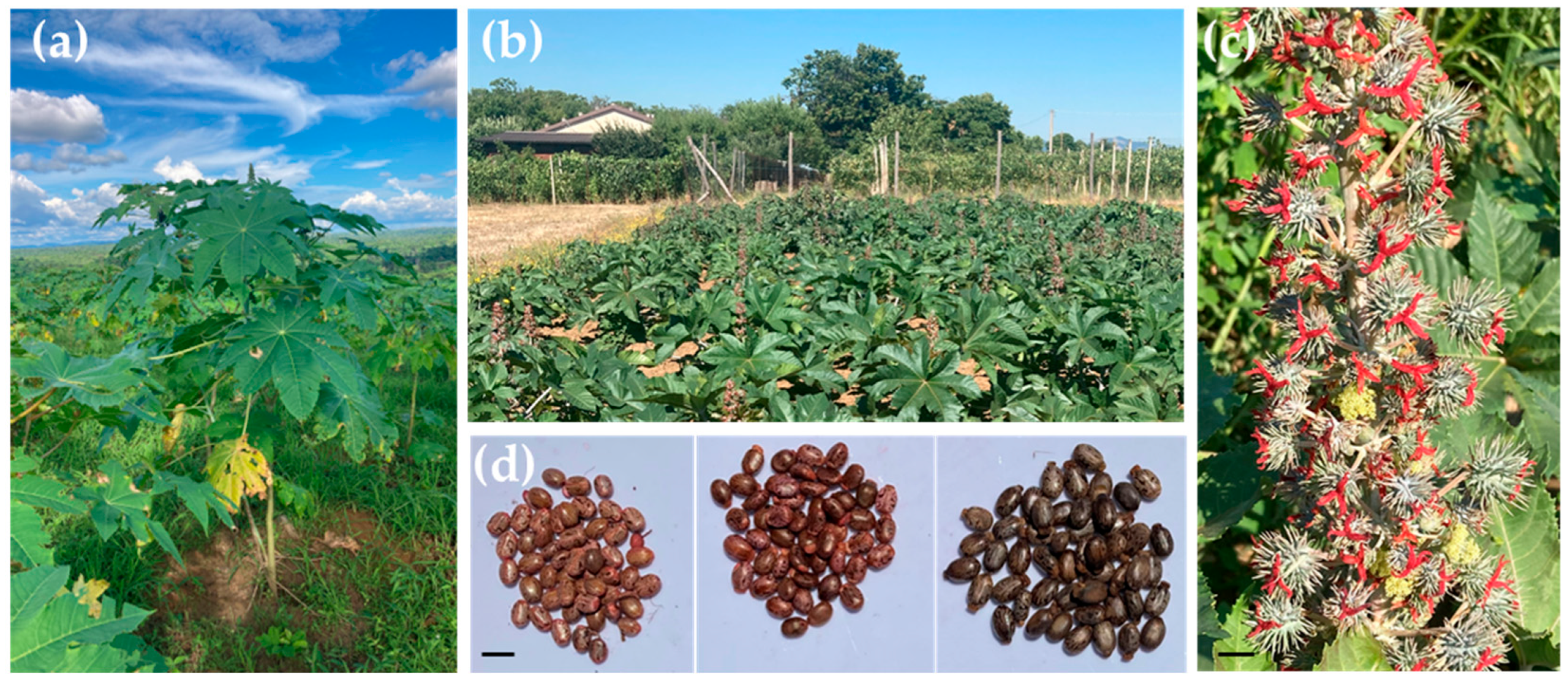
Castor bean is a fast-growing, perennial or annual species (depending on climatic conditions), characterized by remarkable morphological plasticity and physiological adaptability. The plant typically develops a robust taproot system capable of penetrating deep soil layers, enhancing water and nutrient acquisition and conferring high tolerance to drought-prone and marginal environments [4,8]. The aerial architecture is highly variable among genotypes and ranges from compact, weakly branched forms to tall, highly branched plants exceeding 2–3 m in height (Figure 1a,b). Leaves are large, palmate, and rich in photosynthetic tissue, contributing to high radiation interception and rapid biomass accumulation [9].
The species is monoecious and predominantly cross-pollinated, mainly by wind (anemophily), although entomophily also occurs. The inflorescence is a terminal raceme composed of male flowers at the base and female flowers at the apex, which, after pollination, develop into trilocular capsules, spiny or smooth depending on genotype (Figure 1c). Each capsule contains three seeds, typically oval to ellipsoidal, mottled in color, and endowed with a caruncle at the base (Figure 1d). Cultivated forms generally exhibit indehiscent capsules to reduce seed loss, in contrast with wild dehiscent types [10,11]. Seeds are characterized by a high oil content (45–55%). This non-edible oil stands out among vegetable oils as the only commercial source of ricinoleic acid, a hydroxy fatty acid (C18:1–OH) with a hydroxyl group on carbon 12 and a double bond on carbon 9.
This unique component represents up to 90% of the oil, while minor fatty acids include oleic (C18:1) and linoleic (C18:2) acids [12,13]. No other oilseed crop presents such a high proportion of a single fatty acid (Table 1).
Physiologically, castor bean exhibits strong thermophilic behavior, with optimal growth occurring at temperatures between 25 and 35 °C, and a high photosynthetic capacity supported by efficient stomatal regulation and a well-developed antioxidant defense system [4,7]. The species shows notable tolerance to abiotic stresses, including salinity, water deficit, and heavy metal contamination, which is mediated by osmotic adjustment, ion compartmentalization, and the activation of enzymatic and non-enzymatic antioxidant pathways [3,14]. At the cellular level, castor bean can chelate and sequester toxic elements into vacuoles, thereby limiting their interference with essential metabolic processes and ensuring sustained growth under stress conditions.
Table 1. Structural comparison of ricinoleic acid and main C18 fatty acids, highlighting differences in molecular formula, unsaturation, and functional groups. Ricinoleic acid is distinguished by the presence of a hydroxyl group at carbon 12 in addition to a cis double bond at Δ9, which confers higher polarity and reactivity compared to conventional fatty acids such as oleic, stearic, and linoleic acids. These structural features are directly linked to its unique performance in sustainable materials, lubricants, and bio-based polymers. Adapted from Mutlu & Meier (2010) [12].
Fatty AcidCarbon Chain (C:n)Molecular FormulaCondensed Structural Formula Double Bond(s)Additional Functional Groups
Ricinoleic acidC18:1C18H34O3CH3–(CH2)5–CH(OH)–CH2–CH=CH–(CH2)7–COOH1 (cis-Δ9)Hydroxyl group (–OH) at C12
Oleic acidC18:1C18H34O2CH3–(CH2)7–CH=CH–(CH2)7–COOH1 (cis-Δ9)None
Stearic acidC18:0C18H36O2CH3–(CH2)16–COOHNoneNone
Linoleic acidC18:2C18H32O2CH3–(CH2)4–CH=CH–CH2–CH=CH–(CH2)7–COOH2 (cis-Δ9,12)None

2.2. Origin and Distribution

Castor bean (Ricinus communis L., Family Euphorbiaceae) is a monotypic species native to tropical East Africa, which is considered its center of origin and initial domestication [8,15]. Wild populations of R. communis are still found in Kenya and Ethiopia, where they display woody tree-like habits, dehiscent capsules, and small seeds. Genomic analyses support the hypothesis that domestication occurred approximately 3000 years ago in the region spanning East Africa and West Asia [16]. From there, castor spread progressively to the Mediterranean basin, India, China, and later to the Americas, adapting to a broad range of tropical, subtropical, and warm-temperate environments [11].
Today, castor is cultivated in more than 30 countries, with India, Brazil, and Mozambique as leading producers, contributing over 90% of global seed output [17]. The species exhibits remarkable morphological plasticity, ranging from herbaceous annual forms to perennial shrubs or small trees, depending on climatic conditions. In tropical regions, plants can reach up to 10–12 m and behave as evergreen perennials, while in temperate areas they complete their life cycle within a single season, as frost below 0 °C is lethal [4,11].
In Italy and other Mediterranean countries, wild or naturalized populations grow spontaneously, particularly in southern regions, Sardinia, Sicily, and along the Ligurian coast. Considerable intraspecific variability exists among cultivated types, including differences in stem pigmentation (green to anthocyanic), presence or absence of epicuticular waxes, internode length (ranging from dwarf to tall forms), and branching habit, which is influenced by plant density and genotype [9].

2.3. Uses

The chemical structure of ricinoleic acid (12-hydroxy-9-cis-octadecenoic acid, an unsaturated omega-9 fatty acid) imparts high polarity and viscosity, excellent lubricity, and oxidative stability, properties that make castor oil a strategic raw material for multiple industrial sectors [18] (Table 1).
At room temperature, castor oil is a viscous, pale-yellow liquid with notable solubility in alcohol and resistance to high temperatures (boiling point 313 °C, density 0.96 g cm−3). It is widely employed in the manufacture of lubricants, surfactants, coatings, inks, adhesives, polyurethanes, polyamides, and cosmetic formulations [12]. Its renewability and biodegradability also make it a valuable feedstock for the synthesis of bio-based polymers and biodiesel [11,19].
The growing global demand for castor oil and its derivatives stems from its versatility and the transition toward sustainable, bio-based materials. Beyond its industrial uses, the castor plant also offers opportunities for integrated valorization of by-products such as seed cake, husks, and stalks for fertilizers, animal feed (after detoxification), and bioenergy production, aligning with circular economy principles [20,21].

3. Agronomic Management and Environmental Adaptation

In temperate climates, castor bean is typically sown in spring, once soil temperatures are suitable for germination. The minimum germination temperature is generally reported to be 14–15 °C, while optimal germination and early seedling development occur at temperatures close to 30–31 °C, confirming the crop’s strong thermophilic behavior [4,8,22]. Seed size varies markedly among genotypes, with the weight of 1000 seeds commonly ranging between 200 and 400 g for most cultivated varieties, reflecting both genetic background and environmental growing conditions [4,23].
Plant population density is highly variable and depends on genotype, soil fertility, water availability, and agronomic management. Reported values range from as low as 5000 plants ha−1 in low-input or marginal environments to more than 60,000–70,000 plants ha−1 under intensive cultivation systems [9,23,24]. R. communis is an indeterminate, branching species, with seed production occurring on the primary raceme as well as on secondary and tertiary racemes. Increasing plant density generally reduces branching and favors a more uniform canopy structure, although genotype remains a major determinant of plant architecture and raceme development [4,24].
Despite renewed interest in castor bean for industrial and environmental applications, seed procurement remains a critical bottleneck in Europe, as no varieties are currently registered in national or EU common catalogues. This limits large-scale adoption and hinders the standardization of agronomic practices [23,25]. From a nutritional standpoint, castor bean is a relatively demanding crop. With an average grain yield of about 2 t ha−1, nutrient removal has been estimated at approximately 80 kg N, 18 kg P2O5, and 32 kg K2O per hectare [4,26]. Excessive nitrogen fertilization should be avoided, as it promotes excessive vegetative growth, delays maturation, and complicates harvesting operations. About 55% of the nitrogen and nearly 75% of the phosphorus absorbed by the plant are ultimately allocated to the seeds [4]. Although high nitrogen rates may slightly reduce seed oil concentration, this effect is often compensated by increased seed yield, resulting in higher total oil production per unit area [23,26].
Weed management is a crucial aspect of castor bean cultivation, particularly during early growth stages when seedlings develop slowly and are highly susceptible to competition. Chemical control options include the use of clomazone in pre-emergence and halosulfuron in post-emergence for broadleaf weeds, while cycloxydim and fluazifop are commonly employed for grass weed control [9,23]. However, attention must be paid to the invasive potential of the castor bean itself. Seed shattering and losses during harvest can lead to the establishment of a persistent soil seed bank, increasing the risk of volunteer plants and weed-like behavior in subsequent crops [8,27].
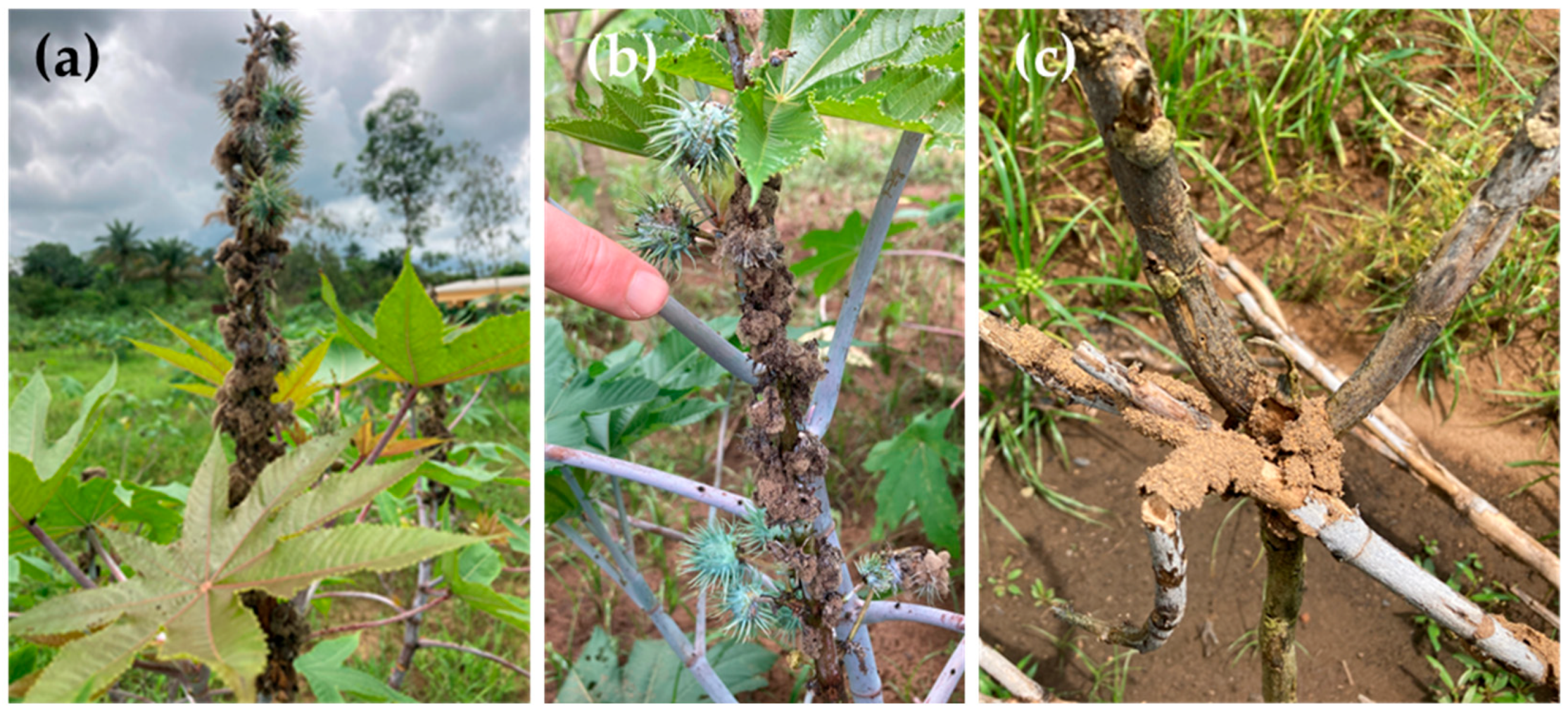
Among biotic constraints, several fungal pathogens are responsible for significant yield losses, particularly under warm and dry conditions. The most economically important diseases include gray mold caused by Botryotinia ricini, vascular wilt caused by Fusarium oxysporum, and charcoal rot caused by Macrophomina phaseolina [4,9] (Figure 2).
Grain yields typically range from 0.5 to 5 t ha−1, depending on cultivar, environmental conditions, and management practices. Mechanical harvesting with combine harvesters remains challenging, mainly due to the indeterminate growth habit of most currently available genotypes, which results in asynchronous seed maturation on the same plant [23,25,28]. Nevertheless, the adoption of genotypes characterized by reduced indeterminacy, combined with cultivation under high-temperature and low-humidity conditions and the use of chemical desiccants, has enabled successful mechanized harvesting in countries such as Israel and Brazil [4,9,24].

4. Use of Castor Bean in Phytoremediation

Compared to conventional physicochemical remediation techniques, phytoremediation offers significant advantages such as lower costs, reduced environmental disturbance, and the potential for ecosystem restoration [3,6,29]. Within this context, castor bean (Ricinus communis L.) has attracted increasing attention as a promising phytoremediation species due to its remarkable physiological plasticity and multifunctional traits. Castor bean is a fast-growing, non-food industrial crop characterized by high biomass production, deep root systems, and strong tolerance to extreme environmental conditions, including salinity, drought, and nutrient-poor soils: these features make it particularly suitable for cultivation on marginal and contaminated lands, where food crops are often unsuitable [2,4,7]. Moreover, R. communis exhibits a high capacity to tolerate and accumulate potentially toxic elements through a range of biochemical and cellular mechanisms, including metal chelation by organic acids and peptides, antioxidant defense activation, and sequestration of metals into vacuoles, thereby limiting their interference with essential metabolic processes [3,30].
Numerous studies have demonstrated the effectiveness of castor bean in the phytoextraction and phytostabilisation of heavy metals, in the reclamation of soils contaminated by hydrocarbons and persistent organic pollutants (Table 1 and Table 2).

4.1. Main Experimental Evidence for Castor Bean in Heavy-Metal Phytoremediation

Heavy metals absorbed by the roots may be translocated to aboveground tissues, including stems, leaves, and seeds. Under managed phytoextraction systems, and when contaminated biomass is harvested and removed, this process can contribute to progressive metal removal from soils; however, actual reductions in total soil metal stocks depend on biomass yield, metal concentrations in plant tissues, time horizon, and site-specific mass balance conditions [6,30,31,32,33,34,35].
In the present review, the term “hyperaccumulator” is used according to commonly accepted criteria based on metal concentrations in aboveground tissues under soil-grown conditions. In fact, defining a hyperaccumulator species relies on four primary criteria that distinguish it from a typical metal-tolerant plant. First, the plant must achieve a critical concentration threshold in its dry leaf biomass, such as 1 mg kg−1 for nickel or 10 mg kg−1 for manganese, while growing in its natural habitat [36]. Second, it must demonstrate a Translocation Factor (TF) > 1, meaning the metal concentration is higher in the shoots than in the roots, proving active transport over passive uptake [37]. Third, the species must possess hypertolerance, allowing it to complete its full life cycle without toxicity symptoms while sequestering metals in leaf vacuoles [38]. Finally, the Bioconcentration Factor (BCF) should generally exceed 1.0, reflecting the plant’s ability to extract metals even from low-bioavailability soils [39].
The phytoremediation potential of castor bean appears consistent with that reported for high-biomass perennial species such as Arundo donax, which combine tolerance to contaminated soils with effective phytoextraction of heavy metals at the field scale [40].
A targeted experimental assessment of castor bean tolerance to cadmium (Cd) and lead (Pb) was reported by Costa et al. (2011) [41], placing castor as a phytoremediation-relevant species based on its tolerance and ability to accumulate metals in plant organs (Table 2). This aligns with the premise that plants can act as “intermediary reservoirs” by concentrating essential and nonessential metals in roots and shoots [41] (Table 2). In Pb-focused contexts, castor bean is considered suitable for Pb phytostabilisation, acknowledging the challenge posed by Pb’s low solubility [42,43] (Table 2). However, these studies highlighted that castor bean shows tolerance and measurable accumulation of Cd and Pb in plant tissues under exposure, supporting its candidacy for remediation-oriented cultivation rather than indicating it is a “hyperaccumulator” species [41,42] (Table 2).
Although some studies have described R. communis as a Pb “hyperaccumulator,” these classifications are often based on hydroponic experiments or on total tissue concentrations without a clear distinction between root and shoot accumulation [44]. In several cases, Pb was predominantly retained in roots, with limited translocation to shoots. Therefore, under strict field-relevant criteria requiring high shoot accumulation, R. communis cannot be consistently classified as a classical hyperaccumulator species, but rather as a high-biomass metal-tolerant plant with phytoextraction potential (Table 2).
A dedicated cultivar comparison tested two castor cultivars (“Local” and “DS-30”) for phytoextraction from soils spiked with known concentrations of seven heavy metals, treating cultivar identity as an explanatory variable for uptake outcomes across multiple metals [45] (Table 2). This is consistent with evidence that success depends strongly on plant phenotype/genotype and on the plant’s capacity to uptake and translocate metals under site conditions [43,46]. Complementing this, a genotype-focused study reported differential growth and metal accumulation responses among castor bean genotypes, reinforcing the notion that “castor” cannot be treated as a single, uniform remediation phenotype, implying remediation planning should include genotype screening [43,45,47] (Table 2).
In an industrial area contaminated with Pb, Nascimento et al. (2016) [48] evaluated several cultivated species, including castor bean, and reported that Pb uptake varied with time and soil management practices. Specifically, Pb uptake by castor bean decreased at 120 days after planting (DAP) following liming application, indicating that soil amendments can modify Pb bioavailability and, consequently, plant uptake dynamics [48] (Table 2). These findings are consistent with phytoremediation principles, which highlight the central role of contaminant bioavailability and soil chemistry in controlling metal uptake by plants [43].
Romeiro et al. (2006) [44] reported Pb concentrations exceeding 1 g kg−1 dry weight in hydroponically grown plants and concluded that R. communis is a Pb hyperaccumulator. However, Pb accumulation was predominantly observed in roots, and the study was conducted under nutrient-solution conditions. Since classical hyperaccumulation criteria generally emphasize high shoot concentrations under soil-grown conditions, these findings suggest strong Pb uptake capacity but do not necessarily establish R. communis as a field-level Pb hyperaccumulator [44] (Table 2).
Under a different management scenario, castor bean fertilized with sewage sludge was investigated for heavy metal accumulation in soil and plant tissues, and the species was proposed as a biomass-producing crop with phytoremediation potential in amendment-rich systems [49] (Table 2). This approach further emphasizes that remediation performance must be evaluated under realistic soil management conditions, as outcomes strongly depend on amendment characteristics, processing, and the resulting metal availability [46,50].
A comparative chelant study specifically evaluating castor bean for Cd- and Pb-contaminated soil reported that EDTA was the most effective chelate for enhancing Pb phytoremediation but was deemed unsuitable for field remediation due to toxicity and environmental persistence [51] (Table 2). This result aligns with wider concerns that effective chelation may require high doses and can introduce secondary environmental risks [51,52] (Table 2). The concept of “induced phytoremediation”, in which bioavailability is increased using chelating agents, is emphasized in the literature as distinct from “natural” phytoextraction performed without soil amendments [46,53].
Organic acids are also proposed as alternatives or complements to synthetic chelants, and a castor-bean-specific study reported that citric acid enhanced plant growth and photosynthesis and Pb phytoextraction by alleviating oxidative stress [54] (Table 2). This outcome aligns with the expectation that phytoremediation performance depends on biomass/productivity and metal bioavailability [43,55].
A castor-bean-specific study addressed Pb phytoextraction limitations by applying rhizobacteria to improve lead phytoextraction in R. communis, situating this within the broader constraint that many hyperaccumulator plants have slow growth, limiting practical remediation rates [56,57] (Table 2). Reviews of plant-growth-promoting rhizobacteria (PGPR) describe multiple mechanisms by which rhizosphere microbes can change heavy-metal bioavailability and enhance plant uptake and remediation efficiency, supporting microbe-assisted castor remediation strategies [58,59].
For chromium (Cr), it was reported that the combined application of citric acid and Cr-resistant microbes improved castor bean growth and photosynthesis while alleviating Cr toxicity by reducing Cr(VI) to Cr(III), linking microbial/chemical intervention to a change in chromium speciation [60] (Table 2). This finding is consistent with the emphasis on manipulating bioavailability and toxicity (including redox/speciation effects) to increase plant tolerance and enable growth on contaminated soils [43,46].
Also, arbuscular mycorrhizal fungi (AMF) are reported to enhance heavy-metal tolerance and phytoremediation performance, though outcomes depend strongly on selecting compatible, metal-tolerant AMF and plant partners [61,62]. While the cited AMF reviews are not castor-specific, they support the castor-oriented strategy of using plant–microbe symbioses to improve tolerance and uptake under contaminated conditions [58,61,62].
Table 2. Evidence of castor bean (R. communis) heavy metals phytoremediation outcomes and principal observed results.
Evidence FocusMetal(s)Experimental LeverPrincipal Observed Result(s) as ReportedRef.
Tolerance/accumulation assessmentCd, PbExposure experimentsCastor bean assessed as tolerant with accumulation in tissues under Cd and Pb exposure; positioned for phytoremediation purposes[41]
Strategy choice for PbPbConceptual assessmentPb low solubility motivates phytostabilization; castor framed as suitable for Pb contexts[42]
Cultivar comparisonMultiple (7 metals)Local vs. DS-30 cultivarsTwo cultivars tested; phytoextraction performance evaluated across seven metals, demonstrating cultivar dependence[45]
Genotype dependencePbGenotype screeningDifferential growth and Pb accumulation responses among castor genotypes[47]
Liming effectPbLiming; sampling at DAPPb uptake by castor bean decreased at 120 DAP under liming in an industrial Pb area[48]
Sewage sludge contextHeavy metalsSludge stabilized by processesHeavy metals measured in soils and castor plants under sludge fertilization; castor framed as biomass crop with phytoremediation potential[49]
Chelant comparison in castorCd, PbEDTA vs. other chelatesEDTA most effective for enhancing Pb phytoremediation in castor; field use questioned due to persistence/toxicity[51]
Organic acid enhancementPbCitric acidCitric acid improved growth and photosynthesis and enhanced Pb phytoextraction via oxidative stress alleviation[54]
Rhizobacteria assistancePbRhizobacteria inoculationRhizobacteria improved Pb phytoextraction in castor; framed against low-biomass limitation[56]
Cr toxicity mitigationCrCitric acid + Cr-resistant microbesImproved growth/photosynthesis and alleviated Cr toxicity by reported Cr(VI) reduction to Cr(III)[60]
Revegetation/phytostabilization on industrial-waste-contaminated peri-urban sites (with notes on seed oil)Metal-contaminated industrial-waste sitesField observation of R. communis growing on multiple contaminated sites in peri-urban Greater Hyderabad (Bollaram, Patancheru, Bharatnagar, Kattedan); characterization approach framed around tolerance/accumulation and seed-oil remarksR. communis was reported growing on four metal-contaminated industrial-waste sites in peri-urban Greater Hyderabad and proposed as a multipurpose phytoremediation crop for phytostabilization and revegetation, with additional “remarks on seed oil” [63]
Suitability assessment for phytoextraction using ornamental plantsCd, PbPot/contained experiment in drainless containers with substrate artificially polluted with Cd and Pb; comparison between Amaranthus caudatus and R. communis (‘Sanguineus Apache’)Study explicitly set up to evaluate the suitability of R. communis (and A. caudatus) for phytoextraction from Cd- and Pb-contaminated substrates under controlled conditions[64]
Barium phytoextraction potential (comparison among crops)BaComparative assessment of mustard, sunflower, and castor bean for barium extraction/phytoaccumulation potentialCastor bean was described as a “robust grower” with high biomass production and therefore potential as a phytoaccumulator in the context of barium extraction studies[65]
Phytoremediation of Ni-polluted soil using agricultural crops (including castor)NiMulti-crop experiment including R. communis; three treatment levels 150, 300, 600 ppm plus control; harvest partitioned into plant organs (roots/stems/leaves/fruits or seeds) for separate analysisExperimental design reported: seven crops including R. communis exposed to 150/300/600 ppm Ni; at the end of the biological cycle, plant organs were separately collected, dried, weighed, milled, and analyzed[66]
Remediation potential of naturally grown castor in polluted river catchments and suitability for ericultureHeavy-metal pollution; values explicitly reported for Cd and ZnObservational assessment of naturally grown castor; biomass and chlorophyll used as tolerance indicatorsBiomass and chlorophyll results were reported to indicate tolerance under pollution conditions described as 0–5 mg/kg Cd and 380 mg/kg Zn[67]
Endophytic bacteria associated with R. communis: diversity, PGP traits, and effect on metal speciation in soilCu, CdIllumina high-throughput sequencing of endophytic bacterial communities in castor tissues + cultivation-based isolation; evaluation of plant-growth-promoting (PGP) traits; testing effects on Cu/Cd speciation in soilThe study characterized endophytic bacterial communities and isolated endophytes from castor, explicitly aiming to support phytoremediation by examining PGP traits and reported effects on Cu and Cd speciation in soil[68]
Accumulation of Pb, Cu, Zn in plants growing on contaminated sites (including R. communis) and comparative accumulation capacityPb, Cu, ZnField sampling of plants and associated soils; analysis of total metal concentrations in soils and in plant shoots; comparison among multiple species including cultivated R. communisReported ranges: total soil concentrations Pb 1239–4311 mg/kg, Cu 36–1020 mg/kg, Zn 240–2380 mg/kg; shoot concentrations Pb 6.3–2029 mg/kg, Cu 20–570 mg/kg, Zn 36–690 mg/kg. R. communis was identified among plants with strong potential for Pb phytoremediation, with the reported Pb “hyperaccumulation capacity order” R. communis > D. orientalis > T. candida in the investigated area[69]
Physiological response of metal tolerance/detoxification in castor under fly-ash-amended soilMetals associated with fly ashSoil amendment with different fly ash levels; endpoints framed as growth/photosynthesis, metal accumulation potential, adaptive physiological responses, and determining suitable amendment levelsThe study explicitly aims to assess castor growth and photosynthesis under fly ash amendments, evaluate metal accumulation potential across amendment levels, analyze adaptive physiological responses, and determine suitable fly ash levels for improved phytoremediation[70]
Metal-resistant plant-growth-promoting bacteria (PGPB) and castor growth in metal-contaminated soilHeavy metals (soil contamination context)Inoculation with metal-resistant PGPB strains (PsM6: Pseudomonas sp.; PjM15: Pseudomonas jessenii); characterization of PGP mechanisms (e.g., ACC deaminase-related utilization, phosphate solubilization, IAA production)The study reported characterization of the metal-resistant PGPB (including ACC utilization/ACC deaminase-related mechanism, phosphate solubilization, and IAA production) in the context of evaluating their influence on R. communis growth in heavy-metal-contaminated soil[71]
Lead uptake and tolerance in R. communisPbPb exposure in a hydroponic system with evaluation of uptake and tolerance responsesThe study erroneously concluded that R. communis is a hyperaccumulator species for Pb (Pb accumulates mainly in roots), but showed tolerance properties at “lead light concentration,” framing it as a potential phytostabilyzer for Pb-contaminated areas if confirmed in field studies[44]
Combined citric acid + glutathione to augment Pb tolerance and phytoremediationPbCombined application of citric acid and glutathione; assessment of Pb stress tolerance, antioxidant machinery, and Pb uptakeThe study reported that under Pb stress, the supportive role of the combined treatment (citric acid + glutathione) was higher than Pb treatment alone, in association with enhanced Pb stress tolerance and Pb uptake-related phytoremediation framing[72]

4.2. Use of Castor Bean for Phytoremediation of Petroleum Hydrocarbons, Oil-Derived Contamination and Organochlorine Pesticides

In addition to heavy metal remediation, castor bean has shown considerable potential in the reclamation of hydrocarbon-contaminated soils. Through root exudation, R. communis stimulates the activity and abundance of hydrocarbon-degrading microorganisms in the rhizosphere, thereby enhancing rhizodegradation processes and accelerating the breakdown of petroleum-derived compounds [29,73] (Table 3). Recent studies document changes in soil properties and pollutants, tracking total hydrocarbon concentrations and their impact during remediation efforts [74] (Table 3).
Phytoremediation of petroleum hydrocarbons using R. communis has primarily been investigated within plant-assisted bioremediation frameworks that emphasize interactions between plants, soil amendments, and microbial communities. Hasibuan et al. (2019) [75] evaluated dispersant-assisted phytoremediation in petroleum-contaminated soils using R. communis, defining phytoremediation as a process involving both plants and microorganisms and demonstrating a comparative approach between dispersant-amended and non-amended conditions [75] (Table 3). This experimental framing aligns with conceptual models that attribute petroleum hydrocarbon attenuation largely to rhizosphere-driven processes and to enhanced microbial mineralisation rather than to plant uptake alone [76,77] (Table 3).
Focusing on petroleum products as complex contaminant mixtures, Salau et al. assessed the remediation potential of castor seed in petroleum-product-contaminated soils, identifying total petroleum hydrocarbons (TPH) as the primary endpoint and explicitly noting the co-occurrence of hazardous hydrocarbon classes, including PAHs, with heavy metals [74] (Table 3). This mixture-based perspective is consistent with broader phytoremediation frameworks that treat petroleum contamination as a multi-component soil restoration challenge [76,77] (Table 3).
Mechanistically, phytoremediation of petroleum hydrocarbons is widely described as a plant–microbe-driven process capable of degrading, transforming, or immobilizing organic contaminants. Truu et al. (2015) and Akpokodje and Uguru (2019) highlighted complementary mechanisms, including rhizosphere stimulation, microbial mineralization, volatilisation of lighter hydrocarbons, and plant-associated metabolism, providing the conceptual basis for the widespread use of TPH/PAH metrics and microbial activity indicators in experimental studies [76,77] (Table 3). This linkage between mechanism and measurement is reflected in mesocosm-scale oil-sludge studies [78,79] (Table 3).
Amendment-assisted phytoremediation studies further demonstrate that petroleum hydrocarbon pollution frequently co-occurs with heavy metal contamination. Umoren et al. reported that different biochar types influenced phytoremediation performance in petroleum-hydrocarbon-polluted soils and documented elevated exchangeable cations associated with heavy metals in spent oil, based on initial measurements of TPH and metal content in polluted versus unpolluted soils [80] (Table 3). Such co-contamination patterns are consistent with observations that crude oil pollution can substantially increase metal concentrations in surface soils, potentially affecting microbial degradation processes [81] (Table 3).
Quantitative evidence supporting integrated bio–phyto remediation is provided by Nanekar et al., who demonstrated that combining plants, nutrients, structural amendments, and microbial consortia in oil-sludge mesocosms resulted in a 28-fold increase in dehydrogenase activity, complete mineralization of higher PAHs, and up to 72.8% TPH degradation compared with bioaugmented and control treatments [78] (Table 3). Similarly, Rossiana et al. (2018) applied fungal consortia and mycorrhizae in a 35% oil-sludge compost matrix and monitored temporal changes in Pb, Ni, TPH, PAHs, and fungal abundance, operationalizing phytoremediation as a dynamic system addressing both hydrocarbons and metal co-contaminants [79] (Table 3).
Finally, observational studies indicate that petroleum contamination induces measurable shifts in soil physicochemical properties over time. Okafor reported pH increases toward alkaline values, changes in nutrient-related variables, and increases in electrical conductivity following crude oil contamination, and a progressive decrease in heavy metal concentrations with remediation time [82] (Table 3). These trends align with broader evidence that petroleum-polluted soils often exhibit elevated metal loads that may gradually decline during remediation, with implications for microbial activity and hydrocarbon degradation efficiency [81] (Table 3).
Concerning organochlorine pesticides, only one work reported the potential of castor bean in their remediation. However, there are several supporting, but less direct, pieces of evidence that R. communis could be employed as a phytoremediation plant in contexts that include pesticides.
In this contest, a secondary line of evidence comes from Hasibuan et al. (2019) [75], who indicate that phytoremediation encompasses the use of plants and microorganisms to remediate environments contaminated with pesticides and toxic organic compounds. Although this reference is not focused solely on OCPs, it still asserts that R. communis is utilized as a phytoremediation plant within a broader contaminant context that includes pesticides [75] (Table 3). Hierarchically, this evidence is less robust compared to the targeted study on R. communis and OCPs [83], but it is cohesive with the broader literature that acknowledges phytoremediation as a component of remediation strategies for pesticide-affected environments [84,85] (Table 3).
Castor bean has been specifically evaluated as a phytoremediation plant for soils contaminated with organochlorine pesticides (OCPs), with an emphasis on the physicochemical constraints that limit plant-mediated transfer of hydrophobic compounds. In the castor-specific study synthesized in the evidence map, R. communis was assessed for soils polluted with OCPs, including heptachlor and aldrin, and the principal contribution was mechanistic rather than quantitative [83] (Table 3). OCPs were characterized as naturally nonpolar pollutants whose phytoremediation is constrained by low aqueous solubility, making solubilization a prerequisite for plant transfer. Root exudates, including citric acid, other organic acids, and proteins, were identified as biologically mediated agents capable of increasing the solubility and effective availability of persistent organic pollutants in the rhizosphere, thereby conditioning the potential success of castor-based phytoremediation [83] (Table 3).
Table 3. Evidence map of castor bean (R. communis) and oil-derived contamination phytoremediation outcomes and principal observed results.
Evidence FocusContaminant(s)Experimental LeverPrincipal Observed Result(s) as ReportedRef.
Castor-based phytoremediation with dispersantPetroleum-contaminated soil (TPH-focused context)Addition of oil spill dispersant during phytoremediation using R. communisStudy evaluated effectiveness of dispersant addition for phytoremediation of petroleum-contaminated soil using castor bean (petroleum-remediation performance assessed via petroleum contamination metrics)[75]
Castor-based (seed) remediation assessmentPetroleum products/TPHUse/assessment of castor seed in a petroleum-contaminated soil remediation contextStudy assessed potential of castor seed for remediation; framed TPH as a major concern linked to petroleum product release and characterized petroleum hydrocarbons as mixtures of hazardous compounds[74]
Plant-assisted bioremediation: conceptual basisToxic organic compounds in soils/sediments; treatment wetlandsPlant–microbe combined action (review synthesis)Phytoremediation described as relying on combined action of plants and associated microbial communities to degrade/remove/transform/immobilize toxic compounds in soils and sediments (including organics)[76]
Amendment-assisted phytoremediation in petroleum-polluted soilPetroleum hydrocarbons in soil; spent-oil co-contamination contextComparison of biochar types as enhancersBiochar types evaluated for enhancing phytoremediation of petroleum-hydrocarbon-polluted soils; discussion notes association of heavy metals in spent oil with soil particles and exchangeable cations (co-contamination relevance)[80]
Integrated microbe-assisted phytoremediation benchmark (quantitative)Oil sludge: TPH and PAHsBulking agent + nutrients + microbial consortium + plant (mesocosm integration)28-fold increased dehydrogenase activity, complete mineralization of higher PAHs, and 72.8% TPH degradation reported under integrated/planted treatment conditions[78]
Fungi + mycorrhizae bio–phyto approach in oil sludgeOil sludge: TPH, PAHs; plus Pb and NiConsortium fungi inoculation with mycorrhizae (integrated bio–phyto)Study evaluated changes/reductions in TPH and PAHs alongside Pb and Ni in contaminated soil under fungal consortium and mycorrhizae treatment[79]
Petroleum contamination effects on soil and remediation trajectoryCrude oil contamination (soil system-level)Observational assessment over remediation timeCrude oil contamination reported to shift soil physicochemical characteristics and microflora; heavy metal contents in contaminated soils reported to decrease with increasing remediation time[82]
Petroleum-soil phytoremediation framingHydrocarbons and associated contaminantsPlant + associated microorganismsPhytoremediation described as using plants and associated microorganisms to restore soils/water contaminated with hydrocarbons (and potentially heavy metals), supporting hydrocarbon-focused plant-assisted bioremediation framing[77]
Growth response of castor bean in spent lubricating oil-polluted soilSpent lubricating oil contaminationCultivation in oil-polluted soil; evaluation of plant growth/stomatal parameters; interpretation in terms of soil physical changesGrowth reductions were linked (in the study discussion) to disruption of soil physical properties by crude/spent oil, creating hydrophobic and anaerobic conditions, potentially associated with stomatal closure and decreased dry weights[86]
Phytoremediation of hydrocarbon-contaminated soils using castor bean + compostHydrocarbon-contaminated soilPhytoremediation trial explicitly implemented with compost addition; selection of R. communis (Jarak Kepyar) also motivated by biodiesel feedstock potentialStudy aimed to collect evidence for phytoremediation of hydrocarbon-contaminated soils under an approach that included compost addition and used R. communis as the selected plant species[87]
Castor evaluation for OCP phytoremediation (castor-specific)OCP-polluted soil; explicitly indexed compounds include heptachlor and aldrin (chlorinated hydrocarbons)Cultivation/evaluation of R. communis as phytoremediatorR. communis evaluated for phytoremediation of OCP-polluted soil; study emphasizes that nonpolar POPs require solubilization for transfer and that root exudates (e.g., citric acid and other organic acids/proteins) can increase POP solubility[83]

4.3. Research Needs Specific to Castor Bean Phytoremediation

Castor bean emerges as a strong phytomanagement candidate due to its rapid growth, stress tolerance, and non-edible industrial oilseed status, enabling deployment on marginal or contaminated lands without competition with food crops [88,89]. Its phytoremediation potential is frequently coupled with biomass valorisation, particularly biofuel production, supporting a “win–win” strategy for low-productivity or polluted soils [88,90,91]. Nonetheless, operational use requires strict management of safety risks associated with ricin-containing seeds, even when industrial oil is the primary end product [11,92,93,94].
Experimental evidence indicates that castor bean is applicable across multiple contaminant classes through a combination of tolerance, uptake or attenuation capacity, and compatibility with enhancement strategies. It has been evaluated for Cd and Pb phytoremediation using quantitative accumulation frameworks and shows management-dependent responses, including reduced Pb uptake under liming at specific growth stages [41,42,48]. Performance can be modulated by soil amendments or chelants, although field transfer may be constrained by persistence and toxicity concerns [51,95], and by plant–microbe interactions, including metal-resistant plant-growth-promoting bacteria [71]. Beyond metals, castor has been applied to petroleum hydrocarbon-contaminated soils and to organochlorine pesticide-polluted soils, where remediation efficiency is governed by contaminant availability and hydrophobicity, potentially alleviated through solubilization processes and root exudates [75,83]. Its use as a model species for pesticide systemicity further supports its capacity to absorb and translocate xenobiotics [83,96].
Overall, the literature supports castor bean as a multifunctional but site- and management-dependent phytoremediation species rather than a universal hyperaccumulator. Co-contamination scenarios and enhancement-related risks highlight the need for integrated monitoring, careful amendment selection, and realistic remediation endpoints, positioning castor most effectively within engineered phytomanagement systems that integrate stress-tolerant biomass production, controlled enhancement strategies, and safe handling practices [71,88,90,94]. Nonetheless, there is a need for enhanced field-scale validation and long-term monitoring, particularly in managing bioavailability and microbial interactions as central research priorities. Furthermore, the integration of plant–microbe strategies with R. communis requires systematic optimization in diverse contamination scenarios, consistent with established plant-assisted bioremediation findings and castor’s sensitivity to environmental modifiers.

4.4. Comparison with Other Plants

Several plant species have been investigated for phytoremediation purposes, including both hyperaccumulator plants and high-biomass crops. Classical hyperaccumulators such as Thlaspi caerulescens are characterized by extremely high metal accumulation capacity, but their relatively low biomass production often limits their practical remediation efficiency under field conditions. In contrast, high-biomass species such as Brassica juncea, Helianthus annuus, Salix spp., and Populus spp. have been widely studied because they combine moderate contaminant uptake with higher biomass productivity and broader environmental adaptability.
A comparison of selected phytoremediation plant species is presented in Table 4, highlighting differences in remediation strategy, biomass production, and practical applicability. Within this context, Ricinus communis represents a particularly promising candidate due to its high biomass production, tolerance to multiple abiotic stresses—including drought, salinity, and heavy metal contamination—and its suitability for cultivation on marginal lands. In addition, the industrial value of castor oil and its derivatives allows the harvested biomass to be integrated into bio-based value chains, reducing the economic constraints typically associated with phytoremediation projects. This dual functionality positions castor bean as a strategic species for phytomanagement systems, where environmental remediation is coupled with renewable resource production and circular bioeconomy strategies.

5. Genetic Improvement Approaches

5.1. Objectives of Genetic Improvement

At present, most castor bean (Ricinus communis L.) seeds are still harvested manually, making the development of varieties suitable for mechanical harvesting a major focus of research. The main limitations to the use of castor bean as an annual grain crop are its perennial growth habit and the presence of ricin, a highly toxic protein found in the seeds and in the residual meal after oil extraction.
Genetic improvement efforts in castor bean target conventional breeding goals, including increased yield and oil content, improved disease resistance, and greater earliness. Male-sterile lines have already been developed, allowing the exploitation of heterosis, and Fusarium-resistant hybrids have also been obtained. Nevertheless, the potential for substantial genetic progress remains limited until annual genotypes fully compatible with combine harvesting are developed [97].
Interest in castor oil continues to be high, and genetic engineering may play a key role in reducing allergenicity and ricin content in the seeds. Advances in genome sequencing, molecular markers, gene mapping, gene expression analysis, and proteomics are expected to accelerate the identification of key genes involved in traits such as oil biosynthesis and ricin production. These genes could then be rapidly modified using modern genome-editing techniques. In the short to medium term, however, conventional breeding approaches are expected to continue making an important contribution to the improvement and expansion of castor bean cultivation [11].

5.2. Genetics Tools

Genetic resources constitute the foundation of castor bean (Ricinus communis L.) improvement, providing the raw material for breeding programs aimed at enhancing agronomic performance, stress tolerance, oil quality, and environmental suitability. Major castor bean germplasm collections are currently maintained in India, Brazil, and the United States, where several hundred accessions representing diverse eco-geographical origins are conserved [11,98,99]. Owing to its predominantly cross-pollinated reproductive system, R. communis exhibits a high degree of genetic and phenotypic variability, which is reflected in a wide range of morphological, physiological, and biochemical traits [9,98,99].
Despite this extensive genetic diversity, castor bean germplasm remains largely under-characterized and underutilized in breeding programs. Incomplete phenotypic evaluation, limited molecular characterization, and restricted access to germplasm collections have constrained the effective exploitation of available diversity for varietal development [4,9].
Classical breeding approaches in castor bean have traditionally relied on mass selection, recurrent selection, pedigree breeding, and hybrid development, exploiting natural outcrossing to combine desirable traits. These methods have been successfully used to improve seed yield, oil content, plant architecture, and disease resistance, particularly in major producing countries such as India and Brazil [9,98]. However, breeding progress has been relatively slow compared to other industrial crops, largely due to long selection cycles, genotype × environment interactions, and limited integration between genetic resource management and applied breeding. Recent advances in molecular breeding and genome editing have opened new perspectives for improving the phytoremediation potential of castor bean by enabling the targeted enhancement of traits related to stress tolerance, contaminant uptake, and biomass productivity. The increasing availability of molecular markers, transcriptomic datasets, and reference genome sequences has facilitated the identification of genes and quantitative trait loci (QTLs) associated with heavy metal transport, chelation, sequestration, and detoxification pathways [100,101,102]. Marker-assisted selection (MAS) and genomic-assisted breeding approaches allow breeders to more efficiently exploit existing genetic variability for traits such as metal tolerance, antioxidant capacity, root architecture, and reduced ricin content, which are critical for safe and effective phytoremediation applications.
High-throughput transcriptomic and proteomic studies have further elucidated the molecular mechanisms underlying castor bean responses to heavy metals and salinity, revealing the upregulation of genes involved in metal transporters (e.g., ZIP, NRAMP, and ABC transporters), phytochelatin synthesis, vacuolar sequestration, and reactive oxygen species scavenging [3,103]. These insights provide valuable targets for both conventional molecular breeding and genome editing strategies. In this context, CRISPR/Cas-based genome editing represents a promising tool to precisely modify genes controlling contaminant accumulation, translocation, and tolerance, while simultaneously addressing key constraints such as excessive ricin biosynthesis or undesirable plant architecture [9,101].

6. Defatted Seed Cakes (DSCs) Detoxification: Background and Future Perspectives

As discussed above, castor oil displays excellent chemical properties, enabling multiple industrial applications [11,18]. The main by-product of oilseed processing is defatted seed cake (DSC), accounting for approximately 50% of the total seed weight. From a circularity perspective, its valorisation is essential to enhance process sustainability [28].
The substantial protein content of castor DSC, i.e., 44.4 ± 9.1 g 100 g−1 (n = 8) [88,104,105,106,107,108,109], suggests its potential application in both monogastric and ruminant diets [110]. However, its transport, storage and use are limited by the presence of ricin in the seed endosperm (1.6–32 mg 100 g−1 seed) [111], which can further concentrate in the DSC after oil removal [112]. The high toxicity of ricin is mainly related to the A and B chains constituting the molecule. A single A-chain can irreversibly inactivate ~1500 ribosomes per minute, leading to rapid cell death [113], while the B-chain binds glycoproteins and glycolipids, facilitating the internalization of A-chain into cells [114]. The lethal dose of ricin (LD50) for livestock is 1–65 mg kg−1 by ingestion (depending on the species and the context) [115], while for humans it is around 20 mg kg−1 by ingestion and 0.5 mg kg−1 by inhalation [116]. Given the maximum ricin concentrations in castor seeds, and based on the average oil content [11,12] to estimate the corresponding amount in DSC, the fatal quantity of DSC upon ingestion for major livestock species can be calculated. The estimated ranges are 1.1–36 kg of DSC for cattle, 0.3–20 kg for pigs and 2.3–156 g for broilers. These values represent plausible ranges, although considerable variability exists [92]. Several cases of intoxication have been reported for dogs, cattle, and horses, whereas chickens are generally considered more tolerant [92]. In humans, inhalation of 50 g of DSC could be potentially lethal, although hospital admissions have been reported after ingestion of only 1–5 seeds (∼0.5–3 g) [92]. Castor DSC has traditionally been recovered as a fertilizer [108], a practice that does not eliminate the associated risk [92]. Numerous poisoning cases have been reported in Europe, America, and Asia, such as domestic animal intoxication following ingestion of organic fertilizer containing castor DSC [92].
Full sanitisation can be achieved through combustion (with high thermal recovery reported for castor husk) [117], pyrolysis, and gasification [118].
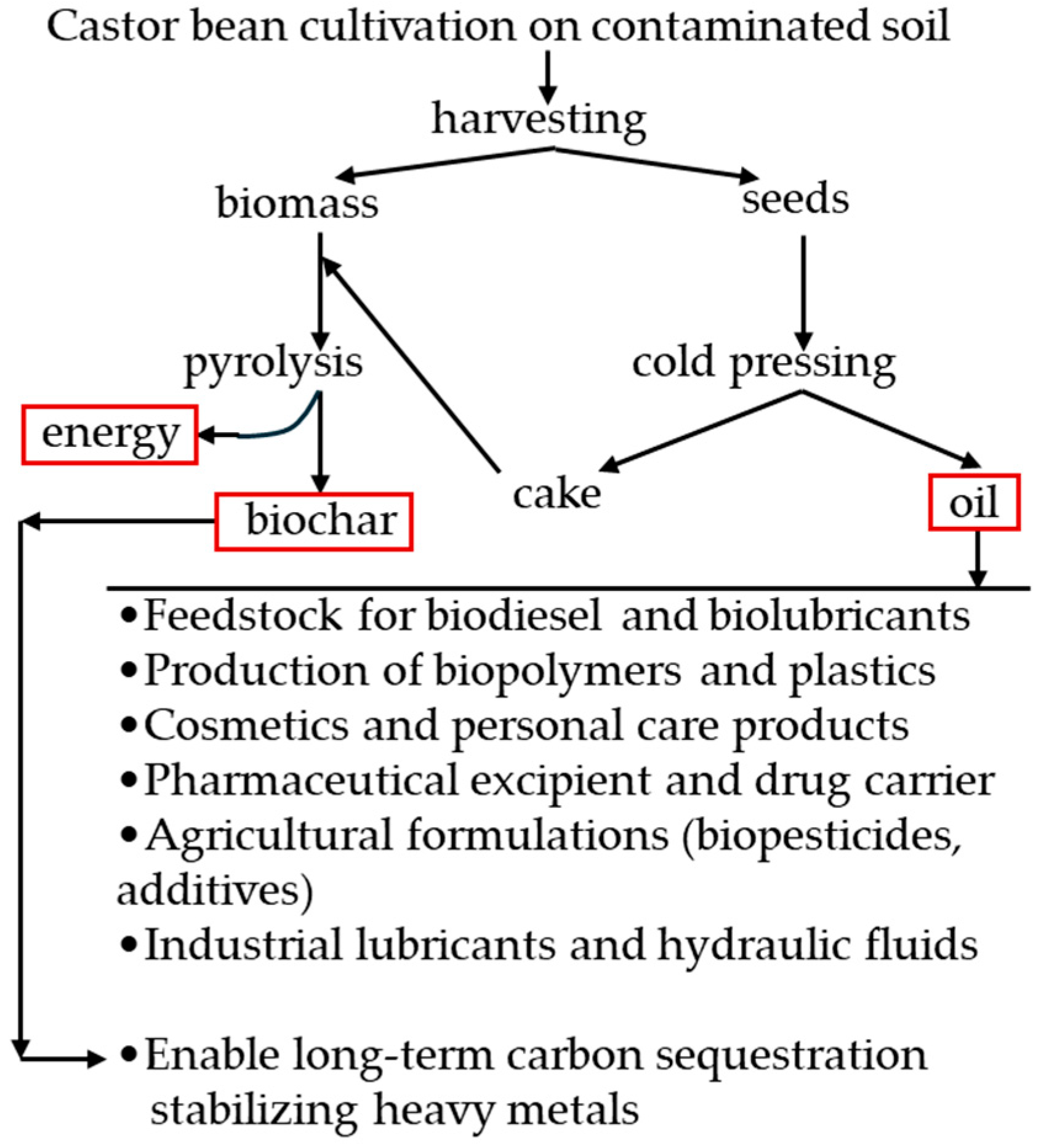
In particular, biochar produced from the pyrolysis of R. communis L. biomass, including both aboveground tissues and the residual seed cake after oil extraction, can play a key role in integrated phytoremediation and bioenergy systems. During thermochemical conversion, metals accumulated by the plant are largely retained in the solid biochar fraction, where they can be immobilized through physical entrapment, surface complexation, and interactions with mineral ash components, thereby reducing metal mobility and bioavailability [119]. At the same time, pyrolysis enables energy recovery through the production of syngas and bio-oil, improving the overall sustainability of the process (Figure 3). Moreover, the transformation of biomass carbon into stable aromatic structures makes biochar highly resistant to degradation, enabling long-term carbon sequestration in suitable environmental or soil management applications [120]. This multifunctional approach supports contaminant stabilization, renewable energy production, and climate change mitigation within circular bioeconomy frameworks.
Despite achieving complete ricin degradation, these methods prevent the exploitation of the high nutritional content of DSC, including crude protein, unsaturated fatty acid and fibers [106]. Therefore, a wide range of detoxification strategies were proposed over time to obtain a safe product suitable as fertilizer or feed [106,107,108].
Conventional detoxification strategies mainly include physical treatments exploiting temperature and pressure variations to inactivate ricin. Such approaches have been reported since 1949 [121] and many remain in use. The main ones are wet heat treatments, such as boiling [122,123], steaming [124,125], autoclaving [113,120], water soaking [124] and microwaving [126]. Boiling for 20 min achieved partial ricin detoxification [122], with a maximum ricin reduction of 90% after a 60 min treatment [124]. Water soaking for 6 h achieved an 84% reduction, while no significant improvements were reported after 12 h [124] or 72 h of treatment [127]. Moist heating of Jatropha curcas DSC in a water bath at 100 °C for 60 min did not show any significant effect on toxin reduction [128]. Although Jatropha does not contain ricin, this information has been included for completeness, given the high toxicity of both oilseed cakes and the similarity of the detoxification techniques. Steaming resulted in a significant reduction in ricin content, with complete detoxification achieved after 3 min at 170 °C and a pressure of 8 bar [124,125]. Among the methods mentioned above, autoclaving is consistently reported as an effective treatment to fully inactivate ricin. Autoclaving for 15 min resulted in approximately 99% ricin inactivation [113], whereas a 60 min treatment achieved complete detoxification [124].
In addition to wet heat treatments, dry heat methods have been explored. Dry heating up to 160 °C generally resulted in insufficient detoxification (~50%), whereas 205 °C eliminated toxicity, causing DSC carbonization [123]. Microwave treatment at 1100 W applied in 30 s intervals for 2 min increased DSC temperature to 120–130 °C, without achieving complete detoxification [123].
Overall, wet heat treatments were found to be more effective than dry heating due to the heat-labile and water-soluble nature of ricin. Among them, autoclaving for 15–60 min appears to be the best option to achieve full detoxification [113,124]. Nevertheless, less energy-intensive approaches, such as room-temperature water soaking, exhibited considerable efficacy (up to 86% ricin reduction), indicating a favorable cost–benefit balance. In support of adopting these methods, Diarra and Seidavi (2020) reported that partially detoxified castor meal can be used in poultry diets, provided that appropriate inclusion rates (50–400 g kg−1) are applied [106]. Moreover, application of partially detoxified castor DSC in ruminants’ diets did not reduce nutrient intake and animal growth [129,130].
Despite the effectiveness of physical detoxification methods, energy-intensive pretreatments may cause amino acid denaturation and nutrient loss [127]. As an alternative, chemical detoxification strategies have been reported in the literature since the 1960s [131]. Calcium oxide (CaO) and calcium hydroxide [Ca(OH)2] represent the most widespread due to their efficacy; soaking DSC in 4–8% (w/w) CaO or 3% (w/w) Ca(OH)2 for 8 h resulted in full detoxification [21,132]. Comparable results were obtained with 24 h treatments [133], suggesting that shorter times do not compromise efficacy. Combining 1.5% (w/w) CaO treatment with autoclaving at 121 °C achieved total detoxification within 30 min, improving overall performance [110]. The efficacy of alkaline treatments is attributed to peptide bond damage in ricin molecules, thus allowing full detoxification and potential inclusion of castor DSC in ruminant diets up to 200 g kg−1 feed [110].
Beyond CaO and Ca(OH)2, several compounds have been tested. Calcitic limestone, magnesian limestone, urea, potassium chloride (KCl), sodium chloride (NaCl), dicalcium phosphate (CaHPO4) and monocalcium phosphate [Ca(H2PO4)2] resulted in 20–40% lectin degradation when used at 3% (w/w) concentration. In contrast, sodium hydroxide (NaOH) achieved an average detoxification of ~80%, approaching the efficacy of CaO and Ca(OH)2 [133]. Overall, CaO, Ca(OH)2 and NaOH demonstrated greater efficacy than other compounds, generally leading to complete detoxification.
In the last two decades, several biological approaches have been studied. Solid-state fermentation (SSF) has been exploited to produce enzymes from castor DSC using various fungal strains [134,135,136]. Penicillium simplicissimum grown on castor DSC produced significant amounts of lipase and protease, concurrently achieving full ricin detoxification after 48–72 h [137]. Similar outcomes were reported for Aspergillus japonicus (cellulase production) [134] and Paecilomyces variotii (tannase and phytase production) with full ricin detoxification after 48 h [138]. Moreover, SSF of other toxic biomasses, such as DSC of Jatropha curcas, resulted in high enzyme yields and full detoxification, confirming its effectiveness [139].
An innovative strategy involving the application of Response Surface Methodology (RSM) has been recently developed to optimize traditional physical and chemical treatments [102]. RSM is a set of statistical and mathematical tools used to model, analyze, and optimize processes influenced by multiple independent variables [102]. By optimizing processing conditions of physical pretreatment through RSM (3 h, 1.6 bar and 84.8 °C), a ricin removal efficiency of 99% was achieved [102], demonstrating that detoxification comparable to chemical treatments can be achieved while reducing the energy input needed for autoclaving.
Additional approaches to optimizing traditional processes include reactive seed crushing, which integrates seed pressing, solvent extraction, oil refining, transesterification, and meal detoxification into a single process, enabling complete ricin degradation [140]. Moreover, improved hexane extraction of oilseeds reduced DSC toxicity to levels tolerable for small ruminants’ diets [108].
Overall, this paragraph highlights how the evolution of detoxification strategies is enabling the simultaneous valorisation of castor DSC, for example, through fermentation to produce highly valuable bioproducts. Moreover, traditional strategies remain effective for fully or partially detoxifying castor DSC prior to its use as feed or fertilizer, while novel approaches, such as RSM, can optimize these processes by reducing inputs and, consequently, costs.

7. Socioeconomic and Environmental Sustainability of the Castor Value Chain

The castor bean (Ricinus communis L.) value chain represents a compelling example of how non-food industrial crops can contribute to both socioeconomic development and environmental sustainability. From a socioeconomic perspective, castor cultivation provides income diversification opportunities for farmers, particularly in rural and marginal areas where conventional food crops are less profitable or agronomically constrained. The crop’s adaptability to low-input systems, combined with its resilience to drought, salinity, and poor soil fertility, makes it suitable for smallholder farming systems as well as large-scale industrial applications [4,9]. Moreover, the growing global demand for castor oil and its derivatives in sectors such as bio-based chemicals, pharmaceuticals, cosmetics, lubricants, and polymers supports stable market prospects and value addition along the supply chain [5,22].
From an environmental sustainability standpoint, the castor value chain aligns well with circular economy and bioeconomy principles. Castor bean can be cultivated on marginal, degraded, or contaminated lands, reducing land-use competition with food production while contributing to soil remediation, erosion control, and ecosystem restoration [2,3].
According to the FAO Global Map of Salt-Affected Soils (GSASmap), more than 424 million hectares of topsoil and 833 million hectares of subsoil are affected by salinity worldwide; these areas are expected to expand due to climate change, sea-level rise and unsustainable irrigation practices [17].
The use of castor oil as a renewable feedstock helps decrease dependence on fossil-based resources and lowers the carbon footprint of industrial processes, particularly when integrated into low-input and locally adapted production systems [6]. Additionally, by-products such as residual biomass can be valorized for energy generation or industrial uses, further improving resource-use efficiency and overall life-cycle sustainability [141].
Nevertheless, challenges remain in ensuring the long-term sustainability of the castor value chain. These include occupational and environmental safety concerns related to ricin toxicity, limitations in mechanized harvesting, variability in yield and quality, and the need for improved governance and traceability along the supply chain [3,5]. Addressing these constraints through technological innovation, breeding programs, and appropriate policy frameworks will be essential to fully realize the socioeconomic and environmental benefits of castor-based systems. Overall, when managed within a sustainability-oriented framework, the castor value chain has strong potential to support rural development, green industrial transitions, and climate-resilient agricultural systems.
To translate the sustainability perspective discussed in this review into an operational decision framework, Table 5 summarizes key monitoring indicators and decision criteria for castor-based phytoremediation systems. The framework integrates contaminant fate across the entire system from soil contamination to biomass processing pathways, as illustrated in the process chain shown in Figure 3. By combining remediation indicators (e.g., BCF, TF, soil contaminant depletion) with sustainability metrics such as greenhouse gas balance, energy efficiency, and carbon sequestration through biochar production, this approach supports a circular bioeconomy strategy in which contaminated soils can be progressively restored while generating renewable resources.

8. Conclusions

The future development of castor bean (Ricinus communis L.)-based phytoremediation systems will largely depend on the effective integration of genetic improvement, sustainability, driven land management, and industrial valorization of biomass. Advances in classical and molecular breeding, including marker-assisted selection and genome editing, offer unprecedented opportunities to develop castor genotypes specifically tailored for contaminated and marginal environments, with enhanced contaminant uptake, stress tolerance, optimized root architecture, and reduced biosynthesis of toxic compounds such as ricin [3,9]. Coupling these genetic innovations with sustainable agronomic practices, such as low-input cultivation, microbial-assisted phytoremediation, and site-specific nutrient management, can significantly improve remediation efficiency while minimizing environmental footprints [6].
From an industrial perspective, the long-term viability of phytoremediation relies on the safe and economically viable utilization of harvested biomass. The integration of castor-based remediation with bio-based industrial value chains, including the production of lubricants, polymers, bioenergy, and specialty chemicals, aligns with circular economy principles and enhances the socioeconomic attractiveness of remediation projects [5,141]. However, achieving this integration requires robust regulatory frameworks, standardized risk assessment protocols, and clear guidelines for biomass handling and processing, particularly when dealing with contaminant-enriched plant material. Life cycle assessment (LCA) and sustainability metrics will play a crucial role in evaluating trade-offs and ensuring that phytoremediation systems deliver net environmental benefits [3].

Author Contributions

Conceptualization, R.P. and F.A. (Fabrizio Adani); methodology, R.P. and M.G.; writing—original draft preparation, M.G., M.C., M.P., F.A. (Fabrizio Araniti) and R.P.; writing—review and editing, R.P. and F.A. (Fabrizio Adani); visualization, F.A. (Fabrizio Adani); supervision, funding acquisition, R.P. All authors have read and agreed to the published version of the manuscript.

Funding

This paper was supported by Agritech National Research Centre and received funding from the European Union as part of the project NextGenerationEU (PIANO NAZIONALE DI RIPRESA E RESILIENZA (PNRR)–MISSIONE 4 COMPONENTE 2, INVESTIMENTO 1.4–D.D. 1032 17/06/2022, CN00000022) to R.P.

Institutional Review Board Statement

Not applicable.

Informed Consent Statement

Not applicable.

Data Availability Statement

No new data were created or analyzed in this study.

Acknowledgments

The authors acknowledge the USDA-ARS GRIN-Global germplasm bank for providing the castor accessions used for photographic documentation included in this review.

Conflicts of Interest

The authors declare no conflicts of interest.

References

  1. Dugar, K.; Suri, A.; Jain, N.; Bharadvaja, N. Multi-faceted utilization of phytoremediation-derived biomass for bio-ore and bioenergy production. Vegetos 2025, 38, 2151–2159. [Google Scholar] [CrossRef]
  2. Bauddh, K.; Singh, K.; Singh, B.; Singh, R.P. Ricinus communis: A robust plant for bio-energy and phytoremediation of toxic metals from contaminated soil. Ecol. Eng. 2015, 84, 640–652. [Google Scholar] [CrossRef]
  3. Saha, L.; Bauddh, K. Phytomanagement of iron mine soil by Ricinus communis L. and garden soil. Chemosphere 2023, 313, 137534. [Google Scholar] [CrossRef]
  4. Severino, L.S.; Auld, D.L.; Baldanzi, M.; Cândido, M.J.D.; Chen, G.; Crosby, W.; Tan, D.; He, X.; Lakshmamma, P.; Lavanya, C.; et al. A review on the challenges for increased production of castor. Agron. J. 2012, 104, 853–880. [Google Scholar] [CrossRef]
  5. Al-Jborrey, M.H.; Altaie, M.A.K.; Al-Shahwany, A.W. Study the acute & sub-acute toxicity of Ricinus communis L. ethanol extract of seed in albino mice. Int. J. Sci. Res. Manag. 2018, 6, 37–45. [Google Scholar]
  6. Yan, A.; Wang, Y.; Tan, S.N.; Yusof, M.L.M.; Ghosh, S.; Chen, Z. Phytoremediation: A promising approach for revegetation of heavy metal-polluted land. Front. Plant Sci. 2020, 11, 359. [Google Scholar] [CrossRef] [PubMed]
  7. Carrino, L.; Visconti, D.; Todisco, D.; Fiorentino, N.; Meers, E.; Fagnano, M. Evaluating the growth response of Ricinus communis L. cultivars to salt stress using a fast and reliable bioassay. J. Soil Sci. Plant Nutr. 2024, 24, 7288–7297. [Google Scholar] [CrossRef]
  8. Weiss, E.A. Oilseed Crops, 2nd ed.; Blackwell Science: Oxford, UK, 2000. [Google Scholar]
  9. Anjani, K. Castor genetic resources: A primary gene pool for exploitation. Ind. Crops Prod. 2012, 35, 1–14. [Google Scholar] [CrossRef]
  10. Zimmerman, L.H.; Smith, J.D. Production of F1 seed in castorbeans by use of sex genes sensitive to environment. Crop Sci. 1966, 6, 406–409. [Google Scholar] [CrossRef]
  11. Landoni, M.; Bertagnon, G.; Ghidoli, M.; Cassani, E.; Adani, F.; Pilu, R. Opportunities and challenges of castor bean (Ricinus communis L.) genetic improvement. Agronomy 2023, 13, 2076. [Google Scholar] [CrossRef]
  12. Mutlu, H.; Meier, M.A.R. Castor oil as a renewable resource for the chemical industry. Eur. J. Lipid Sci. Technol. 2010, 112, 10–30. [Google Scholar] [CrossRef]
  13. Yeboah, S.; Owusu Danquah, E.; Oteng-Darko, P.; Agyeman, K.; Tetteh, E.N. Carbon smart strategies for enhanced food system resilience under a changing climate. Front. Sustain. Food Syst. 2021, 5, 715814. [Google Scholar] [CrossRef]
  14. Bauddh, K.; Singh, R.P. Growth, tolerance and phytoremediation potential of Ricinus communis (castor bean) under heavy metal stress. Ecol. Eng. 2012, 45, 231–239. [Google Scholar]
  15. Xu, W.; Wu, D.I.; Yang, T.; Sun, C.; Wang, Z.; Han, B.; Li, D.Z. Genomic insights into the origin, domestication and genetic basis of agronomic traits of castor bean. Genome Biol. 2021, 22, 113. [Google Scholar] [CrossRef]
  16. Lu, J.; Pan, C.; Fan, W.; Liu, W.; Zhao, H.; Li, D.; Cui, P. A chromosome-level genome assembly of wild castor provides new insights into its adaptive evolution in tropical desert. Genom. Proteom. Bioinform. 2022, 20, 42–59. [Google Scholar] [CrossRef]
  17. FAOSTAT. Food and Agriculture Data; FAO: Rome, Italy, 2023; Available online: https://www.fao.org/faostat/en/ (accessed on 13 February 2026).
  18. Ma, Y.; Wang, R.; Li, Q.; Li, M.; Liu, C.; Jia, P. Castor oil as a platform for preparing bio-based chemicals and polymer materials. Green Mater. 2021, 10, 99–109. [Google Scholar] [CrossRef]
  19. Mubofu, E.B. Castor oil as a potential renewable resource for the production of functional materials. Sustain. Chem. Processes 2016, 4, 11. [Google Scholar] [CrossRef]
  20. Gupta, A.P.; Antil, R.S.; Narwal, R.P. Utilization of deoiled castor cake for crop production. Arch. Agron. Soil Sci. 2004, 50, 389–395. [Google Scholar] [CrossRef]
  21. Fernandes, K.V.; Deus-de-Oliveira, N.; Godoy, M.G.; Guimarães, Z.A.S.; Nascimento, V.V.; de Melo, E.J.T.; Freire, D.M.G.; Dansa-Petretski, M.; Machado, O.L.T. Simultaneous allergen inactivation and detoxification of castor bean cake by treatment with calcium compounds. Braz. J. Med. Biol. Res. 2012, 45, 1002–1010. [Google Scholar] [CrossRef] [PubMed]
  22. Ogunniyi, D.S.; Njike, A.O. Castor oil: A vital industrial raw material. Bioresour. Technol. Rep. 2019, 6, 50–59. [Google Scholar] [CrossRef]
  23. Saadaoui, E.; Martín-Gómez, J.J.; Ghazel, N.; Ben Yahia, K.; Tlili, N.; Cervantes, E. Genetic Variation and Seed Yield in Tunisian Castor Bean (Ricinus communis L.). Bot. Sci. 2017, 95, 271–281. [Google Scholar] [CrossRef]
  24. Baldanzi, M.; Pugliesi, C. Selection for non-branching in castor, Ricinus communis L. Plant Breed. 1998, 117, 392–394. [Google Scholar] [CrossRef]
  25. Baldanzi, M.; Fambrini, M.; Pugliesi, C. Redesign of the castorbean plant body plan for optimal combine harvesting. Ann. Appl. Biol. 2003, 142, 299–306. [Google Scholar] [CrossRef]
  26. Koutroubas, S.D.; Papakosta, D.K.; Doitsinis, A. Intraspecific Variation within Castor Bean (Ricinus communis L.) Based on Morphological Traits and Seed Yield. Ind. Crops Prod. 2020, 150, 112345. [Google Scholar]
  27. CABI (Centre for Agriculture and Bioscience International). Ricinus communis (Castor Bean)—Invasive Species Compendium; CABI: Wallingford, UK, 2023; Available online: https://www.cabi.org/isc (accessed on 13 February 2026).
  28. Ceriani, M.; D’Imporzano, G.; De Nisi, P.; Ghidoli, M.; Rapone, I.; Pilu, S.; Adani, F. Improving biodiesel sustainability by double-cropping oilseed and oil-less seed cake recovery: A field approach in northern Italy. Energy Convers. Manag. X 2024, 24, 100821. [Google Scholar] [CrossRef]
  29. Ali, S.; Mfarrej, M.F.B.; Rizwan, M.; Hussain, A.; Shahid, M.J.; Wang, X.; Nafees, M.; Waseem, M.; Alharby, H.F. Microbe–citric acid assisted phytoremediation of chromium by castor bean (Ricinus communis L.). Chemosphere 2022, 296, 134065. [Google Scholar] [CrossRef] [PubMed]
  30. Liu, W.; Gao, J.; Wan, X.; Li, Q.; Fu, Q.; Zhu, J.; Hu, H. Effect of phosphorus fertilizer on phytoextraction using Ricinus communis L. in Cu and Cd co-contaminated soil. Int. J. Phytoremediat. 2023, 25, 822–831. [Google Scholar] [CrossRef]
  31. Mahardika, G.; Rinanti, A.; Fachrul, M.F. Phytoremediation of heavy metal copper (Cu2+) by sunflower (Helianthus annuus L.). IOP Conf. Ser. Earth Environ. Sci. 2018, 106, 012120. [Google Scholar] [CrossRef]
  32. Vardumyan, H.; Singh, A.; Rajput, V.D.; Minkina, T.; El-Ramady, H.; Ghazaryan, K. Additive-mediated phyto-extraction of copper-contaminated soils using Medicago lupulina L. Egypt. J. Soil Sci. 2024, 64, 599–618. [Google Scholar]
  33. Rebele, F.; Lehmann, C. Phytoextraction of cadmium and phytostabilisation with mugwort (Artemisia vulgaris L.). Water Air Soil Pollut. 2010, 216, 93–103. [Google Scholar] [CrossRef]
  34. Azab, E.; Hegazy, A.K. Monitoring the efficiency of Rhazya stricta L. plants in phytoremediation of heavy metal-contaminated soil. Plants 2020, 9, 1057. [Google Scholar] [CrossRef]
  35. Lai, Z.; Datir, S.; Weber, J.; Belford, E.J.; Regan, S. Differential response of Senna occidentalis L. to arsenic and cadmium contaminated soil. bioRxiv 2023. bioRxiv:10.26.564171. [Google Scholar]
  36. Van der Ent, A.; Baker, A.J.; Reeves, R.D.; Pollard, A.J.; Schat, H. Hyperaccumulators of metal and metalloid trace elements: Facts and fiction. Plant Soil 2013, 362, 319–334. [Google Scholar] [CrossRef]
  37. Rascio, N.; Navari-Izzo, F. Heavy metal hyperaccumulating plants: How and why do they do it? And what makes them so interesting? Plant Sci. 2011, 180, 169–181. [Google Scholar] [CrossRef] [PubMed]
  38. Reeves, R.D.; van der Ent, A.; Echevarria, G.; Isnard, S.; Baker, A.J. Global distribution and ecology of hyper-accumulator plants. In Agromining: Farming for Metals: Extracting Unconventional Resources Using Plants; Springer International Publishing: Cham, Switzerland, 2018; pp. 133–154. [Google Scholar]
  39. Baker, A.J.M.; Brooks, R. Terrestrial higher plants which hyperaccumulate metallic elements. A review of their distribution, ecology and phytochemistry. Biorecovery 1989, 1, 81–126. [Google Scholar]
  40. Danelli, T.; Sepulcri, A.; Masetti, G.; Colombo, F.; Sangiorgio, S.; Cassani, E.; Anelli, S.; Adani, F.; Pilu, R. Arundo donax L. biomass production in a polluted area: Effects of two harvest timings on heavy metals uptake. Appl. Sci. 2021, 11, 1147. [Google Scholar] [CrossRef]
  41. Costa, Ê.; Guilherme, L.; Melo, É.; Ribeiro, B.; Inácio, E.; Severiano, E.; Faquin, V.; Hale, B.A. Assessing the tolerance of castor bean to Cd and Pb for phytoremediation purposes. Biol. Trace Elem. Res. 2011, 145, 93–100. [Google Scholar] [CrossRef] [PubMed]
  42. Nascimento, C.; Marques, M. Metabolic alterations and X-ray chlorophyll fluorescence for the early detection of lead stress in castor bean (Ricinus communis). Acta Sci. Agron. 2018, 40, e39392. [Google Scholar] [CrossRef]
  43. Urošević, J.; Stanković, D.; Jokanović, D.; Trivan, G.; Rodzkin, A.; Jović, Đ.; Jovanović, F. Phytoremediation potential of different genotypes of Salix alba and S. viminalis. Plants 2024, 13, 735. [Google Scholar] [CrossRef]
  44. Romeiro, S.; Lagôa, A.; Furlani, P.; Abreu, C.; Abreu, M.; Erismann, N. Lead uptake and tolerance of Ricinus communis L. Braz. J. Plant Physiol. 2006, 18, 483–489. [Google Scholar]
  45. Khan, M.; Ahmed, N.; Hassan, W.; Saba, T.; Khan, S.; Khan, Q. Evaluation of phytoremediation potential of castor cultivars for heavy metals from soil. Planta Daninha 2019, 37, e019170100134. [Google Scholar] [CrossRef]
  46. Laghlimi, M.; Baghdad, B.; Hadi, H.; Bouabdli, A. Phytoremediation mechanisms of heavy metal contaminated soils: A review. Open J. Ecol. 2015, 5, 375–388. [Google Scholar] [CrossRef]
  47. Naveed, S.; Mahmood, S.; Ishaque, W. Differential growth and metal accumulation response of castor bean genotypes on a lead contaminated soil. Glob. NEST J. 2024, 26, 05955. [Google Scholar]
  48. Nascimento, S.; Souza, A.; Lima, V.; Nascimento, C.; Nascimento, J. Phyto-extractor potential of cultivated species in industrial area contaminated by lead. Rev. Bras. Cienc. Solo 2016, 40, e0140805. [Google Scholar] [CrossRef]
  49. Nascimento, A.; Durães, M.; Sampaio, R.; Junio, G.; Prates, F.; Fernandes, L.; Sobrinho, N. Heavy metals in the soil and castor bean plants fertilized with sewage sludge stabilized by different processes. Cienc. Rural 2023, 53, e20210246. [Google Scholar] [CrossRef]
  50. Wang, G.; Jiang, Y.; Hu, S.; Guo, Y. Aspartic acid–β-cyclodextrin-assisted phytoremediation of soil co-contaminated with cadmium and fluorene using alfalfa (Medicago sativa L.). Environ. Eng. Sci. 2018, 35, 279–288. [Google Scholar] [CrossRef]
  51. Zhang, H.; Guo, Q.; Yang, J.; Ma, J.; Chen, G.; Chen, T.; Shao, C. Comparison of chelates for enhancing Ricinus communis L. phytoremediation of Cd- and Pb-contaminated soil. Ecotoxicol. Environ. Saf. 2016, 133, 57–62. [Google Scholar] [CrossRef]
  52. Chen, Y.; Wang, C.; Wang, G.; Luo, C.; Mao, Y.; Shen, Z.; Li, X. Heating treatment schemes for enhancing chelant-assisted phytoextraction of heavy metals from contaminated soils. Environ. Toxicol. Chem. 2007, 26, 1–8. [Google Scholar] [CrossRef]
  53. Joseph, J.; Reddy, J.; Sayantan, D.; Cyriac, B.; Das, S. Comparative study of phytoremediation of chromium-contaminated soil by Amaranthus viridis in the presence of different chelating agents. J. Appl. Nat. Sci. 2023, 15, 639–648. [Google Scholar] [CrossRef]
  54. Mallhi, Z.; Rizwan, M.; Mansha, A.; Asim, S.; Ali, S.; Hussain, A.; Ahmad, A.; Ahmad, P. Citric acid enhances plant growth, photosynthesis, and phytoextraction of lead by alleviating oxidative stress in castor bean. Plants 2019, 8, 525. [Google Scholar] [CrossRef]
  55. Shrestha, P.; Bellitürk, K.; Görres, J. Phytoremediation of heavy metal-contaminated soil by switchgrass: A comparative study utilizing different composts and coir fiber on pollution remediation, plant productivity, and nutrient leaching. Int. J. Environ. Res. Public Health 2019, 16, 1261. [Google Scholar] [CrossRef]
  56. Ananthi, T.; Manikandan, P. Potential of rhizobacteria for improving lead phytoextraction in Ricinus communis. Remediation 2013, 24, 99–106. [Google Scholar] [CrossRef]
  57. Liu, W.; Ni, J.; Zhou, Q. Uptake of heavy metals by trees: Prospects for phytoremediation. Mater. Sci. Forum 2013, 743–744, 768–781. [Google Scholar] [CrossRef]
  58. Qin, H.; Wang, Z.; Sha, W.; Song, S.; Qin, F.; Zhang, W. Role of plant-growth-promoting rhizobacteria in plant machinery for soil heavy metal detoxification. Microorganisms 2024, 12, 700. [Google Scholar] [CrossRef] [PubMed]
  59. Rao, M.; Rahul, V.; Uppar, P.; Madhuri, M.; Tripathy, B.; Vyas, R.; Raju, S. Enhancing the phytoremediation of heavy metals by plant growth-promoting rhizobacteria (PGPR) consortium: A narrative review. J. Basic Microbiol. 2024, 65, e202400529. [Google Scholar] [CrossRef]
  60. Ali, S.; Waseem, M.; Hussain, A.; Rizwan, M.; Ahmad, A.; Khan, N. Combined application of citric acid and Cr-resistant microbes improved castor bean growth and photosynthesis while it alleviated Cr toxicity by reducing Cr(VI) to Cr(III). Microorganisms 2021, 9, 2499. [Google Scholar] [CrossRef]
  61. Forgy, D. Arbuscular mycorrhizal fungi can benefit heavy metal tolerance and phytoremediation. J. Nat. Resour. Life Sci. Educ. 2012, 41, 23–26. [Google Scholar] [CrossRef]
  62. Kumar, D.; Kumar, A.; Singla, A.; Dewan, R. Production and tribological characterization of castor-based biodiesel. Mater. Today Proc. 2021, 46, 10942–10949. [Google Scholar] [CrossRef]
  63. Boda, R.; Prasad, M.N.V.; Suthari, S. Ricinus communis L. (castor bean) as a potential candidate for revegetating industrial waste-contaminated sites in peri-urban Greater Hyderabad: Remarks on seed oil. Environ. Sci. Pollut. Res. 2017, 24, 19955–19964. [Google Scholar] [CrossRef]
  64. Bosiacki, M.; Kleiber, T.; Kaczmarek, J. Evaluation of suitability of Amaranthus caudatus L. and Ricinus communis L. in phyto-extraction of cadmium and lead from contaminated substrates. Arch. Environ. Prot. 2013, 39, 47–59. [Google Scholar] [CrossRef]
  65. Coscione, A.R.; Berton, R.S. Barium extraction potential by mustard, sunflower and castor bean. Sci. Agric. 2009, 66, 59–63. [Google Scholar] [CrossRef]
  66. Giordani, C.; Cecchi, S.; Zanchi, C. Phytoremediation of soil polluted by nickel using agricultural crops. Environ. Manag. 2005, 36, 675–681. [Google Scholar] [CrossRef] [PubMed]
  67. Jigyasu, D.; Kumar, A.; Pal, S.; Shabnam, A.; Barua, P.; Sahu, P.; Singh, R.; Kumari, K. Assessment of remediation potential of naturally grown castor in polluted river catchments and its suitability for ericulture. Plant Arch. 2022, 22, 103–107. [Google Scholar] [CrossRef]
  68. Li, Q.; Fu, Q.; Zhu, J.; Sun, Y.; He, H.; Hu, H. Endophytic bacteria in Ricinus communis L.: Diversity of bacterial community, plant growth-promoting traits of the isolates and their effect on Cu and Cd speciation in soil. Agronomy 2023, 13, 333. [Google Scholar] [CrossRef]
  69. Liu, X.; Gao, Y.; Khan, S.; Gang, D.; Chen, A.; Li, L.; Wang, X. Accumulation of Pb, Cu, and Zn in native plants growing on contaminated sites and their potential accumulation capacity in Heqing, Yunnan. J. Environ. Sci. 2008, 20, 1469–1474. [Google Scholar] [CrossRef]
  70. Panda, D.; Mandal, L.; Barik, J.; Padhan, B.; Bisoi, S. Physiological response of metal tolerance and detoxification in castor (Ricinus communis L.) under fly ash-amended soil. Heliyon 2020, 6, e04567. [Google Scholar] [CrossRef]
  71. Rajkumar, M.; Freitas, H. Influence of metal-resistant plant growth-promoting bacteria on the growth of Ricinus communis in soil contaminated with heavy metals. Chemosphere 2008, 71, 834–842. [Google Scholar] [CrossRef]
  72. Zeng, F.; Mallhi, Z.; Khan, N.; Rizwan, M.; Ali, S.; Ahmad, A.; Alyemeni, M. Combined citric acid and glutathione augments lead stress tolerance and phytoremediation of castor bean through antioxidant machinery and Pb uptake. Sustainability 2021, 13, 4073. [Google Scholar] [CrossRef]
  73. Annapurna, D.; Rajkumar, M.; Prasad, M.N.V. Potential of castor bean (Ricinus communis L.) for phytoremediation of metalliferous waste assisted by plant growth-promoting bacteria: Possible cogeneration of economic products. In Bioremediation and Bioeconomy; Prasad, M.N.V., Ed.; Elsevier: Amsterdam, The Netherlands, 2016; pp. 149–175. [Google Scholar]
  74. Salau, A.; Bwala, S.; Doka, D. Potential of castor seed (Ricinus communis) for remediation of petroleum products-contaminated soil in Billiri, Gombe State, Nigeria. J. Appl. Sci. Environ. Manag. 2024, 28, 1815–1820. [Google Scholar] [CrossRef]
  75. Hasibuan, S.; Yani, M.; Mansur, I. The effectiveness of oil spill dispersant addition for phytoremediation of petroleum-contaminated soil using Ricinus communis L. J. Degrad. Min. Lands Manag. 2019, 6, 1811–1819. [Google Scholar]
  76. Truu, J.; Truu, M.; Espenberg, M.; Nõlvak, H.; Juhanson, J. Phytoremediation and plant-assisted bioremediation in soil and treatment wetlands: A review. Open Biotechnol. J. 2015, 9, 85–92. [Google Scholar] [CrossRef]
  77. Akpokodje, O.; Uguru, H. Phytoremediation of petroleum products-contaminated soil. Arch. Curr. Res. Int. 2019, 18, 1–8. [Google Scholar] [CrossRef]
  78. Nanekar, S.; Dhote, M.; Kashyap, S.; Singh, S.; Juwarkar, A. Microbe-assisted phytoremediation of oil sludge and role of amendments: A mesocosm study. Int. J. Environ. Sci. Technol. 2013, 12, 193–202. [Google Scholar] [CrossRef]
  79. Rossiana, N.; Kusmoro, J.; Dhahiyat, Y. Utilization of Talaromyces sp., Cladosporium sp. and Albizia (Paraserianthes falcataria L. Nielsen) mycorrhizae on the phytoremediation of oil sludge: Changes of lead, nickel, total petroleum hydrocarbon (TPH) and polycyclic aromatic hydrocarbons (PAH) contents. J. Pet. Environ. Biotechnol. 2018, 9, 1. [Google Scholar]
  80. Umoren, A.; Mijinyawa, Y.; Sridhar, M.; Bishoge, O. The effectiveness of various biochar types in enhancing the phytoremediation of soils polluted with petroleum hydrocarbon. J. Plant Nutr. Soil Sci. 2024, 187, 426–436. [Google Scholar] [CrossRef]
  81. Amer, A. Using phytoremediation as a tool for improving a petroleum hydrocarbon-contaminated soil. J. Soil Sci. Agric. Eng. 2011, 2, 1303–1314. [Google Scholar] [CrossRef]
  82. Okafor, U. Evaluation of the impact of crude oil contamination on soil physicochemical characteristics, microflora and crop yield. Trop. Aquat. Soil Pollut. 2023, 3, 24–35. [Google Scholar] [CrossRef]
  83. Rissato, S.; Galhiane, M.; Fernandes, J.; Gerenutti, M.; Gomes, H.; Ribeiro, R.; Almeida, M. Evaluation of Ricinus communis L. for the phytoremediation of polluted soil with organochlorine pesticides. Biomed Res. Int. 2015, 2015, 549863. [Google Scholar] [CrossRef]
  84. Mitton, F.; González, M.; Monserrat, J.; Miglioranza, K. Potential use of edible crops in the phytoremediation of endosulfan residues in soil. Chemosphere 2016, 148, 300–306. [Google Scholar] [CrossRef]
  85. Wang, X.; Sial, M.; Bashir, M.; Bilal, M.; Raza, Q.; Raza, H.; Geng, Y. Pesticides xenobiotics in soil ecosystem and their remediation approaches. Sustainability 2022, 14, 3353. [Google Scholar] [CrossRef]
  86. Vwioko, D.E.; Fashemi, D.S. Growth response of Ricinus communis L. in spent lubricating oil-polluted soil. J. Appl. Sci. Environ. Manag. 2005, 9, 123–128. [Google Scholar]
  87. Madubun, F.; Amin, R.; Rahyuni, D. Phytoremediation of hydrocarbon-contaminated soils using jarak kepyar (Ricinus communis L.) and compost. Biolink 2020, 7, 38–52. [Google Scholar] [CrossRef]
  88. Carrino, L.; Visconti, D.; Fiorentino, N.; Fagnano, M. Biofuel production with castor bean: A win–win strategy for marginal land. Agronomy 2020, 10, 1690. [Google Scholar] [CrossRef]
  89. Chakrabarty, S.; Islam, A.; Yaakob, Z.; Islam, A. Castor (Ricinus communis): An underutilized oil crop in Southeast Asia. In Oilseed Crops; IntechOpen: London, UK, 2021. [Google Scholar]
  90. Kiran, B.; Prasad, M.N.V. Ricinus communis L. (castor bean), a potential multi-purpose environmental crop for improved and integrated phytoremediation. EuroBiotech J. 2017, 1, 101–116. [Google Scholar] [CrossRef]
  91. Abdelsalam, I.; Elshobary, M.; Eladawy, M.; Nagah, M. Utilization of multi-tasking non-edible plants for phytoremediation and bioenergy source: A review. Phyton 2019, 88, 69–90. [Google Scholar] [CrossRef]
  92. Worbs, S.; Köhler, K.; Pauly, D.; Avondet, M.; Schaer, M.; Dorner, M.; Dorner, B. Ricinus communis intoxications in human and veterinary medicine—A summary of real cases. Toxins 2011, 3, 1332–1372. [Google Scholar] [CrossRef]
  93. Friedman, M.; Andreu, M.; Quintana, H.; McKenzie, M. Ricinus communis, castor bean. Electron. Data Inf. Source 2013, 2013, 4. [Google Scholar] [CrossRef]
  94. McKeon, T.; Auld, D.; Brandon, D.; Leviatov, S.; He, X. Toxin content of commercial castor cultivars. J. Am. Oil Chem. Soc. 2014, 91, 1515–1519. [Google Scholar] [CrossRef]
  95. Souza, L.; Piotto, F.; Nogueirol, R.; Azevedo, R. Use of non-hyperaccumulator plant species for the phytoextraction of heavy metals using chelating agents. Sci. Agric. 2013, 70, 290–295. [Google Scholar] [CrossRef]
  96. Xiao, Y.; Hu, C.; Hsiang, T.; Li, J. Amino acid permease RcAAP1 increases the uptake and phloem translocation of an L-valine–phenazine-1-carboxylic acid conjugate. Front. Plant Sci. 2023, 14, 1191250. [Google Scholar] [CrossRef] [PubMed]
  97. Patel, D.K.; Patel, D.A.; Patel, J.R.; Patel, K.V.; Parmar, D.J. Heterosis and inbreeding depression for seed yield and its contributing characters in castor (Ricinus communis L.). Pharma Innov. 2019, 8, 333. [Google Scholar]
  98. Moshkin, V.A.; Dvoryadkina, A.G. Cytology and genetics of qualitative characters. In Castor; Moshkin, V.A., Ed.; Amerind Publishing: New Delhi, India, 1986; pp. 93–102. [Google Scholar]
  99. Anjani, K. Extra-early maturing germplasm for utilization in castor improvement. Ind. Crops Prod. 2010, 31, 139–144. [Google Scholar] [CrossRef]
  100. Qiu, L.; Yang, C.; Tian, B.; Yang, J.B.; Liu, A. Exploiting EST databases for the development and characterization of gene-based SSR markers in castor bean (Ricinus communis L.). BMC Plant Biol. 2010, 10, 278. [Google Scholar] [CrossRef] [PubMed]
  101. Chan, A.P.; Crabtree, J.; Zhao, Q.; Lorenzi, H.; Orvis, J.; Puiu, D.; Melake-Berhan, A.; Jones, K.M.; Redman, J.; Chen, G.; et al. Draft genome sequence of the oilseed species Ricinus communis. Nat. Biotechnol. 2010, 28, 951–956. [Google Scholar] [CrossRef] [PubMed]
  102. Zhao, H.; Zhao, Y.; Luo, R.; Li, G.; Di, J.; Wen, Q.; Liang, X.; Yin, M.; Wen, Y.; Wang, Z.; et al. Analysis of the Mechanism of Ricinus communis L. Tolerance to Cd Metal Based on Proteomics and Metabolomics. PLoS ONE 2023, 18, e0272750. [Google Scholar]
  103. Liu, G.; Liao, M.; Guo, B.; Kan, Q.; Zhou, S.; Feng, K.; Lin, W.; Huang, Y.; Miao, J.; Cao, Y. Detoxification of three toxins in castor meal by continuous phase-transition extraction. Ind. Crops Prod. 2021, 172, 114076. [Google Scholar] [CrossRef]
  104. de Castro, A.M.; Castilho, L.R.; Freire, D.M.G. Characterization of babassu, canola, castor seed and sunflower residual cakes for use as raw materials for fermentation processes. Ind. Crops Prod. 2016, 83, 140–148. [Google Scholar] [CrossRef]
  105. da Silva, T.R.G.; Pascoal, L.A.F.; Costa, F.G.P.; Watanabe, P.H.; Martins, T.D.D. Castor bean cake detoxified with calcium hydroxide in diets for pigs at growing and finishing phases. Can. J. Anim. Sci. 2018, 98, 508–516. [Google Scholar] [CrossRef]
  106. Diarra, S.S.; Seidavi, A. Advances in the utilisation of castor (Ricinus communis Linneo) seed meal as protein supplement in poultry diets. Agrofor. Syst. 2020, 94, 1333–1341. [Google Scholar] [CrossRef]
  107. Jayant, M.; Sahu, N.P.; Deo, A.D.; Garg, C.K.; Yadav, R.; Gupta, S. Effective valorization of agro-waste of castor oil extraction industry as feedstock for sustainable fish production. Biofuels Bioprod. Biorefin. 2021, 15, 1126–1140. [Google Scholar] [CrossRef]
  108. Rocha, A.C.; Alves, F.G.S.; Salles, H.O.; Pompeu, R.C.F.F.; Ludke, J.V.; Severino, L.S.; Cândido, M.J.D. The industrial process of solvent extraction of castor oil reduces the toxicity of the meal. Ind. Crops Prod. 2022, 181, 114800. [Google Scholar] [CrossRef]
  109. Corrêa, Y.R.; de Oliveira, J.S.; de Sousa, M.F.; Severino, L.S.; de Medeiros, G.R.; Pereira, A.L.; da Silva Cordeiro, L.; Correia, T.B.D.; da Silva Macêdo, A.J.; Santos, E.M. Effects of the addition of detoxified castor bean meal to sugarcane silage: Blood parameters and histopathological findings in confined sheep. Trop. Anim. Health Prod. 2025, 57, 407. [Google Scholar] [CrossRef]
  110. Borja, M.S.; Oliveira, R.L.; Silva, T.M.; Bezerra, L.R.; Nascimento, N.G.; Borja, A.D.P. Effectiveness of calcium oxide and autoclaving for the detoxification of castor seed meal in finishing diets for lambs. Anim. Feed Sci. Technol. 2017, 231, 76–88. [Google Scholar] [CrossRef]
  111. Sousa, N.L.; Cabral, G.B.; Vieira, P.M.; Baldoni, A.B.; Aragão, F.J.L. Bio-detoxification of ricin in castor bean (Ricinus communis L.) seeds. Sci. Rep. 2017, 7, 15385. [Google Scholar] [CrossRef]
  112. Patel, V.R.; Dumancas, G.G.; Viswanath, L.C.K.; Maples, R.; Subong, B.J.J. Castor oil: Properties, uses, and optimization of processing parameters in commercial production. Lipid Insights 2016, 9, 1–12. [Google Scholar] [CrossRef]
  113. Herrera, A.; D’Imporzano, G.; Zilio, M.; Pigoli, A.; Rizzi, B.; Meers, E.; Schouman, O.; Schepis, M.; Barone, F.; Giordano, A.; et al. Environmental performance in the production and use of recovered fertilizers from organic wastes treated by anaerobic digestion vs synthetic mineral fertilizers. ACS Sustain. Chem. Eng. 2022, 10, 986–997. [Google Scholar] [CrossRef]
  114. Vance, D.J.; Poon, A.Y.; Mantis, N.J. Sites of vulnerability on ricin B chain revealed through epitope mapping of toxin-neutralizing monoclonal antibodies. PLoS ONE 2020, 15, e0236538. [Google Scholar] [CrossRef] [PubMed]
  115. Garland, T.; Bailey, E.M. Toxins of concern to animals and people. Rev. Sci. Tech. Off. Int. Epiz. 2006, 25, 341–351. [Google Scholar] [CrossRef] [PubMed]
  116. Noumi Noumi, L.J.; El-Hanna, S.; Mendeuka, R.S.; Van Nuffelen, M. Ricin intoxication by lethal dose of castor seeds ingestion: A case report. J. Med. Case Rep. 2024, 18, 410. [Google Scholar] [CrossRef]
  117. Parascanu, M.M.; Sandoval-Salas, F.; Soreanu, G.; Valverde, J.L.; Sanchez-Silva, L. Valorization of Mexican biomasses through pyrolysis, combustion and gasification processes. Renew. Sustain. Energy Rev. 2017, 68, 489–507. [Google Scholar] [CrossRef]
  118. Ramachandran, S.; Singh, S.K.; Larroche, C.; Soccol, C.R.; Pandey, A. Oil cakes and their biotechnological applications: A review. Bioresour. Technol. 2007, 98, 2000–2009. [Google Scholar] [CrossRef]
  119. Beesley, L.; Moreno-Jiménez, E.; Gomez-Eyles, J.L. Effects of biochar and greenwaste compost amendments on mobility, bioavailability and toxicity of inorganic and organic contaminants in a multi-element polluted soil. Environ. Pollut. 2010, 158, 2282–2287. [Google Scholar] [CrossRef]
  120. Woolf, D.; Amonette, J.E.; Street-Perrott, F.A.; Lehmann, J.; Joseph, S. Sustainable biochar to mitigate global climate change. Nat. Commun. 2010, 1, 56. [Google Scholar] [CrossRef]
  121. Borchers, R. Castor bean oil meal I. Destruction of the toxic factor. Poult. Sci. 1949, 28, 568–570. [Google Scholar] [CrossRef]
  122. Akande, T.O.; Odunsi, A.A.; Olabode, O.S.; Ojediran, T.K. Physical and nutrient characterisation of raw and processed castor (Ricinus communis L.) seeds in Nigeria. World J. Agric. Sci. 2012, 8, 89–95. [Google Scholar]
  123. Akande, T.O.; Odunsi, A.A.; Akinfala, E.O. A review of nutritional and toxicological implications of castor bean (Ricinus communis L.) meal in animal feeding systems. J. Anim. Physiol. Anim. Nutr. 2016, 100, 201–210. [Google Scholar] [CrossRef] [PubMed]
  124. Anandan, S.; Kumar, G.K.A.; Ghosh, J.; Ramachandra, K.S. Effect of different physical and chemical treatments on detoxification of ricin in castor cake. Anim. Feed Sci. Technol. 2005, 120, 159–168. [Google Scholar] [CrossRef]
  125. Pedrosa, M.M.; Cuadrado, C.; Burbano, C.; Allaf, K.; Haddad, J.; Gelencsér, E.; Takács, K.; Guillamón, E.; Muzquiz, M. Effect of instant controlled pressure drop on antinutritional factors. Food Chem. 2012, 131, 862–868. [Google Scholar] [CrossRef]
  126. McKeon, T.A.; Bo Shim, K.; He, X. Reducing the toxicity of castor seed meal through processing treatments. Biocatal. Agric. Biotechnol. 2013, 2, 159–161. [Google Scholar] [CrossRef]
  127. Ani, A.O.; Okorie, A.U. Effects of processed castor oil bean (Ricinus communis L.) meal and supplementary DL-methionine on nutrient utilization by broiler chicks. J. Anim. Plant Sci. 2013, 23, 1228–1235. [Google Scholar]
  128. Aregheore, E.M.; Makkar, H.P.S.; Becker, K. Assessment of lectin activity and heat inactivation in Jatropha curcas. J. Sci. Food Agric. 1998, 77, 349–352. [Google Scholar] [CrossRef]
  129. Cobianchi, J.V.; Oliveira, A.S.; Campos, J.M.S.; Guimarães, A.V.; Valadares Filho, S.C.; Cobianchi, F.P.; Oliveira, T.E.S. Productive performance and efficiency of utilization of the diet components in dairy cows fed castor meal treated with calcium oxide. Rev. Bras. Zootec. 2012, 41, 2238–2248. [Google Scholar] [CrossRef]
  130. Furtado, R.N.; Pompeu, R.C.F.F.; Cândido, M.J.D.; Pereira, E.S.; Lopes, M.N.; Rogério, M.C.P. Intake, digestibility and nitrogen balance in sheep fed diets containing detoxified castor cake. Rev. Cienc. Agron. 2020, 51, e20175992. [Google Scholar] [CrossRef]
  131. Spies, J. Deallergenization and Detoxification of Castor Bean Pomace. U.S. Patent US3101266A, 20 August 1963. [Google Scholar]
  132. Araújo, R.A.; Neiva, J.N.M.; Rogério, M.C.P.; Cândido, M.J.D.; Egito, A.S.; Pereira, P.L.; Lucas, R.C.; Pompeu, R.C.F.F. Detoxification and nutritional profile of detoxified castor cake by alkaline solutions. Arq. Bras. Med. Vet. Zootec. 2020, 72, 1947–1958. [Google Scholar] [CrossRef]
  133. Andrade, I.R.A.; Cândido, M.J.D.; Pompeu, R.C.F.F.; Feitosa, T.S.; Bomfim, M.A.D.; Salles, H.O.; Egito, A.S. Inactivation of lectins from castor cake by chemical compounds. Toxicon 2019, 160, 47–54. [Google Scholar] [CrossRef] [PubMed]
  134. Herculano, P.N.; Porto, T.S.; Moreira, K.A.; Pinto, G.A.S.; Souza-Motta, C.M.; Porto, A.L.F. Cellulase production by Aspergillus japonicus using castor bean waste. Appl. Biochem. Biotechnol. 2011, 165, 1057–1067. [Google Scholar] [CrossRef] [PubMed]
  135. Godoy, M.G.; Fernandes, K.V.; Gutarra, M.L.E.; Melo, E.J.T.; Castro, A.M.; Machado, O.L.T.; Freire, D.M.G. Use of Vero cell line to verify biodetoxification efficiency of castor bean waste. Process Biochem. 2012, 47, 578–584. [Google Scholar] [CrossRef]
  136. Sharma, S.; Verma, M.; Sharma, A. Utilization of non-edible oil seed cakes as substrates and biopesticides. Waste Biomass Valorization 2013, 4, 325–330. [Google Scholar] [CrossRef]
  137. Godoy, M.G.; Gutarra, M.L.E.; Maciel, F.M.; Felix, S.P.; Bevilaqua, J.V.; Machado, O.L.T.; Freire, D.M.G. Biodetoxification of castor bean waste and lipase production. Enzyme Microb. Technol. 2009, 44, 317–322. [Google Scholar] [CrossRef]
  138. Madeira, J.V.; Macedo, J.A.; Macedo, G.A. Detoxification of castor bean residues by solid-state fermentation. Bioresour. Technol. 2011, 102, 7343–7348. [Google Scholar] [CrossRef] [PubMed]
  139. Kannoju, B.; Ganapathiwar, S.; Nunavath, H.; Sunkar, B.; Bhukya, B. Exploitation of Jatropha de-oiled seed cake for enzyme production and detoxification. Bioresour. Technol. 2017, 225, 215–224. [Google Scholar] [CrossRef] [PubMed]
  140. Dubois, J.L.; Piccirilli, A.; Magne, J.; He, X. Detoxification of castor meal through reactive seed crushing. Ind. Crops Prod. 2013, 43, 194–199. [Google Scholar] [CrossRef]
  141. Franke, H.; Scholl, R.; Aigner, A. Ricin and Ricinus communis in pharmacology and toxicology—From ancient use and “Papyrus Ebers” to modern perspectives and “poisonous plant of the year 2018”. Naunyn Schmiedebergs Arch. Pharmacol. 2019, 392, 1181–1208. [Google Scholar] [CrossRef] [PubMed]
Figure 1. Ricinus communis plants, reproductive structures, and seeds. (a) Plant exhibiting indeterminate growth in tropical region cultivated in Congo; (b) plant exhibiting determinate growth, cultivated in Basilicata, Italy; (c) inflorescence showing red, trilobed stigmas above the capsules and yellow anthers; (d) seeds from different varieties. Panels (c,d) were photographed in Landriano (PV), Italy. Scale bars in panels (c,d) = 1 cm.
Sustainability 18 03419 g001
Figure 2. Symptoms consistent with Botryotinia ricini infection observed on castor plant (Ricinus communis L.) under field conditions in the Congo region. From left to right: (a) severe stem colonization characterized by dark necrotic lesions and progressive tissue degradation along the main axis; (b) close-up of stem and fruiting structures showing extensive mycelial growth and necrosis associated with developing capsules; (c) advanced structural damage at the branch junction, with tissue collapse and cracking, indicative of systemic infection. Botryotinia ricini are recognized as major fungal pathogens affecting castor crops, causing stem rot, reduced vigor, and yield losses, particularly under humid tropical conditions.
Sustainability 18 03419 g002
Figure 3. Ricinus communis (castor bean) cultivation and processing chain highlighting its role in sustainable bio-based systems, carbon management, and phytoremediation. The scheme depicts biomass production on marginal or contaminated soils, harvesting, cold pressing, and downstream valorization pathways, including oil cake utilization and pyrolysis. Arrows indicate material and energy flows between process stages. Process outputs are highlighted in red, with particular emphasis on biochar production for long-term carbon sequestration and heavy metal stabilization, contributing to soil remediation and environmental sustainability.
Sustainability 18 03419 g003
Table 4. Comparison of selected phytoremediation plant species with Ricinus communis in terms of remediation strategy, biomass production and practical applicability.
SpeciesMain Phytoremediation StrategyBiomass ProductionKey AdvantagesMain LimitationsReferences
Thlaspi caerulescensHyperaccumulation of Zn and CdLowVery high metal accumulation capacityLow biomass limits field-scale remediation efficiency[36,38]
Brassica junceaPhytoextraction of heavy metalsModerateFast growth and high metal uptake potentialOften requires chelating agents to enhance uptake[46,51]
Helianthus annuusPhytoextraction and phytostabilizationModerate–highHigh biomass production and wide adaptabilityPotential competition with food production systems[65]
Salix spp.Phytostabilization and phytoextractionHighPerennial growth and deep root systemRequires long-term plantation management[43]
Populus spp.PhytostabilizationHighFast-growing trees with extensive root systemsLong remediation time and site-specific adaptation[57]
Ricinus communisPhytoextraction and phytostabilizationHighHigh biomass production, tolerance to abiotic stresses, non-food industrial crop, biomass valorisation potentialSeed toxicity requires controlled biomass handling[2,41,88]
Table 5. Operational framework for sustainability assessment of castor-based phytoremediation systems integrating remediation performance, contaminant fate and circular bioeconomy valorisation pathways (see process chain in Figure 3).
System StageKey MetricsContaminant Fate/Control PointMonitoring IndicatorsDecision CriteriaRef.
Site assessmentEnvironmental risk; feasibility of phytomanagementContaminants present in soil matrixSoil contaminant concentration; bioavailable fraction; pH; organic matterGo: contamination compatible with plant growth. Stop: toxicity prevents plant establishment[6,43,46]
Plant establishmentBiomass productivity; plant toleranceInitial contaminant uptake in roots and shootsPlant survival rate; biomass yield; physiological stress indicatorsGo: adequate biomass production and tolerance observed[41,70]
Phytoremediation phaseRemediation efficiencyTransfer or stabilization of contaminants in plant organsBCF; TF; contaminant concentration in tissues; soil contaminant reductionGo: measurable uptake or stabilization of contaminants[36,39,51]
Biomass harvestingResource recovery; safetyContaminants accumulated in plant biomassContaminant levels in roots, stems, leaves and seeds; biomass yieldGo: biomass contamination compatible with controlled management[88,94]
Biomass processingEnergy balance; circular resource efficiencyContaminant partitioning between oil, cake and residuesContaminant distribution in process fractions; energy demandGo: contaminants retained mainly in solid residues[119]
Biochar stabilizationCarbon sequestration; contaminant immobilizationMetals retained in biochar matrixBiochar contaminant content; leachability testsGo: contaminant mobility significantly reduced[119,120]
System sustainabilityEnvironmental and economic performanceIntegration of remediation and biomass valorisationLCA; GHG emissions; energy balance; cost–benefit indicatorsGo: remediation and valorisation benefits exceed environmental costs[3,141]
Disclaimer/Publisher’s Note: The statements, opinions and data contained in all publications are solely those of the individual author(s) and contributor(s) and not of MDPI and/or the editor(s). MDPI and/or the editor(s) disclaim responsibility for any injury to people or property resulting from any ideas, methods, instructions or products referred to in the content.