1. Introduction
1.1. Background and Context
The convergence of digital transformation and sustainability imperatives—commonly termed the twin transitions—represents a significant challenge for contemporary manufacturing enterprises [
1,
2]. The accelerating diffusion of digital technologies—artificial intelligence, the Internet of Things, robotic automation, and data analytics—is reshaping global value chains and redefining how firms create and deliver value. Concurrently, increasing environmental degradation and social inequalities have elevated sustainability from a peripheral concern to a strategic priority. These trajectories converge within the Industry 5.0 framework, which emphasizes technological advancement guided by human well-being and ecological responsibility [
3].
For SMEs in the EU, especially those in traditional manufacturing sectors such as metal processing, machinery, and industrial components, this convergence generates both opportunities and risks. SMEs constitute over 99% of EU enterprises yet face persistent resource constraints [
4]. Digitalization may boost productivity and transparency, while sustainability pressures require responsible sourcing, emissions reductions, and social accountability. Navigating these concurrent transitions demands strategic mechanisms extending beyond technological adoption—mechanisms connecting technological tools with human capability, a function increasingly fulfilled by talent management [
5,
6].
1.2. Problem Statement
Despite growing scholarly attention to digitalization and sustainability in SMEs, the mediating role of talent management (TM) in integrating these domains remains under-theorized. Existing studies tend to examine DT and SUS as separate streams [
7], with human resource considerations treated as ancillary rather than central. This fragmentation has practical consequences: empirical evidence suggests that a substantial proportion of digital transformation initiatives fail not due to technological inadequacy but because of skill gaps, cultural resistance, and misaligned leadership [
6,
8]. Traditional manufacturing SMEs, characterized by owner-led decision-making, informal human resource structures, and limited absorptive capacity [
9], are particularly susceptible to transformation failure. They may adopt new technologies or sustainability measures but fail to implement the learning systems, engagement practices, and cultural reinforcements necessary to sustain change.
This study addresses the following research question: How can talent management be conceptualized and empirically demonstrated as the strategic mechanism enabling manufacturing SMEs to integrate digital transformation and sustainability into a unified human-centered strategy?
1.3. Purpose and Contribution
This paper develops the Human-Centered Transformation Framework (HCTF) and provides preliminary empirical validation through mixed-methods research. The study pursues four objectives: (1) synthesize theoretical perspectives (RBV, DCT, and Organizational Culture Theory) into a coherent analytical architecture; (2) construct the HCTF identifying pathways through which TM enables transformation integration; (3) empirically test core propositions using survey data from 203 manufacturing SMEs and qualitative interviews with 18 senior executives; (4) discuss implications for SME management and EU industrial policy.
Integrative models linking talent management with organizational transformation exist in the literature, including Gagné’s [
10] motivation-based talent frameworks, Janowski’s [
11] integrative TM architectures, and Collings and Mellahi’s [
12] strategic TM model. McGregor’s [
13] foundational insight that organizational performance depends on assumptions about human capability anticipated many contemporary arguments. The present framework does not claim radical novelty but offers
a context-specific theoretical synthesis with empirical grounding that integrates previously fragmented streams of TM, DT, and SUS scholarship within the boundary conditions of EU manufacturing SMEs navigating the twin transitions.
2. Literature Review
2.1. The Concept of Talent: A Brief Genealogy
Before examining TM as a strategic construct, it is necessary to address the definitional ambiguity surrounding ‘talent’—an issue that has persistently complicated TM scholarship [
14,
15]. The term has evolved through several conceptual phases. In its classical usage, talent referred to innate ability or giftedness, rooted in the parable of the talents and later reinforced by trait-based psychology [
16]. The managerial appropriation, catalyzed by McKinsey’s ‘war for talent’ discourse [
17], shifted emphasis toward high-potential individuals as scarce strategic resources.
Contemporary scholarship distinguishes between exclusive approaches (talent as the exceptional few) and inclusive approaches (talent as developable potential within the entire workforce) [
14,
18]. Meyers et al. [
19] differentiated innate from acquired conceptualizations, noting that organizational TM practices vary depending on which assumption is adopted. Gallardo-Gallardo et al. [
14] provided a comprehensive typology distinguishing talent-as-object (skills, knowledge, and competencies) from talent-as-subject (talented individuals). This distinction carries practical implications: organizations adopting the object approach tend to invest in broad capability development, while subject-approach organizations focus on identifying and fast-tracking elite performers.
For this framework, talent is defined as the aggregate of human knowledge, skills, leadership capacity, adaptability, and learning orientation enabling an organization to sense, seize, and reconfigure resources in response to environmental change. This inclusive, capability-oriented definition aligns with dynamic capabilities theory [
20] and avoids the elitist connotations of exclusive models, which are problematic in SME contexts where all employees contribute to transformation capacity [
21].
2.2. Defining Talent Management
TM emerged as a distinct field in the early 2000s but remains conceptually fragmented [
15,
22]. Collings and Mellahi [
12] defined strategic TM as systematic identification of key positions, talent pool development, and differentiated HR architecture. Lewis and Heckman [
23] identified three streams: TM as relabeled HRM, TM as workforce planning, and TM as generic management of talented people. Sparrow and Makram [
22] advanced the discussion by identifying four value dimensions of TM: value creation, value capture, value leverage, and value protection—a framework that emphasizes TM’s strategic rather than administrative function.
Here, TM is conceptualized as a dynamic organizational capability—a meta-capability enabling development and deployment of other capabilities required for transformation [
24]. This draws on Teece’s [
20] sensing–seizing–reconfiguring framework. However, the meta-capability designation is a theoretical proposition; whether TM functions as a capability, governance mechanism, or HR practice set remains debated [
15,
25]. Thunnissen et al. [
25] emphasized that contextual factors determine how TM operates, arguing that universalistic prescriptions inadequately account for organizational, institutional, and cultural variation. The present framework adopts the capability framing while acknowledging this as one among several legitimate conceptualizations.
2.3. Resource-Based View: Human Capital as Strategic Resource
The Resource-Based View [
26] posits that sustained competitive advantage derives from resources that are valuable, rare, inimitable, and non-substitutable (VRIN). While early RBV research emphasized physical and financial assets, subsequent extensions [
27,
28] established human capital—comprising knowledge, creativity, and relational networks—as the most strategic resource. Wright et al. [
28] demonstrated that human resource configurations meeting VRIN criteria generate sustainable advantages that competitors cannot easily replicate, particularly when tacit knowledge and firm-specific skills are involved.
In the SME context, the RBV is relevant because these enterprises rarely achieve competitive advantage through capital-intensive assets or proprietary technologies. Instead, their competitive positioning depends disproportionately on tacit knowledge, relational capital, and problem-solving capabilities embedded in their workforce [
9]. Krishnan and Scullion [
29] argued that SMEs’ talent management challenges differ qualitatively from those of large firms: limited career progression opportunities, resource constraints on training investment, and dependence on owner-manager capabilities create a distinctive TM landscape. TM, from an RBV perspective, serves as the organizational mechanism that develops, aligns, and retains human capital meeting VRIN criteria.
A critical limitation of the RBV, however, is its relatively static orientation. The theory explains why certain resources generate advantages but provides limited guidance on how organizations develop new capabilities in response to environmental change [
30]—a gap directly addressed by dynamic capabilities theory. Additionally, Kraaijenbrink et al. [
30] noted the tautological risk in RBV reasoning: defining valuable resources by their outcomes (competitive advantage) risks circular argumentation. These limitations necessitate complementary theoretical perspectives.
2.4. Dynamic Capabilities Theory: Learning and Adaptation
Dynamic capabilities theory, as articulated by Teece et al. [
31] and elaborated by Teece [
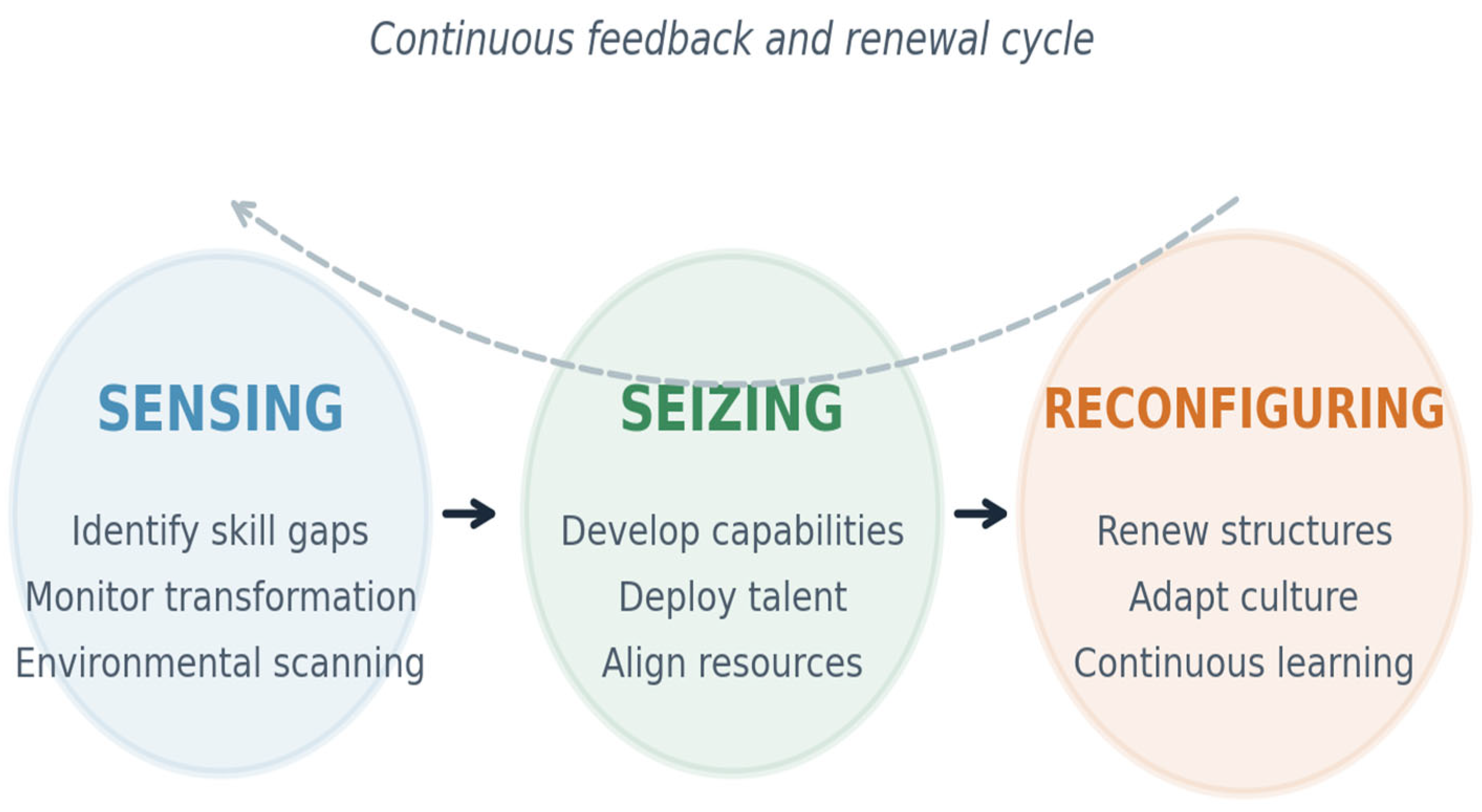
20], addresses the mechanisms through which organizations adapt to rapidly changing environments. DCT identifies three core processes: sensing (identifying threats and opportunities through scanning and interpretation), seizing (mobilizing resources to address identified opportunities through investment and strategic commitment), and reconfiguring (continuous renewal of organizational assets, structures, and routines to maintain evolutionary fitness).
The relevance of DCT to TM in the twin transitions context is direct and multi-dimensional. Digital transformation demands continuous organizational learning and capability renewal: skills in data analytics, automation, and digital process management are not static but evolve with technological advancement [
32]. Similarly, sustainability requires ongoing adaptation to regulatory frameworks (e.g., the evolving EU taxonomy), stakeholder expectations, and ecological constraints [
33]. TM, conceptualized as a dynamic capability, provides the mechanism through which human capital is continuously sensed, developed, and reconfigured to meet these evolving demands.
Collings et al. [
24] argued that TM itself can function as a dynamic capability when it moves beyond administrative workforce management toward strategic human capital orchestration. In manufacturing SMEs, where formal R&D functions are often absent, the capacity for organizational renewal depends substantially on workforce adaptability and leadership learning orientation [
29]. The sensing–seizing–reconfiguring cycle (
Figure 1) illustrates how TM operationalizes these micro-foundations at the organizational level.
2.5. Organizational Culture, Change Management, and Leadership
The third theoretical pillar concerns organizational culture and its role in enabling or constraining transformation. Schein [
34] defined organizational culture as the pattern of shared assumptions developed by a group in learning to cope with external adaptation and internal integration. Cameron and Quinn [
35] operationalized this through the Competing Values Framework, distinguishing clan (collaborative), adhocracy (creative), market (competitive), and hierarchy (controlling) cultures—each with different implications for change receptivity and learning orientation.
For transformation to succeed, cultural alignment is necessary: organizations must develop cultures that value learning, experimentation, and psychological safety [
36]. Kotter’s [
37] change management model emphasizes the role of leadership in creating urgency, building coalitions, communicating vision, empowering action, generating short-term wins, and institutionalizing new approaches. Bass and Riggio [
38] demonstrated that transformational leadership—characterized by intellectual stimulation, individualized consideration, inspirational motivation, and idealized influence—significantly influences organizational change outcomes by creating shared meaning and commitment.
In SMEs, cultural dynamics are pronounced because of the proximity between leaders and employees, the informality of organizational structures, and the outsized influence of founders on organizational values [
39]. McGregor’s [
13] distinction between Theory X (control-based management assuming workers are inherently lazy) and Theory Y (development-based management trusting in employee capability and intrinsic motivation) remains relevant: SMEs whose leaders adopt Theory Y orientations are better positioned to develop the learning cultures necessary for transformation. Edmondson [
36] further established that psychological safety—the belief that one can speak up, experiment, and make mistakes without punishment—is a prerequisite for organizational learning, a condition particularly dependent on leadership behavior in small organizational settings.
2.6. Digital Transformation in Manufacturing SMEs
Digital transformation in manufacturing encompasses the adoption and integration of technologies including automation, the Internet of Things (IoT), artificial intelligence, cloud computing, and data analytics to enhance operational efficiency, product quality, and business model innovation [
32,
40]. For SMEs, digitalization presents both opportunities (improved productivity, market access, and supply chain transparency) and barriers (cost, skill shortages, and integration complexity) [
41]. The European Commission’s Digital Economy and Society Index (DESI) consistently indicates that SMEs lag behind large enterprises in digital adoption, particularly in advanced technologies [
42]. Research by Parviainen et al. [
43] and Müller et al. [
41] suggests that this gap is not primarily technological but relates to absorptive capacity, digital leadership, and workforce readiness. Westerman et al. [
32] emphasized that successful digital transformation requires ‘digital mastery’—the combination of digital capability with leadership capability—reinforcing the centrality of human factors in what is often framed as a purely technological challenge.
2.7. Sustainability in Manufacturing SMEs
Sustainability in the manufacturing context involves integrating environmental, social, and governance considerations into business operations and strategy—the triple bottom line [
44]. For EU manufacturing SMEs, sustainability is increasingly driven by regulatory requirements (the European Green Deal [
45] and Corporate Sustainability Reporting Directive), supply chain pressures from large customers, and evolving stakeholder expectations. Johnson and Schaltegger [
46] found that SMEs face distinctive sustainability challenges: limited financial resources for green investment, insufficient technical knowledge, and difficulty translating broad sustainability goals into operational practices. SMEs also possess advantages—flexibility, proximity to local stakeholders, and capacity for rapid cultural change—that can facilitate sustainability integration when properly leveraged [
47,
48]. The COVID-19 pandemic further accelerated both digital and sustainability transformations, with disruptions exposing the fragility of efficiency-only supply chains [
49,
50] and highlighting workforce vulnerabilities including skill gaps and mental health challenges [
51,
52]. Post-pandemic recovery has been uneven, with Central and Eastern European SMEs facing particular challenges in retaining skilled workers and financing technological investments simultaneously [
53].
2.8. Existing Integrative TM Models and Research Gaps
The proposition that TM can serve as an integrative mechanism linking transformation domains is not entirely new. Gagné [
10] developed a motivation-based model positioning intrinsic and extrinsic motivational processes as mediators of TM effectiveness. Janowski [
11] proposed integrative talent management architectures linking TM to organizational strategy through competency frameworks, while Wiblen [
54] highlighted the increasing complexity and subjectivity of talent decisions in contemporary organizational contexts. Cappelli and Tavis [
55] argued for rethinking TM as an agile, development-oriented practice rather than a bureaucratic succession-planning exercise. However, these models predominantly address TM within large organizational contexts and do not explicitly theorize the mechanisms through which TM integrates DT and SUS simultaneously.
The literature on DT–TM linkages and SUS–TM linkages has developed largely in parallel, with limited cross-pollination [
7]. Specifically, the following gaps remain. First, no existing framework explicitly models TM as the mediating mechanism between DT and SUS in manufacturing SMEs. Second, the application of dynamic capabilities theory to TM in the twin transitions context remains under-developed. Third, the cultural and leadership conditions under which TM enables (or fails to enable) transformation integration are insufficiently specified. Fourth, the boundary conditions of TM effectiveness—including contexts where TM may not improve performance or may generate unintended costs—are rarely addressed [
56,
57].
2.9. Negative Aspects and Limitations of Talent Management
A balanced assessment of TM requires acknowledging its potential downsides, which the literature has increasingly documented [
56,
57]. Exclusive TM approaches can create perceptions of organizational injustice among employees not designated as ‘talent,’ leading to disengagement, resentment, and reduced organizational citizenship behavior [
58]. De Boeck et al. [
58] found that employee reactions to talent designation depend critically on the perceived fairness of the identification process; when processes are perceived as opaque or biased, negative effects on non-designated employees may outweigh the positive effects on talent-designated individuals.
Yang et al. [
56] demonstrated that employees’ leadership potential can trigger leader jealousy and ostracism, particularly in competitive organizational climates—representing a dark side of talent identification that is rarely acknowledged in prescriptive TM frameworks. The ‘war for talent’ narrative may generate escalating compensation pressures unsustainable for resource-constrained SMEs [
17]. Cappelli [
59] challenged the assumption that sophisticated TM practices always generate positive returns, noting that the costs of talent identification, development, and retention programs may exceed the benefits in certain organizational and market contexts. Swailes [
57] raised ethical concerns about TM systems that create organizational hierarchies of perceived worth, arguing that the moral implications of categorizing employees into talent tiers require more careful scholarly attention. In manufacturing SMEs, excessive focus on individual talent can undermine team-based production systems; talent hoarding by departments can reduce organizational flexibility; and overinvestment in development programs may create retention expectations that SMEs cannot fulfill.
3. Research Methodology
3.1. Research Design
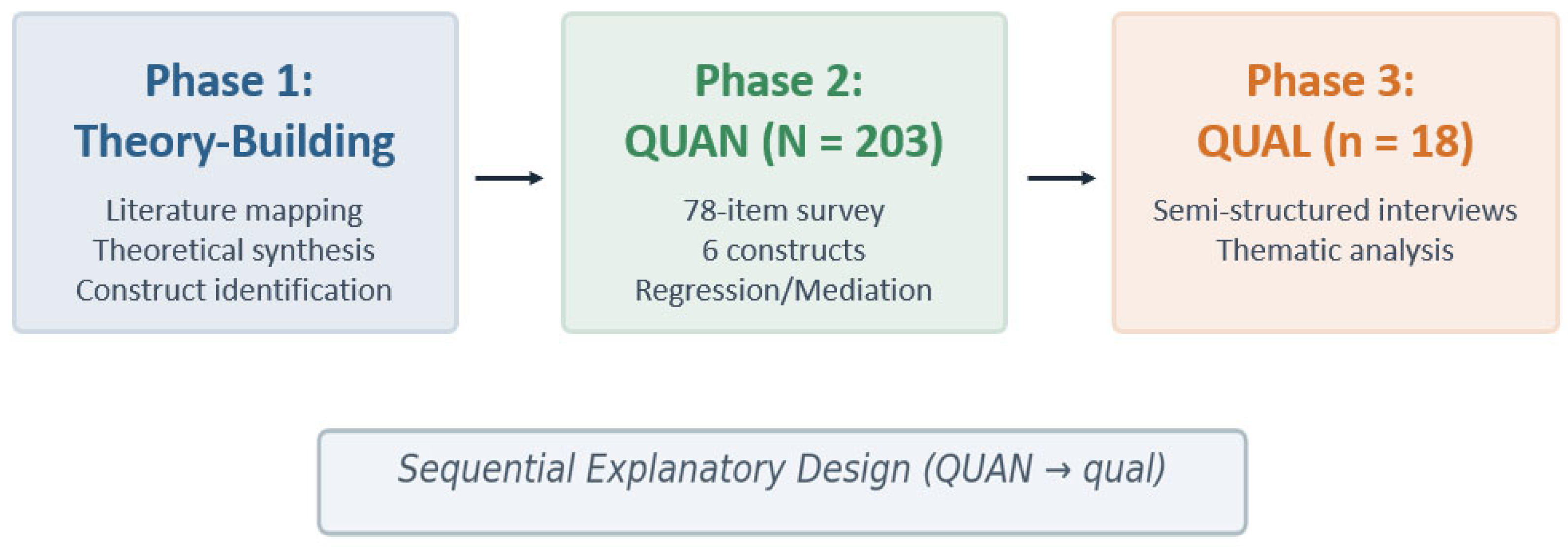
This study employs a mixed-methods sequential explanatory design (QUAN → qual) combining structured theory-building with empirical validation [
60,
61]. The framework was first constructed through systematic theoretical synthesis following Jabareen’s [
62] conceptual framework analysis methodology and informed by Whetten’s [
63] criteria for theoretical contribution, then empirically tested using primary quantitative and qualitative data. The sequential design ensures that qualitative findings can explain and elaborate on quantitative patterns [
60]. The overall research design is presented in
Figure 2.
3.2. Framework Development Procedure
The HCTF was developed through five stages: (1) literature mapping across TM, DT, and SUS domains (2000–2025), prioritizing empirical studies, systematic reviews, and foundational theoretical works; (2) theoretical integration of RBV, DCT, and Culture Theory, analyzing complementarities and tensions; (3) construct identification and boundary delineation; (4) relational mapping specifying direct, mediating, and moderating pathways; (5) proposition derivation with indicative operationalization for each proposition.
3.3. Quantitative Phase
A 78-item survey questionnaire was administered to manufacturing SMEs (10–249 employees, per EU definition) in traditional sectors (metals, machinery, and industrial components) across Poland, the Czech Republic, and Slovakia. Stratified sampling ensured representation across firm sizes, countries, and manufacturing sub-sectors. The sample of 203 valid responses was achieved through direct administration via industry associations and chamber of commerce networks, yielding a response rate of approximately 32%.
Six constructs were measured using validated multi-item scales with five-point Likert formats (1 = Strongly Disagree to 5 = Strongly Agree). The constructs, their abbreviations, number of items, reliability coefficients, and sources are presented in
Table 1.
Construct validity was assessed through confirmatory factor analysis (CFA). Convergent validity was confirmed by average variance extracted (AVE) values exceeding 0.50 for all constructs. Discriminant validity was confirmed through the Fornell–Larcker criterion and heterotrait–monotrait (HTMT) ratios below 0.85. Common method bias was assessed through Harman’s single-factor test, which explained 28% of total variance, which is below the 50% threshold, indicating no significant bias.
Table 2 provides illustrative item examples for each construct to clarify operationalization. All items were measured on five-point Likert scales (1 = Strongly Disagree to 5 = Strongly Agree). Scales were adapted from established instruments with modifications for the manufacturing SME context; adaptations were pilot-tested with 42 respondents (not included in the main sample) and refined based on item–total correlations and respondent feedback.
Estimation procedures followed standard practices for cross-sectional survey research. Confirmatory factor analysis (CFA) was conducted using maximum likelihood estimation to assess measurement model fit. Model fit was evaluated using multiple indices: chi-square/df ratio, comparative fit index (CFI), Tucker–Lewis index (TLI), root mean square error of approximation (RMSEA), and standardized root mean square residual (SRMR), are reported in
Table 3. Convergent validity was assessed via average variance extracted (AVE > 0.50) and composite reliability (CR > 0.70). Discriminant validity was confirmed through the Fornell–Larcker criterion (square root of AVE exceeding inter-construct correlations) and heterotrait–monotrait (HTMT) ratios below 0.85.
Hypothesis testing employed ordinary least squares (OLS) multiple regression for direct effects (P1), the PROCESS macro (Hayes, Model 4) with 5000 bootstrap samples for mediation analysis (P2), hierarchical moderated regression for interaction effects (P3), one-way ANOVA with post hoc Tukey HSD for group comparisons (P4), and bivariate correlation with controlled regression for the resilience association (P5). All analyses were conducted using SPSS 28 with the PROCESS v4.1 macro. Significance was set at p < 0.05, with 95% confidence intervals reported throughout.
3.4. Qualitative Phase
Semi-structured interviews were conducted with 18 senior executives (owners, managing directors, and HR managers) from manufacturing SMEs purposively selected to represent three transformation maturity levels: early (
n = 6), developing (
n = 6), and advanced (
n = 6). Maturity classification was based on quantitative phase responses. Interviews lasted 45–75 min and were conducted in the participants’ native languages to ensure nuance and comfort. Thematic analysis followed Braun and Clarke’s [
68] six-phase protocol: familiarization, initial coding, theme development, review, definition, and reporting. Two rounds of coding were performed, with intercoder reliability assessed on a subset of transcripts.
3.5. Ethical Considerations
Ethics approval was obtained prior to data collection. Informed consent was obtained from all participants. Survey responses were collected anonymously; interview transcripts were pseudonymized. Data were stored on encrypted, GDPR-compliant systems accessible only to the researcher.
4. The Human-Centered Transformation Framework
4.1. Conceptual Architecture
The HCTF is constructed on the premise that transformation in manufacturing SMEs is a human-mediated process. While digital technologies provide efficiency tools and sustainability provides strategic direction, it is TM—operating as a dynamic capability through leadership and organizational culture—that connects these domains into a coherent organizational strategy. This integrative function is especially relevant in SMEs, where the absence of dedicated functional departments means that transformation coordination falls to general management and workforce capability [
9,
29].
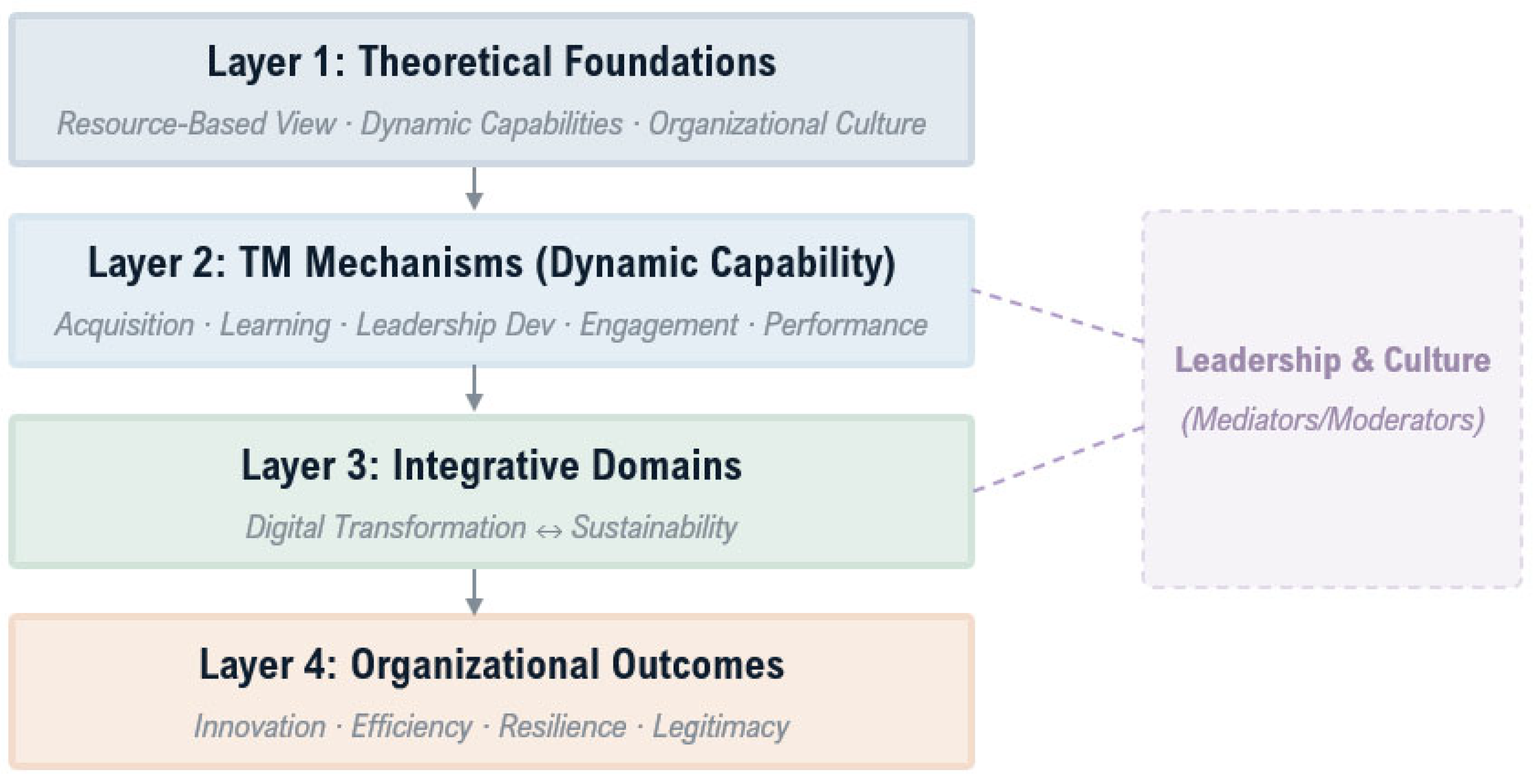
The framework consists of four interconnected layers representing concurrent organizational processes (
Figure 3):
These layers operate concurrently rather than sequentially. Layer 1 (Theoretical Foundations) provides the conceptual logic: the RBV explains why human capability matters, DCT explains how it must be dynamically maintained, and Culture Theory identifies conditions under which it flourishes. Layer 2 (TM Mechanisms) identifies five processes: strategic talent acquisition aligned with transformation needs, continuous learning and reskilling, leadership development emphasizing digital and sustainability competencies, employee engagement and psychological safety cultivation, and performance management linked to transformation objectives. Layer 3 (Integrative Domains) represents DT and SUS as interconnected imperatives mediated by TM. The key claim is that TM develops the human capabilities required for each domain and fosters the cultural conditions under which they become mutually reinforcing. Layer 4 (Organizational Outcomes) specifies four dimensions: innovation capacity, operational efficiency, organizational resilience, and stakeholder legitimacy.
4.2. Mediating Role of Leadership and Culture
A distinctive feature of the HCTF is the specification of leadership and organizational culture as mediating and moderating variables between TM mechanisms and transformation outcomes. Drawing on Bass and Riggio [
38], the framework posits that transformational leadership amplifies TM effectiveness by creating organizational contexts conducive to learning and change. Organizational culture operates as a moderating condition: learning-oriented cultures (characterized by openness to experimentation, tolerance for failure, and knowledge-sharing norms) strengthen the TM–transformation relationship, while hierarchical or control-oriented cultures attenuate it [
34,
35]. In SMEs, the founder/owner’s management philosophy—recalling McGregor’s [
13] Theory X/Y distinction—exerts a disproportionate influence on organizational culture and therefore on TM effectiveness.
4.3. Propositions
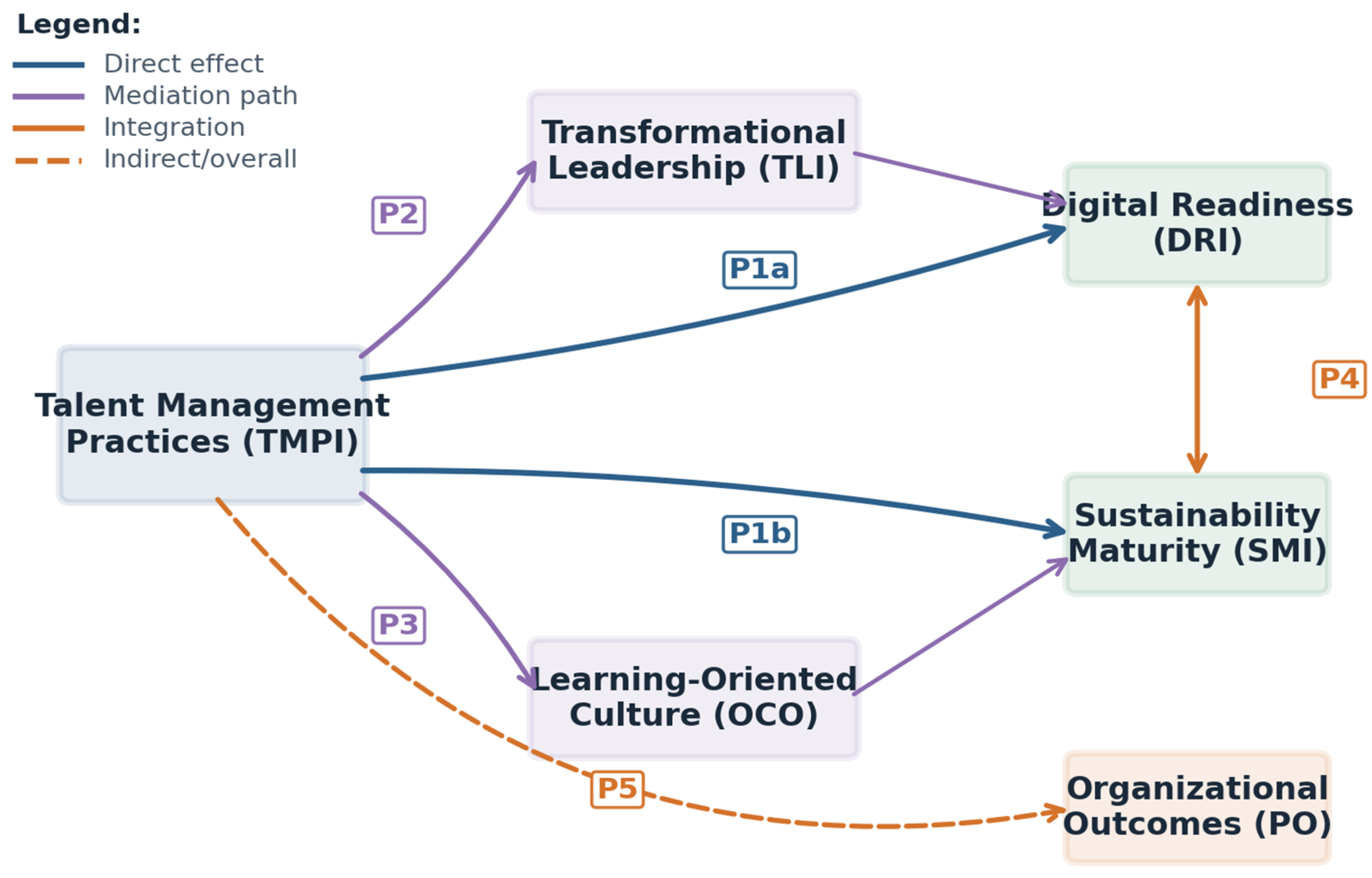
Five testable propositions are derived from the framework’s theoretical architecture (
Table 4), each specifying a relationship, theoretical basis, and operationalization pathway.
The proposed research model integrates the key constructs and hypothesized relationships (P1–P5), as illustrated in
Figure 4.
4.4. Comparative Positioning
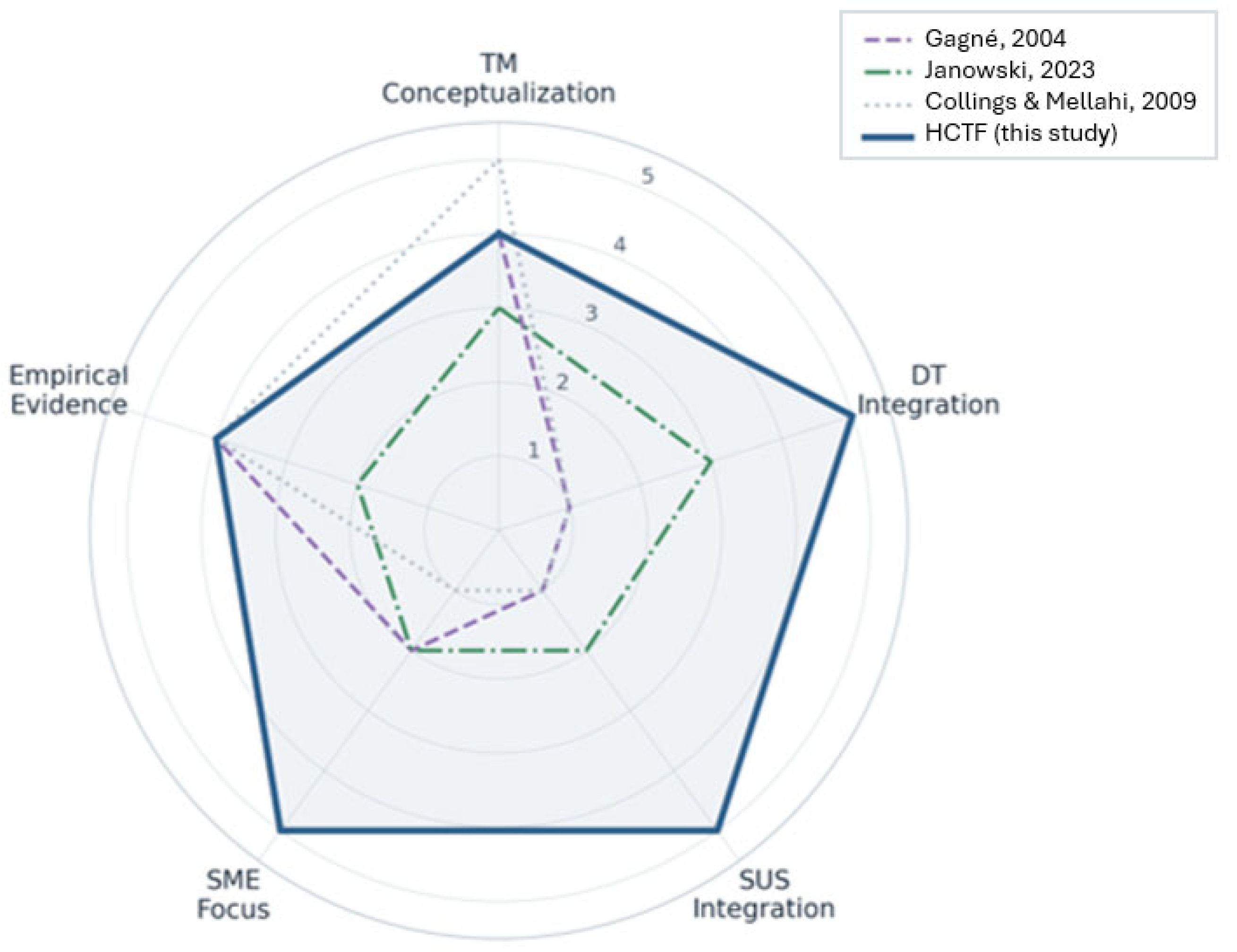
To position the contribution accurately,
Table 5 compares the HCTF with prior integrative models, while
Figure 5 provides a visual comparison across key dimensions.
The HCTF’s contribution is thus best characterized as a context-specific theoretical synthesis that extends prior TM models by explicitly incorporating the twin transitions within manufacturing SME boundary conditions. It does not replace existing models but complements them by addressing a specific gap in the literature.
5. Results
5.1. Sample Characteristics
The final sample comprised 203 manufacturing SMEs distributed across Poland (n = 87, 42.9%), the Czech Republic (n = 64, 31.5%), and Slovakia (n = 52, 25.6%). By size category, micro enterprises (10–49 employees) represented 34.0%, small enterprises (50–149) represented 41.9%, and medium enterprises (150–249) represented 24.1%. Manufacturing sub-sectors included metals and metal products (38.4%), machinery and equipment (29.6%), plastics and chemicals (18.2%), and other traditional manufacturing (13.8%). Respondents were predominantly owner-managers (44.3%) or senior managers (38.9%), with HR managers comprising 16.8%.
5.2. Quantitative Findings
Descriptive statistics and inter-construct correlations are presented in
Table 6. All constructs demonstrated acceptable reliability (Cronbach’s α ≥ 0.84) and convergent validity (AVE ≥ 0.51). The correlation matrix reveals moderate to strong positive associations among constructs, consistent with the framework’s predictions.
The mean TMPI score (M = 3.21; SD = 0.74) suggests moderate TM practice intensity across the sample, with considerable variation. Digital readiness scores (M = 2.87) were somewhat lower than sustainability maturity (M = 3.04), suggesting that the sampled SMEs have made more progress on sustainability than on digitalization—consistent with regulatory push factors (e.g., the European Green Deal) driving sustainability adoption ahead of voluntary digital investment.
Proposition testing yielded the following results. The regression results for P1 are presented in
Table 6, mediation analysis for P2 in
Table 7, moderation analysis for P3 in
Table 8, and additional analyses in
Table 9.
The results of the one-way ANOVA comparing performance outcomes across transformation strategy types (P4) are presented in
Table 10.
Proposition 1 (supported)
. Multiple regression analysis indicated that TMPI significantly predicted both DRI (β = 0.42; p < 0.001; 95% CI [0.30, 0.54]) and SMI (β = 0.36; p < 0.001; 95% CI [0.23, 0.49]), controlling for firm size, sector, and country. TM practice intensity accounts for approximately 29% of variance in digital readiness (R2 = 0.29) and 22% in sustainability maturity (R2 = 0.22). Firm size was a significant but weaker predictor (DRI: β = 0.18, p < 0.01; SMI: β = 0.14, p < 0.05), indicating that TM practices have effects independent of organizational scale.
Proposition 2 (supported)
. Mediation analysis using bootstrapping (5000 samples; 95% CI) confirmed that TLI partially mediates the TMPI→PO relationship. The total effect was significant (β = 0.52; p < 0.001). The indirect effect through leadership (β = 0.18; CI [0.11, 0.26]) was significant, while the direct effect remained significant but attenuated (β = 0.34; p < 0.001), indicating partial mediation. This suggests that TM influences outcomes both directly and through its effect on transformational leadership behaviors.
Proposition 3 (supported)
. Hierarchical regression with the TMPI × OCO interaction term revealed a significant moderating effect (ΔR2 = 0.04; p < 0.01). Simple slope analysis indicated that the TMPI→DT–SUS integration relationship was significantly stronger for SMEs with high learning-oriented culture scores (1 SD above mean: β = 0.56; p < 0.001) than for those with low scores (1 SD below mean: β = 0.28; p < 0.01). This pattern is consistent with the proposition that organizational culture moderates TM effectiveness, though the incremental variance explained (ΔR2 = 0.04) is small, suggesting culture is one of several relevant boundary conditions rather than a dominant factor.
Proposition 4 (partially supported)
. SMEs pursuing integrated DT–SUS strategies (n = 78) reported higher performance outcomes (M = 3.62; SD = 0.71) than those pursuing DT only (n = 71; M = 3.18; SD = 0.74) or SUS only (n = 54; M = 3.04; SD = 0.68). One-way ANOVA confirmed significant differences (F(2200) = 8.74; p < 0.001). Post hoc Tukey tests revealed that the integrated group significantly outperformed both the DT-only (p < 0.01) and SUS-only (p < 0.001) groups, while the difference between DT-only and SUS-only was not significant. Effect sizes were moderate (η2 = 0.08), warranting cautious interpretation.
Proposition 5 (supported with caveats)
. The TMPI was positively correlated with self-reported resilience (r = 0.48; p < 0.01). Regression controlling for firm size and sector confirmed the relationship (β = 0.39; p < 0.001). However, resilience was measured through subjective assessment (four self-report items) rather than objective performance indicators, limiting causal inference. Qualitative data provided stronger, contextualized support for this proposition.
Structural Model Summary
To provide an integrated view of the tested relationships,
Table 11 summarizes the structural path estimates across all propositions. While the primary analyses used separate regression, mediation, and moderation models (as appropriate for each proposition), the aggregated path summary below facilitates comparison of effect magnitudes across the framework.
The pattern of results indicates that TM practice intensity exerts a stronger direct effect on digital readiness (Beta = 0.42) than on sustainability maturity (Beta = 0.36), suggesting that TM mechanisms may operate more immediately through skill-building and technological adoption support than through the longer-term cultural and strategic shifts required for sustainability integration. The significant mediation through transformational leadership (indirect effect = 0.18) and the significant but modest moderation by organizational culture (Delta R-squared = 0.04) together indicate that TM effectiveness is context-dependent, operating through and being shaped by leadership and cultural conditions.
5.3. Qualitative Findings
Thematic analysis of 18 executive interviews identified four overarching themes that both confirmed and extended quantitative findings, providing explanatory depth on the mechanisms through which TM operates in practice.
Theme 1: Leadership as a transformation catalyst: Across all maturity levels, interviewees consistently identified owner/manager attitudes as the primary determinant of transformation success or failure. In advanced-maturity firms, leaders described themselves as active participants in transformation rather than distant sponsors: they personally engaged with digital tools, participated in sustainability training alongside employees, and modeled the learning behaviors they expected from their workforce. One managing director of a Slovak machinery firm (advanced maturity) described the shift: ‘I realized that if I expected my team to embrace new technology, I had to be the first to struggle with it publicly.’ By contrast, early-maturity firms described leaders who delegated transformation to external consultants or IT departments without personal engagement. The consistency of this pattern across 18 interviews provides qualitative support for the leadership mediation identified in P2.
Theme 2: Culture as an enabler or barrier: Firms with learning-oriented cultures reported smoother DT–SUS integration. A recurring pattern involved the deliberate transition from ‘we’ve always done it this way’ mindsets to experimentation-tolerant cultures. This transition was invariably mediated by specific TM interventions: cross-functional training teams, internal knowledge-sharing platforms, mentoring programs pairing experienced operators with digitally skilled younger employees, and deliberate tolerance for pilot-project failures. Several respondents from developing-maturity firms described a ‘tipping point’ where enough employees had experienced successful small-scale changes that cultural resistance diminished organically. A Czech metals processing firm’s HR manager noted: ‘The culture changed when people saw that trying new things was rewarded, not punished.’
Theme 3: Integration through people, not systems: Contrary to technology-centric transformation narratives, respondents consistently emphasized that DT–SUS integration occurred through individuals who bridged both domains—typically middle managers or technical specialists who had received cross-training in both digital and sustainability competencies. These ‘integration agents’ served as translators between departments, connecting digitalization initiatives (e.g., sensor-based monitoring) with sustainability goals (e.g., energy reduction). In advanced-maturity firms, these roles were deliberately created through TM processes; in developing-maturity firms, they emerged informally. Early-maturity firms lacked such bridging roles entirely, and their DT and SUS initiatives operated in silos with minimal coordination. A Polish metals firm owner described the breakthrough: ‘When our production engineer completed both the Industry 4.0 certification and the sustainability audit training, she became the person who could see how everything connected’.
Theme 4: Costs, tensions, and failure cases: Interviewees were candid about TM limitations and failures, providing important counterfactual evidence. Three firms (two early-maturity and one developing-maturity) reported that TM investments did not generate expected transformation results. In all three cases, respondents attributed failure to leadership inconsistency: initial enthusiasm for people development was abandoned during financial pressures, sending contradictory signals to employees. A developing-maturity Czech firm described investing in a comprehensive digital skills program only to lay off trained employees six months later during a downturn—permanently damaging trust and willingness to engage in future development programs. Additionally, respondents from smaller firms (< 50 employees) acknowledged difficulty retaining trained employees who received better offers from larger firms, creating a ‘training-then-losing’ dynamic that undermined TM investment returns. Tension between investing in people and meeting short-term cost pressures was reported across all 18 firms interviewed. These findings confirm the framework’s boundary conditions and align with the literature on negative TM aspects [
56,
57,
59].
6. Discussion
6.1. Theoretical Implications
The findings support three primary theoretical contributions, each grounded in empirical evidence rather than speculation alone. First, the conceptualization of TM as a dynamic capability receives empirical support: the significant TMPI→DRI and TMPI→SMI relationships (P1), together with qualitative evidence of continuous sensing–seizing–reconfiguring processes, are consistent with the proposition that TM can operate beyond administrative HR management in SME transformation contexts. This extends Collings et al.’s [
24] theoretical argument with primary evidence from a manufacturing SME sample, while the partial mediation through leadership (P2) provides specificity that prior frameworks lacked.
Second, the confirmed mediating role of transformational leadership (P2) and moderating role of organizational culture (P3) provide a more nuanced theoretical account than frameworks treating TM effectiveness as context-independent. The qualitative finding that leadership inconsistency explains TM failure links McGregor’s [
13] Theory Y orientation, Schein’s [
34] learning assumptions, and Bass and Riggio’s [
38] transformational leadership into a coherent mechanism: TM tends to be effective when leaders authentically model learning and less effective when leadership commitment is inconsistent.
Third, the integration finding (P4) provides preliminary evidence that DT and SUS are more effectively pursued together than in isolation—but the moderate effect sizes (η2 = 0.08) caution against strong claims. The qualitative evidence of ‘integration agents’ (Theme 3) provides a mechanism for this effect: TM creates individuals who bridge domains, enabling synergies that siloed approaches miss. The qualitative evidence also suggests that integration benefits are contingent on organizational capacity and that premature integration may overwhelm resource-constrained SMEs.
6.2. Practical Implications
Subject to the limitations noted in
Section 7, findings suggest that SME leaders navigating the twin transitions should prioritize workforce capability development alongside technological investment. The mediation through leadership implies that transformation programs benefit from leadership development as a prerequisite rather than an afterthought. The culture moderation effect suggests attending to cultural readiness—building psychological safety, fostering experimentation tolerance, and creating knowledge-sharing routines—before or alongside technology adoption.
Qualitative Theme 4 (costs and tensions) warrants emphasis. TM is not universally beneficial, and three interview cases documented failed TM investments attributable to leadership inconsistency. SME leaders should assess whether organizational conditions—leadership commitment, cultural readiness, and financial capacity for sustained investment—are present before scaling TM initiatives. The ‘training-then-losing’ dynamic identified in smaller firms suggests that TM strategy must be calibrated to retention capacity.
6.3. Policy Implications
If replicated at scale, findings suggest EU industrial policy instruments targeting SME transformation might be more effective if they integrate human capital development components—workforce reskilling, leadership development, and organizational culture assessment—alongside technology adoption support. The European Investment Bank’s [
53] emphasis on integrated investment approaches aligns with this perspective. Policy recommendations from a sample of 203 firms in three Central European countries must be treated as tentative pending broader replication.
6.4. What the Framework Does Not Explain
The HCTF does not explain: (a) micro-level psychological processes through which individual employees develop transformation capabilities; (b) industry-level competitive dynamics shaping the external environment; (c) financial conditions under which TM investment generates positive ROI—the framework assumes benefit but does not model the cost–benefit calculus; (d) institutional and regulatory variation across EU member states that may significantly moderate TM effectiveness; (e) the full range of mechanisms through which TM fails or produces unintended consequences, beyond the leadership inconsistency factor identified qualitatively.
7. Limitations
Cross-sectional design: Quantitative data were collected at a single point, precluding causal inference. The reported relationships are associational; the direction of causation (does TM cause digital readiness or does digital readiness attract TM investment?) cannot be determined without longitudinal data.
Central European sample: Poland, the Czech Republic, and Slovakia are post-socialist economies with specific institutional characteristics—including particular labor market dynamics, management traditions, and regulatory environments—that may limit generalizability to Western European, Mediterranean, or non-European SMEs.
Self-report measures: All constructs were measured through self-report, introducing potential common method bias. While Harman’s test was below the threshold (28%), procedural remedies cannot fully eliminate this risk. Objective performance data would strengthen future replications.
Conceptual abstraction: The framework treats ‘manufacturing SMEs’ as a unified analytical category, but a 15-employee metal workshop operates in substantially different conditions than a 200-employee machinery manufacturer. Within-category variation may be substantial.
Assumption of TM benefit: Despite acknowledging negative TM aspects (
Section 2.9) and documenting three failure cases (
Section 5.3), the empirical design measured associations but did not systematically model conditions under which TM fails. The positive bias in the framework remains a limitation.
Negative aspects under-modeled: As Yang et al. [
56] and Swailes [
57] document, TM can generate jealousy, perceived injustice, and unsustainable costs. These mechanisms are acknowledged but not formally tested. Future research should explicitly model boundary conditions where TM produces negative outcomes.
Resilience measurement: Proposition 5 relies on self-reported resilience rather than objective measures. Stronger evidence would come from tracking firm performance through actual disruptions.
Sample size for complex models: While n = 203 is adequate for regression, more complex structural equation models testing the full mediating and moderating architecture simultaneously would benefit from larger samples (n > 300).
8. Conclusions and Future Research
This study developed the Human-Centered Transformation Framework (HCTF) and provided preliminary empirical validation through mixed-methods research with 203 manufacturing SMEs and 18 executive interviews across Poland, the Czech Republic, and Slovakia. The findings provide initial support for the framework’s core propositions: TM practice intensity is positively associated with digital readiness and sustainability maturity (P1); transformational leadership partially mediates TM–outcome relationships (P2); a learning-oriented culture moderates TM effectiveness (P3); integrated DT–SUS approaches outperform isolated efforts with moderate effect sizes (P4); and TM investment is associated with self-reported resilience (P5).
The study’s primary contribution is the articulation and preliminary testing of an integrative model addressing the under-theorized intersection of TM, DT, and SUS in manufacturing SMEs. Building on and extending prior models [
10,
11,
12], the HCTF provides a context-specific theoretical synthesis with empirical grounding in the Central European manufacturing context. The qualitative findings contribute by identifying mechanisms (leadership as catalyst, culture as enabler, integration agents, and the reality of TM failure) that quantitative data alone cannot capture.
Five future research priorities are identified: (1) longitudinal designs tracking transformation trajectories over multiple years to establish causation; (2) SEM-based testing with larger samples (n > 300) to simultaneously model the full mediating and moderating architecture; (3) cross-cultural replication in Western European and non-European contexts to test generalizability; (4) explicit modeling of TM failure conditions and negative outcomes, moving beyond the positive bias inherent in most TM research; (5) objective resilience measurement through natural experiments or pre/post-crisis performance data.
The HCTF offers neither a complete theory nor a universal prescription. It provides a structured, empirically grounded set of propositions about the human mechanisms underlying SME transformation—a contribution that, with further validation and replication, may inform both scholarship and the practice of managing change in an era of concurrent technological and sustainability imperatives.
Funding
This research received no external funding.
Institutional Review Board Statement
Ethical review and approval were waived for this study by Swiss School of Business and Management Geneva (SSBM). This study falls within the category of social science research exempt from formal ethics committee review under the institutional guidelines for research involving human participants. The research complies with all applicable institutional, national, and international ethical standards for social science research.
Informed Consent Statement
Informed consent was obtained from all subjects involved in the study.
Data Availability Statement
The original contributions presented in this study are included in the article. Further inquiries can be directed to the corresponding author.
Conflicts of Interest
The author declares no conflicts of interest.
References
- Vial, G. Understanding Digital Transformation: A Review and a Research Agenda. J. Strateg. Inf. Syst. 2019, 28, 118–144. [Google Scholar]
- Hahn, T.; Pinkse, J.; Preuss, L.; Figge, F. Tensions in Corporate Sustainability. J. Bus. Ethics 2015, 127, 297–316. [Google Scholar]
- European Commission. Industry 5.0: Towards a Sustainable, Human-Centric and Resilient European Industry; EC: Brussels, Belgium, 2021. [Google Scholar]
- European Commission. Annual Report on European SMEs 2022/2023; EC: Brussels, Belgium, 2023. [Google Scholar]
- Thrassou, A.; Vrontis, D.; Bresciani, S. The Agile Innovation Pendulum: A Strategic Marketing Multicultural Model for Family Businesses. Int. Stud. Manag. Organ. 2018, 48, 105–120. [Google Scholar] [CrossRef]
- McKinsey & Company. Unlocking Success in Digital Transformations; McKinsey: New York, NY, USA, 2018. [Google Scholar]
- Foss, N.J.; Saebi, T. Fifteen Years of Research on Business Model Innovation. J. Manag. 2017, 43, 200–227. [Google Scholar]
- Kotter, J.P.; Schlesinger, L.A. Choosing Strategies for Change. Harv. Bus. Rev. 2008, 86, 130–139. [Google Scholar]
- Nolan, C.T.; Garavan, T.N. Human Resource Development in SMEs: A Systematic Review. Int. J. Manag. Rev. 2016, 18, 85–107. [Google Scholar]
- Gagné, F. Transforming Gifts into Talents: The DMGT as a Developmental Theory. High Abil. Stud. 2004, 15, 119–147. [Google Scholar] [CrossRef]
- Janowski, A.; Martynyuk, V. Defining talent in management science: Does it really matter? Argum. Oeconomica 2023, 2, 287–307. [Google Scholar] [CrossRef]
- Collings, D.G.; Mellahi, K. Strategic Talent Management: A Review. Hum. Resour. Manag. Rev. 2009, 19, 304–313. [Google Scholar] [CrossRef]
- McGregor, D. The Human Side of Enterprise; McGraw-Hill: New York, NY, USA, 1960. [Google Scholar]
- Gallardo-Gallardo, E.; Dries, N.; González-Cruz, T.F. What Is the Meaning of ‘Talent’ in the World of Work? Hum. Resour. Manag. Rev. 2013, 23, 290–300. [Google Scholar] [PubMed]
- Collings, D.G.; Mellahi, K.; Cascio, W.F. (Eds.) The Oxford Handbook of Talent Management; OUP: Oxford, UK, 2017. [Google Scholar]
- Tansley, C. What Do We Mean by the Term ‘Talent’? Ind. Commer. Train. 2011, 43, 266–274. [Google Scholar] [CrossRef]
- Michaels, E.; Handfield-Jones, H.; Axelrod, B. The War for Talent; Harvard Business School Press: Boston, MA, USA, 2001. [Google Scholar]
- Meyers, M.C.; van Woerkom, M.; Dries, N. Talent—Innate or Acquired? Theoretical considerations and their implications for talent management. Hum. Resour. Manag. Rev. 2013, 23, 305–321. [Google Scholar] [CrossRef]
- Meyers, M.C.; van Woerkom, M. The Influence of Underlying Philosophies on TM. J. World Bus. 2014, 49, 192–203. [Google Scholar] [CrossRef]
- Teece, D.J. Business Models and Dynamic Capabilities. Long. Range Plan. 2018, 51, 40–49. [Google Scholar] [CrossRef]
- Valverde, M.; Scullion, H.; Ryan, G. Talent Management in Spanish Medium-Sized Organizations. Int. J. Hum. Resour. Manag. 2013, 24, 1832–1852. [Google Scholar] [CrossRef]
- Sparrow, P.; Makram, H. What Is the Value of Talent Management? Building value-driven processes within a talent management architecture. Hum. Resour. Manag. Rev. 2015, 25, 249–263. [Google Scholar] [CrossRef]
- Lewis, R.E.; Heckman, R.J. Talent Management: A Critical Review. Hum. Resour. Manag. Rev. 2006, 16, 139–154. [Google Scholar] [CrossRef]
- Collings, D.G.; Mellahi, K.; Cascio, W.F. Global Talent Management and Performance in Multinational Enterprises: A Multilevel Perspective. J. World Bus 2019, 45, 540–566. [Google Scholar] [CrossRef]
- Thunnissen, M.; Boselie, P.; Fruytier, B. Talent Management and the Relevance of Context. Hum. Resour. Manag. Rev. 2013, 23, 326–336. [Google Scholar]
- Barney, J.B. Firm Resources and Sustained Competitive Advantage. J. Manag. 1991, 17, 99–120. [Google Scholar] [CrossRef]
- Lepak, D.P.; Snell, S.A. Examining the Human Resource Architecture. J. Manag. 2002, 28, 517–543. [Google Scholar] [CrossRef]
- Wright, P.M.; Dunford, B.B.; Snell, S.A. Human Resources and the Resource-Based View. J. Manag. 2001, 27, 701–721. [Google Scholar] [CrossRef]
- Krishnan, T.N.; Scullion, H. Talent Management and Dynamic View of Talent in small and medium enterprises. Hum. Resour. Manag. Rev. 2017, 27, 431–441. [Google Scholar] [CrossRef]
- Kraaijenbrink, J.; Spender, J.C.; Groen, A.J. The Resource-Based View: A Review and Assessment of Its Critiques. J. Manag. 2010, 2010, 349–372. [Google Scholar] [CrossRef]
- Teece, D.J.; Pisano, G.; Shuen, A. Dynamic Capabilities and Strategic Management. Strateg. Manag. J. 1997, 18, 509–533. [Google Scholar] [CrossRef]
- Westerman, G.; Bonnet, D.; McAfee, A. Leading Digital; Harvard Business Review Press: Boston, MA, USA, 2014. [Google Scholar]
- Bansal, P.; Song, H.C. Similar But Not the Same: Differentiating Corporate Sustainability from Corporate Responsibility. Acad. Manag. Ann. 2017, 11, 105–149. [Google Scholar] [CrossRef]
- Schein, E.H. Organizational Culture and Leadership, 4th ed.; Jossey-Bass: San Francisco, CA, USA, 2010. [Google Scholar]
- Cameron, K.S.; Quinn, R.E. Diagnosing and Changing Organizational Culture, 3rd ed.; Jossey-Bass: San Francisco, CA, USA, 2011. [Google Scholar]
- Edmondson, A.C. The Fearless Organization; John Wiley & Sons: Hoboken, NJ, USA, 2018. [Google Scholar]
- Kotter, J.P. Leading Change; Harvard Business School Press: Boston, MA, USA, 1996. [Google Scholar]
- Bass, B.M.; Riggio, R.E. Transformational Leadership, 2nd ed.; Lawrence Erlbaum: Mahwah, NJ, USA, 2006. [Google Scholar]
- Shaddel, S.; Bakhtiary-Davijany, H.; Kabbe, C.; Dadgar, F.; Østerhus, S.W. Sustainable Sewage Sludge Management: From Current Practices to Emerging Nutrient Recovery Technologies. Sustainability 2019, 11, 3435. [Google Scholar] [CrossRef]
- Matt, C.; Hess, T.; Benlian, A. Digital Transformation Strategies. Bus. Inf. Syst. Eng. 2015, 57, 339–343. [Google Scholar] [CrossRef]
- Müller, J.M.; Buliga, O.; Voigt, K.-I. The role of absorptive capacity and innovation strategy in the design of industry 4.0 business Models - A comparison between SMEs and large enterprises. Eur. Manag. J. 2021, 39, 333–343. [Google Scholar] [CrossRef]
- European Commission. Digital Economy and Society Index (DESI) 2023; EC: Brussels, Belgium, 2023. [Google Scholar]
- Parviainen, P.; Tihinen, M.; Kääriäinen, J.; Teppola, S. Tackling the Digitalization Challenge. Int. J. Inf. Syst. Proj. Manag. 2017, 5, 63–77. [Google Scholar] [CrossRef]
- Elkington, J. Cannibals with Forks; Capstone: Oxford, UK, 1997. [Google Scholar]
- European Commission. The European Green Deal, COM(2019) 640 Final; EC: Brussels, Belgium, 2019. [Google Scholar]
- Johnson, M.P.; Schaltegger, S. Two Decades of Sustainability Management Tools for SMEs: How Far Have We Come? J. Small Bus. Manag. 2016, 54, 481–505. [Google Scholar] [CrossRef]
- Hall, J.; Matos, S.; Silvestre, B. Understanding why firms should invest in sustainable supply chains: A complexity approach. Int. J. Prod. Res. 2012, 50, 1332–1348. [Google Scholar] [CrossRef]
- Klewitz, J.; Hansen, E.G. Sustainability-Oriented Innovation of SMEs. J. Clean. Prod. 2014, 65, 57–75. [Google Scholar] [CrossRef]
- Amankwah-Amoah, J.; Khan, Z.; Wood, G.; Knight, G. COVID-19 and Digitalization: The Great Acceleration. J. Bus. Res. 2021, 136, 602–611. [Google Scholar] [CrossRef]
- Ivanov, D. Viable Supply Chain Model: Integrating Agility, Resilience and Sustainability. Ann. Oper. Res. 2020, 319, 141–152. [Google Scholar] [CrossRef] [PubMed]
- Carnevale, J.B.; Hatak, I. Employee Adjustment and Well-Being in the Era of COVID-19. J. Bus. Res. 2020, 116, 183–187. [Google Scholar] [CrossRef] [PubMed]
- Gigauri, I. Challenges HR Managers Facing Due to COVID-19 and Overcoming Strategies: Perspectives from Georgia. Arch. Bus. Res. 2020, 8, 1–18. [Google Scholar] [CrossRef]
- European Investment Bank. Investment Report 2022/2023; EIB: Luxembourg, Luxembourg, 2022. [Google Scholar]
- Wiblen, S. Rethinking Talent Decisions: A Tale of Complexity, Technology and Subjectivity; De Gruyter: Berlin, Germany, 2024. [Google Scholar] [CrossRef]
- Cappelli, P.; Tavis, A.; Gherson, D.; Burrell, L.; Barton, D.; Carey, D.; Charan, R. The New Rules of Talent Management; Harvard Business Publishing: Boston, MA, USA, 2018. [Google Scholar]
- Yang, Z.; Ye, L.; Wang, F.; Liao, G. The Dark Side of Employee’s Leadership Potential: Its Impact on Leader Jealousy and Ostracism. Behav. Sci. 2025, 15, 1001. [Google Scholar] [CrossRef]
- Swailes, S. The Ethics of Talent Management. Bus. Ethics Eur. Rev. 2013, 22, 32–46. [Google Scholar] [CrossRef]
- De Boeck, G.; Meyers, M.C.; Dries, N. Employee Reactions to Talent Management. J. Organ. Behav. 2018, 39, 199–213. [Google Scholar] [CrossRef]
- Cappelli, P. Talent Management for the Twenty-First Century. Harv. Bus. Rev. 2008, 86, 74–81. [Google Scholar]
- Creswell, J.W.; Plano Clark, V.L. Designing and Conducting Mixed Methods Research, 3rd ed.; SAGE: Thousand Oaks, CA, USA, 2018. [Google Scholar]
- Creswell, J.W.; Creswell, J.D. Research Design, 5th ed.; SAGE: Thousand Oaks, CA, USA, 2018. [Google Scholar]
- Jabareen, Y. Building a Conceptual Framework: Philosophy, Definitions, and Procedure. Int. J. Qual. Methods 2009, 8, 49–62. [Google Scholar] [CrossRef]
- Whetten, D.A. What Constitutes a Theoretical Contribution? Acad. Manag. Rev. 1989, 14, 490–495. [Google Scholar] [CrossRef]
- Mittal, S.; Khan, M.A.; Romero, D.; Wuest, T. A critical review of smart manufacturing & Industry 4.0 maturity models: Implications for small and medium-sized enterprises (SMEs). J. Manuf. Syst. 2018, 49, 194–214. [Google Scholar] [CrossRef]
- Schumacher, A.; Erol, S.; Sihn, W. A Maturity Model for Assessing Industry 4.0 Readiness and Maturity of Manufacturing Enterprises. Procedia CIRP 2016, 52, 161–166. [Google Scholar] [CrossRef]
- Carter, C.R.; Rogers, D.S. A Framework of Sustainable Supply Chain Management: Moving toward New Theory. Int. J. Phys. Distrib. Logist. Manag. 2008, 38, 360–387. [Google Scholar] [CrossRef]
- Harney, B.; Alkhalaf, H. A quarter-century review of HRM in small and medium-sized enterprises: Capturing what we know, exploring where we need to go. Hum. Resour. Manag. 2021, 60, 5–29. [Google Scholar] [CrossRef]
- Braun, V.; Clarke, V. Using Thematic Analysis in Psychology. Qual. Res. Psychol. 2006, 3, 77–101. [Google Scholar] [CrossRef]
| Disclaimer/Publisher’s Note: The statements, opinions and data contained in all publications are solely those of the individual author(s) and contributor(s) and not of MDPI and/or the editor(s). MDPI and/or the editor(s) disclaim responsibility for any injury to people or property resulting from any ideas, methods, instructions or products referred to in the content. |