1. Introduction
1.1. Theoretical Background and Literature
Corporate governance is widely recognised as a foundational mechanism for ensuring transparency, accountability, and effective oversight within firms. Classical corporate governance research has primarily examined its role in mitigating agency conflicts between managers and shareholders and its implications for firm performance and value creation [
1,
2]. Over time, governance has also been linked to broader questions of legitimacy, stakeholder relations, and institutional conformity [
3,
4].
More recently, corporate governance has been increasingly reframed as a key enabler of corporate sustainability. Rather than focusing exclusively on financial oversight, governance structures are now expected to support the integration of environmental and social considerations into strategic decision-making and disclosure practices [
5]. This shift reflects changing investor expectations, regulatory developments, and growing stakeholder demands for responsible and transparent corporate behaviour.
At the global level, this evolution is reflected in the G20/OECD Principles of Corporate Governance (2023), which explicitly emphasise the responsibility of boards to oversee sustainability-related risks, opportunities, and disclosures as part of long-term value creation [
6]. Contemporary governance practice further highlights the increasing importance of board effectiveness, stakeholder engagement, and sustainability oversight as core governance functions rather than peripheral compliance activities [
7].
Within the European Union, regulatory initiatives such as the Corporate Sustainability Reporting Directive (CSRD) and the Sustainable Finance Disclosure Regulation (SFDR) reinforce this governance–sustainability linkage by embedding sustainability reporting requirements within firms’ governance and control systems [
8]. These frameworks signal a shift away from voluntary sustainability disclosure toward mandatory, governance-embedded accountability mechanisms.
Despite this growing emphasis, empirical research examining the governance–sustainability nexus remains fragmented. A substantial literature documents the relationship between governance mechanisms (such as board composition, leadership structure, and ownership concentration) and firm performance [
9,
10,
11]. Agency-based perspectives emphasise monitoring and control functions, while resource dependence and stakeholder-oriented approaches highlight the strategic and relational roles of boards in complex environments [
12]. However, sustainability is often treated as an outcome variable or as a secondary dimension rather than as a process enabled by governance structures.
In parallel, a rapidly expanding body of research investigates environmental, social, and governance (ESG) performance and its relationship with firm outcomes [
13,
14]. Much of this literature relies on proprietary ESG ratings, which, while facilitating large-sample analysis, raise concerns related to transparency, methodological opacity, and limited comparability. Recent evidence documents substantial divergence across ESG rating providers, calling into question the reliability of these measures [
15].
These limitations are particularly pronounced in CEE. As post-transition economies, CEE countries are characterised by heterogeneous institutional environments, evolving capital markets, and ownership structures often dominated by controlling shareholders or state influence [
16]. Although formal corporate governance frameworks in the region largely converge with international standards, their effective implementation varies significantly across firms and jurisdictions [
17]. At the same time, sustainability reporting practices remain uneven, with many firms providing limited or selective disclosure, particularly with respect to environmental indicators such as greenhouse gas emissions [
18].
The combination of governance heterogeneity and data constraints poses a challenge for empirical research in the region. Conventional ESG metrics are frequently unavailable or inconsistent for CEE firms, while governance structures may play a decisive role in shaping firms’ sustainability-related transparency and legitimacy. As a result, there is a need for alternative measurement approaches that are transparent, replicable, and tailored to data-constrained institutional contexts.
Composite indices provide one such approach by integrating multiple observable governance and disclosure dimensions into a single, interpretable measure, facilitating cross-firm and cross-country comparison [
19]. However, widely used indices developed by international providers are primarily designed for investment purposes, rely on proprietary methodologies, and focus on sustainability outcomes rather than on governance mechanisms enabling sustainability [
20].
Recent studies have examined governance and sustainability interactions in Central and Eastern Europe from institutional and comparative perspectives [
21,
22]. Cross-country governance monitoring frameworks such as the Sustainable Governance Indicators [
23] further highlight the importance of institutional quality in shaping sustainability trajectories. However, these approaches primarily operate at the country level, whereas firm-level governance-enabled sustainability capacity remains less operationalised in the CEE corporate context.
In response to these limitations, this study develops and applies a Corporate Governance–Sustainability Index for Central and Eastern Europe (CGSI–CEE). The index is designed to capture governance-enabled sustainability capacity rather than sustainability performance per se. It integrates four core dimensions: board effectiveness, leadership and control, ownership discipline, and sustainability transparency. Sustainability is operationalised through publicly observable disclosure indicators, namely the publication of ESG or sustainability reports and the disclosure of CO2 emissions.
By focusing on observable governance structures and disclosure commitments, the CGSI–CEE provides a transparent and replicable framework suited to the institutional realities of CEE markets. Applying the index to blue-chip firms across multiple CEE countries enables systematic comparison across firms, sectors, and national contexts.
This study contributes to literature in three main ways. First, it advances corporate governance research by conceptualising governance as an enabler of sustainability transparency rather than solely as a determinant of financial performance. Second, it contributes to sustainability and ESG research by offering a context-sensitive measurement approach that does not rely on proprietary ESG ratings. Third, it provides practical insights for regulators, investors, and firms seeking to assess and strengthen governance structures supporting credible sustainability disclosure in emerging European capital markets.
This study builds on the author’s prior research on corporate governance and sustainability in CEE by extending the analysis from firm-level performance relationships to the development and validation of a composite governance–sustainability measurement framework.
1.2. Research Objectives and Hypotheses
This study has two main objectives. First, it develops a transparent and theory-grounded composite index capturing governance-enabled sustainability capacity in CEE capital markets. Second, it evaluates whether this structural governance capacity exhibits systematic associations with accounting performance and market valuation. Accordingly, the following research questions are addressed:
Research Question 1: How can governance-enabled sustainability capacity be operationalised using publicly observable governance and disclosure indicators in data-constrained CEE markets?
Research Question 2: How is governance-enabled sustainability capacity associated with short-term accounting performance and market valuation?
Based on Agency, Stakeholder and Legitimacy theories, two hypotheses are formulated:
Hypothesis 1: Governance-enabled sustainability capacity is not positively associated with short-term accounting profitability once firm characteristics are controlled for.
Hypothesis 2: Governance-enabled sustainability capacity is positively associated with market valuation, reflecting legitimacy and signaling effects.
2. Data and Methodology
2.1. Sample and Data Sources
The sample includes 103 firms listed in the main blue-chip indices of selected CEE stock exchanges (WIG20—Poland, BET—Romania, BUX—Hungary, PX—Czech Republic and CROBEX—Croatia) on reference date 4 April 2025 and the firms that were members of the same indices on 1 January 2018 and which are still listed and tradable. The initial CGSI–CEE dataset consists of 668 firm-year observations over 2018–2024. The multivariate regression analysis is based on a reduced sample of 558 observations due to missing control variables. Focusing on blue-chip firms ensures comparability across countries and reflects companies subject to heightened regulatory scrutiny, institutional investor monitoring, and stakeholder expectations.
Corporate governance and sustainability disclosure data were collected from publicly available sources, including annual reports, corporate governance statements, sustainability or ESG reports, and stock exchange disclosures. Financial and market data were obtained from standard financial databases. The use of publicly observable indicators ensures transparency and replicability of the analysis, which is particularly important in emerging market contexts where proprietary ESG scores are often unavailable or inconsistent.
2.2. Construction of the Corporate Governance–Sustainability Index (CGSI–CEE)
To assess governance-enabled sustainability capacity in CEE companies, this study develops a composite Corporate Governance–Sustainability Index (CGSI–CEE). The index provides an integrative framework for evaluating how firms embed sustainability considerations within their governance architecture by focusing on observable governance structures and transparency commitments. Specifically, it captures core dimensions related to board structure, leadership and control, ownership discipline and sustainability-related disclosure practices. The CGSI–CEE is designed to assess governance arrangements that enable long-term value creation and organisational accountability, rather than to measure environmental or social performance outcomes per se.
The index follows established principles of composite index construction, including theoretical grounding, transparency, and comparability across firms, sectors, and countries. Four governance pillars are incorporated, reflecting key dimensions of governance and sustainability integration identified in the literature.
Unlike ESG ratings that attempt to assess sustainability outcomes, the CGSI–CEE focuses exclusively on governance structures and disclosure commitments that enable sustainability, without evaluating environmental or social performance levels.
Accordingly, the
CGSI–CEE is not expected to be mechanically aligned with short-term financial performance, but rather to reflect firms’ governance capacity to support sustainable and legitimate long-term outcomes. By emphasizing institutional quality, accountability mechanisms and governance structures that facilitate transparency and sustainability-related disclosure, the index captures dimensions of corporate behavior that may not immediately translate into financial returns but are essential for resilience and long-term trust [
2,
3,
4].
2.3. Index Structure and Indicators
The CGSI–CEE consists of four pillars:
- (a)
Board Effectiveness, capturing monitoring capacity and diversity of perspectives, measured by
- (b)
Leadership and Control, reflecting the separation of decision-making and oversight roles, measured by CEO–Chair separation (binary indicator).
- (c)
Ownership Discipline, capturing ownership structures associated with monitoring intensity and long-term orientation, measured by strategic or concentrated ownership share.
- (d)
Sustainability Transparency, reflecting firms’ commitment to accountability and legitimacy, measured by:
Continuous variables are normalised using min–max scaling, while qualitative governance and disclosure indicators are coded as binary variables. Sustainability indicators capture disclosure and transparency rather than quantitative environmental performance, reflecting data availability constraints typical of emerging European markets.
The structure of the
CGSI–CEE index and its underlying indicators are summarised in
Table 1.
Binary indicators are coded as 1 when the governance mechanism or disclosure practice is present (e.g., CEO–Chair separation = 1 when roles are separated; ESG report = 1 when published) and 0 otherwise. For continuous indicators, higher values are assumed to reflect stronger monitoring or ownership discipline. In the case of ownership concentration, higher strategic ownership is interpreted as stronger monitoring capacity under Agency Theory.
Pillar scores are computed as weighted averages of normalised indicators and are not re-normalised at the pillar level.
2.4. Index Calculation
Pillar scores are computed as weighted averages of the underlying indicators. The composite
CGSI–
CEE score is calculated as a weighted sum of the four pillars:
where
P1–
P4 denote the scores of the four governance pillars for firm
in year
t. The index ranges from 0 to 1, with higher values indicating stronger governance-enabled sustainability capacity.
Board Effectiveness and Sustainability Transparency receive weights of 0.30 each due to their central role in monitoring and external accountability under Agency and Legitimacy theories. Leadership and Ownership Discipline receive 0.20 each, reflecting their supporting but indirect role in governance-enabled sustainability integration. The weighting structure prioritises theoretical coherence and transparency over sample-specific optimisation, avoiding overfitting.
The weighting scheme is theory-driven and reflects the central role of board structures and sustainability transparency in governance–sustainability integration, as suggested by Agency, Stakeholder, and Legitimacy theories [
1,
3,
4]. Prior empirical findings informed the selection of index components but did not determine their numerical weights, ensuring replicability and avoiding sample-specific overfitting [
16].
2.5. Treatment of Missing Data
Missing values are treated as unobserved rather than as negative outcomes. Binary indicators are coded as 1 when disclosure is explicitly observed, 0 when non-disclosure is explicitly stated, and missing when information is unavailable. When sustainability disclosure indicators are partially or fully unavailable, the Sustainability Transparency pillar is excluded from the index calculation for that firm-year, and the remaining pillar weights are re-normalised to preserve index comparability. Re-normalisation is performed proportionally by dividing each remaining pillar weight by the sum of available pillar weights for the respective firm-year.
Firm-year observations lacking sufficient information across multiple core governance pillars are excluded from index computation. This approach balances data coverage with methodological rigor and reflects governance data constraints in CEE markets.
2.6. Analytical Use of the Index
The CGSI–CEE is used to:
Compare governance–sustainability capacity across firms, sectors, and countries;
Identify governance maturity patterns and implementation gaps;
Examine the relationship between governance capacity, financial performance, risk, and market valuation.
For robustness purposes, alternative weighting schemes, including equal-weight specifications, are considered to assess the sensitivity of results to the index construction.
2.7. Validation of the CGSI–CEE Index Using Financial Performance Indicators
To assess the external validity of the CGSI–CEE, the composite index was examined in relation to firm-level financial performance and market valuation indicators. The purpose of this analysis is not to establish causality, but to verify whether the index behaves consistently with theoretical expectations regarding long-term governance capacity and legitimacy rather than short-term profitability. In line with stakeholder and legitimacy theories, governance-enabled sustainability capacity is expected to be more closely related to long-term legitimacy and valuation than to short-term accounting performance.
Validation was conducted using both accounting-based indicators (Return on Assets—ROA, Return on Equity—ROE, and Earnings per Share—EPS) and a market-based valuation proxy, the Price–to–Earnings ratio—PER. These variables are widely used in governance and sustainability research and are available for all firms included in the index dataset.
Given the presence of non-normality and heterogeneity typical of emerging market financial data, both Pearson correlation coefficients and Spearman rank correlations were computed. The combined use of parametric and non-parametric measures ensures robustness and avoids reliance on distributional assumptions. This validation approach is consistent with best practices in composite index evaluation and allows assessment of whether CGSI–CEE captures a meaningful governance–sustainability construct rather than reflecting mechanical aggregation effects.
No outlier adjustment was applied to preserve raw variation; however, robust standard errors were employed to mitigate the influence of extreme observations. Results remain qualitatively unchanged under alternative trimming specifications.
3. Results
This section reports the empirical findings obtained from the application of the CGSI–CEE to the final firm-year dataset. In addition to country-level comparisons, the extended dataset allows for an assessment of sectoral patterns in governance structures and sustainability transparency. All results are derived using the composite index values computed in accordance with the CGSI–CEE methodology.
3.1. Descriptive Statistics of the Composite Index
The CGSI–CEE composite index is standardised on a 0–1 scale, with higher values indicating stronger alignment with governance best practices and more advanced sustainability disclosure. Across the full sample, index values display substantial dispersion, reflecting heterogeneity in firm-level governance arrangements and disclosure behaviour within and across CEE markets.
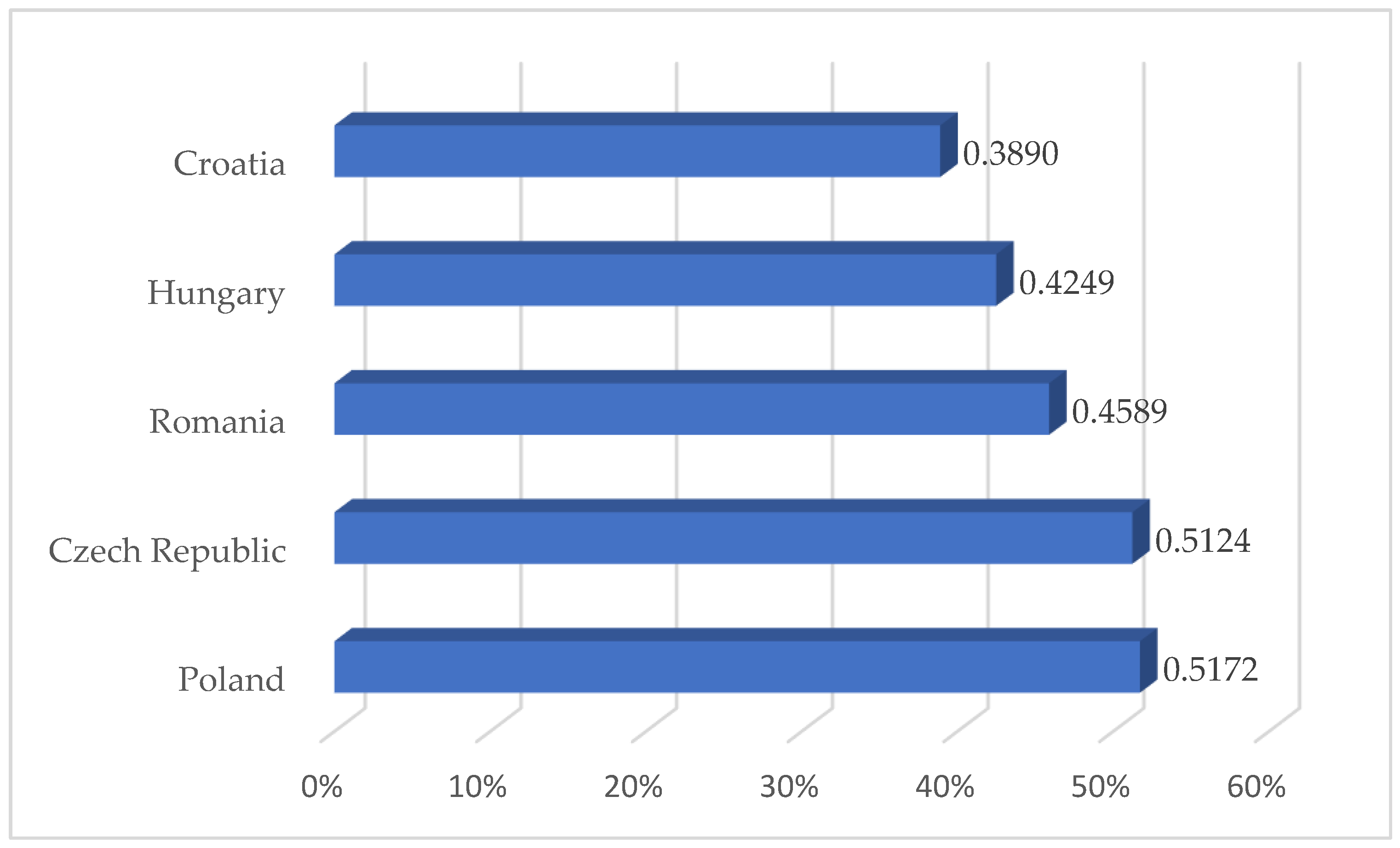
Country-level averages reveal persistent cross-national differences, with firms headquartered in more developed capital markets generally exhibiting higher composite scores (see
Figure 1). However, significant within-country variation suggests that firm-specific characteristics and strategic choices play a central role alongside national institutional frameworks.
The descriptive statistics in
Table 2 reveal substantial dispersion across financial variables, particularly for revenue growth, leverage, and valuation multiples, reflecting the heterogeneous and occasionally volatile nature of CEE capital markets. The
CGSI–CEE index exhibits a bounded distribution between 0.02 and 0.83, confirming adequate cross-sectional variation without mechanical clustering. The presence of extreme values in financial indicators justifies the use of robust estimation techniques in the multivariate analysis.
Accounting indicators display typical emerging-market variability, with ROA showing pronounced skewness and wide dispersion. Market valuation (PER) exhibits high variability and right-tail asymmetry, reflecting heterogeneous investor expectations across firms and sectors.
These descriptive patterns justify the use of both parametric and non-parametric methods in subsequent analyses and confirm that the CGSI–CEE captures meaningful structural heterogeneity rather than mechanical clustering.
3.2. Pillar Contributions and Index Structure
Analysis of the underlying pillars confirms that the composite index captures distinct but complementary dimensions of governance-enabled sustainability. Board Effectiveness and Ownership Discipline exhibit relatively stable patterns over time, while Sustainability Transparency contributes most strongly to cross-sectional differentiation, particularly between firms that actively disclose ESG and emissions-related information and those that do not. Quantitative dispersion measures confirm this asymmetry. Sustainability Transparency exhibits the highest standard deviation across firm-years (SD = 0.399), compared to Leadership (SD = 0.298), Ownership Discipline (SD = 0.227), and Board Effectiveness (SD = 0.177). This indicates that disclosure-related practices account for the largest share of cross-sectional variability in the composite index, while core governance structures display comparatively lower dispersion. Leadership structure, measured through CEO–Chair separation, further differentiates firms with more balanced control mechanisms from those characterised by leadership duality.
Taken together, these patterns suggest that governance-enabled sustainability in the region is shaped not by individual governance mechanisms in isolation, but by the interaction between leadership structures and transparency-oriented disclosure practices. Firms combining clearer separation of executive and supervisory roles with stronger sustainability-related disclosure tend to display more coherent governance profiles, despite persistent variation in performance across pillars. This variation reflects gradual and uneven governance change, which the CGSI–CEE is designed to capture.
3.3. Sectoral Distribution of CGSI–CEE Scores
The inclusion of sectoral classifications enables a more granular assessment of governance and sustainability practices across economic activities.
Table 3 summarises average
CGSI–CEE scores by sector.
Clear sectoral patterns emerge. Energy, Utilities, and Telecommunications firms record the highest average composite scores, with mean values above 0.54. These sectors are typically subject to stronger regulatory oversight and stakeholder scrutiny, which appears to translate into more developed governance frameworks and higher levels of sustainability disclosure.
Financials also display relatively strong performance, although with notable dispersion, reflecting differences in ownership structures and disclosure practices across firms. Healthcare and Communication Services occupy an intermediate position, combining moderate governance quality with uneven sustainability transparency.
By contrast, lower average CGSI–CEE scores are observed in Industrials, Technology, Real Estate, and Conglomerates. These sectors show both lower mean values and higher standard deviations, indicating pronounced heterogeneity in governance arrangements and disclosure practices. In particular, Real Estate and Technology firms exhibit the lowest average scores, suggesting that governance-enabled sustainability practices are less uniformly embedded in these sectors within CEE markets.
Traditional manufacturing-oriented activities, such as Automotive, Tourism, and Materials, cluster around the lower-middle range of the index distribution. For these sectors, limited sustainability disclosure, rather than weak core governance structures, appears to be the primary factor constraining composite index values.
A Kruskal–Wallis test confirms statistically significant differences in CGSI–CEE across sectors (χ2 = 161.11, p < 0.001), supporting the presence of systematic industry-level heterogeneity beyond visual inspection. The magnitude of the statistic confirms substantial sectoral differentiation in governance-enabled sustainability capacity across CEE markets.
3.4. Sectoral Heterogeneity and Governance–Sustainability Alignment
The sectoral analysis highlights that governance and sustainability practices in CEE are not evenly distributed across the economy. Sectors characterised by higher environmental exposure or systemic importance tend to exhibit stronger alignment with CGSI–CEE principles, while sectors with lower regulatory pressure or more fragmented ownership structures lag behind.
Importantly, high within-sector dispersion indicates that leading firms exist even in lower-scoring sectors, underscoring the relevance of firm-level governance choices and voluntary disclosure strategies. This finding supports the use of the CGSI–CEE as a firm-level analytical tool rather than a purely sector or country-driven measure.
Overall, the results confirm that the CGSI–CEE captures meaningful variation not only across countries and firms, but also across sectors of activity. This multidimensional differentiation strengthens the index’s suitability for subsequent empirical analyses examining the relationship between governance-enabled sustainability capacity and firm performance, risk, or valuation in CEE capital markets.
3.5. Validation of the CGSI–CEE Index: Correlation Analysis with Financial Performance
This section analyses the correlation coefficients between the
CGSI–CEE composite index and selected financial indicators, as reflected by
Table 4.
The CGSI–CEE composite index exhibits statistically significant negative correlations with ROA and ROE, indicating that firms with stronger governance-enabled sustainability capacity do not necessarily achieve higher short-term accounting profitability. The relationship is stronger for ROA, suggesting that investments in governance structures and sustainability transparency may be associated with more conservative asset utilisation or transitional efficiency costs.
No statistically significant relationship is observed between CGSI–CEE and EPS, indicating that per-share earnings are not systematically related to governance-enabled sustainability capacity in the analysed sample. Given the absence of a significant association between CGSI–CEE and EPS, subsequent group-based analyses focus on ROA and PER as representative accounting and market indicators.
Market-based valuation (PER) shows a positive but statistically insignificant correlation with CGSI–CEE. This pattern suggests that while governance and sustainability signals are recognised by investors, their incorporation into market valuation remains partial in CEE capital markets.
Overall, the correlation results confirm that CGSI–CEE captures a structural governance–sustainability dimension distinct from short-term financial performance, supporting its interpretation as a capacity-oriented index rather than a performance proxy and reinforcing its relevance for analyzing long-term sustainability governance. By focusing on governance quality and sustainability-related integration, the index provides insights into how firms develop organisational capacity and legitimacy beyond immediate financial outcomes.
3.6. CGSI–CEE Tercile Analysis
To further assess the economic relevance of the
CGSI–CEE, firms were grouped into three terciles (Low, Medium and High) based on their composite index values. Mean
ROA and
PER were compared across groups, and differences were tested using the Kruskal–Wallis non-parametric test, which is appropriate for non-normally distributed financial variables, the figures being Presented in
Table 5.
The Kruskal–Wallis test confirms statistically significant differences in ROA across CGSI–CEE terciles (χ2 = 22.86, p < 0.001), with firms in the low-CGSI group displaying substantially higher accounting profitability. In contrast, PER increases monotonically across CGSI–CEE groups, and differences are statistically significant at the 5% level (χ2 = 6.03, p = 0.049).
These results indicate a clear divergence between accounting performance and market valuation: firms with higher governance-enabled sustainability capacity are associated with lower short-term profitability but higher valuation multiples.
From an interpretative perspective, firms scoring lower on the CGSI–CEE tend to be associated with governance configurations that emphasise short-term financial outcomes, often reflecting a focus on immediate operational efficiency or market pressures. Such configurations may prioritise cost control or short-term earnings optimisation, which can support higher accounting profitability but may limit investment in governance reforms and sustainability-related practices that typically involve upfront organisational and procedural adjustments. Conversely, firms with higher CGSI–CEE scores are more frequently associated with governance architectures that integrate sustainability considerations into oversight and disclosure practices, emphasising transparency, accountability and stakeholder-oriented governance. These firms may therefore exhibit lower short-term profitability while building governance capacity oriented toward long-term value creation, resilience and legitimacy.
The higher price-to-earnings ratios observed in group-based comparisons are conceptually consistent with stakeholder and legitimacy perspectives, which posit that governance and transparency enhance organisational credibility [
3,
4]. However, this theoretical expectation is not statistically confirmed in multivariate specifications.
3.7. Robustness Check on Quartile-Based CGSI–CEE Classification
As a robustness check, the tercile-based analysis is complemented by a quartile-based classification of
CGSI–CEE scores, as presented in
Table 6.
The Kruskal–Wallis test was also performed on the Quartiles split of CGSI–CEE, showing:
ROA: χ2 = 31.74, p < 0.001.
PER: χ2 = 8.19, p = 0.042.
The quartile-based robustness analysis confirms the findings obtained using tercile classification. Accounting profitability (ROA) decreases monotonically across CGSI–CEE quartiles, with firms in the lowest CGSI quartile exhibiting the highest short-term profitability, while firms in the highest quartile display the lowest ROA. The Kruskal–Wallis test confirms that these differences are statistically significant at the 1% level.
Conversely, market valuation (PER) increases consistently across CGSI–CEE quartiles, with firms in the highest CGSI group trading at substantially higher valuation multiples. The observed differences are statistically significant at the 5% level, indicating that financial markets appear to differentiate firms with stronger governance-enabled sustainability capacity in group-based comparisons, although this pattern weakens once firm-level controls are introduced.
These results demonstrate that the performance–valuation asymmetry associated with CGSI–CEE is robust to alternative group classifications, reinforcing the interpretation of the index as a structural governance–sustainability capacity measure rather than a short-term performance proxy.
3.8. Multivariate Panel Analysis
The multivariate regression analysis is based on a reduced sample (558 observations) due to missing control variables, while the correlation and group-based analyses rely on the full CGSI–CEE dataset (668 observations).
To strengthen the external validation of the
CGSI–CEE and address potential confounding effects, a multivariate panel regression framework was employed. The following baseline specification was estimated:
where firm-level controls capture capital structure (leverage), growth dynamics (revenue growth), and market risk (stock price volatility). Sector and year fixed effects are included to account for structural industry differences and macroeconomic shocks. The results of the multivariate panel analysis are presented in
Table 7.
Full regression coefficients for control variables and fixed effects are reported in
Appendix A; key control variables (leverage and growth) exhibit statistically significant associations with
ROA, confirming model validity.
The regression results indicate that, once firm-level characteristics and fixed effects are controlled for, the CGSI–CEE is not statistically significantly associated with short-term accounting profitability. This finding suggests that governance-enabled sustainability capacity does not independently reduce profitability but rather reflects structural governance characteristics that coexist with other firm attributes.
The positive but statistically insignificant coefficient for PER indicates partial but incomplete capitalisation of governance and sustainability signals in CEE capital markets. Together, these findings reinforce the interpretation of the CGSI–CEE as a structural governance-capacity measure rather than a direct performance determinant.
4. Discussion
The objective of this study was to develop and empirically apply a composite Corporate Governance–Sustainability Index tailored to CEE capital markets and to explore its variation across firms, countries, and sectors. The results provide several important insights into the governance-enabled sustainability capacity of listed firms in the region and contribute to the broader literature on corporate governance, ESG disclosure and emerging market institutional development. While prior studies document governance–sustainability relationships in CEE firms [
24], the present study contributes by introducing a transparent composite measurement framework focused specifically on governance-enabled sustainability capacity rather than performance outcomes. These findings complement prior research documenting heterogeneous sustainability reporting quality in emerging European markets [
15,
18] and align with evidence that disclosure practices often evolve faster than deep governance reforms.
4.1. Interpretation of the Composite Index Distribution
The overall distribution of CGSI–CEE values indicates substantial heterogeneity among listed firms, even within a relatively narrow universe of blue-chip constituents. This finding is particularly relevant in the CEE context, where listed firms are often assumed to be homogeneous due to shared post-transition institutional legacies. Instead, the results suggest that governance and sustainability practices are firm-specific strategic choices rather than purely country-driven outcomes.
The distribution is centered around intermediate values, with most observations clustered in the mid-range of the scale. This suggests that while basic governance structures are generally in place, full integration of sustainability transparency remains incomplete. Firms achieving high composite scores are relatively rare, indicating that advanced governance–sustainability alignment is still an exception rather than the norm in CEE markets.
4.2. Country-Level Differences and Institutional Context
The observed country-level ranking highlights meaningful differences in governance and sustainability practices across CEE markets. Firms in Poland and the Czech Republic consistently achieve higher average CGSI–CEE scores, suggesting stronger alignment with international governance norms and more advanced disclosure practices. This pattern is consistent with prior evidence pointing to more developed capital market infrastructures, higher foreign investor participation, and stronger regulatory enforcement in these markets.
By contrast, lower average scores in Croatia and Hungary point to a slower diffusion of governance best practices and sustainability reporting. However, the presence of high-performing firms in all countries underscores that national institutional frameworks do not fully determine firm behaviour. Instead, firm-level governance choices, ownership structures, and strategic orientation appear to play a decisive role.
These findings suggest that national frameworks shape—but do not fully constrain—corporate governance outcomes in emerging European markets. However, because country fixed effects are not included in the multivariate model, these differences should be interpreted descriptively rather than causally.
4.3. Sectoral Heterogeneity and Regulatory Pressure
Sector-level analysis, as also reflected in
Table 3, reveals pronounced differences in governance-enabled sustainability capacity across industries. Energy, Utilities, and Telecommunications firms consistently achieve the highest
CGSI–CEE scores, reflecting the combined effects of regulatory oversight, public visibility and environmental exposure. In these sectors, sustainability disclosure is not merely voluntary but often driven by compliance requirements and stakeholder expectations, leading to more systematic reporting practices.
Financial institutions also exhibit relatively strong performance, although with greater dispersion. This heterogeneity likely reflects differences in ownership concentration, internationalisation and supervisory regimes across firms. In contrast, sectors such as Real Estate, Technology, Industrials and Conglomerates display lower average scores and higher variability, suggesting uneven adoption of governance and sustainability practices.
These sectoral patterns indicate that regulatory intensity and stakeholder pressure are key drivers of governance–sustainability alignment in CEE markets. However, the existence of high-scoring firms even in low-performing sectors suggests that proactive governance strategies can offset weaker external pressures.
4.4. Governance Structures Versus Sustainability Transparency
A key insight emerging from the pillar-level analysis is the asymmetric contribution of governance structures and sustainability transparency to the composite index. Core governance dimensions (such as board structure, leadership separation and ownership discipline) tend to be relatively stable over time, reflecting formal institutional arrangements that change gradually.
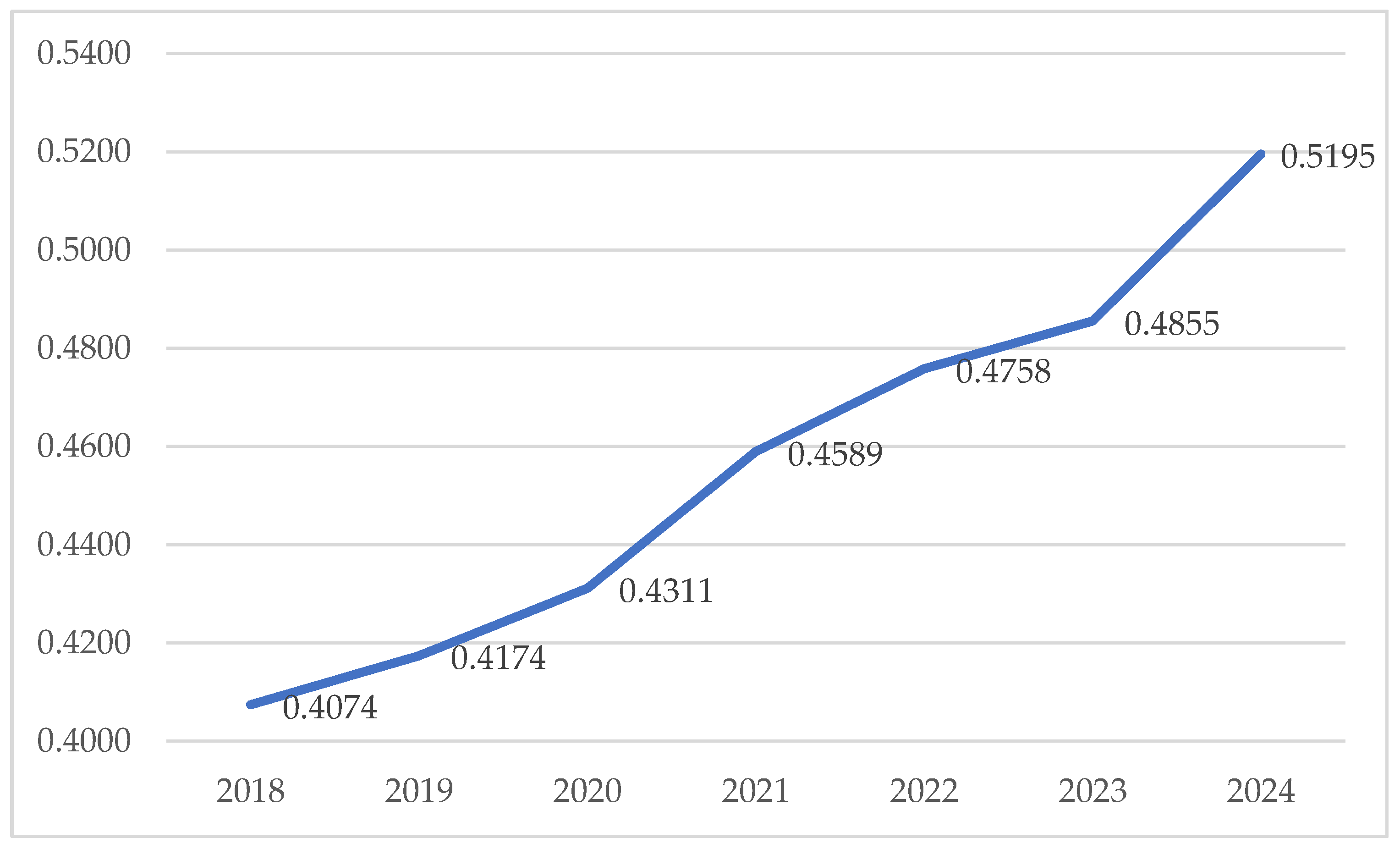
In contrast, sustainability transparency exhibits greater temporal and cross-sectional variation and appears to be the primary driver of improvements in composite scores. In several cases, increases in
CGSI–CEE values are driven by the initiation of ESG reporting or emissions disclosure rather than by fundamental changes in governance structures. This finding suggests that sustainability disclosure may adjust more rapidly than deep governance structures, partly in response to evolving regulatory requirements and stakeholder expectations. This distinction between structural governance stability and disclosure adaptability is consistent with [
15], who document that sustainability reporting tends to respond more rapidly to institutional pressures than internal governance redesign. From this perspective, prioritising transparency may represent a pragmatic initial adjustment for companies aiming to enhance their governance-enabled sustainability profile, especially in transitional or emerging market contexts.
The evolution of the
CGSI–CEE composite score over time is illustrated in
Figure 2.
From a policy perspective, this asymmetry implies that regulatory initiatives targeting disclosure requirements may yield faster convergence in observed sustainability performance than reforms aimed at deep governance structures. However, for lasting impact, such disclosure-focused policies may need to be complemented by efforts to strengthen the fundamental governance frameworks that drive meaningful sustainability integration in the long-term.
The observed increase in Sustainability Transparency after 2022 is consistent with and likely influenced by the progressive implementation of the CSRD framework across EU member states. While the present analysis does not include a regulatory dummy variable, temporal fixed effects partially capture these macro-institutional shifts. Future research could explicitly model regulatory implementation phases to disentangle voluntary adjustment from regulatory compliance effects.
4.5. Interpreting the Validation Results
The validation analysis reveals that the negative association between CGSI–CEE and accounting profitability observed in bivariate tests weakens and becomes statistically insignificant once firm characteristics and structural controls are introduced. The contrast between bivariate associations and multivariate panel results underscores that bivariate correlations are presented for descriptive purposes only and are not used for inference. This suggests that governance-enabled sustainability capacity does not inherently depress short-term profitability, but may be correlated with firm-specific structural factors such as capital intensity or ownership configuration.
From an Agency Theory perspective, stronger governance and disclosure practices may be associated with more structured oversight and formal monitoring mechanisms, reduce opportunistic behaviour, and prioritise long-term resilience over short-term profit maximisation. As a result, firms with higher CGSI–CEE scores may exhibit lower immediate profitability but benefit from improved transparency, risk management and organisational discipline.
From a Legitimacy and Stakeholder Theory perspective, the higher valuation multiples observed in group-based analyses suggest potential valuation differentiation; however, this relationship does not remain statistically significant in multivariate specifications once structural firm characteristics are controlled for. This divergence between group-based patterns and regression results suggests that valuation effects may be context-dependent and influenced by structural firm characteristics. The weakening of performance associations in multivariate models is consistent with meta-evidence showing mixed ESG–performance links once firm-level controls are introduced [
10].
Importantly, the negative association with short-term profitability should not be interpreted as evidence of governance inefficiency, but rather as a reflection of investment, compliance, and organisational adjustment costs associated with stronger governance and disclosure regimes.
Taken together, these results reinforce the interpretation of the
CGSI–CEE as a capacity-based index, capturing governance structures that enable sustainability rather than sustainability outcomes themselves. Consistent with prior studies [
25,
26], our findings support the view that governance structures primarily enable sustainability disclosure rather than directly determining firm performance. The observed performance–valuation asymmetry highlights the transitional nature of CEE capital markets, where governance and sustainability signals are increasingly recognised but not yet fully embedded into pricing mechanisms.
4.6. Implications for Research and Policy
The findings have several implications for both academic research and policy design. First, the CGSI–CEE demonstrates that composite indices tailored to regional institutional contexts can capture meaningful variation that may be obscured by global ESG ratings. This supports the use of context-sensitive measurement tools in emerging markets research.
Second, the strong firm-level heterogeneity observed across countries and sectors suggests that governance reforms should not be treated as uniform, one-size-fits-all solutions [
27,
28]. Instead, policies encouraging transparency, particularly in sectors with lower disclosure incentives, may be more effective in accelerating convergence toward best practices.
Finally, the results highlight the importance of viewing sustainability disclosure not as a standalone outcome but as an extension of governance capacity [
27,
28]. Firms with stronger governance foundations appear better positioned to adopt and institutionalise sustainability practices over time. This reinforces the need for a holistic approach that integrates transparency efforts with governance reforms to achieve long-term impactful sustainability outcomes [
29,
30].
For regulators, the findings suggest that disclosure-focused regulation (e.g., CSRD implementation) may generate faster convergence than deep governance reform mandates. Investors may use the CGSI–CEE to distinguish structural governance capacity from short-term performance fluctuations, thereby improving long-term assessment frameworks in emerging markets. Corporate boards may prioritise sustainability transparency as an entry point for broader governance integration, especially in institutional environments where structural reform evolves gradually.
While prior studies have examined the financial implications of sustainability and governance [
31,
32] in specific CEE contexts, the present study differs by focusing on the measurement and validation of governance-enabled sustainability capacity rather than on causal performance effects.