1. Introduction
Cities stand at the frontline of the global climate crisis, where interconnected shocks and increasing heat-related risks threaten human health, social cohesion, and urban liveability. Among climate-related hazards, urban heat has emerged as one of the most immediate and deadly risks, with significant implications for public health, social equity, and the ecological functioning of cities [
1]. Heat exposure disproportionately affects vulnerable groups (i.e., the elderly, children, low-income populations, and those with pre-existing health conditions), revealing how climate change amplifies pre-existing socio-spatial inequalities. In this context, adaptation is no longer a technical adjustment to environmental stressors, but a structural challenge for urban governance, spatial planning, and climate justice.
Adaptation to climate change is widely recognised as a multi-level governance challenge, as climate impacts and corresponding responses cut across governmental levels, sectors, and societal domains [
2]. Effective national adaptation governance, therefore, depends not only on top-down policy frameworks but also on bottom-up processes, including how local adaptation efforts are recognised, supported, and integrated into higher-level decision-making [
3]. Despite the growing consolidation of National Adaptation Strategies (NAS) and National Adaptation Plans (NAP) across Europe, limited research has systematically examined how specific local adaptation innovations are integrated within national adaptation architectures.
In this regard, urban heat is increasingly recognised as a critical driver of climate-related illnesses and mortality, with significant implications for human well-being and biodiversity [
1]. In this context, climate shelters have emerged across European cities as a growing set of initiatives that transform public and publicly accessible spaces, such as parks, libraries, schools and community centres, into places that provide thermal comfort, protection, and social support during extreme heat events. By integrating nature and participatory design, climate shelters frame adaptation as a long-term process, offering a concrete pathway for moving beyond reactive crisis management toward resilient and just urban futures. As place-based interventions, climate shelters can be understood as experimental approaches to adapting urban spaces to climate change, revealing how bottom-up adaptation practices are developed, governed, and institutionalised.
Building on these premises, this paper explores how public spaces in Europe are taking on a new role as climate shelters, using them as an analytical lens to investigate the relationship between local adaptation practices and national climate adaptation frameworks. This article aims to provide an initial overview of the phenomenon at the European level through a mapping and classification of climate shelters, capturing its current configuration as an evolving and continuously changing phenomenon. To this end, it examines both the implementation of local climate shelters and the ways in which the concept of climate shelter is addressed in official policy documents, particularly in NAS and NAP. By analysing this two-way relationship, the paper argues that climate adaptation is not driven solely by top-down dynamics, but that local experimentation can generate context-specific knowledge capable of informing and shaping national adaptation policies. Against this background, the paper addresses the following research questions: (i) how European NAS and NAP frame climate shelter initiatives; (ii) which approaches emerge from local experiences; (iii) how these experiences contribute to local adaptation plans and strategies; and (iv) how European cities and their respective strategic frameworks are redefining the role of public spaces as climate shelters within climate adaptation policies.
By answering these questions, the paper contributes to the debate, arguing that locally rooted experimentation in the public space can generate context-specific knowledge that can inform, anticipate, and progressively reshape national adaptation strategies. In doing so, the document redefines climate shelters not only as spatial interventions but as governance tools situated at the intersection of experimentation, policy learning, and institutional transformation. The paper is structured as follows.
Section 2 presents the theoretical background and conceptual framework.
Section 3 describes the research design.
Section 4 showcases the results.
Section 5 builds on
Section 4 and discusses the results. Finally,
Section 6 concludes the paper by outlining the main findings and policy implications.
2. Theoretical Background and Conceptual Framework
While climate shelters are increasingly implemented across European cities as responses to urban heat, their conceptual foundations remain only partially developed within the academic debate. The existing literature has largely focused on empirical case studies and technical performance, while comparatively limited attention has been paid to the broader political, spatial, and institutional implications of climate shelters as instruments of adaptation [
4]. To define a conceptual framework for analysing the role of climate shelters within multilevel adaptation governance, it is therefore essential to clarify their theoretical underpinnings.
From an epistemological perspective, the concept of climate shelters draws on the ecological notion of
refugia, understood as areas characterised by relatively stable microclimates that enable species to survive periods of environmental stress. When translated into urban contexts, this concept acquires a broader meaning, positioning shelters as spaces where the right to inhabit public space is actively negotiated under changing climatic conditions. Climate shelters thus move beyond emergency-oriented responses, framing heat adaptation as a permanent and spatially embedded dimension of urban development [
5].
Among the wide range of existing approaches, climate shelters have recently been conceptualised as a long-term adaptation strategy centred on public space. From this perspective, they are framed as a comprehensive approach to urban heat adaptation, conceived as networks of safe, inclusive, and accessible public spaces designed to protect populations and vulnerable groups during extreme heat events, while enhancing urban liveability, improving human health, and promoting urban regeneration when implemented through Nature-based Solutions (NbSs) and co-design processes [
6]. Building on this framework, this paper conceptualises climate shelters through four interrelated conditions that define their role within climate adaptation processes and structure the analytical framework adopted in the study.
Cooling as a public right. Climate shelters are intrinsically linked to climate justice, as heat exposure disproportionately affects elderly people, children, individuals with health conditions, and socially or economically marginalised groups. By redistributing cooling resources within the public realm, such as shade and vegetation, climate shelters operate as infrastructures of care that address spatial and social inequalities [
7].
Nature as urban infrastructure. The integration of NbSs plays a central role in transforming climate shelters by improving microclimatic conditions while fostering environmental awareness and collective responsibility [
8].
Shared shelters, shared governance. Co-design and community involvement are critical to the legitimacy and effectiveness of climate shelters, as they enable responses to locally specific needs, strengthen social cohesion and frame adaptation as a collaborative process embedded in social infrastructures [
9].
Scaling adaptation through public space. Climate shelters highlight the urban scale and systemic role of public space within local climate adaptation strategies, underscoring the need to move from isolated solutions to address extreme heat towards spatially embedded and publicly accessible networks of spaces capable of supporting adaptation at scale [
10].
Taken together, these conditions point to a shift in how climate adaptation is conceived and governed, reframing it not only as an outcome or a purely technical solution but as a learning-oriented process shaped through experimentation, institutional arrangements and social values [
11]. Additionally, experimentation at the local level should favour permanent governance practice [
12]. From this perspective, climate shelters illustrate how locally grounded initiatives can open planning debates to more just pathways of urban transformation. In this sense, climate shelters exemplify how climate adaptation processes are not driven exclusively by top-down, national-to-local dynamics, but that they can also inform, enrich, and actively shape national adaptation policies by generating context-specific knowledge and evidence that feed into adaptive policy learning across governance levels [
13].
3. Research Design
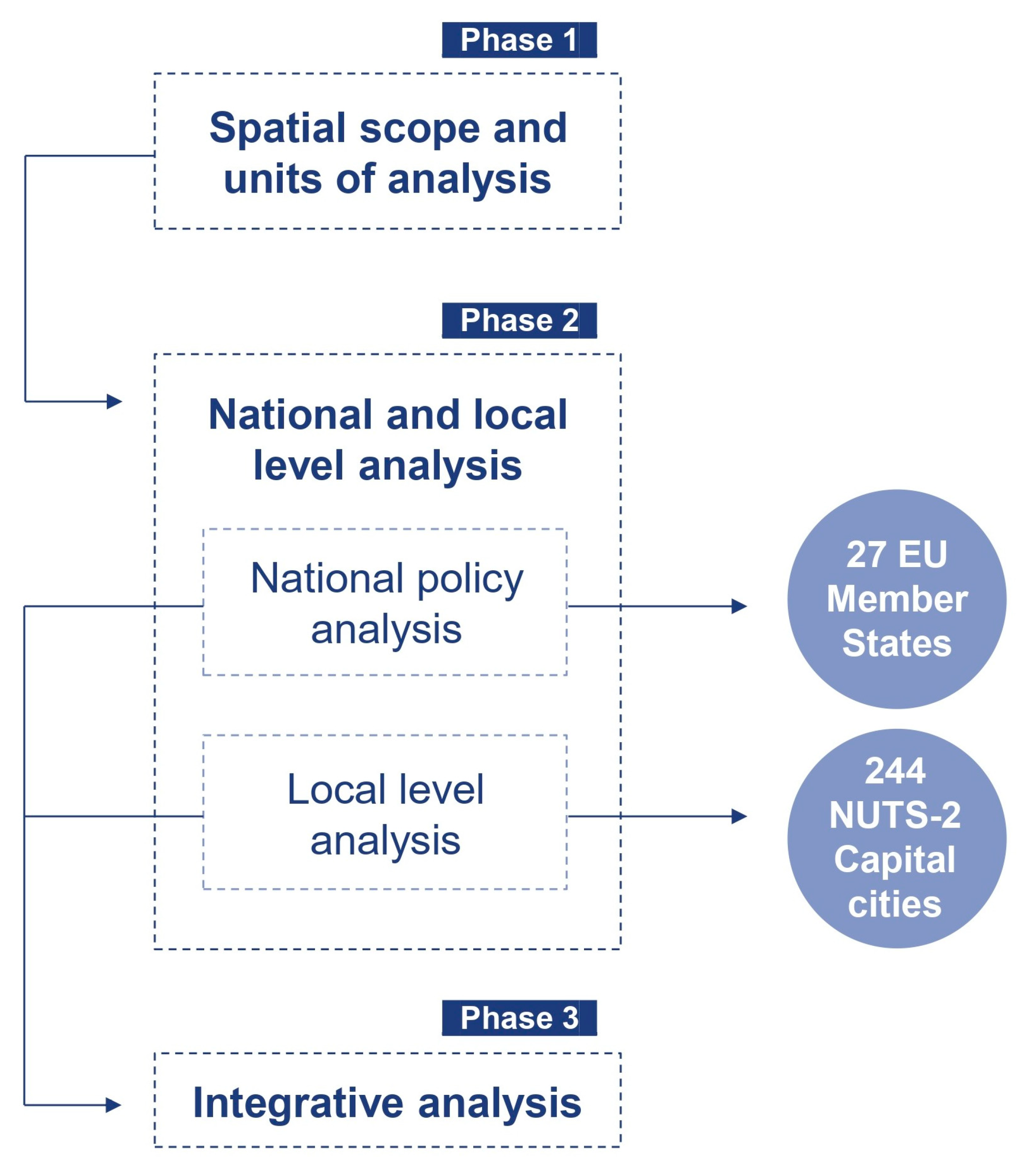
This section outlines the research design, which builds on the conceptual framework outlined in the previous section to understand how local climate shelter initiatives interact with, inform, and are reflected within national climate adaptation frameworks across Europe. The paper adopts a qualitative–comparative research design articulated across three phases of analysis. As illustrated in
Figure 1, the first phase defines the boundaries of the analysis in terms of spatial scope and units; the second phase examines the national and local levels as complementary analytical levels addressing national policy frameworks and local practices; and the third phase integrates these two levels of analysis to identify recurring configurations across the European context.
Phase 1. Spatial scope and units of analysis
The first phase consists of defining the spatial scope and units of analysis, which are limited to the Member States of the European Union (EU). Therefore, to define the spatial scope of the analysis and identify the cities included in the study, the research adopts the NUTS-2 classification system (Nomenclature of Territorial Units for Statistics), established by the European Union and managed by Eurostat [
14]. This framework provides a standardised territorial basis for the collection, analysis, and comparison of socio-economic data across Europe. The NUTS-2 level corresponds to regions that are sufficiently large to possess economic and administrative relevance, while still maintaining local specificity. The use of the NUTS-2 level as the unit of analysis reflects both statistical considerations and the need for comparability. Focusing on regional capital cities enhances cross-country consistency by selecting territorially embedded units with defined administrative and institutional roles, rather than cities varying in size, metropolitan status, or local political orientation.
For the purposes of this research, regions located in non-EU Countries were excluded, resulting in a final sample of 244 capital cities of NUTS-2 regions across the 27 EU Member States.
Phase 2. National- and local-level analysis
The second phase consists of two parallel levels of analysis. The first focuses on a policy review of the national level, with particular attention to NAS and NAP presented in
Section 4.1. The second focuses on the local level, examining European case studies in cities that integrate climate shelter initiatives, illustrated in
Section 4.2 (
Table 1).
At the national level, a review of the climate adaptation policy framework (NAS and/or NAP) of the 27 EU Member States is conducted. Once the official documents were collected from the European Climate Adaptation Platform—Climate-ADAPT—a systematic screening process was conducted for each NAS and NAP document through a predefined set of keywords, including: “climate shelter”, “climate oasis”, “climatic oasis”, “urban cooling shelter”, “cooling hub”, “shaded shelter”, “urban oasis”, “cooling oasis”, “urban cool spot”, “cool space”, “cooling centre”, “climatic shelter”, “local oasis”, “local cool island”, “metropolitan oasis”, “local cool spot”. When documents were not available in English, the keywords were translated into the respective national languages to enable text screening. The translation was conducted with the support of glossaries to maintain semantic consistency with the original English terms. During the screening process, particular attention was paid to verifying that the identified terms referred specifically to heat-protection measures and publicly accessible spaces. This analysis was guided by two main objectives: (i) to assess the extent to which climate shelters are included within national policy frameworks, distinguishing between explicit, implicit and no references; (ii) in cases of explicit and implicit reference, to examine how climate shelters are framed, with particular attention to stated objectives and planned measures.
More specifically, references were defined as follows:
Explicit reference refers to cases in which the term climate shelter is explicitly mentioned, or where any other predefined keyword included in the screening protocol used in this study appears in the document.
Implicit reference refers to cases in which the content aligns with the principles and objectives of climate shelters as defined in this study, namely by describing measures that functionally correspond to publicly accessible spaces intended to provide protection or relief during heat events. However, these measures are expressed through descriptive language without using specific terminology included in the keyword protocol.
No reference refers to cases in which neither explicit mentions nor implicit content aligned with the principles of climate shelters is identified.
At the local level, the analysis focuses on a desk-based review of urban case studies implemented across the 244 NUTS-2 regions, with the aim of identifying real examples of climate shelter projects or interventions reflecting comparable principles of heat protection and climate resilience. By grounding the analysis in the NUTS-2 classification, a comparable territorial scale across countries was ensured. The NUTS-2 statistical framework identifies regional capital cities with a similar level of economic and administrative relevance, thereby reducing heterogeneity between metropolitan and non-metropolitan contexts. On this basis, the same standardised search protocol was systematically applied to all selected cities.
To this end, a systematic online search was conducted using the Google search engine, drawing on the predefined set of keywords mentioned above, with the addition of the name of each NUTS-2 capital city. Searches were carried out both in English and in the official language of each country, following the same translation procedure described for the analysis at the national level, to ensure the widest possible and most comparable coverage. To enhance procedural transparency, a stopping rule was defined: for each query, results were screened up to one hundred documents, giving priority to institutional sources such as official municipal websites and governmental portals. Finally, the screening and coding process was initially conducted by one researcher and subsequently reviewed by a second researcher at a different stage of the research process to strengthen analytical reliability and reduce potential subjective interpretation.
Within this framework, the analysis adopts a broad understanding of climate shelters as accessible spaces that provide thermal relief during extreme heat and are intended or recognised as offering such protection. This definition was applied consistently across all cases, encompassing a range of indoor and outdoor spaces, as well as more recent interventions to enhance heat protection. Additional features, such as NbSs or participatory processes, are considered complementary rather than defining elements.
The identified case studies were subsequently analysed to assess whether they were linked to a local climate adaptation plan or strategy. This phase of the analysis involved the collection of information on: (i) which cities implement climate shelter initiatives; (ii) the number of identified projects per city; and (iii) the type of interventions implemented (e.g., indoor climate shelters, public open spaces, schools, public buildings).
Phase 3. Integrative analysis
The third phase consists of an integrative analysis that cross-reads the results of the national and local levels of investigation, as presented in
Section 5. This phase aims to identify recurring configurations and divergences across the 27 EU Member States, focusing on the relationship between the recognition of climate shelters within national adaptation policy frameworks and their implementation in cities. By systematically comparing policy framings and local practices, this integrative analysis highlights patterns in how climate shelters are embedded within multi-level adaptation governance and how bottom-up initiatives interact with national climate adaptation strategies.
4. Results
This section presents the results of the qualitative–comparative analysis conducted at the national and local levels, corresponding to Phase 2 of the research. In line with the conceptual framework introduced above, the section provides the empirical basis for understanding the interaction between top-down policy orientations and bottom-up adaptation practices by combining a review of national climate adaptation frameworks with an analysis of local case studies.
Specifically,
Section 4.1 analyses NAS and NAP across the 27 EU Member States to understand the extent to which climate shelters solution are included in national regulations.
Section 4.2 complements this analysis by examining local case studies identified across the 244 NUTS-2 capital cities, focusing on how climate shelters are implemented in practice and linked to local adaptation strategies.
4.1. National Policy Analysis
Within the framework of the European Climate Law, which calls for continuous progress in enhancing the adaptive capacity of territories in line with the 2015 Paris Agreement, EU Member States are required to adopt and report national climate adaptation strategies as a core component of EU climate policy [
15]. As reported by European Environment Agency Report of 2025 [
16], EU Member States may rely on a variety of policy instruments to guide adaptation planning and implementation, including dedicated national or federal adaptation laws, climate laws, other legislative acts with adaptation provisions, national adaptation strategies and plans, and standalone sectoral or regional and subnational policies to guide adaptation planning and implementation [
17]. Within this variegated policy landscape, NAS and NAP represent the primary tools for coordinating climate adaptation efforts. Although their adoption is mandatory, there is no unified definition regarding how NAS and NAP should be structured or which specific measures they should include [
18]. As a result, national adaptation frameworks display considerable diversity in terms of content, scope, and institutional arrangements: some EU Member States have developed NAS and NAP as complementary frameworks, while others have consolidated them into a single integrated document or choose to formulate only one of the two.
As of 2025, all 27 EU Member States have established national adaptation policies, although considerable diversity exists in the way NAS and NAP are developed and combined. Twenty-four Member States have adopted a NAS, while twenty-one have adopted a NAP [
16]. Some countries rely exclusively on a NAS, including Belgium, Greece, Hungary, Poland, Slovenia and Croatia. Others have adopted only NAP, such as Latvia, Finland and Denmark. In addition, several Member States provide both instruments in an integrated standalone document or as a part of continuous policy frameworks, including Bulgaria, Sweden, Malta, Luxembourg, Romania, Germany, and Austria. Adoption timelines and revision cycles also vary significantly across Member States. NAS and NAP are generally updated periodically, often following a sequential process in which a NAS is adopted first and subsequently operationalised through a NAP. However, there is no uniform approach across the EU to revision schedules, as update cycles are determined by individual Member States. The earliest recorded adoption of a NAS was by Finland in 2005, followed by Spain and France in 2006 [
18]. As of 2025, France retains the oldest NAS still in force (2006), while Denmark holds the earliest NAP still in force (2012). The most recently adopted NAS is that of Cyprus (2025), and the latest NAPs have been introduced by France, Ireland, and Cyprus in 2025.
Within this policy overview, references to climate shelters were identified according to the study’s definition, which frames them as transformed critical spaces within urban environments designed to support climate adaptation. The analysis reveals marked differences among Member States, allowing national adaptation policies to be categorised into three groups: explicit references, implicit references, and no references.
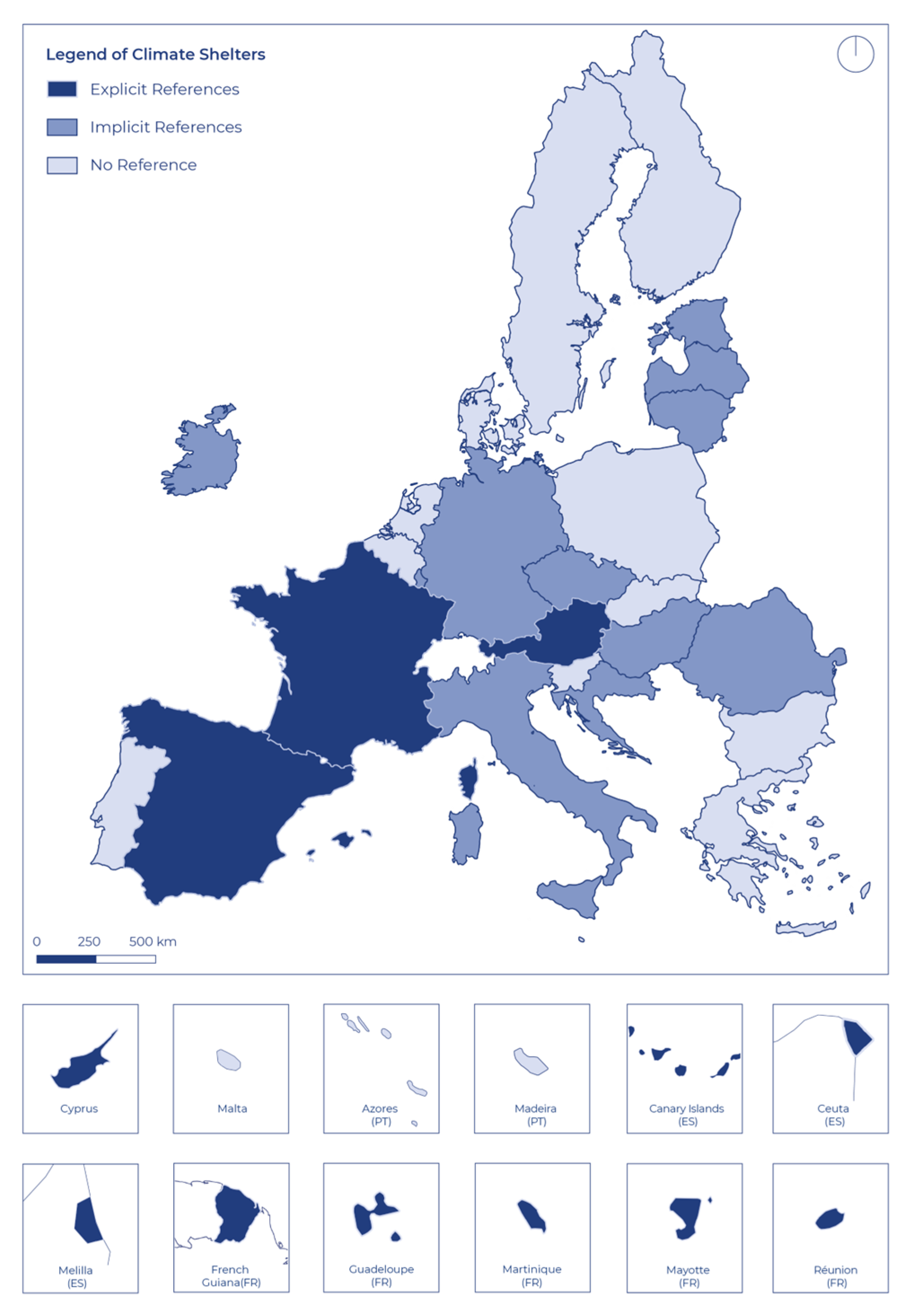
Among the 27 Member States, only four explicitly refer to the concept of climate shelter, including Spain, Cyprus, France, and Austria. France and Austria include explicit references in their NAPs, while Spain and Cyprus incorporate such references in both instruments. Within this group, France employs the term “cool islands” to describe climate shelters as cooling measures [
19]. Cyprus adopts two different terms to refer to climate shelter concept, the first is “climate shelters” mentioned in the context of enhancing public transport and improving passenger comfort [
20]. The second term is “climate refugia” for promoting the incorporation of urban climate risk mapping into urban planning [
20]. Similarly, Austria addresses climate shelters as “cool spots”, defined as public, cool, and accessible spaces in urban areas, especially in pronounced urban heat islands [
21].
Implicit references to climate shelters were identified in eleven Member States, including Luxembourg, Romania, Italy, Estonia, Hungary, Czechia, Croatia, Germany, Ireland, Latvia and Lithuania. In these cases, climate shelters are not explicitly named, but the measures described align with the principles and objectives of climate shelters as defined in this study. For example, the Romanian integrated NAS and NAP emphasise the mainstreaming of NbSs through the development of green and blue infrastructure for the rehabilitation/regeneration of riverbanks [
22]. Similarly, the Czech NAS highlights the role of green infrastructure and sustainable drainage systems in generating ecosystem services, particularly microclimate regulation and urban cooling [
23]. These examples strongly suggest the presence of climate shelter initiatives, despite the absence of a specific term for the concept.
Finally, twelve Member States show no explicit or implicit references to climate shelters in their national adaptation policies, including Portugal, Belgium, the Netherlands, Denmark, Sweden, Finland, Poland, Slovenia, Malta, Greece, Bulgaria, and Slovakia.
As illustrated in
Figure 2, the overall screening process reveals significant variation in the integration of climate shelters within NAS and NAP across the EU. While explicit references remain limited, a broader group addresses similar functions through descriptive policy language, and nearly half of the Member States do not reference the concept at all.
4.2. Local-Level Analysis
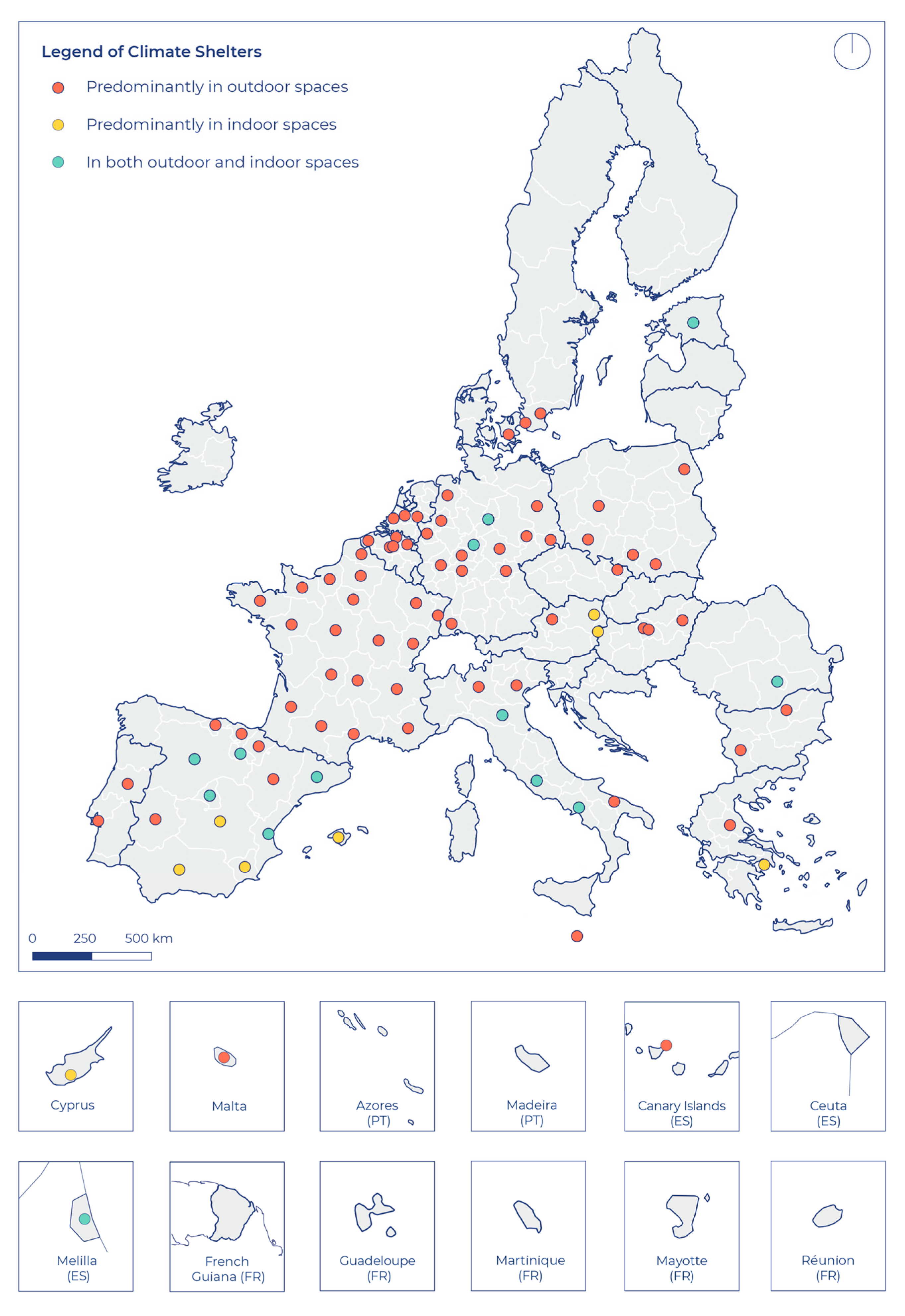
Of the 244 NUTS-2 capital cities,
Figure 3 shows that 88 have implemented projects or initiatives related to climate shelters.
Across the case studies, climate shelters are consistently framed as practical responses to climate-related challenges, particularly extreme heat. Significant regional differences in the approaches adopted can be observed. Many projects aim to mitigate the impacts of heatwaves by increasing green areas, reducing impervious surfaces and providing shade. These interventions not only contribute to climate change adaptation but also support stormwater management and biodiversity enhancement.
In most cases (68 out of 88), particularly in open spaces, NbSs emerge as the primary strategy guiding interventions. Key actions include replacing asphalt with permeable surfaces, expanding green areas, planting trees, improving water management, and integrating shading elements. In parallel, these interventions strengthen residents’ sense of belonging through participatory processes and promote awareness of climate change. Approximately 30% of projects (29 out of 88) explicitly reference participatory strategies, ranging from stakeholder workshops (e.g., Brussels) to collaborative design sessions focused on the transformation of defined urban spaces (e.g., Bordeaux). Nine of the 88 capital cities (Antwerp, Tallinn, Logroño, Madrid, Valladolid, Barcelona, Valencia, Bologna, and Rome) include more than one intervention, bringing the total number of projects analysed to 97.
It is important to mention that these initiatives do not consist exclusively of new spatial transformation projects. In several cases, they involve the mapping or identification of existing buildings or publicly accessible open spaces that can already function as climate shelters. Overall, the dataset therefore includes 81 new transformation projects and 16 projects referring to existing spaces. Additionally, the analysis highlights the different types of spaces addressed by the projects. Specifically, 17 initiatives relate to outdoor public spaces, such as parks, gardens, streets, pedestrian areas, wetlands, and squares; 11 focus on indoor public spaces, including museums, libraries, civic centres, cultural centres, and schools; ten projects combine both; three projects integrate outdoor public spaces and bus stops; forty-five focus on schoolyards; nine address bus stops; and two do not specify the type of space involved.
Outdoor public spaces constitute a common typology, including parks, gardens, streets, pedestrian areas, wetlands, and squares. These interventions are distributed across the European territory and are present in cities in Spain, Italy, Germany, the Netherlands, Sweden, as well as in several Eastern European contexts, indicating a widespread preference for solutions based on open and easily accessible spaces. Indoor public spaces, such as libraries, museums, civic centres, and cultural facilities, account for a smaller share of the interventions. These projects are predominantly located in Southern European and Mediterranean cities, where indoor microclimatic control is employed to ensure more stable comfort conditions during extreme heat events.
Schoolyards represent the most frequent type of intervention. This typology is particularly dominant in France and is also significant in Belgium, Denmark, Spain, Italy, and Malta. Schoolyards are particularly suitable for transformation into climate shelters due to their accessibility, widespread distribution, and seasonal underuse during summer months. In many cities, initiatives initially emerge from schoolyard transformations aimed at improving children’s well-being and are subsequently extended to other types of spaces. In Northern European countries, where climatic conditions are generally less extreme, cities such as The Hague illustrate how schoolyard transformations were initially motivated by children’s health rather than climate hazards. Finally, bus stops, considered both as stand-alone interventions and in combination with outdoor public spaces, constitute an overall less frequent typology (12%), with an incidence comparable to that of indoor public spaces. These interventions are mainly concentrated in Germany, Hungary, the Czech Republic, Poland, the Netherlands, and Portugal, highlighting a specific focus on heat exposure in spaces associated with everyday mobility.
Drawing from the analysis, three main approaches to the development of climate shelters can be identified:
The first consists of pilot or singular transformations, framed as specific and isolated interventions. An example of a pilot project can be found in Bologna, Italy, where the courtyard of a former military facility has been transformed into a climate shelter.
The second approach includes thematic interventions, whereby a specific urban typology is selected and replicated across the city. For instance, the city of Münster, Germany, since January 2024 has initiated a project to transform bus stops, replacing conventional structures with new ones built using sustainable materials, incorporating green roofs and, in some cases, photovoltaic panels. This project has resulted in an additional 3500 square metres of green roofs across the city, generating substantial benefits in terms of stormwater management, biodiversity enhancement and passenger comfort.
Finally, a third group of cases can be described as “sheltered cities”, namely cities that implement multiple types of critical urban spaces conceived as interconnected. A representative example is Barcelona, where the Metropolitan Network of Climate Shelters has become a key municipal strategy for climate adaptation. This network includes publicly accessible spaces such as libraries, parks and swimming pools, which are available during the summer months and can be easily located through the municipality’s climate shelter map.
5. Discussion
This section discusses the results by integrating the national and local analyses and identifying five recurring configurations that characterise the interaction between climate shelters and multilevel adaptation governance across the EU.
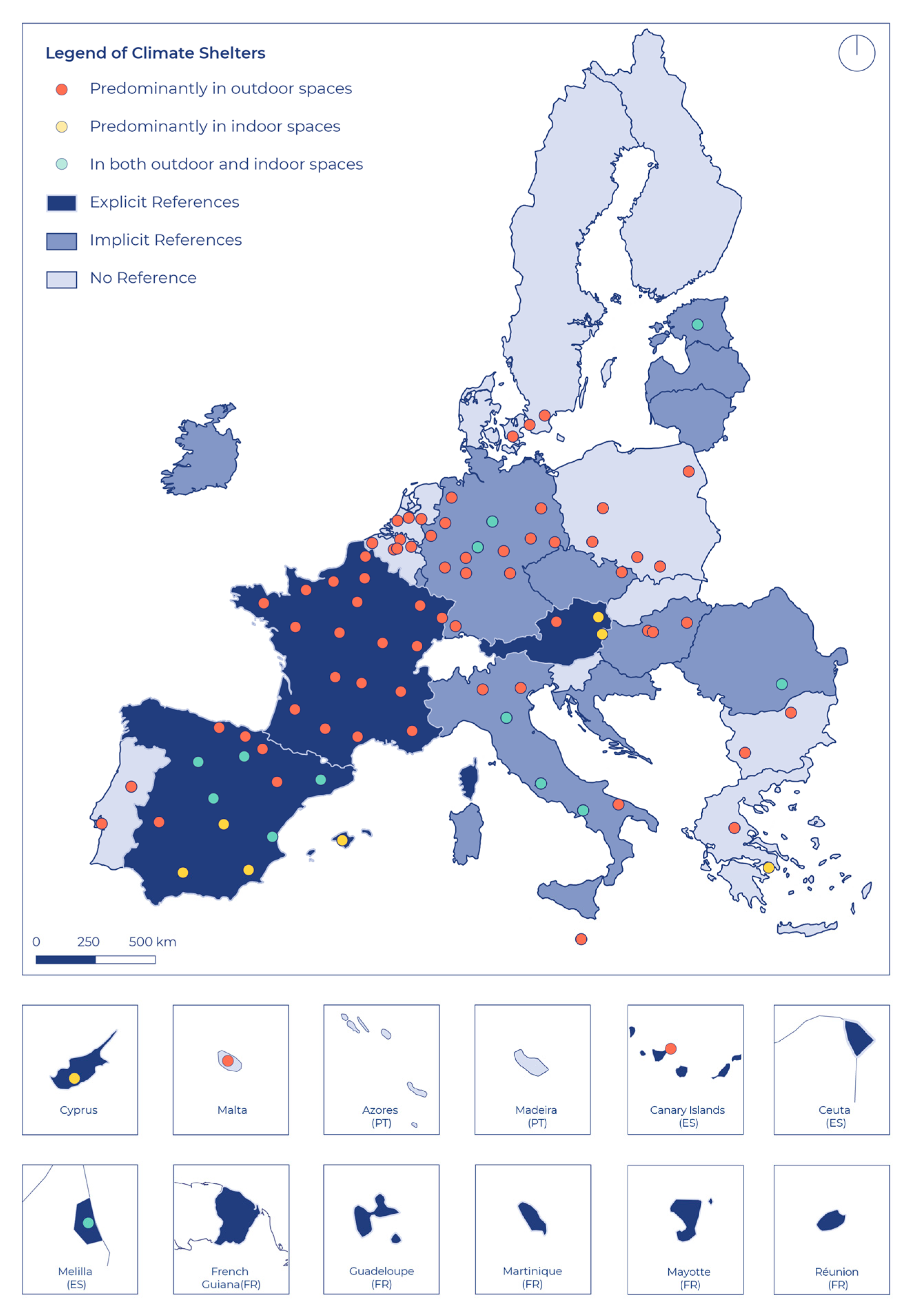
Figure 4 systematises the results by specifying the type of reference to climate shelters in the national climate adaptation frameworks (NAS/NAP), and the corresponding cities that implement urban case studies.
Figure 4 highlights significant differences in the ways climate shelters are recognised, conceptualised, and translated into action across the 27 EU Member States. Overall, these interventions are developing through multiple and non-linear processes, which can be grouped into five distinct configurations.
A first configuration is represented by countries (Belgium, Netherland, Poland, Bulgaria, Greece, Portugal, Denmark) characterised by the absence of references to climate shelters in national adaptation documents, alongside the presence of at least one case of local-level implementation. This configuration points to a predominantly bottom-up dynamic, in which local authorities respond to heatwave-related risks by anticipating the evolution of national strategies for climate adaptation. In such contexts, climate shelters emerge as experimental solutions developed at the urban level. This configuration is exemplified by the case of Copenhagen, Denmark. Indeed, despite no mention in national documents, at the local level, Copenhagen has increasingly served as a testing ground for climate adaptation measures, particularly through initiatives in stormwater management, green infrastructure, and multifunctional urban spaces. Although the term “climate shelters” is not formally used in local climate policy documents, related objectives can be identified in broader planning frameworks. Notably, the 2024 Copenhagen Municipal Plan includes development goals that aim to ensure a maximum walking distance of 300 m from residential areas to green or blue spaces. It also emphasises the development of existing and new green and open spaces to enhance residents’ quality of life, biodiversity, and the city’s capacity to adapt to future climate change [
24]. Additional objectives include expanding recreational facilities and green–blue infrastructure in line with population growth, and ensuring that investments in green spaces, buildings, facades, and urban areas increase biodiversity across the city. Selected local experiments illustrate how bottom-up initiatives can inform and inspire climate adaptation frameworks. One such example is the Amager Fælled Schoolyard, which demonstrates how school environments can contribute to climate adaptation while serving educational and community purposes. The Amager Fælled Schoolyard is a public project implemented between 2013 and 2016, with a total cost of approximately 13 million DKK. The project focuses on transforming the schoolyard into a green, multifunctional landscape inspired by an existing, overgrown area known among students as “The Forest” [
25,
26]. Within the school context, the project addresses climate adaptation primarily through stormwater management. Moreover, NbSs are a central component of the project. The redesigned schoolyard incorporates extensive green spaces, trees, and natural elements that serve both environmental and social benefits. Approximately 100 new trees were planted across the 10,000 square meter site, forming a forest that functions as both a learning environment for pupils and a green recreational destination for residents. These strategies support water absorption, enhance biodiversity, and contribute to thermal comfort, while also accommodating sports, play equipment, and recreational activities. The redesign of the boundary, replacing the traditional wall with a low-permeable edge, enables access by the wider neighbourhood. As a result, a once enclosed schoolyard has become a shared public green space that supports social interaction and connection with nature [
26,
27].
The integration of permanent functions within the green landscape encourages use by students, pedestrians, and residents, reinforcing the schoolyard’s role as a shared urban space [
26,
27]. This openness is further reinforced by the redesign of the schoolyard boundary, where the traditional wall is replaced by a low, permeable edge that creates a fluid transition between the pavement and the schoolyard, enabling access and use by the wider neighbourhood. As a result, a once enclosed schoolyard has become a shared public green space that supports social interaction, informal activities, and connection with nature in an urban context [
26]. While the project aligns with local adaptation objectives through practical implementation, it remains a pilot intervention rather than part of a broader, city-wide strategy.
A second configuration includes countries (Italy, Germany, Czechia, Hungary, Romania, Estonia) where NASs and/or NAPs contain implicit references to climate shelters and where at least one city has implemented real initiatives. In these cases, an emerging coherence can be observed between strategic orientations and local practices, although climate shelters have not yet been explicitly codified as a distinct adaptation measure. An illustrative example is provided by the case of Milan, Italy. The Italian NAS includes an implicit reference to climate shelters through the promotion of urban green spaces to mitigate the urban heat island effect and to safeguard biodiversity, primarily via the implementation of green and blue infrastructure [
28]. In line with this framework, the Lombardy Region has developed the 2025 Integrated Regional Strategy for Climate Change Adaptation (RSCCA), from which the local strategy of the Municipality of Milan derives, namely the “Air and Climate Plan” [
29]. The guidelines of this plan outline the climate adaptation process through a structured system of strategies, objectives, and measures, explicitly addressing the concept of climate shelters. More specifically, the creation of climate shelters within school environments is identified as a key measure to achieve the objective of urban cooling and a reduction in the urban heat island effect [
30].
The overarching aim is to transform school buildings into neighbourhood oases, functioning as cooling centres capable of hosting the most vulnerable population groups during extreme heat events. This measure is implemented through the “School Oasis Milano” project, a public initiative supported by European and regional funding [
30]. The project has identified nine pilot cases, selected among schools most exposed to urban heat island risk, where interventions are planned both in outdoor spaces and in the building envelope. The initial targets envisaged the completion of these pilot projects by 2023, subject to the availability of financial resources, with the subsequent scaling of the project to cover approximately 50% of the municipal school building stock by 2030. According to the first Monitoring Report of the Air and Climate Plan [
31], the first intervention was completed in the summer of 2024, involving the Turroni Camp schoolyard of the Perasso Comprehensive Institute and the surrounding pedestrian area. The intervention included the installation of shading structures and the opening of the schoolyard to the public during various events, thereby reinforcing the social and climatic function of the space. Moreover, as reported by the non-profit association People for People, which is implementing the “Oasi Scolastiche” project in collaboration with the Municipality of Milan, between June and September 2025 the schoolyards of three additional schools in Crescenzago, Dergano, and Cegola were the focus of participatory urban regeneration activities aimed at opening the school to the wider community and transforming it into a cooling oasis. In this schoolyards, shaded structures were installed, above-ground gardens were created, and a range of workshop activities were carried out. This measure is consistent with the principles outlined in the NAS, as it aims to reduce the urban heat island effect through the adoption of NbSs. These include tree planting, depaving with the reintroduction of natural soil to improve water infiltration and reduce surface temperatures, and the installation of pergolas to provide shading [
30].
Finally, in line with the RSCCA, which promotes targeted awareness-raising activities for students, teachers, and school staff to enhance responsibility and consciousness regarding personal well-being and environmental stewardship [
32], the development process of these pilot projects is conceived as participatory and co-design-oriented [
33]. This approach is intended to strengthen a sense of ownership, inclusiveness, and social appropriation, which are considered essential elements for the effectiveness of local climate adaptation policies.
A third configuration is represented by countries (Spain, France, Cyprus, Austria) in which climate shelters are explicitly mentioned in NASs and/or NAPs and are concurrently implemented at the urban level. This combination indicates a higher degree of alignment between the national strategic level and local implementation, pointing to a process of progressive legitimation of climate shelters as an adaptation measure. This model is clearly reflected in the case of Madrid, Spain, where in the NAS it is stated that it is necessary to promote the integration of urban climate mapping into urban planning and management tools, which may foster the creation of climate shelters [
34]. At the local level, the city of Madrid explicitly addresses the development of climate shelters in the Plan of Action for Episodes of Extraordinary High Temperatures of the Madrid City Council (2025), known as CalorMad [
35]. This document defines climate shelters as infrastructures capable of provisionally accommodating people at risk [
35]. It further emphasises both the importance and necessity of creating such spaces, specifies that they will be managed by the district councils, establishes a set of criteria for their selection, and identifies a list of 292 designated spaces. These include cultural, municipal and youth centres, libraries, swimming pools and sports facilities, exhibition halls, among others. Prior to this, the initiative Plan Madrid, City of Care 2016–2019 was developed in 2017. This plan places the sustainability of life at the centre of political decision-making, recognising everyday life and care work as core components of the socio-economic system and shifting the social focus from profit generation to the care of life [
36]. This initiative includes a series of care-oriented projects addressing different dimensions of urban life, one of which focuses on the care of public spaces surrounding schools. This plan aims to transform schoolyards into healthy physical and social spaces, incorporating vegetation, shaded areas, spaces for socialisation and free play adapted to different stages of development [
37]. The project was initially implemented in three schools within the city of Madrid. Complementing this initiative, the Madrid City Council also published the Guide for the Design of School Environments in 2017, a document that establishes design guidelines and a methodological framework for interventions, while also summarising the processes undertaken in each of the three schools and the strategies applied. The project Care of Public Spaces Surrounding Schools in Madrid had a total budget of approximately one million euros (€942,000). The three schools selected for intervention were chosen following a study conducted by the Area of Sustainable Urban Development across 240 public infant and primary education centres in the city of Madrid, which identified a clear need for intervention in school spaces and their immediate surroundings. These interventions consist of targeted NbSs intended to trigger broader processes of urban regeneration at a larger scale. The schoolyards were transformed with the active participation of the school community in the development of the proposals. Beyond the physical interventions, one of the key objectives of the project was the development of a good practice guide for interventions in open spaces within and around school facilities in Madrid. Building upon this and other experiences subsequently developed in schools across the city, the Madrid City Council published in December 2023 the document “School Environments + Natural: Manual of Interventions with Climate Criteria”. This manual more explicitly defines the city’s objectives regarding the transformation of school environments into climate shelters and establishes a clear intervention methodology to guide future projects.
A fourth configuration emerges in countries where NASs and NAPs include implicit references to climate shelters, but no cases of local implementation have been identified, such as Ireland, Croatia, Latvia, Lithuania, and Luxembourg. This situation highlights that, although attention to the issue is present, albeit indirectly, a gap persists between strategic recognition and concrete implementation.
Finally, a fifth configuration, represented by Slovenia, Slovakia, and Finland, describes a context in which climate shelters are neither mentioned in national adaptation documents nor implemented through identifiable urban initiatives. This absence may reflect a different interpretation of heat adaptation strategies or a lower relevance attributed to climate shelters compared to other adaptation tools and measures.
It can be observed that the five configurations reflect different governance mechanisms and generate observable implications in terms of scale, coordination, and intensity of intervention. In contexts not guided by national adaptation policies, as well as in configurations characterised by absent or implicit references to climate shelters, action tends to follow a predominantly bottom-up dynamic. This results in pilot interventions or isolated initiatives, producing localised and non-systemic experimentation that is unevenly distributed across the territory.
By contrast, in cases where climate shelters are explicitly recognised and promoted within institutional adaptation strategies, a higher degree of vertical integration between the national and local levels can be observed. Such integration fosters the development of a structured network of climate shelters, where (as in the cases of France and Spain) a coherent set of interventions is implemented across different yet interconnected types of urban spaces. In these contexts, the objective shifts from the implementation of isolated experimental projects to the creation of an integrated and recognisable system of climate shelters at the urban or national scale.
6. Conclusions
This study presents an up-to-date mapping of climate shelters in Europe, understood as networks of safe, inclusive and publicly accessible spaces that provide thermal comfort and social support during extreme heat, and highlights their role at the intersection of local experimentation and national adaptation policy. As this is an evolving phenomenon, the proposed mapping should not be considered fixed or definitive, but rather as an initial representation that will develop over time alongside the phenomenon itself. As such, the mapping represents a valuable lens for understanding multi-level adaptation governance in the EU. By addressing the four research questions, the paper has clarified how climate shelters are framed within NAS and NAP, how they materialise through diverse local approaches, and how the interaction between these two levels produces distinct governance patterns. The comparative analysis of NAS and NAP documents alongside 244 NUTS-2 capital city contexts reveals five recurring national–local configurations, ranging from bottom-up innovation in the absence of national recognition to contexts of strong alignment where climate shelters are explicitly codified and implemented.
While this study focuses on mapping these governance dynamics and policy configurations at the European level, it represents a first step toward future empirical investigations to assess the actual accessibility and social use of climate shelters during extreme heat events. Understanding how these spaces are effectively mobilised and appropriated by communities constitutes a crucial dimension for evaluating their effectiveness and societal relevance. As evident from the results, the coexistence of top-down, bottom-up, and hybrid configurations underscores the fragmented yet dynamic nature of climate adaptation governance in the EU. National frameworks vary markedly: only a small subset of policy frameworks explicitly name climate shelters, while many incorporate their functions implicitly through NbSs and green infrastructure measures, and nearly half make no reference at all. At the local level, urban practice produces distinct and potentially scalable models of intervention, with schoolyards and outdoor public spaces playing a particularly prominent role. These initiatives contribute to adaptation by deploying NbSs, improving water management, activating existing indoor and outdoor assets, and engaging communities through participatory processes, thereby generating context-specific knowledge that can inform local planning. At the same time, European cities are progressively reframing public space as climate infrastructure, combining cooling functions with social and governance roles.
From a funding perspective, evidence from Barcelona suggests that climate shelter implementation relies heavily on municipal funding and the strategic repurposing of existing public infrastructure, complemented by project-based support (e.g., EU-funded pilot initiatives). However, while this model allows for rapid, cost-effective scaling, dedicated and stable funding frameworks at higher levels of governance are crucial for long-term sustainability and replication toward sheltered cities.
Ultimately, the comparative analysis demonstrates that climate adaptation does not operate exclusively through top-down national-to-local mechanisms. Instead, the identified configurations highlight co-evolutionary dynamics in which locally rooted initiatives can anticipate, complement, and in some cases reshape national adaptation policies by providing innovative, place-based solutions and evidence for policy learning. This finding contributes to the broader debate on vertical policy integration by showing that adaptation governance is structured through iterative interactions rather than linear implementation chains. At the same time, the findings highlight the need to strengthen the institutional conditions that enable such vertical integration. Mainstreaming climate shelters into national adaptation policies requires clearer conceptual recognition, stronger coordination mechanisms between governance levels, targeted funding instruments to support the upscaling of local experiments, and structured learning processes capable of translating urban innovation into national strategic frameworks.
In this context, climate shelters emerge not merely as spatial initiatives, but as governance instruments capable of connecting experimentation and institutional transformation within European adaptation strategies. From this perspective, climate adaptation can be understood as a learning-oriented and multilevel process that moves beyond project-based approaches, where locally grounded experimentation drives the progressive reshaping of national policy frameworks.




 ,
,